Psst, Wanna “Save” the Planet? Then it’s Time to Go Nuclear
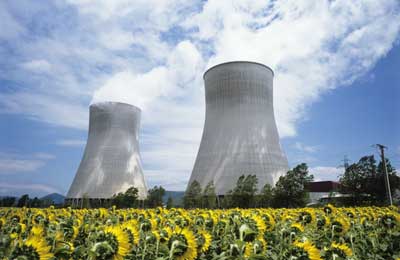
The nuclear option must be high on agenda of energy green paper
The Australian
Gary Johns
4 November 2014
THE Abbott government is finalising an energy green paper (not to be confused with a green energy paper). Submissions are due today. Every group is in there pitching, including nuclear engineers.
China has under construction, planned or proposed 207 new nuclear reactors, tripling nuclear capacity by 2020. Our little green friends love to tout China as huge in windmills and solar panels, but China is really powered by coal, hydro and nuclear power. Stick that in your windmill and twist it!
Australia has an overcapacity in electricity generation, which is not forecast to disappear until 2023-24. Unless we cut the renewable energy target, it will force expensive renewables into an oversupplied market and strand existing assets.
Following the abolition of the carbon tax and touted adjustments to the RET, it should be clear there is no certainty in government support for future generators that are reliant on subsidies.
In this context, small modular nuclear reactors, which can deliver up to 100 megawatts base load, low-emission power, are ready now. They are most likely to be deployed in remote areas where other sources of power are expensive or where steam is required in addition to electricity.
If SMRs can make it in this market, without the level of subsidies that applies to renewables, then good luck to them. Last year, the Bureau of Resources and Energy Economics found that, across the projection period to 2050, nuclear would remain cost-competitive with renewable and non-renewable technologies on a level cost of electricity generated basis (capacity of a plant divided by its energy output and cost).
A recent paper by Charles Frank of the Brookings Institution uses a methodology based on avoided emissions and avoided costs, rather than comparing levelised costs. The key finding was that nuclear, hydro and combined cycle natural gas have far greater net benefits than wind and solar, which suffer from a very high-capacity cost per megawatt, very low-capacity factors and low reliability, resulting in low avoided emissions and low avoided energy cost per dollar invested. Avoided emission calculations may become less relevant, however, as political support for climate abatement strategies wane.
The main safety concern regarding nuclear power is the possibility of an uncontrolled release of radioactive material, leading to contamination and radiation exposure off-site. In fact, the Three Mile Island (1979) and Chernobyl (1986) “disasters” were not only less disastrous than imagined, but comparing these reactors to current models is to compare the Model T to any recent car. Even the reactors involved in the Fukushima (2011) disaster were 1960s design and no one died from nuclear exposure at Fukushima.
Advanced reactors are inherently safer. Generation IV full-scale reactors, and SMRs under development, incorporate passive safety features that require no active controls or operational intervention to avoid accidents in the event of malfunction.
The major impediments to building SMRs in Australia are not safety or science, environment or economics but the law.
The Environment Protection and Biodiversity Conservation Act 1999, for example, states that the minister must not approve the construction or operation of a nuclear power plant. Such prohibition is unwarranted.
In its green paper, the Abbott government has promised to “review the current regulatory framework that governs nuclear and waste facilities to remove any duplication and streamline regulations”. This is not good enough. The ban on nuclear power must be lifted. These laws are based on old politics and old science. It is time that prohibition was repealed so all sources of power are on the table and assessed according to commercial and environmental risks.
Nuclear politics is hard. The commonwealth has still not secured a site for Australia’s low-level radioactive waste, following the failure to secure Muckaty Station, north of Alice Springs.
Nevertheless, community attitudes are changing to one aspect of the nuclear cycle, the export of uranium. In 2012, the Queensland government repealed a ban on uranium mining and the NSW government repealed a ban on uranium exploration. In South Australia — the main source of uranium exports — 48 per cent of the community support nuclear power while 33 per cent oppose it.
The white paper on energy should be neutral; any source of energy should be allowed to compete in the marketplace on its merits. Nuclear should be subject to the same stringent regulations as apply to coal and gas — no more, no less.
The Australian
For more detail on Charles Frank’s study on how nuclear power wins by a mile on CO2 abatement costs see our post here.
Let’s assume (as STT does, for the sake of argument) that the global warming/climate change Chicken Littles are right: the sky really is falling and it’s all CO2’s fault.
So what the HELL are we doing pouring hundreds of billions of dollars into subsidies for wind power? (see our posts here and here)
STT has always thought that if man-made CO2 emissions really were destroying the planet, then sensible governments would have moved to build nuclear power plants from the moment the Chicken Littles started wailing about the heavens collapsing.
The French generate over 75% of their sparks using nukes – and have used nuclear power – without any serious incident – for over 50 years: the first plant kicked off in 1962.
Nuclear power is the only stand-alone thermal power source that is base-load and which does not emit CO2 emissions when generating power.
It’s true that geothermal falls into the same category, but away from volcanic zones (think New Zealand and Iceland) depends on accessing “hot-rocks” deep underground – which tends to limit its scope for operation. Although STT thinks – as a “base-load” generator – it’s a source worth pursuing, with more funds directed at research and development (see our post here and this article).
STT readers know that we are a big fan of hydro power, the development of which stalled after the Greens “No Dams” mantra shot them to political power (and see our post here). The perversities of our renewable energy legislation mean that the cleanest and most reliable source of renewable energy – hydro – does not benefit from the incentives given to ludicrously expensive and completely unreliable wind power. That’s right, the “Waterboys” don’t get RECs (only hydro generating capacity built after 1998 is eligible – the 99% of total hydro capacity that was built before then gets nothing).
Although, as STT has predicted, the “old” hydro-snub may not last for much longer (see our post here).
Recent comments by PUP leader, Clive Palmer on ABC’s Lateline have sent the wind industry into a tail-spin. Big Clive (following the lead from Tasmania’s PUP Senator, Jacqui Lambie) made it plain that the PUP wants to include “old” hydro’s massive contribution to renewable energy generation (around 16,000 GWh annually) in the calculations that go to satisfying the annual targets set by the Large-Scale RET – that escalates to 41,000 GWh from 2020 through to 2031. This is what’s got the wind industry in a flap:
CLIVE PALMER: Well, why don’t you listen to what Clive Palmer says, Tony? I’m on the program, you’re interviewing me. If you want to interview Jacqui Lambie, invite her on. But I’m just telling you that electricity in Tasmania is generated by hydro. Hydro is clean energy. There’s an anomaly in the bill that doesn’t recognise that. So we think – same with the Snowy Mountain Scheme, if you’ve got hydroelectricity, it’s clean energy, it’s something that shouldn’t be categorised the same as you would a coal-fired power station, for example. But on the current legislation, that’s how they deal with it. That’s an anomaly which is not in the country’s interest and we think it should be rectified.

There is huge potential for further investment in hydro power in Australia (upgrades of existing plants and new schemes) – all up and down the Great Divide: bringing with it the ability to harvest huge volumes of water in times of flood; and to beneficially manage that water during periods of drought. However, the perverse nature of the mandatory RET provides every advantage to unreliable and costly wind power at the expense of hydro power: the former takes a matter of months to construct and begin earning revenue (ie RECs); whereas the latter takes years and sometimes decades to complete and for investors to start earning a return (see this video). Investors looking for a quick return on their cash have simply plumped for the soft option and piled in to wind power, with disastrous results on every level (see our post here).
The nuclear power debate has revved up in recent times, with numerous leaders of green groups coming out in favour of nukes as the only sensible answer to generating CO2 free sparks. These boys have been rounded on by their own kind as “heretics” in a style more befitting of the Spanish Inquisition.
The nuke debate is one that STT will leave to others (see our post here). But if the ever-more hysterical Chicken Littles are to retain any vestige of credibility, it’s high time they got serious about tackling the CO2 emissions they claim to dread so much – starting with a grown-up discussion about the merits of nuclear power.

 "Mothers Against Wind Turbines™" Phoenix Rising...