Pacific Hydro’s “Monumental Own Goal”: Or How Steven Cooper’s Wind Farm Study Helps Sink the Wind Industry

In our last post we popped up the study done by Steven Cooper at Pacific Hydro’s Cape Bridgewater wind farm, that’s sent the wind industry and its parasites into complete melt-down.
And its keenest advocates have turned on Pac Hydro, with the kind of hate-filled vengeance (usually reserved for traitors) for letting Cooper off the leash in the first place (see this rant from the Climate Speculator).
One thing that’s really incensed them is the fact that they’ve completely lost control over the (usually pliant and gullible) media – as seen in this sharp little piece from Channel 7’s Today Tonight – available here.
And here’s a couple more press articles, detailing just what’s causing the frantic-fuss among giant fan advocates and profiteers.
Cape Bridgewater wind farm ‘a health hazard’
The Standard
Peter Collins
22 January 2015
SIX Cape Bridgewater residents involved in groundbreaking research on side-effects of wind farm infrasound have called for the state government to declare the area a health hazard.
They have also called on the federal government to fund new studies on long-term health implications of living near wind farms, of which many are scattered across the south-west.
However, the Australian Wind Alliance, which represents companies associated with the renewable energy industry, has disputed the study findings and described them as speculative.
Acoustic engineer Steven Cooper was commissioned by Pacific Hydro to determine if wind conditions or sound levels caused disturbances identified by residents.
His preliminary findings from eight weeks of monitoring data and residents’ diaries claim to have identified a trend between acoustics produced by turbine blades while generating electricity and sensations reported by the residents.
He also claims to have identified a “signature sound” from turbines below the level of normal hearing which he said should be the basis for medical research.
Alleged health side-effects have been debated for decades. Some residents living nearby the huge towers and turbines have long complained of effects including headaches, nausea, pressures in their head, ears and chest, ringing ears and racing heart.
The Cape Bridgewater residents issued a joint statement yesterday saying the Cooper report also demonstrated that current noise pollution guidelines were useless. “Are we just third-class citizens whose fate it is to become collateral damage to these unsafe machines?” they asked.
“We expect Pacific Hydro will rectify the problems at Cape Bridgewater, address proper compensation for those who have been harmed and join,indeed lead, the drive for reform of regulation of wind power facilities.”
Mr Cooper will present his report to a public meeting at Portland Golf Club on February 16. The wind alliance said the report was based on a narrow band of information and did not account for the sensations described by residents when the turbines were not operating.
“Hundreds of thousands of people live comfortably in close vicinity of wind farms across the world – this report can’t change this,” the alliance said.
The Standard
Among the howlers pitched up by wind industry parasites, the – creepily named – Australian Wind Alliance is this piece of demonstrable rubbish: “Hundreds of thousands of people live comfortably in close vicinity of wind farms across the world”.
No they don’t: see our post here.
And the fact that they don’t “live comfortably in close vicinity of wind farms”, has been admitted by Danish wind power outfits that are buying up homes and villages, calling in the bulldozers and flattening them (seeour post here).
The wind industry in Australia is equally alive to that FACT – and – wherever they’ve had to concede it – they quietly buy out their victims’ properties, bulldoze them (see our post here) and make damn sure they stitch up the unfortunate (homeless) family with bullet proof gag clauses (see our posts here and here) – that their lawyers enforce with the zeal and vigour of the Old GDR’s Stasi (see our post here).

Next is the carping about the report being “narrow” and “speculative”.
STT doubts that the unnamed spruiker from the Australian Wind Alliance has even bothered to read, what is a detailed and technical report, and if they did, they clearly haven’t understood it. Calling a report of 295 pages with 500 pages of Appendices “narrow” suggests the spruiker concerned hasn’t even seen it, let alone read it.
Moreover, as is the want of eco-fascists, these boys have a keen eye for what’s been and gone; but their lack of intellectual equipment generally leads to a failure to consider what comes next: what those with the equipment call “foresight”.
A theme to which we’ll return in a moment, but first, here’s another fine wrap up from Graham Lloyd.
Noise specialist cheers wind farm report
The Australian
Graham Lloyd
23 January 2015
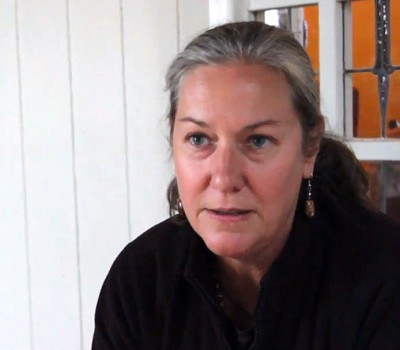
A STUDY of health impacts from low-frequency noise at Victoria’s Cape Bridgewater wind farm is “groundbreaking” and makes “a unique contribution to science”, a noise and health expert says.
Bob Thorne, a psycho-acoustician qualified to assess health impacts from noise, said the obvious question from the report, written for owner Pacific Hydro, was whether the operation could be modified to reduce or mitigate disturbances to residents.
“At 235 pages for the report and six technical annexures (491 pages), the study cannot be matched by any previous wind farm study in Australia,” Dr Thorne said in a letter to its author, Steven Cooper, and provided to The Australian.
Mr Cooper was asked by Pacific Hydro to assess three households that had complained about impacts from the wind farm.
He used sophisticated recording equipment inside and outside the houses and near the wind turbines and matched the wind farm performance with sensations recorded in diaries by six residents.
In his report, Mr Cooper said the residents’ observations “indicates that the major source of complaint from the operation of the turbines would appear to be related to sensation rather than noise or vibration”.
The impacts were found to be most pronounced when the turbines were starting up, at full power or changing load by more than 20 per cent up or down. The trigger for adverse sensations was identified as 4Hz to 5Hz at 50 decibels, well below the hearing threshold for that frequency.
Mr Cooper said the results were in line with studies in the US on early-model wind turbines and appeared to be the result of instability of the turbine blades, which did not have free air flowing over them.
Due to the small number of residents surveyed, Mr Cooper and the company said, more testing was required. Pacific Hydro has said that it did not accept Mr Cooper’s findings that a “cause and effect” had been established between wind-farm performance and resident complaints.
The Clean Energy Council has dismissed the findings.
Dr Thorne, who has been asked previously to investigate the health concerns of residents living near wind turbines, said the Cooper report “has raised hard questions for Pacific Hydro to discuss with the residents … The development and determination of the concept of ‘sensation’ as distinct from ‘noise’ due to infrasound, low-frequency sound, audible sound or vibration is groundbreaking and unique”, Dr Thorne said.
“The concept has an important place alongside standard measures such as ‘quality of life’ and psycho-acoustical correlates.”
The obvious support from both Pacific Hydro and the residents was the standout feature of the Cooper study, “and it is clear from the text that the outcomes were not envisaged by yourself (Cooper) or study participants”.
The Australian
Good to see the Clean Energy Council adopting the “if we ignore it, it will all go away like a bad dream” approach. But, with what’s to follow, their wind industry clients might reasonably ask for a refund.

STT hears that the spin-kings at the CEC – now headed up by near-bankrupt wind power outfit, Infigen’s head, Miles “Boy” George – are seething at how Pac Hydro let this one get so completely out of control.
Just goes to show, it’s a dog-eat-dog world. The ruckus that’s blown up amongst former team-mates, is a bit like what happens among professional gangsters, when things don’t pan out quite as meticulously as they were planned.

So, how did it end in such a trail of wind industry tears?
After 6 years of being bombarded with hundreds of bitter complaints from residents, Pac Hydro engaged a top-flight “community outrage” management outfit, called Futureye to slam the lid on those complaints (see our post here).
Futureye failed to quash the complaints – the victims’ seething rage and the complaints continued. No surprises there.
Pac Hydro then made a decision which runs entirely counter to everything that appears in the wind industry’s “playbook”.
Pac Hydro decided to give the residents what they wanted: agreeing to pay to engage Steven Cooper to carry out a proper noise study – and to cough up all the wind speed and turbine operational data required for that task – what’s called SCADA data.
In that one move, Pac Hydro turned the “playbook” on its head, rule 1 of which says:
- never, ever, ever cooperate with independent noise studies;
- under no circumstances will a wind power outfit hand over wind speed and turbine operational data for any such study (or at all, ever);
- if faced with any heat to do so, the operator must automatically claim “commercial-in-confidence” over (wait for it) wind speed measurements etc; and
- unless and until hell freezes over, no wind power outfit is to shut down wind turbines to allow for meaningful on/off noise and vibration testing, ever.
Although, we note, the “on-off testing” that occurred at Cape Bridgewater was the result of a two-week shutdown related to high voltage cabling work associated with the wind farm; rather than any deliberate decision on Pac Hydro’s part – much like the “lucky break” that occurred at Waterloo, SA last year (see our post here).
So why did Pac Hydro do it?
STT hears that the boys from Marshall Day and Sonus – Pac Hydro’s pet acoustic consultants – took the view that Steven Cooper would never find anything; their own testing showed that the wind farm was “compliant” with the noise standard; that the infrasound produced by the turbines was the same as that produced by waves on a moonlit beach; the whole thing was like a zephyr in a thimble; and that it would all blow over soon enough – so why not let Cooper have the data and knock himself out?
Hubris can lead to destructive over-confidence; and that can easily lead the sufferer into unforced errors – just like this one. Oops!

And this little boo-boo leads to COMPENSATION time.
As we pointed out above, the wind industry – and the eco-fascists that parrot for it – score high on the register for carping and moaning about matters immediate; but tend to lack the intellectual finesse needed to forecast anything that might pop up from the other side of the horizon.
Sure, this study was limited to 6 long-suffering people and a period of 8 weeks, but as we pointed out in our last post, what Steven Cooper achieved at Cape Bridgewater is easily capable of being:
- reproduced;
- scaled up to include more homes and residents;
- further validated and supported with the inclusion of a representative cohort as a control group in any further study; and
- therefore, repeated, validated and extended, both here, and all around the world.
And that is what is going to allow for a raft of litigation, pursued by hundreds of wind farm victims around the Globe.
In the distance, STT can hear the gleeful sound of lawyers opening files, already.
The evidence gathered so far at Cape Bridgewater – and that which will be gathered in reams, both elsewhere in Australia and around the world – will provide lawyers with precisely the kind of ammunition needed to slot just about everybody that is involved with – or who has profited from – the great wind power fraud.

The grounds for liability to victims are pretty straightforward: common law claims in nuisance and/or negligence (for starters) to obtain substantial damages for personal injury – caused by either – for pain and suffering, loss of amenity and enjoyment of life etc – as well as very substantial damages for the loss of the use and benefit of homes; diminution in the value of those homes and properties; relocation costs etc, etc.
The defendants in the gun will include:
- the wind power outfits concerned;
- the landowners hosting the turbines that cause the damage;
- local Councils (where they are responsible for approving noise conditions and/or enforcing them);
- State government Planning Departments (where they are responsible for approving noise conditions and/or enforcing them);
- authorities, such as Environmental Protection Authorities (where they have either been involved in the creation – and/or (non)-enforcement – of wind farm noise standards);
- acoustic experts engaged by the wind industry for their manifest failure to protect the health and well-being of wind farm neighbours – part of their (purported) ethical responsibilities, and especially those involved in the production of the noise standards;
- State Health Departments, etc.
In short, a veritable cast of ‘thousands’. And behind them (with the exception of turbine hosts) stand a phalanx of insurers and underwriters – who will, no doubt, be taking a good hard look at their exposure.
Pac Hydro, Infigen & Co are already in a world of financial pain (see our post here).
Pac Hydro is backed by IFM Investors – which last year announced a $685 million profit forecast write-down due to the collapse in the value of its Pac Hydro wind farm investments. Pac Hydro has had $220 million knocked off its value due to “uncertainty” surrounding the RET (see our post here).
And things for these cowboys – and wind power outfits everywhere – can only get worse from here.
The word that investors and lenders need to sear into their cognitive machinery is simple and – wherever the big bucks are involved – profane: we’re talking about RISK.
STT hears that commercial lending institutions in Australia have slammed the door on wind power outfits looking for the cash needed to fund new wind farms for very good reasons (see our post here). What blew up at Cape Bridgewater will simply reinforce that attitude – banks will not touch wind power outfits with a barge pole from here on.
Now, while wind farm victims have the opportunity of slamming those responsible in private litigation, STT begs the poser: why should the victims of a government sponsored subsidy scheme have to pay upfront to be compensated for their inevitable suffering and losses?
The wind industry exists (and only exists) by reason of the Large-Scale RET and the REC Tax/Subsidy directed to wind power generators under it – and paid for by ALL Australian electricity consumers, including those with homes and properties adjacent to wind farms (see our posts hereand here).
As the beneficiaries of what Liberal MP – Angus “the Enforcer” Taylor properly describes as “corporate welfare on steroids”, mandating that the wind industry fully compensate wind farm neighbours for all of their losses seems only fair.
At the Federal level, Australia is all about compensation: whether it’s Centrelink, a National Disability Insurance Scheme or a national healthcare scheme (ie Medicare), the Federal government has no trouble at all forcing taxpayers to cough up and ensure that those without, or who have suffered some of the bad luck dished up by daily life, get compensated.
In the same vein, the wind industry has already pocketed something like $9 billion worth of REC Tax/Subsidies – and is lining up for a further $50 billion of the same under the LRET: “compensation” for producing “renewable” energy that they hope to gleefully pocket at power consumers’ expense.
The wind industry’s victims have, therefore, been belted twice: once through their power bills, paying for the subsidies that resulted in the giant fans speared into their backyards; and again, through their personal loss and suffering, and the economic loss of the value of their (often unliveable and/or worthless) homes and properties.
The wind industry and its parasites were pretty quick to set the ‘rules’ in a way that means wind power outfits can operate around the clock, without any regard for the harm caused (eg, sleep deprivation) – ‘rules’ maliciously designed to discriminate against wind farm neighbours.
These are the boys who have sought to evade and avoid any kind of reasonable controls on their operations.
From the outset, they’ve made every effort to ensure that irrelevant and, therefore, woefully inadequate noise standards were adopted and are maintained; refused to cooperate whenever victims are trying to impose even those woeful standards; and who now – like the Clean Energy Council and the Australian Wind Alliance – are quick to pooh-pooh Steven Cooper’s study on obviously spurious grounds; and who will fight tooth-and-nail to prevent any possibility of the same thing ever happening again.
So, it seems only fair that wind power outfits – who benefit from the largest single industry subsidy scheme in the history of the Commonwealth – see some of the value of the REC Tax/Subsidy (that they would otherwise keep for themselves) get siphoned off to compensate those whose lives and interests they’ve bent over backwards to destroy.
Remember, governments set this mess up in the first place; and, therefore, it is well within their power to clean it up and put things right.
And now is the hour.
Fortunately, all these matters and more are on the radar and squarely in the sights of the Senate Select Committee, it’s terms of reference including the following:
(1) That a select committee, to be known as the Select Committee on Wind Turbines be established to inquire into and report on the application of regulatory governance and economic impact of wind turbines by 24 June 2015, with particular reference to:
…
(b) how effective the Clean Energy Regulator is in performing its legislative responsibilities and whether there is a need to broaden those responsibilities;
(c) the role and capacity of the National Health and Medical Research Council in providing guidance to state and territory authorities;
(d) the implementation of planning processes in relation to wind farms, including the level of information available to prospective wind farm hosts;
(e) the adequacy of monitoring and compliance governance of wind farms;
(f) the application and integrity of national wind farm guidelines;
(i) any related matter.
If, like those unfortunates at Cape Bridgewater, you are suffering from, or are threatened by, turbine generated low-frequency noise and infrasound – then you’ve got chance to have your say on:
- the ‘standards’ and planning ‘controls’ that are so lax as to be risible;
- the callous conduct of wind power outfits, like Pac Hydro & Co;
- the institutional corruption that not only permits, but which actively defends that conduct;
- the losses you have suffered, or are likely to suffer, as a result of the above;
- why there should be mandatory compensation payable to wind farm neighbours for all such losses (incurred or anticipated) caused by wind power generators; and
- that the compensation payable should come from a fund set-up through a mandatory levy placed on the RECs received by all wind power generators.
So why not get in there and hammer them, by dropping a detailed submission to the Senate Inquiry along those lines?
Note that the opportunity to make submissions to the Committee ends on 27 February 2015. See the link here.

 "Mothers Against Wind Turbines™" Phoenix Rising...