Dictatorial Governments Bound to Get Backlash! Listen When We Say NO!!

NIMBYs are not the problem

Ontario’s failure to develop broader support for building wind and other renewable energy projects stems from a lack of local democracy.

Stewart Fast

The sweeping changes to Ontario’s renewable energy policy regime in the past few years have spawned a highly charged public debate. Much of the controversy focuses on the public payments offered to wind and solar developers, and there has been an accompanying backlash from dissenting neighbours and other critics against the proliferation of turbines and solar panels in rural areas. But that noisy clash obscures a deeper and more dangerous tendency in the province’s approach to new energy projects: an approval framework that sees the public as inherently selfish, prone to irrational opposition and incapable of considering the greater public interest. This policy approach reflects the bureaucracy’s mistrust of the ability of the Ontario public to make wise energy choices.

The belief that individual selfishness prevails over a sense of the common good inhibits good energy policy and is unhealthy for the province’s democracy. It springs from a conviction of the power of NIMBYism. NIMBY, of course, is the catchy acronym coined in the 1980s for the “not in my backyard” phenomenon that expresses individuals’ desire to protect their own turf from new building or development, despite broad societal agreement that the development is necessary. The concept holds that while most citizens might agree on the need for a new road, landfill, prison or wind generator, few want to live next to one.

Framed this way, the NIMBY question is a variation of the free-rider problem in economic theory: how to avoid everyone freely benefiting from a service without paying their share. Traditionally, this has been dealt with by having a planning authority compel or compensate citizens to host these facilities for the greater good. But recently there has been a growing acknowledgement of the public’s readiness to appreciate trade-offs and participate more fully in planning decisions. Public policy practitioners and researchers alike recognize that decisions about where to build new developments are messy and highly political, and frequently involve trade-offs and multiple changes to original plans. If conflict is to be minimized and decisions given greater legitimacy, the public must be involved in the process.

Unfortunately, Ontario’s approach to building wind generators and other renewable energy projects has ignored this tenet. Instead of more public participation, there has been less. In 2009, a dozen pieces of legislation were amended to create uniform provincial standards, streamlining the patchwork of local rules that had grown up around the province’s first wind projects on matters such as setbacks (the distance a facility must be from dwellings, roads, rivers and other places that need protection), noise bylaws and community benefit arrangements. Any requirement for lower-tier government approval was erased and a stringent legal test was put in place in case of appeals against wind project approvals. The approach was designed in the conviction that Ontario’s citizens were not to be trusted, and that anyone opposing wind energy was simply in the grip of NIMBYism.

This is a flawed premise. As early as 2000, Dutch researcher Maarten Wolsink showed that only a small minority of people living next to proposed and existing wind farms fit the classic profile of a NIMBY. Research published in 2013 by Jamie Baxter and colleagues from the University of Western Ontario showed a similar phenomenon. In a study that surveyed Ontario communities with and without turbines, they showed that only 9 percent of residents fit the NIMBY profile. Instead, their research revealed that Ontarians are much more likely to either oppose the installation of wind turbines altogether (not in anybody’s backyard, or NIABY) or, if they favour renewables, agree to have them built in their communities (yes in my backyard, or YIMBY).

My research into public attitudes to renewable energy projects backs this up. I have looked at the process for approving wind projects both before and after the rule changes to the 2009 Ontario Green Energy Act, and I found that the YIMBY constituency is effectively sidelined by the lack of a process for discussing and debating projects at the local level, including the failure to require municipal authority approval for projects.

The lack of a process to involve citizens in decisions means supporters of renewable energy development projects have less incentive – and little opportunity – to influence project approval.

The lack of a process to involve citizens in decisions at the local level means those who support new renewable energy development projects have less incentive — and little opportunity — to meaningfully influence project approval. The feeling among YIMBYs is that the province is the only authority that matters under the current rules, so why engage in potentially unpleasant arguments and debates with neighbours? Furthermore, as Trent University’s Stephen Hill and James Knott point out in their 2010 article in the journal Renewable Energy Law and Policy, local planners are sidelined from the process of approving new renewable energy projects, removing a vital cog in lending legitimacy to projects. Local planners are the skilled and trusted actors normally designated to shepherd controversial developments to completion.

Yes, requiring local approval and getting local politicians and planners onside takes time. And the need for deeper support at the local level may mean that some projects with excellent technical and economic foundations may not get built. But in the long run, trust and social licence are assets that need to be nurtured during this transition to a greater reliance on green energy. Wind, solar and other renewables are a type of resource that is different from more centralized energy systems like nuclear and coal power plants. Wind and solar resources are disparate and spread out across communities and landscapes. The change to a low-carbon energy system thus involves new actors and new winners and losers. Ontario needs to implement more, not fewer, meaningful opportunities for local residents to impact project decisions.

A high rate of project appeals in Ontario is associated with another policy problem: poor communication of the health risks involved in wind power generation. The potential for producing serious harm to human health is one of only two bases for appeals under the Ontario legislation (the other is serious and irreversible harm to plant and animal life). Fear of ill-health effects has become a mantra of the wind opposition movement in the province. Testimonials of negative health impacts are thus raised in the adversarial setting of a legal process, instead of in a more open environment where the health issues could be discussed openly by citizens and experts alike. The health discourse has become polarized, with wind developers on one side labelling the alleged ill-health impacts as “quack science” while critics raise the spectre of alarming risks to public health if wind turbines are built. This turns legitimate discussion of health risks into fevered tribal warfare.

Fast ad

It is not even clear that Ontario’s streamlined approval regime has provided the stable environment for investment in wind energy that was a primary goal of the legislation. In reaction to an absence of democratic process, local protests against what is seen as provincial heavy-handedness have grown into a well-organized and effective anti-wind movement. Industry watchers note that every single wind project approved under the new Ontario rules has been appealed. The legal delays forced the province earlier this year to extend the contractual deadlines for approved power projects to account for these delays. By comparison, Quebec has had far fewer appeals for roughly the same production level of installed wind projects.

One reason for Quebec’s lower level of community conflict over wind power generation may lie with the province’s ability to successfully establish a sense of community ownership of some wind projects. There is wide agreement among experts that wind energy success in jurisdictions like Germany and Denmark is partially due to high levels of community ownership of projects. Hydro-Québec has signed agreements for a dozen wind projects in which community interests have a 50 percent ownership stake. These ownership groups include regional municipal governments and First Nations. The arrangements vary, but typically wind revenue is returned to general coffers or earmarked to a special fund.

Ontario’s framework for supporting community ownership of wind projects, on the other hand, has been an utter failure. Instead of setting aside a guaranteed portion of the province’s wind power purchases to come from projects with community ownership as was done in Quebec, Ontario offered to pay a premium price for a particular type of community ownership arrangement. Local renewable energy co-ops first had to be established, and then these entities had to partner with developers with at least a 15 percent ownership stake in order to capture the premium price. Five years after the law was passed, no wind projects with co-op ownership have emerged in the province.

Policy-makers should have recognized the lack of uptake in Ontario earlier and experimented with different options, such as lower percentage thresholds for the premium. A more equitable sharing of the financial benefits from wind projects is part of the answer to host-community conflicts. Typically, only the wind company and a select number of landowners with turbines on their properties receive compensation for the energy produced. Other models such as the community ownership arrangements in Quebec or compensation for all landowners in close proximity to turbines could help. The more actors that are receiving even modest financial benefits to offset the costs of having a wind project in their backyard, the better.

Thankfully, there are signs that the province is getting the message that it cannot override local democracy if its orchestrated transition to greater renewable energy use is to succeed. Earlier this year, provincial civil servants were directed to revamp community engagement requirements for large wind procurement contracts. Early proposals are that wind development companies would have to show community involvement through equity interest or an agreement to comply with local site control processes.

However, the that reality is that there is a legacy of dozens of wind projects approved under the old rules that have yet to be built and will continue to create unnecessary community conflict for years to come. One area in which to monitor the Wynne government’s commitment to more -citizen involvement is a planned move to more decentralized energy planning. This would see regional-level input into selecting a mix of energy sources appropriate to the energy needs of regions.

The litmus test is who gets invited to participate and agrees to join in these deliberations. Will it be only energy utilities and government departments, or will community groups and landowners also be involved? To truly succeed, policy-makers must realize that not all citizens are selfish NIMBYs. If the transition to renewables is to work by consent, people must be consulted at a local level. The diktat approach is destined to fail.


Stewart Fast is a postdoctoral fellow in the Department of Geography and the Queen’s Institute for Energy and Environmental Policy, Queen’s University.

European Union Finally “Gets It”….The Faux-Green Scam, is Nothing But a Money-Grab!

When can we expect the same sanity from the Liberals, in Canada, especially Ontario?  They are ruining our manufacturing sector, with their outrageous energy prices!  Families can no longer afford their electricity bills.  It has to STOP!

EU Dismantles Its Climate Commission Amid Economic Struggles

European Union leaders announced they will be consolidating energy and environmental goals under a new commissioner, effectively axing the intergovernmental groups’ climate arm as green policies are making it harder for citizens to pay their power bills.

Former Spanish agriculture and environment minister Miguel Arias Canete was tapped by the EU Commission to take over a consolidated energy and climate office. Canete will be replacing Climate Commissioner Connie Hedegaard and Energy Commissioner Guenther Oettinger in what is seen as a huge blow to Europe’s global warming efforts.

“The EU is signalling a historical shift away from its green priority towards a new focus on economic recovery, competitiveness and energy cost,” Dr. Benny Peiser, director of the Global Warming Policy Forum, told The Daily Caller News Foundation.

“This policy shift has been in the making for the last two years, but only now has Europe new leaders who are no longer obsessed with climate change,” said Peiser, who is based in the UK.

The change in EU energy and climate leadership was partly spurred by Russia’s aggression in Ukraine, which has put Europe’s natural gas supplies at risk. The Ukraine crisis also sparked calls for Europe to drill for its oil and gas using hydraulic fracturing and begin importing more energy from allies, like the U.S.

Europeans are also being burdened by rising energy bills from domestic green policies and EU rules that effectively mandate higher cost electricity generation from renewables, like wind and solar power. The UK, in particular has seen numerous power plants close down and is even considering WWII-style energy rationing to keep the lights and heat on this winter.

Canete preside over the drafting of new energy rules after the EU hashes out cap-and-trade reform and green energy targets in October. The former Spanish official will also have to balance Europe’s energy needs against pressures from interest groups and the United Nations to enter into a legally binding global climate treaty.

Environmentalists have expressed concerns that the EU Commission is abandoning too many of its environmental goals, especially by getting rid of its independent climate arm. Activists have even accused Canete of being too cozy with fossil fuels companies.

Do THIS Before Eating Carbs (Every Time)
Fix Your Blood Sugar
The #1 Exercise That Accelerates AGING (Stop Doing It!)
Lifegooroo
NYC Mayor’s Daughter Reveals Her Addictions
Cliffside Malibu
9 Unique Dog Breeds You May Never Come Across
Amerikanki
by TaboolaSponsored Links
“The choice of a Climate and Energy Commissioner with well-known links to the fossil fuel industry raises issues of conflict of interest,” reads a letter to the EU Commission from Green10 — a coalition of environmental groups.

“The fact that sustainable development, resource efficiency and the green economy are not covered at all at Vice-President level implies a Commission that will be operating on the basis of an outdated paradigm of economic growth, one that benefits the industries and jobs of the past over those of the future, and detached from real world constraints and limits,” the coalition said in its letter.

“Canete is a surprising choice, given his connections to the oil industry,” Greenpeace’s managing director in the EU, Mahi Sideridou, told Bloomberg in an emailed statement. “To prove he is the right man for the job, he’ll have to resolve conflicts of interests and improve on his environmental record as a minister.”

Canete is a lawyer by training and worked for Spanish Prime Minister Mariano Rajoy’s government from 2011 to 2014, reports Bloomberg. Canete was elected to EU Parliament in May 2014.

He has been described as “an acute politician” by analysts and could help make the EU’s fragmented energy and environmental goals more coherent and workable.

“His number one challenge will be to bring coherence into very fragmented policies, reflecting the commission’s recent proposal to put the [emissions trading system] back in the center of EU energy and climate policy,” Laurent Donceel, director at the consulting firm G+Europe, told Bloomberg.

Read more: http://dailycaller.com/2014/09/12/eu-dismantles-its-climate-commission-amid-economic-struggles/#ixzz3DPWpd0Z1

This is Our Federal Government, Warning Us About Agenda 21! Now do you believe it???

Report from Parliament

August 28, 2014

I hope everyone had an enjoyable summer. Thank-you to all who attended the various constituency clinics that have been held throughout our Renfrew-Nipissing-Pembroke riding. Whether it was just to drop by and say hi, or to share an interest or concern, I appreciate the opportunity of you letting me know what is on your mind.

After the high cost of electricity, one of the issues that has arisen as a topic of concern is the public move by the City of Ottawa to petition the province to use its legislation to restrict growth in places like Renfrew County. That could mean no more provincial funding for roads, sewers, hospitals and other infrastructure renewal. Without infrastructure renewal, employment opportunities would leave as would residents who need services, and particularly our young people who need jobs. It has been suggested this is a result of “Agenda 21”, a United Nations’ policy the provincial government has adopted in an extreme form. This radicalized environmental version is now being pushed in Ottawa by the same liberal advisors behind the so-called “Green Energy Act” that has meant crippling electricity prices, resulting in high provincial unemployment and energy poverty.

In 2005, the liberal government in Ontario passed legislation called the “Places to Grow Act” to align its land use/planning codes and government policies to United Nations Agenda 21. Like many ideas that may sound good on paper, when it comes to implementation by individuals with no real-world experience, these ideas can become dangerous.

While many people support the United Nations for its ‘peacekeeping’ efforts, hardly anyone knows the organization has very specific land use policies they would like to see implemented in every village, town, city, county, province and nation.  The specific plan is called United Nations Agenda 21 Sustainable Development, which has its basis in Communitarianism.  Most Canadians have heard of sustainable development, but are largely unaware of the U.N. initiative Agenda 21. A non-governmental organization headquartered in Toronto called the International Council of Local Environmental Initiatives, ICLEI, is tasked with carrying out the goals of Agenda 21 worldwide.

In a nutshell, the plan calls for government to eventually take control of all land use removing decision making from the hands of private property owners.  It is assumed people are not good stewards of their land and “the government” will do a better job if it is in total control.  Individual rights in general are to give way to the needs of communities as determined by the governing body.

Human habitation, as it is referred to in Agenda 21, would be restricted to lands within the “Urban Growth Boundaries” of a city like Ottawa.  Only certain building designs are permitted.  Opponents of Agenda 21 also assert that rural property could be more and more restricted in what uses can be done on it.  The provincial government says it will support agricultural uses, eating locally produced food, and farmer’s markets, etc. In fact there are so many regulations restricting water and land use (there are scenic corridors, inland rural corridors, baylands corridors, area plans, specific plans, redevelopment plans, tree-cutting by-laws, endangered species legislation, huge fees, fines, etc.) that small farmers and rural landowners are struggling to keep their lands altogether.  County roads will not get paved. The push will be for people to get off of the land, become more dependent, and go into the cities.  People will have to move from private homes and into single dwellings like apartments, as homeownership will become largely unaffordable the way it is in many urban areas like Toronto today. More extreme measures like a federal liberal carbon tax will force people out of private cars and onto public transit that only exists in cities.

U.N. Agenda 21 proponents cite the affluence of North Americans as being a major problem which needs to be corrected. The document calls for a redistribution of wealth, lowering the standard of living for Canadians so that maybe the people in poorer countries will have more.  Although people around the world aspire to achieve the levels of prosperity we have in our country, and will risk their lives to get here, North Americans are cast in a very negative light for our energy consumption. Agenda 21 aims to reduce Canadians to a condition closer to average in the world.  Only then, say the promoters of Agenda 21, will there be their social justice which is the so-called cornerstone of the U.N. Agenda 21 plan.

I am pleased to thank members of County Council who are voicing their opposition to provisions of the “Places to Grow Act” ‘Agenda 21-type’ provincial legislation, and against the City of Ottawa’s position,  standing up for the people of Renfrew County. As your Federal Member of Parliament, I will oppose any effort by the liberal party in Ontario to redirect Federal Infrastructure funding away from rural or small town communities the way it takes provincial gas taxes away from rural drivers to pay for Toronto’s subways.

With your support and encouragement, I will continue to expose the hidden agenda of the merged liberal party of Toronto in Ottawa. They have condemned our children to a lifetime of debt repayment by promoting wacky social experiments like Agenda 21, the Places to Grow, Green Energy Acts and similar misguided policies.

World Wide Wind Scam….Same Horrific Abuse in Every Country they Infest

​World Council for Nature

and
​Save the Eagles, International

FOR IMMEDIATE RELEASE

September 15th, 2014

Scotland: more manipulations

Whether it’s in America, Australia, or Europe, the media and the public are not being told the truth about actual mortality at wind farms. From employees who make carcasses disappear, to bird societies caught in conflicts of interest, to government agencies obeying their political masters, most stakeholders contribute to the cover up. But whereas in some countries like Spain, Germany or the US, some information has leaked out and the public knows there is a problem with birds, bats and wind farms, in others like Denmark, France or the UK, most people believe the fiction that their wind turbines have been “correctly sited” away from the flight paths of protected species.

In the words of Abraham Lincoln “you can’t fool all the people all of the time”. In the case of Scotland, the truth was due to come out in 2013, with the once-every-ten-year golden eagle census. The earlier census had revealed in 2003 that the iconic birds’ breeding population was stable but “in demographic difficulty” – meaning that there was a paucity of young eagles for replacing the adults when these would die. Ten years later, with the added effects of wind turbines making their habitat deadly, a significant drop was expected in their population.

But no census was conducted in 2013. Bizarrely, it was decided that, from now on, these counts would take place only once every 12 years.Serious questions need to be asked about why this relaxation of the monitoring has been ‘accepted.’ The public will be kept in the dark for an additional two years. To avoid publication of a census which would show a sharp drop in the golden eagle population, only attracts deserved accusations of ‘cover up’.

This manipulation is one of many, where wind farms are concerned. Back in 2009, in an open letter addressed to Scottish Natural Heritage(SNH), Professor David Bellamy and I had criticized their handling of the Edinbane project, on the Isle of Skye. We wrote:  “The developer’s first eagle mortality prediction was too high for comfort, so you invited him to do more studies and to review his copy, especially the mortality prediction. You too did some work, and modified a key parameter for the mortality calculations: from 95%, the “avoidance factor” was increased to 98%, which has the effect of reducing mortality predictions exponentially. You also indicated that the predicted mortality should be no bigger than a certain number: this was tantamount to showing the fox how to get into the hen house. (1)

There are more examples of dishonourable conduct on the part of stakeholders in the Scottish wind farm saga. They show that, in Scotland, wind farms have not been “carefully sited” with regards to eagles and other important birdlife. All the opposite, in fact: the authorities have bent over backwards to let the promoters have it their way (2). And while eagles were disappearing in Scotland in circumstances pointing to a probable link to wind turbines, the public was not informed of these facts, except those who read this article:

Covering up the death of eagles at Scottish windfarms
A REALITY CHECK PROVES THE SCOTTISH EAGLES DO NOT AVOID WINDFARMS AS CLAIMED

An inconvenient truth gleaned from various sources shows that wind farms have already, directly or indirectly, killed eagles, caused them to “disappear”, or reduced their breeding success in Scotland. It is the best kept secret in this curious land where some eagle deaths make the headlines, while others are either denied or swept under the carpet – depending on who did the killing.

“This paper brings proof that covering up the dark side of wind farms is rampant in Scotland, as indeed it is everywhere: from politicians to NGO´s, and from bird societies to those sadly ill-informed sections of the media, the wind power scam is well protected. Misrepresentation of facts is routinely fed to a public unsure and nervous about future events. Such a well recognised ‘state of fear’ blinds the normally perceptive who would otherwise be less easily fooled.” (3)

The article, written in 2008, proceeds to give documented evidence of the wind farms’ lethal effects on Scottish eagles. (3)

Over the years we have witnessed some SNH officials, in many areas, making it easy for developers to obtain planning approval for their projects, even in the most sensitive habitats where many eagles could be struck by the proposed wind turbines (2). Understandably, it has now become important to kick into the long grass a census which could show a sharp drop in the golden eagle population.

The truth about the real effects of wind farms on Scotland’s golden eagles was given a chance to become public knowledge in 2013, with the 10-year-scheduled survey. But this truth was forced back into the obscure corners of the blogosphere. The vast majority of Scottish voterswill only find out in 2015, if ever, what has been the cost to Scotland of windfarm disinformation, if only in terms of eagles’ lives.

Contacts:

Mark Duchamp
Chairman, World Council for Nature
www.wcfn.org
President, Save the Eagles International

www.SaveTheEaglesInternational.org
save.the.eagles@gmail.com
tel. +34 693 643 736

References:

(1) – Open letter to Scottish Natural Heritage (SNH), from Professor David Bellamy and Mark Duchamp, 29 June 2009.
http://savetheeaglesinternational.org/submissions/open-letter-to-scottish-natural-heritage.html

Details of the Edinbane scandal:  http://www.iberica2000.org/Es/Articulo.asp?Id=4242

(2) – Allowing wind farms in eagle territories.

– Methods used in Scotland to mock the law:

http://www.iberica2000.org/Es/Articulo.asp?Id=3426

– Inverliever, Eishken, Edinbane:  http://www.iberica2000.org/Es/Articulo.asp?Id=2250

Inverliever flight path maps:

Golden Eagle – https://drive.google.com/file/d/0B6sY1dWgOsjZTTNselQwYUVObVU/edit?usp=sharing

Osprey – https://drive.google.com/file/d/0B6sY1dWgOsjZcHRhM2hXYVVNMnc/edit?usp=sharing

Hen Harrier – https://drive.google.com/file/d/0B6sY1dWgOsjZa3VHTGRING1oT3c/edit?usp=sharing

Red-throated diver – https://drive.google.com/file/d/0B6sY1dWgOsjZME5fTmJ0YmNyalU/edit?usp=sharing

(3) – Covering up the death of eagles at Scottish windfarms.

http://www.iberica2000.org/Es/Articulo.asp?Id=3744

5 Attachments

Preview attachment Scotland – more manipulations.doc

Scotland – more manipulations.doc

Preview attachment map inverliever Golden Eagle.bmp

map inverliever Golden Eagle.bmp

Preview attachment map inverliever Osprey.bmp

map inverliever Osprey.bmp

Preview attachment map inverliever Hen Harrier.bmp

map inverliever Hen Harrier.bmp

Preview attachment map inverliever Red-throated Diver.bmp

map inverliever Red-throated Diver.bmp

For Those of You, Who Are Unfamiliar With Agenda 21….

Agenda 21 – The Death of Farming, Rationing and Overcrowded Ghetto Cities

By Neil Foster,

In today’s Irish Independent we see the article below stating that mortgage lenders will be less likely to approve loans for those who wish to live outside the already deliberately overcrowded cities and make a life for themselves in the countryside.

http://www.independent.ie/business/personal-finance/property-mortgages/mortgage-providers-to-restrict-loans-for-homes-in-rural-areas-2500005.html

This ‘idea’ from the banks should be rightly called Agenda21. This is the UN’s programme for ‘sustainable’ living due to global warming which every western country has signed up to, right down to your local councils. I was on Highland Radio in Donegal last year when a local Green councillor Frank Gallagher denied any knowledge of Agenda 21. He is at best misinformed or completely ignorant of the council he sits on or he’s quite simply a liar!

Agenda 21 includes plans to wipe out rural populations and move them into the cities which will inevitably and ultimately become the mass concentration camps of the future, basically ghettos for the masses of ‘useless eaters’.

This will also include farmers and farm workers who will be driven from their land through ‘legislation and taxation to the point where it is no longer viable to farm small scale. When this occurs big agri companies will monopolise Irish agriculture. Monsanto already have an office in Dublin.

The UN has stated in the past that it, an unelected, private organisation, will control the world’s food supply by allocating food to countries based on population size. Regardless of any growth in the population, the quota of food will not increase and nations will have to deal with so called ‘overpopulation’ by any means at their disposal. I’ll leave that to your imagination but when Bill Gates talks about reducing the population by 15% using vaccines and healthcare, you know where this is heading!

http://www.youtube.com/watch?v=jSqcRMVbtpo

On another part of Agenda 21 we find this report

http://www.greenwisebusiness.co.uk/news/report-calls-for-energy-rationing-within-the-decade-2045.aspx

Yep, you read right… FUEL RATIONING! That doesn’t just mean petrol or diesel for your car. It also includes home heating fuel which is already rising at an astounding rate. Rationing heating fuel at a time of GLOBAL COOLING is tantamount to freezing pensioners to death in their own homes, but hey, they’re useless eaters anyway aren’t they? They’re not ideal UN citizens in that they only consume and do produce anything other than love for their children and grandchildren.

So here it is, our personal carbon credit, sorry ration! This will be on your ration card which you’ll have to produce every time you make a purchase of ANYTHING! This will mean, as reported in the last edition of The Sovereign Independent, a carbon element will be deducted from your ration which you’ll be allocated within a specified timeframe. This will simply mean that if you’re not careful and spend wisely, you’ll end up running out of credits and will be able to purchase NOTHING including food!

All this is going on when we’ve just experienced the coldest winter in a century with record early snowfall and freezing temperatures and we’re only in mid January!

Wake up people, there’s OBVIOUSLY another reason for this and it’s not to save the planet from the lie of manmade global warming!

For more info on Agenda 21 and its EVIL intent, read here:

http://afteramerica.wordpress.com/2010/11/20/agenda-21-exposted/

Source…

– See more at: http://therealnewsjournal.com/?p=4801#sthash.AyTW4T4Z.dpuf

Danish Court Agrees….Wind Turbines Detract from House Values, and Scenic Views!

DANISH WIND FARM COMPANY SUED FOR SPOILING VIEW

Europe’s troubled wind turbine industry has a new predicament, with a householder in Denmark successfully suing Vestas, a Danish wind turbine manufacturer. Vestas was sued by the householder with the help of International Law Office and awarded 500,000 Danish kroner (£53,000) in compensation for the loss of property values due to visual interference, inconvenience caused by the noise of the blades and light reflection. Eight turbines are visible from the owner’s house.

The Danes passed the Promoting Renewable Energy Act in 2011, which established a compensation scheme for homes affected by wind farms. It seems the Danes suffer from the a similar condition to Brits, not in my back yard (nimbyism), where there is a consensus in favour of wind farms but not near their homes.

Calls to Vestas’ office for comment were not returned.

Danish wind farms have already come in for serious criticism. Breitbart London reportedin June how a mink farm saw how a recently built turbine seemed to lead to still births, birth deformities and had begun attacking in each other, costing the farmer millions.

The Danish situation is mirrored in the UK. In November 2013, the London School of Economics amd the Spatial Economics Research Centre published a report with lead author Professor Stephen Gibbons finding that “A wind farm with 20+ turbines within 2km reduces prices by some 11 percent on average.” In all scenarios even of less density, “Wind farms reduce house prices where the turbines are visible.”

Professor Gibbons has further evidence from when in June 2008 Mr. and Mrs. Julian Davis in Lincoln applied to the Valuation Tribunal for a reduction in their Council Tax, due to a wind turbine.  Citing “Change in physical state. Noise pollution externally and internal low frequency. Noise pollution from new wind farm 930m (away),” they won and their house was downgraded to Band A status.

Meanwhile, a report into two wind turbines collapsing in Devon and Cornwall has just been released. The Western Mail reports the towers had basic defects and flaw in the construction process. These incidents were over a year ago and the report’s publication was aided by a Freedom of Information request. Also worryingly is that “ten units with existing defects” out of the company’s 70 or 80 turbines and the “makers of the E3120 turbine which fell in Devon, identified a further 29 turbines that might have been affected by a problem with the foundations.”

It seems that European governments’ race to be green has had some expensive unexpected consequences. Not only is it substantially more expensive to industry and the public, the extra costs of erecting wind farms are growing too. One can only imagine the furore if a turbine comes down on a house, seriously injuring someone or even killing them. These are troubles timed for the government and the wind industry.

Wind Power is the Key to Poverty for Citizens and Insecurity in our Energy Sector.p

Robert Bryce: Want to live in Stone-Age Poverty? Then tie your future to Wind Power

robert bryce 2

Robert Bryce picked the wind power fraud for what it is from the very beginning.

In his 2010 book “Power Hungry: The Myths of “Green” Energy and the Real Fuels of the Future” (Public Affairs), Bryce skewered every one of the myths relied upon by the wind industry to peddle its wares; and went on to predict the massive benefits of the US shale gas revolution – in terms of both cheap energy – operating as a boost to a flagging economy – and as a method of reducing CO2 emissions in the electricity sector.

We’ve covered some of his recent writings on US energy policy and the wind power fraud (see our posts here and here and here). Bryce recently published another cracking book “Smaller Faster Lighter Denser Cheaper: How Innovation Keeps Proving the Catastrophists Wrong” (Public Affairs) that loads up on the nonsense that is US energy policy today: we covered a review of Bryce’s latest by the New York Times in this post.

In this video, Robert lays out the key arguments as to why cheap, reliable sparks are critical to the growth, wealth and development of Nations. While access to power is something we – in the developed world – smugly take for granted, for the billion or so at the bottom of the development heap it is the ONLY path out of poverty. And for those struggling to escape deprivation and darkness, the answer is most certainly not insanely expensive and unreliable wind power. To the contrary, reliable and affordable power is a guarantee of both wealth and freedom.

Energy policy has been over-run by “green” ideologues who are determined to ensure that the poorest remain that way by wedding the world to the fiction that wind power provides a meaningful answer to growing energy demand, while “solving” the climate change “problem”. Tune in to Robert as he skewers that – and other – wind industry myths.

crystal-ball

Climate Alarmism has been going on for a Very Long Time! (It’s never true!)

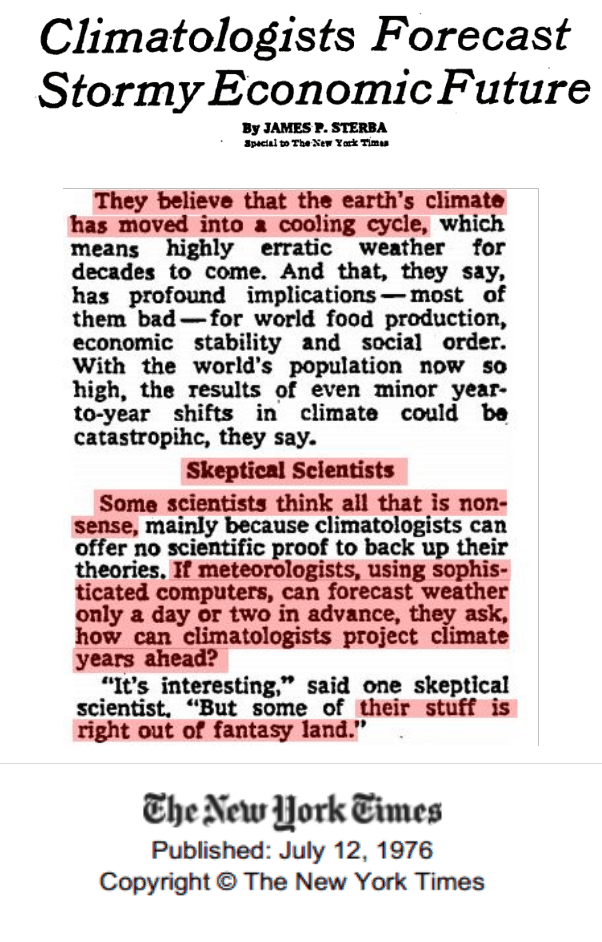
Time To Silence The Skeptics

In 1976, foolish skeptics didn’t trust official forecasts of catastrophic global cooling – doubting the ability of climate models to predict the weather years ahead. Forty years later, these same evil skeptics are blocking global warming acceptance for the same reason. Don’t the skeptics ever learn?

ScreenHunter_242 Feb. 06 08.11

Climatologists Forecast Stormy Economic Future – Climatologists Forecasting Dire Effects of Weather on World Economy and Social Order – View Article – NYTimes.com

Agenda 21, and How it Affects Rural Ontario! A MUST-READ!

Rural Ontario is certainly in the throes of a “correction”.

http://cherylgallant.com/2014/08/28/report-parliament-9/

Report from Parliament

August 28, 2014

I hope everyone had an enjoyable summer. Thank-you to all who attended the various constituency clinics that have been held throughout our Renfrew-Nipissing-Pembroke riding. Whether it was just to drop by and say hi, or to share an interest or concern, I appreciate the opportunity of you letting me know what is on your mind.

After the high cost of electricity, one of the issues that has arisen as a topic of concern is the public move by the City of Ottawa to petition the province to use its legislation to restrict growth in places like Renfrew County. That could mean no more provincial funding for roads, sewers, hospitals and other infrastructure renewal. Without infrastructure renewal, employment opportunities would leave as would residents who need services, and particularly our young people who need jobs. It has been suggested this is a result of “Agenda 21”, a United Nations’ policy the provincial government has adopted in an extreme form. This radicalized environmental version is now being pushed in Ottawa by the same liberal advisors behind the so-called “Green Energy Act” that has meant crippling electricity prices, resulting in high provincial unemployment and energy poverty.

In 2005, the liberal government in Ontario passed legislation called the “Places to Grow Act” to align its land use/planning codes and government policies to United Nations Agenda 21. Like many ideas that may sound good on paper, when it comes to implementation by individuals with no real-world experience, these ideas can become dangerous.

While many people support the United Nations for its ‘peacekeeping’ efforts, hardly anyone knows the organization has very specific land use policies they would like to see implemented in every village, town, city, county, province and nation.  The specific plan is called United Nations Agenda 21 Sustainable Development, which has its basis in Communitarianism.  Most Canadians have heard of sustainable development, but are largely unaware of the U.N. initiative Agenda 21. A non-governmental organization headquartered in Toronto called theInternational Council of Local Environmental Initiatives, ICLEI, is tasked with carrying out the goals of Agenda 21 worldwide.

In a nutshell, the plan calls for government to eventually take control of all land use removing decision making from the hands of private property owners.  It is assumed people are not good stewards of their land and “the government” will do a better job if it is in total control.  Individual rights in general are to give way to the needs of communities as determined by the governing body.

Human habitation, as it is referred to in Agenda 21, would be restricted to lands within the “Urban Growth Boundaries” of a city like Ottawa.  Only certain building designs are permitted.  Opponents of Agenda 21 also assert that rural property could be more and more restricted in what uses can be done on it.  The provincial government says it will support agricultural uses, eating locally produced food, and farmer’s markets, etc. In fact there are so many regulations restricting water and land use (there are scenic corridors, inland rural corridors, baylands corridors, area plans, specific plans, redevelopment plans, tree-cutting by-laws, endangered species legislation, huge fees, fines, etc.) that small farmers and rural landowners are struggling to keep their lands altogether.  County roads will not get paved. The push will be for people to get off of the land, become more dependent, and go into the cities.  People will have to move from private homes and into single dwellings like apartments, as homeownership will become largely unaffordable the way it is in many urban areas like Toronto today. More extreme measures like a federal liberal carbon tax will force people out of private cars and onto public transit that only exists in cities.

U.N. Agenda 21 proponents cite the affluence of North Americans as being a major problem which needs to be corrected. The document calls for a redistribution of wealth, lowering the standard of living for Canadians so that maybe the people in poorer countries will have more.  Although people around the world aspire to achieve the levels of prosperity we have in our country, and will risk their lives to get here, North Americans are cast in a very negative light for our energy consumption. Agenda 21 aims to reduce Canadians to a condition closer to average in the world.  Only then, say the promoters of Agenda 21, will there be their social justice which is the so-called cornerstone of the U.N. Agenda 21 plan.

I am pleased to thank members of County Council who are voicing their opposition to provisions of the “Places to Grow Act” ‘Agenda 21-type’ provincial legislation, and against the City of Ottawa’s position,  standing up for the people of Renfrew County. As your Federal Member of Parliament, I will oppose any effort by the liberal party in Ontario to redirect Federal Infrastructure funding away from rural or small town communities the way it takes provincial gas taxes away from rural drivers to pay for Toronto’s subways.

With your support and encouragement, I will continue to expose the hidden agenda of the merged liberal party of Toronto in Ottawa. They have condemned our children to a lifetime of debt repayment by promoting wacky social experiments like Agenda 21, the Places to Grow, Green Energy Acts and similar misguided policies.

Climate Alarmists are Not to be Taken Seriously! They are Scammers!

An economist’s bad climate advice


You are here: HomeAll PostsAn economist’s bad climate advice

  • CO2_fraud

If I need my car repaired, I do not take it to a dentist. If I am seeking advice about the climate I check out what climatologists and meteorologists are saying, at least those who have not sold their souls to the global warming/climate change hoax.

On September 3rd,  The Wall Street Journal published a commentary by Edward P. Lazeartitled “The Climate Change Agenda Needs to Adapt to Reality: Limiting carbon emissions won’t work. Better to begin adjusting to a warming world.”

Wrong! Wrong! Wrong! It’s cooling, not warming.

Apparently Mr. Lazear is unaware that the Earth has been in a cooling cycle for seventeen years. A visit to

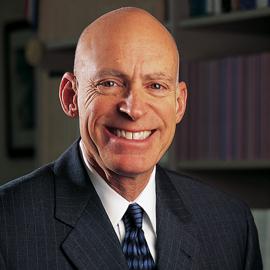
Edward P. Lazear

www.climatedepot.com or a subscription to the Heartland Institute’s monthly Climate & Environmental News or a copy of its policy studies, “Climate Change Reconsidered”, would help him understand why he’s wrong. Check out www.climatechangedispatch.com as well for the latest commentaries.

Perhaps his error should be forgiven because Mr. Lazear is an economist. He was the chairman of the President’s Council of Economic Advisors (2006-09) and head of the White House Committee on the Economics of Climate Change (2007-08). Presently he is a professor at Stanford University’s Graduate School of Business and a Hoover Institution fellow.

He’s not a fool, but like a lot of academics who lack a background in science, he has been fooled by the legion of global warming/climate change charlatans from Al Gore through the ranks of organizations such as the United Nations Intergovernmental Panel on Climate Change that depend on maintaining the hoax.

Mr. Lazear has fallen for the greatest lie ever; the assertion that greenhouse gases, especially carbon dioxide, are warming the Earth. The hoaxers are calling the past seventeen years “a pause” in warming, but it is actually an indicator that the Earth is on the cusp of the next ice age. The period in between ice ages is calculated at 11,500 years and we are at the end of the current interglacial period.

“The Obama administration is instituting a variety of far-reaching policies to reduce carbon emissions and mitigate climate change. Are any of these capable of making a difference?” asked Mr. Lazear. “Simple arithmetic suggests not.” Up to this point I was very pleased with his conclusion, but then he wrote “Given this reality, we would be wise to consider strategies that complement and may be more effective than mitigation—namely, adaptation.”

Humans have been adapting to the climate—the weather—since they emerged as homo sapiens about 195,000 years ago.

What Mr. Lazear wants the U.S, to do is limit “carbon emissions” but admits that “The economics also work against a major transformation in the technology of producing power, either mobile or stationary. Coal is cheap. Natural gas is becoming even cheaper.”

The primary flaw in his commentary is simply that more carbon dioxide is a good thing. As the primary gas utilized by all vegetation, more means greater crop yields and healthier forests. What carbon dioxide doesn’t do is “trap” heat long enough to lower the Earth’s temperature. It represents a mere 0.04% of the atmosphere.

The Earth is not a greenhouse with a glass roof. The amount of heat in the atmosphere is totally dependent on the amount of heat the Sun produces. In its current cycle, it is producing less.

“Carbon math,” wrote Mr. Lazear, “makes clear that without major effort and a good bit of luck, we are unlikely to control the growth of emissions enough to meet the standards that many climate scientists suggest are necessary.” Those scientists are usually on college or university faculties where securing federal and other grants to study a warming that is not occurring leads to urging limits on carbon dioxide. Others are just huge liars who, like Al Gore, have been making predictions of warming that have not and are not coming true.

There’s another reason why there will be more carbon dioxide in the atmosphere. It involves two of the most swiftly developing nations in the world, China and India, both of whom are building coal-fired plants to generate electricity as fast as they can. This is happening while the Environmental Protection Agency has been engaged in an all-out war on coal that has closed several hundred U.S. plants. If an especially cold winter occurs, the demand for electricity to warm homes and other facilities may overload a system that has been diminished in scope.

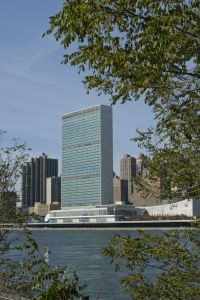
The United Nations Intergovernmental Panel on Climate Change is the driving force behind the global united-nations-building-1-1106992-mwarming hoax. It is holding a climate change summit on September 23. Guess who won’t be attending? Chinese president Xi Jinping, India’s prime minister, Narenda Modi, and for good measure, Germany’s chancellor, Angela Merkel. Others whose leaders will not be attending include Canada, Japan, and Russia.

In typical fashion, always predicting climate conditions decades from now, the United Nations, according to a report in The Guardian, “is warning of floods, storms and searing heat from Arizona to Zambia within four decades, as part of a series of imagined weather forecasts” to publicize the climate summit.

All of the forecasts made by a legion of climate charlatans in the 1980s and 1990s turned out to be WRONG.

You cannot trust the UN’s World Meteorological Organization which like the IPCC is just part of a vast matrix of groups that have been so severely corrupted by the global warming/climate change hoax that one must exercise caution when hearing its forecasts. If they are for anything beyond two weeks hence, you would be wise to be dubious.

Mr. Lazear is just one of many, often with distinguished careers in other fields than meteorology or climatology, who have bought into the hoax and who declaim the need to reduce carbon dioxide. He’s wrong. The others are wrong.

And you need to educate yourself to avoid being afflicted by various government policies intended to advance the hoax. To start with, do not vote for any politician who talks of global warming/climate change or uses the term “sustainability.”

– See more at: http://www.cfact.org/2014/09/07/an-economists-bad-climate-advice/#sthash.Pkjvx1cg.dpuf