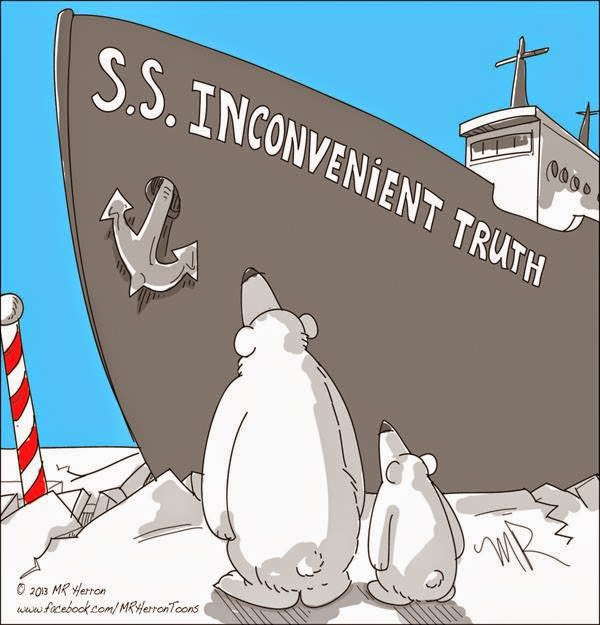
Wising Up to the Great Wind Power Fraud!

Jay Lehr: Sooner or Later the World will Wise-up to the Great Wind Power Fraud

Definition of fraud

The Rationale for Wind Power Won’t Fly
Heartland.org
Jay Lehr PhD
21 October 2014

To understand the folly that drives too much of the nation’s energy policies, consider these basic facts about wind energy.

After decades of federal subsidies – almost $24 billion according to a recent estimate by former U.S. Sen. Phil Gramm – nowhere in the United States, or anywhere else, has an array of wind turbines replaced a single conventional power plant. Nowhere.

But wind farms do take up space. The available data from wind-power companies, with which the Environmental Protection Agency agrees, show that the most effective of them can generate about five kilowatts per acre. This means 300 square miles of land – 192,000 acres – are necessary to generate the 1,000 megawatts (a billion watts) of electricity that a conventional power plant using coal, nuclear energy or natural gas can generate on a few hundred acres. A billion watts fulfills the average annual power demand of a city of 700,000.

Taxpayer support for wind energy will eventually come to an end, I optimistically predict. The only question is how soon. My pessimistic guess is it will take another decade – by which time the number of wind turbines, currently about 45,000 according to the American Wind Energy Association, could more than double.

It is unclear whether very many wind-energy firms have sufficient monetary reserves to cover dismantling these behemoth lawn sculptures once the tax credits wind down or disappear. If not, the result will be a scene from a science fiction movie – as though giant aliens descended onto our planet only to freeze in place.

tehachapi-wind-turbines-p1

The promise that wind and solar power could replace conventional electricity production never really made sense. It’s known to everybody in the industry that a wind turbine will generate electricity 30% of the time – but it’s impossible to predict when that time will be. A true believer might be willing to do without electricity when the wind is not blowing, but most people will not. And so, during the 30% of the time the blades are spinning, conventional power plants are also spinning on low, waiting to operate during the other 70% of the time.

JULY22

Importantly, the amount of electricity the wind can generate per acre of land is unrelated to the size of the turbines. Yes, by doubling the turbine’s blade length you quadruple the turbine’s power output. The problem? If the turbines are big and tall you need fewer of them, but they must be more widely separated. If they’re smaller you need more of them, closer together.

Another inescapable problem for electricity grids: The power generated by a wind turbine varies with the cube of the wind speed. When the wind speed doubles – say from 10 miles per hour to 20 miles per hour – the energy output increases eightfold (2 x 2 x 2). Someone, or some computer, has to balance these huge variations on the grid by calling on standby generators to produce more or less power to maintain the stability essential to the grid.

So, you might wonder, do high winds make turbines really hum? No. Turbines must be shut down in high winds because centrifugal force would begin to tear the blades apart. Also, the world has learned from experience in Europe – whose wind sculpture gardens may one day dwarf ours – that a one-millimeter buildup of bugs on the blades reduces their power output by as much as 25%.

There are other problems. Thousands of turbine breakdowns and accidents have been reported in recent years. The basic concrete foundations are suffering from strains, as reported by industry sources and on the wind-farm construction website windfarmbop.com.

turbine collapse devon

And there are environmental factors. Annoying, low-frequency noise produced by wind turbines, particularly large turbines, is driving some people away from their homes, according to numerous press reports. (Low-frequency noise regulations are already in place in Denmark while the phenomenon is the subject of continuing research.) The Audubon Society now estimates bird deaths from turbines exceed a million per year.

eagle 1

Wind is at best a niche player in energy. Grandiose claims made on behalf of wind-generated electricity are rubbish, whether or not renewable-energy advocates admit it. Wind-power developers will milk taxpayers across the world out of a few billion more dollars, euros or pounds in subsidies, tax credits and the like, but sooner or later the public will wise up.
Heartland.org

Lehr, Jay

Corruption and Collusion….Pillars of the Faux-Green Blob!

EXPOSED: How a shadowy network funded by foreign millions is making our household energy bills soar – for a low-carbon Britain

  • Shadowy pro-green lobbyists working at every level of the Establishment
  • Organisations are channelling tens of millions of pounds into green policies
  • Elite lobby group linked to Friends of the Earth, Greenpeace and the WWF
  • Current energy policies shaped by the Green Blob will cost up to £400billion
  • If continued, there will be further eye-watering energy bill rises for Britons
The 'Green Blob', a phrase first coined by former Environment Secretary Owen Paterson, is a group of pro-green lobbyists working at every level of the British Establishment

The ‘Green Blob’, a phrase first coined by former Environment Secretary Owen Paterson, is a group of pro-green lobbyists working at every level of the British Establishment

The Mail on Sunday today exposes how a ‘Green Blob’ financed by a shadowy group of hugely wealthy foreign donors is driving Britain towards economically ruinous eco targets.

The phrase the ‘Green Blob’ was coined by former Environment Secretary Owen Paterson after he was sacked from the Cabinet in July.

He was referring to a network of pro-green lobbyists working at every level of the British Establishment, who have helped shape the eco policies sending household energy bills soaring.

But investigations by this newspaper reveal the Blob is not just an abstract concept.

We have found that innocuous-sounding bodies such as the Dutch National Postcode Lottery, the American William and Flora Hewlett Foundation and the Swiss Oak Foundation are channelling tens of millions of pounds each year to climate change lobbyists in Britain, including Greenpeace and Friends of the Earth.

They have publicly congratulated themselves on their ability to create green Government policy in the UK – most notably after Ed Miliband steered through aggressive CO2 reduction targets in his 2008 Climate Change Act, and announced there would be no more coal power stations.

Yet the consequences of their continuing success are certain: further eye-watering rises in energy costs for millions of Britons and an increasing risk of blackouts.

According to leading energy analyst Peter Atherton of Liberum Capital, current UK energy policies shaped by the Blob will cost between £360 billion and £400 billion to implement by 2030. He said this will see bills rise by at least a third in real terms – on top of the increases already seen over the past ten years.

This bill dwarfs the EU’s £1.7 billion demand from Britain last week.

Scroll down for video 

Lobbying by the Blob helped lead to a new European Union emissions deal announced on Friday, when EU leaders including the Prime Minister agreed to triple the current pace of emissions cuts.

Following earlier deals, EU-wide emissions of CO2 are supposed to fall 20 per cent over the 30-year period 1990 to 2020.

Under the new agreement, this reduction must be doubled in just a decade, reaching ‘at least’ 40 per cent by 2030 – a goal that could only be accomplished through further massive investment in wind and nuclear energy.

At the heart of the Blob is a single institution – the European Climate Foundation (ECF) – which has offices in London, Brussels, The Hague, Berlin and Warsaw.

Every year it receives about £20 million from ‘philanthropic’ foundations in America, Holland and Switzerland, and channels most of it to green campaign and lobby groups.

Overview of the EU’s climate and energy policy architecture

An investigation has found the 'Green Blob' is working at every level of the British Establishment and Westminster (pictured)

An investigation has found the ‘Green Blob’ is working at every level of the British Establishment and Westminster (pictured)

It refuses to disclose how much it gives to each recipient, and does not publish its accounts. But it admits that the purpose of these grants is to influence British and EU climate and energy policy across a broad front.

Many more millions are fed directly to British and European lobby groups from the same overseas foundations which also fund ECF.

In its last annual report, ECF said working towards a 2030 deal was ‘a big focus area for ECF as a whole’.

ECF managing director Tom Brookes told The Mail on Sunday he provides ‘a fact-base’ to help policy-makers make the ‘many complex decisions that are necessary to move towards a high-innovation, prosperous and low-carbon future’. He added: ‘The UK is a leader in many of these fields.’

The Blob and Red Ed

Friday’s EU deal contains a get-out clause: if the rest of the world fails to agree a binding global emissions treaty at a UN conference in Paris next year, then Europe’s targets can be ‘reviewed’ – or in other words, abandoned.

Giants such as China, India and Australia have insisted they will not sign such a treaty. It is also unlikely to be approved by the US Congress, which is Republican-controlled.

However, thanks to Ed Miliband and his 2008 Climate Change Act, the get-out will make no difference for Britain. The UK is the only country which already has a binding target for 2050. By then, the law says, UK emissions must be 80 per cent down on 1990.

Mr Miliband’s Act also created a mechanism for ensuring the country sticks to a path that achieves this target – the so-called ‘carbon budget’. The scale of the challenge that its latest version poses is not widely realised.

Over the next 15 years, the electricity industry has to cut the CO2 it emits for every kilowatt it generates by 90 per cent – an unprecedented transformation.

An EU deal contains a climate change get-out clause - but thanks to Miliband's 2008 Climate Change Act - this makes no difference to Britain

An EU deal contains a climate change get-out clause – but thanks to Miliband’s 2008 Climate Change Act – this makes no difference to Britain

But the carbon budget also means the total amount of power generating capacity has to more than double. In order to meet the 2050 target, there has to be a massive shift towards electric vehicles and heating. While fossil fuel power plants will close, both their replacements and this vast additional capacity will have to be wind or nuclear – by far the most expensive types of power.

Remarkably, green lobby group Friends of the Earth not only conceived the Climate Change Act, but Bryony Worthington, the FoE official who came up with the idea and lobbied MPs to support it, later actually drafted it.

‘When you’re on the outside lobbying, you kind of hope that you are going to have an impact, [but] you’re never really very sure,’ she told a green seminar three years ago.

But she hit the jackpot. Her proposal was taken up first by the new Tory leader, David Cameron, and followed by the then-Labour Government. Worthington, who was seconded into the civil service, was asked to rewrite her lobbyist’s memo, this time as a law.

Once it was safely on the statute book, she left the civil service to form a new green campaign group, Sandbag, which presses the Government to adopt more stringent forms of carbon taxes. Like her previous employer FoE, it is now funded by ECF. Ed Miliband made her a Labour peer in 2011.

While the Act was going through Parliament, the ECF, which was launched in 2007-8, was giving money to Greenpeace UK, FoE, Christian Aid and the WWF to mount a campaign against coal-fired power plants. Also funded was Client Earth, a group of lawyers who secured court acquittals for ‘direct action’ protesters who broke into the Kingsnorth plant in Kent, climbed its chimneys and occupied it.

The campaign persuaded Mr Miliband to announce the cancellation of a planned new generating unit at Kingsnorth – and that there would be no new coal plants built in Britain.

Afterwards, the ECF president, Jules Kortenhorst, boasted that Miliband had acted in response to ‘a complex, multifaceted effort over a year and a half, with grass-roots mobilisation campaigns [and] behind the scenes lobbying’.

He added: ‘All of this work, backed by substantial philanthropic investment, resulted in UK Climate Change Secretary Ed Miliband announcing that no new coal-fired power plants would be built… This is an example of a policy that can be replicated, increasing its impact.’

Follow the money

The most significant source for the ECF’s millions is a body called Climate Works – a private foundation which channels colossal sums to climate campaigners worldwide.

The Climate Works manifesto was set out in 2007 in a document entitled ‘Design to Win: Philanthropy’s Role in the Fight Against Global Warming’. It said that to be effective, a campaign to change government policies on energy and emissions would need at least $600 million from donors.

Generous grants have been given to campaigners in countries such as Britain who have detailed knowledge of their local political systems. Their brief is to 'promote renewables and low emission alternatives'. Pictured is Drax  Power Station near Selby

Generous grants have been given to campaigners in countries such as Britain who have detailed knowledge of their local political systems. Their brief is to ‘promote renewables and low emission alternatives’. Pictured is Drax Power Station near Selby

It was driven by the belief that without radical action, ‘we could lose the fight against global warming over the next ten years’.

It advocated the giving of generous grants to local campaigners in countries such as Britain who had detailed knowledge of the way their political systems operated.

As well as better energy efficiency, carbon taxes and emissions caps, they must ‘promote renewables and low emission alternatives’. Utility companies must be given ‘financial incentives’ – in other words, enormous subsidies from tax and bill payers – to make this happen.

Climate Works soon achieved its ambitious fundraising target, with a grant in 2008 of $500 million from the William and Flora Hewlett Foundation, which spends the fortune amassed by the co-founder of the Hewlett-Packard computer firm. This was followed by further grants of up to $100 million, and donations of $60 million from the sister Packard foundation. In July, a report by a US Senate committee named the Hewlett foundation as a key element in a ‘billionaires’ club’ which effectively controlled the environmental movement, pumping more than half a billion dollars a year into green groups around the world.

It claimed these ‘wealthy liberals fully exploit the benefits of a generous tax code meant to promote genuine philanthropy and charitable acts’, but instead were transferring money to ‘activists’ to ‘promote shared political goals’.

One of the US-based Climate Works’s first acts was to set up and fund ECF as its European regional office. All ECF’s main funders are represented on ECF’s board, including Charlotte Pera, who is also Climate Works’s CEO. Susan Bell, ECF’s vice-chairman, was formerly the Hewlett foundation’s vice-president.

Another director is Kate Hampton, an executive director at the Children’s Investment Fund, a UK charity with assets worth £324 million.Others come from finance and business. ECF’s chairman is Caio Koch-Weser, vice-chairman of Deutsche Bank, whose contacts in Brussels could not be better: from 2003–5, he chaired the EU’s Economic and Financial committee. Yet another director is Mary Robinson, the former president of Ireland.

No transparency 

It is hard to assess the ECF’s full impact for a simple reason – although it publishes the names of some of the organisations it funds, it does not state how much it gives, nor exactly how this money is used.

The ECF’s Tom Brookes said: ‘The projects we fund all fall within the overall mission of the Foundation to support the development of a prosperous low-carbon economy in Europe.’

He would not explain why no amounts were stated, saying only that ECF’s annual report ‘describes the objectives of each ECF programme area and its significant grantees.

‘We are confident that this is a sufficient level of detail to provide insight into the work of the Foundation… Our policy on the information we publish reflects our responsibilities to our grantees and donors.’

Nevertheless, it is clear from the information that is available that the list of ECF funding recipients is a Who’s Who of the green movement, including Friends of the Earth, Greenpeace, the WWF, Client Earth, Carbon Brief, the Green Alliance, and E3G, the elite lobby group that persuaded the Government to set up the £3 billion Green Investment Bank.

The 2013 ECF report sets out its priorities for Britain, praising its ‘leadership on the climate front’ – thanks to the Climate Change Act.

It also boasts that its grants had an impact on this year’s Energy Act: ‘ECF grantees such as Green Alliance, E3G, and Greenpeace helped secure important milestones such as an emissions performance standard for new power stations.’

The 2013 ECF report boasts of gains made in emissions performance standards for new power stations. File image used

The 2013 ECF report boasts of gains made in emissions performance standards for new power stations. File image used

To ECF’s dismay, however, the supposed UK ‘consensus’ on climate and energy is now in jeopardy: ‘Household energy bills have shot to the top of the political agenda, and progress on decarbonisation is tangled in competing visions of the country’s energy future… A growing number of media and political voices are casting doubt on the climate science and the economic case for action.’

Against this opposition, ECF’s 2013 report says it intends to work with British greens to ‘rebuild confidence in the low-carbon transition’, by ‘fact-checking the UK media’s coverage of climate and energy issues’.

It says it will ‘establish a new unit that will promote evidence-based discussions in the media and mobilise authoritative voices on the low-carbon economy’.

Since the report was published, this unit has come into being, run by former BBC environment correspondent Richard Black. How effective it will be remains to be seen.

Meanwhile, it is clear that the sheer scale of this lavishly funded lobbying effort dwarfs that of its opponents.

The Global Warming Policy Forum in London, Europe’s only think-tank which is sceptical about climate science and energy policy, has an annual budget of £300,000 and employs just three people.

Its director, Dr Benny Peiser, said yesterday: ‘At the end of the day, someone will have to be held accountable for us committing economic suicide. We are the only organisation that does what we do – against hundreds on the other side, all saying the same thing.’

People Fed Up With Climate Change Scam…Reality is Gaining Popularity!

The age of climate alarmism is coming to an end

JIM LAKELY| OCTOBER 19, 2013 | 12:00 AM

You can be forgiven for not noticing that the United Nations’ Intergovernmental Panel on Climate Change released a summary of its Fifth Assessment Report late last month.

The report landed with a thud, criticized and even mocked by many leading climate scientists. The distinguished science journal Nature editorialized that this should be the last report issued by the UN body.

This is just the latest signal that the age of climate alarmism is over. Given five tries to convince the world that human activity is causing catastrophic warming of the planet, runaway sea-level rise and various weather disasters, the public still doesn’t buy it.

We’re all skeptics now because the science simply does not back up the hypothesis. For starters, there’s been no rise in global temperatures for 15 years.

The IPCC’s Fifth Assessment Report concedes for the first time that global temperatures have not risen since 1998, despite a 7 percent rise in carbon dioxide (CO2) emissions.

To put that into perspective, global human CO2 emissions in the last 15 years represent about one-third of all human CO2 emissions since the start of the Industrial Revolution, and yet temperatures didn’t budge.

Nearly all of the UN-approved climate computer models were wrong. The IPCC finally admitted as much.

The IPCC also admits that the “hockey stick” it used to feature in past reports wasn’t accurate. Penn State professor Michael Mann has been dining out for years on his infamous “hockey stick,” a dread graph featured by Al Gore in his Oscar-winning documentary “An Inconvenient Truth.”

The graph looked so dramatic — like a hockey stick — only because it ignored the Medieval Warm Period, a time about a thousand years ago when temperatures were warmer than today — when wine grapes grew in England and Greenland was green.

The “hockey stick” is missing from the Fifth Assessment Report, and the IPCC admits the Medieval Warm Period was warmer and more global than it claimed in the past.

A third major admission by the IPCC: No increases in droughts, hurricanes, typhoons and other extreme weather. Every time severe weather hits the United States, you could count on IPCC-related scientists, professional climate alarmists and the media to attribute it all to man-made global warming. No more.

The latest IPCC report admits to having “low confidence” in predictions of more frequent or more extreme droughts and tropical cyclones.

While the IPCC is taking its lumps for being wrong on these and other matters, a new kid on the block of climate science is taking a victory lap: The Nongovernmental International Panel on Climate Change released its own report, Climate Change Reconsidered II: Physical Science. Packed with 1,000 pages of peer-reviewed literature — and then peer-reviewed again by NIPCC’s team of some 50 scientists from around the world — Climate Change Reconsidered II comes to the conclusions the United Nations is only now and reluctantly admitting.

The NIPCC report concludes that human impact on climate is very modest, especially when compared to natural cycles. Future warming due to human greenhouse gases is likely to be only 1-2 degrees Celsius, and be a boon for flora and fauna alike.

Higher levels of carbon dioxide will not cause weather to become more extreme, seas level rise isn’t accelerating and polar ice caps aren’t melting at alarming rates.

Global warming isn’t the crisis many people said it was a few years ago. That’s bad news for the IPCC and the many environmental groups and politicians that hooked their wagon to it. But it’s good news for the rest of us.

Jim Lakely (jlakely@heartland.org) is director of communications at The Heartland Institute, which published Climate Change Reconsidered II: Physical Science on behalf of the Nongovernmental International Panel on Climate Change. For more information, visit ClimateChangeReconsidered.org.

Wind Turbine Contracts…Lefty’s Use Them To Reward Their Cronies! Corruption!

Ex-Rep. Istook: Wind Energy a Crony Capitalist Gift

Thursday, 23 Oct 2014 10:13 PM

By Sean Piccoli

Wealthy investors in wind power are reaping profits from an expensive — and subsidized — form of green energy that is driving up the electricity bills of ordinary Americans, a former Oklahoma congressman told Newsmax TV on Thursday.

Under the guise of saving the planet from global warming, wind power has become a taxpayer ripoff and a boon to investors claiming massive federal subsidies for an industry that cannot compete on price with traditional energy sources, former Republican Rep. Ernest Istook told “MidPoint” host Ed Berliner.

Of the $40 billion annually doled out to various green energy incentives, grants and loans, one of the biggest magnets for public funds is a wind energy tax credit first enacted in 1992, said Istook.

“For every megawatt hour that [producers] generate through wind energy, they get $23 from the U.S. Treasury,” he said, “and of course you multiply that by the many thousands of megawatt hours that are generated — which is still a small fraction of what the country uses — and they’re talking about an $18 billion renewal of this.

“Now, this was supposed to be a temporary tax credit back in 1992 to help the industry get on its feet,” said Istook. “Well, the problem is wind power is such an expensive way to generate electricity, that even with these major subsidies — plus all sorts of subsidies from different states — it still is one of the costliest forms of power. And it makes people’s electric bills skyrocket.”

Istook said a new study from the Energy Information Administration — the U.S. Department of Energy’s statistical service — finds electric rates rising four times faster in the states that use the most wind power.

He said the arrangement continues year in and year out thanks to a classic “vicious cycle,” in which subsidy recipients use their profits to secure more subsidies.

“I want to give you a quote, though, from one individual who was a major wind energy investor and getting a lot of these tax benefits: Warren Buffett,” said Istook, citing the Nebraska-based billionaire investment guru.

“These are his words, not mine: ‘We get a tax credit if we build a lot of wind farms. That’s the only reason to build them. They don’t make sense without the tax credit.’ Those are Warren Buffett’s words,” said Istook.

“The people that are making this investment recognize that unless they can get these crony capitalism dollars, it’s a bad investment,” he said. “But government is paying them to do that. It’s paying some people to get rich at our expense while our utility bills go up”.

Istook said the public has a chance to put a stop to the tax credit, which expired last December, but is being pushed for retroactive renewal by the administration during the lame-duck congresional session that begins after the Nov. 4 midterm elections.

“They’ve got the skids greased in the U.S. Senate to do it,” said Istook.

And they will, too, he said, “unless people call their member of Congress and say, ‘Don’t vote for anything that renews this $18 billion giveaway, no matter what it’s packaged with. Don’t vote for it.’ That’s the only way we’re going to put a stop to this crony capitalism.”

Leading Meterologist Tells Us What We Already Knew….Climate Alarmism is a Scam!

Climate change PROVED to be ‘nothing but a lie’, claims top meteorologist

THE debate about climate change is finished – because it has been categorically proved NOT to exist, one of the world’s leading meteorologists has claimed.

Published: Wed, October 22, 2014

climate-changeClimate change has been ‘disproved’ and polar ice is ‘increasing’ [ AP]

John Coleman, who co-founded the Weather Channel, shocked academics by insisting the theory of man-made climate change was no longer scientifically credible.

Instead, what ‘little evidence’ there is for rising global temperatures points to a ‘natural phenomenon’ within a developing eco-system.

In an open letter attacking the Intergovernmental Panel on Climate Change, he wrote: “The ocean is not rising significantly.

“The polar ice is increasing, not melting away. Polar Bears are increasing in number.

“Heat waves have actually diminished, not increased. There is not an uptick in the number or strength of storms (in fact storms are diminishing).

“I have studied this topic seriously for years. It has become a political and environment agenda item, but the science is not valid.”

climate change global warming mythMan made climate change is a myth according to Coleman, inset [AP]

I have studied climate change seriously for years. It has become a political and environment agenda item, but the science is not valid

John Coleman, co-founder of the Weather Channel

Mr Coleman said he based many of his views on the findings of the NIPCC, a non-governmental international body of scientists aimed at offering an ‘independent second opinion of the evidence reviewed by the IPCC.’

He added: “There is no significant man-made global warming at this time, there has been none in the past and there is no reason to fear any in the future.

“Efforts to prove the theory that carbon dioxide is a significant greenhouse gas and pollutant causing significant warming or weather effects have failed.

“There has been no warming over 18 years.”

The IPCC argue their research shows that man-made global warming will lead to extreme weather events becoming more frequent and unpredictable.

US News and World Report noted that many of the world’s largest businesses, including Coke, Pepsi, Walmart, Nestle, Mars, Monsanto, Kellogg, General Mills, Microsoft, and IBM, “are now engaged and actively responding to climate science and data.”

Mr Coleman’s comments come as President Barack Obama came under fire from climatologists as federal data revealed The United State’s energy-related carbon pollution rose 2.5 per cent despite the President’s pledges to decrease it.

President Obama told 120 world leaders at the United Nations climate summit last month that America had done more under his watch in cutting greenhouse gases than any other country.

Despite this, the Energy Information Administration’s Monthly Energy Review showed an increase in the use of energy from coal.
World leaders have pledged to keep the global average temperature from rising two degrees Celsius above pre-industrial levels to prevent the worst consequences of climate change.

The US, along with the UK and other developed countries, is expected to pledge furtheractions on climate change early next year.

Owen Paterson No Longer Silent. Willing to Tell the Truth About the Faux-Green Scam!!!

A Green Mess

With the Right of the Tory party mutinous, and clear signs that the Conservatives’ support in their rural hinterland is drifting away, the decision by David Cameron to fire environment minister Owen Paterson, a leading figure on the Conservative right who also appeared to “get “ the countryside, earlier this year made little political sense.

Predictably enough, Paterson has taken advantage of the freedom that his firing has brought him, proclaiming a series of inconvenient truths about Britain’s environmental policy and, for that matter, environmental-policy-making.

EUReferendum’s Richard North discusses this here and here at some length, noting Paterson’s opposition to the wind turbines that are so loathed in the countryside:

In the Global Warming Policy Foundation lecture on Wednesday, Mr Paterson said of wind farms that “this paltry supply of onshore wind, nowhere near enough to hit the 2050 targets, has devastated landscapes, blighted views, divided communities, killed eagles” . . .

He went on to say that wind turbines had devastated ‘the very wilderness that the ‘green blob’ claims to love, with new access tracks cut deep into peat, boosted production of carbon-intensive cement, and driven up fuel poverty, while richly rewarding landowners”.

This, Mr Paterson also said, is “the single most regressive policy we have seen in this country since the Sheriff of Nottingham” . . .

North continues:

Readers here do not need to rehearse Mr Paterson’s arguments, but it can never be said too many times that the current energy policy is unattainable – and at a cost of £1.3 trillion, which is roughly the size of the national debt….

We hear quite a bit — and rightly so — about what the current Conservative-led coalition has done to fix the British economy, but the ever-increasing costs of its climate-change policy ought not to be left out of the equation.

Back to North:

Even if Britain and the whole of the EU were to stick to our emissions targets (which we surely won’t), and to hit them (which, actually, we can’t), we would still not come anywhere close to what we are told is needed to save the planet. This is for a very simple reason: the rest of the world won’t do it. Last year, carbon emissions per head in China exceeded those of Britain for the first time, and China has more than 20 times as many heads as we do. The EU is responsible for less than 10 percent of global emissions, so when we set our targets we knew – and said – that we were in no position to stop global warming. The point was to set a lead which others would follow.

They haven’t…

Isn’t it rather extraordinary, [British journalist Charles] Moore concludes, that no mainstream party has dared to point any of this out? Don’t they know there’s an election on? Is it surprising that voters think: “They’re all the same?”

When it comes to orthodoxies of contemporary environmentalism there’s quite a bit to that: There’s a reason that UKIP is winning the support that it is.

Unreliable, Unaffordable, Unwanted Wind Turbines…They’ve got to go!

Parker Gallant Uncovers the Hidden Costs of Ontario’s Insane Wind Power Policy

turbines ontario

Ever tried to imagine hell on earth?

Ever imagined a nightmare turned to reality?

Then you’ve probably landed in Ontario.

Ontario is the place where the most bizarre energy policy in the world has seen thousands of giant fans speared into the backyards of homes – in the most agriculturally productive part of Canada. When we say “bizarre” we mean completely bonkers.

Canada has one of the “cleanest” power generation mixes on the planet, with the vast bulk of its electricity coming from zero emissions sources such as nuclear and hydro.

Ontario energy mix 2013

As Professor Ross McKitrick explains in this post, Ontario has built a policy that sees wind power (when the wind is blowing) “displace” emissions free hydro at enormous cost to power consumers and taxpayers.

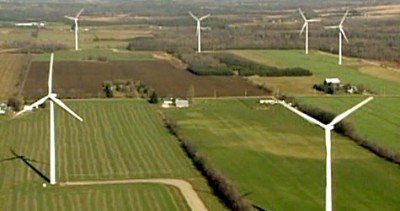
And then there’s the colossal human impact of plonking thousands of turbines as close as 550m from hundreds of homes (see our posts hereand here).
image

Adding to the lunacy is the fact that wind power outfits are guaranteed to reap fat profits despite market conditions.

Where the wholesale market price for power in Ontario is between $30-50 per MWh, wind power generators pocket a fixed price of $135 MWh – even if there is absolutely no market for it and the Province literally has to pay neighbouring US States to take it.

Parker Gallant – a former banker – is out to ensure that Ontario’s power consumers and taxpayers are aware of just how ludicrous its energy policy has become.

Parker Gallant: the cost of curtailing wind is borne by all

Parker has been busy letting everyone know about the the hidden financial costs of Ontario’s wind farm fever.

Late last year the Ontario Energy Minister said that the cancelling a gas plant would cost the people of Ontario no more than the price of a cup of “Timmies”: coffee brewed up by Canada’s favourite coffee franchise, Tim Horton’s.

A few weeks back, during a windy weekend, Ontario was “blessed” with an abundance of wind power – which – on the first pass – cost it $135 per MWh in guaranteed payments to wind power outfits. But – because what was produced was excess to requirements – Ontario’s taxpayers were stung a second time for the cost of paying New York and Michigan and Quebec to take it.

The total cost was hardly small change – whether measured in cups of coffee or hard cold cash. Here’s Parker doing the sums.

Another expensive weekend, thanks to Ontario wind farms
Parker Gallant
7 October 2014

On the weekend just past, October 4 and 5, wind turbines in Ontario once again proved they can produce lots of electricity—when demand for power is low. At the same time, they drove down the hourly Ontario electricity price (HOEP) and played a role in generating lots of power that was then exported to our neighbours at a substantial cost to Ontario’s ratepayers.

Total demand for electricity on October 4 was 393,816 MWh (megawatt hours); 18.1% (71,328 MWh) of it was exported. In the process of exporting the HOEP generated a negative “weighted average price” of minus 32 cents a MWh. Ontario paid our neighbours to snap up our excess power which presumably included all of wind’s production of 32,958 MWh. Ontario’s ratepayers picked up the tab which for wind power alone ($135.00/MWh + .32 cents = $135.32 MWh) was $4,459,877.

Sunday, October 5 wasn’t much better: total demand was 379,656 MWh and 66,408 MWh (17.5%) was exported at a negative “weighted average price” of minus $2.64 a MWh. Wind production for that day was 30,359 MWh and we must assume it again played a role in driving down the HOEP. So, those wind exports alone cost Ontario’s ratepayers $4,181,649 ($135/MWh + $2.64 = $137.24 MWh).

Ontario ratepayers picked up the tab of approximately $8.6 million for those two days. That $8.6 million would be equivalent, to paraphrase our Energy Minister Bob Chiarelli, the price of a “Timmies” coffee for Ontario’s 4.6 million ratepayers.

If one also includes the $7 million or so that the other 75,000 MWh exported cost it becomes two “Timmies”! Add in the price of the steamed off power from Bruce Nuclear, payments to the gas plants for idling, to OPG for the Atikokan biomass plant and their spilled hydro, to the NUG (non utility generators) contracted parties, the weekend probably hit the ratepayers with total costs well over $20 million.

If that happened every weekend the cost would be equivalent to the cost of moving a couple of gas plants! Lots and lots of Timmies.

When will Ontario’s Energy Minister, Bob Chiarelli wake up and smell the coffee?

This story was also picked up Sun News – aptly describing Ontario’s wind turbines as a money pit. Here’s an interview between journalist Jerry Agar and Parker Gallant, that was aired on October 8. The transcript follows…

**********

Jerry Agar: So over the weekend, this one just past it was proven in Ontario, that by golly those big wind turbines can pump out some power so Parker Gallant is here. So this is all good news?

Parker Gallant: Well not really Jerry, no because when they were pumping….

Jerry Agar: Are you going to be grumpy about this?

Parker Gallant:  I am, that’s my usual ploy isn’t it?

Jerry Agar: I see.

Parker Gallant: Yes they were pumping out out the power, but we didn’t need it so that meant we had to export it. As a result of that it drove down the wholesale price so we were paying New York and Michigan and Quebec to take our excess power.

Jerry Agar: I see, so when we export power – we don’t sell it, we pay people to take it from us.

Parker Gallant: You’ve got it.

Jerry Agar: Are we making it up in volume – I mean – how exactly does that make any sense?

Parker Gallant: It doesn’t make any sense and that’s certainly been my efforts is to make the Ministry of energy aware of that. We shouldn’t be handing out any more wind turbine contracts because we don’t need the excess power.

Jerry Agar:: Well what was the point of even producing power then?

Parker Gallant:  Well, there was a lot, believe it or not, there was a lot of wind turbine developers in that same weekend, that were paid for not producing power. That’s on top of those that were paid for producing the power.

Jerry Agar: Just a minute, I want to add this up. We were paying people not to produce power then we were producing power and we were paying people to take that power.

Parker Gallant: You’ve got it.

Jerry Agar: All right. This from the government that spent $1 billion not building a power plant.

Parker Gallant: That’s right, or moving a power plant.

Jerry Agar: Yes, yes. Now the government got re-elected.

Parker Gallant: I know. Its unfortunate but.

Jerry Agar: We live in a world we could never have imagined.

Parker Gallant: No we can’t.

Jerry Agar: So then what’s the addiction to these wind turbines if in fact they were pumping out power, and they were reducing our cost because hey they turn around and around for free apparently with wind power, it would all be great.

Parker Gallant:  it would be yeah, but we don’t offer, we don’t get competitive contracts. We just simply say we are going to pay you $135 a MWh four 13 1/2 cents per kilowatt hour
if you throw up a wind farm. You know that makes…

Jerry Agar: So for the producers it’s a no lose situation.

Parker Gallant: It’s a no lose situation. Exactly. They get paid whether they produce power or they don’t produce power as long as that wind turbine up, and they don’t actually produce power,
they still get paid.

Jerry Agar: But we don’t need the power. So what are we building them for?

Parker Gallant: Well, I don’t know. Perhaps to green the province, to save the planet from climate change. I mean that seems to be the objective.

Jerry Agar:  Its ideological?

Parker Gallant: Yes it’s very ideological.

Jerry Agar: Because it’s certainly not economical.

Parker Gallant: No it doesn’t make any economic sense and of course they never did a cost benefit analysis.

Jerry Agar: There is another issue here. Do you give credence to those people who actually say that living next to them is damaging?

Parker Gallant: Oh definitely. I’ve met people that have lived next to them and are forced to move out of their homes. There is a percentage of the population – there was a study just came out of the UK I believe that says that a certain percentage of the population will be affected by the infrasound, the noise that we can’t hear, that’s emanating from these wind turbines throughout the province.

Jerry Agar: It doesn’t bother everybody?

Parker Gallant: No it doesn’t bother – its like (sea sickness) …

Jerry Agar: So I’d go and it would bother me but it wouldn’t bother you.

Parker Gallant: That’s correct. Yes. There’s a percentage of the population, so 5 to 15% that will be affected. Autistic children are very much at risk when they live near a wind turbine.

Jerry Agar: Really?

Parker Gallant: Yes.

Jerry Agar: Okay but there’s never any consideration. This government  has, I would use the word foisted these things on communities. They haven’t even asked the community. They haven’t even had the deference to go to the Mayor – much less the local citizens.

Parker Gallant: No. That’s true. The Green Energy Act gave the provincial government all the powers to be able to put these wind turbines up no matter where, just as long as they meet the setback requirements and you know the minimum standards that they set under the Green Energy Act.

Jerry Agar: There are more being built. Construction of a giant wind turbine project in Huron County will go on. The judge denied the work stoppage proposed by local residents.

Parker Gallant: The judge did not grant the stay that the citizens had brought to stay motion before the courts to basically stop the construction. But there is still an appearance that will be coming up in the Superior Court of Ontario. So that means that if the citizens win in the Superior Court, the developers will have to remove and decommission those wind turbines. So why they’re taking the chance is beyond me, except maybe they get them in before the cold weather season hits.

Jerry Agar: You know, this is one of those situations I believe where the mass of the population in urban areas here in Toronto, where you and I are right now, love these things, because they love that greenie idea, but they don’t live next to them.

Parker Gallant: No they don’t. Well a lot of people in the green movement will say “Oh we live next to one” because there is one at Exhibition Place.

Jerry Agar: The thing barely turns.

Parker Gallant: It barely turns and it doesn’t provide any power. And it’s mostly all…

Jerry Agar: Not hooked up? A show thing?

Parker Gallant: It’s sort of hooked up. It really is a show thing. If you go back …

Jerry Agar: And nobody lives there anyway.

Parker Gallant: Yes, no, right.

Jerry Agar: All right. But if they went and stuck one right next to one of the condo buildings, although I don’t know if you will be able to fit one in now in down town Toronto. They will feel differently about it.

Parker Gallant: Yeah, I thought they should mandate putting 49 metre blades on top of the buildings that they’re allowing to be built here. The condo buildings. And maybe we could generate some power because they would be way up there in the higher atmosphere and….

Jerry Agar: And then your condo could just jiggle you to sleep. That would be nice. All right, thanks very much.

Parker Gallant: Well thank you Jerry.

Jerry Agar: I don’t know if you made us feel better but thanks for the information.
Sun News

Toronto turbine at Exhibition Place

Parker then knocked up this spreadsheet itemising the total cost of paying neighbours to take Ontario’s excess wind power.

Ontario’s expensive electricity week: what could $44M have bought?
Ontario Wind Concerns
13 October 2014

Blowing Ontario’s ratepayer dollars Money lost in just one week could have paid for 580 nurses

So far this October, Ontario’s electricity sector has been blowing our money away at an awesome pace.

Scott Luft, whom I admire for his ability to assimilate comprehensible data, posted on Tumblr some disturbing information about the first 10 days of electricity production (and curtailed production) in Ontario. Because the fall means low demand for electricity, our current surplus energy supply (principally, wind, solar and gas) was curtailed to the extent that it cost ratepayers $20 million, while the HOEP (hourly Ontario energy price) generated only $8.2 million. That $20 million of curtailment cost will find its way to the Global Adjustment (GA) pot and onto ratepayers’ bills.

I took a different route and looked at the cost of Ontario’s exports for the week of October 3rd to October 9th —those numbers are also disturbing. During those seven days, Ontario exported 399,048 MWh (megawatt hours) which was 15.7% of total Ontario demand. Wind turbines generated and delivered 184,204 MWh, which was surplus to our needs and probably exported. The money generated via the HOEP from all of the export sales was $56,300 or 14 cents a MWh. Wind turbines produced just $15,164 and we sold that production for just 8 cents a MWh.

To put this in perspective, the exported production’s cost all-in (contract value per MWh + regulatory + transmission + debt retirement charge) averaged $110/MWh, according to the latest monthly IESO Market Summary August 2014 report’s findings. Using $110/MWh the 399,000 MWh exported in those seven days hit Ontario’s ratepayers with about $44 million (less the $56,300) via allocation to the GA—that will show up on the electricity line on our bills.

Wind generation alone at the contracted rate of $135/MWh cost ratepayers $24,900,000 plus another $5 to $6 million for their curtailed production, according to Scott Luft. That $30 to $31 million plus the cost of steaming off Bruce Nuclear, paying idling gas plants, etc., and the additional cost of solar generation, would confirm the $44 million is a reasonable estimate.

What has Ontario missed out on by having ratepayers subsidizing those exports by $44 million for those seven days?

  • the annual salary of 293 family physicians, or
    580 nurse practitioners, or
  • repairing all the Toronto District School Board’s school roofs, or
  • one and a half days of interest on Ontario’s public debt, or
  • all of Ontario’s 301 MPP salaries for a full year, or
  • 40 MRI machines, or
  • 100 months of mortgage payments on the empty MaRS Phase 2 building, or
  • increasing funding for autistic children by 30% over current levels.

Just a few examples of how the wasted subsidy money that cost each Ontario ratepayer $10 for just one week could have been used!
Parker Gallant

Wind is Novelty Energy…..Scrap the Climate Change Act!

UK’s Wind Power Debacle Threatens to Leave Brits in the Dark

Owen-Paterson_323885k

Scrap the Climate Change Act to keep the lights on, says Owen Paterson
The Telegraph
Christopher Hope
11 October 2014

The Climate Change Act 2008, which ties Britain into stringent environmental measures, should be suspended – and then scrapped – if other countries refuse to agree legally binding targets, says Owen Paterson MP

Britain will struggle to “keep the lights on” unless the Government changes its green energy policies, the former environment secretary will warn this week.

Owen Paterson will say that the Government’s plan to slash carbon emissions and rely more heavily on wind farms and other renewable energy sources is fatally flawed.

He will argue that the 2008 Climate Change Act, which ties Britain into stringent targets to reduce the use of fossil fuels, should be suspended until other countries agree to take similar measures. If they refuse, the legislation should be scrapped altogether, he will say.

The speech will be Mr Paterson’s first significant intervention in the green energy debate since he was sacked as environment secretary during this summer’s Cabinet reshuffle.

In his address, he will set out an alternative strategy that would see British homes serviced by dozens of small nuclear power stations.

The Climate Change Act 2008, which ties Britain into stringent environmental measures, should be suspended – and then scrapped – if other countries refuse to agree legally binding targets, says Owen Paterson MP

He will also suggest that home owners should get used to temporary power cuts — cutting the electricity to appliances such as fridges for two hours at a time, for example — to conserve energy.

Mr Paterson will deliver the lecture at the Global Warming Policy Foundation, a think tank set up by Lord Lawson of Blaby, a climate-change sceptic and former chancellor in Margaret Thatcher’s Cabinet.

In the speech, entitled “Keeping the lights on”, he will say that Britain is the only country to have agreed to the legally binding target of cutting carbon emissions by 80 per cent by 2050.

Campaigners fear that this will bring a big increase in the number of wind farms.

They say that to hit the target Britain must build 2,500 wind turbines every year for 36 years.

Mr Paterson will say that the scale of the investment required to meet the 2050 target “is so great that it could not be achieved”. He will warn that Britain will end up worse off than if it adopted less ambitious but achievable targets. Mr Paterson voted for the 2008 Climate Change Act in opposition and loyally supported it when he was in power.

However, since he left office he has considered the effect of the legislation and has decided that Britain has to change course.

He will argue this week that ministers should exercise a clause in the Act that allows them to suspend the law without another vote of MPs.

In his speech, on Wednesday night, Mr Paterson will state that, without changes in its current policy, large-scale power cuts will plunge homes across the country into darkness.

“Blind adhesion to the 2050 targets will not reduce emissions and will fail to keep the lights on,” he will say. “The current energy policy is a slave to flawed climate action.

“It will cost £1,100 billion, fail to meet the very emissions targets it is designed to meet, and will not provide the UK’s energy requirements.

“In the short and medium term, costs to consumers will rise dramatically, but there can only be one ultimate consequence of this policy: the lights will go out at some time in the future.

“Not because of a temporary shortfall, but because of structural failures, from which we will find it extremely difficult and expensive to recover.”

He will say that the current “decarbonisation route” will end with the worst of all possible worlds.

The Government will have to build gas and coal power stations “in a screaming hurry”.

Britain’s energy needs are better met by investing in extracting shale gas through fracking and capturing the heat from nuclear reactors, Mr Paterson will argue.

He proposes a mix of energy generation based on smaller “modular” nuclear reactors and “rational” demand management. This would see dozens of small nuclear power stations, using reactors that are already fitted into submarines, being built around the country.

Home owners would also have to get used to timed power cuts using special switches that would cut electricity used by appliances.

“Let us hope we have an opportunity to put it into practice,” he will say. “We must be prepared to stand up to the bullies in the environmental movement and their subsidy-hungry allies.

“What I am proposing is that instead of investing huge sums in wind power, we should encourage investment in four possible common sense policies: shale gas, combined heat and power, small modular nuclear reactors and demand management.

“That would reduce emissions rapidly, without risking power cuts and would be affordable. What’s stopping this programme? Simply, the 2050 target is.”

Mr Paterson has spent the past few months visiting rural Tory seats — he visited six in the week after he was sacked by David Cameron in July.

He said he was appalled at the damage to the countryside from new pylons to take electricity from remote onshore wind farms.

This week’s speech will be Mr Paterson’s first intervention since he lost his job in the Cabinet reshuffle in the summer. He is to make another speech on Europe before Christmas as he seeks a more active role on the Right.

Mr Paterson has already set up a think tank called UK2020 to consider new policies on personal taxation, immigration and the economy.

However, his intervention was dismissed last night by Edward Davey, the Liberal Democrat Energy and Climate Change Secretary.

Mr Davey said: “Ripping up the Climate Change Act would be one of the most stupid economic decisions imaginable.

“The overwhelming majority of scientists agree that climate change exists while most leading British businesses and City investment funds agree with the Coalition that taking out an ‘insurance policy’ now will protect the UK against astronomical future costs caused by a changing climate.

“The majority of European countries are ready to implement proposals that would see [them] adopt targets similar to our Climate Change Act in a deal the Prime Minister should seal later this month.

“With the USA, China and India also now taking the climate change threat seriously, the global marketplace for green technology is increasingly strong.”
The Telegraph

ed-davey_885751c

Nothing Good About wind Turbines….Inefficient, Unreliable & Unaffordable.

Ex-minister attacks green obession at heart of Whitehall: Owen Paterson accuses ministers of raising energy prices for the poor

  • Former Environment Secretary said support for flawed wind and solar power cost billions and made electricity and gas needlessly expensive
  • He called on Whitehall to was to scrap the Climate Change Act
  • Warned claims of impending environmental disaster were ‘exaggerated’
Owen Paterson said  support for flawed wind and solar power cost billions and made electricity and gas needlessly expensive

Owen Paterson said  support for flawed wind and solar power cost billions and made electricity and gas needlessly expensive

The former Environment Secretary attacked a so-called ‘green blob’ at the heart of Government yesterday – accusing Whitehall officials and ministers of raising energy prices for the poor.

Owen Paterson said their support for flawed wind and solar power cost billions and made electricity and gas needlessly expensive.

He said the ‘green blob’ included civil servants and quangos in thrall to the climate change and environmental lobby. He claimed it had blocked him from prioritising shale gas exploration as a more efficient way to secure energy for the future.

Mr Paterson, who was removed as Environment Secretary in July, said the only way to ‘keep the lights on’ was to scrap the Climate Change Act, which requires the UK to use more renewable energy and is backed by civil servants.

He warned claims of impending environmental disaster were ‘widely exaggerated’, and accused a series of energy secretaries – including the Lib Dem incumbent Ed Davey – of being ‘Sheriffs of Nottingham’ by taking from the poor.

He said: ‘It amazes me that our last three energy secretaries, Ed Miliband, Chris Huhne and Ed Davey, have merrily presided over the single most regressive policy we have seen in this country since the Sheriff of Nottingham: the coerced increase of electricity bills for people on low incomes to pay huge subsidies to wealthy landowners and rich investors.’

The former minister also said he was disgusted by rich film stars who fly to Africa to preach against the burning of fossil fuels there. His reference to the ‘green blob’ follows former Education Secretary Michael Gove’s description of the teaching establishment as the ‘blob’.

Read more: http://www.dailymail.co.uk/news/article-2794803/ex-minister-attacks-green-obession-heart-whitehall-owen-paterson-accuses-ministers-raising-energy-prices-poor.html#ixzz3GGxIjatq
Follow us: @MailOnline on Twitter | DailyMail on Facebook