A Worthy Opponent, for the Wind-Pushers!

SA Wind Farm War: AFL CEO – Gillon McLachlan – Launches Litigation Against NZ’s Trustpower

gillon mclachlan

****

New Zealand’s Trustpower love throwing their weight around – provided the targets of their violence and thuggery are 79 Year Old Pensioners and Disabled Farmers.

Now, these delightful characters have a real fight on their hands.

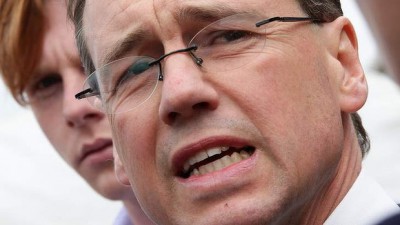
Gillon McLachlan is as well-heeled as he is passionate about his beloved property, Rosebank – the magnificent range of Hills in which it nestles, and the thriving communities that surround and support it.

Back in December, Gillon pitched in with a well-delivered plea to the Mid-Murray DAP to knock back Trustpower’s ludicrous proposal to carpet 114 of these things all over the Eastern Mount Lofty Ranges:

AFL’s CEO – Gillon McLachlan Hammers the ‘Desecration of his Country’ & the ‘Extreme Community Division’ Caused by Wind Farms

With the stinky little DAP predictably rubber-stamping the application, Gillon has now thrown his considerable resources into the battle, along with a hundred or so others, with an Appeal launched in South Australia’s planning appeal court, the Environment, Resources & Development Court. Here’s SA’s local Sunday rag’s take on the unfolding war against the threatened destruction of SA’s iconic Mount Lofty Ranges and the dozen of communities that those fertile hills sustain.

AFL boss’s bid to ban wind turbines near his farm
Sunday Mail
Ben Hyde
31 January 2016

AFL chief executive Gillon McLachlan has launched court action over the approval of a massive wind farm on the doorstep of his family’s historic Rosebank property, near Mt Pleasant.

Mr McLachlan has appealed against the approval of the $700 million wind farm, to feature 114 turbines standing up to 165m high dotted along the ranges between Palmer, Tungkillo and Sanderston.

The appeal is listed against wind farm developers Trustpower, the Mid Murray Council, Environment Protection Agency, the Planning Department and the Environment Minister.

A preliminary conference is scheduled to be heard in the Environment, Resources and Development Court by Commissioner Lolita Mohyla at 3.30pm tomorrow.

Mr McLachlan’s is one of four appeals filed against the wind farm, which was approved by the Mid Murray Council’s development assessment panel on December 18. He yesterday declined to comment about the appeal.

In December, he submitted a video message to the development assessment panel opposing the wind farm being built.

“Even if it were to be conclusively established wind farms do not produce health problems, it’s annoying and affects quality of life,” he said.

“I was frankly heartbroken that this land will be forever marred by enormous man-made structures.”

Mr McLachlan also said any wind farm would cause significant damage to the land, would hinder potential tourism opportunities and “cause extreme division in the community”.

Rosebank, a prominent and historic sheep station east of Mt Pleasant, was pioneered in 1843 by Scottish-born landowner George Melrose, whose descendants include the McLachlan family.

The Eastern Mount Lofty Ranges Landscape Guardians, on behalf of up to 90 residents in the region, have also appealed against the development. They are scheduled for a preliminary conference in the ERD Court in mid-February.

During an ERD Court preliminary conference, the parties discuss how they would like the court proceedings to occur. This could include through continued negotiations, mediation or by trial or hearing.

Eastern Mount Lofty Ranges Landscape Guardians chair Tony Walker said opponents felt the approval process was unjust. “We believe that the whole process failed to give any weight to the objectors,” he said. “There is a lot of opposition — from the little man on the ground and from people with more resources.”

Numerous people living near wind farms have claimed they cause health problems, including severe headaches and disrupted sleep patterns.

However, the National Health and Medical Research Council issued a report last year that found there was “currently no consistent evidence that wind farms cause adverse health effects in humans” — but said there was a need for more in-depth research.

Mr Walker said those opposed to the development were prepared for a fight. “We’ve been fighting for almost five years (and) it’s a fight that could go on for years, depending on who blinks first,” he said. “(But) it’s worth fighting for.”
Sunday Mail

If Ben Hyde truly believes there’s nothing to complaints about living with incessant turbine generated low-frequency noise and infrasound, he should get out more.

Starting with a look at the Federal Senate Inquiry Report, that excoriatedthe corruption and bias of the NHMRC-  an outfit peopled by wind industry plants, that ignores almost every relevant piece of wind turbine acoustic research and, instead, relies on the musings of a former tobacco advertising guru, who claims noise induced sleep deprivation suffered by wind farm neighbours is all in their heads:

NHMRC Fails Science 101 in Continued Wind Farm Health Cover Up

Ben might also jump in a set of wheels and head for Jamestown, where he can meet with Clive and Trina Gare, cattle graziers in SA’s Mid-North.

Since October 2010, the Gares have played host to 19, 2.1MW Suzlon S88 turbines, which sit on a range of hills to the West of their stately homestead. Under their contract with AGL they receive around $200,000 a year; and have pocketed over $1 million since the deal began.

In a remarkable move, the Gares gave evidence to the Senate Inquiry into the great wind power fraud during its Adelaide hearing, in June 2015. Any journalist worth their salt would start by taking a look at what they told a Federal Senate Committee about ‘the worst decision of their lives’:

SA Farmers Paid $1 Million to Host 19 Turbines Tell Senate they “Would Never Do it Again” due to “Unbearable” Sleep-Destroying Noise

When farmers being paid $200,000 a year to host these things complain bitterly about sleep deprivation as a regular event, then STT is pretty much satisfied that the noise and vibration generated by turbines is causing what the World Health Organisation has considered to be an adverse health effect in and of itself (for over 60 years).

What Gillon McLachlan is about to tackle is willful ignorance and institutional corruption – of precisely the kind that resulted in the decision to approve the construction of 114 of these things, shoe-horned into hundreds of backyards, all over the prettiest and most productive part of the Adelaide Hills.

What makes the DAP’s decision all the more ridiculous is that South Australians are already paying the highest power prices in Australia (if not the World on a purchasing power parity basis) with a grid on the brink of collapse.

It’s been almost a decade since SA’s Labor Party shackled itself to wind power: a wholly weather dependent power source; that’s intermittent and unreliable, requiring 100% of it’s capacity to be backed-up 100% of the time by conventional power generators; that, accordingly, has NO commercial value (save the massive power consumer and/or taxpayer subsidies it attracts); kills millions of birds and bats; and, with the incessant low-frequency noise and infrasound it generates, drives people mad in their homes, or drives them out of them altogether.

It takes a certain kind of fool to believe that SA’s energy disaster can be improved by backing more of the same. But SA’s public institutions are drenched in deluded Labor (green/left) ideology; and peopled by lunatics who wouldn’t know the first thing about power generation (or much else, really).

Gillon McLachlan and his compatriots are about to hit them with a solid dose of common sense and a mountain of facts. The Battle has begun.

Rosebank

Bankers & Investors Close Ranks & Doom Wind Industry to Death By A Thousand Cuts

solar-panels-at-Nyngan

****

Earlier this week we looked at how Australia’s big power retailers have turned their backs to the wind to face the Sun, instead.

Commercial retailers (we don’t count the ACT Government) haven’t entered any Power Purchase Agreements with wind power outfits since November 2012; and, we hear, have determined not to enter any more PPAs for wind power, ever again.

The big operators have absolutely no interest in wind power; and every interest in killing off the Large-Scale RET that created, and for the time being sustains, the wind industry.

As pointed out previously, the retailers’ switch to large-scale solar is a canny, but fleeting move – designed to avoid the shortfall penalty for the few years it takes for the LRET to collapse; as the political and economic toxicity of the policy escalates over the next year or two.

It is, after all, a pointless $3 billion a year power tax that runs until 2031 – for no other reason than to subsidise the production of insanely expensive and wholly unreliable wind power; at a time when Australia’s grid is swamped with oodles of the reliable, secure and affordable stuff.

Without PPAs with retailers, wind power outfits haven’t a hope in hell of obtaining bank finance to build any new wind farm capacity; and the retailers’ recalcitrance has investors spooked, too – as the following articles attest.

Wind optimism stalls
The Courier
Matthew Dixon and Peter Hannam
16 January 2016

STALLED: Investment in large wind projects isn’t coming as quickly as expected.

THE confidence that everyone had expected to return to the renewable energy sector following the demise of Tony Abbott is yet to come to fruition.

Investors spent just $15 million since February 2014 on big wind, solar or other clean energy projects that were not otherwise supported by government programs such as the Australian Renewable Energy Agency.

That figure is a huge drop from when investment peaked in 2011 on the back of government support for renewables.

The figures and belief that the industry may have stagnated according to an annual survey by Bloomberg New Energy Finance.

Despite Mr Abbott’s removal as prime minister, and many key figures in the industry expectations of a return to bigger levels of investment, there is no certainty that the investment will return in 2016.

With a number of major wind farms in the Ballarat area already securing planning approval and only waiting on investment for construction to begin, development has stagnated.

This includes huge farms planned in Stockyard Hill and within the Moorabool Shire.

Australian Wind Alliance national coordinator Andrew Bray said the industry had not rebounded as some had hoped, but there was still a lot of optimism.

“It is definitely the case that the market has not recovered since the Abbott government’s attack on the Renewable Energy Target,” he said.

“While there appears to be some optimism surrounding projects starting to progress, that hasn’t eventuated.

“It is now up to all the players, the banks, the retailers to come to the table and start resolving this impasse.”

The Abbott government’s repeal of the carbon tax in July 2014 – which removed long-term price support – and a mishandled review that led ultimately to a cut of about one-fifth in the 2020 Renewable Energy Target meant “confidence evaporated” in the sector according to Kobad Bhavnagri, head of Bloomberg New Energy Finance in Australia.

“It can’t be understated that the actions of the Abbott government have destroyed confidence in the renewable energy market,” Mr Bhavnagri said.

“Lenders in the market are almost all of the view that the political risks in the RET … have made it too risky to invest in.”
The Courier

Predictable ‘sackcloth and ashes’ stuff from a pair of typically deludedFairfax wind-cultists, but the line they pull from Bloomberg’s boffin that: “Lenders in the market are almost all of the view that the political risks in the RET … have made it too risky to invest in” is absolutely spot on!

Not only are investors not game to throw so much as a shekel at wind power in Australia anymore, those with skin in the game are cutting and running as fast as their panicked, jelly-legs can carry them.

To give some insight into the fear that’s driving them, we’ll head back in time to trace a little tale about a Spanish wind power outfit’s efforts to ditch the Taralga wind farm in NSW.

Renewable energy sector crisis forces Banco Santander to quit Taralga wind farm
Sydney Morning Herald
Angela Macdonald-Smith
31 March 2015

Banco Santander, a major investor in renewable energy, will sell its only Australian wind farm and exit the local sector because of policy uncertainty that has dragged the industry into crisis.

Santander will seek a buyer for its 90 per cent stake in the 106.8 megawatt Taralga wind farm near Goulburn, which is not being included in the renewable energy fund it set up late last year with two Canadian pension giants because of the perceived poor prospects for the sector in Australia, say sources.

David Smith, executive director of Santander in Sydney, declined to comment.

Australia’s renewable energy sector has been left in limbo by the political debate surrounding the country’s 2020 renewable energy target. The government and Labor Opposition agree the 41,000GWh target for large-scale renewable energy needs to be reduced to suit the downturn in total power demand from the grid, but have been unable to agree on a compromise.

As of last week, the government was proposing a 2020 target of 32,000GWh, while Labor wants a target in the high 30,000GWh range. A compromise suggested by the Clean Energy Council at 33,500GWh, up from the current level of about 17,000GWh, has failed to find backing.

Investment in large-scale renewable energy collapsed by almost 90 per cent in 2014 as a result of the deadlock, which has been criticised by several large foreign investors in the local renewable energy sector, including GE, Spain’s Fotowatio Renewable Venture and Infigen Energy cornerstone shareholder, the Children’s Investment Fund. They have all warned of the harm to Australia’s sovereign risk, which will deter long-term infrastructure investors.

In December, Santander struck a deal with the Ontario Teachers’ Pension Plan and the Public Sector Pension Investment Board in Canada to transfer its portfolio of renewable energy and water infrastructure assets into a new company owned equally by all three parties. But despite the partners having an appetite for other infrastructure assets in Australia, the wind farm was excluded from the $US2 billion-plus ($2.6 billion) portfolio of assets in the new company because of the uncertainty around the RET and the decision by the Coalition government to ditch the carbon tax, say sources close to the company.

The new company will, however, invest in Brazil and Mexico, which are seen as offering better prospects for renewable energy investors than Australia.

“It is quite clear that the uncertainty around the RET and other changes to policy that have occurred over the past few years has created a lot of uncertainty for investors in the renewable energy space,” said Richard Pillinger at BlueNRGY LLC, which owns 10 per cent of the Taralga wind farm.

The Taralga wind farm, which has a 10-year contract to supply power to EnergyAustralia, was financed with about $280 million from Santander, CBD Energy, Danish export credit agency EKF, ANZ and the federal government’s Clean Energy Finance Corporation. Production of electricity from the first of the 51 wind turbines began in December.

CBD Energy has since gone into administration and been acquired by US-based BlueNRGY LLC.

Santander is closing the Sydney office for its equity investment arm, which focuses on renewable energy, in mid-2015.
Sydney Morning Herald

banshee

****

With the dreaded Tony Abbott little more than political history, and the ‘immutable’ 33,000 GWh annual LRET target now set in stone (just like the previous 41,000 GWh target!), Banco Santander should have been knocked to the floor with a rush of cashed-up and willing buyers.

So, let’s wind the clock forward and tally up the bids for Taralga.

Taralga Wind Farm sale runs out of puff
The Australian
Bridget Carter and Gretchen Friemann
22 January 2016

The sale of the Taralga Wind Farm could be put on hold, with sources suggesting the sales process for the asset generated limited buyer interest.

Apparently, one mystery bidder did circle the operation, but it is now thought unlikely it is still interested.

AMP Capital is among other groups that had a look in the early stages.

But sources say that the carrying value of the asset is too high, and long-dated swaps in the capital structure that are difficult to change are deterring buyers.

The Spanish owners, Banco Santander, appointed ANZ last year to sell the wind farm on the NSW coast, 45km north of Goulburn.

Taralga was expected to sell for about $200 million.

It gained state approval in 2012 to build 51 wind turbines, generating 106.8 megawatts of electricity.

Banco Santander, the world’s third-largest clean energy lender, had moved to sell the asset as part of its decision to exit the Australian market.

It is understood to have reached a global tie-up with some of Canada’s pension funds in recent times.
The Australian

Not a serious bid in sight! Whatever could have got investors to balk at a ‘sure-fire’ one-way bet?

Could it be that investors have worked out that ANY business that depends entirely on a piece of government policy can be done in at the stroke of a pen?

For STT’s analysis of what’s behind the investors’ panic see: Wind Industry Still Wailing About ‘Uncertainty’ as Australian Retailers Continue to Reject Wind Power ‘Deals’

We’ve said it before and we’ll keep saying it: the wind industry is among the greatest Ponzi schemes of all time. If you have so much as a penny anywhere near it, then grab it and get out fast.

please-take-a-moment-and-look-around-and-find-the-nearest-exit

Wind Turbine Torture….Denied, and Ignored by Authorities!

Group says wind farm causing health issues

Credit:  Sharon Roznik, USA TODAY NETWORK-Wisconsin | January 24, 2016 | www.fdlreporter.com/ ~~

Joan Lagerman likens the sound to “shoes in a clothes dryer,” or “someone shutting a dumpster lid over and over.”

The Malone woman is among a group of residents who are suffering from a variety of ailments they believe are caused from living in the shadow of wind turbines.

On certain days, when the blades are coated in ice, the noise is so bad it shakes the walls of her home.

Calling themselves Concerned Citizens of Fond du Lac County, the group plans to attend the next meeting of the Fond du Lac County Health Department at 6:30 p.m. on Feb. 2 to voice health concerns they say are caused by the whirl of the seven-ton blades.

Their main goal is to shut down the turbines at night so residents can get some sleep.

Blue Sky Green Field is a WE Energies, 88-turbine wind farm set on 10,600 acres, spread between the townships of Calumet and Marshfield in Fond du Lac County, not far from the east shore of Lake Winnebago. Lagerman and her neighbors are surrounded by the 44 towering turbines spinning in Marshfield.

The wind farm generates energy for the southeastern Wisconsin power grid, producing enough for service to 35,000 homes, according to WE Energies.

Choking back tears, Lagerman, 55, said Thursday she can’t take it anymore – the constant headaches, insomnia, hypertension and anxiety that came on after the wind farm was erected in 2008.

“Doctors can’t find what is causing my health problems, but I can tell you when I leave home, they all go away,” Lagerman said.

Just down the road, Elizabeth Ebertz, 73, lives in quiet agony in her home. From her west window, six turbines are visible, and from a south window five can be seen.

She said sleep is the biggest problem, and uses phrases like low frequency noise and infrared sound – both associated with wind turbines and sleep disturbance, according to a report by the World Health Organization.

“Most of the time when I wake up, I am nauseous with a severe headache and pain in my ears,” Ebertz said, hardly able to get the words out. “I have lived here all my life and it has turned into a living hell.”

But Brian Manthey, a spokesperson for WE Energies, said that, over the years, they have been getting complaints from the same handful of people. The rest of the citizens living among 88 turbines seem to be content. Some, he said, are even asking for waivers to build closer to the turbines than setback requirements of 1,000 feet allow. (More recent updates now require a distance of 1,250 feet from a residence).

The company sees no need to shut down the turbines, he said. A sound study completed in 2008 indicates the noise output is at or below permitted levels. As for studies on wind turbines and health problems, there have not been any peer-reviewed science studies that show any link, Manthey said.

“For the most part, we have very successful relationships with neighbors in the area,” he said. “And if there is a problem, ice build-up or a lightning strike, we address the issue.”

But resident Larry Lamont, 75, said WE Energies doesn’t consider that, when trees are leafless in winter, or there is heavy moisture content, the noise is overbearing. The hum from transformers is constant, and it’s compounded by the dozens of turbines in the area.

“They don’t take into consideration that while they may be monitoring noise output, they aren’t adding them all up together,” he said.

The group has appeared before town boards and state legislators to voice their concerns. Back in 2008, some farmers in the area requested that there be a citizen vote, but the town board went ahead and approved the wind farm, Lamont said.

When WE Energies first approached families living in the area in 2008, Bernie and Rose Petrie, like most people, thought green energy would be a good thing. About 55 landowners leased land or easements to the energy company to erect wind turbines, with one turbine taking up about a half an acre and co-existing with crop production and dairy farming.

Looking back, allowing wind farms to the area was a huge mistake, said 55-year-old Rose Petrie.

The couple is living on a family farm that dates back to 1928. Moving is not an option for them and for others annoyed by the whoosh of turbines.

“Roots run deep around here,” Rose Petrie said, “and before the wind turbines came, our lives were peace and quiet.”

How to Attend

Concerned Citizens of Fond du Lac County is asking residents concerned about the health impact of wind turbines to attend the next meeting of the Fond du Lac County Board of Health at 6:30 p.m. on Tuesday, Feb. 2 in Room H at the City County Government Center, 160 S. Macy St.

Source:  Sharon Roznik, USA TODAY NETWORK-Wisconsin | January 24, 2016 | www.fdlreporter.com/

Corrupt Wind-Pushing Politicians Allowing Abuse of Citizens!

Institutional Malice: Wind Farm Victims’ Government Endorsed Suffering Continues With Greg Hunt’s Knowledge

greg hunt

****

The number of Liberal (Australia’s once small-government, conservative, business and family friendly) Party MPs that hold a bizarre affection for these things can be tallied up on one hand.

The Liberal’s King of the Wind Worship Cult is the hapless Environment Minister, young Gregory Hunt. Hunt’s office is headed up by wind industry plant, Patrick Gibbons – who, along with his best mate, Ken McAlpine are responsible for cooking up the great wind power fraud in Australia.

At the time, they were staffers in the office of Victorian Labor Minister, Theo Theophanous, who with his brother, Andrew added more than alittle ‘colour’ to politics.

In a cosier than cosy turn of events, Gibbons runs Hunt’s office; and McAlpine is now Vestas’ top media manipulator in Oz. How convenient!

Hunt and his office are fully aware of the life-destroying consequences foisted upon the hundreds of unfortunates stuck with these things by their wind industry benefactors. Hard-working rural people, ground down by incessant turbine generated low-frequency noise and infrasound – delivered in merciless, daily onslaughts, at places like Cape Bridgewater, Waubra and Macarthur in Victoria, Gullen Range and Cullerin in NSW, Windy Hill in QLD and Waterloo and Jamestown in SA.

Hunt and his cohorts are always quick to defend their paymasters; jumping on any suggestion that their beloved ‘eco-friendlies’ could harm so much as a fly.

However, try as they might, facts have an uncanny ability of bubbling to the surface; and, once there, ignorance of them is no defence.

When political history is drawn, and the legacies of those involved are measured up, it’s often what the protagonists didn’t do that stains their scorecard, rather than what they did.

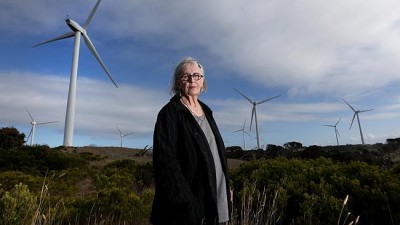
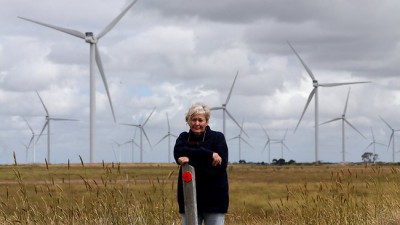
For those responsible for enabling the greatest economic and environmental fraud of all time – like Greg Hunt – it will be the fact that they knew full well that their favourite renewable rort caused wholly unnecessary misery to courageous, magnificent and stoic Australian women like Sonia Trist, Jan Hetherington and Annie Gardner:

Three Magnificent Women Take On Australia’s Monstrous Wind Power Outfits & their Pathetic Political Backers

****

That our political betters are fully aware of wholly unnecessary suffering is a matter of no doubt.

You see, people like Greg Hunt and others, with full responsibility for the policies that saw thousands of these things speared into backyards across the country – driving people to the edge of sanity in their own homes; or driving them out of them altogether – get swamped with emails from their victims on a daily basis.

Just like this tragic tale laid out by Jan Hetherington from Macarthur in western Victoria.

But, before you confront what Jan has to deal with, night after punishing night (and it is confronting), take note of the who’s who list of recipients – a group that can never say that they didn’t know.

From: Jan Hetherington
Sent: Friday, 15 January 2016 12:10 PM
To: ‘St. Clair, Nicky’ <Nicky.StClair@environment.gov.au>; ‘Macarthur WindFarm’ <MacarthurWindFarm@agl.com.au>
Cc: ‘Malcolm.Turnbull.PM@aph.gov.au’ <Malcolm.Turnbull.PM@aph.gov.au>; ‘Greg.Hunt.MP@aph.gov.au’ <Greg.Hunt.MP@aph.gov.au>; ‘dan.tehan.mp@aph.gov.au’ <dan.tehan.mp@aph.gov.au>; ‘daniel.andrews@parliament.vic.gov.au’ <daniel.andrews@parliament.vic.gov.au>; ‘matthew.guy@parliament.vic.gov.au’ <matthew.guy@parliament.vic.gov.au>; ‘Sussan.Ley.MP@aph.gov.au’ <Sussan.Ley.MP@aph.gov.au>; ‘Senator.Nash@aph.gov.au’ <Senator.Nash@aph.gov.au>; ‘Frydenberg, Josh (MP)’ <Josh.Frydenberg.MP@aph.gov.au>; ‘lily.d’ambrosio@parliament.vic.gov.au’ <lily.d’ambrosio@parliament.vic.gov.au>; ‘martin.foley@parliament.vic.gov.au’ <martin.foley@parliament.vic.gov.au>; ‘jill.hennessy@parliament.vic.gov.au’ <jill.hennessy@parliament.vic.gov.au>; ‘lisa.neville@parliament.vic.gov.au’ <lisa.neville@parliament.vic.gov.au>; ‘jala.pulford@parliament.vic.gov.au’ <jala.pulford@parliament.vic.gov.au>; ‘richard.wynne@parliament.vic.gov.au’ <richard.wynne@parliament.vic.gov.au>; ‘mary.wooldridge@parliament.vic.gov.au’ <mary.wooldridge@parliament.vic.gov.au>; ‘david.davis@parliament.vic.gov.au’ <david.davis@parliament.vic.gov.au>; ‘david.southwick@parliament.vic.gov.au’ <david.southwick@parliament.vic.gov.au>; ‘david.o’brien@parliament.vic.gov.au’ <david.o’brien@parliament.vic.gov.au>; ‘Brad.Battin@parliament.vic.gov.au’ <Brad.Battin@parliament.vic.gov.au>; ‘Katrina Rainsford’ <krainsford@sthgrampians.vic.gov.au>; ‘bruce.armstrong@sydney.edu.au’ <bruce.armstrong@sydney.edu.au>; ‘Cathy.McGowan.MP@aph.gov.au’ <Cathy.McGowan.MP@aph.gov.au>; ‘goulburn@parliament.nsw.gov.au’ <goulburn@parliament.nsw.gov.au>; ‘senator.Day@aph.gov.au’ <senator.Day@aph.gov.au>; ‘senator.Xenaphon@aph.gov.au’ <senator.Xenaphon@aph.gov.au>; ‘senator.Canavan@aph.gov.au’ <senator.Canavan@aph.gov.au>; ‘senator.Leyonhjelm@aph.gov.au’ <senator.Leyonhjelm@aph.gov.au>; ‘senator.madigan@aph.gov.au’ <senator.madigan@aph.gov.au>

Subject: my 89th formal complaint re-Macarthur wind farm.

Dear Commissioner Dyer, and AGL,

As you have been made aware, from our meeting with you in December, 2015, I am now “sensitised” by the hammering from the excessive pulsating infrasound, low frequency noise and vibration, that saturates my home day in and day out, emitted by the 140, 3MW turbines at the Macarthur wind facility.

I told you about the problem I had, when I was a patient in the newly built Western Private Hospital in Melbourne, in 2015, where I experienced the same symptoms from infrasound as I experience at home, and independent acoustician Les Huson tested my hospital room and positively identified and recorded infrasound in that room.

Not only am I still being hammered by this “noise” as I go about my daily routine at home, but I recently visited Portland on the 6th and 7th and 12th and 13th January 2016, to attend the Cruise ship markets to showcase my glassware.

Each visit I stayed overnight in Portland with a friend, and to my horror, I experienced the same symptoms that I experience at home, from the low frequency and infrasound.

There are wind turbines on the edge of the township of Portland at Cape Nelson, and Cape Bridgewater.

I experienced symptoms of sleep deprivation, palpitations, anxiety, ears aching and ringing, head-pressure and aching on the back of my head and the top of my jaws. I could hear the low droning noise of the turbines during the night.

These are the same symptoms I experience at home, living near the Macarthur wind facility.

At the market on the foreshore during the day, I kept experiencing “whacks” to my head, as if someone had hit me on the back of my head. These “whacks” would give me a jolt and they hurt.

This excessive, pulsing infrasound, low frequency noise and vibration is a REAL problem, and I hope you have started your investigation into this REAL problem.

We cannot be expected to live our lives like this anymore.

I cannot be expected to be fearful of travelling to other places and experience the same dreadful symptoms that I experience at home.

This is “3rd world” stuff, and surely we’re better than that, we should be able to look after each and every one of our citizens, equally and without bias.

I pay my taxes and I expect something in return.

I expect to be treated with respect and compassion regarding this wind farm problem and not live in fear for my health and safety and wellbeing.

It’s about time politicians stopped playing politics and the popularity stakes and DO something about this wind farm problem.

I would like confirmation and receipt of this formal complaint please.

Sincerely

Jan Hetherington

Jan h Hetherington


Wind Turbine Investors Losing Their Shirts…

Germans Losing €Millions on Community Wind Farm ‘Investments’

wind-turbine-money

Anyone that’s looking to make a small fortune, need only hand a very large one to a community wind farm operator:

More Wind Power Outfits Go Bust: “Farmer-Investors” Lose their Shirts in the US

Community Wind Farm Investors Losing their Shirts

Part of their pitch (some might call it laying bait for the more gullible fish in the pond) is to throw a few grand at the local footy team (new jumpers all round) or theatre group (new curtains and lights); or wombat preservation (see our post here).

STT has pointed out just a few times that the wind industry is little more than the most recent and elaborate Ponzi scheme in a list that dates back to “corporate investment classics”, like the South-Sea Bubble and Dutch tulip mania.

In the wind industry, the scam is all about pitching bogus projected returns (based on overblown wind “forecasts”) (see our posts here andhere and here and here); claiming that wind turbines will run for 25 years, without the need for so much as an oil change (see our posts hereand here and here); and telling investors that massive government mandated subsidy schemes will outlast religion (see our post here).

STT has also had a go at unpicking the scale and scope of the financial precariousness at the BIG end of town in our posts:

The Wind Industry: You Know It’s a ‘Ponzi’ Scheme When its Targets Include Schools & Councils

Pacific Hydro’s Ponzi Scheme Implodes: Wind Power Outfit Loses $700 Million of Mum & Dad Retirement Savings

In the first of the above, we pointed to the efforts of Simon Holmes a Court to build an “empire” around 2 clapped out Suzlon/REPower 2MW turbines speared into Leonard’s Hill, using money siphoned from 1,900 gullible, greentard ‘investors’. That community calamity (see our post here) kicked off in 2011, but has yet to return a single cent to investors in that time.

But, hang on a minute? Whatever happened to all that ‘love’ for ‘clean, green’ power – that’s said to drive power consumers to lap it up with a fork and spoon – and all that talk about wind power being ‘free’? Surely, there couldn’t be a safer bet for anyone looking to grow their rainy day savings?

Well, maybe not …

German ‘investors’ in so-called ‘community wind farms’ are licking their wounds, as their operators rack up cumulative losses in the tens of €millions.

Lured By “Unrealistic Promises” Of Profit, German Communities Wind Up With “Financial Disasters” And Damaged Environments
NoTricksZone
Pierre Gosselin
1 January 2016

The FDP Free Democrat party in the state of Hesse (central Germany) writes in a press release how local utilities and communities are suing wind park development company JUWI, accusing it of “making unrealistic promises” regarding wind energy projects, and calls them “highly speculative business with enormous risks for public budgets“.

Over the years German local utilities and communities have invested tens of millions of euros in local wind parks with the hopes of seeing a ruddy return on investment and making a noble contribution to climate protection at the same time. That dream, it is turning out, has shattered.

The FDP press release in English:

Millions in losses with wind power projects

WIESBADEN – Once again wind projects are producing negative headlines. In the spotlight is “wind energy pioneer” JUWI, which is one of the largest project developers in Hesse. With the Pfalz City Utility and the City Utility of Mainz, two large community electric utilities are suing currently JUWI because the wind prognoses made never materialized, and thus the returns fell way below the planned budget. Instead of posting profits after more than ten years in operation, community company “Pfalzwind GmbH“ has seen double-digit millions in losses. Pfalzwind operates more than 60 turbines.

‘We see the same result in Hesse as well. Everywhere communities, utilities and energy co-ops were lured by large profits, but in the end most wound up with losses that the citizens will have to cope with. Not only are they stuck with damage to the environment and the landscape, but now they also have a financial disaster to cope with,’ says René Rock, energy policy speaker of the FDP faction in the Hesse state parliament.

Rock adds:

‘The lawsuits by the community utilities once again show that promises made by the wind industry are unrealistic. And due to the falling feed-in rates, the economic prospects are worsening in addition. Also large utilities in Hesse, such as Mainova AG in Frankfurt, are losing money with their stakes in wind parks.

Currently alone in Hesse some 470 wind turbines are in the permitting process. Instead of blindly trusting the promises made by project developers, planned wind power projects involving investment by communities should be halted based on economic sense. In truth wind parks are highly speculative businesses with enormous risks for public budgets.’”

And never mind the industrial blight and environmental destruction they are causing to Germany’s once idyllic landscape, and the threat to human health and wildlife.
NoTricksZone

empty-wallet1

Wind Energy is Not Viable….Here’s Why!

The way the wind blows in New Hampshire

Credit:  By Fred Ward | Monadnock Ledger-Transcript | Tuesday, January 12, 2016 | (Published in print: Tuesday, January 19, 2016) | www.ledgertranscript.com ~~

We all want clean, cheap, reliable electric energy. And there is plenty of clean energy available in the winds that come and go over New Hampshire. However, converting this intermittent energy source into electricity is not easy. There are engineering, aesthetic, environmental and political problems. And, there is an additional problem, purely economic. It applies not only to Antrim Wind Energy, but to any proposed industrial wind facility, or IWF, in the state of New Hampshire.

An intermittent power source like a wind turbine will generate between zero percent and 100 percent of its maximum power, depending on the wind speed. A wind turbine of 3 Mw rated power, with an efficiency of about 33 percent, will actually produce between zero Mw and 3 Mw, with an average power output of 1 Mw. The difference between its 3 Mw maximum power, and its 1 Mw average power, is a factor of three, the inverse of its 1/3 efficiency.

In order to reach the legislated mandate of 25 percent average renewable power by 2025, wind would have to contribute at least 10 of the 25 percent. This would require at least 500 3 Mw turbines, averaging 500 Mw, but actually generating between 0 Mw and 1,500 Mw, at least occasionally. If all the turbines spun randomly, they would generate about 500 Mw most of the time. However if winds made them spin together, near 1500 Mw surges would be a frequent occurrence. This raises a critical question. How well do the winds harmonize the spin of different IWFs all over New Hampshire or New England? And send 1,500 Mw surges to the ISO-NE electric grid? The meteorological question is simple. How well harmonized are the wind speeds at various weather stations throughout New Hampshire or New England?

Wind data are available from weather stations from Caribou in northern Maine to Bridgeport in southwest Connecticut and from Albany, New York, just over the western border of New England, to Portland, Maine and Providence, Rhode Island on our easterly boundary.

Analysis of these National Weather Service data, publicly available for many decades, shows very clearly that the winds all over New England are highly harmonized. When the winds are strong in one part of New England, they are generally strong over all of New England, and when the winds are light in one area they are generally light all over New England. And since the station-to-station winds become increasingly harmonized with increasing altitude, this harmonization will be even higher for the winds blowing over 2,000-foot hills and ridges.

The net of this analysis is that for wind power to provide even 10 of the 25 percent legislatively mandated average renewable power, these synchronized wind facilities will actually have to generate between 0 percent and 30 percent of our average power.

To put this 30 percent in perspective, a single nuclear, hydro or coal plant, or Northern Pass, generates less than 30 percent of our average power. This highlights how these large wind surges would raise havoc with the ISO-NE grid. A scan of the New England wind data shows that large wind-generated electric surges would hit the ISO-NE grid once or twice each week, and last many hours.

If this problem weren’t already insurmountable, the topography and meteorology of New Hampshire add an additional, and large, problem. The only feasible locations for IWFs are over the tops of our isolated hills and elevated ridges.

The winds that blow at 2,000 feet over New Hampshire hills and ridges reach their maximum at night, with lesser winds in the daytime. This means that these large surges will be inflicted on the ISO-NE grid at night, when demand for electric power is at a minimum.

There is no obvious solution to this problem, and it indicates that wind is not a viable source of electric energy in New Hampshire. The wind power industry should be required to offer a solution before any more wind facilities are approved in New Hampshire.

Meteorologist Fred Ward lives in Stoddard; he holds bachelor, master’s and PhD degrees from Massachusetts Institute of Technology.

Source:  By Fred Ward | Monadnock Ledger-Transcript | Tuesday, January 12, 2016 | (Published in print: Tuesday, January 19, 2016) | www.ledgertranscript.com

Wind Turbine Terror: Spanish Home Hit by Flying Blade – Just 1 of 3,800 Blade ‘Fails’ Every Year

turbine blade germany

****

The number of cases involving collapsing turbines and flying blades (aka “component liberation”) has become so common that, if we were a tad cynical, we would go so far to suggest the possibility of some kind of pattern, along the lines proffered by Mr Bond’s nemesis, Goldfinger: “Once is happenstance. Twice is coincidence. Three times it’s enemy action”.

turbinedutchbladeaccident

****

Turbines have been crashing back to earth in frightening numbers – from Brazilto KansasPennsylvaniaGermany and ScotlandDevon and everywhere in between: Ireland has been ‘luckier’ than most (see our posts here and here) and their luck is being enjoyed in Sweden too (see our posts here and here).

Then there’s the wild habit of these little ‘eco-friendlies’ unshackling their 10 tonne blades, and chucking them for miles in all directions – as seen in the video below – and see our posts here and here and here and hereand here.

turbine blade donegal

****

Fire (spontaneous combustion), wind and gravity have taken their toll on these things all over the Globe – with fatal results, snuffing out over 160 lives, so far; a fair bit sooner than the victims expected. For a breakdown on wind power fatalities: 290 Tonne Vestas Wind Turbines Dropping Like Giant Wounded Flies

Blade failure is the most common ‘accident’ on the wind industry’s list of death and destruction. For a taste of the chaos, let’s head to Spain

House hit by debris following blade failure
Windpower Monthly
Michael McGovern
5 January 2016

BladeFailure_Spain

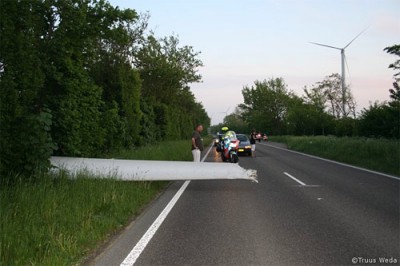
SPAIN: A house has been hit by pieces of a turbine blade that fell from a 300kW turbine in Spain following high winds, several local press are reporting.

Two 15-metre blades from the turbine disintegrated in the early morning of 3 January, striking an occupied house 280-metres away.

The blade failure occurred on one of 61 Desa A300 turbines at the 18.3MW Corme wind plant in the Ponteceso district of Spain’s northernmost province of Coruna.

The project is owned and operated by EDP Renovavais and has been online since 2000. Desa once belonged to Spanish turbine pioneer Abengoa and is now partly owned by EDP.

The owner of the house affected reported to local media that the turbine had been making “unbearable noises” for a few days before the incident, following high winds in the area.

On the eve of national holidays in Spain, EDP failed to comment to Windpower Monthly on the incident. But the company had issued a provisional statement to the local press saying it was “too early” to pinpoint the causes.

Its statement firmly denied that an explosion had occurred in the turbine, as reported by some local witnesses.

It also confirmed the turbine was operating at the time of the incident, as wind speeds at the time were within safe operational limits, at 90km/h (25m/s). Turbines had been halted in recent weeks due to higher winds, the statement said.
Windpower Monthly

turbine001 kerry

****

Now, if the 50m plus blades of giant industrial turbines were engaging in just the odd burst for component liberation neighbours’ anxiety levels might settle around the mild-edginess level.

However, those bunking down within less than 2km of these things can be forgiven for feeling a state of constant panic in the knowledge that close to 4,000 blades are busting free from their moorings every year.

In one serious scientific study into the distances blades are likely to travel during “component liberation” – covering over 37 “component liberation” events – blade throw distances of up to 1,600 m were recorded: that study was completed in 2007 – there have been many more bids for blade “freedom” since then (up to 2014 there have been 309 ‘incidents’, as detailed here).

In Australia, for “planning” purposes, the various states have a variety of “set-back” distances between wind turbines and residential homes – said (laughably) to avoid noise impacts: in South Australia it’s 1km.

For a few years the Victorians set it at 2km – but, before 2007 there was no set-back required and plenty of homes ended up with turbines within 600m. However, there is no such limit placed on the distance between roads and turbines.

So drivers, too, might be excused for being more than just a little nervous  – with whole (50m) blades travelling up to 200m, bigger heavier chunks likely to travel well over 300m and the smaller pieces (referred to in the study linked above as “10% blade fragments”) flying out to distances of up to 1,600m (for a 10% blade fragment – think 5m long blade chunks weighing a tonne or so) – and hundreds of turbines planted within 100m of roads at places like Cullerin, Waterloo and Macarthur.

And, from the reported numbers of blade ‘failures’, for very good reason.

Annual blade failures estimated at around 3,800
Windpower Monthly
Shaun Campbell
14 May 2015

WORLDWIDE: Wind turbine rotor blades are failing at a rate of around 3,800 a year, 0.54% of the 700,000 or so blades that are in operation worldwide.

The figures, from research carried out by renewable energy undewriter GCube, were delivered by Andrew Bellamy, former head of Areva’s 8MW blade programme, in his opening address to Windpower Monthly’s blade manufacturing and composites conference in London on 12 May.

Bellamy, co-founder of renewables advisory firm Aarufield, pointed out that blade failures are the primary cause of insurance claims in the US onshore market. They account for over 40% of claims, ahead of gearboxes (35%) and generators (10%).

The wind industry also faces a struggle to secure the carbon fibre materials it needs for lighter and stronger blade designs, warned Bellamy.

“There’s growing competition for these materials from the automotive and aerospace industries,” he said. “And they are willing, and able, to pay more than we are.”

Recent examples of blade failures include a blade from a Vestas V90 3MW turbine that snapped on a wind farm in the north of Denmark last year. At the time, Vestas said the winds were not particularly high.

In another case last year, GE was forced to replace 33 blade on its turbines at a Michigan wind farm after a blade broke on the project.

GE put the failure down to a “spar cap anomaly”. It was the second such incident involving the 1.6-100 model, and was followed by a third at the 94MW Orangeville wind farm in New York State, also in November.

Possibly the biggest blade issue was faced by Siemens in 2013 when it was forced to curtail around 700 turbines worldwide. This was caused by a bonding failure in its B53 blade.
Windpower Monthly

bladethrow-shredding-ocotillo

****

Good to know that when these whirling Danish Dervishes were throwing their 10 tonne spears to all points of the compass when “wind speeds at the time were within safe operational limits”; and when “the winds were not particularly high”….

One can only wonder at the chaos and carnage when the wind really picks up. Although this video of one of Vesta’s ‘eco-friendlies’ letting loose gives a bit of a clue.

****

Backlash Against the “Climate Change Scam”!

“Climate change” is toxic: Republican Candidates now competing to be skeptics

The Green Blob must be hating this. It’s the worst kind of momentum shift…

In 2008 the main US Presidential contenders were all supporters or “the free market solution” for carbon (called cap n’ trade in the US). But in 2015 the political landscape cracked, and now they’re going out of their way to reverse that. It’s now seen as a bad thing to look like a gullible patsy for Big Green.

How times have changed.

U.S. Republicans Increasingly Sceptical Of Climate Alarm

Amy Harder and Beth Reinhard, The Wall Street Journal

GOP presidential candidates who had generally accepted the scientific consensus on climate change have said recently that it is unclear how much, if at all, humans are contributing to warmer temperatures.

Shortly after a conservative website on Wednesday posted 2008 footage of Sen. Marco Rubio backing a cap-and-trade program to combat climate change, his campaign roared back with a counterattack that included an entire web page aimed at debunking the video.

In media-speak, this is not so much about Republicans waking up to something, it’s Obama’s fault:

Mr. Rubio’s muscular response revealed how toxic the issue of climate change has become in the Republican Party under President Barack Obama, who has sought to make reducing carbon emissions to alleviate global warming one of his signature accomplishments.

Until 2008, many Republicans, including then-presidential nominee John McCain, supported cap-and-trade to address climate change. Once Mr. Obama won the White House, Republicans swiftly unified against nearly all of his initiatives, including a cap-and-trade bill that would have set limits on carbon emissions and allowed companies to trade pollution credits to comply.

As I’ve said before, having GOP candidates compete on this changes everything. The shift that occurred in the US in 2015 was big. There is an opportunity for sensible people all over the world to pick up this momentum and run with it.

Infrasound from Wind Turbines is Harmful, in any Language!

Germans Driven from their Homes by Wind Turbine Generated Infrasound

insomnia

****

One of the myths pedalled by Australia’s self-appointed wind farm noise, sleep and health ‘expert’ (a former tobacco advertising guru) is that the known and obvious adverse health impacts from incessant turbine generated low-frequency noise and infrasound are a cooked-up “phenomenon”, exclusive to the English speaking world. Trouble with that little tale is that’s been scotched by the Danes:

Vestas’ Danish Victims Lay Out the FACTS

Denmark Calls Halt to More Wind Farm Harm

And the Germans:

German Medicos Demand Moratorium on New Wind Farms

And the Tawainese:

Winning Taiwanese Hearts and Minds?

And the Turks:

Turkish Court Shuts Down 50 Turbines: Yaylaköy Residents Delighted at 1st Chance to Sleep in Years

Now, back to Germany where – in the video below (it comes with English subtitles) – Heimke and Pieter Hogeveen lay bare their family’s daily despair at being unable to sleep in their very own home.

Ground down by incessant turbine generated low-frequency noise and infrasound, these people have constructed a ‘bedroom’ in their cellar in an attempt to escape their sonic torment; and sent their children to a boarding school in Denmark for the same reason. Clearly fighters, Hiemke and Pieter have enlisted two lawyers in an action against the wind power outfit responsible.

The video features the turbine host responsible for their daily suffering, claiming he suffers no ill-effects. Funny how gag clauses in developer/host contracts seemingly immunize those pocketing their 30 pieces of silver. However, when the hosts are touched with a little human conscience, they tend to tell an incredibly similar story to people like the Hoogevens:

SA Farmers Paid $1 Million to Host 19 Turbines Tell Senate they “Would Never Do it Again” due to “Unbearable” Sleep-Destroying Noise

The Speigel TV report covers the latest German research on turbine generated infrasound; details the tragic story of another farming family (Konrad Saum) who have also been forced to abandon their spacious family home – unable to sleep there due to incessant turbine noise and vibration; and retreating to a tiny holiday unit to escape the sonic torture dished out by 6 turbines neighbouring their farmlet.

Undermining the ‘Green’ spinner, Jaeger’s piffle about infrasound being used as a sinister plot by German ‘anti-wind’ groups (now numbering over 500) to derail his profiteering racket, is the work being done by health and acoustic experts, taking measurements inside homes that show noise and vibration way above and beyond the levels claimed to exist by the wind industry. No surprises there: Three Decades of Wind Industry Deception: A Chronology of a Global Conspiracy of Silence and Subterfuge

****

Wind Turbines are Torture, for Nearby Residents!

Irish Wind Farm Neighbours Detail Unnecessary Daily Acoustic Misery

wind power growth

As the World reacts to the insane cost of backing an utterly pointless power source, by slashing subsidies and removing the only ‘reason’ for ‘investing’ in the greatest environmental and economic fraud of all time, there remains the suffering of thousands of unnecessary wind industry victims; ‘road-kill’ as its parasites like to refer to them.

STT takes their suffering and our ‘sanctuary’ status seriously – providing our comments space for the use of people who have been tragically impacted by – or who are fighting the threat of – giant industrial wind turbines.

STT is an exclusive place where our followers can speak openly and freely – and without fear of vilification or ridicule from trolls like Ketan Joshi,Mike Barnard & Co. And that’s something we have no intention of changing any time soon.

STT thinks compassion and empathy far greater virtues than self-righteous condescension.

True it is that the roll-out of these things has, thankfully, ground to a halt in Australia and elsewhere, but for many unfortunates, their daily misery continues unabated. Here’s a journal detailing the wholly unnecessary suffering meted out by Irish wind power outfits with incessant turbine generated low-frequency noise and infrasound.

The Misfortune Of Living By A Wind Farm
windfarmtorture.blogspot.ie
1 January 2016

The truth about having to live near Grouselodge wind farm, Co. Limerick, the illness they cause, the noise, the discomfort, the lies from developers, wind farm owners/operators

Daily Notes December 2015

A new month and still being subjected to LFN/Infrasound and audible noise

1st A low buzzing/humming noise could be heard all night, this morning ears ringing feel numb, face tingling, itchy head, headache

2nd Constant audible buzzing humming sound all night long again, ears ringing feel numb and full, face tingling, headache, eyes twitching

3rd Low cloud and rain feels like that helps to keep the noise and infrasound in, blades forcing it this way, ears ringing, eyes twitching, head ache, pressure in ears making them feel like they are pulsating and feel full, not a nice feeling

4th After yesterday onslaught we are still suffering with headache, eyes watering/twitching. ears ringing feel pulsating and swollen, thank god for panadol mints

5th Ears ringing, headache, itchy skin, eyes watering still recovering from the other day LFN onslaught, 3 turbines going at the moment still being invaded by industrial noise though, could be worse and have all 6 going

6 DEC 2015

6th Last night we were subjected to noise and by the way my head feels about to explode we were subjected to LFN/infrasound ears feel full, pulsating, headache, face tingling, thankfully all turbines are off at the moment

noise 1

7th Noise again last night a constant buzzing/humming sound all night, today ears feel full, pulsating, ringing sound, itchy head, face feels numb and tingling, eyes twitchy

8th An audible buzzing/humming noise was heard all night and still the same this morning, headache ears feel pulsating and full and ringing, headache, itchy skin, eyes twitching, loud swoosh thump noises can be heard coming from the turbines

9th Another night of a constant humming/buzzing noise heard inside and outside sounded like airboats in the back garden, no change on the noise levels today and this morning ears ringing, headaches, feeling breathless, itchy/tingling skin

10th Same as yesterday, Another night of a constant humming/buzzing noise heard inside and outside sounded like airboats in the back garden, no change on the noise levels today and this morning ears ringing, headaches, feeling breathless, itchy/tingling skin, the headaches and ringing in the ears seem to be a result of the constant humming/buzzing noise that can be heard all day long, especially at night when normal daytime noises, such as cars tractors, TV radio etc are gone

11th Another night of humming/buzzing noise i had ear plugs in with radio on and this noise could still be heard, today it can still be heard inside and outside we have what sounds like airboat noise, the blades are forcing all of the LFN/infrasound this way, headache, ears ringing, eyes twitchy, itchy skin, i know today will be a rough one

12th, Again pretty much the same as the past few days another night of humming/buzzing noise, today it can still be heard inside and outside we have what sounds like air boat noise, ears ringing, headache, eyes watering, trouble breathing these symptoms are pretty much daily occurrences now

13th Fog Today cant see the turbines at the moment, but can still hear them, swooshing and thumping in the distance, ears ringing feel like they are pulsating and exploding, headache, eyes watering

noise 2

14th Rain, fog, low cloud all compounding the LFN/infrasound ears feel like exploding, pounding headache, dizzy feeling

15th Last night we were subjected to very loud swooshing noises outside which went to a buzzing/humming low droning sound inside, this morning ears feel like they are exploding, very acute headache, eyes watering, ears ringing

16th Last night swoosh thump clunk squeal etc etc all night outside, inside the normal humming/buzzing allnight, today ears ringing feel pulsating, eyes watering/twitchy, headache

17th Only 5 working today and still swoosh thump swoosh thump constantly, never ending, headache, ears ringing, i have concluded that ears ring worse when inside than when outside, tingling face, sea sick feeling of constantly moving horrible feeling

18th 5 working again but still air boats outside ears ringing, itchy skin, eyes twitchy

19th Only 5 working again, hope its broke for good, headache difficulty breathing out of breath just walking across the field this morning, eyes watering

20th Only 5 working again, crane at the broken one yesterday doing something, woke up trouble breathing again, ears ringing, headache ithcy skin, eye twitchy/watering

noise 3

21st Only 5 working again, but still air boat noise outside and a constant humming buzzing inside all night and still going on this morning, trouble sleeping, woke up hard to breath, face tingling, eyes twitching, ears ringing, blurred vision

22nd You know it is going to be bad day, when you have had a bad nights sleep due to the constant audible noise and LFN/infrasound, and you are woken up by the noise unable to breath, feels like you have run a marathon but you have just woke up, ears ringing feel pulsating, headache, eyes watering. n a good note still only 5 working today again

23rd 6 working again, woken up early again trouble breathing, felt like i had run a marathon, ears feel full, like they want to explode, ringing, tingling/numb feeling face, eyes twitchy blurry vision

24th A constant buzzing/humming noise since yesterday afternoon, woken up early again trouble breathing, face tingling, eyes watering, ears feel full,numb and ringing, headache

25th Difficulty breathing all night and this morning, can only be related to the same as having a asthma attack and struggling to get a breath, face tingling, eyes watering, ears tingling, throbbing, cant see them at the moment due to fog but i can hear them and feel them pulsing the air that we live in

26th All seems nice, quiet and clean undisturbed air at the moment, i cant see the wind farm but i cant hear it, so it must be off, but after Christmas days onslaught of LFN/infrasound and audible noise ears ringing feel numb, headache. itchy skin, eyes twitchy

27th Woken up early trouble breathing as usual, eyes watering, face numb, ears ringing, numb, tingling, blurred vision, lack of concentration

noise 4

28th Disturbed sleep again woken up with headache, ears ringing throbbing, blurred vision, face tingling

29th Another night of constant audible noise being heard inside the house, if the noise was at the allowed levels set out by planning we would not hear it, woken up early again due to the audible and infrasound, ears ringing/pulsating/throbbing, face numb/tingling, skin itchy, headache, out of breath

30th Woken up early again, 5am, disturbed sleep due to LFN/infrasound, constant audible industrial noise all night, ears ringing/numb/pulsing, headache, eyes twitching, blurred vision, storm frank needs to blow harder and blow the damn turbines over or spin the blades out of control, the good thing about this amount of wind is it hides the noise from the turbines

31st Now the storm has passed the turbines can be heard again inside the house woken up early again, 5am, disturbed sleep due to LFN/infrasound, constant audible industrial noise all night, ears ringing/numb/pulsing, headache, eyes twitching, blurred vision

noise 5

windfarmtorture.blogspot.ie

insomnia

****

For those fortunate enough to have never experienced the effects of constant industrial wind turbine noise, here’s a little primer:

****

****

However, the malicious melody belted out by Vestas & Co in that video goes nowhere near covering the effect of the sub-audible stuff (aka ‘infrasound’) that can’t be heard but is most certainly felt by those exposed.

Trying to explain the combined effect of the audible low-frequency and sub-audible frequencies generated by giant turbines, to those that haven’t had to live with it on a daily basis, is like trying to explain a migraine to someone who has never had a headache.

One fairly clear and succinct explanation was given in this video by Professor Alec Salt:

****


****

What is detailed in the diary above is perfectly consistent with the experiences of wind farm neighbours across the Globe. Here’s an extract from an earlier post (here), which includes Rob Rand and Rick James explaining the symptoms caused by pulsing infrasound (of precisely the kind detailed above):

One resident, who wished to remain anonymous, said she knew right away that the turbines were moving because she began to feel nauseous, along with a headache. “I have 100 turbines to the north of me, 25 to the west and 20 to the southwest,” she said. “When the wind was coming out of the north, I woke up feeling dizzy and nauseous.”

She also said her animals were acting strangely. “My donkeys and horses keep wanting to go back into their stalls,” she said. “They have not wanted to leave the barn all day.”

Robert Rand, a Boulder, Colorado, resident and an acoustic investigator and member of the Acoustical Society of America, said the reason for the headaches and nausea is directly related to the wind turbines. It has to do with infrasound and low frequency noise, he said.

According to an article written by acoustic engineer Richard James, published at http://wiseenergy.org Feb. 20, “Infrasound is acoustic energy, sound pressure, just like the low to high frequency sounds that we are accustomed to hearing. What makes infrasound different is that it is at the lowest end of the acoustical frequency spectrum even below the deep bass rumble of distant thunder or all but the largest pipe organ tones.

“As the frequency of an infrasonic tone moves to lower frequencies: 5Hz, 2Hz, 1Hz and lower, the sounds are more likely to be perceived as separate pressure pulsations … . Unlike mid and high frequency sound, infrasound is not blocked by common construction materials. As such, it is often more of a problem inside homes, which are otherwise quiet, than it is outside the home.”

Rand said the separate pressure pulsations are like the “whump, whump, whump,” people sometimes experience when they are riding in a car with the windows down. “I have been attempting to acoustically measure phenomena that could present a conflict to human physiology that could then provide a basis to do more research,” Rand said. “My work in acoustics has really been designing and planning. I don’t need more medical research because I know what they (wind turbines) do to people because it happened to me.”

According to an article accepted into The Journal of the Acoustical Society of America Feb. 4, when the body experiences an external force on the inner ear, such as acoustic pressure pulses — but there is no visual input to associate with that pressure — a sensory conflict occurs. That conflict is felt as motion sickness, and it is felt to the same degree as seasickness.

The problem of incessant turbine generated low-frequency noise and infrasound has been known about (covered up and lied about) by the wind industry for around 30 years:

Three Decades of Wind Industry Deception: A Chronology of a Global Conspiracy of Silence and Subterfuge

And our Irish victim rightly fingers infrasound as the real villain responsible for their daily torment:

Wind Turbine Infrasound: What Drives Wind Farm Neighbours to Despair

And all that state-sanctioned misery and suffering is inflicted for an utterly meaningless power source, abandoned in the 19th Century for pretty obvious reasons.

June 2015 National