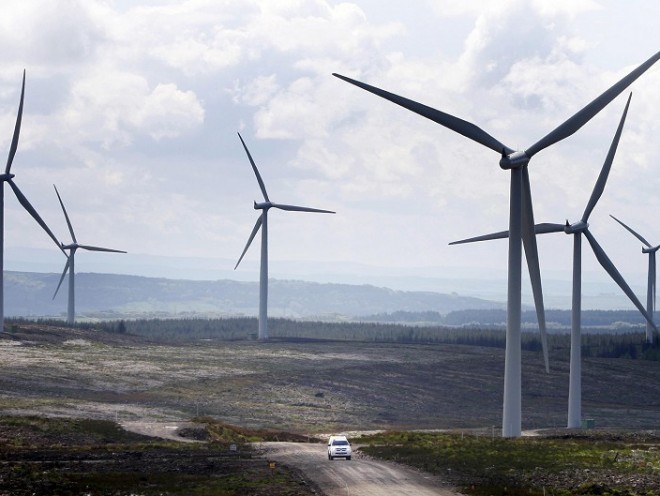
Wind-Pushers in Denial, to Avoid Being Held Accountable…Gov’t covers up for them.

Wind farm impact ‘under-assessed’

2 July 2015 by Press Association

The impact of wind farm noise and appearance on residents living nearby is sometimes under-assessed by developers, a report said

Developers are sometimes under-assessing the impact of wind farm noise and appearance on residents living nearby, according to new research.

The two-year study looked at how the visual, shadow flicker and noise impacts predicted by developers at the planning stage of ten wind farms across Scotland compared to the reality once operational.

The test sites included wind farms at Dalswinton in Dumfries and Galloway, Achany in the Highlands, Drone Hill in the Borders, Hadyard Hill in South Ayrshire, Little Raith in Fife and West Knock Farm in Aberdeenshire.

In some cases what was set out in planning applications did not match the actual impact, the research by climate change body ClimateXChange concluded.

It also found that efforts to engage with the public had not always adequately prepared residents for the visual, shadow flicker and noise impacts of a development.

The information was gathered through a combination of residents’ surveys and assessments by professional consultants.

The report said: “T here was a reasonable correspondence between the predicted impacts at application stage and the study team’s assessment of the as-built impacts.

“However, there were some instances in respect of each of the topics where impacts were under-assessed.

“This divergence between objective measurement and experience of impacts was evident from the residents’ survey which captured a range of responses.

“In respect of all three types of impacts considered by the study there were instances where no or limited impacts were predicted by the expert team, but residents reported experiencing adverse impacts.

“This finding points to the difficulties of predicting or assessing experiential responses.

“It is therefore important that the assessment process and subsequent consideration of applications by relevant authorities takes account of this.”

Researchers said this could be achieved through good project siting and design, rigorous impact assessments and improved public engagement.

Project manager Ragne Low said: “As the study has focused on issues relating to the planning process, we are confident that the findings will feed into improved practice in measuring the predicted impacts of proposed wind farms and in communicating this to decision-makers and those likely to be affected.

“The findings point to several possible improvements in planning guidance and good practice.

“Some have been implemented in the time between the case study wind farms being planned and built, and the present. The study will contribute to building on these improvements.”

Linda Holt, spokeswoman for the campaign group S cotland Against Spin, welcomed the findings.

She said: “For too long, people who have complained about wind farms have been dismissed as nimbies and we applaud the energy minister Fergus Ewing for commissioning this work.

“The recommendations show that the planning system is ill-equipped to address potentially adverse impacts on wind farm neighbours and we urge the Scottish Government to lose no time in implementing them.

“For too long, decision-makers on wind farms have been asked to determine applications while blind-folded about the true impacts of placing enormous industrial machines near people’s homes.”

A spokesman for Scottish Renewables said: “This study highlights the high standards of guidance available for those planning an onshore wind farm in Scotland, and we were pleased to see the sector has been putting these into practice.

“The industry has long worked with government and its agencies to put these high standards in place and this report demonstrates how much we have continuously improved, while identifying areas for further improvements for future schemes.”

A Scottish Government spokeswoman said: ” We welcome the publication of the wind farm impacts study report which is the first of its kind in the world and presents the findings of a two-year study involving a wide-range of interest groups.

“The report shows improvements have already been made in our planning system, which is rigorous and ensures appropriate siting of wind farms, and studies like this will make sure this improvement continues, and we look forward to considering the recommendations carefully.

“Our policy on wind farm applications strikes a careful balance between maximizing Scotland’s huge green energy potential and protecting environmental interests and residential amenity.”

Absolutely Wonderful News, for the Brits!

Deliverance for Brits: David Cameron Empties Subsidy Trough & 250 Wind Farms Get Scrapped

Piglets-Snout-2270058

****

The wind industry isn’t powered by wind; it’s fuelled by massive and endless subsidies. If ever that proposition needed support, then events in the UK since David Cameron’s election win provide plenty.

250 onshore windfarms will be scrapped as taxpayer subsidies are axed
Daily Express
John Ingham
22 June 2015

LARGE swathes of the British countryside are to be spared the blight of windfarms by the axing of taxpayer subsidies, Energy Secretary Amber Rudd has revealed.

She said about 2,500 proposed turbines in 250 projects are now “unlikely to be built”.

The Renewables Obligation subsidy for new onshore wind farms is being scrapped a year early from April next year.

Ms Rudd said this would save consumers cash by avoiding a surplus of state-funded windfarms and by helping newer green technologies compete.

Ms Rudd, who has also announced plans to give local communities the final say over windfarms, said: “We are reaching the limits of what is affordable, and what the public is prepared to accept.”

But critics said taxpayers still face a soaring bill for subsidies to costly offshore windfarms.

Benny Peiser of the Global Warming Policy Forum, which argues that many anti-climate change measures are too costly, said: “This announcement is a move in the right direction but it is a bit schizophrenic.

Tory Chris Heaton-Harris said many of his Daventry constituents had been so alienated by backers of windfarms who had “destroyed people’s faith in renewable energies as a whole”.

But Shadow Energy Secretary Caroline Flint accused Ms Rudd of causing “confusion and concern”.

She said: “Despite the Prime Minister’s warm words on tackling climate change in this most important year of global negotiations, this Parliament has hardly begun but already the cheapest form of renewable energy is under attack and other renewable investors are worried that they are next.”

Earlier Ms Rudd had explained that Britain is on course to exceed its 2020 target of 30 per cent of the UK’s electricity from renewables.

She said Britain is also on course to meet its targets for electricity from windpower which means the impact of subsidies on domestic bills will grow.

She said that Britain currently has about 8.3GigaWatts of electricity from onshore wind – enough to power the equivalent of over 4.5 million homes.

But the ending of subsidies means another 7.1GW will not now go ahead.

She said: “Consumer bills will not rise because of this change. Indeed, those onshore wind projects unlikely now to go ahead would have cost hundreds of millions of pounds.”

RenewableUK’s Deputy Chief Executive Maf Smith disputed Ms Rudd’s figures.

He said: “She is wrong to say that we have enough onshore wind in the pipeline to meet our legally-binding 2020 renewable energy target.

“Government has today put us on a trajectory to undershoot this target because renewable heat and renewable transport fuel are behind on their own targets, which means renewable electricity is expected to make up the shortfall.”

He added: “It’s unfortunate that the Energy Secretary has again failed to grasp the importance of onshore wind. It’s our best option for keeping the lights on and keeping our bills down. It already costs less than nuclear and other renewables, and by 2020 will be competitive with new gas. It’s a mystery why she’s chosen to disregard the high level of public support for this technology, which remains consistently at two-thirds of the population; much higher than for alternatives being championed by Government.”

“The Government is phasing out subsidies for onshore wind but they are still subsiding offshore turbines which are twice as expensive.

“This will not reduce the overall cost for renewables because that was agreed by the coalition Government a year ago.

“Under the Levy Control Framework subsidies for renewables will double from £4billion now to about £8billion in 2020.

“So while many rural communities will celebrate the scrapping of onshore wind subsidies, offshore farms will continue because there are no voters to object.”

The axing for onshore support was welcomed by some Tory MPs including John Redwood who said his party was the only one that cared about the consumer and sought to get energy bills down.
Daily Express

amberrudd

****

The guff about wind power “powering” 4.5 million homes and providing an “answer” to “climate change” (the apparently apocalyptic threat, formerly known as “global warming”) is, of course, patent nonsense:

Wind Industry’s Bogus Claims about “Powering” Millions of Homes Scorched

There’s Only One Problem with Claims that Wind Power ‘Kills Coal’: and that’s the Wind

Why Coal Miners, Oil and Gas Producers Simply Love Wind Power

But it’s the fact that wind industry shill, Caroline Flint is accusing Amber Rudd of causing “confusion and concern” that has STT grinning.

You see, the propaganda parrots that spruik the “wonders” of wind power have been telling us for years now that it’s a “product” with all the admirable characteristics of the REAL stuff, that’s so cheap it should be jumping off the shelves. Those from the wind industry’s more deluded fringes even run the ludicrous claim that wind power is (now) actually cheaper than coal-fired power – see this piece of twaddle from ruin-economy, for example.

RenewableUK’s head spruiker, Maf Smith – like his equivalents elsewhere – ties himself in knots, trying to turn fantasy into reality. He’s not alone – the same pitch has been run all over the globe.

Here, the wind industry, its parasites and spruikers – like The Climate Speculator’s, Tristan Edis (see our post here) – keep telling us, over and over again, how cheap wind power is by comparison with conventional power sources – a story pitched up in order to counter the recent challenge to the Large-Scale Renewable Energy Target and its insane cost to power consumers.

Having boasted about the wonders of their product – and its ability to “compete” with the big boys – in the very next breath, these subsidy leeches start wailing – like crazed little brats – at the prospect of there being so much as the slightest interference with a stream of subsidies, so massive that their scale makes Croesus look like a penny-pinching pauper.

Either wind power is economically viable, or it isn’t? If the former, then there’s no need for mandated subsidies and/or massive penalties, at all.

Trouble is, the conduct of the actors – as is usually the case – reveals the teensy, weensy flaw in their ‘case’.

If, as Maf Smith claims, onshore wind “already costs less than nuclear and other renewables, and by 2020 will be competitive with new gas” then wind power outfits have no need for subsidies, mandated targets, or guaranteed, fixed-price government contracts at all.

In which event, instead of developers pulling the plug on 250 threatened wind farms, they’d be spearing those 2,500 turbines all over Ol’ Blighty as fast as they could – wouldn’t they? So what’s all the fuss about?

STT thinks it all boils down to the quality of the “product” on offer. Break down the terms on which wind power is “supplied”, and the “deal” reduces to this:

  • we (“the wind power generator”) will supply and you (“the hopeful punter at the end of the line”) will take every single watt we produce, whenever that might be;
  • except that this will occur less than 30% of the time; and, no, we can’t tell you when that might be – although it will probably be in the middle of the night when you don’t need it;
  • around 70% of the time – when the wind stops blowing altogether – we won’t be supplying anything at all;
  • in which event, it’s a case of “tough luck” sucker, you’re on your own, but you can try your luck with dreaded coal or gas-fired generators, they’re burning mountains of coal and gas anyway to cover our little daily output “hiccups” – so they’ll probably help you keep your home and business running; and
  • the price for the pleasure of our chaotic, unpredictable power “supply” will be fixed for 25 years at 4 times the price charged by those “evil” fossil fuel generators.

It’s little wonder that – in the absence of fines and penalties that force retailers to sign up to take wind power (see our post here) and/or massive subsidies (see our post here) – no retailer would ever bother to purchase wind power on the standard “irresistible” terms above.

There is NO market for electricity that cannot be delivered on demand – wind power has NO commercial value for that very obvious reason. The “demand” that exists is nothing more than legislated policy artifice – in the absence of mandated fines, penalties and/or endless subsidies the wind industry would have never got going at all.

Any policy that is unsustainable will either fail under its own steam; or its creators will eventually be forced to scrap it. Endless streams of massive subsidies for a meaningless power source fits the “unsustainable” tag to a T.

The wind industry has been telling the world it’s almost ready to stand on its own two feet for over 30 years (see our post here).

To the horror of the wind industry, its parasites and spruikers, David Cameron, Amber Rudd & Co have offered it the chance to stand shoulder-to-shoulder with the big boys. We wish it the best of luck.

turbine impsaCollapse

Those Wonderful Aussies are at it again!~ Love them! Fighting the Wind Scam!

Senator Bob Day Aims the Blowtorch at the Great Wind Power Fraud

blow-torch_01

****

Bob Day is the Family First Senator for South Australia. He’s one of the good Senators sitting on the Senate’s Inquiry into the great wind power fraud; and he gets it.

Here’s a recent press release from Bob which requires no further introduction or comment from us.

WIND TURBINES NOW FACE OVERDUE SCRUTINY
Wednesday 24 June 2015

Family First Senator for South Australia Bob Day marked the end of the contentious Renewable Energy Target (RET) debate by welcoming new government commitments on wind turbines: “For a long time Family First has been receiving complaints about wind turbines.

When I was elected to the Senate in 2013 it became apparent that something needed to be done about this, so together with a number of Senate crossbenchers, I moved to establish a Senate inquiry. I have been deputy chair of this inquiry which has held hearings all over Australia,” he said.

“In at least fifteen (15) countries around the world, people from all walks of life have come forward complaining about the health impacts of wind turbines – nausea, blurred vision, vertigo, tachycardia, high blood pressure, ear pressure, tinnitus, headache, exacerbated migraine disorders, sleep deprivation, motion sensitivity and inner ear damage.

Many of these people initially welcomed turbines into their area. It has been found that the principal cause of these symptoms is ‘infrasound’ or low frequency noise which is emitted by wind turbines.

People living up to 10 kilometres from turbines have been affected. Acoustics experts, biologists, engineers, farmers, doctors, nurses, sleep experts, pharmacists and others have all come forward from throughout Australia and the world testifying about the impact that wind turbines have had on people’s lives.

Only now are non-English speaking countries finding voice about the impact of turbines in their backyards. Yet the wind turbine industry and its environmental supporters all claim this is either a conspiracy driven by anti-wind activists or it’s all psychological and have at times treated these victims in an offensive, dismissive and uncompassionate fashion.

To add insult to injury, wind turbines have had negative impacts on property values, have driven up power prices, compromised local shire councils and divided what were once friendly & harmonious communities.”

“After receiving evidence from well over 500 people all over the nation so far, the inquiry tabled an interim report which made several recommendations. Key among these were to:

  1. Improve scientific knowledge about the health impacts of wind turbines;
  1. Appoint a wind farm commissioner to provide independent assistance with complaints about wind turbines; and
  1. Ensure the government finance corporation responsible for funding renewable energy will stick to its charter of supporting new technologies rather than established technology like wind.

These measures put the brakes on the out-of-control wind turbine juggernaut so, at last, some oversight, scrutiny and accountability can be imposed on this damaging mass-scale energy experiment.”

“South Australians have been asking for these reforms on wind turbines. I have endeavoured to secure them.”

Senator Bob Day
24 June 2015

Senator Bob Day: determined to bring an end to the madness.

****

Now, while STT feels no need to add to Bob’s solid presentation of plain, old common sense, we’re moved to allow STT Champion, Annie Gardner to respond in terms that can only turn up the heat. As soon as it hit the network, Annie forwarded Bob’s Press Statement to all and sundry among our political betters and journos, along with this pointed missive.

Dear All,

I am forwarding to you all, Senator Bob Day’s recent Press Release, which outlines what the Senators have learnt since the Senate Inquiry into wind farms began hearings on 30th March 2015, in Portland.

To date, I am aware at least seven hearings have been held, with another in Sydney next week, with no doubt more disturbing revelations which have till now been denied, and swept under the carpet.

We thank Senator Day and his Senate Inquiry colleagues very much, for listening to so many rural Australians impacted by acoustic emissions from wind turbines, and for issuing, to begin with, the Interim Report from the Senate Inquiry, and for this Press Release, which really tells the TRUTH about what’s happening to thousands of innocent, hard-working rural Australians, the backbone of this country.

No matter what the outcome of the Senate Inquiry, whether it is acted upon, or deliberately ignored due to close association or direct pressure from the wind industry, the evidence is “out there” that there definitely are health impacts caused by the acoustic emissions from wind turbines.

We seize on Senator Day’s description of wind power as an energy “experiment”.  We have heard wind power described in this manner on several occasions previously, and the impacted families here at Macarthur align this description as an “experiment,” side by side with the Nuremberg code.

We are of the opinion we have been the “guinea pigs” with the “experiment” of AGL’s Macarthur wind energy facility, as have so many other rural Australians been used, in similar situations. Seehttp://waubrafoundation.org.au/resources/video-health-windfarms-experimentation-people/

Googling the Nuremberg Code Section 1, I read as follows –

“The voluntary consent of the human subject is absolutely essential. This means that the person involved should have legal capacity to give consent, should be so situated as to be able to exercise free power of choice, without the intervention of any element of force, fraud, deceit …..”

Section 4 reads –

“The experiment should be so conducted as to avoid all unnecessary physical and mental suffering and injury.”

However, we DID NOT GIVE OUR INFORMED CONSENT to this energy “experiment” at the Macarthur Wind Factory. We had NO CHOICE in the matter.

We request that this experiment ceases IMMEDIATELY and that in particular, as we have requested of AGL hundreds of times to no avail, the wind turbines are TURNED OFF AT NIGHT, so we can sleep, just as Justice Muse ordered in the Falmouth Court case in the USA:

http://waubrafoundation.org.au/resources/falmouth-mass-judge-muse-decision-shut-down-wind-turbines-causing-irreparable-harm/

The Amended Renewable Energy Target passed in the Senate last week will ensure possibly double the amount of wind turbines constructed during the next four years, in order to reach this new target. As a result of this, thousands more rural Australians will be sentenced to a life of pain and suffering (without their consent) particularly as these new turbines will be considerably higher than the monsters here at Macarthur, and have far greater generating capacity, emitting far greater infrasound.

Those persons impacted as a result of this “energy experiment” will suffer ongoing sleep deprivation, as our families suffer constantly. Our sleep deprivation is most likely to increase with the most probable construction (thanks to the new RET deal) of yet another enormous wind farm to the north and east of our properties (Penshurst), literally surrounding our homes and farming properties with 365 monster turbines of at least 3, and possibly 4 megawatts (4 mw turbines never having been used in Australia before).

Sleep deprivation is recognised as TORTURE, by the UN Committee against Torture.

“The Committee against Torture (CAT) has noted that sleep deprivation used for prolonged periods constitutes a breach of the CAT, and is primarily used to break down the will of the detainee. Sleep deprivation can cause impaired memory and cognitive functioning, decreased short term memory, speech impairment, hallucinations, psychosis, lowered immunity, headaches, high blood pressure, cardiovascular disease, stress, anxiety and depression.”

The truth is emerging ….. countries such as the United Kingdom and Germany realise this and are taking action, whilst Australia is foolishly forging ahead with the very damaging Amended Renewable Energy Target, despite being warned ….. the consequences will be disastrous, both physically and financially, opening the door for what would appear to be, inevitable litigation.

Ann Gardner

Annie Gardner

Institute for Energy Research Tells the Truth About Renewables…

One more time–fossil fuel based (coal fired) energy is the most affordable/efficient and it is clean

You say could evil coal be clean enough–well it is.

And there is no air pollution risk that justifies the economic and human welfare damage that attaches to stupid renewables.

Nuke, Hydro, gas fired, coal in rank for emissions.

For affordable the ranks are hydro, coal, gas fired coal, gas, then the silly renewables like biomass, wind, with solar a dead last.

http://instituteforenergyresearch.org/wp-content/uploads/2015/06/ier_lcoe_2015.pdf

The Beginning of the End….For the Corrupt Wind Industry!!

Scots Go on the Offensive: Wind Power Outfits to be Sued & Wind Farms Shut Down Using Independent Noise Data

brave_shield3

****

As we pointed out in this recent post, the Scots are a tenacious bunch of lads and lassies:

Subsidies Scrapped: Scots Rejoice at Wind Industry’s Demise – Time for a Wee Highland Fling

Delighted with David Cameron’s win – which heralds the demise of the wind industry in the UK – Highlanders have turned their claymores on the calamity presently existing.

Thousands of bat-chomping, bird slicing, blade-chucking, pyrotechnic,sonic-torture devices have been speared across Scotland – destroying the ability of Scots to live in, use and otherwise enjoy their humble homes. Now, Scots are all set to turn the tables on their wind weasel tormentors – their weapon of choice: noise numbers.

Here’s a wee report from The Press and Journal on the Scots’ latest, and final, offensive.

Noise data new weapon in war on windfarms
The Press and Journal
Iain Ramage
22 June 2015

Protesters in the north are warning windfarm operators that some schemes could be shut down for breaching noise limits.

Highland activists are preparing to follow the lead of counterparts in England and Ireland who have collated extensive data they say proves that planning conditions have been flouted at a number of windfarms.

Campaigners in the north believe similar gauging of the industry in Scotland could open the floodgates for legal action against offending operators.

Sound estimates are usually carried out by developers as part of the groundwork for planning applications to give an indication of anticipated noise levels.

But there is currently no obligation to carry out monitoring once a scheme is built — at which stage councils merely respond to individual complaints about noise.

Residents living near a turbine development in Cambridgeshire have compiled what is thought to be the most comprehensive sound history of any UK windfarm.

Monitoring has taken place over two-and-a-half years, using industry-standard recording equipment to reveal what they claim have been regular breaches at the Cottonfarm scheme at Gravely.

Highland campaigners have seen the equipment operate and now plan to instal similar devices in the north. Bev Gray, 71, who worked in renewable energy before retiring, stopped holidaying in Scotland due to the spread of windfarms.

As an adviser to a residents’ group, he claims his local wind scheme – Cotton farm – is “one of the noisiest in the world”, based on data he gleaned by installing a £16,000 machine to measure the decibel output.

Residents there now want the equipment installed at every windfarm, at the owners’ expense, as part of planning conditions.

Mr Gray said: “Developer data is never tested because it’s always taken as being accurate.

“From a month’s worth of monitoring they take a minute’s worth of the lowest noise level to produce a figure.

“It’s part of the smoke and mirrors of an illusion that allows them to build windfarms close to homes.”

The Cotton farm scheme was taken over by a City of London investment group.

Spokesman Tom Rayner said: “Greencoat UK Wind has worked with the local environmental health officer to monitor noise levels and will continue to do so as required.”

Mr Gray said his data had been taken on board by the local authorities in south Cambridgeshire and would allow people to use “accurate information” as a basis for legal action.

“We’re gradually bringing the wind industry to account,” he said.

“At the moment they can do what the hell they like. Nobody can prove them wrong because the authorities aren’t monitoring things.”

Prominent Highland anti-windfarm campaigner Lyndsey Ward, from Beauly near Inverness, has visited Cambridge and Ireland to witness communities’ monitoring of various schemes. She said the move was prompted by plans tabled by ABO Wind for a turbine scheme at Allt Carach, south-west of Beauly.

She said: “The potential devastation on our lives from ABO Wind’s proposed 25-turbine development has forced us to research the noise issue in more depth.

“Our home would have the prevailing wind in direct line from the turbines. This is not just for us, but for others across Scotland.

“Sleep deprivation can lead to more serious illnesses. Why there’s no legislation to compel developers to constantly monitor their operations beggars belief.”

Tom Harrison, project manager with Inverness-based ABO Wind UK, said: “Allt Carach is still under investigation, therefore its planning submission is uncertain. We would always comply with any noise legislation or planning condition set by the relevant planning authority.

“Should a community have concerns over noise, after consultation with that relevant community, a decision as to whether noise monitoring equipment is required would be considered.”

On the plus side: Complaints ‘will be investigated’ and projects get ‘rigorous’ checks

Highland Council said last night it would investigate any complaints about noise levels at turbine developments.

An industry body insisted all projects were subjected to “rigorous” examination at the planning stage. A spokesman for the local authority said: “We seek to ensure that noise levels at a particular house nearby any turbine does not exceed minimum levels.

“Where there is a complaint this is investigated and, if necessary, a resolution sought to any breach of planning condition.”

Joss Blamire, of trade body Scottish Renewables, said: “All wind energy projects in Scotland go through a rigorous planning process that assesses the noise impacts of developments. Only those with acceptable impacts will be consented.”

Huntingdon District Council in Cambridgeshire plans to measure noise levels at Cottonfarm Windfarm after receiving a flood of complaints from residents in surrounding villages. The decision was prompted by evidence recorded by equipment installed by residents.

Locals argue the 413ft tall turbines were built too close to homes.

The sound of the turbines has been likened to that of an aircraft or helicopter in flight.
The Press and Journal

Before we turn to the tenacity and temerity of our Scottish brothers and sisters, we can’t help but notice the drivel pitched up by wind weasel advocate, Joss Blamire, where he blurbs about wind farm operations satisfying “rigourous planning processes”.

While it’s possible to refer to any “planning process” as “rigourous”, STT thinks that, in the general, we’re dealing in matters of degree, rather than absolutes. But when the benchmarks have been written by the applicant’s own team, the concept of “rigour” disappears, absolutely.

The wind industry has known about the debilitating impacts of incessant turbine generated low-frequency noise and infrasound for 30 years – getting its own to write noise ‘standards’ that deliberately excluded low-frequency noise and infrasound – allowing it to spear turbines within a stone’s throw of homes, and to run them around-the-clock:

Three Decades of Wind Industry Deception: A Chronology of a Global Conspiracy of Silence and Subterfuge

And, in that time, the wind industry has spent $millions pumping up pet acoustic consultants to lie, deceive and otherwise obfuscate the obvious – incessant night-time industrial noise kills a neighbour’s ability to sleep, which is itself an adverse health effect:

SA Farmers Paid $1 Million to Host 19 Turbines Tell Senate they “Would Never Do it Again” due to “Unbearable” Sleep-Destroying Noise

Sleep Deprivation the Most Common Adverse Health Effect Caused by Wind Turbine Noise

Wind Turbine Noise Deprives Farmers and Truckers of Essential Sleep & Creates Unnecessary Danger for All

Much easier to jump the hurdle, when you get to set the height of the bar.

Now to the Highlanders’ offensive.

With the rollout of more giant fans at an end, the Scots can now concentrate their forces on crushing their enemy where it stands. So much easier to destroy your adversary when the size of its force can no longer grow; its ‘supply’ lines have been cut; and it can no longer be reinforced.

In this battle, the good and righteous have always been outgunned: done in by political patsies, greased up by the beneficiaries of an endless stream of subsidies doled out by them. Now, however, the political tide has turned; the subsidies have been pulled to a halt; and the leeches have lost their subsidy-succour.

In their weakened state, wind power outfits will make easy prey for a group of dedicated, clever and rightly angry people.

When the malign and callous are called to account, their victims hold the choice between outright vengeance and mercy. The balance exercised depends on just how merciless were their antagonists when they held the whip hand.

In this case, it will only be the grace and inherent goodness of those whose lives have been wantonly destroyed that favours any kind of mercy.

Litigation is inevitable; compensation too. Injunctions will be granted and enforced – turbines will be shut down or removed.

Highlanders – like hard-pressed rural communities around the globe – have well and truly had enough.

Defence has turned to attack; outright victory is within reach. Wherever you are, no matter how dark the horizon seems, follow the Scots’ lead – keep fighting for what is rightfully yours. Never surrender.

Robert Browning pitched it right in Prospice: “For sudden the worst turns the best to the brave,”

winston-churchill-quotes

Bill Gates Admits that Wind & Solar are Not Suitable As An Energy Source… Spend $ On R&D!

Switch green subsidies into R&D

It is interesting that there is no US media coverage of this perspective from Bill Gates.  This article comes from the UK.  The UK doesn’t utilize direct taxpayer subsidies like the USA, but instead has forced a “Feed-in Tariff” on the grid, forcing electricity costs to skyrocket.  This, in turn, has led to poor and working class people to endure what has been termed “energy poverty” such that they must sacrifice heavily on other things to try to keep the lights on.

Excerpts from the article:

“Retired software kingpin and richest man in the world Bill Gates has given his opinion that today’s renewable-energy technologies aren’t a viable solution for reducing CO2 levels, and governments should divert their green subsidies into R&D aimed at better answers.”

Gates refers to the cost of meeting electricity needs on renewables as “beyond astronomical”

“In Bill Gates’ view, the answer is for governments to divert the massive sums of money which are currently funneled to renewables owners to R&D instead. This would offer a chance of developing low-carbon technologies which actually can keep the lights on in the real world.”

Bill Gates scorns those ideologues who want to end all fossil fuels and run the world on wind & solar power in this interesting article.  Here is the link:

http://www.theregister.co.uk/2015/06/26/gates_renewable_energy_cant…

Courageous Aussies Fighting The Windweasels….and Winning!

Real concerns about turbines left blowing in the wind

Credit:  By Graham Lloyd, Environment Editor | The Australian | June 27, 2015 | www.theaustralian.com.au ~~

Each morning fine-wool grower Ann Gardner broadcasts her wind farm woes to an unreceptive world.

Politicians, shock jocks, journalists and anyone Gardner hopes will listen are included as recipients of uncomfortable missives that outline the “torture” of living next door to Australia’s biggest wind farm at Macarthur, Victoria.

Gardner is used to being ignored, unlike her neighbours, Hamish and Anna Officer, who routinely are quoted as model wind farm devotees.

Last week, as the deadline counted down for the revised renewable energy target agreement to be finally approved in federal parliament, the Officers again were displayed prominently on the front page of Fairfax newspapers rebutting the comments of Tony Abbott that wind farms were noisy.

As the Officers’ immediate neighbour, Gardner thinks she, too, should have been asked by Fairfax papers about the noise.

If she had been, the Fairfax reports could have disclosed that the Officers receive an estimated $480,000 a year for 25 years for hosting 48 turbines.

And, a Senate inquiry has been told, after spending lavishly on renovating their Macarthur homestead the Officers will soon be moving on and leaving their wind turbines behind.

The Officers, no doubt, have good reasons for moving. And the facts can easily be construed to suggest Gardner is simply jealous about the good financial fortune of her neighbours thanks to big wind.

But other evidence to the Senate inquiry from wind turbine hosts Clive and Trina Gare, who say they bitterly regret their decision to host turbines because of noise, undermine the widespread claims that only jealous neighbours have a problem with wind farm noise and health.

Gardner contends the failure to report the plight of the Gares or the full picture for the Officers is typical of the one-sided treatment the wind turbine issue has received.

She says much of the media has shown itself willing to misconstrue findings from the National Health and Medical Research Council and suggest research had cleared wind turbines of ill effects.

In fact, the NHMRC said only limited, poor-quality research was available and the issue of wind farms and health remained an open scientific question.

The NHMRC has called for tenders for targeted research with a particular focus on low-frequency noise and infrasound.

After receiving evidence from more than 500 people, the Senate inquiry, chaired by John Madigan, this month released an interim report recommending urgent steps to improve scientific knowledge about the health effects of wind turbines. This includes the creation of an independent expert scientific committee on industrial sound to provide research and advice to the Environment Minister on the impact on human health of audible noise (including low frequency) and infrasound from wind turbines.

The Senate committee also calls for a national environment protection (wind turbine infrasound and low frequency noise) measure.

It says to get access to the billions of dollars’ worth of renewable energy certificates, wind farm projects would have to adhere not only to the national wind farm guidelines but also with the National Environment Protection Measures.

In its deal to secure passage of the revised RET through the Senate, the federal government agreed to some of the Senate committee’s key interim demands.

Federal Environment Minister Greg Hunt says the agreement with the crossbench senators includes the appointment of a wind farm commissioner to receive complaints, make inquiries and to make appropriate findings.

The Clean Energy Council says it is “disappointed about moves to introduce further red tape on the wind sector, given the stringent and robust regulatory framework already in place for wind energy in Australia”.

However, CEC chief executive Kane Thornton says the industry will “work closely with the gov¬ernment to ensure these measures genuinely improve the regulatory framework and are developed based on credible scientific research by independent expert bodies”.

The issue of wind farms and health is not confined to Australia. The executive board of the German Medical Association is considering a motion from this year’s national congress calling for research on infrasound and low-frequency noise-related health effects of wind farms.

Like the NHMRC, the German Medical Association congress motion says there are no reliable and independent studies.

“Consequently, there is no proof that these emissions are safe from a health perspective,” it says.

Japanese researchers who have measured the brain waves of people exposed to noise from wind turbines have found “the infrasound was considered to be an annoyance to the technicians who work in close proximity to a modern large-scale wind turbine”.

And a new study by researchers from Oxford University’s Centre for Evidence-Based Medicine have found “the odds of being annoyed appear significantly increased by wind turbine noise”.

The research, published in Environment International, has found wind turbine noise significantly increases the odds of experiencing sleep disturbance, and results in lower quality of life scores.

The evidence flies in the face of wind industry claims that complaints have been confined largely to Australia and English-speaking countries where vocal lobby groups have reinforced each other’s dissatisfaction.

In fact, as Australia prepares to ramp up construction of thousands of new wind turbines to satisfy the RET, governments elsewhere are cutting back because of concerns about the cost and social cohesion.

The Finnish Energy Industries Association says the incoming government there effectively has “shut the door” on new wind farms.

Britain’s conservative government has pulled the brake on the UK’s onshore wind industry by closing its subsidy scheme a year early.
The move reportedly will stop about 2500 proposed turbines in 250 projects from being built.

Family First senator Bob Day, deputy chairman of the Senate committee that is undertaking public hearings, says in at least 15 countries people from all walks of life have come forward complaining about the health effects of wind turbines.

The complaints include nausea, blurred vision, vertigo, tachycardia, high blood pressure, ear pressure, tinnitus, headache, exacerbated migraine disorders, sleep deprivation, motion sensitivity and inner ear damage.

Current thinking is that the low-frequency noise impact from wind turbines is felt most acutely by people who are susceptible to motion sickness.

Publicly, the wind industry has an army of supporters ever ready to rubbish claims that wind farms can have any effect on health. But there is evidence the wind industry has known about the impact of infra¬sound for more than two decades.

The first documented complaints were made in 1979 by residents living 3.5km from an old model wind turbine in the US.

The residents described a “feeling” or “presence” that was felt rather than heard, accompanied by sensations of uneasiness and personal disturbance. The “sounds” were louder and more annoying inside the affected homes, they said.

NASA researchers found the wind turbine operation created enormous sound pressure waves and the turbine was redesigned from downwind to upwind, swapping the blade location on the tower.

The author of the NASA research, Neil Kelley, tells Inquirer modern turbines could have the same issues under certain conditions.

In September 1982, the results of NASA research on human impacts was provided to the wind industry. In 1985 the hypothesis was developed for infrasound-induced motion sickness and major NASA research on community annoyance from wind turbines was released.

But over the following decade wind farm noise regulations were developed that specifically avoided measuring low frequency noise.

This is despite the NASA research and the fact the harmful effects of low-frequency noise from other industrial sources have been firmly established and are well understood.

A federal Department of Resources, Energy and Tourism report into airborne contaminants, noise and vibration, published in October 2009, says “sound in the frequency range below 20 hertz is normally defined as ‘infrasound’ and can be heard (or felt) as a pulsating sensation and/or pressure on the ears or chest”.

The common sources of low-frequency noise and infrasound are large pumps, motors or fans and crushing circuits and screens.

The report says low-frequency noise can be particularly annoying and result in complaints many kilometres away from the source.

And because low-frequency noises between 20Hz and 200Hz propagate with minimal attenuation across large distances and transmit easily through building fabric, “it can be quite prominent inside residences”.

The report does not refer to wind turbines but it accurately describes many of the complaints that are being made.

Hunt says the federal government will act in good faith on the Senate inquiry recommendations when the final report is made public in August.
Done properly, the Senate committee recommendations should go to the heart of complaints being made by wind farm neighbours such as Gardner.

They want real-time monitoring of noise, including low frequency and infrasound. And if limits are exceeded they want the turbines shut down, particularly at night.

One thing is certain: when the wind farm commissioner takes up the position there is a good chance they will be receiving plenty of correspondence from Gardner.

Wind Turbine Hosts Love the Money! but…..Hate the Wind Turbines!

Macarthur Turbine Hosts Destroy Local Community & Bolt, as Hammering the Wind Industry becomes the “New Black”

turbine fire 6

****

When STT cranked into gear in December 2012, hammering the wind industry was a fairly lonely occupation: hardly fashionable; a bit like wearing yellow to a funeral, really.

Back then, openly questioning the “wonders” of wind power was a guaranteed dinner party showstopper. Nervous hosts – choking on their organic pinot gris – would seek to segue to another less contentious topic – the joys of dancing cat videos, say; tempers might flare, among raised voices one of the more passionate would shout something about: “the science is settled man”. The protagonist asserting that dreaded CO2 gas was an obvious planet killing “problem”; to which the only “solution” was carpeting the world in an endless sea of bat-chomping, bird slicing,blade-chucking, pyrotechnic, sonic-torture devices – not that the wound-up wind power advocate would have ever presented, let alone dealt with, minor issues like those, as part of his “we’ve gotta save the planet” manifesto.

But that was then, this is now.

Now, people with a modicum of intelligence – anything like an inquisitive nature; and gifted with a shred of logic – are able to unpick the fraud in several easy steps. Indeed, in discourse among those with an adult’s mental capacity it’s no longer a mortal sin these days to express the bleeding obvious: THESE THINGS DON’T WORK.

On the contrary, calling the great wind power fraud for what it is has become fashionable: for want of a better phrase it’s “the new black”.

For a look at the latest fashion trend, we’ll start off with this cracking article from STT Champion, Graham Lloyd, which struts the catwalk with the self-assured style of Claudia Schiffer.

Real concerns about turbines left blowing in the wind
The Australian
Graham Lloyd
27 June 2015

Each morning fine-wool grower Ann Gardner broadcasts her wind farm woes to an unreceptive world.

Politicians, shock jocks, journalists and anyone Gardner hopes will listen are included as recipients of uncomfortable missives that outline the “torture” of living next door to Australia’s biggest wind farm at Macarthur, Victoria.

Gardner is used to being ignored, unlike her neighbours, Hamish and Anna Officer, who routinely are quoted as model wind farm devotees.

Last week, as the deadline counted down for the revised renewable energy target agreement to be finally approved in federal parliament, the Officers again were displayed prominently on the front page of Fairfax newspapers rebutting the comments of Tony Abbott that wind farms were noisy.

As the Officers’ immediate neighbour, Gardner thinks she, too, should have been asked by Fairfax papers about the noise.

If she had been, the Fairfax reports could have disclosed that the Officers receive an estimated $480,000 a year for 25 years for hosting 48 turbines.

And, a Senate inquiry has been told, after spending lavishly on renovating their Macarthur homestead the Officers will soon be moving on and leaving their wind turbines behind.

The Officers, no doubt, have good reasons for moving. And the facts can easily be construed to suggest Gardner is simply jealous about the good financial fortune of her neighbours thanks to big wind.

But other evidence to the Senate inquiry from wind turbine hosts Clive and Trina Gare, who say they bitterly regret their decision to host turbines because of noise, undermine the widespread claims that only jealous neighbours have a problem with wind farm noise and health.

Gardner contends the failure to report the plight of the Gares or the full picture for the Officers is typical of the one-sided treatment the wind turbine issue has received.

She says much of the media has shown itself willing to misconstrue findings from the National Health and Medical Research Council and suggest research had cleared wind turbines of ill effects.

In fact, the NHMRC said only limited, poor-quality research was available and the issue of wind farms and health remained an open scientific question.

The NHMRC has called for tenders for targeted research with a particular focus on low-frequency noise and infrasound.

After receiving evidence from more than 500 people, the Senate inquiry, chaired by John Madigan, this month released an interim report recommending urgent steps to improve scientific knowledge about the health effects of wind turbines. This includes the creation of an independent expert scientific committee on industrial sound to provide research and advice to the Environment Minister on the impact on human health of audible noise (including low frequency) and infrasound from wind turbines.

The Senate committee also calls for a national environment protection (wind turbine infrasound and low frequency noise) measure.

It says to get access to the billions of dollars’ worth of renewable energy certificates, wind farm projects would have to adhere not only to the national wind farm guidelines but also with the National Environment Protection Measures.

In its deal to secure passage of the revised RET through the Senate, the federal government agreed to some of the Senate committee’s key interim demands.

Federal Environment Minister Greg Hunt says the agreement with the crossbench senators includes the appointment of a wind farm commissioner to receive complaints, make inquiries and to make appropriate findings.

The Clean Energy Council says it is “disappointed about moves to introduce further red tape on the wind sector, given the stringent and robust regulatory framework already in place for wind energy in Australia”.

However, CEC chief executive Kane Thornton says the industry will “work closely with the government to ensure these measures genuinely improve the regulatory framework and are developed based on credible scientific research by independent expert bodies”.

The issue of wind farms and health is not confined to Australia. The executive board of the German Medical Association is considering a motion from this year’s national congress calling for research on infrasound and low-frequency noise-related health effects of wind farms.

Like the NHMRC, the German Medical Association congress motion says there are no reliable and independent studies.

“Consequently, there is no proof that these emissions are safe from a health perspective,” it says.

Japanese researchers who have measured the brain waves of people exposed to noise from wind turbines have found “the infrasound was considered to be an annoyance to the technicians who work in close proximity to a modern large-scale wind turbine”.

And a new study by researchers from Oxford University’s Centre for Evidence-Based Medicine have found “the odds of being annoyed appear significantly increased by wind turbine noise”.

The research, published in Environment International, has found wind turbine noise significantly increases the odds of experiencing sleep disturbance, and results in lower quality of life scores.

The evidence flies in the face of wind industry claims that complaints have been confined largely to Australia and English-speaking countries where vocal lobby groups have reinforced each other’s dissatisfaction.

In fact, as Australia prepares to ramp up construction of thousands of new wind turbines to satisfy the RET, governments elsewhere are cutting back because of concerns about the cost and social cohesion.

The Finnish Energy Industries Association says the incoming government there effectively has “shut the door” on new wind farms.

Britain’s conservative government has pulled the brake on the UK’s onshore wind industry by closing its subsidy scheme a year early.

The move reportedly will stop about 2500 proposed turbines in 250 projects from being built.

Family First senator Bob Day, deputy chairman of the Senate committee that is undertaking public hearings, says in at least 15 countries people from all walks of life have come forward complaining about the health effects of wind turbines.

The complaints include nausea, blurred vision, vertigo, tachycardia, high blood pressure, ear pressure, tinnitus, headache, exacerbated migraine disorders, sleep deprivation, motion sensitivity and inner ear damage.

Current thinking is that the low-frequency noise impact from wind turbines is felt most acutely by people who are susceptible to motion sickness.

Publicly, the wind industry has an army of supporters ever ready to rubbish claims that wind farms can have any effect on health. But there is evidence the wind industry has known about the impact of infra­sound for more than two decades.

The first documented complaints were made in 1979 by residents living 3.5km from an old model wind turbine in the US.

The residents described a “feeling” or “presence” that was felt rather than heard, accompanied by sensations of uneasiness and personal disturbance. The “sounds” were louder and more annoying inside the affected homes, they said.

NASA researchers found the wind turbine operation created enormous sound pressure waves and the turbine was redesigned from downwind to upwind, swapping the blade location on the tower.

The author of the NASA research, Neil Kelley, tells Inquirer modern turbines could have the same issues under certain conditions.

In September 1982, the results of NASA research on human impacts was provided to the wind industry. In 1985 the hypothesis was developed for infrasound-induced motion sickness and major NASA research on community annoyance from wind turbines was released.

But over the following decade wind farm noise regulations were developed that specifically avoided measuring low frequency noise.

This is despite the NASA research and the fact the harmful effects of low-frequency noise from other industrial sources have been firmly established and are well understood.

A federal Department of Resources, Energy and Tourism report into airborne contaminants, noise and vibration, published in October 2009, says “sound in the frequency range below 20 hertz is normally defined as ‘infrasound’ and can be heard (or felt) as a pulsating sensation and/or pressure on the ears or chest”.

The common sources of low-frequency noise and infrasound are large pumps, motors or fans and crushing circuits and screens.

The report says low-frequency noise can be particularly annoying and result in complaints many kilometres away from the source.

And because low-frequency noises between 20Hz and 200Hz propagate with minimal attenuation across large distances and transmit easily through building fabric, “it can be quite prominent inside residences”.

The report does not refer to wind turbines but it accurately describes many of the complaints that are being made.

Hunt says the federal government will act in good faith on the Senate inquiry recommendations when the final report is made public in August.

Done properly, the Senate committee recommendations should go to the heart of complaints being made by wind farm neighbours such as Gardner.

They want real-time monitoring of noise, including low frequency and infrasound. And if limits are exceeded they want the turbines shut down, particularly at night.

One thing is certain: when the wind farm commissioner takes up the position there is a good chance they will be receiving plenty of correspondence from Gardner.
The Australian

graham-lloyd

****

Nice work, Graham! Typically hard-hitting stuff, focusing on the sort of things that STT dishes up on a daily basis, like the damning evidence given by Clive and Trina Gare:

SA Farmers Paid $1 Million to Host 19 Turbines Tell Senate they “Would Never Do it Again” due to “Unbearable” Sleep-Destroying Noise

And the fact that the wind industry has known about – and sought to cover up – the devastating impacts of incessant turbine generated low-frequency noise and infrasound for over 30 years:

Three Decades of Wind Industry Deception: A Chronology of a Global Conspiracy of Silence and Subterfuge

That Graham Lloyd has the temerity to present those kind of facts – against the run of the drivel dished up by the struggling Fairfax stable and the ABC’s “Ministry of Truth” (see our post here) – might be seen by some as “controversial”; and, by the wind industry, its parasites and spruikers, as an “outrage”: STT, however, simply calls it journalism.

And it’s that kind of journalism that has started to educate the dinner party dimwits referred to above.

In the last couple of months there has been a monumental shift in the attitudes and responses among those commenting on newspaper websites, blog forums and the like.

No longer do eco-fascist fantasists get a free run. Instead, they’re rounded up with what they hate most: FACTS. Quite often the ‘debates’ on comments pages and web forums about the ‘merits’ of wind power get pulled to a conclusive halt with links from STT, used in a “put-that-in-your-pipe and smoke it” moment.

Call it an “awakening”; call it a “fashion trend” – or whatever takes your fancy – but it’s real, and irreversible. As we’ve pointed out before, in our travels we’ve met plenty of people that started out in favour of wind power and turned against it. But we’ve yet to meet anyone who started out opposed to wind power, who later became a supporter.

As STT was putting this post together there were only three comments on The Australian’s website and all of them directed at hammering the great wind power fraud:

Roger

$10,000 per turbine per year. Now that’s what I call easy money. Largely provided by the gullible taxpayer.

Bernie

The whole wind energy thing is a complete farce – that will eventually turn into a disaster.

The only way these monstrosities make money is because of government subsidies – on their own, they can never generate sufficient income to be profitable.

It is therefore blindingly obvious what will eventually and inevitably happen: one day the government subsidies will stop, because future governments will logically decide that this folly can no longer continue and that the pointless expenditure of public funds must cease.

That is when things will get interesting.

As soon as the government subsidies cease – all the companies that own the wind turbines will immediately go out of business. So what then happens to the thousands of wind turbines scattered across the country side? Well, the first thing to determine will be this: who owns them? The company that has gone out of business? The banks and other financiers? The farmer whose land the wind turbine is on? The State? That question in itself will keep legions of lawyers well fed for years.

But the next thing to determine is even more important: who is responsible for their maintenance? Because an unmaintained wind turbine is a disaster waiting to happen – eventually a strong wind will make it turn at the speed of an aircraft propeller – and if it hasn’t been maintained for a couple of years, it will suffer from terminal friction and burst into flames.

Which is not what you want on a scorching Victorian summer day with a temperature of 45C and with a 50 knot wind.

Just one of those wind turbines, on such a day and in such a condition, spewing flames, molten plastic and molten metal on to the long, dry grass below, could be responsible for the next Black Saturday. Who will be sued for hundreds of millions? The banks? The farmer? The state?

All of these questions and issues are just a-blowin’ in the wind.

Terence

Wind energy – “works” SEVEN hours a day with a capital cost of FOUR times base load power is now considered to be unsafe.

Reminds me of Victoria’s State Electricity Commission business model which was to provide Safe, Cheap and Reliable energy. Wind energy promoted by the Renewable Energy industry, politicians and the MSM is quite obviously Unsafe, Expensive and Unreliable.

Yep we got rid of those who understood the energy business like the SECV which planned 20 years into the future whereas today planning only extends to the next election creating industry uncertainty as politics discard our previous safe, cheap reliable power and for what? A few Green preferences.

Hmmmm…. Not a lot of support for “wonderful, free wind energy” being expressed there. And no apparent hesitance amongst the correspondents in hammering the greatest economic and environmental fraud of all time.

Now, back to Graham Lloyd’s article. Graham raises the story of Hamish and Anna Officer – who are pitched up by the wind industry as the happiest turbine hosts on earth. Well ….  not quite.

As Graham points out, the Officers have – with all the personal integrity of Judas Iscariot – pocketed their 30 pieces of silver; destroyed their community into the bargain; and are all set to leave their long-suffering neighbours for dead. Here’s some more detail on the Officer’s fine community spirit and moral integrity in this letter from Annie Gardner to 2GB’s Alan Jones.

2GB, Alan Jones Breakfast

Dear Alan,

Our neighbour, turbine host of around 40 turbines (this is an approximate number as we are not sure of exact figures) Mr Hamish Officer, who gave evidence at the Portland Senate Inquiry hearing on 30th March – omitted to inform the Senators in this hearing that he and his family will no doubt soon be moving off their property Brandon, where they host turbines to a new property which they purchased quite some time ago and on which they are building a new, very substantial home.

During the Planning Panel for the Macarthur wind farm in 2006, the Officer family denigrated the many neighbouring families objecting to their proposal, claiming they would be happy to build their new dream home and live amongst the turbines. We were described as “mad” by the locals for objecting and were told there would be “not as much noise from the turbines as an ordinary working farm”.

Several years ago, we heard that the Officers had purchased several hundred acres about 30 kilometres from the Macarthur wind farm where they host around 40 turbines. This is where they planned to build their new “dream home” …..

Officer house at Pierrepoint

****

Officer horse fence, house and shed in background

****

From the pictures above you will observe that this magnificent new home is not far from completion yet Mr. Officer, during his presentation to the panel on 30th March 2015, and in his submission where he extremely sarcastically told the story that he was disappointed he couldn’t open his bakery specialising in pavlovas, as his eggs, alas were not yolkless – FORGOT to tell the Senate Inquiry he and his family were intending to MOVE AWAY FROM THE WIND FARM ……

However, in recent years, the Officers have spent megabucks, renovating their homestead on the wind farm – this home is absolutely beautiful now – and also have, I’m informed, spent around $1 million on an equestrian horse complex.

The new property which I think is a few hundred acres – it’s five minutes out of Hamilton at least 30 km if not 35 km from the wind farm at “Brandon”.

I drove past the new property some weeks ago and the house is nearly finished. They’ve begun building a horse complex close to the road, and the new house which they’ll move into very soon I’m told, is quite close to the road, which surprised me. It’s relatively large, maybe 35 squares, but I had expected it to be more grand….   After all, we’d heard for years they were going to build their dream home, possibly $1-$2 million worth and whilst very nice and quite substantial, this didn’t quite fit the picture.

BUT, recently we were told this new house into which they’ll move soon, is only where they’ll live whilst their far grander “dream home” is being built further back into the property!!!!

In his evidence to the Senate Inquiry on 30th March in Portland, Mr. Officer claimed “There are not a lot of people who actually live and work in amongst turbines so that is why I am here today …. My experiences so far have been very positive”.

If that is the case, then why are the Officer family moving 30 kilometres away from the turbines?

People have heard that their two young daughters have admitted that the turbines are “terribly noisy”. We’ve also heard their move is to be closer to education, but the truth is that there are most convenient school bus services to Hamilton College, a very fine private school in Hamilton and after all, it is most likely that the Officer children will be sent away to boarding school in keeping with the tradition on both sides of the family for several generations.

In the opinion of the local people of this district Mr. Officer is guilty of misleading the Senators, by not divulging the information that he and his family will soon be moving away from their turbine host property.

With the inevitable relocation of the Officer family from the Macarthur wind farm, the absentee ownership of one other host (they live full-time in Hamilton 35 kms away) and the situation whereby the principal host, the Robertson family own properties in Port Fairy and Melbourne which they visit regularly, and to where they could easily relocate if necessary. It appears that in reality NOT ONE of the turbine hosts, once the Officers have moved into their new home near Hamilton, live permanently on their turbine host properties.

Ann Gardner

Annie Gardner

The Public is Losing Faith in Science, Due to Bias, and Government Interference!

The Climate Wars’ Damage to Science

The great thing about science is that it’s self-correcting. The good drives out the bad, because experiments get replicated and hypotheses tested — or so I used to think. Now, thanks largely to climate science, I see bad ideas can persist for decades, and surrounded by myrmidons of furious defenders they become intolerant dogmas

cc the factsFor much of my life I have been a science writer. That means I eavesdrop on what’s going on in laboratories so I can tell interesting stories. It’s analogous to the way art critics write about art, but with a difference: we “science critics” rarely criticise. If we think a scientific paper is dumb, we just ignore it. There’s too much good stuff coming out of science to waste time knocking the bad stuff.

Sure, we occasionally take a swipe at pseudoscience—homeopathy, astrology, claims that genetically modified food causes cancer, and so on. But the great thing about science is that it’s self-correcting. The good drives out the bad, because experiments get replicated and hypotheses put to the test. So a really bad idea cannot survive long in science.

Or so I used to think. Now, thanks largely to climate science, I have changed my mind. It turns out bad ideas can persist in science for decades, and surrounded by myrmidons of furious defenders they can turn into intolerant dogmas.

This should have been obvious to me. Lysenkoism, a pseudo-biological theory that plants (and people) could be trained to change their heritable natures, helped starve millions and yet persisted for decades in the Soviet Union, reaching its zenith under Nikita Khrushchev. The theory that dietary fat causes obesity and heart disease, based on a couple of terrible studies in the 1950s, became unchallenged orthodoxy and is only now fading slowly.

What these two ideas have in common is that they had political support, which enabled them to monopolise debate. Scientists are just as prone as anybody else to “confirmation bias”, the tendency we all have to seek evidence that supports our favoured hypothesis and dismiss evidence that contradicts it—as if we were counsel for the defence. It’s tosh that scientists always try to disprove their own theories, as they sometimes claim, and nor should they. But they do try to disprove each other’s. Science has always been decentralised, so Professor Smith challenges Professor Jones’s claims, and that’s what keeps science honest.

What went wrong with Lysenko and dietary fat was that in each case a monopoly was established. Lysenko’s opponents were imprisoned or killed. Nina Teicholz’s book The Big Fat Surprise shows in devastating detail how opponents of Ancel Keys’s dietary fat hypothesis were starved of grants and frozen out of the debate by an intolerant consensus backed by vested interests, echoed and amplified by a docile press.

Cheerleaders for alarm

This is precisely what has happened with the climate debate and it is at risk of damaging the whole reputation of science. The “bad idea” in this case is not that climate changes, nor that human beings influence climate change; but that the impending change is sufficiently dangerous to require urgent policy responses. In the 1970s, when global temperatures were cooling, some scientists could not resist the lure of press attention by arguing that a new ice age was imminent. Others called this nonsense and the World Meteorological Organisation rightly refused to endorse the alarm. That’s science working as it should. In the 1980s, as temperatures began to rise again, some of the same scientists dusted off the greenhouse effect and began to argue that runaway warming was now likely.

At first, the science establishment reacted sceptically and a diversity of views was aired. It’s hard to recall now just how much you were allowed to question the claims in those days. As Bernie Lewin reminds us in one chapter of a fascinating new book of essays called Climate Change: The Facts(hereafter The Facts), as late as 1995 when the second assessment report of the Intergovernmental Panel on Climate Change (IPCC) came out with its last-minute additional claim of a “discernible human influence” on climate, Nature magazine warned scientists against overheating the debate.

Since then, however, inch by inch, the huge green pressure groups have grown fat on a diet of constant but ever-changing alarm about the future. That these alarms—over population growth, pesticides, rain forests, acid rain, ozone holes, sperm counts, genetically modified crops—have often proved wildly exaggerated does not matter: the organisations that did the most exaggeration trousered the most money. In the case of climate, the alarm is always in the distant future, so can never be debunked.

These huge green multinationals, with budgets in the hundreds of millions of dollars, have now systematically infiltrated science, as well as industry and media, with the result that many high-profile climate scientists and the journalists who cover them have become one-sided cheerleaders for alarm, while a hit squad of increasingly vicious bloggers polices the debate to ensure that anybody who steps out of line is punished. They insist on stamping out all mention of the heresy that climate change might not be lethally dangerous.

Today’s climate science, as Ian Plimer points out in his chapter in The Facts, is based on a “pre-ordained conclusion, huge bodies of evidence are ignored and analytical procedures are treated as evidence”. Funds are not available to investigate alternative theories. Those who express even the mildest doubts about dangerous climate change are ostracised, accused of being in the pay of fossil-fuel interests or starved of funds; those who take money from green pressure groups and make wildly exaggerated statements are showered with rewards and treated by the media as neutral.

Look what happened to a butterfly ecologist named Camille Parmesan when she published a paper on “Climate and Species Range” that blamed climate change for threatening the Edith checkerspot butterfly with extinction in California by driving its range northward. The paper was cited more than 500 times, she was invited to speak at the White House and she was asked to contribute to the IPCC’s third assessment report.

Unfortunately, a distinguished ecologist called Jim Steele found fault with her conclusion: there had been more local extinctions in the southern part of the butterfly’s range due to urban development than in the north, so only the statistical averages moved north, not the butterflies. There was no correlated local change in temperature anyway, and the butterflies have since recovered throughout their range. When Steele asked Parmesan for her data, she refused. Parmesan’s paper continues to be cited as evidence of climate change. Steele meanwhile is derided as a “denier”. No wonder a highly sceptical ecologist I know is very reluctant to break cover.

Jim Hansen, recently retired as head of the Goddard Institute of Space Studies at NASA, won over a million dollars in lucrative green prizes, regularly joined protests against coal plants and got himself arrested while at the same time he was in charge of adjusting and homogenising one of the supposedly objective data sets on global surface temperature. How would he be likely to react if told of evidence that climate change is not such a big problem?

Michael Oppenheimer, of Princeton University, who frequently testifies before Congress in favour of urgent action on climate change, was the Environmental Defense Fund’s senior scientist for nineteen years and continues to advise it. The EDF has assets of $209 million and since 2008 has had over $540 million from charitable foundations, plus $2.8 million in federal grants. In that time it has spent $11.3 million on lobbying, and has fifty-five people on thirty-two federal advisory committees. How likely is it that they or Oppenheimer would turn around and say global warming is not likely to be dangerous?

Why is it acceptable, asks the blogger Donna Laframboise, for the IPCC to “put a man who has spent his career cashing cheques from both the World Wildlife Fund (WWF) and Greenpeace in charge of its latest chapter on the world’s oceans?” She’s referring to the University of Queensland’s Ove Hoegh-Guldberg.

These scientists and their guardians of the flame repeatedly insist that there are only two ways of thinking about climate change—that it’s real, man-made and dangerous (the right way), or that it’s not happening (the wrong way). But this is a false dichotomy. There is a third possibility: that it’s real, partly man-made and not dangerous. This is the “lukewarmer” school, and I am happy to put myself in this category. Lukewarmers do not think dangerous climate change is impossible; but they think it is unlikely.

I find that very few people even know of this. Most ordinary people who do not follow climate debates assume that either it’s not happening or it’s dangerous. This suits those with vested interests in renewable energy, since it implies that the only way you would be against their boondoggles is if you “didn’t believe” in climate change.

What consensus about the future?

Sceptics such as Plimer often complain that “consensus” has no place in science. Strictly they are right, but I think it is a red herring. I happily agree that you can have some degree of scientific consensus about the past and the present. The earth is a sphere; evolution is true; carbon dioxide is a greenhouse gas. The IPCC claims in its most recent report that it is “95 per cent” sure that “more than half” of the (gentle) warming “since 1950” is man-made. I’ll drink to that, though it’s a pretty vague claim. But you really cannot have much of a consensus about the future. Scientists are terrible at making forecasts—indeed as Dan Gardner documents in his book Future Babble they are often worse than laymen. And the climate is a chaotic system with multiple influences of which human emissions are just one, which makes prediction even harder.

The IPCC actually admits the possibility of lukewarming within its consensus, because it gives a range of possible future temperatures: it thinks the world will be between about 1.5 and four degrees warmer on average by the end of the century. That’s a huge range, from marginally beneficial to terrifyingly harmful, so it is hardly a consensus of danger, and if you look at the “probability density functions” of climate sensitivity, they always cluster towards the lower end.

What is more, in the small print describing the assumptions of the “representative concentration pathways”, it admits that the top of the range will only be reached if sensitivity to carbon dioxide is high (which is doubtful); if world population growth re-accelerates (which is unlikely); if carbon dioxide absorption by the oceans slows down (which is improbable); and if the world economy goes in a very odd direction, giving up gas but increasing coal use tenfold (which is implausible).

But the commentators ignore all these caveats and babble on about warming of “up to” four degrees (or even more), then castigate as a “denier” anybody who says, as I do, the lower end of the scale looks much more likely given the actual data. This is a deliberate tactic. Following what the psychologist Philip Tetlock called the “psychology of taboo”, there has been a systematic and thorough campaign to rule out the middle ground as heretical: not just wrong, but mistaken, immoral and beyond the pale. That’s what the word denier with its deliberate connotations of Holocaust denial is intended to do. For reasons I do not fully understand, journalists have been shamefully happy to go along with this fundamentally religious project.

Politicians love this polarising because it means they can attack a straw man. It’s what they are good at. “Doubt has been eliminated,” said Gro Harlem Brundtland, former Prime Minister of Norway and UN Special Representative on Climate Change, in a speech in 2007: “It is irresponsible, reckless and deeply immoral to question the seriousness of the situation. The time for diagnosis is over. Now it is time to act.” John Kerry says we have no time for a meeting of the flat-earth society. Barack Obama says that 97 per cent of scientists agree that climate change is “real, man-made and dangerous”. That’s just a lie (or a very ignorant remark): as I point out above, there is no consensus that it’s dangerous.

So where’s the outrage from scientists at this presidential distortion? It’s worse than that, actually. The 97 per cent figure is derived from two pieces of pseudoscience that would have embarrassed a homeopath. The first was a poll that found that 97 per cent of just seventy-nine scientists thought climate change was man-made—not that it was dangerous. A more recent poll of 1854 members of the American Meteorological Society found the true number is 52 per cent.

The second source of the 97 per cent number was a survey of scientific papers, which has now been comprehensively demolished by Professor Richard Tol of Sussex University, who is probably the world’s leading climate economist. As the Australian blogger Joanne Nova summarised Tol’s findings, John Cook of the University of Queensland and his team used an unrepresentative sample, left out much useful data, used biased observers who disagreed with the authors of the papers they were classifying nearly two-thirds of the time, and collected and analysed the data in such a way as to allow the authors to adjust their preliminary conclusions as they went along, a scientific no-no if ever there was one. The data could not be replicated, and Cook himself threatened legal action to hide them. Yet neither the journal nor the university where Cook works has retracted the paper, and the scientific establishment refuses to stop citing it, let alone blow the whistle on it. Its conclusion is too useful.

This should be a huge scandal, not fodder for a tweet by the leader of the free world. Joanne Nova, incidentally, is an example of a new breed of science critic that the climate debate has spawned. With little backing, and facing ostracism for her heresy, this talented science journalist had abandoned any chance of a normal, lucrative career and systematically set out to expose the way the huge financial gravy train that is climate science has distorted the methods of science. In her chapter in The Facts, Nova points out that the entire trillion-dollar industry of climate change policy rests on a single hypothetical assumption, first advanced in 1896, for which to this day there is no evidence.

The assumption is that modest warming from carbon dioxide must be trebly amplified by extra water vapour—that as the air warms there will be an increase in absolute humidity providing “a positive feedback”. That assumption led to specific predictions that could be tested. And the tests come back negative again and again. The large positive feedback that can turn a mild warming into a dangerous one just is not there. There is no tropical troposphere hot-spot. Ice cores unambiguously show that temperature can fall while carbon dioxide stays high. Estimates of climate sensitivity, which should be high if positive feedbacks are strong, are instead getting lower and lower. Above all, the temperature has failed to rise as predicted by the models.

Scandal after scandal

The Cook paper is one of many scandals and blunders in climate science. There was the occasion in 2012 when the climate scientist Peter Gleick stole the identity of a member of the (sceptical) Heartland Institute’s board of directors, leaked confidential documents, and included also a “strategy memo” purporting to describe Heartland’s plans, which was a straight forgery. Gleick apologised but continues to be a respected climate scientist.

There was Stephan Lewandowsky, then at the University of Western Australia, who published a paper titled “NASA faked the moon landing therefore [climate] science is a hoax”, from which readers might have deduced, in the words of a Guardian headline, that “new research finds that sceptics also tend to support conspiracy theories such as the moon landing being faked”. Yet in fact in the survey for the paper, only ten respondents out of 1145 thought that the moon landing was a hoax, and seven of those did not think climate change was a hoax. A particular irony here is that two of the men who have actually been to the moon are vocal climate sceptics: Harrison Schmitt and Buzz Aldrin.

It took years of persistence before physicist Jonathan Jones and political scientist Ruth Dixon even managed to get into print (in March this year) a detailed and devastating critique of the Lewandowsky article’s methodological flaws and bizarre reasoning, with one journal allowing Lewandowsky himself to oppose the publication of their riposte. Lewandowsky published a later paper claiming that the reactions to his previous paper proved he was right, but it was so flawed it had to be retracted.

If these examples of odd scientific practice sound too obscure, try Rajendra Pachauri, chairman of the IPCC for thirteen years and often described as the “world’s top climate scientist”. He once dismissed as “voodoo science” an official report by India’s leading glaciologist, Vijay Raina, because it had challenged a bizarre claim in an IPCC report (citing a WWF report which cited an article in New Scientist), that the Himalayan glaciers would be gone by 2035. The claim originated with Syed Hasnain, who subsequently took a job at The Energy and Resources Institute (TERI), the Delhi-based company of which Dr Pachauri is director-general, and there his glacier claim enabled TERI to win a share of a three-million-euro grant from the European Union. No wonder Dr Pachauri might well not have wanted the 2035 claim challenged.

Yet Raina was right, it proved to be the IPCC’s most high-profile blunder, and Dr Pachauri had to withdraw both it and his “voodoo” remark. The scandal led to a highly critical report into the IPCC by several of the world’s top science academics, which recommended among other things that the IPCC chair stand down after one term. Dr Pachauri ignored this, kept his job, toured the world while urging others not to, and published a novel, with steamy scenes of seduction of an older man by young women. (He resigned this year following criminal allegations of sexual misconduct with a twenty-nine-year-old female employee, which he denies, and which are subject to police investigation.)

Yet the climate bloggers who constantly smear sceptics managed to avoid even reporting most of this. If you want to follow Dr Pachauri’s career you have to rely on a tireless but self-funded investigative journalist: the Canadian Donna Laframboise. In her chapter in The Facts, Laframboise details how Dr Pachauri has managed to get the world to describe him as a Nobel laureate, even though this is simply not true.

Notice, by the way, how many of these fearless free-thinkers prepared to tell emperors they are naked are women. Susan Crockford, a Canadian zoologist, has steadfastly exposed the myth-making that goes into polar bear alarmism, to the obvious discomfort of the doyens of that field. Jennifer Marohasy of Central Queensland University, by persistently asking why cooling trends recorded at Australian weather stations with no recorded moves were being altered to warming trends, has embarrassed the Bureau of Meteorology into a review of their procedures. Her chapter in The Factsunderlines the failure of computer models to predict rainfall.

But male sceptics have scored successes too. There was the case of the paper the IPCC relied upon to show that urban heat islands (the fact that cities are generally warmer than the surrounding countryside, so urbanisation causes local, but not global, warming) had not exaggerated recent warming. This paper turned out—as the sceptic Doug Keenan proved—to be based partly on non-existent data on forty-nine weather stations in China. When corrected, it emerged that the urban heat island effect actually accounted for 40 per cent of the warming in China.

There was the Scandinavian lake sediment core that was cited as evidence of sudden recent warming, when it was actually being used “upside down”—the opposite way the authors of the study thought it should be used: so if anything it showed cooling.

There was the graph showing unprecedented recent warming that turned out to depend on just one larch tree in the Yamal Peninsula in Siberia.

There was the southern hemisphere hockey-stick that had been created by the omission of inconvenient data series.

There was the infamous “hide the decline” incident when a tree-ring-derived graph had been truncated to disguise the fact that it seemed to show recent cooling.

And of course there was the mother of all scandals, the “hockey stick” itself: a graph that purported to show the warming of the last three decades of the twentieth century as unprecedented in a millennium, a graph that the IPCC was so thrilled with that it published it six times in its third assessment report and displayed it behind the IPCC chairman at his press conference. It was a graph that persuaded me to abandon my scepticism (until I found out about its flaws), because I thoughtNature magazine would never have published it without checking. And it is a graph that was systematically shown by Steven McIntyre and Ross McKitrick to be wholly misleading, as McKitrick recounts in glorious detail in his chapter in The Facts.

Its hockey-stick shape depended heavily on one set of data from bristlecone pine trees in the American south-west, enhanced by a statistical approach to over-emphasise some 200 times any hockey-stick shaped graph. Yet bristlecone tree-rings do not, according to those who collected the data, reflect temperature at all. What is more, the scientist behind the original paper, Michael Mann, had known all along that his data depended heavily on these inappropriate trees and a few other series, because when finally prevailed upon to release his data he accidentally included a file called “censored” that proved as much: he had tested the effect of removing the bristlecone pine series and one other, and found that the hockey-stick shape disappeared.

In March this year Dr Mann published a paper claiming the Gulf Stream was slowing down. This garnered headlines all across the world. Astonishingly, his evidence that the Gulf Stream is slowing down came not from the Gulf Stream, but from “proxies” which included—yes—bristlecone pine trees in Arizona, upside-down lake sediments in Scandinavia and larch trees in Siberia.

The democratisation of science

Any one of these scandals in, say, medicine might result in suspensions, inquiries or retractions. Yet the climate scientific establishment repeatedly reacts as if nothing is wrong. It calls out any errors on the lukewarming end, but ignores those on the exaggeration end. That complacency has shocked me, and done more than anything else to weaken my long-standing support for science as an institution. I repeat that I am not a full sceptic of climate change, let alone a “denier”. I think carbon-dioxide-induced warming during this century is likely, though I think it is unlikely to prove rapid and dangerous. So I don’t agree with those who say the warming is all natural, or all driven by the sun, or only an artefact of bad measurement, but nor do I think anything excuses bad scientific practice in support of the carbon dioxide theory, and every time one of these scandals erupts and the scientific establishment asks us to ignore it, I wonder if the extreme sceptics are not on to something. I feel genuinely betrayed by the profession that I have spent so much of my career championing.

There is, however, one good thing that has happened to science as a result of the climate debate: the democratisation of science by sceptic bloggers. It is no accident that sceptic sites keep winning the “Bloggies” awards. There is nothing quite like them for massive traffic, rich debate and genuinely open peer review. Following Steven McIntyre on tree rings, Anthony Watts or Paul Homewood on temperature records, Judith Curry on uncertainty, Willis Eschenbach on clouds or ice cores, or Andrew Montford on media coverage has been one of the delights of recent years for those interested in science. Papers that had passed formal peer review and been published in journals have nonetheless been torn apart in minutes on the blogs. There was the time Steven McIntyre found that an Antarctic temperature trend arose “entirely from the impact of splicing the two data sets together”. Or when Willis Eschenbach showed a published chart had “cut the modern end of the ice core carbon dioxide record short, right at the time when carbon dioxide started to rise again” about 8000 years ago, thus omitting the startling but inconvenient fact that carbon dioxide levels rose while temperatures fell over the following millennia.

Scientists don’t like this lèse majesté, of course. But it’s the citizen science that the internet has long promised. This is what eavesdropping on science should be like—following the twists and turns of each story, the ripostes and counter-ripostes, making up your own mind based on the evidence. And that is precisely what the non-sceptical side just does not get. Its bloggers are almost universally wearily condescending. They are behaving like sixteenth-century priests who do not think the Bible should be translated into English.

Renegade heretics in science itself are especially targeted. The BBC was subjected to torrents of abuse for even interviewing Bob Carter, a distinguished geologist and climate science expert who does not toe the alarmed line and who is one of the editors of Climate Change Reconsidered, a serious and comprehensive survey of the state of climate science organised by the Non-governmental Panel on Climate Change and ignored by the mainstream media.

Judith Curry of Georgia Tech moved from alarm to mild scepticism and has endured vitriolic criticism for it. She recently wrote:

There is enormous pressure for climate scientists to conform to the so-called consensus. This pressure comes not only from politicians, but from federal funding agencies, universities and professional societies, and scientists themselves who are green activists and advocates. Reinforcing this consensus are strong monetary, reputational, and authority interests. The closing of minds on the climate change issue is a tragedy for both science and society.

The distinguished Swedish meteorologist Lennart Bengtsson was so frightened for his own family and his health after he announced last year that he was joining the advisory board of the Global Warming Policy Foundation that he withdrew, saying, “It is a situation that reminds me about the time of McCarthy.”

The astrophysicist Willie Soon was falsely accused by a Greenpeace activist of failing to disclose conflicts of interest to an academic journal, an accusation widely repeated by mainstream media.

Clearing the middle ground

Much of this climate war parallels what has happened with Islamism, and it is the result of a similar deliberate policy of polarisation and silencing of debate. Labelling opponents “Islamophobes” or “deniers” is in the vast majority of cases equally inaccurate and equally intended to polarise. As Asra Nomani wrote in the Washington Post recently, a community of anti-blasphemy police arose out of a deliberate policy decision by the Organisation of Islamic Cooperation:

and began trying to control the debate on Islam. This wider corps throws the label of “Islamophobe” on pundits, journalists and others who dare to talk about extremist ideology in the religion … The insults may look similar to Internet trolling and vitriolic comments you can find on any blog or news site. But they’re more coordinated, frightening and persistent.

Compare that to what happened to Roger Pielke Jr, as recounted by James Delingpole in The Facts. Pielke is a professor of environmental studies at the University of Colorado and a hugely respected expert on disasters. He is no denier, thinking man-made global warming is real. But in his own area of expertise he is very clear that the rise in insurance losses is because the world is getting wealthier and we have more stuff to lose, not because more storms are happening. This is incontrovertibly true, and the IPCC agrees with him. But when he said this on Nate Silver’s FiveThirtyEight website he and Silver were savaged by commenters, led by one Rob Honeycutt. Crushed by the fury he had unleashed, Silver apologised and dropped Pielke as a contributor.

Rob Honeycutt and his allies knew what they were doing. Delingpole points out that Honeycutt (on a different website) urged people to “send in the troops to hammer down” anything moderate or sceptical, and to “grow the team of crushers”. Those of us who have been on the end of this sort of stuff know it is exactly like what the blasphemy police do with Islamophobia. We get falsely labelled “deniers” and attacked for heresy in often the most ad-hominem way.

Even more shocking has been the bullying lynch mob assembled this year by alarmists to prevent the University of Western Australia, erstwhile employers of the serially debunked conspiracy theorist Stephan Lewandowsky, giving a job to the economist Bjorn Lomborg. The grounds were that Lomborg is a “denier”. But he’s not. He does not challenge the science at all. He challenges on economic grounds some climate change policies, and the skewed priorities that lead to the ineffective spending of money on the wrong environmental solutions. His approach has been repeatedly vindicated over many years in many different topics, by many of the world’s leading economists. Yet there was barely a squeak of protest from the academic establishment at the way he was howled down and defamed for having the temerity to try to set up a research group at a university.

Well, internet trolls are roaming the woods in every subject, so what am I complaining about? The difference is that in the climate debate they have the tacit or explicit support of the scientific establishment. Venerable bodies like the Royal Society almost never criticise journalists for being excessively alarmist, only for being too lukewarm, and increasingly behave like pseudoscientists, explaining away inconvenient facts.

Making excuses for failed predictions

For example, scientists predicted a retreat of Antarctic sea ice but it has expanded instead, and nowadays they are claiming, like any astrologer, that this is because of warming after all. “Please,” says Mark Steyn in The Facts:

No tittering, it’s so puerile—every professor of climatology knows that the thickest ice ever is a clear sign of thin ice, because as the oceans warm, glaciers break off the Himalayas and are carried by the El Ninja down the Gore Stream past the Cape of Good Horn where they merge into the melting ice sheet, named after the awareness-raising rapper Ice Sheet …

Or consider this example, from the Royal Society’s recent booklet on climate change:

Does the recent slowdown of warming mean that climate change is no longer happening? No. Since the very warm surface temperatures of 1998 which followed the strong 1997-98 El Niño, the increase in average surface temperature has slowed relative to the previous decade of rapid temperature increases, with more of the excess heat being stored in the oceans.

You would never know from this that the “it’s hiding in the oceans” excuse is just one unproven hypothesis—and one that implies that natural variation exaggerated the warming in the 1990s, so reinforcing the lukewarm argument. Nor would you know (as Andrew Bolt recounts in his chapter inThe Facts) that the pause in global warming contradicts specific and explicit predictions such as this, from the UK Met Office: “by 2014 we’re predicting it will be 0.3 degrees warmer than in 2004”. Or that the length of the pause is now past the point where many scientists said it would disprove the hypothesis of rapid man-made warming. Dr Phil Jones, head of the Climatic Research Unit at the University of East Anglia, said in 2009: “Bottom line: the ‘no upward trend’ has to continue for a total of 15 years before we get worried.” It now has.

Excusing failed predictions is a staple of astrology; it’s the way pseudoscientists argue. In science, as Karl Popper long ago insisted, if you make predictions and they fail, you don’t just make excuses and insist you’re even more right than before. The Royal Society once used to promise “never to give their opinion, as a body, upon any subject”. Its very motto is “nullius in verba”: take nobody’s word for it. Now it puts out catechisms of what you must believe in. Surely, the handing down of dogmas is for churches, not science academies. Expertise, authority and leadership should count for nothing in science. The great Thomas Henry Huxley put it this way: “The improver of natural knowledge absolutely refuses to acknowledge authority, as such. For him, scepticism is the highest of duties; blind faith the one unpardonable sin.” Richard Feynman was even pithier: “Science is the belief in the ignorance of experts.”

The harm to science

I dread to think what harm this episode will have done to the reputation of science in general when the dust has settled. Science will need a reformation. Garth Paltridge is a distinguished Australian climate scientist, who, in The Facts, pens a wise paragraph that I fear will be the epitaph of climate science:

We have at least to consider the possibility that the scientific establishment behind the global warming issue has been drawn into the trap of seriously overstating the climate problem—or, what is much the same thing, of seriously understating the uncertainties associated with the climate problem—in its effort to promote the cause. It is a particularly nasty trap in the context of science, because it risks destroying, perhaps for centuries to come, the unique and hard-won reputation for honesty which is the basis for society’s respect for scientific endeavour.

And it’s not working anyway. Despite avalanches of money being spent on research to find evidence of rapid man-made warming, despite even more spent on propaganda and marketing and subsidising renewable energy, the public remains unconvinced. The most recent polling data from Gallup shows the number of Americans who worry “a great deal” about climate change is down slightly on thirty years ago, while the number who worry “not at all” has doubled from 12 per cent to 24 per cent—and now exceeds the number who worry “only a little” or “a fair amount”. All that fear-mongering has achieved less than nothing: if anything it has hardened scepticism.

None of this would matter if it was just scientific inquiry, though that rarely comes cheap in itself. The big difference is that these scientists who insist that we take their word for it, and who get cross if we don’t, are also asking us to make huge, expensive and risky changes to the world economy and to people’s livelihoods. They want us to spend a fortune getting emissions down as soon as possible. And they want us to do that even if it hurts poor people today, because, they say, their grandchildren (who, as Nigel Lawson points out, in The Facts, and their models assume, are going to be very wealthy) matter more.

Yet they are not prepared to debate the science behind their concern. That seems wrong to me.

Matt Ridley is an English science journalist whose books include The Rational Optimist: How Prosperity Evolves. A member of the House of Lords, he has a website at http://www.mattridley.co.uk. He declares an interest in coal through the leasing of land for mining.