|
Commentary
How Green Energy Hurts the Poor The clean energy mantra is so loud that it often drowns out the feeble cry of energy poverty. Many Americans are finding it more and more difficult to pay their utility bills, yet this important issue is nearly absent from the debate about America’s energy future. Modern progressives, who have long fancied themselves as champions of the poor, now see energy policy only through the lens of climate change. Their call to reduce greenhouse gas emissions, at any cost, drives public policy. Consequently, the sources of our most reliable and affordable electricity, existing coal power plants, are being shut down across the country as overzealous federal and state regulatory mandates force utilities to use less reliable, and more expensive sources such as wind and solar power. For those on fixed incomes, increasing energy prices mean that the gap between what they can afford to pay and what they are paying for electricity is widening. If we continue to push aside cheap coal-generated electricity for more expensive alternatives, many more of the nation’s poor will fall into that gap as they struggle to keep their lights on and their refrigerators running. To be considered affordable, utility bills should be no more than 6 percent of one’s income. But according to new research, energy costs now represent 20 percent or more of income for many of the poorest Americans. That affordability gap of 14 percentage points translates into an extra $40 billion per year. Only about 1 in 5 families eligible for the federal government’s Low Income Home Energy Assistance Program actually received funding last year. While climate change evangelists might suggest the answer to this affordability crisis is more funding for energy assistance programs, that’s only a Band-Aid solution that ignores the critical issue of why energy costs are rising. While low-cost natural gas—thanks to the shale revolution—has moderated rises in energy prices, we cannot assume that natural gas will stay cheap forever. Today, natural gas is the largest source for generating the nation’s electricity. It also heats half of American homes and is being exported in ever-growing volumes. In the past, when natural gas prices spiked (which they have a history of doing), utilities could turn to abundant, reliable and low-cost coal power to hold down energy costs. But many of those coal plants, once the backbone of our electricity sector, are now gone or are threatened with regulation-induced death. While coal is still used to generate a third of the nation’s electricity, an ever-lengthening list of EPA regulations continues to push critically important coal plants into early retirement. But renewable energy can’t fill that void any time soon. Despite receiving tens of billions of dollars in subsidies, wind and solar still generate less than 6 percent of the nation’s electricity and remain undependable sources of electricity generation. Improving the environmental performance of our energy sector is a worthy goal. But doing so by regulatory fiat, while trading reliable and low-cost energy for more expensive and less reliable alternatives, is not the right path forward. Purposefully driving up the cost of energy, while millions of Americans already struggle to pay their utility bills, is irresponsible. We cannot cut the world’s carbon emissions alone, but we can certainly make U.S. energy poverty a full-blown crisis if we continue on our current course. Innovation and competition, not heavy-handed regulation, are the keys to keeping the cost of energy from breaking household budgets. Maintaining, or even lowering, energy costs must be as important a consideration in U.S. energy policy as any efforts to reduce greenhouse gas emissions.
|
Faux-green

Wind Turbines Near Great Lakes….Hazardous to Birds!
Study calls for 18-km turbine setback

By John Miner, The London Free Press
Monday, August 15, 2016
It’s a standard that would eliminate almost all of Ontario’s current wind farms and the ones recently approved.
In the wake of the release of a U.S. Fish and Wildlife Service migratory bird study, the American Bird Conservancy is calling for an 18-kilometre buffer around the Great Lakes for wind farms.
“It is highly problematic to build anywhere near the Great Lakes,” Michael Hutchins, director of the American Bird Conservancy’s bird-smart wind energy program, said Monday. “These losses are just not sustainable.”
Using radar designed to detect birds and bats, the Fish and Wildlife Service monitored four sites along the south shore of Lake Ontario in 2013. The results were released last month.
Hutchins called the findings of a high level of bird and bat activity in the zone swept by wind turbine blades “a smoking gun” that proves the turbines should not be located close to the lakeshore.
The results from the U.S. study would apply to the Canadian side of the Great Lakes as well, Hutchins said.
“There is no reason to assume it wouldn’t be as bad on the (other) side as well because these birds are making their way up to the boreal forest in Canada to breed.”
The U.S. Fish and Wildlife Service has a standard that wind farms not be located within five kilometres of the shoreline. The Nature Conservancy recommends eight kilometres. The new evidence points to an 18-kilometre zone as appropriate, Hutchins said.
“These birds don’t just belong to Canada and the United States, they are a shared resource and they are worth billions of dollars,” Hutchins said, pointing to their role in controlling pests, pollinating crops and dispersing seed. “We can’t afford to lose these animals,” he said.
Ontario doesn’t restrict the proximity of wind turbines in relation to the Great Lakes, but does require wind farm developers to monitor bird and bat deaths for three years. For bats the acceptable mortality level is 10 per wind turbine each year, while the limit for birds is 14 birds annually per turbine.
Beyond those levels, the wind farm company may be required to take mitigating action.
Data released last month indicated wind turbines in Ontario in 2015 killed 14,140 birds, mainly songbirds, and 42,656 bats, including several species on Ontario’s endangered species list.
The U.S. Fish and Wildlife radar study found that migrating birds concentrate along the shorelines to refuel and rest before crossing the lakes. The researchers also found the birds make broad-scale flights along the shorelines to explore wind conditions and orient themselves for migration.
Brandy Giannetta, Ontario regional director for the Canadian Wind Energy Association, said wind farm developers are attracted to the areas close to the Great Lakes because they provide the most consistent winds.
The industry recognizes bird mortalities from wind farms can be a problem and is committed to the proper siting of turbines, she said. But Giannetta said the issue has to be looked at in context.
Wind energy is designed to respond to global warming, the biggest threat to birds and other wildlife. Far more birds are killed by cats and collisions with buildings and cars, she said.
Hutchins agreed cats are bigger bird killers than wind turbines, along with pesticides and building and vehicle collisions. But that isn’t a reason not to deal with the turbine issue.
“They all need to be addressed,” he said.
Despite that, the Ontario government just approved another project a few kilometres away on Amherst Island.
West Lincoln Resident Asks for Help from Prov. to Correct Wind Turbine Transmission Pole Dangers
Honourable Steven Del Duca :
We are residents of West Niagara. Over the past few years, despite a constant battle against the project, we have been inundated with 77 industrial wind turbines.
They are so massive that they loom on the once pastoral horizon….taller than the Skylon Tower in Niagara Falls.
To date the turbines have not started running because the infrastructure necessary for the transmission of power in still in progress.
The infrastructure is what concerns me. Perhaps you can assure me that the system has been checked for safety under the MTO guidelines.
Our community is predominantly rural. Our roads are narrow and must allow for the passage of cars, trucks, school buses and immense farm equipment.
The roads are now lined with huge transmission poles, very close to the road. Along the roads, guardrails have been installed between the poles and the roads.
Now there is virtually no soft shoulder to cushion the traffic. Farm equipment will block the roads, with no opportunity for vehicles to pass.
In winter there will be no place for snow to be piled at the side of the roads.
Hence the roads will be virtually impassable in the summer due to farm traffic and in the winter with piles of snow. (And we get a lot of snow!!!)
Snowplows will find it impossible to clear the roads safely. There will be no room.
If a driver has a mishap and hits the guardrails or transmission poles…there will be no mercy…there will be a fatality.
The structures are so close to the roads.
My entire family lives in this rural community. My grandchildren ride the school buses who use these roads.
My children use these roads daily to access Highway 20.
I know driving will be unsafe to the point of critically dangerous.
I believe this is your area of expertise.
Can you please come out and inspect this project in West Lincoln??? I know the provincial government is responsible for the welfare and safety of residents.
These roads will be a nightmare with the potential for death.
We await your response,
Susan and Ross Smith
RR 2 Smithville, Ontario
L0R2A0
A Breakdown on How Badly the Wind Fiasco is Hurting us…Financially.
Ontario electricity has never been cheaper, but bills have never been higher


Tyler Brownbridge / Postmedia News files
The province signed long-term contracts with a handful of lucky firms, guaranteeing them 13.5 cents per kWh for electricity produced from wind, and even more from solar. The more the wind blows, the bigger the losses and the higher the hit to consumers.
You may be surprised to learn that electricity is now cheaper to generate in Ontario than it has been for decades. The wholesale price, called the Hourly Ontario Electricity Price or HOEP, used to bounce around between five and eight cents per kilowatt hour (kWh), but over the last decade, thanks in large part to the shale gas revolution, it has trended down to below three cents, and on a typical day is now as low as two cents per kWh. Good news, right?
It would be, except that this is Ontario. A hidden tax on Ontario’s electricity has pushed the actual purchase price in the opposite direction, to the highest it’s ever been. The tax, called the Global Adjustment (GA), is levied on electricity purchases to cover a massive provincial slush fund for green energy, conservation programs, nuclear plant repairs and other central planning boondoggles. As these spending commitments soar, so does the GA.
In the latter part of the last decade when the HOEP was around five cents per kWh and the government had not yet begun tinkering, the GA was negligible, so it hardly affected the price. In 2009, when the Green Energy Act kicked in with massive revenue guarantees for wind and solar generators, the GA jumped to about 3.5 cents per kWh, and has been trending up since — now it is regularly above 9.5 cents. In April it even topped 11 cents, triple the average HOEP.
So while the marginal production cost for generation is the lowest in decades, electricity bills have never been higher. And the way the system is structured, costs will keep rising.
The province signed long-term contracts with a handful of lucky firms, guaranteeing them 13.5 cents per kWh for electricity produced from wind, and even more from solar. Obviously, if the wholesale price is around 2.5 cents, and the wind turbines are guaranteed 13.5 cents, someone has to kick in 11 cents to make up the difference. That’s where the GA comes in. The more the wind blows, and the more turbines get built, the bigger the losses and the higher the GA.
Just to make the story more exquisitely painful, if the HOEP goes down further, for instance through technological innovation, power rates won’t go down. A drop in the HOEP widens the gap between the market price and the wind farm’s guaranteed price, which means the GA has to go up to cover the losses.
Ontario’s policy disaster goes many layers further. If people conserve power and demand drops, the GA per kWh goes up, so if everyone tries to save money by cutting usage, the price will just increase, defeating the effort. Nor do Ontarians benefit through exports. Because the renewables sector is guaranteed the sale, Ontario often ends up exporting surplus power at a loss.
The story only gets worse if you try to find any benefits from all this spending. Ontario doesn’t get more electricity than before, it gets less.
Despite the hype, all this tinkering produced no special environmental benefits. The province said it needed to close its coal-fired power plants to reduce air pollution. But prior to 2005, these plants were responsible for less than two per cent of annual fine particulate emissions in Ontario, about the same as meat packing plants, and far less than construction or agriculture. Moreover, engineering studies showed that improvements in air quality equivalent to shutting the plants down could be obtained by simply completing the pollution control retrofit then underway, and at a fraction of the cost. Greenhouse gas emissions could have been netted to zero by purchasing carbon credits on the open market, again at a fraction of the cost. The environmental benefits exist only in provincial propaganda.
And on the subject of environmental protection, mention must be made of the ruin of so many scenic vistas in the province, especially long stretches of the Great Lakes shores, the once-pristine recreational areas of the central highlands, and the formerly pastoral landscapes of the southwestern farmlands; and we have not even mentioned yet the well-documented ordeal for people living with the noise and disturbance of wind turbines in their backyards. We will look in vain for benefits in Ontario even remotely commensurate to the damage that has been done.
The province likes to defend its disastrous electricity policy by saying it did it for the children. These are the same children who are now watching their parents struggle with unaffordable utility bills. And who in a few years will enter the workforce and discover how hard it has become to get full time jobs amid a shrinking industrial job market.
Electricity is cheaper to make than it’s been for a generation, yet Ontarians are paying more than ever. About the only upside is that nine other provinces now have a handbook on what not to do with their electricity sector.
Ross McKitrick, Professor of Economics at University of Guelph, is Research Chair, Frontier Centre for Public Policy.
Letter to WHO, from a Victim of Wind Turbines…
“Vibrations of my house, and of the whole valley”
“The walls of my house vibrate as if a compressor would be against the walls. So there is a continuous buzz… ”

On July 22, 2016, Blandine Vue from France wrote to Marie-Eve Héroux, member of the panel developing the WHO Environmental Noise Guidelines for the European Region:
Dear Madam,
I live in Poiseul, France, 11 km eastern from the “Haut de Conge” wind farm, Dampierre, that is located 2 plateaux higher than my village. It was built in 2010. As soon as we leave the cirque valley, we can see the wind turbines. They are 14, 145 metres high, 2 MW turbines. 11 km northern, you can find 6 other turbines, 125 metres, 2 MW, built 3 years sooner than Dampierre. The main problems appeared after the construction of Dampierre wind farm.
What I feel:
Vibrations of my house, and of the whole valley, they are probably bound to infrasound. When the wind comes from west, there is furthermore an aerial noise. The walls of my house vibrate as if a compressor would be against the walls. So there is a continuous buzz that generates tiredness, impossibility to get concentrated on an intellectual work, sleep difficulties, nights waking, nightmares, thorax oppression, nausea, upper limb and head jumps, as if I had to protect myself from an aggression, headache, eyes tiredness, nervous erosion, I don’t look well, dizzy spell, need to flee far away, sometimes, the noise is so loud that it wakes me. Some days, I can do nothing.
As my sons, both students, are at home, they also fall sick and don’t have a good sleep any more. One of them says, there is now a strange acoustical atmosphere (he is a musician). They don’t hear the vibrations, but they feel them in another way. We can feel it in the whole house; a room, under the roof, is so hit that I can’t stay in it any more. When the house vibrates too much, my dog doesn’t want to stay inside. It goes out in the middle of the night or wants to stay outside when I go. Even when it’s raining!
Recently a friend visited me 2 hours, in the 2nd hour she said me her head started spinning, I looked after the weather forecast, there was no wind in the first hour, the western wind started blowing in the second. Another friend clearly heard the noise.
The vibrations are here since several years, I estimate about 6, thanks to my familial marks. I only recently understood they came from the wind farm, by reading articles about wind turbine infrasound. I live in a quiet calm village of 70 inhabitants, I had, fruitless searched for the noise source in my street, thinking of a heat pump, because of the typical blade noise. Then in the whole village, in the farms, I had shut my electricity meter off, there is no bordering house. The noise is everywhere, even in the valley that is like a resonance chamber, but it seems to come from nowhere.
Since then, I have made observations, thanks to them, I could notice that the vibrations are bound to the wind direction and force. I went to a road directly under the wind farm and could exactly recognise the vibration. I also could hear it with the same signature by two friends living 7 km from the turbines, and seeing them from their homes, one northern, the other one western. The second one suffers of nausea and sleep troubles since some years, she didn’t know what it came from, she is almost never more at her home. I can also hear it in all the valleys of my region. When I go to other places, I don’t hear it anymore and sleep very well.
By eastern wind, the problems are relieved, there is a ground buzz, but no nausea, no jumps, less concentration problems, no visual problems more (I can usually read without glasses). When the lull lasts several days, I come alive again. During long periods without wind, I can read 40 pages of a hard philosophy book at a go, when the wind approaches to the west, I can’t even read 2 pages. Only the long periods without wind bring real calm, because the vibrations are continuing. The ground vibrations are present wherever the wind comes from, they arrive one day after the wind starts and go away one day after it finishes blowing. What means they are almost always present, excepted during long periods without wind.
The western wind adds to it an aerial noisy sound, it’s the worse for the health. Nausea, jumps, eyes problems, main concentration problems… are directly bound to it. By particularly strong western wind, it’s as if a helicopter would approach but never arrive. Even during hurricanes, while turbines are certainly stopped: 42 blades whistle even when they don’t move.
It’s a real trouble for my everyday life (I just can do nothing and want to flee away), for my professional life, I am a researcher and author and mostly have to work at home, and also for my health. I, for example, was unable to translate those pages in the last days, because of the wind.
I also have heard about strong health problem next to all the wind farms of my area, 66 wind turbines can be seen from the plateau above the village, more than 150 are in project within 10 km of my home! 19 direct of them above our roofs! All the winds would be poisoned!
Yours sincerely,
Blandine Vue
Wind-Bullies Hate it, When Their Victims Fight Back!
German Daily ‘Die Welt’: “People Rebelling Against Wind Power”…Viewed As “A Destructive Force”
The July 24, 2016 print edition of national flagship daily Die Welt wrote a feature story on how German citizens are becoming fed up with the widespread crony capitalism of the wind energy business and are thus now mobilizing a fierce rebellion. The German daily writes of health issues for people living in their vicinity.
The article starts by featuring technology fan Volker Tschischke, who was once an ardent proponent of renewable energy – until wind turbines were built close to his residence and encircled his home village of Etteln. Now he leads a citizens initiative against the construction of wind parkc. The turbines “have driven him to resistance“, Die Welt writes.
Local politicians are no longer serving the interests of the local people, but rather “are rolling out the red carpet for wind power companies” and appear to be “no longer listening to the people and about the concerns of their everyday lives,” the national German daily writes.
A “destructive force”
Die Welt describes an Energiewende (transition to renewable energies) that is “dividing the people“, where those who live in big cities and thus not effected by the blight are open to wind parks, while those living in the countryside are fed up and fiercely resisting them. Die Welt reports that people across rural Germany “no longer view the Energiewende as a necessary national project, but as a destructive force.”
Now, ever so gradually, it even appears that Berlin is getting the message as leading parties see their poll numbers dropping. Die Welt writes that Berlin is now throttling the expansion of wind parks and working to “deescalate the conflict“.
“Ruined and destroyed for generations”
As an example of blight and destruction, Die Welt cites the area surrounding the central city of Paderborn, quoting a local resident who is thinking about packing up and leaving: “Here the living area is being ruined and destroyed for generations.”
Even though Berlin is scrambling to put the brakes on the uncontrolled spread of wind turbine littering across the rural landscape, local residents often remain powerless against the mighty wind industrialists and projects that have already been proposed. And even when local political leaders side up with their residents against the parks, Die Welt describes a David versus Goliath fight:
On one side there’s the mayor of the town and some of his staff, and on the other side there are corporation-like companies that hire staffs of lawyers.”
In such cases the big wind companies have an easy time pile-driving their projects through, Die Welt writes.
Opponents resort to sabotage
Also wind park developers often promise towns and villages cash-flow from wind projects, But as Die Welt reports, most never end up seeing any money. “The promise of business tax revenue is a ‘large fairy tale’.”
Die Welt also adds that wind park opponents are often labeled “grumblers“, “troublemakers” or “Energiewende blockers who use ludicrous ways to try to stop the success of the Energiewende.”
The conflict has even escalated to the point where opponents have even sabotaged a wind measurement instrument used to check the feasibility of a possible future project. Farmers are even blocking deforestation equipment with their tractors, Die Welt reports.
Lawless, Wild West conditions
In other locations it seems that wind energy development resembles the Wild West where there is a complete lack of law and order. Town have corrupted the planning, permitting and building process. Die Welt writes sometimes sleazy towns act as planner, permitting authority, builder and operator all in one. Nothing stands in the way. There are no checks and balances. Only a few profiteers. The German daily writes:
The county of Aurich is a stakeholder in wind park projects. For the investor that is totally practical. He is thus practically the funder, impact study conductor and project approver all in one.”
Whether its solar power or wind energy, there’s a common thread: A very select few are profiting hugely while the rest of society are left to clean up a huge industrial, financial and environmental mess.
Leena from Finland Writes to W.H.O. to ask for Help!
“I live about 10 kilometres from the windmills. I thought I would be safe. I was wrong.”
“Please take the infrasound fact seriously when reviewing the Environmental Noise Pollution Guidelines for Europe.”

On July 18, 2016, Leena from Finland wrote to the members of the panel developing the WHO Environmental Noise Guidelines for the European Region:
Dear Mrs Héroux and whom else this may concern,
Here in Western Finland already couple hundred people has moved from their homes because of the infrasound caused by windmills. They have gotten sick because of the infrasound.
I thought I would be safe. I live about 10 kilometres from the Santavuori windmills situated in Ilmajoki.
I was wrong.
Soon after the 17 3.5 MW windmills started this spring my life has changed. I cannot sleep at home at my rural horse ranch, I have constant headache, I feel pressure changes in my ears, my heart beats in odd rhythm and my blood pressure is high when the windmills are working. If they are stopped or I drive about 20-30 kilometres from them, I feel fine.
I could not imagine the effects of the wind power plants would come this far!
Please take the infrasound fact seriously when reviewing the Environmental Noise Pollution Guidelines for Europe.
I am making a research about how the infrasounds effects on animals here in Finland.
I have gotten calls from farmers and it seems that the windmills cause a lot of miscarrying and abortions in cows and minks. There are increased number of sudden deaths in pigs. Foals that born have malformations. Cows, dogs and minks don’t get in heat anymore, they lack the interest for sexual behaving which means that there are less animals born at farms in the near future.
If there is anything you can do to end or minimize this madness, please do so. I don’t want to move from my home. And where could I go with 10 horses?
Sincerely
Leena
Finland
Global Warming Scam….Unraveling at the seams!
MONDAY, 4 JULY 2016
770 papers questioning AGW “consensus” since 2014
 |
| Source |
Since January 2014, the last 2 and half years, 770 peer-reviewed scientific papers have been published in scholarly journals that call into question just how settled the “consensus” science is that says anthropogenic or CO2 forcing dominates weather and climate changes, or that non-anthropogenic factors play only a relatively minor and inconsequential role. (LINK)
Just a paragraph from a post on Pierre Gosselin’s great blog NoTricksZone.
It was written by Kenneth Richard who goes on to say:
Instead of supporting the “consensus” science, these 770 papers support the position that there are significant limitations and uncertainties apparent in climate modeling and the predictions of future climate catastrophes. Furthermore, these scientific papers strongly suggest that natural factors (the Sun, multi-decadal ocean oscillations [AMO/PDO, ENSO], cloud and aerosol albedo variations, etc.) have both in the past and present exerted a significant influence on weather and climate, which means an anthropogenic signal may be much more difficult to detect or distinguish as an “extremely likely” cause relative to natural variation. Papers questioning the “common-knowledge” viewpoints on ocean acidification, glacier melt and advance, sea level rise, extreme weather events, past climate forcing mechanisms, the “danger” of high CO2 concentrations, etc., have also been included in this volume of 770 papers.
Mr Richard points out also that there are 240 papers supporting a Skeptical-of-the-Consensus Position for 2016 (here.)
Now, Question for Mainstream Media (MSM):
Will you still promote the Great Global Warming hoax? The hypothesis HAS been falsified. (seelink) (see Scientific Method Falsified) AND Pauline Hanson’s One Nation No2 Queensland candidate Malcolm Roberts looks like gaining an Australian Senate Seat.
Malcolm Roberts, with empirical evidence, can destroy the MSM’s support of the hoax.
Litigation is the Only Language WindPushers Understand!
Wind Farm Noise Victims Sue Developer & Noise Consultant for $Millions
StopTheseThings

Litigation is where the rubber hits the road: myths get replaced with facts; evidence overtakes spin and propaganda. Court rooms (and where they determine the facts, juries) strike fear into the (ordinarily icy) hearts of those that stand behind or run with wind power outfits.
Wherever in the world civil actions have been pursued in nuisance and negligence, wind power outfits have bent over backwards to settle out of court.
Sure, wind power operators have deep pockets (obscenely stuffed with the massive subsidies drawn from their victims, among others). But they have never won a common-law case demonstrating that wind farms do not cause noise nuisance.
And the reason they have never won such a common-law case, is that every one that has ever been pursued by wind farm neighbours (and, in Texas, 23 contracted turbine hosts – see our post here), has been settled, very quietly, out of court.
True it is that wind farm developers routinely ‘win’ rubber-stamp planning approvals, when they’re out to spear these things into the hearts of rural communities, despite furious objection from the vast majority within those communities.
However, the common law right to live in one’s own home free from unreasonable interference from noise has nothing to do with noise ‘standards’ (written by the wind industry), planning terms or the views of bent quasi-government authorities, like Australia’s NHMRC.
The Waubra wind farm – which is run by Spanish outfit, Acciona – has drawn something like 1,400 noise complaints and has driven 11 farming families from homes that neighbour its operation, since it started operating over 6 years ago in July 2009 (see our post here).
The owners of those homes had been complaining bitterly about low-frequency noise and infrasound from the moment the turbines commenced operation.
Terrified of litigation, Acciona’s lawyers quietly went to each of the families complaining; purchased their properties and stitched them up with bullet-proof gag clauses – that prevent them from ever talking about the “sale” (see our post here).
So terrified were they that word of Acciona’s out of court settlements would get out, they even pursued one of the victims, Trish Godfrey all the way to Adelaide in South Australia in an effort to prevent her from giving evidence in a wind farm planning case about her acoustic torment – (seethis article and our posts here and here).
Other common law nuisance cases where the developers have paid out substantial compensation to plaintiffs neighbouring wind farms, include English couple, Julian and Jane Davis who won a £2 million out of court settlement from a wind farm operator (detailed here).
Another involved the claim filed in April 2013, by a group of 17 residents living next to the Lake Winds wind farm (others joined the group later) against Consumers Energy in Mason County Circuit Court, Michigan. One of the successful plaintiffs, Cary Shineldecker summed up the result of their lawsuit, which was resolved during the late summer and autumn of 2014:
“It was just about to go to trial; in fact I was in court waiting to be the first to testify, when we were told a settlement had been reached,” Shineldecker said. “It took about two months to work out the wording; then ours was actually finalized the week of Dec. 17.
“To me, we were helping others by being willing to take a stand,” Shineldecker added. “One of these days the facts are going to come out. Twenty years from now the health impacts of living with these industrial wind turbines will be common knowledge. It will be like the way it happened with cigarettes. But right now those who know the truth are a minority.”
The full story is covered here: US Wind Farm Operator Settles to Shut Down Neighbours’ Dynamite Damages Case
Cary Shineldecker hits the nail on the head when he says that “One of these days the facts are going to come out”. And that’s precisely the reason that the wind power outfit being sued settled with him and all of the other plaintiffs in that case. And, for the same reason, why Acciona bought out and gagged 11 families at Waubra in Victoria. And, again, why Julian and Davis were offered £2 million on the steps of the Court before the trial began.
In the US, another case has been bubbling along: here’s an update on its progress.
Homeowner: “I will have to move due to the constant noise and flicker shadow that comes into my home”
Jefferson’s Leaning Left
Richard Wiley Sr. 16 June 2016
Iberdrola and the same sound engineer who did the work on the original Clayton-Thousand Island Horse Creek industrial wind turbine sacrifice zone is still involved in a lawsuit with Herkimer County homeowners.
Fairfield homeowner, “I will have to move due to the constant noise and flicker shadow that comes into my home.”
In 2012 more than 60 residents of Herkimer County sued the developer and their sound engineer claiming that the 37 turbines they built are bigger and noisier than they were told during the planning stage. They claim the turbines are causing health problems and depressing their property values. Plaintiffs have said they will have to move from their homes.
The plaintiffs are represented by, Melody D. Scalfone (www.scalfonelaw.com) and Jeff DeFrancisco (jeff@defranciscolaw.com).
The lawsuit has been in local, state and national news. Attorney Scalene has traveled with one of the plaintiffs to other states to give testimony concerning living under industrial turbines.
From a source, JLL has learned that the lawsuit that you can read at this link is progressing.
Some of the claims against Iberdrola and their sound engineer:
94. The Defendants represented to the Town of Fairfield and residents in the areas where the turbines were placed that the subject wind turbines would not be noisy, would not adversely impact neighboring houses, and there would not be any potential health risks.
95. Defendant Atlantic Renewables LLC released “projected” noise levels that showed that the wind turbines would not go over 50 dB.
96. The aforementioned 2006 noise level study by Defendant Atlantic Renewables LLC was based on projections for General Electric 1.5LSE, 389-foot tall turbines, and not the Gamesa G90, 476-foot turbines, that Defendants collectively placed in the Hardscrabble project.
98. The Defendants failed to adequately assess the effect that the wind turbines would have on neighboring properties including, but not limited to, noise creation, significant loss of use and enjoyment of property, interference with electrical functioning of homes such as satellites, television, internet and telephone services, diminished property values, destruction of scenic countryside, various forms of trespass and nuisance to neighboring properties, and health concerns; among other effects.
99. Despite the foregoing, and in opposition to many residents who own property in close proximity to the wind turbines, in 2010 the Defendants erected 37 Gamesa G90 wind-turbines that stand 476 feet tall in and around the Towns of Fairfield, Middleville, and Norway, New York.
102. In 2011, the Defendants conducted a noise study that showed noise levels as high as 72 dB.
103. As a result of the aforementioned 2011 study, the Defendants thereafter faulted their own study and conducted two additional noise studies to demonstrate compliance with the Town of Fairfield’s Local Ordinance 1 of 2006, which sets the maximum noise level at 50 dB.
104. These new studies conducted by the Defendants show the average wind speeds, direction and expected percentage of operation.
105. The Defendants’ new studies did not measure the maximum wind speeds and do not measure the noise levels in the winter months, when the noise levels are higher.
106. The Defendants’ new studies fail to acknowledge and assess the extent of the problems, including the full log of Plaintiffs’ complaints that are in the thousands.
108. Since the huge wind turbines in this project produce very little electricity, when the government subsidies expire, the people in the Hardscrabble area will be confronted with a poorly maintained and deteriorating wind energy facility that may one day become derelict.
114. The Defendants’ noise studies also fail to address the aforesaid levels of infra and low frequency sounds by only focusing on audibility, and not on other sensations such as vestibular and other symptoms that fit with the Wind-Turbine Syndrome profile or other health concerns.
115. The wind turbines are causing such significant problems and/or injuries that residents, including the Plaintiffs, are continuing to have many difficulties on their properties, house values have been significantly compromised, and some residents were even forced to abandon their homes; among other damages as set forth in this complaint.
121. The aforesaid Defendants carelessly and negligently created and/or assisted in the creation of the massive wind-turbine structures that have caused and continue to cause significant harm to residents in the area of the turbines.
122. The aforesaid Defendants carelessly and negligently failed to adequately disclose the true nature and effects that the wind turbines would have on the community, including the Plaintiffs’ homes.
125. The amount of the damages sustained herein by Plaintiffs exceed the jurisdictional limits of all lower courts.
128. The studies performed by CH2M Hill, Inc. and Mark Bastasch, P.E., INCE lacked a total and real assessment as it related to the potential harm.
129. It is a requirement of acoustic engineers, pursuant to the International Conference on Electrical and Electronics Engineering and civil engineers (as per New York State licensure) to protect public safety, health, and welfare.
130. Defendants knew or should have known that the wind turbines erected produce acoustic pressure pulsations that affect peoples’ health.
131. It was the responsibility of CH2M Hill, Inc. and Mark Bastasch, P.E., INCE to advise their clients and the public, including Plaintiffs, of the potential for adverse health risks and other impacts to property in the Hardscrabble project area.
133. As a result of the aforesaid, the Plaintiffs have suffered significant and permanent injuries as more fully set forth herein.
Jefferson’s Leaning Left

As the evidence of the harm caused by incessant turbine generated low-frequency noise and infrasound goes from solid to incontrovertible, more and more victims will enlist lawyers and get the remedies (injunctions) and compensation (damages) to which they are obviously entitled. While the Herkimer County case is being mounted against the developer and its pet acoustic consultant, the list of potential defendants isn’t so limited.
The grounds for liability to victims are pretty straightforward: common law claims in nuisance and/or negligence (for starters) to obtain substantial damages for personal injury – caused by either – for pain and suffering, loss of amenity and enjoyment of life etc – as well as very substantial damages for the loss of the use and benefit of homes; diminution in the value of those homes and properties; relocation costs etc, etc.
The obvious cast of defendants includes:
- the wind power outfits concerned;
- the landowners hosting the turbines that cause the damage;
- local Councils (where they are responsible for approving noise conditions and/or enforcing them);
- State government Planning Departments (where they are responsible for approving noise conditions and/or enforcing them);
- authorities, such as Environmental Protection Authorities (where they have either been involved in the creation – and/or (non)-enforcement – of wind farm noise standards);
- acoustic experts engaged by the wind industry for their manifest failure to protect the health and well-being of wind farm neighbours – part of their (purported) ethical responsibilities, and especially those involved in the production of the noise standards;
- State Health Departments, etc.
In short, a veritable cast of ‘thousands’. And behind them (with the exception of turbine hosts) stand a phalanx of insurers and underwriters – who will, no doubt, be taking a good hard look at their exposure.
The wind industry and its parasites were pretty quick to set the ‘rules’ in a way that means wind power outfits can operate around the clock, without any regard for the harm caused (eg, sleep deprivation) – ‘rules’ maliciously designed to discriminate against wind farm neighbours.
These are the boys who have sought to evade and avoid any kind of reasonable controls on their operations.
From the outset, they’ve made every effort to ensure that irrelevant and, therefore, woefully inadequate noise standards were adopted and are maintained – for a chronology of wind industry deception on this score, see our post: Three Decades of Wind Industry Deception: A Chronology of a Global Conspiracy of Silence and Subterfuge
And wind power outfits have doggedly refused to cooperate whenever victims are trying to impose even those woeful standards; and who, when troubled by an ‘unhelpful’ noise report, simply get their pet acoustic consultants to ‘redraw’ the results and, using fabricated data, claim compliance with an utterly irrelevant ‘standard’: Pacific Hydro & Acciona’s Acoustic ‘Consultant’ Fakes ‘Compliance’ Reports for Non-Compliant Wind Farms
Whether it’s in Herkimer County, or elsewhere, a day of legal reckoning approaches; and it can’t come soon enough.

Rural Ontarians Hurt the Most in Wynne’s Energy Fiasco!
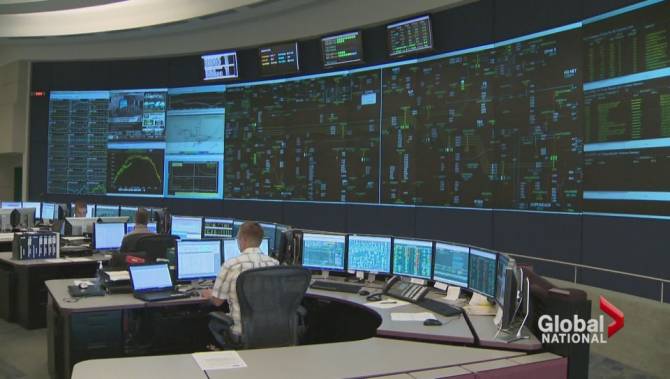
So-called “energy poverty” is getting worse in rural Ontario, a Global News investigation has found, with even small households paying hundreds of dollars a month to keep the lights on.
Officials, residents and experts are all sounding the alarm after electricity rates in the province rose 100 per cent in the past decade.
A range of factors are fueling the increases, including subsidies for clean energy, dealing with aging nuclear plants and maintaining and modernizing the province’s vast transmission and distribution system. But the problem is especially acute in rural Ontario, where steep delivery charges are the norm.
“The worst affected are customers in rural Ontario,” said energy analyst Tom Adams. “Compared to the ordinary urban household, the delivery charge alone is usually two to three times higher.”
FROM THE ARCHIVES: Ontario’s rising electricity costs putting squeeze on big business

Fay Knox knows what it’s like to live off the grid. Unable to cope with rising power rates, she has been disconnected twice because she couldn’t pay her hydro bills.
She lives by herself in a small house in the Eastern Ontario town of Lancaster, but her electricity bills run into the hundreds of dollars.
For the month of March 2016, it was $299.67. Knox, who receives a disability pension, says she simply can’t afford to keep her lights on.
“I could pay my hydro bill (20 years ago),” she said. “I was a single mother making $4 an hour raising two boys. Paying a mortgage. And you could pay your hydro. You can’t pay your hydro anymore.”
Ontario Progressive Conservative energy critic John Yakabuski said he was recently speaking to a volunteer at a food bank in the Ottawa Valley town of Eganville, who told him that most of the food bank’s new clients were people who had to make a choice between paying their hydro bill and avoiding a disconnection fee, or buying groceries.
“So they chose to maintain their hydro, but were now becoming clients of the food bank.”
WATCH: The roadmap to renewable energy in Canada
 Jennifer Shaver is in a similar situation to Knox. She lives in Oxford Station, just outside of Ottawa, and she is on a constant crusade to cut her power consumption.
She shuts off her water heater during the day, hangs out all her laundry and her air conditioner is never turned on. The dishwasher only runs at night.
Despite her strict conservation measures, her monthly bills have been creeping up to more than $300 a month.
“With what’s been happening with Hydro we could be paying $500 a month easy here,” Shaver told Global News. “And that’s not going to work for us. And I don’t know what to do.”
She said she regularly falls behind on paying the bills, and a hydro crew recently disconnected power to her house. Her parents lent her the money to pay the $600 bill, and her power was eventually restored.
Government ‘taking significant steps’
Ontario’s new Energy Minister, Glenn Thibeault, said he’s still learning the ropes in his new job, so the man who used to hold the position, Bob Chiarelli, addressed the issue instead.
He expressed some sympathy to the plight of rural hydro customers.
“Yes there are pressures on rural customers,” Chiarelli acknowledged. “We are taking some significant steps to ameliorate those and we’ve made some significant progress.”
READ MORE: Ontario electricity rates set to surge again on May 1
That help includes the Ontario Electricity Support Program that offers low-income Ontarians a monthly credit on their bill of up to $50. There is also the Low-Income Energy Assistance Program (LEAP), that will provide up to $600 in emergency assistance to people who are struggling to pay their hydro bill.
But energy analyst Adams says despite this help, a crisis is brewing.
“Electricity costs are becoming a housing problem. Some people are saying now they can’t afford to stay in their home because of their power bills. I find that … shocking.”
How many people are living in the dark?
Hydro One is the utility that delivers electricity to much of rural Ontario. The company refused to provide the number of people who have been disconnected each year for the past 10 years because of non-payment of their bills.
A similar request for the number of notices sent out to customers warning them their power could be disconnected because of arrears was also denied. Laura Cooke, Hydro One’s Senior Vice-President of Customer and Corporate Relations, did tell Global News she has reviewed the data and she did not see an “appreciable difference” in the year-over-year numbers.
But Cooke refused to provide data to back up that assertion.
“I am shocked that they would not divulge that information,” PC energy critic Yakabuski told Global News. “That is now being cloaked in a veil of secrecy when it comes to how they do business.”
However, there is some publicly available data that indicate the problem may be getting worse. In a two-year period (2013-2014) the number of people who applied to the LEAP program for financial help to pay their electricity bill shot up by 20 per cent. The amount of money paid out by the fund also jumped by the same amount.
Officials in a number of rural townships said the number of people seeking help through the Community Homelessness Prevention Initiative is on the rise. Renfrew County, west of Ottawa, doubled the amount of assistance it handed out last year.
Meanwhile, Fay Knox is once again hundreds of dollars behind on her hydro bill. The stress of not knowing when she will be living in the dark is taking its toll.
“My nerves are shot. Blood pressure is through the roof. I don’t think in Ontario that we should have to live like this. And it’s getting worse.”
© 2016 Global News, a division of Corus Entertainment Inc.
 "Mothers Against Wind Turbines™" Phoenix Rising...