Wynne & the Liberals, Determined to Destroy Ontario’s Future!

Underfunded Pension Liabilities. More Wynne Incompetence.

[ 0 ] December 12, 2014 |

liablitiesWhen the Huff Post takes swipes at Wynne and her Liberals, you know things are bad.

In a piece by the Huffington Post which is reporting on the Auditor General’s findings, it is clear that the Ontario Pension Liability coffers are insufficient by some 75 billion dollars.  That means that you and I, Joe and Jane Nobody are on the hook for it.  Why?  Well because much of those plans are promised to contracted union employees of the Ontario government.  So as long as there is one tax payer available from which to draw a “revenue stream”, it means that their pensions MUST be paid, even if the province doesn’t have a red penny left in the coffer pot to pay them.

Since the government doesn’t actually generate its own money, where do you suppose Wynne is looking to find that 75 Billion bucks?   Might that 75 Billion get diverted from the cash that will be coming in from her new “Pension Plan”?

So keep in mind that public employees get free dental, eye glasses, eye laser surgery, chiropractor and physio services, added health care benefits for short and long term disability, gold plated pension benefits and even life insurance benefits, whereas – we the people who have to continue to pay for it all and are on the hook for it, more often than not, usually do without any and all of those same benefits.   Not because we don’t think dental plans and life insurance plans for our loved ones aren’t important – on the contrary, they are.  The fact is, that there just simply isn’t enough money left in our jeans to provide that for ourselves once the various levels of government extract their cut and we busy ourselves with simply trying to stay afloat on what’s left.

I’ll spare you the math, and instead I urge you to read the whole Huff article, which shows how this whole new boondoggle in waiting, – equates to essentially a $200,000 to $350,000 lifetime cash grab from each Ontario employee.  Of course all benefitting the revenue starved Liberal Government.  They are asking you to pay into a fund, where they hold the purse strings and they will keep ALL the money paid in, to spend as they see fit.   As the Huff points out, if you put that money in your own savings plan, you’d be ahead of the game by some $350,000.  You would be getting paid interest per month on your own money PLUS you would still own the 350K, not the government.

What many also still do not understand is that anyone who runs a small business, or is self employed, stands to get hit with not only the employee contribution, but you must pay your employer portion as well.  For many, this cap of 1600 per year, will actually equate to DOUBLE the stated premium to a total maximum of 3400 bucks per year to Windmill Katie’s Government!

While it is still unclear how some of this Plan will be administered something about this whole idea simply stinks.  The fine points are not forthcoming as of yet, as I suspect it is in part because there hasn’t been enough fiddling with needed loopholes in order to send endless streams of that newly incoming cash into general revenues, other barren budgetary areas and other Liberal pet projects.

Unless Wynne and her gang can figure out all the ways to get their hands on that new revenue stream, and spend it as they wish, (instead of locking it in legally to be maintained for its sole purpose which is: a FUND that could not be drawn against or pillaged for other government spending sprees.) – Unless Wynne and her gang can solidify their ability to divert that new cash to other areas whenever they please, HOWEVER they please, there really isn’t much of a reason to implement the plan at all.

In any case, the amount of times we hear about missing billions with this bunch is simply staggering.  I do think there is a direct correlation between the fact that there is a 75 billion dollar Union Sector Pension liability short fall and this latest tactic to generate new money.   They are going to have to find a way to drum up this 75 Billion bucks from somewhere, or more accurately, from someone.  That  someone is you and me.

This of course is where Liberals truly excel – they are pros at selling a shiny “Pension Fund” bait and switch shell game.  Let’s face it,  is far more palatable to sell something shiny and pretty to the unsuspecting Ontarian, than to simply tell them the truth – which is: Hey, our Pension funding is 75 Billion in the hole, with no way to make up that money and with no way to divert that money from other general coffers either…. and so we need gobs of money from each and every one of you so that we can make sure we have enough cash to pay our union employees their pensions.

I wouldn’t count on Joe Average ever seeing a red cent of this new pension money getting back into his jeans.  I’m betting that Wynne and her Government will have long since spent it on other things.

Ohio Citizens Band Together to Fight The Industrial Wind Scourge!

Ohio Joins Global Effort to Slam the Door on Big Wind

Broken_Door_Lock

Around the world, rural communities are fighting back hard against the great wind power fraud.

Wherever wind farms have appeared – or have been threatened – big numbers of locals take a set against the monsters being speared into their previously peaceful – and often idyllic – rural communities. Their anger extends to the goons that lied their way to development approval – and the bent officials that rubber-stamped their applications and who, thereafter, help the operators ride roughshod over locals’ rights to live in and enjoy the peace and comfort of their own homes and properties.

Australians are in there fighting hard – with the numbers solidly against wind power outfits that cause nothing more than community division and open hostility where ever they go (see our posts here and here and here)

The Irish have already hit the streets to bring an end to the fraud: some 10,000 stormed Dublin back in April. The sense of anger in Ireland – as elsewhere – is palpable (see our post here).

Rural Ontario is seething, with locals taking the law into their own hands – sabotaging turbines and construction equipment in order to defend their (once) peaceful and prosperous communities (see our post here).

And the Scots have joined in – tearing down MET masts in order to prevent wind power outfits from gaining a foothold and, thereafter, violating their right to live free from turbine terror (see our post here).

The back-lash against wind power outfits has been mirrored in the US – with communities rallying to shut down projects before they begin; and a raft of litigation launched by neighbours (see our post here).

In the US, even turbine hosts – who we’re repeatedly told by the wind industry’s pseudo-scientist advocates NEVER complain about turbine noise impacts on their homes and health – have issued civil actions against the companies that pay them handsomely to let them plant their giant fans in the top paddock. In Texas, 23 of them are suing 2 wind power outfits for damages caused by excessive noise – which has led to health problems and homes being abandoned – true to form, the companies involved had lied to the farmers concerned about the noise their turbines would generate from the very beginning (see our post here).

Now, farmers in Ohio have taken up the battle to defend their homes, properties and families from turbine tyranny.

Fighting Big Wind
Telegraph-Forum
Todd Hill
7 November 2014

“Stop the wind turbines!” “Say no to wind turbines!” “Wind turbines, go away!”

Drive around rural Ohio long enough, particularly the parts of the state that are flat and dominated by large, agricultural fields, and you’re bound to see signs voicing these sentiments in the front yards of property owners.

Fifteen miles north of Mansfield, just north of the Richland County line near the Huron County village of Greenwich, red and white anti-wind farm signs have sprouted like weeds. A subsidiary of Windlab Developments USA Ltd. wants to build a 25-turbine wind farm on 4,600 acres of leased land just south and east of the village.

The Greenwich Wind Park was approved by the Ohio Power Siting Board in late August.

“We first identified the site and approached landowners to discuss the project concept in 2010. Since that time, the project has benefited from significant community support throughout an extensive development and OPSB process,” Monica Jensen, vice president of Windlab Developments USA, said.

“Now that the project has been approved, Windlab looks forward to completing this project for the benefit of both involved landowners and the neighboring community.”

Well, not so fast.

Kevin and Marcia Ledet live on Omega Road, square in the middle of where the Greenwich Wind Park is supposed to go. They, along with about 27 other local residents, have formed Greenwich Neighbors United, and they’re not taking this wind park lying down. They have their reasons.

“My parents aren’t in their home anymore and we were going to sell their home,” Marcia Ledet said. “The guy called up and said, ‘Well, what about the wind situation?’ He’s backed out, he doesn’t want to buy it now because he doesn’t think it will be a good selling thing to have turbines in the neighborhood.”

The Ledets’ home sits less than a mile north of a busy CSX railroad track, with two even busier CSX tracks a couple miles south of that, typical for northern Ohio. And a variety of pungent smells waft on the breeze.

“They’ll say the railroads make noise and you have all these chicken and hog farms. Hey, this is agriculture,” Kevin Ledet said.

Dennis Alvert and Marcia and Kevin Ledet of Greenwich, Ohio, are unhappy with the environmental effects of a wind turbine farm proposed for their area.

“I love that they call this a wind farm, because what are you farming here? You’re making an industrial power-generating facility superimposed on a community, and it will alter it forever. Our property rights are being infringed upon.”

Ledet said he’s not against wind turbines, although like most opposed to these projects, he certainly sounds as if he is. He complains about federal subsidies “throwing a lot of good tax money” at wind farms, although a federal tax credit for turbines expired last year, with no signs that Congress intends to rejuvenate it any time soon.

Still, the Ledets probably wouldn’t be opposed to wind energy if it were coming from Texas or Oklahoma, where the wind power industry has really taken off. Here in Ohio, only two wind farms are in operation, in Van Wert and Paulding counties. Several more have been either approved by the OPSB or are in pre-application status with the state agency, including two in Richland and Crawford counties, the much larger Black Fork Wind Farm west of the city of Shelby and near the village of Tiro, and the Honey Creek Wind Farm in Crawford and Seneca counties.

Within just the past year, the legislative environment for wind energy in Ohio has grown progressively more unfavorable.

Gov. John Kasich has frozen the state’s renewable portfolio standard, which had stipulated that 25 percent of the electricity sold in Ohio must be generated from alternative energy sources, such as wind, located here by 2025. That mandate is now stuck at a much lower 2014 level, although the freeze is temporary.

Dennis Alvert discusses the environmental effects of a wind turbine farm that is proposed for the Greenwich, Ohio, community.

“It’s not a freeze at all, because if they don’t give us something that works we go back to the old rules, the old standards, which I don’t think fit the state,” Kasich said.

“The numbers that got set were pulled out of thin air. You don’t want to put burdens on companies in this state where they can’t possibly meet the rules, and we don’t want to burden the consumers where we’re costing them a fortune, so we’re going to do a reset.”

In addition, the governor signed over the summer legislation, which never received any public testimony, revising the setback provisions for wind farms from the outer wall of the nearest habitable structure to the edge of a property line, essentially rendering these projects impossible in a heavily populated state like Ohio.

“Look, here’s the issue. Private property rights are important. People choose to live somewhere, and you don’t just go in there and disrupt their life. The idea that you have a setback from your property line rather than your personal home I think makes a lot of sense,” Kasich said.

Will the new setbacks be the death knell for wind projects like Greenwich and Black Fork?

“That question is up in the air,” Dayna Baird Payne, a Columbus-based lobbyist for the American Wind Energy Association, said.

“There is language in the statute, House Bill 483, that projects certified as of early September (again, Greenwich Wind Park was approved in late August) will be grandfathered in. But some of the language in the statute suggests that if a project files an amendment, that kicks it out of grandfathering. There may be a rule coming soon from the OPSB explaining a little about the process.”

“There are not any immediate plans to do that,” Matt Butler, public outreach manager for the OPSB, said.

“The setback change has a number of legal issues that are subject to further interpretation before we can issue any additional clarification on that in a case that comes before the board.”

Kevin and Marcia Ledet of Greenwich, Ohio, discuss the negative effects not often addressed by the wind turbine farm advocates.

The energy marketplace also is challenging for the wind industry right now, given the abundance of natural gas being extracted from the Marcellus and Utica shale plays, along with a general decline in energy demand that’s persisted since the 2007-09 recession.

Still, the members of Greenwich Neighbors United aren’t taking any chances. They’re hoping to litigate the wind park to death before it gets off the ground, a strategy that’s so far been working for the opponents of the Black Fork Wind Farm.

“Windlab had an informational meeting, and just prior to that they took out a big, color advertisement in the newspapers that says how marvelous this is. It shows a little girl with these pinwheels on a prairie with some turbines,” Kevin Ledet said.

“It was an amicable meeting, but I told them we would fight them tooth and nail, take them all the way to the Supreme Court, whatever we have to do.”

Dennis Alvert, another opponent, questioned why Windlab has chosen Huron County, where the wind can be calm for days on end during the summer. There are, however, several power transmission lines stretched across the Buckeye State.

“The alarm for us is the way they have done business so covertly. They spend three to four years in an area getting their ducks in a row before they make an announcement,” he said.

Indeed, a flow chart showing the approval process for a wind project, provided by Windlab, has the first public mention (a legal notice in a local newspaper) more than halfway down the page.

“These people, they know the game we’re playing, and we don’t. By the time we got on board with this, the bus was already over the hill, we never even saw the taillights,” Ledet said.

“Everyone we talked to, they thought it was a done deal, there’s no sense in fighting, forget about it. And half didn’t even know what was going on,” Marcia Ledet said, adding Greenwich Neighbors United is $30,000 in debt.

The group is having its first fundraiser, a community chili rally, Friday from 5 to 8 p.m. at the South Central K-8 School, 3305 Greenwich Angling Road.

“And we’re selling hats,” she said. “Five dollars if you wear them, $10 if you don’t. If you think they’re ugly, you should see the wind turbines.”
Telegraph-Forum

Industrialisation

Wind Turbines DO Destroy Property Values….

Wind farm property value study should not have been published: Queens prof

by ottawawindconcerns

You may have seen the Canadian Press story that surfaced on Sunday and Mondayabout a study done by a University of Guelph agricultural economics teacher, which was published in the Journal of Agricultural Economics. While the headlines said wind turbines caused NO effect on property value, the real study said otherwise: the co-authors noted that they had very little data, that expired listings (houses listed for sale that never sold) were not included, and neither were sales not on the open market, such as the properties purchased by wind power developers.

So the situation was: very few sales, houses not selling at all, and some houses that did sell changed hands many times. What’s wrong with that picture?

Well, plenty. Here’s a letter to the editor of the journal that published the study, released today. Too bad the damage has been done by the headline writers.

Letter to the Editors of Canadian Journal of Agricultural Economics:

The paper by Vyn and McCullough (2014) should not have been published in its current form as the results are being misinterpreted and highly publicized in the press and in radio broadcasts. The core issue is the lack of power in the statistical tests, a problem partially acknowledged by the authors but then dismissed by their focusing attention on tests for the sensitivity of their model specification. The article appears to encourage the misinterpretation of its statistical findings.

Out of the 5414 sales, only 79 post-turbine sales are of properties within a 5 kilometer radius and the rest are within a 50 kilometer radius. The diversity of the houses in the sample is very large as indicated by their price range of ten thousand to two million dollars and by the relatively low R-squares (0.57) in the hedonic regressions. Given the small number of properties that may have been adversely affected and the great diversity of properties in the sample, it is not at all surprising that the regressions yield no ‘statistically significant’ results. The shortage of observations on properties close to the turbines cannot be overcome by extensive sensitivity testing of model form. The problem is with the lack of data not with model form and focusing on the form tends to obfuscate the issue.

The authors do recognize the data problem: “Unfortunately, there are relatively few observations in the post-turbine periods that are in close proximity to turbines” (p 375) and “Hence, these numbers of observations are likely too few to detect significant effects, which represents a major limitation of this analysis” (p 387). But there are three problems that should have been picked up and corrected through the peer review and editorial decision process.

First, the authors conclude:

“The empirical results generated by the hedonic models, using three different measures to account for disamenity effects, suggest that these turbines have not impacted the value of surrounding properties” (p 388). This is wrong for two reasons. First they could not discern an impact which is different from not having an impact. Second, they misuse the term ‘value’. If you have a choice between two identical properties, identical in all respects except that one is close to a turbine while the other is not and if you choose the far one, then the turbine has an effect on the value of the property. This hypothetical example tests the paper’s hypothesis using common sense rather than a statistical measure.

Second, the authors claim:

“The findings of this paper will provide evidence that may help to resolve the controversy that exists in Ontario regarding the impacts of wind turbines on property values” (p 369) and then proceed to do all they can to make a non-finding appear important and repeat the general statement that they found no significant impact. They correctly said in the CBC interview this morning that their study did not find a statistically significant price effect but the public and reporters, not being familiar with statistical terms interpret this as saying that there was no price effect. Not finding a statistically significant impact due to a data shortage does not mean that there was no significant (i.e. important) impact. This distinction was not made clear enough in the paper nor in the follow up interviews and newspaper articles.

Third, the reviewers and finally the editors should have insisted on the power of the statistical tests to be calculated and reported. I understand that editors in the major health science journals insist on this as their readers, doctors and other clinicians, are not always aware of statistical fine-points but they need to be fully aware of the qualifications before using the results to change their practice. Given the potential impact a misinterpretation of the findings could generate, the test of the power should be reported even in the abstract. The reader should be told how big an impact would have to be before it can be detected by a statistical test with this number of observations. Had the price of properties near the turbines been 10 percent lower than they actually were, would the model have yielded a statistically significant finding of a price decrease at say the 0.05 probability level? What about a 20 percent decrease, would it have been ‘statistically significant’? Answers to this type of question would have been easy to produce and far more relevant that sensitivity tests of the model form.

The paper deals with an important issue that can have serious policy implications affecting the wellbeing of many people. The results can affect the location of wind turbine farms and the compensation claims of affected parties. Incorrect information or interpretations can be very hard to correct. In such cases, it is the journal editors’ responsibility to ensure that results are presented in a manner that, at the very least, does not encourage the misinterpretation of the findings.

Sincerely,

Andrejs Skaburskis, Professor Emeritus

North American Editor: Urban Studies,

School of Urban and Regional Planning,

Queen’s University,

Kingston Ontario, Canada

Torturing Residents With Wind Turbine Noise!

UK Plan to Ban Noisy Wind Farms

when-is-wind-energy-noise-pollutionNoisy wind farms face ban as ministers launch review into ‘annoying’sound levels
The Telegraph
Emily Godsen
30 November 2014

Exclusive: Energy department commissions review into disturbance from turbine noise in order to decide when annoyance becomes unacceptable 

Noisy wind farms that disturb local communities could be banned, after ministers launched an unprecedented review into the annoyance they cause.

In the first official admission that wind turbine noise can adversely affect local residents, the Department of Energy and Climate Change (DECC) has commissioned an independent investigation to assess the levels of sound wind farms produce and the extent of disturbance caused as a result.

Experts from the Institute of Acoustics will conduct the research next year, the Telegraph has learnt, and ministers across Government will then use the data to decide at which point the annoyance officially becomes “unacceptable”.

The review is likely to lead to tighter planning guidance for new wind farms and could force existing wind farm operators to restrict their turbines’ operation to stay within the limits.

It is also likely to open the door to claims for compensation by residents subjected to noise above the official nuisance threshold.

Many residents living near wind farms have complained of noise disturbance, while studies have linked wind turbine noise to poor sleep and mental health.

As well as the routine “swishing” noise of the blades spinning, turbines can sometimes produce “thumping” noises when sudden variations in the wind speed cause the blades to stall.

Current planning guidance limits the swishing noise to 43 decibels at night-time for the nearest property but does not deal with the thumping noises, which are a deeper pitch and can be heard at 40 decibels a kilometre away from the turbine.

Residents near some wind farms have likened the noise to a cement-mixer or a shoe stuck in a tumble-dryer.

A source said the new review would consider all types of turbine noise. “Everything is on the table,” they said.

Developers could be forced to use software to adjust the angle of the blades to prevent the thumping being caused at an unacceptably annoying level.

A spokesman for the DECC said: “This review should empower local people to stop disruptive wind farms and make sure local authorities have all the information they need before giving a planning application the green light.”

The review is expected to be completed by June. While the Institute of Acoustics will independently draw up the index of noise annoyance, the decision over what will be deemed an acceptable threshold will be a political decision for the next Government.

The Conservatives have already pledged an effective ban on new onshore wind farms if they win the election, by ending subsidies for those projects that do not already have planning permission. They have also pledged that all future onshore wind farm planning decisions would be determined by local authorities, instead of large projects being deemed nationally significant.

Matthew Hancock, the Conservative energy minister, said: “It’s important that we maximize the potential of domestic energy resources but we must do this in a responsible way. We cannot jeopardize our green and pleasant land.”

Ed Davey, the Lib Dem energy secretary, has heavily criticized the Conservative plan to ban onshore wind, arguing it would push up consumer bills by forcing the UK to build more expensive types of renewable technologies such as offshore turbines to hit green targets.

Wind industry body Renewable UK said it had already conducted extensive research into the extent of the thumping problem – known as Other Amplitude Modulation – and had devised the ways of tackling it.

Independent research published by the lobby group late last year had helped “to pinpoint when, where and how this sound varies”, Gemma Grimes, the group’s Director of Onshore Renewables said.

“We found that this can be addressed by using computer software to adjust the way turbines operate, changing the angle of the blades to minimize the sound levels.

“We’re hoping that this will now be incorporated within the Institute of Acoustics’ existing Good Practice Guidance document,” she said.

But she said she did not believe the existing guidance on swishing noises would or should be changed. “In this [Institute of Acoustics] guidance, which they published last summer, there was no question of changing the current noise limits, which are rightly very stringent, so we wouldn’t expect any alteration in that when they update the current document,” she said.
The Telegraph

Ever noticed how it’s only the wind industry, its parasites and spin-masters that use the terms “swoosh” and “swishing” to describe the noise produced by their giant fans?

Language abuse like that goes hand-in-glove with the same kind of corporate subterfuge that has given us lines about the noise from turbines being quieter than a refrigerator 500m away and as soothing as waves lapping on a moonlit beach (see our post here).

Funny, though, that those forced to live anywhere near these things never talk about “swishing” and, instead, use a raft of terms pulled from the darker reaches of our lexicon: “roaring”; “thumping”; “grinding”; “whining” – and phrases like “a truck rumbling down the road but never arriving”; “a jet plane overhead that never lands”; and – as appears in the piece above: “a cement-mixer” or “a shoe stuck in a tumble-dryer”.

It’s like the wind industry’s spruikers have never spent a night trying desperately to sleep anywhere near their masters’ monsters. Funny about that, too.

To give them a clue – and to help you decide on whether it’s the impacted neighbours’ choice of language that better describes the racket – here’s a couple of videos of these things in action. Take a listen and see what you think:

blob:https%3A//www.youtube.com/2189e6d8-9736-44e1-9d8f-c2b41473d799

STT particularly loves the second video – where a wind power outfit’s lawyer is telling a planning panel that “noise isn’t going to be an issue of concern” and compares the noise that would be produced by his client’s turbines with “a quiet library” and “an average home”. Hmmm …

STT also loves the claims by wind industry spin kings, Renewable UK that – when it comes to the thumping noise complained of by neighbours – like the Bob the Builder – it can fix most everything. Which begs the question, why is the “thumping” noise a problem at all?

bob the builder

But the argument about “fixing” the “thumping” noise is a typical red-herring response to the real and underlying problem: the incessant (and, therefore, grindingly annoying) nature of the low-frequency noise and infrasound emitted – where the former is audible and the latter isn’t, but operates on the auditory and other sensory systems to disturb sleep; with both combining to cause long-term sleep deprivation and other adverse health effects, as crack Professor Alec Salt explains in simple terms in this video – and as covered in our post here.

blob:https%3A//www.youtube.com/2679c3be-4b60-49cb-9923-fd24e9a26627

turbine collapse 9

Windweasels Will Resort to Bribery, When All Else Fails….

UK Wind Industry Turns to Bribery as it Fails to “Win Brit’s Hearts & Minds”

dirtyrottenscoundrelsoriginal

Ministers accused of trying to ‘buy off’ local discontent on wind farms
Western Morning News
Phil Goodwin
12 October 2014

Landscape campaigners have described the latest Government moves tohelp communities obtain financial benefits from wind farms as a guide to bribery.

The Department of Energy and Climate Change (DECC) has set out new standards for wind energy schemes to work with local communities.

The guidance, written by the industry body Regen South West, focuses on how communities can best obtain and use cash funds of up to £5,000 per megawatt (MW).

Opponents of turbines say windfalls under the new rules – worth £1.1 million over the life cycle of a large project up for decision in Cornwall later this month – are simply designed to “buy off” local discontent.

Campaign group Cornwall Protect said the only way the Government can achieve its renewable energy targets is to “extend the gravy train beyond developers and landowners to communities”.

Spokesman Danny Mageean said there was a danger that so-called community leaders may be keen to win “brownie points” even if they live “at the other end of the village”.

“I live five hundred metres from a 77-metre turbine so I know the problems, and I don’t think giving our parish council a few thousand would compensate for the devaluing of our property and the noise,” he added.

Ministers unveiled a raft of measures last year in response to growing anger in the rural Conservative heartlands at turbines and solar farms.

The new guidance was billed as giving more protection to the landscape and a stronger voice to locals who opposed unpopular renewable energy schemes.

In addition, the recommended community benefit package in England was increased fivefold from £1,000 per MW of installed capacity to £5,000 per MW.

DECC has published the guidance on how wind schemes should work with communities, calling for partnerships between the two.

It gives examples of different ways in which funds and other investments by developers have been used by local groups, from the provision of care services to mountain bike trails.

The guidance is expected to be followed shortly be a community “right to invest” in new renewable energy projects that will also apply to solar schemes.

Jodie Giles, communities project manager at Regen South West, authors of the document, said “We are delighted that more communities are getting involved with sustainable energy, and in particular onshore wind projects – one of the most efficient and cost effective renewables technologies available.”

Examples of how benefits have been used will soon be recorded on DECC’s new community benefits register for England.

This month, a decision will be made on plans for one of the biggest wind farms in the region – 11 turbines producing 25MW at Week St Mary in Cornwall.

Developers Good Energy are proposing a fund of £2,000 per MW, totalling more than £44,000 a year for the life of the project, available to people living within three miles of the plant.

A local electricity tariff scheme is also proposed, offering discount for locals living within the three-mile radius who sign up to receive electricity from the scheme.

The firm is also exploring the possibility of the community owning one of the turbines.

Bob Barfoot, a member of the CPRE in Devon and a planning expert who has helped prepare a report from the group Communities Against Rural Exploitation (CARE) for the planning meeting on October 23, said community benefits cannot be taken into account by councillors.

He says this point has been made by a number of planning inspectors in recent appeals, including a decision this June to uphold the refusal of a 77-metre turbine at Ladock.

In dismissing the appeal, planning inspector Paul Jackson said plans to generate about a third of the parish’s annual electricity demand were “a laudable aim”

“However, as planning permission for the scheme was refused on landscape and visual amenity grounds, which remain the main concerns, it is unclear how the intended community benefits could make it acceptable,” he added.

Environment campaigner Jeremy Varcoe, of North Cornwall, said it was wrong to lavish cash on the girl guides rather than affected locals.

“What’s so unfair is the money goes to people not affected – rather than those whose lives are blighted by the turbines – it is little more than a bribe to the local parish or town council,” he added.

“It is a dishonest device to buy off the increasing resentment among people who are against these developments. Strictly speaking community benefits are not a material planning consideration but there is no doubt that the promise of large amounts of money has affected the decision of committees and council case officers.”
Western Morning News

As community and political opposition to the great wind power fraud rolls and builds across the world, the charge that opponents are red-necked climate change deniers, infected with a dose of Not In My Backyard syndrome, starts to ring hollow.

Sprinkling a little cash – like confetti at a wedding – isn’t going to overcome the fact that anyone with an interest in the roll-out of giant fans – which obviously includes those in impacted and threatened communities – is alive to the scale and scope of the greatest economic and environmental fraud of all time (see our post here).

The level of anger is palpable and has already erupted with community defenders toppling MET masts in Scotland (see our post here); and sabotaging turbines and construction equipment in Ontario (see our post here).

True it is that everyone has a “price”. But not everyone is ready to sell their souls.

not-for-sale

Aussies Determined to Expose the Great Wind Power Fraud! Go Senator Leyonhjelm!

Alan Jones interviews David Leyonhjelm on the Senate’s Inquiry Into the Great Wind Power Fraud & Cross-Bench LRET Plan

263977-alan-jones

The wind industry in Australia is in full-scale panic because the Senate’s cross-benchers (who hold the balance of power in the Upper House) have won Coalition support for their Inquiry into the great wind power fraud: which will turn a (long-overdue) blowtorch on the biggest rort in Australian history (see our post here).

Adding to the wind industry’s mounting woes is the fact that the cross-benchers have also put together a plan that will put the wind industry out of its misery, by elevating the place of “old” hydro power and small-scale solar – especially “stand alone solar” in remote locations – under the Large-Scale Renewable Energy Target (LRET): both “old” hydro and small-scale solar are perversely excluded from the LRET  (the plan is available here).

The vast bulk of hydro capacity was built pre-1998 and is, therefore, ineligible to participate – a matter that has Tasmanian Senator, Jacqui Lambie seeing red (see our posts here and here). For a run down on the Inquiry and the cross-benchers’ plan see our post here.

STT hears that the cross-bench plan is with Tony Abbott’s office and has already won the PM’s tick of approval.

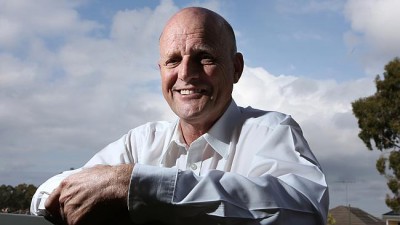
The Inquiry and the plan has been pushed along by cross-bench Senator, David Leyonhelm, who appears in this recent interview with Alan Jones on 2GB.

Alan has a little radio show that more than just a few Australians tune into each morning. Syndicated through over 77 Stations and with close to 2 million listeners Countrywide – AJ as he’s known – is one of those people that leads the political charge on many issues that really affect ordinary Australians and which the rest of the press ignore.

Alan Jones AO: A couple of weeks ago I interviewed Dr Jay Tibbetts – you might recall is an American. A medicical adviser to the Brown County Health Department in Wisconsin. He attacked the Australian Medical Association, who quite disgracefully, but not surprisingly given that the leadership of that mob now is hopelessly of the left. And the AMA virtually arguing that there was no problem with these sub-audibleinfra-sound emitted by wind turbines. And Doctor Tibbetts cited endless international evidence in relation to the health risks posed by the low-frequency noise that wind turbines generate.

Well that interview lead to an email that I received this week from eastern Europe.  Amazingly they had heard my interview, on the Internet with Doctor Tibbetts in relation to what I call the lunacy of wind farms and the sleep deprivation that they cause and my email correspondent said “I just wanted to tell you how much we appreciated your excellent interview and your courage to do it. I know how risky this is.  My emailer said he posted the interview on his website and it went ballistic. And I’m told, he says it’s spreading from Austria to Germany, and Finland and Ireland and Poland and many other countries. My emailer said ‘I can guarantee you that all people in Europe, especially in Germany were like crazy and spread your interview like crazy when they got it on my Facebook page.

Well people are waking up to the lies and deceit peddled by governments and renewable energy companies all over the world. There is a report this week by AGL energy of all outfits who found that non-solar households are paying hidden subsidies and more than $200 million a year, here in Australia to households who have solar roofing panels.  Now we know that this wind power-solar power are driving up the cost of what you pay for electricity and what business pays. And the AGL Chief economist Paul Simshauser, said the problem of wealth transfers to renewable energy sources was increasing. In other words to prop up renewable energy, you the taxpayer have money taken out of your pocket and that, in billions of dollars, goes to renewable energy companies. Most of them foreign companies.

Now people increasingly can’t hack this. We’re told 650 electricity customers are complaining to their retailer every day about electricity prices. The Australian Energy Regulator’s annual report found disconnections have surged and more than 237,000 New South Wales households, one in seven customers, has complained to their provider about pricing in the financial year ended 30 June this year.

Now we are spending billions of dollars on wind energy. It accounts for less than 2% of power generation in China, 3% in America. And this whole renewable energy thing is completely out of control. Wind power costs up to $214 per megawatt hour, coal $78 to $91. If the renewable energy mob want a set of rules that would be simple – then go ahead with your wind farm but don’t ask for taxpayers’ money. How can wind turbine companies buy off a farmer for $10,000 a turbine and then that same company be subsidised by the taxpayers? Who are you.

I have spoken to so many people, but one of them is Andrew Gardiner in Napthine’s electorate. He’s running for election this Saturday, the Premier of Victoria. Next to 140 turbines, 150 metres high, 56m blades – the biggest monsters in the southern hemisphere, some are 90 m from his property. Eight of them, 1.7 km from his home. And he’s been bullied and intimidated by AGL. I repeat – coal-fired power $78-91 a megawatt hour wind power, up to $214 per megawatt hour and solar power, over $400 a megawatt hour.

And here you’ve got this Gullen Range wind farm near Goulburn, which breaks nearly every rule that governed its application to operate. But don’t worry, it’s foreign owned. Would you believe Canberra, were meant to be spending 17,000 million dollars (17 billion), erecting between 7000 and 10,000 of these wind turbines. Yet Germany are pushing ahead with new coal-fired electricity plants because political and public concern there is increasing over the cost of energy. China is building a new coal fired power station every 10 days every year. And remember when I spoke to Angus Taylor, the new member for Hume, turbines in his electorate enjoys subsidies to $500,000,000 to a $billion a year.

Well David Leyonhjelm is a New South Wales Senator, representing the Liberal Democrats and along with Senators Madigan, Day, Xenophon and Back, David Leyonhjelm succeeded in establishing, has succeeded in establishing – and this will put a few noses out of joint – a Senate inquiry into wind turbines. This will blow the whole show open. It was a narrow vote. Because you see people like Mcfarlane, the Energy Minister, they’re in bed with wind companies. 33 to 32. The inquiry will be known as The Select Committee on Wind Turbines. It will investigate regulatory governance, or lack of it, over wind turbines, their economic impact, which can only be negative. It will examine on household power prices of wind power, we know that. The implementation of planning processes which as you can see with Gullen Range, are ignored. The integrity of national wind farm guidelines – they have none. The impact of wind turbines on firefighting – that’s another story altogether – and crop management. And the committee will have the power to send for and examine people and documents. And it will report its proceedings from time to time and make interim recommendations and it will report by June 24 next year. This is a very pioneering and important initiative and not before time.

Senator David Leyonhjelm is on the line. Senator, good morning.

Senator David Leyonhjelm: Good morning Alan.

Alan Jones AO:  Just before we go down to the guts of this, I note the notice paper and it tells us that the inquiry will look into ‘the role and capacity of the National Health & Medical Research Council in providing guidance to state and territory authorities’ and ‘the effect that wind towers have on fauna and aerial operations around wind turbines’. I couldn’t find any where in the terms of reference of the inquiry an investigation into the health impact of these wind turbines. Is that on your agenda?

Senator David Leyonhjelm:  It’s on our agenda and there is another item there that says ‘Any related matter’. So it certainly we’ll be taking that into account. The only thing is we – the emphasis of this inquiry is towards the other matters, more than health, because there have been two inquiries into health already. The problem with it is they’ve been ignored pretty much.

Alan Jones AO:   Absolutely.

Senator David Leyonhjelm:   We didn’t think – we will be going over that ground, we will be looking at that again – but there are a lot of additional complaints about wind farms. They are, I don’t know where they all are, all but certainly some of them are extremely noxious neighbours. And we are receiving just so many complaints about them.

Alan Jones AO:   Absolutely, I am to. I have a file that I couldn’t jump over here too. Incidentally, as you would be aware there is an election here on Saturday, this opposition leader, fellow, Andrews, the Labor leader, is promising to reduce the mandatory buffer zone between properties and wind farms if he wins the election. I mean it is currently 2 km the exclusion zone, which is not enough, he’s promised to reduce it to 1 km.

Senator David Leyonhjelm:   It’s amazing. And, you know that reflects the way we did this committee. We knew that there’s significant support for wind farms on both sides of the house. And what we did was a little bit sneaky to be quite frank. We’ve called it a ‘select committee’, so it’s not a reference to an existing standing committee, which are dominated by Labor and the government, so this is basically a cross-bench inquiry. There are seven official members of the committee, plus we can co-opt more, other participating members. It’s only two from the government one from Labor, one from the Greens, and three from the cross-bench. And plus, we can bring in other participating cross-bench members if if we wish to.

Alan Jones AO:  But see you’re raising a very valid point here because the public feel that they’ve got nowhere to turn because both Labor and the Coalition are in bed with this mob.

Senator David Leyonhjelm:   Yes, well that’s the point. That’s why we said this that it’s not going to be appropriate for it to go to an existing committee, because the cross-bench doesn’t have much say on those.

Alan Jones AO:   Absolutely. You see I have said many times – I am talking to Senator David Leyonhjelm from New South Wales – I’ve said many times David, that you can’t release a drug onto the market unless all the likely consequences from the drug are subjected to rigourous scrutiny. So how could you build wind farmers, or approve coal seam gas extraction, without providing the answers to the very legitimate questions about health and the impact on individuals that these things have.

Senator David Leyonhjelm:   Yes. You can never answer every single question and science is an endless pursuit, but there are some just glaring questions why, for example, does the Gullen Range wind farm, where they have put these things almost 200m away from where they’re supposed to be, and then said ‘well, we’re a renewable energy company we can do whatever we like’. And then the Clean Energy Regulator hands over money to them with no accounting.

Alan Jones AO:   Thank God for you. Thank God for you. They should be stopped in their tracks now. They are in breach of the consent application, they should be stopped, shouldn’t they?

Senator David Leyonhjelm:  We hear lots of stories, where because they are renewable energy, they think they’re above the law. They don’t think they have to comply with planning guidelines and directions and so forth.

Alan Jones AO:   This bloke’s a breath of fresh air.

Senator David Leyonhjelm:   We are not even satisfied those guidelines are particularly comprehensive and thorough anyway.

Alan Jones AO:   Or stringent, no. You have said, just for the benefit of my listeners, and I’ll just get you to comment on some of the quotes that you’re on the record as having uttered. “The dramatic surge in power bills has been major factor in the decline of our manufacturing sector and the loss of thousands of jobs. In little more than 10 years, the Renewable Energy Target has rocketed Australia from almost the cheapest to the most expensive electricity in the world”. They are your words.

Senator David Leyonhjelm:   Yes. Well in fact that brings me to another subject where also the cross-bench is also are trying to do something constructive with the government on this Renewable Energy Target. As you probably know, Labor and the government stopped negotiating a week or so back and now, it’s in our court. We are working on a plan – there’s been some media reports on it in the last couple of days. We are working on a plan in whcih we will address this issue of high prices of electricity, unachievable energy target, the penalty rates kicking in, all that sort of nonsense.

Alan Jones AO:  Well you said in August, ‘The latest figures from the Australian Bureau of Statistics show in the five years to June 2012, Australian retail electricity prices rose by 72%, with even higher increases in Melbourne and Sydney’. You said, ‘Senators and MPs, however, don’t need to worry about whether staying warm in chilly Canberra may send them broke. Perhaps if they had to pay for their own heating and air-conditioning in Parliament House it would concentrate their minds on the important discussion we need to have about the future of the Renewable Energy Target’. Good on you.

Senator David Leyonhjelm:   Well, it’s tragic. You know there are people who are suffering, genuinely suffering from energy poverty. They cannot turn on their heaters during the winter. They suffer in the cold just because they cannot afford their electricity bills. So they’re frightened of receiving a bill that they can’t afford to pay.

Alan Jones AO:  Absolutely. You … yes it is tragic. You quote a report from the accounting firm Deloittes, showing the Renewable Energy Target will “stifle the economy, cost jobs, and drive up prices and is a very inefficient means of reducing greenhouse gas emissions”. Now Terry McCrann years ago told me David, on this program, if you want to decarbonise the Australian economy, you’re writing a national suicide note. And I mean that you’re the only people focusing on this issue.

Senator David Leyonhjelm:   Yes, well somebody has to. I’m really encouraged, that the government acknowledges the problem, I just don’t like the solution, or the politics of the solution. The renewable energy industry has an awful lot of supporters. And it’s a nice warm thing motherhood type stuff to support renewable energy.

Alan Jones AO:  And have you ever noticed, when any of the MPs retires from Parliament they go and get jobs with them. Hey hey? Oh, Mr Mcfarlane will be lining one up right now. He won’t be standing at the next election don’t worry. I mean you said, and this is true, ‘the net effect of this subsidy, renewable energy subsidies, is to hand an additional 17 billion dollars of our money to these companies over 15 years for no measurable environmental benefit.

Senator David Leyonhjelm:   Yes that’s right. And it’s worse than that, I mean it’s having negative effects. In fact one of the aspects of the inquiry is to actually determine what is the energy and emission output – input and output from a whole of life. So, from the point when these turbines are made and they run, through to the other end when they are dismantled and thrown on the scrap heap – what’s the net energy and emission output.

Alan Jones AO:  Absolutely

Senator David Leyonhjelm:   I have a sneaky suspicion that a bit like the Prius car it’s not the right direction.

Alan Jones AO:  Absolutely. Finally – and we could go on forever on the things that you’ve said. And it’s very encouraging that someone at least is taking this cause up. But you’ve said, “It is undisputed that the wind generation industry is not viable anywhere in the world without government or customer subsidies”, you said “It’s just government-mandated corporate welfare”.

Senator David Leyonhjelm:   That’s exactly right – they’re just not viable without subsidies.

Alan Jones AO:  Keep at it – keep at it my friend. Keep at it. You’re the hope of the side.

Senator David Leyonhjelm:   Alright – thanks Alan.

Alan Jones AO:   Well done, there he is. Senator David Leyonhjelm. A major senate inquiry into this whole rubbish of renewable energy and wind power.
2GB
david leyonhjelm

Wynne Government is Destroying Ontario, Tells Us, It Is “Good” for Us!

How green energy subsidies work: the government makes stuff up, then wastes billions of dollars while the economy bleeds jobs

Two items in the Toronto Sun caught my eye earlier this month, both written by Lorrie Goldstein about what the paper calls “the Wynne Liberals’ mad obsession with expensive and unneeded green energy.”  The first column is about a recent report published by Parker Gallant and Scott Luft of Wind Concerns Ontario, agrassroots organization that opposes wind turbines.

According to Wind Concerns Ontario, last month the provincial government spent over $1 billionmore for electricity than its market value.  The organization blames the government’s “rush to incorporate ‘renewable’ energy in the form of wind, solar, biomass, etc. into the grid, without a cost-benefit analysis” as the reason for rapidly increasing energy prices in Ontario.  And as Lorrie noted in his column the following week, whenever the “Liberals are called on the carpet over skyrocketing electricity prices in Ontario, they go into their patented, ‘but we eliminated coal’ routine.  Meaning they eliminated coal-fired electricity and replaced it with ‘clean’ energy sources such as solar and wind power.”

This makes no sense, according to Goldstein, who points out that coal-fired electricity generating stations supplied 25% of Ontario’s power needs in 2007 but wind and solar provide only 4% today.

Furthermore, according to the Fraser Institute, the 4% solar and wind provides accounts “for about 20 percent of the average commodity cost,” even though the Ontario Energy Board said last year that solar and wind would provide 7% of Ontario’s power and “their direct costs would account for about the same fraction of the average commodity cost.”

This wouldn’t be the first time that the government’s estimates were wildly off.  Dalton McGuinty promised in 2009 that the Green Energy Act would create 50,000 jobs by the end of 2012, but as Lorrie Goldstein wrote in the Sun last year, as of mid-2013 only 31,000 jobs had materialized.  Most of them were temporary (lasting only one to three years) and were “indirect” jobs, so even the claim that 31,000 jobs were created is difficult to verify.

To make matters worse, the figure of 31,000 did not take into account the jobs that would be permanently lost as a result of increased electricity prices.  A Fraser Institute report published last year found that the Green Energy Act “will not create jobs or improve economic growth in Ontario.” Lorrie Goldstein wrote that the 31,000 new jobs cost the economy 62,000 to 124,000 jobs in other sectors, as a result of high energy prices.

Such dismal results for government investments in green energy are not unique to Ontario, of course.

Consider, for example, this paper published in 2009 by researchers from the King Juan Carlos University in Spain.  The researchers found that for every “green job” created by the government, 2.2 jobs were lost elsewhere in the economy (note that this number falls into the range of Lorrie’s estimate).
The researchers also found that every green energy job created by Spain since 2000 cost the government, on average, 571,138 Euros.  The final cost of the Spanish experience with renewable energy subsidies is massive.   Between subsidies and higher electricity prices, tens of billions of Euros were lost.  The researchers also found that these enormous costs “do not appear to be unique to Spain’s approach but instead are largely inherent in schemes to promote renewable energy sources.”

It is unclear to me, therefore, what the Ontario Government expects its residents to gain in return for all the time and money poured into green energy projects.  Ontarians are paying outrageous electricity prices, jobs have been lost, and billions of dollars have been wasted – and all we have appeared to gain is a few kind words from ‘Saint’ David Suzuki, which is of no value to anyone.

There is No Reason for Them To Lie! Google Engineers Expose the Renewables Scam!

Google’s Top Engineers say: “Renewable Energy Simply Won’t Work”

google-dr-evil

Renewable energy ‘simply WON’T WORK’: Top Google engineers
The Register
Lewis Page
21 November 2014

Windmills, solar, tidal – all a ‘false hope’, say Stanford PhDs

Two highly qualified Google engineers who have spent years studying and trying to improve renewable energy technology have stated quite bluntly that renewables will never permit the human race to cut CO2emissions to the levels demanded by climate activists. Whatever the future holds, it is not a renewables-powered civilisation: such a thing is impossible.

Both men are Stanford PhDs, Ross Koningstein having trained in aerospace engineering and David Fork in applied physics. These aren’t guys who fiddle about with websites or data analytics or “technology” of that sort: they are real engineers who understand difficult maths and physics, and top-bracket even among that distinguished company. The duo were employed at Google on the RE<C project, which sought to enhance renewable technology to the point where it could produce energy more cheaply than coal.

RE<C was a failure, and Google closed it down after four years. Now, Koningstein and Fork have explained the conclusions they came to after a lengthy period of applying their considerable technological expertise to renewables, in an article posted at IEEE Spectrum.

The two men write:

At the start of RE<C, we had shared the attitude of many stalwart environmentalists: We felt that with steady improvements to today’s renewable energy technologies, our society could stave off catastrophic climate change. We now know that to be a false hope …

Renewable energy technologies simply won’t work; we need a fundamentally different approach.

One should note that RE<C didn’t restrict itself to conventional renewable ideas like solar PV, windfarms, tidal, hydro etc. It also looked extensively into more radical notions such as solar-thermal, geothermal, “self-assembling” wind towers and so on and so forth. There’s no get-out clause for renewables believers here.

Koningstein and Fork aren’t alone. Whenever somebody with a decent grasp of maths and physics looks into the idea of a fully renewables-powered civilised future for the human race with a reasonably open mind, they normally come to the conclusion that it simply isn’t feasible. Merely generating the relatively small proportion of our energy that we consume today in the form of electricity is already an insuperably difficult task for renewables: generating huge amounts more on top to carry out the tasks we do today using fossil-fuelled heat isn’t even vaguely plausible.

Even if one were to electrify all of transport, industry, heating and so on, so much renewable generation and balancing/storage equipment would be needed to power it that astronomical new requirements for steel, concrete, copper, glass, carbon fibre, neodymium, shipping and haulage etc etc would appear. All these things are made using mammoth amounts of energy: far from achieving massive energy savings, which most plans for a renewables future rely on implicitly, we would wind up needing far more energy, which would mean even more vast renewables farms – and even more materials and energy to make and maintain them and so on. The scale of the building would be like nothing ever attempted by the human race.

In reality, well before any such stage was reached, energy would become horrifyingly expensive – which means that everything would become horrifyingly expensive (even the present well-under-one-per-cent renewables level in the UK has pushed up utility bills very considerably). This in turn means that everyone would become miserably poor and economic growth would cease (the more honest hardline greens admit this openly). That, however, means that such expensive luxuries as welfare states and pensioners, proper healthcare (watch out for that pandemic), reasonable public services, affordable manufactured goods and transport, decent personal hygiene, space programmes (watch out for the meteor!) etc etc would all have to go – none of those things are sustainable without economic growth.

So nobody’s up for that. And yet, stalwart environmentalists like Koningstein and Fork – and many others – remain convinced that the dangers of carbon-driven warming are real and massive. Indeed the pair reference the famous NASA boffin Dr James Hansen, who is more or less the daddy of modern global warming fears, and say like him that we must move rapidly not just to lessened but to zero carbon emissions (and on top of that, suck a whole lot of CO2 out of the air by such means as planting forests).

So, how is this to be done?

Koningstein and Fork say that humanity’s only hope is a new method of energy generation which can provide power – ideally “dispatchable” (can be turned on and off) and/or “distributed” (produced near where it’s wanted) – at costs well below those of coal or gas. They write:

What’s needed are zero-carbon energy sources so cheap that the operators of power plants and industrial facilities alike have an economic rationale for switching over within the next 40 years …

Incremental improvements to existing technologies aren’t enough; we need something truly disruptive.

Unfortunately the two men don’t know what that is, or if they do they aren’t saying. James Hansen does, though: it’s nuclear power.

As applied at the moment, of course, nuclear power isn’t cheap enough to provide a strong economic rationale. That’s because its costs have been forced enormously higher than they would otherwise be by the imposition of cripplingly high health and safety standards (in its three “disasters” so far – Three Mile Island, Chernobyl and Fukushima – the scientifically verified death tolls from all causes have been and will be zero, 56 and zero: a record which other power industries including renewables can only envy*).

Nuclear costs have also been artificially driven up by the non-issue of “waste”. In the UK for instance, all “higher activity nuclear waste” must be kept expensively stored in a secure specialist facility and can only ever – perhaps – be finally disposed of in a wildly expensive geological vault. No less than 99.7 per cent of this “waste” is actually intermediate-level, meaning that it basically isn’t radioactive at all: you could theoretically make half a tonne of ordinary dirt into such “intermediate level nuclear waste” by burying a completely legal luminous wristwatch in it. (If you did that inside the boundaries of a licensed nuclear facility, the dirt really would then become ridiculously costly “waste”.)

The remaining 0.003 of “nuclear waste” actually is dangerous, but it can almost all be reprocessed into fuel and used again. So waste really doesn’t need to be an issue at all.

There can’t be any doubt that if nuclear power had been allowed to be as dangerous per unit of energy generated as, say, the gas industry* – let alone the terribly dangerous coal business – it truly would be too cheap to meter and Messrs Koningstein and Fork’s problem would have been solved for them decades ago: by now, nobody with access to uranium would be bothering with fossil fuels except for specialist purposes – and there’s no reason why nations “of concern” couldn’t be kept safely supplied. Would we run out of uranium? Not until the year 5000AD.

Cheap power solves a lot more problems than just carbon emissions, too. If power is cheap, so is fresh water (the fact is we’re really at that point already, though a lot of people refuse to admit it and prefer to treat fresh water as some sort of scarce and finite resource). If fresh water is cheap, an awful lot more of the planet is habitable and/or arable than is the case if it’s expensive: and that is truly game-changing stuff for the human race.

And as a side benefit we’d by now have actual useful spacecraft which could actually go to places in reasonable amounts of time carrying reasonable amounts of stuff at reasonable costs. We’d be able to establish viable bases on other planets – for instance to mine uranium there, should we ever find ourselves running low.

Even if you aren’t terribly convinced about the looming menace of carbon-driven warming, the fact that we have decided of our own free will not to have cheap, abundant energy and all the miracles it would bring with it … that’s a terrible human tragedy. Nobody knows how much misery might result from climate change in the future, but one can say with certainty that a lot of misery has been caused by the absence of cheap energy, water, food and decent places to live over the last sixty-plus years.

Anyway the truth is that the disruptive new technology which Koningstein and Fork are dreaming of already exists: but it’s been stolen from us by our foolish fears, inflated in many cases by dishonest activists. Even if someone could come up with some other way of making terrifically cheap energy, there’s no guarantee that the ignorant fearmongers of the world wouldn’t manage to suppress that too. There would almost certainly be a powerful application in weapons, just as there is in nuclear; this is, after all, energy we’re talking about.

Koningstein and Fork believe that the answer to the carbon menace is a reallocation of R&D spending, to seek out high-risk disruptive technologies. But the fact is it would probably make more sense to spend money on making sure that people don’t reach voting age without understanding basic mathematics and facts about risk and energy.

You wouldn’t need to take that money from R&D. You could instead repurpose some of the huge and growing amounts of money that are currently being diverted into the purchase of tiny amounts of ridiculously expensive renewable energy.

After all, no matter the wider issues, we now have it on the best and unimpeachably environmentalist of authorities that renewable energy can’t achieve its stated purpose. So – no matter what – there can’t be any point in continuing with it.

None of this is new, of course. These realities have been wilfully ignored by the British governing class and others for many years. But the British/American governing classes, so fatally committed to renewables, often seem willing to listen to Google even if they won’t listen to anyone else.

So, just maybe, this time the message will have some impact.

Bootnote

*The Piper Alpha gas rig explosion of 1988 on its own caused three times as many deaths as the nuclear power industry has in its entire history. Bizarrely though, no nations ceased using gas.
The Register

James Delingpole followed up on The Register’s brilliant piece of analysis with his usual dash and flair.

james-delingpole_3334

Renewable Energy: So Useless That Even Greenie Google Gave up on it
Breitbart.com
James Delingpole
22 November 2014

Some people call it “renewable energy” but I prefer to call it “alternative energy” because that’s what it really is: an alternative to energy that actually works (eg nuclear and anything made from wonderful, energy-rich fossil fuel.)

Now a pair of top boffins from uber-green Google’s research department have reached the same conclusion.

Ross Konigstein and David Fork, both Stanford PhDs (aerospace engineering; applied physics) were employed on a Google research project which sought to enhance renewable technology to the point where it could produce energy more cheaply than coal. But after four years, the project was closed down. In this post at IEEE Spectrum they tell us why.

We came to the conclusion that even if Google and others had led the way toward a wholesale adoption of renewable energy, that switch would not have resulted in significant reductions of carbon dioxide emissions. Trying to combat climate change exclusively with today’s renewable energy technologies simply won’t work; we need a fundamentally different approach.

Why is renewable energy such a total fail? Because, as Lewis Page explains here, it’s so ludicrously inefficient and impossibly expensive that if ever we were so foolish as to try rolling it out on a scale beyond its current boutique levels, it would necessitate bankrupting the global economy.

In a nutshell, renewable energy is rubbish because so much equipment is needed to make it work – steel, concrete, copper, glass, carbon fibre, neodymium, shipping and haulage – that it very likely uses up more energy than it actually produces.

Yet our political class remains committed to the fantasy that the emperor’s green clothes are perfectly magnificent. Earlier this week, for example, the British government chucked £720 million of taxpayers’ money into a cesspit labelled the Green Climate Fund.

In theory this UN-driven initiative is supposed to help Third World countries cope with the effects of climate change. In reality, all it will do is force on their struggling economies more of the costly, intermittent renewable technologies (wind turbines; solar; etc) which have proved such a disaster for the advanced Western economies.

If we really want to throw money at the developing world so it can combat climate change, then what we should really be doing is insist that it is spent on adaptation projects – not, heaven forfend, ones to do with “decarbonisation.”

As Benny Peiser and Daniel Mahoney write here, adaptation projects make a real difference and save lives.

Bangladesh’s investment in cyclone shelters, better weather forecasts, and smarter construction practices is a prime example of how effective adaptation can be. The country has learnt how to prepare for the threat of cyclones, succeeding in significantly reducing related deaths. The two deadliest cyclones in Bangladesh’s history occurred in 1970 and 1991, killing up to 500,000 and almost 140,000 respectively. Through adaptation investment, in the last two decades the country has been able to reduce deaths and injuries from such disasters 100-fold.

Instead, though, our leaders are still ideologically committed to wasting much of our foreign aid on renewables.

Take the UK’s recent contributions. Just over a quarter of UK climate aid from 2011 to the beginning of 2014 went to adaptation measures, whereas well over 50 per cent was allocated to renewables, according to the Independent Commission for Aid Impact. The World Resources Institute estimates that, between 2010 and 2012, of a total of $35bn in global climate aid, a mere $5bn was allocated to adaptation.

You know that scene right at the end of Spartacus? Well I think I’d like to recreate it, using wind turbines instead of crucifixes, and, instead of rebellious gladiators, all those lovely people – green activists, wind and solar industry parasites, idiot politicians – who’ve been telling us that renewable energy is the way forward.
Breitbart.com

Spartacus2

GE Scientists, and Mic, Have Been Studying the Effects of Sleep Deprivation!

What Sleep Deprivation Does to Your Brain, in One Stunning Infographic

This partner story is part of BrainMic, a collaboration with GE to share the latest advances in brain research and technology.

If you yawn during the day, conk out as soon as your head hits the pillow or re-read this sentence a few times to absorb its meaning, here’s some bad news: You need more sleep.

Scientists still don’t know exactly why we sleep, but according to a near-constant stream of research, most of us need between six and eight hours of shut-eye each night. Unfortunately, only about 30% of us are getting it. That means 70 million Americans suffer from sleep deprivation, a certified public health epidemic, according to the Centers for Disease Control and Prevention.

Sleep deprivation takes an enormous toll on our bodies, including bloodshot eyes, increased blood pressure and a fuller waistline. But what’s equally alarming is the negative impact of sleep deprivation on the brain.

This infographic explains what happens to your brain, and what it means for you, when you don’t get enough sleep:

Links to infographic resources: The Journal of Neuroscience, International Scholarly Research Notes,Experimental Brain Research, Psychological Bulletin, UC Berkeley Walker Sleep Lab, PNAS, International Journal of Occupational Medicine and Environmental Health, CDC, The Journal of Neuroscience, SLEEP,PLOS one, Psychological Science, Frontiers in Human Neuroscience, Daytime Sleepiness Affects Prefrontal Regulation of Food Intake

All images by: Liran Okanon and Tri Vo

GE Scientists and Mic are partnering to share the latest advances in brain research and technology through BrainMic, a Spotlight Series that explores the universe in our heads, now through December 2014. Click here to read more from this series on BrainMic >>

Big wind Pressing Congress, For More Money! $$$$$$$$ It’s a money-pit!

Via. Greenie Watch    30 November 2014

Big Wind is pressing Congress for yet another bailout

By Mary Kay Barton

Taxpayers beware! While you were sleeping, enjoying your family and eating turkey,

Congress has been busy.

Congressional Republicans are negotiating with Senate Democrats to extend the infamous wind energy Production Tax Credit through to

2017, after which it will supposedly be phased out, just as was supposed to happen in the past. This sneaky, dark-of-night “lame duck”

session tactic should be flatly rejected.

While you’ve been busy just trying to make ends meet, wondering why the cost of everything is going up, and agonizing over how your

children and grandchildren will ever pay the mounting $18 TRILLION dollar national debt – the wind industry lobbyists’ group, the

American Wind Energy Association (AWEA), just sent Congress a letter seeking to extend the federal, taxpayer-funded wind Production Tax

Credit (PTC).

The list of signers to AWEA’s letter include rent-seeking industries and “green” groups who’ve all benefitted by tapping into

taxpayers’ wallets via the Big Wind PTC (aka: Pork-To-Cronies). It certainly isn’t hard to figure out why these corporations pay many

millions of dollars to hire lobbyists and run national TV advertising campaigns geared at convincing crony-politicians to vote to

continue these TAXES and higher energy prices on American citizens.

AWEA’a letter is typical of wind industry propaganda. It makes specious claims about creating jobs and reducing pollution, without

providing a shred of evidence to PROVE any of their claims. AWEA apparently hopes Congressional officials are “too stupid” to

understand what energy-literate citizens nationwide know: Industrial wind can NEVER provide reliable power. It raises electricity

costs, even after subsidies are factored in. It kills more jobs than it creates. It defiles wildlife habitats and kills eagles, hawks,

other birds and bats – with no penalties to Big Wind operators.

Here’s the reality: After 22+ years of picking U.S. taxpayers’ and ratepayers’ pockets, industrial wind has NOT significantly reduced

carbon dioxide emissions. It has not replaced any conventional power plants, anywhere. However, the $Trillions spent on these “green”

boondoggles to date have significantly added to the $18+ TRILLION dollar debt that our children and grandchildren will have to bear.

AWEA’s own statements from years and decades past can be used against them. To cite just one example, 31 years ago, a study coauthored

by the AWEA stated:

The private sector can be expected to develop improved solar and wind technologies which will begin to become competitive and self-

supporting on a national level by the end of the decade if assisted by tax credits and augmented by federally sponsored R&D.

[American Wind Energy Association, et al. Quoted in Renewable Energy Industry, Joint Hearing before the Subcommittees of the Committee

on Energy and Commerce et al., House of Representatives, 98th Cong., 1st sess. Washington, DC: Government Printing Office, 1983, p.

52.]

In other words, the PTC should have ended 20 years ago, because wind energy would be self-sustaining by then. It wasn’t. It still

isn’t. It never will be. We need to pull the PTC plug now!

Here are some details about the bill that is currently being negotiated during the lame duck session –before the newly elected,

Republican majority Senate takes office and can do much about it.

In 2016, wind developers would be eligible for 80% percent of the PTC’s value. They could also claim 60% of its value through the first

nine months of 2017, after which it would supposedly expire.

The proposed congressional deal also seems to continue basing PTC eligibility on when project construction project begins. That opens

huge doors for abuse.

The last time Congress extended the PTC, as part of its “fiscal cliff” deal in 2013, it said “eligibility” for taxpayer largesse

covered projects “under construction,” rather than requiring that they be “placed in service” by a certain date. In practice, this

means just a shovelful of dirt has to be moved by that date.

Remember too that the Production Tax Credit supposedly expired last year. But this clever language has allowed construction and

expansion in the meantime. Meanwhile, Lois Lerner’s Internal Revenue Service has helpfully said projects that were started or “safe-

harbored” prior to the PTC’s most recent pseudo-expiration can claim tax credits if they are in service by 2015. And then they can

claim the $23-per-MWh credit for ten more years!

What a wonderful holiday gift for Big Wind and its political sponsors – at your expense.

Our government should NOT be in the business of picking and choosing the winners and losers in the energy marketplace – while

assaulting and harming the very citizens they are forcing to pay for this “green” energy scam. It’s time for government to get out of

the way and let the markets work!

The best solutions will rise to the top of their own accord because they will provide modern power at the best prices – thereby

maintaining the reliable, affordable power that has made America great.

Citizens nation-wide have awakened to this massive “green” energy scam. Many have sent letters to Congress like the one below. You can

join the fight by contacting your representatives and urging them to do the right thing: Protect American consumers, taxpayers and

ratepayers. END Wind Welfare (#EndWindWelfare)!