Important Workshop Video’s Re: Wind Turbines & Noise….Vermont

This is the site where the Board posts presentations and other filings in the sound standard investigation docket
 
Workshop #1, Noise Experts, April 29, 2014
 
Workshop #2, Neighbors Speak, May 13, 2014
Individual Speakers:  The numbers indicate the order in which people spoke
Neighbors With Problems
Living Around First Wind’s Sheffield Clipper Liberty 2.5 MW Wind Turbines
24. Luann Therrien http://youtu.be/4Raci04GUC8
25. Steve Therrien http://youtu.be/4larrLlrDkw
20. Keith Balleck http://youtu.be/tmSGday7q7I
3. Paul Brouha http://youtu.be/FLASEzrubWU
4. Byron Savoy http://youtu.be/IK_xqNrFC58
5. Don Gregory http://youtu.be/HBitJUirs9k

Living Around David Blittersdorf’s Georgia Mountain Goldwind 2.5 MW Wind Turbines
26. Reggie Johnson http://youtu.be/kFwjtMTDIzg
27. Melodie McLane http://youtu.be/9WcQXhGJbGA
28. Scott McLane http://youtu.be/yJyK19ccfy4
29. Matt Parisi http://youtu.be/5DTslhh62BM

Living Around GMP’s Lowell Vesta v112 3 MW Wind Turbines
7. Linda Hill http://youtu.be/XDqnRuEbGzA
30. Deborah Willey http://youtu.be/zuNHlnBfw80
31. Roger Willey http://youtu.be/LAbPbxm988Y
32. Keith Christiensen http://youtu.be/7m1ixorrU-k
34. Robbin Clark http://youtu.be/oOh1lB29vBE
38. Steven Clark http://youtu.be/7XrjNQ1N8LQ
33. Sandra Watterman http://youtu.be/7r4DKUBO3Nc
42. Sam Mason http://youtu.be/USeyqhWAhkU
37. Mike Nelson http://youtu.be/MqKWTjjn4Jg
35. Carol Irons http://youtu.be/3MnePOXmqhM
41. Jack Brooks http://youtu.be/Ui2WtUYWgTs
44. Gordon Spencer http://youtu.be/sakPKWP8KbU

Others Speaking about concerns re Noise from Vermont Wind Turbines
36. Kathleen Nelson http://youtu.be/U1ZWb6XVet0
23. Kim Fried http://youtu.be/iYgA8nRHKXk
43. Noreen Hession http://youtu.be/IS-jti1Xis0

Living Around Wind Turbines, with Financial Connections to Wind Developers
6. Alice Soinenen http://youtu.be/iNjl6OQE1bs
9. Tom Soinenen http://youtu.be/S6SucZS0jog
21. John Soinenen http://youtu.be/PLKqCR0NlPE
8. Andre Tetreault http://youtu.be/MuaNYBU5-Zo
19. Gertrude Tetreault http://youtu.be/P7GyOZ1bG7s
14. Dan Wright http://youtu.be/ASvazKGaPlY
15. Mike Tetreault http://youtu.be/US_CLAX3kuM
10. Pam Tetreault http://youtu.be/iKRa_CsRqlY
22. Vince Doaner http://youtu.be/gr7ae_t9xIA
40. Kristi Hutchins http://youtu.be/Bgdsyi6S6mE
1. Tammy Barrows http://youtu.be/7UZD-n4sHN4

Others Speaking about Not Hearing Wind Turbine Noise
18. Beth Martell-Viera http://youtu.be/Anvomvxrx5E
13. Dave Robitille http://youtu.be/yTQDCBp4Vhw
16. Esther Weber http://youtu.be/W9lgHnpwupw
39. Karen Staniels http://youtu.be/vdv136sRiEI
2. Lloyd Banchand http://youtu.be/3tSbXYaytZ8
11. Marie Harm http://youtu.be/58lFHu_CaAI
17. St. Onge http://youtu.be/8m_x1tEqamE
12. William Harm http://youtu.be/qchdRCi9jKA


Workshop #3, Noise and Health, July 29, 2014
Video of Presentations to Vermont’s Public Service Board, in order of appearance, July 29, 2014 as part of the PSB’s Sound Standard Investigation.  
Opening and Department of Health: http://youtu.be/2e0nYqdg05I
Sandy Reider, MD: http://youtu.be/kS2wuQSCP6U
Arline Bronzaft, Ph.D. http://youtu.be/uaJJt_pV-ms
Agency of Natural Resources http://youtu.be/oIhO754NiwA
 
Annette Smith
Executive Director
Vermonters for a Clean Environment
789 Baker Brook Road
Danby, VT  05739


Liberals Hide the Truth about Bloated Taxpayer-funded Pensions!

Liberals sat on report critical of bloated pensions in hydro sector

Kathleen Wynne government’s is being ripped for sitting on report critical of bloated pensions in hydro sector since before the June 12 election.


A report critical of bloated, taxpayer-funded pensions in the hydro sector was written by Jim Leech, a former head of the Ontario Teachers’ Pension Plan.

COLIN MCCONNELL / TORONTO STAR FILE PHOTO

A report critical of bloated, taxpayer-funded pensions in the hydro sector was written by Jim Leech, a former head of the Ontario Teachers’ Pension Plan.


Premier Kathleen Wynne’s government is being ripped for keeping secret a report critical of bloated, taxpayer-funded pensions in the hydro sector since well before the June 12 election that lifted the Liberals to a majority.

The 45-page study into Ontario Power Generation, Hydro One, the Electrical Safety Authority and Independent Electricity System Operator recommends dramatically lower public contributions to “generous, expensive and inflexible” retirement schemesposing a “significant risk” to electricity prices.

At Hydro One, for example, taxpayers have been contributing an average of $5 for every $1 from employees, far higher than most civil service and private sector pension plans. Two-thirds of Ontarians have no workplace pension plan.

The report is dated March 18 and was posted on the Ministry of Finance website Friday on the eve of the Civic Holiday long weekend.

“This is awfully suspect,” said Progressive Conservative MPP Vic Fedeli, his party’s finance critic, questioning Wynne’s oft-stated goal of running an “open and transparent” government.

“There was ample opportunity to release this document with good public scrutiny. What are they hiding? What didn’t they want us to know?”

NDP pensions critic Jennifer French (Oshawa) said the Liberals “have been sitting in this report for five months.”

Government officials said they had intended to make the report public after Finance Minister Charles Sousa’s May 1 budget — which was rejected by opposition parties, forcing the election — and that posting it without fanfare was an oversight.

The Canadian Federation of Independent Business said the late release of the report is a blow to Wynne’s credibility as she pushes forward with an Ontario Registered Pension Plan (ORPP) for citizens without workplace pensions.

“Why now, why not before the election so people would have known what’s happening?” said Plamen Petkov, whose lobby group opposes the ORPP as too expensive.

“We’re very worried to see government agencies where employees are paying only 20 cents on the dollar for their pensions when taxpayers pay the other 80 cents. No wonder the government itself expects electricity prices to go up 42 per cent over the next five years,” he told the Star.

“It’s really disappointing. We recommend the government clean its own house first before they ask employers to contribute $3.5 billion a year to the Ontario Retirement Pension Plan.”

The report was written by Jim Leech, a former head of the Ontario Teachers’ Pension Plan appointed last December to find ways of making electricity sector pension plans more affordable as the government struggles to eliminate a $12.5 billion deficit by 2018.

“The pensions are generous,” he concluded, noting benefits are “very close” to the maximum allowable under the Income Tax Act, “richer than most of the broader public service plans and employee contributions are also lower.”

For example, the Ontario Power Authority’s pension plan has a 50/50 employer/employee contribution ratio — a level that Leech recommends be reached within five years.

His report provides “advice on a roadmap and potential destination that is both affordable and financially sustainable,” said Beckie Codd-Downey, spokeswoman for Energy Minister Bob Chiarelli.

“The government will be reviewing the report in consultation with union representatives to assess the recommendations.”

Pensions will be subject to collective bargaining between the electricity agencies and their employees.

Windweasels put ’em anywhere. Don’t obey any rules….

69 turbines in wrong spot

Gullen Range Wind Farm

Gullen Range Wind Farm

IN April a Department of Planning investigation found that 69 of the Gullen Range wind farm’s 73 turbines had been built in the wrong location.

On Wednesday the Department recommended that just two of these be pulled down and put in the right spot.

NSW Landscape Guardians president and Kialla resident, Humphrey Price-Jones has slammed the decision.

“What has happened is nothing short of an utter disgrace,” he said.

“People’s democratic rights have been trampled on by the Department of Planning which has aided and abetted the wind farm company every step of the way…People must realise that if it can happen to Gullen Range residents, it can happen to anyone.”

Mr Price-Jones has criticised the fact that proponent, Goldwind, was allowed to lodge a modified development application after the turbines were found to be in unapproved locations.

One was up to 187 metres from the approved spot and the average variation was 42 metres.

The Department has recommended approval but referred the DA to the NSW Planning and Assessment Commission for a decision. This was to ensure it was “at arm’s length.”

The environmental assessment “closely examined the potential visual and noise impacts” of the turbines on neighbouring properties, a departmental spokesperson said.

“As a result, the Department has recommended that the BAN- 15 turbine be uprooted and moved back to its previously approved location,” the spokesperson said.

“In addition, we have recommended that the BAN-09 turbine also be moved to its original location, unless the owner of the neighbouring property agrees to be purchased by the wind farm.

“A number of other turbines have been built in locations that are inconsistent with the original project approval, but the impacts on neighbouring properties have been found to be negligible.”

Goldwind ‘surprised’

Goldwind said the recommendation to move the two turbines was not “warranted”.

“GRWF (Gullen Range Wind Farm) is reviewing the DPE report and its recommended changes and has been surprised by the recommendations in respect of the two turbines,” the company said in a statement.

“The two wind turbine locations that remain disputed by the DPE are installed and were erected quite some time ago. GRWF is not convinced that the DPE recommendation to relocate the two turbines is warranted.

“This view is based on assessments provided as part of the modification application.”

The two turbines are at the Bannister end of the approximate 27km development front. The first had been moved 178 metres from its approved location and BAN- 09, 167m. BAN-09 sat within 2km of a residence and it would be difficult to screen the visual impact, the report stated.

Assessors studied the effect of changed turbine locations on 49 residences within 2km of the wind farm and concluded that for the majority, it would not cause “significant differences to the visual impact predicted by the approved site layout.”

The department has recommended additional landscape screening to mitigate the impact of these turbines.

While publicly Goldwind said the layout complied with the consent, it gave several reasons for the changed turbine locations to the Department. These included the need to reduce “wake effects and energy loss,” reducing noise impact on houses, and avoiding endangered ecological communities.”

But the Department did not agree that locations essentially complied with the original approval.

It found that: * Nine turbines had been moved more than 100m from the approved location; * 13 had been moved 50m-100m and; * 47 had been shifted less than 50m. Some deemed not to be significantly affected by the change had been shifted 160-170m from the approved spot.

The modified DA drew 176 submissions from the general public, with 63 per cent of these objections, the Department stated.

Planners said the main issues were verification of the turbines’ location, visual and noise impacts and biodiversity.

They relied on their own and the proponent’s survey, a 2010 NSW Land and Environment Court judgement and site visits in April and July.

A spokesperson said the Department was still considering compliance action against Goldwind.

But the ultimate finding rankles with Mr Price-Jones.

“What the Department recommended is unfortunately what we expected it to do – it has let itself off the hook,” he said.

“If it had been doing what it should, ensuring compliance, then this wouldn’t have happened.”

Mr Price-Jones argued that the 2010 Land and Environment Court ruling should have applied. This specified that turbines should not be relocated.

Instead, the Department’s recommendation sent an “incredibly dangerous message” that developers could build turbines where they wanted, that nobody would take notice and that a modified application would fix the problem.

Stop the Windweasels Dead in Their Tracks! It’s a SCAM! NO R.E.T.!

Lessons from Germany’s Wind Power Disaster

crystal-ball

All lies and promises – the wind industry has finally been rumbled in Germany and is about to be shown the door in Australia.

The wind industry and its parasites have been guilty of more than just a little hubris.  Claiming to be able to deliver cheap, reliable sparks was always going to be their undoing. Gradually, Europeans are waking up to the unassailable fact that wind power is based on a technology that was redundant before it began.

No modern economy can run with electricity delivered at crazy, random intervals.  To compensate for that meteorological fact, Germany is flat out building more coal fired power stations – not less.  Around the globe the wind industry promises to displace “dirty” coal fired power and Germany is no exception. But the reality is very different: the facts have finally caught up with them – wind power will never replace fossil fuel generators and the costs of having capacity to back up wind power is astronomical.

German industry is bailing out and heading to the US – where power is a third of the cost that it is in Germany – and some 800,000 German homeshave been disconnected from the grid – victims of what is euphemistically called “fuel poverty”. For Germans the attraction to wind power is fading fast – funny about that.

A group of Swiss energy market economists have launched a scathing attack on Germany’s wind and solar policies: “Development And Integration Of Renewable Energy: Lessons Learned From Germany” – Hans Poser; Jeffrey Altman; Felix ab Egg; Andreas Granata; and Ross Board
July 2014 (pdf available here).

We’ve extracted some of the key findings and conclusions below.

EXECUTIVE SUMMARY

Over the last decade, well-intentioned policymakers in Germany and other European countries created renewable energy policies with generous subsidies that have slowly revealed themselves to be unsustainable, resulting in profound, unintended consequences for all industry stakeholders. While these policies have created an impressive roll-out of renewable energy resources, they have also clearly generated disequilibrium in the power markets, resulting in significant increases in energy prices to most users, as well as value destruction for all stakeholders: consumers, renewable companies, electric utilities, financial institutions, and investors.

The rapid growth of renewable energy in Germany and other European countries during the 2000’s was due to proactive European and national policies aimed at directly increasing the share of renewable production in their energy mixes through a variety of generous subsidy programs. Two main types of subsidy programs for renewable power developed in Europe include feed-in tariffs (FITs), which very quickly became the policy of choice for Germany and many other European countries, and quota obligation systems.

FITs are incentives to increase production of renewable energy. This type of subsidy guarantees long-term (usually for 20 years) fixed tariffs per unit of renewable power produced. These fixed tariffs normally are independent of market prices and are usually set by the government, but can be structured to be reduced periodically to account for technology cost decreases. The level of the tariffs normally depends on the technology used and the size of the production facility. Because of their generosity, FITs proved capable of quickly increasing the share of renewable power, but since the FITs are set administratively, it is difficult to meet renewable energy goals in the most cost-effective way possible.

The most important lessons learned include:

Policymakers underestimated the cost of renewable subsidies and the strain they would have on national economies. As an example, Germany’s FIT program has cost more than $412 billion to date (including granted and guaranteed, but not yet paid FIT). Former German Minister of the Environment Peter Altmaier recently estimated that the program costs would reach $884 billion (€680 billion) by 2022. He added that this figure could increase further if the market price of electricity fell, or if the rules and subsidy levels were not changed. Moreover, it is estimated that Germany will pay $31.1 billion in subsidies for 2014 alone. A recent analysis found that from 2008 to 2013, Germany incurred $67.6 billion (€52 billion) in net export losses because of its high energy costs, compared to its five leading trade partners. Losses in energy intensive industries accounted for 60 percent of the total losses. This was further highlighted by a recent International Energy Agency report, which stated that the European Union (EU) is expected to lose one-third of its global market share of energy intensive exports over the next two decades due to high energy prices, expensive energy imports of gas and oil, as well as costly domestic subsidies for renewable energy.

Retail prices to many electricity consumers have increased significantly, as subsidies in Germany and the rest of Europe are generally paid by the end users through a costsharing procedure. Household electricity prices in Germany have more than doubled, increasing from €0.14/kilowatt hour (kWh) ($0.18) in 2000 to more than €0.29/kWh ($0.38) in 2013. In Spain, prices also doubled from €0.09/kWh in 2004 to €0.18/kWh in 2013 ($0.12 to $0.23) while Greece’s prices climbed from €0.06/kWh in 2004 to €0.12/kWh in 2013 ($0.08 to $0.16). Comparatively, household electricity prices in the United States average $0.13/kWh, and have remained relatively stable over the last decade.

Fossil and nuclear plants are now facing stresses to their operational systems as these plants are now operating under less stable conditions and are required to cycle more often to help balance renewables’ variability. Investments in retrofits will be required for these plants in order to allow them to run to these new operational requirements. Moreover, renewable resources are dramatically changing thermal plants’ resource planning and margins. As a result, many of these plants are now being retired or are required to receive capacity payments in order to economically be kept online.

Large scale deployment of renewable capacity does not translate into a substantial displacement of thermal capacity. Because of the variability of wind and solar, there are many hours in the year during which most generation comes from thermal power plants, which are required to provide almost complete redundant capacity to ensure the reliability of the system. In turn, grid interventions have increased significantly as operators have to intervene and switch off or start plants that are not programmed to run following marketbased dispatching. For instance, one German transmission operator saw interventions grow from two in 2002 to 1,213 in 2013. It is higher amounts of renewables with low full load hours relative to the total portfolio of power production that creates greater variability and strains on the grid. In the case of Germany, it is the large-scale deployment of both wind and solar that has impacted the entire system.

Large-scale investments in the grid are being required to expand transmission grids so they can connect offshore and onshore wind projects in the north of Germany to consumers in the south of the country. The total investment cost for the build-out of German onshore and offshore transmission systems is estimated to be around $52 billion (€40 billion) over the next 10 years. Moreover, the grids are now being challenged to meet the dynamic flows of variable renewables and require significant additional investment to accommodate increased penetration of renewables. All of these costs will ultimately be passed on to electricity consumers. This has not gone unnoticed in Germany or in the EU. A report was released in late February 2014 by an independent expert commission mandated by the German government, which concluded that Germany’s current program of incenting renewables is an uneconomic and inefficient means to reduce emissions and therefore should be stopped. Moreover, the European Commission released new guidelines on April 9, 2014, with effect starting in 2017 that will correct market distortions. It will essentially ban all FIT subsidies and introduce technology agnostic auctions as the only incentives for renewables.

Large thermal as back-up – grid interventions 

The more variable renewables there are, the more the thermal power plants will serve as back-up and balancing for renewables.

Fig 24

Figure 24 shows the daily production of solar, wind, and conventional generation in Germany. The maximum daily solar and wind-combined production in 2012 was 530 GWh on January 5, 2012, while the minimum was only 30 GWh on December 19, 2012.

Given the average daily power consumption of around 1,643 GWh in Germany, this means that in spite of the 13.2 percent share of wind and solar power in total power generation, there must be almost complete redundant capacity of thermal plants or storage.

Wind and solar energy, by their very nature, are highly variable, with fluctuations in weather conditions causing significant variance over multiple timescales: seconds (gusts of wind and passing cloud cover), minutes (wind speed variations, briefly overcast skies), days (diurnal cycles, creating peaks of solar condition), months/quarters (seasonal cycles), and years (annual variation in environmental conditions).

At yearly and seasonal levels, both wind and solar generation can be forecasted with relative certainty. It is when considering diurnal (daily) generation profiles that variability occurs and requires system operators to intervene and make sure that supply and demand of electricity are equal at all times.

In Germany, as the percentage of renewable power increased, so did the number of times that grid operators had to intervene to rebalance the market. In 2012, there were 1,213 such interventions.

fig 25

For new thermal power plants to replace the currently uneconomical power plants once they reach their technical lifetime, current prices will have to rise. The effect of fewer operational hours needs to be compensated by higher prices in these hours. As a consequence, it is likely that markets will experience lower prices in times when there is sufficient renewable power and much higher prices at other times.

Renewables generate higher direct costs than traditional power production. Traditional base load wholesale power can be generated in Germany at around €65/MWh, but wind power and solar PV in Germany receive a FIT of around €90 /MWh.

Because renewables, like wind and solar, do not produce at certain times, available back-up power to the system is required. The back-up capacity must be financed even if it is used only occasionally as back-up. Therefore the little power that is produced in the back-up plants will become expensive. Data drawn from business models of Finadvice show that a CCGT can produce 3000 GWh per year at fixed costs of €11/MWh, in a power system without renewables. If renewables reduce the production of the CCGT to for example 1500 GWh, the price needed to recover fixed costs will double to €22/MWh. In a nutshell, this could mean that the cost of power in the hours with renewable power is the subsidized €90/MWh instead of conventional €65 MWh, and when there is no renewable power, the (back-up) power price will be €76/MWh (65 + 11).

CONCLUSION: TAKEAWAYS OF THE GERMAN AND EUROPEAN EXPERIENCE WITH RENEWABLES

The United States and other countries have a unique opportunity to assess the lessons learned in Germany and other European-member states and achieve positive results at lower cost and risk for all stakeholders.

The large increase in market share of variable renewable generation (mainly from solar PV and wind) is changing the dynamics and operations of electricity markets, as exemplified in Germany:

  • While in the past, German wholesale prices followed the demand curve, they now react to the weather, going down when the sun shines and the wind blows, and up, during times of high demand, when the sun does not shine and the wind does not blow. Accordingly, price forecasts and power trading now require new modeling and different inputs, including a much greater focus on weather forecasting.
  • Power trading has become more short-term (intra-day, quarter hour, regulation, capacity) than in a conventional generation environment.
  • Regulatory policies were not designed to incentivize flexible renewable power to be available where and when needed. Therefore, further regulatory interventions will be required to create a balanced system that will ultimately impact investments for both renewable companies and utilities over time as various energy markets transition to an increased portfolio of renewables.
  • The power grid has to be upgraded to accept dynamic power input from many decentralized and distant variable sources.
  • In the absence of energy storage, current electric systems cannot easily cope with the surplus of renewable energy, and curtailment will be required at times in order to maintain reliability.
  • Intermittent renewables, like solar and wind, tend to cannibalize their own market by reducing prices when they are available. With current cost structures, if wind and solar are to produce a significant share of the power generation, they will likely require support through energy storage or additional subsidies to be profitable.

In conclusion, the lessons learned in Europe prove that the large-scale integration of renewable power does not provide net savings to consumers, but rather a net increase in costs to consumers and other stakeholders. Moreover, when not properly assessed in advance, large-scale integration of renewables into the power system ultimately leads to disequilibrium in the power markets, as well as value destruction to both renewable companies and utilities, and their respective investors.

Finadvice FAA Financial Advisory AG
July 2014

The takeaway from all that is that if Australia wants energy market chaos; energy poverty; and to kill what’s left of its manufacturing sector it need only keep following Germany’s lead.

The mandatory RET must go now.

abbottcover

Wind Turbine Syndrome Showing Up in Vermont Doctor’s patients!

Medical doctor sees Wind Turbine Syndrome in his patients (Vermont)


stethoscope

“Wind Turbine Noise & Adverse Health Effects”

Testimony before the Vermont Public Service Board (PSB) 7/29/14

….— by Sandy Reider, MD

My name is Sandy Reider, I am a primary care physician in Lyndonville, and I have been practicing clinical medicine in Vermont since I received my license in 1971.  [Dr. Reider is a graduate of the Harvard University School of Medicine — Editor.]

In the interest of full disclosure, I am not being paid for involvement in this issue, nor did I seek this out; rather, it found me by way of a patient I had known well for several years, and who, in late 2011, suddenly developed severe insomnia, anxiety, headaches, ringing ears, difficulty concentrating, and frequent nausea, seemingly out of the blue. This puzzled us both for a few months before we finally came to understand that he suffered from what was, then, a relatively new clinical entity known as “wind turbine syndrome”, related in his particular case to the comparatively small NPS 100 KW turbine that began generating power atop Burke Mountain in the fall of 2011.

In the course of the 2012 legislative session, I described this patient in detail in testimony for the Senate Natural Resources and Health Care Committees, as well as the Governor’s Siting Commission. Since his symptoms were so typical and similar to those described by thousands of other individuals living too close to large wind turbines all over the globe, I have attached my testimony for the Senate Health Care Committee and encourage you to review it for its very characteristic description of what it is that this board, I trust, hopes to mitigate by recommending more protective sound standards for these industrial wind installations.

I should add that I have seen 4 additional patients living close to the large Sheffield and Lowell projects, as well as an individual living near another single NPS 100KW turbine in Vergennes. All presented with similar, though not identical, symptoms to those described in my testimony.

That there have already been so many complaints here in Vermont related to wind turbines suggests that the current noise standards may be inadequate. Either the utilities have been regularly out of compliance with the current existing standards (Shirley Nelson’s detailed daily records suggest this has indeed occurred with some regularity) and/or that the scientific data and studies upon which the current noise standards are based is incomplete, or possibly just plain wrong.

Over the past 2 years I have reviewed much of the relevant scientific literature, and out of my 42 years of experience and perspective as a clinician, respectfully offer the following observations and comments.

Firstly, I do not doubt at all that these large turbines can and do cause serious health problems in a significant number of persons living nearby, even though the vibrational-acoustic mechanisms behind this harm are not yet completely understood (1,5). Repetitive sleep disruption is the most often cited adverse effect, and disturbed sleep and its resulting stress over time is known to cause or exacerbate cardiovascular illnesses (2, ), chronic anxiety and depression, as well as worsening of other pre-existing medical problems. This is especially concerning for the most vulnerable among us — children, the elderly, those who are naturally sensitive to sound,  or prone to motion sickness or migraine headaches, and, as mentioned, those who are  unwell to start with.

The position adopted by developers of large industrial wind projects, and thus far supported by regulatory and health agencies, has been that there is no evidence of a direct effect on health from wind turbines; rather, that the claimed adverse health effects are indirect, due mainly to the individual’s negative attitude about the wind turbines (so-called “nocebo” effect), and therefore it is their fault, it’s all in their heads, and so on. Not only is this incorrect, it is disingenuous. There is simply no clinical justification for ignoring harm being done to individuals and communities, whether direct or indirect, on these grounds — simply put, harm is harm, whatever the mechanism.

However, good evidence for direct adverse effects has existed since the mid-80’s when Neil Kelley headed a group of researchers, under the auspices of the US Department of Energy and NASA, and found conclusive evidence that adverse effects, very similar to those that describe “wind turbine syndrome”, were due primarily to very low frequency sound and inaudible infrasound (6). This role of infrasound was subsequently confirmed by Kelley’s team under controlled laboratory conditions, and resulted in a complete redesign of turbines from the downwind trestle-mounted turbines to today’s upwind turbine on a single massive tower.  Furthermore, he recommended protective maximum levels of this low frequency sound.

The joint radiation levels (expressed in terms of acoustic intensity and measured external to a structure) in the 8, 16, 31.5 and 63 Hz standard (ISO) octaves should not exceed band intensity threshold limits of 60, 50, 40 and 40 dB (re 1 pWm –2) more than 20% of the time. These figures compare favorably with a summary of low-frequency annoyance situations by Hubbard.

(It is worth noting that very often infrasound levels are higher inside a building than outside, the structure acting as a resonating chamber and amplifying the lower “vibration” frequencies. Thus measurements for low frequency sound should be made inside the structure as well as outside. Also, low frequency sound levels are not only building design and geometry specific, but also site specific, especially in a place like Vermont where the topography and climactic conditions are so variable. There may be unacceptable indoor infrasound levels in one home, while another home over the hill may have undetectable or very low levels.)

The wind industry’s assertion that the Kelley study is irrelevant and that infrasound levels are negligible with the current, newer turbine design and may be ignored is unfounded, and more recent evidence confirms this.  (See the 2012 Falmouth study by Ambrose and Rand; Bob Thorne’s excellent quality of life study in 2011 [12]; Steven Cooper’s preliminary results in Australia, final results due in September 2014 [11]; and others.)

The aforementioned studies were performed by independent professional acousticians not connected to the wind industry.  Incidentally, the severely affected patient described in my 2012 testimony never did perceive any audible noise from the turbine (and this is quite typical, the sound is more felt than heard), nor did he harbor any feelings pro or con about the installation when his problems began, though after he understood the source of his ill-health, I have no doubt that the “nocebo” effect may have added to his stress, adding insult to injury.  He has since abandoned that home, and is once again sleeping soundly and feeling well.

The current sound standards, based as they are on dBA weighted acoustic measurements, gives particular weight to audible frequencies in the soundscape, but very little or no weight to low sound frequencies and infrasound, particularly below 10 Hz, which comprises a significant proportion of the sound generated by large turbines. People do not hear dBA, they hear qualitatively different sounds, birds, insects, running water, wind in the trees, etc.  Basing noise criteria solely on this single number ignores the unique nature of the sound produced by large wind turbines, with its constantly  changing loudness, frequency, harmonics, pitch, and impulsive quality.

It is precisely these qualities that make the sound feel so intrusive and annoying, especially in quiet rural environments where these projects are usually located (12).  Parenthetically, the word “annoying” is somewhat misleading, as it implies a minor, temporary, or occasional nuisance that perhaps might be mostly ignored, rather than what it is: a  repetitive stressor that can degrade one’s short and long term health and well being, and from which there is no escape over the lifetime of the project short of having to abandon one’s home.

It is worth repeating here that the current Public Service Board threshold  of 45 dBA of audible sound, averaged over an hour, has never been proven safe or protective, and that most studies agree that  audible sound should not exceed 35 dBA, or 5dBA above normal background sound levels. (This is especially important in rural areas where background noise is minimal.)  The level should be a maximum, not an hourly average. Above 35 dBA there are likely to be significantly more complaints, particularly difficulty sleeping.

chart

Before concluding, I would like to emphasize that the bulk of scientific evidence for adverse health effects due to industrial wind installations comes in the form of thousands of case reports like the patient I described. One or two sporadic anecdotal cases can legitimately be viewed with a wait-and-see skepticism, but not thousands where the symptoms are so similar, along with the ease of observing exposure and measuring outcomes, wherever these projects have been built. I agree with Epidemiologist Carl Phillips, who opined that “these case reports taken together offer the most compelling scientific evidence of serious harm.  Just because the prevailing models have failed to explain observed adverse health effects does not mean they do not exist”, and, as he succinctly, though in my opinion a bit too harshly, concluded: “The attempts to deny the evidence cannot be seen as honest scientific disagreement and represent either gross incompetence or intentional bias” (13).

I am aware that the members of the PSB bear a heavy responsibility for Vermont’s overall energy future and have many other issues on their plate besides this one. Rather than presenting you with a long list of literature references, most of which would likely go unread (but they are included just in case ), I recommend a careful review of just one study in particular:  Bob Thorne, a professional acoustician in Australia, presented an excellent and well thought-out clinical study to the Australian Senate in 2011 (12). It really does cover the waterfront, including WHO quality of life measures, audible and infrasound measurements, and health measures, in a balanced and scientific way. For your convenience there is a hard copy of this study included with my presentation today.

His comprehensive (including the full sound spectrum, not only dBA weighted sound) and protective recommendations for sound criteria are reasonable, and if adopted, would be likely more acceptable to neighboring households and communities. However, given that wind developers are these days building bigger turbines atop taller towers in order to maximize power generation and profits, adoption of these safer limits would necessitate siting the installations farther from dwellings.  A 1-2 km setback is not nearly sufficient; significant low frequency sound pressure measurements have been recorded in homes 3-6 miles from large projects in Australia.

The outcomes of the study are concerned with the potential for adverse health effects due to wind farm modified audible and low frequency sound and infrasound. The study confirms that the logging of sound levels without a detailed knowledge of what the sound levels relate to renders the data uncertain in nature and content. Observation is needed to confirm the character of the sound being recorded. Sound recordings are needed to confirm the character of the sound being recorded.

The measures of wind turbine noise exposure that the study has identified as being acoustical markers for excessive noise and known risk of serious harm to health (significant adverse health effects):

(1) Criterion: An LAeq or ‘F’ sound level of 32 dB(A) or above over any 10 minute interval, outside;
(2) Criterion: An LAeq or ‘F’ sound level of 22 dB(A) or above over any 10 minute interval inside a dwelling with windows open or closed.
(3) Criterion: Measured sound levels shall not exhibit unreasonable or excessive modulation (‘fluctuation’).
(4) Criterion: An audible sound level is modulating when measured by the A-weighted LAeq or ‘F’ time-weighting at 8 to 10 discrete samples/second and (a) the amplitude of peak to trough variation or (b) if the third octave or narrow band characteristics exhibit a peak to trough variation that exceeds the following criteria on a regularly varying basis: 2dB exceedance is negligible, 4dB exceedance is unreasonable and 6dB exceedance is excessive.
(5) Criterion: A low frequency sound and infrasound is modulating when measured by the Z- weighted LZeq or ‘F’ time-weighting at 8 to 10 discrete samples/second and (a) the amplitude of peak to trough variation or (b) if the third octave or narrow band characteristics exhibit a peak to trough variation that exceeds the following criteria on a regularly varying basis: 2dB exceedance is negligible, 4dB exceedance is unreasonable and 6dB exceedance is excessive.
(6) Definitions: ‘LAeq’ means the A-weighted equivalent-continuous sound pressure level [18]; ‘F’ time-weighting has the meaning under IEC 61672-1 and [18]; “regularly varying” is where the sound exceeds the criterion for 10% or more of the measurement time interval [18] of 10 minutes; and Z-weighting has the meaning under AS IEC 61672.1 with a lower limit of 0.5Hz.
(7) Approval authorities and regulators should set wind farm noise compliance levels at least 5 dB(A) below the sound levels in criterion (1) and criterion (2) above. The compliance levels then become the criteria for unreasonable noise.

Measures (1-6) above are appropriate for a ‘noise’ assessment by visual display and level comparison. Investigation of health effects and the complex nature of wind turbine noise require the more detailed perceptual measures of sound character such as audibility, loudness, fluctuation strength, and dissonance.

To exclude careful independent well-designed case studies like Thorne’s ( and others ) in a review of the scientific literature that purports to be thorough is, I repeat, a serious omission and is not “scientific”. Careful consideration of these independent well done studies, if nothing else, should encourage regulatory agencies to adopt a much more precautionary approach to the siting of today’s very big industrial wind projects in order to adequately protect public health.

For better or worse, in today’s “information age” we are perhaps too fascinated by computers and mountains of data, but truth is truth, wherever you find it, even in small places.

Contact:

….Sandy Reider, MD
….PO Box 10
….East Burke, VT 05832
….(802) 626-6007
….sandyreider@yahoo.com

*Many thanks to Dr. Sarah Laurie, CEO of the Waubra Foundation, for her tireless work, and generosity in sharing so much information.

1.  Pierpont, N 2009  from the executive summary of her peer-reviewed study,http://waubrafoundation.org.au/resources/wind-turbine-syndrome-executive-summary/

2.  Capuccio et al 2011 “Sleep Duration predicts cardiovascular outcomes: a systemic review and meta-analysis of prospective studies” European Heart Journal, (2011) 32, 1484–1492 http://waubrafoundation.org.au/resources/sleep-duration-predicts-cardiovascular-outcomes/

3.  Nissenbaum, M Hanning, C and Aramini J 2012  “Effects of industrial wind turbines on sleep and health”  Noise and Health, October 2012

4.  Shepherd, D et al 2011 “Evaluating the impact of wind turbine noise on health related quality of life” Noise and Health, October 2011 http://waubrafoundation.org.au/resources/evaluating-impact-wind-turbine-noise-health-related-quality-life/

5.  Arra, M & Lynn H  2013  Powerpoint presentation to the Grey Bruce Health Unit, Ontario, “Association between Wind Turbine Noise and Human Distress”http://waubrafoundation.org.au/resources/association-between-wind-turbine-noise-and-human-distress/

6.  “Acoustic noise associated with Mod 1 Turbine, its impact and control”http://waubrafoundation.org.au/resources/kelley-et-al-1985-acoustic-noise-associated-with-mod-1-wind-turbine/

7.  James, R 2012  “Wind Turbine Infra and Low Frequency Sound: Warning Signs That Went Unheard” Bulletin of Science, Technology and Society 32(2) 108 – 127, accessed via Professor Colin Hansen’s submission to the Australian Federal Senate Inquiry Excessive Noise from Windfarms Bill (Renewable Energy Act) November 2012 http://waubrafoundation.org.au/resources/testimony-hansenc-excessive-noise-bill-inquiry-submission/.  James references another useful bibliography of references of the early NASA research, compiled by Hubbard & Shepherd 1988 “Wind Turbine Acoustic Research:  Bibliography with selected Annotation”http://waubrafoundation.org.au/resources/hubbard-h-shepherd-k-nasa-wind-turbine-acoustics-research/

8.  Hubbard, H 1982  “Noise induced house vibrations and Human Perception”http://waubrafoundation.org.au/resources/hubbard-h-1982-noise-induced house vibrations-human-perception/

9.  Ambrose, Stephen and Rand, Robert  2011 “Bruce McPherson Infrasound and Low Frequency Noise Study” http://waubrafoundation.org.au/resources/bruce-mcpherson-infrasound-low-frequency-noise-study/

10.  http://waubrafoundation.org.au/resources/schomer-et-al-wind-turbine-noise-conference-denver-august-2013/

11.  http://waubrafoundation.org.au/2014/pacific-hydro-commended-initiating-wind-turbine-noise-acoustic-survey/

12.  http://waubrafoundation.org.au/resources/wind-farm-generated-noise-and-adverse-health-effects/

13.  “Properly interpreting the Epidemiological evidence about the health effects of Industrial Wind turbines on nearby residents” Bulletin of Science, Technology and Society vol 31 No 4 (August 2011) pp 303–315 http://waubrafoundation.org.au/resources/properly-interpreting-epidemiologic-evidence-about-health-effects/

See:  Bob Thorne, “The Problems with ‘Noise Numbers’ for Wind Farm Noise Assessment,” Bulletin of Science, Technology & Society 2011 31: 262.  DOI: 10.1177/0270467611412557, http://bst.sagepub.com/content/31/4/26
2

Hoosac Wind Turbines, Consistently Out of Compliance, & Using Unscrupulous Testing Methods

Hoosac Wind Fails Noise Test

Ribbon cutting ceremony December 201UPDATE 7-31-14:

WAMC Radio reporter Jim Levulis describes the reaction of the MassDEP to Iberdrola’s mitigation plans for the Hoosac project  “Report Finds Hoosac Turbines Out of Compliance.”

Impacted resident Michael Fairneny is not impressed with the plans:

“Forget this mitigation,” Fairneny said. “I would want curtailment…these things shut down. If they’re found to out of compliance then I want something real done about it. I don’t see them ever being in compliance. I mean they are quiet a few days here and there. But the majority of the days when they’re not tested, if I’m not getting pounded the people on Tilda Hill are getting pounded.”


Hoosac Wind is loud. It’s too loud to comply with  Massachusetts noise limits. That’s why an April 28, 2014 letter to the Mass. Department of Environmental Protection offers remedies for the loud sounds. Iberdrola lists the exceedences measured in tests performed in January and February 2014 at monitoring stations at Tilda Hill Road and Moores Road:

• January 9, 2014 measurements were 42.4 dBA average Lmax at Tilda Hill South and 37.5 dBA average Lmax at Moores Road North. Ambient at those locations was 32.2 DBA and 26.7 dBA, respectively.
• February 20, 2014 measurements were 44.8 dBA average Lmax at Tilda Hill South and 44.4 dBA average Lmax at Moores Road North. Ambient at those locations was 27.8 DBA and 27.5 dBA, respectively. These unusual sound levels are attributed to a blade icing condition.

Too bad the company has not informed residents in Florida and Monroe, as it says in its letter it will do:

In addition to these technical modifications, New England Wind [Iberdrola Renewables] will be contacting neighboring residents inviting them to an information session. In that session New England Wind will listen to the concerns of landowners, discuss the sound test results, and detail our technical modifications. In addition, New England Wind will be offering scheduled tours of the site.

This report confirms what several acousticians noted after reviewing the original noise testing results from April 2013. Rob Rand  analysed the initial acoustic report, and Stephen Ambrose illustrated the issues in “Back to the Future II” for a Townsend, Vermont presentation in November 2013.

The large increase in noise above what is a quiet rural background turns this sparsely populated rural area into an industrial zone. But because wind turbines are not regulated like normal industries, the noise continues through the night.

Among numerous issues raised about the initial testing in 2013 were:

  • The turbines were run at a reduced power, which means that the turbines were producing less electricity and emitting lower noise. Iberdrola hired the acoustician (RSG of Vermont) to do the test and therefore was completely aware of the date and time of the testing.  This was true in the April 2013 testing and again in the latest January and February 2014 testing.  Even though the turbines were run at reduced power they still exceeded the Massachusetts noise pollution regulations.
  • Much of the original April 2013 testing was unattended when the MassDEP guidance says the testing should be “attended,” which means the noise is monitored by a person with a sound meter.
  • The test microphones were inappropriately placed near trees, raising the background level.

Independent acousticians also found raw data tables in the April 2013 test report that indicated noise violations, but the company rejected the data on those sampling occasions because they were assumed to be anomalies.

Before the project was ever built, the original modeled noise assessment indicated to acousticians that there would be “widespread complaints” and “strong appeals to stop the noise.” This modeling was performed on a computer in California, without any background noise measurements done in Florida or Monroe MA.

People whose lives have been impacted by the Hoosac project should have a chance to be heard. They will have ideas for mitigation that allow them to have a good night’s sleep.

Stormy Seas Ahead, For Offshore Wind!

Centrica and Dong Energy ditch Irish Sea offshore wind farm plans

British Gas owner confirms £40m writedown from Celtic Array project, following warnings last week that UK should slow development of offshore wind farms

By Jessica Shankleman

lincs-turbine-install

The UK’s offshore wind industry has suffered a fresh setback today, after Centrica and DONG Energy confirmed they have shelved plans for the giant Celtic Array offshore wind farm in the Irish Sea.

Announcing the news in its interim results, Centrica said the project had proved uneconomic and would lead to a writedown of around £40m.

Since winning the rights to develop the Irish Sea zone in the Crown Estate’s Round 3 licensing round in 2010, Centrica has repeatedly raised doubts about the economics of the proposed Celtic Array and last week the company issued an energy “manifesto” calling on the UK government to slow the development of offshore wind farms on the grounds that they are too expensive.

“We have reviewed the economic viability of our Round 3 Irish Sea Zone project, Celtic Array, and following discussions with The Crown Estate and our partners in the project, Dong Energy, development activity has now stopped,” the British Gas owner said in a statement.

“We have recognised a charge of £40m, principally in respect of writing off the total book value of the project, and as a result the renewables business reported an operating loss.”

The Crown Estate this morning confirmed that one of the main reasons for the shelving of the Celtic Array was the discovery of “challenging seabed conditions”, and as such the organisation has no plans to reoffer the zone to other developers.

The decision echoes that of RWE over the Atlantic Array in the Bristol Channel, plans for which were also shelved as a result of seabed conditions.

However, the news is likely to come as a blow to the offshore wind industry, which has experienced a turbulent 12 months, with a number of other projects halted, including the second phase of London Array and the Argyll Array, as well as the Atlantic Array Round 3 zone.

However, RenewableUK director of offshore renewables, Nick Medic, maintained that the sector still had a healthy pipeline of projects under various stages of development.

“Although it’s disappointing that this particular project isn’t going ahead, the reasons are understandable – conditions on the seabed would make the project economically unviable at this stage,” he said. “Overall we still have over 37GW of offshore wind capacity in the UK’s project pipeline, so we’re set to maintain our huge global lead in offshore wind, creating tens of thousands of jobs in the decades ahead to add to the 13,000 we have already.”

He added that the offshore wind industry was still well positioned to play an increasingly influential role in the UK’s energy mix. “Offshore wind is already powering the equivalent of two and a half million British homes and that’s set to more than treble by the end of the decade, providing a secure supply of clean energy at a cost which is reducing constantly through economies of scale,” he said.

RenewableUK said there were currently 62 offshore wind farm projects planned in UK waters, 22 of which are already operational, and a further five are under construction.

Another 11 projects have been consented and nine are in the planning system. A further 15 projects are being developed but have not yet entered the planning system.

The news came as British Gas sparked a fresh row over energy companies’ prices and profits, after it confirmed profits fell as a result of the mild winter and rejected calls for it to cut prices further as a result of falling wholesale gas prices, insisting forward-purchasing practices make rapid changes to prices unviable.

You can’t Play Nice, With Liars and Crooks!

Understanding The Divergence Problem

An amazing story of scientific fraud. Probably the biggest scientific fraud in history.

As of 1975, both the instrumental and the tree ring data showed sharp cooling from 1940 to 1970

ScreenHunter_166 Mar. 02 23.33

1975 National Academy of Sciences

screenhunter_165-mar-02-23-27

Briffa’s Trees

The next graph overlays Briffa’s trees on the 1975 National Academy of Sciences graph. Almost a perfect match.

ScreenHunter_168 Mar. 02 23.38

NOAA radiosonde data from the 1070’s also showed the sharp cooling

ScreenHunter_1484 Jul. 31 23.41

There was a unanimous consensus of scientists for global cooling

ScreenHunter_92 Feb. 03 07.49

SCIENTISTS AGREE WORLD IS COLDER – But Climate Experts Meeting Here Fail to Agree on Reasons for Change – View Article – NYTimes.com

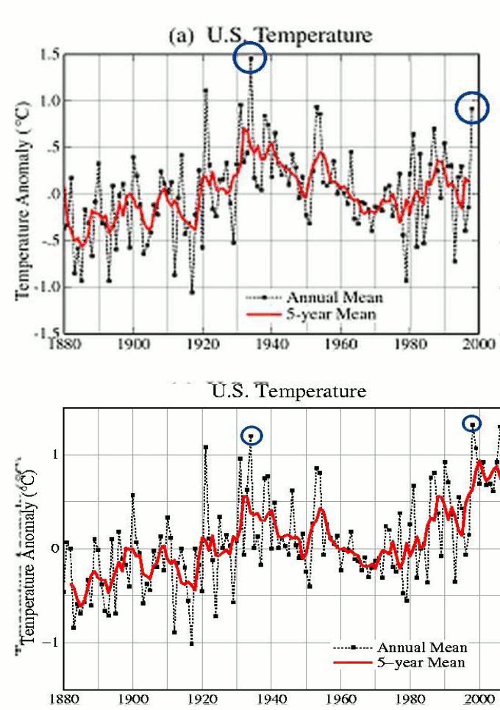
None of this fit the global warming agenda, so they simply changed the temperature record to “remove the 1940’s blip” and eliminate the post-1940 cooling.

ScreenHunter_1485 Jul. 31 23.46

After massively altering the temperature record, they were then able to delete Briffa’s trees – by claiming that they didn’t match the massively altered surface record. Deleting Briffa’s trees opened the door for Mikey to make his Hokey Stick, and an even larger bonus was that it gave the team an excuse to turn the US cooling trend into a warming trend – because it didn’t match their massively altered global temperature trend.

Some skeptics believe they are being good citizens, by playing nicely with the crooks behind this fraud.

Watermelons….Faux-green on the outside, Communist-red, on the Inside!

Cloak of Green The Links between Key Environmental Groups, Government and Big Business

This book was published in 1995 and after you read it you will never look at the Green Movement or your govt. the same way again. A massive con of the public by the Greens, govt. and the media. One world govt. is the end game for these groups. Follow the link at the bottom of the page to read the book online, get it at your library or order a copy, but read the book. Follow your tax dollars.

Now that Elizabeth May is in politics, and presumably hoping to attract progressive-minded people, she will have to live down her reputation, so caustically described by Elaine Dewar in her book, Cloak of Green, about the environmental movement, of being on all sides at the same time.

Dewar first ran into May when she (May) was a member of the Canadian government delegation to the preparatory meeting in Nairobi for the upcoming Rio summit on the environment. Since May was national director of the Sierra Club, as well as executive director of Cultural Survival Canada, Dewar found this rather puzzling. After a little further questioning Dewar came to the conclusion that May had become an NGO interface with government.Rogelio A. Maduro 21st Century Science and Technology : “Cloak of Green… is a devastating expose of the shady finances of the international environmental movement… if you’ve been snookered into supporting the groups that raise money to prevent environmental doomsdays, this book just might help save your money for real causes.”

Publishers Weekly : “Cloak of Green probed the dark underbrush of environmental politics…”

Joe Woodard BC Report : “This is a must-read for anyone interested in environmentalism and the “global environment” movement…this account of [the author’s] determined four-year journey through environmentalism is a triumph of truth over ideology.

Cloak of Green is truly honest reporting of a threatening future.”

Book Description
Most concerned citizens trust environmental groups to fight on behalf of the public for sensible solutions to the world’s most pressing problems. But Elaine Dewar discovered that this trust is often misplaced.

In this book the award-winning journalist explores links between key environmental groups, government and big business. Written like a mystery, Cloak of Green follows the author from a Toronto fundraiser for the Kayapo Indians of Brazil to the Amazon rainforest and the global backrooms of Brasilia, Washington and Geneva. Along the way she meets some fascinating people–Anita Roddick of the Body Shop, businessman-politican Maurice Strong, and activists who run key Canadian and American environmental groups. She discovers some disturbing revelations about these groups and their relations to “green” corporations and government.

Cloak of Green is a penetrating investigative study that challenges many established pieties of the environmental movement.

About the Author
ELAINE DEWAR is a prominent journalist and author with many National Magazine Awards to her credit.Cloak of Green can be read on line here