This Amazing Documentary is Being Funded Very Eagerly, and Should be Ready Soon!

Down Wind

Down Wind is a documentary film project about the destructive impact of wind turbines being forced into communities across Ontario.
DOWN WIND
This documentary examines the human and economic consequences of the Ontario Liberal government’s headlong rush into wind power. It’s a huge story, but it’s also a personal story, focusing on individual families and the damage these turbines have caused.

Down Wind reveals the trauma suffered by those whose lives were turned upside down when the towering turbines went in. It exposes the health and psychological problems that followed, and the warnings of medical experts about “wind turbine syndrome.”

From economists we’ll hear about the mind-boggling costs, including the massive taxpayer funded subsidies going to mega corporations.

And we’ll look at the cosy Liberal connections to Big Wind, and how cronies of Dalton McGuinty and Kathleen Wynne have made a fortune off the backs of taxpayers.

Please contribute now to tell this important story.


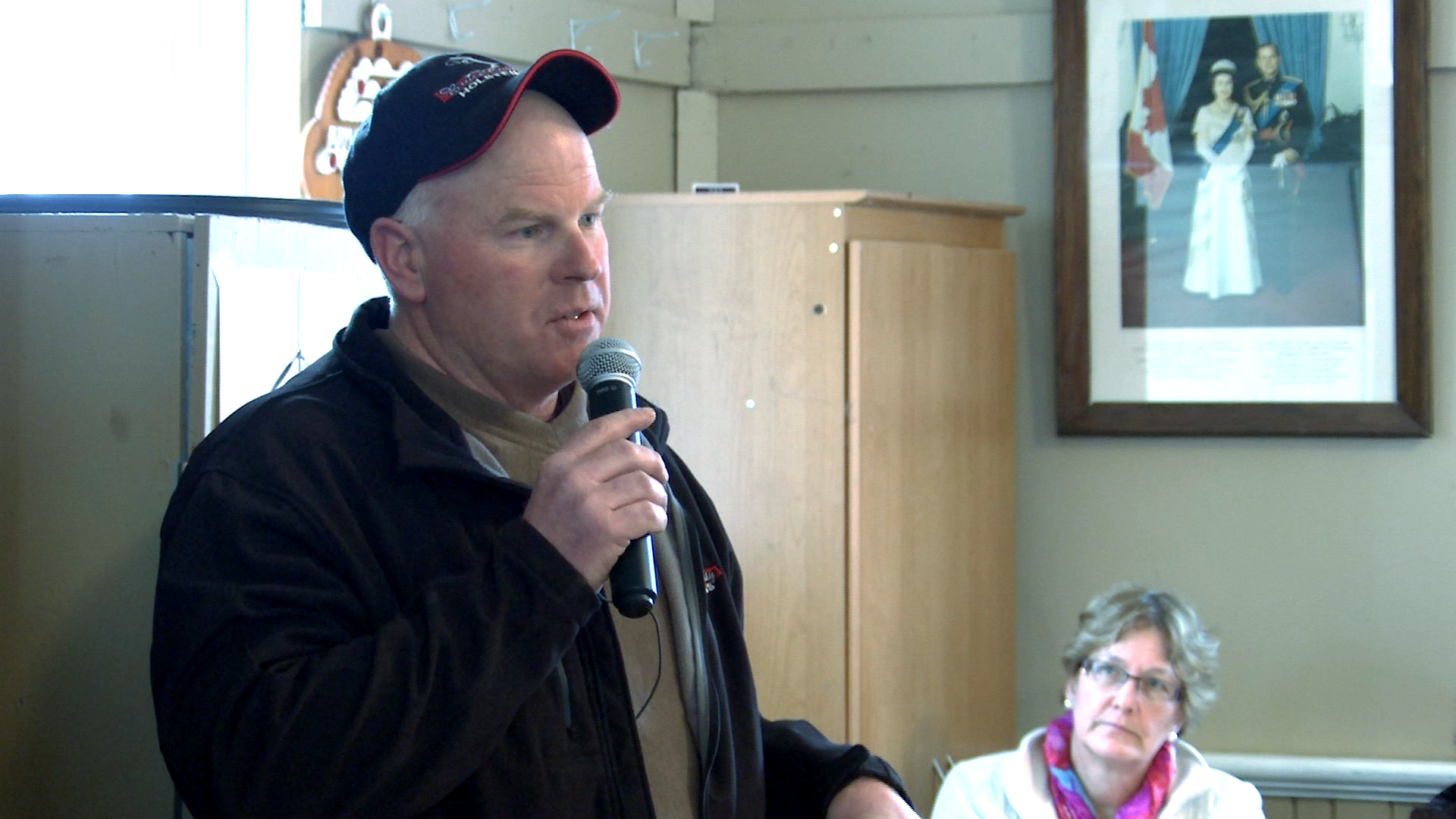
Kevin McGee, Farmer and Activist


We Need Your Help

With your support, we’ll be able to tell this important story, and keep a focus on it in the future. In gratitude for your generosity, we’ll send you one of the packages listed on the side of this page.


$23,273CAD
RAISED OF $30,000 GOAL
78%
 24 days left
This campaign started on May 07 and will close on June 01, 2014 (11:59pm PT).
Help make it happen

Ezra Levant, Rebecca Thompson and Sun News, Producing a Documentary about Windscam!

WE NEED YOUR HELP


– Help expose the ugly truth behind Wind Turbine power generation 

Ezra Levant

We’re working on something big – a made-for-TV documentary that you will not see on any other TV network in Canada.

It’s something only the Sun News Network would do. It would probably be banned at the CBC.

We’re making a documentary exposing the fraud of Ontario’s wind turbine schemes.

We’ll expose the Liberal insiders who managed to get huge government subsidies for their green schemes. We’ll show you how Ontario power prices have shot up to pay for these wind turbines – but that the wind turbines are so unreliable, most of the them don’t even generate power!

But the most heart-breaking part of the movie is the impact these skyscraper-high monstrosities have on the lives of ordinary Canadians who have been crushed by the wind turbine lobby.

We’ll show you how local communities were shut out of the regulatory process; how bird-killing wind turbine companies were forced into once-peaceful communities against their will; how wind mega-corporations were exempted from environmental laws and sued local mothers who dared to speak out against them. And we’ll show you how the health impact of these massive, flickering, noise-making blades have been covered-up by Liberal politicians who have put their wind obsession above everything else – including the very health and safety of Canadian families.

Simply put, if the Sun News Network doesn’t make this film, no-one will.

But we need your help. We’re deep into the film right now – we’ve done the field research, we’ve done the interviews, we’ve got the damning facts. Now we just have to produce and edit the project. And then we’ll shout it from the rooftops – and broadcast it all across Canada.

The film is called Down Wind, and it’s hosted by Rebecca Thompson, one of our fearless Sun News reporters. You’ve seen her work as a reporter. Now comes the big time for her, as the driving force behind the feature film.

Making a documentary isn’t like making a regular TV show. There are extra expenses, everything from travel costs, to equipment, to extra production and editing work. We need to buy music rights, graphics and pay promotional costs that we wouldn’t have with a regular broadcast.

That’s why I’m writing to you today: will you help us cross the finish line with Down Wind, and make this important movie a reality?

We need $30,000 to get the job done. That’s not a lot of money for the big guys – the CBC’s annual taxpayers bail-out of $1.1 billion a year works out to $30,000 every fifteen minutes. That’s a rounding error for them – that’s a fraction of the CBC president Hubert Lacroix’s personal expense account. But for us, $30,000 is enough to finish an entire documentary film, and one you know the CBC would never broadcast.

Because the Media Party believes in the cult of environmental extremism. If some CBC producer even dared to suggest making a show critical of wind turbines, he’d probably be fired. I mean, the CBC is the channel that has given David Suzuki a propaganda show for the past 40 years. They would never show the dark side of wind turbines.

It’s up to Sun News to tell the other side of the story. Sun News – and you.

Will you help make this film a reality? I chipped in $100 myself. If you can afford more, please do. Even $10 will help. Even $1. You can do it online, quickly and securely, atwww.DownWindMovie.com.

Put it this way: if this film helps stop this costly, failed experiment with wind turbines, your contribution could end up saving you much more in lower electricity rates alone!

You know we can do amazing documentaries – stuff the other guys won’t touch. Last year our first Sun News documentary, called Broken Trust, blew the lid off the High River gun grab.

With your assistance, we can expose the wind energy fraudsters for what they are.

Contribute what you can and we’ll reward you for your support. For a contribution of $25, we’ll send you a DVD copy of the movie; for $50 you’ll receive a second DVD and a Sun News Prize Pack (pen, bumper sticker, and mug). For $100 you’ll get all that and a promotional poster signed by Rebecca Thompson and me. And for a contribution of $250 we’ll send you all of the above, plus give you an associate producer credit at end of movie – we’ll actually put your name in the credits!

Finally, if you really hate those wind turbines – or just love stuff from the Sun! – for a contribution of $1,000 or more, you’ll receive all the above plus a fancy Sun News jacket. (They’re awesome.) To learn more, visit www.DownWindMovie.com. Help us tell the story – and be part of Canadian movie-making history!

Yours gratefully,

Ezra Levant

P.S. I chipped in $100 myself, safely and securely, right online atwww.DownWindMovie.com 

VISIT DOWNWINDMOVIE.COM TO DONATE

Burden of Proof Should be on Wind Proponents!

HALT won’t back down after ERT rejects Armow Wind appeal

Credit:  By Steven Goetz, Kincardine News | Tuesday, May 6, 2014 | www.shorelinebeacon.com ~~

The Environmental Review Tribunal (ERT) dismissed an appeal filed against the approved Armow Wind project, rejecting claims the project will cause serious harm to human health.

But instead of backing down, a local group of anti-wind activists — Huron-Kinloss Against Lakeside Turbines (HALT) — will take the fight to divisional court and beyond.

“We have always seen this as having the potential to go all the way to the Supreme Court,” said HALT’s Kevin McKee in a telephone interview on May 2.

McKee said the group never expected to win at the ERT, but had to file the appeal before divisional court would consider their legal challenge.

“We weren’t surprised by the result,” he said. “Citizen groups like our own have been 0-for-25 at these ERT hearings. It is nearly impossible to win.”

“By their standard, it would be hard to prove asbestos would cause harm,” he said.

Barring intervention from a court, the April 22 decision clears the way for Samsung-Pattern to erect a 92-turbine, 180-megawatt wind farm in the Municipality of Kincardine, on land northeast of the North Line and Highway 21.

The appeal was organized and funded by HALT and its partners, but filed on behalf of Ken and Sharon Kroeplin — whose 100-acre family farm is located within 600 metres of one of the planned turbines.

The ERT dismissed their claims, writing in its lengthy decision that the Kroeplins “failed to establish, on a balance of probabilities” that the project “will cause harm to human health.”

In its findings, the ERT wrote that it wasn’t enough for the Kroeplins to show “the potential for harm,” but the onus was on them to “prove that a project will cause harm.”

The ERT wrote that so-called “post-turbine witnesses” — people who have reported health conditions and symptoms they believe have been caused or exacerbated by living near wind turbines — did not prove that turbines were the cause of their ailments during their testimony at the nine days of hearings held on Kincardine.

[rest of article available at source]

Corruption is the Only Reason Why they won’t Research Health Effects from Wind Turbines!

Nurses for Safe Renewable Power

Looking for a healthy environment for everyone

RNAO two years ago: a sad day for nursing

CEO of the Registered Nurses Association of Ontario Doris Grinspun is directing the RNAO’s annual event which consists of meetings, a gala banquet, and of course, the Annual General Meeting for members.

We recall the AGM of two years ago, when two nurses plus an RNAO chapter, put forward a resolution to ask for support for clinical research into the field of environmental noise produced by industrial-scale wind turbines, and further, as a second part of the resolution, that a moratorium on wind power developments be requested until the results of such research are released and analyzed.

The motion was defeated but not before there were dirty tricks aplenty on the part of RNAO staff (the director of research actually interrupted the resolution proponents’ session with voting delegates, so much so that delegates complained they were not able to speak or ask questions), misdirection was given about how much information could be provided to the delegates, and  finally, the proponents’ presentation time was cut off by the chair—who incidentally, and completely illegally, spoke out against the motion before introducing it to the assembly. Easily a dozen delegates abstained from the vote, calling out to the chair that they wanted to hear more, but to no avail. The motion was defeated. (The chair also, erroneously, told the proponents that they would not be able to bring the resolution forward again for TWO YEARS. This is false and is not in the RNAO bylaws.)

So, where are we today? We actually have two clinical studies ongoing in Canada, one by Health Canada, and the other by the Renewable Energy Technology and Health (RETH) team at the University of Waterloo. The RETH team has already presented very preliminary results in poster format at a meeting earlier this year, showing a significant association between the noise from turbines and sleep disturbance.

We also have more studies from a variety of sources, including a recent article by otolaryngologist Dr Alec Salt whose work is increasingly showing a DIRECT link between the noise and vibration/infrasound produced by the machines used to generate power from wind energy and health effects.

http://oto2.wustl.edu/cochlea/wind.html

The growing research on the effects of exposure to the noise and infrasound on children is disturbing.

We also have in Ontario an approval process for wind power projects that is being revealed as sloppy and indicative of the provincial government’s blind support for wind power. Requests have been made for a review by the Ombudsman of the review and approval process, because documents being presented as complete are in fact inaccurate, incomplete, or sometimes completely absent. There are also judicial reviews pending for the approval of individual projects, such as Amherst Island, as the inaccuracies of the documentation supporting the safety of the proposed power developments are egregiously incomplete.

The Chief Medical Officer of Health for Ontario prepared a report that was released in 2010 based on work done in 2009, which maintained there were no direct causal links between the turbine noise and health (the government does not believe infrasound is important and will not even have a protocol to measure it until 2015), which the government and successive Environmental Review Tribunals rely on today expediently.

Complaints of excessive noise and poor health are in the hundreds in Ontario: the Ministry of the Environment has admitted in Tribunal hearings that it relies on the computer noise modelling supplied by the power developers. In other words, if a power project modelling shows it isn’t supposed to make noise at a certain level, then it surely can’t, and the Ministry does not even bother to send staff out to check.

Ontario families have become homeless. In December of the year the RNAO engineered the failure of the resolution of members to support research, 20 families went to Council in the City of Kincardine, requesting funds for emergency housing, as they had had to leave their homes due to the noise.

Today, more than 80 communities have passed bylaws or resolutions to say they are Not Willing Hosts to wind power because of the problems. Today, a coalition of communities is working together to create a noise nuisance bylaw to protect their residents at night from the turbine noise. Today, Ontario communities are taking advantage of every loophole, or minor power they have left after the Draconian Green Energy Act removed all democracy for Ontario’s rural and small-town communities.

And today, Ontario citizens are having to deal with higher electricity bills than ever seen before in this province, traceable to the government’s unproven zeal for renewable sources of power (a cost-benefit analysis as recommended by the Auditor-General was never done). The results are widely feared to be energy poverty as families must choose whether to buy food or pay their electricity bill, as well as job losses and business failure.

All this because a group of business people persuaded Ontario to adopt wind power as a source of power generation to replace coal—wind power cannot replace anything because of its inefficiency and unreliability. Coal has been replaced in Ontario by natural gas. The power developers (many with ties to the Ontario Liberal Party) have made millions–billions–in provincial subsidy dollars for very little benefit to the people of Ontario. One of the strategies suggested to the wind power development lobby by a consultant, the Sussex Strategy Group, was to persuade health-related groups to support wind power as a way to engender public support for the development of power from wind; it appears the RNAO fell in line with the developers’ corporate strategy.

The Registered Nurses Association of Ontario had a chance two years ago to at least listen to a burgeoning community health problem and at least listen to its members whose concern was well founded and genuine.

But it did not.

That was a sad day for nursing in Ontario, and leaves many questions as to the quality of leadership and the ties between politicians and nursing leadership.

In the meantime, the people of rural and small-town Ontario, and the health care professionals who live there and work within these communities, got no support from the organization that claims to “speak out for health.”

Aussies Prepare to Scrap Their Renewable Energy Targets!!

Time to let the RET Review Panel Know What You Think

writing_a_letter

As STT’s loyal followers know, Australia is all set to decouple itself from the international economic suicide pact entered when gullible and unwitting governments all over the world signed up to ludicrously expensive and utterly pointless renewables policies.

The Coalition are itching to scrap the Renewable Energy Target – and the RET Review Panel appear more than ready to give them the ammunition to do so.

The Panel formerly called for submissions on 5 April 2014 (see this document) – setting out the terms of reference and the criteria that submissions should meet (see our post here).

The closing date for submissions is 16 May 2014 and STT hears that it’s about to be inundated by submissions from Australia’s top energy market economists and Australia’s leading power retailers all slamming the lunacy of the mandatory RET. However, the opportunity to make submissions is open to one and all – so don’t just leave it to the boffins – why not make a submission yourself?

STT contains a welter of facts, evidence and information detailing the greatest economic and environmental fraud of all time – piecing that together in a cogent argument as to why the RET simply must go is something that anyone with a computer and time on their hands can do. Remember though, submissions have to address the terms of reference set out in the document linked above – and that, with less than 10 days to go, you’ll need to get cracking.

Set out below is one very solid example put together by STT Champion, Dr Alan Watts. STT recommends it as a basis and template for anyone making their own submissions to the Panel. Although, we have a few comments of our own aimed at strengthening Alan’s arguments – matters of emphasis, really – and which should assist in preparing your own submissions (see below).

Review of the Renewable Energy Target
Expert Panel
RETReview@pmc.gov.au

Re: ‘Renewable Energy Target Review Expert Panel Call for Submissions, Commonwealth of Australia 2014’.

SUBMISSION

This submission deals primarily with the RET as it relates to wind power energy production, LRECs and the effects of these on electricity pricing and production efficiency.

The Call for Submissions summarises the objects of the REE Act as being:

a) to encourage the additional generation of electricity from renewable sources;

b) to reduce emissions of greenhouse gases in the electricity sector; and

c) to ensure that renewable energy sources are ecologically sustainable.

The RET has succeeded in its first object to promote the roll out of renewable energy, particularly translated to the construction of an increasing number of industrial wind turbine (IWT) installations.

The RET has totally failed in its other two objects, i.e. it has failed to reduce emissions of greenhouse gases in the electricity sector and the renewable energy sources have not been shown to be ecologically sustainable.

The RET has as a consequence of renewable energy promotion created a great deal of damaging social and economic effects and has caused in the case of IWTs enormous damage to the Australian nation and way of life by the reckless promotion of:-

1. A system of unpredictable, inefficient and intermittent electricity generation which by every measure is not fit for purpose and therefore is totally without merit;

2. An industry which has a degree of government protection like no other;

3. A system when idle, due to lack of or excessive wind, requireselectricity for maintenance and for restart;

4. A system incapable of base load power generation;

5. A system which does not in any meaningful way lessen greenhouse gas emissions;

6. A system which has not and cannot reduce our foreseeable coal dependency;

7. A system which requires constant coal or gas fired back up running at almost full capacity (stated 90%) due to the very variable and unreliable nature of wind. This represents the most wasteful, inefficient and expensive use of coal and gas;

8. Electrical generation costing at least three times that of coal;

9. A system which has contributed to a lowering of Australia’s standard of living and comfort, especially for those Australians of lower socioeconomic means, due to increased electricity bills;

10. A system which has destroyed Australia’s once comparative manufacturing advantage due to cheap electricity and with it our ability to compete internationally;

11. A system of visual blight due to industrialisation of the rural landscape;

12. A system that causes untold harm and destruction of wild life and unique remnant bushland (important because much of the original vegetation has disappeared from the Tablelands areas and locations favourable to the wind industry);

13. An industrial development resulting in significant reduction in rural land valuation and agricultural land usage especially cropping, fertilizer application, weed control, fencing and farm based disease containment;

14. A system with inherent industrial problems of hazardous fire (and the inherent difficulties of fighting both turbine fire and bushfires), blade throw, flicker and glint as well as dangers to all forms of flight;

15. A development which has serious legal consequences for land owners because of access, disease spread, sale and subdivision rights. And also by “gag” clauses incorporated into IWT contracts effectively removing any host’s freedom of speech;

16. An industrial structure which requires one tonne of a rare earth, Neodymium, to increase the magnetic strength and which is sourced primarily from China (Inner Mongolia which has 95% of the world’s resource). Its extraction process involves boiling sulphuric acid which is highly toxic to both the environment and the operators;

17. An industrial complex with commonly disputed ownership at the time of decommissioning which is typically 120,000 hours or 15-25 years, although international research now estimates the functional life of an industrial wind turbine may be closer to 12-15 years;

18. IWT decommissioning and disassembly that does not remove the huge concrete foundations and which will remain forever present;

19. An electrical system which legally requires the farmer host to decommission and remove the wind towers at the end of their functional life if a legal entity cannot be located with provable ownership. There are international examples of derelict “wind farms” with disputed ownership being left to rot, in excess of 14,500 in California alone;

20. A system where payment of a decommissioning bond by the proponents has been strenuously fought by them, again indicating the fragile economic nature and in some cases the insolvency of this transient industry;

21. A system of electrical generation with such fragile economics that frequent change of ownership is common. This adds to the legal confusion as to who has most direct responsibly for decommissioning and removal of these structures;

22. A system which has produced social disharmony, family destruction and economic hardship in rural communities rivalling only that of coal mining and coal seam gas extraction, and war;

23. A system which has polarised debate to such an extent and level that truth and fairness are now completely compromised;

24. A system based on myth, greed, ignorance, subsidy and institutional deceit that has generated such wealth that there now exists no honourable or honest return from these entrenched self-interested opinions;

25. An industry so inefficient that it is entirely dependent on taxpayer subsidy to exist and without it, it would cease to exist;

26. A system which has captured all irrational thought, concentrated greed, distorted science, befriended the gullible and has ransomed genuine research with the assistance of the politically naïve;

27. A system which has deflected energies and funding away from what can only be described as the most sensible renewable source of energy on earth, namely geothermal. Geothermal is infinite, clean, truly green and possible, as in Iceland. The largest natural nuclear power source on earth is beneath the Earth’s crust as molten magma, an unimaginable source of heat. Geothermal energy is the only renewable energy on earth capable of providing base load power and as such cannot in any way be compared to any other renewable energy source.

28. A system of production which is totally unique to the Australian political landscape and which enjoys political and legislative protection like no other.

Initially conceived by the Coalition Government, the Australian Green-Labor alliance allowed this industry in Australia to flourish and in so doing created a scam that was:

a. Totally and completely devoid of any merit, green, environmentally or climatically;

b. Subsidised to ensure survival;

c. Ineffectual and inefficient;

d. Providing an end product that energy suppliers were required to compulsory purchase, with legislated penalties for noncompliance;

e. Ensuring its future with increasing and possibly endless targets;

f. Artificially supported with industry forward payments and prepayments;

g. Supported with undeclared tax concessions;

h. Overseeing contracts that currently have no Australian companies involved in turbine manufacture of any consequence;

i. Currently operating beyond their legal guidelines;

j. Currently operating beyond conditions of consent with no financial penalty for illegal operation;

k. Placing the Australian Government in a position of implicit state sponsored fraud;

l. Causing adverse health effects (AHE) to Australian families which are disgracefully ignored;

m. Devoid of significant Australian content, ensuring expatriation of Australian funds off shore via foreign companies.

It is now the responsibility of the current Coalition Federal Government to reverse this despicable fraud, remove the RET and withdraw the Recs.

Further, I have been requesting, along with other concerned Australians:

1. A moratorium on further installation of these structures until their safety has been established by;

2. Independently conducted research which justly requires that the industrial wind proponents fund since they alone profit from the establishment of Industrial Wind Turbines; and

3. That all 7 recommendations proposed by the June 2011 Federal Senate Community Affairs References Committee on the Social and Economic Impact of Rural Wind farms, which have not been introduced by any Federal, State or Local Government anywhere in Australia, be implemented immediately.

The previous Labor Federal Government’s 20/20 renewable energy target (RET) and generous taxpayer subsidies are driving an enormous amount of foreign company investment in industrial wind turbines of very dubious effectiveness and efficiency.

While the environmental and social impacts of non-renewable energy production (eg. coal and gas mining, and the production of energy from these sources) are not dismissed lightly, it is counter-intuitive to attempt to replace them with renewable sources of energy which research has shown SAVE VERY LITTLE IF ANY CO2 (see paper by Le Pair et al – attached file)We leave aside the question of whether increasing CO2 poses any sort of threat and whether it is economically viable or necessary to expend large sums of money nationally and internationally for nil or little result.

Your “Call for Submissions” sets out very well the current position with respect to the RET and some of the problems related to it. Worth emphasising however is the fact that the RET scheme including the feed-in tariffs for roof-top solar already adds 7 per cent to the cost of electricity to households, a cost that will more than double on present policies. By 2020 the scheme, if unchanged, will add over 40 per cent to the wholesale cost of electricity and largely negate the benefits from the demise of the carbon tax (should that occur).

The impact on households will increase. Energy poverty is defined as requiring to pay more than 10% of household income on energy and a recent finding states that already 20 per cent of Australian households are now energy poor (Chester, 2013 – see attached file). As the cost of energy inevitably rises – caused in no small way by the contribution of unaffordable renewable energy subsidies (both direct and indirect) – this figure of 20% must increase in tandem.

Concomitantly is the situation where major energy intensive industries are departing Australia in large part because our electricity prices have risen to be among the highest in the world; this from the enviable position of being one of the lowest less than a decade ago.

Whatever else the Review of the RET does it must address the problems of electricity affordability both for Australian households, and for the manufacturing and industrial sectors which implacably hold the key to national prosperity. With prosperity comes the prospect of being better able to address National social and environmental problems.

A fresh approach is undoubtedly required. Firstly there must be a recognition that, to paraphrase the title of the by Le Pair et al, “Wind turbines are as yet unsuitable as electricity providers”. The paper sets out many of the problems attached to the production of energy by IWT and reinforces the insanity of pouring money into an industry which is not and, at the moment, cannot produce energy in an economic, reliable, efficient, non- health adverse, environmentally and socially acceptable manner. Where is the sense?

Good governance demands the overdue withdrawal of RECs from this industry. If the wind industry is correct when it says it is a mature industry and that it is viable, then let it pay its own way and let it stand alone without the buttress of the RET.

If government (i.e. tax payers’) money is to be spent it would be better directed towards:

a. Ensuring that research and development of “true” renewables is the focus and that forthcoming and future sources of energy are tested and matured before being foisted on a hapless public;

b. Ensuring that mining and electricity production from non-renewable sources (which is often forgotten will still be responsible for 80% of our electricity production) are conducted with improving levels of environmental impacts, health consequences, and minimisation of community disruption. Air and water pollution problems in particular require dedicated monitoring and reduction.

The deployment of industrial wind turbines is often met with support because they are considered “clean and green” and will “save the planet” through the claimed reduction of CO2 emissions. But what if they don’t? One is reminded of the fairy story of the Emperor with no clothes! Expensive clothes at that.

Le Pair’s conclusion therefore bears repeating:

“Quantifying the decrease in efficiency of the electric power system and the extra fuel consumption induced by wind developments is by no means a simple matter. To our knowledge there are presently not sufficient data in the public domain to substantiate a definite answer to the question how much fuel and CO2 emission is saved. It depends on the actors, the equipment, the kind of fuel, the amount of wind penetration, the behaviour of the regional wind, the amount of storage, the interconnection of regional grids etc.

“Decisions to install large-scale wind-powered electricity generation are based more on the expectation to save significant amounts of fossil fuel and CO2 emission than on any evidence that this is indeed the case. 

“Wind technology is not suited for large-scale application without a good buffer and storage system. We propose to stop spending public money on large-scale use of wind. This money should be spent on R&D of future power systems. We expect that wind will not play an important role in these future systems.”

Yours faithfully,

Dr. Alan C. Watts OAM

Here are links to the papers referred to in Alan’s submission:

Le Pair et al -Wind turbines as yet unsuitable as electricity providers

Chester – Impacts_Consequences_Low_Income_Households_Rising_Energy-Bills_Oct2013

Alan’s submission is characteristically passionate, but still conveys the scale and scope of the economic and environmental fraud that is wind power.

In our view, submissions should seek to emphasise the following matters:

The panel must refute any claims by the wind industry that it has (or is capable of) reducing CO2 emissions in the electricity sector in the absence of actual data which has been independently peer reviewed. Any such data must include CO2 emissions from all power generation sources in order to capture the increased emissions caused by base-load coal and gas thermal plants holding increased “spinning reserve” – and the increased use of highly inefficient Open Cycle Gas Turbines – which are both needed in order to compensate for the intermittency of wind power.

The panel must refute claims by the wind industry that wind power has reduced power prices for consumers, as claimed by the Clean Energy Council. The Panel must call for the production of Power Purchase Agreements between wind power generators and retailers in order that the prices fixed under those agreements are known to the Panel and its consultants, ACIL Allen. The wind industry and its advocates refuse to make these agreements public and refer only to wholesale prices, which do not determine the price retailers pay for wind power; whereas, the terms of Power Purchase Agreements do. The impact of the prices set by PPAs with wind power generators is a critical part of any analysis of the impact of the RET on retail power prices.

The panel must consider the impact that the intermittent delivery of wind power and its inherent unreliability has on retail power prices. The cost of maintaining spinning reserve – and building capacity in fast start-up generation sources, principally OCGTs – is ignored by the wind industry. So too is the impact on retail power prices from using high cost OCGTs as backup for a substantial proportion of installed wind power capacity. The panel must, therefore, consider the cost of delivering power using fast start-up generation sources, including OCGTs, which are critical to maintaining grid integrity and power supply when wind power output falls to insignificant levels every day – and on hundreds of occasions each year. There have been numerous occasions when wind power output has collapsed across the entire Eastern Grid and, as a result, dispatch prices have soared from the normal average of $30-40 per MWh to reach the regulated cap of $12,500 per MWh (and many occasions when the dispatch price has reached 8-10 times the average – ie $280-300 per MWh, which is the price range needed for OCGT operators to break even and at which they commence supplying power to the grid). These costs are directly attributable to wind power generation – costs ultimately borne by power consumers – and which must, therefore, be included in any consideration of the cost impacts of the RET on retail power prices.

More generally, STT finds it hard to fault anything appearing in Alan’s well structured and detailed argument. However, we disagree with his point 27 when he says that geothermal is the only base-load renewable alternative. Geothermal has tremendous prospects and has, under the current RET policy, clearly been starved of the investment needed to develop it (see our post here). However, with respect, Alan overlooks hydro power.

STT is a huge fan of hydro power – as we have made plain on a number of occasions (see our posts here and here).

Hydro is not only the original renewable, it also satisfies the principal objective of the mandatory RET – as it does not produce CO2 emissions when generating power – and, because it is reliable and always availableon-demand, it does not require backup from fossil fuel generation sources. Accordingly, hydro does in fact reduce CO2 emissions in the electricity sector by actually displacing fossil fuel generation sources and/or properly supplementing those sources – which is as simple as turning on the sluice gate.

Hydro can be used to deliver “base-load” power, but in the Australian energy market is largely used these days as “intermediate power” – balancing the grid during periods of peak demand. The critical point is that hydro is available on demand – whereas wind power will never be.

The Snowy Hydro scheme is – and remains – the greatest and most beneficial renewable energy system in Australia.

Moreover, without it, long-term water management in the Murrumbidgee and Murray River systems (the life-blood for NSW, Victoria and SA) would be impossible: Adelaide would have died of thirst during periods of drought at least a dozen times without the Snowy scheme.

There is huge potential for further investment in hydro power in Australia – all up and down the Great Divide – bringing with it the ability to harvest huge volumes of water in times of flood – and to beneficially manage that water during periods of drought. However, the perverse nature of the mandatory RET provides every advantage to unreliable and costly wind power at the expense of hydro power: the former takes a matter of months to construct and begin earning revenue; whereas the latter takes years and sometimes decades to complete and for investors to start earning a return. Investors looking for a quick return on their cash have simply plumped for the soft option and piled in to wind power, with disastrous results on every level.

The Snowy Hydro scheme was Nation building stuff and took a generation. It should be repeated and policies put in place to ensure that it is, which means the current RET legislation must be amended or repealed.

But, all that is to quibble, Alan’s submission is a great starting point – so use it to best advantage – get cracking and let the RET Review Panel know precisely what you think of the greatest fraud of all time.

subsidies

If you still support the Liberals, I must assume you’re brain-dead, or corrupt!

With the Ontario election officially kicking off Wednesday, remember one thing as we head to the polls on June 12.

Premier Kathleen Wynne and the Liberals are going to talk about everything other than the only thing that counts — their record.

The Liberals don’t want to talk about their political corruption in the gas plants scandal — how they wasted up to $1.1 billion of public money to buy five Liberal seats in the last election and then tried to hide the enormity of what they’d done.

We’ll leave it to the police to decide if criminal charges are warranted by what the Liberals did by allegedly destroying government documents.

What we’re saying is that regardless of whether their actions were criminal, the Liberals used public money not to benefit the people of Ontario, but for the political benefit of the electoral fortunes of the Liberal Party of Ontario. That’s the definition of political corruption.

The Liberals don’t want to talk about the fact their 11-year regime started with a lie — former premier Dalton McGuinty’s signed election promise in 2003 not to raise taxes, followed by the largest single tax grab in Ontario history after the election.

Given that, how can any Liberal promise in this election be taken seriously?

We’ve seen that the Liberals will say anything to get elected, then reverse themselves after winning power.

The litany of billion-dollar Liberal boondoggles — the gas plants scandal, the eHealth scandal, the green energy scandal, the Ornge scandal (the latter giving the Liberals the dubious distinction of being under not one, but two police investigations as we head to the polls) all indicate the same thing.

After 11 years in power the Liberals can’t be trusted to operate government honestly or efficiently.

Their tax-and-spend policies have turned Ontario, once the engine of the Canadian economy, into a financial basket case.

Ontario, riddled with record debt and rising deficits (two years in a row under Wynne) is now a “have not” province.

Manufacturing jobs are fleeing because of high energy costs.

Similarly, seniors on fixed incomes are being forced into fuel poverty, which makes Wynne’s promise to create an Ontario pension plan all the more absurd.

Simply put, it’s time to throw these bums out.


Faux-Green Energy is Killing our Wildlife, and Destroying Significant Birding Areas.

Red kites agonizing under wind turbines, State of Navarre, Spain.
- courtesy of GURELUR

HOW MUCH WILDLIFE CAN USA AFFORD TO KILL?

America’s wind farms are actually slaughtering millions of birds and bats annually

By Mark Duchamp

Screen-shot-2014-03-18-at-3.43.47-PMThe Obama administration is issuing 30-year permits for “taking” (killing) bald and golden eagles. The great birds will be legally slaughtered “unintentionally” by lethal wind turbines installed in their breeding territories, and in “dispersion areas” where their young congregate (e.g. Altamont Pass).

By chance (if you believe in coincidences), a timely government study claims wind farms will kill “only” 1.4 million birds yearly by 2030. This new report is just one of many, financed with taxpayers’ money, aimed at convincing the public that additional mortality caused by wind plants is sustainable. – It is not.

Dr. Shawn Smallwood’s 2004 study, spanning four years, estimated that California’s Altamont Pass wind “farm” killed an average of 116 Golden Eagles annually. This adds up to 2,900 dead “goldies” since it was built 25 years ago. Altamont is the biggest sinkhole for the species, but not the only one, and industry-financed research claiming that California’s GE population is stable is but a white-wash.

Beheaded Golden Eagle from Altamont Pass-  Courtesy of Darryl Miller, California

Eagles are not the only victims. Smallwood also estimated that Altamont killed an average of 300 red-tailed hawks, 333 American kestrels and 380 burrowing owls annually – plus even more non-raptors, including 2,526 rock doves and 2,557 western meadowlarks.

In 2012, breaking the European omerta on wind farm mortality, the Spanish Ornithological Society (SEO/Birdlife) reviewed actual carcass counts from 136 monitoring studies. They concluded that Spain’s 18,000 wind turbines are killing 6-18 million birds and bats yearly.

Extrapolating that and similar (little publicized) German and Swedish studies, 39,000 U.S. wind turbines would not be killing “only” 440,000 birds (USFWS, 2009) or “just” 573,000 birds and 888,000 bats (Smallwood, 2013), but 13-39 million birds and bats every year!

However, this carnage is being covered up by self-serving and/or politically motivated government agencies, wind industry lobbyists, environmental groups and ornithologists, under a pile of misleading studies paid for with more taxpayer money.

Wildlife expert Jim Wiegand has documented how areas searched under wind turbines are still confined to 200-foot radiuses, even though modern monster turbines catapult 90% of bird and bat carcasses much further. Windfarm owners, operating under voluntary(!) USFWS guidelines, commission studies that search much-too-small areas, look only once every 30-90 days, ensuring that scavengers remove most carcasses, and ignore wounded birds that happen to be found within search perimeters. (Details at MasterResource.org)

These research protocols are designed to guarantee extremely low mortality statistics, hiding the true death tolls – and the USFWS seems inclined to let the deception continue. In addition, bird mortality data are now considered to be the property of windfarm owners, which means the public no longer has a right to know.

Nevertheless, news has leaked that eagles are being hacked to death all across America. This is hardly surprising, as raptors are attracted to wind turbines. They perch on them to rest or scan for prey. They come because turbines are often built in habitats that have abundant food (live or carrion) and good winds for gliding.

Griffon Vultures – courtesy of the association of ecologists GURELUR, Navarre, Spain

Save the Eagles International (STEI) has posted photographs of raptors perched on nacelles or nonmoving blades, and ospreys building a nest on a decommissioned turbine. Moving blades don’t deter them either: videos show a turkey vulture perched on the hub of a spinning turbine, and a griffon vulture being struck. Birds perceive areas traveled by spinning blades as open space, unaware that blade tips are moving at up to 180 mph. Many are focused on prey. These factors make wind turbines “ecological death traps,” wherever they are located.

By 2030, the United States plans to produce 20% of its electricity from wind. That’s nearly six times as much as today, from three or four times as many turbines, striking more flying creatures due to their bigger size (even the mendacious study predicting 1.4 million bird kills recognizes this). Using the higher but still underestimated level of mortality published by Smallwood in 2013, by 2030 our wind turbines would be killing over 3 million birds and 5 million bats annually.

But this is shy of reality by a factor of ten, because 90% of casualties land outside the search perimeter and are not counted. We are thus really talking about an unsustainable death toll of 30 million birds and 50 million bats a year – and more still if we factor in other hide-the-mortality tricks documented by STEI.

This carnage includes protected species that cars and cats rarely kill: eagles, hawks, falcons, owls, condors, whooping cranes, geese, bats and many others. The raptor slaughter will cause rodent populations to soar. Butchery of bats, already being decimated by White Nose Syndrome, will hammer agriculture.

The U.S. Geological Survey says the value of pest-control services to US agriculture provided by bats ranges from $3.7 billion to as much as $53 billion yearly. These chiropters also control forest pests and serve as pollinators. A Swedish study documents their attraction from as far as nine miles away to insects that swarm around wind turbines. Hence the slaughter.

Wind lobbyists claim they need “regulatory certainty.” However, eagle “take” permits will also ensure extinction certainty – and ecological, agricultural, economic and social disasters that America cannot afford.
____________

Mark Duchamp is president of Save the Eagles International, a nonprofit conservation organization:www.SaveTheEaglesInternational.org and Chairman of WCFN, the World Council for Nature – www.wcfn.org

(Image at top of page: Red kites agonizing under wind turbines, State of Navarre, Spain. – courtesy of the association of ecologists GURELUR, Navarre, Spain)

Julian Falconer to fight for the Rights of Rural Ontarians….

Prominent lawyer slams Ontario wind power

Credit:  By Lee Michaels on May 6, 2014 | blackburnnews.com ~~

Over 600 people tried to cram into the Camlachie Community Centre last night with the overflow standing outside.

We’re Against Industrial Turbines hosted a town-hall meeting to ramp up opposition to Suncor’s 46-turbine Cedar Point Wind Power Project.

WAIT is now trying to raise $300,000 to hire prominent Canadian lawyer Julian Falconer to help challenge the Ontario government’s policy on industrial turbines under the Canadian Charter of Rights and Freedoms.

Falconer was a guest speaker at last night’s meeting.

He tells Blackburn News that any suggestion there’s no impact on peoples’ health is “Alice in Wonderland fantasy.”

And he’s skeptical the June 12 Ontario election will change anything.

Falconer says the constitutional challenge that’s been mounted questions the appropriateness of government subjecting its citizens to projects without knowing the health effects currently under study by Health Canada.

He says the cash grab by wind companies has been extreme and the financial genie that’s been let out of the bottle is very difficult to control.

Dirty Electricity from Industrial Wind Turbines….Another Health Risk!!

Wind Farm

Excerpted from

Modern Wind Turbines Generate Dangerously “Dirty” Electricity

By Catherine Kleiber

Waveforms and picture courtesy of David Colling

Wind turbines are causing serious health problems. These health problems are often associated, by the people having them, with the flicker and the noise from the wind turbines. This often leads to reports being discounted.

Residents of the area around the Ripley Wind Farm in Ontario where Enercon E82 wind turbines are installed feel that the turbines are making them ill. Residents suffer from ringing in the ears, headaches, sleeplessness, dangerously elevated blood pressure (requiring medication), heart palpitations, itching in the ears, eye watering, earaches, and pressure on the chest causing them to fight to breathe. The symptoms disappear when the residents leave the area. Four residents were forced to move out of their homes, the symptoms were so bad. Residents also complain of poor radio, TV and satellite dish reception. There is no radio reception under or near the power lines from the wind turbines because there is too much interference. Local farmers have found that they get headaches driving along near those power lines.

The waveforms below were taken at one of the residences in the area. The first waveform was taken before the wind farm started operation. (As you can see, a ground current problem existed even before the wind farm started.) The frequency profile of the neutral to earth voltage changed dramatically after the wind farm became operational (second waveform). There are far more high and very high frequencies present; indicated by the increased spikiness of the waveform.

As demonstrated by these waveforms, wind turbines are extremely electrically polluting. Studies and anecdotal reports associate electrical pollution with a similar set of symptoms to those experienced by the residents of the area (1, 2, 3). The symptoms associated with electrical pollution are caused by overexposure to high frequencies and are known as radio wave sickness (4). Technical papers discuss the fact that it requires only very small amounts of high frequency signals (either from transients or communications) on wiring to induce significant electrical currents in the human body. They support findings of human health problems caused by exposure to even small amounts of high frequencies (5, 6). The specific symptoms experienced depend on both the frequencies present and the body type and height of the person being exposed. Increased risk of cancer is associated with exposure to both “dirty” power on wires and electrical ground currents (7, 8). Animals also experience health problems related to electrical pollution exposures. Dairy cow’s milk production and health suffers as exposure to high frequency transients increases (9, 10).

Suncor and Acciona have tried to some degree to correct the problem at the Ripley Wind Farm. They buried the collector line from the turbine near some of the most badly affected homes and gave the homes a separate distribution line. They also put an insulator between the neutral line and the grounding grid for the wind farm. As you can see, from the waveform below, it helped somewhat. It reduced the high frequencies being induced on the distribution system by the proximity of the collectors and the high frequencies put directly on the neutral by the tie to the wind farm grounding grid. However, it is still not as good as before the wind farm installation and neither is their health.

This is not the only wind farm that seems to be causing serious health problems for local residents. The Enercon E82 does not seem to be unique in its design or problems. Wind turbines generate a sine wave of variable frequency in order to be able to take advantage of the full range of wind speeds. However, the grid only operates at 60Hz, so the variable frequency is converted to DC and then an inverter is used to convert the DC signal to 60 Hz AC. This is the signal that is put on the power line. Most inverters generate an extremely “dirty” signal, which is a 60Hz waveform polluted with a lot of high frequency transients. The previous waveforms are examples of this. The people in this house were so sick at home with the wind turbines running that they had to abandon their home and move elsewhere while they waited for the problem to be fixed. The changes made by the wind farm combined with a neutral isolation device installed by the homeowners has made the home livable, but their health is still affected by the operation of the wind turbines.

More information about electrical pollution and health can be found atwww.electricalpollution.com. The author can be contacted with questions about electrical pollution at webmaster@electricalpollution.com.

References:

  1. Havas M, Olstad A. 2008. Power quality affects teacher wellbeing and student behavior in three Minnesota Schools, Science of the Total Environment, July.
  2. Havas M. 2006. Electromagnetic hypersensitivity: biological effects of dirty electricity with emphasis on diabetes and multiple sclerosis. Electromagnetic Biology Medicine 25(4):259-68.
  3. Havas M. 2008. Dirty Electricity Elevates Blood Sugar Among Electrically Sensitive Diabetics and May Explain Brittle Diabetes. Electromagnetic Biology and Medicine, 27:135-146.
  4. Milham S, Morgan L. 2008 A New Electromagnetic Exposure Metric: High Frequency Voltage Transients Associated With Increased Cancer Incidence in Teachers in a California School. American Journal of Industrial Medicine.
  5. Wertheimer N, Leeper E. 1979. Electrical wiring configurations and childhood cancer. Am J Epidemiol 109(3):273-284.
  6. Marha K, Musil J, and Tuha H. Electromagnetic Fields and the Life Environment. Institute of Industrial Hygience and Occupational Diseases, Prague. San Francisco Press 1971. SBN 911302-13-7
  7. Ozen, S. 2007. Low-frequency Transient Electric and Magnetic Fields Coupling to Child Body, Radiation Protection Dosimetry (2007), pp. 1-6.
  8. Vignati, M. and L. Giuliani, 1997. Radiofrequency exposure near high-voltage lines. Environ Health Perspect 105(Suppl 6):1569-1573 (1997)
  9. Hillman D. Relationship of Electric Power Quality to Milk Production of Dairy Herds, 2003 American society of Agricultural Engineers Annual International Meeting, 27- 30 July 2003, Las Vegas, Nevada, USA, Paper Number: 033116
  10. Rogers D.M. 2006. BC Hydro Deals with Farm Neutral to Earth Voltage. September.

The only known cure for Radio Wave Sickness is to stop being exposed to high frequencies.

Wind Turbines…..NOT a Good Investment. (Pyramid schemes never are!)

Wind Power Investors: Get Out While You Can

exitsigns

For anyone still foolish enough to have their hard earned cash invested in wind power companies the warnings to grab your money and run couldn’t be louder or clearer.

The members of the RET review panel has signalled their intention to take an axe to the RET: spelling out the fact that the review has absolutely nothing to do with “climate change” or CO2 emissions – their task is simply to analyse, model and forecast “the cost impacts of renewable energy in the electricity sector” (see our post here).

The Treasurer, Joe Hockey entered the fray last week – during an interview with Alan Jones – when he branded wind turbines “a blight on the landscape” and “utterly offensive”. However, it’s what he went on to say about the “age of entitlement” that should have wind power investors quaking in their boots (see our posts here and here).

Joe outlined the Coalition’s plans to scrap a raft of public sector departments and agencies ostensibly charged with controlling the climate (there are currently 7 climate change agencies, 33 climate schemes and 7 departments).

Joe went on to say that the Coalition’s attack on the “age of entitlement” will be directed at “business as much as it applies to each of us.” If ever there was a beneficiary of the “age of entitlement” it was the wind industry and the rort created in its favour by the mandatory RET/REC scheme – quite rightly described by Liberal MP, Angus “the Enforcer” Taylor as: “corporate welfare on steroids” (see our post here).

The chances of the mandatory RET surviving the RET Review panel – and a Coalition itching to scrap it – are slimmer than a German supermodel.

With the wind industry on the brink of collapse there are three main groups facing colossal financial losses: retailers, financiers and shareholders.

Wind power companies – like any company – raise capital by borrowing (debt) or issuing shares (equity). Bankers price the risk of lending according to the likelihood that the borrower will default and, if so, the ability to recover its loan by recovering secured assets. Share prices reflect the underlying value of the assets held by the company and projected returns on those assets (future dividends). Share prices fall if the value of the assets and/or the projected returns on those assets falls.

Retail power companies saw the writing on the wall as the Green-Labor Alliance disintegrated at the end of 2012, presaging the Coalition’s election victory in September 2013. The risk point for retailers sits in their Power Purchase Agreements with wind power generators – the value of which depends on the amount of “renewable” energy fixed by the mandatory Renewable Energy Target and the value of Renewable Energy Certificates. Scale back the mandatory RET and the price of RECs will plummet; scrap it and RECs won’t be worth the paper they’re written on. Faced with that increasingly likely scenario, (sensible) retailers stopped entering PPAs around December 2012.

RECs are transferred from wind power generators to retailers under their PPAs, and the retailer gets to cash them in at market value. Retailers that haven’t signed PPAs can thank their lucky stars – chances are they will have avoided the very real prospect of being left with millions of worthless RECs.

Bankers have also baulked at lending to new wind power projects, keeping their cheque books firmly in the top drawer over the last 18 months or so. However, having lent $billions to wind power developers over the last 13 years, Australian banks have more than their fair share of exposure – exposure, that is, to the insolvency of the wind power company borrowing from it.

Ordinarily, bankers protect themselves by holding valuable security over the assets held by the borrower (eg the mortgage you granted over your patch of paradise when you borrowed to buy it). However, the value of the security granted by a wind power company is principally tied up in the future stream of income guaranteed under its PPA with its retail customer (the true value of which is tied to the value of RECs).

In the event that the RET were scaled back or scrapped it is highly likely that retailers (left with a bunch of worthless RECs) will seek to get out of their PPAs, making the bank’s security largely worthless. A wind farm with a fleet of worn-out Suzlon s88 turbines – on land owned by someone else – is unlikely to yield all that much for a receiver or liquidator charged with recovering the assets of an insolvent wind power company for its creditors.

Were banks forced to write off $billions in loans to wind power companies as bad and doubtful debts, then shareholders in that bank can expect to see the value of their shareholdings fall. Now would be a prudent time for those with shareholdings in banks to find out just how much that the bank has lent to wind power companies and, therefore, the bank’s exposure and risk they face as shareholders of that bank.

Shareholders in wind power companies, of course, have direct exposure to the declining fortunes of the wind industry. A decline in the share price obviously reduces the value of the shareholder’s investment. However, in the event of insolvency shareholders rank last behind all creditors, which means their shares are, ordinarily, worthless. In the case of wind power companies this will be invariably the case, as the companies in question are merely $2 companies with no real assets to speak of.

However, it is superannuation funds that have, by far, the greatest total exposure to the imminent collapse of Australian wind power companies. Australian superannuation funds (particularly industry and union super funds) have invested very heavily in wind power. These investments are either directly through shareholdings (equity) or through investment banks lending to wind power companies (debt). Examples include Members Equity Bank and IFM Investors (outfits run by former union heavy weight, Gary Weaven and Greg Combet) which have channelled $100s of millions into wind power operator, Pacific Hydro.

If you think that superannuation funds are somehow magically immune from the risk of the financial collapse of the companies they invest in, then cast your mind back to the wholesale corporate collapse of companies involved in Managed Investment Schemes that saw banks and super funds lose $100s of millions (see this story).

Anyone with their money in superannuation should be asking their fund just how much exposure their fund has to wind power companies?

Since the RET review panel outlined their mission a couple of weeks ago it seems that the word “RISK” – associated with investing in, or lending to, wind power companies – is the word that’s on everyone’s lips. Here’s the Australian Financial Review.

Green energy on tenterhooks
Australian Financial Review
Tony Boyd
30 April 2014

Contrary to popular opinion, leading businessman Dick Warburton does not have any pre-determined views about the future of Australia’s $20 billion Renewable Energy Target scheme.

While it is reassuring he is determined to be completely impartial in his rapid fire review of the RET scheme, Warburton makes it clear in an interview with Chanticleer that there will not necessarily be a grandfathering of existing arrangements.

“We have not made a decision on that – how could we when we have just started consulting with the industry,” he says.

In other words, it is possible that Warburton’s committee will abandon the RET targets and the accompanying certificates that are used by renewable energy developers to subsidise operations.

That helps explain why the renewables industry is starting to be priced for a disastrous outcome that could wipe out billions of dollars in existing investments and see a wave of bankruptcies and restructuring.

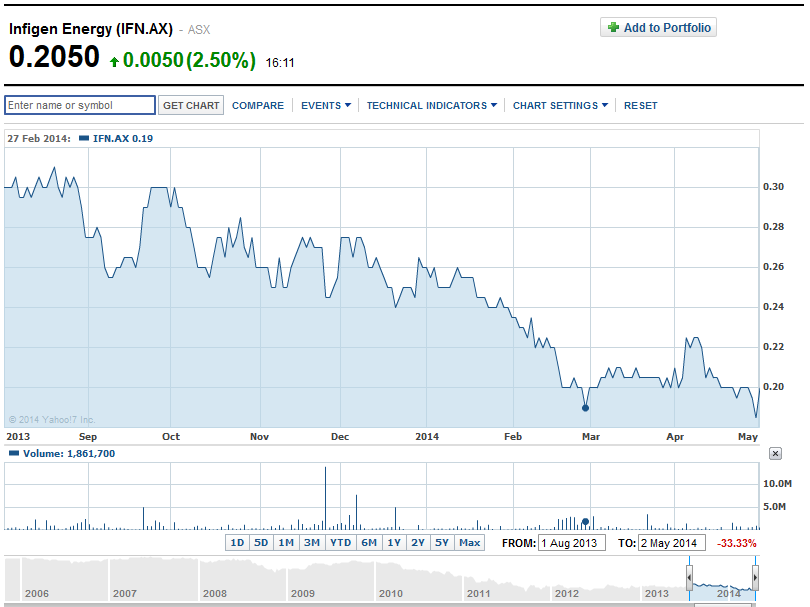
Shares in wind farm operator Infigen Energy have fallen 25 per cent since the RET scheme review was announced. Its shares are being priced for a negative outcome from Warburton’s review.

Chief executive Miles George says Infigen’s Australian business would lose roughly 40 per cent of its revenue in the event of existing targets and certificate arrangements not being honoured.

“Our business would fail, along with most other wind farms in Australia,” he says. Infigen has 20,000 shareholders split about one third between mums and dads and two thirds institutions. They could lose their entire investments.”

Infigen is not the only company worried about the potential damage to its business from changing the RET target, which is 41,000 GWh. One of Australia’s largest infrastructure investors, IFM Investors, is concerned its renewable energy business, Pacific Hydro, will have to shut down and move its investment offshore. Garry Weaven, chairman of IFM Investors and Pacific Hydro, tells Chanticleer that while he respects Warburton’s independence and ability as a businessman, he is particularly worried by the “climate change vibes” emanating from the Abbott government.

Weaven told CEDA in a speech last month that renewable energy development in Australia has been severely handicapped by inconsistent and untimely interventions by successive governments.

He makes the perfectly valid point that investors in renewables have to measure their investments over at least 25 to 30 years.

“It is simply not possible to generate an acceptable project IRR for a wind farm without that assumption, and other forms of renewable energy generation are still less economic and also require a very long investment life-cycle,” he told CEDA.

Weaven’s broader point is that with the plan to scrap the carbon tax and the uncertainty surrounding the government’s Direct Action policy, there is no new investment in any form of energy generation in Australia at the moment. Banks are unwilling to go anywhere near power generation investment unless it is the purchase of existing assets, such as Macquarie Generation, which is being sold by the NSW Government. Warburton says George and Weaven should not be barking at shadows, especially since the expert panel has only just begun speaking to industry participants.

But he is also crystal clear that every aspect of the RET scheme is up for grabs.

As Warburton says, there is good reason why sovereign risk is one of the five key areas being examined by an expert panel which also includes Brian Fisher, Shirley In’t Veld and Matt Zema. The key words used in the terms of reference in relation to sovereign risk are as follows: “The review should provide advice on the extent of the RET’s impact on electricity prices, and the range of options available to reduce any impact while managing sovereign risk.”

Sovereign risk is not something normally associated with investment in Australia. It last raised its ugly head when the former Labor government introduced the Mineral Resources Rent Tax. But investors around the world are getting used to escalating sovereign risk in democratic countries with normally predictable long term policies.

Recently in Norway, the Canadian Pension Plan Investment Board (CPPIB) was severely burned when the government changed the tariff that can be charged by a private company that bought the rights to manage a gas pipeline.

CPPIB’s return from its company, Solveig, was slashed from 7 per cent to 4 per cent.

Warbuton says potential management of sovereign risk would not have been a part of the terms of reference for the RET scheme review if all options were not on the table. Warburton, chairman of Westfield Retail Trust and Magellan Flagship Fund, will use a cost-benefit analysis from ACIL Allen as the foundation of the RET review. ACIL Allen has been accused of being in the pocket of the fossil fuel lobby but its data was used on Tuesday by the Clean Energy Council in a document in support of keeping the RET scheme in its current form.

The Clean Energy Council report, which was prepared by ROAM Consulting, modelled three scenarios: a business as usual case, a no RET scenario, where the RET is repealed, with only existing and financially committed projects being covered by the scheme and an increased and extended RET scenario where the RET is increased by 30 per cent by 2030 target and extended to 2040. The report concluded that the legislated large scale RET can be met under the business as usual scenario.

It also says that both RET scenarios result in lower net electricity costs to consumers in the medium to long term.

Australian Financial Review

When AFR refers to “the $20 billion Renewable Energy Target scheme” – it underplays the cost of the RET by at least $30 billion (probably just small change to the AFR?).

The energy market consultants engaged by the RET review panel, ACIL Allen produced a report in 2012, that showed that the mandatory RET – with its current fixed target of 41,000 GW/h – would involve a subsidy of $53 billion, transferred from power consumers to wind power generators via Renewable Energy Certificates and added to all Australian power bills. From modelling done by Liberal MP, Angus “the Enforcer” Taylor – and privately confirmed by Origin Energy – ACIL Allen’s figure for the REC Tax/Subsidy is pretty close to the mark.

Adding $53 billion to power consumers’ bills can only increase retail power costs, making the Clean Energy Council’s claims about wind power lowering power prices complete bunkum. And that figure is a fraction of the $100 billion or so needed to roll out the further 26,000 MW in wind power capacity needed to meet the current RET – and the duplicated transmission network needed to support it (see our post here).

Yet again, the wind industry and its parasites seek to hide behind the furphy of “sovereign risk”. “Sovereign risk” and “regulatory risk” are two entirely different animals: the wind industry is the product of Federal Government regulation which, of course, is prone to amendment or abolition at any time.

Sovereign risk” is the risk that the country in question will default on its debt obligations with foreign nationals or other countries; and, by some definitions, includes the risk that a foreign central bank will alter its foreign-exchange regulations thereby significantly reducing or completely nulling the value of foreign-exchange contracts.

It has nothing at all to do with changes in legislation that impact on industry subsidy schemes – which is precisely what the mandatory RET/REC scheme is: the prospect that a subsidy might be reduced or scrapped is simply “regulatory risk”.

To claim that the alteration of a government subsidy scheme is “sovereign risk” is complete nonsense.

At one point during the RET review panel’s meeting in Sydney, as Dick Warburton spelt out the panel’s mission, the boys from Infigen howled from the back of the room: “but, what about sovereign risk?!?” To which a nonplussed Warburton retorted: “what about it? Sovereign risk is your problem, it’s not our problem.”

And, indeed, it appears that Infigen has serious problems (whether or not “sovereign risk” is one of them).

Infigen is bleeding cash (it backed up a $55 million loss in 2011/12 with an $80 million loss, last financial year). It’s been scrambling to get development approvals for all of its projects so they can be flogged off ASAP. If it finds buyers it can use the cash to retire debt and fend off the receiver – who must be circling like a vulture all set to swoop.

Reflecting its fading fortunes, Infigen’s share price has taken a pounding in the last 8 months (if the graphs below look fuzzy, click on them, they’ll open in a new window and look crystal clear):

Infigen 1.8.13-5.5.14

Note the drop after the Coalition took office in September; the dive after the RET Review was announced in January; and the plummet in April, when the Panel defined what its mission was about, as it called for submissions (see our post here).

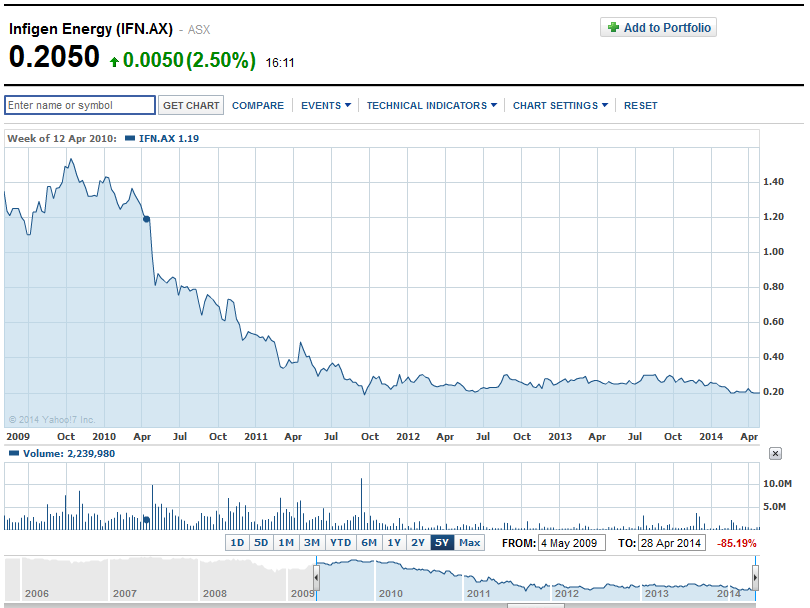
The drop seen above – from the year high of $0.32 (in August 2013) to $0.20 (now) – represents a 36% loss for investors who bought in at the top of the market this financial year. But spare a thought for those that bought in back in 2009 – when Infigen emerged from the ashes of Babcock and Brown:

Infigen 2009-5.5.14

The early movers have seen their shares freefall from over $1.40 to $0.20 – representing an 80% loss. Ouch!

The collapse in Infigen’s share price simply highlights our warning to bankers and investors. Remember this is an outfit that used to be called Babcock and Brown – which collapsed spectacularly in 2009 – taking $10 billion of investors’ and creditors’ money with it on the way out (see this story). Get set for a replay.

Consider this STT’s fair warning to anyone with exposure to wind power companies – be it shareholders, bankers or those who face exposure through their super fund’s investments – grab your money and get out while you can.

please-take-a-moment-and-look-around-and-find-the-nearest-exit