Wind Turbine Projects, a Breach of Human Rights!

March 2016Australia

Human Rights and Wind Energy Projects

This document is a review of the possible breaches by wind energy projects of various of the human rights of people living in the vicinity of a wind project.

It identifies and considers a number of potential breaches of varying impact and of differing ease or difficulty of establishing. In this context the rights to health, safe working conditions and property may be the simplest to establish whether breaches have or have not occurred.

Readers of this document need to understand that it is not in any way a legal argument and that whilst all reasonable steps have been taken in its construction the author makes no representation that the information is complete nor that the analysis and conclusions are correct.

Those interested in the subject should obtain their own advice before proceeding with a formal complaint.

Prepared by:
Peter R Mitchell AM, BChe
March 2016

Index

  1. Summary
  2. Introduction
  3. The Relevant Facts
  4. Has the Wind IndustryPROVEN Its Machines Are Safe?
  5. Level of Disturbance
  6. Human Rights Legislation
  7. Major Breaches of Human Rights
    1. Cruel, Inhuman and Degrading Treatment
    2. Discrimination
    3. Arbitrary Interference
    4. Working Conditions
    5. Family
    6. Children
    7. Physical and Mental Health
    8. Homes and Other Assets
  8. Obligations of Civil Servants

Appendices

Each Appendix repeats relevant articles from the Declaration and Convenants with comments in italics on their applicability to the problems discussed in the memorandum.

  1. Universal Declaration of Human Rights (UDHR)
  2. International Covenant on Economic, Social and Cultural Rights (ICESCR)
  3. International Covenant on Civil and Political Rights (ICCPR)
  4. Covenant on the Rights of the Child (CRC)
  5. Convention Against Torture and other Cruel, Inhuman and Degrading Treatment or Punishment (CAT)

A. Summary

IndustrySPIN and uncritical but determined admirers of wind energy have encouraged the political and public view of the wind industry as beyond criticism and critical analysis. In contrast people living in the vicinity of Wind Energy Projects (WEPs) have been suffering both mentally and physically since turbines have appeared in their previously quiet, peaceful and healthy environments.

Some high quality work by US scientistsi in the 1980s uncovered a wind turbine sound profile (signature) that included infrasound and low frequency sound (ILFN). This signature was unlike that of any other source of sound. ILFN at very low and specific frequencies was identified as the cause of health problems in humans. The industry and their favoured acousticians “forgot” this work; but recent field workii in Australia has confirmed the unique sound profile and the cause and effect. Advances in instrumentation are allowing more work to be undertaken in victims’ homes by privately funded acousticians independent of the wind industry.

Characteristically the victims have no funds to seek legal relief or advice but that may become easier as the findings are repeated. Meanwhile the victims continue to endure what they claim are intolerable bodily impacts with their personal sensitivity increasing with timeiii.

Whilst the industry currently feels secure against court action, it has occurred to some that the industry and government regulatory authorities are quite possibly causing major breaches of certain of the victims’ human rights; and that this is an avenue that should, and can, be diligently pursued with a minimum outlay of scarce funds.

Matching of thePROVEN impacts with defined and accepted human rights is the purpose of this document.

Matching shows that rights involving:

  • Cruel, Inhuman and Degrading Treatment
  • Discrimination
  • Arbitrary Interference
  • Working Conditions
  • Family
  • Children
  • Physical and Mental Health
  • Homes and Other Assets

are seemingly being both ignored, and breached.

It is not necessary that every one of the above identified rights is breached. One alleged breach against one person at one wind project is enough to trigger the obligations of the Human Rights Commission.

B. Introduction

The Clean Energy Council website states that: “Australia had 1866 wind turbines spread across 71 wind farms at the end of 2014. Three wind farms with a combined power generation capacity of 566.7 megawatts (MW) were completed in 2014 and a further five wind farms remained in progress early in 2015 and are expected to be completed in 2015”.

Individual turbine size (rated capacity) ranges from less than 1MW to about 3.3MW.

Changes to the Renewable Energy Target will require additional renewable energy capacity to be built, most of which can be expected to be wind derived.

There are a variety of problems with wind energy that are unlikely to be rectified soon. This document is concerned solely with the physiological and psychological impact on families and farm workers living within 10km of a WEP.

The purpose of WEPs is to produce power from a sustainable source without producing carbon dioxide. It may or may not be that the planet is facing disastrous global warming; it may or not be that carbon dioxide produced from fossil fuels is a, or perhaps the, major cause. Many believe (but may not actually know) the answers to the above options are in the affirmative. Political parties and members of State and Federal parliaments have, with some exceptions, accepted the affirmative view. The Commonwealth, through the Renewable Energy Act, has directed that power consumers pay large subsidies for renewable energy in order for wind energy and some other renewable energies to become viable. Thus the wind industry operates with aGUARANTEED PROFIT at a level which is very attractive to some investors who increasingly are foreign.

The wind industry’s interest is to protect and enhance its cash flows. Capitalism has a poor record if its product or service is damaging to the public and the environment. In these circumstances it commonly does not seek to change its product but to defend its continuation. Unfortunately this reaction includes tactics of denial and dissembling, refusing to undertake sufficient research on its own products, delaying research by others and attacking those who see problems with the product and are prepared to say so. An expensive campaign of denial andSPINis progressively developed and practised.

Those convinced of the need to reduce carbon dioxide emissions see wind energy as a win-win solution (both sustainable and reducing carbon dioxide). However, in the matter of its more carefully defined purpose, that being the net reduction of carbon dioxide per unit of power produced, it is a failure.iv This is mentioned here so that readers may realise that wind energy is not the saviour first thought, and that there is no question of “wind power or we perish”.

However this document does not make the argument about wind being not fit for purpose. Others have done and continue doing that. The purpose here is to consider whetherPROVEN impacts on residents constitute transgression of their human rights.

The following facts relating to the generation of power from wind are drawn from published research and unpublished field work, much of which is available on websites such as the Waubra Foundation, National Wind Watch, etc. website. These are discovered and researched facts, not unfounded assertions nor the output of “post modern” science.

Matching of these facts with defined and accepted human rights is the purpose of this document.

C. The Relevant Facts

An understanding of the nature of the sound pressure wavesv emitted by turbines and the impacts of that energy upon neighbours is essential to any assessment of the possible breaching of human rights. Facts vital to this evaluation follow.

  • Wind turbines produce sound (airborne pressure waves) across the infrasound, low frequency and audible ranges.
  • Sound in the very low frequency spectrum (0.1 hertz to 20 hertz) characterised as infrasound, as well as excessive low frequency noise (20 to 200 Hz) causes serious physiological and psychological impacts on some or all of the residents in a significant number of houses up to at least 10 km from the nearest turbine.
  • Residents do not become accustomed to these pressure waves, but become sensitised, so that the impact becomes increasingly damaging with ongoing exposure.(See Endnote ii)
  • A major impact of these sound waves is chronic sleep deprivationvi often associated with waking suddenly and regularly in a panicked state; but other primary or secondary health problems such as tinnitus, vertigo and balance problems, tachycardia, nausea, migraine, exacerbation of chronic medical conditions such as heart disease, and concentration problems, as well as physiological and psychological stress are also common.(See Endnote ii) Chronic sleep deprivation is classified by the World Health Organisation as a contributor to diseasevii.
  • Many residents find their formerly peaceful homes are rendered sonically toxic and ultimately uninhabitable and, on full disclosure to possibly interested buyers, unsaleable.
  • Young children are unable to understand or express their discomfort, which is often extreme, old people are unable to move for various reasons including financial; and all ages suffer declining health and cognitive power and are increasingly at risk in operating farm machinery, fixed machines and even cars and trucks.

D. Has the Wind Industry Proven Its Machines Are Safe?

The information to support the above facts is readily available and mounting. Whilst the wind industry and its variously motivated supporters deny any evidence exists, and discredit the motives and background of the whistleblowers, the industry has never been inclined or required to prove that their ever larger turbines are safe, or to prove another source that has any scientific credibility for the health impacts that arise around wind turbineINSTALLATIONS.

E. Level of Disturbance

Please read on

Prepared by Peter R Mitchell | March 2016

Wind Projects Destroy Farming Communities!

Want Hate-Filled Communities? Then Just Add Wind Farms

farm protest

The wind industry, its parasites and spruikers keep telling us that rural communities are falling over themselves to get in on some wind farm action. However, as usual, theirSPIN and the reality on the ground are miles apart.

Nancy Tips details how wind farms destroy the trust and faith that make vibrant and prosperous rural communities tick.

Lessons about community from Windham
Burlington Free Press
Nancy Tips
7 April 2016

It has become a cliche to say, towns targeted for industrial wind installations are torn apart by the experience. If it’s an experience you haven’t had, you might well wonder what’s behind the cliche. If you really want to understand, you might start by asking the question, what is the nature of the bonds that hold a community together in the first place?

I don’t know about your small town, but in ours, neighborly bonds tend to be of the feel-good type: I do you a kindness and we both benefit. You break your leg? I plow your drive. Your weed whacker is in the shop? I lend you mine. Your brother dies? I go to the funeral, even if I didn’t know him. What a dandy fellow I am, and everyone knows it.

These small acts of kindness do indeed build a sense of community. But as with other relationships, you don’t really know your community until the chips are down.

You don’t know what “for better or for worse” means until you get to the “worse” part. You quickly find out, when a wind developer comes knocking on your community door.

It’s very bad times, at least for some people. And the fact that people are differently affected depending on where they live is, it turns out, at the heart of what you learn about “community.”

You learn when the friend from over the way regards you with a steely gaze when you tell him, “My home, and my family’s home, are a half mile from five 500-foot tall wind turbines.” “I feel for you,” says your friend, quickly changing the subject.

You learn when you try to explain that your fear and sadness are keeping you awake. “All my family’s wealth is in our family farm, which would lie less than 3,000 feet from five 40-story wind turbines. We won’t be able to live here, and the land owner and developer have said they wouldn’t compensate anyone for lost use of their property.” “Please,” chuckles your friend, “it won’t be that bad.”

You learn when you look at the people who are fighting as hard as you are to stop the wind turbine project and realize that the project will probably not affect them so personally, but that they care about their neighbors who will be harmed. And you know they will be next to you, blocking the road, if the day comes when the unimaginably huge trucks arrive with wind turbine parts.

In our little town, we’ve spent nearly four years watching the company reps of the wind developer, an immense multi-national, mosey about on our ridgeline, trying to answer their precious question, is the “wind resource” on your pristine ridgeline enough for us to make lots of money by putting turbines here?

But we have a question too, and although we’ve looked equally hard for the answer, we can’t find it.

Our question is, what will happen to us, as individuals and as a community, if the developer does decide we’re good enough to “host” their project? Who will care for our tattered community, and our damaged lives?

That there is no answer to, or even interest in, our question does not feel good – it feels abusive, unjust. It feels vicious, violent. It feels as if Vermont, my entire family’s beloved adopted home, were the most dangerous place in the world for me and my family to live.

So the days go on, lessons abounding. I learn  about mercy, for instance, when I hear my husband on the phone with a “friend,” explaining that turbine noise at a distance of less than half a mile stands a good chance of affecting the development of my infant grandson’s brain. Then I hear my husband, suddenly fierce, say, “I’m not asking you to feel sorry for me!”

Well you know what, my friend? I am asking you to feel sorry for me. I am asking you, god forbid, to have pity on me. I am asking for your mercy. Your answer will tell me something very important about “community.”
Burlington Free Press

protesters

More Evidence of Harm From Wind Turbine Noise

Tonic tensor tympani syndrome (TTTS)

There has been a suggestion that this condition is actually part of what some people chronically exposed to wind turbine noise might be experiencing.

Tensor tympani muscle
Tensor tympani and stapedius muscles contract reflexively in response to loud sounds to prevent damage to the hearing receptors.
Noise & HealthApril 9, 2013Australia

Tonic tensor tympani syndrome in tinnitus and hyperacusis patients: a multi-clinic prevalence study

Myriam Westcott et alter

Abstract

Tonic tensor tympani syndrome (TTTS) is an involuntary, anxiety-based condition where the reflex threshold for tensor tympani muscle activity is reduced, causing a frequent spasm. This can trigger aural symptoms from tympanic membrane tension, middle ear ventilation alterations and trigeminal nerve irritability. TTTS is considered to cause the distinctive symptoms of acoustic shock (AS), which can develop after exposure to an unexpected loud sound perceived as highly threatening. Hyperacusis is a dominant AS symptom. Aural pain/blockage without underlying pathology has been noted in tinnitus and hyperacusis patients, without wide acknowledgment.

This multiclinic study investigated the prevalence of TTTS symptoms and AS in tinnitus and hyperacusis patients. This study included consecutive patients with tinnitus and/or hyperacusis seen in multiple clinics. Data collected: Symptoms consistent with TTTS (pain/numbness/burning in and around the ear; aural “blockage”; mild vertigo/nausea; “muffled” hearing; tympanic flutter; headache); onset or exacerbation from exposure to loud/intolerable sounds; tinnitus/hyperacusis severity. All patients were medically cleared of underlying pathology, which could cause these symptoms. 60.0% of the total sample (345 patients), 40.6% of tinnitus only patients, 81.1% of hyperacusis patients had ≥1 symptoms (P < 0.001). 68% of severe tinnitus patients, 91.3% of severe hyperacusis patients had ≥1 symptoms (P < 0.001). 19.7% (68/345) of patients in the total sample had AS. 83.8% of AS patients had hyperacusis, 41.2% of non-AS patients had hyperacusis (P < 0.001). The high prevalence of TTTS symptoms suggests they readily develop in tinnitus patients, more particularly with hyperacusis. Along with AS, they should be routinely investigated in history-taking.

Introduction

The tensor tympani reflex is a startle reflex, which is exaggerated by high stress levels. The tensor tympani muscle contracts immediately preceding the sounds produced during self-vocalisation, suggesting it has an established protective function to loud sounds, assists in the discrimination of low frequency sounds, and is involved in velopharyngeal movements.

Tonic tensor tympani syndrome (TTTS) was originally described by Dr. I. Klockhoff. TTTS is an involuntary condition where the centrally mediated reflex threshold for tensor tympani muscle activity becomes reduced, so it is continually and rhythmically contracting and relaxing. This appears to initiate physiological reactions in and around the ear without objectively measurable dysfunction or pathology. Symptoms consistent with TTTS can include: tinnitus; rhythmic aural sensations such as clicks and tympanic membrane flutter; alterations in ventilation of the middle ear cavity leading to a sense of aural blockage or fullness, a frequent aural “popping” sensation and mild vertigo; minor alterations in middle ear impedance leading to fluctuating symptoms of “muffled” and/or “distorted” hearing; irritation of the trigeminal nerve innervating the tensor tympani muscle, leading to pain, numbness and burning sensations in and around the ear, along the cheek, neck and temporomandibular joint (TMJ) area.

The specific and consistent cluster of physiological symptoms of acoustic shock (AS) is consistent with TTTS, without underlying aural or TMJ pathology. AS can occur involuntarily after exposure to a sudden unexpected loud sound perceived as highly threatening (acoustic incident). AS becomes an acoustic shock disorder (ASD) if symptoms persist. AS was originally identified in call center staff, who arevulnerable to AS because of the increased likelihood of exposure near the ear(s) to an acoustic incident transmitted via a telephone headset. The research on AS has focused on this cohort, however acoustic incidents can occur anywhere.

Symptoms such as aural pain and a sensation of aural blockage/fullness, with no underlying aural or TMJ pathology, have been observed in tinnitus and hyperacusis patients. These symptoms have been linked to TTTS by Jastreboff and Hazell and Westcott. However, these symptoms have not been widely acknowledged or investigated in this patient population. TTTS has been more intensively investigated in temporomandibular disorder (TMD) research, with TTTS considered to be a secondary consequence of TMD and/or TMJ dysfunction, predominantly responsible for referred tinnitus, ear pain and other symptoms in and around the ear.

This multiclinic study aimed to investigate in a sample of tinnitus and hyperacusis patients the prevalence of:

  • Symptoms consistent with TTTS
  • Symptoms consistent with TTTS developing or being exacerbated by intolerable sound exposure
  • AS aetiology triggering the onset of their tinnitus and/or hyperacusis.

[…]

Conclusion

The high prevalence of symptoms consistent with TTTS in this sample suggests they can readily develop as a primary phenomenon in patients with tinnitus, and more particularly in those with hyperacusis. These results support a central relationship between tinnitus, hyperacusis and TTTS, with further research indicated to explore this relationship and the efferent pathway triggering TTTS.

TTTS offers an explanation for the aural pain reported by many hyperacusis patients, often triggered or aggravated by intolerable sound exposure. Symptoms consistent with TTTS are subjective and can cause high levels of anxiety. This can lead to tinnitus escalation, the development and escalation of hyperacusis, and limit the efficacy of tinnitus/hyperacusis therapy. These symptoms should be routinely evaluated in history taking, de-mystified to patients to provide reassurance, and treated accordingly.

These results indicate that AS is a world-wide phenomenon, with significant clinical, medico-legal and military diagnostic/rehabilitation implications. It is recommended that evaluation of an acoustic incident at the time of tinnitus/hyperacusis onset is routinely carried out in history taking with tinnitus and hyperacusis patients.

→ Please read on

Energy Poverty Killing Thousands in Europe…

Europe’s Wind Power Suicide Pact Killing 40,000 a Year

europe power prices 2

Green Europe is killing 40,000 poor a year
Breitbart
Jame Delingpole
30 March 2016

Europe’s suicidal green energy policies are killing at least 40,000 people a year.

That’s just the number estimated to have died in the winter of 2014 because they were unable to afford fuel bills driven artificially high by renewable energy tariffs.

But the real death toll will certainly be much higher when you take into account the air pollution caused when Germany decided to abandon nuclear power after Fukushima and ramp up its coal-burning instead; and also when you consider the massive increase in diesel pollution –  the result of EU-driven anti-CO2 policies – which may be responsible for as many as 500,000 deaths a year.

But even that 40,000 figure is disgraceful enough, given that greenies are always trying to take the moral high ground and tell us that people who oppose their policies are uncaring and selfish.

It comes from an article in the German online magazine FOCUS aboutEnergiewende (Energy Transition) – the disastrous policy I mentioned earlier this week whereby Germany is committed to abandoning cheap, effective fossil fuel power and converting its economy to expensive, inefficient renewables (aka unreliables) instead.

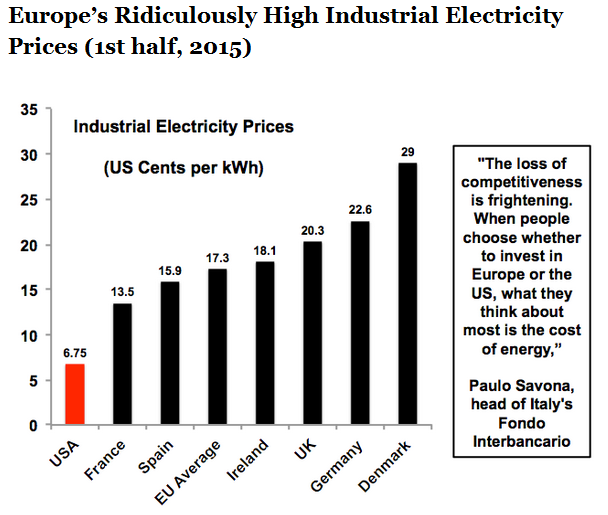
According to FOCUS around ten percent of the European population are now living in ‘energy poverty’ because electricity prices have risen, on average, by 42 percent in the last eight years. In Germany alone this amounts to seven million households.

The article is titled: The grand electricity lie: why electricity is becoming a luxury.

The reason, of course, is that green energy policies have made it that way. Many of these have emanated from the European Union, which in turn has taken its cue from the most Green-infested nation in Europe – Germany.

Germany has long been obsessed with all things environmental. Besides having invented the dodgy ‘science’ of ecology in the 1880s it was also, of course, between 1933 and 1945 the home of Europe’s official “Greenest government ever” – the first to ban smoking on public transport, an enthusiastic supporter of organic food, national parks and population control.

The Greens have also since the early Eighties been arguably the most influential party in Germany. Though their percentage of the vote has rarely risen above the 10 percent mark, they have punched above their weight either as a coalition partner in government or as a pressure group outside it.

For example, the reason that after Fukushima, Chancellor Angela Merkel completely changed Germany’s policy on nuclear power was her terror of the Greens who were suddenly polling 25 percent of the national vote.

It was the Greens too who were responsible for Energiewende – the policy which is turning Germany into the opposite of what most of us imagine it to be: not the economic powerhouse we’ve been taught to admire all these years, but a gibbering basket case.

This becomes clear in an investigation by the German newspaperHandelsblatt, which reports the horrendous industrial decline brought about by green energy policies.

Hit hardest, of course, are the traditional utilities. After all, the energy transition was designed to seal their coffin. Once the proverbial investment for widows and orphans because their revenue streams were considered rock-solid — these companies have been nothing short of decimated. With 77 nuclear and fossil-fuel power plants taken off the grid in recent years, Germany’s four big utilities — E.ON, RWE, Vattenfall and EnBW — have had to write off a total of €46.2 billion since 2011.

RWE and E.ON alone have debt piles of €28.2 billion and €25.8 billion, respectively, according to the latest company data. Losses at Düsseldorf-based E.ON rose to €6.1 billion for the first three quarters of 2015. Both companies have slashed the dividends on their shares, which have lost up to 76 percent of their value. Regional municipalities, which hold 24 percent of RWE’s shares, are scrambling to plug the holes left in their budgets by the missing dividends.

Thousands of workers have already been let go, disproportionately hitting communities in Germany‘s rust belt that are already struggling with blight. RWE has cut 7,000 jobs since 2011. At E.ON, the work force has shrunk by a third, a loss of over 25,000 jobs. Just as banks spun off their toxic assets and unprofitable operations into “bad banks” during the financial crisis, Germany’s utilities are reorganizing to cut their losses.

Why are the Germans enacting such lunacy? Aren’t they supposed to be the sensible ones?

Well yes, up to a point.

As a seasoned German-watcher explains to me, it’s with good reason that one of Germany’s greatest contributions to the world’s vocabulary is the word Angst.

The Germans are absolutely riddled with it – always have been – and it explains the two otherwise inexplicable policies with which Germany is currently destroying itself.

One, of course, is Energiewende caused by a misplaced, but deeply-held neurosis about stuff like diminishing scarce resources and “global warming” and the evils of Atomkraft (Nuclear power).

The other are its similarly insane immigration policies – the result of the neurosis that if it doesn’t replace its declining population with a supposedly healthy influx of immigrant workers, then it will wither and cease to be the great force it was under people like Frederick the Great, Bismarck and that chap in the 1930s and that no one will know or care where Germany is any more.

Ironically, though, if national decline is what the Germans most fear then the two policies they are pursuing to avoid it happening to be the ones most likely to hasten it.

This is sad. Sad for Germany which, for all its faults, has produced some pretty impressive things over the years: Beethoven; Kraftwerk; Goethe; Porsche; autobahns; those two girls on Deutschland 83.

And even sadder for those of us who, through absolutely no fault of our own happen to be shackled politically and economically to a socialistic superstate called the European Union, most of whose rules are decided by Germans over whom we have no democratic control.

Oh and by the way, Greenies: as I never tire of reminding you, you insufferable tossers, not a single one of the “future generations” you constantly cite in your mantras as justification for your disgusting, immoral and anti-free-market environmental policies actually exists.

But the people you’re killing now as a result of those environmental policies DO exist.

Or rather they did, till you choked or froze them to death, you vile, evil, eco-Nazi scumbags.
Breitbart

Fuel-poverty-activi-005

Definition of “Wind Turbines”….from an “Honest Encyclopedia”

Wind turbine:

Wind turbine.jpg

Wind turbine is the modern day windmill which is marketed as a clean energy solution to replace power from fossil fuel plants. The addition of multiple wind turbines in the same geographical location is referred to as a wind farm. The sales pitch…wind turbines power millions of homes with wonderful “free” energy. The truth is a much different story. “The wind power industry claims switching from conventional power to wind power will save consumers money and spur the economy. However, data from the top 10 wind power states show just the opposite.” [1]

Cost breakdown

Wind energy from turbines are power generating losers when compared to other technologies such as coal, hydro, gas and nuclear. One giant downside is no wind, no power generation. Sources say you need at least 10MPH wind speed to generate power and speeds in excess of 50MPH will shut down turbines to prevent damage. [2] Industry promoters often paint a rosy picture of the benefits of wind power when other sources claim as little as 8% of usable generation.

Not widely known but wind turbines actually use electricity from the grid (coal/gas/hydro/nuclear) to power their hydraulic systems that keep the blades facing in the same direction as the wind. In freezing weather conditions, electricity from the grid is used to keep the bladesspinning at low speeds as a method of de-icing.

The misconception is that youinstall a wind turbine and it will pay itself off within a decade. From that point out, it is a net energy gain at a fraction of a cost. Nothing can be further from the truth. Constant costs are involved to maintain these mechanical structures; Overheating bearings, plastic that melts, gallons of brake oil leaking, gallons of hydraulic fluid leaking, [3] blades that fall off, towers that collapse, replacement of yaw gear drives, bearings, gearboxes, and generators. The cost to put out wind turbine fires, some self-extinguish themselves out but others need fire departments to extinguish turbines and put out the brush fires below.

The cost to manufacture wind turbines prevents any offset gained transitioning to a ‘clean’ energy environment. [4]

A two-megawatt windmill contains 260 tonnes of steel requiring 170 tonnes of coking coal and 300 tonnes of iron ore, all mined, transported and produced by hydrocarbons.

Landscape, seascape wildlife costs are a major downside to power from wind. Eagles, bats, birds of all kinds are killed in the thousands by wind blades. Their rotting carcasses litter the ground below. Estimates place the number of birds killed by wind turbines at 30 million per year. [5]

In Ontario Canada, every turbine destroys 3 acres of land, roughly 21,000 acres of farmland. [6]

Wind Turbine Syndrome

Many people living within 2 km (1.25 miles) of thesespinning giants get sick says a peer-reviewed study by the Johns Hopkins University School of Medicine. [7] Low frequency noise and infrasound appear to be the chief disease-causing culprit according to Dr. Nina Pierpont. In Wisconsin, a study showed noise emanating from the turbines was detectable inside homes within a 6.2-mile radius of the industrial wind plant and declared wind turbines a health hazard. [8]

Government Subsidies and Crony Capitalists

Billions of taxpayer dollars are being shoveled into this inefficient scheme in order to promote Global Warming agendas at the expense of real power sources and the tens of thousands of jobs they replace. Government subsidies keep the growth of wind turbine construction alive and keep this technology running afterinstalled. Without government financial involvement, wind turbines become to costly to operate, go idle and start rusting the landscape. Without government funding, investors sell theirinvestments and shelve plans to expand.[9] The UK’s Labour party insists that wind turbines can’tmake a profit without subsidies. [10] Tax credits are given to companies that manufacture, to companies thatinstall/maintain, to municipalities that own the property. The IRS is giving away $13 Billion per year in wind energy subsidies.[11]

The world’s biggest billion dollar corporations, such as General Electric and Siemens, are reaping the investments made in subsidized wind turbine construction. The U.S. government has laid the groundwork for an endless welfare system devoted to big wind companies. [12]

See also

External links

References

  1. Jump up Electricity Prices Soaring In Top Wind Power States, Forbes, October 17, 2014
  2. Jump up AS BRITAIN FREEZES, WIND FARMS TAKE POWER FROM GRID TO PREVENT ICING, Breitbart.com. January 2, 2015
  3. Jump up 2 Year Old Siemens Turbines Falling Apart: Wind Farm Investors, Get Out While You Can, Stopthesethings.com, Febuary 1, 2015
  4. Jump up Carbon Shift: How Peak Oil and the Climate Crisis Will Change Canada (and Our Lives), Author Thomas Homer-Dixon, 2010
  5. Jump up RIP STEFAN THE STORK – ONE OF 30 MILLION BIRDS KILLED BY WIND FARMS EVERY YEAR, Breitbart, August 17, 2015
  6. Jump up Wind Ontario
  7. Jump up Wind Turbine Syndrome
  8. Jump up Wisconsin Wind Turbines Declared Health Hazard, Michigan Capitol Confidential, November 8, 2014
  9. Jump up Wind Energy’s Ghosts, American Thinker, February 15, 2010
  10. Jump up Tories to end onshore windfarm subsidies in 2016, The Guardian,June 18, 2015
  11. Jump up The IRS Is Giving Away $13 Billion A Year In Wind Energy Subsidies, Without Congressional Authorization, Forbes
  12. Jump up What do we have to show for government subsidies of wind power?, TheHill, February 24,2015

Report the Harm Caused by Wind Turbines…

The Wind Industry’s Malicious & Unjustified Harm to Public Health

Wisconsin sign sick and tired

Wind power is a public health problem
Cape Cod Times
Lilli-Ann Green
7 March 2016

Wind turbine projects have previously been rejected in Wellfleet, Eastham, Orleans, Harwich, Dennis, Brewster, Barnstable and Bourne. Health concerns have been a major issue.

A Superior Court judge, hearing neighbor’ complaints that wind turbine noise constituted an intolerable “nuisance” that was causing “irreparable harm,” issued an injunction to curtail operations.

The “Falmouth experience” is not unique. Residents in at least 21 communities in Massachusetts (and hundreds of locations all over the world) have reported significant health problems as the result of living too close to wind turbines. Those problems include sleep disruption and deprivation, headaches, ear pressure, dizziness, nausea, problems with concentration and memory, fast heart rate, high blood pressure and panic episodes.

In a 2011 peer-reviewed journal article, Harvard-trained epidemiologist Carl Phillips wrote, “There is overwhelming evidence that wind turbines cause serious health problems in nearby residents … at a nontrivial rate. The bulk of the evidence takes the form of thousands of adverse event reports. … The attempts to deny the evidence cannot be seen as honest scientific disagreement, and represent either gross incompetence or intentional bias.”

Ambrose and Rand’s 2011 peer-reviewed journal article, presented at the InterNoise international conference, concluded there was “a strong correlation with wind speed, power output and health symptoms.” Research was conducted at one homeowner’s dream home in Falmouth, which was abandoned after wind turbines became operational nearby and cause health problems.

There is plenty of additional scientific and medical evidence of harm caused by wind turbines globally. This is not a “he said, she said” issue. The health impacts are real, and people report they become worse over time. It’s a dose response.

Affected people report not experiencing symptoms before wind turbines started operating near their home. The symptoms go away when they leave their homes. The conclusion is that wind turbines are causing their problems.

Many people living in the proximity of wind turbines are not informed about the potential health impacts of wind turbines by wind developers. Some people report they don’t start experiencing the symptoms until much after wind turbines begin operating. They don’t connect the symptoms they started to experience with wind turbines nearby, perhaps because of the dose response.

Approximately 13 wind turbines operate on Cape Cod and the Islands where people living nearby (over 1.25 miles away in several cases) have reported health problems.

What steps can one take?

It is important for those affected to report and create a record of the problem with their town health board and with Wind Wise Massachusetts (email lgreen@windwisema.org). Town health boards have the responsibility to residents and their families and to take action if there is a health problem in town.

Certainly most Barnstable County citizens don’t want to directly or indirectly cause harm to others. Furthermore, common sense dictates it shouldn’t be legally proper for one town to approve an industrial machine at its border with another town while knowing there is a potential to harm the health of residents of that town nearby.

The Cape’s state legislators have filed several bills to study health problems, educate health care providers and the public and to help people who have been adversely affected by wind turbines. It would be helpful if readers and local media supported the passage of these bills. Honest and unbiased research is needed so we can understand how to do no harm to people in the proximity of wind turbines by determining how close is too close. Only then could a regional comprehensive energy plan that does not harm the health and safety of people living and working nearby be drafted.
Cape Cod Times

Lili-Ann Green’s evidence to the Australian Senate Inquiry is available here: Lilli-Anne Green – no ‘Green’ Dupe – tells Senate: Wind Farm Health Impacts ‘Universal’

insomnia

Windpushers Bury the Truth About Health Effects from Wind Turbines!

Health repercussions due to windmills being kept under wraps…

Update Date: Mar 21, 2016 
Leaving near wind mills can cause migraine and other health problems

(Photo : Photo: Flickr/vrot01)

An ex-health director of Brown County in Wisconsin is among the latest who have reported health problems related to wind power.

SHARE THIS STORY

According to a USA Today report, Chua Xiong claimed in an email that she gets migraine headaches when she visits Duke Energy’s Shirley Wind Farm. Her revelation came just as developers are eyeing more high-profile wind farm projects in Wisconsin. Xiong has since retired.

Brown County Citizens for Responsible Wind Energy (BCCRWE) claims that the email, sent by Xiong  to an  intern on Nov. 21, is further proof that the low-frequency sound from wind turbines caused some residents to suffer from health problems.

However, Xiong later stated the following month that there isn’t sufficient evidence to link the turbines to the migraine. That caused the BCCRWE to claim that Xiong made the statement in order to avoid litigation with Duke Energy, and that her inaction will result in the prolonged daily suffering of Brown County residents.

There are a long line of reports that wind turbines are causing health problems to those who live nearby.

In an article published by National Center for Biotechnology Information (NCBI) entitled “Adverse health effects of industrial wind turbines”, it was reported that people who live or work near industrial wind turbines have experienced decreased quality of life, annoyance, stress, sleep disturbance, headache, anxiety, depression, and cognitive dysfunction. Suggested causes of symptoms include a combination of wind turbine noise, infrasound, dirty electricity, ground current, and shadow flicker.

In a 2009 article by The Telegraph, a New York paediatrician, Dr Nina Pierpont, identified  about 12 different health problems associated with WTS that  range from tachycardia [abnormal heart beat], sleep disturbance, headaches, tinnitus, nausea, visual blurring, panic attacks with sensations of internal quivering to more general irritability.

She said that the vibration and noise emitted by wind turbines can produce a range of symptoms which she has named “Wind Turbine Syndrome” or WTS.

Pierpont observed that the illnesses associated with WTS would  disappear when the person moves away from the wind turbines.

She said she expected that the wind industry would try to discredit and disparage her for the statements.

Wind Turbines Harmful for Livestock, Too!

The Effect of Varying Distances from the Wind Turbine on Meat Quality of Growing-Finishing Pigs

“Avoiding noise-induced stress is important not only for maintaining meat quality but also for improving animal welfare.”

By Małgorzata Karwowska, Jan Mikołajczak, Zbigniew Józef Dolatowski and Sylwester Borowski
© by Małgorzata Karwowska. This work is licensed under CC BY-NC-ND 4.0

Abstract

This study was conducted to assess the effect of rearing pigs at three different distances from a wind turbine (50, 500 and 1000 m) on the physicochemical properties and fatty acid composition of loin and neck muscles. The experiment was carried out on 30 growing-finishing pigs, derived from Polish Landrace × Polish Large White sows mated to a Duroc × Pietrain boar. The results obtained during the noise measurement showed that the highest level of noise in the audible and infrasound range was recorded 50 m from the wind turbine. Rearing pigs in close proximity to the wind turbine (50 m) resulted in decreased muscle pH, total heme pigments and heme iron as well as reduced content of C18:3n-3 fatty acid in the loin muscle. Loins of pigs reared 50 m from the wind turbine were characterized by significantly lower iron content (6.7 ppm g–1) compared to the loins of pigs reared 500 and 1000 m from the wind turbine (10.0–10.5 ppm g–1). The concentration of α-linolenic acid (C18:3n-3) in loin and neck muscles decreased as the distance from the wind turbine increased. Avoiding noise-induced stress is important not only for maintaining meat quality but also for improving animal welfare.

[…]

Summary

In summary, a significant negative influence of noise generated by the wind turbine with a capacity of 2 MW on the quality of growing-finishing pig loin muscles was determined. Rearing growing-finishing pigs in close proximity to the wind turbine resulted in lower pH, total heme pigments and heme iron as well as lower content of C18:3n-3 fatty acid of loin muscles. In this sense, it is crucial to reduce the exposure of animals to noise generated by wind turbines in order to avoid negative effects on meat quality.

Doctor’s Support the Residents Suffering from Wind Turbine Noise & Infrasound…

Wind Farm Noise Rules Irrelevant: It’s What Neighbours are Forced to Suffer that Counts

sleeping baby

****

In our timeline post – Three Decades of Wind Industry Deception: A Chronology of a Global Conspiracy of Silence and Subterfuge – we covered the fact that – from 1995 – the wind industry drew together a hand-picked team with a mission to write noise rules with absolutely no relevance to wind turbine noise; and, therefore, of no benefit to wind farm neighbours (with predictable and soul-destroying results).

Massachusetts MD, William Hallstein makes precisely the point in this well-aimed missive.

William Hallstein, MD letter to Falmouth
Wind Action.org
William Hallstein, MD
14 January 2016

This letter written by William Hallstein, MD, a practicing psychiatrist with over 40 years of experience, was delivered to the Falmouth Zoning Board of Appeals. Dr. Hallstein is also a resident of Falmouth Massachusetts. In his letter he explains the very real impact the Falmouth turbines on human health.

To: Zoning Board of Appeals,
Falmouth, MA
From: William Hallstein, MD Subject: Wind turbine permitting

Dear Members of the Zoning Board of Appeals,

I am submitting this letter for your consideration as you contemplate the matter of whether or not to issue a permit for the wind turbines. In way of introduction I am a psychiatric physician and Falmouth resident since 1970.

This year I will have been practicing medical psychiatry for 49(forty nine) years. Consultation/liaison psychiatry has been my focus. This means sorting out diagnostic questions about intertwined medical/psychiatric illnesses, the most difficult diagnostic questions in medicine, whether in a general hospital, locked psychiatric unit or maximum security prison.

I will be brief and to the point as I explain why I urge you to deny a permit for the Falmouth wind turbines.

The human nervous system is the most sensitive instrument available to date for evaluating the impact of the Falmouth wind turbines on residents who live close to them.

The ONLY experts in the discussion are the people who are sensing the sound, vibrations, pressure waves, etc emitted by the turbines. There is no one more “expert” than these people. No so called expert has either equipment nor information more accurate and sensitive than the affected residents’ nervous systems.

NO instruments more sensitive than people have been invented! Others who claim to be experts are peddling smoke and mirrors in an effort to invalidate and discredit the affected residents.

Also, other turbines in other places are not the issue, since local topography must be considered. The impact of the Falmouth wind turbines on Falmouth residents who live nearby is all that is relevant. I believe they are definitely hurting people living near them and encourage you to NOT permit the turbines, now, long after they were constructed illegally.

Over the past few years I have spent significant amounts of time in the vicinity of the turbines in an effort to understand what the affected residents are describing.

My findings were unanticipated and surprised me. I was not prepared for the intensity and intrusiveness of both sound and vibration felt consistently and repeatedly throughout the years of my studying the phenomena on location.

I recall my introduction to the sound of “low flying jet airplanes” overhead loud enough to interrupt conversation; and, of course, the “planes” kept coming one after another in endless sequence with each rotation of a turbine blade!!!

I was searching the sky looking for the aircraft when my eye caught the turbine blades, and then it all made sense, of course; no aircraft in sight, only Wind I blades. Later on, as I leaned against one of the houses in the neighborhood, I felt an unusual sensation best described as compression, coupled with a rhythmic vibration felt through my feet. Anyone who discredits, demeans and calls the affected turbine neighbors “crazy” hasn’t done his or her homework, in addition to being mean spirited.

The homework is not difficult: stand in the turbine neighborhood for as long as I have and feel what happens to you. The sensations are real and disturbing. It is totally clear to me that I could not live within the radius of influence of the turbines, and I have no idea how the neighbors who are in the turbine area can sustain a healthy quality of life.

Against the backdrop of what I have learned from personal experience with the effect of the turbines I see the Town of Falmouth trying to crush the residents impacted by the turbines.

Let’s move on to sleep disturbance and sleep deprivation which is the bedrock of the area of medicine in which I have worked for 49 years! Sleep disturbance is not a trivial matter, even though it has been trivialized by the Falmouth Board of Health.

Children with inadequate sleep perform poorly academically, emotionally and physically(they present a higher than normal incidence of physical illnesses).

For ANYONE (athletes, truck drivers, ship operators, aircraft pilots, lawyers and physicians, et al) sleep deprived and fatigued, errors in judgement increase, accident rates increase, in addition to physical and emotional symptoms and cognitive impairment. In the world of medical observation all varieties of illnesses are destabilized secondary to inadequate sleep:diabetic blood sugars become labile and erratic, cardiac rhythms become irregular, migraines erupt and increase in intensity, tissue healing is retarded, to list a few across the entire range of physical illnesses.

Psychiatric problems intensify as the sleep deprived brain decompensates; mood disorders become more extreme and psychotic signs and symptoms more severe.

People with no previously identified psychiatric illness are destabilized by sleep deprivation. Sleep deprivation experiments have repeatedly been terminated because test subjects become psychotic; they begin to hallucinate auditory and visual phenomena.

They develop paranoid delusions. This all happens in the “normal” brain. Sleep deprivation has been used as an effective means of torture and a technique for extracting confessions.

I could work my way through 49 years of observing sleep disturbances and deprivation, but that is more than the scope of this letter. I am writing because I have witnessed Town of Falmouth officials and members of other boards trivialize symptom reports from people who are stalwart residents of the Town of Falmouth.

I have witnessed attempts by town officials and other board members to discredit people whom I believe the wind turbines are hurting. Furthermore, all the Wind I neighbors I have examined are passionate about the need for sustainable energy in an effort to reduce fossil fuel dependence.

I see no honest way for the ZBA to issue a permit for the Falmouth wind turbines. Basically, as I see it, the town installed commercial wind generating power plants in a residential neighborhood.
William Hallstein, MD

insomnia

Windscam Fighters Achieve Success!

If You’re Going through Wind Farm Hell, Then Keep Going

west pinchbeck

****

What impresses STT most is the tenacity and perseverance of community defenders, all over the Globe.

Pro-farming (REAL farming, that is), pro-community and pro-real power groups are better informed and organised, and more vocal and hostile, than ever before.

Hard-working, decent, rural people throughout the world are fighting back – to obtain sensible energy policies that support growth, development and vibrant, prosperous rural communities – against an industry with all the natural respect for property rights of Genghis Khan; and the moral fibre of Judas Iscariot.

These are entirely reasonable people who have tumbled to the fact that they have been lined up as “road-kill” by their political betters to suffer the consequences of a policy built around an insanely expensive, utterly unreliable, intermittent power source – that can only survive on a raft of massive subsidies; kills millions of birds and bats; destroys communities;drives people from their homes; and otherwise makes life misery for thousands around the world.

These people are out to smash a “policy” that – in a few years time, when it all inevitably collapses – will be revealed for what it is: an enormous government-backed Ponzi scheme, the foundations for which are greed and stupidity; and the “justification” for which can only be described as a circus of the bizarre.

STT would like to think that we’ve helped these dedicated individuals and groups a little, by providing them with the kind of factual ammunition that cuts directly across the treachery, lies and deceit – which are the tools-in-trade for the wind industry, its goons and parasites.

But, whatever the source of information, pro-community groups are in earnest when it comes to protecting all that they’ve toiled for.

These days, whenever a wind farm is proposed; or the developer is out in the field – literally ‘thumping’ its message home (see our post here) – the term most employed to cover the community’s response is ‘OUTRAGE’.

However, occupying the opposite end of the emotional spectrum, is the infectious, fun-filled term: ‘REJOICE’ – which is the only word powerful enough to capture the sense of victory and relief, for those who have spent thousands of relentless, unpaid hours dedicated to the defence of their communities, their homes, their farms, their businesses and their families.

In Britain, dogged community defenders are winning the Battle for Britain; skirmish by skirmish; village by village; town by town.

The wind industry is being pummelled by an environment in which the massive and endless subsidies upon which the scam essentially depends have been slashed – never to return.

And in which community defenders have been finally (and quite rightly) given a say about the protection and preservation of their common law rights – little rights, like the right to own and enjoy property; free from the unlawful interference of sleep-killing, incessant turbine generated low-frequency noise and infrasound.

Here’s yet another example of how perseverance and tenacity trumps the subsidy-soaked malice exhibited by an industry peopled with career criminals, chancers and second-hand car salesman.

West Pinchbeck campaigners win four-year campaign to defeat wind farm
Spalding Guardian
17 March 2016

Campaigners have won their four-year battle to stop a wind farm being built at West Pinchbeck.

The words “We Have Won!” next to a picture of two filled champagne glasses appeared on the Stop West Pinchbeck Wind Farm website after South Holland District Council (SHDC) ruled the Wind Ventures Ltd application had run out of time for an appeal against non-determination.

“I think the fact that our overwhelming emotion is relief is probably an indication of how much we have been affected just by the threat of this terrible development, and over a prolonged period.”
Campaigner Sue Blake

This means the application is dead in the water.

Leading campaigner Tony Fear said: “We are of course delighted even though it does feel a little bit odd that it just fizzled out in this way.

“The real good news is that there can be no appeal so it is genuine closure.”

The wind farm, with its nine turbines measuring 126m to the tip, would have been sited on Fen Farm, South Fen – a site known as The Delph – and sandwiched between two nature reserves.

Sue Blake, from the campaign group, said: “I think the fact that our overwhelming emotion is relief is probably an indication of how much we have been affected just by the threat of this terrible development, and over a prolonged period.”

South Holland and The Deepings MP John Hayes joined the battle at West Pinchbeck and in April, 2014 he said the Conservatives were devising a policy to scrap subsidies for onshore wind farms.

The former energy minister said then that “the threat of onshore wind will be removed with the subsidies”.

Mr Hayes also said residents would get the final say on wind farm applications.

Wind farm victim Jane Davis, who was forced to quit her Deeping St Nicholas home through turbine noise, this week highlighted the timing of the news on The Delph application as the Bill honouring the pledges to end public subsidies and to give residents the final say had its third reading in the House of Commons.

Mrs Davis said: “The end of this application removes a severe threat to residential amenity, health and wildlife in the surrounding area.

“My husband (Julian) and I are very pleased with the decision by SHDC to ‘time out’ the application.

“This was a correct decision given the wishes of the local people in the area, and the emerging knowledge of the significant ways that noise pollution, particularly low frequency industrial noise pollution can impact on people’s health.

“From a personal perspective we ran a very high risk of having a relative’s home significantly impacted upon, something we were dreading, and it would also have impacted on many friends as well. There is perhaps an irony that this application has been terminated ten years exactly after Deeping St Nicholas Wind farm started construction.

“Given the proximity to Willow Tree Fen nature reserve this application would have caused immeasurable harm to birdlife in particular.

“Visually the development would have further impacted on the locality which already has windfarms visible at Bicker, Deeping St Nicholas, Thorney and other small projects, with the likelihood of ever larger turbines being placed at Heckington Fen in the foreseeable future. The area is known for its cloudscapes and wide skies and this would have been damaged irreparably.

“Finally the proposed project was insignificant in terms of national energy production and would not have helped keep the lights on.”

By 2014, Stop West Pinchbeck Wind Farm campaigners had already spent £5,000 fighting the proposal for The Delph.

One strand of the fight involved demanding Wind Ventures carry out a new birdsurvey after the campaigners’ expert found flaws in the way data was collected.

Sue Blake said this week it is more than four years since residents heard of the proposal.

She said: “Believe it or not the developer failed to identify that the proposed site was adjacent to two nature reserves and therefore wholly inappropriate for an industrial scale wind farm, which is why it received vehement objections from Lincolnshire Wildlife Trust.

“At a ‘standing room only’ community meeting in July 2012 the developer was faced with unanimous objections from the local community. They chose to ignore all of this opposition, refusing to see that the there was no way to satisfactorily address the negative impacts, not least the impact of things like noise on nearby residents.

“We are delighted that recent changes in Government policy means that it is now much more difficult for developers to get planning permission for onshore wind farms not least because the concerns of the local community must be taken seriously, something which Wind Ventures failed to do from the outset. If they had they could have saved everyone, including themselves, a huge amount of needless stress, time and money.”
Spalding Guardian

Julian and Jane Davis, referred to above, successfully obtained a £2million out of court settlement from a wind farm operator, for noise nuisance; and the resultant loss of property value (the home became uninhabitable due to low-frequency noise, infrasound and vibration).

The Particulars of Julian and Jane Davis’ Claim are available here: Davis Complaint Particulars of Claim

And Jane Davis’ Statement (detailing their unsettling experiences and entirely unnecessary suffering) is available here: davis-noise-statement

The Davis claim was made under the common law tort of nuisance: for more on the law of nuisance, and the ability to launch a pre-emptive strike to stop these things from being built: Injunction Sought to Protect Neighbours’ Health from Wind Farm Noise

Don’t let the task daunt; don’t give up; and never give in.

winston-churchill-quotes