Even the Aussies Know, That Hudak is the Way to GO!!!! Yaaayyyy!!!!

Ontario’s Progressive Conservative’s Leader Tim Hudak – Didn’t Drink the Kool-Aid

Jim Jones

Jim Jones was a charismatic cult leader with a colourful past who – amid allegations that he’d been physically, emotionally, and sexually abusing his acolytes at his San Francisco compound – fled the US and set up a new camp at “Jonestown”, Guyana. Close to 1,000 of his “disciples” followed him South – lured by socialist utopian promises of a “new dawn” for all those who believed in him – putting the “blind” into “blind faith”.

Jones’s cult status started early – his mum, Lynetta claimed that she’d given birth to the Messiah. He was an avid Communist and fancied himself a preacher in the league of his heroes, Billy Graham and Oral Roberts. Jones never lacked self-belief – telling worshipers he was the reincarnation of Mahatma Gandhi; as well as Jesus of Nazareth, Gotama Buddha and Vladimir Lenin: a lineup of alter-egos that most preachers would find hard to top.

In November 1978, Jim Jones encouraged his faithful band of followers to gulp down gallons of sickly-sweet, grape-flavoured Kool-Aid. Problem was, it was cordial with a “kick” – 910 of his devoted followers (including 303 children) perished from cyanide poisoning. Oops! So much for “blind faith”.

Since then, “drinking the Kool-Aid” has been a figure of speech used by Americans to cover any person or group holding an unquestioned belief, argument, or philosophy without critical examination; and also covers anyone knowingly going along with a doomed or dangerous idea because of peer pressure. Hmm, sound strangely familiar?

Well, around the globe many of our political betters have already “drunk the Kool-Aid”.

Lured by ridiculous promises of “free” energy and tens of thousands of wonderful, new “green” jobs, politicians of all hues have willingly entered economic suicide pacts – by signing up to completely unsustainable wind power policies – in Spain, Germany, the UK, the US, Australia and Canada, to name a few.

In Canada, however, there is at least one politician who obviously didn’t drink the Kool-Aid.

Tim Hudak heads up the Progressive Conservative party – which, unlike Premier Kathleen Wynne’s Liberals – has made the obvious connection between Ontario’s giant fan roll-out and spiralling power prices.

tim-hudak

Hudak has also rumbled the fact that – not only did Ontario’s wind rush fail to produce the promised “green” employment bonanza – but that the wind-power-driven escalation in power costs has killed thousands of jobs in the real economy.

Wynne’s Liberals were early Kool-Aid consumers – committing Ontario to fork out for wind power subsidies, which are among the most ludicrously generous on earth.

In the lead up to Ontario’s upcoming election Hudak is going head-to-head with Wynne and has slammed the economy-killing energy policies dreamed up by her Liberals.

Hudak is all set to take the axe to wind power subsidies – in an effort to bring spiralling power prices under control and to return Ontario to a position of economic competitiveness.

Here’s the Toronto Sun on Hudak’s plan to restore some economic sanity to Ontario’s energy policy.

Hudak will end wind, solar fiasco
Toronto Sun
13 May 2014

It’s amazing only one leader in the Ontario election campaign – the Progressive Conservative’s Tim Hudak – has promised to end the subsidization of inefficient, unreliable and expensive wind and solar power.

This is an obvious way to save taxpayers and hydro ratepayers billions of dollars in future costs.

Premier Kathleen Wynne can’t make that promise because to do so would be to admit the Liberals’ naive infatuation with green energy has been a financial disaster, as the non-partisan Auditor General of Ontario concluded in 2011.

The auditor general said the Liberals blundered into green energy with no business plan and no economic research, ignoring the advice of their own experts and costing taxpayers and electricity consumers billions of added dollars on their hydro bills for decades to come.

The auditor general not only found Liberal claims their Green Energy Act would create 50,000 jobs between 2009 and 2012 were nonsense, but that experience around the world has shown so-called green energy destroys more jobs than it creates because it inevitably leads to higher electricity prices.

As for NDP leader Andrea Horwath – who says she’ll rescind in 2016 the Liberals’ 2010 decision to add the 8% provincial sales tax to hydro bills – she propped up the Liberals as they were signing more and more wind and solar deals, literally throwing more and more public money down a black hole.

Incredibly, Wynne is promising to keep doing this if she’s elected, which is utter madness.

Hudak is the only leader of the three major parties telling the truth, noting he can’t break existing contracts the Liberals have already signed with wind and solar energy developers.

But he can stop throwing good money after bad.

Hudak is also promising to return local autonomy to municipalities so they can decide if they want wind turbines and solar panels in their communities, instead of having them rammed down their throats by the Liberals through their dictatorial Green Energy Act.

As for Liberals’ claim they replaced coal power with wind, it’s utter nonsense.

The Liberals replaced coal with nuclear power and natural gas.

Wind and solar are just another multi-billion-dollar Liberal boondoggle, to go along with their eHealth, Ornge and cancelled gas plants scandals and financial disasters.
Toronto Sun

Energy policy based on nothing more than “blind faith” was always bound to end in tears; as the Toronto Sun’s editor put it in the piece above:

[T]he Liberals blundered into green energy with no business plan and no economic research, ignoring the advice of their own experts and costing taxpayers and electricity consumers billions …

Australians needn’t consider themselves any smarter than the Canadians, on that score.

Our Federal Government signed us up to the mandatory Renewable Energy Target in 2001 without any economic research – let alone a proper cost/benefit analysis of a policy which perversely favours insanely expensive, intermittent and unreliable wind power. That process will be undertaken for the very first time in 2014 – as part of the RET Review. Better late than never, as they say.

Fortune has, however, smiled on Australia – it is, after all, the “Lucky Country” – because the RET Review panel is made up of people who clearly didn’t drink the Kool-Aid (see our posts here and here).

From what we hear emanating from Canberra, STT predicts the imminent demise of Australia’s now beleaguered, bitter and angry Wind Power Cult – and a return to energy market sanity in the very near future.

remember-jonestown-small-jpg


The Faux-Green Renewables Scam is Dripping with Outrageous subsidies!!

Big Green’s untold billions

Mainstream media don’t know Big Green has deeper pockets than Big Oil

  • Big Green follow the money CFACT Org

The “Kill Keystone XL” crowd isn’t little David up against a Big Oil Goliath. As usual, conventional wisdom isn’t wisdom when the mainstream media ask all the wrong questions with commensurate answers.

Behemoth Big Green outstrips Big Oil in expendable revenue by orders of magnitude — if you know how to follow the money.

The mainstream media don’t know how. Like most liberals, their staffs are afflicted with what 20th century futurist Herman Kahn called “Educated Incapacity” — the learned inability to understand or even perceive a problem, much less a solution.

They’ve been taught to be blind, unable to see Big Green as having more disposable money than Big Oil, so they don’t look into it.

They would never discover that the American Petroleum Institute’s IRS Form 990 for the most recent year showed $237.9 million in assets while the Natural Resources Defense Council reported $241.8 million.

Nor would they discover who started the anti-Keystone campaign in the first place. It was the $789 million Rockefeller Brothers Fund (established in 1940). The fund’s program is elaborated in a 2008 PowerPoint presentation called “The Tar Sands Campaign” by program officer Michael Northrop, who set up coordination and funding for a dozen environmental and anti-corporate attack groups to use the strategy, “raise the negatives, raise the costs, slow down and stop infrastructure, and stop pipelines.” Tom Steyer’s $100 million solo act is naive underclass nouveau cheap by comparison.

Mainstream reporters appear not to be aware of the component parts that comprise Big Green: environmentalist membership groups, nonprofit law firms, nonprofit real estate trusts (The Nature Conservancy alone holds $6 billion in assets), wealthy foundations giving prescriptive grants, and agenda-making cartels such as the 200-plus member Environmental Grantmakers Association. They each play a major socio-political role.

Invisible fact: the environmental movement is a mature, highly developed network with top leadership stewarding a vast institutional memory, a fiercely loyal cadre of competent social and political operatives, and millions of high-demographic members ready to be mobilized as needed.

That membership base is a built-in free public relations machine responsive to the push of a social media button sending politically powerful “educational” alerts that don’t show up on election reports.

Big Oil doesn’t have that, but has to pay for lobbyists, public relations firms and support groups that do show up on reports.

You don’t need expert skills to connect the dots linking Keystone XL to Alberta’s oil sands to climate change to Big Green.

On the other hand, you do need detailed knowledge to parse Big Green into its constituent parts. I spoke with CFACT senior policy analyst Paul Driessen, who said, “U.S. environmental activist groups are a $13-billion-a-year industry — and they’re all about PR and mobilizing the troops.

“Their climate change campaign alone has well over a billion dollars annually, and high-profile battles against drilling, fracking, oil sands and Keystone get a big chunk of that, as demonstrated by the Rockefeller assault.”

Driessen then identified the most-neglected of all money sources in Big Green: “The liberal foundations that give targeted grants to Big Green operations have well over $100 billion at their disposal.”

That figure is confirmed in the Foundation Center database of the Top 100 Foundations. But how much actually gets to environmental groups? The Giving USA Institute’s annual reports show $80,427,810,000 (more than $80 billion) in giving to environmental recipients from 2000 to 2012.

I checked the U.S. Chamber of Commerce and found $147.3 million in assets while environmental donor Gordon E. and Betty I. Moore Foundation posted $5.2 billion.

Driessen pointed out another unperceived sector of Big Green: government donors. “Under President Obama, government agencies have poured tens of millions into nonprofit groups for anti-hydrocarbon campaigns.”

Weather Channel co-founder John Coleman adds, “The federal government is currently spending $2.6 billion [per year] on climate change research (and only those who support the “carbon dioxide is a pollutant/major greenhouse gas’ receive funding).”

This web of ideological soul-mates, like all movements, has its share of turf wars and dissension in the ranks, but, as disclosed on conference tapes I obtained, it shares a visceral hatred of capitalism, a worshipful trust that nature knows best, and a callous belief that humans are not natural but the nemesis of all that is natural.

Lawyer Christopher Manes wrote “Green Rage: Radical Environmentalism and the Unmaking of Civilization.” Manes now practices tax litigation from his law office in Palm Springs, Calif., which he has not yet unmade.

The legal branch of Big Green is varied. Earthjustice, (formerly Sierra Club Legal Defense Fund) raked in $133.8 million in the past five years – comparable to many similar law organizations. Highly litigative attack groups receiving federal settlements are numerous and thriving, such as the Center for Biological Diversity ($29.2 million in the past five years).

It’s not unusual for heirs of big money to dream of unmaking the source of their wealth: Laura Rockefeller Chasin of the Rockefeller Family Fund once said, “It’s very hard to get rid of the money is a way that does more good than harm. One of the ways is to subsidize people who are trying to change the system and get rid of people like us.”

The money reported to the Federal Election Commission is barely the beginning of what’s really happening. It doesn’t show you Big Green’s mobilized boots on the ground, the zooming Twitter tweets, the fevered protesters, the Facebook fanatics or the celebrities preaching carbon modesty from the lounges of their private jets.

When self-righteous victims of Educated Incapacity insist that Big Oil outspends the poor little greenies, keep in mind the mountains of IRS Form 990s filed by thousands of groups, land trusts, lawyer outfits, foundations, and agenda-makers, just waiting for America to wake up and smell Big Green’s untold hundreds of billions.

____________

This article originally appeared in The Washington Examiner

– See more at: http://www.cfact.org/2014/05/14/big-greens-untold-billions/#sthash.u6BIT3H8.dpuf

Tim Hudak Promises to End Wind Scam…..other parties will continue to rob us!

D’Amato: To understand Ontario’s election,

take a careful look at your hydro bill

SEE MOREarticles from this author

It’s so easy to get sidetracked by the distractions.

Ontario Liberal Leader Kathleen Wynne goes for a morning jog in Kitchener’s Victoria Park, leaving a reporter out of breath as he tries to follow. Progressive Conservative Leader Tim Hudak gets kicked off a Toronto subway when he tries to make an announcement, because his team didn’t get permission.

These events grab the headlines because they’re anecdotes, easy to tell. But they have nothing to do with what a political party will or won’t do for you if it wins.

On the other hand, if you look at your hydro bill, and what each party will do about it, it tells you something significant about each of them.

The cost of electricity is a key issue. Ontario’s electricity rates have soared and are now among the highest in North America.

In part, this is because of the Liberal government’s “green energy” plan that offers subsidies to those that put up wind turbines and solar panels, then sell the power back to the power grid.

Expensive electricity is stressful. There’s evidence that it’s forcing manufacturing employers out of the province. Last week, Don Walker, CEO of auto parts giant Magna International, said: “I doubt we’ll add any more plants in Ontario” in part because of electricity costs.

Full platforms have not been released by the parties yet. But here’s what each has said so far about your hydro bill:

Greens: Conservation is their focus. They’d require utilities to provide grants and “affordable” loans for people to make their homes more energy efficient.

Liberals: Their latest announcement was billed as good news for consumers, but when you check the details, it isn’t.

Their plan is to relieve consumers of the debt retirement charge from the old Ontario Hydro (nearly $8 on my last household bill of $177 over two months).

That sounds helpful, until you realize that the “clean energy benefit,” which gives customers a 10-per-cent break on the bill ($19.35 in my case), is also being eliminated. And there’ll be a 90-cents-a-month hike for most homes to subsidize low-income customers. Total impact: I’m paying $13.15 more every two months, and that’s before the cost of electricity goes up again.

New Democrats: Piecemeal policy. There’s very little so far. Leader Andrea Horwath announced Monday that she will “take the HST” off hydro bills “to put money back into the budgets of middle-class families.” Further down in the press release, it’s revealed that actually it’s only the “provincial portion” of the HST that would come off. On my bill, that’s $13.70 in savings over a two-month period.

Conservatives: Shock therapy: The plan is to bring electricity prices down, and therefore keep industrial employers here, by ending those Liberal subsidies for wind and solar costs, cutting the hydro bureaucracy (Hudak says there are 11,000 people making more than $100,000 a year) and buying cheap energy from the United States and Quebec.

This election boils down to a choice: Do you like things the way they are, or do you want big changes?

The Conservatives offer radical change. The Liberals offer their record over the past 11 years. The New Democrats offer tweaks on the Liberal program. And those basic distinctions are true of a lot more issues than just your electricity bill.

ldamato@therecord.com

Wind Power is Not What they Said it Would Be!! It’s useless!

Wind Power: Buying a Dog, but getting Sold a Pup

border-collie-16

How many times have we believed the salesman’s pitch – got home and unwrapped our purchase – only to be disappointed when we discover that we’d spent our hard earned cash on a complete lemon?

Ending up with a frisky and inexperienced pup, when we’ve shelled out for a well-trained dog is always disappointing. Wind power brings with it precisely the same kind of disappointment.

You see, its proponents market it as a perfect substitute for on-demand power generation sources – like nuclear, coal, gas and hydro. However, wind power can’t be called a “substitute” for, well, anything.

The myth that wind farms provide (or are capable of providing) meaningful and consistent power output on-demand – provided there are hundreds of giant fans connected to the same grid and spread over large distances – was totally busted in yesterday’s post.

Now it seems that Scotland’s First Minister, Alex Salmond – trading on precisely the same myth – is dressing up the Scottish wind power “Pup” so he can peddle it as the kind of Collie any Highland herder would be proud to call their own.

Here’s the Scottish Energy News with the latest on Salmond’s wind power hard-sell.

The Difficulty of Making Money from Wind Generated Electricity
Scottish Energy News
Jack W. Ponton (FREng, FIChemE)
12 May 2014

Although he has not recently described Scotland as “the Saudi Arabia of renewables”, First Minister Alex Salmond and other supporters of his wind energy policies are still claiming that it is possible for us to make money selling renewable energy to the rest of the world, as Saudi Arabia does with its oil.

Any comparison with Saudi Arabia is self-evidently silly. That country produces about 10 million barrels of oil per day. In energy terms this means that their energy output is at a rate equivalent to about 25kw per head of population. Meeting the SNP’s target of “100% electricity from renewables” would require an installed wind capacity of about 13.5GW, effectively 3.7GW because of wind variability, equivalent to about 0.7kW per head.

More significant than scale, however, is the fundamental difference between oil or gas and wind generated electricity. To sell something profitably, it must be possible to deliver it to customers when and where they require it.

Once an oil or gas well has started operating, production can be increased or decreased to meet changes in demand. Oil and gas are conveniently transported across continents in pipelines, and supertankers can carry up to half a million tonnes. Oil can be easily stored until required – the US keeps a strategic petroleum reserve of about 700 million barrels.

In contrast, wind generated electricity is only available when the wind is blowing.

It is expensive to transport; the controversial Beauly-Denny link will have a small fraction of the energy carrying capacity of a supertanker – at, incidentally, about four times the price. Electricity is also extremely difficult and expensive to store. The only practical means of storing large quantities is by pumped storage, for which there are four sites in the UK with a combined capacity equivalent to just 18,000 barrels of oil.

It is crucial to understand just who actually makes money from oil and how do they do it. There are two ways in which a country can make money from such a natural resource.

In principle, the most profitable should be to set up its own oil company. This is what Norway has done, giving it a GDP which is the highest for any “real economy” country in Europe.

Alternatively, governments can sell licences to private companies and charge them taxes or royalties on what they extract. This is what the UK has done with North Sea oil.

In terms of electricity, the UK has sold off its state-owned generators and so would have to adopt the licence and tax model to profit from renewable electricity. So has it auctioned licences to build wind farms and charged the companies royalties?

Quite on the contrary – the consumer is paying subsidies to renewable energy operators through Feed in Tariffs and Renewable Obligation Certificates!

It is not at all clear that a country, as opposed to company, can make money out of electricity unless the state owns the electricity company. While a number of countries are successful exporters of electricity, they all have particular characteristics which do not apply to Scotland.

For a start, their electricity is cheap to produce; it is usually hydro, but in the case of France it is nuclear. French nuclear reactors have been much cheaper than those built in the UK and France has the cheapest electricity in Europe.

UK renewable electricity is guaranteed a price at least twice the current wholesale market rate. If overseas customers do not choose to pay this premium, and it’s hard to see why the would, then our electricity exports would in effect have to be subsidised by the taxpayer.

Then their generation tends to be a controllable resource. Hydro is the most flexible form of generation and so can be sold when export demand is high attracting a high price. French nuclear is less flexible, but unlike wind it is controllable. France also has substantial hydro capacity.

Importantly, they also tend to have a choice of customers. Norway sells its cheaply produced hydro to Sweden, Denmark and Germany, France to Germany, Benelux and the UK.

None of these conditions apply to Scotland. Our wind generated surplus will be expensive, uncontrollable, saleable only to England and any profits will go to private companies – mostly owned by German and Spanish shareholders or the French government.

Denmark, with more than 20% of its capacity in wind, has the most expensive electricity in Europe. At times of surplus wind it is sold at the bottom of the market to Germany (whose own wind generation will be peaking as well) Sweden (which has plenty nuclear and hydro capacity of its own) and to Norway. On the other hand when the wind is not blowing and Denmark’s demand is high, they must buy in electricity at a premium price.

Norway is a major electricity exporter, having several times as much hydro capacity as it actually needs. It uses this for energy intensive industries such as aluminium smelting. Norway is happy to obtain nearly free extra power at the Danish taxpayer and consumer’s expense. This also makes a nonsense of the idea that we might build a link to Norway to sell them electricity at a profit.

The other great hope of renewable energy enthusiasts is that Scotland can build an industry to support wind power generation and sell expertise to the rest of the world. Alas, we are about 20 years too late to cash in on onshore wind power. That market is dominated by manufacturers in Germany, Denmark and the US.

The billions which Scotland has “invested” in wind turbines have mostly gone to these countries. What is spent locally is the relatively small proportion of the total cost in low-tech engineering and construction.

But what about the forthcoming boom in “marine energy” where we can hope to be leaders in the field?

Marine energy, in the form of offshore wind turbines, is now almost as well established a technology as onshore wind. And it is dominated by the same countries and companies as onshore. All the existing offshore wind is in a relatively benign environment like the southern North Sea. There is no particular difficulty in putting turbines in such locations (though there appear to be problems in maintenance) and there are plenty of suitable sites available, such as the Baltic and the Mediterranean.

It would be quite another matter to put turbines in a more demanding environment such as exists off most coasts of Scotland. In fact, no one has yet done this. Indeed, two companies, SSE and Olsen have recently pulled out of major offshore projects.

But even if we do manage to build a major wind power facility in deep and stormy waters, who else is going to want to do the same when there are less difficult sites?

The SNP’s regular boast that Scotland has so much of Europe’s marine energy potential is double edged – it also means that Scotland is itself most of the market for the relevant technology, and in the case of the most challenging and expensive, perhaps the only market.

Professor Jack Ponton is a member of the Scientific Alliance Scotland.
Scottish Energy News

Electricity is one commodity where its consumption is instantaneous, such that any serious contender looking to supply it simply has to guarantee households and businesses that it will be available “on-demand”. And that’s something that wind power cannot and will never be able to do.

To peddle it as anything but a “power-generation-pup” is to simply take power punters for a ride.

pup


Wind Turbines….A Travesty in Rural Ontario, that Affects Everyone!!!

Ontario Wind Turbines

Ontario has the most expensive electricity in North America
leading to unaffordable hydro bills, manufacturing leaving, high unemployment and a stagnant economy.
This is the result of over-priced wind power; an industry Ontario doesn’t need and can’t afford.
(Comparing to the other provinces and the continental U.S.)

“Ontario is probably the worst electricity market in the world,”
Pierre-Olivier Pineau, Associate Professor and Electricity Market Expert, University of Montreal HEC Business School.


Ontario’s Energy Policy affects every person in Ontario.

Eleven years ago, Ontario had a vibrant energy sector. It has changed since then.
The following is a summary of the energy policy that is being implemented by the Ontario Government.
All supporting information is under Sources.

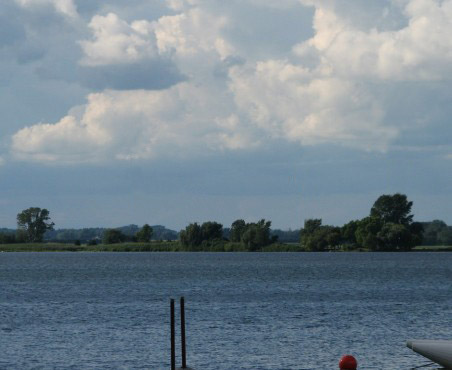
Ripley-KincardineRipley-Kincardine, Lake Huron


Over the next 20 years, your household will pay an additional $40,000 for electricity.

The cost of wind power will add $110,000,000,000.00 to our electrical bills.
To appreciate the cost, $100 billion can buy 5,000,000 Honda Civics.


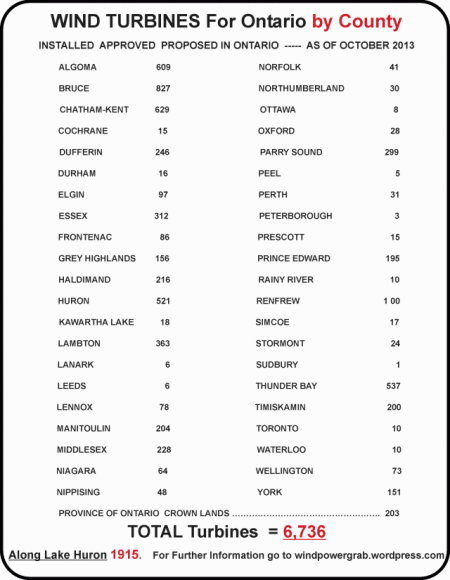
Ontario is building 6736 Wind Turbines.

We already have clean and excess power from water, nuclear and gas.


Bruce Peninsula


We pay more for wind power than any province/state in North America.

We are subsidizing the wind industry.

The Ontario Government pays the wholesale price of 11-13.5 cents per kwh for wind power.
The average retail price for wind power in the U.S. is 7 cents.
The average retail price for Ontario nuclear, water and gas is 7 cents.

Ontario hydro consumers pay for a debt that was actually paid off in 2010.
The 10% clean energy rebate on your hydro bill is charged to Ontario tax payers.
Ontario is the only province/state that charges HST, delivery, and regulatory fees on electricity.
Your hydro rates increase every May and October.

In 2007, you paid 7 cents per kwh.
In 2014, you pay 14-27 cents per kwh, depending on usage and location.
Check your hydro bill; divide the total (including HST, delivery and regulatory fees) by your usage.

1699 kwh costs $210 = 14 cents per kwh.
288 kwh costs $79 = 27 cents per kwh.

Compare our rates to: 6.8 cents in Quebec and 7.9 cents in Manitoba.

Pro-wind groups claim that our expensive electricity is due to expensive nuclear power.
However, the Ontario Power Generation states otherwise as per the link below:
http://www.opg.com/generating-power/nuclear/Pages/nuclear.aspx


Shelburne


Manufacturing is leaving Ontario.

“Ontario has the highest industrial rates in North America.”
Association of Major Power Consumers in Ontario. Refer to Sources for complete report.

Caterpillar (2 plants), United Steel. Heinz, Bicks, International Trucking,
General Motors, Navistar, Kellogg’s, John Deer, Lance Bakeries, Kraft Foods, Unilever.

NOVA Chemicals says the cost of power is critical in its decision to locate a multi-billion-dollar polyethylene expansion in Sarnia Ontario.
Their alternative is the U.S. Gulf Coast where rates are a fraction of ours.

http://www.theglobeandmail.com/report-on-business/economy/ontario-drives-manufacturers-away-with-overpriced-electricity/article14854752/

Since 2006, power usage has decreased by 6%.
Ontario has almost 1 million people out of work.
Ontario’s $227 billion debt is the worst in North America.

“Ontario’s economy has not performed on par with the rest of Canada,
due in part to its slow economic growth and spiralling public debt.”

Fraser Institute, April 2014. Refer to Sources for complete report.


Bruce Peninsula


Gone are the days of beautiful Ontario….

“These wind projects will change this place more totally, more rapidly and more permanently
than anything in the past 10,000 years”
James Corcoran, South Huron, Ontario
30 years experience, environmental assessments on behalf of developers.

The Human & Environmental Impact 

To appreciate the full impact of turbines on our people, please find the time  to read this:
http://www.southwesternontario.ca/news/public-fills-gallery-to-hear-wind-turbine-concerns/

Wind companies pay proportionally less taxes than the rest of us; turbines are assessed at a fraction of the actual value.
Farmers who sign 20 years leases with Wind Companies also sign a gag order whereby they must promote turbines and cannot criticize.

Wind companies are exempt from many Ontario laws.

Examples: municipal bylaws, building permits, road weight restrictions, proximity to highways, drainage.
Example: The restriction on rural bridges with 1/2 ton limits, where the heaviest load is usually a tractor,
are lifted during the construction of a wind project.
Example: Wind Projects can violate the Labour Act.
These cranes from the Adelaide wind project were left in this position overnight.

cranes

The Ministries of Environment and Natural Resources have changed laws that apply only to wind companies.

Example: there is no protection of wetlands; death or harm to endangered species.
Example: If you destroy an eagle’s nest, the fine is $10,000;  whereas wind companies are exempt.

Wind companies routinely sue municipalities/persons who get in their way.

The government supplies lawyers to back a wind company;
but has never backed a municipality, group or person.

Laws were passed where municipalities have no rights regarding wind projects in their jurisdiction.
Over 80 municipalities are “unwilling hosts” to turbines, but are not acknowledged.

Every turbine will permanently destroy 3 acres of land; roughly 21,000 acres of farmland lost forever.
Ontario turbines are closer to humans than any place in the world.
People are suffering from constant turbine noise and wind turbine syndrome which can be life threatening.
People are abandoning their homes at a unprecedented pace; very few want to live in or buy a house surrounded by turbines.
The fortunate ones are bought out by the wind companies, but sign a gag order as to why they left.
Areas in rural Ontario are becoming ghost towns.


The Birds

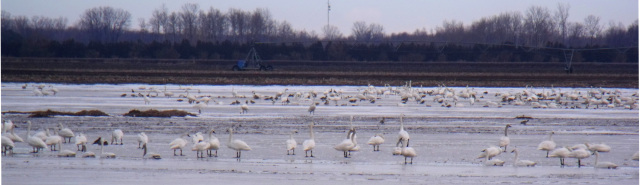
swans-thedford-bogMarch 2014 – Lambton Shores – Rest area for Migrating Tundra Swans
March 2015 – Lambton Shores – Rest area for newly built wind turbines.


People call turbines bird blenders 
because they slice, maim and slaughter birds.
Turbines will be built in the paths of the millions of birds that migrate to or through Ontario.
Turbines kill more bats than birds (their lungs explode from the turbine’s drop in air pressure). Don’t neglect the importance of bats to our eco-system.


A Perspective of Turbine Height

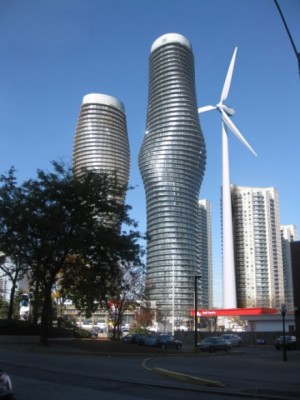
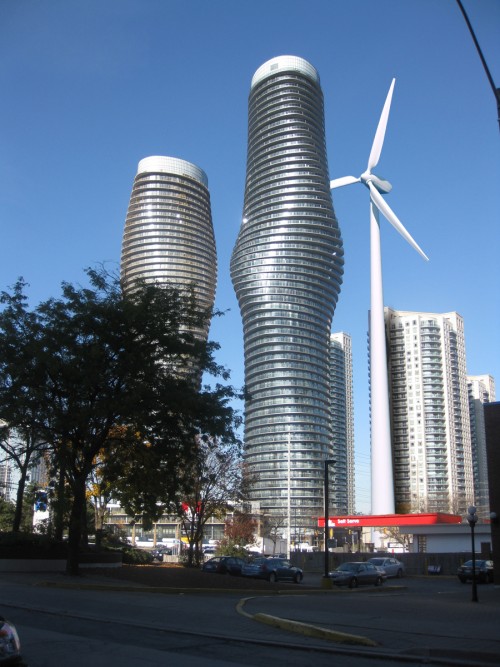
Using the Absolute Towers in Mississauga rendered in as a backdrop:
Absolute Towers is 56 storeys.
The small turbine is the CNE turbine – 299 feet high.
The mid-size is the average Ontario turbine – 380 feet high.
The tall one is the new Ontario turbine – 550 feet and taller.

Three

The rendering below provides a perspective of Ontario’s new turbines.
The building behind is 38 storeys.

TheMega


Ontario’s wind energy policy is convoluted and wastes money.

    • Nuclear, hydro, & gas is clean, cheap and has a 100% reliability, but, wind is given priority to our grid.
    • Wind power is expensive and unreliable; available 20-30% of the time.
    • When there is no wind, there is no wind power available.
    • For every kwh of wind power, we need one kwh of backup, that could otherwise be used as our sole source.
    • Ontario is spending $11 billion building transmission lines to feed power from every wind project.
      That’s an additional $2750 cost to your household
    • Ontario has too much power and we either, pay the USA & Quebec to get rid of the excess or charge 2.5 per kwh.
      In 2013 alone, the loss was $1 billion which will cost your household an additional $250.
    • Quebec turns around and sells our hydro at 5 cents per kwh to bordering States.
    • When there is too much power, Ontario pays $1 million dollars a day to take a nuclear plant off-line ($66 million in 2013)
      and pays wind companies to shut down their turbines.
    • $6 billion was spent to increase the power at Niagara Falls; only to divert the water when there is excess power.
    • Ontario pays gas plants to run as backup for wind power.
    • The first weekend in August, Ontario lost $10 million because of highly windy days resulting in unexpected power to the grid.
      The same occurred on November 9 & 10, where Ontario lost another $20 million.
    • September 11, 2013: Ontario agreed to pay Wind Energy companies $200,000 per mw not to supply power,
      The government says it’s “cheaper than paying the USA & Quebec to use it”.
      Since then, new wind projects continue to be approved.
    • The plan to build two new nuclear reactors at Darlington was abruptly cancelled in October 2013 at a cost of $180 million.
    • During the 2011 election, the Liberals cancelled the construction of 2 gas plants to win Liberal seats.
      These cancellations totaled $1.1 billion which will cost your household an additional $250.
    • The Lambton coal plant had just been upgraded at a cost of $1 billion to produce clean coal before it was closed in October 2013.
      That will cost your household another $250.
      Ironically, the Lambton coal plant is 1 km from a coal plant in Michigan that is still active.

“This situation is expected to get much worse over the next several years as significant amounts of wind,
hydraulic and nuclear generation will be coming into service while expected electrical demand will continue
to be stagnant.”

Ontario Society of Professional Engineers. Refer to Sources for complete report


Truth is stranger than fiction

Ontario pays 11-13.5 cents for wind power.
Ontario pays or charges Quebec 2.5 cents take our excess.
The loss is subsidized by Ontario consumers.
Quebec sells it to border States for 5 cents.
Consequently:
Manufacturers can move to the States and get cheap power; where a portion is sourced from Ontario and subsidized by Ontario consumers.

New York State sees an opportunity.
Promotional information was sent to Ontario’s Manufacturing sector citing Ontario’s high energy costs as a good reason to relocate to New York State.http://www.theglobeandmail.com/news/politics/soaring-energy-prices-making-ontario-look-dim-for-manufacturers/article17560172/


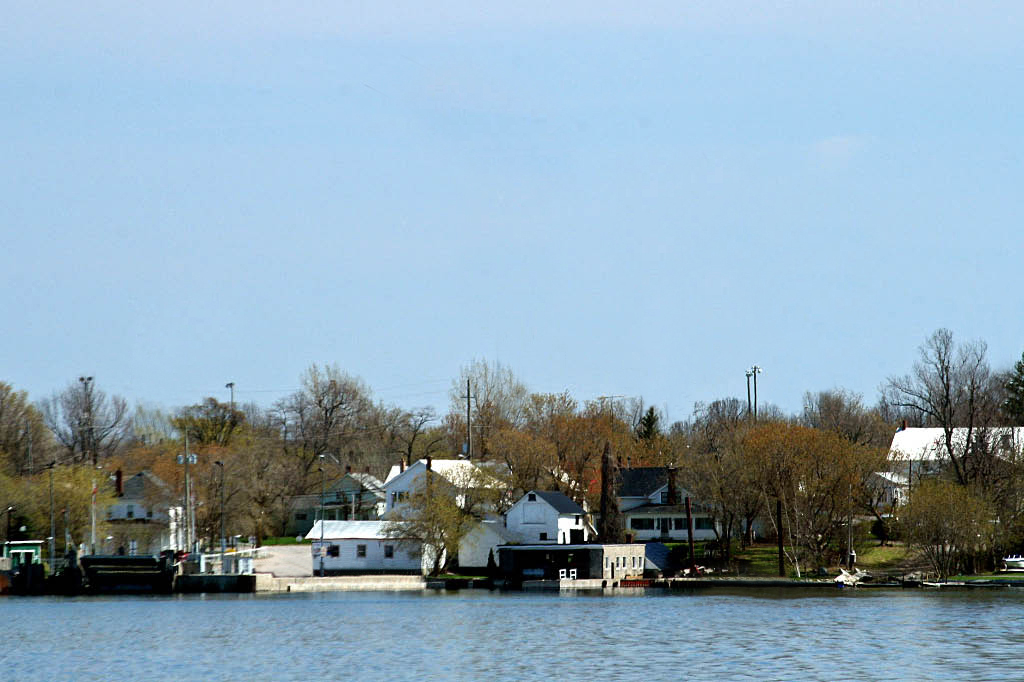
Wolfe Island – photo rendering shows pre-turbine days
Wolfe Rendering

Wolfe Island – actual photo
8


The Vulnerability of our Grid

    • When produced, power has to be used immediately; there’s no technology to store it for a later time.
    • There is excess power almost every hour of every day, and Ontario scrambles to find a state/province that will take it.
    • Depending on their power needs at the time, we either give it away (spill it), pay to take it (spill it) or charge a very low rate.
    • Because wind power is so unpredictable, the IESO staff are continually manipulating the grid; telling the nuclear, gas and hydro suppliers to adjust their output accordingly; and the excess is then sent to Quebec, Manitoba and the States.


According to the Ontario Society of Professional Engineers:

Carbon Dioxide Emissions will increase by 48% in 2030,
because gas plants constantly starting up and shutting down expel more emissions than if they ran continually.

Much of our wind power will go to Quebec and the States.
Wind blows mostly at night and in the winter when we need power the least.
There is no wind on a hot summer day, when our air conditioners need it the most.

Constant changes to the grid are prone to error and Ontario’s grid wasn’t built to handle such.
Be prepared for frequent and long blackouts or worse, as in complete failure of our energy grid.

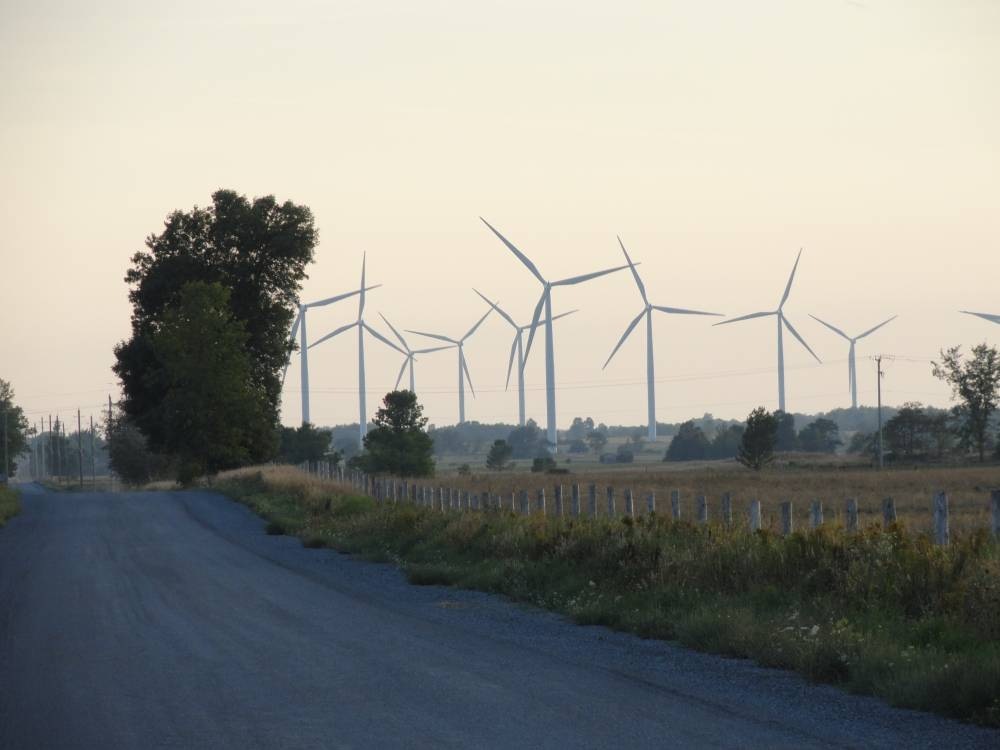
Chatham-Kent-wind-turbines-from-Lake-Erie-and-Rondeau-Bay15
Rondeau Bay


Ontario has more than enough power with Nuclear, Hydro (water) and Gas.

Ontario’s average demand for power is roughly 18,000 mw.
In the last 8 years, Ontario’s highest demand for power was 27,005 mw on August 1, 2006.

The amount of available reliable power is 30,806 mw which far exceeds the demand.
Nuclear  = 12947 mw:  Hydro = 7939 mw;  Gas = 9920 mw.

The Liberals will have added 3725 mw of installed wind energy by the end of 2014;
with intentions of adding more.

“Ontario will phase in wind, solar and bioenergy 
….with 10,700 MW online  by 2021.”
Ministry of Energy

(Ontario is offering 44-88 cents per kwh for solar and bioenergy.)


Chatham Kent –  photo rendering shows pre-turbine days
chatham kent 1

Chatham Kent – actual photo
chatham-kent-ontario-kruger-energy-port-alma-wind-from-hwy3-talbot-trail-4


Does this make sense to you??

 ”The province’s wind and solar power initiatives were decided and implemented in such haste
that “no comprehensive business-case evaluation was done to objectively evaluate the impacts
of the billion-dollar commitment.”

Auditor General of Ontario

There are about 50 resident wind lobbyists in Toronto.

The Liberals introduced and passed the Green Energy Act 2009.
The NDP have supported the Liberals on wind energy since its inception.
The PC’s do not support subsidized wind power. They want it stopped.

This has been going on for years.  One example:
In 2004, Mike Crawley, the (then) President for the Ontario Liberals,
was awarded a wind power contract that guarantees his company $66,000 a day for a total of $1/2 Billion dollars.
Since then, Mike Crawley continues to build additional Wind Projects.

The Wind Industry held a fundraising event for Kathleen Wynne in April 2013.

Those who promote Wind power, benefit financially by doing so.
David Suzuki, Pembina Institute, Cleantech, MaRs,  Environmental Defence,
Friends of the Wind, Windfacts and CANWEA.

A wind company is getting a pass on violating the law?
In the Niagara region, four turbines that were built too close to residents, are violating the law and need to be dismantled.
The Minister of Energy has done nothing.
http://www.niagarathisweek.com/news-story/4390620-enforce-the-law-hudak-to-energy-minister


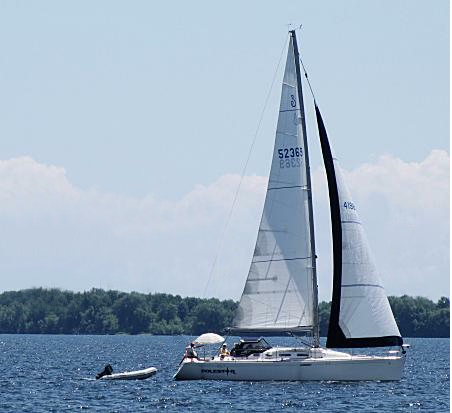
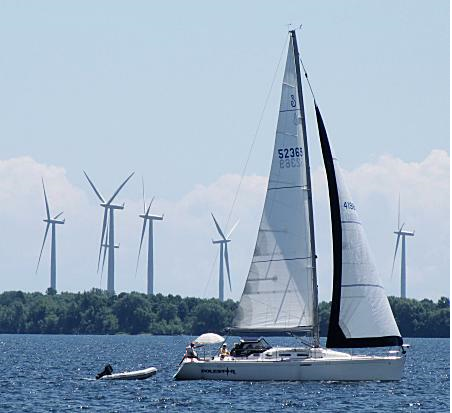
Lake Ontario – photo rendering shows pre-turbine days
sail copy

Lake Ontario – actual photosail


Every project could be stopped today; if the Liberals want to.

The Ontario Government has the discretionary power to cancel or modify these contracts but it’s clear they don’t want to.

An Ontario court ruling in the decision of Trillium vs. Ontario, 2013, clearly states that:
“Governments are free to alter policies in the public interest.” 
“Companies in the renewable power business participate in government subsidy programs ‘at their own risk’.”

As of March, 2014, the Liberals are continuing with the 55 incomplete wind power projects (about 4900 turbines) that could be stopped legally.

“If you are asking me, will you cancel those [wind project] contracts outright? The answer is no we won’t!”
Kathleen Wynne, in Kincardine, April 24, 2014

For ruling, refer to Discussion at the bottom of this page
http://www.osler.com/NewsResources/Appeal-Court-Allows-2-Billion-Wind-Farm-Action-to-Proceed-Against-Government-of-Ontario/


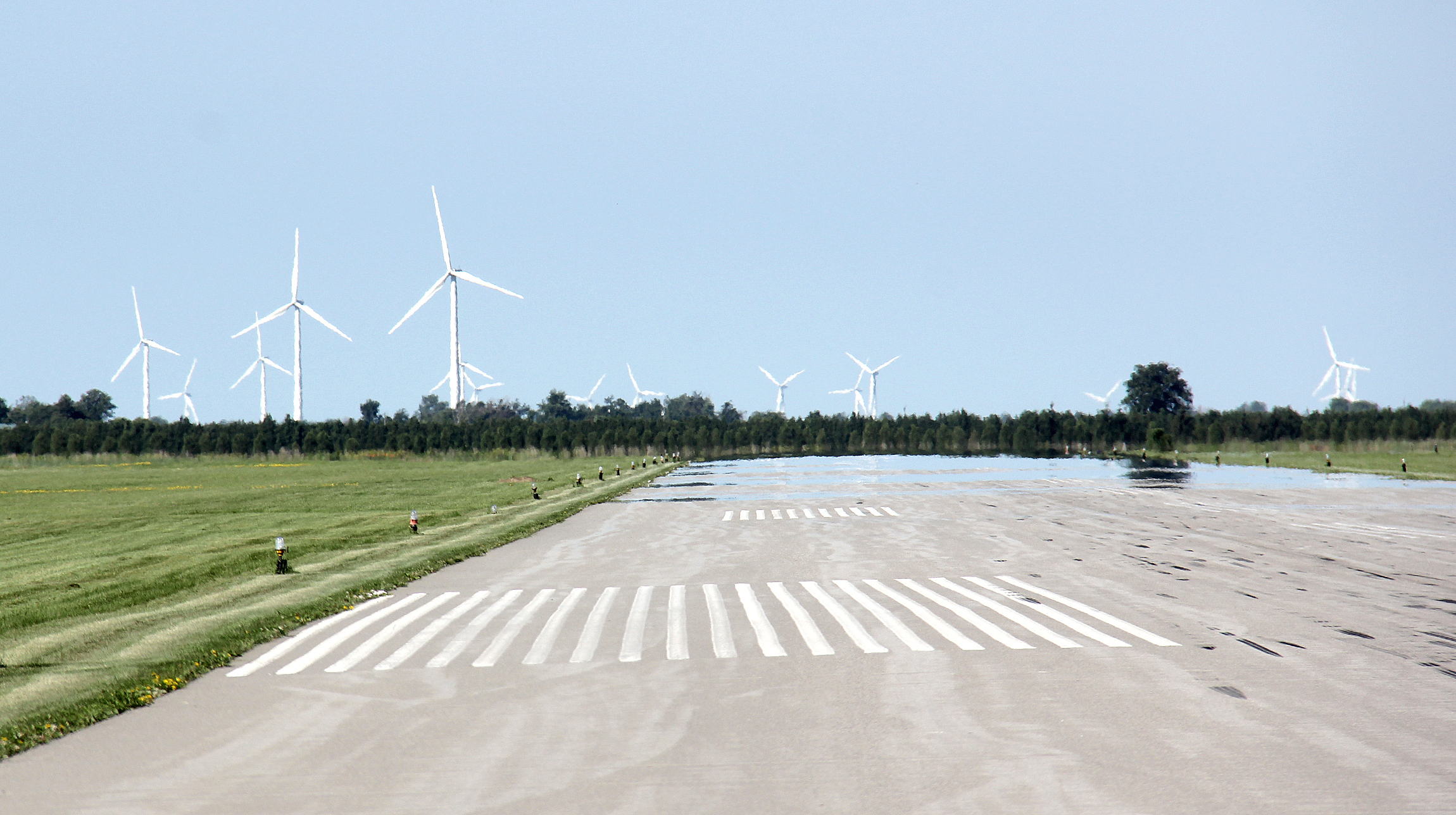
Chatham Kent Airport
Chatham Kent Airport – Location of turbines was denied by Transport Canada,
fought by the municipality, but approved by the Ontario Government.
The same is happening in Collingwood, Peterborough, Goderich, Kincardine, Huron Park, Grand Bend and the Niagara Region.
The sky-diving club in Niagara Region will have to shut down.

Energy Platform by Party

The PC’s introduced Bill 42 in 2012 and Bill 39 in 2013 to eliminate wind subsidies and give control back to municipalities.
The NDP’s and Liberals voted against these bills. Refer to Sources.

Liberal

Will be pursuing additional wind power projects in 2015 and again in 2016.
Remove the Ontario Hydro Debt charge on January 1, 2016. (About $60 a year decrease in costs).
Discontinue the Clean Energy Rebate on December 31, 2015. (About $170 a year increase in costs).
Introduce a surcharge for families making over $40,000, to subsidize lower income families.

NDP

Committed to “aggressively expand renewable energy”.
Honour existing green energy contracts
Place a moratorium on all renewable power projects starting in 2018.

Progressive Conservatives

Scrap Ontario’s wind energy policy.
Give control back to municipalities.
Put a moratorium on wind energy projects.
Eliminate wind subsidies, which would substantially reduce our hydro bills.

“We propose scrapping the Green Energy Act and implementing an immediate moratorium
on industrial wind turbines until the jury is in on health and environmental studies.
We will not sign any more FIT contracts and will take a look at the existing ones.”

PC MPP Toby Barrett, April 2, 2014


Wolfe Island121


Wolfe Island before & after the Liberal’s energy policies


Is Nothing Sacred?

Temple_Rendering___Content

Near Peterborough, a $40 million project to build the largest Buddhist complex outside of China is in jeopardy.
The Liberals knowingly approved wind turbines to surround the complex.
The people in charge of the development say these turbines will have a negative impact on the serenity of the complex.
This complex would have attracted about 45,000 visitors a year and generated more than $20 million for Ontario.


Wind Farms slated for Ontario

Click here to see maps of these projects

Rondeau Bay – photo rendering showing pre-turbine days
Rondeau Bay Rendering

Rondeau Bay – Actual photo
chatham-kent-ontario-internaional-power-gdf-suez-from-across-rondeau-bay-from-erieau-2


Wind verses Nuclear

  • Nuclear power costs 6.8 cents per kwh, period.
    Wind power costs 11-13.5 cents per kwh, plus all other costs mentioned above.
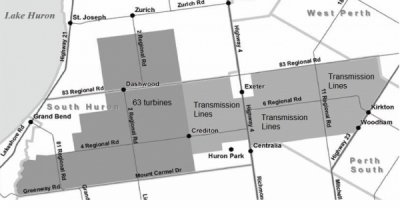
  • One wind project approved for the area east of Grand Bend is approximately 34 km long and 16 km wide.
    The nuclear footprint is 9 sq. kilometers.
  • It will have 63 wind turbines with a maximum output of 102 mwh.
  • Applying efficiency factor of 30%, actual output will be 30 mwh.
  • Ontario average usage is 18,000 mwh.
  • Nuclear can provide approximately 12,947 mwh 24/7.
  • This wind project has the potential of providing .16% (1/6th of one percent) our energy needs.
  • When there is no wind, it will provide 0% of our energy needs.

Map

tmap


 In 10-20 years

  • The Niagara Falls hydro generating stations are 100 years old, but wind turbines are good for only 10-20 years.
  • Each turbine construction consists of 800 tonnes of cement for support, approximately 250 tonnes of unrecyclable materials, 700 litres of hydraulic fuel and, 600 kilograms of rare earth metals. Multiply these numbers by 6736 and Ontario is facing a potential ecological conundrum.
  • The are no bonds posted to ensure these turbines will be dismantled at the end of their life cycle. It is estimated that a turbine, depending on size, will cost $400,000 to $1,000,000 to dismantle.
  • Given that wind companies are predominantly foreign, change ownership or, go bankrupt, it is quite realistic to expect 100′s or 1,000′s of dead turbines in 20 years and left standing.
  • This is happening already. Wind Companies usually don’t fix or dismantle broken turbines and, Ontario already has many non-functioning turbines.
    If companies won’t dismantle a couple of turbines now; what about the future ones?.
  • The Liberals have no plans as to where to dispose these materials, nor have indicated that wind companies will be responsible for the costs of building the landfill sites or depots.
  • One can only assume, that the cost to dispose 6736 turbines will be covered by the people of Ontario.

In 10-20 years, we could be faced with a landscape of old, rusted out, broken down turbines.


The Canadian Taxpayers Federation:
Launched a petition to dismantle the Liberal Green Energy Act.
https://www.taxpayer.com/resource-centre/petitions/petition?tpContentId=84


128,202 total views since Mar

Testimony from David Michaud, from Health Canada. (from Julian Falconer)

David Michaud (Health Canada Study) testimony – Falconer LLP

health_canada_logo_01Falconers LLP

David Michaud Transcript

David Michaud Summary

Executive Summary
Dr. Michaud is a researcher with Health Canada. He is the principal investigator for a Health Canada study into the effects of noise generated by wind turbines on human beings.

Dr. Michaud was called as a witness before the Environmental Review Tribunal by counsel for communities and individuals affected by wind farm development in rural areas of Ontario. The primary finding elicited from Dr. Michaud’s testimony is that no studies have been completed in Canada on the dose-response relationship between noise generated by wind turbines and certain health effects. In particular, Dr. Michaud referred to a “knowledge gap” in respect of low frequency noise and infrasound generated by wind turbines. Dr. Michaud cited studies in other jurisdictions which lead him to conclude that there is credible scientific support for an association between noise generated by wind turbines and certain negative health effects.

Tim Hudak refuses to Carry On with the Wind Scam! Windweasels will scurry!!!

Hudak vows to pull the plug on wind power

BY  ,QUEEN’S PARK BUREAU CHIEF

FIRST POSTED: MONDAY, MAY 12, 2014 05:24 PM EDT | UPDATED: MONDAY, MAY 12, 2014 05:50 PM EDT

Wind farm
Wind farms. (QMI files)

It’s time to blow off expensive subsidies to wind and solar power, PC Leader Tim Hudak says.

The Progressive Conservatives would, if elected to govern, refuse to sign any more renewable energy deals at high rates of return and focus on creating an electricity system reliant on gas, hydro operations and nuclear power.

A Tory government would also give more control to local municipalities over the siting of wind projects, he said.

“If people can have a say about a hot dog stand going in for a Canada Day celebration, shouldn’t they have a say about massive industrial wind turbines in their backyard?” Hudak said.

The PCs say they will not proceed with any wind or solar applications that have not been already approved.

Those projects that have been approved but not yet connected to the grid would be evaluated on a case-by-case basis.

Such a move would save $20 billion and help businesses create 40,000 jobs through more affordable electricity — numbers confirmed by an independent economist brought in by the PCs, Hudak said.

The election campaign brought Hudak to Stanpac Inc. Monday, a food, dairy and beverage packaging manufacturer located in Smithville which is in the Niagara Region.

Murray Bain, Stanpac’s vice president of marketing, said the company would like to expand its Ontario operations but the rising cost of electricity in the province makes it more likely that those jobs will be added to its Texas plant.

“Every dollar we spend on energy could be a dollar that we would use for new jobs and higher pay cheques in Ontario,” Bain said. “We need to remember that government experiments that drive up energy costs will also end up taking jobs away. High energy prices are a self-inflicted wound on Ontario’s economy. It’s time to heal that.”

Premier Kathleen Wynne said Monday that her government has renegotiated a renewable energy deal with Samsung to find savings, but remains committed to its overall plan for renewable energy, including wind power.

Ontario’s green electricity initiatives had created 42,000 jobs by the end of 2013 in construction, installation, energy auditing, operations and maintenance, engineering, consulting, manufacturing, finance, information technology and software, the Liberals say.

Northern Ontario companies and lower income families benefit from government programs to keep their hydro costs manageable, Wynne added.

Hudak said the cost of hydro has gone up $630 a year for the average family under the Ontario Liberals.


The Windweasels KNOW they are Harming people, and wildlife…..They don’t care!!!

WIND FARMS SEVERELY HARMFUL TO WILDLIFE, NEW STUDY FINDS

HAWAII’S WIND TURBINES DEADLY TO BIRDS,…
According to the U.S. Fish and Wildlife Service, 195 birds and other flying animals have been killed by turbines at five of the largest wind farms on Maui and Oahu since Aug. 2007.

A new study from the Swedish University of Agricultural Sciences, combining an impressive six hundred other studies, describes the severe effects wind turbines can have on wildlife. Not only are the disturbances and noise of the building of turbines an issue but also the sound of the windmills rotating and electromagnetic fields (EMF) caused by transferring the electricity produced to the mainland.

At the construction phase, for example, “extreme noise from pile-driving” is observed to cause “significant avoidance behaviour in marine mammals” and “highly likely to cause mortality and tissue damage in fish.”

On the noise of the blades there was “avoidance of the offshore wind farm (OWF) area by harbour porpoise, and possibly a habituation over time.”

EMF affects “cartilaginous fish, which use electromagnetic signals in detecting prey” and EMF could also disturb fish migration patterns.”

The OWF “may also alter local biodiversity patterns and lead to undesired effects.”

Onshore wind farms also have severe effects on animals and birds. A paper published in 2013 from Poland looked at domestic geese (Anser anser f domestica) bred 50m from a wind turbine against 500m for the control group.

After twelve weeks monitoring noise levels and the stress measuring cortisol levels the researchers concluded: “Lower activity and some disturbing changes in behavior of animals from group I (50m) were noted.

“Results of the study suggest a negative effect of the immediate vicinity of a wind turbine on the stress parameters of geese and their productivity.”

In Portugal a study also found that foals born near wind turbines developed Equine Flexural Limb Deformities.

Biologist Dr. Lynne Knuth, in a letter to the Public Service Commission of Wisconsin,testified: “The problems with animal reproduction reported in the wind farms in Wisconsin are lack of egg production, problems calving, spontaneous abortion (embryonic mortality), stillbirth, miscarriage and teratogenic effects:

In chickens: Crossed beaks, missing eyeballs, deformities of the skull (sunken eyes), joints of feet/legs bent at odd angles. In cattle: missing eyes and tails.”

While these effects seem to occur in the immediate vicinity of a wind turbine they are hugely important to humans. It has long been reported that those living near wind farmssuffer from ill health.  Sleep deprivation, headaches, tinnitus, balance problems, motivational difficulties and depression are just some of the alleged effects.

Wind farms continue to be a controversial subject both on and offshore. Not only is the power in need of government subsidies, the comparative cost of producing a Megawatt (MWh) of power ranges from £60 to £65 for coal and gas through to £90 to £150 respectively for onshore and offshore wind farms. Certainly in the UK there is increasing resistance from the population, being the proverbial blot on the landscape.

Many wind farm proponents point to psychogenesis and its subset psychsomaticism, where the person has the real symptoms but they are psychological induced, rather than physically induced. One has to say with animals it is highly unlikely.

When the West Country band The Wurzels release a new record bemoaning wind farms, resistance has to be taken seriously.


Wynne wants to get rid of Essential Services in Rural Ontario….(we don’t vote Liberal).

WYNNE LIBERALS TO CLOSE 5 (FIVE) HOSPITALS IN

THE NIAGARA REGION! WHAATT???

Bet you’re not seeing this headline in the Toronto Star or any of the other Liberal-backing media.  According to the Globe and Mail:

“The restructuring of Niagara Health, a sprawling network of seven hospitals serving 434,000 in a dozen communities, is part of an effort to consolidate medical expertise, create critical mass and provide higher quality care to patients. The initiative has been in the works for more than 1 1/2 years. Kevin Smith, the government-appointed supervisor of Niagara Health, recommended in a May, 2012, report submitted to Ms. Matthews that aging hospitals in five communities – Port Colborne, Fort Erie, Niagara Falls, Welland and Niagara-on-the-Lake – be permanently closed and replaced with a new one.”

Maybe I’ve just been dreaming for the past decade or so, but hasn’t this been the cornerstone of the hatred and vitriol that the Libs and Dippers have been spewing about the ever-evil Lord of Darkness Mike Harris?

For years, I’ve been reading an endless stream of rants from Liberal lemmings who have gone on and on, ad nauseam about how Mike Harris destroyed the health care system in Ontario by closing….wait for it…..5?  No.  10?  No.  20?  Nooooo!  29 (and in some extreme cases 32) hospitals across Ontario.

Finally one day, I started pressing these Liberal parrots for the exact names of all the hospitals that Mike Harris supposedly closed.  “Well…ummm….uh….Well I don’t know the names, but you can mark my word that if the Liberals say that he closed 29 hospitals, by golly, that’s how many he closed!!!”

So I took it upon myself to do a little research and this is what I found.

Here’s the list of hospitals that the Libs and their sheeple have been saying that Harris supposedly closed.

Brockville Psychiatric Hospital
Hotel Dieu-Grace Site (Windsor)
Hotel Dieu Hospital (Kingston)
Providence Continuing Care Centre, St. Vincent de Paul site (Kingston)
Hamilton Psychiatric Hospital
St. Peter’s Hospital (Hamilton)
St. Joseph’s Hospital (Chatham)
Northumberland HealthCare Corp., Port Hope site
St. Joseph’s Health Centre (Peterborough)
St. Joseph’s Hospital (Brantford)
St. Joseph’s Health Centre (London)
London Health Sciences Centre, South St. site
London Psychiatric Hospital
St. Thomas Psychiatric Hospital
St. Bernard’s Hospital
Wellesley-Central Hospital (Toronto)
Queen Elizabeth Hospital, Hillcrest site (Toronto)
Toronto: Doctors Hospital
Humber River Regional Hospital, Northwestern site (Toronto)
Orthopedic & Arthritic Hospital (Toronto)
Riverdale Hospital (Toronto)
Runnymeade Chronic Care Hospital (Toronto)
Salvation Army Grace Hospital (Toronto)
Whitby General Hospital
Salvation Army Grace Hospital (Ottawa)
Pembroke Civic Hospital
Sudbury Memorial Hospital
Subbury General Hospital
Thunder Bay Regional Hospital, McKellar site
Hogarth-Westmount Hospital (Thunder Bay)
Lakehead Psychiatric Hospital (Thunder Bay)
Lakefield Hospital (private)
Sidbrook Hospital (private)
Grace Villa (private)
Dewson Hospital (private)

I decided to do a cursory check to see how many of these hospitals were in fact closed down.   How?  I called the hospitals.  And here’s what I found….

Brockville Psychiatric Hospital is still open — was never closed

Hotel Dieu-Grace Site (Windsor) — still open — was never closed

Hotel Dieu Hospital (Kingston) — still open — was never closed

Providence Continuing Care Centre, St. Vincent de Paul site (Kingston) — still there….never closed

St. Peter’s Hospital (Hamilton) — still there — never closed

St. Joseph’s Hospital (Chatham) still there….now amalgamated under Chatham Kent Health Alliance….never closed

Northumberland Healthcare — Closed

St. Joseph’s Health Centre (Peterborough) — amalgamated with Peterborough Civic Hospital

Joseph’s Hospital (Brantford) — still there….downsized to a clinic

St. Joseph’s Health Centre (London) — still there — never closed

London Health Sciences Centre, South St. site — still there — never closed

St. Thomas Psychiatric Hospital — still there — moved to a new building

St. Bernard’s Hospital Wellesley-Central Hospital (Toronto) — closed

Queen Elizabeth Hospital, Hillcrest site (Toronto) — became the Toronto Rehabilitation Institute — the largest rehabilitation hospital in Canada

I didn’t bother going any further than that.  It told me enough to realize that as usual, the more times a lie is told, the bigger it gets.  In the case of the Liberal Party of Ontario, though, their lies always start off as whoppers.

I’m anxious to see how much coverage this newest Liberal agenda is going to get.  Are we going to hear screaming from the rooftops about it?  Most likely not.  Because after all, Kathleen Wynne is ‘promising’ to build a new supercentre hospital.  “Promising”.   Wait, isn’t there a by-election coming up?  Of course there is.  So for now, we’ll only hear about the new super hospital.  The hospitals that will be closed, will get headline news AFTER the by-elections. — DQ

Hospital-entrance-sign

Donna Quixote Hits the Nail on the Head, with this one!


Michael Strickland — Guelph Mercury — May 10, 2014

There’s an episode of the Big Bang Theory where Dr. Sheldon Cooper, brilliant theoretical physicist at Caltech, explains to the gang why 73 is the best number in the world.

It is, he points out, “the 21st prime number. Its mirror, 37, is the 12th, and its mirror, 21, is the product of multiplying — hang on to your hats — seven and three.”

“Heh? Heh? Did I lie?”

Expressed in binary, he continues, 73 is also the palindrome 1001001.

His friend, astrophysicist Raj Koothrappali, then points out that the number 5,318,008 upside down in a calculator spells “BOOBIES.”

I think the best number in the world — at least in Ontario, as we prepare to go to the polls on June 12 — is one billion. As in $1 billion.

$1 billion and change is, of course, the amount the ruling Liberals thought we’d all appreciate having to pay in order to keep them in power in the last election. So they cancelled contentious gas plant contracts.

It’s been difficult to miss this story during Premier Kathleen Wynne’s tenure. The original estimate ballooned from a paltry $230 million and police launched an investigation into deleted emails in the premier’s office. Expect her critics to crack up the messaging on this billion-dollar talking point.

But did you know, $1 billion and change is also the amount the Liberals wasted on Ornge. That’s right, the government provided the scandal-plagued air ambulance service with $730 million over five years, and allowed Ornge to borrow another $300 million. The OPP are now conducting a criminal investigation, with the help of the RCMP, American authorities and, most recently, officials in Italy.  Continue reading here….

kathleen_wynne lpo