Vermonters Stand Up Against the Windpushers!

Vermonters in Full-Scale Open Rebellion Against Planned Wind Turbine Roll-Out
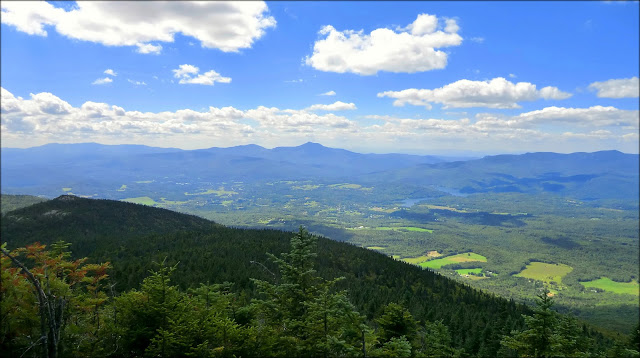
Mount Hunger

****

Vermont is the place where dreams of peace and tranquility come true. Rolling waves of verdant hills, interspersed with fertile valleys and filled with a tenacious band that endure bitter winters and short bursts of what those in America’s North-East think passes for ‘Summer’: that’s Vermont.

But the element that’s brewed to the surface in the Green Mountain State– and that’s now reached boiling point – is unbridled anger.

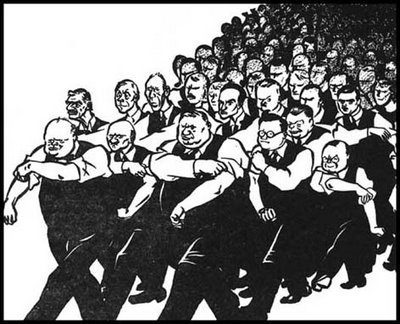
Vermonters are set upon by the same cowardly, callous and criminal chancers found all around the Globe – that appear from nowhere – like flesh-craving zombies – slobbering at the thought of massive and (seemingly) endless subsidies.

While their so-called political betters dance to their back-handing benefactors’ tune, the communities set upon have risen to the point of a full-scale, open rebellion. The following pieces tell the story of a mass movement of Vermonters venting fury and of a few politicians gifted with grace (rather than beguiled by wind industry ‘grease’) who’ve decided to put a halt to the most ludicrous energy ‘policy’ ever imagined.

ridges not renewable

Vermont’s energy siting struggle hits crescendo
Michael Bielawski and Bruce Parker
Vermont Watchdog
21  January 2016

MONTPELIER, Vt. — What started as a letter from Rutland regarding a lack of local control over renewable energy siting has culminated in an 86-town strong “Vermont energy rebellion.”

On Wednesday, more than 100 protesters gathered at the Statehouse to demand local control for energy siting.

Leading the demonstration were state Sen. John Rodgers, D-Essex/Orleans; Karen Horn, policy director for the Vermont League of Cities and Towns; and Don Chioffi, a member of the Rutland Selectboard. Together they argued the energy project siting process as it now stands oversteps the will of ratepayers.

“I would like to acknowledge those here today whose homes and lives have been sacrificed by our state’s energy policy, those of you who have been encroached upon and bullied by energy developers, and those of you who have lost not only property values but the health of your families to industrial wind plants. The process that we use to site energy in Vermont is broken and it’s long past time to fix it,” Rodgers said, opening the event.

According to Rodgers, renewable energy developers, with rubber-stamp support from the Public Service Board, have been given unrestrained power over land use in Vermont to the detriment of cities, towns and the environment, adding that the process had become “anti-environmental and anti-democratic.”

His two-part solution was also the largest applause line of the day: “First, I propose that we ban the development of industrial wind in Vermont. … Second, I propose that we require land use decisions related to energy generation to go through Act 250.”

To that end, Rodgers is sponsoring S210 and a slew of of other bills to ban industrial wind and subject the Public Service Board’s energy development certification process to stipulations found in Vermont’s strict land use and development law.

bear

****

Other community leaders, including Chioffi, offered comments about the problem.

“You may as well throw selectboards and planning boards out the window if you are going to operate the state this way. They are being treated as if they are nonexistent and useless,” Choiffi told Vermont Watchdog. “… There has never been a solar projected rejected by this Public Service Board — there’s the proof in the pudding.”

Mark Whitworth, board member of Energize Vermont, a pro-renewable energy group, attended the event to protest the manner in which renewable energy projects are being implemented.

“They’re industrializing wildlife habitat, they are fragmenting forests,” Whitworth said. “They are developing our ridgelines, which is going to result in a loss of flood resiliency, and they’re converting farm land for meager energy production — so we are jeopardizing our food security. We think that these guys are just worsening the very problems that they claim they are helping us to avoid.”

Vermonters from across the state traveled to the Statehouse to have their voices heard as well.

“There aren’t any constraints on where they put them up or how big they are,” said Rachael Carr, of St. Albans. “If they don’t get some legislation to put some restrictions on these projects, it’s going to be too late.”

vote

****

Her young son, Alex Carr, added an imaginative twist on the problem: “I’m here to protect the state from these huge monsters,” he said. “People think they are good, but they are not.”

Giselle Chevallay, a Newark resident dressed up as a displaced Vermont bear, said, “We want to help make sure we are more careful about our siting choices, whether it’s solar, wind, nuclear, hydro or anything.”

Given such urgency and backing by 86 towns, Rutland’s 2014 letter seems almost prophetic: “We are attempting, through this resolution, to form a coalition of Vermont communities which will support reasonable legislation to restore local community input to the regulatory process when addressing the issue of solar citing in our state.”

Whitworth explained what it means for a town to be part of the rebellion.

“These towns have either signed onto the Rutland resolution or they’ve adopted town plans which have explicit language regarding energy citing or certain energy technology,” Whitworth said, adding that his town of Newark has a town plan that says industrial wind turbines are inappropriate.

Currently, energy projects are exempt from Act 250 requirements. These requirements include adhering to regional municipal plans not unlike those of Newark. Rodgers’ bills attempt to make energy development subject to the same requirements other commercial developers face.

The plan is certain to hit resistance, largely because of the money involved. Chioffi said public money, including federal subsidies of 30 percent and state subsidies of about 8 percent, is what drives these projects. He argues that a 40 percent up-front return is also fueling the green energy rush.

“The best kept secret in the world is that these are really, really big cash cows,” he said. “There’s a lot of money to be made in these things. I’ve always been told if you ever want to get to the bottom of any argument on this kind of stuff, follow the money.”

Whitworth said the state’s renewable portfolio standards — which require every municipality to periodically increase its percentage of renewable energy sources — is another driving force. “It really lit a fire under this,” Whitworth said.

He added that while there are no current calls to freeze or repeal Vermont’s RPS, he thinks if legislators don’t respond to the pushback from communities, that will change. At least four of 29 states with such standards have halted or repealed them.

When asked about the status of Vermont’s RPS, Rodgers expressed concern about the economics of renewable energy. “There are a huge number of manufacture and installation jobs with solar today — I think it’s like 16,000 jobs,” he said. “The problem is, after the construction, we have basically set up a pipeline of our cash out of state because most of the owners of the big installations are out-of-state people or corporations.

“So it’s basically taking the tax credits out of state and the ratepayer money out of state. If we were building more on Vermonter’s homes and businesses, the tax credits and savings would stay more in Vermont” Rodgers said.
Vermont Watchdog

ridgeline destruction

****

Energy Critics Make Strongest Statehouse Push
Terri Hallenbeck
Seven Days
20 January 2016

tubine protest

The makeshift wind turbine erected in front of the Statehouse, emblazoned with the governor’s last name, was the first hint. Then there were the sign-bearing protesters flanking the Statehouse doors.

Inside, in the halls of the Statehouse, the cafeteria and committee rooms, scores more were dressed in bright green vests to highlight their presence and emphasize the danger they feel.

Wednesday brought the biggest show of force yet by Vermonters upset with the state’s siting process for energy projects. What has in recent years been a relatively small group of wind opponents has grown into a legion of people worried about wind and solar, including town leaders from across the state.

“Now, it’s being taken more seriously,” LuAnn Therrien said of the opposition. Therrien has spent years speaking against the Sheffield wind project, which she said drove her family out of town.

The proliferation of solar projects around Vermont has changed the volume of the opposition, said Mark Whitworth, who is with the organization Energize Vermont. The group has long opposed decisions about the siting of wind projects, and it now finds new friends opposed to suggested solar sites. “That is what really has lit a fire under this energy rebellion. When it was wind in the Kingdom, it was pretty easy for people in other parts of the state to ignore it,” Whitworth said.

protest

****

Wind and solar siting opponents filled the Senate chamber. Now, many town officials are also fired up. The Vermont League of Cities and Towns, not exactly a rebellious organization, joined in Wednesday’s event. Nearly a dozen local officials testified to legislative committees about how their towns have spent thousands of dollars and still feel powerless during the process to determine renewable energy sites.

“We’ve been inundated with solar,” Russ Hodgkins, Westminster town manager, told the House Natural Resources and Energy Committee on Wednesday. He said his town supports renewable energy, but the locations chosen so far are taking prime agriculture and industrial sites out of the economy. “There’s not one of them that’s in a great location.”

Whether this growing throng of rebels will get their way is another matter. While they are railing against what they consider poorly sited projects, Gov. Peter Shumlin has been touting the growth of renewable energy and the jobs it brings.

Wednesday’s events — hours of meetings with the Senate and House Natural Resources and Energy committees and a noontime press conference and rally — were organized by Sen. John Rodgers (D-Essex/Orleans), author of a bill calling for a ban on industrial wind projects.

“In 1968, Vermont passed a landmark anti-billboard law,” Rodgers told those gathered for the press conference. The “billboard ban is what inspired me to do what I’ve known to be right for years, and that is introduce S. 210, to ban industrial wind from Vermont.”

Prospects for a ban seem as weak this year as in previous years, however. “We’ll listen, but I think the problem with that proposal is we have an orderly development process,” said Sen. Chris Bray (D-Addison), chair of the Senate Natural Resources and Energy Committee.

Bray insists, though, that he’s working on changes that will help, at least on the solar front. “That is the most urgent need we are responding to,” Bray said.

His committee is putting together a bill — S.230 — that he hopes will offer incentives to build solar projects in specific locations and direct the Public Service Board to consider town plans in approving projects. Changes coming to the state’s net metering regulations will also likely slow down the proliferation of solar projects, he said.

Bray’s House counterpart, Rep. Tony Klein (D-East Montpelier), said he’ll await the Senate’s bill, but he agreed changes to energy-project siting should be made this year, even if there is not yet agreement on what those should be. He said, “There’s a pretty clear message that towns do not think they’re being heard.”
Seven Days

This video pulls together reports on the uprising from Burlington Free Press and NewsChannel 5.

****

Vermonters rally at Statehouse for new rules governing wind projects – Sen. Rodgers sponsors bill to ban more industrial-scale turbines
Stewart Ledbetter
WPTZ-News Channel 5
21 January 2016

MONTPELIER, Vt. — More than 100 Vermonters turned out Wednesday at the Statehouse to demand changes in the law governing the siting of industrial-scale energy projects.

At noon, the noisy crowd jammed into the Statehouse gallery to cheer Sen. John Rodgers, the Essex-Orleans Democrat who has introduced Senate Bill 210.

“This rebellion has spread to dozens of towns across Vermont and I believe it will continue to spread,” Rodgers told the crowd. “We won’t achieve our energy goals in the face of this rebellion. And I offer a solution. First, I propose we ban industrial wind in Vermont.”

The crowd erupted in applause.

Rodgers said Vermonters resent a system which allows wind developers who stand to earn millions from turbines to hire lawyers to argue their case before the Vermont Public Service Board — while citizens most impacted and the towns that host the projects have little voice and no veto power.

S. 210 would make a second key change, shifting permitting for renewable energy projects from the PSB to district environmental commissions and the development review process known as ACT 250. Supporters think Act 250 would provide citizens a far better shake.

Anthony Iarrapino, spokesman for Swanton Wind, a proposed turbine project in Franklin County, said the criticism was unfounded.

“If you look at the polls and the success of the projects we have (in Vermont) the majority of Vermonters understand how important wind is to our economy and getting us to clean energy goals,” he said.

Paul Burns, executive director of the Vermont Public Interest Research Group, said the state’s goal of securing 90 percent of its energy from renewable sources will mean Vermonters have to get used to seeing turbines on mountaintops and large solar arrays in farm fields.

S. 210 has been referred to the Senate Natural Resources Committee for consideration.
WPTZ.com
angry-mob

Funny about all that!

That Vermonters are furious about the destruction of their thriving and healthy communities in ‘exchange’ for a wholly weather dependent power source; that’s intermittent and unreliable, requiring 100% of it’s capacity to be backed-up 100% of the time by conventional power generators; that, accordingly, has NO commercial value (save the massive power consumer and/or taxpayer subsidies it attracts); kills millions of birds and bats; and, with the incessant low-frequency noise and infrasound it generates, drives people mad in their homes, or drives them out of them altogether, is hardly a surprise.

What the wind industry hates most are facts. And anyone with the temerity to present them is targeted in a style and with a zeal that would have made the East German Stasi proud. Here’s just another example of the wind industry’s standard tactics.

AG’S Office investigating complaints against Annette Smith, anti-wind advocate
Mike Polhamus
VT Digger.org
23 January 2016

The state attorney general’s office has opened an investigation into criminal complaints against a prominent champion of Vermonters who are adversely affected by renewable development.

The attorney general’s office is investigating whether Annette Smith, executive director of Vermonters for a Clean Environment, has practiced law without a license — a charge with penalties left entirely to the court’s discretion.

Smith says the complaints that prompted the AG’s investigation are politically motivated.

Attorneys who have argued against Smith’s clients say she gives bad advice, unconstrained by the sanctions licensed attorneys would incur for similar behavior.

Smith says the AG’s investigation “is very intimidating.”

“I don’t know what to do. I think our work’s being shut down,” Smith said. “I believe this has the potential to shut down my organization of 16 years. It clearly falls under the definition of harassment.”

Residents who live near planned and existing renewable projects have claimed she’s their only advocate.

Smith said she represents people who too frequently have nowhere else to turn. Renewable energy developers hire talented attorneys against whom landowners near project sites have no other way of successfully representing themselves.

Many of these cases involve people who can’t afford a lawyer, and who didn’t want to become involved in legal proceedings to protect their interests, she said. Lawyers know it’s impossible to fight renewable energy developers, Smith said, and won’t take on affected landowners’ cases anyway.

“Anybody who does this with a lawyer has wasted tens of thousands of dollars,” she said. “The reason I’m doing this is so people have a voice without bankrupting themselves.”

The attorney general’s office would not offer comment on the case.

“There is a matter under investigation by the criminal division, and we can’t comment on it further, and we never comment on ongoing criminal investigation,” said John Treadwell, Chief of the Criminal Division at the AG’s office.

Practicing law without a license is a charge that has rarely been prosecuted in Vermont, Treadwell said. It carries potentially severe penalties. “It is punished as criminal contempt of the Vermont Supreme Court, and is potentially punishable by fine or imprisonment or both, in the court’s discretion,” Treadwell said.

“In the court’s discretion,” Treadwell said, means there are no maximum defined penalties.

Assistant Attorney General Zachary Chen named five cases in a letter notifying Smith of the investigation, and two attorneys were involved in both cases. Smith said one of them had previously accused her of practicing law without a license. Both have given Smith reason to believe they’ve sought to instigate an investigation against her, she said.

Joslyn Wilschek is one of the attorneys, and in a previous Public Service Board hearing she told hearing officers that Smith had been in that instance practicing law without a license.

Non-lawyers aid participants in legal and other proceedings all the time to good effect, Wilschek said, but Smith represents herself as having training that she actually lacks.

“She gives legal advice to landowners, and she drafts their filings to the Public Service Board, and I think it’s a real disservice, because she puts herself out there as having the knowledge of a lawyer, when she doesn’t,” Wilschek said.

Wilschek said she didn’t file a complaint against Smith with the AG’s office, but said she supports it and said that if asked, and if her clients consented, she’d testify Smith had done what she’s been accused of. Wilschek said her remarks reflect only her personal observation, and not her clients or their positions.

Based on what she’s seen, such charges have no basis in political motives, Wilschek said. “I disagree with people all the time — that’s what a lawyer does — but when someone does something this egregious, it’s not political, it’s protecting the public,” she said. “When you see someone putting themselves out there like a lawyer, it’s a real disservice to people who don’t understand the training a lawyer needs.”

People who Smith has assisted say they have no other effective advocate, and say they’re shut out of the hearing process for renewable projects by the excessive legality of the proceedings.

“What she does is she provides citizens — normal, everyday citizens in the state of Vermont — with a possibility of having any chance at participating in the Public Service Board process,” said Christine Lang.

Lang, with her husband and with Smith’s assistance, is attempting to persuade the Public Service Board to assess penalities on prospective wind developer Travis Belisle for constructing a meteorological tower without a permit. The met tower is a precursor to the wind turbine development project, and she says a permit filed with the board would have given the public advance notice.

State agencies and developers are well-represented by lawyers at Public Service Board hearings, while ordinary citizens are shut out of the process, Lang said.

“I think it’s a witch hunt to distract her from the work she’s trying to do to help citizens, because she’s the only one out there who’s helping citizens,” Lang said. “Does that make sense I should have to have an attorney to participate in what is supposed to be a public process?

“This is why this entire process is completely broken,” she said. “It is a developer-run process run by the developers and their lawyers, and they are getting everything they want, and they are going to destroy this state.”

Leslie Cadwell, another attorney who has represented wind developer David Blittersdorf, says Smith has led her clients to bad ends. Cadwell participated in a case against Smith that complaints with the AG’s office have highlighted as representative of Smith’s alleged illegal behavior.

“As a result of Annette’s participation in a case she was involved with before the Public Service Board, the town of Irasburg has violated open meetings law twice, and has admitted it,” Cadwell said.

Professional ethical standards lawyers abide by prohibit this kind of behavior, Cadwell said.

“If Annette wants to represent people in the Public Service Board process, or advise people about how to participate in the Public Service Board process, she ought to go to law school,” Cadwell said. “Or, in Vermont, she can actually do a four-year clerk program where she can learn how to be a lawyer and understand how to ethically represent her clients in courts.”

Vermont is one of few states that allows lawyers to work as clerks in lieu of law school as a means of studying to become an attorney, Cadwell said.

Cadwell said that she did not file complaints against Smith with the attorney general’s office.
VT Digger

What utter bunkum.

Annette Smith has absolutely no case to answer. She hasn’t represented herself to be legally qualified to practice law (to those she represents or anyone else); hasn’t raised a fee for her services; and hasn’t pretended to have qualifications that she does not possess.

Instead, all she has done, is to have given collective advice to, and advocated for and on behalf of, people who simply cannot afford legal representation; and done so in ‘Mickey Mouse’ hearings before an administrative planning panel (the Public Service Board); which has no Curial authority – and all the Judicial formality of the process required to obtain a driver’s licence at the DMV.

Planning panels and tribunals (indeed, Supreme and High Courts) hear self-presented plaintiffs, applicants and defendants on a routine and regular basis. It’s now so common as to be unremarkable – especially in planning cases.

In Australia, and other common law jurisdictions, otherwise unrepresented litigants are entitled to have what’s called a ‘McKenzie friend‘ represent them in courts of law.

The McKenzie friend openly gives legal advice and assistance in and out of court; and does not need to be legally qualified to do so. The crucial point is that litigants in person are entitled to have assistance, lay or professional, unless there are exceptional circumstances. Provided the McKenzie friend does not represent themselves to be legally qualified to practice law and doesn’t charge for their time (although charging for time is permitted in England and Wales), there can be no complaint from the court hearing the case, other parties or their lawyers about them giving advice, assistance and otherwise advocating for the litigants they help to present their cases.

Given the fact that there is no obligation on litigants, in any forum, to retain and pay for the services of a qualified lawyer, the charge against Annette Smith is pure, unadulterated nonsense; and is nothing more than the usual bullying, stand-over tactics employed by the wind industry and its parasites – tactics that see its goons beating up on pensioners, disabled farmers and middle-aged mothers.

The ridiculous nature of the developer instigated trumped-up charge against Annette Smith was noticed by another famous American community defender, Erin Brockovich – who has endorsed a crowd funding page for Annette’s legal defence costs on her facebook page – Erin Brockovich – noting that:

The head of Vermonters for a Clean Environment, Annette Smith, is under criminal investigation by the Vermont Attorney General’s office for alleged “unauthorized practice of law”. Whoever could have imagined helping people have a voice in regulatory proceedings would lead to this; it is obviously politically motivated. I am outraged. The charge is highly unusual; if there is prosecution, it would be tried at the Vermont Supreme Court. This hasn’t happened since 1962 and only five times in the history of Vermont. The legal community in Vermont is scratching their heads, outraged, and various things in between. A gofundme page was set up yesterday to help with her legal fees https://www.gofundme.com/74kx663w

With its ham-fisted attempt to crush Annette Smith and the communities she helps to defend, the wind industry can expect nothing but fury and revenge in Vermont, from here on. Let’s call it the beginning of a ‘revolution’.


vive la resistance

Wind Turbine Torture….Denied, and Ignored by Authorities!

Group says wind farm causing health issues

Credit:  Sharon Roznik, USA TODAY NETWORK-Wisconsin | January 24, 2016 | www.fdlreporter.com/ ~~

Joan Lagerman likens the sound to “shoes in a clothes dryer,” or “someone shutting a dumpster lid over and over.”

The Malone woman is among a group of residents who are suffering from a variety of ailments they believe are caused from living in the shadow of wind turbines.

On certain days, when the blades are coated in ice, the noise is so bad it shakes the walls of her home.

Calling themselves Concerned Citizens of Fond du Lac County, the group plans to attend the next meeting of the Fond du Lac County Health Department at 6:30 p.m. on Feb. 2 to voice health concerns they say are caused by the whirl of the seven-ton blades.

Their main goal is to shut down the turbines at night so residents can get some sleep.

Blue Sky Green Field is a WE Energies, 88-turbine wind farm set on 10,600 acres, spread between the townships of Calumet and Marshfield in Fond du Lac County, not far from the east shore of Lake Winnebago. Lagerman and her neighbors are surrounded by the 44 towering turbines spinning in Marshfield.

The wind farm generates energy for the southeastern Wisconsin power grid, producing enough for service to 35,000 homes, according to WE Energies.

Choking back tears, Lagerman, 55, said Thursday she can’t take it anymore – the constant headaches, insomnia, hypertension and anxiety that came on after the wind farm was erected in 2008.

“Doctors can’t find what is causing my health problems, but I can tell you when I leave home, they all go away,” Lagerman said.

Just down the road, Elizabeth Ebertz, 73, lives in quiet agony in her home. From her west window, six turbines are visible, and from a south window five can be seen.

She said sleep is the biggest problem, and uses phrases like low frequency noise and infrared sound – both associated with wind turbines and sleep disturbance, according to a report by the World Health Organization.

“Most of the time when I wake up, I am nauseous with a severe headache and pain in my ears,” Ebertz said, hardly able to get the words out. “I have lived here all my life and it has turned into a living hell.”

But Brian Manthey, a spokesperson for WE Energies, said that, over the years, they have been getting complaints from the same handful of people. The rest of the citizens living among 88 turbines seem to be content. Some, he said, are even asking for waivers to build closer to the turbines than setback requirements of 1,000 feet allow. (More recent updates now require a distance of 1,250 feet from a residence).

The company sees no need to shut down the turbines, he said. A sound study completed in 2008 indicates the noise output is at or below permitted levels. As for studies on wind turbines and health problems, there have not been any peer-reviewed science studies that show any link, Manthey said.

“For the most part, we have very successful relationships with neighbors in the area,” he said. “And if there is a problem, ice build-up or a lightning strike, we address the issue.”

But resident Larry Lamont, 75, said WE Energies doesn’t consider that, when trees are leafless in winter, or there is heavy moisture content, the noise is overbearing. The hum from transformers is constant, and it’s compounded by the dozens of turbines in the area.

“They don’t take into consideration that while they may be monitoring noise output, they aren’t adding them all up together,” he said.

The group has appeared before town boards and state legislators to voice their concerns. Back in 2008, some farmers in the area requested that there be a citizen vote, but the town board went ahead and approved the wind farm, Lamont said.

When WE Energies first approached families living in the area in 2008, Bernie and Rose Petrie, like most people, thought green energy would be a good thing. About 55 landowners leased land or easements to the energy company to erect wind turbines, with one turbine taking up about a half an acre and co-existing with crop production and dairy farming.

Looking back, allowing wind farms to the area was a huge mistake, said 55-year-old Rose Petrie.

The couple is living on a family farm that dates back to 1928. Moving is not an option for them and for others annoyed by the whoosh of turbines.

“Roots run deep around here,” Rose Petrie said, “and before the wind turbines came, our lives were peace and quiet.”

How to Attend

Concerned Citizens of Fond du Lac County is asking residents concerned about the health impact of wind turbines to attend the next meeting of the Fond du Lac County Board of Health at 6:30 p.m. on Tuesday, Feb. 2 in Room H at the City County Government Center, 160 S. Macy St.

Source:  Sharon Roznik, USA TODAY NETWORK-Wisconsin | January 24, 2016 | www.fdlreporter.com/

2016 Australian of the Year Awards, by STT

STT’s Australian of the Year Awards 2016

****

Australians are a weird mob – as demonstrated by that, somewhat militaristic, culinary mash up; detailing ‘Operation Boomerang’ – a top-level mission to extract expats from far-flung, lamb-free-zones and return them to mouth-watering, succulent barbecued delights.

The fact that Aussies love our lamb, and frown on vegans, upsets the PC Police, but then we’ve never had much time for priggish authority: whether defending France in the Great War;  or ourselves from fire and flood, we’re a bunch that tends to get on with the job, without much fuss or fanfare. And, quite rightly, treat the presumed elite and pompous with a mixture of suspicion and derision.

Mildly hedonistic, and hard-wired with a sense of fair-play, Australians, on the whole, are slow to anger, but quick to jump in to a stoush when the bullies of the world start throwing their weight around.

Australian soldiers afghanistan

****

And, despite ingrained and healthy irreverence, Australians pull together as a pretty decent, civil society – built around protection for the weak and the vulnerable among our number – whether it be one or hundreds.

When faced with the unarguable suffering of human beings, arguments pitched along the lines of “it’s all for the greater good” don’t cut it with STT – and they tend not to cut it with Australians, either.

Last time we looked, Australians were gifted with a few fundamental precepts in their treatment of their fellow Australians.

First, don’t annoy your neighbours – and, if one of them is in trouble, don’t hang back and wait to be asked – get in there and help them.

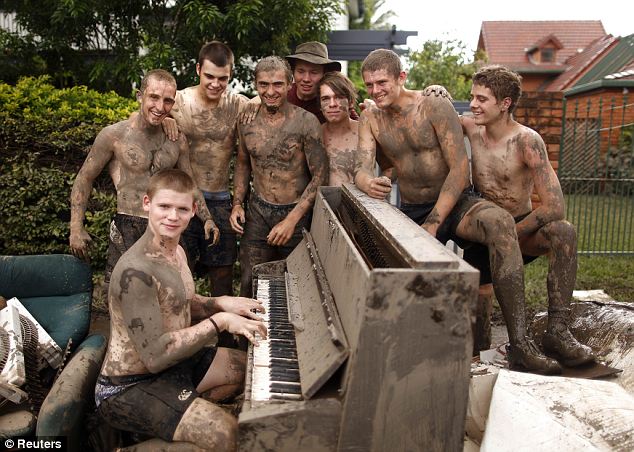
queensland flood clean up

****

Whether it’s bushfires or floods – Australians know how to pitch in and save their neighbours’ lives and property.  Why?  Because it is the right thing to do.

As Operation Boomerang suggests, 26 January is the day when Australians hit the beach, haul-out the barbie and wash down paddocks full (or, rather emptied) of Aussie lamb, with frosty cold beer and humongous Australian reds. Mmmmm

And, on Australia Day, the country turns to reflect on the achievements of those who fight with honour and courage, in a whole range of human endeavours, for the betterment of our collective lot.

In Australia, the fight to bring the great wind power fraud to a shuddering halt is being won: the wind industry is on its knees, investment is at a standstill and the financial collapse of wind power outfits – like the near-bankrupt Infigen – is a case of when, not if.

The talk has turned from consideration of the wind industry’s “future”, to the timing of its inevitable demise.

But that switch in fortune has come thanks to the blood sweat and tears of hundreds of well-informed and dedicated individuals around this country.

As with any public gong, it’s impossible to mention them all, so we’ll stick to those who STT thinks have made outstanding contributions in their respective fields.

Once again, following the style of Australia’s national daily, The Australian, STT throws up a list of notables as nominees for “STT’s Australians of the Year”.

It’s not necessarily a beauty contest, so feel free to vote according to your heads and not your hearts. And, because our little list is obviously cursory and incomplete, you have absolute liberty to nominate and vote for all of those unsung heroes in your communities who have made the kind of contributions that are worthy of recognition and praise.

We gratefully recognise and thank our perennials, whose tireless devotion to either destroying the wind industry, or saving those who suffer at the hands of that callous industry and those paid handsomely to supposedly protect them, earned them awards for remarkable efforts in our 2015 Australia Day Honours:

Starting with the Tireless Community Defenders:

With this award, STT hopes to recognise the tireless and dedicated work of the people who have rallied to promote the interests of farmers and rural communities around the Country.

Where the wind industry and its parasites attack these people as “anti-wind” (a strange and meaningless epithet, if ever there was one – STT thinks it impossible to find a human being with antipathy towards a gentle summer’s breeze) – STT says the proper characterisation is of a group of people who are positively fearless in advocating in favour of sensible energy policy and, therefore, are better described as “pro-Australian”, “pro-farming” and “pro-community” leaders and advocates.

We again note and thank:

South Australia’s Mary Morris – who continues to impress and inspire with efforts to ensure communities get relevant noise rules and that they get enforced. Her relentless efforts to get the facts before the Senate Inquiry were super-human: Wind Farm Senate Inquiry Fallout Continues19 June 2015.

Victoria’s Annie Gardner – who is leading the charge with the new wind farm commissioner, Andrew Dyer – hammering him with the kind of facts that he’ll never get from AGL, Greg Hunt or any of the other puppets controlled by the wind industry; and calling out her heartless neighbours for setting up hundreds of these things on their properties, destroying her community and leaving them all for dead: Macarthur Turbine Hosts Destroy Local Community & Bolt, as Hammering the Wind Industry becomes the “New Black” 27 June 2015.

Victoria’s Keith Staff  – who continues to use his awesome email contact list to great effect, bombarding our political betters and journalists with every “inconvenient” fact that scuttles the endlessly repeated lies, upon which the great wind power fraud depends. As we’ve come to expect, Keith gave them hell in his evidence to the Senate Inquiry, too: Senate Inquiry: Hamish Cumming & Ors tip a bucket on the Great Wind Power Fraud 15 April 2015.

New South Wale’s Patina Schneider – is the NSW’s Tablelands answer to the Celtic warrior queen, Boadicea. Patina is the brains and muscle behind the Australian Industrial Wind Turbine Awareness Network – a group dedicated to smashing the wind industry and exposing the corruption that it exploits to its advantage; and she just keeps giving them hell: Time to Tune-In Tony: Coalition’s $46 Billion Wind Industry Rescue Package has Liberal Voters Seething 9 June 2015.

Then there are the experts and their immeasurable Contributions to Science and Public Health:

South Australia’s Professor Colin Hansen – is one of nature’s true gentleman; and Australia’s leading academic authority on noise and vibration. Colin’s work on identifying the precise nature of the noise generated by industrial wind turbines, and its relationship to the health effects suffered by neighbours, has been going on quietly in the background for almost 7 years now. His evidence before the Senate Committee was as compelling as it was impressive. He continues to press for a set of noise rules that actually protect people, instead of the wind industry: Top Acoustics Professor Calls for Full Compensation for Wind Farm Victims, as Council Calls for “National Noise Cops” 29 March 2015.

New South Wales’ Steven Cooper – was another who impressed the Senators during the Inquiry into the great wind power fraud. Quiet and methodical, Steven Cooper is the acoustican’s acoustician. Motivated by the ethical responsibilities that are attached to acousticians, requiring them to put public health and safety first and foremost; Steve laid out that, and much more, before the Senate Inquiry: Senate’s Wind Farm Inquiry: Steven Cooper’s Evidence on his Groundbreaking Study 14 April 2015.

South Australia’s Dr Sarah Laurie – defines fortitude, resilience, stoicism, fearlessness, and an overall desire to let right be done: terms that only begin to capture the essence of a remarkable women. Sarah continues in her efforts to win an Australian ‘fair go’ for all: Senate Wind Farm Inquiry – Dr Sarah Laurie says: “Kill the Noise & give Neighbours a Fair Go” 17 July 2015.

There are the gifted and inspired leaders and their Contributions to Political Reform:

Victorian Senator, John Madigan – holds that “justice” and “right” are not just fancy concepts to chatter about – they are the pillars of decent, civil society. Dogged and determined, John, as Chair, provided the teeth needed to put last year’s Senate Inquiry on track and ensured a cracking set of recommendations hit the press; and he continued to expose the insane cost of the most pointless policy ever devised: Wind Power Fraud Finally Exposed: Senator John Madigan Details LRET’s Astronomical 45 Billion Dollar Cost to Power Consumers 20 June 2015.

South Australian Senator, Nick Xenophon – SA’s favourite Greek, has rallied behind South Australian communities set upon by wind power outfits from the very beginning; and he gets it. Nick’s efforts on the Senate Inquiry were as remarkable as they were breathless. Appearing, often by phone hook-up and with time stolen from the most punishing schedule in politics, his cross-examination of pompous, obnoxious and arrogant wind industry spruiker, Vesta’s Ken McAlpine – later forced to apologise for spreading malicious falsehoods about Dr Sarah Laurie – was well-worth the admission price: Vesta’s Ken McAlpine Forced to Apologise to Dr Sarah Laurie for …. well, just being ‘Ken’ 20 September 2015.

New South Wales Senator, David Leyonhjelm – doesn’t hide his light under a bushel – and is always on the front foot in his efforts to educate and inform Australians about the nature, scale and scope of the greatest rort of all time. David sat on the Senate Inquiry – the existence of which was due in no small part to his powers of influence and persuasion – needling the shills that lined up to protect what’s left of the wind industry; and otherwise giving them hell: NSW Senator – David Leyonhjelm – Hammers the “Smug Untouchability” of the wind industry14 June 2015.

Western Australian Senator, Chris Back – has been an STT Champion from the very beginning. Despite plenty of bitter opposition from the wind industry plants in Environment Minister Greg Hunt’s office, and a few rabid wind-cultists working as staffers on the Senate Committee, Chris manged to steer the Senate Inquiry in precisely the right direction. Not content with impressing his mark on the thumping Senate Report, Chris came out pressing for an immediate end to the madness: Liberal Senator – Chris Back – Demands Moratorium on New Wind Farms 17 October 2015.

Queensland Senator, Matt Canavan – is an economist by trade, having worked for the Productivity Commission, he’s got a head for facts and figures; and he gets it. Matt’s well-reasoned musings have graced the pages of STT more than just a couple of times. Matt slipped onto the Senate Committee and made a very solid contribution to the Inquiry, grilling wind industry hacks about the true (insane) cost of wind power; and he continued his offensive in the Senate, with his attack on ‘Green’ hypocrisy and the nonsense of wind power: Australian Senator – Matt Canavan – Slams “Greens” Hypocrisy & Skewers the Great Wind Power Fraud 31 March 2015.

Federal MP, Angus Taylor – aka “the Enforcer” – has been smashing into the great wind power fraud, even before he was elected in a landslide to the New South Wales seat of Hume in September 2013. Angus, a Rhodes scholar in economics and law, has been on the front foot ever since. Recent Liberal party shenanigans aimed at shunting Angus out his electorate have only stiffened his resolve; expect to see him on the front bench soon; and in a position to finally put to death the ludicrously costly and thoroughly pointless LRET. Meanwhile, the Enforcer’s relentless work to protect Australian rural communities continues: Angus Taylor MP: Retailer Boycott – Wind Farms will NOT be Built where there is ‘Negative Community Reaction’ 27 October 2015.

There are the journos noted For Excellence in (Proper) Journalism:

Alan Jones AO – took more than just a passing “interest” in the great wind power fraud, its consequences and victims; starting with his appearance as the MC at the great wind power fraud rally in Canberra, June 2013 (seeour post here). Ever since, Alan has been very much the ‘voice’ of the people; and continues to torment the gullible and corrupt among our political betters, with powerful pieces that expose the rottenness of the wind industry and those behind it: Three Magnificent Women Take On Australia’s Monstrous Wind Power Outfits & their Pathetic Political Backers 12 August 2015.

Graham Lloyd – is The Australian’s Environmental Editor and, among his journalistic peers who claim that tag, is unique. Where Graham differs, is that he lives up to the ethical responsibilities, which were once central to journalism as a profession: he equips himself with the facts. Once armed, he’s positively dangerous – uncovering the fraudsters and charlatans that parade as ‘Friends of the Earth’, with pointed pieces that get the ‘troublesome’ truth out: Pacific Hydro & Acciona’s Acoustic ‘Consultant’ Fakes ‘Compliance’ Reports for Non-Compliant Wind Farms 19 September 2015.

For more on our perennial contenders check out last year’s: STT’s Australian of the Year Awards.

Now, we introduce our new contenders for 2016.

And the categories and nominees are:

Tireless Community Defenders

Martin Hayles

Martin Hayles

****

Martin Hayles skips the nomination process and takes a prize, without contest. But, tragically, this gong is delivered posthumously: Martin died suddenly, at an all too young 51, a fortnight ago.

STT followers will know of Martin through the variety of characters he adopted on our comments boards: The Goat of Greenhill Road; and Jeff’s Last Goodbye (a nod to his favourite artist, the seminal Jeff Buckley), to name a few. Whichever of these characters he adopted, his comments were erudite, insightful, full of passion and always entertaining.

Martin was the attack dog for the Heartland Farmers – a group of equally dogged community defenders – dedicated to saving South Australia’s premier grain growing region, Yorke Peninsula from the ludicrous Ceres wind farm proposal; a proposal which SA’s favourite Greek, Senator Nick Xenophon, quite rightly, described as an “economic kick in the guts for South Australians”.

Martin took it up to the handful of Judas Iscariot types – heartless land-owners, who were prepared to destroy their community for a measly 30 pieces of silver.

And he hounded, without mercy, the former second-hand car salesmen that fronted Suzlon aka RePower aka Senvion – who tried – with the seemingly indestructible tenacity of cockroaches – to sleaze (and when that failed), lie, threaten, bully and deceive the crème de la crème of South Australia’s grain growers, in an effort to spear almost 200 of these things into the most productive barley growing region in the Country.

But that’s Martin the warrior. Martin, the man, touched so many lives, and his death will affect so many, many people. Martin was gifted with great care and compassion for others; and always found time in his heart for people set upon by the tyranny and inequity of this stinking industry. His tenacity, strength and drive was something to behold and inspire.

As his spirit soars further and beyond us, in the words of another great who passed this month, to Martin we say ‘Check ignition and may God’s love be with you.’

For Excellence in (Proper) Journalism

Hendrik Gout

hendrik gout2

****

Channel Seven’s Today Tonight is the must-watch current affairs show for South Australia’s aspiring working class – when an issue becomes the top story on Today Tonight, you can guarantee you’ve reached not only a substantial audience by number; but that you’ve also hit political dead-centre – in terms of reaching voters capable of deciding elections; and policies on the way to them.

The Today Tonight viewer mightn’t be a Twitter jockey, but he or she is a first-class talker; whether it’s at work or backyard barbecues, whatever they’ve seen soon becomes the topic of the day (or the week).

When the topic is their spiralling power bills and, despite paying through the nose for the stuff, suffering statewide blackouts to boot, you can guarantee plenty of fist-waving fury being added to tea room and backyard debates on just who, or what’s to blame.

Leading Today Tonight’s charge against SA’s wind power driven energy and economic crisis is Hendrik Gout. Laid back, with a laconic flair, Hendrik has earned his stripes as an STT Champion in recent months, with brilliant pieces detailing SA’s unfolding, ‘double-whammy’ nightmare of rocketing power prices (already double the rates of the ACT, and set to double again) and a grid on the brink of collapse.

Here’s a taste of Hendrik’s dry wit and insight:

STT’s Special Award for True Courage & Real Compassion

Clive and Trina Gare

gare1

****

Clive and Trina Gare are cattle graziers from South Australia’s Mid-North with their home property situated between Hallett and Jamestown.

Since October 2010, the Gares have played host to 19, 2.1MW Suzlon S88 turbines, which sit on a range of hills to the West of their stately homestead. Under their contract with AGL they receive around $200,000 a year; and have pocketed over $1 million since the deal began.

In a truly noble and remarkable move, the Gares gave evidence to the Senate Inquiry into the great wind power fraud during its Adelaide hearing, in June 2015:

SA Farmers Paid $1 Million to Host 19 Turbines Tell Senate they “Would Never Do it Again” due to “Unbearable” Sleep-Destroying Noise

In their evidence, the Gares made it very clear that it was the worst decision of their lives; describing the noise from the turbines on their property as “unbearable”; requiring earplugs and the noise from the radio to help them get to sleep at night; and the situation when the turbines first started operating in October 2010 as “Crap, to put it honestly” – entirely consistent with, and properly vindicating, the types of complaints made routinely by wind farm neighbours who don’t get paid, in Australia and around the world.

The Senators on the Inquiry were moved no end by the daily misery laid bare by people who’ve had to live up close and personal with these things for over five years, and all the more so knowing that over that period they’ve pocketed over $1 million for doing so. Trina Gare candidly observing, in the same terms as Clive, that:

In my opinion, towers should not be any closer than five kilometres to a dwelling. If we had to buy another property, it would not be within a 20-kilometre distance to a wind farm. I think that says it all.

The Gares – along with plenty of others in the same position – were played by wind power outfits for dupes; as their evidence to the Senate attests.

Admitting to a mistake takes honesty and personal integrity; admitting to a colossal mistake, even more so. However, to not only do so in public, but to your Parliament, exhibits moral decency – especially given the potential of that admission to operate as a sobering warning to others who have made, or who are likely to make, the very same error.

What the Gares did is both remarkable and noble: these fine and decent people deserve the gratitude and sympathy of all; from those in their community, and well-beyond.

What they also deserve is that our political betters admit their mistakes; and immediately correct the errors that have led to the single greatest policy disaster in the history of the Commonwealth. After what the Gares have done, anything less is a monstrous insult.

On careful and considered reflection, Clive and Trina Gare take STT’s Special Award for True Courage & Real Compassion; and earn our undying respect and gratitude, as well.

So, as you wash down your rack of lamb with a thumping Barossa Valley shiraz, we think it only fitting to spare a thought for the efforts outlined above. Australia is all the better for people like these and the tireless contributions that they make.  STT thanks them all.

STTAustralianof the year

Infrasound from Wind Turbines is Harmful, in any Language!

Germans Driven from their Homes by Wind Turbine Generated Infrasound

insomnia

****

One of the myths pedalled by Australia’s self-appointed wind farm noise, sleep and health ‘expert’ (a former tobacco advertising guru) is that the known and obvious adverse health impacts from incessant turbine generated low-frequency noise and infrasound are a cooked-up “phenomenon”, exclusive to the English speaking world. Trouble with that little tale is that’s been scotched by the Danes:

Vestas’ Danish Victims Lay Out the FACTS

Denmark Calls Halt to More Wind Farm Harm

And the Germans:

German Medicos Demand Moratorium on New Wind Farms

And the Tawainese:

Winning Taiwanese Hearts and Minds?

And the Turks:

Turkish Court Shuts Down 50 Turbines: Yaylaköy Residents Delighted at 1st Chance to Sleep in Years

Now, back to Germany where – in the video below (it comes with English subtitles) – Heimke and Pieter Hogeveen lay bare their family’s daily despair at being unable to sleep in their very own home.

Ground down by incessant turbine generated low-frequency noise and infrasound, these people have constructed a ‘bedroom’ in their cellar in an attempt to escape their sonic torment; and sent their children to a boarding school in Denmark for the same reason. Clearly fighters, Hiemke and Pieter have enlisted two lawyers in an action against the wind power outfit responsible.

The video features the turbine host responsible for their daily suffering, claiming he suffers no ill-effects. Funny how gag clauses in developer/host contracts seemingly immunize those pocketing their 30 pieces of silver. However, when the hosts are touched with a little human conscience, they tend to tell an incredibly similar story to people like the Hoogevens:

SA Farmers Paid $1 Million to Host 19 Turbines Tell Senate they “Would Never Do it Again” due to “Unbearable” Sleep-Destroying Noise

The Speigel TV report covers the latest German research on turbine generated infrasound; details the tragic story of another farming family (Konrad Saum) who have also been forced to abandon their spacious family home – unable to sleep there due to incessant turbine noise and vibration; and retreating to a tiny holiday unit to escape the sonic torture dished out by 6 turbines neighbouring their farmlet.

Undermining the ‘Green’ spinner, Jaeger’s piffle about infrasound being used as a sinister plot by German ‘anti-wind’ groups (now numbering over 500) to derail his profiteering racket, is the work being done by health and acoustic experts, taking measurements inside homes that show noise and vibration way above and beyond the levels claimed to exist by the wind industry. No surprises there: Three Decades of Wind Industry Deception: A Chronology of a Global Conspiracy of Silence and Subterfuge

****

Wind Turbines are Torture, for Nearby Residents!

Irish Wind Farm Neighbours Detail Unnecessary Daily Acoustic Misery

wind power growth

As the World reacts to the insane cost of backing an utterly pointless power source, by slashing subsidies and removing the only ‘reason’ for ‘investing’ in the greatest environmental and economic fraud of all time, there remains the suffering of thousands of unnecessary wind industry victims; ‘road-kill’ as its parasites like to refer to them.

STT takes their suffering and our ‘sanctuary’ status seriously – providing our comments space for the use of people who have been tragically impacted by – or who are fighting the threat of – giant industrial wind turbines.

STT is an exclusive place where our followers can speak openly and freely – and without fear of vilification or ridicule from trolls like Ketan Joshi,Mike Barnard & Co. And that’s something we have no intention of changing any time soon.

STT thinks compassion and empathy far greater virtues than self-righteous condescension.

True it is that the roll-out of these things has, thankfully, ground to a halt in Australia and elsewhere, but for many unfortunates, their daily misery continues unabated. Here’s a journal detailing the wholly unnecessary suffering meted out by Irish wind power outfits with incessant turbine generated low-frequency noise and infrasound.

The Misfortune Of Living By A Wind Farm
windfarmtorture.blogspot.ie
1 January 2016

The truth about having to live near Grouselodge wind farm, Co. Limerick, the illness they cause, the noise, the discomfort, the lies from developers, wind farm owners/operators

Daily Notes December 2015

A new month and still being subjected to LFN/Infrasound and audible noise

1st A low buzzing/humming noise could be heard all night, this morning ears ringing feel numb, face tingling, itchy head, headache

2nd Constant audible buzzing humming sound all night long again, ears ringing feel numb and full, face tingling, headache, eyes twitching

3rd Low cloud and rain feels like that helps to keep the noise and infrasound in, blades forcing it this way, ears ringing, eyes twitching, head ache, pressure in ears making them feel like they are pulsating and feel full, not a nice feeling

4th After yesterday onslaught we are still suffering with headache, eyes watering/twitching. ears ringing feel pulsating and swollen, thank god for panadol mints

5th Ears ringing, headache, itchy skin, eyes watering still recovering from the other day LFN onslaught, 3 turbines going at the moment still being invaded by industrial noise though, could be worse and have all 6 going

6 DEC 2015

6th Last night we were subjected to noise and by the way my head feels about to explode we were subjected to LFN/infrasound ears feel full, pulsating, headache, face tingling, thankfully all turbines are off at the moment

noise 1

7th Noise again last night a constant buzzing/humming sound all night, today ears feel full, pulsating, ringing sound, itchy head, face feels numb and tingling, eyes twitchy

8th An audible buzzing/humming noise was heard all night and still the same this morning, headache ears feel pulsating and full and ringing, headache, itchy skin, eyes twitching, loud swoosh thump noises can be heard coming from the turbines

9th Another night of a constant humming/buzzing noise heard inside and outside sounded like airboats in the back garden, no change on the noise levels today and this morning ears ringing, headaches, feeling breathless, itchy/tingling skin

10th Same as yesterday, Another night of a constant humming/buzzing noise heard inside and outside sounded like airboats in the back garden, no change on the noise levels today and this morning ears ringing, headaches, feeling breathless, itchy/tingling skin, the headaches and ringing in the ears seem to be a result of the constant humming/buzzing noise that can be heard all day long, especially at night when normal daytime noises, such as cars tractors, TV radio etc are gone

11th Another night of humming/buzzing noise i had ear plugs in with radio on and this noise could still be heard, today it can still be heard inside and outside we have what sounds like airboat noise, the blades are forcing all of the LFN/infrasound this way, headache, ears ringing, eyes twitchy, itchy skin, i know today will be a rough one

12th, Again pretty much the same as the past few days another night of humming/buzzing noise, today it can still be heard inside and outside we have what sounds like air boat noise, ears ringing, headache, eyes watering, trouble breathing these symptoms are pretty much daily occurrences now

13th Fog Today cant see the turbines at the moment, but can still hear them, swooshing and thumping in the distance, ears ringing feel like they are pulsating and exploding, headache, eyes watering

noise 2

14th Rain, fog, low cloud all compounding the LFN/infrasound ears feel like exploding, pounding headache, dizzy feeling

15th Last night we were subjected to very loud swooshing noises outside which went to a buzzing/humming low droning sound inside, this morning ears feel like they are exploding, very acute headache, eyes watering, ears ringing

16th Last night swoosh thump clunk squeal etc etc all night outside, inside the normal humming/buzzing allnight, today ears ringing feel pulsating, eyes watering/twitchy, headache

17th Only 5 working today and still swoosh thump swoosh thump constantly, never ending, headache, ears ringing, i have concluded that ears ring worse when inside than when outside, tingling face, sea sick feeling of constantly moving horrible feeling

18th 5 working again but still air boats outside ears ringing, itchy skin, eyes twitchy

19th Only 5 working again, hope its broke for good, headache difficulty breathing out of breath just walking across the field this morning, eyes watering

20th Only 5 working again, crane at the broken one yesterday doing something, woke up trouble breathing again, ears ringing, headache ithcy skin, eye twitchy/watering

noise 3

21st Only 5 working again, but still air boat noise outside and a constant humming buzzing inside all night and still going on this morning, trouble sleeping, woke up hard to breath, face tingling, eyes twitching, ears ringing, blurred vision

22nd You know it is going to be bad day, when you have had a bad nights sleep due to the constant audible noise and LFN/infrasound, and you are woken up by the noise unable to breath, feels like you have run a marathon but you have just woke up, ears ringing feel pulsating, headache, eyes watering. n a good note still only 5 working today again

23rd 6 working again, woken up early again trouble breathing, felt like i had run a marathon, ears feel full, like they want to explode, ringing, tingling/numb feeling face, eyes twitchy blurry vision

24th A constant buzzing/humming noise since yesterday afternoon, woken up early again trouble breathing, face tingling, eyes watering, ears feel full,numb and ringing, headache

25th Difficulty breathing all night and this morning, can only be related to the same as having a asthma attack and struggling to get a breath, face tingling, eyes watering, ears tingling, throbbing, cant see them at the moment due to fog but i can hear them and feel them pulsing the air that we live in

26th All seems nice, quiet and clean undisturbed air at the moment, i cant see the wind farm but i cant hear it, so it must be off, but after Christmas days onslaught of LFN/infrasound and audible noise ears ringing feel numb, headache. itchy skin, eyes twitchy

27th Woken up early trouble breathing as usual, eyes watering, face numb, ears ringing, numb, tingling, blurred vision, lack of concentration

noise 4

28th Disturbed sleep again woken up with headache, ears ringing throbbing, blurred vision, face tingling

29th Another night of constant audible noise being heard inside the house, if the noise was at the allowed levels set out by planning we would not hear it, woken up early again due to the audible and infrasound, ears ringing/pulsating/throbbing, face numb/tingling, skin itchy, headache, out of breath

30th Woken up early again, 5am, disturbed sleep due to LFN/infrasound, constant audible industrial noise all night, ears ringing/numb/pulsing, headache, eyes twitching, blurred vision, storm frank needs to blow harder and blow the damn turbines over or spin the blades out of control, the good thing about this amount of wind is it hides the noise from the turbines

31st Now the storm has passed the turbines can be heard again inside the house woken up early again, 5am, disturbed sleep due to LFN/infrasound, constant audible industrial noise all night, ears ringing/numb/pulsing, headache, eyes twitching, blurred vision

noise 5

windfarmtorture.blogspot.ie

insomnia

****

For those fortunate enough to have never experienced the effects of constant industrial wind turbine noise, here’s a little primer:

****

****

However, the malicious melody belted out by Vestas & Co in that video goes nowhere near covering the effect of the sub-audible stuff (aka ‘infrasound’) that can’t be heard but is most certainly felt by those exposed.

Trying to explain the combined effect of the audible low-frequency and sub-audible frequencies generated by giant turbines, to those that haven’t had to live with it on a daily basis, is like trying to explain a migraine to someone who has never had a headache.

One fairly clear and succinct explanation was given in this video by Professor Alec Salt:

****


****

What is detailed in the diary above is perfectly consistent with the experiences of wind farm neighbours across the Globe. Here’s an extract from an earlier post (here), which includes Rob Rand and Rick James explaining the symptoms caused by pulsing infrasound (of precisely the kind detailed above):

One resident, who wished to remain anonymous, said she knew right away that the turbines were moving because she began to feel nauseous, along with a headache. “I have 100 turbines to the north of me, 25 to the west and 20 to the southwest,” she said. “When the wind was coming out of the north, I woke up feeling dizzy and nauseous.”

She also said her animals were acting strangely. “My donkeys and horses keep wanting to go back into their stalls,” she said. “They have not wanted to leave the barn all day.”

Robert Rand, a Boulder, Colorado, resident and an acoustic investigator and member of the Acoustical Society of America, said the reason for the headaches and nausea is directly related to the wind turbines. It has to do with infrasound and low frequency noise, he said.

According to an article written by acoustic engineer Richard James, published at http://wiseenergy.org Feb. 20, “Infrasound is acoustic energy, sound pressure, just like the low to high frequency sounds that we are accustomed to hearing. What makes infrasound different is that it is at the lowest end of the acoustical frequency spectrum even below the deep bass rumble of distant thunder or all but the largest pipe organ tones.

“As the frequency of an infrasonic tone moves to lower frequencies: 5Hz, 2Hz, 1Hz and lower, the sounds are more likely to be perceived as separate pressure pulsations … . Unlike mid and high frequency sound, infrasound is not blocked by common construction materials. As such, it is often more of a problem inside homes, which are otherwise quiet, than it is outside the home.”

Rand said the separate pressure pulsations are like the “whump, whump, whump,” people sometimes experience when they are riding in a car with the windows down. “I have been attempting to acoustically measure phenomena that could present a conflict to human physiology that could then provide a basis to do more research,” Rand said. “My work in acoustics has really been designing and planning. I don’t need more medical research because I know what they (wind turbines) do to people because it happened to me.”

According to an article accepted into The Journal of the Acoustical Society of America Feb. 4, when the body experiences an external force on the inner ear, such as acoustic pressure pulses — but there is no visual input to associate with that pressure — a sensory conflict occurs. That conflict is felt as motion sickness, and it is felt to the same degree as seasickness.

The problem of incessant turbine generated low-frequency noise and infrasound has been known about (covered up and lied about) by the wind industry for around 30 years:

Three Decades of Wind Industry Deception: A Chronology of a Global Conspiracy of Silence and Subterfuge

And our Irish victim rightly fingers infrasound as the real villain responsible for their daily torment:

Wind Turbine Infrasound: What Drives Wind Farm Neighbours to Despair

And all that state-sanctioned misery and suffering is inflicted for an utterly meaningless power source, abandoned in the 19th Century for pretty obvious reasons.

June 2015 National

Corruption Among Wind Weasels….No Surprise!

Fraud in Falmouth MA – Town Relied on Acoustic Consultants’ Faked Vestas Wind Turbine Noise Report

Definition of fraud

There aren’t many certainties in life, save death and taxes. But STT is happy to add – without reservation – to that short-list, another: that you’ll never find the words ‘integrity’ and ‘wind industry’ coupling up in the same sentence.

Lies, fraud and corruption are the norm; and that extends to the industry’s pet acoustic consultants who helped write the noise ‘guidelines’ that deliberately ignored a decade’s worth of research by NASA – which proved that incessant turbine generated low-frequency noise and infrasound causes adverse health effects, such as sleep deprivation:

Three Decades of Wind Industry Deception: A Chronology of a Global Conspiracy of Silence and Subterfuge

Not content with setting up ‘standards’ with absolutely no relevance when it comes to protecting neighbours’ sleep and health, the industry’s noise ‘experts’ have repeatedly shown their eagerness to hide ‘unhelpful’ data, to write reports made to ‘measure’; and to otherwise guarantee their pay masters that they can and will continue to destroy neighbours’ abilities to sleep, live in and otherwise enjoy their homes and properties, with state-sanctioned impunity.

One Australian example popped up last year, when Victorian Senator, STT Champion John Madigan exposed one of the wind industry’s ‘favourite’ noise consultants, Marshall Day for producing fraudulent noise ‘compliance’ reports for Pacific Hydro at Cape Bridgewater and Acciona at Waubra:

Pacific Hydro & Acciona’s Acoustic ‘Consultant’ Fakes ‘Compliance’ Reports for Non-Compliant Wind Farms

And the very same type of wind industry backed criminal activity has just been exposed in Falmouth Massachusetts.

Falmouth Taxpayers Hooked Tens Millions Turbine Fraud – Corruption
Frank Haggerty
Falmouth Patch
24 December 2015

Falmouth fraudulent wind studies put Falmouth taxpayers at risk of tens of millions in nuisance litigation. Town Knew Turbines 6 + Decibels: Falmouth Taxpayers Responsible For Tens Millions Fraud – Corruption

The Massachusetts Clean Energy Center Board of Directors is aware of the 6 to 7 decibels missing from the Falmouth noise tests.

The MassCEC Board of Directors has given the Town of Falmouth 1.8 million dollars to help pay litigation costs against the wind turbine victims.

This is renewable energy tax receipts your money.

The MassCEC sold the Falmouth Wind I turbine to the Town of Falmouth.

The fraudulent wind turbine studies and corruption puts Falmouth taxpayers at risk of tens of millions in litigation for wind turbine nuisance for up to 200 residential home owners.

“HMMH studies commissioned by the Town AFTER the distress was known acknowledged the maximum sound power level of 110dB(A) for the Vestas V-82, but inputted the averaged Octave Band Data of 103.2 dB(A) power into its projected sound pressures.”

What does it mean? The town knew prior to the installation of Falmouth Wind I the turbines were 6 + decibels over the original studies and hid the information from the public.

On June 15, 2011, Salvatore F. DiMasi became the third consecutive Speaker of the Massachusetts House of Representatives to be found guilty of a federal crime.

DiMasi’s trial and conviction naturally highlighted the issue of political corruption in Massachusetts, which has become a matter of serious public concern in recent years.

Sal Dimasi is considered the father of the Massachusetts Green Communities Act. Former Governor Patrick admitted at the trial of Dimasi that he, Governor Patrick, is “Sally Reynolds” the author of emails from the state house.

Federal law looks at governmental corruption that crosses an imprecise line into dishonest behavior that our society is not prepared to tolerate.

Federal prosecutors seeking to crack down on public corruption have had plenty of targets among Massachusetts elected officials in recent years.

The Town of Falmouth hid a noise warning letter from Town Meeting Members for 5 years that the Vestas wind turbines were 6 to 7 decibels louder than the feasibility studies. At over 100 decibels this more than doubles the noise.

The attorneys for the Town of Falmouth and the news media have been well aware of the noise levels for years. Falmouth taxpayers are paying for litigation in which they can’t win.

The Town of Falmouth today has no study for the two town owned Vestas wind turbines that generate 110 decibels of noise. The wind turbines can not be permitted under any permit.

Public health and safety concerns are the main concern of the Zoning Board of Appeals. The facts have already been established the turbines endanger the public health, safety and substantially diminish or impair property rights.

The Town of Falmouth lied in a federal waiver to buy the foreign made Vestas wind turbines. The town stated they were going to permit Falmouth Wind II with Special Permit 240-166. They also failed to disclose General Electric a domestic wind turbine company refused to build a commercial wind turbine because of set backs to property lines. (6 million dollars)

On April 2, 2013 the Massachusetts Clean Energy Center in a memo to the MassCEC Board of Directors admitted acoustic noise “mistakes” prior to the installation of Falmouth Wind I.

Crimes have a corrosive and harmful effect on public confidence in our government and other trusted institutions, including such crimes as perjury and obstruction of justice.

Massachusetts politicians have found themselves repeatedly in the cross hairs of federal prosecutors seeking to crack down on public corruption. But in light of the Supreme Court’s landmark decision in Skilling v. United States, convicting corrupt state legislators and other public servants of so-called “honest services” fraud – long the preferred method of prosecuting official betrayals of the public trust.

The honest services fraud statute remains a practical and effective tool for combating political corruption.

Falmouth Email Shows Wind Turbines 6-7 Decibels Above Studies:

Brian Hopkins Vestas Representative email:

Fri 5/28/2010 1:48 PM
Brian Hopkins brhop@vestas.com
RE: Sound / Feasibility Studies

TO: Wiehe, Stephen, cc Duijvesteijn, Olle; Yanuskiewicz, Francis

“Steve, I don’t believe I saw a feasibility study for Falmouth other than Site Plans.

Was a sound study updated with the additional turbine?

Does the information I provided in the octave band data support the conclusions that you are conservatvely within MA state sound regulations?

The table highlights the fact that V82 produces greater decibels when it reaches its stall regime beyond the IEC design standard at 95% capacity.

The table also helps recognize the effects of shear on the sound levels experienced at receptors which should also be considering with the sound study.

My email was lost from the time we did the first turbine so I don’t have a great record of information but do you have this decibel mapping for Falmouth?”

Note # Question from Vestas: “Do you have this decibel mapping for Falmouth?”

The Answer: There appears to have been no answer to this Vestas email by either the Town or W&S (based on documents requested through discovery, and what has and has not been provided).

There never was any decibel mapping for the second turbine, or for both turbines operating together, as of the date of the Potamis letter accepting responsibility.

The concern of Vestas (accurate acoustical mapping) was apparently ignored.

Note # It is important to note that the HMMH studies commissioned by the Town AFTER the distress was known acknowledged the maximum sound power level of 110dB(A) for the Vestas V-82, but inputted the averaged Octave Band Data of 103.2 dB(A) power into its projected sound pressures.

Thus, the HMMH studies are low by about 6-7 dB(A).

Even so, both the main HMMH study and the supplement showed many instances of exceedances at the neighbors’ homes.

The Falmouth Select Board and Falmouth Town Meeting Members are aware of the above facts.

These facts make you the taxpayers of Falmouth liable for payments to wind turbine victims for the past six years. There are up to 200 residential homes modeled in the CBI WTOP studies:

“participants suggested that this group should carry out a survey of all 200 affected homes separately from the potential DPH study, in order to generate more quantitative data.”

See the Final Meeting Summary.

See this link for more information on how long the Town of Falmouth needlessly tortured their own residents in the name of renewable energy:ZBA Submission.
Falmouth Patch

falmouth turbines

Windpushers are Harming Residents near Wind Turbines!

Finland: Wind Turbine Study Proves Infrasound Causing a Raft of Serious Health Problems

wind-turbine-and-house-in-Finland

****

Health problems in Finland caused by infrasound from wind turbine
Windwatch.org
4 December 2015
Source: National Wind Watch
Author:
  Tuulivoima-kansalaisyhdistys ry
From the English press release:

Tuulivoima-kansalaisyhdistys (TV-KY) ry – the National Association of Citizens Against Giant Windmills – has recently released an extensive report on the infrasound emissions from wind turbines and their impact on people’s health.

The wind turbines being built in close proximity to residential areas in Finland are the biggest in Europe. Their rotating blades generate low frequency noise and infrasound, i.e. frequent and continuous air pressure pulses that can travel for very long distances.

Low frequency noise refers to frequencies between 20-200 Hz that are audible to the human ear, and infrasound refers to frequencies between 0.1-20 Hz that can’t be picked up by the human ear.

Wind power companies, as well as some researchers, have claimed that “infrasound can’t cause adverse health effects as it is inaudible”. Similarly, we could maintain that radiation isn’t harmful as it is beyond sensory perception.

However, in the summer of 2015 the German Max Planck Institute released a study conducted using a new kind of measurement technology.

Contrary to the well-established view, the study showed that the alarm mechanisms of the human brain are sensitive to very low infrasound that is below the hearing threshold.

The need for a survey conducted by the TV-KY Association arose when a growing number of residents in areas located near wind farms started to report health problems, some of which were serious. The measurements showed that the rapidly changing low frequency noise and infrasound caused by wind turbines can indeed be measured inside Finnish homes.

Low frequencies permeate the structures of buildings and they can be disturbingly distinguishable from background noise, particularly indoors.

Infrasound, on the other hand, can’t be picked up by the human ear, but the residents complain over a great number of symptoms, some of which are serious. The emergence and degree of problems depend on the strength and length of exposure.

In Finland, large scale wind farms have only been constructed for a few years. We don’t yet have any records of the number of people who have had health problems caused by the infrasound emissions of wind turbines.

For this report, we interviewed 12 Finnish families who live in close proximity to giant wind turbines in Finland, and we collected the experiences of 55 people concerning the health impacts of industrial wind power production. Out of these 55 people, 33 suffer from sleep disturbances, 26 from ear problems, 23 from headache, 17 from nausea, 11 from heart problems and 11 from inertia.

In addition to infrasound emissions, the audible low frequency noise of the up to 230 m tall wind turbines is directed with force horizontally away from the rotating blades, both downwind and against the wind.

The massive air pressure pulse, generated by the blades, that varies with 1-2 seconds intervals, produces low frequency noise that isn’t actually directed at the foot of the wind turbine or on the side.

This partly explains why the interviewed residents in areas that are close to wind farms don’t react identically to wind turbine noise, which is at its worst during night time.

In our measurements, we used a microbarometer, an exceedingly accurate instrument for measuring atmospheric pressure. The measurements were carried out in homes that had reported adverse health effects caused by wind turbines. The report presents the noise measurements carried out inside the homes of some families interviewed in the survey. The infrasound emissions from wind turbines were clearly perceivable.

The report describes what types of well-known health problems are caused by infrasound and what kind of mechanisms are involved. In addition to this, the report contains basic information on the infrasound emissions of wind turbines and on how those emissions can be measured.

Download original document (in Finnish): “Tuulivoimaloiden infraäänen aiheuttama terveysongelma Suomessa”

Windwatch.org

insomnia

Government and Wind Turbine Pushers Know They’re Harming People!

White Pines Environmental Review Tribunal update

Report on the ERT Hearing on the White Pines Wind Project – Dec. 11, 2015
By Henri Garand, APPEC

On Day 20 the Environmental Review Tribunal (ERT) on the White Pines wind project heard APPEC witness Rick James and an expert witness for developer WPD, Dr. Dale Strickland.

Mr. James, qualified previously as an acoustician, presented new evidence in reply to Denton Miller, witness for the Ministry of Environment and Climate Change (MOECC). Following new ministry guidelines and omitting disallowed wind turbines T7 and T11, he calculated that 13 “points of receptions” (i.e., homes) would suffer noise above 40 dBA.

Both MOECC counsel Andrew Weretelnyck and WPD counsel James Wilson questioned Rick James on 40 dBA as a measure of serious harm. James said the MOECC had set this compliance limit and the World Health Organization (WHO) had found health effects, specifically annoyance and sleep disturbance, start at 40 dBA.

In re-examination APPEC counsel Eric Gillespie confirmed with James that WHO had reported noise complaints during nighttime begin at 35 dBA.

Dale Strickland, Ph.D., founder and president of Western EcoSystems Technology, a Wyoming consulting firm with business and government clients, has published over 150 scientific papers and technical reports during a 40-year career. The Tribunal qualified him as “a zoologist with expertise in ecological research and wildlife management, including assessing the impacts of wind turbines on wildlife.”

WPD counsel Patrick Duffy asked Dr. Strickland about the appropriate scientific measure for serious and irreversible harm. He said it is based on the overall genetic and demographic status of a species’ population.

According to Dr. Strickland, the White Pines surveys of birds and bats are “adequate,” conform to established methods and published guidance, and are similar to those for other wind projects. Bats would not be high in number without the presence of hibernacula. Acoustical surveys are not necessary because they record bats at ground level and the results do not correlate with bat deaths at wind turbine rotor level.

Dr. Strickland also said the effects on habitat would be minimal. Loss from access roads and other construction is relatively small, and displacement from habitat would not be significant because of the project size.

Regarding collisions, Dr. Strickland predicted 5-15 bird deaths annually per turbine, the same as at other North American sites. He defended the Wolfe Island monitoring records, stating the mortality rates are reasonable for a searched radius of 50m, an area commonly used at other wind projects. Considering the project location and size, he concluded that White Pines would not cause serious and irreversible harm to wildlife.

In cross-examination Eric Gillespie confirmed that Dr. Strickland had not visited the White Pines site but had based his opinions on WPD’s reports and on Google Earth images. Although aware of Prince Edward Point National Wildlife Area and Point Petre Provincial Wildlife Area, he did not know their proximity to wind turbines. However, he dismissed the “globally significant” South Shore Important Bird Area because the IBA designation reflects convenient public access and use of the site for bird-watching.

Dr. Strickland did not know of an “activity report” by the Ministry of Natural Resources and Forests finding five threatened bird species and three bat species in the White Pines area. He agreed with Mr. Gillespie that such information might have influenced his opinions. Similarly, he conceded that if there had not been adequate surveys for karst, then one needed more information to estimate the bat population. He also admitted that the cumulative effects of wind projects must be considered to determine local impacts on birds.

When asked by ERT co-chair Marcia Valiante about a proposed 31ha compensation property, Dr. Strickland said it would have little measurable effect on the populations of displaced bobolinks and eastern meadowlarks.

Same Damning Evidence of Cover-up, in all Countries with Wind Turbines

Queensland Government Cover Up: New Wind Farm Planning Code Deliberately Ignores its own Noise Expert’s Damning Advice

Definition of fraud

Hidden documents reveal expert advice on health dangers from wind farms ignored
Wind Energy Queensland
11 December 2015

Right to information search reveals government noise expert’s advice withheld.

The Queensland Government’s own noise expert has warned proposed rules for wind farms in the State could cause public health and environment problems.

Bryan Lyons, spokesman for the community-based Wind Energy Queensland (WEQ) group, said today the warnings were revealed in documents obtained under a Right To Information (RTI) search.

“These documents show that warnings from the Queensland Government’s own noise expert were hidden from the relevant Minister and from the public,” Mr Lyons said.

“The expert report reveals that the proposed Queensland Government Wind Farm Code (V2) will not protect resident’s health and well-being and will not protect their environmental values.

“The documents obtained under RTI also reveal these concerns were not passed on the Planning Department or the Minister for Planning.”

Mr Lyons said the documents show that, on August 26, the noise expert in the Department of Environment and Heritage Protection provided his superiors with a list of nine points of concern regarding the draft Wind Farm Code.

“Those concerns were not subsequently forwarded from the Department of Environment and Heritage Protection to the Department of Infrastructure, Local Government and Planning, who have developed the current draft (version 2) of the Wind Farm Code.

“The concerns raised by the Queensland Government’s own noise expert confirm existing advice that independent noise experts conducting research in this area have already provided to courts, governments, Senate inquiries and community members dealing with wind farm proposals across Queensland.

Mr Lyons said the Department of Environment and Heritage Protection had withheld the expert report.

“Wind Energy Queensland have previously asked Deputy Premier Jackie Trad to seek advice from her own Government noise expert. It is now clear from these documents that concerns were deliberately withheld by the department of Environment and Heritage Protection.

A Senior Official from the Environment and Heritage Protection Department advised the Premier’s Department that they have ‘no fundamental concerns’ with the draft Wind Farm Code.

“However, the advice from the Noise Expert indicates that proposed wind farm standards in Queensland will not protect the health and well-being of our communities. It is extremely disturbing that this advice appears to have been kept secret from the Government department developing the Wind Farm Code, kept secret from the Minister for Planning, and kept hidden from the public.

“We are calling on the Deputy Premier to have the noise sections of the Wind Farm Code redrafted by Noise Experts in the Department of Environment and Heritage Protection and scrutinised by an independent panel of Noise Experts, with those peer reviews made publicly available.

“This newly-revealed advice from the EHP Noise Expert also affects the recently approved Mt Emerald Wind Farm on the Atherton Tableland in North Queensland,” Mr Lyons said. “We believe the Mt Emerald approval is presently being negotiated by the applicant, and we call on the Deputy Premier to take this opportunity to immediately amend the approval.”

Mr Lyons said the Government noise expert’s concerns confirm the concerns of residents in the Mt Emerald area that, if developed, the proposed wind farm will harm their community members even if it complies with the conditions of approval.

WEQ is a community-based group formed to ensure better planning of wind farms in Queensland.

The communities represented include Dalveen, Crows Nest, Cooranga north (west of Kingaroy) and Mareeba.”

Copies of the RTI documents are available on request.

Media inquiries: Bryan Lyons Ph 07 4668 6780
Wind Energy Queensland

Jackie Trad