Brilliant Aussies, Drag the Truth Out of the Windies, and Into the light of Day!

Senate’s Wind Farm Inquiry: Steven Cooper’s Evidence on his Groundbreaking Study

senate review

****

The Australian Senate Inquiry into the great wind power fraud kicked off on 30 March.

And, fitting it was, that this band of merry men – Queensland National Senator, Matthew Canavan, WA Liberal, Chris Back, independents Nick Xenophon and John Madigan, Liberal Democrat, David Leyonhjelm, Family First Senator, Bob Day (and one, not-so-happy, Labor women, and wind power fraud apologist), Tasmanian ALP Senator, Anne Urquhart – set to work taking the lid off the wind industry’s “stinky pot”, at Portland, Victoria: the town next door to Pacific Hydro’s Cape Bridgewater disaster.

The hall was packed with people from threatened communities from all over Victoria and South Australia; and long-suffering wind farm neighbours from there – and from elsewhere – keen to hear Steven Cooper’s exposition on the findings of his groundbreaking study (see our posts here and here and here).

Set out below is the Hansard (transcript) of the evidence given by Steven Cooper. What he has to say is a study in how careful, skilled and methodical people, like Cooper, and all bar one of the Senators on the Inquiry, are out to help the wind industry’s countless and unnecessary victims; and how, on the other hand, the wind industry and its apologists, like Anne Urquhaut, are hell-bent on preventing that from ever happening.

Senate Select Committee on Wind Turbines:

Application of regulatory governance and economic impact of wind turbines COOPER, Mr Steven, Principal Engineer, The Acoustic Group Pty Ltd
HANSARD
30 March 2015

John Madigan

*****

CHAIR (Senator Madigan): Good morning. I declare open this first public hearing of the Senate Select Committee on Wind Turbines. Firstly I would like to acknowledge the traditional owners of the land on which we meet and pay respect to their elders past and present.

There are various matters I want to raise before we proceed with our first witness. I remind all present here today that in giving evidence to a parliamentary committee witnesses are protected by parliamentary privilege. Firstly, it is a contempt of the Senate for a witness to be threatened or disadvantaged on the basis of their evidence to a parliamentary committee. Privilege resolutions 611 and 612 clearly state that interference with or molestation of witnesses may constitute a criminal offence under section 12 of the Parliamentary Privileges Act.

Secondly, I want to repeat the following advice from the Clerk of the Senate that was provided to the Senate Committee Affairs References Committee inquiry into wind farms in 2011. If a person who is covered by a confidentiality provision in an agreement gives evidence to a parliamentary committee about the contents of that agreement, they cannot be sued for breaching that confidentiality agreement.

Thirdly, I remind everyone here today that a person who is adversely named in evidence to a parliamentary committee has a right of reply. A right of reply has been afforded to those people who have been adversely named in written submissions to this inquiry. For purposes of the public hearings where a witness adversely reflects on another person, I will interrupt the witness and may suspend proceedings. There will of course be a right of reply for individuals who have been adversely reflected upon in the Hansard transcript. It is the committee’s intention to gather evidence that is directly relevant to the terms of reference for this inquiry. While adverse reflections on third parties may be a matter of related interest, it does not assist the committee in responding directly and objectively to the terms of reference.

Fourthly, this is a sitting of the federal parliament, and it is my responsibility as chair of this committee to ensure that witnesses have the opportunity to speak without interjections. If members of the public here today do disrupt the committee’s proceedings, I will suspend the committee and ask the interjector to leave the room.

Fifthly, the following comments are directed to members of the media who are present here today. There are rules that govern the attendance of the meeting of federal parliamentary committee hearings. A copy of these rules is available from the secretariat. I ask that members of the media present here today do not film or photograph from behind the committee and do not get in between the committee and the witnesses. If you are unsure where you can film or photograph, please ask the committee secretariat for instructions.

There is an opportunity at 3:55 pm today for people who are not appearing as witnesses on the program to give a short statement to the committee. This session will run for 30 minutes. There will be a strict three-minute time limit on these statements. When three minutes are up, I will ask the next speaker to take the microphone. To participate in this session I ask that you register with the secretariat. The order for speaking will be on a first-come, first-served basis. The secretariat will write your name down and advise you of the time that you will be speaking.

Welcome. Information on parliamentary privilege and the protection of witnesses and evidence has been provided to you, and copies are available from the secretariat. I now invite you to make a short opening presentation and at the conclusion of your remarks I will invite members of the committee to put questions to you.

Steven Cooper giving evidence to the Senate Committee on wind farms

*****

Mr Cooper: I am an acoustical consulting and vibration engineer based in Lilyfield, a suburb in Sydney. I am here in the capacity of myself and my company, although I am the author of the Cape Bridgewater wind farm noise study, which was funded by Pacific Hydro. The study is a small telephone book, and I do not intend in terms of my submission to go through that study. It identifies problems, issues, measurements and results that occurred from the wind farm study. For simplicity one can go to the executive summary in the conclusion. The importance is that study has been hailed around the world as finding new information and material previously not put together or understood with regard to wind farms. It is such a point that I have been invited to a number of conferences in America to talk about this very study.

I have provided a submission to the committee, but it only went to the committee late on Friday, so it was not up on the website. It covers a brief outline of the study itself and then two specific parts of the terms of reference, of which there are some issues that I have raised of a technical nature. To go through the study itself will take some time, so I am basically here to answer any questions that the committee may wish to put to me in relation to the study.

CHAIR: Senator Leyonhjelm.
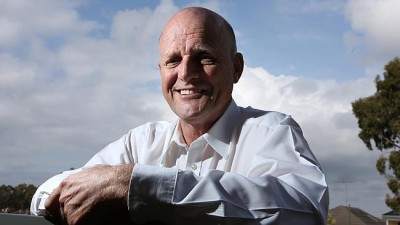
david leyonhjelm

*****

Senator LEYONHJELM: Good morning and thank you for coming along. I would like to know a little bit about you to begin with. How long have you been an acoustics engineer?

Mr Cooper: Thirty-seven years.

Senator LEYONHJELM: Have you been involved in standards committees?

Mr Cooper: Yes, I have been on a number of standards committees here in Australia in terms of noise and vibration. I was on the aircraft noise standards committee for 26 years, the railway noise subcommittee for about 10 years, the architectural acoustics standards in relation to laboratory testing for about 12 years, the whole-body vibration standards committee for 25 years and committees overseas in relation to helicopter and aircraft noise. I have been with the Helicopter Association International for acoustics fly neighbourly committee for about 23 years. I have been an observer to the American standards aircraft noise committee and I have advised the International Civil Aviation Organisation by way of the UK Department of Transport.

Senator LEYONHJELM: Have you been an expert witness based on your expertise as an acoustician?

Mr Cooper: Yes, I must do about 50 cases a year.

Senator LEYONHJELM: Fifty cases a year?

Mr Cooper: Yes. I appear regularly in the Land Environment Court of New South Wales and sometimes, in terms of licensing matters, local courts or what used to be a licensing court and occasionally district court, Supreme Court matters and two matters in the Federal Court.

Senator LEYONHJELM: All right. Let’s get on to some broad detail. Is it an established fact—is it scientifically proven—that wind turbines emit infrasound?

Mr Cooper: Yes it is.

Senator LEYONHJELM: What can you tell us about infrasound? I am only a senator, so I do not know anything much. Give me a run-through on what it means.

Mr Cooper: If we imagine in many cases considering noise as the same as light, if you pass light through a prism, it will break up into different colours of the rainbow. We go from the reds, which is a low frequency, up to the yellows and ultraviolet as a high frequency. So that covers the broad spectrum of noise that we can hear, from bass in music up to cymbals, but there is also energy, just as in light that is generated outside what you can see. People understand infrared exists and can be used for therapy, and there is ultraviolet, which contributes to sunburn. In terms of acoustics we have the same terminology. Infrasound are the low frequencies below the normal level of hearing, so they are normally considered as being below 20 hertz. Ultrasonics are the frequencies above what we can hear and are normally taken as above 24,000 hertz or thereabout. As we age we lose our level of hearing in terms of its dynamics of frequency range, so some people have trouble hearing high frequencies. Musicians who train themselves to listen to music can pick a lot of these frequencies. Bats are very good at picking the high frequencies they use as sonar. So infrasound covers the area below normal hearing. Infrasound therefore is normally confined to the region between zero hertz or DC and 20 hertz. Low frequency in terms of discussion of turbines and general industry is considered between 20 hertz and 200 hertz.

The ear responds in a non-linear manner to noise. What happens is that we do no respond or detect the noise in the same way as a sound level meter. Sound level meters simply measure pressure. As we get different levels of sound, so the hearing changes in its sensitivity. You can generate high levels of infrasound where people can hear it, so studies have been done to determine what is called the threshold of hearing just as you can do the threshold of hearing for sound. When we get down to a level that it is no longer heard, that becomes inaudibility. The thresholds of hearing are done with various subjects, and you get a mean level. What is typically taken is the threshold of inaudibility is one standard deviation or about 10 decibels below the levels. When we measure noise, the common concept is to use decibels—after Alexander Bell, the originator of Bell—and it is a logarithmic scale. So one talks about different levels by reference to decibels.

Below what you can hear for infrasound are levels much lower at which people can perceive the level, so we actually have a threshold of perception where people can be subject to infrasound and they can feel it. Then at a much higher level we get the level of infrasound where people can hear it. Then when it goes above certain levels it can be a level of pain. You can do the same thing with the audible noise. We can have satisfactory levels, we can have painful levels, we can have inaudible levels. We can still have levels lower than inaudibility. It is just that we cannot hear it.

Senator LEYONHJELM: Does infrasound travel further? Is it transmitted any differently from audible sound?

Mr Cooper: Yes. What happens is that one normally expresses the attenuation or loss of energy on a basis of distance. Typically, for normal noises—the noises that you are hearing at the moment, traffic noise or industry noise when you are outside—it is normally considered to fall off at six decibels per doubling of distance. If you have a noise of, say, 50 decibels and you are 20 metres from a noise source—imagine a pump or an air conditioner—when you then go to double the distance, it will go down six decibels. Double the entire distance again and it will go down another six. That is normal noise and a normal propagation.

When you are dealing with the low frequency down to infrasound, the wavelength—that is, the dimension from a positive to negative and back to a positive of a wavelength—is much longer. Infrasound propagates at a lower rate. For many people who have carried out the work, it is between three and four decibels per doubling of distance. On low frequency energy, if you are subject to monitoring a rock concert, what people hear is the boom, boom, boom and they can hear the noise; but as you go further away, the general noise disappears and they are left with the base. The base frequency travels longer distances and particularly with infrasound.

matt canavan

*****

Senator CANAVAN: How long is the distance?

Mr Cooper: I have measured infrasound from the Waterloo wind farm at eight kilometres. The University of Adelaide, during a shutdown of Waterloo, measured the Hallett wind farm, which was something in the order of 30 kilometres away. They are not hearing it, but they can see the data by the specific frequencies that are associated with the operation of turbines.

Senator LEYONHJELM: Does the ability to hear it or feel sensations from infrasound vary by individual?

Mr Cooper: Yes, different people will be subject differently. For an example, with sick sickness—going out on a boat—not everybody will get seasick. Certainly, not everybody will hear or perceived noise from various industrial operations. In terms of wind farms, not everybody detects the presence of the infrasound.

Senator LEYONHJELM: Can it penetrate insulated buildings and be felt in a built environment, so to speak, differently from outside?

Mr Cooper: If we take the first part of your question, all products that we have in building elements have a lower degree of the attenuation for low frequencies than high frequencies.

Senator LEYONHJELM: So they are more likely to be felt inside a building?

Mr Cooper: We will do the transmission part first. There is a lower degree of attenuation in the low frequency and infrasound. As to what happens with people perceiving low frequency or infrasound, firstly it is dependent on how loud or how much energy is there and secondly it depends as to whether the building interacts. In some cases, when you have energy such as infrasound that impinges upon buildings, it sets parts of the rooms, the walls and the floors into vibration so that it amplifies. If you go into an echoing room, everything sounds differently than if you go into a cinema, where it is designed to be dead. The room provides colouration of sound. You can understand that for normal sound. If you look at it or study acoustics, different materials in rooms change how a sound occurs once it is in the room. This same thing happens with infrasound. As a function of how big the room is or how small the room is, there can be natural modes or echoes that occur in the room.

URQUHART2

*****

Senator URQUHART: Given that we are not going to have a lot of time, are you happy to take questions on notice if I do not get through the number of questions I have got?

Mr Cooper: Yes, no problem.

Senator URQUHART: Thanks very much. Can I just confirm that you do not have any medical qualifications and that your experience is not of a medical background?

Mr Cooper: Correct.

Senator URQUHART: I understand that the study that you were involved in involved no medical professionals and also you did not gather any medical data about the participants. Is that correct?

Mr Cooper: That is correct.

Senator URQUHART: You and Pacific Hydro released a joint statement regarding the report that you talked about earlier. I would just like to go to some of the statements to see if you still agree with them. Firstly, the Acoustic Group and Pacific Hydro agreed that the study was not a scientific study. Do you still agree with that statement?

Mr Cooper: Yes.

Senator URQUHART: Secondly, the Acoustic Group and Pacific Hydro agreed that the report does not recommend or justify a change in regulations. Do you still agree with that statement?

Mr Cooper: Yes.

Senator URQUHART: Thirdly, the Acoustic Group and Pacific Hydro agreed that this was not a health study and did not seek or request any particulars as to health impacts. Do you agree with that?

Mr Cooper: Yes.

Senator URQUHART: Finally, on the statement that the study clearly states that no correlation had been found with standard acoustic parameters versus the wind farm, is that correct?

Mr Cooper: Yes.

Senator URQUHART: There are a number of experts that a very serious concerns about the methodology and the validity of your study. Among these are issues with the tiny sample size of six people and the fact that you only use subjects who already thought that wind turbines were the source of their health problems. Can I ask how you chose the participants of your study?

Mr Cooper: Yes. If you look specifically at the brief, the brief said that I was to undertake noise and vibration measurements to determine certain sound levels and certain wind speeds that related to specific local residents. The brief, which was issued by Pacific Hydro, said six residents. Those were the six residents, being the three houses that were looked at. Therefore, that was a restriction right from the start. The brief says that that is what I had to do. Some of the comments that have been made are from people who actually have not read the brief or looked at the report.

Senator URQUHART: The reason why there was not a larger sample size or a control group was that that is what the brief actually said from Pacific Hydro.

Mr Cooper: That is correct.

Senator URQUHART: Is it right that you have a history of appearing in court cases for wind opponents and casting aspersions on the academic research which shows that there is no evidence of the health impacts of wind turbines?

Senator LEYONHJELM: That is a bit loaded.

Senator URQUHART: I did not interrupt when you are talking, Senator Leyonhjelm. I am sure if Mr Cooper is uncomfortable with answering it, he will tell me.

Mr Cooper: I have appeared in one court case in South Australia and a VCAT hearing in Melbourne; I am not sure if you would classify it as a court as a strict technicality. I have been in no court cases in Sydney. I have only appeared in two matters in terms of providing evidence as to measurements that have occurred in wind farms. As to health impacts, I am not qualified so I have reported on the acoustic matters, that there is a wind turbine signature that is generated and that the dBA level which appears in permits, conditions and guidelines—so the New Zealand standard—do not cover infrasound and low-frequency noise. There is an issue there that they are inadequate to cover that specific spectrum of noises generated from wind turbines.

There is an issue in looking at saying this is what happens. Of the 11 wind farm that I have been to to conduct measurements, every one of them has exhibited this wind turbine signature. I am not the only person who has identified this. As my report sets out, the University of Adelaide has found this, the Shirley wind farm people identified this signature and Health Canada, in their major study, has identified the same signature. All of them have identified that that signature is not covered by the dBA method.

Senator URQUHART: With some of those groups that you talk about there—the Shirley wind farm and Health Canada, et cetera—do you have documentation supporting that?

Mr Cooper: Yes.

Senator URQUHART: Are you able to provide that to the committee?

Mr Cooper: Yes. I have made a reference in the submission to the material—

Senator URQUHART: As to all of those?

Mr Cooper: Yes. I have made reference to and I have included some data from the University of Adelaide, I have included the principal graph from the Shirley wind farm main report, I have included the spectrum information from Health Canada and I have made references to the primary source documents. For Health Canada, I have the two reports that have been issued by the group doing infrasound. I can give that to you. There are parts of it redacted in terms of it. I can certainly give you the entire Shirley wind farm report and also papers that have been issued by the University of Adelaide’s research group, who have got an Australian Research Council grant to look wind farms.

Senator URQUHART: Great. If you could provide that, that would be useful. On the one that has the redactions, why are there redactions in it?

Mr Cooper: It identifies locations in terms of it. It is the same thing in terms of the Cape Bridgewater study. None of the residents are identified by name. The numbers that are used are houses, which are not the same as any other studies. The numbers went way up. They became house 87, 88 and 89. I have not mentioned any names. The residents have provided their section and an appendix for their comments, but the report is specific about not identifying people. That is the same thing that has occurred in the Health Canada report, because they talked about some locations. That is what I assume is the basis of the reductions.

Senator URQUHART: I understand the South Australian Environment, Resources and Development Court dismissed your expert evidence against the Stony Gap Wind Farm, saying of your work:

At present, on the basis of his evidence before us, it seems that his approach to the task includes privileging the subjective experiences of those residents who have experienced problems, and their perceptions as to the cause of these experiences, over other contradictory data.

What would you say to that?

Mr Cooper: I would say two things: the court also, if you read the judgement, said that they are required to utilise the guidelines that are in existence at the time—and the South Australian EPA guidelines actually state that a well maintained wind farm does not produce infrasound, so it has a bit of a problem; and it uses DBA so it has a second problem. The evidence that was provided at the ERD court was actually during the early stages of doing the work there at Cape Bridgewater.

The fundamental problem that you have in looking at the issue of wind farms is that there have not been health studies so the health studies are not there to show either an impact or no impact. Therefore, you cannot answer the question about what is occurring. It is a concept that I presented in Portland 2½ years ago. To get into this area, we needed to find first a signature from an acoustic viewpoint and do a socio acoustic study to work out the impacts from the noise perspective. Then when we had that we could move into the full character in the medical studies.

You read out just earlier that Pacific Hydro have agreed that there is no correlation between the normal noise indices and the wind farm. What that means is that even the permit conditions are not correlated to wind farms whereas if you use what I call the wind turbine signature, that is correlated to the wind farm and it is that concept that now enables that to move forward in the medical study. So acousticians that have been researching wind farms on both sides of the fence have actually said this concept of WTS or DWTS—it is in my report—actually make sense because it fits up with all the graphs and now it gives a tool so that you can move into the medical phase.

There are a number of places in America that are already adopting the survey profile that was done here for Cape Bridgewater and are looking at that very exact tool with people looking forward to move forward into the medical studies. If you did not have a way of relating the wind farm to what was occurring in the houses then you could not do the medical studies. Therefore, what you have said in the ERD judgement is correct and that is the basis why it is correct.

Senator URQUHART: Is that the same process that you undertook with the Cape Bridgewater study?

Mr Cooper: The Cape Bridgewater study had a specific brief. The brief was to determine certain wind speeds and certain sound levels that related to disturbances. It was not looking at health. I did satisfy the brief on both of those components. Having satisfied the brief, we now have an index that says we can relate it to disturbance. That index allows those studies to proceed.

Chris Back

*****

Senator BACK: I go to the New Zealand standard 6808. You made the observation earlier that it does not measure infrasound; it is not mention infrasound in its particular assessment and measurement of sound.

Mr Cooper: Yes, it does not measure infrasound and it uses of a DBA parameter and that does not work for infrasound because the filter curve that appears has a very substantial amount of attenuation that it becomes insignificant in the DBA level.

Senator BACK: So the New Zealand standard is actually the one that has been used throughout Australia. Is that correct in satisfying local and state government requirements in planning?

Mr Cooper: That is incorrect. The New Zealand standard is used in Victoria and it is referenced in the permit for Cape Bridgewater Wind Farm and other wind farms in Victoria.

Senator BACK: What about in other states?

Mr Cooper: In other states, South Australia has a guideline and that guideline is also being used in New South Wales and sometimes it is being looked at in Queensland.

Senator BACK: And do those guidelines from South Australia and New South Wales also include infrasound in their particular assessments?

Mr Cooper: No they do not. The South Australian guidelines are DBA and they also make a point of saying well maintained wind farms do not produce infrasound.

Senator BACK: Can I conclude from the work here that any assessment process that does not incorporate infrasound is of little value?

Mr Cooper: That is correct.

Senator BACK: As an adjunct to that in the event that infrasound has not been considered by any sets of standards, then, by definition, they cannot have incorporated impacts on human health. Is that correct?

Mr Cooper: That is correct.

Senator BACK: The wind turbine signature concept that you have introduced in the Cape Bridgewater study, is that new to this whole world of acoustic interpretation of wind turbines around the world?

Mr Cooper: No, the use of ‘wind turbine signature’ is my use. I have been expressing it for a number of years because it was a way of describing what occurs from wind turbines. The fundamental of physics says that if you have a fan that rotates, it will produce a frequency that is called the blade pass frequency—the number of blades times the speed that the fan is doing—and it will produce harmonics. It is the law of physics. So all that happened was that does exist and it occurs from wind turbines.

If I go back to the late 1970s and early 1980s, a lot of work done in America including by organisations such as NASA, MIT et cetera identified that this signature exists. They were using a downwind turbine rather than an upwind turbine. All the other researchers had looked at narrow band—that is an important thing. So I have just used the term ‘WTS’.

Senator BACK: So the term ‘wind turbine signature’ is accepted. I have a question in relation to these sensations as you describe them. The sensations seem to be what people anecdotally record and they record them on the level of severity from zero to five, with zero being nothing and five being maximum. The value of any scientific research, of course, is that it can be replicated anywhere and one would expect then that, if replicated faithfully, the same results or similar results would be repeated in other locations. That is what I understand to be the value of a scientifically valid outcome.

Mr Cooper: That is correct. What I attempted in the first instance for Cape Bridgewater was to replicate the South Australian EPA survey questionnaire from Waterloo.

Senator BACK: Which you have now developed further?

Mr Cooper: That is correct. What happened was, when the residents tried it, they found that it had ambiguity but it did not describe what they were perceiving. The EPA study was on noise and noise did not fit into what was occurring because they were not hearing it; they were perceiving it. We added in vibration as a separate distinction because residents were reporting vibration that they could feel through the floor or just experience.

I had looked at the concept of sensation in Waterloo in 2013 when I had looked at the perception. I put it to them: would this be an answer for what you have had trouble describing? They agreed that was the case and many of their complaints that had been attributed to noise should have been attributed to sensation.

Senator BACK: Finally then, one would expect we could now take your Cape Bridgewater findings and they could be replicated in other locations in Australia and elsewhere using the same methodology, using controls as in this case, using a wider sample of the population, and we would hope or expect that we would actually find similar outcomes based on sensations as they relate to changing of the activities of the turbines themselves?

Mr Cooper: Yes, that is already happening overseas. There is one looking at happening in Australia. As to the similar results, we may be getting some lower levels of sensation because they will involve people in controls who do not have a sensitivity.

Senator CANAVAN: Thank you, Mr Cooper, for appearing. Your report is very interesting reading. You prepared the report for Pacific Hydro; have you had any discussions with Pacific Hydro about your evidence today?

Mr Cooper: No.

Senator CANAVAN: I was interested in Senator Back’s questioning before about the South Australian guideline. The guideline said that a well maintained wind farm would not produce infrasound. Is it possible in your view for a wind farm or wind turbine not to produce infrasound?

Mr Cooper: The laws of physics say a wind farm will produce infrasound for the speeds that we see. A windmill pumping on a farm has a small blade, has more blades and operates at a higher speed so it will produce a signature but there will not be any infrasound. What happens is as the blades get bigger, they have to reduce the speed. You get supersonic wind effects at the tips of the blades like helicopters. They are governed by the speed that the rotar can go by the number of blades and the size of them. So you have dynamic problems as you start getting bigger. What has occurred is the bigger turbines have started to reduce the speed

Senator CANAVAN: So it is physically possible to reduce infrasound but for practical purposes, it is not possible?

Mr Cooper: Yes and no.

Senator CANAVAN: I will phrase my question another way. Could a wind turbine operator change its operating guidelines to reduce or mitigate the production of infrasound, not necessarily to remove it but to moderate its generation?

Mr Cooper: I have not been permitted to talk to the wind farm turbine people to give you an answer. I found in terms of the data from the resident’s observations that there were four different scenarios in which there was a greater degree of sensation: when the turbines were trying to start up, when the turbines were at maximum power, when they started to depower the blades and when they were changing the power output by more than 20 per cent going up or down.

If you are a pilot and you fly a plane with a variable pitch propeller, you can change the pitch to be more efficient in its operations. So what happens is the angle of the blade changes with the wind to have a more efficient flow. It has been suggested that when that angle is not correctly aligned for efficiency then you get more disturbance across the blades and the infrasound component becomes greater. They seem to be the four scenarios that the residents came up with that had a heightened level of sensation. But I was not able to talk to the wind farm designers to actually ask: does this hypothesis fitting with what’s occurring—

Senator CANAVAN: Why were you not able?

Mr Cooper: Pacific Hydro said that they would handle it in-house.

Senator CANAVAN: Did you ask Pacific Hydro?

Mr Cooper: Yes I did.

Senator CANAVAN: And they said ‘no’?

Mr Cooper: They said they would ‘handle it in-house’ and I did not get a reply.

Senator CANAVAN: What does ‘handle it in-house’ mean?

Mr Cooper: They have people who govern and look after turbines and who can look at the answers.

Senator CANAVAN: Did they say they would look into what you have raised but do so in-house? Did they actually make a commitment to look into this issue of the design of the turbine blades?

Mr Cooper: It was not the design; it was finding out what was happening in my concept. I never got an answer.

Senator CANAVAN: In your study, you say at the end there is a potential need for further investigations—although you do say there would be significant costs involved. Could you outline what are the priorities for further investigations now, given the results of your work?

Mr Cooper: Statistically, if we start off with six people who are sensitised then we find the worst-case scenario. If you want to create a standard or look at it, you need a much larger database or you need to repeat the study to see how it occurs across a wider area with different turbines. Therefore, there is an automatic limitation of being just six people in this work. You would need to have a much larger database if you were looking at introducing a standard. You certainly could not change the regulations in Victoria based upon six people.

The second part is you need to look at the medical impacts. If you go back a couple of Senate inquiries, they talked about the need for medical research into it. So I believe that if we have this tool we could go to that step. That needs a multidisciplinary approach, because it is not just AGP; you need people that look at brainwave function, sleep disorder—all of these combinations. So, in effect, the acoustic side is very much the tail that is wagging the dog.

Senator CANAVAN: I take your point that we could not really change regulations on an existing operator based on six people, but what do we do for future wind developments? There is a well-established precautionary principle in regulation. Is there enough here to say we should be very precautionary about approving further wind developments until we can do these studies?

Mr Cooper: If you look at the material that is available from the University of Adelaide, the Shirley Wind Farm and Health Canada, it tells you what is happening with infrasound. They say it is easy to measure out to 10 kilometres. We have material from NASA talking about annoyance; we have perception. The question becomes, in infrasound: what is the level at which we should be protecting people? I certainly cannot give you that level; I am just a noise engineer. So it is that that you need to look at. That is where the research needs to occur. People in America, particularly Dr Paul Schomer, are looking at this work. That is why they want me to come to America in May and August—to be on panels to talk about research into wind farms and where we should go as the next step.

Senator CANAVAN: But there are questions that remain about the impacts of wind farms, in your view, after you have done your study?

Mr Cooper: There are certainly questions about wind farms, but infrasound is not just restricted to wind farms. You get infrasound from power stations and gas turbines. I have been doing work up in the Blue Mountains, west of Sydney, where I have found that a coal powered fire station is affecting hundreds of people 15 kilometres from the power station. I started by looking at infrasound from a ventilation fan on a coalmine. I found that the coalmine does produce infrasound, but it is not of the order of magnitude that is causing the problem for residents. But the residents are experiencing the same sorts of effects as residents around wind farms. I have shown, very conclusively, that the infrasound components are coming from a very large power station.

Senator Bob Day

*****

Senator DAY: On the same path here, I played in a rock’n’roll band for many years, so I am very familiar with noise complaints and decibel levels. Also, coming from Adelaide, we hosted the grand prix for many years, and that took the concept of noise to a whole new level. We could hear that high-pitched sound from the grand prix 10 or 15 kilometres away. So I am interested in the difference with this whole new province of infrasound. What calibration or measurement system would you envisage would be encompassed in this new area of subaudible sound called infrasound? This is a fascinating subject. We all know about the sound above the audible level; we all experience that. But how is this new province measured in layman’s terms?

Mr Cooper: I have an entire chapter in this report, chapter 10, that talks about instrumentation problems. Not everybody puts forward reports and says, ‘These are the problems that we have,’ but it is there for other researchers, because you require special equipment and knowledge in terms of doing this work. So it has cost me a lot of money in instrumentation to be able to do the job. I lost hundreds of thousands of dollars doing this Cape Bridgewater study in terms of time and money that I had to expend to be able to do it. So the report gives an entire chapter to help others. We got a special calibrator to measure down to infrasound for our microphones, because we could not rely upon manufacturers’ work. So there are a whole pile of different protocols. I and other acousticians in America have been researching using microbarometers, pressure detectors, to measure what is occurring from wind farms, as a much cheaper alternative than special microphones. That seems to be the way that it is occurring. There is a draft American standard that is also including this in the mix for doing measurements. The Health Canada report on infrasound shows that they are using microbarometers, because this becomes a relatively simple way of doing it.

This is quite a new area, although it is not so new if people were doing it 30 years ago. It has just been forgotten about. But infrasound affects things like sick building syndrome. A former Prime Minister of New Zealand moved into an office and had an infrasound problem from the air conditioning. So it is a matter of understanding it and having the specialised knowledge to look at it. I have the advantage of having carried out for years machine vibration measurements looking at rotating equipment, so I automatically think about frequencies and dynamics. I have done a lot of work at concerts and nightclubs, and that is about controlling low frequency.

Senator DAY: I remember you. You shut us down once.

Mr Cooper: The laws shut them down. My job is to keep them going.

Senator BACK: A wise move, I think.

Mr Cooper: I did a lot of work with F111s and the Joint Strike Fighter for the Department of Defence. We were doing tests out in the middle of the desert on full afterburner, and we could tell when the pilot turned off the afterburner at 18,000 feet. So we understand how it travels, but actually there is not that much infrasound. It is noise frequency.

But it is very new, interesting work and a lot of people, if they do not have the right gear or they have not spent thousands of hours checking it to see what is going on, have problems. So I have worked closely with Adelaide university on calibration and we have exchanged ideas to help one another, to make sure we have the right microphones, the right settings, the right preamps.

Senator DAY: Those who are familiar with the movie This is Spinal Tap know they covered that by taking the dial up to 11 from 10. So you cannot just take it into minus when you are measuring the decibel level, because it is not decibels, is it?

Mr Cooper: Correct. It changes. We do a little bit more sophisticated limiting in nightclubs. Unfortunately, I have those very bad hours doing nightclubs and concerts at night—

Senator DAY: I am pleased to hear that.

Mr Cooper: sorting out those problems. So I understand where you are coming from and it is different. Infrasound is a completely new area and it is challenging to get the right results—that is for sure. That is where we have problems. A lot of the instruments that are available are measuring the wrong thing. We found two instruments from the same manufacturer that had different curves electronically and we had to unweight all those curves to get the right answers.

Senator DAY: I have a science background, so I know what you are talking about. That is very interesting. Thank you very much.

CHAIR: Senator Xenophon, are you there?

Nick Xenophon

*****

Senator XENOPHON: Yes, I am. I can barely hear you, Chair, and the irony is that a jackhammer has just started up outside my office in Adelaide. So there you go. There is no infrasound with that one, I think. Mr Cooper, I want to ask you some general questions about whether you have ever been gagged, silenced or limited in your ability to comment by anyone who has retained you as a consultant to investigate and remedy noise pollution. Bear in mind you are covered by parliamentary privilege in what you say, so any confidentiality clauses you may have signed would not be valid in the context of anything you say before this inquiry.

Mr Cooper: I have had a number of gag clauses in relation to contracts, in terms of legal engagements. Specifically I had one on providing an opinion with respect to the Uranquinty gas fired installation, which had a significant infrasound problem.

Senator XENOPHON: Where is Uranquinty?

Mr Cooper: Uranquinty is near Wagga, in New South Wales.

Senator XENOPHON: And there is a gas fired power station there?

Mr Cooper: That is correct. It was new one that presented problems on a particular mode of operation, basically the start-up of the power station. It affected houses out to about two kilometres.

Senator XENOPHON: And you were prevented from speaking out on that?

Mr Cooper: Yes. Well, I was retained and had significant clauses on disclosure of any material on it. I was representing the Australian supplier and the German manufacturer in various court proceedings. In relation to—

Senator XENOPHON: So if the committee were minded to ask you for a copy of that, if there were a formal request—that is a matter for the committee and I will go through the chair and the committee generally—is it the sort of material that you still have?

Mr Cooper: Yes, I still have some files and information on it.

Senator XENOPHON: Sorry, I interrupted you then. What else were you going to say?

Mr Cooper: In relation to this Cape Bridgewater service, I have a contract which has limitations in terms of confidential information that is provided to me from Pacific Hydro, which is a standard sort of format. The intellectual property material that is associated with this study has four components. There is confidential material provided by the company. There is principal intellectual property, which is material relating to the wind farm data which was supplied to me by Pacific Hydro. There is background IP, which is material I brought to the study, being my wind turbine signature—my graphical presentation of the noise level versus the wind and the power outputs et cetera. I hold that, so I do not have a restriction on that. Then there is the project IP, which is whatever is developed through the project.

So the dB(WTS) developed in the project is the property of Pacific Hydro. The observations that have been recorded and presented on graphs that show the output is the property of Pacific Hydro under the terms of the contract. Therefore, under copyright, I am not permitted to reproduce those graphs out of the report. So people around the world can have the report and look at it, but I am not permitted to take these graphs and present them. I have a number of peer reviewed papers that have been done for the purpose of identifying sections of this report and what has happened, and under the copyright laws I am not permitted to use those and I do not have a licence from Pacific Hydro to use even dB(WTS).

We have now proposed, with some other academics around the world, to use the terms LS-WT for wind turbines, LSW-AC for air conditioning or LSW-PS for power stations. So other researchers who were thrilled about the concept of dB(WTS) have now looked to use this terminology. Of course, if I have copyright problems, it is a bit hard to go to a conference and say, ‘Here’s the work,’ if I cannot show any of the graphs. Most of the graphs refer to the wind speed, because that is a very important part of the Cape Bridgewater study. So that has presented a problem for me. Further than that, I still have what I will call gag clauses in the contract.

Senator XENOPHON: I just want to understand this. I think appropriate peer review is important for the robustness of any reports such as this, but you are saying that there are limitations on the level of peer review that can be carried out by virtue of the copyright limitations placed upon you?

Mr Cooper: No, I am not saying that about peer review. There was no peer review from my side of the equation before the report was done. There have been peer reviews done since the report was issued and people are using that work. What I am saying is that I am not permitted under copyright to provide any papers or publications that have graphs directly out of the report. My lawyers have confirmed that is the property of Pacific Hydro. I have requested a licence and permission for some peer reviews. In the submission that I have uploaded to the Senate committee’s website, I have two of my peer reviewed papers where all the graphs have been removed, as required by Pacific Hydro. It shows that two of the papers to be published are completely useless. I could not present them to any conference.

Senator XENOPHON: To summarise, would it be fair to say that the absence of this copyright licence from Pacific Hydro restricts further public debate and discussion in respect of wind turbine noise?

Mr Cooper: It does not restrict people overseas or anywhere else in Australia discussing it; it restricts me from entering into those discussions and showing the material. So it just restricts me.

Senator XENOPHON: But the effect of restricting you as the author of this report would be presumably to restrict some robust debate and discussion about this whole issue.

Mr Cooper: I am having difficulty as to how I prepare a paper in May. That says I cannot use the material in the report—the Cape Bridgewater study the causal links. It is correct that I cannot use the data I have got and reanalyse it. I am okay about that, but there is a published report and it has a wealth of information. For example, chapter 9 identifies the problems in using the South Australian EPA methodology and it shows quite clearly how if you go a little bit finer in the resolution the answers are all there but if you restrict it you cannot do it. That is one of the papers that have been refused to be issued.

Senator XENOPHON: Before I go to the South Australian EPA methodology, have you raised your concerns with Pacific Hydro? To give credit to them, they did give you access to Cape Bridgewater. It was groundbreaking in that sense—that there was a level of cooperation—and I congratulate them for that. Have you raised with them your concerns about the lack of access or the copyright constraints placed on you?

Mr Cooper: Yes, in December last year I requested this very matter in terms of the licence because under the contract every time I want to use DWTS I have to write to them to get their permission. So I did raise it and there were discussions about a licence. I provided them papers earlier this year and raised it again. I have been told that a licence is coming about DWTS but I have been instructed that there is copyright over the reproduction of the report.

Senator XENOPHON: Could you please provide to the committee copies of all of your correspondence, including emails, any documents exchanged and any notes of conversations you may have had with Pacific Hydro or between your company and Pacific Hydro in respect of this. I would be quite interested to see that chain of correspondence.

Mr Cooper: I can but I point out that I am a little bit reluctant. But, yes, I can provide it.

Senator XENOPHON: Perhaps we can get advice from the secretariat and even the Clerk of the Senate as to your legal protections to provide such information. If there is a concern about that, you may want that to be considered in camera by the committee in the first instance. That is something we can perhaps ask Pacific Hydro shortly. Are there any other reports you have written in relation to environmental noise pollution where you have been constrained, gagged or in anyway fettered in terms of what you can discuss about those reports?

Mr Cooper: There are a couple but they are related to the Department of Defence where I used to have top secret clearance so that is involving matters of military concern. If I exclude that, no, I have not had any other restrictions.

Senator XENOPHON: Thank you. Finally, you refer in chapter 9 of your report to the South Australian EPA methodology. In a short summary—and you may want to elaborate on this on notice given the time constraints—are you saying that the South Australian EPA guidelines are fundamentally flawed in considering these types of applications?

Mr Cooper: Yes, I have detailed in my submission as to where the flaws are. What I was saying in chapter 9 is if you go into one-third octave resolution you will not find any difference between a natural environment and a windfarm affected environment. If you put the narrow band in you see straight away that there are differences. That is what chapter 9 is all about—to show that if you use the right tools you can actually measure what is going on. If you restrict yourself to a dBA or a dBG, you will not find any difference between a natural environment and a windfarm affected environment. That is actually the critical aspect.

There is an acknowledgement that this study, which had the cooperation of the windfarm and the residents and did on-off testing, had never been done before in the world. We have the likes of Dr Paul Schomer praising this work. He was one of the authors on the Shirley windfarm report. They were very critical that the energy company would not assist in the work. They have said this is exactly what they needed. So when they did see the report—and they could not see the report before it was issued—every one of those authors of the report congratulated me. There is dialogue. I have in appendix B to my submission their comments about it. They think it is a major step forward as well as the threshold work that I have done.

Senator XENOPHON: Thank you.

Senator CANAVAN: I would like to follow up on Senator Xenophon’s questioning. I find it extraordinary that you cannot use your own charts. Can I just clarify, if you are doing a PowerPoint presentation overseas, you cannot copy and paste a chart out of your report and put it on a slide?

Mr Cooper: If it is in this published document, I have been advised that I cannot. I prepared two peer reviewed papers and they are attached in my submission. I have a copy of it here, but I have cut out all of the charts on that specific instruction of Pacific Hydro about 10 days ago. My lawyer has confirmed that I cannot do it.

Senator CANAVAN: Ten days ago, they advised you that you could not do that.

Mr Cooper: That is correct.

Senator CANAVAN: That advice related to your submission to this Senate hearing?

Mr Cooper: I was in the process of doing my submission. It related to papers that I had given to them for the purpose of publication. I had a paper on infrasound, I had a paper on the narrow band and I had a paper on sensation.

Senator CANAVAN: I find it unbelievable that you cannot do that. These are all public documents too; that is, the charts in this document that you are not allowed to use. But you can google that, can’t you, and find that on the internet?

Mr Cooper: That is correct. But my lawyer said under copyright law they are correct and I cannot do anything about it.

Senator CANAVAN: I will leave it there. I have some other questions, but I will put them on notice.

Senator LEYONHJELM: It is just straight copyright law that your lawyers are working off, isn’t it, and it is not a specific laws that you had in the contract you had with Pacific Hydro?

Mr Cooper: There is a contract at the IP. It is their IP and the project IP is Pacific Hydro’s IP. I cannot use it without their permission.

Senator LEYONHJELM: That is actually normal.

Senator CANAVAN: But you have asked their permission and they have not given it yet?

Mr Cooper: That is correct.

CHAIR: On my examination of the material in your report and in particular a reference to the Shirley wind farm, it would appear that the noise or the infrasound levels in house 87 are significantly greater than those obtained in the Shirley wind farm investigation. Is that correct?

Mr Cooper: Yes.

CHAIR: As I understand it, at the Shirley wind farm a lesser level that was recorded there was considered a public health risk. Is that right?

Mr Cooper: That is what the report says, yes.

CHAIR: Thank you for your testimony today before the committee.

Hansard, 30 March 2015.

Steven Cooper’s submission to the Senate Inquiry is available as a pdf by clicking on the link here: sub254_Cooper

Facts

Letter to Physicians, about the health Effects Caused by Wind Turbines.

Letter to physicians

Dear Doctor,

For more than 30 years, the promoters of wind turbines know that they are harmful for the health. The president of VESTAS himself admitted to the Danish State…
Nevertheless, the opponents are named foolish, legal actions against them are taken!

Claude Brasseur
Claude Brasseur, mathematician

A statistical, simple and little expensive analysis can demonstrate objectively what is now known by “subjective” inquiries in Denmark, in Portugal, in the USA, in Australia, in the Netherlands, etc…

The following text presents a working proposal for which I suggest you to ask an official authorisation. This authorisation is necessary to be able to gather the essential data. These data, I may, as a mathematician – statistician, treat.
No name of person or institution will be known or be useful. That means that a bailiff will be necessary to certify their authenticity.

With my thanks, please accept, dear Doctor, the expression of my very high consideration.

Claude Brasseur

Claude BrasseurApril 12, 2015BelgiumBelgique

Infrasonic vibrations of wind turbines: a statistical test of sanitary harmfulness

This method excludes – for the first time – any subjectivity.
The subjectivity is systematically exploited by the wind lobby for 30 years!

Personne agée et éolienne
Infrasonic vibrations seem to be particularly harmful to the elderly.

By Claude Brasseur, mathematician, researcher, and founder of a research centre for renewable energy

Perturbed children who work badly on the school, the deformed feet of horses, minks who have a miscarriage or the dysfunction of human menstruations… all the people whose health degrades (1) in the environment of huge wind turbines, still prove nothing as for the direct link of cause to effect. It is necessary and it is possible to make an objective statistical study of the harmfulness for the health of the infrasonic vibrations of wind turbines by excluding any other sanitary risk factor. Here is a method proposed to compare the length of stay of the people of the 3rd age in institutions before the installation of wind turbines and later. This method excludes – for the first time – any subjectivity. The subjectivity is systematically exploited by the wind lobby for 30 years!

Introduction

The more we shall gather measures of stay ended with death, the more the results will be significant. We shall watch to make sure that the study is not biased, that there are no other changes in the environment or the management of old people’s homes concerned. We shall avoid the biases in particular thanks to institutions of the 3rd age not concerned by the wind industrial estates which have to be the object of similar statistical studies. These tests will show if these institutions have to have a distance of 5, 10 or 15 km to prevent the effects of the industrial wind turbines (IWT for Industrial Wind Turbine).

It is a hunch that if the average of length of stay before the installation of the industrial wind turbines is clearly longer than the average of the stays after the installation of the IWT, the demonstration will be clear. We suppose – but it must be verified – that the average lengths of stay in homes shielded from wind turbines do not vary statistically in time.

The IWT will obviously not much influence on the length of stay of old people of which the death will be noticed just after the starting up of wind turbines. Therefore, the average of lengths of stay observed after the starting up of the IWT will not reveal completely their role on the health of the concerned people. If it is possible to have – by making observations for numerous institutions – a large number of deaths every year after the installation of IWT, it will be possible to see if the rhythm of the deaths accelerates, that means that the stays in the institutions of the 3rd age shorten statistically…

In practice

  1. We note the length of stay of the elderly in one or several institutions before the installation of wind turbines (in a 4 km circle following the NASA).
    We go back up to 10 years behind for the deaths if the institution already existed in past.
  2. We note lengths of stay before deaths after the installation of the IWT.
  3. We do the same for several institutions far from the IWT (5, 10 or 15 km?).
    We can separate the samples of measures relative to the deaths before and after the installation of the IWT of the cases 1. and 2.
  4. The samples of measures which we have are supposed extracted statistically from a “normal” population. We calculate the diverse arithmetic means and the corresponding standard deviations.
  5. We return these values in reduced centered units which allow to compare samples between them.
  6. We remind the central theorem of the limit which demonstrates that the validity of the approximation increases here as the number of measures of available deaths.
  7. We compare the means and their standard deviations by the method of “unilateral no worthless test of hypothesis” because it is a question of considering if the life expectancy of people decreased after the installation of the IWT.

Statistical treatment of the data

The purpose of what follows is to show – through an example of imaginary measures- a procedure to be followed to process statistically the collected data.

Data: 10 lengths of stay before the installation of wind turbines: 10, 9, 8, 7, 6, 5, 4, 3, 2, 1 year and 10 durations after their installation: 9, 8, 7, 6, 5, 4, 3, 2, 1, 0 year.
We suppose that we introduced all the available data. The stays “later” often began before the installation of wind turbines.

The average of the stays before wind turbines:
M1 = 5.5 = (10 + 9 + 8 + 7 + 6 + 5 + 4 + 3 + 2 + 1) / 10
The average of the stays after the putting into service of wind turbines:
M2 = 4.5 = (9 + 8 + 7 + 6 + 5 + 4 + 3 + 2 + 1 + 0) / 10
Standard deviation concerning M1: S1
S1² = {(10² + 9² + 8² + 7² + 6² + 5² + 4² + 3² + 2² + 1²) / 10} – {M1²} = 8.25
S1 = 2.9

Standard deviation concerning M2: S2
S2² = {(9² + 8² + 7² + 6² + 5² + 4² + 3² + 2² + 1² + 0²) / 10} – {M2²} = 8.25
S2 = 2.9

Then we suppose that 2 samples go out of the same population, that means that wind turbines have no effect on the health of the senior citizens. In statistics it is called the null hypothesis.

Standard deviation of the difference of average M1 and M2:

S of M1–M2 = {(8.25/10) + (8.25/10)}1/2 = 1.3

To be able to compare distributions of data between them, we calculate the reduced centered variable: z = (5.5 – 4.5) / 1.3 = 0.77

With an unilateral level test of meaning 0.05 (5% of chances to make a mistake), we adopt the worthless hypothesis because z is smaller than 1.645 supplied by the normal law).
Both samples can come from the same population. No observable effect of wind turbines with our data.
Let us suppose that our 2 samples multiply tenfold as for the number of measures while having the same averages and the standard deviations of the same values.
What changes, is the value of S:

S of M1–M2 = {(8.25/100) + (8.25/100)}1/2 = 0.4

Then z = (5.5 – 4.5) / 0.4 = 1 / 0.4 = 2.5

Even with an unilateral level test of meaning 0.01 (1 chance on 100 to make a mistake) we see that z is more tall than 2.33. The hypothesis is refused, 2 samples are not extracted from the same population. Wind turbines are harmful and we can then be interested to know which hurts would create the exposure in the infrasonic vibrations chopped by the IWT named “Wind Turbine Signatures”.

(1) Some references:

1. NASA Technical Memorandum 83288, Guide to the evaluation of human exposure to noise from large wind turbines, March 1982

2. NASA Contractor Report 172482 Response measurements for two building structures excited by noise from a large horizontal axis wind turbine generator, November 1984

3. D.S.Nussbaum, S.REINIS, Some individual differences in human response to infrasound, Insitute for Aerospace Studies, University of Toronto, January 1985

4. Acoustic Noise Associated with the MOD-1 Wind Turbine : its Source, Impact and Control, Prepared for the U.S. Department of Energy, February 1985

5. J.Chatillon, Limites d’exposition aux infrasons et aux ultrasons, INRS, 2006

6. Nina Pierpont, MD, PhD, Le Syndrome Eolien : un rapport sur une expérimentation naturelle, décembre 2009 (traduction autorisée et approuvée par l’auteur)

7. Shepherd Daniel & alter. Evaluating the impact of wind turbine noise on health related quality of life – Noise & Health – 7-10-2011

8. Carl V. Phillips, Properly Interpreting the Epidemiologic Evidence About the Health Effects of Industrial Wind Turbines on Nearby Residents, Bulletin of Science, Technology & Society, 2011

9. Nissenbaum Michael A & alter, Effects of industrial wind turbine noise on sleep and health – noise & health. 7-10-2012, vol.14, p.243

10. Rand Acoustics, Brunswick, ME, A Cooperative Measurement Survey and Analysis of Low Frequency and Infrasound at the Shirley Wind Farm in Brown County, Wisconsin, decembre, 2012

11. Steven Cooper, Cape Bridgewater Wind Farm Acoustic Study, january, 2014

12. Steltenrich Nate. Wind Turbines. A different Breed of Noise ? Environmental Health Perspectives, vol. 122 – number 1, 1-2014

13. Dr.Mariana Alves Pereira, How to test for the effects of low-frequency turbine noise, Lusofona University, Portugal, February 2014

14. Robert Y McMurtry, Carmen ME Krogh, Diagnostic criteria for adverse health effects in the environs of wind turbines, JRSM Open, October 2014

15. Denise Wolfe, Review of the Health Canada Wind Turbine Noise and Health Study, November 2014

By Claude Brasseur | April 12, 2015

Wind Industry Fights To Deny Accountability, at the Expense of the Victims…

Health Impacts of Waterloo Wind Farm

Wind farm amplitude-modulation

****

In the recent review (not study) of the health impacts of wind farms, the NH&MRC renewed their call for a precautionary approach and emphasised the need for more research. This recommendation echoed their earlier Rapid review, as well as the Senate enquiry in 2011 – that more research was needed as there was a paucity of  high quality studies available.

This most recent review from the NH&MRC  contained only one Australian study – where a farmer’s wife, STT pin-up girl, Mary Morris, put in the hard yards and got something  decent done to survey the residents around the Waterloo Wind farm in South Australia (see our posts here,here and here).

The South Australian EPA promised big, but delivered a pitiful effort in their study of the noise impact on the Waterloo wind farm (see our posthere).

They put their microphones in places that violated their own guidelines  – such as near trees and reflective surfaces – to hide the low frequency noise and infrasound from the turbines.

epa gear under tree at Quast place

****

But once bitten – twice shy – the Waterloo residents also brought in acousticians from the University of Adelaide to run the sound studies at Waterloo in parallel with the disgraceful EPA work. This Channel Seven news story covers it.

Transcript

JOHN RIDDELL: Locals in the Mid-North are banking on independent research to confirm their claims about the health impacts of living near wind farms. They want to stop future projects in the area. Earlier results back their concerns.

MARIJA JOVANOVIC: Waterloo residents have long complained of health effects from constant noise and vibration.

COLIN SCHAEFER: We spend days and hours trying to fight these wind farms and we’ll continue to.

KRISTY HANSEN: The complaints are world wide so it’s hard to believe that these complaints don’t have some element of truth to them.

MARIJA JOVANOVIC: Adelaide Uni researchers are using microphones to analyse low frequency noise from turbines up to 10 km away. Early results show rumbling sounds at 46 Hz which are just audible to the human ear.

KRISTY HANSEN: When the wind farm is shut down those peaks just don’t exist.
A two month investigation by the State’s environmental watchdog found no evidence linking wind farms to adverse health impacts. But critics say that study was flawed as just one microphone was used instead of several to average out sound in different parts of a room. Microphones close to trees outside also skewed the data.
KRISTY HANSEN: This can cause the noise levels to be higher than they actually are when the wind farm is shut down.

MARIJA JOVANOVIC: For the locals it is acknowledgement at long last of their complaints. And while it may be too late for those living near existing turbines, it is hoped that the findings will stop those proposed elsewhere. Marija Jovanovic, Seven News.
Channel 7

Cape Bridgewater Wind Facility- Acoustic Engineering Investigation

Acoustic Engineering Investigation at Cape Bridgewater Wind Facility

Acoustic Engineering Investigation into Airborne and Ground-Borne Pressure Pulses from Pacific Hydro’s Wind Turbines at Cape Bridgewater

Waubra Foundation Definitive Document
1 February, 2015

A Simplified Explanation of the Findings, Previous Research, and the Consequences

1. Background

  • Turbines create “waste energy” in the form of airborne pressure waves (sound) and ground-borne pressure waves (vibration).
  • Noise is that part of the sound frequency spectrum which is audible, but “noise” is also defined by psychoacousticians as “unwanted sound”.
  • The strength (sometimes expressed as a loudness in the case of noise) of the sound is measured in decibels (“dB”).
  • The wavelength of individual sound waves is a measure of the distance between the peaks of the pressure waves. The speed of sound divided by the wavelength gives the frequency of the sound and is expressed in hertz (Hz).
  • Where the frequency of the sound waves is below 20 Hz, the distance between the waves is relatively long, and the general term for this portion of the frequency spectrum is known as infrasound. Infrasound is only audible at very high levels (dB). However it can be damaging to the human body at levels well below audibility.
  • Impulsive infrasound from a variety of industrial sources has long been known to have the potential to be harmful to humans, especially with chronic exposure. For example, human and animal studies have shown infrasound directly causes both physiological stress, and collagen thickening in a variety of tissues including cardiac valves, arteries, and pericardium which themselves lead to a variety of cardiovascular diseases.
  • Infrasound persists for much greater distances than audible sound and, unlike audible sound, penetrates well insulated building structures (including double glazing) with ease; and often increases the impact by resonating within the house, like a drum. This occurs, regardless of the source of sound & vibration energy. Penetration of buildings and amplification via resonance can also occur from sound and vibration from natural sources such as earthquakes and thunder.
  • Standards for wind turbine noise pollution in Australia are set in audible decibels (“dBA”) outside houses. Use of dBA excludes accurate measurement of frequencies below 200 Hz, including both infrasound (0 – 20 Hz) and low frequency noise (20 – 200 Hz). These Standards do not require infrasound (either within or outside homes) to be predicted in planning submissions nor to be measured in the required compliance testing to the planning permit noise conditions. Most jurisdictions do not require wind turbine generated low frequency noise to be predicted or measured either (unlike other sources of industrial noise). In fact most noise measuring instruments and microphones are unable to measure accurately in the infrasound range, especially below 8 Hz., and some Standards explicitly specify the use of equipment which cannot measure infrasound.
  • Wind turbines produce infrasound along with audible noise. The more powerful the wind turbine the greater the proportion of infrasound and low frequency noise emitted, which then increases significantly if the turbines are sited too close together, now common practice in Australia. Most newer wind turbines are now 3 MW or 3.5 MW, compared to2MW at Cape Bridgewater.
  • By the use of different sound meters and microphones, and in narrow (frequency) bands it is quite possible to identify and measure infrasound specifically from wind turbines, in the field. This unique “wind turbine signature” has now been demonstrated by the acoustic consultants involved in the Health Canada Study, and by Professor Colin Hansen’s team at Waterloo, in addition to Mr Cooper’s measurements at a number of locations in Australia prior to, and including, the Cape Bridgewater Acoustic Investigation.
  • Increasing numbers of residents living within 10km of wind turbines have suffered, and are still suffering, severe adverse health impacts since the wind turbines started operating. Many have left their homes repeatedly, and eventually permanently, to live in greatly diminished financial circumstances, as their homes are no longer habitable or saleable. Some residents become too unwell to work. Wind turbines are not the only source of impulsive infrasound and low frequency noise causing severe health damage. The same pattern of identical serious adverse health effects, sleep deprivation and home abandonments, sometimes out to similar distances are being reported by neighbours to other known sources of infrasound and low frequency noise, at open cut coal mining (e.g. Hunter Valley in New South Wales), underground mines with large extractor fans (eg Lithgow, in New South Wales), gas turbine power stations (e.g. Uranquinty, in New South Wales, Port Campbell in Victoria) and numerous other sources (eg Tara gas field in Queensland).
  • Wind power projects and other energy generating noise polluting industrial developments involve very large sums of money in construction, in revenues and in the case of industrial wind turbines — public subsidies. It is not uncommon to find companies with large investments and large cash flows going to great and improper lengths to maintain their cash flows.
  • The wind industry has never been asked to prove that their machines are safe, unlike other products on the market. When queries are raised about impacts on neighbours, the industry and its supporters trigger the “Four Ds” of denial, dissemble, delay and destroy the messenger, despite the wind industry being well aware of the seminal research by Dr Neil Kelley and NASA which established direct causation of symptoms from impulsive infrasound and low frequency noise from wind turbines and other sources in the 1980s, by both field and laboratory research.

2. The Purpose of the Cape Bridgewater Acoustic Investigation

The purpose of the investigation was simply to find out what was causing the symptoms and sensations, resulting in sleep disturbance and health damage, reported to Pacific Hydro between 2009 and 2014 by the residents of three homes sited between 600 – 1600 metres from wind turbines sited at the Cape Bridgewater Wind Project in Victoria, Australia.

3. What Are the Key Findings of the Cooper Acoustic Investigation?

The findings include:

  • By using sound meters and microphones that can accurately measure infrasound and recording the infrasound levels in narrow frequency bands (rather than dBA or 1/3 octave bands) it was clear that infrasound generated specifically by the wind turbines was present in the three homes.
  • Wind turbines emit a recognisable and repeatable sound “signature” (or profile), being the relationship between the blade pass frequency and multiple harmonics of that frequency. At times the acoustic signature included audible characteristics and modulation across the full frequency spectrum. Further, this signature, whilst it contains significant energy in the infrasound range, is in no way comparable to other sources of infrasound such as waves on the beach, other fast rotating machinery, i.e. refrigerators, trains, road traffic, as claimed by wind industry “experts” and supporters.

This discovered profile ”wind turbine signature” does not need further research, and has been independently documented by other acousticians and researchers around the world.

  • Wind turbine infrasound is present inside each of the three homes investigated (when the turbines are operating), at levels known thirty years ago to directly cause the same symptoms and sensations including sleep disturbance and body vibrations. The intensity of the infrasound levels inside the houses varied between and within rooms (probably due to resonances and different outlooks to the wind farm).

A potentially causative energy problem was identified in each of the three houses.

  • It was determined from early testing by Steven Cooper and the residents that recording of impacts solely by the previously used parameters of noise and vibration was not enough. A third impact being “sensation” was added to cover, as it transpired, the reaction of the body to infrasound.

Diaries used by the SA EPA at the Waterloo project were not designed to investigate the reported impacts from “sensations”. The SA EPA’s conclusions in that study were wrong, and are therefore now irrelevant.

  • The residents’ impact diaries (based on the South Australian EPA Waterloo Acoustic Survey diary format) were substantially modified to improve their ease of use, reliability and differentiation between perceptions of noise, vibration (external to the body), and “sensations” (determined in this study to be reactions to infrasound).

The form of these diaries must be the minimum standard for future multidisciplinary investigations.

  • Since measurements and predictive noise models for wind turbines being expressed in dBA exclude accurate measurement of infrasound and low frequency noise, it follows that dBA is useless as a proxy for predicting damage to neighbours, or for setting Standards to protect them from harm. Even before Steven Cooper’s investigation, the wind turbine noise Standards were known to be dangerously inadequate. Responsible authorities should have altered the Standards to include sound as a whole and infrasound in particular, especially after Dr Neil Kelley’s work establishing direct causation from infrasound and low frequency noise resurfaced in mid 2013. Steven Cooper’s work at Cape Bridgewater reinforces the need for urgent revision of existing Australian standards and regulations, and to develop a standard for “sensation”.

These current Standards are now known to be dangerous, clearly do not protect people, and must not ever be used again.

  • Methods of measuring sound must: utilise instruments able to monitor the whole spectrum of sound; be conducted inside as well as outside homes; produce results in narrow bands not one third octaves or dBA as is currently standard, and must continue over sufficient periods of time, to cover most if not all environmental conditions (wind speed and direction etc.).

No other acoustic investigations have been so inclusive of a range of environmental conditions, apart from Dr Neil Kelley and NASA’s work, funded by the US Department of Energy in the 1980’s which originally identified the direct causal relationship between symptoms and sensations and impulsive ILFN from the various sound sources which included wind turbines, gas turbines and military aircraft.

  • Changes in wind speed, wind direction, turbine start up, and operating at near shutdown speed coincided with sensations being at the highest level (characterised as equivalent to a compulsive need to flee the house).

Causality of intolerable symptoms and sensations from infrasound has been established, repeatedly and predictably. This means it is now indefensible for any public authority or official to rely on the nocebo nonsense to explain residents’ symptoms and sensations.

  • Without any argument the investigation showed that the six residents in the three houses were regularly subject to wind turbine derived infrasound, inside their homes particularly in the 4 to 5 hertz range of infrasound frequencies, at levels known thirty years ago to be dangerous to health. The residents’ own diaries and personal health histories demonstrate that all of the residents have been severely impacted.

4. Commentary

With better instruments, more reliable and useful diaries, plus eight weeks of data and the opportunity to measure sound and vibration when the turbines were shut down, this thorough acoustic investigation by a highly regarded, ethical acoustic engineer was established to find the truth whatever it may be.

A number of lesser studies previously conducted by other acousticians, show signs of intellectual corruption and/or ineptitude, and of being designed to find no problems; thereby shielding the flow of cash to wind project owners; whilst holding off the liability for supposedly expert but incorrect opinions delivered by a group of acousticians on behalf of project operators and of companies seeking planning permits.

Predictably, the wind turbine product defence team are still trying to fault the Cooper investigation.

A guide to understanding the key claims follows.

a) Misrepresenting an Engineering Investigation as an all embracing academic research project, and then criticizing it because it was not.

The brief was very specific — to determine whether certain wind speeds and certain sound levels related to disturbances related to specific local residents. This was a thorough, independent, acoustic investigation into why these three houses were virtually uninhabitable. The answer was found and the cause established. Evidence of court quality has been established. It was not a generously funded academic research project.

b) No Peer Review

It is correct that this report was not peer reviewed prior to public release.

Pacific Hydro did not allow peer review to occur, prior to its publication. However, peer reviews by acoustic consultants are occurring now, and preliminary peer reviews from acousticians with first hand knowledge of the reported health problems and the challenges of conducting research inside the homes of impacted residents have acknowledged the quality and usefulness of this acoustic investigation.

Engineers seek a repeatable result. The way a repeatable result is sought includes checking the suitability and location of the instruments, then painstakingly calibrating them before measurements start. The calibration and measurement processes are repeated ad nauseumuntil it is clear, without out any doubt, that the results are repeatable. This is precisely what Steven Cooper has done. It is also of great value that the methodology of the study, and the problems he encountered, have been so clearly described in detail in the report, for the benefit of future researchers.

c) No Control Group

Some non epidemiologists and wind industry employees and supporters who have commented publicly on this research have said it is meaningless because there is no “control” group for comparison. The brief from Pacific Hydro prohibited a separate control group of separate non exposed “controls”. In fact, the residents were their own controls in this acoustic investigation, which in epidemiological terms is a “prospective case (series) crossover” design, also used in pharmacological research to assess the individual responses to differing doses of drugs over time.

In other words this particular study design gives detailed information about a number of individuals’ responses to specific doses (in this instance “exposure doses at specific sound frequencies”) over time, and also the human responses when no drug (wind turbine infrasound) is present. Prospective case (series) crossover studies are well known to epidemiologists as a powerful epidemiological study design, and help to establish causation, as well as therapeutic and safety thresholds, depending on those varied individual responses.

d) Small Sample Size

This was a detailed investigation into three houses, over eight weeks, with six residents who had reported serious adverse health impacts for many years. The sample size limits were established by Pacific Hydro, who commissioned the study, and are to be commended for doing so. This level of detailed direct investigation of acoustic exposures and human impacts has not been seen for thirty years, since the US Department of Energy funded acoustic field research conducted by Dr Neil Kelley and NASA in 1985.

The results are consistent with Kelley’s research, which established direct causation between infrasound and low frequency noise emissions and reported sensations. Predictably the wind industry and its supporters have denied the current relevance of the Kelley research, despite it being instrumental in forcing a significant design change of wind turbines to reduce the generation of impulsive infrasound and low frequency noise, in order to prevent health damage.

e) Can the Results be Extrapolated to Other Locations?

To answer this question it is necessary to consider probabilities. The relevant inputs are:

  • modern wind turbines produce impulsive infrasound, in increasing proportions as the turbine power increases;
  • impulsive infrasound can and does cause serious impacts on humans, known for thirty years;
  • impulsive infrasound from wind turbines penetrates homes, and the characteristic symptoms are being reported by residents at distances of at least 8km –10km from wind turbines, and correlate directly with exposure to operating wind turbines;
  • multiple home abandonments at multiple wind projects have taken place because the owners are suffering symptoms associated with turbine proximity, and their medical practitioners are increasingly advising them to move, in order to prevent further serious health damage;
  • in Australia nearly every wind project with turbines of 1.5MW or more has generated public complaints from residents who live nearby, unless those residents have been silenced with non disclosure clauses in various agreements – the use of which have been denied by the industry despite documented evidence to the contrary.

The answer to the question posed is:

“where there are or have been multiple complaints of the characteristic symptoms and “sensations” by residents, there is a very high probability of infrasound at health damaging levels being present inside those homes, and that being the cause of the complaints and serious adverse health effects reported by residents.”

The research protocol and tools developed by Steven Cooper and the residents are easily reproducible at other locations where similar adverse health impacts are being reported, regardless of the source of the sound and vibration.

This study can be easily extended to include concurrent physiological data collection with the full spectrum acoustic measurements inside and outside homes. There is no reason why information about specific indicators of health status cannot also be collected from study participants, such as those used by Dr Bob Thorne , Dr Daniel Shepherd and Dr Michael Nissenbaum in their respective studies, which have established adverse health effects in different wind turbine noise affected study populations previously.

The realization that this acoustic investigation study design is also a prospective case (series) cross over design increases the power of this specific study design to provide important answers as to causation and safety thresholds, when replicated at any site where these characteristic symptom and sensation complaints have been reported by residents living within ten km. As one of the acoustic peer reviewers said, “may the medical testing begin”.

5. Finally – the Consequences

The operator at Cape Bridgewater and the responsible authorities now have to deal fairly and equitably with these three families.

More broadly, the various public authorities involved in regulating the wind industry (and indeed noise pollution regulation in Australia from any source) need to take notice.

Steven Cooper’s study design can now be used to investigate the acoustic impacts at any wind power or other noise emitting development where the characteristic health problems have been reported by nearby residents. When combined with the concurrent physiological data collection (e.g. heart rate, sleep EEG, non invasive blood pressure, and stress hormones) the results will demonstrate both direct causation of the physiological impacts the residents are clearly describing, and also reliable and consistent thresholds of perception for those chronically exposed, from which new and much safer “noise” pollution guidelines can be implemented and properly enforced, to prevent further serious harm to physical and mental health.

The relevant politicians, public authorities and officials need to ensure that the requisite research is adequately funded, and properly conducted, as a matter of urgency. Research directly investigating the sound frequencies inside people’s homes was recommended “as a priority” in June 2011, by the Senate Committee Report into the Social and Economic Impacts of Rural Wind Farms, chaired by Greens Senator Rachel Siewert and has since been endorsed by both houses of Australian Federal Parliament. This multidisciplinary research was also a pre election promise of the current Federal Government.

The conduct of such research must be undertaken in a transparent manner adhering to the highest ethical standards and must involve the community in such investigations and vetting the investigation team. It cannot be conducted in laboratories but must use operational wind farms and existing residents (for both affected and control groups). The wind development operators and owners must be required to provide all necessary operational data, and to cooperate without restriction with “on off testing”.

If this Cape Bridgewater research, commissioned by a wind developer, conducted by an ethical independent acoustician with the cooperation of both the wind developer and the affected residents, is not acted upon immediately to prevent further harm, the public authorities and politicians who choose not to act are then in a position of knowingly allowing the serious damage to physical and mental health from impulsive infrasound and low frequency noise from wind turbines to continue.

Given that the most serious and common complaint around the world from neighbours to industrial wind turbines and other sources of impulsive infrasound and low frequency noise is repeatedly disturbed and interrupted sleep, (resulting in prolonged and chronic sleep deprivation, which itself is acknowledged as a method of torture by the UN Committee against Torture ), the individual public officials are risking future charges against them of either committing or acquiescing to torture, which if proven could lead to custodial sentences. The maximum penalty under the Criminal Code Act 1995 as amended in 2010 for torture or acquiescence to torture is a twenty year jail sentence.

Immediate action is required from public officials at every level of government who are responsible for the current situation. This is not only to prevent further serious damage to human health, but also to reduce officials’ personal risk of future successful prosecution against them by severely impacted rural residents, for torture or acquiescence to torture, or for ignoring ongoing cruel, inhuman and degrading treatment, about which officials have been repeatedly personally advised.

—————————————-

[i] For example the 1985 study from the University of Toronto by Nussbaum and Reinishttps://www.wind-watch.org/documents/some-individual-differences-in-human-response-to-infrasound/ , the Chinese study from 2004 http://waubrafoundation.org.au/resources/an-investigation-physiological-and-psychological-effects-infrasound-persons/ , the work cited in the National Institute of Environmental Health Sciences Literature Review in 2001http://waubrafoundation.org.au/resources/infrasound-brief-review-toxicological-literature/

[ii] the extensive body of work by the Portuguese research team into Vibroacoustic disease and collagen thickening is summarised in this review article:http://waubrafoundation.org.au/resources/vibroacoustic-disease-biological-effects-infrasound-alves-periera-castelo-branco/

[iii] see for example the Falmouth acoustic survey by Rand and Ambrose, December 2012http://waubrafoundation.org.au/resources/bruce-mcpherson-infrasound-low-frequency-noise-study/

[iv] Also Mr William Palmer’s research measuring infrasound from wind turbines inside rural farmhouses in Ontario https://www.wind-watch.org/documents/wind-turbine-annoyance-a-clue-from-acoustic-room-modes/

[v] for a discussion about the origins of the various Australian Standards by two acousticians who helped write the South Australian Wind Turbine Noise guidelines see Chris Turnbull and Jason Turner’s paper delivered in Denver, Colorado in 2013http://waubrafoundation.org.au/resources/turnbull-c-turner-j-recent-developments-wind-farm-noise-australia/

[vi] The Danish research which established this was by Professors Moller and Pedersen in 2011http://waubrafoundation.org.au/resources/moller-pedersen-low-frequency-noise-from-large-wind-turbines/

[vii] see the exchanges between Dr Malcolm Swinbanks and Mr Les Huson about the distances between wind turbines at AGL’s Macarthur Wind Development in Western Victoria, at the end of the Waubra Foundation submission to the RET reviewhttp://waubrafoundation.org.au/resources/renewable-energy-target-review-waubra-foundation-submission-2014/

[viii] MG Acoustics, Ottowa and Ontario, Canada, “Wind Turbine Noise Propagation” report for Health Canada Study, 2014, Figure 3 https://www.wind-watch.org/documents/wind-turbine-noise-propagation-below-100-hz/

[ix] https://www.wind-watch.org/documents/comparison-of-the-noise-levels-measured-in-the-vicinity-of-a-wind-farm-for-shutdown-and-operational-conditions/

[x] Please see the noise impact surveys on the Waubra Foundation website for further details of the systematically gathered data by Morris (2012, Waterloo, South Australia), Schneider (2012 &2013, Cullerin, New South Wales) and Schafer (2013, Macarthur, Victoria) which concur with what the Waubra Foundation has been told directly by individuals living near wind developments in Australia, out to distances of ten km and in some locations even further under some weather (temperature inversion) and wind (downwind) conditions:http://waubrafoundation.org.au/library/community-noise-impact-surveys/

[xi] For adverse health effects confirmed in residents at Waubra and Cape Bridgewater wind developments, see Dr Bob Thorne’s study from 2012, reissued in 2014http://waubrafoundation.org.au/resources/thorne-r-victorian-wind-farm-review-updated-june-2014/

[xii] For other details see the references at the bottom of the document “Environmental Noise, Sleep Deprivation, and Torture” http://waubrafoundation.org.au/resources/environmental-noise-sleep-deprivation-torture-september-2014/

[xiii] Dr Neil Kelley’s research is summarised in the Waubra Foundation’s Explicit Warning Notice, November 2013. http://waubrafoundation.org.au/2013/explicit-warning-notice/

[xiv] the Cape Bridgewater Acoustic Survey can be accessed on the Pacific Hydro website:http://www.pacifichydro.com.au/english/our-communities/communities/cape-bridgewater-acoustic-study-report/?language=en and the resident’s statement can be found here:http://waubrafoundation.org.au/2015/steven-coopers-cape-bridgewater-acoustic-research-commissioned-by-pacific-hydro-released/

[xv] Further information about the SA EPA Acoustic survey is here:http://waubrafoundation.org.au/resources/open-letter-premier-south-australia-clean-energy-regulator-concerning-sa-epa-acoustic-survey-2/ and Professor Colin Hansen’s team’s report of their acoustic survey (concurrent with the SA EPA is here:http://waubrafoundation.org.au/resources/hansen-zajamsek-hansen-noise-monitoring-waterloo-wind-farm/

[xvi] The pro forma of the diaries used by the residents can be downloaded here (scroll down to the bottom of the webpage): http://waubrafoundation.org.au/information/residents/journals/

[xvii] The research in the USA into military aircraft noise perception by Harvey Hubbard in 1982 is here: http://waubrafoundation.org.au/resources/hubbard-h-1982-noise-induced-house-vibrations-human-perception/ , and the early research into gas and wind turbines from 1982 is here:http://waubrafoundation.org.au/resources/kelley-et-al-methodology-for-assessment-wind-turbine-noise-generation-1982/

[xviii] For a simple explanation of a case cross over designed study, see this description:https://onlinecourses.science.psu.edu/stat507/node/51 and for an example of how it can be used in pharmaceutical and clinical epidemiological research please seehttp://smm.sagepub.com/content/18/1/53.abstract

[xix] The 1985 Kelley / NASA acoustic field research report:http://waubrafoundation.org.au/resources/kelley-et-al-1985-acoustic-noise-associated-with-mod-1-wind-turbine/

[xx] Senator Chris Back’s speech to Federal Parliament in October 2012 contains extracts from a number of contracts which contain non disclosure clauses (also known as “gag” clauses)http://waubrafoundation.org.au/resources/senator-back-reveals-gag-clauses-wind-developer-contracts/

[xxi] Thorne’s research at Cape Bridgewater and Waubra in Victoria, Australia, first submitted to the Senate Inquiry in 2012, and reissued in 2014 :http://waubrafoundation.org.au/resources/thorne-r-victorian-wind-farm-review-updated-june-2014/

[xxii] Shepherd et al’s research at Makara in New Zealand, published in Noise and Health in 2011http://waubrafoundation.org.au/resources/evaluating-impact-wind-turbine-noise-health-related-quality-life/

[xiii] Nissenbaum et al’s research at Maine and Vinalhaven, USA, published in Noise and Health in October 2012 http://waubrafoundation.org.au/resources/effects-industrial-wind-turbine-noise-sleep-and-health/

[xxiv] Mr Rob Rand, acoustician from the USA http://waubrafoundation.org.au/resources/rand-r-congratulations-cape-bridgewater-acoustic-study-report/

[xxv] other acoustic peer reviewers include Mr Steven Ambrosehttp://waubrafoundation.org.au/resources/ambrose-se-congratulations-steven-cooper-cape-bridgewater-report/ and Dr Bob Thorne http://waubrafoundation.org.au/resources/thorne-r-congratulation-cape-bridgewater-investigation/

[xxvi] Justice Muse, in Falmouth USA issued an injunction in December 2013 to prevent wind turbines operating at night time in order to “prevent irreparable harm to physical and psychological health” http://waubrafoundation.org.au/resources/falmouth-mass-judge-muse-decision-shut-down-wind-turbines-causing-irreparable-harm/

[xxvii] The Australian Senate inquiry recommendations from 2011 are here:http://waubrafoundation.org.au/resources/australian-federal-senate-inquiry-into-wind-farms-health-report/

[xxviii] the text of the UN Convention, and the words of the UN Committee Against Torture concerning sleep deprivation are here: http://waubrafoundation.org.au/resources/un-convention-against-torture/

[xxix] More detailed information about “Environmental Noise, Sleep Deprivation and Torture” is here: http://waubrafoundation.org.au/resources/environmental-noise-sleep-deprivation-torture-september-2014/ , and the risks for public officials who acquiesce to acts of torture is here:http://waubrafoundation.org.au/resources/public-officials-at-risk-criminal-charges-for-torture-public-statement/

Download the Definitive Document, including all references →

Funny that Wind Proponents refuse to Study REAL PEOPLE! Obvious they know the truth!

FOR IMMEDIATE RELEASE  

                                                                                                                          April 8, 2015

Toronto ON/ On April 9 the Council of Canadian Academies (CCA) will release a report in Canada evaluating the literature on the impacts of wind turbine noise on human health called Understanding the Evidence: Wind Turbine Noise.

The group Canadians for Radiation Emissions Enforcement (CFREE) wants the endless reviewing of the literature on wind turbines and health to cease.

“The people of rural Canada don’t want any more expert reviewers reviewing other expert reviewers year after year”, says Shawn Drennan spokesperson for CFREE. “We are at a crossroads with the wind industry. We want action. The government of Ontario is plowing ahead with the planned 6000 industrial scale wind turbines while communities are desperate to be heard and protected.  Why is the Radiation Emitting Devices Act – a Law created to protect Canadians from acoustical waves such as those emitted by wind turbines – being ignored?”

“How many people in rural Canada need to complain and suffer from the operation of wind turbines before justice takes hold?” Drennan added.

“Added to this is the fact that the CCA panel of experts, supported by the federal government and including a member of the wind industry lobby, has no mandate to  investigate any individuals reporting health effects for this report. Where do we the public fit in?” adds Drennan.

It is prescribed in the REDA that if an importer or operator of a device such as a wind turbine is made aware of risk of personal injury or  impairment of health they must “forthwith notify the Minister” [of Health for Canada]. CFREE asks why wind developers did not follow this law seven years ago when people first reported problems to them about the impacts of the noise emitted from turbines operating in their vicinity.

“If developers had complied with the law and reported the complaints to Health Canada, investigations would have been carried out back then before the Green Energy Act. This could have advanced the understanding a long time ago and avoided risk of harm to those living close to these facilities” said Joan Morris, an epidemiologist and Chair of CFREE.

Drennan adds, “So here we are seven years later- more reviews of the reviews while the problems have not gone away but have become more grievous for the people suffering in rural Canada.”

For more information:

Joan Morris

Oxford County ON

519 851-2092   morrisj99@gmail.com

Shawn Drennan

Ashfield-Colborne-Wawanosh Township in Huron County

www.CFREE.info

Stop Blowing Our Money Into the Wind!

PSST! Want to Kill Prosperous Economies & Crush the Poorest? Then Keep Throwing $Billions at Wind Power

Josef Stalin

***

The so-called “Greens” are not just delusional, they’re dangerous. Full of hate for human beings, especially the poorest of them, their “policies” – if they can be called that? – are more like malign manifestos, of the kind that would have made the Generalissimo proud.

In a brilliant essay, first published in the Wall Street Journal, Matt Ridley lays “green” ideology to waste; and gives the nonsense of wind power special attention, observing that:

Wind power, for all the public money spent on its expansion, has inched up to — wait for it — 1 per cent of world energy consumption in 2013. Solar, for all the hype, has not even managed that: If we round to the nearest whole number, it accounts for 0 per cent of world energy consumption.

Matt goes on to dissect the greens’ favourite myth that economies can, somehow, rely on “hope and promises”; and ditch fossil fuels altogether.

Fossil fuels are here to stay
The Wall Street Journal
Matt Ridley
23 March 2015

THE environmental movement has advanced three arguments in recent years for giving up fossil fuels: (1) that we will soon run out of them anyway; (2) that alternative sources of energy will price them out of the marketplace; and (3) that we cannot afford the climate consequences of burning them.

These days, not one of the three arguments is looking very healthy. In fact, a more realistic assessment of our energy and environmental situation suggests that, for decades to come, we will continue to rely overwhelmingly on the fossil fuels that have contributed so dramatically to the world’s prosperity and progress.

In 2013, about 87 per cent of the energy that the world consumed came from fossil fuels, a figure that — remarkably — was unchanged from 10 years before. This roughly divides into three categories of fuel and three categories of use: oil used mainly for transport, gas used mainly for heating, and coal used mainly for electricity.

Over this period, the overall volume of fossil-fuel consumption has increased dramatically, but with an encouraging environmental trend: a diminishing amount of carbon-dioxide emissions per unit of energy produced. The biggest contribution to decarbonising the system has been the switch from high-carbon coal to lower-carbon gas in electricity generation.

On a global level, renewable energy sources such as wind and solar have contributed hardly at all to the drop in carbon emissions, and their modest growth has merely made up for a decline in the fortunes of zero-carbon nuclear energy. (The reader should know that I have an indirect interest in coal through the ownership of land in Northern England on which it is mined, but I nonetheless applaud the displacement of coal by gas in recent years.)

The argument that fossil fuels will soon run out is dead, at least for a while. The collapse of the price of oil over the past six months is the result of abundance: an inevitable consequence of the high oil prices of recent years, which stimulated innovation in hydraulic fracturing, horizontal drilling, seismology and information technology. The US — the country with the oldest and most developed hydrocarbon fields — has found itself once again, surprisingly, at the top of the energy-producing league, rivalling Saudi Arabia in oil and Russia in gas.

The shale genie is now out of the bottle. Even if the current low price drives out some high-cost oil producers — in the North Sea, Canada, Russia, Iran and offshore, as well as in America — shale drillers can step back in whenever the price rebounds. As Mark Hill of Allegro Development Corporation argued last week, the frackers are currently experiencing their own version of Moore’s law: a rapid fall in the cost and time it takes to drill a well, along with a rapid rise in the volume of hydrocarbons they are able to extract.

And the shale revolution has yet to go global. When it does, oil and gas in tight rock formations will give the world ample supplies of hydrocarbons for decades, if not centuries. Lurking in the wings for later technological breakthroughs is methane hydrate, a sea floor source of gas that exceeds in quantity all the world’s coal, oil and gas put together.

So those who predict the imminent exhaustion of fossil fuels are merely repeating the mistakes of the US presidential commission that opined in 1922 that “already the output of gas has begun to wane. Production of oil cannot long maintain its present rate.” Or president Jimmy Carter when he announced on television in 1977 that “we could use up all the proven reserves of oil in the entire world by the end of the next decade.”

That fossil fuels are finite is a red herring. The Atlantic Ocean is finite, but that does not mean that you risk bumping into France if you row out of a harbour in Maine. The buffalo of the American West were infinite, in the sense that they could breed, yet they came close to extinction. It is an ironic truth that no non-renewable resource has ever run dry, while renewable resources — whales, cod, forests, passenger pigeons — have frequently done so.

The second argument for giving up fossil fuels is that new rivals will shortly price them out of the market. But it is not happening. The great hope has long been nuclear energy, but even if there is a rush to build new nuclear power stations over the next few years, most will simply replace old ones due to close.

The world’s nuclear output is down from 6 per cent of world energy consumption in 2003 to 4 per cent today. It is forecast to inch back up to just 6.7 per cent by 2035, according the Energy Information Administration.

Nuclear’s problem is cost. In meeting the safety concerns of environmentalists, politicians and regulators added requirements for extra concrete, steel and pipework, and even more for extra lawyers, paperwork and time.

The effect was to make nuclear plants into huge boondoggles with no competition or experimentation to drive down costs. Nuclear is now able to compete with fossil fuels only when it is subsidised.

As for renewable energy, hydro-electric is the biggest and cheapest supplier, but it has the least capacity for expansion. Technologies that tap the energy of waves and tides remain unaffordable and impractical.

Geothermal is a minor player for now. And bioenergy — that is, wood, ethanol made from corn or sugar cane, or diesel made from palm oil — is proving an ecological disaster: It encourages deforestation and food-price hikes that cause devastation among the world’s poor, and per unit of energy produced, it creates even more carbon dioxide than coal.

Wind power, for all the public money spent on its expansion, has inched up to — wait for it — 1 per cent of world energy consumption in 2013. Solar, for all the hype, has not even managed that: If we round to the nearest whole number, it accounts for 0 per cent of world energy consumption.

Both wind and solar are entirely reliant on subsidies for such economic viability as they have. Worldwide, the subsidies given to renewable energy currently amount to roughly $10 per gigajoule: These sums are paid by consumers to producers, so they tend to go from the poor to the rich, often to landowners.

It is true that some countries subsidise the use of fossil fuels, but they do so at a much lower rate — the world average is about $1.20 per gigajoule — and these are mostly subsidies for consumers (not producers), so they tend to help the poor, for whom energy costs are a disproportionate share of spending.

The costs of renewable energy are coming down, especially in the case of solar. But even if solar panels were free, the power they produce would still struggle to compete with fossil fuel — except in some very sunny locations — because of all the capital equipment required to concentrate and deliver the energy.

This is to say nothing of the great expanses of land on which solar facilities must be built and the cost of retaining sufficient conventional generator capacity to guarantee supply on a dark, cold, windless evening.

The two fundamental problems that renewables face are that they take up too much space and produce too little energy.

To run the US economy entirely on wind would require a wind farm the size of Texas, California and New Mexico combined — backed up by gas on windless days. To power it on wood would require a forest covering two-thirds of the U.S., heavily and continually harvested.

John Constable, who will head a new Energy Institute at the University of Buckingham in Britain, points out that the trickle of energy that human beings managed to extract from wind, water and wood before the Industrial Revolution placed a great limit on development and progress.

The incessant toil of farm labourers generated so little surplus energy in the form of food for men and draft animals that the accumulation of capital, such as machinery, was painfully slow. Even as late as the 18th century, this energy-deprived economy was sufficient to enrich daily life for only a fraction of the population.

Our old enemy, the second law of thermodynamics, is the problem here. As a teenager’s bedroom generally illustrates, left to its own devices, everything in the world becomes less ordered, more chaotic, tending toward “entropy,” or thermodynamic equilibrium. To reverse this tendency and make something complex, ordered and functional requires work. It requires energy.

The more energy you have, the more intricate, powerful and complex you can make a system. Just as human bodies need energy to be ordered and functional, so do societies. In that sense, fossil fuels were a unique advance because they allowed human beings to create extraordinary patterns of order and complexity — machines and buildings — with which to improve their lives.

The result of this great boost in energy is what economic historian and philosopher Deirdre McCloskey calls the Great Enrichment. In the case of the US, there has been a roughly 9000 per cent increase in the value of goods and services available to the average American since 1800, almost all of which are made with, made of, powered by or propelled by fossil fuels.

Still, more than a billion people on the planet have yet to get access to electricity and to experience the leap in living standards that abundant energy brings. This is not just an inconvenience for them: Indoor air pollution from wood fires kills four million people a year. The next time that somebody at a rally against fossil fuels lectures you about her concern for the fate of her grandchildren, show her a picture of an African child dying today from inhaling the dense muck of a smoky fire.

Notice, too, the ways in which fossil fuels have contributed to preserving the planet. As the American author and fossil-fuels advocate Alex Epstein points out in a bravely unfashionable book, The Moral Case for Fossil Fuels, the use of coal halted and then reversed the deforestation of Europe and North America.

The turn to oil halted the slaughter of the world’s whales and seals for their blubber. Fertiliser manufactured with gas halved the amount of land needed to produce a given amount of food, thus feeding a growing population while sparing land for wild nature.

To throw away these immense economic, environmental and moral benefits, you would have to have a very good reason. The one most often invoked today is that we are wrecking the planet’s climate. But are we?

Although the world has certainly warmed since the 19th century, the rate of warming has been slow and erratic. There has been no increase in the frequency or severity of storms or droughts, no acceleration of sea-level rise. Arctic sea ice has decreased, but Antarctic sea ice has increased.

At the same time, scientists are agreed that the extra carbon dioxide in the air has contributed to an improvement in crop yields and a roughly 14 per cent increase in the amount of all types of green vegetation on the planet since 1980.

That carbon-dioxide emissions should cause warming is not a new idea. In 1938, the British scientist Guy Callender thought that he could already detect warming as a result of carbon-dioxide emissions. He reckoned, however, that this was “likely to prove beneficial to mankind” by shifting northward the climate where cultivation was possible.

Only in the 1970s and 80s did scientists begin to say that the mild warming expected as a direct result of burning fossil fuels — roughly a degree Celsius per doubling of carbon-dioxide concentrations in the atmosphere — might be greatly amplified by water vapour and result in dangerous warming of two to four degrees a century or more.

That “feedback” assumption of high “sensitivity” remains in virtually all of the mathematical models used to this day by the UN Intergovernmental Panel on Climate Change, or IPCC.

And yet it is increasingly possible that it is wrong. As Patrick Michaels of the libertarian Cato Institute has written, since 2000, 14 peer-reviewed papers, published by 42 authors, many of whom are key contributors to the reports of the IPCC, have concluded that climate sensitivity is low because net feedbacks are modest.

They arrive at this conclusion based on observed temperature changes, ocean-heat uptake and the balance between warming and cooling emissions (mainly sulfate aerosols). On average, they find sensitivity to be 40 per cent lower than the models on which the IPCC relies.

If these conclusions are right, they would explain the failure of the Earth’s surface to warm nearly as fast as predicted over the past 35 years, a time when — despite carbon-dioxide levels rising faster than expected — the warming rate has never reached even two-tenths of a degree per decade and has slowed down to virtually nothing in the past 15 to 20 years. This is one reason the latest IPCC report did not give a “best estimate” of sensitivity and why it lowered its estimate of near-term warming.

Most climate scientists remain reluctant to abandon the models and take the view that the current “hiatus” has merely delayed rapid warming. A turning point to dangerously rapid warming could be around the corner, even though it should have shown up by now. So it would be wise to do something to cut our emissions, so long as that something does not hurt the poor and those struggling to reach a modern standard of living.

We should encourage the switch from coal to gas in the generation of electricity, provide incentives for energy efficiency, get nuclear power back on track and keep developing solar power and electricity storage. We should also invest in research on ways to absorb carbon dioxide from the air, by fertilising the ocean or fixing it through carbon capture and storage. Those measures all make sense. And there is every reason to promote open-ended research to find some unexpected new energy technology.

The one thing that will not work is the one thing that the environmental movement insists upon: subsidising wealthy crony capitalists to build low-density, low-output, capital-intensive, land-hungry renewable energy schemes, while telling the poor to give up the dream of getting richer through fossil fuels.

Matt Ridley is the author of The Rational Optimist: How Prosperity Evolves, and a member of the British House of Lords.
The Wall Street Journal

Matt Ridley

Wind Industry claims Wind Turbines are Safe….Facts Show Otherwise!

Wind Turbine Blade Throw: Senate Inquiry Gives Chance to Hammer Insanely Dangerous Setback Rules: Submissions Extended to 4 May

goldfinger

****

The number of cases involving collapsing turbines and flying blades (aka “component liberation”) has become so common that, if we were a tad cynical, we would go so far to suggest the possibility of some kind of pattern, along the lines proffered by Mr Bond’s nemesis, Goldfinger: “Once is happenstance. Twice is coincidence. Three times it’s enemy action”.

Turbines have been crashing back to earth in frightening numbers – from Brazilto KansasPennsylvaniaGermany and ScotlandDevon and everywhere in between: Ireland has been ‘luckier’ than most (see our posts here and here).

Then there’s the wild habit of these little ‘eco-friendlies’ unshackling their 10 tonne blades, and chucking them for miles in all directions – as seen in the video below – and see our posts here and here and here and here.

****
****

In one serious scientific study into the distances blades are likely to travel during “component liberation” – covering over 37 “component liberation” events – blade throw distances of up to 1,600 m were recorded: that study was completed in 2007 – there have been many more bids for blade “freedom” since then (up to 2014 there have been 309 ‘incidents’, as detailed below).

In Australia, for “planning” purposes, the various states have a variety of “set-back” distances between wind turbines and residential homes – said (laughably) to avoid noise impacts: in South Australia it’s 1km.

For a few years the Victorians set it at 2km – but, before 2007 there was no set-back required and plenty of homes ended up with turbines within 600m. However, there is no such limit placed on the distance between roads and turbines.

turbinedutchbladeaccident

****

The eco-fascist nutjobs – that have just taken charge in Victoria – haveslashed the set-back distances to 1km – further demonstrating their naked stupidity and rancid hatred of country people. Under Victoria’s new ‘rules’, residential homes are now well within the throw zone; with no set-back from roads at all, road-users are sitting ducks.

With whole (50m) blades travelling up to 200m, bigger heavier chunks likely to travel well over 300m and the smaller pieces (referred to in the study linked above as “10% blade fragments”) flying out to distances of up to 1,600m (for a 10% blade fragment – think 5m long blade chunks weighing a tonne or so) – the current setback rule in South Australia – and what the eco-fascists just gave Victoria – places wind farm neighbours well and truly within the “throw zone”.

And with those numbers in mind, think about whole blades – or substantial chunks of them – being flung around with gay abandon the next time you drive past the turbines at Cullerin and Macarthur, some of which are less than 300m from the road you’re on.

Fortunately, when it comes to the risks posed by flying turbine blades, it’s the complete disregard paid to health and safety by planning departments and the risible “rules” written for them by their wind industry Overlords – that is squarely in the sights of the Senate Select Committee, its terms of reference including the following:

(1) That a select committee, to be known as the Select Committee on Wind Turbines be established to inquire into and report on the application of regulatory governance and economic impact of wind turbines by 24 June 2015, with particular reference to:

(d) the implementation of planning processes in relation to wind farms, including the level of information available to prospective wind farm hosts;

(e) the adequacy of monitoring and compliance governance of wind farms;

(f) the application and integrity of national wind farm guidelines;

(i) any related matter.

For those living in, or driving through, the wind turbine blade “throw zone” now is you chance to hammer the so-called ‘standards’ and planning ‘controls’ that have (or will) put you in it.

Why not drop a submission to the Senate Inquiry along those lines?  Note that the opportunity to make submissions to the Committee ends on 4 May 2015. See the link here.

To help with your submissions, we’ve popped up a fine piece of work put together by the Caithness Windfarm Information Forum below. Consider, be afraid and let your Senators know just how insanely dangerous this eco-fascist driven nightmare has all become.

Summary of Wind Turbine Accident data to 31 December 2014 (Download as a PDF)

These accident statistics are copyright Caithness Windfarm Information Forum 2014.  The data may be used or referred to by groups or individuals, provided that the source (Caithness Windfarm Information Forum) is acknowledged and our URL www.caithnesswindfarms.co.uk quoted at the same time.Caithness Windfarm Information Forum is not responsible for the accuracy of Third Party material or references.

The detailed table includes all documented cases of wind turbine related accidents and incidents which could be found and confirmed through press reports or official information releases up to 31 December 2014. CWIF believe that this compendium of accident information may be the most comprehensive available anywhere.

Data in the detailed table is by no means fully comprehensive – CWIF believe that it may only be the “tip of the iceberg” in terms of numbers of accidents and their frequency. Indeed on 11 December 2011 the Daily Telegraph reported that RenewableUK confirmed that there had been 1500 wind turbine accidents and incidents in the UK alone in the previous 5 years. Data here reports only 142UK accidents from 2006-2010 and so the figures here may only represent 9% of actual accidents.

The data does however give an excellent cross-section of the types of accidents which can and do occur, and their consequences.With few exceptions, before about 1997 only data on fatal accidents has been found.

The trend is as expected – as more turbines are built, more accidents occur. Numbers of recorded accidents reflect this, with an average of16 accidents per year from 1995-99 inclusive; 48 accidents per year from 2000-2004 inclusive; 108 accidents per year from 2005-09 inclusive, and 155 accidents per year from 2010-14 inclusive.

accidents per year

This general trend upward in accident numbers is predicted to continue to escalate unless HSE make some significant changes – in particular to protect the public by declaring a minimum safe distance between new turbine developments and occupied housing and buildings.

In the UK, the HSE do not currently have a database of wind turbine failures on which they can base judgements on the reliabilityand risk assessments for wind turbines. Please refer to http://www.hse.gov.uk/research/rrpdf/rr968.pdf.

This is because the wind industry “guarantees confidentiality” of incidents reported see  http://www.renewableuk.com/en/our-work/health-and-safety/incidents–alerts.cfm. No other energy industry works with such secrecy regarding incidents. The wind industry should be no different, and the sooner RenewableUK makes its database available to the HSE and public, the better. The truth is out there, however RenewableUK don’t like to admit it.

Some countries are finally accepting that industrial wind turbines can pose a significant public health and safety risk. The Scottish government has proposed increasing the separation distance between wind farms and local communities from 2km to 2.5km (http://www.bbc.co.uk/news/uk-scotland-scotland-politics-26579733) though in reality the current 2km separation distance is often shamefully ignored during the planning process.

Our data clearly shows that blade failure is the most common accident with wind turbines, closely followed by fire. This is in agreement with a recent survey by GCube, the largest provider of insurance to renewable energy schemes. Their recent survey reported that the most common type of accident is indeed blade failure, and that the two most common causes of accidents are fire and poor maintenance.  http://www.gcube-insurance.com/press/gcube-top-5-us-wind-energy-insurance-claims- report/

Data on the detailed list is presented chronologically.  It can be broken down as follows:

Number of accidents

Total number of accidents: 1662

By year:

accident table

Number of fatal accidents: 110

Fatal accidents

By year:

fatalities

Of the 151 fatalities:Please note: There are more fatalities than accidents as some accidents have caused multiple fatalities.

  • 90 were wind industry and direct support workers (divers, construction, maintenance, engineers, etc), or small turbine owner /operators.
  • 62 were public fatalities, including workers not directly dependent on the wind industry (e.g. transport workers). 17 bus passengers were killed in one single incident in Brazil in March 2012; 4 members of the public were killed in an aircraft crash in May 2014.

Human injury

130 accidents regarding human injury are documented.

By year:

human injury

107 accidents involved wind industry or construction/maintenance workers, and a further 23 involved members of the public or workers not directly dependent on the wind industry (e.g. firefighters, transport workers). Six of these injuries to members of the public were in the UK.

Human health

Since 2012, 52 incidents of wind turbines impacting upon human health are recorded.

By year:

human health

Since 2012, human health incidents and adverse impact upon human health have been included.

These were previously filed under “miscellaneous” but CWIF believe that they deserve a category of their own. Incidents include reports of ill-heath and effects due to turbine noise, shadow flicker, etc. Such reports are predicted to increase significantly as turbines are increasingly approved and built in unsuitable locations, close to people’s homes.

Blade failure

By far the biggest number of incidents found was due to blade failure. “Blade failure” can arise from a number of possible sources, and results in either whole blades or pieces of blade being thrown from the turbine. A total of 309 separate incidences were found:

By year:

blade failure

Pieces of blade are documented as travelling up to one mile. In Germany, blade pieces have gone through the roofs and walls of nearby buildings. This is why CWIF believe that there should be a minimum distance of at least 2km between turbines and occupied housing, in order to adequately address public safety and other issues including noise and shadow flicker.

Fire

Fire is the second most common accident cause in incidents found. Fire can arise from a number of sources – and some turbine types seem more prone to fire than others. A total of 242 fire incidents were found.

By year:

fire

The biggest problem with turbine fires is that, because of the turbine height, the fire brigade can do little but watch it burn itself out. While this may be acceptable in reasonably still conditions, in a storm it means burning debris being scattered over a wide area, with obvious consequences. In dry weather there is obviously a wider-area fire risk, especially for those constructed in or close to forest areas and/or close to housing. Three fire accidents have badly burned wind industry workers.

Structural failure

From the data obtained, this is the third most common accident cause, with 157 instances found.

“Structural failure” is assumed to be major component failure under conditions which components should be designed to withstand. This mainly concerns storm damage to turbines and tower collapse. However, poor quality control, lack of maintenance and component failure can also be responsible.

By year:

structure

While structural failure is far more damaging (and more expensive) than blade failure, the accident consequences and risks to human health are most likely lower, as risks are confined to within a relatively short distance from the turbine. However, as smaller turbines are now being placed on and around buildings including schools, the accident frequency is expected to rise.

Ice throw

35 reports of ice throw were found. Some are multiple incidents. These are listed here unless they have caused human injury, in which case they are included under “human injury” above.

By year:

ice throw

These are indeed only a very small fraction of actual incidences – a report* published in 2003 reported 880 icing events between 1990 and 2003 in Germany alone. 33% of these were in the lowlands and on the coastline.Ice throw has been reported to 140m. Some Canadian turbine sites have warning signs posted asking people to stay at least 305m from turbines during icy conditions.

Additionally one report listed for 2005 includes 94 separate incidences of ice throw and two reports from 2006 include a further 27 such incidences. The 2014 entry refers to multiple YouTube videos and confirmation that ice sensors do not work.

Transport

There have been 137 reported accidents – including a 45m turbine section ramming through a house while being transported, a transporter knocking a utility pole through a restaurant, and various turbine parts falling off and blocking major highways. Transport fatalities and human injuries are included separately. Most accidents involve turbine sections falling from transporters, though turbine sections have also been lost at sea, along with a £50M barge. Transport is the single biggest cause of public fatalities.

By year:

transport

Environmental damage (including bird deaths)

162 cases of environmental damage have been reported – the majority since 2007. This is perhaps due to a change in legislation or new reporting requirement. All involved damage to the site itself, or reported damage to or death of wildlife. 57 instances reported here include confirmed deaths of protected species of bird.Deaths, however, are known to be far higher. At the AltamontPass windfarm alone, 2400 protected golden eagles have been killed in 20 years, and about 10,000 protected raptors (Dr Smallwood, 2004). In Germany, 32 protected white tailed eagles were found dead, killed by wind turbines (BrandenburgState records). In Australia, 22 critically endangered Tasmanian eagles were killed by a single windfarm (Woolnorth). Further detailed information can be found at:  www.iberica2000.org/Es/Articulo.asp?Id=3071 and at:  www.iberica2000.org/Es/Articulo.asp?Id=1875

  • 600,000 bats were estimated to be killed by US wind turbines in 2012 alone.
  • 1,500 birds are estimated to be killed per year by the MacArthur wind farm in Australia, 500 of which are raptors.

By year:

environment

Other (miscellaneous)

328 miscellaneous accidents are also present in the data. Component failure has been reported here if there has been no consequential structural damage. Also included are lack of maintenance, electrical failure (not led to fire or electrocution), etc. Construction and construction support accidents are also included, also lightning strikes when a strike has not resulted in blade damage or fire. A separate 1996 report** quotes 393 reports of lightning strikes from 1992 to 1995 in Germany alone, 124 of those direct to the turbine, the rest are to electrical distribution network.

By year:

other

Caithness Windfarm Information Forum 31 December 2014

* (“A Statistical Evaluation of Icing Failures in Germany‟s „250 MW Wind‟ Programme – Update 2003, M Durstwitz, BOREAS VI 9-11 April 2003 Pyhätunturi, Finland. )

** (Data from WMEP database: taken from report “External Conditions for Wind Turbine Operation – Results from the German „250 MW Wind‟ Programme”, M Durstewitz, et al, European Union Wind Energy Conference, Goeteborg, May 20-24, 1996)

Tip of the iceberg

When the Money Tap Shuts Off, the Wind Pushers Will Scatter!

US Take on the Colossal Subsidies ‘Essential’ For Wind Power Outfits to Survive

Money Wasted

****

As the world wakes up to scale and scope of the great wind power fraud, the numbers men have started to put pen to paper, in an effort to get a proper bead on the size of the massive subsidies being filched from power consumers and taxpayers, and pocketed by wind power outfits – a merry band of blood-sucking leeches, if ever there was one.

One of the numbers men is Rob Nikolewski, the National Energy Correspondent for Watchdog.org. He’s based in Santa Fe, New Mexico and tallies up the damage to power consumers and taxpayers in this little piece.

Solar and wind energy pack a wallop — in federal subsidies
Rob Nikolewski
Watchdog.org
20 March 20 2015

Wind and solar make up but a small percentage of the U.S. energy portfolio, yet lead the pack when it comes to federal energy subsidies.

A study by the nonpartisan Energy Information Administration shows wind and solar finished in top two among all energy sectors in raking in federal subsidies. In fiscal year 2013, wind subsidies topped $5.9 billion. The solar industry received $5.3 billion.

The solar sector saw the biggest jump in federal subsidies between fiscal years 2010 and 2013 — climbing nearly five-fold, from $1.1 billion to $5.3 billion — “with declining solar costs and state-level policies also supporting additional growth,” the EIA report said.

While wind energy received the most subsidies, its rate of increase was less than 10 percent between 2010 and 2013.

Here’s the chart the EIA put out March 13:

WHO GETS WHAT: Federal subsidies by energy source

****

Despite the increase in solar and wind subsidies, overall federal energy subsidies decreased 23 percent, dropping from $38.0 billion to $29.3 billion.

Fossil fuel subsidies declined by 15 percent, from $4.0 billion to $3.4 billion, according to the numbers by the EIA, which is an independent arm of the U.S. Department of Energy.

The EIA report came at the request of Congress, but officials at the Solar Energy Industries Association say the study’s parameters were too confining.

“The request was narrowly defined to only include subsidies with clear identifiable impacts on the U.S. Treasury and that are provisions specific to energy,” Ken Johnson,  SEIA’s vice president of communications, told Watchdog.org in an email. “This restrictive definition leaves out some of the largest fossil and nuclear subsidies, which, unfortunately, results in a skewed, apples-to-oranges comparison.”

Johnson also said the EIA report did not include loan guarantees.

The American Wind Energy Association criticized the EIA report as well, calling it “incomplete and distorted.”

“Fossil fuels have benefited from permanent incentives for nearly a century, and nuclear for more than half a century, while tax incentives for less mature renewable energy technologies such as wind came only recently and have often been enacted for only short-term periods,” said Shauna Theel, AWEA deputy director of digital media, wrote in a blog post on the organization’s website. 

The Institute for Energy Research, a research organization that advocates free-market solutions to energy issues, took the EIA study a step further.

The IER calculated federal subsidies and support per unit of electricity production from the EIA charts and concluded that on a per dollar basis, the solar industry is subsidized 345 times more than coal and oil and natural gas electricity production, and wind is subsidized 52 times more than more conventional fossil fuels.

2

****

“Wind and solar are vastly more subsidized than these other sources,” said Chris Warren, director of communications at the IER. “Despite this massive amount of taxpayer dollars going towards these energy sources, they still produce such a small, small potion of our electricity. So you’re not getting a lot of bang for your buck.”

According to another EIA report  published last year, wind and solar combine for 4.36 percent of the nation’s total electricity generation.

But wind and solar’s supporters point out that those numbers have been increasing, and say the EIA and IER studies don’t take into account the value of clean energy to the environment.

“Wind energy creates billions of dollars in economic value by drastically reducing pollution that harms public health and the environment, but wind energy does not get paid for that even though consumers bear many of those costs,” Theel wrote.

Johnson, the solar spokeman, said breaking down the energy sources by unit of production is misleading.

“… (M)ost subsidies are front-loaded, traditional generation, such as coal, nuclear and hydro, received their government support years or decades ago, and the plants built with that support continued to exist and generate energy in 2013 — even if their support did not include substantial outlays in 2013,” Johnson said.

“The big takeaway is that no matter how many subsidies and taxpayer dollars we throw at these energy sources, they can’t meet our everyday electricity needs,” Warren said in a telephone interview. “And that’s what’s most important about energy and electricity resources. Are they going to be there on demand when we need them and are they going to be affordable? No amount of subsidies to wind or solar is going to fix that.”

The charts bring up a question that’s been debated for years in the energy industry: What constitutes a government subsidy? Does it include tax breaks? What about incentives?

“The Energy Information Administration data do not account for the uncertainty that renewable energy businesses have had to face as a result of temporary incentives that are extended for only short periods of time,” Theel said.

Johnson cited a study showing solar incentives are in line with those given to other energy industries.

“What’s more, solar is following a similar curve in development as traditional energy sources (coal, gas, oil), which received substantial subsidies during their growth period and are now still getting many of them,” Johnson said in his email.

Warren said subsidies “across the board distort the market.”

“We’re for a level playing field. That means getting rid of all these different subsidies, whether it’s for the fossil fuel industry, for nuclear, for wind and for solar,” Warren said. “We should just do away with them all and let these energy sources compete based on merit and the values they provide consumers.”

Click here to read the entire EIA report on energy subsidies and click hereto read the IER study.
Watchdog.org

highwayman lg

Do NOT Invest in Wind, (Unless You Want to Lose Money)!

Community Wind Farm Investors Losing their Shirts

webHepburn_SimonHolm_39802b

****

As the wind industry Ponzi scheme unravels around the globe, it’s so-called “community wind farms” that are taking a pounding.

In the US, a bunch of farmers got fleeced for $millions as a wind power outfit running two small wind farms went belly up on the prairie (see our post here).

STT has also had a go at unpicking the scale and scope of the financial precariousness at the BIG end of town in our posts:

The Wind Industry: You Know It’s a ‘Ponzi’ Scheme When its Targets Include Schools & Councils

Pacific Hydro’s Ponzi Scheme Implodes: Wind Power Outfit Loses $700 Million of Mum & Dad Retirement Savings

In the first of the above, we pointed to the efforts of Simon Holmes a Court to build an “empire” around 2 clapped out Suzlon/REPower 2MW turbines speared into Leonard’s Hill, using money siphoned from 1,900 gullible, greentard ‘investors’. That community calamity (see our post here) kicked off in 2011, but has yet to return a single cent to investors in that time.

For a little more background, here’s some work done by Bon (as it appeared in comments to the earlier post) on the question of Simon’s rollicking, commercial ‘success’:

In Hepburn Wind’s annual report for the year ended June 2013 the Notes to the Financial Statements, we find:

18 Dividends
There were no dividends declared or paid in the current or previous financial year.”

The annual report for the year ended June 2014 does not appear to refer to payment or non-payment of dividends although there could be a reference buried somewhere in the report.

To which, Hepburn Results in the Wind popped back:

Thanks Bon. I also checked the more recent Hep W 2014 Annual report. Nice green photos, and HaC is smiling in this one.

But board is clearly worried. They clearly cut back their own ‘community bribe’ so as to tinker with their bottom line loss so it did not look worse than the year before to their shareholders. It would logically be consistent therefore for the Feds to follow suit and to cut the REC bribe don’t you think, so as to tinker with their own negative balance sheet? You know, to follow the example set by Hep W.

Perhaps STT could do a forensic analysis? The Hep W’s also seem a wee bit concerned re maintenance costs and “mechanical issues” now the turbines are out of warranty. And I thought turbines were oh so reliable and the wind was free!

And thanks for the warning STT.

Ever helpful, Bon chimed in again, reporting:

Yes “Hepburn Results in Wind” and why wouldn’t Simon Holmes a Court and his mates be more than a little worried about being on their own in maintaining their two REpower 2.05MW wind turbines. REpower was rebadged after numerous turbines bearing its former name Suzlon started chucking their blades off, sorry I mean started liberating components.

I note that REpower has recently taken on another name, the new moniker is Senvion?

Compounding questions over the dubious ancestry of Hepburn Wind’s REpower turbines is recent research showing that the useful life of wind turbines in general falls well short of the 20 plus years claimed by manufacturers.

But I suspect the long suffering locals of once peaceful Leonards Hill might see any early demise of Hepburn Wind’s two noisy monsters as simply a matter of karma.

Karma, indeed!

STT’s said it before, and we’ll keep saying it: if you have so much as a nickel anywhere near a wind power outfit – whatever the size of it – grab it, and get out NOW.

As to Hepburn Results in the Wind’s request for a ‘forensic analysis’ of Hepburn Wind’s blistering results, it’s pretty hard to turn pages full of year-after-year, profit ‘doughnuts’ into figures of meaning, so, we’ll pass on that score.

However, in a TV cooking show “here’s one we’ve prepared earlier” moment, we’ll cross to Germany.

German Wind Turbine Investors Dissolve Operating Company After 13 Years Of Poor Returns, Technical Failures
No Tricks Zone
19 July 2014

There are lots of claims on how successful Germany’s renewable energy program has been. Feed-in tariffs mandated by the government guaranteed profits for windpark investors and operators. You couldn’t lose. So it seemed at first.

Unfortunately outputs promised by wind turbine manufacturers and proponents have fallen short of expectations. Moreover, high maintenance costs have in many cases eliminated profits and resulted in losses for investors. As generous as the subsidies may be, profit from wind can be elusive.

So it comes as no surprise when we here how a group of 60 limited partners near Ettenheim southwest Germany have decided to dissolve the wind turbine operating company they had set up in December, 2000. Story in German at www.windwahn.de here. It lost money.

The 60 limited partners unanimously voted on Wednesday to shut down and liquidate the Windpark Ettenheim GmbH & Co. According to Windwahn, the wind turbine had been supplied by Nordex and “did not yield the expected performance“, so says managing director Andreas Markowsky.

Windwahn writes:

It stood still for years, and finally it was taken down in the summer of 2013. In the meantime the concrete pad has also been removed. After the liquidation is completed, the area where the turbine stood will be re-naturalized under the supervision of forest authorities. …The wind turbine did not pay off.”

Windwahn writes that the turbine had been supplied by Nordex and came with a 5-year maintenance contract. But in the end, the turbine remained plagued by technical problems and the 60 partners all had to take a moderate loss on the investment: a bit more than 1000 euros per 2500 euro share.

Markowsky says that the turbine had serious technical problems from the start. For example when winds were strong during stormy weather, the turbine stood still instead of producing maximum output. The limited partners even had to take Nordex to court in bid to be awarded compensation in the amount of 1.8 million euros. Windwahn writes that the case dragged on for 5 years, during which the turbine remained idle and did not deliver any power. Finally, the court awarded the limited partners 1.4 million euros in compensation.

The limited partners had the chance to reduce their losses by taking advantage of the re-powering bonus offered by the German government. Under the scheme turbine operators are paid a bonus to trade up their old turbines for newer, more efficient ones. However, the bonus has been scrapped by the German government, effective August 1, and the offer ultimately was passed up.

The 60 limited partners have had enough of the wind energy business.
No Tricks Zone

empty-wallet1

Proponents of Wind Turbines, Beware! Reality Bites…..HARD!

Conscience Bites Commissioner for Approving Wind Farm & Causing Hatred & Division

Ashamed head-in-hands

****

As the world wakes up to the scale and scope of the great wind power fraud – its inordinate cost to power consumers and taxpayers – the state-sponsored, malfeasance of the wind power outfits that ride the subsidy gravy train, and roughshod over hard-working rural people – and the bitter community division and hatred its roll-out brings – those who have aided and abetted it, have a choice: either pop their consciences into a lead-lined box (so as to avoid any pangs of personal guilt); or front-up to the better Angels of their natures; and seek redemption, and forgiveness, for the unnecessary damage that they’ve caused.

Jane Harper has, to her credit, plumped for the latter. Here’s her story.

Tipton County Indiana Commissioner voted for “wind farms”, now lives with regrets
Jane Harper
Huntington County Concerned Citizens
19 March 2015

Dear Howard County Commissioners and Council Members,

I am writing to you all as a former commissioner colleague who aided in the negotiations and agreements with E.ON Climate Renewables with Tipton County in 2011.

From the onset, I was open to windfarm development in a small section of Tipton County because the commissioners had received no opposition and I felt that the landowners wanted it.

My own family was offered an opportunity to lease land to E.ON and we declined because my husband did not care to farm around the towers, and I just didn’t want to look at them. I set my own personal views aside and made decisions based on what I felt the majority of the public wanted. I was outspoken enough, however, to say that I would never support a plan to cover a large portion of the county with wind turbines.

As it turned out, the problem was that when the decisions were being made to build “Wildcat I”, the commissioners were not hearing from the “majority”. People really did not know this was happening, or if they did, they did not perceive it to be as “invasive” as it was. As you know, public notices are small and often overlooked in the newspaper, so not much resistance was present … until the towers went up, and people saw how enormous and intrusive they were. The red blinking lights even disturb my own summer evenings and my home is 6 miles from the closest tower!!!

You don’t have the time to read  all that I could tell you, so in a nutshell, I just want to say that I wish I had the knowledge then that I have now.

However, what I can do, is to try to pass some of what I know, onto the elected officials in the neighboring county, so that perhaps you can gain some wisdom from what I learned in the school of hard knocks.

In Tipton County … my 83 year old mother is mad at me (since I signed the agreements) because she no longer has colorful birds coming to her feeders … my brother’s view from his family dining room table used to be a vast expanse of crops and natural habitat … now that pristine ‘vista’ is forever marred by giant metal structures … neighbors hate each other … back and forth letters to the editor have been selling papers for over a year now … families are torn apart, and because the physical presence of the towers will be there for 30 years, these relationships will never be repaired. In short … this has become an issue that has divided our community like no other.

It has torn our county apart. The May, 2014 primary election is evidence that the majority of the voters supported candidates openly opposed to wind farm development and an incumbent commissioner was voted out of office due to his unwillingness to listen to the majority on any issue, including wind.

If I had this to do over, I would NEVER enter into an agreement with any wind company now that I know what it has done to my home community.

I am not proud that my name is on those documents.

The wind company has breached many parts of the agreement, but insist that their failures are “minor”. Their field representative is arrogant and cavalier in his attitude toward the people who are suffering with the effects of the noise and flicker.

You can’t lose something you never had … so you are not “losing” the supposed ‘windfall’ of money that the project purportedly brings in.

What you WILL lose however, cannot be measured in dollars.

You will lose the rural landscape as you know it and you will lose the closeness of “community spirit” because people will hate each other over this and the presence of the towers will always be a constant reminder of the rift … thus the wounds will never heal.

Please consider this: What do you think of a company that KNOWS it has fierce opposition from a segment of the Howard County citizenry, but would STILL want to build in your county?

It is akin to forcing themselves onto you when they KNOW they are not wanted by those in the project area who would be affected by their presence and are receiving no compensation for the change in their environment. How much of a “community partner” would they be when they really don’t care about the wishes of the people?

I don’t know anything about which “facts” are true and which “facts” are false with regard to property values and personal health issues.

But what I DO know as fact is this: Any issue that has become so contentious that it has caused large groups of people to assemble and vehemently oppose it … and which has caused so much heartache and angst among the citizenry …  just cannot be good for the whole. I do not feel that Tipton County will ever wholly heal from the deep personal wounds incurred by many from the placement of wind turbines in our county.

I will leave you with this last piece of wisdom from someone who has “been there, done that”.

As an elected official/public servant … if you must go forward with approvals that allow wind farm development … and thus you become the reason a wind farm was built in Howard County … it will be a decision you will regret the rest of your life.

You will join me.

Jane Harper
Tipton County Commissioner 2009-2012.
Illinois Leaks

She's had a few