|
||||||
Liberal corruption and incompetence.

Wind Power….A way to Make the Rich Richer, and the Rest of Us, Dirt Poor!
How Wind Power Subsidies Destroy Both Electricity Markets & Economies
March 21, 2015 by

****
Around the globe, the wind industry behaves like an enormous, bloodsucking leech – latching onto power consumers and taxpayers; and ever ready to drain its hosts dry and leave nothing but empty shells behind.
In Australia, those soon to be empty shells will include what’s left of ourmanufacturing industries; mineral processors and the tens of thousands of families that cannot afford power now – and the thousands more who will soon join them sitting freezing (or boiling) in the dark (see our postshere and here).
Australian businesses and families are all set to be pounded by the entirely unsustainable Large-Scale Renewable Energy Target (LRET), which is designed to see more than $50 billion filched from power consumers (as a Federal Tax) and transferred to wind power generators (as a mandated subsidy) over the remaining life of the LRET (see our post here).
Under the LRET, from here on – as a simple arithmetical and legislated FACT – power retailers are meant to purchase and surrender 587 million RECs in order to avoid the shortfall charge: described recently by Environment Minister, Greg Hunt as a “massive penalty carbon tax of $93 per tonne which nobody wants to see.” (see our post here).
As the shortfall begins to bite (within the next few months) RECs will – due to the tax treatment of RECs – soon exceed the cost of the shortfall charge ($65 per MWh) and end up trading around $94 – at that price the cost to power punters would top $55 billion.
The fact the Australian electricity retailers have jacked up and are refusing to enter Power Purchase Agreements with wind power generators (the method by which retailers purchase RECs) means that the LRET is all set to implode, but that’s another story (see our posts here andhere).
One of the topics before the Senate Inquiry is whether the insane costs drawn in the form of the REC Tax/Subsidy can be justified on any level, the Inquiries terms of reference including:
(a) the effect on household power prices, particularly households which receive no benefit from rooftop solar panels, and the merits of consumer subsidies for operators;
(b) how effective the Clean Energy Regulator is in performing its legislative responsibilities and whether there is a need to broaden those responsibilities;
(h) the energy and emission input and output equations from whole-of-life operation of wind turbines; and
(i) any related matter.
STT thinks these little policy-posers simply highlight the fact that there has NEVER been any cost benefit analysis carried out in relation to Australia’s Renewable Energy Target, since it was thrown into the energy policy arena, over 15 years ago.
That a scheme, which has already added $9 billion to power bills (in the form of RECs) and which would see the transfer of a further $50 billion from the poorest to the richest, has never seen the slightest scrutiny from independent economists is, let’s just say, more than a little surprising.
But this outlandish policy predicament is not unique to Australia. Oh no, the Brits are well and truly in the same boat. The UK has seen power prices rocket out of control with its rush to plant thousands of giant fans all over Ol’ Blighty – its broad sunlit uplands, and as far as the eye can see, out to sea.
The fact that the UK’s political betters haven’t bothered themselves with the usual type of economic inquiry (ie is there any energy, or environmental, bang for the massive subsidy $bucks?) is one of the key points raised in a very recent, and truly brilliant, study by Rupert Darwall.

****
Rupert has already shone the spotlight on the insane hidden costs of wind power (see our post here). But, now he has excelled himself, with a very detailed analysis of what is nothing short of an energy market debacle.
His study, “Central Planning with Market Features: How renewables subsidies destroyed the UK electricity market”, should be mandatory reading for any Australian politician purporting to support the unsustainable LRET. The full paper can be accessed here as a PDF. We’ve picked out the parts most relevant to Australia’s wind power debacle below.
Central Planning with Market Features: How renewable subsidies destroyed the UK electricity market
Rupert Darwall
March 2015
The story so far
Energy policy represents the biggest expansion of state power since the nationalisations of the 1940s and 1950s. It is on course to be the most expensive domestic policy disaster in modern British history. By committing the nation to high-cost, unreliable renewable energy, its consequences will be felt for decades.
Yet it wasn’t so long ago that Britain led the world with electricity privatisation and liberalisation – the last big policy achievement of the Thatcher years – cutting bills and driving huge gains in capital and labour productivity, gains which are now being reversed.
- What went wrong?
- What are the costs?
- What can be done?
The re-imposition of state control is not because privatisation failed. As the Government concedes, ‘historically, our electricity market has delivered secure supplies, largely due to competitive markets underpinned by robust regulation.’ Instead, state control is the result of imposing an arbitrary form of decarbonisation involving an extremely costly European target for renewables generation (principally wind and solar energy) which Tony Blair negotiated at his farewell European Council in 2007. The result is that the privatised electricity sector is being transformed into a vast, ramshackle Public Private Partnership, an outcome that promises the worst of all worlds – state control of investment funded by high-cost private sector finance, with energy companies being set up as the fall guys to take the rap for higherelectricity bills.
The Government justifies the return of state control on the presumption that the price of fossil fuels will rise continuously, a view now rapidly overtaken by falling coal prices and the halving of oil prices in the space of five months.
What went wrong: Key errors in the decision-making process
….
Foundational Error. The turning point which led to the demise of the market was not proceeded by extensive policy appraisals or analysis of alternatives to the market, but from the adoption of the renewables target at a European Council meeting. Target-driven policy objectives are inflexible. They prevent exploration of trade-offs. The more compressed the deadline, the higher the costs. The overriding focus on meeting the target narrows the field of vision, so that emerging difficulties from other countries, notably Spain and Germany, were ignored as evidence for reappraising the target.
Policy Lesson #4
Setting a target before analysing the costs, operational implications and likely unintended consequences, without considering alternatives constitutes the foundational error in the entire process from which, in one way or another, subsequent errors flowed.
Target-driven policy-making. Cost, efficiency and affordability were subordinated to the goal of meeting an arbitrary target. Instead of seeing the market as a price discovery mechanism to reveal the lowest-cost producer, policy sought to disguise (socialise) the true costs and implications of renewables to minimise the apparent cost of the policy.
Policy Lesson #5
A policy framework to encourage renewables that systematically conceals their true costs will result in higher costs and higher electricity bills for the same quantum of renewable capacity.
Form over function. Having decided to adopt a renewables target, there has been no comprehensive analysis of its costs, benefits and implications for the market. In particular, decision-makers did not ask what exactly electricity consumers get in return for the use of high cost private sector capital and whether it represented value for money for them.
Policy Lesson #6
Before adopting EMR [Energy Market Reforms], policymakers should have evaluated it against a public sector comparator so that the net cost/benefit of using private sector capital is identified and quantified, rather than being implicitly assumed.
What are the costs: Renewables’ hidden costs
The costs of intermittent renewables are massively understated. In addition to their higher plant-level costs, renewables require massive amounts of extra generating capacity to provide cover for intermittent generation when the wind doesn’t blow and the sun doesn’t shine. Massively subsidised wind and solar capacity floods the market with near random amounts of zero marginal cost electricity. It is therefore impossible to integrate large amounts of intermittent renewables into a private sector system and still expect it to function as such.
To keep the lights on, everything ends up requiring subsidies, turning what was once a profitable sector into the energy equivalent of the Common Agricultural Policy. Worse still in a highly capital intensive sector, because prices and therefore revenues are dependent on government interventions, private investors end up having to price and manage political risk, imparting a further upwards twist to costs and prices.
Without renewables, the UK market would require 22GW of new capacity to replace old coal and nuclear. With renewables, 50GW is required, i.e. 28GW more to deal with the intermittency problem. Then there are extra grid costs to connect both remote onshore wind farms (£8 billion) and even more costly offshore capacity (£15 billion) – a near trebling of grid costs.
Including capacity to cover for intermittency and extra grid infrastructure, the annualised capital cost of renewables is approximately £9 billion. Against this needs to be set the saved fuel costs of generating electricity from conventional power stations. For gas, this would be around £3 billion a year at current wholesale prices, implying an annual net cost of renewables of around £6 billion a year. The cost of renewables is even higher compared to coal (which is being progressively outlawed).
What can be done: The worst of both worlds
Intermittent renewables destroy markets. You can have renewables. Or you can have the market. You cannot have both. The hybrid of state control and private ownership is far from optimal and inherently unstable. At no stage has there been any published analysis demonstrating that the use of private capital delivers better value for money than a public sector comparator.
There are two options to align ownership and control:
- If renewables are a must-have – although no government has made a reasoned policy case for them – then nationalisation is the answer; or
- the state cedes control, ditches the renewables target and returns the sector to the market.
THE PROBLEM WITH INTERMITTENT RENEWABLES
It is hard to understate the implications of the UK’s growing exposure to wind for its electricity. According to the Royal Academy of Engineering, which is sympathetic to renewables, it requires ‘a fundamental shift in society’s attitude to and use of energy.’ Success, the Academy says, depends on the ability to manage demand to reflect the output from wind, going on to note that despite increasing efforts to research demand management techniques (to match consumption to the variability of the weather), ‘there is still much uncertainty on how effective it will be and at what cost.’ So called ‘smart grids’ will be vital, the Academy says, but their potential and effectiveness at scale ‘are yet to be proven.’
Electricity has a set of uniquely demanding characteristics:
- It cannot be stored, except to a limited extent, with batteries and pumped hydro, and that storage is limited and incurs a cost;
- Supply must respond almost instantaneously to demand;
- If too little is produced, there is a danger of degraded quality and, eventually, of power cuts, which are costly to users;
- Too much production can damage the transmission system, leading to wires becoming deformed or even melting;
- Failing to equalise demand and supply can also lead to changes in the frequency of the power supply – too high, and it can damage appliances; too low, equipment can underperform.
Wind and solar technologies pose huge integration challenges. They are difficult to predict, particularly wind, which is highly variable – on gusty days, wind speeds can vary enormously over a few minutes or even seconds. According to Malcolm Grimston of Imperial College, London, low wind speed tends to be weakly correlated with high power demand (cold, windless winter evenings and hot, windless summer days). Depending on how wind-generated electricity is connected to the grid, large amounts of wind power can reduce system inertia and make it less stable.
When renewables account for a significant proportion of generating capacity, the whole electricity system becomes exposed to weather risk as it has to cope with what an OECD/ Nuclear Energy Agency (NEA) report calls ‘random amounts of intermittent electricity.’ The uncertainty inherent in farming is one reason why governments end up heavily subsidising farmers.
The logic of exposing all electricity generators to weather risk implies that the Government subsidises all forms of electricity generation, something wholly unanticipated by policymakers. MIT professors John Deutsch and Ernest Moniz remarked in a 2011 report that policies to encourage renewables have been successful in promoting large-scale deployment, before observing:
‘It is becoming clear that the total costs and consequences of these policies were not fully understood.’
In other words, politicians adopted pro-renewables policies with their eyes wide shut. Britain’s target of deriving 15 per cent of its total energy consumption from renewables was agreed before the system-wide consequences had been analysed. Energy policy has been trying to play catch-up ever since. Renewables policy is truly a leap into the dark.
…
According to Project Discovery, the capital cost of onshore wind is double that of CCGT. For offshore wind, the capital cost per kW is nearly five times higher – before accounting for the thermal (gas and coal) capacity needed to cover wind intermittency. For Project Discovery, Ofgem applied de-rating factors to adjust the nameplate capacity of different generation types to reflect better the probable contribution each is likely to make to meet peak demand. Therefore, wind assets have a significant de-rating to reflect the lower average availability and risks of correlated periods of low output.
Table 2 below applies these to illustrate the capital cost for onshore and offshore wind compared to CCGT to meeting peak demand on the basis that CCGT is used as dispatchable capacity (i.e. which can be turned on and off when required). To derive the overall capital cost for each plant type, it applies Ofgem’s de-rating factors, assuming the balance is met with additional CCGTs.
| Table 2: Capital Cost per kW adjusted for Ofgem 2009 De-rating Factors | |||||
| Plant type | Cost per kW (£) | De-rating factor (%) | Cost per kW of additional (dispatchable) capacity (£) | Total cost per kW (£) | Capital cost per kW as multiple of CCGT |
| CCGT | 600 | 95 | 32 | 632 | n/a |
| Onshore wind | 1,200 | 15 | 510 | 1,710 | 2.7 |
| Offshore wind | 2,800 | 15 | 510 | 3,310 | 5.2 |
| Source: Ofgem (2009), Project Discovery Energy Market Scenarios, p.90. | |||||
Cost and capacity implications
Since 2009, the relative cost of CCGTs to wind has fallen. DECC’s 2013 estimate of the ‘overnight’ capital costs of onshore wind (i.e. excluding capitalised interest) at £1,600 per kW compares to £610 per kW for CCGT. Thus the capital cost of onshore wind has risen from being twice as expensive as CCGT to 2.6 times in just five years. The costs of offshore wind have also worsened. Based on analysis of actual build costs in the US and adjusting for higher UK offshore construction costs, Edinburgh University’s Professor Gordon Hughes estimates 2013 prices would be at least £3,300 per kW compared to Ofgem’s 2009 assumption of £2,800 per kW – a rise of 17.9 per cent.
The need for intermittent renewable capacity to be twinned with dispatchable capacity drives a colossal investment requirement.
For the same peak electricity demand of 60GW as today, which was met by 85GW of capacity in 2011, the Government estimates the UK will need 113GW of capacity in 2025 – an increase of 28GW. Because the Government did not seek a derogation from the EU Large Combustion Plant Directive, 12GW of coal-fired capacity will also need to be replaced plus 10GW of time-expired nuclear capacity, implying a total requirement of 50GW of new capacity, of which two thirds (33GW) is planned to be renewables.
Thus meeting the UK’s renewable target requires 28GW more capacity than if peak demand was met conventionally. Assuming a 50:50 split between onshore and offshore wind, on the basis of Project Discovery’s numbers, this implies an additional capital cost of £56 billion. The additional cost of deploying the extra 5GW of renewables (33GW less 28GW) instead of CCGTs is £7 billion, implying a £63 billion extra cost of renewables to provide the same peak capacity as from conventional power stations.
Wind and solar also require heavy extra investment in transmission infrastructure. For onshore wind, proposed reinforcements of the transmission grid are of the order of £8 billion, which represents a doubling of the Regulatory Asset Value of National Grid’s existing transmission network. This extra capital cost has a material impact on the underlying (and disguised) economics of wind, particularly in remote, windy locations. According to electricity industry expert Alex Henney, the implication is the cost of transmission of Scottish wind power is of the order of £500 per kW – making the capital cost of onshore wind 3.7 times higher than that of CCGT.
THE CHOICE
Appearing before the House of Lords Select Committee on Economic Affairs in November 2013, Lord Lawson asked Dieter Helm: ‘So if you were Secretary of State for Energy, what would you do now?’ Helm replied,
‘I would probably emigrate as quickly as possible; I would hate to perform such a task. The obvious answer is that when you are in a hole, the first thing you do is stop digging. Many things are currently being pursued that would make things significantly worse.’
This dead-end has come about because policymakers ignored the likely effects of subsidising high fixed cost/near-zero variable cost intermittent energy on the functioning of the energy market before adopting the policy. Attempting to mitigate the damage by subsidising the provision of capacity, the Government is taking control of electricity generation, but not taking ownership of it.
The bottom line is if the state wants renewables, it should do it properly and get out its cheque book.
In reality, there are two choices:
(1) If meeting the UK’s renewables target is the over-riding policy goal, then the most efficient solution is using the Government’s balance sheet to directly finance investment in generating assets and buy out existing assets, i.e. full or partial renationalisation; or
(2) Abandoning the renewables target, isolating the market from the price-destructive effects of embedded renewable capacity and setting a clear path to return the sector to the market.
Either would result in substantially lower electricity bills than where they are heading under EMR and 2) would enhance the UK’s economic performance.
A DESCENT INTO POLICY INCOHERENCE
….
What of energy policy being ‘evidence-based, fair and just’? Assessed against the Government’s three objectives for energy policy, renewables policy is not remotely rational, fair of affordable:
- Keeping the lights on. Weather-dependent renewables are inherently poor at reliably generating electricity to meet demand. Indeed, the Government has acknowledged the ‘significant challenge’ represented by ‘operational security (i.e. enough responsiveness to ensure real-time balancing of supply and demand)’, though DECC couldn’t bring itself to name the culprit.
- Keeping energy bills affordable. Self-evidently, setting strike prices for renewables (and nuclear) that are double the current wholesale price of electricity puts upward pressure on energy bills – and that’s before taking account of the higher system grid level costs of renewables which the Government tends to ignore (Figure 3). If affordability really were a driver, nationalisation would provide a lower cost renewables route.
- Decarbonising energy generation. A 2014 Brookings analysis quantified the avoided carbon emissions per MW from wind displacing baseload coal generation at $106,697 a year and $69,502 a year for solar, based on a value of at $50 per tonne of carbon. By contrast, CCGT-generated electricity saves $416,534 of carbon per MW a year – nearly four times that for wind and six times that of solar in the US, where solar capacity factors are nearly double those in the UK.
Overall, the Brookings analysis, which does not explicitly incorporate the extra grid infrastructure costs of renewables, found that wind and solar generated respectively annual net disbenefits of $25,333 and $188,820 per MW at a carbon price of $50 a tonne whereas CCGTs generated an annual net benefit of $535,382 per MW. The conclusion is inescapable: ditching renewables and encouraging shale fracking is better economics and more effective at reducing carbon dioxide emissions.
Despite all the energy white papers, official analyses and the Government conceding that renewables are on course to cost £48.3 billion (before extra grid and dispatchable capacity costs), the Government has yet to produce a document analysing the costs and benefits of intermittent renewables to justify its leap into the dark. Delay in changing course merely adds to wasteful spending on renewables capacity for which the Government has no objective policy case. Deciding to opt out of the EU’s renewables target would take Britain off the escalator of higher energy bills and enable electricity supply and demand to be determined by the market, not central planners in Whitehall.
A LESSON FROM THOMAS EDISON
At 3pm on 3 September 1882, Thomas Edison switched on the first incandescent bulbs powered by his Pearl Street generator several blocks away. It was a huge technical accomplishment. In Edison’s words:
‘It was not only necessary that the lamps should give light and the dynamos generate current, but the lamps must be adapted to the current of the dynamos, and the dynamos must be constructed to give the character of the current required by the lamps, and likewise all parts of the system must be constructed with reference to all other parts, since, in one sense, all the parts form one machine, and the connections between the parts being electrical instead of mechanical.’
Edison’s brilliance was not solely that of an inventor. He was an entrepreneur who changed the world. According to the economic historian Thomas Hughes, from the start, Edison realised his system would have to be economically competitive. Thus he conceived of the problem to be solved by invention as inseparably technical and economic. Every technical step was informed by the need to beat the economics of gaslight. An example of Edison’s understanding of the integrated nature of electrical production, transmission and consumption is opting for high resistance filament light bulbs, otherwise the current required such large copper wires for mains distribution as to make it uncommercial.
When politicians decided to impose renewables on the electricity system, they took the opposite approach to Edison. Renewables didn’t have to be cost competitive. They didn’t have to be reliable. The extra costs they impose on the system were ignored. Politicians did not want to think about the wholly predictable destruction of the electricity market from their policies. The world would have to fit around their preferred generating technology.
Edison’s approach ushered in the age of electricity. If central planning worked, the Berlin Wall would still be standing.
Rupert Darwall
March 2015

Australians Falling Prey, to United Nations, Agenda 21?
Posted: 17 Mar 2015
Graham Williamson
 |
Control of Australia’s environmental policies, including climate change, AG21 and sustainability is increasingly being exported to foreign countries, especially through the UN. Since this is all part of globalisation however, control of other policies, even including our human rights, is also being exported to the UN.
This exporting of control typically occurs gradually and involves various stages. Firstly, our government, on our behalf, signs various international treaties or agreements, which the instigators always rush to say are ‘soft law’ and ‘non-binding’. In reality however, although having no basis in law (and no justification democratically), our politicians, in their eagerness to invite the UN to interfere in Australian domestic affairs, effectively get around the law and democratic impediments by using the following means of ‘enforcement’.
- International moral obligations and economic, or market mechanisms
- Building reporting requirements and need for compliance reports into the agreement – Australia has agreed to send regular compliance reports to the UN to prove compliance with UN directives, not only in regard to AG21, but also human rights.
In reality there are many non-legal mechanisms to ensure compliance. These international agreements are however only the first step in a gradual process.
The next step in the process is to incorporate the UN’s directives into domestic laws. This process is ongoing, but already it is well advanced with hundreds of UN directives incorporated into local laws.
The end game in this process, is to incorporate UN requirements into enforceable international laws. This process is intended to be accelerated in Paris this year.
The point must be made abundantly clear, that those who have been actively involved in this process, or those whose philosophy or ideology supports an abandonment of national sovereignty and democracy in support of globalisation, can be expected to strongly defend these changes.
For instance, In a personal communication Greg Hunt advised me that AG21 is a ‘non-binding’ international agreement which is therefore irrelevant. Similarly, Tim Wilson recently advised me, in regard to the exporting of control of human rights to the UN:
“UN treaties have no binding power. They are only binding to the extent that they are incorporated into Australian law. If it is not in law, it has no legal standing.”
The statements of both Greg and Tim are notable not for what they actually said, but rather for what they chose to exclude.
Greg of course, being both a politician and a lawyer, as well as having a background in the UN, is well aware of the international mechanisms which are used to ensure compliance with UN agreements. He is also aware that increasingly, Australian domestic legislation is based upon the dictates of the UN. He must also be aware that for two decades his political colleagues have been compiling expensive compliance reports to convince the UN we are complying with their requirements. And although he claimed the Commonwealth has nothing to do with local Councils, he must also be aware the Commonwealth has been funding AG21 implementation by Councils and has even produced a Local AG21 instruction manual.
Although he is aware of these facts he chose to exclude all this information when questioned. (bold added)
As noted above, Tim also tried to dismiss concerns about the UN controlling human rights on the basis that UN human rights agreements are non-binding. Like Greg though, Tim chose to exclude many pertinent facts from his answer.
But even as Tim was answering, the HRC has submitted a report to the UN alleging a violation of the UN Convention against Torture by the Australian government. Although this referral to the UN, and the response of the UN, are claimed by Tim to be irrelevant and inconsequential, Australia has been criticised by the UN for an alleged breach of the convention. Even worse though, the HRC also recommended, in their submission:
“That the government ensure domestic implementation of Australia’s international human rights obligations in law, policy and practice
So as Tim, a human rights Commissioner with the HRC, says there is no need to worry, UN human rights agreements are non-binding, at exactly the same time the HRC is lobbying the government to ensure UN human rights provisions are made even more enforceable by being enshrined into Australian law. Interestingly, according to Article 29(3) of the UN Declaration of Human Rights:
“These rights and freedoms may in no case be exercised contrary to the purposes and principles of the United Nations.”
This is just one of the UN controlled human rights that the HRC is seeking to further enforce upon Australians, but when I questioned Tim to see if this is one of the ‘rights’ he supports for all Australians, he declined to answer.
One of the main human rights Australians need to protect our democracy is the right to make an informed vote for genuine alternatives. But the right to make a democratic vote, which includes the right to be correctly informed and the right to choose from genuine alternatives, is NOT protected in the Constitution. Clearly, a vote for bipartisan collusion, or a vote made in ignorance of the true covert agenda, is not a democratic vote. This right to make a democratic vote should surely receive top priority for Constitutional reform, but it seems it is not even part of the HRC’s agenda.
Interestingly, Tim Wilson would also be aware that, rather than consolidate our human rights as birthright or god given constitutionalised rights, the Australian government announced in 2010 that they will continue to export the control of the human rights of all Australians to the UN, requiring all legislation to be consistent with UN requirements. According to the Australian Human Rights Framework:
“Since its election, the Australian Government has acted to reinvigorate Australia’s engagement with the United Nations. We have issued a standing invitation to the UN to visit Australia to examine the protection of human rights here, sending a clear message that we are committed to our international obligations and relationship with the United Nations. The Government is committed to restoring Australia’s reputation as a good international citizen………
The Government will introduce legislation requiring that each new Bill introduced into Parliament, and delegated legislation subject to disallowance, be accompanied by a statement which outlines its compatibility with the seven core UN human rights treaties to which Australia is a party.”
While this change was announced by the previous government, such changes are continuing, and are not reversed by successive governments. The general direction remains the same.
Interestingly, while the right to make an informed democratic vote is not part of the HRC’s agenda, recommended constitutional changes to support one particular race (aborigines) are part of the HRC report to government.
Now, as the OIC assumes the largest voting bloc in the UN, and attempts to control freedom of speech by outlawing criticism of Islam, we need to extremely vigilant about who we are placing in charge of our human rights.
When fellow Australians, who we assume are on our side, glibly dismiss concerns by stating international agreements are non-binding, it is pertinent to request a more proactive response in support of Australia, and Australian values.
The direction in which Australia is going is perfectly clear. Australians deserve the truth, a genuine democratic choice. It is simply not the Aussie way to sell your friends and neighbours out behind their backs.
Any system built upon deception, disloyalty, and abandonment of democracy, will have dire consequences. (bold added)

Opposition to Wind Turbine Scam, is Growing Exponentially!
Canadian Wind Power Outfit – Innergex – Runs Into 100% Opposition to its “Stupid Project”
March 12, 2015 by

Around the world, rural communities are fighting back hard against the great wind power fraud.
Wherever wind farms have appeared – or have been threatened – big numbers of locals take a set against the monsters being speared into their previously peaceful – and often idyllic – rural communities.
Their anger extends to the goons that lied their way to development approval – and the bent officials that rubber-stamped their applications and who, thereafter, help the operators ride roughshod over locals’ rights to live in and enjoy the peace and comfort of their own homes and properties (see our post here).
Australians are in there fighting hard – with the numbers solidly against wind power outfits that cause nothing more than community division and open hostility wherever they go (see our posts here and here and hereand here). In Australia, the wind industry, its parasites and spruikers have completely lost their grip on the ‘game’ (see our post here).
The Irish have already hit the streets to bring an end to the fraud: some 10,000 stormed Dublin back in April last year. The sense of anger in Ireland – as elsewhere – is palpable (see our post here).
Rural Ontario is seething, with locals taking the law into their own hands – sabotaging turbines and construction equipment in order to defend their (once) peaceful and prosperous communities (see our post here).
And the Scots have joined in – tearing down MET masts in order to prevent wind power outfits from gaining a foothold and, thereafter, violating their right to live free from turbine terror (see our post here).
The back-lash against wind power outfits has been mirrored in the US – with communities rallying to shut down projects before they begin; and a raft of litigation launched by neighbours (see our post here) – as well as 23 Texan turbine hosts suing the wind farm outfit they contracted with for turbine noise impacts and loss of property value, etc (see our post here).
As community and political opposition to the great wind power fraud rolls and builds across the world, the charge that opponents are red-necked climate change deniers, infected with a dose of Not In My Backyard syndrome, starts to ring hollow.
Back to the mounting fury in Ontario. Community opposition there continues to mount and, with the vast majority of those set upon by the great wind power fraud opposed, has reached boiling point, as this Bay Today story details.
Mattawa wind farm opposition gaining momentum
Bay Today
6 March 2015
Liam Berti
Nipissing MPP Vic Fedeli was one of 12 representatives opposing the proposed Mattawa-area wind farm who spoke to a standing-room only audience at Mike Rodden Arena on Friday night.
Some used humour, others were brought to tears.
But the message from three First Nation Chiefs, various Mayors and federal and provincial leaders was the same: the proposed wind farm for the Mattawa region will be fought to the end.
Area residents packed the second floor of Mattawa’s Mike Rodden Arena on Friday night to listen to the opposition leaders rally against Innergex Renewable Energy Inc.’s tentative plans for a 150-megawatt wind farm in the area.
Their respective arguments ranged from the Algonquin Land Claim agreement, the environmental toll, and the true economic impact, among many others.
The Nodinosi Project, as Innergex and the partnering Algonquins of Pikwàkanagàn First Nation have named it, calls for anywhere between 50-60 wind turbines on crown land just north of the Mattawa River in the Olrig and Mattawan Townships.
Some of the turbines in the project are expected to tower at 80-120 metres in height, which would be some of the largest of their kind.
The Mattawa/North Bay Algonquin First Nation, Antoine First Nation and Shabot Obaadjiwan leaders took precedence on the evening, defending their land that they feel the government is destroying and exploiting.
“If you want to develop our lands, our consent is required,” said Dave Joanisse, Chief for the Antoine First Nation. “Going to court and fighting for title is one way the that the Algonquin Communities have to settle long outstanding Claims.
“The other way is for the government to conduct negotiation in good faith with Aboriginal Communities,” he continued.
Innergex has promoted the project in partnership with the Algonquins of Pikwàkanagàn First Nation, who are situated over 200 kilometres from the proposed project site, near Pembroke, Ont.
But Joanisse continued to send his strong message to the fellow First Nation, whose integrity he questioned for entering the agreement and potentially jeopardizing the Algonquin Land Claim agreement-in-principle in the first public consultation.
“I am truly disappointed in the leadership from Pikwàkanagàn,” he said on Friday. “This unilateral decision made by them truly undermines the process we have all supported for the last 20 years.”

Nipissing Member of Provincial Parliament Vic Fedeli encapsulated the crowd with his arguments against the province’s wind power plans and, more specifically, the Mattawa proposal.
Fedeli, who was Ontario’s energy critic for two years, argued that the province’s Green Energy Act has been ideologically driven and lacks substance, which he said the new Innergex proposal is a prime example of.
He said the provincial government has spent $50 billion on green energy and paid $2.6 billion to Quebec and the United States between 2006 and 2013 to take the surplus energy made exclusively from wind.
“We got into this thing in Ontario by a mistake, forced into it by ideology, it caused your hydro rates to triple and cost 300,000 manufacturing jobs in Ontario so far,” Fedeli said.
But François Morin, senior advisor of public affairs for the Quebec-based company, said that isn’t the whole story.
“In the energy sector, you have to plan 20-25 years ahead,” he added. “Maybe you have a surplus of energy now, but in a few years it could be very different. In Ontario, the projection calls for a deficit of energy in the next 3-4 years.”
The intermittent power source, Fedeli argued, is being forced on Ontario after the province stripped municipalities the ability to object to the farms and that they continue to unfairly incentivize their development to the private companies.
The crowd also heard from North Bay Mayor Al McDonald, Nipissing-Timiskaming MP Jay Aspin, John Kelsall of the Lake Talon Conservation Authority, and other area mayors.
Many in attendance said the standing room-only session was the biggest turnout they have ever seen for an event like that in Mattawa.
Mattawa Mayor Dean Backer brought the evening to a climax, rallying the crowd to their feet in his brief but powerful statements.

“Innergex, we mean no ill will, but you’re coming into our back yard and it’s not going to happen in our back yard, I can promise you that,” he said to a standing ovation. “Our municipality is 100 per cent against this stupid proposal.”
And it appears that, for now, those strong messages have gotten through to Innergex.
Morin said the responsibility is now on Innergex to redevelop the proposal around the concerns they have heard.
“Social acceptability is a cornerstone of our development and a vital part of any project, so for now, I can tell you, no we don’t have a project because we don’t have that social acceptability,” he said after the meeting.
“For now, the responsibility is with us to find a way to make a better project,” he concluded.
Morin said the company will now go back to the drawing board and redevelop new ideas for the Nodinosi Project.
Bay Today
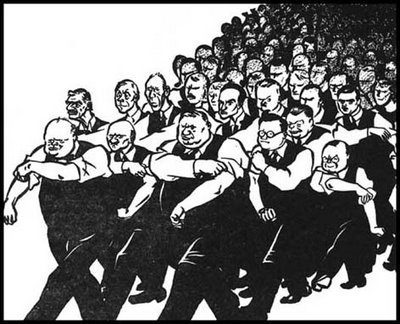
The Willful Blindness of the Wind Industry & Their Gov’t Accomplices!
Wind Turbine Syndrome
Posted by WindWise Ireland/ March 09, 2015

Lobbying from the wind industry could be likened to lobbying from the tobacco industry in the 1950s. We are now fully aware of the hazards of smoking tobacco but how long before our government stop accepting lobbying from the industry and wake up to the hazards of living near wind turbines?
“When a mistake is repeated, it is not a mistake anymore…it is a decision”- Paolo Coelho.
In the 1950’s, the tobacco lobby used medical professionals to insist that there was no medical evidence of harm from tobacco products. Indeed one advertisement, supported by research conducted by physicians, declared that “Phillip Morris” brand tobacco eased irritated throats and “every case of irritation cleared completely or definitely improved.” Phillip Morris soon became a major brand.
The tobacco lobby in the 1950’s could be compared to the powerful wind industry lobby today. Despite the growing body of peer-reviewed research demonstrating that wind turbines can cause serious adverse health effects in susceptible nearby residents, the wind lobby and Governments continue to dismiss this evidence.
However, in a recent groundbreaking study at Pacific Hydro’s Cape Bridgewater wind farm in the state of Victoria, Australia’s leading acoustical engineer Steven Cooper found that a unique infrasound pattern, which he had labelled “Wind Turbine Signature” in previous studies, correlates (through a “trend line”) with the occurrence and severity of symptoms of residents who had complained of often-unbearable “sensations”. These include sleep disturbance, headaches, heart racing, pressure in the head, ears or chest, etc. as described by the residents (symptoms generally known as Wind Turbine Syndrome (WTS), or the euphemism “noise annoyance”).
The acoustician also identified “discrete low frequency amplitude modulated signals” emitted by wind turbines and found the wind farm victims were also reacting to those. The Wind Turbine Signature cannot be detected using traditional measuring indexes such as dB(A) or dB(C) and 1/3 Octave bands, concludes his study. Narrowband analysis must be used instead, with results expressed in dB(WTS). He suggests medical studies be conducted using infrasound measurements in dB(WTS) in order to determine the threshold of what is unacceptable in terms of sound pressure level.
The findings are consistent with the official Kelley studies published in the US more than 30 years ago, which showed that infrasound emitted by early, downwind turbines caused sleep disturbance and other WTS symptoms. These studies were shelved, upwind turbines were designed and the regulatory authorities simply trusted the wind industry’s assertion that the new models did not emit dangerous infrasound. The Cooper study now proves they were wrong.
Another conclusion of his study is that the Danish method used for measuring low-frequency “noise annoyance” near wind farms is inadequate. So are the wind turbine noise standards applied to wind farms in Victoria, Australia and New Zealand, known as “New Zealand Standard 6808”. Just as inadequate are all other standards regulating “annoyance” near wind farms around the world including Ireland. They simply don’t take infrasound into account. Scores of medical practitioners and researchers from around the world are vindicated by this benchmark study, as are the residents reporting WTS symptoms themselves, many of whom have had to regularly or permanently abandon their homes.
Nevertheless, Governments in many countries around the world continue to assert that wind energy is viewed as a viable and environmentally friendly alternative to fossil fuels, although as Sherri Lange of NA-PAW points out “wind does nothing at all to abate climate change or reduce CO2 levels. It is possibly the largest scale environmental and economic fraud ever perpetuated.”
The Brown County Town Health Board in Wisconsin recently declared Duke Energy’s Shirley Industrial Wind Turbine Development to be a Human Health Hazard. The precise wording of the declaration was: “To declare the Industrial Wind Turbines in the Town of Glenmore, Brown County. WI. a Human Health Hazard for all people (residents, workers, visitors, and sensitive passersby) who are exposed to Infrasound/Low Frequency Noise and other emissions potentially harmful to human health.” Link
Meanwhile, a Canadian lawyer said recently that Ontario’s Green Energy Act violates the constitutional right of turbine neighbours to live in a place free from the “reasonable prospect of serious harm.” In the first constitutional challenge of the turbine approval process to hit the Ontario Court of Appeal, lawyer Julian Falconer argued that the whole approvals process “doesn’t allow people to protect their own health.” That, he said, violates their rights to live free from harm.
Health, according to the World Health Organisation, is a fundamental human right:
“Health is a state of complete physical, mental and social wellbeing and not merely the absence of disease or infirmity. The enjoyment of the highest attainable standard of health is one of the fundamental rights of every human being”. (WHO, 1948).
So, here in Ireland, where does our own Department of Health stand on all of this? In their response to a query from Deputy Helen McEntee on 30th Oct 2014, the Department stated as follows; “A range of symptoms have been described by people living close to wind turbines mainly related to environmental noise exposure. These symptoms include headaches, irritability, difficulty concentrating, fatigue, dizziness, anxiety and sleep disturbance and are often described in relation to annoyance. Anyone who experiences such symptoms should seek medical advice from their family doctor who may be able to prescribe suitable medication.”
So the Irish Department of Health is aware of the effects of WTN on human health and instead of urging that the precautionary principle should apply, they are advocating medication for sufferers!
Having presided over thalidomide and symphysiotomy scandals as well as the notorious vaccine trials, one would imagine that our Department of Health would be treading with caution here. Clearly, this does not seem to be the case. It has taken decades for Governments to realise that the powerful tobacco lobby were peddling untruths in the 1950’s when they proclaimed the health benefits of smoking. Will it take Governments as long to realise that living in proximity to industrial wind turbines causes deleterious adverse health effects in susceptible neighbours? They can’t say that they weren’t warned!
Wind Pushers Try to Discourage Studies, Claiming they’ll Blame it on “Nocebo Effect”, Regardless of Findings!
A $2.5m investment in wind farms and health won’t solve anything

The out-going head of the National Health and Medical Research Council (NHMRC) Warwick Anderson confirmed in Senate Estimates recently that calls for research proposals for up to a total of A$2.5 million over five years will soon be made to investigate questions about wind farms and health.
Under questioning from Greens Senator Richard Di Natale, Anderson told the committee A$2.5m was a paltry fraction of the agency’s total research budget, which in 2014 stood at A$802.42m. So A$2.5m is the equivalent of less than 0.06% of a projected five-year research budget on today’s allocations.
But researchers’ success obtaining grants has never been lower in Australia, with many strong grants falling below the cut-off score, which is ultimately budget determined. In 2014, researchers submitted 3,700 applications for project grants, with only one in 6.7 of these (14.9%) being funded. In the health services research field, 91.8% if applications were not funded.
Anderson has been emphatic that research standards will not be compromised in all this, and that only high-quality applications from suitably experienced researchers will be funded. It is not clear yet whether only one or more applications will be funded, if indeed any are.
The main debate in this area is between those who are adamant that wind turbines emit sounds and vibrations that upset and harm some of those exposed, and those who argue that the available evidence points strongly to health problems and complaints being psychogenic.
Nocebo phenomena – the idea that fear about wind turbines will cause some people to get symptoms – seem to be at the heart of both complaints and claims of illness.
I have documented an Old Testament-length list of 244 different symptoms and diseases alleged by wind farm opponents to be caused by the pestilence of wind farm exposure. The most bizarre of these include herpes, haemorrhoids, lung skin cancer and disoriented echidnas.
Study limitations
In even the best of studies, it will be impossible to separate out nocebo effects from putative direct effects. Here’s why. Ideally, researchers could select a location where a wind farm was being planned and conduct symptom- and illness-prevalence studies well before the wind farm was constructed and operational.
They would then repeat those measures at different times after the turbines began, analysing the influence of variables such as noise levels, economic benefit, pre-existing levels of antipathy to wind farms and “negatively oriented personality”. They could also request the production of medical records to see whether reported health problems long preceded the commencement of the turbines.
But this sort of research design will always be corrupted by wind farm opponents who, at the first hint of any wind farm development, move into a local area with the express purpose of alarming and frightening as many local residents as possible about what’s down the track.
No wind farm developer could ever commence construction without a long and open period of community consultation. These trigger the alarmists to turn on their best efforts to worry residents sick. This nocebo-priming case study I published recently describes in detail how they operate.
Residents fully sworn against wind farms are highly biased and can game such studies where self-reports of symptoms are central.
Lessons from Canada
Canada has already conducted the sort of study that might be proposed in Australia. In response to agitation from anti-wind groups, starting in 2012, it undertook the largest study of wind turbines and health ever attempted.
The study involved 1,235 houses in Ontario and Prince Edward Island, where randomly selected residents of all houses within 600m of 399 turbines on 18 wind farms were compared with those living 600m to 10km away.
In October 2014, Health Canada published the top-line results from the $CAN2.2 million study of the very sort that the NHMRC might well be asked to replicate.
It found the following were not associated with wind turbine noise:
- self-reported sleep (such as general disturbance, use of sleep medication, diagnosed sleep disorders)
- self-reported illnesses (such as dizziness, tinnitus, prevalence of frequent migraines and headaches) and chronic health conditions (such as heart disease, high blood pressure and diabetes)
- self-reported perceived stress and quality of life.
It did find that “annoyance” was related to wind turbine noise, with 16.5% of houses in Ontario and 6.3% on Prince Edward Island being annoyed.
Ontario is the epicentre of Canadian anti-wind farm activism, while Price Edward Island has seen little of this. So this major difference in the prevalence of annoyance lends support to the idea that wind farm annoyance is a “communicated disease” spread by anti-wind farm agitators.
The Canadian study also found that:
annoyance was significantly lower among the 110 participants who received personal benefit, which could include rent, payments or other indirect benefits of having wind turbines in the area e.g., community improvements. However, there were other factors that were found to be more strongly associated with annoyance, such as the visual appearance, concern for physical safety due to the presence of wind turbines and reporting to be sensitive to noise in general.
These findings are consistent with conclusions reached in what is now 24 reviews of the evidence.
Predictably, anti-wind farm groups in Canada rejected the Canadian study’s conclusions. It seems obvious that the only reports that such groups will ever accept are those which confirm their agenda. This is not a debate which will ever be resolved by research.
Political interests
Disturbingly, the NHMRC has allowed itself to be influenced by what reported internal email described as “the macro policy environment” – bureaucratic code for sensitivity to political interests.
Instead, Warwick Anderson and the Council should have stated clearly and emphatically to the parliament and the public that any researcher wanting to investigate wind farms and health was at perfect liberty to submit such a proposal to compete with all those being submitted by researchers considering any other topic. Such proposals would stand or fall on their competitiveness as determined by peer review.
There is no dedicated research funding being set aside by the NHMRC to further investigate the known massive risks to human health from fossil fuel extraction and burning. And it would be unimaginable for the NHMRC to quarantine money for any other non-disease like wifi sensitivity, smart electricity meter dangers or “fan death”. But this is what it has done here.
The money allocated is not much. But the real damage will be that in having this issue thus elevated to privileged research status, its political apostles will be greatly encouraged.
Government and Wind Industry, Sets Wind Victims Up for Failure.
Ontario families fighting massive legal bill from wind-farm companies
A demand that four Ontario families pay hundreds of thousands of dollars in legal costs to billion-dollar companies is a thinly disguised warning to anyone pondering a challenge to industrial wind farms in Ontario, the families say.
In asking the courts to set the legal bill aside, the citizens say the award would cripple them financially and undermine access to justice, even in important public-interest cases.
Court documents show the companies – K2 Wind, Armow, and St. Columban – are seeking $340,000 in costs from the Drennans, Ryans, Dixons and Kroeplins, who lost their bid to scuttle three wind-farm projects.
The families, who worry wind turbines near their homes could harm their health, had challenged the constitutionality of Ontario’s approvals process before Divisional Court. They are now hoping the province’s top court will hear the case, potentially adding more litigation costs.
Shawn Drennan said his $240,000 bill was excessive given that he was only looking to protect his rights.
“We will have to go to the bank and beg and ask if we can borrow more money to pay their costs and it will be a significant burden on my wife and I,” Shawn Drennan told The Canadian Press. “My wife already works two jobs.”
Lawyer Julian Falconer, who represents the families, called the wind companies “blood-sucking, intimidating bullies.”
“It’s not just a bar to justice, it’s actually a terror tactic,” Falconer said in an interview.
“This is not about money. The idea is to send a message: ‘We will wipe you out if you challenge us.’”
The companies say the high-stakes court challenge forced them to deploy considerable legal resources to defend projects they say are safe.
“While the appellants were entitled to bring their litigation, their decision to do so had significant consequences,” St. Columban argues in its court filing.
“There must be an appreciation of the real disruption, and real cost, suffered by the adverse party.”
Generally speaking and as a matter of fairness, the losing side in civil proceedings has to pay the legal bills incurred by the winning side.
K2, which is putting up 140 turbines, some of which are about 750 metres from the Drennans’ home near Goderich, Ont., says the families knew the risks of losing.
In addition, the failed bid to halt construction pending outcome of their court battle was unnecessary and should “never have been brought,” K2 says in its submissions.
The families argue they raised an important and novel constitutional issue that is squarely in the public interest given the reasonable prospect of serious harm to the health of citizens. They also say they did not stand to benefit financially.
The companies reject that argument. They maintain the families were indeed fighting a personal battle, do have the means to pay, and say the case was in fact contrary to the public interest because the challenge delayed government-approved green-energy projects.
For the families, it’s become a case of “lose your home to save your home,” they say.
“By simply exercising their right to access to the courts, the appellant families now face the disheartening prospect of financial ruin,” their submission states.
“When, as in this particular case, the consequence of that access becomes crippling financial loss, ‘access to justice’ becomes a meaningless platitude.”
Wind Proponents Fight To Conceal the Truth About Wind Turbines!
ABC’s “Ministry of Truth” – Media Watch – Cops Both Barrels from Graham Lloyd
February 27, 2015 by

In response to the Media Watch report about The Australian’s coverage of wind farms
The Australian
Graham Lloyd
23 February 2015
THE Media Watch report of February 16 (“Turbine torture: do wind farms make you sick?”) is littered with mistakes, omissions and misrepresentations from the opening scenes.
The program represents blatant advocacy for commercial interests over the widespread concerns of a genuine minority group who deserve thorough investigation of their complaints.
The Australian provided balanced, factual reporting of a national issue of public interest where Media Watch indulged in what amounts to littlemore than ad hominem, ideological propaganda.
The Media Watch program misrepresented the National Health and Medical Research Council position that the quality of existing research into the possible health impacts of wind turbines is poor and that it will fund more high quality research.
NHMRC chief executive Warwick Anderson said “it is important to say no consistent evidence does not necessarily mean no effect on human health.”
Media Watch selectively quoted Cape Bridgewater report author Steven Cooper to give the impression that he rejected certain things when in fact he was simply not professionally qualified to make comment on them.
Media Watch failed to acknowledge that Mr Cooper had said publicly that at all times The Australian’s reporting had been accurate and faithful to the contents of his Cape Bridgewater report. This fact has been confirmed to Media Watch by other suitably qualified acousticians.
Media Watch failed to report information it had received from US acoustics expert Dr Rob Rand that ran counter to its predetermined view.
The Australian published concerns raised by Pacific Hydro and wind industry groups about the Cooper report.
It also published praise for the robust nature of Cooper’s work and the significance of his findings from some of the most qualified and eminent acoustics experts in the world.
At no time did The Australian offer an opinion on the issue.
In contrast, Media Watch relied on wind industry advocates in academia including social scientists, political studies academics and a medical expert witness employed by wind developers to ascribe the symptoms to the now discredited “nocebo effect”.
Media Watch sought to mischievously discredit The Australian’s reporting with a series of factual inaccuracies and through sins of omission.
The Media Watch report failed to detail or report the existence of formal studies and inquiries which run counter to its pre-determined view and glossed over the peer review support the Cooper report received from some of the world’s most qualified acoustic experts..
It ignored the findings of the 2011 Federal Senate Inquiry chaired by Greens Senator Rachel Siewert, which found proper research into the impact of wind turbines on nearby residents should be undertaken as a matter of urgency.
Media Watch quoted studies that supported its case but failed to acknowledge the fact that the impact of low frequency noise generated by early model turbines had been linked to the exact same symptoms as those being reported today more than 30 years ago in research conducted for the renewable energy industry by NASA.
Media Watch failed to acknowledge any of the balancing quotes and arguments contained within The Australian’s reporting of the issue.
Media Watch did not bother to contact Channel 7.
Here is a line by line dissection of the Media Watch report.
*****************
MW transcript:
Presenter: Tonight, for the first time, hard evidence wind farms aren’t safe.
Today Tonight voiceover: They were told they were blowing in the wind, that it was all in their heads.
Interviewee: I’m not telling furphies, it’s real, we can feel it.
— Channel Seven, Today Tonight, 21st January, 2015
■ The Australian’s response
His name is David Mortimer, and he is a wind turbine host at InfigenEnergy’s Lake Bonney Wind Farm in South Australia who says he become unwell with characteristic symptoms of “wind turbine syndrome” soon after getting the turbines but didn’t know until very recently what was causing the symptoms.
———————–
MW transcript:
Paul Barry: Yes, as TT told us recently, those wind turbines are so bad that even the chickens get flustered.
■ The Australian’s response
No, animals become physiologically stressed when exposed to wind turbine noise (eg the Taiwanese goats who died, reported by the BBC, confirmed by the goat farmer and the Taiwanese Agricultural authorities. STRESSED chickens lay yolkless eggs — an observation also made in Britain by residents living near an airfield where bombers took off from — the excessive noise had the same impact on those chickens many years ago.
———————–
MW transcript:
Today Tonight voiceover: Even the chooks appeared spooked by something.
Interviewee: “Nothing. Absolutely nothing. That’s not normal.”
— Channel Seven, Today Tonight, 21st January, 2015
Paul Barry: That TT footage on a wind farm in South Australia first got a run some two and a half years ago.
So why has it just popped up again?
Well, for much the same reason that radio hosts also went into a spin late last month:
ALAN JONES: “Now, it’s a headline today and it’s been called a world first study.”
— 2GB, The Alan Jones Breakfast Show, 21st January, 2015
TIM BENNETT: “Probably the biggest story today … is this front page on The Australian.”
— ABC 639 North and West SA, Mornings with Tim Bennett (fill in presenter), 21st January, 2015
ROSS STEVENSON: “Front page of The Australian has an exclusive story that people living near wind farms face a greater risk of suffering health complaints …”
— 3AW, Breakfast with Ross and John, 21st January, 2015
Paul Barry: Back in January The Australian headed its front page with an exclusive from Environment Editor Graham Lloyd, who told us excitedly in his opening paragraph:
“PEOPLE living near wind farms face a greater risk of suffering health complaints caused by the low-frequency noise generated by turbines, a groundbreaking study has found.”
— The Australian, 21st January, 2015
■ The Australian’s response
A statement issued by residents living near the Cape Bridgewater wind farm said; “Steven Cooper’s acoustic survey connects infrasound from wind turbines inside our homes with unacceptable health impacts.”
The Acoustic Group’s Principal, Mr Steven Cooper, was commissioned by wind developer Pacific Hydro to undertake an investigation into “noise” emitted from the wind farm as a result of our long unresolved complaints about the impact of Pacific Hydro’s Cape Bridgewater wind turbines on our health, on the habitability of our homes and on the quality of our lives. Symptoms we have experienced include severe nausea, headaches, ear pressure, inability to concentrate, and severe and debilitating sleep problems, which we have endured over the six years of operation of the Cape Bridgewater wind power facility.
The inclusion of complete shut-downs in the study clearly showed the wind farm generates specific infrasound frequencies that are directly related to the operation of the turbines.
Our diaries and the concurrent full spectrum acoustic measurements inside and outside our homes clearly demonstrate that it is the operation of the wind facility correlating with our symptoms.
The assertions made by others that our symptoms result from scaremongering (the nocebo effect) are untrue, and always have been. The inclusion of complete shut-down periods of the wind facility during the investigation reminded us of the general peace, serenity and wellbeing of our lives before the wind facility started operating.
The Cooper study was reviewed by well qualified acoustics experts.
Dr Bob Thorne, a psycho-acoustician who is also qualified to assess health impacts from noise and is considered an expert witness in court. Dr Thorne said in a written statement that the Cooper report was “ground breaking” and had made a “unique contribution to science”.
“At 235 pages for the report and six technical annexures (491 pages) the study cannot be matched by any previous wind farm study in Australia,” Dr Thorne said.
US acoustics expert Robert Rand said in a peer review of the Cooper Study;
“The correlation of sensation level to WTS tone level in the infrasonic and audible bands brings wind turbine acoustics right to the door of medical science. Medical tests in the homes, long overdue, can now be correlated directly to WTS.”
The study found that sensations including sleep disturbance were occurring with specific acoustic conditions. Those sensations included other symptoms such as nausea, headaches, and sensations of pressure. Sleep deprivation alone is an adverse health effect. Mr Cooper is not a medical practitioner and so cannot say it was a health study, but no medical practitioner would say that sleep deprivation or disturbance does not have adverse health effects if it is happening repeatedly …. so with the sleep deprivation alone there is going to be a greater risk of suffering health problems.
———————–
MW transcript:
Paul Barry: Mr Lloyd has been worried about wind farms for some time — and those yolkless eggs — so was he right to claim he’d at last found evidence that they damage your health?
■ The Australian’s response
This is a significant issue of widespread public interest involving the duty of care towards a minority group of citizens. Some residents claim they have been forced to abandon their homes. In this case, The Australian was faithfully reporting the findings of a report released publicly by Pacific Hydro and Steven Cooper and accompanying statements by residents both verbally and in writing. Steven Cooper has confirmed The Australian’s report to be accurate in all respects with regard to his report. International acoustic experts have confirmed the study demonstrates a cause and effect exists between sensations experienced by residents and the operation of the wind turbines. The Australian report included comments from Pacific Hydro that it did not accept a cause and effect relationship had been established.
———————–
MW transcript:
Paul Barry: Well, not according to several eminent scientists we talked to. And, remarkably, not according to Steven Cooper, the study’s author, who told Media Watch:
Steven Cooper: “No, it’s not correct … You can’t say that noise affects health from this study.”
— Steven Cooper, Acoustic Engineer, 28th January, 2015
■ The Australian’s response
Cooper can’t say that, but the residents had already said it as had their treating doctors — all of the residents have been told by treating health practitioners to leave their homes in order to regain their health. Mr Cooper has said he had been quoted faithfully and his report treated fairly by The Australian in all regards.
———————–
MW transcript:
Paul Barry: So what did Mr Cooper think about Today Tonight’s claims that he had provided the first hard evidence that wind farms are unsafe?
Well, no again.
Steven Cooper: “Absolutely not, that’s incorrect.”
— Steven Cooper, Acoustic Engineer, 28th January, 2015
■ The Australian’s response
In fact, the first hard evidence was provided by Dr Neil Kelley and his team at NASA thirty years ago, who found that sleep disturbance and other symptoms and sensations were directly caused by wind turbine generated impulsive infrasound and low frequency noise. His finding led to a change in wind turbine design. More recently, British Acoustician and National Health and Medical Research Council Expert Reviewer for the 2011 NHMRC Rapid Review Professor Geoffrey Leventhall told the NHMRC workshop in 2011 that “annoyance symptoms’’ or “noise annoyance” symptoms were identical to “wind turbine syndrome” symptoms described by US Paediatric Specialist and researcher Dr Nina Pierpont. Media Watch’s academic commentator Simon Chapman was in the room when he said it.
———————–
MW transcript:
Paul Barry: The company that commissioned the study, Pacific Hydro says it was not a scientific study, and not a health study, and does not show that wind farms are causing health complaints.
And asked on ABC Radio about this, Mr Cooper agreed.
Steven Cooper: “Pacific Hydro are correct that we don’t have a correlation in terms of medical and I agree with that 100 per cent.”
— ABC Ballarat, Mornings with Anne-Marie Middlemast, 21st January, 2015
Paul Barry: So how come The Australian and Today Tonight got it so wrong.
The head of medicine at Adelaide University, Professor Gary Wittert, told Media Watch:
Professor Gary Wittert: “The way The Australian reported this study was really the antithesis of good science reporting. I think a newspaper like The Australian should know better.”
— Professor Gary Wittert, Head of Medicine, The University of Adelaide, 6th February, 2015
■ The Australian’s response
Mr Cooper has said that Lloyd’s reporting was accurate. The residents were reporting sensations including sleep deprivation, nausea and headaches. Does Professor Wittert consider that these sensations are not adverse health effects? And that chronic sleep deprivation does not itself cause long term health problems? Has he actually read the acoustic investigation and does he understand what was found?
———————–
MW transcript:
Paul Barry: And he’s by no means the only one to express that view.
■ The Australian’s response
Professor Wittert has repeatedly given expert evidence to court cases stating that the nocebo effect rather than infrasound and low frequency noise are directly causing the reported symptoms. Mr Cooper’s data from his acoustic investigation suggests Professor Wittert’s expert opinion is wrong.
———————–
MW transcript:
Paul Barry: Writing in The Conversation, the Australian National University’s Jacqui Hoepner and Will Grant also condemned The Australian’s front page story and the study it was based on, branding it:
“… an exemplary case of what we consider to be bad science and bad science reporting.”
— The Conversation, 22nd January, 2015
■ The Australian’s response
And these two have no relevant qualifications. Grant has a PhD in politics, and Hoepner is a journalist. Neither has either medical or acoustical training or experience.
———————–
MW transcript:
Paul Barry: And Sydney University’s professor of public health Simon Chapman was even more damning*, telling Media Watch:
Simon Chapman: “Scientifically, it’s an absolutely atrocious piece of research and is entirely unpublishable other than on the front page of The Australian.”**
— Professor Simon Chapman, School of Public Health, University of Sydney, 23rd January, 2015
■ The Australian’s response
*Simon Chapman is not a medical practitioner. He has previously told people his PhD is in sociology. It was on the topic of “Cigarette Advertising As Myth: A Re-Evaluation Of The Relationship Of Advertising To Smoking”. He has worked closely with the wind industry, and has declined to ever directly investigate or visit adversely impacted people. He has vilified them, he has called them “wind farm wingnuts” however he did admit in the senate inquiry in 2012 that sleep deprivation could be a problem if it was occurring.
In a statement to the federal Senate on June 17, 2014, John Madigan said of Professor Chapman:
“It is fair and reasonable to encourage people to look behind the blatant campaigning done by people like Professor Chapman of the University of Sydney. Professor Chapman has been an outspoken critic of those who have dared to question the wind farm orthodoxy. But is Professor Chapman a medical doctor? Is he legally entitled to examine and treat patients? Is he qualified in acoustics or any other aspect of audiology? Is he a sleep specialist? Does he hold any qualifications in bioacoustics or physiology or neuroscience? How many wind farm victims has he interviewed directly? How many wind farm impacted homes has he visited? Professor Chapman claims to receive no payment from the wind industry. How many wind industry conferences, seminars and events has he spoken at? How many wind industry events has he attended? Writing on the Crikey website in November 2011, Professor Chapman lamented how many conferences do not pay speaker’s fees, and, when one conference organiser refused to pay his hotel bill, he withdrew. This is the same Professor Chapman who was photographed at a campaign launch in Melbourne by the Danish wind turbine manufacturer Vestas.
As a public health academic, Professor Chapman displays a lack of compassion for people who claim to be suffering debilitating effects from pervasive wind turbine noise. Professor Chapman’s undergraduate qualifications were in sociology. His PhD looked into the relationship between cigarette smoke and advertising. I question his expertise, I question his qualifications and I question his unbridled motivation to promote and support the wind industry at the cost of people’s lives, homes and communities. I question Professor Chapman’s lack of interest in speaking with wind industry victims. Professor Chapman has a record of public denigration of victims.’’
**This is in marked contrast to Mr Cooper’s REAL peers who have entirely the opposite opinions. Properly qualified acoustics experts in Australia and the United States have called it “groundbreaking” and a “unique contribution”.
———————–
MW transcript:
Paul Barry: So what exactly is wrong with the study and why should it not have been headline news? Well, first, it was not published in an academic journal* or peer reviewed by independent experts**.
■ The Australian’s response
*Oh, if something is not published in a journal it is not good science? Well what about PhD’s??? They are not published in journals? Are they not “science”?
**The Cooper report has been extensively reviewed by independent experts. The reviewers have included the top environmental acoustics researcher in the world, Dr Paul Schomer, who has written acoustics standards in the US and internationally. It also included Mr George Hessler, who has worked as a consultant acoustician for the wind industry for years in the USA. It is highly significant that a wind industry preferred acoustician is coming out and endorsing Mr Cooper’s acoustic investigation so strongly.
———————–
MW transcript:
Paul Barry: Second, it had a tiny sample.
■ The Australian’s response
Tiny samples are fine. Patients are a sample of one. Just one patient (or one black swan) is enough to prove a scientific point. In his peer review of the Cooper Research, Dr Paul Schomer said “One person affected is a lot more than none; the existence of just one cause-and-effect pathway is a lot more than none,” he said. “It only takes one example to prove that a broad assertion (that there are no impacts) is not true, and that is the case here.”
———————–
MW transcript:
Paul Barry: Just three households and six respondents.
■ The Australian’s response
SIX BLACK SWANS. All of them experienced the symptoms when the turbines were turning …. But not when they were not exposed to operating turbines and there were no wind gusts.
———————–
MW transcript:
Paul Barry:Third … there was what scientists call selection bias, because all those people already had health problems which they blamed on Pacific Hydro’s wind farm at Victoria’s Cape Bridgewater, 1.6 kilometres or less from their homes.
■ The Australian’s response
Selection bias is irrelevant when the study design is identical to a prospective case series with a cross over component, where people are their own controls, and what varies is their exposure to operating wind turbines. The Australian received written advice from a professor of epidemiology that this is precisely the design of the acoustic survey investigation proposed by Pacific Hydro and used by Steven Cooper. This study design is also used in pharmaceutical trials, to determine safety thresholds for medications, and to help establish whether or not a direct causal relationship exists. It is therefore a perfect study design for this sort of investigation.
———————–
MW transcript:
Paul Barry: And fourth, all knew if the wind farm was operating because they could see the blades.
■ The Australian’s response
WRONG. They could NOT see the blades — especially when they were inside their homes, in their beds, and woken up from a sleep. That is just ridiculous. Besides the Cooper study says one resident had 100 per cent correlation with being able to tell then the turbines were operating without seeing them when he was there doing attended measurements. She could NOT SEE them — this is just FALSE reporting. Or perhaps Media Watch didn’t read the report very carefully…
———————–
MW transcript:
Paul Barry: Now you can’t blame these on Steven Cooper because the parameters were set by Pacific Hydro who commissioned the research.
But scientifically, say the experts, it means the results can’t be trusted.
■ The Australian’s response
ABC experts are conflicted, Wittert and Chapman have a history of working closely with the wind industry to protect its commercial interests, either as expert witness in court cases or to push the now disproved nocebo effect as the cause for the resident’s “sensations” which in Cooper’s study correlated with specific acoustic emissions — powering up and powering down.
———————–
MW transcript:
Paul Barry: Indeed, in Professor Chapman’s view:
Simon Chapman: “The media should have treated this with absolute contempt.”
— Professor Simon Chapman, School of Public Health, University of Sydney, 23rd January, 2015
Paul Barry: Now there’s no doubt that some people living close to wind farms have health problems.
And they believe that the wind farms are the cause.
But as The Conversation reminded us … a recent study in the British Medical Journal found they are not alone in having these health complaints.
“… almost 90% of the general population experienced many of the common symptoms associated with wind turbine syndrome within a given week.”
— The Conversation, 22nd January, 2015
■ The Australian’s response
The BMJ article and Grant and Hoepner and Chapman and others ignore the cross over effect — when residents are exposed, they have symptoms and when they are not exposed, they do not have those symptoms and sensations. The Australian has written advice from a professor of epidemiology that the study could be classified as a small cross over trial.
———————–
MW transcript:
Paul Barry: Much of the debate turns on whether there’s something special about the noise from wind farms that makes them harmful to health … even if the noise is below health limits.
■ The Australian’s response
Just what do Media Watch mean by “below health limits”? The Australian has been advised that Kelley established those health limits thirty years ago in the NASA trials and Cooper’s results were almost identical. Above 50 dB at 4 Hz people who are sensitised to the sound energy experience and report unpleasant sensations.
———————–
MW transcript:
Paul Barry: The study’s author Steven Cooper has long believed there is … and that it’s called infrasound.
■ The Australian’s response
Cooper is not the only one. Broner, the only acoustic expert on the NHMRC committee also believed it on the basis of empirical evidence in a paper delivered to the 2007 International Acoustics Congress in Madrid, “The missing 16 Hz, Can We Live With It?”
Abstract:
“As the need for power increases, power utilities are resorting to the use of peaking plants incorporating Open Cycle Gas Turbines. OCGT manufacturers generally supply noise data for these down to the 31.5 Hz octave band. However, most of these units also generate significant energy in the 16 Hz octave band. Both of these bands need to be considered when assessing potential noise impact on neighbouring residential communities.”
———————–
MW transcript:
Steven Cooper: “Infrasound is energy that appears in the spectrum below what the human ear can normally hear.”
— Channel Seven, Today Tonight, 4th June, 2012
Paul Barry: Infrasound, says Cooper, interferes with our sleep and our brain patterns.
And he says his latest study suggests … sensations people feel near wind farms … may be caused by the infrasound the turbines produce.
But so far mainstream experts have not been convinced.
■ The Australian’s response
NO, it is the ABC’s “experts” who are not acousticians who are connected with the wind industry who are not convinced.
———————–
MW transcript:
Paul Barry: Cooper’s theories were dismissed by a senate inquiry into wind farm noise back in 2011.
■ The Australian’s response
Cooper didn’t give evidence in the 2011 inquiry. He gave evidence to the 2012 inquiry chaired by Senator Doug Cameron. That senate inquiry had two dissenting reports.
———————–
MW transcript:
Paul Barry: And dismissed again in 2013 by South Australia’s Environmental Protection Agency.
■ The Australian’s response
Cooper’s work at Cape Bridgewater has shown that the SA EPA survey was wrong — indeed chapter 9 of his report is devoted to explaining why.
———————–
MW transcript:
Paul Barry: And dismissed again by South Australia’s Land & Environment Court last year.
■ The Australian’s response
That court also found that a nocebo effect explained symptoms when the medical expert for the wind developer had admitted that there was no evidence of a nocebo effect in the witnesses who gave statements …. and at the time, Cooper’s research findings were only preliminary. His research and report is AFTER all of these events and is NEW knowledge, but consistent with the Kelley findings thirty years ago which the wind industry knew ALL about.
———————–
MW transcript:
Paul Barry: Yet The Australian and Today Tonight omitted to tell us these important facts.
They also omitted to tell us that, as Professor Chapman puts it:
Simon Chapman: “There are 24 high-quality reviews about wind farms and health, and overwhelmingly they have been found to be safe.”
— Professor Simon Chapman, School of Public Health, University of Sydney, 23rd January, 2015
■ The Australian’s response
THIS IS NOT TRUE. Many of the reviews Chapman cites state that there is not a lot of scientific evidence. NONE of them say they are SAFE. The National Health and Medical Research Council recently reviewed 4000 pieces of literature and found only 13 were suitable for evaluation and none could be considered high quality. As a result it said the impact of wind turbines on health remained an open scientific question and that it would call for targeted, high quality research. A priority area is low frequency and infrasound.
———————–
MW transcript:
Paul Barry: Indeed, last week, the government’s National Health and Medical Research Council published the results of its review of seven studies of wind farms and health.
And the NHMRC came to the conclusion that:
“There is no consistent* evidence that noise from wind turbines … is associated with self-reported human health effects.”**
— National Health and Medical Research Council, Systematic review of the human health effects of wind farms, 11 February, 2015
■ The Australian’s response
*The NHMRC cannot and did not say there is NO evidence of adverse health effects, because they know that is untrue. In other words, Professor Chapman’s assertions that wind turbines are safe is not supported by the NHMRC’s statement, or by the existing scientific evidence.
“Given the poor quality of current direct evidence and the concern expressed by some members of the community, high quality research into possible health effects of wind farm, particularly within 1500 metres is warranted,” the NHMRC statement said.
NHMRC chief executive Warwick Anderson said “It is important to say no consistent evidence does not necessarily mean no effect on human health.’’
“From a scientific perspective I see the question as still open,” he said.
Professor Bruce Armstrong, chair of the NHMRC’s wind farm committee said “to not investigate would be negligent from a public health point of view.” Dr Armstrong said research into low frequency and infrasound was an important priority “because it is what people who are concerned about health impacts focus on and it is not something that has been done particularly well to date.”
**Self-reported adverse health effects are accepted as evidence by doctors for the purposes of accurate diagnosis on the basis of clinical history, and are accepted in courts as evidence. They are a crucial part of assessing human response to sound frequencies, just as Mr Cooper’s report demonstrated. The next step is to include physiological testing as well as the self-reported symptoms.
———————–
MW transcript:
Paul Barry: But unlike the Cooper study that news did not make The Australian’s front page.
■ The Australian’s response
But, unlike Media Watch, it was reported accurately in the paper.
———————–
MW transcript:
Paul Barry: And just three days after the NHMRC said there is no evidence that wind farms are harmful to health, Graham Lloyd came back to suggest there is.
■ The Australian’s response
Yes, because a peer review by one of the world’s leading acoustic experts said just that and was reported. The Cooper research was not included in the NHMRC review.
———————–
MW transcript:
Unseen, unheard wind farms a blow to health
“GROUNDBREAKING Australian research has established a “cause and effect” existed between wind farms and health impacts on some nearby residents, a peer review by one of the world’s leading acoustic experts says.”
— The Weekend Australian, 14-15 February, 2015
Paul Barry: That so-called groundbreaking research was the Cooper study … again.
The one that Professor Chapman* describes as an atrocious piece of research and other experts** assure us is bad science.
■ The Australian’s response
*Chapman, the Tobacco Advertising Propaganda Expert, sociologist, and wind industry advocate.
**No, not EXPERTS. Hand selected advocates for the wind industry carefully chosen by the ABC, for the wind industry who do not have any research qualifications or experience in directly investigating the circumstances of the sick people. ANU PhD candidate and journalist, Jacqui Hoepner, and her supervisor, Will Grant, who describes himself as “a talker, writer, thinker and reader, based primarily at the Australian National Centre for the Public Awareness of Science at ANU. His talking / writing / thinking / reading has focused mostly on the intersection of science, politics and society, and how this is changing in response to new technologies.”
———————–
MW transcript:
Paul Barry: And the expert quoted in this ‘peer’ review was an American scientist who has long agreed with Mr Cooper’s theories.
■ The Australian’s response
No, “the scientist” was two very eminent acousticians, one of whom has spent most of his life consulting to and for the WIND INDUSTRY (Hessler) and the other is the leading environmental acoustics researcher in the world — and DIRECTOR of ACOUSTICS Standards and chair of the American delegation to the International Standards Committee. Dr Schomer has not “long agreed with Mr Cooper’s theories” — he and four other acousticians including three who work almost exclusively for the wind industry (Bruce Walker, George and David Hessler) conducted the research at the Shirley Wind Farm reported in December 2012 which measured the full spectrum of sound inside and outside homes and came to the conclusion that infrasound and low frequency noise were an issue and that they could affect the future of the wind industry.
Peer reviewers Schomer and Hessler both completely understood the value of what Cooper had done and came out strongly because it is indeed Cause and Effect. People did NOT get the symptoms when the turbines were not turning but did get symptoms when they were turning. There was an exception for one resident who is extremely sensitised AND there were wind gusts which shook the towers, induced vibrations which she could feel, even though she could not see the towers.
———————–
MW transcript:
Paul Barry: But let’s go back to what Cooper himself told the ABC about how groundbreaking this research is.
Asked about whether he has found a correlation between infrasound and headaches or other sensations of which people were complaining he said:
Steven Cooper: “I don’t have enough data to say a correlation. The study is limited, it’s a pilot study and there’s a trend line that’s very clear. Correlation needs a lot more scientific rigour with a larger population to come up with the answer.”
— ABC Ballarat, Mornings with Anne-Marie Middlemast, 21st January, 2015
■ The Australian’s response
Cooper was being deliberately very conservative. In a written response to The Australian, prior to the Media Watch episode Mr Cooper said “The study does show a link between the operation of the wind farm and the disturbances reported by the residents. There is a trend not a correlation (because there is not enough data and that wasn’t the brief) However, one can take the reports of the residents who form the view there is a link to their health impacts.”
Lloyd has met and interviewed residents who have explained the “disturbances” they have experienced and are in no doubt that they consider them to be health impacts, some have even been advised by their medical practitioners to leave their homes as a result. Their concerns about health impacts and understanding of what Cooper had found were expressed in a media statement of which Media Watch was or should have been fully aware.
———————–
MW transcript:
Paul Barry: Now … The Australian has sent us a long statement defending its original coverage which we’d encourage you to read on our website. But its key point is:
“… The Australian believes this is clearly an issue of significant public interest, worthy of presentation on page one and of extensive investigation and further reporting.”
— Clive Mathieson, Editor, The Australian, 8th February, 2015
Paul Barry: Well, we’d certainly agree that more work needs to be done.
But we believe The Australian needs to get its facts right, and to approach it in a more scientific and objective fashion.
■ The Australian’s response
No, the ABC needs to follow its own advice and “get its facts right, and approach it in a more scientific and objective fashion”. It Is also about time the ABC started accurately identifying conflicts of interest in its “experts” and stopped putting pre-recorded programs to air which refer to vulnerable and sick rural residents as “DICK BRAINS” — Annabel Crabb on the science show, aired by Robin Williams in January 2015.
The Australian

Much Like WindPushers, Climate Alarmists Will Personally Slander Anyone Who Dissents!
Greenpeace enlists Justin Gillis &John Schwartz of the NY Times in Journalistic Terrorist Attack on Willie Soon – Miss Target, Hit Smithsonian Instead
Guest Essay by Kip Hansen
I cannot bring myself to quote from this unconscionable piece of journalistic malfeasance:
Deeper Ties to Corporate Cash for Doubtful Climate Researcher
By JUSTIN GILLIS and JOHN SCHWARTZ FEB. 21, 2015
Instead, I simply let my title and the following excerpts from the so-called “supporting” documents offered by Greenpeace speak for themselves. Their [non-]journalist lackeys: Justin Gillis and John Schwartz of the NY Times, apparently didn’t actually read them – or they might have noticed that the contracts are between the Smithsonian (not Soon) and Southern and if they had stretched themselves, might have uncovered the definition of “deliverables”….I can’t believe Gillis and Schwartz allowed themselves to be duped again.
 *****
*****

*****

*****
![clip_image002[1]](http://wattsupwiththat.files.wordpress.com/2015/02/clip_image00211.png "clip_image002[1]")
*****

*****

*****

*****

Lies the Windweasels tell…..And there are many years of deception!
Three Decades of Wind Industry Deception: A Chronology of a Global Conspiracy of Silence and Subterfuge
February 22, 2015 by 2 Comments

A little while back, a Scottish pen-smith posed a little rhetorical on the subtle art of skulduggery:
Oh, what a tangled web we weave
When first we practise to deceive!
There have been few industries that have had more practice, and as much success, in that subtle art, as the wind industry.
STT has popped up 880 posts in the, just over, two years since we cranked into gear – on our mission to destroy the wind industry.
A fair slice of them have concerned the topic of the adverse health effects caused by turbine generated incessant low-frequency noise and infrasound; the woefully inadequate, indeed, utterly irrelevant noise standards written by the wind industry; and the institutional corruption that:
a) allowed those standards to become the “benchmarks” in the first place; and
b) witnesses public authorities, with a responsibility to protect public health, not only sitting on their hands, but barracking in favour of the wind industry, at the expense of the very people these planning and public health agencies and authorities are paid handsomely to protect.
In this post, STT sets out a chronology of what the wind industry and its pet acoustic consultants knew (and when they knew it); what the wind industry did in response to that knowledge; and how the wind industry and its parasites are fighting tooth and nail at present to ensure that that knowledge has no impact on its freedom to ride roughshod over the human rights, health and well-being of people living next door to wind farms.
The chronology is set out as a timeline, which can be accessed by clicking on this link here or the image below.

Each page of the timeline gives a short run down of significant events (a headline and brief summary); contains images of key data or pages extracted from research papers referred to; some of those images are copies of the entire paper being referred to – these documents can be accessed for reading and printing by dragging your mouse over the image and clicking on the “pop out” window at the top right of the image (you will see a scroll-bar on those where a paper is reproduced). Below the images you will find links to papers, webpages, including the sources referenced and STT posts, for example (if the link does not work, simply copy and paste the URL into a fresh tab in your browser).
At the bottom of the timeline, there is a banner collecting all of the relevant events (you will probably need to scroll down to see it) which you can use to see all of the events in order: simply hold down your mouse and drag the banner left or right; to access any of the events summarised in the banner, simply click on it.
Alternatively, you can use the arrows on the far left or right of the screen (they appear about half-way up each page of the timeline) to move forward or backwards in time.
The NASA Research
Starting in the early 1980s, a decade’s worth of research was undertaken by NASA into a series of large wind turbines (then being developed by NASA), which included a stellar cast of physicists, meteorologists, geophysicists, seismologists, engineers (both mechanical and acoustic), and psycho-acousticians. Part of that research involved a multidisciplinary effort to identify the causes of complaints made by neighbours in relation to the operation of those turbines: we refer to it as “the NASA research”, which also included work carried out by Neil Kelley.
Some of the key findings of the NASA research into the neighbours’ complaints were that:
“very low frequency” noise generated by NASA’s turbines (which was defined to include “infrasound”) was the cause of the “annoyance” reported by neighbours (“annoyance” being an acoustics term which does not involve emotional responses – ie “antipathy” to the “look” of wind turbines);
the “annoyance” being reported by neighbours included numerous physiological responses, which were described as “sensations”. These “sensations”, which they felt rather than heard, were sensations of “pressure”, “a sense of uneasiness”, “booming or thumping pulsations”. These sensations were at their worst in the bedrooms where they were trying to sleep;
the “very low frequency” noise generated by turbines interacted with, and was amplified by, the complainant’s homes, creating “structural resonances”, whereby low-frequency sound-waves “excited” materials within the home, causing vibration of the home;
the “very low frequency noise” generated by turbines was not “attenuated” by the structure of the homes (ie, sound pressure levels were not significantly reduced inside homes), but, rather, interacted with homes in the manner described above – resulting in higher sound pressure levels at very low frequencies (ie the noise levels recorded were higher inside than outside), causing greater “annoyance” to neighbours, as a result;
the vibration of these homes, caused by turbine generated infrasound, resulted in neighbours perceiving that vibration with their whole bodies (ie “whole body perception”);
the very low-frequency noise generated by NASA’s turbines was replicated in a “house” (a three room structure) during a further study; and was shown to cause “annoyance/displeasure” as a “presence” which participants could “feel” to varying degrees, up to “extremely annoying and uncomfortable”; sensations of “vibration/pressure” and “pulsations”, which participants could also “feel” to varying degrees, up to and including “severe vibration” and “very heavy pulses, booms and thumps”;
the common noise descriptor or weighting, dB(A) (used to measure noise sources such as air-conditioners) was found to be totally inadequate, with almost no significant relationship to the sensations and symptoms being reported; and, was, accordingly found to be the worst possible measure for predicting the level of “annoyance” being reported by neighbours;
a variety of noise descriptors, designed to capture low-frequency noise, showed strong correlations between the noise levels generated and the sensations recorded;
the first of the NASA turbine designs being studied as part of research had its blades down wind from the tower. The second turbine design placed the blades up wind (ie, in front of the tower). The infrasound and low-frequency noise levels generated were not significantly altered as a result. (Modern wind turbines use the “up wind” design);
the homes where people were adversely affected were situated out to as far as 3km from a single turbine;
the propagation distance (ie the distance over which noise travels before it “decays”) is far greater for low-frequency noise and infrasound generated by turbines, than the propagation distance of noise which does not contain sound energy at low frequencies.
In 1987, at a wind power conference in San Francisco, the wind industry was presented with the findings of NASA’s research; and told that these findings meant that dB(A) was an inappropriate method of measuring wind turbine noise, and the impact of that noise on neighbours. It was further told that low-frequency noise and infrasound were the dominant features of wind turbine generated noise, which would cause significant “annoyance” to neighbours.
Independent of, but concurrent with, the NASA research substantial efforts were made in investigating the impacts of infrasound on human health, particularly in relation to effects such as nausea, headaches and vertigo.
In 1985, a study was published (Nussbaum) that established infrasound as the cause of symptoms including: accelerated heart rate; increased respiration; fatigue; dizziness (vertigo); nausea (motion sickness); and headaches, among other things. The study found that certain people were more greatly affected by infrasound than others (ie more serious symptoms and/or sensations were experienced; or were experienced to a greater degree). These differences in response were, among other things, attributed to physiological differences, including differences in the size of the internal passages of the subjects’ ears.
The Wind Industry Cover Up
As the wind industry began to take off in the early 1990s it needed to set noise limits and planning criteria that would not present any obstacle to it in rolling out turbines in quiet rural environments.
The wind industry gathered what became known as the “noise working group” in 1995; a group which then, and thereafter, worked on wind industry noise guidelines.
The result was a document called ETSU-R-97.
That document reads as if the NASA research had never happened as it:
- excludes any reference to low-frequency noise (the source of the problem shown by the NASA research as the cause of the sensations and symptoms suffered);
- excludes the noise descriptors and weightings that were found by the NASA research to be the best predictors of the annoyance caused to neighbours, and the sensations and symptoms suffered;
- relies exclusively on the dB(A) weighting (found to be irrelevant as a consequence of the NASA research);
- assumes that, in all cases, the sound pressure levels inside neighbouring homes are substantially less than what is recorded outside those homes (entirely to the contrary of the findings made in the NASA research);
- excludes testing inside homes for noise of any frequency (let alone low-frequency noise);
- instead, limits noise testing to measurements taken external to homes, using the dB(A) weighting only;
- established methods by which monitoring equipment can be placed in a way that will simply measure environmental noise (eg “wind in the trees”). In the first instance, these “methods” allow for the placement of monitoring equipment in locations where high levels can be recorded prior to the construction of a wind farm (eg, underneath trees or in bushes). Subsequently, noise level criteria can be met by simply shifting the location of the monitoring equipment (eg, placing them in the open away from trees or bushes).
All of the wind industry noise standards or guidelines which have emerged around the world since then can trace their origins to ETSU-R-97 – think of it as the wind industry’s template for deception.
Over the last decade or so, the wind industry has fought tooth and nail to defend these standards or guidelines. It has resisted all attempts or even suggestions that would:
- result in standards which include the measurement of low-frequency noise and infrasound;
- set controls for low-frequency noise and infrasound inside homes;
- require wind farm operators to cooperate with meaningful noise testing by, for example:
- shutting turbines on and off in order to distinguish between the noise generated by turbines and environmental noise, such as wind in the trees; or
- providing operational data, such as wind speed and power output data;
Indeed, whenever these topics are raised by authorities or community groups the wind industry becomes defensive; and even aggressive in response.
Along the way, the wind industry continued to press planning authorities for even higher noise limits than were originally set (in the irrelevant dB(A) measure, of course) – that would permit ever larger turbines to be located ever closer to residential homes; planning authorities and Environmental Protection Agencies willingly obliged.
In South Australia – the first state in Australia to introduce wind farm noise guidelines – its EPA was so obliging to the wind industry, that its 2003 guidelines include the entirely fictional assertion that wind turbines do not produce infrasound at all, the guidelines stating:
Infrasound was a characteristic of some wind turbine models that has been attributed to early designs in which turbine blades were downwind of the main tower. The effect was generated as the blades cut through the turbulence generated around the downwind side of the tower.
Modern designs generally have the blades upwind of the tower. Wind conditions around the blades and improved blade design minimise the generation of the effect. The EPA has consulted the working group and completed an extensive literature search but is not aware of infrasound being present at any modern wind farm site.
The same fiction appears in the current version of the SA EPA wind farm noise guidelines published in 2009.
The wind industry’s efforts to use noise standards to cover up the issue of infrasound, and to obtain ever higher dB(A) noise limits, occurred despite knowing, full well, that low-frequency noise and infrasound was causing harm and distress to wind farm neighbours.
For example, from 2004 onwards, employees and management of Danish turbine manufacturer, Vestas warned that the wind turbine noise guidelines were inadequate in relation to the protection of wind farm neighbours; and, by 2011, knew that greater setback distances were required to avoid problems of precisely the kind being caused; especially in relation to the larger 3MW turbines, which were being rolled out by Vestas from 2010 onwards.
All of the above, and more, is laid out in the timeline.
The World Turns Full Circle
Recent work performed by leading acoustic engineers around the world has simply confirmed all of the facts and findings made in the NASA research, which concluded over 27 years ago.
The recent research that confirms the extensive work done by NASA, includes work carried out by:
- Dr Paul Schomer, George Hessler, Rob Rand and Dr Bruce Walker at Shirley, Wisconsin in 2012 (available here);
- Professor Colin Hansen and his team from the Adelaide University at Waterloo in South Australia during 2014 (see our post here); and
- the groundbreaking research conducted by Steven Cooper at Cape Bridgewater in Victoria, also during 2014 (which has been recently published – see our posts here and here).
That work, like the NASA research before it, shows that the noise guidelines written by, and relied upon, by the wind industry are utterly irrelevant when it comes to the question of protecting public health; and the adverse consequences of living with incessant turbine generated low-frequency noise and infrasound.
The aim of the timeline is not just to catalogue the trail of wind industry lies and deception. It is squarely aimed at showing how regulatory authorities have been duped by (or have been complicit with) an industry completely devoid of any desirable moral characteristics; and which is, rather, driven by a callous disregard for human health and well-being.
Wherever you are fighting to bring the wind industry to a halt; to obtain the ability to live in and use your own homes; or to achieve just compensation for the damage and harm caused through government supported wind industry malfeasance, STT simply invites you to use our little timeline to your best advantage.

 "Mothers Against Wind Turbines™" Phoenix Rising...