Stop the Outrageous Subsidies, and the Wind Scam Dies!

US Wind Industry Under Siege: Congress Set to Cut Subsidies as Communities Boil Over

turbine collapse 9

Wind power opponents seek repeal of tax credit
The Seattle Times
Hal Bernton and Erin Heffernan
21 September 2014

FOREST, Wisconsin — When wind-power developers prospected the rolling hills around this small dairy town, they found plenty of gusty sites for turbines. In 2011, they proposed a $250 million project with up to 44 turbines that could produce enough energy to power thousands of homes.

Since then, nothing has come easy for the developer in a state that has emerged as a stronghold of resistance to the spread of wind power.

In Forest, opponents gained enough votes to take over the town government, sued in state court to try to block the project, and added their support to a national movement that seeks to end the federal tax credit for the wind-power industry.

“We are here to protect our property values, our eagles, our health and our town,” said Brenda Salseg, spokeswoman for the Forest Voice, the local opposition group, which posted online a form letter urging the Wisconsin congressional delegation to oppose the tax credit.

The tax credit was passed by Congress in 1992 and has been periodically extended. It is currently set at 2.4 cents per kilowatt hour, and, during times of glutted electricity markets, can be worth more than the wholesale price of power.

This tax credit has helped catapult wind power to the front of the U.S. efforts to launch a renewable-energy industry.

By the end of 2012, wind power represented 43 percent of all new U.S. electric generation installed that year and was hailed by the Obama administration as a key in the global effort to combat climate change.

Wind power also has been bolstered by state mandates that require utilities to acquire a certain percentage of the power from renewable-energy sources.

The turbines operate in more than three dozen states, from Washington’s Columbia River Plateau to the Allegheny Mountains of Maryland, and in 2013 provided more than 4 percent of the nation’s power, according to a Lawrence Berkeley National Laboratory report.

In many areas, wind turbines have been welcomed as an economic boon to landowners who are paid for leasing acreage.

But as wind power has grown, so, too, has the opposition.

In some communities, such as Forest, developers have faced a backlash from residents concerned about the noise and health effects of living near wind-power projects.

The toll on birds and bats killed by turbine blades has drawn scrutiny.

Critics have attacked wind power as a fickle source of electricity that ebbs whenever the wind dies down. They fault the tax credit for encouraging new projects when many utilities have plenty of power.

Over time, the politics of wind power have become more partisan.

Most of the wind-power capacity is within Republican congressional districts, but many politicians in the party have made ending the tax credit part of their agenda. This year, efforts to extend the tax credit have made little headway in the Republican-controlled House.

Some House Republicans such as Rep. Dave Reichert, R-Wash., still back the tax credit, according to Reichert’s spokeswoman. But some former supporters have turned against it.

Rep. Kevin McCarthy, the House majority leader, once advocated the tax credit that helped spur investment in wind farms in his California district. But before his June election to his leadership position, he told the Wall Street Journal he thinks wind companies no longer need the tax credit.

“My feeling is the current situation is as bad as it has ever been,” said Robert Kahn, a Seattle consultant who represents wind-power developers. “Congress is so polarized about so many things that if some people are for it, other people are going to have to be against it.”

The fight against the tax credit also has been championed by Americans for Prosperity. One of the nation’s most prominent conservative advocacy groups, it was co-founded by billionaire David Koch, who has extensive interests in the fossil-fuels industry.

The organization last fall sent an open letter to Congress signed by more than 100 groups, including many smaller groups formed to fight wind power.

Wind-power advocates note that fossil-fuel industries have received federal subsidies for decades, such as a tax provision that allows favorable write-offs of oil-drilling costs. They say the government should put a price on carbon, or continue offering incentives for technologies that produce energy without carbon emissions. “We don’t want to lower or eliminate our tax credit when everyone else gets to keep theirs,” said Jim Reilly, a senior vice president of the American Wind Energy Association.

The wind-power tax credit extends over the first 10 years of a project’s operation. Congress has typically extended the credit a few years at a time, creating financial uncertainties for the wind-power industry.

In 2013, installations of wind farms declined by more than 90 percent from the previous year, reflecting concerns that the credit would not be extended.

Congress did extend the credit that year, eventually prompting many companies to break ground on projects.

Many are going in this year, putting the industry on a record pace for construction, according to the American Wind Energy Association.

The cost of new power has plummeted to record lows. The average price of about $25 per megawatt hour for power-purchase agreements in 2013 was nearly a third less than in 2009, according to a study by the Lawrence Berkeley lab.

What would happen if the tax credit dies?

Ryan Wiser, a co-author of the Berkeley report, said that would push the price of wind power past $40 a megawatt hour, and cool investor interest.

“The number of projects would be much less, but there is no doubt there would be some,” Wiser said.

Even without a tax credit, wind power also would receive a boost from President Barack Obama’s proposed rule to limit emissions from existing power plants. It could prompt the closing of some coal plants and open up more demand for turbine power.

But the proposed rule is opposed by many Republicans, and already is facing court challenges.

Conflict still rages Wisconsin once was swept up in the wind-power boom. But it’s now an example of how a state, even with federal incentives in place, can put the brakes on turbines. Many wind-power projects in Wisconsin are on relatively small properties, increasing the potential for conflicts with neighbors who don’t receive any lease payments but find themselves living next to turbines.

“The first day the turbines came on, I thought it was a jet plane taking off,” said Gerry Meyer, a retired mail carrier who complains of health effects from living near turbines in rural southeast Wisconsin.

Meyer has testified at state legislative hearings and also networked with Forest activists seeking to block the wind-power project proposed there by Emerging Energies.

These opponents have found some powerful allies among state Republican politicians.

“Wind turbines have proved to be an expensive, inefficient source of electricity, and thus any future construction of turbines simply is not a policy goal or object that should be pursued further,” Gov. Scott Walker wrote in a 2010 campaign memo obtained by the Milwaukee Journal Sentinel.

Walker, once in office, backed a legislative effort to increase setbacks for turbines by increasing the distance they must be located from a neighbor, and measuring that setback from the neighbor’s house rather than property line. That 2011 effort failed.

But a legislative committee voted to suspend the state’s wind-siting rule to study the health effects of wind turbines.

By the time the rule was reinstated a year later, five Wisconsin wind projects had been suspended or canceled, according to Clean Wisconsin, a wind-power advocacy group. New installations of turbines plummeted in the state.

In the months ahead, developers’ attorneys will argue in court for the right to finally move ahead on the Forest project.

Meanwhile, an emotional battle over the project continues to rage within the community. “It’s been devastating for the town,” said Carol Johnson, a Forest resident who supports the project. “Many family members will never speak again … It’s just torn the town apart.”
The Seattle Times

As it goes in Wisconsin, it goes all around the globe: spear giant fans into closely settled rural communities and the only thing guaranteed to be generated isn’t meaningful power, but a constant source of anger, hostility and community division. What makes these people so wild is that all their suffering has done nothing for the economy or the environment, leaving them feeling like dupes in the greatest fraud of all time (see our post here).

We love the line about how closing coal plants would “open up more demand for turbine power”. We think that’s a form of flattery best reserved for first dates. There is no “demand for turbine power”. In the absence of mandated targets (shortfall charges, penalties and the like) or massive subsidies there is NO demand for an unreliable and intermittent power source that can only ever be delivered at crazy, random intervals (see our post here). Wind power is not an alternative energy source (unless you’re prepared to sit in the dark for hours and days on end?) and will never be a substitute for conventional generation sources available on demand (see our post here).

We note a lot of “brave” talk about the wind industry being able to survive if the US Congress does away with the Production Tax Credit (PTC).

If the tax credit dies, the US wind industry dies – it will not be a case – as Ryan Wiser asserts – that: “The number of projects would be much less, but there is no doubt there would be some”.

What utter piffle. Cut the subsidies and there will never be another wind turbine erected anywhere, ever again.

The massive stream of subsidies – like the REC and PTC – provide the ONLY explanation for the wind industry – as recognised by the “Sage of Omaha”, billionaire Warren Buffett – whose company Berkshire Hathaway has invested $billions in wind power in order to get at federal subsidies – namely the PTC – which is worth US$23 per MW/h for the first 10 years of operation.

A subsidiary of the Buffett-owned MidAmerican Energy Holdings owns 1,267 turbines in the US with a capacity of 2,285 MW – eventually when the company’s Wind VIII expansion is finished, MidAmerican will own 1,715 turbines with a capacity of 3,335 MW. Buffett has piled into giant fans for one reason only: to lower the tax rate paid by Berkshire Hathaway.

As Buffett put it earlier this year at his annual investor jamboree in Omaha, Nebraska:

“I will do anything that is basically covered by the law to reduce Berkshire’s tax rate. For example, on wind energy, we get a tax credit if we build a lot of wind farms. That’s the only reason to build them. They don’t make sense without the tax credit.”

There, Warren Buffett said it, not us.

At least he had the honesty and integrity to explain the only conceivable basis for the greatest rort of all time. And isn’t it so much better when those that profit from it choose not to speak with “forked tongue”. Maybe Ryan Wiser, the CEC and AWEA can take a leaf out of Warren’s book?
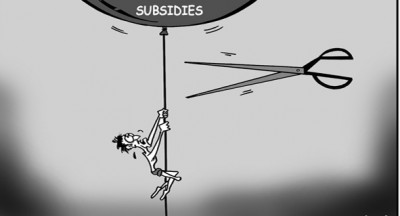
subsidies

Wind Turbines Monitored by Unbiased Sound Experts Prove Noise Levels are Intolerable!

Hansen, Zajamsek, Hansen, Noise Monitoring, Waterloo Wind Farm

Noise Monitoring in the Vicinity of the Waterloo Wind Farm

Kristy Hansen, Branko Zajamsek and Colin Hansen, School of Mechanical Engineering
University of Adelaide May 26, 2014

This report by the above authors describes the results of their concurrent full spectrum acoustic monitoring conducted at a number of homes located between 2 km out to nearly 10km from the Waterloo Wind Development. This monitoring was independent of the South Australian Environment Protection Authority (SA EPA) and was requested by Mrs Mary Morris and other concerned residents in the Waterloo district. The monitoring occurred during the period of the South Australian EPA Acoustic Survey, conducted in mid 2013.

The results in this independent survey as well as the conclusions are in marked contrast to the results and conclusions of the SA EPA Acoustic Survey report, and reinforce the Waubra Foundation’s opinion expressed at the time the initial SA EPA report was released that there were serious problems with the methodology used by the SA EPA in its acoustic survey at Waterloo. This report provides further evidence that the current SA EPA Wind Farm Noise Guidelines do not protect the health and sleep of the neighbours to these wind developments, out to nearly 10km from the closest wind turbine, because they do not regulate the acoustic emissions to protect health, and most importantly, the sleep of the neighbours.

Emeritus Professor Colin Hansen has advised that he sent the report to the EPA, requesting their comment. To date, three months later (19th August, 2014) no comment or feedback has been received by the Adelaide University researchers from the SA EPA responsible public officials.

Extract from the Conclusions:

“Therefore, the results show that there is a low frequency noise problem associated with the Waterloo wind farm. Therefore, it is extremely important that further investigation is carried out at this wind farm in order to determine the source of the low frequency noise and to develop mitigation technologies. In addition, further research is necessary to establish the long‐term effects of low frequency noise and infrasound on the residents at Waterloo. This research should include health monitoring and sleep studies with simultaneous noise and vibration measurements.”

Key Extracts from the report are reproduced below, and the report is downloadable from the link beneath.

1 Introduction

This report details independent noise measurements and their analysis taken in the vicinity of the Waterloo Wind Farm during the period 9/4 – 22/6, which is the same period as the study undertaken by the EPA and reported in EPA (2013). Measurements were taken outside of as well as inside a number of residences. Due to the potential for data contamination by background noise during the day, only data measured between midnight and 5am are reported here, as during those hours, the dominant noise source was generally the wind farm. The following sections of this report detail the measurement equipment, measurement procedures, data analysis and data interpretation, followed by a conclusion summarising the results detailed in the rest of the report.

The data analysis and interpretation comprises four sections:

  • overall levels averaged over 10‐minutes for all night‐time data collected at each residence;
  • unweighted third‐octave spectra and overall levels for the shutdown periods;
  • unweighted third‐octave spectra and narrowband spectra for measurement times corresponding to noise diary entries; and
  • unweighted and A‐weighted third‐octave spectra for measurements which exceeded 40 dB(A).

2 Measurement Details

Three B&K 4955 microphones were used for the indoor measurements. These microphones have a low noise floor of 6.5 dB(A) and a flat frequency response down to 6 Hz. While these microphones do not have a flat frequency response below 6 Hz, they are still capable of measuring the blade‐pass frequency and harmonics (Hansen, 2013). The microphones were connected toLANXI hardware and continuous 10‐minute recordings were made using Pulse software. The average sound pressure level of the three microphones was calculated in accordance with the Danish guidelines for indoor low‐ frequency noise measurements (Jakobsen, 2001). This average includes one microphone positioned in the room corner. In this position, the maximum sound pressure level would be measured since this is an anti‐node for all room response modes. A singleGRAS 40AZ / SV 17 microphone was connected to a SVAN 979 sound level meter. This microphone was used as a back‐up and check for the indoor measurements made with the Pulse system.

The outdoor measurements were made using GRAS 40AZ / SV 12L microphones connected to aSVAN 958 sound level meter, which measured continuously over 10‐minute intervals. The microphones have a noise floor of 17 dB(A) and a flat frequency response down to 0.8 Hz. Hemispherical secondary windshields were used to minimise wind‐induced noise experienced by the outdoor microphones, and they were designed to be consistent with the IEC 61400‐11 standard, which specifies the use of these secondary windshields for measurements close to a wind turbine. A spherical secondary windshield and box windshield with specifications described in Hansen (2013) were also used for comparison but these results are only presented in the narrowband analysis in Section 6.2. Wind speed and direction were measured at heights of 1.5 m and 10 m using Davis Vantage Vue and Vantage Pro weather stations, respectively. The weather measurements were collected in 5‐minute intervals and then the 10‐minute average was calculated during post‐ processing.

3 Guidelines

It is well known that wind farm noise is dominated by low‐frequency energy (Moller & Pedersen, 2011), particularly at large distances from the wind farm, where the high‐frequency noise has been more attenuated than the low‐frequency noise. As such, a number of different weighting functions have been applied to the data in Section 4 to highlight different characteristics of the noise. A detailed description of these weightings and their applications is given in the report by the EPA(2013). This section provides a brief analysis of the limitations of some of these weighting functions in the context of wind turbine noise. Additionally, some drawbacks of the current SA EPA guidelines (EPA, 2009) are discussed and recommendations for improvements are suggested.

In South Australia, compliance of a wind farm is determined based on the applicable outdoor limit specified in the SA EPA guidelines (2009). Most of the measurement locations detailed in this report correspond to “rural industrial” zones where the allowable limit is 40 dB(A). One of the township locations is situated in an area which has been zoned “township” according to the Clare and Gilbert Valleys Council regulations. For lack of additional information, it is assumed that this translates to “rural living” in the context of the SA EPA guidelines (2009), which has a corresponding outdoor limit of 35 dB(A). According to the EPA guidelines (2009), a compliance analysis requires collection of over 2,000 data points, with 500 data points recorded for the worst‐case wind direction. For the measurements outlined in this report, such a large amount of data were not collected at any one location, however it was still considered valuable to plot a regression curve to illustrate the degree of compliance over short periods as well. In any case, the use of night‐time data is expected to reduce the degree to which data are contaminated by extraneous sources, thus giving a reasonable estimate of the degree to which the wind farm is compliant.

The SA EPA guidelines also specify use of the LA90 metric, which is the A‐weighted noise level that is exceeded 90% of the time. It should be noted that wind farm noise can be significantly underestimated using LA90 levels due to the unsteady nature of the noise. Hence, the LAeq, which is the energy average of the noise, is considered to be a more realistic representation of the actual noise level attributed to the wind farm, particularly between midnight and 5am when there are very few other noise sources of a similar level to the wind farm noise.

Despite the fact that low‐frequency noise has been identified as a potential issue associated with wind turbine operation, the SA EPA guidelines (2009) do not provide guidance for acceptable levels of low‐frequency noise and infrasound, even though there are several recommendations available in the literature. For example, the C‐weighting can be used to provide an indicator of the presence of low‐frequency noise. According to Broner (2010), a night‐time limit of 60 dB© is recommended, and this limit was included in the NSW draft guidelines (2011). Low‐frequency noise can also be identified by finding the difference between the overall C‐weighted and A‐weighted levels. When LCeq – LAeq > 20, a potential low‐frequency noise problem is indicated, and Broner and Leventhall (1983) and DIN 45680 (1997) would recommend further investigation into the time‐dependent low‐ frequency noise characteristics including noise fluctuations, spectral balance and amplitude modulation.

The G‐weighting is used to indicate the level of infrasound. According to ISO 7196 (1995) and DIN45680 (1997), the audible threshold for the overall G‐weighted noise level is 85 dB(G). On the other hand, this does not preclude the possibility that lower levels of infrasound will have an effect on people (Salt & Lichtenhan, 2014).

The SA EPA guidelines (2009) suggest that the indoor A‐weighted noise level should not exceed 30 dB(A). According to the World Health Organisation night‐time guidelines (WHO, 2009), the no observed effect limit for outdoor noise is 30 dB(A). To quantify the low‐frequency contribution to the indoor noise, it is useful to refer to the Danish guidelines for indoor low‐frequency noise (DanishEPA, 1997) and the UK Department of Food and Rural Affairs criteria (DEFRA, 2005). The Danish limit considers A‐weighted levels in the frequencies from 10 Hz to 160 Hz and the limit is the calculated average of the sound pressure level measured at three different locations in a room. According to the Danish guidelines, the indoor noise level, LpA,lf in the frequency range from 10 Hz to 160 Hz should not exceed 20 dB(A). The DEFRA criteria are frequency dependent and also span the frequency range from 10 Hz – 160 Hz. The allowable limits for each third‐octave frequency bin in this range are specified in the relevant report (DEFRA, 2005). The specified limits can be relaxed for steady noise and for daytime measurements but the measurements in this report did not fall into either of these categories. It is well‐known that wind farm noise is an unsteady noise source due to sudden changes in wind speed/direction, inflow turbulence, wind shear (van den Berg, 2005) and directivity (Oerlemans & Shepers, 2009). It has also been found that wind farm noise is modulated at the blade‐pass frequency (Hansen et al., 2013), which causes a periodic variation in the loudness of the sound.

It is worth noting that wind farm compliance according to the SA EPA guidelines is based on a regression line fitted to 2000 or more data points plotted on a graph of noise level (dBA) (y‐axis) vs hub height wind speed (x‐axis). Each data point is a 10‐minute average, which means that the influence on people of a noise source that is highly variable in nature will be underestimated. In addition, many 10‐minute average data points are above the acceptable 35 or 40 dB(A) requirement and as compliance is based on the regression line only, these times of relatively high noise level are ignored. In other words, compliance with the EPA guidelines does not mean that noise levels will never exceed the recommended limits – in fact, they can exceed the recommended limits many times as can be seen by the graphs shown in this report. Furthermore, the 10‐minute average values are lower than the peak values, which means that the wind farm could generate high levels of intermittent noise and still be compliant.

It is also important to recognise that thresholds of audibility are not dependent on the 10‐minute average of the root mean square (rms) value of the noise signal alone. This type of analysis ignores any difference in character between the measured noise and the noise used in the laboratory to determine threshold levels. The main differences in character that are important include the presence of multiple harmonics of the blade passage frequency and the crest factor of the noise. The crest factor is the ratio of the peak noise level to the average (or rms) noise level. The measured average noise levels for wind farm noise have been shown to contain peaks that are up to 20 dB above the reported average level. Even for “compliant” wind farms, such peaks are well above the levels required to disturb sleep (according the 2009 WHO document, “Night Noise Guidelines for Europe”). It is also worth noting that traffic noise, on which the WHO document on night noise levels is based, is not characterised by such high crest factors and thus has less potential for disturbing sleep. Nevertheless, this is an area of future work for our research group and the purpose of this report is to provide an analysis similar to that carried out in the EPA study so that comparison can be made between the two sets of results.

4 Overall Noise Levels

The following section presents data that were measured at the same residences as the EPA study (EPA, 2013), as well as three additional residences. The North East residence is not included in the analysis as we were unable to measure inside at this location. A number of weighting functions have been applied to the data and where applicable, a linear regression curve has been included. The DEFRA criteria and the Danish guidelines for indoor low‐frequency noise have only been applied to the indoor data, as they are not considered relevant for outdoor noise.

The figures presented in this section show data plotted against the wind speed at a height of 10 m in the left hand column and data plotted against the wind speed at hub height in the right hand column. Data points shown in red correspond to times when the residence was downwind from the proposed wind farm, according to the definition that downwind is ±45from the direction of the residence relative to the wind farm. Data points shown in green indicate times where the wind speed at a height of 1.5 m was greater than 5 m/s. For such wind speeds, noise measurements can be contaminated by wind‐induced noise. The sources of wind‐induced noise are pseudo‐noise and acoustic noise. Pseudo‐noise is caused by turbulent pressure fluctuations and vortex shedding incident on the microphone which lead to false indications of the sound pressure level whereas wind‐induced acoustic noise arises when objects such as tree branches and leaves are put in motion by the wind. Pseudo‐noise is only relevant for outdoor measurements but wind‐induced acoustic noise is relevant to both indoor and outdoor measurements. Both indoor and outdoor measurements taken during periods of rain have been discarded from the analysis.

In this section, all plotted data corresponds to night‐time measurements made between 12 am and 5 am. During the night, people are trying to sleep and this time also represents the greatest contrast between ambient noise and wind turbine noise, due to the absence of other sources such as traffic and farming machinery. These times were also selected to minimise contamination from noise sources other than the wind farm.

8 Conclusions

Based on the findings in this report, the following conclusions can be drawn:

  • For the 50 Hz third‐octave band, the sound pressure level difference between shutdown and operational conditions can be higher than 25 dB for both outdoor and indoor measurements.
  • The noise level in the 50 Hz third‐octave band is often above the audibility threshold (ISO389‐7, 2005) when the wind farm is operating.
  • The peak in the 50 Hz third‐octave band would be classified as a tone according to some standards (NZS 6808:2010, 2010; ANSI S12.9 ‐ Part 4, 2005).
  • The allowable limits should be reduced by 5 dB(A) to account for such tonal noise.
  • The outdoor and indoor noise levels measured during the shutdown cases were consistently lower than those measured when the wind farm was operating.
  • The most significant differences between shutdown and operational conditions can be observed when the residence is downwind from the nearest wind turbine and the hub height wind speed is greater than 8 m/s.
  • The shutdown periods should have occurred during 12 am – 5 am when the contribution from extraneous sources would be minimised and the contribution from the wind farm more able to be quantified.
  • For all shutdowns reported here, the closest wind turbine to the residence did not reach its rated speed of 15 m/s. In most cases, the wind speed at hub height was significantly lower than rated speed for the shutdown and adjacent times.
  • The peak in the 50 Hz third‐octave band is a consistent feature of the noise diary results and is often above the audibility threshold (ISO 389‐7, 2005).
  • A narrow‐band analysis with frequency resolution of 0.1 Hz reveals distinct peaks at the blade‐pass frequency and harmonics for many of the results corresponding to noise diary entries.
  • The narrow‐band analysis also shows the existence of tones, which occur at 23 Hz, 28 Hz, 46 Hz, 56 Hz and 69 Hz.
  • These tones have several sidebands which are spaced at the blade‐pass frequency and allude to the occurrence of amplitude modulation.
  • There is a good correlation between low frequency noise events and complaints registered in noise diaries.
  • At many of the residences, there were many occasions during the hours of 12 am and 5 am where the outdoor noise level exceeded the SA EPA (EPA, 2009) criteria of 40 dB(A).
  • The indoor limit for wind turbine hosts of 30 dB(A) recommended by the SA EPA (EPA, 2009) was exceeded on many occasions between 12 am and 5 am. This is also the no observed health effect limit for outdoor noise according to the WHO (2009).
  • The range in the overall A‐weighted levels was noticeably large indoors and could be as low as 5 dB(A) and as high as 38 dB(A). The lower value highlights that the night‐time noise levels in this rural environment are sometimes so low that even low levels of wind turbine noise would be noticeable. It is plausible that the upper value is related to the presence of wind turbine noise.
  • It has been shown that there can be a large variation in the results obtained by considering the LAeq as opposed to the LA90, between the hours of 12 am and 5 am.
  • Since the number of extraneous noise sources is expected to be low during these night‐time hours and wind turbine noise can be highly variable with time, it does not seem justified to only consider noise levels which were exceeded 90 % of the time.
  • The C‐weighted level was often higher for downwind conditions and hub height wind speeds greater than 8 m/s. However, consideration of the overall level with respect to recommended limits did not prove useful in identifying any low frequency noise issues.
  • The LCeq ‐ LAeq criteria was often exceeded and there was a large scatter in the data.
  • The overall G‐weighted level of 85 dB(G) was never exceeded however this does not preclude the possibility that infrasound was not detectable.
  • The Danish low frequency noise guidelines were exceeded on a number of occasions. In general, the exceedences occurred for downwind conditions and hub height wind speeds greater than 8 m/s.
  • The DEFRA criteria were exceeded on multiple occasions, usually corresponding to downwind conditions and hub height wind speeds greater than 8 m/s.

Therefore, the results show that there is a low frequency noise problem associated with the Waterloo wind farm. Therefore, it is extremely important that further investigation is carried out at this wind farm in order to determine the source of the low frequency noise and to develop mitigation technologies. In addition, further research is necessary to establish the long‐term effects of low frequency noise and infrasound on the residents at Waterloo. This research should include health monitoring and sleep studies with simultaneous noise and vibration measurements.

Download the complete report of the acoustic survey by Hansen, Zajamsek and Hansen →

For access to the SA EPA Waterloo Acoustic Survey 2013, and documents expressing concerns which have been raised about that acoustic survey, please seehttp://waubrafoundation.org.au/resources/waterloo-wind-farm-environmental-noise-study-sa-epa/

Careful reading of the UN Convention Against Torture makes it very plain that public officials who know of the damage to human beings and allow it to continue could be facing criminal charges (sleep deprivation is acknowledged as torture by a number of bodies including the Committee Against Torture http://waubrafoundation.org.au/resources/un-convention-against-torture/ and also the Physicians for Human Rights — see pp 22 — 26 of their report called “Leave no Marks” http://physiciansforhumanrights.org/library/reports/leave-no-marks-report-2007.html

The Waubra Foundation advised the Clean Energy Regulator (CER) Board members over a year ago about the damage to human health from proximity to wind turbines — and their response was that they preferred the explanation that it was a Nocebo effect:http://waubrafoundation.org.au/resources/letter-notice-clean-energy-regulator-5-april-2013/

Consequently in 2013 the Waubra Foundation advised both South Australian Premier, Jay Weatherill and the Chair of the CER, Ms Chloe Munro of the Foundation’s concerns about the Waterloo Acoustic Survey — neither of whom responded to the letter:http://waubrafoundation.org.au/resources/open-letter-premier-south-australia-clean-energy-regulator-concerning-sa-epa-acoustic-survey-2/

Why Have So Many People Gone Enviro-Mental? It’s a Scam!

FULL-FRONTAL ENVIRONMENTALISM: WE KNEW IT ALL ALONG

There’s an old line that environmentalists are “watermelons”—green on the outside, red on the inside. A lot of environmentalists will take great offense if you say this: No no! We like economic growth and capitalism just fine! We just want it to be “sustainable,” whatever that means. And don’t ask for specificity about what “sustainability” means in detail, unless you have a lot of time and a full bottle of hootch handy. Before long you’ll figure out that “sustainable” is just a code word for green things we like, and that it has no rigor whatsoever aside from old-fashioned factor-efficiency, which economists figured out over a century ago at least.

No it doesn't.

But anyway, environmentalists resist being called socialists. But next week Naomi Klein is coming out with a book called This Changes Everything. In case you’ve forgotten your show notes, Klein is the author of The Shock Doctrine, a book ragingly popular with the far left that is so far gone into absurd conspiracizing and looney renderings of “neoliberalism” that it makes Lyndon LaRouche look positively staid by comparison.

What is the “this” that “changes everything” in her title? Why climate change, don’t you know? And what does it “change”? Why capitalism, of course. The argument of the book in one sentence is that only overthrowing capitalism can solve climate change. Don’t take my word for it. Here’s how the progressive lefty site CommonDreams described it today: “Forget everything you think you know about global warming. The really inconvenient truth is that it’s not about carbon—it’s about capitalism.” For this bit of candor about what we’ve long suspected of the climate campaign, we owe Klein and her followers a debt of thanks. I’m going to send her a bouquet of (sustainably-raised) flowers.

Climate change is just the ultimate in “late capitalism” I guess but what’s really getting late is the odor of this badly decayed Marxism. (Klein still uses the uproariously hilarious term “late capitalism” without a trace of irony in her pre-publications articles.) Talk about trying to sell something past its “use by” date! Wasn’t World War I the crisis that “changed everything”? Then the Great Depression? Then the Cold War? The panic and crash of 2008? “This changes everything,” as G.K. Chesterton probably said somewhere, is the refrain of the lunatic in the asylum who thinks he’s Napoleon. It’s always something.

The book unwittingly reveals that none of this crusading and posturing is about the environment at all. Bill McKibben’s dust jacket blurb gives the game away: “This is the best book about climate change in a very long time—in large part because it’s about much more.” Silly me: I thought it was about greenhouse gas emissions.Thought experiment: if we wave a magic wand, will Klein, McKibben, et al suddenly say, “Oh, I guess capitalism is okay after all”? Anyone want to buy some sustainable swampland in Florida?

It will be interesting to see whether “mainstream” environmental groups will distance themselves from Klein’s book. I intend to ask them about her argument at every opportunity. I expect every kind of weasel excuse imaginable. So I guess I better put in for a large order of free-range, gluten-free, sustainably-raised Green Weenies.

“Watermelons”, as James Delingpole so aptly describes them, Green on the Outside, & Red on the Inside!

Communists coming out of the Green Closet.

Image source: Oliver Darcy/TheBlaze

Christopher Monckton is presently in Australia. Previously he has said: (link – WUWT)

So at last the communists who piled out of the Berlin Wall and into the environmental movement and took over Greenpeace so that my friends who founded it left within a year because they’d captured it. Now the apotheosis is at hand. They are about to impose a communist world government on the world.

Patrick Moore who will soon visit Australia,  co-founder of Greenpeace, left the Green Movement when it was infiltrated by communists: (link)

The collapse of world communism and the fall of the Berlin Wall during the 1980s added to the trend toward extremism. The Cold War was over and the peace movement was largely disbanded. The peace movement had been mainly Western-based and anti-American in its leanings. Many of its members moved into the environmental movement, bringing with them their neo-Marxist, far-left agendas.

Further:

Progressives are very resilient, so when Soviet communism finally collapsed after 70 years of world wide tyranny, progressives and liberal Democrats pushed the existential green movement to the forefront, which was in reality the same old exhausted red communism in a new disguise.

The “Green” Movement tried to disguise their “Red” Socialist/Communist ideas, however, now they are coming out of the closet.

The New York “Climate” March, as reported by the Blaze had socialists elements spread through it. (link)

Dozens of signs denouncing capitalism were spotted at the demonstration, often held by self-proclaimed socialists.
“Capitalism is destroying the planet,” a sticker on one woman’s shirt read, “We need revolution, nothing less.”

Image source: Oliver Darcy/TheBlaze

Members of the Socialists Workers Party also manned a table, passing out flyers attempting to make “the case for ecosocialism.”

Ontario Residents Forced to Go To Court, To Challenge Wind Turbine Approval…

WIND TURBINES

Aberarder family challenges Suncor wind turbine approval

By Paul Morden, Sarnia Observer

Ontario’s Environmental Review Tribunal may just be the first stop for opponents of a 46-turbine wind project Suncor Energy plans to build in Lambton County.

The provincial government’s approval of Suncor’s Cedar Point renewable energy project is being appealed to the tribunal by Lambton County, and Aberarder Line residents Kimberley and Richard Bryce.

The Town of Plympton-Wyoming is also seeking to participate in the hearings.

The tribunal’s hearings are scheduled to begin in early November at the Camlachie Community Hall, with a preliminary hearing set for October.

The Bryce family is being represented by the Toronto-based law firm headed by Julian Falconer.

“They have four young kids and they’re just concerned about the possible health effects associated with having their young children living in close proximity to these wind turbines,” said Asha James, an associate of Falconers LLP.

She added the family’s concern is heightened by the fact Health Canada is currently studying the health impacts of wind turbines, “because there are data gaps, and there just isn’t enough research to show how these will affect families, or residents living in close proximity to these turbines.”

A notice of appeal filed on behalf of the family says it will be surrounded by eight turbines within 2.5 kilometres of the Bryce home, and adds that they have young children with “pre-existing health concerns that will be adversely affected by the project.”

The notice also says the appeal will argue the province’s approval of the Suncor wind project violates the Canadian Charter of Rights and Freedoms.

Falconer spoke in Camlachie back in May at a meeting held by the group We’re Against Industrial Turbines, Plympton-Wyoming.

Since then, the group has been collecting donations to fund court challenges of Suncor’s wind project.

James said Falconer has described appeals to the provincial tribunal as “a long shot.” The tribunal has rejected nearly all of the wind project approval appeals it has heard.

“But, at this point, we don’t see another option that’s available to them,” James said.

She added the only way to preserve the right to raise issues with the courts is to first go through the tribunal process.

James said the law firm has been involved in three previous appeals to the tribunal, and has appealed its decisions to the divisional court in London. Those appeals are to be heard Nov. 17, 18 and 19.

Lambton County is expected to raise concerns at the tribunal hearings about the wind project’s electricity collection and transmission lines along road allowances creating traffic safety hazards for the travelling public.

Suncor has said the turbines it’s planning to build in Plympton-Wyoming, Lambton Shores and Warwick Township could be up and operating by late 2015.

paul.morden@sunmedia.ca​

Residents Back In Court, to Protect Their Families & Homes Against Industrial Wind Projects!

Court asked to stop construction of huge Ontario wind farm pending appeal

Published on September 21, 2014
TORONTO – The first court phase of a legal fight aimed at scuttling what would be one of Ontario’s largest wind-energy developments kicks off Monday with a farm family trying to force an immediate stop to its construction.

Documents filed in support of their request show Shawn and Tricia Drennan are concerned about the potential harm the 140-turbine K2 Wind project near Goderich, Ont., could cause them.

The Drennans are asking Divisional Court for an injunction against the ongoing construction of the facility pending resolution of an appeal against the project. They note Health Canada is currently doing a study to understand the impact industrial wind projects have on nearby residents.

“In effect, our government has relegated the appellants to guinea pigs in the name of green energy,” their factum states.

“The fear and anxiety with being a guinea pig is only further heightened by the knowledge that the Ontario Ministry of the Environment has placed a moratorium on off-shore wind turbines because the environmental impact on the fish is not known.”

Joining them in the construction stay application filed in London, Ont., are the Dixon and Ryan families, who are fighting the 15-turbine St. Columban wind project near Seaforth, Ont. The Dixons argue construction noise will hurt their eight-year-old daughter, who suffers from hearing hypersensitivity.

Both K2 Wind Ontario and St. Columban Energy argue their projects are safe, have the required permits, and that stopping construction now would have serious financial consequences. The say the projects underwent an extensive approval process that included two years of planning and various environmental studies.

In its factum, K2 Wind says the appeal will be heard long before the turbines are operational, so there is no immediate health threat warranting a stay.

“In contrast to the lack of harm the appellants will suffer if this motion is not granted,” the company argues, “K2 Wind could suffer serious financial consequences from even a minor delay in construction — consequences that could put the entire K2 project at risk.”

Ontario has seen several fights over wind farms. Some citizens are implacably opposed to them on the grounds they make area residents and animals ill, are an eyesore, lower property values, and are pushing up the price of electricity. Premier Kathleen Wynne and her Liberal caucus were heckled this past week at the International Plowing Match in the hamlet of Ivy, Ont, in part because of opposition to Liberal pro-wind policies.

Proponents argue wind turbines provide renewable energy, are environmentally friendly, create economic benefits, and are safe provided minimum distances to homes are maintained.

The provincial Environment Ministry approved the $850-million K2 — which would be able to power 100,000 homes — and the smaller St. Columban project, prompting the families to appeal to the Environmental Review Tribunal, which upheld the approvals.

In its decisions, the tribunal found no conclusive proof that wind turbines — a few of which are roughly 500 metres from homes — pose a health hazard to those living near them.

The three families, along with a fourth family opposed to the 92-turbine Armow wind farm near Kincardine, Ont., joined forces to appeal the tribunal decisions. The families argue the approvals process violates their constitutional rights given the potential impact on their physical and emotional health and want the project permits yanked.

The appeal itself is expected before Divisional Court in mid-November.

An unrelated battle involving a nine-turbine wind farm development south of Picton, Ont., is set to go before the province’s top court in December.

United Nations – Not What We Thought it Was, At All! Agenda 21 is Evil!

What the United Nations Doesn’t Want You to Know

UN-Logo

By: Brent Parrish

My friend Lt. Robert Powell from the Pacific Freedom Foundation recently emailed me about a new PowerPoint presentation he put together (compiled and written by Irving Baxter Jr.) on the murky origins of the United Nations. This is also a subject matter I’ve delved into quite deeply myself. Powell’s slides offer the history in manageable chunks, and I’ve converted the slides into web-ready images. Please feel free to share this information with others (with proper citations, of course).

UN-1UN-2UN-3UN-4UN-5UN-6UN-7UN-8UN-9UN-10UN-11

Not too long ago I posted a video produced in the mid-nineties concerning a U.S. Army soldier, SPC Michael New, who refused to wear the UN insignia and uniform, or accept orders from a foreign commander under the auspices of the United Nations. New’s reasoning was simple: he pledged an oath to defend the United States and the U.S. Constitution, not the United Nations and its Charter.

The Michael New case received very little press coverage at the time. New was threatened with court-martial, but he decided to fight the charges. Unfortunately, Michael New lost the case and eventually received a court-martial and a dishonorable discharge. (Jeff Lindsay has written about New’s case. Read more here.)

In preparation for his case, Michael New did his homework. New pointed out that the U.N. does not own a land mass per se (of course, the U.N. considers the entire earth its “land mass”), but they do have most of the elements a fully-functioning government needs to have–meaning: they have a ruler (Secretary General), a governing body (the General Assembly and Security Council), a treasury/banking system (i.e. World Bank, International Monetary Fund, Bank of International Settlements, etc.), a legal system (International Criminal Court), an array of bureaucratic agencies (NGO’s), a flag, an oath of allegiance. and a charter.

The one thing the U.N. does not have is a tax. But there have been many who are calling for a global tax administered by the United Nations. In 2012, Vice President Joe Biden called for a “minimum global tax.” Furthermore, a global tax could be implemented via sweeping “climate change” regulations presently being pushed by the United Nations to supposedly reduce “carbon emissions” globally .

Recently, President Obama has threatened to use executive order to enact a sweeping “climate change accord” proposed by the U.N. in lieu of a treaty. While some argue the president does not have the authority to ratify a treaty without confirmation from the Senate, the administration is instead calling it an “accord,” as opposed to a treaty, thus attempting to bypass the Senate altogether.

Of course, one last thing needed for the United Nations to become a fully functioning global government is an all-powerful military force. In 1961, Council of Foreign Relations member and “Disarmament Adviser” to President Kennedy, John J. McCloy, authored a State Department document entitled Freedom From War: The United States Program for General and Complete Disarmament in a Peaceful World (read here), which urges the disarmament of all national military forces and the creation of a United Nations’ superforce.

UN-Logo-Communist

– See more at: http://www.therightplanet.com/2014/09/what-the-united-nations-doesnt-want-you-to-know/#sthash.iStK2w4o.dpuf

This man, Bobby Jindal, Exposes the Truth Behind Skyrocketing Energy Costs….Outrageous

Another Reason We Have to Fight Agenda 21!  This is happening worldwide!

ENERGYNEWS

Bobby Jindal: How the ‘Radical Left’ Uses Energy Costs to Control Americans

Louisiana Gov. Bobby Jindal speaking at The Heritage Foundation to a group of reporters about his new energy plan. (Photo: Steven Purcell)

Louisiana Gov. Bobby Jindal yesterday accused the Obama administration of making energy more expensive with the goal of making Americans more dependent on government.

“The Left, they like to tell us they are the ones [who] are following science and we’re the science deniers,” Jindal said to a small group of reporters after delivering a speech at The Heritage Foundation to debut his energy jobs plan. “But I think overall, their approach to energy is telling.”

The Republican governor said the “radical” Left wants energy to be scarce and expensive because it empowers the federal government to be more involved in Americans’ lives.

Doing so, the potential 2016 presidential candidate said, essentially allows the Obama administration to decide what kind of car you drive, what kind of home you live in, what kind of education your children receive, what kind of health care insurance is adequate for you, and what size soda you can drink.

Right now, Jindal said,  America “is on the road to failure.” He said:

It’s war on coal today; it’s going to be a war on natural gas tomorrow—it’s a war on any natural energy source. [The Left] wants it to be scarce; they want it to be expensive. You can see it in their actions, you can see it in their policies.

Jindal, elected governor of Lousiana in 2008 after two terms in Congress, has presided over a state hit by the 2010 oil spill in the Gulf of Mexico while still recovering from Hurricane Katrina.

The Left wants energy to be scarce and expensive. You can see it in their actions, you can see it in their policies. -@BobbyJindal

He cited what he called the Left’s “startling” views on natural gas.

“When [natural gas] was 13 dollars, boy they loved it. As soon as it became affordable, all of the sudden they decided they didn’t like it so much,”  Jindal said.

>>>  What Contributes to Gas Prices and Solutions to Help

Nicolas Loris, a Heritage economist who specializes in energy policy, agreed that some liberals initially supported natural gas “as a bridge fuel to take us to renewables.” But because the revolution in shale gas provided an abundance of cheap natural gas, he said, “that bridge became a lot longer than they anticipated.”

“While it may be bad news for other sources of energy,” Loris added, “the low-cost energy is great news for American families and businesses.”

>>> Commentary: Obama May Be Bypassing Congress on Climate

Jindal also cited regulations on carbon dioxide as proof of an “ideologically extreme” agenda by President Obama and other liberals. He said:

“For much of the Left, the whole debate about [carbon dioxide]  is really a Trojan horse because these are folks that never did want a free market. This was a group that was always looking for an excuse to impose more government regulation, more government oversight. … This is just their latest vehicle to do it.”

Jindal’s energy plan, co-authored by Rep. Bill Flores, R-Texas, is called “Organizing Around Abundance: Making America an Energy Superpower” and promises to usher in an “unprecedented” era of energy development and job growth.

Here are the main points:

1. Promote responsible development of domestic energy resources and construct infrastructure to transport it.

2. Encourage technological innovation of renewables and emerging energy without picking winners and losers. In other words:Stop giving taxpayer-funded handouts to politically preferred energy sources and technologies. Let the market work.

3. Unlock the economic potential of the manufacturing renaissance by putting America’s energy resources to work.

4. Eliminate burdensome regulations such as the Obama administration’s increased carbon dioxide restrictions on power plants.

5. Bolster national security by ending policies that ban the exporting of natural resources.

6. Pursue “no regrets” policies that reduce carbon dioxide emissions without punishing the U.S. economy by putting it at a disadvantage to those of other nations.

Loris gave points to the Jindal-Flores plan for building on “what we see and know to be successful” when it comes to American energy production.

“Free market policies that open access, remove handouts and peel back burdensome regulations will reward risk-taking, stimulate economic growth and provide Americans with affordable energy,” he said.

What the nation shouldn’t pursue, Loris added, is a policy of reducing carbon dioxide.

“That assumes carbon emissions are a problem,” he said.  Instead, “we can recognize that free markets that reward technological innovation can fuel the economy and reduce emissions.”

Watch this video for Jindal’s complete public remarks at The Heritage Foundation.

We Know That Windweasels Are Corrupt….. Here’s More Proof!

ENVIRONMENTAL RESEARCHER: WIND INDUSTRY RIDDLED WITH ‘ABSOLUTE CORRUPTION’

A Mexican ecologist has blown the whistle on the corruption, lies and incompetence of the wind industry – and on the massive environmental damage it causes in the name of saving the planet.

Patricia Mora, a research professor in coastal ecology and fisheries science at the National Institute of Technology in Mexico, has been studying the impact of wind turbines in the Tehuantepec Isthmus in southern Mexico, an environmentally sensitive region which has the highest concentration of wind farms in Latin America.

The turbines, she says in an interview with Truthout, have had a disastrous effect on local flora and fauna.

When a project is installed, the first step is to “dismantle” the area, a process through which all surrounding vegetation is eliminated. This means the destruction of plants and sessilities – organisms that do not have stems or supporting mechanisms – and the slow displacement over time of reptiles, mammals, birds, amphibians, insects, arachnids, fungi, etc. Generally we perceive the macro scale only, that is to say, the large animals, without considering the small and even microscopic organisms…

….After the construction is finalized, the indirect impact continues in the sense that ecosystems are altered and fragmented. As a result, there is a larger probability of their disappearance, due to changes in the climate and the use of soil.

Then there is the damage caused by wind turbine noise:

There is abundant information about the harm caused by the sound waves produced by wind turbines. These sound waves are not perceptible to the human ear, which makes them all the more dangerous. They are also low frequency sound waves and act upon the pineal and nervous systems, causing anxiety, depression (there is a study from the United States that found an elevated suicide rate in regions with wind farms), migraines, dizziness and vomiting, among other symptoms.

But the wind turbine operators are able to get away with it because the system is so corrupt.

What happens is absolute corruption. I have to admit that generally there are “agreements” behind closed doors between the consultants or research centers and the government offices before the studies are conducted. They fill out forms with copied information (and sometimes badly copied), lies or half truths in order to divert attention from the real project while at the same time complying with requirements on paper. Unfortunately, consultants sometimes take advantage of high unemployment and hire inexperienced people or unemployed career professionals without proper titles. Sometimes the consultants even coerce them into modifying the data.

Research centers, pressured by a lack of funding, accept these studies. It is well known that scientists recognized by CONACYT (National Counsel on Science and Technology) accept gifts from these companies, given that they need money to buy equipment for their laboratories and to fill their pocketbooks to maintain their lifestyles. This is the extent of the corruption. Upon reviewing these studies, it is clear that the findings are trash, sometimes even directly copied from other sources online. These studies tend to focus on the “benefits of the project” and do not include rigorous analysis.

The Secretary of Environment and Natural Resources (SEMARNAT) does follow-up to the studies, but everything can be negotiated. The bureaucrats have the last word.

Though Professor Mora is talking specifically about Mexico, what she says applies equally well to supposedly more transparent democracies such as Britain, Australia, the US, Canada and Denmark. The wind industry is necessarily one of the most corrupt enterprises on earth because it depends for its entire existence on government favours, backhanders, dishonest environmental impact assessments and on regulators turning a blind eye to the known health problems caused by wind turbine noise. Without crony capitalism, the wind industry simply would not exist.

Here are some links to a few of Breitbart’s hits on the subject. As I can personally testify from a decade spent covering this scandal, there are few forms of life on the planet lower than those parasites who make their fortune out of bird-chomping, bat-slicing eco-crucifixes.

Famous Climate Alarmists Frequently Resort to Blatant Lies to Create Fear!

Margaret Atwood, Elizabeth May, Naomi Klein: Climate handmaids fail—to tell the truth

IMG_4048

Perpetuating the massive deception of a planetary climate emergency

It goes without saying that most rational people with a reasonable amount of common sense worry about pollution and want to keep our environment healthy and habitable. So why do the radical environmentalists and the man-made climate change/anthropogenic global warming (AGW) alarmist crowd choose to outright lie about the problems facing us?

The UN’s IPCC, the extreme-green groups, the mainstream media, the UN-dependent scientists, academia, and politicians are all perpetuating the massive deception of the unproven hypothesis of man-made climate change/anthropogenic global warming, and use it as supposed evidence of a cataclysmic global emergency demanding extreme measures and the surrender of our rights, freedoms, and money.

The AGW movement, a quasi-religious, political, ideological one, is supported by many celebrity acolytes who, by virtue of being famous people, garner huge publicity for the cause whenever they parrot the climate change dogma. This high-minded entertainment fodder has ripple effects that are far from trivial. Mindless celebrity regurgitation of the man-made climate change/AGW catechism, in the seeming absence on their part of any serious effort to study the issues, has grave consequences that affect people, the environment, the economy, wildlife, human rights, and democracy. The celebrity flag-waving on behalf of the AGW movement also serves to exacerbate the corruption of science and the scientific method for political purposes. That’s when things get dangerous and evil. Michael Crichtonexplained:

“When we allow science to become political then we are lost. We will enter the internet version of the Dark Ages, an era of stifling fears and wild prejudices, transmitted to people who don’t know any better.”

Celebrated author and poet Margaret Atwood has over half a million Twitter followers; Elizabeth May is an MP and the leader of the Green Party of Canada; Naomi Klein is an award-winning journalist, syndicated columnist, and bestselling author. The three of them enjoy extensive national and international media exposure and public speaking opportunities. They are high-profile Canadians who have earned fame, honours, public respect and trust. They choose to voice their opinions on the subject of man-made climate change/AGW, a matter of public interest, on a variety of public platforms.

That being the case, shouldn’t the moral onus be on them to get at all the facts before they presume to preach to the people? Don’t they have an ethical duty to do their best to tell the truth if they want to try to influence public opinion and policy with their lecturing, moralizing, castigating, laying blame, and telling us how to live?

Atwood, May, and Klein appear to believe that the unproven hypothesis of made-made climate change/AGW is a fact beyond doubt. They tend to ascribe any and all weather events to AGW, even though the five standard global datasets (GISS, HadCRUT4, UAH, RSS, NCDC, comprising two satellite and three terrestrial datasets) that measure global warming have not recorded any increase for the last 18 years. Apparently, Atwood, May, and Klein are not aware of this 18-year-long development, or if they are, they choose not to mention it—because if they did, their doom-and-gloom exhortations would fall flat. They don’t explain that climate changes all the time, always has, always will—it’s natural.

The three celebrities demonize “carbon” and carry on about our “carbon footprint” and “carbon credits” and “carbon pollution” but never explain what they mean by “carbon.” They don’t seem to know, or choose not to acknowledge, that the “carbon” involved in the climate change debate is carbon dioxide (CO2), a harmless, invisible trace gas (constituting 0.04% of the atmosphere), vital to life on earth. Carbon dioxide is plant food—not a pollutant. And since they don’t mention that there hasn’t been any warming for 18 years, they also don’t tell you that during that time, the levels of carbon dioxide (allegedly the cause of global warming) have gone up. That’s a rather inconvenient fact if you want to demonize CO2 as the driver of man-made global warming/climate change!

Margaret Atwood: Hell on earth, a scary scenario

Last November, Margaret Atwood published an odd article on climate change in Huffington Post, in which she asserted:

“Conditions around the world are being altered much faster than was formerly predicted…It’s a scary scenario, and we’re largely unprepared.”

If, by “formerly predicted,” Atwood is referring to the dire prognostications of the UN’s IPCC faulty climate models, the truth is that every single one of them has actually turned out to be spectacularly wrong. Undeterred, Atwood doubles down and fast forwards the occurrence of the predicted conditions (she does not specify what they are) that have failed to materialize, providing no sources for her claims. The truth is that whatever weather and climate events have occurred within the last decade and a half cannot be blamed on AGW, because there hasn’t been any warming for 18 years and counting.

In the same article, Atwood makes a bizarre, not to mention irresponsible and naive suggestion. In reference to absorption of excess rainfall, she opines that “In cities, depaving could help.” (What? Would she advocate “depaving” and turning her hometown Toronto into Muddy Yorkagain?) Atwood obviously does not seem to know (or care?) that a major source of particulate pollution is unpaved roads!

Margaret Atwood regularly tweets about things related to “climate change,” by which she means man-made climate change. For example, in one tweet she asserts that climate change is partly “at root of Toledo water pollution.” In another, she urges her 529,000 Twitter followers to sign and re-tweet a petition to phase out “carbon pollution to zero,” lest “climate change accelerate beyond our control, threatening our survival.” She is also joiningDavid Suzuki’s Blue Dot tour (she’s an honourary member of the board of the David Suzuki Foundation), designed to “see every Canadian’s right to live in a healthy environment legally recognized” (emphasis added—sounds reasonable, but you can be sure that whatever “legally” really means, it will probably entail “depaving,” along with edicts, diktats, and intrusive, Big Brother smart-controls on how you may live your life). 

Margaret Atwood is a President of the Rare Bird Club of BirdLife International and she has tweeted about saving vultures from poisoning, and spoken out about protecting Amherst Island (and Ostrander Point) in Ontario from industrial wind turbines:

I was horrified to hear of the proposal to blanket Amherst Island with wind turbines…The need to reduce our carbon footprint is widely known, but the destruction of rare natural habitat and species is not the way to do it. Amherst Island is the wrong place for a windfarm. It is a very wrong place.”

Of course, as anyone who has taken a good look at the wind energy industry knows, there is no right place for the useless satanic white windmills, whichkill birds and bats in catastrophic numbers wherever they are located. Why doesn’t Atwood tell the whole truth about how all industrial wind turbines brutally slice and dice any avian creatures that get in their way (ironically while actually adding to CO2 emissions)? What kind of activist bird lover is she? And doesn’t she see all the other devastating environmental, social, and economic evils the monster machines represent? (Talk about “depaving”! Each industrial wind turbine requires an 800-ton concrete platform, and that is just the beginning of howun-green those useless, eco-dirty things really are.)

The terrible irony is that Margaret Atwood has written novels about dystopian worlds, and that with her AGW activism she seems to be helping to create a real one. She says her novels are “speculative fiction” about worlds that “could really happen. Atwood has written that speculative fiction can:

“…explore proposed changes in social organisation, by showing what they might actually be like for those living within them. Thus, the utopia and the dystopia, which have proved over and over again that we have a better idea about how to make hell on earth than we do about how to make heaven.”

But Atwood seems unable to recognize that the man-made climate change movement, in which she is a celebrity activist, and the AGW ideology for which she is a high-profile advocate, have been deliberately conceived and engineered as the phoney rationale for a dystopian UN objective (“hell on earth”), as outlined in its master plan for world governance, Agenda 21. This plan would curtail, if not eliminate, not only our democratic rights but also our country’s very sovereignty; it’s a plan to inventory and control everything and everyone on the planet. And this plan not only “could really happen”—it really is happening right now; in fact, it began to be slowly, stealthily implemented more than 20 years ago.

That is the real “scary scenario.”

Margaret Atwood and all the other AGW celebrity acolytes seem to be completely oblivious to the big picture as they go about aiding and abetting the greatest scientific deception of our time. Atwood has written: “There’s a new term, cli-fi (for climate fiction, a play on sci-fi), that’s being used to describe books in which an altered climate is part of the plot.” With her high-profile AGW activism she is helping to perpetuate the real-life AGW climate fiction—a fiction that in Ontario has already cost billions of dollars in the name of green energy, diverted attention and resources from genuine, urgent problems facing us, inflicted untold suffering on people, stalled the economy, blighted the environment, killed wildlife.

Those are real “hell on earth” consequences.

Elizabeth May: Giving voice to nonsense 

Elizabeth May, leader of the Green Party of Canada, claims:

The Green party is the only party that bases its policies on evidence. That is why we may take positions ahead of the “group-think” curve…We have been consistent about climate policies, while other parties treat the greatest threat to our children’s future as a passing fad.”

If May’s claim about her party’s evidence-based policies is true, and she sees it as her job “to communicate the science,” why hasn’t she admitted that the evidence and science show that there has not been any global warming for 18 years? It appears that May is “consistent about climate policies” to the extent that she consistently and mindlessly (as in “group-think”) repeats false, long-ago debunked predictions (“greatest threat to our children’s future”), while apparently failing to understand, or deliberately ignoring, the latest scientific findings.

In an April interview on CBC TVCanada’s national broadcaster, Elizabeth May lauds the IPCC, which is actually a political body masquerading as a scientific one, for part three of its Fifth Assessment Report:

“It’s science, it’s evidence, it’s not someone’s opinion…based on evidence, based on science, these aren’t a group of people who get together and look in a crystal ball…this is scientific warnings that are based on what is happening now.”

As we have mentioned, all of the climate model predictions the IPCC uses to formulate its reports for policy makers—predictions which are actually nothing more than opinions, the equivalent of looking into a crystal ball—have failed. None of the climate models have agreed with the observed data, i.e. the hard scientific evidence.

Does May not know this, or is she deliberately obfuscating the truth? Either way, it doesn’t make her look good. And by “what is happening now,” does she mean that the “serious threat,” with which she tries to scare Canadians, and “the risk for security, the risks of failed states, the risk of a collapse of civilization” are actually unfolding now, at a time when global warming, supposedly the cause of all the doom-and-gloom, has not happened for 18 years? If there hasn’t been any global warming for almost two decades, how can whatever is “happening now” have been caused by it? May’s rhetoric, misinformation, and apocalypse-mongering are deeply irresponsible, reckless, and harmful.

In the interview (see it to believe it), and in what seems like a breezily sanctimonious, arrogant, holier-than-thou tone, Elizabeth May goes on to make the astonishing statement that “99.5% of the scientists who know the issue” agree that climate change is man-made. This claim has been debunked many times over (and just like Pinocchio’s nose, the original phoney statistic of 97% seems to get bigger every time someone cites it). And yet, here is Elizabeth May on national television telling viewers something that is simply not true. Perhaps she thinks she’s in good company because everyone from President Obama down with a vested interest in maintaining the fiction continues to make the same bogus claim. Needless to say, and as usual, the CBC interviewer, in this case Peter Mansbridge—probably because he isn’t informed but given his position certainly ought to be—doesn’t challenge her on the untruth.

And it gets worse. May says that the “denier industry was invented by the fossil fuel industry lobby.” She seems to be proud of her knowledge of “the science,” as she calls it:

“I learned the climate science when I was a senior policy advisor for the Minister of the Environment in the 1980s. We were looking at all the science that was coming in from all around the world, and it was before anyone had “invented”* the idea that there was doubt. The “invention”* of doubt was a product of the fossil fuel lobby that decided after the Earth Summit and after the Framework Convention on Climate Change was signed…then they decided, oh oh, this could cut into profits, we’d better invent doubt…”

*[May employs air quotes.]

What’s astonishing here is May’s smug, self-satisfied conviction that the doubt could only have been manufactured by an avaricious, manipulative fossil fuel industry bogeyman, and not perhaps have come out of the rigorous research of honest climate scientists, (as, for example, Canadian Dr. Tim Ball), who adhere to the scientific method in which healthy, questioning, intelligent scepticism plays an indispensable role. And, if she really does know “the science” as she claims, why is she not telling the truth that there are sound scientific findings out there that invalidate the AGW hypothesis?

May also displays an unbelievably patronizing attitude about people who question the fiction that she promotes:

“So when I talk to people who aren’t convinced, I’m very respectful because I understand that a lot of good people have gotten one little bit of information that seems plausible and have allowed that to morph into their head into some level of large-scale doubt about the science. If we had a lobby that wanted to deny the laws of gravity and the media decided to give them equal voice…that’s the level of the science debate. We shouldn’t be giving voice to nonsense.”

Wow! Look at the poor saps who have that one little “plausible” thing morph into a huge, doubtful balloon in their heads! Let’s censor the ones who let it fester and want to talk to the media about it! Who is actually being granted a national platform and given voice to nonsense here? The irony is that the mainstream media, including our taxpayer-funded national broadcaster the CBC, have given scant, if any voice to the fine scientists and other experts who have not been corrupted into toeing the party line of man-made climate change.

Elizabeth May is a national political figure who holds herself out to be an expert who knows “the science,” but seems to be getting away with disseminating serious misinformation, with the CBC’s vaunted Peter Mansbridge uttering nary a peep of a challenge. This is a national disgrace. Pity the young people, because as she indicates in the interview, she speaks to (indoctrinates?) them in places where they are a captive audience, as she puts it, and they are forced to listen to her nonsensical, apocalyptic view of their future.

Naomi Klein: A death sentence for the planet

In the media and in her latest book, This Changes Everything: Capitalism vs. the Climate, Naomi Klein does a good job as an AGW alarmist, with what some might even say is histrionic fear mongering. A sampling: 

“…keep warming below catastrophic levels,” …this crisis continues to be existentially terrifying,” “…in the midst of a climate emergency,” “…we’re on a four-to-six-degree temperature trajectory. To be in decade zero, and out of time,” “…a clear and present danger to civilization, “…a death sentence for the planet,” “…a weapon of mass destruction,” “…the road we’re on…will lead us to a greater brutality..to a world of a kind of disaster apartheid I think we caught a glimpse of with Hurricane Katrina.”

When it comes to the climate, Klein also seems to have a problem understanding or telling the truth. She claims to have “immersed myself in the science and politics of climate change.” But she doesn’t appear to be interested in facts: “It’s that I don’t want quibbling about the science. This is how a lot of the debate gets derailed. I don’t want to be derailed with quibbles about how many hurricanes there were in 2012.” (Could that be because, inconveniently, statistics show that there have been a lot less hurricanes and other extreme weather events than the AGW believers claim to be the consequences of man-made climate change?) In a recentCBC radio interview, she quotes Michael Mann, “the famed climate scientist” of the Hockey Stick debacle who employed statistical tricks to produce a misleading graph of global warming history—the graph was used extensively as a propaganda tool to fuel the man-made global warming hype. Perhaps Klein doesn’t know that two Canadian researchers exposed the manipulations:

What they found was that 99% of the time you could process random data using Mann’s techniques and it would generate a Hockey Stick shape. This meant that Mann’s claim that the Hockey Stick graph represented an accurate reconstruction of the past climate was in tatters.

Given Klein’s Jewish heritage, it’s hard to understand how she can use the odious term “deniers,” with its terrible allusion to the Holocaust, when referring to the learned climate scientists and others who have demonstrated that the scientific data do not support the hypothesis of man-made global warming/climate change: “We focus too much on climate deniers,” she says. The use of this nasty ad hominem label has led to outrageous excesses, such as a sickening ad for the upcoming climate march in New York City, wherein it’s implied that respected scientists, other experts, and ordinary people who think for themselves and who happen not to agree that the scientific data support the unproven hypothesis of man-made climate change are tolerant of genocide.

Klein advocates “deep changes to our political and economic system.” She says, “Core inequalities need to be tackled through redistribution of wealth and technology” and bemoans that we seem to be “incapable of responding collectively to an existential crisis and incapable of acting collectively for a greater good.” The socialist/communist plan of action she’s apparently advocating appears to be in line with the UN’s Agenda 21 objectives, which Canadian Maurice Strong, founder of the UN Environment Programme (now resident of communist China when he’s not being fêted in Toronto by celebrity and former Canadian governor-general Adrienne Clarkson as “a true Canadian gem” who “invented the environment”) took a lead in formulating when he said:

“Isn’t the only hope for the planet that the industrialized civilizations collapse? Isn’t it our responsibility to bring that about?”

That would be a real death sentence for the planet.

The grave consequences of celebrities thinking that star power doesn’t need the truth

Of course, Margaret Atwood, Elizabeth May, and Naomi Klein aren’t the only Canadian celebrities chastising us for not “believing in” the religion of man-made climate change or doing enough about it. There are many others, including the publicly-lionized David Suzuki, another pseudo-expert on climate science whose shocking and appalling lack of knowledge on the subject was exposed to world-wide ridicule on Australian national television last September. (Watch the video or read the transcript here.)

Do any of the celebrities ever stop to think about the damage they cause by failing to do their homework and study the issues before recklessly and irresponsibly taking their uninformed opinions on the road?

Do they have any inkling that what they say, write, tweet, or sing in public forums may help to bring about and sustain, for example, the miserable realities of trying to live amidst industrial wind turbines which have been forced on rural residents as a direct result of the deception of man-made climate change posing a planetary emergency, thus supposedly necessitating special, draconian, democratic-rights-robbing legislation which gives the wind industry unprecedented rights to despoil prime farmland, expropriate land, kill wildlife, adversely affect people’s health, destabilize the electrical grid, fracture communities, devalue property, and allows it to enjoy 20-year guaranteed, significantly above-market returns on investment, courtesy of the taxpayers?

People are suffering badly for a big, celebrity-enabled lie, and losing their rights, their jobs, their homes, their communities, their environment, their way of life, their money.

Celebrity acolytes and advocates of man-made climate change, with their hysterical exaggerations, outrageous fear mongering, blatant misinformation, and bald-faced untruths have to take a good look at themselves and their role in the terrible consequences of helping to propagate the greatest scientific deception of all time.

Frauds, Crooks and Criminals

Demonstrating daily that diversity is not strength!

Family Hype

All Things Related To The Family

DeFrock

defrock.org's principal concern is the environmental and human damage of industrial wind turbines on rural communities

Gerold's Blog

The truth shall set you free but first it will make you miserable

Politisite

Breaking Political News, Election Results, Commentary and Analysis

Canadian Common Sense

Canadian Common Sense - A Unique Perspective from Grassroots Canadians

Falmouth's Firetower Wind

a wind energy debacle

The Law is my Oyster

The Law and its Place in Society

Illinois Leaks

Edgar County Watchdogs

stubbornlyme.

My thoughts...my life...my own way.

Oppose! Swanton Wind

Proposed Wind Project on Rocky Ridge

Climate Audit

by Steve McIntyre

4TimesAYear's Blog

Trying to stop climate change is like trying to stop the seasons from changing. We don't control the climate; IT controls US.

Wolsten

Wandering Words

Patti Kellar

WIND WARRIOR

John Coleman's Blog

Global Warming/Climate Change is not a problem