The Corruption and Misdeeds of the Liberals, Never End…

Former Ontario premier Dalton McGuinty has been interviewed by detectives about the gas plant scandal.

The OPP anti-rackets investigation into an alleged coverup in Dalton McGuinty’s office intensified Thursday with detectives serving a court order to staff at Queen’s Park for key records, and confirming they have interviewed the former premier about the gas plants scandal.

The information to obtain the court’s production order was drafted after a handful of police interviews, including one with McGuinty in April.

The judge-issued order requires staff to hand over various records, including visitor logs for the times police believe an off-the-books computer tech accessed hard drives in the premier’s office, four days before Kathleen Wynne was sworn in.

Queen’s Park staff have 10 days to hand the records over to police. The information to obtain will not be made public until Det. Andre Duval files his returns to justice — a form that lists all items seized by police. While the contents of the ITO will therefore not be revealed until after the election, the latest police search for evidence comes in the final stretch of the campaign.

The anti-rackets unit, known for its detailed searches in high-profile cases, made a point of saying they are anything but political, and will go whenever and wherever the evidence takes them.

“The timing of the production order comes in the regular course of the investigation and should be viewed exclusively in that light,” said OPP Sgt. Pierre Chamberland, who confirmed the latest events in the investigation.

Detectives are trying to see who, if anyone, ordered the destruction of emails in an alleged coverup to hide the true costs of cancelling gas plants in Oakville and Mississauga — a tab now pegged at $1.1 billion in taxpayers’ money.

Police allege that David Livingston, McGuinty’s last chief of staff, enlisted Peter Faist to work on the hard drives in the premier’s office, using a secretary’s super-password that was specifically created to grant full access to any computer and was designed to hide any electronic tracks.

Faist is the tech-savvy partner of Livingston’s former deputy chief, Laura Miller, who has since gone on to work for the B.C. Liberal Party.

Months before police say Faist accessed staff computers, Livingston was asking around about storage protocols at the premier’s office, and asked cabinet secretary Peter Wallace how existing email accounts of employees could be deleted.

“I advised (Livingston) at that point in time that if he was interested in deleting records associated with the public service, this would be futile because we retained our records,” Wallace told detectives.

On Jan. 25, 2013, Livingston went to see then-corporate chief information officer David Nicholl about getting an administrative password “to clean hard drives during the transition period to the new Wynne government,” according to a search warrant application filed in February.

Livingston is the only named suspect in the case so far. Anti-rackets detectives are investigating him for an alleged breach of trust while in public office, specifically when they say he gave the “special global” password for unfettered access to computers in Ontario’s highest office.

None of the allegations has been proven or tested in court, and Livingston has not been charged with a crime.

In a statement, his lawyer has said his client “did nothing wrong and certainly did not break the law as alleged.”

Lawyer Brian Gover said Livingston “was consistently open about his actions in the premier’s office and he always believed that those actions were proper and in accordance with normal practices.”

Thursday’s production order marks another key phase in the probe into the final days of McGuinty’s office.

The last days were anything but business as usual. It was as if the premier’s office was transferring power to a rival party, not its own. Two staffers reported to police that they witnessed the non-government employee access their computers.

In late March, and a day after the court filings were made public, the Ontario Liberal Party told Faist his computer services were no longer required.

gdimmock@ottawacitizen.com

DIRECT Health Effects Caused by Wind Turbines!

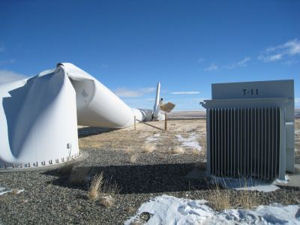
Wind turbines fall over in strong winds!!

Collapse in strong winds is one of the more amusing modes of failure for the notorious wind turbine.  Other forms such as blade throw are also hazardous.  You need to be 3000 feet away to be safe.  Yet noise, and shadow flicker require them to be kept even further away than that from habitations.  Many are being injured and some are dying.  The cost of wind power is higher than we thought.

By Miriam Raftery
April 4, 2012 (San Diego’s East County) – Today marks the “International Protest Day Against Wind Power” with 765 websites participating.
A dark side of the wind industry that many media outlets have failed to report on is the thousands of documented cases of serious accidents. These include numerous documented cases of turbines falling over, blades flying off, injuries to workers and the public, and at least 99 reported fatality accidents.
Of the deaths, 67 were wind industry and direct supporters workers or small turbine operators and 32 were public fatalities.Wind turbine fire

How many tragedies have occurred worldwide is a well-kept secret within the wind industry. In the United Kingdom alone, however, Renewables UK, an industry trade association, has admitted to 1,500 wind turbine accidents/incidents in the UK alone during the past five years, the London Telegraph reportedhttp://www.telegraph.co.uk/news/uknews/8948363/1500-accidents-and-incidents-on-UK-wind-farms.html. Those included 300 injuries and four deaths—in just one small part of the world.
A partial database of accidents , injuries and deaths through December 2011 has been compiled at the Caithness Wind Farm Information Forum:http://www.caithnesswindfarms.co.uk/page4.htm
According to the Caithness database, which estimates it represents only 9% of actual accidents (based on the RenewablesUK figures), an average of 128 accidents per year have occurred from 2007-2011, up from just 6 a year back in 1992-1996 due to the growing number of wind turbine installations.
Among the most grisly tragedies was that of John Donnelly, a worker killed in Oregon in 1989 when a lanyard that as supposed to prevent falls for turbine workers became entangled, dragging him into the spinning machinery.  According to Paul Gipe, an advocate of wind power who authored an article on fatalities, the medical examiner described Donnelly’s demise as death by “multiple amputations”, witnessed by a horrified coworker.
Another Oregon worker, Chadd Mitchell,  young father of two, was killed when a wind turbine tower he was in collapsed to the ground in Sherman County after the turbine’s rotor went into “overspeed,” the Oregonian reported on February 6, 2010. Siemens Power was fined for safety violations, and the family filed a lawsuit.
Other deaths have included electrocutions, falls, crush injuries, construction accidents, and a Minnesota man who was nearly cut in half by a chunk of ice knocked off a turbine tower in 1994. Three suicides have also been linked to turbines, including a worker who hanged himself, a parachutist, and a farmer who killed himself after neighbors protested a turbine he put on his property.
Caithness also has documented 221 separate incidences of blade failure, with pieces of blades documented to have flown over 1,300 meters—or 4,266 feet (4/5 of a mile). Blade pieces have gone through roofs and walls of nearby buildings.
At least 121 structural failures have been recorded too, including entire wind turbines that have crashed to the ground. The website www.windaction.org documents many of these. Turbines have crashed to the ground in school yards, near homes, roads and walking paths where only by sheer luck was no one underneath when the multi-ton structures collapsed. In the Palm Springs area, a turbine spinning out of control forced closure of a major highway. There are also concerns about many turbines still standing –where failures such as cracked foundations and sinkage have been observed.
Wind turbine fire, Australia, WindWatchAround 168 wind turbine fires have been documented. Some sparked brush fires and left some fire departments helpless to watch as oil in turbine components burned hundreds of feet in the air—out of reach of hoses—whirling burning debris across the landscape.
There are also many instances of ice throws hurling chunks of ice off blades—94 times in 2005 alone. Another 93 transport accidents involving turbines have been reported, including one turbine section that rammed through a house and another that knocked a utility pole through a restaurant.
Disturbingly, EnergyBiz Magazine reported in its March/April 2011 edition that “More troubling for wind fleet owners and operators is that many turbines are coming off warranty. The end of last year marked the first time in U.S. history that more wind turbines were operating out of warranty than were covered, according to Wind Systems magazine, while many more are approaching the end of their warranties. Hidden costs of maintenance have climbed sharply, though some promising technologies may help reduce those costs, Energy Biz noted.
Still the issues raise troubling questions: who will be responsible for catastrophic failures when warranties have run out? Are local boards making decisions regarding turbine placement sufficiently educated on the risks?  Farm surrounded-IllinoisHow far away from a wind turbine is a safe setback distance? Locally, some proposed industrial wind projects would place turbines within a half mile of homes, on up to three sides of the dwellings, in Ocotillo. In McCain Valley, Iberdrola’s Tule Wind proposes setbacks from roads of only 1.1 times the height of the turbine – or around 455 feet maximum.
In Kansas, Rose Bacon, a member of the Governor’s Energy Task Force, became so concerned about lack of teeth in regulations and vulnerability of inexperienced local officials in small towns facing proposals from international wind companies that she likened the scenario to the “wildcatter days in the oil business,” the McPherson Sentinel reported in 2005.
Below are some specific examples of serious incidents  documented through the above websites, where many more incidents can also be found.
A wind turbine crashed to the ground at a wind farm near The Dalles, Oregon in August 2007, killing one worker and injuring another, Associated Press reported.
  • A blade from a wind turbine at Lister Hospital in the United Kingdom flew off and hit a car just one month after becoming fully operational in September 2011, the Comet reported.
  • California Highway Patrol shut down Highway 58 for several hours to protect motorists from a runaway wind turbine in the Tehachapi area.  “The runaway wind turbine, when it deteriorates or explodes, can send scrap metal and steel up to a mile away,” CHP Officer Ed Smith said, the Tehachapi News reported.
  • A wind turbine plunged nearly 200 feet to the ground near I-10 in North Palm Springs after going into “overspeed”,  KPSP news reported on May 1, 2009.
  • An Iberdrola wind turbine caught fire on May 14, 2009 at Locust Ridge wind farm in Pennsylvania; the fire was blamed on a gear box problem.
  • A 187-ton wind turbine crashed to the ground at the Fenner wind farm in  New York after breaking off at its base. Enel shut down the entire 20-turbine wind farm in Madison, County New York in June 2010 for at least six months, the Oneida Daily Dispatch and other newspapers reported.
  • Large chunks of seven turbine blades broke off at the Allegheny Ridge Wind Farm in Pennsylvania, with pieces flying over 500 feet, the Patriot News reported in May 2007.  Spanish wind-energy company Gamesa blamed insufficient glue for the failures.
  • In Dolfor, United Kingdom, a turbine exploded and fell to the ground near walking tracks, leading the Shropshire Star to conclude In January 2012, “Turbines should be nowhere near public footpaths.”
  • At Perkins High School in Ohio, blades on a month-old turbine broke apart while spinning, sending fiberglass pieces up to 40 yards (120 feet) away in February 2009. In December 2010 a blade again detached; fortunately school was not in session.
  • A wind turbine crashed down near Western Reserve High School in Berlin Center in April 2011 in Ohio, WKBN news reported.
  • At Fakenham High School in the United Kingdom, students witnessed a 40-foot wind turbine crash onto the school’s playing field and crush a contractor’s van in December 2009, Windaction.org reported.
  • Redriven Power recalled blades after turbines therw blades onto an Ohio high school and an organic fig farm in northern California, Eastern AgriNews reported in May 2009.
  • A General Electric turbine collapsed at an Altona, New York wind farm, the Press-Republican reported, after neighbors heard explosions and the turbine caught fire.
  • In Norway, a blade from a Suez Energy North American V-90 wind turbine was hurled about 1,600 feet, landing near a home’s back door, the Journal Pioneer reported in December 2008.
  • A turbine blade crashed through the roof of a neighbor’s home in Wallaceburg, Canada, the Chatham Daily News reported in February 2009.
  • In November 2009, the Press & Journal reported that a wind turbine collapsed at Rasssay Primary School, forcing children to be sent home after it landed in their playground.
  • A damaged transformer leaked 491 gallons of mineral oil in 2007 at the Maple Ridge Wind Farm’s substation in New York; in 2009 a transformer at the same site was destroyed by fire, the Watertown Daily News reported.
  • A turbine near a highway twice lost blades, the Huron Daily Tribune reported in December 2010.
  • Offshore wind farms in the North Sea are in danger of tumbling down, Wind Energy Update reported on March 18, 2011, noting that dissolved grout had shifted turbines within their foundations at around 600 of Europe’s 948 offshore turbines.
  • Renewables UK has warned that hundreds of offshore wind turbines could be suffering from a design that makes them sink into the sea, the Times Online reported on April 13, 2010.
  • Two men were injured while constructing a wind turbine tower in Rochester, Minnesota, the Post-Bulletin reported on January 14, 2011.
  • Proven Energy told owners of over 600 smaller turbines to shut them down due to fears of catstrophic mechanical failure, the Press and Journal reported in September 2011; the manufacturer suspended sales.
  • Five U.S. wind projects owned by Australia’s Infigen Energy have been engaged in legal actions with turbine manufacturer Gamesa over repair costs and lost production due to various warranty-related disputes, Recharge News reported in December 2011. The largest of those cases involves the Kumeyaay Wind Farm in Campo, where all 75 turbine blades had to be replaced due to storm damage at a cost of over $34.5 million.  Kumeyaay has “vigorously” contested a Gemsa claim and was pursuing warranty-related claims of $10 million against Gamesa, the story added. [Note: This project is listed by Pattern Energy as a “success” story in its application to the California Public Utility Commission for the Ocotillo Wind Express project)
  • Texas state representative Susan King had a wind turbine on her ranch that caught fire and burned two acres. She described it “throwing fire balls on my property”; KTXS found that despite pledges by Next Era Energy t o support volunteer fire departments, no funds had been provided in the past four years.
  • In Hokkaido, Japan, firefighters found hoses were too short to extinguish a fire in a 66-meter-high wind turbine, which took four hours to burn itself out.
  • Huge blades from three turbines in Huddersfield, England “were blown across a busy road and could have hurt wildlife or caused damage to property as well as endangering life,” theLondon Telegraph reported in January 2012.  Gale force winds were blamed.
  • In Western Illinois in 2008, a 6.5 ton blade sailed about 150 feet away, the Associated Press reported.
  • One month earlier, a 330 foot turbine “burst into flame in Ayrshire” during a 165-mph storm on the Scottish border and crashed to the ground near a road, the Telegraph reported.Oil stains, Campo-Andy Degroot
  • A Sheffield, Vermont wind turbine spilled 55-60 gallons of gear oil, spraying it out 200 yards; each turbine generator holds about 110 gallons of hydraulic and lubricating oils, the Burlington Free Press reported.
  • An Abilene, Texas wind turbine erupted into flames and spread to grass around the tower, KTXS News reported on August 26, 2011. The turbine was owned by NextEra Energy.
  • Iberdrola, the Spanish wind energy producer, blamed falling Suzlon Energy turbine blades on a one-tie accident, the Bloomberg News in North Dakota reported in May 18, 2011, suspending operations at its wind farm in North Rugby, North Dakota. The same model, however, suffered cracked blades starting in 2007, prompting a $100 million global retrofit.
  • Three blades came off a turbine at a residence and farm in Forked River, New Jersey, causing the state to shut down its entire onshore wind turbine program in March 25, 2011, the NJ Spotlight reported.
  • A lightning fire at a wind turbine in Peterson, Iowa in August 2010 was  the “third or fourth” turbine fire that the Peterson Fire Department had put out in a dozen years, the Sioux Cit Journal reported.
  • In White Deer Texas, News Channel 10 reported oil seeping down the sides of multiple turbines.
  • In Iga Mie Prefecture, Japan, the Asahi Shimbun reported in January 2008, “malfunctions and accidents involving wind turbines have occurred repeatedly across the country, leading to suspended services and even the scrapping of one facility…Slipshod surveys of wind, flawed designs or sheer incompetence have dealt a blow to the reputatin of wind turbines…”
  • Hundreds of motorists near Sunderland in the UK witnessed a turbine fire that caused rotor blades to break off; two more turbines by Vestas later fell over in high winds in Scotland, the JournalLive reported in 2008.
  • Clipper Windpower had to spend $300 million to fix faulty blades after cracks appeared at multiple facilities, Enviornmental Finance reported in May 2009.
  • A $6 million wind turbine caught fire at the Cathedral Rocks Wind Farm, starting blazes on the ground from falling embers the Adelaide Now newspaper covering Australia/New Zealand reported in February 2009.
  • In Florida, the Desert Valley Star reported in January 2009 that FPL/NER operates 60 wind turbines—and reportedly 40% were “malfunctioning, in disrepair, or need maintenance.”
  • Windtech International reported that a survey of 75 wind farm operators in the U.S. in 2008 found that 60% of turbines may be behind in critical maintenance due largely to a shortage of qualified turbine technicians.
While there are certainly many wind turbines that have never malfunctioned, the dangers cited above are real and have led many municipalities to adopt setback requirements from homes, roads, campgrounds, walkways, playgrounds and any inhabited buildings.
The wind industry has resisted setbacks, however. In Wind Energy Comes of Age, published in 1995, wind energy advocate Paul Gipe contends that setbacks of 500-1000 feet from residences are “more than adequate to protect public safety” and notes that in Europe, windmills have often been installed in places frequented by the public. Gipe insists that despite many accidents, the odds of being injured by a wind turbine remain less than that chance of being struck by lightning.
Setback distances vary widely. Some California communities use a multiple of size, such as three times the height of the turbine. Other areas have larger setback requirements. For instance, in Victoria Precinct, Australia, the government has adopted a 2 meter (1.24 mile) setback requirement for wind turbines to protect residents from risks of mechanical collapses.
In Brown County, Wisconsin, the Board of Health in January passed a resolution seeking emergency financial aid for residents near wind turbines who suffered serious health impacts including some families who abandoned their homes due to health concerns.
The Board called for adoption of the Wisconsin Citizens Safe Wind Siting Guidelines which would require setbacks of at least 2,640 feet from property lines, with further restrictions on shadow flicker, noise and other factors. Developers would also be required to submit a report with blade and debris throw calculations to protect public safety.

http://eastcountymagazine.org/node/9238

Please Support “the Original Charter Challenge!”

United We Stand!!

Support The Original Charter Challenge legal case defending people’s rights not to be subjected to the untested effects of living too close to industrial wind turbines.

Mission

We are residents of rural Ontario who have tried our best for years to show our provincial government that living too close to industrial size wind turbines can make people sick and ruin the enjoyment of their family home.

All efforts have fallen on deaf ears as small independent groups were forced to raise money, hire lawyers and sound emission experts, all in an effort to oppose local wind projects at unwinnable environmental hearings.

The time has come to take the government policy to real court.

The Ministry of the Environment has played judge and jury with rural Ontarians’ lives for too long trapping those harmed in a circle of suffering with no remedy at law. It’s Ontario’s dirty secret and meets all criterion for social injustice.

All across Ontario there is a pent up anger as small groups watch their best efforts ignored. It’s time to fight as a big team with the right legal case that has the best shot at making a difference in real court. That’s The Original Charter of Rights case due in court within the next few months.

Sun Media showed us the untapped power we have raising $30,000 from us in 3 days for Downwind their hard hitting documentary going public June 4/14.

Let’s put fear into the eyes of the wind industry and our government by standing together and donating as one big team. Imagine what we could do in 60 days building on the momentum created by Sun Media who will support and help us reach our $300,000 goal! All other media outlets have ignored our pleas of help.

All our goal money donated will go to The Original Charter Challenge legal fund ensuring this case can be taken by Canada’s top human rights lawyer to the Supreme Court if needed.

United we stand. Don’t let the wind industry divide us.

A made in Ontario legal wedge driven into the wind scam will have ripple effects felt around the world.
Urban and rural Ontarians let’s lead this uprising!

Let’s show the world how a mad as hell unified crowd can raise funds to defend their charter rights in court where any win is a win for all.

We have all worked hard and raised money for our hometown projects and we’ve learned a lot about the David and Goliath struggle we are in.

Now it’s time to put our strength in numbers into action with the help of our partner Sun Media who will promote our fundraising efforts because we rose up and helped them and they believe in our cause.

Even if you can’t contribute we all can make noise, get our own copies of the documentary on disk to show our friends and get the word out.

The Original Charter Challenge fund raising campaign is being kick started by the release of Sun Media’s Downwind documentary on June 4, 2014.

Wind Turbines Destroy the Fabric of Rural Communities!

Wind Farms & “Community Division”: Tales

from Rye Park (NSW) & Northumberland (UK)

Money Wasted

Naked greed, institutional corruption and State-sanctioned corporate bullying and thuggery are part and parcel of the wind industry, wherever you go. We recount below a tale from Northumberland that could have been written anywhere giant fans have been slung up anywhere in the world.

In tales like these the phrase “community division” often appears. However, the term appears to suggest the rural communities concerned are equally divided – in the same way that 18 players line up against each other in the AFL. Nothing could be further from the truth. Communities set upon by wind industry goons divide roughly (and unequally) into three groups.

The first is the tiny minority who hope to profit directly: farmers in contracts with the developer paid to host the turbines; gullible local business people who (foolishly) believe that they’ll snaffle work surrounding the project (construction and engineering work is almost exclusively the preserve of large, well-oiled outfits like Transfield or Leighton – the fans are built in China, India or Denmark); the local volunteer firefighters (CFA/CFS) promised a brand-new fire-truck by the developer (never mind that the fire unit will be reserved to look after the developer’s fans ahead of local properties); and the local footy club, promised a little cash and brand-new footy jumpers (featuring the developer’s “stylish” logo, of course).

The second group is by far and away the majority and includes those whose lives will be the all worse for the short-sighted greed of the few mentioned above. This group obviously includes the many who will end up as neighbours, whose homes will become sonic torture traps: hard-working people who will be driven mad by shadow flicker and the incessant turbine generated low-frequency noise, night after merciless night. As part of the so-called “green” energy “bargain”, the value of their properties will be smashed, if it were even possible to find a buyer for their (soon to be uninhabitable) homes (see our post here).

A pretty fair example of the division outlined above was given a week or so ago at a “community consultation” held by Epuron – an outfit hoping to develop what it calls the “Rye Park” wind farm (north of Yass and east of Boorowa, NSW).

Epuron sent a “pretty young thing” equipped with not much more than a Marketing Degree and the developer’s “spin sheet”. This young lass found herself way out of her depth, as locals grilled her on the wild and unsubstantiated claims she made about her bosses planned giant fans. You know, the usual stuff about “powering” 100,000 homes; reducing CO2 emissions; creating thousands of wonderful “green” jobs; and, best of all, lowering retail power prices. Locals hammered her on all of these classic furphies: in trying to defend the indefensible, she didn’t get off to a great start – it quickly became evident that she had no idea what a Renewable Energy Certificate was, let alone the cost impact of RECs on retail power prices or the (critical) benefit of that subsidy to her employer. Oops!

On a show of hands, the 32 present “divided” as follows: 23 locals, firmly against; and 9 in favour – 4 of whom were employed by Epuron, 2 were contracted as turbine hosts and 3 were “unknowns” (check out this video of the count).

And that brings us to the third group. Quite often a few “unknowns” turn up at “community consultations” to voice their loving support for giant fans. These aren’t “locals” and, even if they live in the vicinity, will never actually live anywhere near that (or any other) wind farm. They’re pretty easy to spot: beards are essential, as are socks and sandals. They turn up to the meeting, rant about the mortal perils of “climate change” and disappear into the ether, never to be seen again. Think Dave Clarke of delusional “ramblings” fame. You know, the type that says having a couple of hundred giant fans speared into YOUR backyard is a sacrifice that THEY’RE willing to make.

Take out rent seekers (like the developer and hopeful turbine hosts) – and rent-a-crowd ideologues – and the “division” in communities set upon by plans for giant fans soon disappears.

Remember, that it’s only ever been about the money.

Chop the fat pile of taxpayer and power consumer subsidies directed to wind power outfits and “community division” will soon resolve. The developers will disappear in a heartbeat; the prospective hosts will go back to doing what they were doing before they entered contracts they neither read nor understood; and the locals will return to the peaceful and untroubled lives they deserve.

Here’s The Daily Mail on how mountains of pointless subsidies fuel the utterly rotten and corrupt wind industry; and sustains its parasites.

Dirty tricks, greed and a ruined idyll that proves the wind turbine plague ISN’T over after all: ROBERT HARDMAN on the stormy issue of green subsidies
The Daily Mail
Robert Hardman
24 May 2014

The last time tempers were this high around here was almost exactly 500 years ago at the Battle of Flodden — the biggest Anglo-Scottish punch-up in history. And not much has changed in this stunning corner of Northumberland since then.

The big house is still Ford Castle, where James IV of Scotland spent his last night alive, carousing on the eve of battle. A couple of miles down the road is Etal Castle, where the English army celebrated victory.

Going back further still, there are 60 sites of prehistoric interest in a three-mile radius — including the Geordie answer to Stonehenge.

The views are much the same, across to the Cheviots, the Scottish borders and what is now Northumberland National Park.

But, this week, all that has changed. The diggers and pile drivers have just arrived, along with a lot of heavies in hi-viz jackets.

By Christmas, a great swathe of this ancient and enchanting border country, including the Holy Island of Lindisfarne, will be overshadowed by the Barmoor Wind Farm — six wind turbines, each 360ft tall and with a blade span the size of a Boeing 747.

Thought we’d heard the last of the onshore wind farm? Remember last year’s ministerial pledges to ‘roll back’ those barmy green subsidies for landowners and companies which desecrate the countryside?

As this week’s scenes in wildest Northumberland testify, it’s business as usual.

This racket, which already adds £3billion a year to all our fuel bills, is as lucrative as ever. The planning applications are pouring in, even though Britain has comfortably met its wind energy targets for 2020.

Oh for the days when the worst to fear was a wall of leylandii. It’s a story familiar to rural communities all over Britain. And, with just six turbines, Barmoor is actually at the smaller end of the wind farm spectrum.

But it’s important for several reasons. First, it shows that nowhere, however beautiful, is safe from the predations of developers masquerading as environmentalists.

Second, even the energy company now building these things acknowledges that ‘amazing’ tactics were used to ram through this development in the face of overwhelming local opposition.

Third, the bulldozers have started tearing up the soil here in the very week that Britain’s only overtly anti-wind farm party — UKIP — has made giant strides across the political landscape.

Down on the edge of Brackenside Farm, I find a building site, a digger and several men in hi-viz jackets scratching their chins. It’s the new site for EDF Energy’s Barmoor sub-station. A security guard becomes rather aggressive the moment we start taking photographs, even when I point to the public footpath sign next to me.

‘It’s a hard-hat area and it’s dangerous,’ he shouts.

Three EDF officials appear and say the same, though two must be in mortal danger for they are without hard hats, too.

Eventually, they concede that they have no powers to shut down a public right of way and choose not to engage in further conversation. We go about our business.

A mile further on, I meet another digger ripping up a field to create a new access road from the B6525 to the wind turbines. The sight of our cameras prompts two men to jump in to a van and race over the field to confront us as we stand on the public road.

‘Can I help?’ asks one, in tones presaging the answer ‘no’. He marches off when I explain I am from a newspaper.

As soon as I start exploring the background to this project, I begin to understand why these EDF contractors are so jumpy.

It has taken 11 years of legal battles, bad blood and festering anger to create a hideous eyesore which will, ultimately, generate just 12 megawatts — on a windy day.

That’s enough electricity to power a few villages in the right weather. Yet, as I shall explain, it will pay out a £50 million jackpot over 20 years.

The Barmoor saga began when wind farm developers Force 9 Energy and Catamount persuaded three local farmers to sign up to a deal, which was all sorted before the public had any inkling of what was going on.

The locals, as locals do, formed an action group called Save Our Unspoiled Landscape (SOUL) and produced a few leaflets.

To their astonishment, Force 9 hired a swanky London PR firm and then made a formal complaint to the Advertising Standards Authority arguing that the locals had exaggerated the threat from the turbines.

Quite why it was the ASA’s business to adjudicate on a planning dispute is anyone’s guess, but the judges ruled in favour of the developer.

Meanwhile, the action group bought a bright orange helium-filled blimp which they tethered at the proposed site to show people across the region just how visible the turbines would be.

Soon after it was raised aloft, its moorings were mysteriously cut and the local authorities spent several days warning North Sea air traffic to be aware of a large orange UFO with ‘NO!’ written on it.

The local council threw out the project after receiving more objections to this plan than any it could recall.

But, shortly before the 2010 election, the Labour government ruled in favour of the development on the grounds that ‘it involved proposals of major significance for the delivery of the government’s climate change programme’.

Job done, Force 9/Catamount started looking for a buyer and sold the project for an undisclosed sum (thought to be around £10million), via Duke Energy, to EDF Energy Renewables in March. And now work begins.

Politicians love to bang on about ‘vibrant communities’, but this one has just been torn in half. How can the footling energy output from a minor get-rich-quick scheme justify the long-term pain felt by so many?

People who wouldn’t get planning permission for a garage extension must now see their views desecrated and the value of their homes slashed in order to enrich a handful of their neighbours.

Based on the projected output of the plant, the highly respected think tank, the Renewable Energy Foundation, expects the wind plant (how can anyone call this thing a ‘farm’?) to receive a £1.15million annual subsidy on top of £1.4million a year for electricity generated over a 20-year contract.

How is it shared out? The terms are always confidential, but the going rate for a landowner in this situation is £10,000-£20,000 per turbine per year, plus a slice of the pie every time the site is resold.

The locals now realise that there is nothing more they can do.

Nick Maycock smiles grimly outside his comfortable guest house, the Friendly Hound, which overlooks the site. He doesn’t even want to contemplate the effect on his trade.

‘Those farmers have been offered a goldmine. How can they turn it down?’ he asks.

I find only one of the farmers today. Sandy Rievely will have two turbines on his land, but will only say he is not allowed to discuss it under the terms of the contract. So what do his neighbours think?

‘I’d prefer not to say,’ replies Dr John Ferguson, 73, a former GP whose retirement has been consumed by the 11-year battle to stop his cottage being dwarfed by these monstrosities.

‘Well, I will then,’ says his wife, Ann. ‘It’s just completely wrong that a handful of landowners can do this to all their neighbours. I avoid even talking to them now because I’ll lose my temper . . .’

Her voice cracks, the conversation halts and we all look awkwardly out of the kitchen window across the sheep and the fields to the distant treeline. In a matter of months, six giant fans on six masts many times the height of the trees, will look back at her.

Now is probably not the moment to remind Ann of the immortal words of the former Energy Secretary who inflicted much of this unhappiness on the countryside in the name of fluffy Polar bears and saving the planet. ‘It is socially unacceptable to be against wind turbines in your area,’ declared Ed Miliband the last time Labour was in power, ‘like not wearing your seat belt.’

The very man who now attacks grasping energy bosses for fleecing the poor is none other than the Minister who thought it would be a wise and noble idea to make the rest of us pay dukes and developers an overall £200,000 annual bonus for every single skyscraper-sized windmill they planted in the middle of the countryside.

For these things really are the size of skyscrapers. Each one of the wind turbines going up by the Fergusons’ home near Flodden Field is going to be the height of a 30-storey office block — taller indeed than anything in, say, Edinburgh.

If they were buildings, they would automatically enter the list of Britain’s top 50 highest.

After more than a decade of sleepless nights and legal battles costing hundreds of thousands of pounds, the residents are well-used to the arguments: that they are simply Nimbys, that it is our duty as human beings to place the greater needs of the environment ahead of selfish local considerations.

They’ve heard all this stuff. And they know it’s tosh. These landowners and EDF wouldn’t be doing any of this if it wasn’t for the staggering inducements.

I go for a drive with local farmer Andrew Joicey, 58, whose elder brother runs the family estate covering 15,000 acres in this area, including mighty Ford Castle (now leased to the local council).

He points out that the estate was offered the usual big bucks to sign up for the scheme, but rejected it. And Andrew has devoted a large part of the past 11 years to fighting local wind farm proposals, seeing off three others — but not this one.

‘What is particularly galling is the way these things are just bought and sold without any regard for local feelings,’ he tells me.

Just this week, he had a long meeting with a senior EDF ‘director of construction’ as part of the company policy of ‘engaging’ with the community.

To his astonishment, the executive admitted that he had heard how the developers had persuaded local farm workers to sign meaningless contracts for a few hundred pounds (wind farm noise restrictions do not apply to people deemed to be ‘financially involved’). Force 9/Catamount was unavailable for comment yesterday.

The EDF executive also agreed that it was ‘incredible’ that the local action group had been reported to the ASA.

As for the Government’s claim that this 12 megawatt site was of ‘major significance’ to Britain’s climate change programme, he shook his head and admitted: ‘It doesn’t even feature.’

So there we have it. Lives and livelihoods are being blighted by a project which even the owners concede is of little consequence.

An EDF spokesman points out that it will give £60,000-a-year to community schemes as a gesture of goodwill.

But it’s a gesture which impresses no one, any more than the latest Tory promise, four weeks ago, to cut wind subsidies after the next election.

For these locals are already having to fund yet another legal battle to stop yet another wind project. In January, a government inspector approved a scheme to put a turbine in front of Northumberland’s ancient Duddo Stone Circle.

Next month, they are taking the Government and the farmer concerned to the High Court in a bid to overturn the decision.

As UKIP — with its clear anti-wind farm agenda — toasts its council successes and looks forward to tomorrow’s Euro election results, there is a clear message here for the eco-zealots in all the main parties.

But is anyone listening?
The Daily Mail

dirtyrottenscoundrelsoriginal


Ontario election debate: Hudak and Horwath

try to make ‘corrupt’ Liberal record stick

Scott Stinson | June 3, 2014 9:29 PM ET

Ontario NDP leader Andrea Horwath, Liberal leader Kathleen Wynne and PC leader Tim Hudak square off in a televised debate in Toronto on Tuesday. Wynne was forced to defend her role in the Liberal gas-plant scandal.

Frank Gunn/The Canadian Press; Frank Gunn/CP; Mark Blinch/CP-poolOntario NDP leader Andrea Horwath, Liberal leader Kathleen Wynne and PC leader Tim Hudak square off in a televised debate in Toronto on Tuesday. Wynne was forced to defend her role in the Liberal gas-plant scandal.

Premier Kathleen Wynne spent the early part of the Ontario leaders’ debate apologizing for her party’s “mistakes” in the billion-dollar gas-plant scandal, as an election issue that has largely been overlooked in the month-long campaign quickly returned to the forefront.

The art of persuasion hasn’t progressed much since Aristotle was plying his trade 2,300 years ago.

Politicians still need to persuade their audience they are of good character; they must make an emotional connection; and they have to convince voters their message makes sense ­ — in Aristotle’s words, ethos, pathos and logos.

For Tim Hudak at the Ontario leaders’ debate Tuesday, two out of three wouldn’t have been a bad result.

Continue reading…

Responding to the first of six questions submitted by viewers in the only debate of the six-week campaign, one that asked how the Liberals could be trusted, Ms. Wynne said the decisions made “were wrong” and “public money was wasted.” Rather than pivot away, the Premier said that there had been “a breach of trust,” but “I have apologized for that.”

It was a perfect opening for NDP leader Andrea Horwath, who was able to begin her remarks in the 90-minute televised debate by saying “the Liberals have betrayed you.” How the Liberals could be trusted, she said, was “the actual question of the evening.”

Ms. Horwath, as did PC leader Tim Hudak later, pushed Ms. Wynne to explain why, as a member of Dalton McGuinty’s cabinet, she didn’t “say no” to the decision to cancel two gas-fired power plants at what turned out to be a $1.1-billion cost to the public.

“I am so sorry that public funds were wasted,” the Premier replied. “I have taken responsibility for being a part of a government that made mistakes.”

It was an impossible start for Ms. Wynne, and a subject for which there is no good answer, but even still she struggled to not sound guilty. “I’ve said that the decisions weren’t right,” she said. Mr. Hudak responded by saying that if the Liberals are re-elected after having apologized for getting caught, “they’re going to do it again.”

Related

Tim Hudak is the Obvious Best Choice for Ontario’s Premier!


Shellie Correia

“the original Mothers Against Wind Turbines TM”,
thank Tim Hudak, for a Job Well Done!
    We went to the CBC, on Front St., in Toronto, to support the Conservative Party, and Tim Hudak, at the
Leader’s Debate. and also to attend the party afterward.  When Tim came into the room, after the debate, the
crowd went crazy!  I congratulated Tim, and told him that he had done a wonderful job this evening, and that
were very proud!  Tim’s wife, Deb, was beaming, and looked radiant.  What an awesome couple!
Tim Hudak made the other two lack-luster candidates, look like blithering fools.  He really nailed this debate!!!
He answered questions, while they tried their best, to avoid them. He had clear, logical answers, while they
made ridiculous statements about what they were going to do with money that we, the taxpayers, do not have.
Tim nailed this debate….hands down!  I am thrilled with his accomplishments!
     While Tim talked about improving our kid’s math and science grades, Horwath said she would give them breakfast.
Tim wants our kids to thrive and succeed, while Horwath, wants them to be dependent upon government handouts.
Tim Hudak was the only one, that would even discuss the wind turbine fiasco, the others didn’t dare even speak of
that scam!  Tim Hudak has a serious plan for repairing the damage that was done, by the Liberal party, (enabled by the NDP!)
     Wynne was a complete bomb.  She looked terrified in the beginning, Saying she was sorry for the gas plants,
repeatedly, but we already know, that she is sorry, only that they got caught!   She then became defensive, and angry,
finishing off by pleading with her ever-outstretched arms, and offering to spend more of our money on Toronto’s infrastructure
The ratio for infrastructure, was half for the GTA, and half for the rest of the entire province…..none of which she has any way
to pay for, other than sinking us even further into debt!
All in all, it was an incredible evening.  We thanked our hosts, at Boston Pizza, for the wonderful food, drinks, and service,
shook hands with the other jubilant Conservative supporters, from all over the province, and we felt very satisfied with the outcome
of the Leader’s Debate!  I believe it was quite obvious to all, that Tim Hudak, is by far, the Best Choice for Ontario’s next Premier!


Living Too Close to a Wind Turbine, is Bad for Your Health!

Updated Research Design and Sound Exposure Assessment

Summary

The last decade has seen a sharp increase in wind turbine generated electricity in Canada. As of November 2012, Canada’s installed capacity was 5.9 Gigawatts, providing 2.3 percent of Canada’s current electricity demands. The wind energy industry has set a vision that by 2025 wind energy will supply 20% of Canada’s electricity demands. Some public concern has been expressed about the potential health impacts of wind turbine sound (WTSFootnote i). The health effects reported by individuals living in communities in close proximity to wind turbine installations are poorly understood due to limited scientific research in this area. This is coupled with the many challenges faced in measuring and modeling WTS, including low frequencies, which represent knowledge gaps in this area. The continued success and viability of wind turbine energy in Canada, and around the world, will rely upon a thorough understanding of the potential health impacts and community concerns.

Health Canada is collaborating with Statistics Canada on an epidemiological study to evaluate measurable health endpoints in people living in 8-12 communities at distances up to 10km from wind turbine installations. Measured endpoints include an automated blood pressure/heart rate assessment, hair cortisol concentrations and sleep actimetry. The seven days of sleep measurement data will be analyzed in relation to synchronized wind turbine operational data, providing the strength of a repeated measures design that incorporates objectively determined health outcome measures.

Read full report at: http://www.hc-sc.gc.ca/ewh-semt/consult/_2013/wind_turbine-eoliennes/research_recherche-eng.php

Footnote i: An important distinction is made between the physical characterization of acoustical energy as "sound" and the subjective evaluation of sound as "noise" when it is subjectively evaluated as unwanted.

Posted on the Health Canada website, http://www.hc-sc.gc.ca/ewh-semt/consult/_2013/wind_turbine-eoliennes/research_recherche-eng.php

Rural Ontarians Treated Despicably, by the Liberals, and it Was Condoned by the NDP!

JERRY AGAR - Callous Ontario Liberals ignore wind power’s victims

SOUTH KENT WIND FARM NEAR LONDON, ONTARIO

Credits: Mike Hensen/The London Free Press/QMI Agency

JERRY AGAR | SUN NEWS NETWORK

http://bcove.me/txilhh0p

It is heart wrenching to see and feel the pain of fellow Ontarians breaking down in tears as they explain how the Liberal government drove them from their homes.

But to understand how cold and callous our current political leadership is in this province, you need to experience it.

Rebecca Thompson’s documentary, Down Wind: How Ontario’s Green Dream Turned into a Nightmare (Surge Media Productions), airs on Sun News Wednesday at 8 p.m. and 11 p.m.

It is a story of reckless, agenda-driven politics resulting in shattered lives.

The Ontario Liberal government’s Green Energy Act isn’t just an economic failure; it is an act of brutal indifference to the human cost of politics.

A cost ignored by people living far from the thump of the giant wind turbines, secure in their downtown Toronto homes and politically correct theories; a safe distance from places like Ripley, Clear Creek and Lucknow, Ontario.

Many may not care – worshiping as they do at the altar of so-called green energy – that the jobs promised by the Liberals through their Green Energy Act were never delivered, while the cost of hydro skyrocketed.

But the human cost should matter to us all.

Giant wind turbines, as high as 50 storeys, with blades the size of a 747, were foisted on communities in rural Ontario with no consultation or agreement from the residents, their municipal governments having been stripped of their planning powers by the Green Energy Act.

Unlike politicians who pay lip service to “serving others” while stomping all over people’s lives and looking after themselves, Norma Schmidt spent her life in Underwood, Ontario in the actual service of others as a nurse and instructor of future nurses.

She and her husband spent their lives in the home they lovingly restored over the years; a place they had hoped to share with their grandchildren.

But Norma has been forced out of her home by severe migraines and depression, brought on by the relentless noise and vibration from the industrial wind turbines erected practically in her back yard.

She left both the job and the home she loved, escaping to a room in her daughter’s house.

It is not the life she worked all these years to achieve, and it is not what she deserves.

Do Norma’s tears, and those of others similarly affected, fall to no effect at the feet of Premier Kathleen Wynne?

Norma’s story is one among many, some of them told in Down Wind.

This is the same Dalton McGuinty/Wynne Liberal government that used public money to reward violent aboriginal protesters who seized private property and terrorized people in Caledonia.

That “occupation” continues today and the government, knowing that their voting base in Toronto couldn’t care less about some rubes in the country, keeps the issue quiet by caving into thugs, rather than protecting law-abiding citizens.

Would the government be as forgiving to people across rural Ontario if some were to blow up a few of the industrial wind turbines that have made their lives hell? Of course not.

There are no turbines thumping the night away in Don Valley West or Toronto-Centre.

It remains to be seen whether the people in such ridings, who overwhelmingly voted Liberal in 2011, will care more for their fellow citizens in rural Ontario this time around.

There are any number of political parties to support other than the Liberals.

O.P.P. Have They Crossed that Political Line? I Believe So!

CHRISTINA BLIZZARD | QMI AGENCY


TORONTO – Who do you call when the police break a law?

You have to ask that as the Ontario Provincial Police Association (OPPA) sent shockwaves through the election campaign Monday with attack ads targeting PC Leader Tim Hudak.

It’s the first time the OPPA has entered the political fray with advertising.

I hope it’s the last.

“We’re here to keep you safe,” says one ad – and shows uniformed officer pushing a lawbreaker into a cruiser. “We’re the OPP and we’re here for you. Who’s Tim Hudak here for?” A respected Toronto lawyer said he believes the ads are illegal and may contravene the Public Service of Ontario Act, which prohibits civil servants from engaging in political activities unless they take an unpaid leave of absence.

“Yes, I think they have broken the law,” said Paul Copeland, a life bencher with the Law Society of Upper Canada, in a telephone interview.

Copeland, who was awarded the Order of Canada for human rights and social justice work, pointed out that the act prohibits civil servants from commenting on politics.

He pointed to a section of the act that says civil servants “cannot comment publicly outside the scope of his or her duties as a public servant on matters that are directly related to those duties and that are addressed in the policies of a federal or provincial party or in the policies of a candidate in a federal or provincial election.”

Unlike municipal police, OPP are not governed by the Police Services Act, which also prohibits political activity.

Copeland said it’s traditionally considered improper for police, armed forces and judges to comment on political matters.

“They are public servants with a very special status in society and it’s dangerous to the democratic process to have them commenting on political matters and endorsing candidates,” he said.

Meanwhile, OPPA president Jim Christie confirmed there are real cops in the ads – and a real OPP cruiser. They were part of a public service ad put out by the police union to laud the good work they do. They tweaked it for the attack ad.

He said it’s not unusual for cops to participate in political activities.

“I think it’s naive to believe the police services don’t get involved politically,” he told me.

“We’ve donated to campaigns, we’ve attended fundraisers, we’ve gone to leaders’ dinners, we’ve supported golf tournaments – all with the view of putting money in political coffers.”

He said it’s his job as a union leader to fight for the pay, perks and pensions of his members and he’s concerned about Hudak’s plans to freeze OPP pay for two years and change the pension plan for new recruits.

The OPP has received hefty pay hikes under the Liberal government.

An 8.55% pay hike kicked in Jan. 1 as part of the government’s commitment to make them the highest paid force in the province.

That pay hike gave an OPP constable with three years on the job an annual base salary of $90,621.

There are two OPP probes going on at Queen’s Park – one into the Ornge air ambulance scandal, the other into the alleged deletion of e-mails by senior staff in former premier Dalton McGuinty’s office as they supposedly attempted to cover their tracks in the gas plant scandal.

How can those probes continue when the force has been politicized like this?

Politicians shouldn’t direct cops. And cops shouldn’t engage in the political dialogue during an election when they’ll work for – or perhaps investigate – whoever wins it.

This is a conflict in so many ways. The OPP provide protection for provincial politicians.

The cops have crossed a big, blue line with these ads.

Everyone Whines About the Ever-Growing Debt, but No One, Wants to Make any Sacrifices.

Kelly McParland: OPP attack on Hudak relegates

the public interest to second place

Skyrocketing OPP costs have municipal councils worried.

DAN JANISSE/The Windsor StarSkyrocketing OPP costs have municipal councils worried.

In launching a direct attack on opposition leader Tim Hudak, the association representing 6,000 Ontario Provincial Police officers underlines just how hard it is for any government to make a serious effort to control public spending.

Wages and benefits consume more than half of Ontario government spending. Any attempt to reduce spending must therefore include some restriction on salaries. But public servants are heavily unionized, and unions ferociously oppose any plan to might impact on their members. Therefore any government that hopes to control spending faces fierce opposition from public sector unions.

The Ontario Provincial Police Association is the latest to join this cabal. On Monday the OPPA released two 15-second ads denouncing PC leader Tim Hudak, who is seeking election on June 12 on a pledge to control spending and eliminate the province’s annual $12 billion annual deficit.

“For the first time in the sixty year history of the OPPA, Tim Hudak has given us no choice but to engage in a publicity campaign during an election”, said OPPA presidentJim Christie.

THE CANADIAN PRESS/Jon Blacker

THE CANADIAN PRESS/Jon BlackerOntario Conservative Party leader Tim Hudak speaks at the Abilities Centre in Whitby.

“A Tim Hudak led government would launch a direct assault on the Collective Agreements of Police Associations right across the Province. His positions on arbitration, public sector pensions and further wage freezes, among others issues, are unacceptable to our members who put their lives on the line for their communities every day.”

Absurdly, the association maintains it is not taking sides in the election, despite the ads. “Let me be clear,” said Christie. “These ads do not serve as an endorsement for the Liberals or the NDP. This also does not mean that we don’t respect and work well with many in the Conservative caucus. We just don’t want this Conservative as Premier.”

Ontario’s unions are already heavily arrayed against the Conservatives. Working Families Ontario, a union group financed by an array of public and private sector labour organizations, spends millions on TV and web advertisements attacking Conservative candidates. The PCs launched a legal challenge charging the group is a front for the governing Liberals, but lost when the court ruled there are no formal ties to the party.

It’s unfortunate that the OPP have seen fit to put their own interests ahead of a province that badly needs to get its finances in order.

The  OPP is thus joining teachers and nurses in seeking to block any legislation that might help get provincial spending back into balance. Not that it’s suffering. The OPP web site notes that it “prides itself on how it treats its employees.” A beginner recruit starts at $49,751 a year, and can work up to more than $90,000 after just three years. The annual Ontario “Sunshine List” of public employees earning above $100,000 a year shows hundreds of OPP staff and officers earning above that level. And while promising to cut public employment by 100,000 jobs, Mr. Hudak has expressly exempted police from being affected.

Ontario municipalities have been increasingly vocal about the difficulty of meeting regular rises in  policing costs, and fear a further increase will follow a new OPP billing model they say could add millions of dollars to local budgets.  But getting control over costs is aggravated by the natural reluctance to engage in a high-profile confrontation with police, and by the peculiarities of the provincial arbitration system. Ontario arbitrators often settle pay disputes by comparing local pay to other regions, without taking into account a municipality’s ability to pay. So if one town gives in to higher pay demands, it sets off a cycle of increases across the province as each force in turn demands similar treatment. In addition, larger forces vie to be the highest paid, ensuring a second domino effect. Similar pressures in the U.S. have led to a number of  cities declaring bankruptcy, especially over policing costs.

The easiest way to deal with the problem is simply to give in to the unions, as the Liberals have done throughout most of their 11 years in power. The Liberal practice of buying labour peace has contributed heavily to the doubling of Ontario’s debt since the Liberals took office. The toughest approach is to challenge the unions and risk the kind of attacks now being aimed at the Conservatives.

The result is that political parties find themselves in a paradox. If they do the responsible thing and make a serious effort  to oppose ruinous spending increases, they risk a public battle they could easily lose. If they give in to union pressure they may find it easier to get re-elected, but at the cost of forsaking the best interests of the province. It’s a Catch-22: What’s best for the party is what’s worst for the province. For 11 years the Liberals have consistently opted to do what’s good for themselves, amassing a debt that will be left for another generation to confront. Mr. Hudak, in pledging to pursue what’s good for the province,  has made himself deeply unpopular with union groups and the subject of virulent attacks.

It’s unfortunate that the OPP have seen fit to put their own interests ahead of a province that badly needs to get its finances in order. Police occupy a special place in society and enjoy a number of privileges as a result. Using that status to wage a partisan political battle is both unseemly and  inappropriate. The familiar police motto, “to serve and protect” is generally taken to refer to the public interest, not their own pocketbooks. They’d have been better off staying silent and leaving the politicking to politicians.

National Post