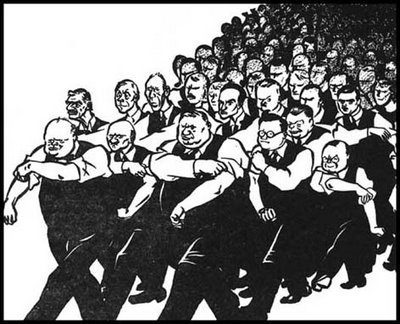
Unaffordable Renewables. Lefties love them, while we get poorer.

KONRAD YAKABUSKI

A sunny Ontario experiment gone wrong

That glare coming off selected southern Ontario farmlands these days is not the result of some secret state experiment with atomic vegetables. No, it’s the product of another form of state-sanctioned mad science that is costing Ontarians dearly without doing diddly to improve the environment.

After Germany and California, Ontario is “enjoying” its day in the sun as a global hot spot for solar power. Photovoltaic panels are carpeting fertile and fallow farmlands at a furious rate this summer as solar power promoters rush to complete projects before the subsidy gusher slows.

By the end of 2015, more than 2,000 megawatts of solar power will be connected to the Ontario grid as developers take advantage of the province’s feed-in-tariff, guaranteeing them a heady two-decade return on their investment, courtesy of the weary Ontario electricity consumer.

The newly re-elected Liberal government scaled down the FIT program last year, but not before a small group of savvy operators hit the sweet spot by locking into its risk-free cash flow. One 10MW solar farm under construction in eastern Ontario’s cottage country will get 44 cents for every kilowatt-hour of electricity it produces over 20 years.

Compare that to the average 8.55 cents per kWh that Ontario’s Independent Electricity System Operator says it cost to produce power in the province in 2013. The price includes a wholesale price of 2.65 cents (what the power was actually worth on the open market) and a so-called “global adjustment” of 5.9 cents to cover the sunk costs in existing nuclear, hydro and wind projects.

No other province has imitated Ontario’s folly. No wonder the solar lobby worked so hard to re-elect Premier Kathleen Wynne in the June election. The opposition Progressive Conservatives vowed to pull the plug on Liberal FIT contracts that will further burden the province’s already uncompetitive manufacturers and saddle consumers with a 50 per cent rate hike within a decade.

Solar power is not the only culprit. Far more FIT-contracted wind power will be added to the grid. Together, these contracts demonstrate the madness of Ontario’s so-called green energy policy. Not only will it cost more, it won’t remove much if any carbon from the atmosphere.

The biggest myth about wind and solar power is that they automatically displace carbon dioxide produced by coal- or gas-fired power plants. Solar power producers consistently make this claim without any proof to back it up. Quite often, the opposite is true.

Take Ontario, which counts on baseload nuclear power for 60 per cent of its installed electricity capacity. Nuclear produces no carbon emissions. Neither does the hydro power that accounts for about one-quarter of Ontario’s capacity. On many days, demand in Ontario isn’t high enough to require power from additional sources. But when it is, wind and solar can’t be counted on.

Quite simply, neither wind nor solar are reliable sources of electricity. In its latest 18-month outlook, the IESO forecasts that 99.5 per cent of Ontario’s 12,947 MW of installed nuclear capacity will be available during summer consumption peaks. But it predicts only 13.7 per cent of the 1,824 MW of installed wind capacity will be available. Solar is even less reliable. So, when wind and solar actually do produce power, it’s usually dumped.

To meet consumption peaks, Ontario’s grid operator needs a dependable supply of complementary power. In the past, that came from coal plants, which could be fired up on an as-needed basis. Thankfully, they’ve all been closed and replaced by natural gas-fired plants.

Natural gas is still a fossil fuel, but its carbon footprint is half or less that of coal. And modern combined-cycle gas plants are so efficient, reliable and cheap to build (relative to other forms of electricity) that Charles Frank of the centrist Brookings Institution calls them, along with nuclear power, “the ‘best bang for our buck’ as we seek to reduce emissions.”

“A nuclear or gas combined-cycle plant avoids far more emissions per MW of capacity than wind or solar because it can operate at 90 per cent of full capacity,” Mr. Frank notes in a new study. “Limited benefits and higher costs make wind and solar less socially valuable than nuclear, hydro and combined-cycle gas.”

Add in the alarmingly high failure rate of solar panels, the absence of a long-term track record, and the quashing of local content rules and the outcome of Ontario’s sunny experiment could be even darker than it looks.

People All Over the World, Fed Up With the Wind Scam!

Angus Taylor: Community Backlash Brewing Over ACT Wind Farm Plan

Angus 'The Enforcer' Taylor

Canberra’s costly carbon follies outdo even the Danes
The Australian
Angus Taylor
1 August 2014

AUSTRALIANS are learning the hard way that moral vanity comes at a high price. After many years of climate policy chaos, we know that most people want some action on climate change but they don’t want to waste money on expens­ive, inefficient schemes.

Yet politicians spruik and implement them, we all wake up to the cost and the policy has to change. It’s bad for households, consumers and investment. And the merry-go-round achieves little or nothing for the planet.

Bjorn Lomborg recently exposed on these pages the folly of Copenhagen’s plans to be the world’s first CO2-neutral city.

Hot on Copenhagen’s heels, Canberra has announced a plan to mandate that a dizzying 90 per cent of the ACT’s electricity­ ­supply will come from large-scale ­renewables by 2020, with a 50 per cent reduction in carbon emissions.

Canberra’s blueprint suffers from the same overreach as Copen­hagen’s. As old-style industry protection has fallen out of favour, rent-seekers are hungrily eyeing green industry subsidies.

The ACT government is hopping on the merry-go-round with a blueprint focused on building masses of wind turbines, and the odd solar farm.

Not content to focus on efficient means to reduce carbon emissions, the proposal props up the troubled wind industry. Yet as the Productivity Commission, last week’s Deloitte report and mainstream economists tell us, wind energy — viable only on the back of vast subsidies — is an expensive way to reduce carbon emissions.

The ACT has ignored sensible alternatives. For instance, decentralised solar is economic without, repeat, without subsidies in many rural and remote areas. Farmers know this — many have been using solar for years for a range of purposes.

But the present NSW regulatory regime hurts the economics of solar: electricity distributors increase profits and returns through massive network investments where rooftop solar is a better option. Nor is increasing soil carbon part of the ACT plan, despite the obvious opportunity in the surrounding agricultural regions.

On the ACT government’s own numbers (which are questionable), the 90 per cent renewables plan will cost an additional $370 million between now and 2020. These costs will be passed on to ACT households in their electricity bills, hurting the poor, and the government tries to downplay the impact by assuming offsetting efficiencies.

In many countries, renewable energy targets are growing rapidly because today’s huge investment costs are hidden in tomorrow’s electricity bills.

The ACT plan expects wind power to cost about $100 per megawatt hour, roughly three times the market price. This is consistent with Deloitte’s recent finding that the federal large-scale renewable energy target is costing $103 per tonne of carbon abated — four times the cost of our inflated carbon tax.

Ironically, in a recent effort to reduce costs, the ACT government itself has pulled back on the use of green power — renewable energy use in the government’s nine directorates plunged by 83 per cent in 2012-13.

It is unclear how the ACT plan may fit with a revised federal RET. The present federal target is intended to include all renewable generation, and ACT efforts should ordinarily be taken into account. This will be a decision for the federal government following the RET review, but there is a real prospect that the ACT’s expensive efforts will have no impact at all on Australia’s emissions.

The ACT blueprint also does not include the extra costs of full-scale back-up from another electricity source. Wind blows only some of the time, so Canberra will need to call on coal-fired electricity. In practice, this means that when the wind blows, ACT-sponsored wind farms will send their electricity into the NSW grid, yet the ACT will demand a reliable and constant supply in return. The NSW grid also will need to address large fluctuations in supply, causing unprecedented operational pressures and additional costs.

The most extraordinary part of the blueprint is the assertion that communities outside the ACT, where the turbines will be built, actually want them. This wind-industr­y-inspired propaganda is simply untrue.

I represent a large swath of NSW where there are turbines and where many, many more are planned. I know that a growing majority of people in these quiet, beautiful, unique, windswept communities do not want them.

Wind farms nearly always cause deep community fractures and risk serious downward pressure on the value of adjacent land. Typical wind-farm victims are tree-changers from Canberra who have put their life savings into their dream block, only to find it virtually unsaleable. Wind developers have been known to tell these people they should simply “take one for the planet”.

Middle Australia is willing to support sensible carbon emission-reduction efforts, but it will not tolerate big economic hits to achieve it, which is why Australia rejected the world’s biggest carbon tax.

Experience abroad (witness the 2009 Copenhagen Summit) and here tells us that overreach will thwart well-intended initiatives. We need efficient, careful and well-timed emission-reduc­tion policies. The ACT renewables blueprint fails on every front.

Angus Taylor is the federal member for Hume. He was a partner at McKinsey & Co and director of Port Jackson partners, where his work included carbon and energy strategy and policy development.
The Australian

STT agrees with Angus Taylor’s observation that decentralised (“stand-alone”) solar makes good economic sense: providing grid access to handfuls of remote rural properties (at huge ongoing expense) makes little sense where a stand alone solar system (panels, batteries and back-up generator) can be set up for around $35,000 (see our post here).

The other point raised by Angus’ article is that the ACT’s plan is dependent on turbines being slung up in NSW – not in the ACT. The ACT has banned wind farms through planning controls that are aimed at protecting the visual amenity enjoyed by Canberra residents. So, to add hypocrisy to insult, it’s their neighbours in NSW who are being told to “take one for the planet”.

But don’t expect them to take it lying down.

Communities across the Southern Tablelands faced with the threat of a turbine invasion are up in arms at the ACT’s plans to destroy their lives and properties.

Anger has erupted at Lake George near Tarago, NSW over the Jupiter wind farm proposed by Spanish-Australian company EPYC. Locals are furious at the developer’s lies, treachery and deceit – the level of community outrage is clearly palpable (see our post here).

And – just up the road at Rye Park (near Goulburn) in NSW – locals have united in their opposition to plans to spear 100 or more giant fans into their peaceful community. A little while back, in covering what “community division” caused by wind farms really means, we touched on the developer’s “community consultation” that took place there (see our post here).

The “community consultation” in question was held by Epuron – an outfit hoping to develop what it calls the “Rye Park” wind farm (north of Yass and east of Boorowa, NSW).

On a show of hands, the 32 present “divided” as follows: 23 locals, firmly against; and 9 in favour – 4 of whom were employed by Epuron, 2 were contracted as turbine hosts and 3 were “unknowns” (check out this video of the count).

A few weeks after the “community consultation”, the community of Rye Park held its own meeting, where – joined by others from the neighbouring communities of Boorowa, Yass and Rugby – 104 turned up to hear – among others – Angus Taylor (their local Federal Coalition MP) talk about the greatest state sponsored fraud of all time. Angus is clearly on a mission to bring it to a screaming halt – as the cracking speech covered in this post makes clear.

A survey of those at the meeting was taken by organisers to determine the level of support for wind power development in Boorowa, Yass, Rugby and Rye Park. After the speakers finished the crowd delivered their responses to the survey to organisers: of the 104 in attendance, 88 people participated. The results were:

  • “I do not support wind power development in Boorowa, Yass, Rugby and Rye Park”: 80 votes (91%)
  • “I do support wind power development in Boorowa, Yass, Rugby and Rye Park”: 6 votes (7%)
  • “I am undecided about wind power development in Boorowa, Yass, Rugby and Rye Park”: 2 votes (2%).

No surprises there.

One thing’s for certain: the ACT government’s plan to invade NSW is going to be met with an eruption of hostility and anger from people who aren’t willing to “take one for the planet” – especially given the fact that wind power cannot and will never reduce CO2 emissions in the electricity sector. People will generally suck up a little pain; but not without a purpose.

angry-mob

Ontario’s Folly…..What a Complete Waste of Taxpayer Dollars!

 That glare coming off selected southern Ontario farmlands these days is not the result of some secret state experiment with atomic vegetables. No, it’s the product of another form of state-sanctioned mad science that is costing Ontarians dearly without doing diddly to improve the environment.

After Germany and California, Ontario is “enjoying” its day in the sun as a global hot spot for solar power. Photovoltaic panels are carpeting fertile and fallow farmlands at a furious rate this summer as solar power promoters rush to complete projects before the subsidy gusher slows.

By the end of 2015, more than 2,000 megawatts of solar power will be connected to the Ontario grid as developers take advantage of the province’s feed-in-tariff, guaranteeing them a heady two-decade return on their investment, courtesy of the weary Ontario electricity consumer.

The newly re-elected Liberal government scaled down the FIT program last year, but not before a small group of savvy operators hit the sweet spot by locking into its risk-free cash flow. One 10MW solar farm under construction in eastern Ontario’s cottage country will get 44 cents for every kilowatt-hour of electricity it produces over 20 years.

Compare that to the average 8.55 cents per kWh that Ontario’s Independent Electricity System Operator says it cost to produce power in the province in 2013. The price includes a wholesale price of 2.65 cents (what the power was actually worth on the open market) and a so-called “global adjustment” of 5.9 cents to cover the sunk costs in existing nuclear, hydro and wind projects.

No other province has imitated Ontario’s folly. No wonder the solar lobby worked so hard to re-elect Premier Kathleen Wynne in the June election. The opposition Progressive Conservatives vowed to pull the plug on Liberal FIT contracts that will further burden the province’s already uncompetitive manufacturers and saddle consumers with a 50 per cent rate hike within a decade.

Solar power is not the only culprit. Far more FIT-contracted wind power will be added to the grid. Together, these contracts demonstrate the madness of Ontario’s so-called green energy policy. Not only will it cost more, it won’t remove much if any carbon from the atmosphere.

The biggest myth about wind and solar power is that they automatically displace carbon dioxide produced by coal- or gas-fired power plants. Solar power producers consistently make this claim without any proof to back it up. Quite often, the opposite is true.

Take Ontario, which counts on baseload nuclear power for 60 per cent of its installed electricity capacity. Nuclear produces no carbon emissions. Neither does the hydro power that accounts for about one-quarter of Ontario’s capacity. On many days, demand in Ontario isn’t high enough to require power from additional sources. But when it is, wind and solar can’t be counted on.

Quite simply, neither wind nor solar are reliable sources of electricity. In its latest 18-month outlook, the IESO forecasts that 99.5 per cent of Ontario’s 12,947 MW of installed nuclear capacity will be available during summer consumption peaks. But it predicts only 13.7 per cent of the 1,824 MW of installed wind capacity will be available. Solar is even less reliable. So, when wind and solar actually do produce power, it’s usually dumped.

To meet consumption peaks, Ontario’s grid operator needs a dependable supply of complementary power. In the past, that came from coal plants, which could be fired up on an as-needed basis. Thankfully, they’ve all been closed and replaced by natural gas-fired plants.

Natural gas is still a fossil fuel, but its carbon footprint is half or less that of coal. And modern combined-cycle gas plants are so efficient, reliable and cheap to build (relative to other forms of electricity) that Charles Frank of the centrist Brookings Institution calls them, along with nuclear power, “the ‘best bang for our buck’ as we seek to reduce emissions.”

“A nuclear or gas combined-cycle plant avoids far more emissions per MW of capacity than wind or solar because it can operate at 90 per cent of full capacity,” Mr. Frank notes in a new study. “Limited benefits and higher costs make wind and solar less socially valuable than nuclear, hydro and combined-cycle gas.”

Add in the alarmingly high failure rate of solar panels, the absence of a long-term track record, and the quashing of local content rules and the outcome of Ontario’s sunny experiment could be even darker than it looks.

Follow Konrad Yakabuski on Twitter: @konradyakabuski

The Truth About the Faux-Green Renewables Scam!

Carbon Footprint of Wind Turbines

This is a thought provoking essay from an Australian website called “Andy’s Rant”. 

http://www.andysrant.com/ ; His carbon focus is mostly on the base but frequently the question has come up about what goes into the base and the fact that manufacturing cement is a heavy carbon emitting process.  I thank him for that analysis alone.  He also states what I have been saying all along in this battle to educate the public about the false promises of wind:  “wind turbines will incur far more carbon dioxide emissions in their manufacture and installation than what their operational life will ever save.”

Measures are metric, so if you don’t think in metric, open another window and set up a metric converter (meters to feet, etc.)

So What’s the Carbon Footprint of a Wind Turbine

with 45 Tons of Rebar and 481 M3 of Concrete?

Its carbon footprint is massive – try 241.85 tons of CO2.

Here’s the breakdown of the CO2 numbers.

To create a 1,000 Kg of pig iron, you start with 1,800 Kg of iron ore, 900 Kg of coking coal 450 Kg of limestone. The blast furnace consumes 4,500 Kg of air. The temperature at the core of the blast furnace reaches nearly 1,600 degrees C (about 3,000 degrees F).

The pig iron is then transferred to the basic oxygen furnace to make steel.

1,350 Kg of CO2 is emitted per 1,000 Kg pig iron produced.

A further 1,460 Kg CO2 is emitted per 1,000 Kg of Steel produced so all up 2,810 Kg CO2 is emitted. 

45 tons of rebar (steel) are required so that equals 126.45 tons of CO2 are emitted.

To create a 1,000 Kg of Portland cement, Calcium carbonate (60%), silicon (20%), aluminium (10%), iron (10%) and very small amounts of other ingredients are heated in a large kiln to over 1,500 degrees C to convert the raw materials into clinker. The clinker is then interground with other ingredients to produce the final cement product. When cement is mixed with water, sand and gravel forms the rock-like mass know as concrete.

An average of 927 Kg of CO2 is emitted per 1,000 Kg of Portland cement. On average, concrete has 10% cement, with the balance being gravel (41%), sand (25%), water (18%) and air (6%). One cubic metre of concrete weighs approx. 2,400 Kg so approx. 240 Kg of CO2 is emitted for every cubic metre.

481m3 of concrete are required so that equals 115.4 tons of CO2 are emitted.

Now I have not included the emissions of the mining of the raw materials or the transportation of the fabricated materials to the turbine site so the emission calculation above would be on the low end at best.

Extra stats about wind turbines you may not know about:

The average towering wind turbine being installed around beautiful Australia right now is over 80 metres in height (nearly the same height as the pylons on the Sydney Harbour Bridge). The rotor assembly for one turbine – that’s the blades and hub – weighs over 22,000 Kg and the nacelle, which contains the generator components, weighs over 52,000 Kg.

All this stands on a concrete base constructed from 45,000 Kg of reinforcing rebar which also contains over 481 cubic metres of concrete (that’s over 481,000 litres of concrete – about 20% of the volume of an Olympic swimming pool).

Each turbine blade is made of glass fibre reinforced plastics, (GRP), i.e. glass fibre reinforced polyester or epoxy and on average each turbine blade weighs around 7,000 Kg each.

Each turbine has three blades so there’s 21,000 Kgs of GRP and each blade can be as long as 50 metres.

A typical wind farm of 20 turbines can extend over 101 hectares of land (1.01 Km2).

Each and every wind turbine has a magnet made of a metal called neodymium. There are 2,500 Kg of it in each of the behemoths that have just gone up around Australia.

The mining and refining of neodymium is so dirty and toxic – involving repeated boiling in acid, with radioactive thorium as a waste product – that only one country does it – China.  

All this for an intermittent highly unreliable energy source.

And I haven’t even considered the manufacture of the thousands of pylons and tens of thousands of kilometres of transmission wire needed to get the power to the grid. And what about the land space needed to house thousands of these bird chomping death machines?

You see, renewables like wind turbines will incur far more carbon dioxide emissions in their manufacture and installation than what their operational life will ever save.

Maybe it’s just me, but doesn’t the “cure” of using wind turbines sound worse than the problem? A bit like amputating your leg to “cure” your in-growing toe nail?


This was posted by Tory Aardvark, Last November. The Numbers Have Grown!

14000 Abandoned Wind Turbines In The USA

There are many hidden truths about the world of wind turbines from the pollution and environmental damage caused in China by manufacturing bird choppers, the blight on people’s lives of noise and the flicker factor and the countless numbers of birds that are killed each year by these blots on the landscape.

The symbol of Green renewable energy, our saviour from the non existent problem of Global Warming, abandoned wind farms are starting to litter the planet as globally governments cut the subsidies taxes that consumers pay for the privilege of having a very expensive power source that does not work every day for various reasons like it’s too cold or  the wind speed is too high.

The US experience with wind farms has left over 14,000 wind turbines abandoned and slowly decaying, in most instances the turbines are just left as symbols of a dying Climate Religion, nowhere have the Green Environmentalists appeared to clear up their mess or even complain about the abandoned wind farms.

The US has had wind farms since 1981:

Some say that Ka Le is haunted—and it is. But it’s haunted not by Hawaii’s legendary night marchers. The mysterious sounds are “Na leo o Kamaoa”– the disembodied voices of 37 skeletal wind turbines abandoned to rust on the hundred-acre site of the former Kamaoa Wind Farm…

The ghosts of Kamaoa are not alone in warning us. Five other abandoned wind sites dot the Hawaiian Isles—but it is in California where the impact of past mandates and subsidies is felt most strongly. Thousands of abandoned wind turbines littered the landscape of wind energy’s California “big three” locations—Altamont Pass, Tehachapin (above), and San Gorgonio—considered among the world’s best wind sites…
California’s wind farms— comprising about 80% of the world’s wind generation capacity—ceased to generate much more quickly than Kamaoa. In the best wind spots on earth, over 14,000 turbines were simply abandoned. Spinning, post-industrial junk which generates nothing but bird kills…”

The problem with wind farms when they are abandoned is getting the turbines removed, as usual there are non Green environmentalists to be seen:

The City of Palm Springs was forced to enact an ordinance requiring their removal from San Gorgonio. But California’s Kern County, encompassing the Tehachapi area, has no such law

Imagine the outraged Green chorus if those turbines were abandoned oil drilling rigs.

It took nearly a decade from the time the first flimsy wind turbines were installed before the performance of California wind projects could dispel the widespread belief among the public and investors that wind energy was just a tax scam.

Ben Lieberman, a senior policy analyst focusing on energy and environmental issues for the Heritage Foundation, is not surprised. He asks:

“If wind power made sense, why would it need a government subsidy in the first place? It’s a bubble which bursts as soon as the government subsidies end.”

“It’s a bubble which bursts as soon as the government subsidies end” therein lies a lesson that is going be learnt by those that sought to make fortunes out of tax payer subsidies, the whole renewables industry of solar, wind and biomass is just an artificial bubble incapable of surviving without subsides from governments and tax payers which many businesses and NGO’s like WWF, FoE and Greenpeace now think is their god given right, as the money is going on Green Climate Religion approved clean energy.

The Green evangelists who push so hard for these wind farms, as usual have not thought the whole idea through, no surprises for a left agenda like Climate Change, which like all things Green and socialist is just a knee jerk reaction:

Altamont’s turbines have since 2008 been tethered four months of every year in an effort to protect migrating birds after environmentalists filed suit. According to the Golden Gate Audubon Society, 75 to 110 Golden Eagles, 380 Burrowing Owls, 300 Red-tailed Hawks, and 333 American Kestrels (falcons) are killed by Altamont turbines annually. A July, 2008 study by the Alameda County Community Development Agency points to 10,000 annual bird deaths from Altamont Pass wind turbines. Audubon calls Altamont, “probably the worst site ever chosen for a wind energy project.”

The same areas that are good for siting wind farms are also good for birds of prey and migrating birds to pass through, shame for the birds that none of the Green mental midgets who care so much about everything in nature, thought that one through when pushing their anti fossil fuel agenda.

After the debacle of the First California Wind Rush, the European Union had moved ahead of the US on efforts to subsidize “renewable” energy–including a “Feed in Tariff” even more lucrative than the ISO4 contracts.

The tax payers who paid for the subsidies to build the wind farms, then paid over the odds for an unreliable source of power generation will, ultimately be left to pick up the bill for clearing up the Green eco mess in the post man made Global Warming world.


Updated November 24th

In answer to several allegations that the number of abandoned wind turbines was made up,  the following quote from the article and link will confirm this figure to be true:

California’s wind farms — then comprising about 80% of the world’s wind generation capacity — ceased to generate much more quickly than Kamaoa. In the best wind spots on earth,over 14,000 turbines were simply abandoned. Spinning, post-industrial junk which generates nothing but bird kills.

In Spite of Evidence, Wind Pushers Still Trying To Deny Wind Turbines Make People Sick!

Lloyd, G. Headache for Residents After Monitoring Reveals Bad Vibes — Cape Bridgewater

Graham Lloyd, Environment Editor, The Australian
August 02, 2014

Melissa Ware at Cape Bridgewater wind farm in Victoria; she has a hearing disability but can tell from inside her home what is happening with the turbines outside. Picture: David Geraghty Source: News Corp Australia


FOR the past two months, Melissa Ware’s 150-year-old stone foundation house in the shadow of the Cape Bridgewater wind farm in South Australia has been wired to monitor sounds that cannot be heard easily by the human ear.

Ware, who is partially deaf, and two nearby families have kept a diary of the physical sensations they were experiencing at regular intervals. A scorecard was developed ranking three factors — noise, vibration and sensation — on a scale of one to five.

The research has been funded by wind farm owner Pacific Hydro and undertaken by acoustics specialist Steven Cooper, who has had a long interest in why wind turbines have produced so many health complaints that defy easy explanation.

For six years, since the wind turbines started operating at Cape Bridgewater, Ware has complained of headaches and other “pressure” effects she can attribute only to the arrival of the renewable energy project she once had supported enthusiastically.

The early results from comparing the readings from Cooper’s highly sensitive microphones and Ware’s diary notes provide uncomfortable evidence for the wind industry and some relief for Ware, told for six years that her problems were all in her head. 

During the eight-week trials at Cape Bridgewater, from inside her house, Ware has been able to express with 100 per cent accuracy what is happening with the wind turbines outside.

In a report-back meeting to residents and the company, Cooper posed the theory that high sensations, including headaches and chest pains, correlated to times when the turbine blades were not efficiently aligned to the wind. 

The results from recordings and residents’ diaries show that a change in power output of more than 20 per cent leads to a change in sensation for the residents.

 “The main thing I get from the study is that there is a direct correlation from the noise coming out of the wind farm and the response in my body to that noise,’’ Ware says. “I have a bilateral hearing impairment, and I don’t always hear from the wind farm, but I feel it from the ground, the floor or the furniture I am sitting on.’’

Cooper has said the Pacific Hydro Cape Bridgewater development complies with existing noise guidelines. Issues of ambient noise from waves on surrounding cliffs and wind direction also are relevant in the data.

Pacific Hydro has published the minutes of the report-back meetings and Cooper’s preliminary findings but has drawn no public conclusions. Company spokesman Andrew Richards says Cooper’s work has “resulted in some interesting data” but “doesn’t necessarily provide any conclusions or outcomes”.

But Richards acknowledges there a problem. “Whatever they are experiencing is real for them,’’ he says.

University of Sydney public health specialist Simon Chapman has used the term “necebo” to argue that the complaints are psychosomatic and exacerbated by warnings from anti-wind farm groups.

In a new paper, Chapman says “The statement that ‘more than 40’ houses have been ‘abandoned’ because of wind turbines in Australia is a factoid promoted by wind farm opponents for dramatic, rhetorical impact.’’

A review by the National Health and Medical Research Council says there is “no consistent evidence that adverse health effects are caused by exposure to wind turbine noise’’.

However, it says: “While no research has directly addressed the association between infrasound from wind turbines and health effects, the possibility of such an association cannot be excluded on present evidence.’’

Concerned residents in Australia want the federal government to use Cooper’s research methodology at Cape Bridgewater as the basis for an independent study that has been promised by Industry Minister Ian Macfarlane.

Visit the Pacific Hydro website to view the preliminary findings:http://www.pacifichydro.com.au/english/our-communities/communities/cape-bridgewater-acoustic-testing-presentation/?language=en

Original story available at http://www.theaustralian.com.au/national-affairs/policy/headache-for-residents-after-monitoring-reveals-bad-vibes/story-e6frg6xf-1227010639170

Important Workshop Video’s Re: Wind Turbines & Noise….Vermont

This is the site where the Board posts presentations and other filings in the sound standard investigation docket
 
Workshop #1, Noise Experts, April 29, 2014
 
Workshop #2, Neighbors Speak, May 13, 2014
Individual Speakers:  The numbers indicate the order in which people spoke
Neighbors With Problems
Living Around First Wind’s Sheffield Clipper Liberty 2.5 MW Wind Turbines
24. Luann Therrien http://youtu.be/4Raci04GUC8
25. Steve Therrien http://youtu.be/4larrLlrDkw
20. Keith Balleck http://youtu.be/tmSGday7q7I
3. Paul Brouha http://youtu.be/FLASEzrubWU
4. Byron Savoy http://youtu.be/IK_xqNrFC58
5. Don Gregory http://youtu.be/HBitJUirs9k

Living Around David Blittersdorf’s Georgia Mountain Goldwind 2.5 MW Wind Turbines
26. Reggie Johnson http://youtu.be/kFwjtMTDIzg
27. Melodie McLane http://youtu.be/9WcQXhGJbGA
28. Scott McLane http://youtu.be/yJyK19ccfy4
29. Matt Parisi http://youtu.be/5DTslhh62BM

Living Around GMP’s Lowell Vesta v112 3 MW Wind Turbines
7. Linda Hill http://youtu.be/XDqnRuEbGzA
30. Deborah Willey http://youtu.be/zuNHlnBfw80
31. Roger Willey http://youtu.be/LAbPbxm988Y
32. Keith Christiensen http://youtu.be/7m1ixorrU-k
34. Robbin Clark http://youtu.be/oOh1lB29vBE
38. Steven Clark http://youtu.be/7XrjNQ1N8LQ
33. Sandra Watterman http://youtu.be/7r4DKUBO3Nc
42. Sam Mason http://youtu.be/USeyqhWAhkU
37. Mike Nelson http://youtu.be/MqKWTjjn4Jg
35. Carol Irons http://youtu.be/3MnePOXmqhM
41. Jack Brooks http://youtu.be/Ui2WtUYWgTs
44. Gordon Spencer http://youtu.be/sakPKWP8KbU

Others Speaking about concerns re Noise from Vermont Wind Turbines
36. Kathleen Nelson http://youtu.be/U1ZWb6XVet0
23. Kim Fried http://youtu.be/iYgA8nRHKXk
43. Noreen Hession http://youtu.be/IS-jti1Xis0

Living Around Wind Turbines, with Financial Connections to Wind Developers
6. Alice Soinenen http://youtu.be/iNjl6OQE1bs
9. Tom Soinenen http://youtu.be/S6SucZS0jog
21. John Soinenen http://youtu.be/PLKqCR0NlPE
8. Andre Tetreault http://youtu.be/MuaNYBU5-Zo
19. Gertrude Tetreault http://youtu.be/P7GyOZ1bG7s
14. Dan Wright http://youtu.be/ASvazKGaPlY
15. Mike Tetreault http://youtu.be/US_CLAX3kuM
10. Pam Tetreault http://youtu.be/iKRa_CsRqlY
22. Vince Doaner http://youtu.be/gr7ae_t9xIA
40. Kristi Hutchins http://youtu.be/Bgdsyi6S6mE
1. Tammy Barrows http://youtu.be/7UZD-n4sHN4

Others Speaking about Not Hearing Wind Turbine Noise
18. Beth Martell-Viera http://youtu.be/Anvomvxrx5E
13. Dave Robitille http://youtu.be/yTQDCBp4Vhw
16. Esther Weber http://youtu.be/W9lgHnpwupw
39. Karen Staniels http://youtu.be/vdv136sRiEI
2. Lloyd Banchand http://youtu.be/3tSbXYaytZ8
11. Marie Harm http://youtu.be/58lFHu_CaAI
17. St. Onge http://youtu.be/8m_x1tEqamE
12. William Harm http://youtu.be/qchdRCi9jKA


Workshop #3, Noise and Health, July 29, 2014
Video of Presentations to Vermont’s Public Service Board, in order of appearance, July 29, 2014 as part of the PSB’s Sound Standard Investigation.  
Opening and Department of Health: http://youtu.be/2e0nYqdg05I
Sandy Reider, MD: http://youtu.be/kS2wuQSCP6U
Arline Bronzaft, Ph.D. http://youtu.be/uaJJt_pV-ms
Agency of Natural Resources http://youtu.be/oIhO754NiwA
 
Annette Smith
Executive Director
Vermonters for a Clean Environment
789 Baker Brook Road
Danby, VT  05739


Wind Turbine Syndrome Showing Up in Vermont Doctor’s patients!

Medical doctor sees Wind Turbine Syndrome in his patients (Vermont)


stethoscope

“Wind Turbine Noise & Adverse Health Effects”

Testimony before the Vermont Public Service Board (PSB) 7/29/14

….— by Sandy Reider, MD

My name is Sandy Reider, I am a primary care physician in Lyndonville, and I have been practicing clinical medicine in Vermont since I received my license in 1971.  [Dr. Reider is a graduate of the Harvard University School of Medicine — Editor.]

In the interest of full disclosure, I am not being paid for involvement in this issue, nor did I seek this out; rather, it found me by way of a patient I had known well for several years, and who, in late 2011, suddenly developed severe insomnia, anxiety, headaches, ringing ears, difficulty concentrating, and frequent nausea, seemingly out of the blue. This puzzled us both for a few months before we finally came to understand that he suffered from what was, then, a relatively new clinical entity known as “wind turbine syndrome”, related in his particular case to the comparatively small NPS 100 KW turbine that began generating power atop Burke Mountain in the fall of 2011.

In the course of the 2012 legislative session, I described this patient in detail in testimony for the Senate Natural Resources and Health Care Committees, as well as the Governor’s Siting Commission. Since his symptoms were so typical and similar to those described by thousands of other individuals living too close to large wind turbines all over the globe, I have attached my testimony for the Senate Health Care Committee and encourage you to review it for its very characteristic description of what it is that this board, I trust, hopes to mitigate by recommending more protective sound standards for these industrial wind installations.

I should add that I have seen 4 additional patients living close to the large Sheffield and Lowell projects, as well as an individual living near another single NPS 100KW turbine in Vergennes. All presented with similar, though not identical, symptoms to those described in my testimony.

That there have already been so many complaints here in Vermont related to wind turbines suggests that the current noise standards may be inadequate. Either the utilities have been regularly out of compliance with the current existing standards (Shirley Nelson’s detailed daily records suggest this has indeed occurred with some regularity) and/or that the scientific data and studies upon which the current noise standards are based is incomplete, or possibly just plain wrong.

Over the past 2 years I have reviewed much of the relevant scientific literature, and out of my 42 years of experience and perspective as a clinician, respectfully offer the following observations and comments.

Firstly, I do not doubt at all that these large turbines can and do cause serious health problems in a significant number of persons living nearby, even though the vibrational-acoustic mechanisms behind this harm are not yet completely understood (1,5). Repetitive sleep disruption is the most often cited adverse effect, and disturbed sleep and its resulting stress over time is known to cause or exacerbate cardiovascular illnesses (2, ), chronic anxiety and depression, as well as worsening of other pre-existing medical problems. This is especially concerning for the most vulnerable among us — children, the elderly, those who are naturally sensitive to sound,  or prone to motion sickness or migraine headaches, and, as mentioned, those who are  unwell to start with.

The position adopted by developers of large industrial wind projects, and thus far supported by regulatory and health agencies, has been that there is no evidence of a direct effect on health from wind turbines; rather, that the claimed adverse health effects are indirect, due mainly to the individual’s negative attitude about the wind turbines (so-called “nocebo” effect), and therefore it is their fault, it’s all in their heads, and so on. Not only is this incorrect, it is disingenuous. There is simply no clinical justification for ignoring harm being done to individuals and communities, whether direct or indirect, on these grounds — simply put, harm is harm, whatever the mechanism.

However, good evidence for direct adverse effects has existed since the mid-80’s when Neil Kelley headed a group of researchers, under the auspices of the US Department of Energy and NASA, and found conclusive evidence that adverse effects, very similar to those that describe “wind turbine syndrome”, were due primarily to very low frequency sound and inaudible infrasound (6). This role of infrasound was subsequently confirmed by Kelley’s team under controlled laboratory conditions, and resulted in a complete redesign of turbines from the downwind trestle-mounted turbines to today’s upwind turbine on a single massive tower.  Furthermore, he recommended protective maximum levels of this low frequency sound.

The joint radiation levels (expressed in terms of acoustic intensity and measured external to a structure) in the 8, 16, 31.5 and 63 Hz standard (ISO) octaves should not exceed band intensity threshold limits of 60, 50, 40 and 40 dB (re 1 pWm –2) more than 20% of the time. These figures compare favorably with a summary of low-frequency annoyance situations by Hubbard.

(It is worth noting that very often infrasound levels are higher inside a building than outside, the structure acting as a resonating chamber and amplifying the lower “vibration” frequencies. Thus measurements for low frequency sound should be made inside the structure as well as outside. Also, low frequency sound levels are not only building design and geometry specific, but also site specific, especially in a place like Vermont where the topography and climactic conditions are so variable. There may be unacceptable indoor infrasound levels in one home, while another home over the hill may have undetectable or very low levels.)

The wind industry’s assertion that the Kelley study is irrelevant and that infrasound levels are negligible with the current, newer turbine design and may be ignored is unfounded, and more recent evidence confirms this.  (See the 2012 Falmouth study by Ambrose and Rand; Bob Thorne’s excellent quality of life study in 2011 [12]; Steven Cooper’s preliminary results in Australia, final results due in September 2014 [11]; and others.)

The aforementioned studies were performed by independent professional acousticians not connected to the wind industry.  Incidentally, the severely affected patient described in my 2012 testimony never did perceive any audible noise from the turbine (and this is quite typical, the sound is more felt than heard), nor did he harbor any feelings pro or con about the installation when his problems began, though after he understood the source of his ill-health, I have no doubt that the “nocebo” effect may have added to his stress, adding insult to injury.  He has since abandoned that home, and is once again sleeping soundly and feeling well.

The current sound standards, based as they are on dBA weighted acoustic measurements, gives particular weight to audible frequencies in the soundscape, but very little or no weight to low sound frequencies and infrasound, particularly below 10 Hz, which comprises a significant proportion of the sound generated by large turbines. People do not hear dBA, they hear qualitatively different sounds, birds, insects, running water, wind in the trees, etc.  Basing noise criteria solely on this single number ignores the unique nature of the sound produced by large wind turbines, with its constantly  changing loudness, frequency, harmonics, pitch, and impulsive quality.

It is precisely these qualities that make the sound feel so intrusive and annoying, especially in quiet rural environments where these projects are usually located (12).  Parenthetically, the word “annoying” is somewhat misleading, as it implies a minor, temporary, or occasional nuisance that perhaps might be mostly ignored, rather than what it is: a  repetitive stressor that can degrade one’s short and long term health and well being, and from which there is no escape over the lifetime of the project short of having to abandon one’s home.

It is worth repeating here that the current Public Service Board threshold  of 45 dBA of audible sound, averaged over an hour, has never been proven safe or protective, and that most studies agree that  audible sound should not exceed 35 dBA, or 5dBA above normal background sound levels. (This is especially important in rural areas where background noise is minimal.)  The level should be a maximum, not an hourly average. Above 35 dBA there are likely to be significantly more complaints, particularly difficulty sleeping.

chart

Before concluding, I would like to emphasize that the bulk of scientific evidence for adverse health effects due to industrial wind installations comes in the form of thousands of case reports like the patient I described. One or two sporadic anecdotal cases can legitimately be viewed with a wait-and-see skepticism, but not thousands where the symptoms are so similar, along with the ease of observing exposure and measuring outcomes, wherever these projects have been built. I agree with Epidemiologist Carl Phillips, who opined that “these case reports taken together offer the most compelling scientific evidence of serious harm.  Just because the prevailing models have failed to explain observed adverse health effects does not mean they do not exist”, and, as he succinctly, though in my opinion a bit too harshly, concluded: “The attempts to deny the evidence cannot be seen as honest scientific disagreement and represent either gross incompetence or intentional bias” (13).

I am aware that the members of the PSB bear a heavy responsibility for Vermont’s overall energy future and have many other issues on their plate besides this one. Rather than presenting you with a long list of literature references, most of which would likely go unread (but they are included just in case ), I recommend a careful review of just one study in particular:  Bob Thorne, a professional acoustician in Australia, presented an excellent and well thought-out clinical study to the Australian Senate in 2011 (12). It really does cover the waterfront, including WHO quality of life measures, audible and infrasound measurements, and health measures, in a balanced and scientific way. For your convenience there is a hard copy of this study included with my presentation today.

His comprehensive (including the full sound spectrum, not only dBA weighted sound) and protective recommendations for sound criteria are reasonable, and if adopted, would be likely more acceptable to neighboring households and communities. However, given that wind developers are these days building bigger turbines atop taller towers in order to maximize power generation and profits, adoption of these safer limits would necessitate siting the installations farther from dwellings.  A 1-2 km setback is not nearly sufficient; significant low frequency sound pressure measurements have been recorded in homes 3-6 miles from large projects in Australia.

The outcomes of the study are concerned with the potential for adverse health effects due to wind farm modified audible and low frequency sound and infrasound. The study confirms that the logging of sound levels without a detailed knowledge of what the sound levels relate to renders the data uncertain in nature and content. Observation is needed to confirm the character of the sound being recorded. Sound recordings are needed to confirm the character of the sound being recorded.

The measures of wind turbine noise exposure that the study has identified as being acoustical markers for excessive noise and known risk of serious harm to health (significant adverse health effects):

(1) Criterion: An LAeq or ‘F’ sound level of 32 dB(A) or above over any 10 minute interval, outside;
(2) Criterion: An LAeq or ‘F’ sound level of 22 dB(A) or above over any 10 minute interval inside a dwelling with windows open or closed.
(3) Criterion: Measured sound levels shall not exhibit unreasonable or excessive modulation (‘fluctuation’).
(4) Criterion: An audible sound level is modulating when measured by the A-weighted LAeq or ‘F’ time-weighting at 8 to 10 discrete samples/second and (a) the amplitude of peak to trough variation or (b) if the third octave or narrow band characteristics exhibit a peak to trough variation that exceeds the following criteria on a regularly varying basis: 2dB exceedance is negligible, 4dB exceedance is unreasonable and 6dB exceedance is excessive.
(5) Criterion: A low frequency sound and infrasound is modulating when measured by the Z- weighted LZeq or ‘F’ time-weighting at 8 to 10 discrete samples/second and (a) the amplitude of peak to trough variation or (b) if the third octave or narrow band characteristics exhibit a peak to trough variation that exceeds the following criteria on a regularly varying basis: 2dB exceedance is negligible, 4dB exceedance is unreasonable and 6dB exceedance is excessive.
(6) Definitions: ‘LAeq’ means the A-weighted equivalent-continuous sound pressure level [18]; ‘F’ time-weighting has the meaning under IEC 61672-1 and [18]; “regularly varying” is where the sound exceeds the criterion for 10% or more of the measurement time interval [18] of 10 minutes; and Z-weighting has the meaning under AS IEC 61672.1 with a lower limit of 0.5Hz.
(7) Approval authorities and regulators should set wind farm noise compliance levels at least 5 dB(A) below the sound levels in criterion (1) and criterion (2) above. The compliance levels then become the criteria for unreasonable noise.

Measures (1-6) above are appropriate for a ‘noise’ assessment by visual display and level comparison. Investigation of health effects and the complex nature of wind turbine noise require the more detailed perceptual measures of sound character such as audibility, loudness, fluctuation strength, and dissonance.

To exclude careful independent well-designed case studies like Thorne’s ( and others ) in a review of the scientific literature that purports to be thorough is, I repeat, a serious omission and is not “scientific”. Careful consideration of these independent well done studies, if nothing else, should encourage regulatory agencies to adopt a much more precautionary approach to the siting of today’s very big industrial wind projects in order to adequately protect public health.

For better or worse, in today’s “information age” we are perhaps too fascinated by computers and mountains of data, but truth is truth, wherever you find it, even in small places.

Contact:

….Sandy Reider, MD
….PO Box 10
….East Burke, VT 05832
….(802) 626-6007
….sandyreider@yahoo.com

*Many thanks to Dr. Sarah Laurie, CEO of the Waubra Foundation, for her tireless work, and generosity in sharing so much information.

1.  Pierpont, N 2009  from the executive summary of her peer-reviewed study,http://waubrafoundation.org.au/resources/wind-turbine-syndrome-executive-summary/

2.  Capuccio et al 2011 “Sleep Duration predicts cardiovascular outcomes: a systemic review and meta-analysis of prospective studies” European Heart Journal, (2011) 32, 1484–1492 http://waubrafoundation.org.au/resources/sleep-duration-predicts-cardiovascular-outcomes/

3.  Nissenbaum, M Hanning, C and Aramini J 2012  “Effects of industrial wind turbines on sleep and health”  Noise and Health, October 2012

4.  Shepherd, D et al 2011 “Evaluating the impact of wind turbine noise on health related quality of life” Noise and Health, October 2011 http://waubrafoundation.org.au/resources/evaluating-impact-wind-turbine-noise-health-related-quality-life/

5.  Arra, M & Lynn H  2013  Powerpoint presentation to the Grey Bruce Health Unit, Ontario, “Association between Wind Turbine Noise and Human Distress”http://waubrafoundation.org.au/resources/association-between-wind-turbine-noise-and-human-distress/

6.  “Acoustic noise associated with Mod 1 Turbine, its impact and control”http://waubrafoundation.org.au/resources/kelley-et-al-1985-acoustic-noise-associated-with-mod-1-wind-turbine/

7.  James, R 2012  “Wind Turbine Infra and Low Frequency Sound: Warning Signs That Went Unheard” Bulletin of Science, Technology and Society 32(2) 108 – 127, accessed via Professor Colin Hansen’s submission to the Australian Federal Senate Inquiry Excessive Noise from Windfarms Bill (Renewable Energy Act) November 2012 http://waubrafoundation.org.au/resources/testimony-hansenc-excessive-noise-bill-inquiry-submission/.  James references another useful bibliography of references of the early NASA research, compiled by Hubbard & Shepherd 1988 “Wind Turbine Acoustic Research:  Bibliography with selected Annotation”http://waubrafoundation.org.au/resources/hubbard-h-shepherd-k-nasa-wind-turbine-acoustics-research/

8.  Hubbard, H 1982  “Noise induced house vibrations and Human Perception”http://waubrafoundation.org.au/resources/hubbard-h-1982-noise-induced house vibrations-human-perception/

9.  Ambrose, Stephen and Rand, Robert  2011 “Bruce McPherson Infrasound and Low Frequency Noise Study” http://waubrafoundation.org.au/resources/bruce-mcpherson-infrasound-low-frequency-noise-study/

10.  http://waubrafoundation.org.au/resources/schomer-et-al-wind-turbine-noise-conference-denver-august-2013/

11.  http://waubrafoundation.org.au/2014/pacific-hydro-commended-initiating-wind-turbine-noise-acoustic-survey/

12.  http://waubrafoundation.org.au/resources/wind-farm-generated-noise-and-adverse-health-effects/

13.  “Properly interpreting the Epidemiological evidence about the health effects of Industrial Wind turbines on nearby residents” Bulletin of Science, Technology and Society vol 31 No 4 (August 2011) pp 303–315 http://waubrafoundation.org.au/resources/properly-interpreting-epidemiologic-evidence-about-health-effects/

See:  Bob Thorne, “The Problems with ‘Noise Numbers’ for Wind Farm Noise Assessment,” Bulletin of Science, Technology & Society 2011 31: 262.  DOI: 10.1177/0270467611412557, http://bst.sagepub.com/content/31/4/26
2

Hoosac Wind Turbines, Consistently Out of Compliance, & Using Unscrupulous Testing Methods

Hoosac Wind Fails Noise Test

Ribbon cutting ceremony December 201UPDATE 7-31-14:

WAMC Radio reporter Jim Levulis describes the reaction of the MassDEP to Iberdrola’s mitigation plans for the Hoosac project  “Report Finds Hoosac Turbines Out of Compliance.”

Impacted resident Michael Fairneny is not impressed with the plans:

“Forget this mitigation,” Fairneny said. “I would want curtailment…these things shut down. If they’re found to out of compliance then I want something real done about it. I don’t see them ever being in compliance. I mean they are quiet a few days here and there. But the majority of the days when they’re not tested, if I’m not getting pounded the people on Tilda Hill are getting pounded.”


Hoosac Wind is loud. It’s too loud to comply with  Massachusetts noise limits. That’s why an April 28, 2014 letter to the Mass. Department of Environmental Protection offers remedies for the loud sounds. Iberdrola lists the exceedences measured in tests performed in January and February 2014 at monitoring stations at Tilda Hill Road and Moores Road:

• January 9, 2014 measurements were 42.4 dBA average Lmax at Tilda Hill South and 37.5 dBA average Lmax at Moores Road North. Ambient at those locations was 32.2 DBA and 26.7 dBA, respectively.
• February 20, 2014 measurements were 44.8 dBA average Lmax at Tilda Hill South and 44.4 dBA average Lmax at Moores Road North. Ambient at those locations was 27.8 DBA and 27.5 dBA, respectively. These unusual sound levels are attributed to a blade icing condition.

Too bad the company has not informed residents in Florida and Monroe, as it says in its letter it will do:

In addition to these technical modifications, New England Wind [Iberdrola Renewables] will be contacting neighboring residents inviting them to an information session. In that session New England Wind will listen to the concerns of landowners, discuss the sound test results, and detail our technical modifications. In addition, New England Wind will be offering scheduled tours of the site.

This report confirms what several acousticians noted after reviewing the original noise testing results from April 2013. Rob Rand  analysed the initial acoustic report, and Stephen Ambrose illustrated the issues in “Back to the Future II” for a Townsend, Vermont presentation in November 2013.

The large increase in noise above what is a quiet rural background turns this sparsely populated rural area into an industrial zone. But because wind turbines are not regulated like normal industries, the noise continues through the night.

Among numerous issues raised about the initial testing in 2013 were:

  • The turbines were run at a reduced power, which means that the turbines were producing less electricity and emitting lower noise. Iberdrola hired the acoustician (RSG of Vermont) to do the test and therefore was completely aware of the date and time of the testing.  This was true in the April 2013 testing and again in the latest January and February 2014 testing.  Even though the turbines were run at reduced power they still exceeded the Massachusetts noise pollution regulations.
  • Much of the original April 2013 testing was unattended when the MassDEP guidance says the testing should be “attended,” which means the noise is monitored by a person with a sound meter.
  • The test microphones were inappropriately placed near trees, raising the background level.

Independent acousticians also found raw data tables in the April 2013 test report that indicated noise violations, but the company rejected the data on those sampling occasions because they were assumed to be anomalies.

Before the project was ever built, the original modeled noise assessment indicated to acousticians that there would be “widespread complaints” and “strong appeals to stop the noise.” This modeling was performed on a computer in California, without any background noise measurements done in Florida or Monroe MA.

People whose lives have been impacted by the Hoosac project should have a chance to be heard. They will have ideas for mitigation that allow them to have a good night’s sleep.