This is Our Federal Government, Warning Us About Agenda 21! Now do you believe it???

Report from Parliament

August 28, 2014

I hope everyone had an enjoyable summer. Thank-you to all who attended the various constituency clinics that have been held throughout our Renfrew-Nipissing-Pembroke riding. Whether it was just to drop by and say hi, or to share an interest or concern, I appreciate the opportunity of you letting me know what is on your mind.

After the high cost of electricity, one of the issues that has arisen as a topic of concern is the public move by the City of Ottawa to petition the province to use its legislation to restrict growth in places like Renfrew County. That could mean no more provincial funding for roads, sewers, hospitals and other infrastructure renewal. Without infrastructure renewal, employment opportunities would leave as would residents who need services, and particularly our young people who need jobs. It has been suggested this is a result of “Agenda 21”, a United Nations’ policy the provincial government has adopted in an extreme form. This radicalized environmental version is now being pushed in Ottawa by the same liberal advisors behind the so-called “Green Energy Act” that has meant crippling electricity prices, resulting in high provincial unemployment and energy poverty.

In 2005, the liberal government in Ontario passed legislation called the “Places to Grow Act” to align its land use/planning codes and government policies to United Nations Agenda 21. Like many ideas that may sound good on paper, when it comes to implementation by individuals with no real-world experience, these ideas can become dangerous.

While many people support the United Nations for its ‘peacekeeping’ efforts, hardly anyone knows the organization has very specific land use policies they would like to see implemented in every village, town, city, county, province and nation.  The specific plan is called United Nations Agenda 21 Sustainable Development, which has its basis in Communitarianism.  Most Canadians have heard of sustainable development, but are largely unaware of the U.N. initiative Agenda 21. A non-governmental organization headquartered in Toronto called the International Council of Local Environmental Initiatives, ICLEI, is tasked with carrying out the goals of Agenda 21 worldwide.

In a nutshell, the plan calls for government to eventually take control of all land use removing decision making from the hands of private property owners.  It is assumed people are not good stewards of their land and “the government” will do a better job if it is in total control.  Individual rights in general are to give way to the needs of communities as determined by the governing body.

Human habitation, as it is referred to in Agenda 21, would be restricted to lands within the “Urban Growth Boundaries” of a city like Ottawa.  Only certain building designs are permitted.  Opponents of Agenda 21 also assert that rural property could be more and more restricted in what uses can be done on it.  The provincial government says it will support agricultural uses, eating locally produced food, and farmer’s markets, etc. In fact there are so many regulations restricting water and land use (there are scenic corridors, inland rural corridors, baylands corridors, area plans, specific plans, redevelopment plans, tree-cutting by-laws, endangered species legislation, huge fees, fines, etc.) that small farmers and rural landowners are struggling to keep their lands altogether.  County roads will not get paved. The push will be for people to get off of the land, become more dependent, and go into the cities.  People will have to move from private homes and into single dwellings like apartments, as homeownership will become largely unaffordable the way it is in many urban areas like Toronto today. More extreme measures like a federal liberal carbon tax will force people out of private cars and onto public transit that only exists in cities.

U.N. Agenda 21 proponents cite the affluence of North Americans as being a major problem which needs to be corrected. The document calls for a redistribution of wealth, lowering the standard of living for Canadians so that maybe the people in poorer countries will have more.  Although people around the world aspire to achieve the levels of prosperity we have in our country, and will risk their lives to get here, North Americans are cast in a very negative light for our energy consumption. Agenda 21 aims to reduce Canadians to a condition closer to average in the world.  Only then, say the promoters of Agenda 21, will there be their social justice which is the so-called cornerstone of the U.N. Agenda 21 plan.

I am pleased to thank members of County Council who are voicing their opposition to provisions of the “Places to Grow Act” ‘Agenda 21-type’ provincial legislation, and against the City of Ottawa’s position,  standing up for the people of Renfrew County. As your Federal Member of Parliament, I will oppose any effort by the liberal party in Ontario to redirect Federal Infrastructure funding away from rural or small town communities the way it takes provincial gas taxes away from rural drivers to pay for Toronto’s subways.

With your support and encouragement, I will continue to expose the hidden agenda of the merged liberal party of Toronto in Ottawa. They have condemned our children to a lifetime of debt repayment by promoting wacky social experiments like Agenda 21, the Places to Grow, Green Energy Acts and similar misguided policies.

Angus Taylor…..An Australian Hero! Putting Windweasels on Notice!

The Wind Industry’s Worst Nightmare – Angus Taylor – says: time to kill the LRET

Nightmare (1962) Jerry wakes up

Member for Hume, Angus “the Enforcer” Taylor has taken the lead on behalf of the Coalition in Tony Abbott’s quest to bring the wind industry to its knees. While there’s been a lot of huff and puff emanating from Ian “Macca” Macfarlane and his faithful ward, young Gregory Hunt about saving the mandatory RET with magical “third ways”, STT says keep your eyes focused on Taylor and the PM.

To give you some idea of where Taylor is coming from – and where the wind industry is headed – here’s an interview he gave last week (9 September 2014) on Sky News (transcript follows).

*****

http://blob:https%3A//www.youtube.com/fe2546b4-a7de-461e-8946-528eaf70770e

*****

Graham Richardson: Angus Taylor is the member for Hume, and he’s in our Canberra studio. G’day Angus how are you?

Angus Taylor: G’day Graham.

Graham Richardson: Now I’ve got to say that if I was a minister, I’d be looking behind me and saying there’s a Rhodes scholar on the backbench, we can’t have him there for long. I mean, you’d have to get, you’d have be promoted – I don’t see how they can keep a Rhodes scholar on the backbench.

Alan Jones:  He is a patient man, he’s a farmer’s son. He’s a patient man. Angus, just explain to us would you, in layman’s language, what is the Renewable Energy Target.

Angus Taylor:  Alan, it’s a scheme designed to increase the level of renewable electricity in Australia. And the way it works in practice is it gives big subsidies to renewable projects and it builds those subsidies into our electricity prices ….

Alan Jones:  Sorry to interrupt you – go even simpler – the Renewable, Angus, a renewable project – just explain what a renewable project is.

Angus Taylor:  Well, so there are two schemes, the large scale scheme, which is essentially wind – there is a bit of hydro in there but no new hydro. So that’s the large-scale scheme and that is the majority of it. That’s about 90% of the total. And then there is the small scale scheme which is largely rooftop solar. So they’re the two schemes, and we pay for those big subsidies in our electricity prices, in our bills – they’re not transparent.

Alan Jones:  And that energy is infinitely dearer to produce than coal-fired power so isn’t it fair to say that without massive subsidies, these outfits couldn’t survive. Now if the government is not going to give money to the motor vehicle industry, and it’s not going to give money to SPC Ardmona, why is it giving billions of dollars to Qatari owned wind turbines?

Angus Taylor:  Well that’s a good question. I mean we’ve just had a review of this, led by Dick Warburton, and what the review concluded was that these are expensive schemes, very expensive schemes, but as importantly they’re very expensive ways to reduce carbon emissions. They did come to different conclusions on solar and the large-scale, the wind subsidies, and what we know is rooftop solar in remote areas can be economic, but large-scale wind it’s very clear that it’s not economic on any grounds.

Graham Richardson: If it is not economic, tell me how uneconomic is it? How much dearer? You know, is it 50%, is it 80% dearer than coal-fired power? How much?

Angus Taylor:  Well, put it in perspective. A wind project to get investment will probably need a price somewhere in their long-term contract of somewhere close to $100. And we’re buying electricity now, wholesale electricity at about $30 a megawatt hour. So say three times is a good rule of thumb … What we also know is the cost of reducing carbon emissions this way – it’s something like $60-70 and of course the carbon tax was far less that and we think still way too high.

Alan Jones:   Let’s just go  … just go to where our viewers are involved in all of this. Let me just ask you a simple question, right, I’m a big Qatari investor, because I know that Australians are suckers, we know the Australian government is just shelling out money, now I come from Qatar and I want to build wind turbines and I’ve found this farmer, Angus Taylor in Goulburn and he’s got this a big hill out there – and I think this would be a good place to build wind turbines, so go to Angus Taylor and I say to him I want to put 70 wind turbines on your property. Just basically rule of thumb, how much would you expect to get from me, the big Qatari Guru, how much would you expect to get from me per wind turbine? And I want 70 of them on your farm.

Angus Taylor:  You’d get about 10 to 12 thousand dollars so if you going to have

Alan Jones:  So I kick in $700,000 to you, that’s right. So I build the 70 wind turbines. Enter the taxpayer. So I’m from Qatar, I’m a big wind power man, what’s the taxpayer going to fork out to me in order that I so-called ‘produce’ this wind power?

Angus Taylor:  Look on average you’d expect it to be about $400,000 per year, per turbine.

Alan Jones:  For 30 years.

Angus Taylor: In fact in the next few years – yes for 30 years (GR Wow). 400,000 per turbine.

Alan Jones: Start again

Angus Taylor: So if you had 70 turbines, that’s $28 million a year.

Alan Jones:   28 million on his farm – on his farm – 28 million – so the people watching you – say it again – I’m a Qatari I’m not even an Australian – $28 million a year for one farm. How the hell can this be sustainable?

Angus Taylor: For 70 turbines – and of course we are all paying for that in our electricity bills that’s how it’s coming through.

Graham Richardson:  Can I ask you Angus – at the moment what is the energy target and how close have we got to it?

Angus Taylor:  Right so the energy target is supposed to be 20% of total demand. It’s turning out that it is way above that. The unit is 41 terawatt hours – but what’s important is we’re overshooting the 20% target by a long way. Now the problem with that, the problem with that is from here on in, we would have to build a Snowy Mountains Scheme every year for the next 5 years to reach the target. That’s a Snowy Mountain every year, for the next 5 years to reach the target. And the target will take us well over the 20% mark. The reason it’s going to take us way over the 20% mark, which was the original target, we were originally set ourselves a target of 20%, the reason we’re going way over is that electricity demand has actually been going backwards in Australia and the expectation was it would keep growing. So we’ve got this very high target, huge amount of renewable capacity to be built to reach it, and it’s going to take us way over what we originally expected to do.

Alan Jones:   And Angus isn’t t fair to say that written into the budget there is an expenditure figure of $17 billion – 17 thousand million dollars, to build between 700 and 10,000 of these. Now can I just ask this? If the Abbott Government is not going to give money to SPC Ardmona, and if it’s not going to give money to the car industry – and out there is tax payer land they say, nor should they, why the hell are we subsidising Chinese and Qatari wind farmers jacking up the price of energy, pushing manufacturing out of business? Why are we doing it?

Angus Taylor:  Well, look this is the good question. We are paying these massive subsidies out in our electricity bills we are going way over the target we originally set ourselves and really what this is becoming now is just industry assistance, it’s becoming industry assistance and primarily for the wind industry.

Alan Jones:   It’s industry welfare on steroids.

Graham Richardson: How much investment goes into it? How much private investment goes into it?

Angus Taylor:  Well look, you know, it depends on what’s being built Graham but it is a big number, 17 billion is probably not a bad number to go with, which is the number that Alan mentioned earlier. So there’s a lot of investment- but remember what’s happening here – it’s not creating jobs, we’re actually taking jobs away from other places. In fact, Deloitte tells us that we’re actually going to lose in total 5000 jobs as a result of this – now we gain some in one place and lose them in the other, but the net, we are going to lose 5000 jobs and the reason for that is that it is inefficient investment – we are actually replacing electricity generation we don’t need to replace because demand is going backwards, not forwards. So this is costing us a lot.

Alan Jones:   Yes, it is costing us. Isn’t it valid to say – and it may be an oversimplification, you can either have a manufacturing industry, or a Renewable Energy Target – you can’t have both.

Angus Taylor:  Well, the other part of this, of course, is if it’s pushing electricity prices up, and in the next 5 years it’s likely to push them up quite a lot, if it’s pushing electricity prices up, not only is that hurting households, it’s hurting businesses in exactly the same way that the Carbon tax was hurting businesses. There’s no difference. It’s pushing up electricity prices and that’s hurting all of us.

Alan Jones:  But you said …

Angus Taylor: We’ve gone from being a low cost energy country to a high cost energy country and this is continuing to be one of the contributors. So if all of this was for a good purpose, if it was a cheap way to reduce carbon emissions, depending on your view on whether that’s a good thing to do, then you might be able to justify it. But it’s not and the Review Panel told us that very clearly.

Alan Jones:   Terry McCrann, the very experienced economist said many many years ago, if you want to de-carbonise the Australian economy, your writing yourself a national suicide note. Now here we are forcing manufacturing overseas, forcing jobs, Deloitte said that, up to 6000 jobs. Now at what point do we say to Macfarlane, you said it in the party room, Macfarlane is the Energy Minister, he said this week, there’d be no changes, there’ll be no changes, we’ll make no changes that damage or end the Renewable Energy Target. This is the Energy Minister. You’ve got a Rhode scholar here saying – hang on – this is an inefficient use of resources, this is welfare on steroids and you’ve got the Minister – don’t ask me what I think of that bloke – but you’ve got this Minister saying the exact opposite. What is the party room saying about this?

Angus Taylor: Look, there’s clearly some concerns about solar in the party room, but the overwhelming view of the party room has always been that we have got to contain electricity prices. There’s no question about that. I think, to be fair to the Minister, in the last 48 hours he’s made it very clear that he’s concerned about the rise in electricity prices we’re likely to see in the next few years. He’s made that very clear. You know, look if there’s one cause that we took to the last election, aside from stopping the boats, it was that we needed to contain electricity price increases. That was a view that the party room held…

Graham Richardson:  But the argument was … Angus , the trouble is you ran the argument about the Carbon tax being the cause and it was only a small part of the cause, so you actually didn’t really tell the truth about the Carbon tax, because I think it was about 9% and everybody tried to make it sound like it was a great deal more.

Angus Taylor:  Well, 10% on someone’s electricity bill Graham is a big number for the average Australian and remember the people who are hit hardest here are those are least well off, and energy-intensive businesses which have been the core of Australia’s strength over the years. So 10% impact on electricity bills, and we are seeing that come off now, now that the Carbon tax is gone, that’s a big deal, it’s a big deal for your average Australian and it’s a big deal for Australian businesses.

Graham Richardson:  If we dropped these massive subsidies, which by the way are far greater than I’d ever believed, what would be the effect on electricity prices then?

Angus Taylor:  Well look, it depends but it will be 3-5% over the next few years, but the real problem is this, over the next 5 years, we are not likely to reach the target that was set. We’re not likely to reach it. Now when that happens, the price of these subsidies, they’re caught up in these certificates, the price of those certificates, which goes into your electricity bills, will go sky rocketing.

Alan Jones:  Correct.

Angus Taylor:  And this is the worry – and to be fair to the Minister – he has voiced this concern in the last 48 hours – the real worry is that the sky rocketing price of these subsidies because we can’t get enough of this large scale renewable capacity coming on, the wind turbines, we can’t get them on fast enough, the cost of this scheme is going to go right up in the next few years. And that’s the real concern and it’s a concern that I think the Labor party should share too, I mean they know. You only have to go door knocking in the less well off parts of my electorate or in any other electorate, to know that electricity prices and cost of living are right at the top of the list – so anything that’s pushing that up they’re concerned about.

Alan Jones:   But manufacturing is moving offshore. Jobs are being lost all over the place. Deloitte said that. But you talked at the beginning of this program Graham ‘what’s this bloke doing on the back bench?’ What kind of an Energy Minister would he make? You’re being very charitable to Macfarlane – I will tell you what Macfarlane said about the Renewable Energy Target. These are his exact words. ‘Anything the government does, will not effect any existing investment in renewable energy’. ‘Any existing investment’. I mean, is this bloke off his head? Manufacturing is closing down, jobs are being lost people out there can’t turn on their electric blanket because of the escalating cost of electricity and there should be a comprehensive movement by the Abbott government to reverse all of that.

Angus Taylor:  Look the concern the Minister voiced there is that people have invested to this point in good faith and we should respect investments they’ve made in good faith. I think what he has also said in the last 48 hours is the real issue is here is do we want more of this investment, accelerating over the next 5 years and costing us all a great deal and I think that is the real concern – I mean, do we want to just keep going – and do we want to miss this target.

Alan Jones:  But the real concern, just finally, Angus, isn’t the real concern if there is no money for Holden in the car industry, and no money for SPC Ardmona, why are there billions and billions of dollars for this industry?

Angus Taylor:  I think that’s a good question. I think unfortunately a lot of these schemes set out with the best of intentions and end up being industry assistance, industry pork-barrelling on steroids, as you say, and that’s the concern here. And it’s why there is a legitimate debate – a very legitimate debate in my view, about scaling it back. The Review Panel has said to us that that’s its preferred option. It gave us 2 options on the large scale, on the wind subsidies, and you know, I have made no secret of the fact that I think that we should scale it back. I think, as I say, to be fair to the Minister, he knows that if we don’t scale it back, we have a very serious risk of big increases in electricity prices and escalating subsidies.

Graham Richardson:  I’ve really got to say we have to leave it here. Now I am not concerned about being fair to the Minister. If the Minister is fair dinkum, then he’ll do something about it, and he will do it quickly. Because this is a debacle. And it is just something that you can’t wait. You can’t sit and look at it. It’s got to be addressed immediately. And I don’t understand why he doesn’t. I can’t get it. But we have got to leave it there. Well go on have one last word, very quickly…

Angus Taylor: I was just going say we need the Labor party to help us, we’ve got to get this through the Senate. Either the Labor party or the cross-benchers have got to help us as it needs legislative change so it is incredibly important.

Graham Richardson: Well we will see what we can do.

Alan Jones: good on you Angus

Graham Richardson: I don’t actually hold out a great deal of hope on that front – but I will see what I can do because I think you are right.

Alan Jones:  Hope of the side – this bloke.

Graham Richardson: Certainly is – as I said if I was a Minister looking behind, I’d be on my toes. Angus Taylor, a pleasure to have you on the show. I hope to talk to you again soon.

Alan Jones:  Thanks Angus.

Angus Taylor: Thanks Graham.

Angus Taylor

Windweasels Deny Health Problems Caused By Wind Turbines….They’re Not Telling the Truth!

How Do Wind Turbines Affect Human Health?

“Health is a state of complete physical, mental and social well-being and not merely the absence of disease or infirmity.”

~ World Health Organization

Vintage Healthy Cigarette AdsDuring the1930’s the public began expressing concerns about smoking referencing a persistent smoker’s cough or smoker’s hack. When the tobacco companies caught wind of the grumblings they concocted a pre-emptive marketing campaign. Who was more trusted than doctors on the matter of health? Tobacco companies like Lucky Strike and Camels enlisted the reassuring image of doctors, though most were actors, to endorse the ‘throat soothing’ qualities and preferred smooth taste of a particular brand.

In the 1940’s and 1950’s tobacco companies applied a different spin to their advertising. While some pitched that their cigarettes weren’t harmful, other brands claimed to be less harmful. Around this time physicians were aware of the addictive quality of cigarettes but weren’t convinced that there was a direct causal factor between smoking and disease.

It was in 1964 when the United States Surgeon General issued the first report of the Surgeon General’s Advisory Committee on Smoking and Health. Their findings concluded- over thirty years after the public first began ringing alarm bells, that there was certainly a direct link between smoking and lung cancer and bronchitis.

As noted by Alec N. Salt and Jeffery T. Lichtenhan in their paper, How Does Wind Turbine Noise Affect People? (April 2014), “Whether it is a chemical industry blamed for contaminating groundwater with cancer-causing dioxin, the tobacco industry accused of contributing to lung cancer, or athletes of the National Football League putatively being susceptible to brain damage, it can be extremely difficult to establish the truth when some have an agenda to protect the status quo. It is only when sufficient scientific evidence is compiled by those not working for the industry that the issue is considered seriously.”

As the spread of industrial wind turbine farms have increased across the Canadian landscape so have concerns related to the impact on human health prompted by the installations of these 21st century machines in rural and small populated areas of the nation.

In his peer reviewed paper, Adverse Health Effects of Industrial Wind Turbines, Dr. R. Jeffery states that, “People who live or work in close proximity to industrial wind turbines have experienced symptoms that include decreased quality of life, annoyance, stress, sleep disturbance, headache, anxiety, depression, and cognitive dysfunction. Some have also felt anger, grief, or a sense of injustice.” Jeffery surmises that causes of such symptoms include a combination of industrial wind turbine noise and infrasound in addition to other relatable grounds.

Responding to public health concerns in 2010, the Chief Medical Officer of Health released a report The Potential Health Impact of Wind Turbines and concluded that ‘the scientific evidence available to date does not demonstrate a direct causal link between industrial wind turbine noise and adverse health effects.

The report clarifies that the “normal human ear perceives sounds at frequencies ranging from 20 Hz to 20, 000 Hz” where Hz represents the frequency or pitch of sound. “Frequencies below 200 Hz are commonly referred to as ‘low frequency sound’ and those below 20 Hz as ‘infrasound’. A decibel (dB) is “characterized by its sound pressure level” or loudness. Adverse health effects can occur at 50 to 70 dB.

As noted in the national report, sound from industrial wind turbines is produced ‘through mechanical and aerodynamic routes’ and the ‘dominant sound source from modern wind turbines is aerodynamic. The aerodynamic noise is present at all frequencies, from infrasound to low frequency to the normal audible range.’

In their paper Salt and Lichtenhan emphasize, “The million-dollar question is whether the effects of wind turbine infrasound stimulation stay confined to the ear and have no other influence on the person or animal. At present, the stance of wind industry and its acoustician advisors is that there are no consequences to long-term low-frequency and infrasonic stimulation. This is not based on studies showing that long-term stimulation to low-level infrasound has no influence on humans or animals. No such studies have ever been performed. Their narrow perspective shows a remarkable lack of understanding of the sophistication of biological systems and is almost certainly incorrect.”

Ménière’s disease is a disorder of the inner ear that causes spontaneous episodes of vertigo -a sensation of a spinning motion along with fluctuating hearing loss, tinnitus, and sometimes a feeling of fullness or pressure in your ear. Salt and Lichtenhan draw comparison to Ménière’s disease and the symptoms that are described by many people who live near wind turbines.

“A condition called “endolymphatic hydrops,” which is found in humans with Ménière’s disease, can displace the sensory organ as the space containing the fluid called endolymph swells.” Their extensive research suggests that infrasound and low-frequency “could affect the ear and give rise to the symptoms that some people living near wind turbines report.”

Jeffrey acknowledges that noise is the most frequent complaint from people living near industrial wind turbines. He states, “The noise is describedMoquito at Ear as piercing, preoccupying, and continually surprising, as it is irregular in intensity. The noise includes grating and incongruous sounds that distract the attention or disturb rest.”

It is interesting to note that in the Chief Medical Officer’s 2010 report it is stated that, “Little information is available on actual measurements of sound levels generated from wind turbines and other environmental sources. Since there is no widely accepted protocol for the measurement of noise from wind turbines, current regulatory requirements are based on modelling.”

Pursuant to requirements in Ontario, industrial wind turbine setbacks of 550 meters from a dwelling are said to limit the degree of perceived noise created by wind turbines to 40 dB which is a ‘sound level comparable to indoor background sound’ or a mosquito buzzing next to your ear.

In Jeffrey’s report he states, “Reports of industrial wind turbines –induced adverse health effects have been dismissed by some commentators including government authorities and other organizations. Physicians have been exposed to efforts to convince the public of the benefits of industrial wind turbine’s while minimizing the health risks.”

Dr. David Kolby, Chief Medical Officer of Health for the Chatam-Kent region was interviewed on behalf of the Canadian Wind Energy Association. In his interview he states, “The benefits of renewable is that they’re clean. Once you get through the impacts associated with equipment manufacturing the operating factor is zero pollution. As more and more of these come online and displace more damaging forms of energy it’s going to be a significant improvement over what we have now. Coal is a dirty inefficient way to generate energy. The health problems associated with emissions is well documented and costing society a lot of money.”

He goes on to conclude, “There is a large body of literature on sound and health and they do not emit enough acoustical energy to have a pathological effect on human tissues. I’ve been accepted by the Ontario Environmental Review Tribunal as a legally designated expert in wind turbines sound and health and would put my expertise up against any medical doctor in that capacity. The noise studies indicate that there should be no problem with current wind design at anything more than 300 meters. So I think the 550 meter as a minimum setback is safe and acceptable. People for the common good have to adapt to a certain amount of annoying stimuli- that’s called society.”

Commenting on many reports that claim that industrial wind turbines bear no impact on human health Jeffrey states, “These industrial wind turbine health effects are often discounted because ‘direct pathological effects’ or a ‘direct causal link’ have not been established.”

However Jeffrey counters the position stating, “Owing to the lack of adequately protective siting guidelines, people exposed to industrial wind turbines can be expected to present to their family physicians in increasing numbers. The documented symptoms are usually stress disorder-type diseases acting via indirect pathways and can represent serious harm to human health.”

Salt and Lichtenhan caution that research to date is limited and that the professional community possess only a ‘primitive’ understanding regarding the consequences of long-term exposure to infrasound.

“If, in time, the symptoms of those living near the turbines are demonstrated to have a physiological basis, it will become apparent that the years of assertions from the wind industry’s acousticians that “what you can’t hear can’t affect you” or that symptoms are psychosomatic or a nocebo effect was a great injustice. The current highly-polarized situation has arisen because our understanding of the consequences of long-term infrasound stimulation remains at a very primitive level. Based on well-established principles of the physiology of the ear and how it responds to very low-frequency sounds, there is ample justification to take this problem more seriously than it has been to date.”

feather for site

Wind Power….Nothing More Than “Novelty” Energy!

Terry McCrann: The Answer to Our Energy Future Ain’t Wind Power

terry_mcrann

Answer ain’t blowing in the wind
Terry McCrann
The Australian
13 September 2014

IT’S doubtful that those who have attacked Dick Warburton’s review of the Renewable Energy Target have actually read even the executive summary, other than through a misty film of increasingly foam-flecked rage or rising horror at the prospect of the cookie jar being snatched from their grasp.

His review has been falsely and very deliberately mischaracterised as a work of climate scepticism. In short, he doesn’t believe in climate change and so he wants to ditch or fundamentally undermine the last substantive policy standing between us and climate catastrophe, to say nothing of ­impoverishing the climate main-chancers.

As the review noted, about $9.4 billion — of NPV (net present value) subsidies had already flowed to those renewable energy main-chancers — to stress: my word, not his. But more than double that, about $22bn, was up for grabs over the rest of the scheme.

Again, that was in NPV terms; the actual dollars-of-the-day out to 2030 would be much, much greater. Any wonder a primeval scream of pain burst from those renewable main-chancers.

It’s much easier to slime the ­author to avoid engaging with the substance of the review’s analysis even more particularly than its ­argument and recommendations.

Perhaps even more importantly, it was critical to head off any risk of the mainstream media engaging with the report other than to similarly, instinctively and with both ignorance and malice aforethought, slime it.

In fact, and in simple terms, the Warburton Report is a meticulous forensic assessment of the RET on its own terms. It accepts the policy desire to promote (so-called, my word again) renewable energy and merely analyses the effectiveness, cost and alternatives.

It also does so in the context of the investments that have been made or are committed. Someone driven solely by climate scepticism would not have made the recommendations that Warburton did. He very deliberately carved a path between wasting more money and the obligation to investors who acted on legislated policy of both the Howard and Rudd-Gillard governments.

This produced his two alternatives. The first was to let the RET continue to 2030, to honour all existing and, importantly, committed investment, but to close it to new entrants. This would, as he noted, “provide investors in existing renewable generation with continued access to certificates so as to avoid substantial asset value loss and retain the CO2-emissions reductions that have been achieved so far.”

The second was to move the RET in line with growth in ­demand for electricity, allocating to renewables 50 per cent of that growth.

Again, as Warburton said: “This would protect investors in existing renewable generators and would support additional ­renewable generation when ­demand is growing.”

The core problem is that the supposedly 20 per cent (of power generation) RET has grown to somewhere between a 26-30 per cent RET.

When the Rudd government set a specific number of 41,000 GWh that had to be supplied by renewable energy in 2020, it was expected to equate to 20 per cent of total electricity output (and ­demand) in that year.

In fact, it’s going to be closer to 30 per cent because power demand has been falling — essentially because of soaring power prices. The falling demand has ­included the deliberate closure of big consumers like aluminium smelters, as a consequence of a mix of factors including power price.

Now the pro-RET advocates have seen this as a wonderful win-win, ahem, windfall. We get more clean (sic) power and so less “dirty” power, and more dollars to boot. What’s to complain about?

They’ve also been able to seize on the argument that as more and more of our power comes from mandatory renewables this will arguably cut prices to consumers.

But as Warburton points out — to further enrage the believers and main-chancers — this is a shell game. It’s only because it creates excess supply and mainstream — I would use the word, real — power generators have to compete for their declining share of the market.

Those lower prices would be simply unsustainable. If you produce 30 per cent of your power from very high-cost wind, ultimately the price to the consumer would have to be higher. Along the way generators would close, investors — in coal and gas — plants would lose money (yet another “windfall” gain!) and then the survivors would raise their ­prices to necessary levels.

That points to a simple question: if reducing uneconomic wind would be unfair to investors in that sector — essentially accepted by Warburton; surely force-feeding future renewable investment and so forcing the closure of other existing power generation would be unfair to their investors?

The other element is the sheer impossibility of installing enough wind capacity to meet the 41,000GWh. In their usual dishonesty with key numbers, renewable advocates roll hydro into renewable capacity, to suggest the target isn’t that onerous.

There is about 12GW of installed “renewable” capacity in Australia. But less than one-third of that is wind, most of the rest is hydro.

As Energy Australia explained in a submission to Warburton, we would need to install 10GW of new capacity to be able to produce. 41,000GWh. A little short of doubling installed “renewable” capacity and doing so in just six years would be daunting enough.

But as most of it would have to be wind — it’s hard to know which is worse to a Green: coal or hydro power? — this means we would have to install something like 250 per cent of the existing entire wind capacity that we have today, and do so in six years!

This is simply impossible. It would also be sheer and utter madness. And if we needed any reassurance on that, in a heaven-sent coincidence, last week Robert Bryce of the Manhattan Institute graced our shores.

In a presentation to the Institute of Public Affairs in Melbourne midweek, Bryce utterly shredded wind as a realistic source of power, far more effectively than those wind turbines shred birds on the odd occasions when they turn.

Former journalist Tony Thomas provides an excellent detailed exposition of what Bryce had to say at the Quadrant website.

One reference from Bryce was especially telling: the way our nearest and most important neighbour Indonesia has increased its use of coal-fired power generation.

We all know — or should know — about China and its voracious appetite for our coal. But since 1985, according to Bryce, Indonesia has increased its coal usage by 5000 per cent. “Between 1990 and 2010, about 100 million Indonesians gained access to electricity — coal provided more than half of that growth.

As a consequence, Indonesia’s per-capita GDP rose by 442 per cent. Life expectancy increased by eight years. Infant mortality fell by 45 per cent. Child malnutrition fell by 65 per cent. Illiteracy declined by 77 per cent

“Countries with cheap, abundant, reliable supplies of electricity can grow their economies and educate their citizens. They can build their manufacturing bases and export goods.

“The countries that lack electricity can’t. Period. Full stop,” Bryce noted.

The rest of his analysis was ­majestic in its substance and powerful in its ineluctable conclusion. The energy of today is coal; but so also is the future.

Wind is both a fantasy and a wasteful indulgence. With apologies to Bob Dylan, the answer is not blowing …
The Australian

STT covered Robert Bryce’s brilliant lecture in this post. We think it should be compulsory viewing for anything that walks upright, has opposable thumbs and doesn’t swing from trees. But don’t take our word for it, why not hear it from Terry McCrann, who gave the vote of thanks to Robert for his remarkable speech:

****

Whether Onshore, or Offshore, Wind turbines are More Trouble than They’re Worth!

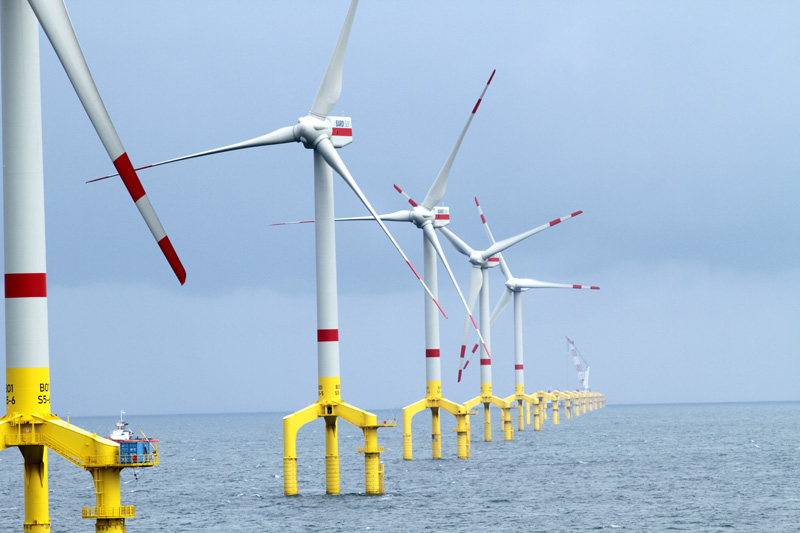
FLAGSHIP GERMAN OFFSHORE WIND FARM PROJECT HUMILIATED BY TECHNICAL FAULTS

Germany’s flagship Bard 1 offshore wind farm has been described as “a faulty total system” as technical problems continue to plague the project, casting major doubts on the feasibility of large scale offshore projects.

The wind farm was officially turned on in August last year but was shut down again almost immediately due to technical difficulties that have still not been resolved – and now lawyers are getting involved.

The wind farm comprises 80 5MW turbines situated 100 km off the north German coastline. The difficulty facing engineers is how to get the electricity generated back to shore. So far, every attempt to turn on the turbines has resulted in overloaded and “gently smouldering” offshore converter stations.

Built at a cost of hundreds of millions and costing between €1 and €2 million a day to service, the project is estimated to have cost €340 million in lost power generation over the last year alone. And if the problems with the technology are deemed not to be the fault of the operator, German taxpayers will be on the hook for the running and repair costs, thanks to the German Energy Act 2012.

Understandably, the project’s investors are becoming increasingly nervous, which is why lawyers are now scrambling to pin the blame elsewhere. According to the German magazine Speigel “everything has turned to the question of who is responsible for the fiasco – and the costs.”

Inevitably, the fiasco has brought into question the feasibility of the entire green energy industry. The Bard 1 project was designed to be the global leader in offshore wind design: a model for everyone else to follow. That it doesn’t work has already cast doubt on other projects. Energy company Trianel are concerned that their ‘Windpark Borkum’, Germany’s second largest major offshore project, will now not work when it comes online next month. And they have already shelved plans for a further 200MW offshore project until the technology can be proven.

Germany already has amongst the highest energy bills in the world, not helped by the EU’s commitment to carbon reduction measures at the behest of an increasingly hystericalclimate change industry, and the rest of Europe fares no better. British and European climate change policies already add an extra ten percent to British householders’ energy bills, at a time when fuel poverty affects one in four people.

Offshore wind is often seen as the acceptable face of green energy. Earlier this year Conservative minister Michael Fallon announced that the party was planning to scrap subsidies for onshore wind farms, but they remain fully committed to offshore projects.

Opening the 175 turbine, 630MW capacity London Array wind farm, the world’s largest to date, Conservative Prime Minister David Cameron said “This is a great day for Britain and a big win for renewable energy. London Array shows you can build large scale renewable energy projects right here in Britain. This is because when it comes to clean energy, the UK has one of the clearest investment climates globally.”

His support gives the lead for the rest of his party, with Conservatives of all ranks lining up to get behind offshore wind power.

In July, planning permission was granted by the government for a 175 turbine wind farm off the historic south coast of England, which will be seen from the newly created South Downs national park and tourist spots such as Beachy Head. The Rampion project will cost £2 billion to construct, and is expected to be handed £200 million a year in taxpayer subsidies.  The local Conservative candidate for Lewes constituency, which runs along the affected coastline, wrote to her local paper to underline her support for the project, saying “I supported this scheme and actually voted for it as a local councillor when it was first proposed a few years ago. I was therefore delighted when the Conservative led Government approved the scheme earlier this year.

“The Rampion Wind farm will bring a much needed energy supply for the country but it will also be a huge boost to the local economy and that is why I voted for it in 2010 and why I still support it now.”

Likewise, Conservative MP Therese Coffey, whose Suffolk Coastal constituency is likely to be affected by a vast offshore wind farm project, has also written in support of offshore wind. An article on her website reads “Therese has welcomed the announcement from the Department of Business, Innovation & Skills that an Offshore Wind Investment Organisation to boost levels of inward investment and to further stimulate jobs in the UK offshore wind industry, will be set up.

“Therese said: “The creation of the Offshore Wind Investment Organisation will help bring enormous economic benefit to our shores, supporting skilled jobs. … The formation of this industry-led partnership will boost the positive benefits that the offshore wind sector can bring to the UK economy”.”

However, with the Bild 1 turbines are already being tagged “white elephants in the North Sea” by sources such as the Economist, and with costs mounting and no end in sight, the question being asked, in Germany at least, is “Is the wind boom over before it even really began?”

Danish Court Agrees….Wind Turbines Detract from House Values, and Scenic Views!

DANISH WIND FARM COMPANY SUED FOR SPOILING VIEW

Europe’s troubled wind turbine industry has a new predicament, with a householder in Denmark successfully suing Vestas, a Danish wind turbine manufacturer. Vestas was sued by the householder with the help of International Law Office and awarded 500,000 Danish kroner (£53,000) in compensation for the loss of property values due to visual interference, inconvenience caused by the noise of the blades and light reflection. Eight turbines are visible from the owner’s house.

The Danes passed the Promoting Renewable Energy Act in 2011, which established a compensation scheme for homes affected by wind farms. It seems the Danes suffer from the a similar condition to Brits, not in my back yard (nimbyism), where there is a consensus in favour of wind farms but not near their homes.

Calls to Vestas’ office for comment were not returned.

Danish wind farms have already come in for serious criticism. Breitbart London reportedin June how a mink farm saw how a recently built turbine seemed to lead to still births, birth deformities and had begun attacking in each other, costing the farmer millions.

The Danish situation is mirrored in the UK. In November 2013, the London School of Economics amd the Spatial Economics Research Centre published a report with lead author Professor Stephen Gibbons finding that “A wind farm with 20+ turbines within 2km reduces prices by some 11 percent on average.” In all scenarios even of less density, “Wind farms reduce house prices where the turbines are visible.”

Professor Gibbons has further evidence from when in June 2008 Mr. and Mrs. Julian Davis in Lincoln applied to the Valuation Tribunal for a reduction in their Council Tax, due to a wind turbine.  Citing “Change in physical state. Noise pollution externally and internal low frequency. Noise pollution from new wind farm 930m (away),” they won and their house was downgraded to Band A status.

Meanwhile, a report into two wind turbines collapsing in Devon and Cornwall has just been released. The Western Mail reports the towers had basic defects and flaw in the construction process. These incidents were over a year ago and the report’s publication was aided by a Freedom of Information request. Also worryingly is that “ten units with existing defects” out of the company’s 70 or 80 turbines and the “makers of the E3120 turbine which fell in Devon, identified a further 29 turbines that might have been affected by a problem with the foundations.”

It seems that European governments’ race to be green has had some expensive unexpected consequences. Not only is it substantially more expensive to industry and the public, the extra costs of erecting wind farms are growing too. One can only imagine the furore if a turbine comes down on a house, seriously injuring someone or even killing them. These are troubles timed for the government and the wind industry.

Proof that the Wind Industry and Gov’t Know That Wind Turbines Decrease Home Values!

Secret wind farm report into house price blight

The official report at the centre of the Coalition row over renewable energy will disclose for the first time the impact of wind farms on rural house prices, The Telegraph has learned.

Environment Secretary Owen Paterson Photo: REX FEATURES

Coalition sources said the report is being blocked by officials at the Department of Energy and Climate Change (DECC), run by Ed Davey, a Liberal Democrat, amid fears it will conclude that turbines harm property prices.

Mr Paterson has made clear that he intends to make the document public as soon as it is completed.

On Tuesday, this newspaper disclosed that a report into renewable energy had been commissioned by Mr Paterson’s Department for Food, Environment and Rural Affairs (Defra).

The decision to order the report is said to have caused anger within Mr Davey’s department, which viewed it as encroachment upon its remit.

Mr Davey has strongly denied that anyone in his department is trying to suppress the investigation.

It has emerged that a significant focus of the report will be the financial impact of wind farms upon the value of neighbouring properties.

Opponents of wind farms claim it is “highly likely” that the report will reveal that turbines in rural areas will detract from the value of nearby homes.

The consultancy company, Frontier Economics, has been asked by Defra to calculate how house prices will be affected by a series of energy projects across Britain. It has been asked to look at onshore and offshore wind, overhead power lines, shale gas, anaerobic digestion plants and nuclear power plants.

The remit of the report states that it “aims to determine whether [energy projects] have a significant impact on the prices of houses nearby and, if so, compare how that impact differs between different types”.

It will feed into Mr Paterson’s final report on how renewables affect the countryside and the rural economy.

MPs tonight said that Mr Paterson must be allowed to publish his department’s findings.

Chris Heaton-Harris, the Conservative MP for Daventry, said: “Wind farms definitely affect house prices and it is highly likely that this report will come to that conclusion.

“I would expect there to be billions of pounds of planning blight because of wind turbines close to properties.”

He added: “It’s almost like elements of DECC are acting like a mafia … now you’ve got DECC trying to stick its dirty great footprints all over another department’s work.

“While this is unsurprising, it will all unravel in the end and I’m sure the evidence will come out soon that proves a number of these points correct.”

He said that one of his constituents had seen the value of their £700,000 property fall by £250,000 because of approved plans for a wind turbine.

Glyn Davies, the Conservative MP for Montgomeryshire, said: “I’m expecting this report to find that house prices will be reduced over the country by a measure of billions. It is my view that any unbiased study will show that. What is absolutely crucial is that this report is allowed to come out.” He added: “I can’t see how anyone wouldn’t want the public to know the conclusions – irrespective of what the report says.”

In a letter to The Daily Telegraph today, Mr Davey says: “My department is not blocking a Defra report on the impact of wind farms.

“The Government is committed to moving to a secure, affordable, low carbon energy system, without excessively relying on any single technology.

“So, this cross-government study will look at maximising the benefits and minimising the negative impacts of all technologies, including shale gas and nuclear.”

Details of the study, the first major review of renewables and their impact on house prices, were disclosed in The ENDS Report , an environmental policy magazine. A spokesman for Defra said: “It is our role to rural-proof policy. We need to ensure that energy is generated in a way that is sustainable. Sustainability includes the economic as well as social and environmental impacts.”

Jennifer Webber, of RenewableUK, said: “All the expert academic research published in this country and abroad over the last few years shows there’s no conclusive evidence to suggest that wind farms affect house prices.”

The dispute between Defra and DECC comes after a series of Coalition rows over wind farms. Mr Davey last year slapped down a former Conservative energy minister, John Hayes, after he said the spread of wind farms across the countryside would be brought to a halt.

David Cameron this month said people should not “expect to see a lot more wind power onshore in the UK” and that there was a “limited potential for onshore wind”.

Germany’s Offshore Wind Power Dream, Morphs Into Engineering and Financial Nightmare!

Spiegel: Germany’s Large-Scale Offshore Windpark Dream Morphs Into An Engineering And Cost Nightmare

The print 35/2014 edition of Spiegel magazine focuses on the growing failure of Germany’s first ambitious offshore wind energy project, BARD Offshore 1, which aims to be a model for the world in providing clean, green energy on a large scale.

Bard Offshore windpark

BARD 1 windpark spooks the entire German offshore wind industry, plagued by major technical problems with no end in sight. Photo: Bard.

So far things hardly could have gotten any worse technically, and now financially and legally. For Germany, a highly admired nation when it comes to science, engineering, and technical prowess, the large scale energy project threatens to morph into an embarrassment of monumental dimensions. See more background here and here.

Fried electrical filters

The trouble surrounds the BARD 1 offshore windpark in the North Sea. Originally the park had been officially opened last year in August, but had to shut down almost immediately because of technical faults.

Then in March, 2014, engineers tried once again to bring the massive windpark online, again they were met with failure as “wild current” fried filters an offshore electrical converter station after a just a few mere hours.

Today, 6 months later, it appears engineers are not any closer to finding a solution.

Lost power valued at 340 million euros

The print edition of Spiegel writes that engineers are still scrambling to sort out the technical problems involved in bringing power from 80 turbines 100 km offshore through a converter station, and then onshore to markets. The project has now been delayed more than one year and Spiegel estimates that the lost power generation could be as high as 340 million euros in value.

Lawyers now getting involved

As the delays grow and financial losses mount, the investors and banks who had poured billions into the project are getting increasingly nervous. Spiegel writes that not only the hunt for the root cause of the technical problem is feverishly underway, but so is the hunt to find the responsible parties. Spiegel writes:

Indeed not only the engineers have been working feverishly on the repairs, but also lawyers are now involved. In the meantime everything has turned to the question of who is responsible for the fiasco – and the costs.”

Spiegel: “problem for entire green industry”

The problems at BARD 1 are so serious that Spiegel writes it is “a problem for the entire green energy industry“. The Trianel Windpark Borkum, Germany’s second major offshore wind project, is scheduled to come online this month, but now no one is sure whether or not the park will operate smoothly, Spiegel reports.

“It’s about a faulty total system”

The problem, Spiegel writes, is the great distance the windpark is located from the coast, which makes it impossible to bring the power onshore with conventional technology. The power cannot be transmitted through an underwater cable as alternating current, but rather must be transmitted as DC current. Unfortunately that task is proving not easy to manage.

Spiegel cites an expert on whether it will be possible to solve the big problems. Hans-Günter Eckel, Professor of Power Electronics at the Unisversity of Rostock:

Most likely there isn’t a single thing that is responsible, but rather it’s about a faulty total system. It’s going to require patience. It’s a completely new and complex technology.”

Spiegel sums it up:

The industry is nervous. At Trianel they have put off the decision to build an additional 200 MW windpark until further notice.

Suddenly everyone is now playing it safe – waiting to see if BARD 1 will make it. Finally they are beginning to think about whether the whole project is feasible or not – something that should have been done years and years ago.

One thing is becoming very clear: In the mad rush to green energy, investors and politicians leaped before they looked. Warnings were abundant, but were simply dismissed as offhand. Now the investors and proponents are moaning loudly about the hard landing that is coming soon.

– See more at: http://notrickszone.com/2014/09/11/spiegel-germanys-large-scale-offshore-windpark-dream-morphs-into-an-engineering-and-cost-nightmare/#sthash.NdMc91fW.dpuf

Wind Power is the Key to Poverty for Citizens and Insecurity in our Energy Sector.p

Robert Bryce: Want to live in Stone-Age Poverty? Then tie your future to Wind Power

robert bryce 2

Robert Bryce picked the wind power fraud for what it is from the very beginning.

In his 2010 book “Power Hungry: The Myths of “Green” Energy and the Real Fuels of the Future” (Public Affairs), Bryce skewered every one of the myths relied upon by the wind industry to peddle its wares; and went on to predict the massive benefits of the US shale gas revolution – in terms of both cheap energy – operating as a boost to a flagging economy – and as a method of reducing CO2 emissions in the electricity sector.

We’ve covered some of his recent writings on US energy policy and the wind power fraud (see our posts here and here and here). Bryce recently published another cracking book “Smaller Faster Lighter Denser Cheaper: How Innovation Keeps Proving the Catastrophists Wrong” (Public Affairs) that loads up on the nonsense that is US energy policy today: we covered a review of Bryce’s latest by the New York Times in this post.

In this video, Robert lays out the key arguments as to why cheap, reliable sparks are critical to the growth, wealth and development of Nations. While access to power is something we – in the developed world – smugly take for granted, for the billion or so at the bottom of the development heap it is the ONLY path out of poverty. And for those struggling to escape deprivation and darkness, the answer is most certainly not insanely expensive and unreliable wind power. To the contrary, reliable and affordable power is a guarantee of both wealth and freedom.

Energy policy has been over-run by “green” ideologues who are determined to ensure that the poorest remain that way by wedding the world to the fiction that wind power provides a meaningful answer to growing energy demand, while “solving” the climate change “problem”. Tune in to Robert as he skewers that – and other – wind industry myths.

crystal-ball

Scrap Renewable Energy Targets! It’s all a big scam!

Terry McCrann: The Mandatory RET – It’s Only a RORT When You’re Not In On It

terry_mcrann

Follow the money trail, and RET spells rort not power
Herald Sun
Terry McCrann
8 September 2014

TWO eternal pieces of advice emerged from the Watergate saga that kneecapped Richard Nixon’s presidency and then the president himself.

The first was the observation that it’s not the crime that gets you but the cover-up; the second was the instruction to follow the money.

While we’ve seen dozens if not indeed hundreds of examples of the former in the subsequent four decades, arguably it’s the latter that has proved more absolutely durable.

That’s been the case, if for no other reason than that, all too often, neither the crime nor the cover-up gets the — usually, political — “criminal”, with or without the quotation marks.

But “the money” always, always, leads somewhere. Throw in the great and piercingly accurate quote from Australia’s larrikin entrepreneur John Singleton that it’s only a rort when you are not in on it, and we arrive at the RET.

More specifically, we arrive at the long overdue and fundamentally necessary review of the RET — Renewable Energy Target — by businessman and both economic and climate realist Dick Warburton.

Somewhere along the line, as I’ve previously noted, it lost the “M” from its original acronym of M (for mandatory) RET, even though it remained just as punitively obligatory.

Well, the release of Warburton’s punishingly rational and even-handed review has unleashed a primeval scream across the renewable energy sector as if torn from Munch’s famous painting.

Follow the money, your money — and the screams. They lead directly to all those who have been sucking on the taxpayer and consumer teat: so far, as Warburton detailed, to the tune of over $9 billion (of your money) with another $22 billion (still, of your money) to come, if the scheme is left untouched.

Those figures are in NPV (net present value) terms — which mean the total of actual dollars wasted every year through until at least 2030 will be much, much bigger.

We have seen the usual campaign of misrepresentation and outright lies to scare the Federal Government out of turning off the money flows to all the renewable energy main-chancers.

This has been done in the context of a vicious campaign to demonise Warburton as a climate sceptic, by deliberately mischaracterising and indeed simply ignoring what he recommended. If anything Warburton went too lightly on the extraordinary fraud that is so-called renewable energy.

Extraordinary, but so obvious. What part of: when the wind don’t blow the power don’t flow; and when the moon comes out the glass doesn’t glow, do assorted otherwise intelligent people and useful idiots find impossible to comprehend?

That, on a more substantive level, every single MW of installed (sic) wind and solar capacity (sic) has to be backed up by real sources of power generation, otherwise known as carbon-based coal or gas?

Even in the country which is the poster boy for wind power — Denmark — which gets close to a third of its total power from wind, there are times when it gets zero, nothing, nada, from that source.

It then has to use its own coal-fired generators or tap into the power generation of its neighbours — mostly Norway, Sweden and Germany.

That means it gets access to a mix of hydro — when the water’s flowing; nuclear; and coal, with “green” Germany building more Hazlewood-style brown coal stations because, ahem, even in Germany some times the winds don’t blow.

The bottom line with wind so-called power — for all the lazy allure of solar panels on rooftops and even massive solar “farms”, almost all future RET-imposed renewable spending will be on wind — is that its actual cost of production is two-to-three times that of coal.

We have seen an innovative form of deception with the claim that massive increases in wind will work to reduce future power prices.

The claim is true, in terms of potential prices to the power buyer, because the RET would swamp energy supply with compulsory wind. Generators of real and reliable (coal-fired) power would cut prices to buy a slice of the lower non-RET available demand.

To understand why it’s a fraud, imagine if we’d done that to “save” the car industry. The government could have mandated 20 per cent of cars bought had to be locally made. It might well have sparked a cut in prices by importers fighting over the remaining 80 per cent, but it would not be sustainable.

Whether cars or power, the market would correct. In the case of power, generators of (actual) cheap power would be forced to close, leaving us with mandatory (actual) expensive wind power.

Somebody, somewhere, would have to pay the bill for producing wildly expensive wind power.

Warburton didn’t actually go near any of these core absurdities; there wasn’t an ounce of climate scepticism in his analysis, far less the recommendations.

All he did was to arrive at the inescapable conclusion that using the RET to try to reduce emissions of carbon dioxide was grossly wasteful and inefficient. He was also very mindful of the legitimate point that, whether sane or not (my comment, not), people had invested money on the basis of the RET, and to simply scrap it would be unfair.

So he offered two alternatives. The first was to continue the scheme until 2030, but freeze it at its current level of investment, including projects that had just only been committed.

As he noted: this would “provide investors in existing renewable generation with continued access to certificates so as to avoid substantial asset value loss and retain the CO2 emissions reductions that have been achieved so far.

“Importantly, this approach avoids the costs to the community associated with subsidising additional generation capacity that is not required to meet electricity demand.”

Alternatively, to grow the RET in line with growth in electricity demand; and indeed, allocate it 50 per cent of that growth.

That is hardly the recommendation of a so-called sceptic, but of a businessman — who doesn’t think you can simply ignore both arithmetic and reality — doing the job he was asked to do.

But no, no, that was not enough for the reality-deniers sucking on the renewable target teat. They don’t want us to follow the money, just to keep it coming.
Herald Sun

dirtyrottenscoundrelsoriginal

Frauds, Crooks and Criminals

Demonstrating daily that diversity is not strength!

Family Hype

All Things Related To The Family

DeFrock

defrock.org's principal concern is the environmental and human damage of industrial wind turbines on rural communities

Gerold's Blog

The truth shall set you free but first it will make you miserable

Politisite

Breaking Political News, Election Results, Commentary and Analysis

Canadian Common Sense

Canadian Common Sense - A Unique Perspective from Grassroots Canadians

Falmouth's Firetower Wind

a wind energy debacle

The Law is my Oyster

The Law and its Place in Society

Illinois Leaks

Edgar County Watchdogs

stubbornlyme.

My thoughts...my life...my own way.

Oppose! Swanton Wind

Proposed Wind Project on Rocky Ridge

Climate Audit

by Steve McIntyre

4TimesAYear's Blog

Trying to stop climate change is like trying to stop the seasons from changing. We don't control the climate; IT controls US.

Wolsten

Wandering Words

Patti Kellar

WIND WARRIOR

John Coleman's Blog

Global Warming/Climate Change is not a problem