Why are there no Industrial Wind Complexes in Toronto? Ontario Place Grounds, would be perfect!

TIME TO TURN THE TABLES ON WIND PROPONENTS WHO ACCUSE OPPONENTS OF ‘NIMBYISM’.

It’s astounding to read these days how pleased with themselves liberals are that the Wynne Ont gov’t is remaining steadfast in their refusal to amend the Green Energy Act in any meaningful way. It’s as easy as water off a ducks back for these progressives to delight in calling opponents to Industrial Wind Turbines as NIMBY’s and having democracy essentially waived to accomplish the policy goals backed by the GEA.

I only have this to say;

I want all these cheering Liberals to consider this;

Take your worst nightmare of a conservative leader. An amalgam of the very worst of Harper. Harris, throw in a little Ralph Klein and some Tea Party Timmy Hudak. I can sense your blood pressure rising as I write this. Oh the horror.
In the Legislature, a new bill is to be introduced called the “Nuclear Waste Recovery Act”

It will allow land owners to store nuclear waste on their properties until at such time facilities are available to neutralize the radioactive waste. Of course a setback of 550 metres would be required to non- participating “receptors” Land owners would negotiate 20 year contracts with the private companies running the nuclear facilities such as Bruce , Darlington and Pickering. Big time subsidies from the government ensure that developers and landowners alike are lining up out the door to cash in. Industrial Park areas sprinkled about the GTA sound like swell places to make this work.

Facilities that would eventually deal with the waste will be developed and the process of nuetralizing all that radioactive material would come online. The program would be a model to the world and create 50,000 jobs, ( Actually, this program could actually have a better shot at creating said number of jobs.) lowering the unemployment rate in the GTA which at present is above the national average.

So, developers with empty space in industrial parks in say, Scarborough, Pickering, North York or Mississauga, could apply for this and as long as they’re 550metres from residential areas, hey, it’s game on.

In addition, a special urban home owner program will be enacted. This unique initiative would allow home owners in large urban areas to sign contracts allowing a special individual-sized container of nuclear waste to be buried in their backyards. For doing this, each home owner will be paid $5,000 a year for 25 years. There will be no setback distances, because the government has done it’s homework and found numerous experts in the nuclear field who have testified that these containers are 100% safe. No neighbourhood input or objections would be allowed, since “nimbyism” will not be tolerated.

I sense it could face some opposition. Municipal governments would complain as their constituents would be going apoplectic over a nuclear waste facility in their neighborhood. Proponents, funded by Big Nuclear, would just refer to them as NIMBY’s. It would slowly dawn upon these residents that the NWR act strips away all municipalities rights to oppose this very much needed service.

Residents would come armed with health studies, but those dastardly conservatives in power have studies of their own citing that their own Medical Officer Of Health has signed off on the policy and states that there is “No significant hazard to health.” Tribunals set up to hear citizens grievances, would be stacked by the conservatives with sympathetic board members making any challenge an exercise in futility.

So now, with some facilities now open, reports of radiation leaks are ubiqutous. MoE will come to investigate and essentially find nothing since they’re not even equipped to measure anything. Wildlife , such as it is would be struggling to adapt to these conditions. Local human health could also suffer an immeasurable toll. Meanwhile, the developers and landowners are far,far away counting and folding all that taxpayer booty.

My point to all you liberal cheerleaders is that you’re all for this when it suits you. When it’s on the other foot, you’d be unspooling.  My contention is that no government, be it Liberal ,Conservative or otherwise should EVER be able to wield this kind of power over it’s citizens, urban or rural.

Paul Kuster

nuclearwaste-2

The Global Warming Hoax is a Ploy to Push Agenda 21. It’s Got to Stop!

The Debate is Over!

Global Warming Fraud Exposed

al gore climate change

The first known video promoting the scam of “Man made global warming”  showing

how they demonized the life gas CO2 and make man earth’s enemy in the process….

is from 1958!

Environment was the chosen mechanism to bring about global gov. “They” need

a global problem that required a global solution… Enjoy some early Al Gore type hype

from 1958 in this video.

According to the Club of Rome: “The common enemy of humanity is man. “In searching

for a common enemy against whom we can unite, we came up with the idea that pollution,

the threat of global warming, water shortages, famine and the like, would fit the bill.

“we came up with the idea “

Not based on any facts! They just came up with the idea.  What is the Club of Rome?

A think tank created by men and women who want a global communist system that they

control.  Who are these people? Here is a list of present and notable members from the

Green Agenda (highly recommended you spend so time on this site) Members include

David Rockefeller, George Soros, Henry Kissinger, Bill Clinton, Jimmy Carter, Mikhail

Gorbachev, Kofi Annan, Maurice Strong, Bill Gates, Ted Turner, Tony Blair, Robert Muller,

The Dalai Lama, Hassan bin Talal, Javier Solana, Javier Perez de Cuellar, Gro Harlem Bruntland,

Garret Hardin, King Juan Carlos of Spain and his wife Queen Sophia, Queen Beatrix of the

Netherlands, Prince Philippe of Belgium, and about 80 other wealthy elites, new age cultists,

former and current U.N. figures, and political figures.

First earth day 1970

Stockholm 1972 – United Nations Environment Programme (UNEP)

The (false) oil crisis of 1973-1974

United Nations Conference on Human Settlements was held at Vancouver

from 31 May to 11 June 1976

Our Common Future 1987

Rio Earth Summit 1992 which brought the world Agenda 21

The fraud and deception started long ago and is being implemented by ever level

and faction of gov. including UN NGO’s

The fraud is well documented and the peoples of the world need to take action.

Not to save us from “climate change” but the people who “came up with the idea. 

They cause the environmental crisis, the wars, famines, depressions etc. 

They are the enemy, not you and I


Now for some truth about climate Change.

The Sea Around Us by Rachel Carson shows the effects of the ocean cycles. 

Those who constructed the MMGW fraud knew when the natural ocean and sun

cycles would produce the most natural warming. They used this information for the

basis of the fraud. Those natural cycles are now moving into the cooling cycle.

The global warming lie is used to bring about UN corporate world gov. by the same

people who created the UN, Israel, Wars, Depressions, Famines etc. Their disturbing

visions are laid out in Agenda 21.

As the global warming fraudsters like to say “the debate is over.”

I agree, the debate is over and the fraud exposed!

Check and Mate!

– We have now entered the cooling cycle.

Elected officials (who represent the corporation, not the voters), teachers,

preachers, media, health etc.  (bow to their corporate masters) and law

enforcement (Policy enforcers of the corporation)  are  the useful idiots used

to spread the propaganda and implement “their” evil plan.

Some know what they are doing …  most don’t. It is our job to inform all of them

and insist they STOP immediately! They’re involved in fraud, conspiracy to commit, 

genocide and breach of trust.


Time to Put an End, to the Renewables Scam!!! Aussies to Axe the RET!

Lost In Translation: How a CO2 Abatement Scheme Became “Corporate Welfare on Steroids”

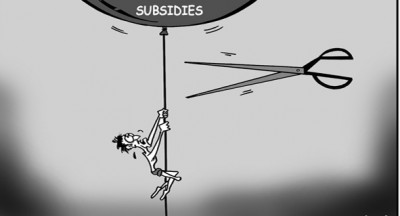
subsidies

Time to remember the original aim of the RET
Australian Financial Review
Danny Price
21 August 2014

The RET was intended to cut carbon. Opening it up to more forms of efficient generation would help get that result.

The debate over the renewable energy target has ended up exactly where you would expect a debate on subsidies to end up. The beneficiaries of the subsidy are taking the high moral ground while those adversely affected by the subsidy are crying foul.

We see similar debates in the agricultural sector. Australian farmers complain they face unfair market conditions because the international farmers they compete with have the protection of subsidies, while our government provides none.

In this case, the coal-fired generators claim they are finding it hard to recover their costs on existing investments while the renewable generators who earn a subsidised return, claim their future investments are threatened.

Both arguments are founded on the same concept – investment certainty.

What has been lost in all this debate is the original objective of the RET. The renewable industry has focused on the benefits it brings to customers by suppressing the price coal and gas generators can charge customers. But as PJ O’Rourke once observed about the US health system, “If you think healthcare is expensive now, wait until you see what it costs when it’s free.” The economic costs of lowering the wholesale price charged by thermal generators by subsidising renewable generators will be enormous.

The renewable energy sector has cleverly confused the concepts of economic costs, which are the costs of the resources used to produce renewable energy, with prices. They do this to disguise the real cost impact of the RET on the economy and to make themselves a smaller political target.

RET never about pricing

The goal of the RET was never about suppressing prices, but this is now the cause célèbre of the renewable industry because they know this will appeal to politicians looking to reduce electricity price pressure. The RET was aimed at encouraging a reduction in greenhouse gas emissions by actively promoting the, then-fledgling renewable industry.

The debate about the RET really should be re-focused on how we can achieve our environmental targets most economically. If we can minimise the costs of reducing emissions, then it follows that we are more likely to reduce emissions further, which Australia will inevitably be pressured to do at the Paris round of climate negotiations in late 2015.

More recently the renewable generators claim they are now cost-competitive with thermal generators. While these claims are probably overstating the relative economics of the thermal versus renewable generation, there is certainly less need to continue to subsidise investors in renewable generators as the RET has done its job in developing a local renewable industry. It is now time for the renewable industry to face competition and this competition should lead to lower economic costs and lower consumer prices.

This could be achieved by progressively levelling the playing field between all potential sources of electricity supply and demand so that all technologies can compete to supply emissions reductions.

Recent analysis of the opportunity to reduce the economic costs and price impacts of the RET by making it more technologically neutral, for example by allowing gas generators to compete with renewable generators and create partial credits under the scheme to reflect emissions abated, has shown that this approach can simultaneously reduce the economic cost of the RET by more than $1 billion and reduce prices for customers by more than $50 a year. This cost could fall further if other forms of cleaner generation could also compete vigorously with gas and renewable generators.

Part of the reason that this cost and price reduction occurs is that it makes use of existing gas capacity that mostly sits idle that could compete with coal under a more technologically neutral RET. This approach of broadening the RET to allow a wider range of technologies to compete to supply emissions reductions, is one of those rare no-regrets policies.

Competitive pressure

If no technology is able to compete with the renewable technologies (for example due to the risk of rising gas prices) then the worst thing that would happen is that wind generators would continue to be built. The only complaint that the renewable industry could have against such a proposal is that they would be subject to more competitive pressure.

With lower costs and prices from such a transformation of the RET, the government could afford to leave the target where it is and rely on the transformed RET to do more work to contribute towards the achievement of Australia’s emissions reduction.

Unfortunately, the only beneficiaries from such a transformation of the RET are customers and the economy and, sadly, there is nobody to advocate for these stakeholders in the current RET debate.

Danny Price is managing director of Frontier Economics.
Australian Financial Review

When Danny Price says: “The economic costs of lowering the wholesale price charged by thermal generators by subsidising renewable generators will be enormous” he’s playing as the master of understatement.

As Liberal Member for Hume, Angus “the Enforcer” Taylor has repeatedly pointed out, the mandatory RET is nothing short of “corporate welfare on steroids” (see our posts here and here and here).

Putting aside the hidden costs of providing fossil fuel back up to cover the occasions when wind power output plummets every day – and for days on end (see our post here); putting aside the need for a duplicated network to carry wind power from the back blocks to urban markets (seeour post here); putting aside the cost of running highly inefficient Open Cycle Gas Turbines to cover wind power “outages” (see our post here), the cost of Renewable Energy Certificates and their bedmate – the mandated shortfall charge will add a minimum of $39 billion, and – if the price of RECs reaches $100 (as is forecast under the current RET of 41,000 GWh) – up to $60 billion, to power consumer’s bills over the next 17 years (see our post here).

As Danny Price points out, the original purpose of (and justification for) the mandatory RET was the cost-effective abatement of CO2 emissions in the electricity sector. So Australian power punters – lumped with the task of propping up near-bankrupt outfits like Infigen (aka Babcock & Brown) via the redirection of $40-60 billion of their hard-earned cash over the next 17 years – might reasonably ask just how much CO2 abatement “bang” they’re getting for those very considerable bucks?

It’s the very question that Danny Price has been grappling with over the last few months.

STT followers will be pleased to know that Danny Price hates intermittent, unreliable and insanely expensive wind power with a passion – and that he’s been tasked by the Coalition with coming up with a workable method of achieving least-cost CO2 abatement.

Danny’s mission is to amalgamate the entirely unsustainable REC Tax – filched from unwitting power consumers and directed to wind power outfits – into the Direct Action policy, under which an Australian Carbon Credit Unit (CCU) will be issued to anyone stumping up audited proof that they’ve reduced or abated 1 tonne of CO2. The CCU will be tradeable on international markets and the equivalent of European carbon credits, which trade around A$8. Under Danny’s plan, RECs will be replaced with CCUs – and the subsidy per MWh of wind power will plummet from a projected $100 to less than $10. For a run-down on the mechanics of Danny’s plan – see our post here.

While seeing their subsidy gravy train slashed by 90% might sound a little like “bad news” for wind power outfits, earning CCUs comes with a BIG catch: CCUs will ONLY be issued where there is credible proof that the applicant has reduced or abated CO2. For wind power outfits this means coming up with actual proof (not smoke and mirrors “modelling”) that they have in fact reduced CO2 emissions in the electricity sector.

As youngsters sceptical of their peers’ more ambitious pronouncements say: “well, good luck with that”.

The need for 100% of wind power capacity to be backed up 100% of the time by fossil fuel generation sources means that wind power cannot and will never reduce CO2 emissions in the electricity sector (see our postshere and here and here and here and here and here and here).

E.ON operates numerous transmission grids in Germany and, therefore, has the unenviable task of being forced to integrate the wildly fluctuating and unpredictable output from wind power generators, while trying to keep the German grid from collapsing (E.ON sets out a number of the headaches caused by intermittent wind power in the Summary of this paper at page 4). Dealing with the fantasy that wind power is an alternative to conventional generation sources, E.ON says:

“Wind energy is only able to replace traditional power stations to a limited extent. Their dependence on the prevailing wind conditions means that wind power has a limited load factor even when technically available. It is not possible to guarantee its use for the continual cover of electricity consumption. Consequently, traditional power stations with capacities equal to 90% of the installed wind power capacity must be permanently online [and burning fuel] in order to guarantee power supply at all times.”

STT is happy to go all out and say that in Australia wind power requires 100% of its capacity to be backed up 100% of the time by conventional generation sources. As just one recent example, on 3 consecutive days (20, 21 and 22 July 2014) the total output from all of the wind farms connected to the Eastern Grid (total capacity of 2,952 MW – and spread over 4 states, SA, Victoria, Tasmania and NSW) was a derisory 20 MW (or 0.67% of installed capacity) for hours on end (see our post here). The 99.33% of wind power output that went AWOL for hours (at various times, 3 days straight) was, instead, all supplied by conventional generators; the vast bulk of which came from coal and gas generators, with the balance coming from hydro generators.

For wind power to reduce CO2 emissions in the electricity sector it has be a true “substitute” for conventional generation sources. Because it can’t be delivered “on-demand” (can’t be stored) and is only “available” at crazy, random intervals (if at all) wind power will never be a substitute for conventional generation sources (see our post here). Accordingly, wind power is simply incapable of reducing CO2 emissions in the electricity sector

The wind industry has never produced a shred of evidence to show that wind power has reduced CO2 emissions in Australia’s electricity sector. To the contrary of wind industry claims, the result of trying to incorporate wind power into a coal/gas fired grid is increased CO2 emissions (see thisEuropean paper here; this Irish paper here; this English paper here; thisAmerican article and this Dutch study here).

STT hears that Danny Price is well and truly alive to all that.

With Tony Abbott about to go on the offensive in his quest to wind up the mandatory RET (expect to hear more from the PM this week) the wind industry’s wild and unsubstantiated claims about CO2 abatement in the electricity sector provide the PM with just another reason to bring the greatest environmental and economic fraud of all time to a shuddering halt.

DannyPrice_banner1

People of Scotland are Tired of Excuses, They Are Demanding Justice for Wind Turbine Victims!

Wind Farms Turn Scottish Highland Homes Into Sonic Torture Traps

when-is-wind-energy-noise-pollution

An ill wind blows as the surge of turbines stirs fears of silent danger to our health
Scottish Express
Paula Murray
 August 2014

TENS of thousands of Scots may be suffering from a hidden sickness epidemic caused by wind farms, campaigners have warned.

The Sunday Express can reveal that the Scottish Government has recently commissioned a study into the potential ill effects of turbines at 10 sites across the country.

More than 33,500 families live within two miles of these 10 wind farms – which represent just a fraction of the 2,300 turbines – already built north of the Border.

Hundreds of residents are now being asked to report back to Holyrood ministers about the visual impacts, and effects of noise and shadow flickers from nearby wind farms.

Campaigners fear that many people do not realise they are suffering from ailments brought on by infrasound – noise at such a low frequency that it cannot be heard but can be felt.

One such person is Andrew Vivers, an ex-Army captain who has suffered from headaches, dizziness, tinnitus, raised blood pressure and disturbed sleep since Ark Hill wind farm was built near his home in Glamis, Angus.

Mr Vivers, who served almost 10 years in the military, said the authorities had so far refused to accept the ill effects of infrasound despite it being a “known military interrogation aid and weapon”.

He said: “When white noise was disallowed they went on to infrasound. If it is directed at you, you can feel your brain or your body vibrating. With wind turbines, you don’t realise that is what’s happening to you.

“It is bonkers that infrasound low frequency noise monitoring is not included in any environmental assessments. It should be mandatory before and after turbine erection.”

He is raising concerns about an “acknowledged and unexplained increase of insomnia, dizziness and headaches in Dundee”, where two large wind turbines have been operating since 2006. Mr Vivers, 59, said all medical explanations of his own sudden health issues had been ruled out and it was more than 12 months before he was convinced of the link to the wind farm.

He said: “I was getting these headaches and dizziness and just not sleeping, but I was putting it all down to all sorts of other things. A couple of times I was walking on the hills around the house with my dogs and got a really bad dizzy spell.

“I actually had to sit down for a few minutes and while I was sitting down wondering what on earth was wrong with me, I did notice the wind was coming straight from the turbines.” Mr Vivers said he has also witnessed an “incredible number” of dead hares on the moors around Ark Hill and believes they may have succumbed to “internal haemorrhaging and death” as a result of the turbines.

He added: “If this coming winter is going to be anything like the last and with the plans to build a second wind farm much closer to us, I think we’ll have to sell our home and move elsewhere.”

The 10 sites under the microscope in the new survey include one in Dunfermline, where almost 23,000 households are nearby, and Little Raith near Lochgelly, Fife, where there are nearly 9,000 households.

The others are Achany in Sutherland, Baillie near Thurso, Caithness, Dalswinton in Dumfriesshire, Drone Hill, near Coldingham, Berwickshire, Griffin in Perthshire, Hadyard Hill in Ayrshire, Neilston in Renfrewshire and West Knock, near Stuartfield, Aberdeenshire.

About 2,000 questionnaires have been sent to residents in a move that is understood to have caused tension between the Scottish Government and the renewable energy industry.

The “wind farm impacts study” is being managed by ClimateXChange, which has published information about the project online.

It says: “The research will use two sources of information: how local residents experience and react to visual, noise and shadow-flicker impacts, and how the predicted impact at the planning stage matches the impact when the wind farm is operating.

“The final report is due in autumn 2014. It will inform the Scottish Government’s approach to planning policy on renewables and good practice on managing the impact of wind farms on local residents.”

One of the contractors involved in the project is Hoare Lea Acoustics, an international firm which specialises in measuring noise and vibration from wind farms.

However, Susan Croswaithe, the UK spokeswoman for campaign group European Platform Against Windfarms, said the study would be “little more than a box ticking exercise”.

She added: “On the face of it, it does look like a step in the right direction, but can we really trust it? My issue is that it is not independent enough.

“Our website is full of examples of people not being listened to.

“We have two very large wind farms near us in Ayrshire, Arecleoch and Mark Hill – 60 turbines and 28 turbines.

“If people in my area have noticed they are feeling better at the moment but do not understand why, it may be because the turbines have been switched off while they do maintenance on the grid.”
Scottish Express

Andrew Viviers

Andrew Viviers makes the following – perfectly reasonable – observation about noise testing:

“It is bonkers that infrasound low frequency noise monitoring is not included in any environmental assessments. It should be mandatory before and after turbine erection.”

The idea of “testing” for the impacts from turbine noise and vibration without including infrasound and low-frequency noise is “bonkers”, indeed. Dr Mariana Alves-Pereira – who has been studying low-frequency noise impacts with her research group for 30 years, certainly thinks so (see our post here).

The noise standards – written by the wind industry – rely on the dB(A) weighting and, therefore, deliberately ignore the vast bulk of the sound energy produced by turbines – which pervades homes as infrasound and in frequencies that cause sleep deprivation and other adverse health effects (see our post here).

The standards not only ignore infrasound, but the South Australian EPA’s noise guidelines even ludicrously assert that infrasound was a feature of earlier turbine designs that is not present at “modern wind farms”. SA’s EPA – despite being incapable of following its own guidelines when it came to noise testing at Waterloo – managed to find infrasound present inside neighbouring homes at a very modern wind farm, that started operation in 2010 (see our posts here and here). For a great little summary on wind turbine generated infrasound and its adverse affects on health, check out this video of Alex Salt, laying it out, in no uncertain terms.

blob:https%3A//www.youtube.com/5dcfb8f1-40b5-4c86-91c6-bcc4ee86c9f4

Given the work of Professor Salt (outlined in the video) and Steven Cooper’s findings at Cape Bridgewater (see our post here) “the recent unexplained increase of insomnia, dizziness and headaches in Dundee”, referred to by Andrew Viviers is not so difficult to explain at all.

The direct link between very low-frequency turbine noise, sleep disturbance and annoyance was well and truly established by Neil Kelley & Co over 25 years ago (see posts here and here and here). And the wind industry knew all about it (see our post here).

Well, Highlanders – it seems like the right time to grab your Claymores and bring your political betters to account.

brave_shield3

Here is a list of Companies Making Huge Profits, From the Physical, and Financial Fallout, Caused by Wind Turbines


CanWEA Members 2014*
 
 
3M Canada Company
 
ABB Inc.
 
Acciona Wind Energy Canada
 
Activa Environnement Inc
 
Aeolis Wind Power Corp.
 
Aercoustics Engineering Ltd.
 
Aird & Berlis LLP
 
Airway Services Canada
 
Alberta Wind Energy Corporation
 
Algonquin Power
 
ALL Canada Crane Rental Corp.
 
Alstom Power
 
AltaGas Ltd.
 
Alterra Power Corp.
 
Altus Group
 
AMEC Black & McDonald
 
American Wire Group
 
AMSOIL INC.
 
Anemos Energy Corporation
 
Ascent Solutions Inc.
 
ATCO Power
 
Atlantic Power
 
Automodular Corporation
 
Avanti Wind Systems Inc.
 
Avertex Utility Solutions Inc.
 
Avro Wind Energy Inc.
 
AWS Truepower LLC
 
Barnhart Canada LLC
 
BASF Canada
 
BBA Inc.
 
Bellemare Groupe
 
Benign Energy Canada Inc.
 
Bennett Jones LLP
 
BGB Technology Inc.
 
Black River Wind Ltd.
 
Blake, Cassels & Graydon LLP
 
Blattner Energy Inc.
 
BluEarth Renewables Inc.
 
Boralex Inc.
 
Borden Ladner Gervais LLP
 
Borea Construction
 
BowArk Energy Ltd.
 
Brookfield Renewable Energy Group
 
Brüel & Kjær Vibro
 
Bullfrog Power Inc.
 
Burndy Canada Inc.
 
BZEE Academy GmbH
 
C.H. Robinson Project Logistics Ltd.
 
Callon Dietz
 
Campbell Scientific (Canada) Corp.
 
CanACRE
 
Canadian Clean Energy Conferences
 
Canadian Copper & Brass Development Association
 
Canadian German Chamber of Industry and Commerce
 
Capital City Renewables LLC
 
Capital Power Corp.
 
Capstone Infrastructure
 
Carleton University
 
Carlsun Energy Solutions Inc.
 
Cartier Energie Eolienne Inc.
 
Challenger Motor Freight Inc.
 
Chinodin Wind Power
 
Chinook Power Corp.
 
Clark Wilson LLP
 
Consulate General of Argentina in Toronto
 
CSA International
 
CSS Wind Inc.
 
Curry & Kerlinger LLC
 
Customized Energy Solutions
 
Dale & Lessmann LLP
 
Dentons Canada LLP
 
DESSAU
 
Dialight Corporation
 
Dillon Consulting Ltd.
 
DNV GL
 
DP Energy Ireland Ltd.
 
E.ON Climate & Renewables Ltd.
 
EBC Inc.
 
EchoTrack Inc.
 
EDF EN Canada
 
EDP Renewables Canada Ltd.
 
Elemental Energy Inc.
 
Elevator One
 
Elexco Ltd.
 
EMA Electromechanics
 
Emera Inc.
 
Enbridge Inc.
 
Enel Green Power Canada Inc.
 
ENERCON
 
Enerfin Energy Company of Canada Inc.
 
Enmax Corporation
 
Enterprise Commercial Truck
 
Eolectric Inc.
 
Eon WindElectric Inc.
 
EPTCON / One Line Engineering
 
Ernst & Young
 
ESAC Inc.
 
Essar Steel Algoma
 
Exelon Wind, a Division of Exelon Power
 
F Rohmann
 
Fabrication Delta
 
Firelight Infrastructure Partners
 
Flash Technology
 
Fri-El Green Power
 
Fritz Construction Services Inc.
 
G Seven Generations Ltd.
 
G&W Electric Co.
 
Gamesa Technology Corporation
 
GasTOPS Ltd.
 
Gaz Metro
 
GDF SUEZ Canada Inc.
 
GE Power & Water
 
Gilead Power
 
Golder Associates Ltd.
 
Goldwind USA Inc.
 
Gowling Lafleur Henderson LLP
 
Graham Infrastructure Ltd.
 
Grand Valley Wind Farms Inc.
 
GRANT THORNTON LLP
 
Graybar Energy Ltd.
 
Greengate Power Corporation
 
Greenwind Global Inc
 
Groupe Delom Inc.
 
Groupe Robert
 
H.B. White Canada Corp.
 
Hatch Energy
 
Heenan Blaikie LLP
 
Hemmera
 
Hempel (Canada) Inc.
 
Henkels & McCoy Canada Inc.
 
HGC Engineering
 
Holland College
 
Honeywell Safety Products
 
Horizon Legacy Energy Corp.
 
Hydro One Networks
 
Hydro Quebec Distribution
 
Hytorc Ontario
 
IBI Group
 
Innergex Renewable Energy Inc.
 
Inspec-Sol Inc.
 
International Tower Lighting LLC
 
Invenergy Canada LLC
 
IPS Trico
 
Jones Group Engineering Ltd.
 
Joss Wind Power Inc.
 
Juwi Wind Canada Ltd.
 
K-Line Maintenance & Construction Ltd.
 
Knight Piesold
 
KPMG
 
Kruger Energy Inc.
 
Lafarge Canada Inc.
 
Lahave Renewables Inc.
 
Landstar Transportation Logistics
 
Lapp Canada
 
Le Groupe Ohmega Inc.
 
Leader Resources Services Corp.
 
LEITWIND
 
Lethbridge College
 
Lincoln Electric Company of Canada
 
Local Content Assurance Bureau
 
Longyuan Canada Renewables Ltd.
 
Mammoet Canada Western Ltd.
 
Manitoba Hydro
 
Manulife Financial
 
Maritime Electric Company Ltd.
 
Marmen Inc.
 
Mastec Renewables Construction, LTD
 
McCann Equipment Ltd.
 
McCarthy Tetrault LLP
 
McElhanney Land Surveys Ltd.
 
Michels Canada
 
Miller Thomson LLP
 
Moloney Electric Inc.
 
Morgan AM&T
 
Mortenson Construction
 
Motion Industries (Canada) Inc.
 
Moventas Ltd.
 
Myshak Crane & Rigging Ltd
 
Nalcor Energy
 
Natural Forces Wind Inc.
 
Natural Resource Solutions Inc.
 
NaturEner Canada Inc.
 
NB Power
 
NCSG Crane & Heavy Haul Services
 
Neoen North America
 
NextEra Energy Canada Development and Acquisitions, Inc.
 
Niagara Region Wind Corporation
 
Northern Lights College
 
Northland Power Inc.
 
Northwind Solutions
 
Norton Rose Fulbright Canada LLP
 
Olympus
 
Ontario Sustainable Energy Association
 
ORTECH Consulting Inc.
 
Osler, Hoskin & Harcourt LLP
 
Pattern Renewable Holdings Canada ULC
 
PCL Constructors Canada Inc.
 
PESCA Environnement
 
Power Climber Wind
 
PowerTel Utilities Contractors Ltd.
 
Prowind Canada Inc.
 
PSB Securite
 
R.J. Burnside & Associates Ltd.
 
R360 WIND INC. (A JR Group Company)
 
Rabobank
 
Rankin Construction Inc.
 
Regional Power
 
Renewable Energy Systems Canada Inc.
 
Renewable NRG Systems
 
Rigarus Construction Inc.
 
Rittal Systems Ltd.
 
Rodan Energy Solutions
 
Rombro Solar Energy Inc.
 
Rope Partner Canada, Inc.
 
Royal & Sun Alliance Insurance Co.
 
Run Energy
 
RWDI
 
S&C Electric Canada Ltd.
 
Samsung Renewable Energy Inc.
 
Samuel Son & Co. Ltd.
 
Saskatchewan Research Council
 
SaskPower
 
Saturn Power Inc.
 
Schaeffler Canada Inc.
 
Schneider Electric Canada Inc.
 
Schunk Graphite Technology
 
Scotian WindFields
 
Sea Breeze Power Corp.
 
Second Wind Inc.
 
Select Elevator Solutions Inc.
 
Sentrex Wind Services Inc.
 
Sentry Electrical (Canada) Inc.
 
Senvion Canada Inc.
 
SgurrEnergy Ltd.
 
Shell Canada Ltd.
 
Shermco Industries
 
Sherwood Electromotion Inc.
 
Siemens Canada Limited
 
Signal Energy Constructors
 
Sika Canada Inc.
 
SNC-Lavalin Environnement Inc.
 
Solas Energy Consulting Inc.
 
Spirit Pine Energy Corporation
 
SPX Hydraulic Technologies
 
Stantec
 
Stikeman Elliott LLP
 
Stoel Rives LLP
 
Stonebridge Financial Corporation
 
Suncor Energy Services Inc.
 
Surespan Wind Energy Services
 
Sussex Strategy Group
 
Suzlon Wind Energy Corporation
 
Synergy Cables USA Ltd.
 
Synergy Land Services Ltd.
 
TE CONNECTIVITY
 
TEAM-1 Academy
 
TechnoCentre Eolien
 
Technostrobe
 
Telecon Inc.
 
Terrafix Geosynthetics Inc.
 
Tetra Tech
 
Thomas & Betts Canada
 
Thunder Bay Port Authority
 
TimberWest Forest Corp.
 
Toronto Hydro Corporation
 
Torys LLP
 
TransAlta Corporation
 
TransCanada Energy Ltd.
 
Tribute Resources Inc.
 
TSP Canada Towers Inc.
 
Tulloch Engineering Inc.
 
TWR Lighting Inc.
 
Ultra Torq Hydraulic Bolting
 
Unirope Ltd.
 
Valard Construction
 
Vestas Canada
 
Virelec Ltd
 
WEB Wind Energy North America Inc.
 
Westburne
 
Williams Form Hardware & Rockbolt
 
Wind Dynamics Inc.
 
Wind Energy Institute of Canada
 
Wind Power Inc.
 
Wind Simplicity Inc.
 
Wind Systems Magazine
 
WindAxis
 
Winergy Drive System Corporation
 
Woodward Inc.
 
wpd Canada
 
WSP Canada Inc.
 
Zephyr North Ltd.


Sherri Lange Appeals to the Auditor General to Audit the Disastrous GEA

Canada’s Wind Power Disaster Laid Bare

Ontario april-28-protest-rally-3

Ontario is about to boil over, as impacted and threatened communities unite in seething rage at what their political betters have done to energy policy (see our post here).

The hard-green-left Liberals have created a wind power policy so insane as to beggar belief: sending power prices through the roof (referred to as “hydro bills”, as the bulk of their energy comes from hydro power); killing hundreds of thousands of real jobs; and destroying the lives of thousands of hard-working rural people, who’ve been left to endure a swathe of giant fans speared into the heart of the most productive agricultural country in Canada, rendering hundreds of perfectly good family homes uninhabitable.

One of those taking up the fight is Sherri Lange, who heads up the NA-PAW (North American Platform Against Wind Power), is the Founding Director Toronto Wind Action, the Executive Director Canada, Great Lakes Wind Truth and is the VP Canada, Save the Eagles International.

In this brilliant letter to Ontario’s Auditor General, Sherri lays out the disaster that is wind power in Canada and details the scale and scope of the greatest economic and environmental fraud of all time.

Ms. Bonnie Lysyk
Auditor General for Ontario
20 Dundas Street West, Suite 1530
Toronto
M5G 2C2
Fax 416 327 9862
August 11, 2014

Dear Ms Lysyk,

Please consider this letter as an urgent formal request for a complete and impartial audit for all matters pertaining to the Green Energy and Green Economy Act, 2009, and its false assertions and negative results for Ontario: these misrepresentations include vigorous job creation, suggested cleaner air space, the ability to create energy facilities, wind and solar, in particular, in a cost savings manner, or competitive manner.

The Green Energy and Green Economy Act has suggested with not a little hyperbole, that it will “spark” growth in “renewables sources in Ontario, while creating savings, and producing 50,000 jobs, direct and indirect,” and “make a positive contribution towards climate change objectives,” whereas in fact the GEA threatens to eviscerate the economy of Ontario and Canada as a whole. The factual results of the GEA are of economic chaos, massive job losses, environmental degradation of the highest order, a decay of our treasured environmental protections in law, and yet uncounted human health and productivity costs.

Under the guise of positive net growth, and climate change objectives, this Act has been used to gouge and tyrannize the province, materially and economically.

We believe that the mandate of the Auditor General to provide access to “value for money” data, within an audit, will provide even more information with respect to the waste and perhaps fraud at the highest levels; consumers are indeed not being provided with fair business practices, but are continually subjected to even more egregious attacks in their daily “energy expensive” lives due to a battered and debt ridden economy.

Jobs continue to leave Ontario. Some are relocating to Buffalo, to save, in one instance, $4 million per year in energy savings, or to Saskatchewan, for example. The bleed of jobs cannot continue, and we believe that an assertive and clear look at the funding and economic threat of the Green Energy Act will bear striking similarities to the international failure of wind power and Green Energy policies. Even information provided years ago by your office and the Fraser Institute did nothing to change the course.

We contend that none of the GEA assertions and projections have proven valid, and have in fact been a major contributor, likely THE major contributor, to the near demise of manufacturing in Ontario, to energy poverty for many Ontarians whose hydro bills have risen 30-40% with promises of more hikes, to the loss of jobs to the USA and western Canada, to the ill health of hundreds of Ontarians, some of whom have been forced to abandon homes, or been bought out by developers, or who reside in parking lots at Walmart, or at cottages, or with relatives. The energy chaos of Ontario now handily competes with that of Spain, Germany, or the UK.

All of this should be and should have been preventable, since the facts are well known. Indeed, the facts of the Green Energy failures of Europe should have been a lesson learned before this Ontario failure of a massive scale. (Ontario now has the unenviable position of having the highest cost of power in North America. The significance of this is not lost on Moody’s Credit Ratings system, with the threat of downgrades to Ontario.) The lessons of Europe have been put before the Legislature, all parties, on many occasions, without benefit or improvement.

The Fraser report of 2013 has already indicated that the assertions of the GEA are egregiously false.

“Already, the GEA has caused major price increases for large energy consumers, and we’re anticipating additional hikes of 40 to 50 per cent over the next few years,” said Ross McKitrick, Fraser Institute senior fellow and author of Environmental and Economic Consequences of Ontario’s Green Energy Act.”

“The Ontario government defends the GEA by referring to a confidential 2005 cost-benefit analysis on reducing air pollution from power plants. That report did not recommend pursuing wind or solar power; instead it looked at conventional pollution control methods which would have yielded the same environmental benefits as the GEA, but at a tenth of the current cost. If the province sticks to its targets for expanding renewables, the GEA will end up being 70 times costlier than the alternative, with no greater benefits.” (News release, April 2013)

The study goes on to indicate that returns to investment in manufacturingare “likely to decline by 29 per cent, mining by 13 per cent, and forestry by less than one per cent.”

Professor McKitrick explains in his report that wind is especially wasteful, as surplus generation occurs generally when demand is low, and the resulting “dumping” also results in net losses to Ontario.

“The Auditor General of Ontario estimates that the province has already lost close to $2 billion on surplus wind exports, and figures from the electricity grid operator show the ongoing losses are $200 million annually”, says the report.

Terrance Corcoran in the Financial Post quotes from the Auditor’s report that the cost of power is estimated to rise again another 46% in the next four years. In his analysis of the Auditor General’s 2011 report on electricity, Mr. Corcoran writes of “wilful negligence” and a “high level of fiscal negligence and abuse of process and disdain for taxpayers and electricity consumers.”

The Fraser report of 2013 has already indicated that the assertions of the GEA are egregiously false.

“Already, the GEA has caused major price increases for large energy consumers, and we’re anticipating additional hikes of 40 to 50 per cent over the next few years,” said Ross McKitrick, Fraser Institute senior fellow and author of Environmental and Economic Consequences of Ontario’s Green Energy Act.”

“The Ontario government defends the GEA by referring to a confidential 2005 cost-benefit analysis on reducing air pollution from power plants. That report did not recommend pursuing wind or solar power; instead it looked at conventional pollution control methods which would have yielded the same environmental benefits as the GEA, but at a tenth of the current cost. If the province sticks to its targets for expanding renewables, the GEA will end up being 70 times costlier than the alternative, with no greater benefits.” (News release, April 2013)

The study goes on to indicate that returns to investment in manufacturing are “likely to decline by 29 per cent, mining by 13 per cent, and forestry by less than one per cent.”

Professor McKitrick explains in his report that wind is especially wasteful, as surplus generation occurs generally when demand is low, and the resulting “dumping” also results in net losses to Ontario.

“The Auditor General of Ontario estimates that the province has already lost close to $2 billion on surplus wind exports, and figures from the electricity grid operator show the ongoing losses are $200 million annually”, says the report.

Terrance Corcoran in the Financial Post quotes from the Auditor’s report that the cost of power is estimated to rise again another 46% in the next four years. In his analysis of the Auditor General’s 2011 report on electricity, Mr. Corcoran writes of “wilful negligence” and a “high level of fiscal negligence and abuse of process and disdain for taxpayers and electricity consumers.”

A prime example of the negative impact on the Ontario jobs situation is reflected in Magna’s (the largest automotive parts manufacturer in Canada) announcement that due to the high cost of electricity in Ontario, it will not make any further investments. (Specifically, for Magna between 2013 and 2014, normal business activities resulted in an increased cost of electricity of 30 million dollars.)

The expressed primary purpose of the 2011 audit was to ensure that the OEB had sufficient and adequate systems in place to protect consumers, ratepayers. As noted also in the report, consumers are protected under the Energy Consumer Protection Act, 2010, and that under this legislation consumers shall be provided with the information they require about contracts, prices, and that they will be protected by fair business practices. This fairness has not been brought to fruition.

And the serial negligence continuing until this day, despite hearty and clear directives from the Fraser Institute and your office, has resulted merely in the advance of even more industrial wind in Ontario under Premier Wynne. Consumers are indeed not being increasingly protected, and continue to be recklessly thrown under the fiscal bus.

What we find most egregious is that the people of Ontario have warned the Premier(s) McGuinty and Wynne, and made reports to the Finance Committee, as well as reporting to these offices the results of energy chaos in Germany, Spain, the UK as well as other European states previously under the spell of “renewables.” (Please note the letter to the Editor, Financial Post, March 3, 2011: “No such thing as renewable energy.”) These abject economic failures in Europe should have provided clear warning of the folly of subsidizing inefficient non base load sources of power, particularly wind turbines.

The government and lobbying association CanWEA’s (Canadian Wind Energy Association) assertion that the wind turbine industry operates safely and without damage to human health is false and must also be examined, since the reports of ill health given to the MOE (Environment) now number in the thousands. The MOE (Ministry of the Environment) has recognized the problem, and admitted in an email obtained from an FOI that they “did not know what to do.” The costs of wind power to our medical system and human productivity have not yet been accounted for.

We remind you that with about 240,000 wind turbines worldwide, we yet only receive one half of one percent, NET ZERO, of our power needs from this source. This industry is a failure, plain and simple; does the build out then have something to do with massive subsidies deep in the pockets of developers? Who is receiving these massive double or quadruple profits?

We would like to see a chart of the major beneficiaries of the FIT program in Ontario. In Spain, the profits have been so tidy, that the Government recently asked for some retroactive repayments, understandably chilling the wind developers’ aspirations. (The lineup of crimes against consumers continues in Ontario: with 86% of Ontario’s wind power being produced on days when we are already in a surplus export mode. Another net loss for consumers is obvious.)

Please also include an environmental impacts costs study in your findings. The extreme damage to water tables, prime farm land, general ecological tragedies and killing of wildlife, has an external cost factor as well, to be borne, sadly, by our future generations.

Mr. Geoffrey Cox, a UK Conservative MP, expressed his disgust for the “gigantic machines” which are terrorizing his country:

“The reality is there is a Klondike-type gold-rush going on in rural areas where developers are anxious to get their applications through to pick up the vast profits that can be made.

“This is having a disruptive, devastating and distressing effect on dozens of small rural communities that are being torn apart by these huge industrial machines that are just yards away from their home.

“The number of applications seems to be going up rather than receding. What is going on is a stealthy, silent revolution of the most beautiful landscapes in Great Britain. “If we carry on we will have ruined this most extraordinary inheritance.”

SNAPSHOT
What we know

  • Industrial wind turbines are inefficient and pitiably useless
  • Industrial wind installations, factories, create energy sprawl and high levels of environmental pollution and toxic waste
  • Industrial wind does not work when we need it to and over performs at times to the extent that developers are sometimes paid to NOT produce
  • Huge subsidies support the industry, without which, the industry does not survive
  • The GEA suppresses all democratic opposition to wind and solar power, and the cards are stacked in favor of preferred accelerated promotion of wind turbines at the expense of Municipal and community cohesion and preferences
  • Massive amounts of base load back up power are always required; there is zero reduction in GHG’s
  • The industry (lobby) gets to sit at the table with policy makers and lay the table for the feast
  • There has been no reasonable or realistic or honest explanation for the massive outlay of wind turbines in Ontario
  • Energy poverty is abundant now in Ontario, along with massive job losses and gutting of the public purse
  • Lessons from Europe are not being acknowledged
  • IS THIS CRIMINAL NEGLIGENCE?

We look forward to your prompt reply and a rapid advancement into an impartial audit of these matters in their complete impacts on Ontario, on the economy, and on fairness, or in this case, unfairness, to each consumer and job seeker. It will be extremely useful to untangle some of the Byzantine financial and undemocratic policy arrangements that have led to this “made in Ontario” crisis. We must immediately stop this re-creation of the catastrophic results of Green Energy failures in Europe.

Please conduct an impartial and in depth assessment of all financial matters pertaining to the GEA and relay these findings to the people of Ontario at your earliest convenience. We anticipate that your report might reflect also on the medical costs to Ontario families, the loss of economic vibrancy and stability of rural Ontario which continues to bear the assault fully on its shoulders, the loss of tourism, and the loss of property values, which also contribute to economic stagnancy. Please also conduct a study on a trace of the profits to developers, kWh by kWh, if possible. We have a right to know where our hydro dollars are going.

The high octane waste of the “Green Energy and Green Economy Act”, which has been repeatedly explained to legislators, must cease immediately. It must also be retroactively remediated. Your office has the ability to further outline to the Government not only how it may alter course, but how it must immediately repair.

(We will be writing under separate cover to Commissioner Hawkes, as we fully believe the waste and apparent fraud of the GEA far overpowers the ORNGE, E-Health, and Gas Plant scandals.)

Thanking you in advance,
Sherri Lange
CEO NA-PAW (North American Platform Against Wind Power)
Founding Director Toronto Wind Action
Executive Director Canada, Great Lakes Wind Truth
VP Canada, Save the Eagles International
www.na-paw.org

C.c. Vince Hawkes, Commissioner of the OPP
C.c. Honorable Joe Oliver, MP and Minister of Finance, Canada
C.c. Interested parties

sherriwithwildasterspp

How Much Proof Do The Wind-Pushers Need, Before They Stop Harming Innocent People?

Vibroacoustic Disease, or VAD, is a chronic, progressive, cumulative, systemic disease. Exposure to high-intensity/low-frequency sound and infrasound can lead to Vibroacoustic Disease. Studies have shown that environments with high-intensity sound over 110 dB, coupled with low-frequency sounds below 100 Hz, place people at high risk for developing Vibroacoustic Disease. For example, Vibroacoustic Disease has been identified in disk jockeys, due to loud music exposure.
When exposed to high-intensity/low-frequency sound, which includes loud music, the body is subjected to powerful sound vibrations. This noise stressor leads to: homeostatic imbalance, disease, interference with behavior and performance, visual problems, epilepsy, stroke, neurological deficiencies, psychic disturbances, thromboembolism, central nervous system lesions, vascular lesions in most areas of the body, lung local fibrosis, mitral valve abnormalities, pericardial abnormalities, malignancy, gastrointestinal dysfunction, infections of the oropharynx, increased frequency of sister chromatid exchanges, immunological changes, cardiac infarcts, cancer, rage reactions, suicide, and altered coagulation parameters.

Infrasound exposure INCREASES the rate of development of Vibroacoustic Disease (VAD). “The evolution of VAD is classified by three stages based on years of noise exposure – mild (1-3 yr), moderate (4-9 yr) and severe (10-15 yr).”

“VAD is essentially characterized by a proliferation of extra-cellular matrix. This means that blood vessels can become thicker, thus impeding the normal blood flow. Within the cardiac structures, the parietal pericardium and the mitral and aortic valves also become thickened. The most recent VAD studies have been suggesting that infrasound exposure may be crucial to the rate of evolution of VAD. Occupational exposure to infrasound is suspected to cause an increase in the rate of thickening of the pericardium and cardiac valves in commercial airline pilots over that of flight attendants (Alves-Pereira et al, 1999).”
In addition, sources of low-frequency noise that place people at risk for developing Vibroacoustic Disease are rock concerts, dance clubs, “Powerful car audio equipment,” water jet skies, and motorcycles. (Source: VIBROACOUSTIC DISEASE: THE NEED FOR A NEW ATTITUDE TOWARDS NOISE, by Mariana Alves-Pereira and Nuno Castelo Branco).

“Among the most serious on-the-job consequences of untreated VAD are rage-reactions, epilepsy, and suicide. VAD patients do not have the usual suicidal profile: after the event, if unsuccessful, they remember nothing, and are confused about the entire episode (Castelo Branco et al, 1999). Similarly, patients who suffer rage-reactions also appear confused and seem to remember nothing (Castelo Branco et al, 1999). These events can have dire consequences if they occur on the job. Not only can other individuals be injured, but also costly sophisticated equipment could become irreparably damaged.” (Source – VIBROACOUSTIC DISEASE: THE NEED FOR A NEW ATTITUDE TOWARDS NOISE, by Mariana Alves-Pereira and Nuno Castelo Branco)

The stages of Vibroacoustic Disease are as follows:

Stage 1 – MILD (1-4 years) Slight mood swings, indigestion, heartburn, mouth/throat infections, bronchitis
Stage 2 – MODERATE (4-10 years) Chest pain, definite mood swings, back pain, fatigue, skin infections (fungal, viral, and parasitic), inflammation of stomach lining, pain and blood in urine, conjunctivitis, allergies.
Stage 3 – SEVERE (> 10 years) psychiatric disturbances, hemorrhages (nasal, digestive, conjunctive mucosa) varicose veins, hemorrhoids, duodenal ulcers, spastic colitis, decrease in visual acuity, headaches, severe joint pain, intense muscular pain, neurological disturbances. (Source – MONITORING VIBROACOUSTIC DISEASE, by Branco, Pimenta, Ferreira, and Alves -Pereira)

“After four years of exposure, the individual tends to recognize the existence of memory lapses, mood changes become more pronounced, and a variety of simultaneous ailments can appear. In the advanced stages, neurological disorders include epilepsy, balance disorders, and a marked increase in cognitive impairment. The palmo-mental reflex – a primitive reflex that is frequently present in several pathologies associated with cognitive deterioration – is a common feature in VAD patients. Facial dyskinesia triggered by auditory stimulus has also been identified in LFN-exposed workers.” (Note: LFN is low-frequency noise).

Psychiatric disorders, such as suicidal tendencies and rage-reactions, are some of the most tragic consequences of unmonitored LFN exposure. Respiratory disorders appear within the first four years of exposure, and can progress into shortness of breath, and focal pulmonary fibrosis. This is independent of smoking habits.” (Source – MONITORING VIBROACOUSTIC DISEASE, by Branco, Pimenta, Ferreira, and Alves-Pereira)

Studies have been done to see what effect vibrations have on the human body. As high-intensity/low-frequency sounds (extreme amplified bass) rattles a boom car, the occupants in it, secondary listeners, and structures surrounding it, this study is interesting to note. (WBV is Whole Body Vibration).

“Vibration is believed to cause a range of problems. These include:

· Disorders of the joints and muscles and especially the spine (WBV)
· Disorders of the circulation (hand-arm vibration)
· Cardiovascular, respiratory, endocrine, and metabolic changes (WBV)
· Problems in the digestive system (WBV)
· Reproductive damage in females (WBV)
· Impairment of vision and/or balance (WBV)
· Interference with activities
· Discomfort

The most frequently reported problem from all sources of WBV is low-back pain arising from early degeneration of the lumbar system and herniated lumbar disc. Muscular fatigue and stiffness have also been reported.” (Source – ATSB – ROAD SAFETY REPORTS: HEAVY VEHICLE SEAT VIBRATION AND DRIVER FATIGUE)

The SUN AND WEEKLY HERALD (Sun-Herald.com) recently interviewed Dr. Robert Fifer, the Director of Audiology and Speech Language Pathology, at the Mailman Center for Child Development at the University of Miami. He discussed Vibroacoustic Disease and its relation to infrasound and boom cars. The article states, “But the physical vibration so prized by car audio fanatics, and despised by their victims, is largely produced by sounds pitched too low to hear, called subsonic or infrasonic sounds. Medical research over the past four decades shows that exposure to infrasound can have devastating effects on the human body and mind that go far beyond mere hearing loss.”

The article goes on to discuss the fight-or-flight adrenaline response and how it is also triggered by LPALF (large pressure amplitude – low-frequency noise) or high-intensity/low-frequency sound. In other words, the fight-or-flight adrenaline response can be triggered by sounds you don’t even hear!
At loud enough volumes, infrasound can “shake an object o bits the same way a soprano’s high motes can shatter a wine class.” (Source – INFRASOUND: I’M ALL SHOOK UP! – Sun and Weekly Herald, Sun-Herald.com, 8/24/2003)

Listening to classical music, such as Mozart, can increase your IQ, heal the body, and increases brain development in babies. Classical music enhances abstract thinking. On the other hand, listening to loud, hard, grunge rock, rap, or new age music actually interferes with abstract thinking. Gansta/porno rap is a favorite choice for listeners addicted to loud, bass sounds. Gangsta/porno rap (for example, Eminem) and some acid or hard rock (Marilyn Manson) glorifies violence, suicide, illegal drug use, murder, killing police officers, rape, and promotes hatred against society, women, and the law.

Music AFFECTS and REFLECTS your state of mind. In addition, your behavior reflects your personality.

Finally…the Scam is Being Exposed! They Know They Are NOT Helping Our Environment!

It’s about something

Ms. McCarthy is now saying that the Clean Power Plan is not about climate. Ms. McCarthy’s July 23 testimony on the Clean Power Plan was that it is not about climate or pollution control.  This contradicts the June testimony, the web site and the federal register notice.  So it’s about something.  

From the Bonner Cohen, Heartland.org:

EPA’s recently announced restrictions on carbon dioxide emissions have nothing to do with reducing pollution, EPA Administrator Gina McCarthy admitted in Senate hearings. Instead, said McCarthy, EPA imposed the restrictions based on a belief imposing expensive renewable energy on the electricity marketplace will stimulate the economy.

‘Not About Pollution Control’
“The great thing about this proposal is that it really is an investment opportunity. This is not about pollution control,” McCarthy told the Senate Environment & Public Works Committee July 23. “It’s about increased efficiency at our plants. It’s about investment in renewables and clean energy. It’s about investments in people’s ability to lower their electricity bills by getting good, clean, efficient appliances, homes, rental units.”

McCarthy’s comments came as a shock to utilities facing steep costs attempting to comply with the proposed restrictions. The comments also came at a time when the Obama administration’s prior EPA restrictions have pushed U.S. electricity prices to an all-time record high.

Contradicts Prior Testimony
McCarthy’s Senate testimony represents a significant departure from the way EPA defended its proposal before lawmakers just a month earlier. At a June hearing before the House Energy and Commerce Committee, Acting Assistant Administrator for Air and Radiation Janet McCabe offered a different explanation. Citing Section 111 (b) of the Clean Air Act, which authorizes EPA to regulate certain pollutants, McCabe made that argument in her testimony:

“Chairman Upton, this is not an energy plan. This is a rule done within the four corners of 111 (b) that looks to the best system of emission reduction to reduce emission.… This is a pollution control rule as EPA has traditionally done under section 111 (d).”

McCarthy’s comment didn’t escape the attention of climatologist Roy Spencer.

“This gaffe could come back to bite the EPA,” Spencer wrote on his website. “The Endangerment Finding was all about the negative effect of ‘carbon pollution’ on the environment. Now we find out ‘this is not about pollution control’?”

In her testimony, McCarthy repeatedly emphasized EPA views its rule as an investment opportunity for the business community, while downplaying the cost it would impose on consumers.

“This is an investment strategy that will not just reduce carbon pollution but will position the United States to continue to grow economically in every state, based on their own design,” she said.

So CO2 restrictions are not about climate and all the supposed health benefits are not about pollution control, they are energy efficiency, jobs and economic programs.  Sounds like EPA is getting caught with a reg that obviously doesn’t do what they said it was designed to do and are scrambling.

Faux-green Agenda is Not Healthy for People, or the Environment!

Climate-Cooling Policies threaten Food Supplies

A warmer, wetter climate with more carbon dioxide in the atmosphere would undoubtedly produce more plant growth and more food.
 
However climate-cooling policies that claim to prevent global warming by throttling the use of carbon fuels will definitely reduce food supply and increase food prices.
 
The promotion of ethanol for motor fuel is anti-food. This “food for fuel” program has absorbed significant quantities of corn, soy beans, sugar and palm oils. Consequently prices for ethanol crops are higher than they would otherwise be, encouraging farmers to convert land currently devoted to grazing animals and other food crops to growing more profitable crops for ethanol.

Extreme greens also practise plant discrimination, favouring more trees at the expense of natural grasslands and open forest that support many grazing animals. These polices take many forms including planting carbon credit forests, banning regrowth clearing, anti-development zoning and blanket tree protection reserves. All such policies reduce food production from grasslands.

Climate-cooling policies also aim to decrease demand for carbon fuels, including coal, oil, gas and refined motor fuels, by increasing their costs and prices. Modern food production is totally dependent on low-priced carbon fuels for all farming activities. Diesel fuels are needed for cultivation, planting, harvesting and transport; and coal/gas powered electricity for irrigation, processing and distribution. Higher prices for carbon fuels will send some marginal farms out of business. The same policies will reduce profits and production in the fishing industry. All of these policies are anti-food.
 
Modern food production needs nitrogen fertilizer, which is made from atmospheric nitrogen and natural gas, with carbon dioxide as a by-product. Extreme greens all over the world are delaying and opposing the exploration and production of natural gas, and their carbon taxes are increasing the costs of this key fertilizer.

Finally, climate-cooling policies favour silly schemes like carbon capture and burial, which aims to pump carbon dioxide underground. The promoters should be told that current levels of carbon dioxide in the atmosphere are below those that maximize plant growth and food production. The rise in atmospheric carbon dioxide levels was a major contributor to increased world food production over the last century. To bury this free plant food is not food-smart.
 
These unproven solutions to unproven problems are unlikely to change the climate. But there is a 50:50 chance that instead of warming, the globe may cool naturally, which will cause dramatic reduction in food production.
 
Food is not easily storable, and supply and demand are always finely balanced. If natural cooling comes on top of all these man-made anti-food policies, the world will see cascading food shortages.

For those who wish to read more:

The Ethanol Disaster:
http://reason.com/archives/2014/05/06/the-ethanol-disaster

The Unintended Consequences of Ethanol:
http://news.newsmax.com/?ZKORXYGhQIAlL8s41ytI6BaZUxleNLU1Z&ns_mail_uid=32310041&ns_mail_job=1566641_04272014
 
Ethanol from corn waste may release more greenhouse gases than petrol:
http://www.news.com.au/world/breaking-news/corn-waste-fuel-not-better-than-petrol/story-e6frfkui-1226890856876?from=public_js
 
The Ethanol Disaster:
http://carbon-sense.com/2013/11/25/the-ethanol-disaster/
 
World turns against Ethanol:
http://canadafreepress.com/index.php/article/63444

Current solar cycle may be the weakest in 200 years:
http://informthepundits.wordpress.com/2014/08/17/sunspots-2014-two-big-surprises/
 

 A warmer, wetter climate with more carbon dioxide in the atmosphere would undoubtedly produce more plant growth and more food.

 
However climate-cooling policies that claim to prevent global warming by throttling the use of carbon fuels will definitely reduce food supply and increase food prices.
 
The promotion of ethanol for motor fuel is anti-food. This “food for fuel” program has absorbed significant quantities of corn, soy beans, sugar and palm oils. Consequently prices for ethanol crops are higher than they would otherwise be, encouraging farmers to convert land currently devoted to grazing animals and other food crops to growing more profitable crops for ethanol.

Extreme greens also practise plant discrimination, favouring more trees at the expense of natural grasslands and open forest that support many grazing animals. These polices take many forms including planting carbon credit forests, banning regrowth clearing, anti-development zoning and blanket tree protection reserves. All such policies reduce food production from grasslands.

Climate-cooling policies also aim to decrease demand for carbon fuels, including coal, oil, gas and refined motor fuels, by increasing their costs and prices. Modern food production is totally dependent on low-priced carbon fuels for all farming activities. Diesel fuels are needed for cultivation, planting, harvesting and transport; and coal/gas powered electricity for irrigation, processing and distribution. Higher prices for carbon fuels will send some marginal farms out of business. The same policies will reduce profits and production in the fishing industry. All of these policies are anti-food.
 
Modern food production needs nitrogen fertilizer, which is made from atmospheric nitrogen and natural gas, with carbon dioxide as a by-product. Extreme greens all over the world are delaying and opposing the exploration and production of natural gas, and their carbon taxes are increasing the costs of this key fertilizer.

Finally, climate-cooling policies favour silly schemes like carbon capture and burial, which aims to pump carbon dioxide underground. The promoters should be told that current levels of carbon dioxide in the atmosphere are below those that maximize plant growth and food production. The rise in atmospheric carbon dioxide levels was a major contributor to increased world food production over the last century. To bury this free plant food is not food-smart.
 
These unproven solutions to unproven problems are unlikely to change the climate. But there is a 50:50 chance that instead of warming, the globe may cool naturally, which will cause dramatic reduction in food production.
 
Food is not easily storable, and supply and demand are always finely balanced. If natural cooling comes on top of all these man-made anti-food policies, the world will see cascading food shortages.

For those who wish to read more:

The Ethanol Disaster:
http://reason.com/archives/2014/05/06/the-ethanol-disaster

The Unintended Consequences of Ethanol:
http://news.newsmax.com/?ZKORXYGhQIAlL8s41ytI6BaZUxleNLU1Z&ns_mail_uid=32310041&ns_mail_job=1566641_04272014
 
Ethanol from corn waste may release more greenhouse gases than petrol:
http://www.news.com.au/world/breaking-news/corn-waste-fuel-not-better-than-petrol/story-e6frfkui-1226890856876?from=public_js
 
The Ethanol Disaster:
http://carbon-sense.com/2013/11/25/the-ethanol-disaster/
 
World turns against Ethanol:
http://canadafreepress.com/index.php/article/63444

Current solar cycle may be the weakest in 200 years:
http://informthepundits.wordpress.com/2014/08/17/sunspots-2014-two-big-surprises/

Read more: http://www.americanthinker.com/blog/2014/08/climatecooling_policies_threaten_food_supplies.html#ixzz3B01PWKKu
Follow us: @AmericanThinker on Twitter | AmericanThinker on Facebook

Aussies Know Renewable Energy Targets are a SCAM! Get rid of them!

Senator Matt Canavan: mandatory RET is an Enormous Wind Industry Protection Racket

abbott, hockey, cormann

With news that Tony Abbott, Joe Hockey and Mathias Cormann have teamed up to axe the mandatory RET (see our post here), the wind industry and its parasites have been reduced to a pitiful spectacle: drifting between pleading and begging for mercy, on the one hand, and foaming rage, on the other.

These desperados are like a band of teenage brats facing a little “parenting” for the first time in their lives: how dare anyone pull the plug on $50 billion worth of REC Tax/Subsidy that would have given me a delightful Point Piper view of Sydney Harbour, and kept me and my mates in Mercs and Beamers for life?!?!

And like spoilt infants facing a little discipline, these boys are looking for any hint that they might avoid punishment. Overblown reports put out by the ABC and Fairfax press that the Coalition isn’t really intent on scrapping the mandatory RET outright have been seized on by the wind industry and its parasites like shipwreck survivors clinging to floating wreckage.

But this is one occasion where the stricken will be denied any salvation.

STT hears that what was reported in the Australian Financial Review (and covered in this post) is just the beginning of the wind industry’s woes.

STT hears that Tony Abbott harbours a deep antipathy to the wind industry, which is only matched by his distaste for corporate welfare; we’ve covered a little of it in our posts here and here and here.  The PM is determined to bring the wind industry to an end; the only question is precisely how that objective is to be achieved. While the shortest route home is to simply scrap the Renewable Energy (Electricity) Act 2000, there are plenty of other ways of skinning the subsidy cat.

STT hears that the (current) preferred option is to leave the legislation in tact, but to gut it in such a way that the wind industry will be starved of subsidies by choking off the current and, more importantly, expected value of RECs.

The plan goes a little like this.

The Coalition has a policy aimed at achieving least-cost CO2 abatement, called “Direct Action” (a run down on the policy is available here). The policy has its critics on other scores, but it may well end up being the wind industry’s Armageddon.

Under the Direct Action policy, CO2 abatement is to be achieved at the lowest possible cost using “Australian Carbon Credit Units” (CCUs).

CCUs would be issued on audited proof of the abatement of 1 tonne of CO2. That could be by way of “carbon farming”: planting trees or restoring vegetation cover to over-grazed pastoral range-lands, say.

RECs, on the other hand, are issued on proof of renewable power dispatched to the grid: 1 REC for each and every MWh delivered. The deal has proceeded on the (wild) assumption that 1 MWh of wind power dispatched to the grid results in 1 tonne of CO2 emissions reduction in the electricity sector.

Under the PM’s brewing plan to kill the wind industry, RECs would be made redundant and, instead, wind power generators would be entitled to apply for CCUs. RECs and CCUs would be consolidated, with the former being phased out, and eventually replaced by the latter.

Now, here’s the clever part.

A CCU will only be issued on audited proof that the applicant has, in fact, reduced or abated 1 tonne of CO2 emissions. That will see wind power outfits struggle to jump the first hurdle: despite some “smoke and mirrors” modelling, the wind industry has never produced a shred of evidence to back its CO2 abatement claims.

The auditing of CCU applications will be done by way of certification and verification by a registered valuer. In the event that wind power outfits can satisfy the auditor and pocket a CCU, they then face the prospect of a far less generous subsidy stream.

(As an aside, one earlier variation of the plan was that the recipient of the CCU would not be able to cash it in, but would, rather, surrender the CCU to the Australian Tax Office and enjoy a reduction in their taxable income to the (pre-determined) value of the CCU: after auditing, the applicant would present their CCUs to a Certified Practicing Accountant to be submitted to the ATO with the applicant’s tax returns.)

The point of Direct Action and the CCU is to bring about the cheapest possible CO2 abatement, by whatever means. This means that the market for CCUs will be open to all comers and competitive in a way which the market for RECs isn’t.

The REC price is underpinned by the mandated shortfall charge of $65 per MWh: the effect of which comes into play from 2017, as the annual RET figure begins to climb from 27,200 GWh to the 41,000 GWh target, effective from 2020 to 2031. It’s that relationship that has wind power outfits salivating at the prospect of RECs being worth at least $65 and, by 2017, exceeding $100.

The CCU, however, is meant to be tradeable and interchangeable with carbon credits on international markets; such as those traded in Europe. Under Direct Action, certain CO2 emitters will be able to meet their obligations to surrender CCUs by purchasing European carbon credits at the going rate: the trading price of which has ranged between A$7-10.

The price for CCUs is, therefore, expected to top out at around $10.

And it’s on the issue of being able to trade CCU’s on the international market that the Coalition have been talking seriously to big Clive Palmer and, in this respect, may end up adopting parts of the PUP’s much reported plan for an ETS – starting with internationally tradeable CCUs. Of course, Palmer’s stated position is that the price for ETS credits must be set at ZERO, until such time as all of Australia’s major trading partners (like Europe, China, Japan, Canada and the US etc) sign up to an international ETS (see our post here).

For wind power outfits to survive, let alone build any new capacity, they need RECs to be trading at around $40, at a minimum. Anything less than $30, and wind power generators will never cover their operating costs, which run between $25-30 per MWh (see our post here).

Under Direct Action (assuming audited proof that 1 tonne of CO2 emissions has been abated) wind power generators would be issued with 1 CCU (instead of 1 REC).

By replacing RECs (currently trading around $30) with CCUs likely to trade around $8, the wind industry would disappear in a heartbeat. Although, we note that wind industry barrackers, the Climate Institute predicts that wind power outfits will soon be able to survive on subsidies of around $10 per MWh (see further below) – in which case, the wind industry will lap up CCUs at $8-10 and rub along just fine: but we doubt it … What’s that they say about being careful about what you wish for?

STT hears that over the last few months crack energy market economist, Danny Price has been working on the plan to rework the RET to bring it into line with the Direct Action policy; starting with the plan to replace the REC system with CCUs (see our post here).

So, if you hear the members of the Coalition talking about retaining the mandatory RET, don’t be too concerned. STT hears that Tony Abbott is absolutely committed to killing the wind industry; and how it’s done is a matter of substance, not form.

In the meantime, a growing number of Coalition members are going on the offensive; calling for the mandatory RET to be scrapped outright.

matt canavan

Another to join the queue is Queensland Nationals Senator, Matt Canavan (a former Director of the Productivity Commission) who penned this brilliant piece for The Australian.

Dodgy sums on renewables don’t add up
The Australian
Matt Canavan
19 August 2014

THE advocates of renewable energy would have you believe that they have discovered the economic equivalent of the fountain of youth. According to them, we can adopt more expensive ways of doing things, yet that will lead to cheaper prices.

That renewable energy is more expensive than fossil fuels should not be in dispute. If renewables were cheaper, they would not need the billions of dollars in subsidies they receive every year courtesy of taxpayers.

The most recent example of magic pudding economic modelling was released by the Climate Institute yesterday and purports to show that subsidising renewable energy will in fact reduce energy prices. The report concedes, at least in its graphs, that abolishing the renewable energy target will reduce power prices.

The Climate Institute claims that after a few years of falling prices, they will increase. This primarily occurs because the modelling assumes that renewable energy will get cheaper through learning by doing. Thanks to this miraculously rapid learning, it is assumed that subsidies to renewables will drop from more than $70 per megawatt hour in 2020 to just over $10 by 2030. The modelling refers to “international studies” to support this assumption without referencing any. So much for peer review.

Windmills have been around for centuries and despite massive investment from countries such as Denmark, they are still not economically viable without subsidies. But if the RET is about to solve the problem of affordable energy, why stop there?

For instance, Australia has long had a problem producing cheap and competitive cars but we have the solution. All we need is a domestic automobile target. The DAT will mandate that, say, 20 per cent of our cars should be produced domestically. Domestic manufacturers will receive domestic automobile certificates for every car they produce. Importers of cars will have to buy these DACs. We know this will work because it is a market-based solution. Just like the RET, it should magically reduce the price of cars for Australian consumers.

In reality, such a scheme would be nothing but a fancy form of tariff. Those who argued for tariffs argued that Australian industry needed protection when it was young, but one day it would grow up and would become cheaper and more competitive. Advocates of renewables use a version of this discredited infant industry argument today.

The models used to support this just confirm the old joke: ask an economist what two plus two equals and he will respond: “How much would you like it to equal?”

Some who can’t bear to defend wealthy companies asking for taxpayer handouts say the RET is cheap. It is true that credible economic modelling shows the RET probably costs consumers about $50 a year. Is that cheap?

Last week, the nation was gripped by the spectacle of a “regressive” fuel tax that would cost the average consumer $20 a year. The same people who pillory the Treasurer for indexing fuel excise argue for a RET more than twice as costly. At least fuel excise will help build roads, whereas the RET doesn’t make electricity more reliable or powerful, it just makes pensioners and the poor go without heating or airconditioning to subsidise the lucky few with the resources to invest in the latest fad: renewables.

The RET is an extremely expensive form of emission reductions, between double and six times the cost of the carbon tax.

And it doesn’t stop there. The big losers from the RET are those industries that use lots of energy, such as aluminium and fertiliser producers. Some economic modelling finds that the RET will lead to 5000 fewer jobs.

There are few supporters left of high car or other tariffs. The biggest protection racket left is renewable energy.

The final argument used to stop protection from being removed is that it introduces sovereign risk and would be unfair to those who have invested in an industry based on government policy. Even some who want to remove renewable subsidies argue that we should grandfather existing investments.

There is merit in this but it cuts both ways. When the 20 per cent RET was introduced five years ago it effectively devalued billions of dollars worth of coal and gas assets. Some estimates say the RET will transfer more than $5 billion from fossil fuel to renewable assets in the next 15 years. Such an expropriation also represents sovereign risk. It is fine to talk about grand­fathering renewables but we should also great-grandfather those who invested in coal, gas or aluminium before there was a prospect of a RET.

As an economically damaging protectionist policy, the RET should be removed. The adjustment should be done over time and the costs should be shared between fossil fuel, energy-intensive and renewable sectors alike.

Matt Canavan is a Nationals senator for Queensland. He was formerly a director of the Productivity Commission.
The Australian

The only quibble we have with Matt’s fine piece of analysis is the implicit concession that reducing or scrapping the mandatory RET amounts to “sovereign risk”.

In this post, WA Senator, Chris Back slammed that one straight over the long-boundary, based on Parliamentary advice which, funnily enough, reflects what STT has already said on the issue (see our posts here andhere). What the wind industry faces is “regulatory risk” – just like the risk realised by aluminium processors and conventional power generators when Labor increased the mandatory RET to 41,000 GWh in 2010: examples relied on by Matt when dealing with the claimed need for “grandfathering” wind industry investments.

Matt has a pretty fair crack at the “Magic Pudding” economics put up by wind industry cheer squad, the Climate Institute and its nonsensical claims that subsidies to wind power outfits will drop from $70 per MWh in 2020 to around $10 per MWh by 2030. That fiction dissolves with a cursory peek at the legislation that makes up the mandatory RET; and the application of plain old arithmetic to its terms.

By 2020, the RECs issued to wind power outfits (1 REC per MWh dispatched) will be worth at least $65 (equal to the cost of the mandated shortfall charge) – and are expected to trade at around $100 by then – which means the subsidy extracted from power consumers and directed to wind power outfits will be worth at least $65 per MWh and, more likely, $100 per MWh, right up until 2031. Between 2014 and 2031, the REC Tax/Subsidy will add between $36 billion and $50 billion to Australian power consumers’ bills (see our post here).

Not only is the Climate Institute’s claim about the cost of subsidies to wind power outfits utter bunkum, its “modelling”, of course, deliberately ignores the impact of the Power Purchase Agreements struck between wind power generators and retailers, which guarantee returns of between $90-120 per MWh (versus the wholesale price for conventional power of $30-40 per MWh). Sticking with its “Magic Pudding” approach to the cost of the mandatory RET, the Climate Institute tosses up the wind industry’s argument that wind power lowers wholesale prices: precisely how it does so on days when the entire wind power output of all wind farms connected to the Eastern Grid struggles to top 20 MW is anybody’s guess (see our post here). But, in any event, power consumers don’t pay the wholesale price (and couldn’t care less about it): it’s the price fixed by PPAs (which run from 15 to 25 years) that determines the price retailers charge their customers and the final cost of wind power; and, therefore, retail prices (see our posts here and here).

The Magic Pudding’s ability to return to his original form – no matter how many times he was eaten – is the stuff of delicious fantasy. However, slice $50 billion from Australian power consumers and our economy is unlikely to mimic the Magic Pudding’s most desirable quality and bounce back without a scratch. The mandatory RET is not only “the biggest protection racket left”, it is the single biggest (and perfectly avoidable) threat to sustainable Australian employment and prosperity there is. The mandatory RET must go now.

MagicPudding