Wind Weasels Don’t Care Who They Destroy!!

Mexican Wind Farm Madness: Wind Industry Crime & Corruption Crush an Ancient Culture

2016_0129energyIstmus-Celestino-1

***

Renata Bessi is a freelance journalist and contributor the Americas Program and Desinformémonos. She has published articles in Brazilian media: The Trecheiro newspaper magazine, Página 22, Repórter Brasil, Rede Brasil Atual, Brasil de Fato, Outras Palavras.

Santiago Navarro is an economist, a freelance journalist, photographer and contributor to the Americas Program, Desinformémonos and SubVersiones.

Together they have determined to expose the wind industry in Mexico for precisely what it is: despicable.

The dark side of clean energy in Mexico
Truthout
Santiago Navarro F. and Renata Bessi
29 January 2016

A palm hat worn down by time covers the face of Celestino Bortolo Teran, a 60-year-old Indigenous Zapotec man. He walks behind his ox team as they open furrows in the earth. A 17-year-old youth trails behind, sowing white, red and black corn, engaging in a ritual of ancient knowledge shared between local people and the earth.

Neither of the two notices the sound of our car as we arrive “because of the wind turbines,” Teran says. Just 50 meters away, a wind farm has been installed by the Spanish company Gas Natural Fenosa. It will generate, at least for the next three decades, what governments and energy companies have declared “clean energy.”

Along with this farm, 20 others have been set up, forming what has come to be known as the wind corridor of the Isthmus of Tehuantepec, located in the southern Mexican state of Oaxaca. The corridor occupies a surface area of 17,867.8 hectares, across which 1,608 wind turbines have been installed. The secretary of tourism and economic development of Oaxaca claims that they will collectively generate 2,267.43 megawatts of energy.

The Tehuantepec Isthmus stretches just 200 kilometers from the Pacific to the Atlantic Ocean, making it the third narrowest strip of land connecting the Americas, after isthmuses in Nicaragua and Panama. In this area, mountains converge to create a geological tunnel, which funnels extremely high-speed winds between the two oceans. Energy investors have focused on the region after the government of Oaxaca claimed that it’s capable of producing 10,000 megawatts of wind energy in an area of 100,000 hectares.

“Before, I could hear all the animals living in the areas. Through their songs and sounds, I knew when it was going to rain or when it was the best time to plant,” Teran said with sadness and rage in his voice. “Now though, it seems the animals have left due to the wind turbines.”

What Teran does not know is whether the turbines, built in accordance with the Clean Development Mechanism (CDM), as defined in the Kyoto Protocol, are generating alternative energy that will actually help to reduce the greenhouse gas emissions of large corporations and industrialized countries. The main objective of these polluters is to prevent global temperatures from rising 2 degrees Celsius before 2100, according to the 21st Session of the Conference of the Parties to the UN Framework Convention on Climate Change (UNFCCC), better known as the COP21, which concluded in December 2015. “I don’t know what climate change is and neither do I know about the COP. I only know that our ancestral lands are being covered by these turbines,” Teran said.

At the Earth Summit held in Rio de Janeiro, Brazil, in 1992, participating countries passed the UNFCCC in response to climate change. With this accord, states set out to maintain their greenhouse gas emissions at the levels reached in 1990. At the third Conference of the Parties (COP3), held in Japan in 1997, the Kyoto Protocol was approved by industrialized countries, with the aim of reducing national emissions to an average of 5 percent below the 1990 levels, between 2008 and 2012. In order to help reduce the costs of this reduction, three “flexibility mechanisms” were designed: emissions trading, joint implementation and the aforementioned Clean Development Mechanism (CDM), under which a large number of the wind farms in the Tehuantepec Isthmus have been constructed.

According to the Kyoto Protocol, these mechanisms are meant to permit industrialized countries and private companies to reduce their emissions by developing clean energy projects in other parts of the world where it is more economically viable, and later include these reductions into national quotas. The second period of engagement of the Protocol is 2013-2020. In this period, countries in the European Union (excluding Iceland) have agreed to a collective emission reduction of 20 percent with respect to 1990 emission levels.

The Clean Energy Extraction and Energy Transition Financing Law statesthat Mexico will install technology to generate 25,000 megawatts of clean energy by 2024. “Mexico has an obligation to limit the electrical energy generated by fossil fuels to sixty-five percent (from the current eighty percent) by 2024,” the law states.

Teran continues sowing his corn while we ask him about the benefits he’s gained from the wind corridor and, a bit irritated, he responds: “They have not provided me or anyone in my family a job, and I don’t want anything to do with these companies or the government; I just want them to leave me in peace on my land. To let me live as I did beforehand.”

Wind Farms for Sale

2016_0129energyIstmus-Corredor-2

***

The US Department of Energy and the US Agency for International Development (USAID), with the justification to help accelerate the use of wind energy technologies in the state of Oaxaca, developed an atlas published in 2003, which mapped the wind potential in the state of Oaxaca. The mapping confirms that the isthmus is the region with the largest wind potential.

“This wind resource atlas is an important element of the Mexican strategy to ensure availability of the necessary information and to define specific renewable energy projects as well as tools access to financing and development support,” according to the atlas document.

The paper organizers say they will not share specific maps related to the respective areas of wind potential due to the confidentiality required in possible contracts signed between companies and the government of Mexico. Although more than a decade later, with the arrival of more parks in this territory, it has become clear which of these sites are mainly located on the shores of Laguna Superior.

For all the good intentions the United States had to cooperate with Mexico to invest in renewable energy, USAID made another document in 2009, called “Study of Export Potential Wind Energy of Mexico to the United States,” which confirms that the greatest potential of this energy is concentrated in the states of Oaxaca (2,600 megawatts) and Baja California (1,400 megawatts). In August 2015, the government of Mexico officially announced that the wind farm “Energía Sierra Juárez” in Baja California, the first wind project between Mexico and the United States, will export energy to California. And they are waiting for an interconnection to export the energy produced in the Isthmus of Tehuantepec.

“This mapping is only one part of a series of mega-projects that are designed for this area,” said biologist and coastal ecology and fishery sciences professor and researcher Patricia Mora, of the Interdisciplinary Research Center for Integral Regional Development of Oaxaca (CIIDIR Oaxaca) based at the Instituto Politécnico Nacional.”Not only is it wind energy, but also oil and gas, and also mining, an infrastructure for the movement of goods. Therefore, this wind mapping is only a pretext to map the full potential of this whole geostrategic area, which functions as a type of catalog to offer it to businesses.”

The wind corridor was designed from the North American Free Trade Agreement (NAFTA), signed in 1994 by Mexico, the United States and Canada, subsequently given continuity with the international agreement, Plan Puebla Panama (PPP), and now remade into Proyecto Mesoamerica. The project’s main objective was to “create favorable conditions for the flow of goods, oil, minerals and energy.”

“Clean energy is part of this context. It’s part of the continuity of the exponential economic growth of capital; it is not something alternative to it. It’s another link that is painted green,” Mora said.

Not-So-Clean Energy

Two-hundred kilometers connect the Pacific Ocean with the Atlantic. Photo archive of the first consultation that occurred in the Isthmus, specifically regarding Southern wind farm.

To set the turbines, hundreds of tons of cement that interrupt water flows are used. “It is worth mentioning that they are using the cement company Cemex, who also has a wind farm in the Isthmus,” Mora said.

The population of Venta, where the first wind farm was built, was literally surrounded by turbines. Insufficient with the already installed complex, under the argument of self-sufficiency and with a capacity of 250 megawatts, the park called Eurus, built in 2009, was auctioned off with capital from the Spanish company Acciona and transnational construction materials company Cemex.

It seems that Cemex is the role model of the CDM, a clean and responsible company that has registered several projects this way. In its 2013 report, Cemex boasts of expanding their projects with the CDM model. “Six new initiatives were registered as CDM in 2013, which include four alternative fuel projects in Mexico and Panama and two wind farms located in Mexico, among those Eurus and Ventika.”

In 2015, the Eurus wind farm won the prize awarded by the Inter-American Development Bank (IDB Infrastructure 360​​°) in the category of “Impact on Population and Leadership,” which recognizes outstanding sustainability practices in infrastructure investments in Latin America and Caribbean.

In February 2015, community activists from the organization Defenders of the Earth and Sea announced, “about 150 wind turbines owned by Acciona and located in the Eurus wind farm and Oaxaca III, have spilt oil, from the blades and main coil, which has polluted the ground and the water, affecting several farmers and ranches surrounding the area.”Both wind farms have 1,500-megawatt turbines, which need 400 liters of synthetic oil, while the 800-megawatt turbines only need 200 liters of oil per turbine per year.

The Costs of Clean Energy

Archaeological remains found by farmers on their land.

***

The dominant development model in the production of electricity from wind power in the Tehuantepec Isthmus is stated as a formula in which everyone wins – the government, developers and industry. The model has been of self-supply, in which a private developer of wind power generates energy production contracts for a wide portfolio of industrial customers (Coca-Cola, Cemex, Walmart and Bimbo, for example) for a certain period. In this way, companies can set prices lower than the market for the long term, and separately they enjoy the financial benefits of carbon trading, which on one hand, allows them to continue polluting and, secondly, to speculate on the sale of these pollution permits to other companies. Developers can access financing schemes for “green” projects through organizations like the Inter-American Development Bank and the Clean Development Mechanism (CDM) of the UN.

The communities are also presented as winners in these projects for the development of self-sufficiency and the income they receive from the lease of their land.

Why the Resistance?

Community women demonstrate against the wind projects on their ancestral land.

***

In November of 2012, the consortium Mareña Renovables set out to build the largest wind farm in Latin America in the Barra de Santa Teresa, in San Dionisio del Mar, Oaxaca. The Barra is a strip of land between two lagoons that connects to the sea in the Isthmus of Tehuantepec. Here the Indigenous community of Binni Záa (Zapotec) and Ikojts (Huave), together with the community of Alvaro Obregon, opposed and blocked all access to this strip of land. In response, the state sent about 500 troops from the state police to unblock access, acting with extreme violence. The Indigenous community resisted until the government suspended construction of the wind park. In response to constant harassment and persecution,the Alvaro Obregon community created a community police force called “Binni Guiapa Guidxi” on February 9, 2013.

What was known as Mareña Renovables has changed its name and its form several times. The Spanish energy company, the Preneal Group, which had signed exploration contracts and obtained permits from the state government, sold the rights to the project for $89 million to FEMSA, a subsidiary of the Coca-Cola Company and the Macquarie Group, the largest investment bank in Australia. These companies quickly sold part of their stakes to Mitsubishi Corporation and Dutch pension fund PGGM, signing at the same time a power purchase agreement with FEMSA-Heineken for 20 years.

They also sought to speculate with the reduction of 825,707 tons of carbon dioxide a year, equivalent to the emissions of 161,903 cars.

“Mother Earth is sick; the disease is global warming. They want to profit with the same disease that they have caused to Mother Earth,” said Carlos Sanchez, a Zapotec activistwho participated in the resistance against the installation of the wind farm in Barra de Santa Teresa Park and the installation of a park by Gas Natural Fenosa in Juchitan de Zaragoza.”Under the pretext of reducing global warming, they come to our territories to control our forests, mountains, our sacred places and our water.”

Sanchez is also founder and member of the community radio station Totopo, created to report on mega-projects in the region of the Isthmus of Tehuantepec. During an intermission of his radio programming, we asked Sanchez about what the Zapotec people know about the CDM. “It is a discourse between businessmen. They are labels exchanged between companies to justify their pollution and do not explain anything to Indigenous peoples,” he said.

“Could we, with our forests, also sell carbon credits, bypassing these companies? Who will buy?” Sanchez asked. “It is no coincidence that only those who understand these mechanisms are the only ones who benefit as employers and the state.”

He added, “We do not even benefit from the energy produced. If you walk by the communities you will notice what the clean development they have brought consists of, and I challenge one of the owners of the companies to see if they want to live in the midst of these turbines.”

Following the demonstrations made by Indigenous peoples on May 8, 2013, the secretary of tourism of the state of Oaxaca, José Zorrilla Diego, announced the cancellation of the proposed Renewable Mareña in the Barra de Santa Teresa. Shortly after the announcement of the cancellation, the state government said the project would continue in other areas of the isthmus.

Human Rights Violations and Perspectives

Community organization against the wind farm in the Barra de Santa Teresa was the first major resistance against the ways in which these companies are developing their projects on the Isthmus of Tehuantepec. Sanchez reports that, not coincidentally, it is in this period that the companies began hiring hit men, with the backing of the state.”We see gunmen escorted to the state police. Some of us have been persecuted with absurd lawsuits, accusing us of kidnapping, attacks on the roads, and damage to other people’s private property. The radio station has undergone several attempts at closing, with the invasion of the federal police and Navy,” Sanchez said.

Sanchez reports that since 2013, he does not go to public places. His mobility is restricted to the community. “We endorse the protection mechanism of the Ministry of Interior. But we have realized that their task of protection has been given to the state police, the same people who attacked us. I do not know whether they have come to protect me or arrest me. So I rejected this protection mechanism and started a small personal protection protocol,” Sanchez said. “The state supports the wind companies,” he added.

The Committee for the Integral Defense of Human Rights Gobixha (CódigoDH) Oaxaca demanded the immediate intervention of the federal and state governments to stop the wave of violence against supporters of the Popular Assembly of the People of Juchitan who have been victims of threats, harassment, persecution and attacks, including the murder of one of its members. This followed the conflict rooted in the construction of the Bii Hioxo wind farm, according to CódigoDH. But there was no response.

The company Gas Natural Fenosa rejects the accusations, ensuring, “While certain groups have filed several allegations regarding violations of human rights of communities affected by the project, Gas Natural Fenosa says they are unfounded, that they lack objective justification, and are incompatible with the commitments made by the company’s Human Rights Policy.”

New Strategy, New Park, Old Problems

Many homes have been surrounded by wind farms across the Isthmus of Tehuantepec.

***

It did not take long for the government’s 2013 promise – to relocate the project from the Barra de Santa Teresa toward another zone in the Isthmus of Tehuantepec – to take shape. In 2014, the company Mareña Renovables, now called Eolica del Sur (Southern Wind), found a new place to develop clean energy and contribute to the goals of reducing greenhouse gases in Laguna Superior.

In 2016, the project foresees the installation of 132 wind turbines of three megawatts each in an area of ​​5,332 hectares, avoiding the emission of 879,000 tons of greenhouse gases per year, according to the company.

An independent report released by researchers from different fields and universities points out various inconsistencies in the environmental impact study submitted by the company and approved by the Secretariat of Environmental and Natural Resources (SEMANART).

The first contradiction is in regards to the company that made the study. The company responsible is Especialistas Ambientales (Environmental Specialists). And according to the constitutive act of the company, it was possible to determine that the founding partner is the engineer Rodolfo Lacy Tamayo, current undersecretary of planning and environmental policy of the SEMANART.

The document warned that there are many inconsistencies with respect to the surface of Baja Espinoza Forest (Selva Baja Espinosa), which is to be cleared for the construction of this project. Evaluating the information available on the environmental impact statement’s (EIS) own field research, “our analysis shows that the developer intends to cut 100% of the tree surface without proposing any measure of compensation.”

“This is particularly worrying,” according to the document. “The Selva Baja Espinoza connecting the Priority Marine Regions: Continental Shelf Gulf of Tehuantepec, and Upper and Lower Laguna; and Terrestrial Priority Regions: Northern Sierras of Oaxaca Mixe and Zoque-La Selva Sepultura.”

According to Eduardo Centeno, director of the Eolica del Sur company, the EIS is submitted in accordance with Mexican law and contains mitigation measures and preventive measures for the environment, including reforestation.

Another concern of communities is in relation to water pollution in the lagoon and sea area as a result of the oil that will drain on the beaches – 300 liters per wind turbine. Biologist Genoveva Bernal of SEMANART explains that the institution responsible for approving the EIS says the park will not affect Laguna Superior at 3.9 kilometers. “With this distance, it will not have an impact,” Bernal said.

***

***

Alejandro Castaneira, professor and researcher at the National School of Anthropology and History, who participated in the creation of the report, says the SEMANART authorized an environmental impact study that was wrongly produced. “It is announced that parks are generating clean energy. Are we going to use clean energy to produce Coca-Cola and Lay’s chips while poverty continues?” Castaneira said.

A Far From Participatory Process

There is currently no established wind farm that respects biodiversity. (Photo: Renata Bessi) There is currently no established wind farm that respects biodiversity.

***

After the events of 2013, Eolica del Sur and the state convened for the first free, prior and informed consultation, under Convention 169 of the International Labor Organization for Indigenous peoples, 22 years since the arrival of the first wind farm in Isthmus of Tehuantepec. This consultation was initiated in November 2014, and completed in July 2015, and is regarded as an essential element for the project to become effective.

On the one hand, both the federal and state governments (as well as the company) claim that the consultation fulfilled its role, which justifies the project, since most of the participants approved. On the other hand, there is enormous pressure for the cancellation of the same consultation because of the irregularities.

At a press conference, Bettina Cruz Velázquez, a member of the Assembly of Indigenous Peoples of the Isthmus of Tehuantepec in Defense of Land and Territory, said that the consultation was carried out after local and federal permits and approvals of land use had already been given by authorities. This shows the federal government’s decision to strip Binni Záa(Zapotec) of its territory. “The consultation is a simulation. They do not respect international standards,” Cruz Velázquez said.

A petition for relief was filed for the 1,166 Indigenous Binni Záa in order to protect Indigenous rights and defend their territory against the wind project. On September 30, 2015, the judge issued an order to suspend all licenses, permits, goods, approvals, licenses and land use changes granted by federal and local authorities, until the final judgment is issued.

“The state allows these projects on the one hand, allowing all the state and federal agencies to expedite permits,” said lawyer Ricardo Lagines Garsa, adviser to the community. “Yet Indigenous peoples are not aware of these legal proceedings, so that they can actually participate in decisions. The whole isthmus territory has been divided between companies [due to] the lack of awareness of the peasant and Indigenous communities who live here.”

Who Benefits From “Clean” Energy?

According to documents from the Commission for Dialogue with the Indigenous Peoples of Mexico, international experience has shown that remuneration paid by energy companies erecting wind farms on leased land oscillates between 1 and 5 percent of the gross income of the energy produced by the turbines. “However, the case of Mexico is drastically different if you take into account the much lower value compared to international standards: here, remuneration is between .025 and 1.53% [of gross income].”

The Tepeyac Human Rights Center states that “because there is no organization that regulates the value of land in Mexico, energy companies pay landowners far less than the actual value, which can provoke tension in communities in which wind farms are set up.”

The criteria that have been used to justify the implementation of wind parks in Mexico as a means of reducing greenhouse gas emissions, as well as total energy production, are insufficient to determine the benefits, risks and broader implications of wind energy production, according to the Commission for Dialogue with the Indigenous Peoples of Mexico. “The criteria ignore or underestimate the complexity and cognitivist and ethical uncertainty of the risks and impacts created by wind parks on a large scale,” the commission stated. “They cannot be seen as a viable energy alternative if they continue to reproduce and deepen socioeconomic and environmental inequalities between countries and between social groups within individual countries.”
Truthout

***

Finally….The Truth is Catching Up with the Wind Industry…

Wind Industry Loses Support of Lunatic Fringe: Green-Left Blog ‘New Matilda’ Turns Against the Wind Power Fraud

turbine-collapse-germany1

****

When the following piece crossed STT’s inbox, the editor thought it to be some kind of April fool’s joke, delivered a few months early.

But, no. Knock us down with a feather, the article that follows did, in fact, appear on ‘New Matilda’ – a politically correct, hard-‘green’-left bastion for all things cuddly and fuzzy (mostly its logic) – and, until now, a safe-haven for the dwindling wind-worship-cult.

But, not any more. The article was penned by Geoff Russell – who would blend in perfectly with the mung bean and tofu crowd, as his PC, CV attests:

Geoff Russell qualified in mathematics and has written software all of his working life. But in the past decade has devoted increasing time to writing non-fiction with a simple goal … make the world a better place. A three decade vegan and member of the Animal Justice Party, his first book in 2009 was “CSIRO Perfidy” a critique of the high-red-meat CSIRO “Total Wellbeing diet”; the most environmentally destructive diet on the planet. His concerns about climate change and the ineffectiveness of renewables led to a reexamination of his lifelong opposition to nuclear power. After considerable research he realised that the reasons people fear nuclear are built on obsolete knowledge about DNA and cancer. His second book “GreenJacked! Derailing environmental action on climate change” is an e-book available on Amazon. He has been a regular contributor to BraveNewClimate.com since 2008 and has had pieces published in “The Monthly”, “Australasian Science” and a number of Australian newspapers.

Now, pinch yourself and enjoy what must have had New Matilda regulars choking on their organic Pinot Gris. Oh, and to help Geoff get his point across we’ve added a few pics, courtesy of the boys over at Aneroid Energy.

Capacity Factors And Coffee Shops: A Beginner’s Guide To Understanding The Challenges Facing Wind Farms
New Matilda
Geoff Russell
13 January 2016

It’s still ‘all about the baseload’, writes Geoff Russell, in this simple guide to understanding the limitations of energy sources like wind farms.

Renewable-only advocates claim that we can build a reliable, clean electricity system using mostly unreliable sources; like wind and solar power. And of course we can; the theory is simple, just build enough of them.

Coffee shops operate rather like our current electricity system; there are a few permanent staff who are analogous to what are called baseloadpower stations. Additional staff are hired to cover the busy period(s) and correspond typically to gas fired generators.

The renewable alternative is like running a coffee shop with a crew of footloose narcoleptics who arrive if and when they feel like it and who can nod off with little notice. Would this work? Of course; just hire enough of them.

Any criticisms of renewable plans is typically subjected to execution by slogan: That’s soooo last millennium; baseload is a myth!

I’ve used something like this coffee shop analogy elsewhere, but it doesn’t capture other critical features of electricity sources … let’s begin with the capacity factor.

Capacity factor

When someone talks about a “100 megawatt” wind farm, this refers to its maximum power output when the wind is blowing hard. Energy is powermultiplied by time, so if it’s windy for 24 hours you’ll get 24 x 100 = 2400 megawatt-hours (MWh) of electrical energy. But actual output over the course of a year is obviously only a percentage of the maximum possible and that percentage is measured and called the capacity factor; typically about 33 percent for wind.

A rooftop solar system is also labelled according to its maximum output and also has a capacity factor… averaging 14 percent in Australia but only 9 or 10 percent in the UK or Germany.

Nuclear plants also have capacity factors because they usually need to be taken off line every year or two for refuelling. Typical percentages are 90 in the US and 96 in South Korea.

You can’t compare electricity sources without understanding capacity factors. Since the capacity factor of a nuclear plant is about 90 percent and that of rooftop solar is about 14 percent and because 90/14 = 6.429, then you’d need to install 9,000 megawatts worth of solar panels to match the amount of electricity you’d get from a 1400 megawatt South Korean APR1400 nuclear reactor over a year (6.429 x 1400 = 9,000).

Which is more than double the 4041 megawatts installed in Australia between 2007 and the end of 2014.

Matching supply and demand

But 9,000 megawatts of solar panels is still very different to 1,400 megawatts of nuclear, even if both produce the same amount of electricity annually. With 9,000 megawatts of PV panels, you don’t control the output and on any day it will range from nothing at night through to 9,000 megawatts if it’s hot, cloudless and the right time of day.

In contrast, 1,400 megawatts of nuclear power can be adjusted to match demand; turn it down, turn it up.

Below is a picture of the output of some German nuclear plants. Note that the output of one plant, KKI 1 (Isar), is pretty constant. That plant began operation in 1979, which is about the vintage of the seemingly immortal but obviously false anti-nuclear claim that nuclear plants can’t follow load; see Margaret Beavis’s recent NM article for a 2015 misstatement.

Brokdorf, on the other hand, is a little newer and has been operating since 1986 and has no trouble ramping up and down. Not only can most nuclear plants load-follow (this is the technical term), it’s increasingly necessary in Germany because of the growth of wind and solar; it’s a thankless task but somebody has to do it!

Nuclear-load-follow-graph

Now you understand why it’s silly to do what non-technical journalists like Bernard Keane have done, and compare costs per kilowatt of solar with those of nuclear without understanding the capacity factor; let alone grid costs or load-following.

But the capacity factor is also important for another deeper reason and it will take us back to that coffee shop.

First, imagine a small city with a constant electrical demand of 1,000 megawatts and a wind farm supplying, on average, 333 megawatts. Assume the rest is supplied by gas. Given the capacity factor of wind, we can infer that the peak output of that wind farm is about 1,000 megawatts.

What happens to excess electricity?

Now consider what happens if you triple the size of your wind farm.

Since you now have (a maximum of) 3,000 megawatts of wind power, you’ll be averaging 0.33 x 3,000 x 24 megawatt-hours (of energy) per day; which is 100 percent of demand; excellent.

But what happens when it’s really windy? The output is then triple the demand; so, without storage, that electricity gets dumped.

Dumping electricity on your neighbours isn’t a nice thing to do if they don’t need it at the time.

Wind farms, like any low capacity factor unreliable electricity source, are fine when they are a small contributor to a large grid, but not so fine when their surges are large relative to the demand on the grid; then they become a veritable bull in a china shop.

June 2015 National

[total output from all wind farms connected to the Eastern Grid, June 2015]

How does this look in coffee shop terms? If you run your coffee shop with a large bunch of narcoleptic staff, then some of the time they’ll all be awake and rearing to go, but there’ll be few customers and your staff will be twiddling their thumbs at best and getting in each others way at worst.

But perhaps the analogy is broken? Instead of a single wind farm, we could have multiple farms spread over a huge area and interconnected so that the wind must surely even out; never blowing hard (nor totally calm) at all sites. Certainly this sounds plausible… but what actually happens?

John Morgan looked at the Australian data on wind power in an article a couple of months ago on bravenewclimate.com.

In the 12 months to September 2015, Australia had 3,753 megawatts of wind power across the National Electricity Market (which excludes WA which isn’t connected) and the daily average output ranged from 2.7 percent (101 megawatts for 24 hours) to 86 percent (3,227 megawatts for 24 hours).

This isn’t so different from what would happen with a single 3,753 megawatt wind farm. So despite expectations, there were times when it was pretty windy almost everywhere and other times, including runs of multiple days, when it was pretty damn still almost everywhere.

The overall capacity factor was measured at 29 percent. So despite expectations, many wind farms, even in a big country like Australia, aren’t that much different to one very big one. And you really do have to worry about being becalmed.

JULY22

[total output from all wind farms connected to the Eastern Grid, 22 July 2014]

I argued in my last New Matilda article that wasting battery capacity papering over the deficiencies of wind and solar will reduce our ability to solve our clean transportation problems.

Copper plates and real networks

Clearly if many wind farms are intended to even out supply, then they need to be interconnected.

A study commonly cited in Australia supporting the feasibility of a 100 percent renewable system is that of Elliston, Diesendorf and MacGill.

One assumption of that study was that electricity can flow freely from where-ever it is generated to where-ever it is needed.

This is called the “copper plate” assumption; it assumes the continent is just one massive copper plate conducting electricity everywhere at high speed.

But real interconnectors have to be built, and how much connectivity do low capacity factor sources need? A European study found that the grid capacity to transfer electricity under a 100 percent renewable scenario needs to be ramped up by between 5.7 and 11.5 times; depending on the quality of service required.

The “flow freely” assumption occupied just one sentence of the Australian study but conceals a wealth of problems and complexity. The EU goal is that member countries provide interconnection capacity equal to just 10 percent of installed capacity… by 2020.

The need for extra national interconnections is mirrored internally within the larger countries by the need for extra internal interconnections. In Germany this is being implemented under the Power Grid Expansion Act (EnLAG) involving 3,800 kilometers of new extra-high voltage lines.

These lines aren’t being built without protest. The path of least resistance will be wildlife habitat; to avoid concerns both real and imagined over reducing property prices and health risks.

To extend the coffee shop analogy to cover distributed wind farms, we move from a single shop to a WindyBucks Chain of shops spread over the country.

The European study implies that making this work will require not just extra staff but a fleet of lightening fast taxis to shunt the staff around from shop to shop. This is so that when we have too many baristas in Cairns, we can shunt them down to cover for those having a kip in Hobart.

Again, the theory is simple; just add another layer of duct tape until it holds together.

Markets, profits and planning

There’s one not so obvious way in which the coffee shop analogy breaks down. Coffee shop staff get paid by the hour, not by the number of coffees they make; but users of electricity pay for what they use, not for what is generated.

Does anybody want to pay 10 times the going rate for a coffee just because there happen to be 10 grinning baristas twiddling their thumbs behind the Espresso machine?

If not, then consider what happens to electricity prices during our imagined tripling of wind capacity. Remember, we started by assuming wind provided about 30 percent of electrical energy, so when we triple the number of farms and the wind is blowing pretty strongly everywhere, they’ll be generating about triple what we want.

In a free electricity market where suppliers bid for electricity, the price will dive. So while it’s very profitable to build a wind farm when total wind energy is less than the capacity factor, it soon becomes very unprofitable because nobody wants your product; you also create a mess that somebody has to clean up by building extra grid magic to handle power surges.

Why didn’t people see this coming a decade ago? Probably somebody did, but they were “Sooo last millennium”!

This market failure gets worse and worse as wind penetration exceeds the capacity factor. Our whole climate mess can be viewed as one massive market failure; which is part of why I’m not a fan of using markets to solve problems of consequence.

People who build solar farms, hospitals, nuclear plants, bridges, aeroplanes, submarines, battery factories and any other bloody thing are unanimous in their use of planning; in contrast, people who love markets are people like politicians, lawyers and market traders who rarely build anything that doesn’t come in an Ikea box.

This article has tried to explain as non-technically as possible some of the problems that arise as penetration rates of intermittent electricity sources rise. I’ve used wind as a concrete example, but the same problems occur with any low capacity factor sources.

It may help people understand why Germany is burning half of her forestry output for electricity to provide some level of baseload power amid the renewable chaos. She could be, and should be, maximally expanding forests to draw down carbon, but instead, her logging and fuel crop industries are booming.

But the German use of baseload biomass to paper over renewable deficiencies isn’t just a love of lumberjacks and hatred for wildlife – when AEMO (Australian Electricity Market Operator) reported in 2013 on the feasibility of 100 percent renewable electricity, both her scenarios were “Sooo Last Millenium” and postulated a baseload system underneath the wind and solar components; either biomass (Log, Slash, Truck and Burn) like the Germans, or geothermal (ironically driven by heat from radioactive decay within the earth).

Technical readers should consult John Morgan’s articles here and here in addition to the various papers and studies he mentions.
New Matilda

What the wind industry hates most is facts: and what a bitter dish they must make, when plated up by the crowd that once loved them so dearly…

Facts

A Worthy Opponent, for the Wind-Pushers!

SA Wind Farm War: AFL CEO – Gillon McLachlan – Launches Litigation Against NZ’s Trustpower

gillon mclachlan

****

New Zealand’s Trustpower love throwing their weight around – provided the targets of their violence and thuggery are 79 Year Old Pensioners and Disabled Farmers.

Now, these delightful characters have a real fight on their hands.

Gillon McLachlan is as well-heeled as he is passionate about his beloved property, Rosebank – the magnificent range of Hills in which it nestles, and the thriving communities that surround and support it.

Back in December, Gillon pitched in with a well-delivered plea to the Mid-Murray DAP to knock back Trustpower’s ludicrous proposal to carpet 114 of these things all over the Eastern Mount Lofty Ranges:

AFL’s CEO – Gillon McLachlan Hammers the ‘Desecration of his Country’ & the ‘Extreme Community Division’ Caused by Wind Farms

With the stinky little DAP predictably rubber-stamping the application, Gillon has now thrown his considerable resources into the battle, along with a hundred or so others, with an Appeal launched in South Australia’s planning appeal court, the Environment, Resources & Development Court. Here’s SA’s local Sunday rag’s take on the unfolding war against the threatened destruction of SA’s iconic Mount Lofty Ranges and the dozen of communities that those fertile hills sustain.

AFL boss’s bid to ban wind turbines near his farm
Sunday Mail
Ben Hyde
31 January 2016

AFL chief executive Gillon McLachlan has launched court action over the approval of a massive wind farm on the doorstep of his family’s historic Rosebank property, near Mt Pleasant.

Mr McLachlan has appealed against the approval of the $700 million wind farm, to feature 114 turbines standing up to 165m high dotted along the ranges between Palmer, Tungkillo and Sanderston.

The appeal is listed against wind farm developers Trustpower, the Mid Murray Council, Environment Protection Agency, the Planning Department and the Environment Minister.

A preliminary conference is scheduled to be heard in the Environment, Resources and Development Court by Commissioner Lolita Mohyla at 3.30pm tomorrow.

Mr McLachlan’s is one of four appeals filed against the wind farm, which was approved by the Mid Murray Council’s development assessment panel on December 18. He yesterday declined to comment about the appeal.

In December, he submitted a video message to the development assessment panel opposing the wind farm being built.

“Even if it were to be conclusively established wind farms do not produce health problems, it’s annoying and affects quality of life,” he said.

“I was frankly heartbroken that this land will be forever marred by enormous man-made structures.”

Mr McLachlan also said any wind farm would cause significant damage to the land, would hinder potential tourism opportunities and “cause extreme division in the community”.

Rosebank, a prominent and historic sheep station east of Mt Pleasant, was pioneered in 1843 by Scottish-born landowner George Melrose, whose descendants include the McLachlan family.

The Eastern Mount Lofty Ranges Landscape Guardians, on behalf of up to 90 residents in the region, have also appealed against the development. They are scheduled for a preliminary conference in the ERD Court in mid-February.

During an ERD Court preliminary conference, the parties discuss how they would like the court proceedings to occur. This could include through continued negotiations, mediation or by trial or hearing.

Eastern Mount Lofty Ranges Landscape Guardians chair Tony Walker said opponents felt the approval process was unjust. “We believe that the whole process failed to give any weight to the objectors,” he said. “There is a lot of opposition — from the little man on the ground and from people with more resources.”

Numerous people living near wind farms have claimed they cause health problems, including severe headaches and disrupted sleep patterns.

However, the National Health and Medical Research Council issued a report last year that found there was “currently no consistent evidence that wind farms cause adverse health effects in humans” — but said there was a need for more in-depth research.

Mr Walker said those opposed to the development were prepared for a fight. “We’ve been fighting for almost five years (and) it’s a fight that could go on for years, depending on who blinks first,” he said. “(But) it’s worth fighting for.”
Sunday Mail

If Ben Hyde truly believes there’s nothing to complaints about living with incessant turbine generated low-frequency noise and infrasound, he should get out more.

Starting with a look at the Federal Senate Inquiry Report, that excoriatedthe corruption and bias of the NHMRC-  an outfit peopled by wind industry plants, that ignores almost every relevant piece of wind turbine acoustic research and, instead, relies on the musings of a former tobacco advertising guru, who claims noise induced sleep deprivation suffered by wind farm neighbours is all in their heads:

NHMRC Fails Science 101 in Continued Wind Farm Health Cover Up

Ben might also jump in a set of wheels and head for Jamestown, where he can meet with Clive and Trina Gare, cattle graziers in SA’s Mid-North.

Since October 2010, the Gares have played host to 19, 2.1MW Suzlon S88 turbines, which sit on a range of hills to the West of their stately homestead. Under their contract with AGL they receive around $200,000 a year; and have pocketed over $1 million since the deal began.

In a remarkable move, the Gares gave evidence to the Senate Inquiry into the great wind power fraud during its Adelaide hearing, in June 2015. Any journalist worth their salt would start by taking a look at what they told a Federal Senate Committee about ‘the worst decision of their lives’:

SA Farmers Paid $1 Million to Host 19 Turbines Tell Senate they “Would Never Do it Again” due to “Unbearable” Sleep-Destroying Noise

When farmers being paid $200,000 a year to host these things complain bitterly about sleep deprivation as a regular event, then STT is pretty much satisfied that the noise and vibration generated by turbines is causing what the World Health Organisation has considered to be an adverse health effect in and of itself (for over 60 years).

What Gillon McLachlan is about to tackle is willful ignorance and institutional corruption – of precisely the kind that resulted in the decision to approve the construction of 114 of these things, shoe-horned into hundreds of backyards, all over the prettiest and most productive part of the Adelaide Hills.

What makes the DAP’s decision all the more ridiculous is that South Australians are already paying the highest power prices in Australia (if not the World on a purchasing power parity basis) with a grid on the brink of collapse.

It’s been almost a decade since SA’s Labor Party shackled itself to wind power: a wholly weather dependent power source; that’s intermittent and unreliable, requiring 100% of it’s capacity to be backed-up 100% of the time by conventional power generators; that, accordingly, has NO commercial value (save the massive power consumer and/or taxpayer subsidies it attracts); kills millions of birds and bats; and, with the incessant low-frequency noise and infrasound it generates, drives people mad in their homes, or drives them out of them altogether.

It takes a certain kind of fool to believe that SA’s energy disaster can be improved by backing more of the same. But SA’s public institutions are drenched in deluded Labor (green/left) ideology; and peopled by lunatics who wouldn’t know the first thing about power generation (or much else, really).

Gillon McLachlan and his compatriots are about to hit them with a solid dose of common sense and a mountain of facts. The Battle has begun.

Rosebank

Vermonters Stand Up Against the Windpushers!

Vermonters in Full-Scale Open Rebellion Against Planned Wind Turbine Roll-Out

Mount Hunger

****
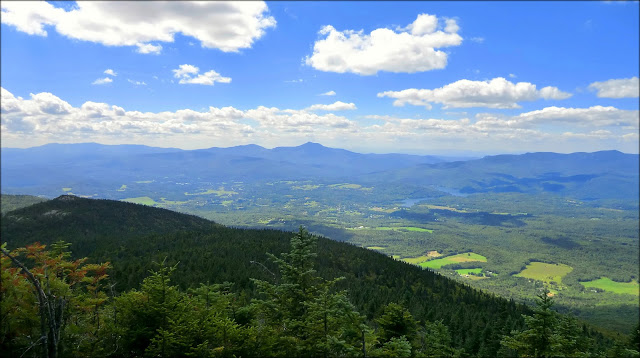
Vermont is the place where dreams of peace and tranquility come true. Rolling waves of verdant hills, interspersed with fertile valleys and filled with a tenacious band that endure bitter winters and short bursts of what those in America’s North-East think passes for ‘Summer’: that’s Vermont.

But the element that’s brewed to the surface in the Green Mountain State– and that’s now reached boiling point – is unbridled anger.

Vermonters are set upon by the same cowardly, callous and criminal chancers found all around the Globe – that appear from nowhere – like flesh-craving zombies – slobbering at the thought of massive and (seemingly) endless subsidies.

While their so-called political betters dance to their back-handing benefactors’ tune, the communities set upon have risen to the point of a full-scale, open rebellion. The following pieces tell the story of a mass movement of Vermonters venting fury and of a few politicians gifted with grace (rather than beguiled by wind industry ‘grease’) who’ve decided to put a halt to the most ludicrous energy ‘policy’ ever imagined.

ridges not renewable

Vermont’s energy siting struggle hits crescendo
Michael Bielawski and Bruce Parker
Vermont Watchdog
21  January 2016

MONTPELIER, Vt. — What started as a letter from Rutland regarding a lack of local control over renewable energy siting has culminated in an 86-town strong “Vermont energy rebellion.”

On Wednesday, more than 100 protesters gathered at the Statehouse to demand local control for energy siting.

Leading the demonstration were state Sen. John Rodgers, D-Essex/Orleans; Karen Horn, policy director for the Vermont League of Cities and Towns; and Don Chioffi, a member of the Rutland Selectboard. Together they argued the energy project siting process as it now stands oversteps the will of ratepayers.

“I would like to acknowledge those here today whose homes and lives have been sacrificed by our state’s energy policy, those of you who have been encroached upon and bullied by energy developers, and those of you who have lost not only property values but the health of your families to industrial wind plants. The process that we use to site energy in Vermont is broken and it’s long past time to fix it,” Rodgers said, opening the event.

According to Rodgers, renewable energy developers, with rubber-stamp support from the Public Service Board, have been given unrestrained power over land use in Vermont to the detriment of cities, towns and the environment, adding that the process had become “anti-environmental and anti-democratic.”

His two-part solution was also the largest applause line of the day: “First, I propose that we ban the development of industrial wind in Vermont. … Second, I propose that we require land use decisions related to energy generation to go through Act 250.”

To that end, Rodgers is sponsoring S210 and a slew of of other bills to ban industrial wind and subject the Public Service Board’s energy development certification process to stipulations found in Vermont’s strict land use and development law.

bear

****

Other community leaders, including Chioffi, offered comments about the problem.

“You may as well throw selectboards and planning boards out the window if you are going to operate the state this way. They are being treated as if they are nonexistent and useless,” Choiffi told Vermont Watchdog. “… There has never been a solar projected rejected by this Public Service Board — there’s the proof in the pudding.”

Mark Whitworth, board member of Energize Vermont, a pro-renewable energy group, attended the event to protest the manner in which renewable energy projects are being implemented.

“They’re industrializing wildlife habitat, they are fragmenting forests,” Whitworth said. “They are developing our ridgelines, which is going to result in a loss of flood resiliency, and they’re converting farm land for meager energy production — so we are jeopardizing our food security. We think that these guys are just worsening the very problems that they claim they are helping us to avoid.”

Vermonters from across the state traveled to the Statehouse to have their voices heard as well.

“There aren’t any constraints on where they put them up or how big they are,” said Rachael Carr, of St. Albans. “If they don’t get some legislation to put some restrictions on these projects, it’s going to be too late.”

vote

****

Her young son, Alex Carr, added an imaginative twist on the problem: “I’m here to protect the state from these huge monsters,” he said. “People think they are good, but they are not.”

Giselle Chevallay, a Newark resident dressed up as a displaced Vermont bear, said, “We want to help make sure we are more careful about our siting choices, whether it’s solar, wind, nuclear, hydro or anything.”

Given such urgency and backing by 86 towns, Rutland’s 2014 letter seems almost prophetic: “We are attempting, through this resolution, to form a coalition of Vermont communities which will support reasonable legislation to restore local community input to the regulatory process when addressing the issue of solar citing in our state.”

Whitworth explained what it means for a town to be part of the rebellion.

“These towns have either signed onto the Rutland resolution or they’ve adopted town plans which have explicit language regarding energy citing or certain energy technology,” Whitworth said, adding that his town of Newark has a town plan that says industrial wind turbines are inappropriate.

Currently, energy projects are exempt from Act 250 requirements. These requirements include adhering to regional municipal plans not unlike those of Newark. Rodgers’ bills attempt to make energy development subject to the same requirements other commercial developers face.

The plan is certain to hit resistance, largely because of the money involved. Chioffi said public money, including federal subsidies of 30 percent and state subsidies of about 8 percent, is what drives these projects. He argues that a 40 percent up-front return is also fueling the green energy rush.

“The best kept secret in the world is that these are really, really big cash cows,” he said. “There’s a lot of money to be made in these things. I’ve always been told if you ever want to get to the bottom of any argument on this kind of stuff, follow the money.”

Whitworth said the state’s renewable portfolio standards — which require every municipality to periodically increase its percentage of renewable energy sources — is another driving force. “It really lit a fire under this,” Whitworth said.

He added that while there are no current calls to freeze or repeal Vermont’s RPS, he thinks if legislators don’t respond to the pushback from communities, that will change. At least four of 29 states with such standards have halted or repealed them.

When asked about the status of Vermont’s RPS, Rodgers expressed concern about the economics of renewable energy. “There are a huge number of manufacture and installation jobs with solar today — I think it’s like 16,000 jobs,” he said. “The problem is, after the construction, we have basically set up a pipeline of our cash out of state because most of the owners of the big installations are out-of-state people or corporations.

“So it’s basically taking the tax credits out of state and the ratepayer money out of state. If we were building more on Vermonter’s homes and businesses, the tax credits and savings would stay more in Vermont” Rodgers said.
Vermont Watchdog

ridgeline destruction

****

Energy Critics Make Strongest Statehouse Push
Terri Hallenbeck
Seven Days
20 January 2016

tubine protest

The makeshift wind turbine erected in front of the Statehouse, emblazoned with the governor’s last name, was the first hint. Then there were the sign-bearing protesters flanking the Statehouse doors.

Inside, in the halls of the Statehouse, the cafeteria and committee rooms, scores more were dressed in bright green vests to highlight their presence and emphasize the danger they feel.

Wednesday brought the biggest show of force yet by Vermonters upset with the state’s siting process for energy projects. What has in recent years been a relatively small group of wind opponents has grown into a legion of people worried about wind and solar, including town leaders from across the state.

“Now, it’s being taken more seriously,” LuAnn Therrien said of the opposition. Therrien has spent years speaking against the Sheffield wind project, which she said drove her family out of town.

The proliferation of solar projects around Vermont has changed the volume of the opposition, said Mark Whitworth, who is with the organization Energize Vermont. The group has long opposed decisions about the siting of wind projects, and it now finds new friends opposed to suggested solar sites. “That is what really has lit a fire under this energy rebellion. When it was wind in the Kingdom, it was pretty easy for people in other parts of the state to ignore it,” Whitworth said.

protest

****

Wind and solar siting opponents filled the Senate chamber. Now, many town officials are also fired up. The Vermont League of Cities and Towns, not exactly a rebellious organization, joined in Wednesday’s event. Nearly a dozen local officials testified to legislative committees about how their towns have spent thousands of dollars and still feel powerless during the process to determine renewable energy sites.

“We’ve been inundated with solar,” Russ Hodgkins, Westminster town manager, told the House Natural Resources and Energy Committee on Wednesday. He said his town supports renewable energy, but the locations chosen so far are taking prime agriculture and industrial sites out of the economy. “There’s not one of them that’s in a great location.”

Whether this growing throng of rebels will get their way is another matter. While they are railing against what they consider poorly sited projects, Gov. Peter Shumlin has been touting the growth of renewable energy and the jobs it brings.

Wednesday’s events — hours of meetings with the Senate and House Natural Resources and Energy committees and a noontime press conference and rally — were organized by Sen. John Rodgers (D-Essex/Orleans), author of a bill calling for a ban on industrial wind projects.

“In 1968, Vermont passed a landmark anti-billboard law,” Rodgers told those gathered for the press conference. The “billboard ban is what inspired me to do what I’ve known to be right for years, and that is introduce S. 210, to ban industrial wind from Vermont.”

Prospects for a ban seem as weak this year as in previous years, however. “We’ll listen, but I think the problem with that proposal is we have an orderly development process,” said Sen. Chris Bray (D-Addison), chair of the Senate Natural Resources and Energy Committee.

Bray insists, though, that he’s working on changes that will help, at least on the solar front. “That is the most urgent need we are responding to,” Bray said.

His committee is putting together a bill — S.230 — that he hopes will offer incentives to build solar projects in specific locations and direct the Public Service Board to consider town plans in approving projects. Changes coming to the state’s net metering regulations will also likely slow down the proliferation of solar projects, he said.

Bray’s House counterpart, Rep. Tony Klein (D-East Montpelier), said he’ll await the Senate’s bill, but he agreed changes to energy-project siting should be made this year, even if there is not yet agreement on what those should be. He said, “There’s a pretty clear message that towns do not think they’re being heard.”
Seven Days

This video pulls together reports on the uprising from Burlington Free Press and NewsChannel 5.

****

Vermonters rally at Statehouse for new rules governing wind projects – Sen. Rodgers sponsors bill to ban more industrial-scale turbines
Stewart Ledbetter
WPTZ-News Channel 5
21 January 2016

MONTPELIER, Vt. — More than 100 Vermonters turned out Wednesday at the Statehouse to demand changes in the law governing the siting of industrial-scale energy projects.

At noon, the noisy crowd jammed into the Statehouse gallery to cheer Sen. John Rodgers, the Essex-Orleans Democrat who has introduced Senate Bill 210.

“This rebellion has spread to dozens of towns across Vermont and I believe it will continue to spread,” Rodgers told the crowd. “We won’t achieve our energy goals in the face of this rebellion. And I offer a solution. First, I propose we ban industrial wind in Vermont.”

The crowd erupted in applause.

Rodgers said Vermonters resent a system which allows wind developers who stand to earn millions from turbines to hire lawyers to argue their case before the Vermont Public Service Board — while citizens most impacted and the towns that host the projects have little voice and no veto power.

S. 210 would make a second key change, shifting permitting for renewable energy projects from the PSB to district environmental commissions and the development review process known as ACT 250. Supporters think Act 250 would provide citizens a far better shake.

Anthony Iarrapino, spokesman for Swanton Wind, a proposed turbine project in Franklin County, said the criticism was unfounded.

“If you look at the polls and the success of the projects we have (in Vermont) the majority of Vermonters understand how important wind is to our economy and getting us to clean energy goals,” he said.

Paul Burns, executive director of the Vermont Public Interest Research Group, said the state’s goal of securing 90 percent of its energy from renewable sources will mean Vermonters have to get used to seeing turbines on mountaintops and large solar arrays in farm fields.

S. 210 has been referred to the Senate Natural Resources Committee for consideration.
WPTZ.com

angry-mob

Funny about all that!

That Vermonters are furious about the destruction of their thriving and healthy communities in ‘exchange’ for a wholly weather dependent power source; that’s intermittent and unreliable, requiring 100% of it’s capacity to be backed-up 100% of the time by conventional power generators; that, accordingly, has NO commercial value (save the massive power consumer and/or taxpayer subsidies it attracts); kills millions of birds and bats; and, with the incessant low-frequency noise and infrasound it generates, drives people mad in their homes, or drives them out of them altogether, is hardly a surprise.

What the wind industry hates most are facts. And anyone with the temerity to present them is targeted in a style and with a zeal that would have made the East German Stasi proud. Here’s just another example of the wind industry’s standard tactics.

AG’S Office investigating complaints against Annette Smith, anti-wind advocate
Mike Polhamus
VT Digger.org
23 January 2016

The state attorney general’s office has opened an investigation into criminal complaints against a prominent champion of Vermonters who are adversely affected by renewable development.

The attorney general’s office is investigating whether Annette Smith, executive director of Vermonters for a Clean Environment, has practiced law without a license — a charge with penalties left entirely to the court’s discretion.

Smith says the complaints that prompted the AG’s investigation are politically motivated.

Attorneys who have argued against Smith’s clients say she gives bad advice, unconstrained by the sanctions licensed attorneys would incur for similar behavior.

Smith says the AG’s investigation “is very intimidating.”

“I don’t know what to do. I think our work’s being shut down,” Smith said. “I believe this has the potential to shut down my organization of 16 years. It clearly falls under the definition of harassment.”

Residents who live near planned and existing renewable projects have claimed she’s their only advocate.

Smith said she represents people who too frequently have nowhere else to turn. Renewable energy developers hire talented attorneys against whom landowners near project sites have no other way of successfully representing themselves.

Many of these cases involve people who can’t afford a lawyer, and who didn’t want to become involved in legal proceedings to protect their interests, she said. Lawyers know it’s impossible to fight renewable energy developers, Smith said, and won’t take on affected landowners’ cases anyway.

“Anybody who does this with a lawyer has wasted tens of thousands of dollars,” she said. “The reason I’m doing this is so people have a voice without bankrupting themselves.”

The attorney general’s office would not offer comment on the case.

“There is a matter under investigation by the criminal division, and we can’t comment on it further, and we never comment on ongoing criminal investigation,” said John Treadwell, Chief of the Criminal Division at the AG’s office.

Practicing law without a license is a charge that has rarely been prosecuted in Vermont, Treadwell said. It carries potentially severe penalties. “It is punished as criminal contempt of the Vermont Supreme Court, and is potentially punishable by fine or imprisonment or both, in the court’s discretion,” Treadwell said.

“In the court’s discretion,” Treadwell said, means there are no maximum defined penalties.

Assistant Attorney General Zachary Chen named five cases in a letter notifying Smith of the investigation, and two attorneys were involved in both cases. Smith said one of them had previously accused her of practicing law without a license. Both have given Smith reason to believe they’ve sought to instigate an investigation against her, she said.

Joslyn Wilschek is one of the attorneys, and in a previous Public Service Board hearing she told hearing officers that Smith had been in that instance practicing law without a license.

Non-lawyers aid participants in legal and other proceedings all the time to good effect, Wilschek said, but Smith represents herself as having training that she actually lacks.

“She gives legal advice to landowners, and she drafts their filings to the Public Service Board, and I think it’s a real disservice, because she puts herself out there as having the knowledge of a lawyer, when she doesn’t,” Wilschek said.

Wilschek said she didn’t file a complaint against Smith with the AG’s office, but said she supports it and said that if asked, and if her clients consented, she’d testify Smith had done what she’s been accused of. Wilschek said her remarks reflect only her personal observation, and not her clients or their positions.

Based on what she’s seen, such charges have no basis in political motives, Wilschek said. “I disagree with people all the time — that’s what a lawyer does — but when someone does something this egregious, it’s not political, it’s protecting the public,” she said. “When you see someone putting themselves out there like a lawyer, it’s a real disservice to people who don’t understand the training a lawyer needs.”

People who Smith has assisted say they have no other effective advocate, and say they’re shut out of the hearing process for renewable projects by the excessive legality of the proceedings.

“What she does is she provides citizens — normal, everyday citizens in the state of Vermont — with a possibility of having any chance at participating in the Public Service Board process,” said Christine Lang.

Lang, with her husband and with Smith’s assistance, is attempting to persuade the Public Service Board to assess penalities on prospective wind developer Travis Belisle for constructing a meteorological tower without a permit. The met tower is a precursor to the wind turbine development project, and she says a permit filed with the board would have given the public advance notice.

State agencies and developers are well-represented by lawyers at Public Service Board hearings, while ordinary citizens are shut out of the process, Lang said.

“I think it’s a witch hunt to distract her from the work she’s trying to do to help citizens, because she’s the only one out there who’s helping citizens,” Lang said. “Does that make sense I should have to have an attorney to participate in what is supposed to be a public process?

“This is why this entire process is completely broken,” she said. “It is a developer-run process run by the developers and their lawyers, and they are getting everything they want, and they are going to destroy this state.”

Leslie Cadwell, another attorney who has represented wind developer David Blittersdorf, says Smith has led her clients to bad ends. Cadwell participated in a case against Smith that complaints with the AG’s office have highlighted as representative of Smith’s alleged illegal behavior.

“As a result of Annette’s participation in a case she was involved with before the Public Service Board, the town of Irasburg has violated open meetings law twice, and has admitted it,” Cadwell said.

Professional ethical standards lawyers abide by prohibit this kind of behavior, Cadwell said.

“If Annette wants to represent people in the Public Service Board process, or advise people about how to participate in the Public Service Board process, she ought to go to law school,” Cadwell said. “Or, in Vermont, she can actually do a four-year clerk program where she can learn how to be a lawyer and understand how to ethically represent her clients in courts.”

Vermont is one of few states that allows lawyers to work as clerks in lieu of law school as a means of studying to become an attorney, Cadwell said.

Cadwell said that she did not file complaints against Smith with the attorney general’s office.
VT Digger

What utter bunkum.

Annette Smith has absolutely no case to answer. She hasn’t represented herself to be legally qualified to practice law (to those she represents or anyone else); hasn’t raised a fee for her services; and hasn’t pretended to have qualifications that she does not possess.

Instead, all she has done, is to have given collective advice to, and advocated for and on behalf of, people who simply cannot afford legal representation; and done so in ‘Mickey Mouse’ hearings before an administrative planning panel (the Public Service Board); which has no Curial authority – and all the Judicial formality of the process required to obtain a driver’s licence at the DMV.

Planning panels and tribunals (indeed, Supreme and High Courts) hear self-presented plaintiffs, applicants and defendants on a routine and regular basis. It’s now so common as to be unremarkable – especially in planning cases.

In Australia, and other common law jurisdictions, otherwise unrepresented litigants are entitled to have what’s called a ‘McKenzie friend‘ represent them in courts of law.

The McKenzie friend openly gives legal advice and assistance in and out of court; and does not need to be legally qualified to do so. The crucial point is that litigants in person are entitled to have assistance, lay or professional, unless there are exceptional circumstances. Provided the McKenzie friend does not represent themselves to be legally qualified to practice law and doesn’t charge for their time (although charging for time is permitted in England and Wales), there can be no complaint from the court hearing the case, other parties or their lawyers about them giving advice, assistance and otherwise advocating for the litigants they help to present their cases.

Given the fact that there is no obligation on litigants, in any forum, to retain and pay for the services of a qualified lawyer, the charge against Annette Smith is pure, unadulterated nonsense; and is nothing more than the usual bullying, stand-over tactics employed by the wind industry and its parasites – tactics that see its goons beating up on pensioners, disabled farmers and middle-aged mothers.

The ridiculous nature of the developer instigated trumped-up charge against Annette Smith was noticed by another famous American community defender, Erin Brockovich – who has endorsed a crowd funding page for Annette’s legal defence costs on her facebook page – Erin Brockovich – noting that:

The head of Vermonters for a Clean Environment, Annette Smith, is under criminal investigation by the Vermont Attorney General’s office for alleged “unauthorized practice of law”. Whoever could have imagined helping people have a voice in regulatory proceedings would lead to this; it is obviously politically motivated. I am outraged. The charge is highly unusual; if there is prosecution, it would be tried at the Vermont Supreme Court. This hasn’t happened since 1962 and only five times in the history of Vermont. The legal community in Vermont is scratching their heads, outraged, and various things in between. A gofundme page was set up yesterday to help with her legal fees https://www.gofundme.com/74kx663w

With its ham-fisted attempt to crush Annette Smith and the communities she helps to defend, the wind industry can expect nothing but fury and revenge in Vermont, from here on. Let’s call it the beginning of a ‘revolution’.

vive la resistance

Bankers & Investors Close Ranks & Doom Wind Industry to Death By A Thousand Cuts

solar-panels-at-Nyngan

****

Earlier this week we looked at how Australia’s big power retailers have turned their backs to the wind to face the Sun, instead.

Commercial retailers (we don’t count the ACT Government) haven’t entered any Power Purchase Agreements with wind power outfits since November 2012; and, we hear, have determined not to enter any more PPAs for wind power, ever again.

The big operators have absolutely no interest in wind power; and every interest in killing off the Large-Scale RET that created, and for the time being sustains, the wind industry.

As pointed out previously, the retailers’ switch to large-scale solar is a canny, but fleeting move – designed to avoid the shortfall penalty for the few years it takes for the LRET to collapse; as the political and economic toxicity of the policy escalates over the next year or two.

It is, after all, a pointless $3 billion a year power tax that runs until 2031 – for no other reason than to subsidise the production of insanely expensive and wholly unreliable wind power; at a time when Australia’s grid is swamped with oodles of the reliable, secure and affordable stuff.

Without PPAs with retailers, wind power outfits haven’t a hope in hell of obtaining bank finance to build any new wind farm capacity; and the retailers’ recalcitrance has investors spooked, too – as the following articles attest.

Wind optimism stalls
The Courier
Matthew Dixon and Peter Hannam
16 January 2016

STALLED: Investment in large wind projects isn’t coming as quickly as expected.

THE confidence that everyone had expected to return to the renewable energy sector following the demise of Tony Abbott is yet to come to fruition.

Investors spent just $15 million since February 2014 on big wind, solar or other clean energy projects that were not otherwise supported by government programs such as the Australian Renewable Energy Agency.

That figure is a huge drop from when investment peaked in 2011 on the back of government support for renewables.

The figures and belief that the industry may have stagnated according to an annual survey by Bloomberg New Energy Finance.

Despite Mr Abbott’s removal as prime minister, and many key figures in the industry expectations of a return to bigger levels of investment, there is no certainty that the investment will return in 2016.

With a number of major wind farms in the Ballarat area already securing planning approval and only waiting on investment for construction to begin, development has stagnated.

This includes huge farms planned in Stockyard Hill and within the Moorabool Shire.

Australian Wind Alliance national coordinator Andrew Bray said the industry had not rebounded as some had hoped, but there was still a lot of optimism.

“It is definitely the case that the market has not recovered since the Abbott government’s attack on the Renewable Energy Target,” he said.

“While there appears to be some optimism surrounding projects starting to progress, that hasn’t eventuated.

“It is now up to all the players, the banks, the retailers to come to the table and start resolving this impasse.”

The Abbott government’s repeal of the carbon tax in July 2014 – which removed long-term price support – and a mishandled review that led ultimately to a cut of about one-fifth in the 2020 Renewable Energy Target meant “confidence evaporated” in the sector according to Kobad Bhavnagri, head of Bloomberg New Energy Finance in Australia.

“It can’t be understated that the actions of the Abbott government have destroyed confidence in the renewable energy market,” Mr Bhavnagri said.

“Lenders in the market are almost all of the view that the political risks in the RET … have made it too risky to invest in.”
The Courier

Predictable ‘sackcloth and ashes’ stuff from a pair of typically deludedFairfax wind-cultists, but the line they pull from Bloomberg’s boffin that: “Lenders in the market are almost all of the view that the political risks in the RET … have made it too risky to invest in” is absolutely spot on!

Not only are investors not game to throw so much as a shekel at wind power in Australia anymore, those with skin in the game are cutting and running as fast as their panicked, jelly-legs can carry them.

To give some insight into the fear that’s driving them, we’ll head back in time to trace a little tale about a Spanish wind power outfit’s efforts to ditch the Taralga wind farm in NSW.

Renewable energy sector crisis forces Banco Santander to quit Taralga wind farm
Sydney Morning Herald
Angela Macdonald-Smith
31 March 2015

Banco Santander, a major investor in renewable energy, will sell its only Australian wind farm and exit the local sector because of policy uncertainty that has dragged the industry into crisis.

Santander will seek a buyer for its 90 per cent stake in the 106.8 megawatt Taralga wind farm near Goulburn, which is not being included in the renewable energy fund it set up late last year with two Canadian pension giants because of the perceived poor prospects for the sector in Australia, say sources.

David Smith, executive director of Santander in Sydney, declined to comment.

Australia’s renewable energy sector has been left in limbo by the political debate surrounding the country’s 2020 renewable energy target. The government and Labor Opposition agree the 41,000GWh target for large-scale renewable energy needs to be reduced to suit the downturn in total power demand from the grid, but have been unable to agree on a compromise.

As of last week, the government was proposing a 2020 target of 32,000GWh, while Labor wants a target in the high 30,000GWh range. A compromise suggested by the Clean Energy Council at 33,500GWh, up from the current level of about 17,000GWh, has failed to find backing.

Investment in large-scale renewable energy collapsed by almost 90 per cent in 2014 as a result of the deadlock, which has been criticised by several large foreign investors in the local renewable energy sector, including GE, Spain’s Fotowatio Renewable Venture and Infigen Energy cornerstone shareholder, the Children’s Investment Fund. They have all warned of the harm to Australia’s sovereign risk, which will deter long-term infrastructure investors.

In December, Santander struck a deal with the Ontario Teachers’ Pension Plan and the Public Sector Pension Investment Board in Canada to transfer its portfolio of renewable energy and water infrastructure assets into a new company owned equally by all three parties. But despite the partners having an appetite for other infrastructure assets in Australia, the wind farm was excluded from the $US2 billion-plus ($2.6 billion) portfolio of assets in the new company because of the uncertainty around the RET and the decision by the Coalition government to ditch the carbon tax, say sources close to the company.

The new company will, however, invest in Brazil and Mexico, which are seen as offering better prospects for renewable energy investors than Australia.

“It is quite clear that the uncertainty around the RET and other changes to policy that have occurred over the past few years has created a lot of uncertainty for investors in the renewable energy space,” said Richard Pillinger at BlueNRGY LLC, which owns 10 per cent of the Taralga wind farm.

The Taralga wind farm, which has a 10-year contract to supply power to EnergyAustralia, was financed with about $280 million from Santander, CBD Energy, Danish export credit agency EKF, ANZ and the federal government’s Clean Energy Finance Corporation. Production of electricity from the first of the 51 wind turbines began in December.

CBD Energy has since gone into administration and been acquired by US-based BlueNRGY LLC.

Santander is closing the Sydney office for its equity investment arm, which focuses on renewable energy, in mid-2015.
Sydney Morning Herald

banshee

****

With the dreaded Tony Abbott little more than political history, and the ‘immutable’ 33,000 GWh annual LRET target now set in stone (just like the previous 41,000 GWh target!), Banco Santander should have been knocked to the floor with a rush of cashed-up and willing buyers.

So, let’s wind the clock forward and tally up the bids for Taralga.

Taralga Wind Farm sale runs out of puff
The Australian
Bridget Carter and Gretchen Friemann
22 January 2016

The sale of the Taralga Wind Farm could be put on hold, with sources suggesting the sales process for the asset generated limited buyer interest.

Apparently, one mystery bidder did circle the operation, but it is now thought unlikely it is still interested.

AMP Capital is among other groups that had a look in the early stages.

But sources say that the carrying value of the asset is too high, and long-dated swaps in the capital structure that are difficult to change are deterring buyers.

The Spanish owners, Banco Santander, appointed ANZ last year to sell the wind farm on the NSW coast, 45km north of Goulburn.

Taralga was expected to sell for about $200 million.

It gained state approval in 2012 to build 51 wind turbines, generating 106.8 megawatts of electricity.

Banco Santander, the world’s third-largest clean energy lender, had moved to sell the asset as part of its decision to exit the Australian market.

It is understood to have reached a global tie-up with some of Canada’s pension funds in recent times.
The Australian

Not a serious bid in sight! Whatever could have got investors to balk at a ‘sure-fire’ one-way bet?

Could it be that investors have worked out that ANY business that depends entirely on a piece of government policy can be done in at the stroke of a pen?

For STT’s analysis of what’s behind the investors’ panic see: Wind Industry Still Wailing About ‘Uncertainty’ as Australian Retailers Continue to Reject Wind Power ‘Deals’

We’ve said it before and we’ll keep saying it: the wind industry is among the greatest Ponzi schemes of all time. If you have so much as a penny anywhere near it, then grab it and get out fast.

please-take-a-moment-and-look-around-and-find-the-nearest-exit

Wind Turbine Investors Losing Their Shirts…

Germans Losing €Millions on Community Wind Farm ‘Investments’

wind-turbine-money

Anyone that’s looking to make a small fortune, need only hand a very large one to a community wind farm operator:

More Wind Power Outfits Go Bust: “Farmer-Investors” Lose their Shirts in the US

Community Wind Farm Investors Losing their Shirts

Part of their pitch (some might call it laying bait for the more gullible fish in the pond) is to throw a few grand at the local footy team (new jumpers all round) or theatre group (new curtains and lights); or wombat preservation (see our post here).

STT has pointed out just a few times that the wind industry is little more than the most recent and elaborate Ponzi scheme in a list that dates back to “corporate investment classics”, like the South-Sea Bubble and Dutch tulip mania.

In the wind industry, the scam is all about pitching bogus projected returns (based on overblown wind “forecasts”) (see our posts here andhere and here and here); claiming that wind turbines will run for 25 years, without the need for so much as an oil change (see our posts hereand here and here); and telling investors that massive government mandated subsidy schemes will outlast religion (see our post here).

STT has also had a go at unpicking the scale and scope of the financial precariousness at the BIG end of town in our posts:

The Wind Industry: You Know It’s a ‘Ponzi’ Scheme When its Targets Include Schools & Councils

Pacific Hydro’s Ponzi Scheme Implodes: Wind Power Outfit Loses $700 Million of Mum & Dad Retirement Savings

In the first of the above, we pointed to the efforts of Simon Holmes a Court to build an “empire” around 2 clapped out Suzlon/REPower 2MW turbines speared into Leonard’s Hill, using money siphoned from 1,900 gullible, greentard ‘investors’. That community calamity (see our post here) kicked off in 2011, but has yet to return a single cent to investors in that time.

But, hang on a minute? Whatever happened to all that ‘love’ for ‘clean, green’ power – that’s said to drive power consumers to lap it up with a fork and spoon – and all that talk about wind power being ‘free’? Surely, there couldn’t be a safer bet for anyone looking to grow their rainy day savings?

Well, maybe not …

German ‘investors’ in so-called ‘community wind farms’ are licking their wounds, as their operators rack up cumulative losses in the tens of €millions.

Lured By “Unrealistic Promises” Of Profit, German Communities Wind Up With “Financial Disasters” And Damaged Environments
NoTricksZone
Pierre Gosselin
1 January 2016

The FDP Free Democrat party in the state of Hesse (central Germany) writes in a press release how local utilities and communities are suing wind park development company JUWI, accusing it of “making unrealistic promises” regarding wind energy projects, and calls them “highly speculative business with enormous risks for public budgets“.

Over the years German local utilities and communities have invested tens of millions of euros in local wind parks with the hopes of seeing a ruddy return on investment and making a noble contribution to climate protection at the same time. That dream, it is turning out, has shattered.

The FDP press release in English:

Millions in losses with wind power projects

WIESBADEN – Once again wind projects are producing negative headlines. In the spotlight is “wind energy pioneer” JUWI, which is one of the largest project developers in Hesse. With the Pfalz City Utility and the City Utility of Mainz, two large community electric utilities are suing currently JUWI because the wind prognoses made never materialized, and thus the returns fell way below the planned budget. Instead of posting profits after more than ten years in operation, community company “Pfalzwind GmbH“ has seen double-digit millions in losses. Pfalzwind operates more than 60 turbines.

‘We see the same result in Hesse as well. Everywhere communities, utilities and energy co-ops were lured by large profits, but in the end most wound up with losses that the citizens will have to cope with. Not only are they stuck with damage to the environment and the landscape, but now they also have a financial disaster to cope with,’ says René Rock, energy policy speaker of the FDP faction in the Hesse state parliament.

Rock adds:

‘The lawsuits by the community utilities once again show that promises made by the wind industry are unrealistic. And due to the falling feed-in rates, the economic prospects are worsening in addition. Also large utilities in Hesse, such as Mainova AG in Frankfurt, are losing money with their stakes in wind parks.

Currently alone in Hesse some 470 wind turbines are in the permitting process. Instead of blindly trusting the promises made by project developers, planned wind power projects involving investment by communities should be halted based on economic sense. In truth wind parks are highly speculative businesses with enormous risks for public budgets.’”

And never mind the industrial blight and environmental destruction they are causing to Germany’s once idyllic landscape, and the threat to human health and wildlife.
NoTricksZone

empty-wallet1

YES! to Nuclear….NO! to Wind!

India’s Energy Experts Baffled by ‘Greens’ Hostility to Nuclear Power

nuclear-power-a

****

After the Paris Climate Jamboree, the wind industry, its parasites and spruikers are licking their chops at the prospect of having the rich world fund the construction of millions of these things in the dark corners of the Planet.

But, while the eco-fascists that ponced around Paris are ready to foist a wholly weather dependent technology – that was abandoned in the 19th Century, for fairly obvious reasons – on people who are still left cooking with twigs and dung, sensible first world economies have tumbled (albeit, belatedly) to the fact the wind power is patent nonsense.

world wind investment

STT has always thought that if man-made CO2 emissions really were destroying the planet, then sensible governments would have moved to build nuclear power plants from the moment the Chicken Littles started wailing about the heavens collapsing.

The French generate over 75% of their sparks using nukes – and have used nuclear power – without any serious incident – for over 50 years: the first plant kicked off in 1962.

Nuclear power is the only stand-alone thermal power source that is base-load; and which does not emit CO2 emissions when generating power.

It’s a fact not lost on those with the task of dragging hundreds of millions out of stone age poverty in the World’s largest democracy, India. And its hard-pressed populace, who have already worked out the significant difference between ‘real’ electricity – available 24 x 365 and ‘fake’ electricity – that’s as fickle as a summer breeze (see our post here).

Experts ignite debate on nuclear power as clean energy
The Hindu
7 January 2016

Experts participating in a two-day seminar which began here on Wednesday expressed divergent views on the role of nuclear energy as a cleaner alternative to fossil fuel sources.

Governor P. Sathasivam, who inaugurated the seminar, set the ball rolling by stressing the role of nuclear energy in the move towards cleaner energy sources necessitated by India’s climate change commitments. T.P. Sreenivasan, Vice Chairman, Kerala State Higher Education Council, said it was time to think of a world without nuclear energy and set a timeframe for the transition from nuclear power to cleaner sources such as solar and wind energy.

Pointing out that countries such as Germany, France, Switzerland and Austria were either committed to closing down nuclear plants or opposing nuclear renaissance, he stressed the need to formulate a new approach between nuclear enthusiasts and opponents. A former Ambassador and governor for India at the International Atomic Energy Agency, Vienna, Mr. Sreenivasan said India, China, and Russia were the only countries enthusiastic about nuclear power today.

Striking a different stand, Ashok Chauhan, Director (Technical), Nuclear Power Corporation of India, said the increase in greenhouse gas (GHG) emissions posed a greater threat to the world than nuclear energy. “In fact, nuclear energy offers a solution to the threat posed by greenhouse gases that are responsible for climate change and rise in sea level.”

Citing the assessment of lifecycle GHG emissions, Mr. Chauhan said solar and wind energy were no match for nuclear power as an alternative to fossil fuel. The lifecycle GHG emission of nuclear energy is 15 gm of co2/ kwh against 45 gm for solar power and 11 gm for wind energy. But wind energy had the disadvantage of a lower conversion rate of 22 per cent against nuclear power (90%). Solar power generation also required huge tracts of land and was not capable of uninterrupted power supply.

Mr. Chauhan said India would have to augment its nuclear generation capacity in a big way to meet its climate change commitments. He added that nuclear plants in the country conformed to international regulations in safety and technology.

Mr. Sreenivasan, who chaired the session, pointed out that the Paris climate change summit had not endorsed nuclear energy as a solution to the problem caused by GHG emissions.
The Hindu

The reason that the climate-cult haven’t “endorsed nuclear energy as a solution to the problem caused by GHG emissions” is twofold: there’s $billions to be pocketed in massive subsidies directed to meaningless power sources that are never available on demand; and the cultist, in a form of perverse neo-Marxism, is hell-bent on depriving the poorest on the planet from ever approaching the Champagne and Caviar lifestyle, that they selfishly enjoy and take for granted; like the ACF’s CEO Kelly O’Shanassy.

india wind farm

****

The Hindu’s piece was picked up and parsed by WattsUpWithThat.

Indian Energy Experts Baffled by Green Hostility to Nuclear Power
WattsUpWithThat
Eric Worrall
7 January 2016

The Hindu reports on a fascinating top level debate occurring at a conference in India, between politicians and energy experts. The energy experts are struggling to understand why nuclear power is not the favoured Western option for reducing CO2 emissions.

… Pointing out that countries such as Germany, France, Switzerland and Austria were either committed to closing down nuclear plants or opposing nuclear renaissance, he [Governor P. Sathasivam] stressed the need to formulate a new approach between nuclear enthusiasts and opponents. A former Ambassador and governor for India at the International Atomic Energy Agency, Vienna, Mr. Sreenivasan said India, China, and Russia were the only countries enthusiastic about nuclear power today.

Striking a different stand, Ashok Chauhan, Director (Technical), Nuclear Power Corporation of India, said the increase in greenhouse gas (GHG) emissions posed a greater threat to the world than nuclear energy. “In fact, nuclear energy offers a solution to the threat posed by greenhouse gases that are responsible for climate change and rise in sea level.”

Mr. Sreenivasan, who chaired the session, pointed out that the Paris climate change summit had not endorsed nuclear energy as a solution to the problem caused by GHG emissions.

I suspect it won’t take the Indian energy experts long to conclude that Western opposition to nuclear power is irrational, which will likely lead them to question the legitimacy of other things Western “experts” have told them.

Former NASA GIS director James Hansen, and a handful of other leading climate alarmists, have repeatedly stated, that the only plausible means of reducing CO2 emissions, is a vast expansion of nuclear capacity.

But as the Indian energy experts will quickly discover, pointing out the bleeding obvious to green fanatics rapidly leads to bullying and name calling – even if you are James Hansen.
WattsUpWithThat

Deprive Indians of secure, reliable and affordable power and they’ll remain dirt poor forever, but who cares, right?

poverty india

Wind Energy is Not Viable….Here’s Why!

The way the wind blows in New Hampshire

Credit:  By Fred Ward | Monadnock Ledger-Transcript | Tuesday, January 12, 2016 | (Published in print: Tuesday, January 19, 2016) | www.ledgertranscript.com ~~

We all want clean, cheap, reliable electric energy. And there is plenty of clean energy available in the winds that come and go over New Hampshire. However, converting this intermittent energy source into electricity is not easy. There are engineering, aesthetic, environmental and political problems. And, there is an additional problem, purely economic. It applies not only to Antrim Wind Energy, but to any proposed industrial wind facility, or IWF, in the state of New Hampshire.

An intermittent power source like a wind turbine will generate between zero percent and 100 percent of its maximum power, depending on the wind speed. A wind turbine of 3 Mw rated power, with an efficiency of about 33 percent, will actually produce between zero Mw and 3 Mw, with an average power output of 1 Mw. The difference between its 3 Mw maximum power, and its 1 Mw average power, is a factor of three, the inverse of its 1/3 efficiency.

In order to reach the legislated mandate of 25 percent average renewable power by 2025, wind would have to contribute at least 10 of the 25 percent. This would require at least 500 3 Mw turbines, averaging 500 Mw, but actually generating between 0 Mw and 1,500 Mw, at least occasionally. If all the turbines spun randomly, they would generate about 500 Mw most of the time. However if winds made them spin together, near 1500 Mw surges would be a frequent occurrence. This raises a critical question. How well do the winds harmonize the spin of different IWFs all over New Hampshire or New England? And send 1,500 Mw surges to the ISO-NE electric grid? The meteorological question is simple. How well harmonized are the wind speeds at various weather stations throughout New Hampshire or New England?

Wind data are available from weather stations from Caribou in northern Maine to Bridgeport in southwest Connecticut and from Albany, New York, just over the western border of New England, to Portland, Maine and Providence, Rhode Island on our easterly boundary.

Analysis of these National Weather Service data, publicly available for many decades, shows very clearly that the winds all over New England are highly harmonized. When the winds are strong in one part of New England, they are generally strong over all of New England, and when the winds are light in one area they are generally light all over New England. And since the station-to-station winds become increasingly harmonized with increasing altitude, this harmonization will be even higher for the winds blowing over 2,000-foot hills and ridges.

The net of this analysis is that for wind power to provide even 10 of the 25 percent legislatively mandated average renewable power, these synchronized wind facilities will actually have to generate between 0 percent and 30 percent of our average power.

To put this 30 percent in perspective, a single nuclear, hydro or coal plant, or Northern Pass, generates less than 30 percent of our average power. This highlights how these large wind surges would raise havoc with the ISO-NE grid. A scan of the New England wind data shows that large wind-generated electric surges would hit the ISO-NE grid once or twice each week, and last many hours.

If this problem weren’t already insurmountable, the topography and meteorology of New Hampshire add an additional, and large, problem. The only feasible locations for IWFs are over the tops of our isolated hills and elevated ridges.

The winds that blow at 2,000 feet over New Hampshire hills and ridges reach their maximum at night, with lesser winds in the daytime. This means that these large surges will be inflicted on the ISO-NE grid at night, when demand for electric power is at a minimum.

There is no obvious solution to this problem, and it indicates that wind is not a viable source of electric energy in New Hampshire. The wind power industry should be required to offer a solution before any more wind facilities are approved in New Hampshire.

Meteorologist Fred Ward lives in Stoddard; he holds bachelor, master’s and PhD degrees from Massachusetts Institute of Technology.

Source:  By Fred Ward | Monadnock Ledger-Transcript | Tuesday, January 12, 2016 | (Published in print: Tuesday, January 19, 2016) | www.ledgertranscript.com

Wind Turbines are Torture, for Nearby Residents!

Irish Wind Farm Neighbours Detail Unnecessary Daily Acoustic Misery

wind power growth

As the World reacts to the insane cost of backing an utterly pointless power source, by slashing subsidies and removing the only ‘reason’ for ‘investing’ in the greatest environmental and economic fraud of all time, there remains the suffering of thousands of unnecessary wind industry victims; ‘road-kill’ as its parasites like to refer to them.

STT takes their suffering and our ‘sanctuary’ status seriously – providing our comments space for the use of people who have been tragically impacted by – or who are fighting the threat of – giant industrial wind turbines.

STT is an exclusive place where our followers can speak openly and freely – and without fear of vilification or ridicule from trolls like Ketan Joshi,Mike Barnard & Co. And that’s something we have no intention of changing any time soon.

STT thinks compassion and empathy far greater virtues than self-righteous condescension.

True it is that the roll-out of these things has, thankfully, ground to a halt in Australia and elsewhere, but for many unfortunates, their daily misery continues unabated. Here’s a journal detailing the wholly unnecessary suffering meted out by Irish wind power outfits with incessant turbine generated low-frequency noise and infrasound.

The Misfortune Of Living By A Wind Farm
windfarmtorture.blogspot.ie
1 January 2016

The truth about having to live near Grouselodge wind farm, Co. Limerick, the illness they cause, the noise, the discomfort, the lies from developers, wind farm owners/operators

Daily Notes December 2015

A new month and still being subjected to LFN/Infrasound and audible noise

1st A low buzzing/humming noise could be heard all night, this morning ears ringing feel numb, face tingling, itchy head, headache

2nd Constant audible buzzing humming sound all night long again, ears ringing feel numb and full, face tingling, headache, eyes twitching

3rd Low cloud and rain feels like that helps to keep the noise and infrasound in, blades forcing it this way, ears ringing, eyes twitching, head ache, pressure in ears making them feel like they are pulsating and feel full, not a nice feeling

4th After yesterday onslaught we are still suffering with headache, eyes watering/twitching. ears ringing feel pulsating and swollen, thank god for panadol mints

5th Ears ringing, headache, itchy skin, eyes watering still recovering from the other day LFN onslaught, 3 turbines going at the moment still being invaded by industrial noise though, could be worse and have all 6 going

6 DEC 2015

6th Last night we were subjected to noise and by the way my head feels about to explode we were subjected to LFN/infrasound ears feel full, pulsating, headache, face tingling, thankfully all turbines are off at the moment

noise 1

7th Noise again last night a constant buzzing/humming sound all night, today ears feel full, pulsating, ringing sound, itchy head, face feels numb and tingling, eyes twitchy

8th An audible buzzing/humming noise was heard all night and still the same this morning, headache ears feel pulsating and full and ringing, headache, itchy skin, eyes twitching, loud swoosh thump noises can be heard coming from the turbines

9th Another night of a constant humming/buzzing noise heard inside and outside sounded like airboats in the back garden, no change on the noise levels today and this morning ears ringing, headaches, feeling breathless, itchy/tingling skin

10th Same as yesterday, Another night of a constant humming/buzzing noise heard inside and outside sounded like airboats in the back garden, no change on the noise levels today and this morning ears ringing, headaches, feeling breathless, itchy/tingling skin, the headaches and ringing in the ears seem to be a result of the constant humming/buzzing noise that can be heard all day long, especially at night when normal daytime noises, such as cars tractors, TV radio etc are gone

11th Another night of humming/buzzing noise i had ear plugs in with radio on and this noise could still be heard, today it can still be heard inside and outside we have what sounds like airboat noise, the blades are forcing all of the LFN/infrasound this way, headache, ears ringing, eyes twitchy, itchy skin, i know today will be a rough one

12th, Again pretty much the same as the past few days another night of humming/buzzing noise, today it can still be heard inside and outside we have what sounds like air boat noise, ears ringing, headache, eyes watering, trouble breathing these symptoms are pretty much daily occurrences now

13th Fog Today cant see the turbines at the moment, but can still hear them, swooshing and thumping in the distance, ears ringing feel like they are pulsating and exploding, headache, eyes watering

noise 2

14th Rain, fog, low cloud all compounding the LFN/infrasound ears feel like exploding, pounding headache, dizzy feeling

15th Last night we were subjected to very loud swooshing noises outside which went to a buzzing/humming low droning sound inside, this morning ears feel like they are exploding, very acute headache, eyes watering, ears ringing

16th Last night swoosh thump clunk squeal etc etc all night outside, inside the normal humming/buzzing allnight, today ears ringing feel pulsating, eyes watering/twitchy, headache

17th Only 5 working today and still swoosh thump swoosh thump constantly, never ending, headache, ears ringing, i have concluded that ears ring worse when inside than when outside, tingling face, sea sick feeling of constantly moving horrible feeling

18th 5 working again but still air boats outside ears ringing, itchy skin, eyes twitchy

19th Only 5 working again, hope its broke for good, headache difficulty breathing out of breath just walking across the field this morning, eyes watering

20th Only 5 working again, crane at the broken one yesterday doing something, woke up trouble breathing again, ears ringing, headache ithcy skin, eye twitchy/watering

noise 3

21st Only 5 working again, but still air boat noise outside and a constant humming buzzing inside all night and still going on this morning, trouble sleeping, woke up hard to breath, face tingling, eyes twitching, ears ringing, blurred vision

22nd You know it is going to be bad day, when you have had a bad nights sleep due to the constant audible noise and LFN/infrasound, and you are woken up by the noise unable to breath, feels like you have run a marathon but you have just woke up, ears ringing feel pulsating, headache, eyes watering. n a good note still only 5 working today again

23rd 6 working again, woken up early again trouble breathing, felt like i had run a marathon, ears feel full, like they want to explode, ringing, tingling/numb feeling face, eyes twitchy blurry vision

24th A constant buzzing/humming noise since yesterday afternoon, woken up early again trouble breathing, face tingling, eyes watering, ears feel full,numb and ringing, headache

25th Difficulty breathing all night and this morning, can only be related to the same as having a asthma attack and struggling to get a breath, face tingling, eyes watering, ears tingling, throbbing, cant see them at the moment due to fog but i can hear them and feel them pulsing the air that we live in

26th All seems nice, quiet and clean undisturbed air at the moment, i cant see the wind farm but i cant hear it, so it must be off, but after Christmas days onslaught of LFN/infrasound and audible noise ears ringing feel numb, headache. itchy skin, eyes twitchy

27th Woken up early trouble breathing as usual, eyes watering, face numb, ears ringing, numb, tingling, blurred vision, lack of concentration

noise 4

28th Disturbed sleep again woken up with headache, ears ringing throbbing, blurred vision, face tingling

29th Another night of constant audible noise being heard inside the house, if the noise was at the allowed levels set out by planning we would not hear it, woken up early again due to the audible and infrasound, ears ringing/pulsating/throbbing, face numb/tingling, skin itchy, headache, out of breath

30th Woken up early again, 5am, disturbed sleep due to LFN/infrasound, constant audible industrial noise all night, ears ringing/numb/pulsing, headache, eyes twitching, blurred vision, storm frank needs to blow harder and blow the damn turbines over or spin the blades out of control, the good thing about this amount of wind is it hides the noise from the turbines

31st Now the storm has passed the turbines can be heard again inside the house woken up early again, 5am, disturbed sleep due to LFN/infrasound, constant audible industrial noise all night, ears ringing/numb/pulsing, headache, eyes twitching, blurred vision

noise 5

windfarmtorture.blogspot.ie

insomnia

****

For those fortunate enough to have never experienced the effects of constant industrial wind turbine noise, here’s a little primer:

****

****

However, the malicious melody belted out by Vestas & Co in that video goes nowhere near covering the effect of the sub-audible stuff (aka ‘infrasound’) that can’t be heard but is most certainly felt by those exposed.

Trying to explain the combined effect of the audible low-frequency and sub-audible frequencies generated by giant turbines, to those that haven’t had to live with it on a daily basis, is like trying to explain a migraine to someone who has never had a headache.

One fairly clear and succinct explanation was given in this video by Professor Alec Salt:

****


****

What is detailed in the diary above is perfectly consistent with the experiences of wind farm neighbours across the Globe. Here’s an extract from an earlier post (here), which includes Rob Rand and Rick James explaining the symptoms caused by pulsing infrasound (of precisely the kind detailed above):

One resident, who wished to remain anonymous, said she knew right away that the turbines were moving because she began to feel nauseous, along with a headache. “I have 100 turbines to the north of me, 25 to the west and 20 to the southwest,” she said. “When the wind was coming out of the north, I woke up feeling dizzy and nauseous.”

She also said her animals were acting strangely. “My donkeys and horses keep wanting to go back into their stalls,” she said. “They have not wanted to leave the barn all day.”

Robert Rand, a Boulder, Colorado, resident and an acoustic investigator and member of the Acoustical Society of America, said the reason for the headaches and nausea is directly related to the wind turbines. It has to do with infrasound and low frequency noise, he said.

According to an article written by acoustic engineer Richard James, published at http://wiseenergy.org Feb. 20, “Infrasound is acoustic energy, sound pressure, just like the low to high frequency sounds that we are accustomed to hearing. What makes infrasound different is that it is at the lowest end of the acoustical frequency spectrum even below the deep bass rumble of distant thunder or all but the largest pipe organ tones.

“As the frequency of an infrasonic tone moves to lower frequencies: 5Hz, 2Hz, 1Hz and lower, the sounds are more likely to be perceived as separate pressure pulsations … . Unlike mid and high frequency sound, infrasound is not blocked by common construction materials. As such, it is often more of a problem inside homes, which are otherwise quiet, than it is outside the home.”

Rand said the separate pressure pulsations are like the “whump, whump, whump,” people sometimes experience when they are riding in a car with the windows down. “I have been attempting to acoustically measure phenomena that could present a conflict to human physiology that could then provide a basis to do more research,” Rand said. “My work in acoustics has really been designing and planning. I don’t need more medical research because I know what they (wind turbines) do to people because it happened to me.”

According to an article accepted into The Journal of the Acoustical Society of America Feb. 4, when the body experiences an external force on the inner ear, such as acoustic pressure pulses — but there is no visual input to associate with that pressure — a sensory conflict occurs. That conflict is felt as motion sickness, and it is felt to the same degree as seasickness.

The problem of incessant turbine generated low-frequency noise and infrasound has been known about (covered up and lied about) by the wind industry for around 30 years:

Three Decades of Wind Industry Deception: A Chronology of a Global Conspiracy of Silence and Subterfuge

And our Irish victim rightly fingers infrasound as the real villain responsible for their daily torment:

Wind Turbine Infrasound: What Drives Wind Farm Neighbours to Despair

And all that state-sanctioned misery and suffering is inflicted for an utterly meaningless power source, abandoned in the 19th Century for pretty obvious reasons.

June 2015 National

Novelty Energy Like Wind Turbines, NOT Fit for “Prime Time”!

Disintegrating Wind Turbines & Mass ‘Planned’ Blackouts in Germany: What’s Not to Like About Wind Power?

claudia schiffer

****

The wind industry, its parasites and spruikers, around the globe, hail Germany as THE wind power ‘Super Model’. Trouble is, in Germany – as elsewhere – the ‘gloss’ has well-and-truly worn off – and the ‘Model’ is looking more than just a little worse for wear.

The Germans went into wind power harder and faster than anyone else – and the cost of doing so is catching up with a vengeance. The subsidies have been colossal, the impacts on the electricity market chaotic and – contrary to the environmental purpose of the policy – CO2 emissions are rising fast: if “saving” the planet is – as we are repeatedly told – all about reducing man-made emissions of an odourless, colourless, naturally occurring trace gas, essential for all life on earth – then German energy/environmental policy has manifestly failed (see our post here).

Some 800,000 German homes have been disconnected from the grid – victims of what is euphemistically called “fuel poverty”. In response, Germans picked up their axes and headed into their forests in order to improve their sense of energy security – although foresters apparently take the view that this self-help measure is nothing more than blatant timber theft (see our post here).

And the economics are so bizarre, that you’d think its “Energiewende” policy had been put together by the GDR’s ‘brains trust’, before the Berlin Wall took its tumble in 1989.

In Germany, around €100 billion has already been burnt on renewable subsidies; currently the green energy levy costs €56 million every day. And, the level of subsidy for wind and solar sees Germans paying €20 billion a year for power that gets sold on the power exchange for around €2 billion.

Squandering €18 billion on power – which Germans have in abundance from meaningful sources – has them asking the fair and reasonable question: just how much power are they getting for the €billions that they’ve thrown – and continue to throw at wind and solar?

The answer at 3.3% is – NOT MUCH.

But beyond the economy destroying costs of subsidising a meaningless power source, with NO commercial value – apart from the subsidies it attracts – there’s also the (not insignificant) issue of turbines flinging their 10 tonne blades to the four winds and/or yielding to gravity and allowing their entire 290 tonne bulk to crash back to Earth.

The increasing number of self-destructing turbines and ‘component liberation’ events might almost be forgiven if the power produced were even a tad reliable. But, that source of potential mitigation has dried up in Germany, too.

Due the intermittent and chaotic delivery of wind power, the Germans are now coming to terms with deliberate ‘targeted blackouts’ – where grid mangers are chopping power to major consumers and even whole cities in response to wild and unpredictable wind power collapses (just like Adelaide, in South Australia).

Catastrophic Turbine Failures, Targeted Blackouts Plague German Power As Wind, Solar Energy Increase
NoTricksZone
Pierre Gosselin
31 December 2015

Thanks in large part to wind and solar energy, not only have German electricity prices paid by consumers skyrocketed over the past years, thus casting a large number of homes into home fuel poverty, but also the supply itself is rapidly becoming precarious and unreliable.

One problem is the stabilization of the power grid in the face of wildly fluctuating wind and solar energy feed-in. The other problem is the mechanical integrity associated the wind turbines themselves.

Catastrophic wind turbine failures

Increasingly it is becoming apparent that wind turbines have a way of just collapsing – often without notice – due to mysterious causes. One might suspect mechanical fatigue due to the complex cyclic loading that wind turbines are subjected to.

Consequently wind parks are becoming hazardous zones for persons and property in the vicinity – never mind the proven detrimental health effects of infrasound.

One example (of many) of a recent catastrophic turbine failure is reported by the North German Ostesee Zeitung here. According to the article, just 2 days ago, the blade of a wind turbine snapped off unexpectedly, boring itself into the ground.

turbine blade germany

****

The Ostsee Zeitung writes that local residents were “shocked” and the reason for the collapse is unknown. The online news site writes:

“At the time of the accident there was neither a storm nor unusual weather conditions. ‘We are baffled as well,’ says Carlo Schmidt, Managing Director of Windprojekt company, which operates the turbine in question.”

Luckily no one was injured, or killed.

Wind turbine in Sweden fails with “incredible bang”

vestas v112

Another recent catastrophic failure occurred in Sweden, so reports the Swedish online svt.se news site here.

Forestry machinery operator Erik Karlsson of the Vetlanda municipality heard an “incredible bang” while working on Christmas Eve, but thought nothing of it. Later as went home he discovered that a nearby wind turbine had fallen to the ground across the road.

Vestas_V112-Collapse-1_preview

The huge turbine mast had snapped some 15 meters up and the unit came crashing down, the SVT writes. Authorities quickly cordoned off the wind park area. Here as well the cause of the failure is unknown. The wind park has since been designated as a hazardous area: “The public has been asked to keep away.”

Vestas_V112-Collapse_preview

These are just two recent examples of many of wind turbine collapses.

Blackouts to prevent blackouts

studying candle

****

In addition to catastrophic mechanical failures, wind and solar energy are wreaking havoc on power grid stability, so writes the German onlinemittelhessen.de here.

The online newssite reports that the future for the residents of Wetzlar may be looking bleak. Why?

“If in the future the power goes out, the reason maybe rooted in the energy management act. In order to eliminate the possibility of widespread blackouts, grid operators such as Enwag are obligated to switch off consumers or even entire parts of the city.”

These targeted blackouts are necessary, mittelhessen.de writes, because it is the only way left to keep the power grid from over or under-loading. The site tells readers:

“The probability of large blackouts is increasing with the strongly growing power generation from wind and sun. Experts have long seen the power grid threatened by this.”

Unfortunately grid operators will have to react very quickly to the power grid fluctuations. The mittelhessen.de reports that “there won’t be any time for operators to make long calculations” and that “there will be only an hour to react”. Just how vulnerable is the power grid in the Wetzlar region? Mittelhessen.de writes:

“A chain of seemingly harmless single incidents can in the worst case lead to a domino effect and lead to outages in all connected power networks.”

In plain English: one small problem could lead to a widespread blackout.

To keep this from happening, the solution is now to conduct targeted blackouts in an attempt to keep the grid balanced. If you are running a company, or merely working on an important document at your PC, then it’ll just be tough luck. Just use paper and pen, and light up a candle.

Junk energy at a high price. Other countries may wish to think twice before copying the model.
NoTricksZone

divine