Funny that Wind Proponents refuse to Study REAL PEOPLE! Obvious they know the truth!

FOR IMMEDIATE RELEASE  

                                                                                                                          April 8, 2015

Toronto ON/ On April 9 the Council of Canadian Academies (CCA) will release a report in Canada evaluating the literature on the impacts of wind turbine noise on human health called Understanding the Evidence: Wind Turbine Noise.

The group Canadians for Radiation Emissions Enforcement (CFREE) wants the endless reviewing of the literature on wind turbines and health to cease.

“The people of rural Canada don’t want any more expert reviewers reviewing other expert reviewers year after year”, says Shawn Drennan spokesperson for CFREE. “We are at a crossroads with the wind industry. We want action. The government of Ontario is plowing ahead with the planned 6000 industrial scale wind turbines while communities are desperate to be heard and protected.  Why is the Radiation Emitting Devices Act – a Law created to protect Canadians from acoustical waves such as those emitted by wind turbines – being ignored?”

“How many people in rural Canada need to complain and suffer from the operation of wind turbines before justice takes hold?” Drennan added.

“Added to this is the fact that the CCA panel of experts, supported by the federal government and including a member of the wind industry lobby, has no mandate to  investigate any individuals reporting health effects for this report. Where do we the public fit in?” adds Drennan.

It is prescribed in the REDA that if an importer or operator of a device such as a wind turbine is made aware of risk of personal injury or  impairment of health they must “forthwith notify the Minister” [of Health for Canada]. CFREE asks why wind developers did not follow this law seven years ago when people first reported problems to them about the impacts of the noise emitted from turbines operating in their vicinity.

“If developers had complied with the law and reported the complaints to Health Canada, investigations would have been carried out back then before the Green Energy Act. This could have advanced the understanding a long time ago and avoided risk of harm to those living close to these facilities” said Joan Morris, an epidemiologist and Chair of CFREE.

Drennan adds, “So here we are seven years later- more reviews of the reviews while the problems have not gone away but have become more grievous for the people suffering in rural Canada.”

For more information:

Joan Morris

Oxford County ON

519 851-2092   morrisj99@gmail.com

Shawn Drennan

Ashfield-Colborne-Wawanosh Township in Huron County

www.CFREE.info

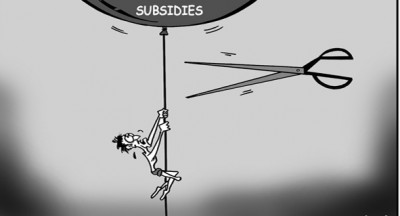
Legislators Finally Realizing That Wind Power is Useless! Pull the Subsidy Plug!

US “Wind Power States” Pull the Plug on Massive Wind Power Subsidy Schemes

plug LifeSupportSlider

****

This time last year, we took a look at the States in the US where $billions filched from power consumers and taxpayers have been thrown at wind power outfits, as a massive, and seemingly endless, stream of subsidies; and the skyrocketing power prices that have been the result:

Want skyrocketing power prices? Just add Wind Power

In that post, James M Taylor laid out the wind power driven blowout in power prices, noting that:

Skyrocketing Costs in Wind Power States

The 11 states that AWEA identifies as deriving more than 7 percent of their electricity from wind power are Colorado, Idaho, Iowa, Kansas, Minnesota, North Dakota, Oklahoma, Oregon, South Dakota, Texas, and Wyoming. AWEA says these 11 states have had slightly falling electricity prices since 2008, but official U.S. Energy Information Administration (EIA) data show nine of the 11 have dramatically rising prices. Here are EIA’s data on changes in electricity prices for each of the 11 states since 2008:

Colorado – up 14%

Idaho – up 33%

Iowa – up 17%

Kansas – up 29%

Minnesota – up 22%

North Dakota – up 24%

Oklahoma – down 1%

Oregon – up 15%

South Dakota – up 26%

Texas – down 19%

Wyoming – up 33%

The objective U.S. Energy Information Administration data show nine of the 11 largest wind power states are experiencing skyrocketing electricity prices, rising more than four times the national average. Moreover, prices in eight of the 11 states are rising more than twice as fast as in the 39 states with less than 7 percent wind power generation.

James goes on to explain the two outliers, Texas and Oklahoma:

The Two Outliers Explained

Other important factors further rebut AWEA’s claims in the two heavy wind power states where electricity prices are not skyrocketing.

In Oklahoma, where electricity prices remained essentially flat, there is no renewable power mandate. To the extent wind power is produced in Oklahoma, market forces, rather than state government, determine its generation. AWEA curiously argues relatively stable electricity prices in a state without renewable power mandates justify AWEA’s call for renewable power mandates.

In Texas, economists agree, electricity prices have been falling in recent years as a result of the state’s deregulation efforts during the past decade. Texas coal power, natural gas power, nuclear power, and wind power are all experiencing declining prices due to deregulation. Yet AWEA falsely ascribes the state’s declining electricity prices to wind power.

AWEA’s self-serving formula uses Texas’ deregulation to hide the cumulatively skyrocketing electricity prices in the 10 other states that generate the most wind power.

Now, in a cry of “enough is enough”, numerous States, including Ohio, Kansas, New Mexico and West Virginia have either pulled the plug on their “Renewable Energy Mandates” (State based subsidy schemes) or are set on the path to do so. What’s spooked them into action is the fact that:

“Electricity prices in states with mandates are 40 percent higher than in non-REM states.”

Remember, as Ross McKitrick puts it: “wind turbines don’t run on wind, they run on subsidies” (see our post here).

With States chopping the massive and endless subsidies on which the wind industry critically depends, the wind industry will finally be put to proof on its wild claims about about being “competitive” with conventional generators (see this nonsense from ruin-economy and our post here). As the Americans say to the foolish and/or brave: “well, good luck with that!”

Here’s the Washington Times on the beginning of the end for BIG WIND in the US.

Pulling the plug on renewable energy: States with mandates suffer exploding electricity prices
The Washington Times
Sterling Burnett
29 March 2015

There is never a good time for bad public policy. For few policies is this more evident than renewable energy mandates (REM), variously known as renewable portfolio standards, alternative energy standards and renewable energy standards.

The first renewable energy mandate was adopted in 1983, but most states did not impose these mandates until the 2000s. Though the details vary from state to state, in general, renewable energy mandates require utilities to provide a certain percentage of the electric power they supply from “renewable” sources, notably wind and solar, with the required percentages rising over time.

At the height of the renewable-energy mania, 30 states and the District of Columbia had imposed REMs and another seven had established voluntary standards.

Renewable energy mandate proponents included environmental lobbyists with a hatred for capitalism and fossil fuels that make modern society possible, crony socialists who saw the mandates as way of strong-arming exorbitant payments from government and ratepayers alike, and paternalistic politicians who look down on people’s choices in the marketplace, believing they know best what sources of energy people ought to choose.

Green-energy advocates, crony socialists and government elitists have seen their fortunes wax and wane over five decades. Government subsidies for unreliable, expensive renewable fuels had risen, fallen, been scrapped and begun anew since the 1970s. The existence and amount of subsidies tended to rise in fall with various energy crises — crises often created by the same government that then proposed subsidies for renewable energy as the solution for the problems it created.

For 50 years, green-energy gurus in industry and the environmental movement have sold the snake oil that renewable power would soon be as cheap and reliable as coal, oil, nuclear and natural gas. The nation has been told the turning point has always been just around the corner, always requiring a little more public funding and tax breaks before we have abundant, cheap, clean, reliable energy materializing from thin air.

All these promises were false, and the public and more-honest politicians have seen through the sales pitch. Now, support for renewables is as unreliable as the energy it provides.

To guarantee a market for renewables, green lobbyists fought successfully for mandates ensuring green-energy producers a slice of the electricity market regardless of the price and quality of the energy they produced.

Energy prices skyrocketed, as predicted by numerous energy analysts.

Though cost is an important concern, it is not the only problem with renewable power sources.

Renewable energy is not environmentally friendly. Renewable energy mandates have turned millions of acres of wild lands and wildlife habitats into a vast wasteland of wind and solar industrial energy facilities. In the process, renewable energy facilities have condemned to death hundreds of thousands of animals, including endangered birds, bats and tortoises. Finally, the construction and maintenance of these facilities have polluted the air and water. There is nothing green about all this. Still, continuing high costs, not environmental concerns, may finally spell doom for the mandates.

Citing high costs, Ohio became the first state to freeze its renewable energy mandate. Under Ohio’s mandate, utilities would have been required to provide 25 percent of the state’s electricity from qualified renewable sources by 2025. Under a law signed by Republican Gov. John Kasich in June 2014, Ohio froze its mandate at the current level of 12.5 percent, halving the mandated level.

In January, West Virginia repealed its renewable energy mandate entirely, and the New Mexico House of Representatives passed a bill freezing the state’s renewable standards in March.

Kansas has also recently held hearings on repealing its renewable energy mandate, spurred on in part by a new report from Utah State University reporting Kansas ratepayers are paying $171 million more than they would without the mandate. These additional costs have resulted in a loss of $4,367 each year in household disposable income.

What’s true for Kansas is true for other states with renewable energy mandates. States with mandates experienced 10 percent greater unemployment, due to higher energy prices resulting from the REM, than states without mandates. In addition, the U.S. Department of Energy has found electricity prices in states with renewable energy mandates have risen twice as fast as in states with no renewable requirement. Electricity prices in states with mandates are 40 percent higher than in non-REM states.

With these facts, it is little wonder that states are doing a slow walk back from their previous support of costly, environmentally harmful renewable energy mandates. It’s a classic case of legislate in haste, repent in leisure.

H. Sterling Burnett is a research fellow on energy and the environment at the Heartland Institute.
The Washington Times

subsidies

If any further proof were needed for Ross McKitrick’s “wind turbines don’t run on wind, they run on subsidies” adage, this little piece from Associated Press should do the trick.

Plans pulled for 223-turbine wind farm in Central Oregon
The Associated Press
27 March 2015

BEND — Plans for a big wind farm in north-central Oregon have been scrapped, state regulators say.

The Brush Canyon Wind Power Facility would have had as many as 223 turbines in Sherman and Wasco counties, The Bend Bulletin reported Friday.

It would have been in an area of 76,000 acres, or 119 square miles.

The turbines that have spread across the windy Columbia plateau in recent decades have benefited from two government initiatives: requirements by West Coast states that utilities include alternative energy among their energy sources and a federal tax credit based on turbine production.

But in December, Congress let lapse the federal tax break enacted in 1992 to nurture the fledgling wind industry.

The Brush Canyon proposal had its origin like many in the Northwest, proposed by the North American arm of a European or Scandinavian utility company, in this case the German firm E.ON (EE’-ahn) AG.

“We don’t know why they pulled out, but it’s not unusual,” said spokesman Rachel Wray of the state Department of Energy. “We’ve had a number of projects pulled over the last couple of years. Some that had gone a ways through the process . and others that were a lot less far along. It really varies.”

Calls and messages from The Associated Press to the company’s Chicago office and German headquarters were not immediately returned.

In Central Oregon, some were happy and relieved at the decision, saying the project was far too big and disruptive.

Residents of the high-desert town Antelope were anticipating that construction traffic would increase traffic by 600 percent, Mayor John Silvertooth said.

“It’s like a doctor telling a patient he’s in remission, or waking up from brain surgery and hearing everything was a success,” he said.

Antelope’s population is now about 50. It was larger in the 1980s, and got a lot of attention, when thousands of followers of the Indian guru Bhagwan Shree Rajneesh tried to establish a political power base on a commune that was eventually forced out.
The Associated Press

dirtyrottenscoundrelsoriginal

Sign a Wind Turbine Contract in Haste? Repent at Your Leisure!

Turbine Hosts’ Lament: Hammered by Wind Power Outfits; Hated by Former Friends, Relatives & Neighbours

She's had a few

****

After years of being shunned by former friends and neighbours for introducing turbines into their communities (or signing up for that to happen in future), many turbine hosts are keen to wind the clock back and make amends. Community division, angry former friends and hostile neighbours are just one aspect of what’s causing actual and potential turbine hosts to regret their decisions; and, in Australia, encouraging them to present their cases to the Senate Inquiry:

Unwilling Turbine Hosts Set to Revolt, as NSW Planning Minister – Pru Goward – Slams Spanish Fan Plans at Yass

Turbine Hosts Line Up to Tip a Bucket on Wind Power Outfits, as Senate Submissions Deadline Extended to 4 May 2015

For Australian turbine hosts, the Senate Inquiry into the great wind power fraud provides a golden opportunity to take the lid off the wind industry’s ‘stinky pot’, by exposing the goons and hucksters employed by wind power outfits for what they are: a bunch of liars and chancers. Your chance to tip a bucket by making submissions; to present documents; and to make it known that you’d like to give evidence, has been extended to 4 May. For details on what to do and who to contact see the posts above.

In the posts above we covered the grab-bag of lies and subterfuge used by the goons that stitch up land holder contracts for their masters.

One of the well-worn favourites was to convince a potential target farming family that they were the ONLY farmers who had NOT signed a contract to host turbines for the project concerned.

The development being scoped out might involve a dozen separate farming properties, say; all of which needed to be stitched up in contracts to make the project stack-up in terms of REC subsidies and/or infrastructure layout and associated engineering costs.

The developer’s goons would lob up at each and every one of them – on a one-on-one basis – telling them the very same story: “that all of their neighbours had already signed up”. These words were usually uttered at a point in time when the developer had not signed ANY contracts in relation to its proposed development at all. Pressure was often added by telling the targets that they needed to sign up quickly, because if they didn’t they would be holding up hundreds of $millions in investment, hundreds of jobs etc, etc.

Working on the adage of “loose lips sink ships”, on each occasion, the farmers being targeted were told that they mustn’t breathe a word about the contract being offered to any living soul: so much easier to perpetuate a lie when it can’t be tested by your target with a quick phone call to their neighbours.

In order to add a little more pressure to their targets – and to get their monikers on the contract being offered – the developer’s goons would tell the target farming family that, because everyone else had signed up, they would end up with turbines right up to the boundaries of their properties (sometimes within a few hundred metres of their homes); so they “may as well sign up anyway”, because that way they would at least get paid for hosting some turbines on their own property.

The thrust of the developer’s pitch being that: your life is going to be ruined by dozens of turbines on your neighbour’s property, so you may as well receive a few grand a year for your pending troubles.

The same set of lies would be told repeatedly; until such time as ink appeared on all of the contracts needed to get the wind farm project off the ground, and on its way to a dodgy-development approval.

So far, so insidious. And that particular ruse is one that’s been used around the world, as is made plain from the stories below, one of which reports a turbine host from Wisconsin saying that:

[W]e were also told that we were the ones holding up the project. That all of our neighbors had signed, and we were the last hold-outs. It persuaded us.

What we didn’t know then was the developer was not being truthful. We were not the ‘last hold-out’ at all. In later discussions with our neighbors we found out that in fact we were the very first farmers to sign up. I have since found out this kind of falsehood is a common tactic of wind developers.

But, it’s not just being duped that has turbine hosts wringing their hands.

Oh no.

It’s the fact that wind power outfits couldn’t care less about their farming operations; and being the subjects of social ostracism from former friends, relatives and neighbours that has really hit home.

Over the years, STT has been in contact with a number of disgruntled turbine hosts, from all over the country; and more of them have come forward in the last few months; particularly those who are in contracts where the turbines planned are yet to go up.

One of the facts that tends to rub salt into the turbine hosts’ wounds is just how derisory is the “compensation” they receive in exchange for their personal grief and the hatred of former friends and neighbours.

wind turbine host

In Australia, turbine hosts receive a piddling $10,000-$15,000 a year, for a turbine that will receive upwards of $800,000 a year in REC subsidies, alone.

A REC is issued for each MWh of wind power delivered to the grid. A 3 MW turbine – if it operated 24 hours a day, 365 days a year – would receive 26,280 RECs (24 x 365 x 3). Assuming, generously, a capacity factor of 35% (the cowboys from wind power outfits often wildly claim more than that) that single turbine will receive 9,198 RECs annually.

At $94 – the expected price for RECs once the shortfall penalty bites this year – that single turbine will rake in $864,612 in Commonwealth mandated subsidy, which is drawn from all Australian power consumers as a tax on their power bills. But wait, there’s more: that subsidy doesn’t last for a single year.

A turbine operating now will continue to receive the REC subsidy for 16 years, until 2031 – such that a single 3 MW turbine can pocket a further $13,833,792 over the remaining life of the LRET.

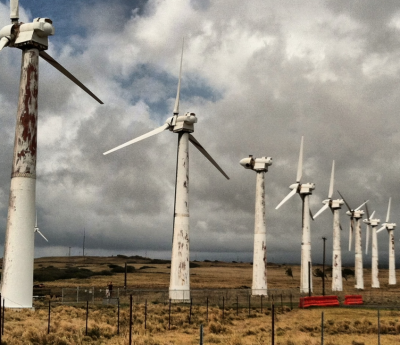
In the meantime, the host gets a nominal $160,000 over the same period (with no index for inflation, the real value falling over time) and will end up with a pile of rusting turbines that they will have to pay to remove when the things fall apart, fling their blades to the four-winds, burst into flame or the subsidy scam inevitably gets scrapped – whichever occurs first.

Hawaii rusting turbines

****

The themes outlined above and detailed below are common, tragic and perfectly avoidable.

The pieces below dealing with the laments of turbine hosts popped up in Wisconsin, but the narratives could have come from anywhere.

“By signing that contract, I signed away the control of the family farm, and it’s the biggest regret I have ever experienced and will ever experience.”

Gary Steinich, Cambria, Wisconsin. June 2011.

Here’s the tale of Gary’s great regret from Better Plan, Wisconsin.

Sometime in late 2001 or early 2002, a wind developer working for Florida Power and Light showed up near the Wisconsin Town of Cambria looking to get in touch with someone at the Steinich family farm.

He wanted to talk to the landowner about leasing a bit of land for the installation of a met tower. He needed to measure the winds in the area for a possible windfarm and Walter Steinich’s land looked like a good place to do it.

The wind developer seemed like a good guy to Mr. Steinich who was in his early 70’s at the time. The money seemed good. A met tower didn’t seem like a big deal. It was just a tall pole with some guy wires, and it was temporary. Mr. Steinich signed the contract.

That was nearly ten years ago. Mr. Steinich has since passed away and now his son, Gary, runs the farm. He’s written an open letter to Wisconsin farmers about his experience with the wind company since then.

From One Wisconsin Farmer to Another:

This is an open letter to Wisconsin farmers who are considering signing a wind lease to host turbines on your land. Before you sign, I’d like to tell you about what happened to our family farm after we signed a contract with a wind developer.

glacier hills aerial 2

In 2002, a wind developer approached my father about signing a lease agreement to place a MET tower on our land. My father was in his 70’s at the time. The developer did a good job of befriending him and gaining his trust.

He assured my father that the project wasn’t a done deal and was a long way off. They first had to put up the MET tower to measure the wind for awhile.

He told my father that if the project went forward there would be plenty of time to decide if we wanted to host turbines on our farm. There would be lots of details to work out and paperwork to sign well before the turbines would be built. The developer said my father could decide later on if he wanted to stay in the contract.

glacier hills aerial 1

In 2003 the developer contacted us again. This time he wanted us to sign a contract to host turbines on our land. We were unsure about it, so we visited the closest wind project we knew of at the time. It was in Montfort, WI.

The Monfort project consists of 20 turbines that are about 300 feet tall and arranged in a straight line, taking up very little farmland with the turbine bases and access roads. The landowners seemed very satisfied with the turbines. But we were still unsure about making the commitment.

glacier hills detail 3

We were soon contacted again by the developer, and we told him we were undecided. Then he really started to put pressure on us to sign.

This was in March of 2004, a time of $1.60 corn and $1200 an acre land. It seemed worth it have to work around a couple of turbines for the extra cash. We were told the turbines would be in a straight line and only take up a little bit of land like the ones in Monfort.

And we were also told that we were the ones holding up the project. That all of our neighbors had signed, and we were the last hold-outs. It persuaded us.

What we didn’t know then was the developer was not being truthful. We were not the ‘last hold-out’ at all. In later discussions with our neighbors we found out that in fact we were the very first farmers to sign up. I have since found out this kind of falsehood is a common tactic of wind developers.

My father read through the contract. He said he thought it was ok. I briefly skimmed through it, found the language confusing, but trusted my father’s judgment. We didn’t hire a lawyer to read it through with us. We didn’t feel the need to. The developer had explained what was in it.

The wind contract and easement on our farm was for 20 years. By then my dad was 75. He figured time was against him for dealing with this contract in the future so we agreed I should sign it. A few months later, my father died suddenly on Father’s Day, June 20th, 2004

After that, we didn’t hear a whole lot about the wind farm for a couple years. There was talk that the project was dead. And then in 2007 we were told the developer sold the rights to the project. A Wisconsin utility bought it.

After that everything changed. The contract I signed had an option that allowed it to be extended for an additional 10 years. The utility used it.

The turbines planned for the project wouldn’t be like the ones in Monfort. They were going to be much larger, 400 feet tall. And there were going to be 90 of them.

They weren’t going to be in a straight row. They’d be sited in the spots the developer felt were best for his needs, including in middle of fields, with access roads sometimes cutting diagonally across good farm land. Landowners could have an opinion about turbine placement but they would not have final say as to where the turbines and access roads would be placed. It was all in the contract.

Nothing was the way we thought it was going to be. We didn’t know how much land would be taken out of production by the access roads alone. And we didn’t understand how much the wind company could do to our land because of what was in the contract.

In 2008 I had the first of many disputes with the utility, and soon realized that according to the contract I had little to no say about anything. This became painfully clear to me once the actual construction phase began in 2010 and the trucks and equipment came to our farm and started tearing up the field.

In October of 2010 a representative of the utility contacted me to ask if a pile of soil could be removed from my farm. It was near the base of one of the turbines they were putting on my land. I said no, that no soil is to be removed from my farm.

The rep said that the pile was actually my neighbor’s soil, that the company was storing it on my land with plans to move it to another property.

Shortly afterwards I noticed the pile of subsoil was gone.

In November of 2011 I saw several trucks loading up a second pile of soil on my land and watched them exiting down the road. I followed them and then called the Columbia County Sheriff. Reps from the company were called out. I wanted my soil back.

A few days later the rep admitted they couldn’t give it back to me because my soil was gone. It had been taken and already dispersed on someone else’s land. I was offered 32 truck loads of soil from a stockpile they had. I was not guaranteed that the soil would be of the same quality and composition as the truck loads of soil they took from my farm.

I was informed by the lawyer for the utility that I had until April 30, 2011 to decide to take the soil. There would be no other offer. Take it or leave it.

I contacted the Public Service Commission for help. The PSC approved the terms of project and I believed the utility was violating those terms. The PSC responded by telling me they could do nothing because the issue involved a private contract between myself and the utility.

They told me my only option was to sue the utility.

My father and I both worked those fields. Watching the way they’ve been ripped apart would sicken any farmer. But what farmer has the time and money it would take to sue a Wisconsin utility?

By signing that contract I signed away the control of the family farm, and it’s the biggest regret I have ever experienced and will ever experience. I have only myself to blame for not paying close enough attention to what I was signing.

We had a peaceful community here before the developer showed up, but no more. Now it’s neighbor against neighbor, family members not speaking to one another and there is no ease in conversation like in the old days. Everyone is afraid to talk for fear the subject of the wind turbines will come up. The kind of life we enjoyed in our community is gone forever.

I spend a lot of sleepless nights wishing I could turn back the clock and apply what I’ve learned from this experience. Now corn and bean prices are up. The money from the turbines doesn’t balance out our crop loss from land taken out of production. The kind of life we enjoyed on our family farm is gone forever too.

I would not sign that contract today. As I write this, the utility is putting up the towers all around us. In a few months the turbines will be turned on and we’ll have noise and shadow flicker to deal with. If I have trouble with these things, too bad. I’ve signed away my right to complain. These are some of the many problems I knew nothing about when I signed onto the project.

If you are considering signing a wind lease, take the contract to a lawyer. Go over every detail. Find out exactly what can happen to your fields, find out all the developer will be allowed to do to your land. Go through that contract completely, and think hard before make your decision.

I can tell you from first hand experience, once you sign that contract, you will not have a chance to turn back.

Gary Steinich
Steinich Farms, Inc.
Cambria, WI
June, 2011

head slap

A Fond Du Lac Farmer has regrets about agreeing to host a wind turbine – Why can’t he speak openly about it?

When you sign a 20 to 30 year contract to host a wind turbine on your property you may be signing away many rights you’re unaware of. A confidentiality agreement in the contract may mean legal action can be taken against you if you complain publicly about the project. A Fond Du Lac farmer signed away his rights. He was interviewed by Don Bangart who wrote the following on behalf of the farmer, whose contract with the wind company prevents him from speaking openly about any problems.

WHAT HAVE I DONE?

Now each morning when I awake, I pray and then ask myself, “What have I done?”

I am involved with the BlueSky/Greenfield wind turbine project in N.E. Fond du Lac County. I am also a successful farmer who cherishes his land. My father taught me how to farm, to be a steward of my fields, and by doing so, produce far better crop production. As I view this year’s crops, my eyes feast on a most bountiful supply of corn and soybeans. And then my eyes focus again on the trenches and road scars leading to the turbine foundations. What have I done?

In 2003, the wind energy company made their first contacts with us. A $2,000 “incentive” started the process of winning us over, a few of us at a time. The city salesmen would throw out their nets, like fishermen trawling for fish. Their incentive “gift” first lured some of us in. Then the salesmen would leave and let us talk with other farmers. When the corporate salesmen returned, there would be more of us ready to sign up; farmers had heard about the money to be made. Perhaps because we were successful farmers, we were the leaders and their best salesmen.

Sometime in 2004 or 2005, we signed $4,000 turbine contracts allowing them to “lease” our land for their needs. Our leases favored the company, but what did we know back then? Nobody knew what we were doing. Nobody realized all the changes that would occur, over which we would have no control. How often my friends and I have made that statement: What have I done?!

I watched stakes being driven in the fields and men using GPS monitors to place markers here and there. When the cats and graders started tearing 22-foot-wide roads into my fields, the physical changes started to impact not only me and my family, but, unfortunately, also my dear friends and neighbors. Later, a 4-foot-deep by 2-foot-wide trench was started diagonally across my field. A field already divided by their road was now being divided again by the cables running to a substation. It was now making one large field into 4 smaller irregularly shaped plots. Other turbine hosts also complained about their fields being subdivided or multiple cable trenches requiring more of their land. Roads were cut in using anywhere from 1,000 feet to over half a mile of land to connect the locations. We soon realized that the company places roads and trenches where they will benefit the company most, not the landowner. One neighbor’s access road is right next to some of his outbuildings. Another’s is right next to his fence line.

At a wind company dinner presented for the farmers hosting the turbines, we were repeatedly told — nicely and indirectly — to stay away from the company work sites once they start. I watched as my friends faces showed the same concern I had, but none of us spoke out. Months later, when I approached a crew putting in lines where they promised me they definitely would not go, a representative told me I could not be there. He insisted that I leave. The line went in. The company had the right. I had signed the lease.

Grumbling started almost immediately after we agreed to 2% yearly increases on our 30-year lease contracts. Some felt we should have held out for 10%. What farmer would lock in the price of corn over the next 5 years, yet alone lock one in at 2% yearly for 30 years? Then rumors emerged that other farmers had received higher yearly rates, so now contracts varied. The fast-talking city sales folk had successfully delivered their plan. Without regard for our land, we were allowing them to come in and spoil it. All of the rocks we labored so hard to pick in our youth were replaced in a few hours by miles of roads packed hard with 10 inches of large breaker rock. Costly tiling that we installed to improve drainage had now been cut into pieces by company trenching machines.

Each night, a security team rides down our roads checking the foundation sites. They are checking for vandals and thieves. Once, when I had ventured with guests to show them foundation work, security stopped us and asked me, standing on my own property, what I was doing there. What have I done?

Now, at social functions, we can clearly see the huge division this has created among community members. Suddenly, there are strong-sided discussions and heated words between friends and, yes, between relatives about wind turbines. Perhaps this is a greater consequence than the harm caused to my land — life is short, and friendships are precious.

I tried, as did some of the other farmers, to get out of our contracts, but we had signed a binding contract. If you are considering placing wind turbines on your property, I strongly recommend that you please reconsider. Study the issues. Think of all the harm to your land, and, in the future, to your children’s land, versus the benefits from allowing companies to lease your land for turbines.

WHAT HAVE I DONE?

PLEASE DO NOT DO WHAT I HAVE DONE!

whathaveidone-350

This was printed as a full page ad in the Chilton, Wisc., Times-Journal, October 25, 2007.

Why A Wisconsin Farmer is Having Regrets

As told in a recent ad, a Johnsburg farmer who will host wind turbines now has many regrets.

He regrets having been the “lure” to draw in other unsuspecting landowners. He regrets that he has allowed fields to be subdivided, road base to be spread on land once picked bare of rocks, costly tiling to be cut up. He regrets that he’s no longer the person who controls his own land and is now told where to go by security guards. He regrets the divide he has created between friends, between neighbors and between family members.

He regrets not having looked into all the ramifications first. That farmer is now locked in to a binding contract. But there are many landowners who have not yet suffered this fate.

Calumet County Citizens for Responsible Energy asks that landowners considering a contract first step back and study the issues. As with any financial transaction, don’t put a lot of trust in those who stand to gain financially.

Look for Web sites and information from those experiencing the effects of this worldwide “gold” rush for wind power. People across world are rebelling. They’re finding that they’ve lost control of their land and their lives. And they’re in danger of financial hardship if these companies dissolve.

Our irresponsible government representatives are forcing this “windfall” for wind investors on us. Their knee-jerk reaction to the global climate change alarms will cause billions of dollars to be wasted, lives to be ruined, and environments degraded for what is, in actuality, a very inefficient energy source.

With a declining tax base and state and U.S. legislators driving us further into massive debt, taxpayer subsidies for wind will be impossible to maintain.

And with the subsidies gone, what will you be left hosting?

Don Bangert,
Chilton, Wisconsin

Ashamed head-in-hands

Stop Blowing Our Money Into the Wind!

PSST! Want to Kill Prosperous Economies & Crush the Poorest? Then Keep Throwing $Billions at Wind Power

Josef Stalin

***

The so-called “Greens” are not just delusional, they’re dangerous. Full of hate for human beings, especially the poorest of them, their “policies” – if they can be called that? – are more like malign manifestos, of the kind that would have made the Generalissimo proud.

In a brilliant essay, first published in the Wall Street Journal, Matt Ridley lays “green” ideology to waste; and gives the nonsense of wind power special attention, observing that:

Wind power, for all the public money spent on its expansion, has inched up to — wait for it — 1 per cent of world energy consumption in 2013. Solar, for all the hype, has not even managed that: If we round to the nearest whole number, it accounts for 0 per cent of world energy consumption.

Matt goes on to dissect the greens’ favourite myth that economies can, somehow, rely on “hope and promises”; and ditch fossil fuels altogether.

Fossil fuels are here to stay
The Wall Street Journal
Matt Ridley
23 March 2015

THE environmental movement has advanced three arguments in recent years for giving up fossil fuels: (1) that we will soon run out of them anyway; (2) that alternative sources of energy will price them out of the marketplace; and (3) that we cannot afford the climate consequences of burning them.

These days, not one of the three arguments is looking very healthy. In fact, a more realistic assessment of our energy and environmental situation suggests that, for decades to come, we will continue to rely overwhelmingly on the fossil fuels that have contributed so dramatically to the world’s prosperity and progress.

In 2013, about 87 per cent of the energy that the world consumed came from fossil fuels, a figure that — remarkably — was unchanged from 10 years before. This roughly divides into three categories of fuel and three categories of use: oil used mainly for transport, gas used mainly for heating, and coal used mainly for electricity.

Over this period, the overall volume of fossil-fuel consumption has increased dramatically, but with an encouraging environmental trend: a diminishing amount of carbon-dioxide emissions per unit of energy produced. The biggest contribution to decarbonising the system has been the switch from high-carbon coal to lower-carbon gas in electricity generation.

On a global level, renewable energy sources such as wind and solar have contributed hardly at all to the drop in carbon emissions, and their modest growth has merely made up for a decline in the fortunes of zero-carbon nuclear energy. (The reader should know that I have an indirect interest in coal through the ownership of land in Northern England on which it is mined, but I nonetheless applaud the displacement of coal by gas in recent years.)

The argument that fossil fuels will soon run out is dead, at least for a while. The collapse of the price of oil over the past six months is the result of abundance: an inevitable consequence of the high oil prices of recent years, which stimulated innovation in hydraulic fracturing, horizontal drilling, seismology and information technology. The US — the country with the oldest and most developed hydrocarbon fields — has found itself once again, surprisingly, at the top of the energy-producing league, rivalling Saudi Arabia in oil and Russia in gas.

The shale genie is now out of the bottle. Even if the current low price drives out some high-cost oil producers — in the North Sea, Canada, Russia, Iran and offshore, as well as in America — shale drillers can step back in whenever the price rebounds. As Mark Hill of Allegro Development Corporation argued last week, the frackers are currently experiencing their own version of Moore’s law: a rapid fall in the cost and time it takes to drill a well, along with a rapid rise in the volume of hydrocarbons they are able to extract.

And the shale revolution has yet to go global. When it does, oil and gas in tight rock formations will give the world ample supplies of hydrocarbons for decades, if not centuries. Lurking in the wings for later technological breakthroughs is methane hydrate, a sea floor source of gas that exceeds in quantity all the world’s coal, oil and gas put together.

So those who predict the imminent exhaustion of fossil fuels are merely repeating the mistakes of the US presidential commission that opined in 1922 that “already the output of gas has begun to wane. Production of oil cannot long maintain its present rate.” Or president Jimmy Carter when he announced on television in 1977 that “we could use up all the proven reserves of oil in the entire world by the end of the next decade.”

That fossil fuels are finite is a red herring. The Atlantic Ocean is finite, but that does not mean that you risk bumping into France if you row out of a harbour in Maine. The buffalo of the American West were infinite, in the sense that they could breed, yet they came close to extinction. It is an ironic truth that no non-renewable resource has ever run dry, while renewable resources — whales, cod, forests, passenger pigeons — have frequently done so.

The second argument for giving up fossil fuels is that new rivals will shortly price them out of the market. But it is not happening. The great hope has long been nuclear energy, but even if there is a rush to build new nuclear power stations over the next few years, most will simply replace old ones due to close.

The world’s nuclear output is down from 6 per cent of world energy consumption in 2003 to 4 per cent today. It is forecast to inch back up to just 6.7 per cent by 2035, according the Energy Information Administration.

Nuclear’s problem is cost. In meeting the safety concerns of environmentalists, politicians and regulators added requirements for extra concrete, steel and pipework, and even more for extra lawyers, paperwork and time.

The effect was to make nuclear plants into huge boondoggles with no competition or experimentation to drive down costs. Nuclear is now able to compete with fossil fuels only when it is subsidised.

As for renewable energy, hydro-electric is the biggest and cheapest supplier, but it has the least capacity for expansion. Technologies that tap the energy of waves and tides remain unaffordable and impractical.

Geothermal is a minor player for now. And bioenergy — that is, wood, ethanol made from corn or sugar cane, or diesel made from palm oil — is proving an ecological disaster: It encourages deforestation and food-price hikes that cause devastation among the world’s poor, and per unit of energy produced, it creates even more carbon dioxide than coal.

Wind power, for all the public money spent on its expansion, has inched up to — wait for it — 1 per cent of world energy consumption in 2013. Solar, for all the hype, has not even managed that: If we round to the nearest whole number, it accounts for 0 per cent of world energy consumption.

Both wind and solar are entirely reliant on subsidies for such economic viability as they have. Worldwide, the subsidies given to renewable energy currently amount to roughly $10 per gigajoule: These sums are paid by consumers to producers, so they tend to go from the poor to the rich, often to landowners.

It is true that some countries subsidise the use of fossil fuels, but they do so at a much lower rate — the world average is about $1.20 per gigajoule — and these are mostly subsidies for consumers (not producers), so they tend to help the poor, for whom energy costs are a disproportionate share of spending.

The costs of renewable energy are coming down, especially in the case of solar. But even if solar panels were free, the power they produce would still struggle to compete with fossil fuel — except in some very sunny locations — because of all the capital equipment required to concentrate and deliver the energy.

This is to say nothing of the great expanses of land on which solar facilities must be built and the cost of retaining sufficient conventional generator capacity to guarantee supply on a dark, cold, windless evening.

The two fundamental problems that renewables face are that they take up too much space and produce too little energy.

To run the US economy entirely on wind would require a wind farm the size of Texas, California and New Mexico combined — backed up by gas on windless days. To power it on wood would require a forest covering two-thirds of the U.S., heavily and continually harvested.

John Constable, who will head a new Energy Institute at the University of Buckingham in Britain, points out that the trickle of energy that human beings managed to extract from wind, water and wood before the Industrial Revolution placed a great limit on development and progress.

The incessant toil of farm labourers generated so little surplus energy in the form of food for men and draft animals that the accumulation of capital, such as machinery, was painfully slow. Even as late as the 18th century, this energy-deprived economy was sufficient to enrich daily life for only a fraction of the population.

Our old enemy, the second law of thermodynamics, is the problem here. As a teenager’s bedroom generally illustrates, left to its own devices, everything in the world becomes less ordered, more chaotic, tending toward “entropy,” or thermodynamic equilibrium. To reverse this tendency and make something complex, ordered and functional requires work. It requires energy.

The more energy you have, the more intricate, powerful and complex you can make a system. Just as human bodies need energy to be ordered and functional, so do societies. In that sense, fossil fuels were a unique advance because they allowed human beings to create extraordinary patterns of order and complexity — machines and buildings — with which to improve their lives.

The result of this great boost in energy is what economic historian and philosopher Deirdre McCloskey calls the Great Enrichment. In the case of the US, there has been a roughly 9000 per cent increase in the value of goods and services available to the average American since 1800, almost all of which are made with, made of, powered by or propelled by fossil fuels.

Still, more than a billion people on the planet have yet to get access to electricity and to experience the leap in living standards that abundant energy brings. This is not just an inconvenience for them: Indoor air pollution from wood fires kills four million people a year. The next time that somebody at a rally against fossil fuels lectures you about her concern for the fate of her grandchildren, show her a picture of an African child dying today from inhaling the dense muck of a smoky fire.

Notice, too, the ways in which fossil fuels have contributed to preserving the planet. As the American author and fossil-fuels advocate Alex Epstein points out in a bravely unfashionable book, The Moral Case for Fossil Fuels, the use of coal halted and then reversed the deforestation of Europe and North America.

The turn to oil halted the slaughter of the world’s whales and seals for their blubber. Fertiliser manufactured with gas halved the amount of land needed to produce a given amount of food, thus feeding a growing population while sparing land for wild nature.

To throw away these immense economic, environmental and moral benefits, you would have to have a very good reason. The one most often invoked today is that we are wrecking the planet’s climate. But are we?

Although the world has certainly warmed since the 19th century, the rate of warming has been slow and erratic. There has been no increase in the frequency or severity of storms or droughts, no acceleration of sea-level rise. Arctic sea ice has decreased, but Antarctic sea ice has increased.

At the same time, scientists are agreed that the extra carbon dioxide in the air has contributed to an improvement in crop yields and a roughly 14 per cent increase in the amount of all types of green vegetation on the planet since 1980.

That carbon-dioxide emissions should cause warming is not a new idea. In 1938, the British scientist Guy Callender thought that he could already detect warming as a result of carbon-dioxide emissions. He reckoned, however, that this was “likely to prove beneficial to mankind” by shifting northward the climate where cultivation was possible.

Only in the 1970s and 80s did scientists begin to say that the mild warming expected as a direct result of burning fossil fuels — roughly a degree Celsius per doubling of carbon-dioxide concentrations in the atmosphere — might be greatly amplified by water vapour and result in dangerous warming of two to four degrees a century or more.

That “feedback” assumption of high “sensitivity” remains in virtually all of the mathematical models used to this day by the UN Intergovernmental Panel on Climate Change, or IPCC.

And yet it is increasingly possible that it is wrong. As Patrick Michaels of the libertarian Cato Institute has written, since 2000, 14 peer-reviewed papers, published by 42 authors, many of whom are key contributors to the reports of the IPCC, have concluded that climate sensitivity is low because net feedbacks are modest.

They arrive at this conclusion based on observed temperature changes, ocean-heat uptake and the balance between warming and cooling emissions (mainly sulfate aerosols). On average, they find sensitivity to be 40 per cent lower than the models on which the IPCC relies.

If these conclusions are right, they would explain the failure of the Earth’s surface to warm nearly as fast as predicted over the past 35 years, a time when — despite carbon-dioxide levels rising faster than expected — the warming rate has never reached even two-tenths of a degree per decade and has slowed down to virtually nothing in the past 15 to 20 years. This is one reason the latest IPCC report did not give a “best estimate” of sensitivity and why it lowered its estimate of near-term warming.

Most climate scientists remain reluctant to abandon the models and take the view that the current “hiatus” has merely delayed rapid warming. A turning point to dangerously rapid warming could be around the corner, even though it should have shown up by now. So it would be wise to do something to cut our emissions, so long as that something does not hurt the poor and those struggling to reach a modern standard of living.

We should encourage the switch from coal to gas in the generation of electricity, provide incentives for energy efficiency, get nuclear power back on track and keep developing solar power and electricity storage. We should also invest in research on ways to absorb carbon dioxide from the air, by fertilising the ocean or fixing it through carbon capture and storage. Those measures all make sense. And there is every reason to promote open-ended research to find some unexpected new energy technology.

The one thing that will not work is the one thing that the environmental movement insists upon: subsidising wealthy crony capitalists to build low-density, low-output, capital-intensive, land-hungry renewable energy schemes, while telling the poor to give up the dream of getting richer through fossil fuels.

Matt Ridley is the author of The Rational Optimist: How Prosperity Evolves, and a member of the British House of Lords.
The Wall Street Journal

Matt Ridley

Please sign this petition to save Loch Ness from Wind Turbine Infestation! http://www.scottish.parliament.uk/GettingInvolved/Petitions/PE01564

Lyndsey Ward  Mar 31/ 2015
Please everyone I want this to go viral. It has taken blood, sweat and tears and I want to sincerely thank Malcolm Kirk for putting up with me.
Please share and ask people to sign the petition to save Loch Ness
Thank youhttp://www.scottish.parliament.uk/GettingInvolved/Petitions/PE01564

https://www.youtube.com/watch?v=jMMUY07Gj18

Loch Ness

This video is about Loch Ness

Australian “Unknown Soldier’s Gravesite” Receives No Respect From Wind Industry, in France!

The Wind Industry Knows No Shame: Turbines to Desecrate the Unknown Graves of Thousands of Australian Soldiers in France

13thBattalionAIF_Le_Verguier

****

This coming Anzac Day, 25 April 2015, looms large in Australia’s history, and collective consciousness, marking the Centenary of Australia’s bloody entry to the War to end all Wars, on the beaches of Gallipoli.

Not so much a celebration, as a reflection on the honour, courage and spirit of Australia’s fighting men and women, Anzac Day causes even the hardest heart to melt in awe at the extreme sacrifice offered, and made, by the finest young men this country had to offer.

Consider a country, remote from the rest of the world, barely a “Nation”, with a little over 4 million people, largely clinging to the south-eastern cities and coasts of its wide brown land, that saw some 420,000 men, from all over it, and from all walks of life – farmers, bankers, lawyers, doctors, teachers, Aboriginal stockmen, and everything in between – enlist for service in the First World War; representing 38.7 per cent of the male population aged between 18 and 44. The whole country missed them all at the time; and far too many of them were missed forever after.

Of that number, some 330,000 joined the Australian Imperial Force (AIF) and saw action overseas: at Gallipoli, in the Middle East, Belgium and France.

In France, the AIF often saw the thickest of the fighting; took the most ground, artillery and prisoners; and suffered more than their fair share of casualties: by 1918, Lieut.-General Sir John Monash had honed his skills as a commander, and those of his troops, to be without equal.

Of the more than 295,000 members of the AIF who served in France and Belgium – at places like Fromelles, the Somme, Bullecourt, Messines, Passchendaele and Villers-Bretonneux – over 46,000 lost their lives, and 132,000 were wounded. Of those who were killed in action, some 11,000 have no known grave.

villers_bretonneux_main-L

****

For Australians, that ground is our most hallowed. The contribution made by these men was Second to None: in valour, life and limb.

In the fearless recapture of towns like Villers-Bretonneux – an action involving a counter-attack at night, without artillery support – described by those that witnessed it as “the Most Brilliant Feat of Arms in the War” – the AIF earned the enduring respect of an embattled French people who, as this sign above the playground in their school declares, will never forget what was done by so many fine young men, so far from home.

Ecole Villers Brittenaux

Not only did Australian Diggers save many a French Town and Village, as they waited for the scarce shipping needed to bring them home after the Armistice on 11 November 1918, many remained in France and helped to rebuild their schools; and, on their return, rallied and raised funds back home to help with that fine and noble task.

vb school

The deep ancestral connection between many Australians and those who fought to save the French, and who endured indescribable suffering in doing so, brings with it a mixture of pride in the sacrifices made, and a sense of collective grief for the tragic loss of so many promising young lives; lives of precisely the kind needed to fulfill the hopes of a young Nation.

One of those is Peter Norton, whose great uncle, Private Alfred William King, from Port Melbourne, was killed on 12 May 1917 at the second battle of Bullecourt. In two battles, the AIF suffered horrendous casualties: more than 10,000 killed, wounded or captured (for a moving understanding of what these men suffered see this article).

peter norton

****

Peter Norton, is rightly incensed at plans to spear wind turbines all over the Bullecourt battlefield; an act which can only be described as a monstrous affront to both the Australians who fought and died there; and to the French people, who still honour them on that sacred ground.

If we didn’t know the wind industry better, STT would be shocked. But these people know no bounds, moral decency or shame. To STT, this outrage is just the latest example of their callous disregard for their human victims; whether trying to live peaceful prosperous lives; or, having made the supreme sacrifice, to rest in peace.

Here’s the Sydney Morning Herald on the wind industry’s latest disgrace.

Battle to stop wind turbines being built on WWI battlefield
Bridie Smith
Sydney Morning Herald
22 March 2015

The Australian government has been asked to intervene to stop wind turbines being built on a former World War I battlefield in northern France, where 10,000 Australians became casualties of the Great War.

Six wind turbines have been proposed for the former Bullecourt battlefield, including two on the German trench lines where intense fighting took place during two battles in 1917.

Now farming land abutting the French towns of Bullecourt and Riencourt, the flat clay soil was the site of a flashpoint between the Germans attempting to move south and the Australians pushing north in their attempt to break through the Hindenburg Line.

Peter Norton, a battlefield guide of seven years, has written to Veterans’ Affairs Minister Michael Ronaldson asking for the government to “protest and prevent the desecration” of the former battlefield.

Mr Norton argues that, while the former battlefield has long been worked for farming, the ploughs used did not go further than 300 millimetres deep. They did not disturb graves because the German army had a minimum grave depth of 600 millimetres. It meant many remains of Australian and German soldiers had been left untouched for almost a century. They were now at risk, he said.

“Now we are talking heavy engineering, not just a farmer’s plough,” he said.

Mr Norton said the foundations for each of the six proposed turbines would go deep underground. Existing farmers’ tracks would need to be widened to support heavy haulage equipment and the cable runs connecting the turbines underground would involve digging trenches more than a metre underground.

Of greatest concern, he said, were turbines number one and two. They are planned for one of the most sensitive parts of the battlefield, where there was heavy fighting in April and May 1917.

“I’m in no doubt that there are quite a number of Australian dead still lying in and around turbine number one … it was a hot spot of the battlefield,” he said.

At the end of the second battle in May 1917, the Australians did what no one else had managed to do, breaking and holding the Hindenburg Line.

Breaking the German defences and capturing the village of Bullecourt, while a significant strategic advantage, came at a cost. The two battles resulted in 10,000 Australian casualties.

Among them was Mr Norton’s great uncle, Alfred William King. Private King, from Port Melbourne, was killed on May 12 when a shell landed near the foxhole he was sheltering in with five others. All were killed and buried nearby, but the location was lost in the chaos of war. The grave was re-located in 1955, and Private King and Charles Edgar Strachan from Albert Park were the only ones identified.

Mr Norton said his concerns were echoed by French locals, particularly in Riencourt, 2.5 kilometres east of Bullecourt, where they had formed a lobby group to stop the turbines being built.

“There is a hardcore number of locals who say we must never forget … that the Australians must never be forgotten,” he said.

The wind turbine project proposed by French group Maia Eolis is now before the local government, which will decide if it can go ahead.

A spokesman for the group said the proposed wind farm was part of a French government commitment for 23% of energy to be renewable by 2020, and that the Riencourt area had been defined as favourable for windfarms. He said the project was at feasibility stage, and there were ongoing landscape, heritage, ecological and acoustic studies.

“We know the past of this territory and we will be very vigilant on this issue. Thus, the necessary precautions will be taken to ensure an implantation respectful of the site of Bullecourt,” the spokesman said.

A spokesman for Veterans’ Affairs Minister Michael Ronaldson said the government was keen for the project to be handled appropriately.

He noted French authorities had well established protocols to ensure any disturbed remains were recovered and reinterred within a Commonwealth War Graves cemetery.

The response failed to impress Mr Norton.

“I’ve called on the Australian government to be active and what they’ve come back and said is that we’re going to stand by and watch. I’m not happy about that. I am extremely concerned.”
Sydney Morning Herald

STT notes the plea made to Michael Ronaldson to intervene on behalf of those Australians who hold the memory of what was achieved, and what was lost, in those French fields.

The Victorian Senator is one of very few Liberals who has thrown any kind of public support behind the disgrace that is the wind industry in Australia – a position based more on mercenary opportunism, and family ties, than on anything worthy of note or merit (see our post here). So, his pathetic response is of no surprise.

How decent Australians respond will be another matter.

Now “Ronno” can count among the victims of his wind industry mates, the final resting places of thousands of young men who perished at Bullecourt; and those who, like Peter Norton, live to keep the memory of their timeless sacrifice alive.

uncle WW1

Wind Pushers in “Panic Mode”. Aussies Planning to Make them Liable for Damages!

Top Acoustics Professor Calls for Full Compensation for Wind Farm Victims, as Council Calls for “National Noise Cops”

John Madigan

****

The Australian Senate Inquiry into the great wind power fraud hits the road tomorrow, 30 March – starting at Portland, Victoria (in the TAFE campus on Hurd Street from 8.30am) – the town next door to Pacific Hydro’s Cape Bridgewater disaster.

The hearing gives long-suffering residents there – and from elsewhere – a chance to hear Steven Cooper give an exposition on the findings of his groundbreaking study (see our posts here and here and here); it’s also the first opportunity for wind farm victims to lay out in tragic detail their misery and suffering before the Inquiry: a public forum, where sharks like Pac Hydro can’t – despite its best efforts to date – cover up its shameful conduct any longer.

Note that the opportunity to make submissions to the Inquiry has been extended to 4 May (as we’ll detail further below).

The Inquiry also provides the first and best opportunity to address the criminal manner in which the wind industry, and those that aid and abet it have trashed the ability of people to sleep in their own homes.

The wind industry and its institutional accomplices – particularly, the Clean Energy Regulator (see our post here), state and local government authorities, EPAs, etc – continue to ride roughshod over peoples’ common law rights to live in, use and otherwise enjoy their homes and properties: homes that, in far too many cases, have become worthless and un-liveable, due to “planning rules” that are so lax as to be risible.

Faced with the very real threat of fronting up to litigation – where liability in favour of the victims is – thanks to Cooper’s work – a virtual ‘slam dunk’, the local Glenelg Shire Council has gone into damage control.

The Council now wants a “publicly-accessible register established for all complaints against wind farms and an independent authority to enforce compliance of standards” (as detailed in the story from The Standard below).

Now that little suggestion – clearly aimed at legal tail-covering, and, no doubt, the result of a prod from the Council’s insurer – leads to the very sensible idea of having a “National Industrial Noise Authority” (for the purposes of this post, let’s call them, the “National Noise Cops”).

Police_Data_Terminal

****

The National Noise Cops should be given the power, resources and authority to do for wind farm victims precisely what Councils, State and Federal governments have manifestly failed to do: namely, monitor and control industrial noise sources – including industrial wind turbines – shutting down those sources when they interfere with peoples’ common law rights to live in and enjoy their own homes; and to penalise the offenders when they refuse to follow the Noise Cops’ orders and directions.

Here’s The Standard setting out the Glenelg Shire Council’s response to its little legal-liability-epiphany.

Glenelg Shire Council seeks complaints register for wind farms
The Standard
Peter Collins
27 March 2015

GLENELG Shire Council wants a publicly-accessible register established for all complaints against wind farms and an independent authority to enforce compliance of standards.

In its submission to next Monday’s hearing in Portland of a Senate committee, the shire says there is considerable community fatigue and frustration around regulation of the industry.

“Council perceives this and the lack of community confidence in the regulation as a major concern,” shire planning and economic development manager Stephen Kerrigan wrote.

Seventeen of the 140 submissions lodged with the select committee on wind turbines will be heard at the Portland hearing in the TAFE campus on Hurd Street from 8.30am.

Another five local business and community members have also been listed to give evidence.

The committee, chaired by Senator John Madigan of Ballarat, is due to hand down its report by June 24.

Acoustics expert Steven Cooper will be first off the blocks with a summary of his report which found trends linked to sensations reported by residents living near the Cape Bridgewater wind farm.

He will be followed by Pacific Hydro which commissioned him for the landmark study in response to ongoing complaints from residents.

The shire council said it was also concerned about lack of credible information on health impacts of wind farms and suggested the National Health and Medical Research Council undertake an “expedited authoritative study” into the issue.

Mr Kerrigan noted recent work by the Municipal Association of Victoria in brokering an agreement with the Environment Protection Authority for auditors to provide monitoring and compliance services to councils and the wind power industry.

The council highlighted “significant” economic and social benefits from construction and operation of wind farms plus the detrimental effect on jobs caused by uncertainty on the renewable energy target.

About 100 jobs were cut from the workforce at Portland’s Keppel Prince, which was a major manufacturer of wind farm components.

Concern about the state government’s handing back responsibility to councils for issuing, enforcement and compliance of wind farm planning permits will also be aired.

“In closing, Glenelg Shire Council supports policies and processes which promote deployment of renewable energy projects, the attraction of clean energy investment and creation of jobs within the shire without posing undue risk to the health and wellbeing of its residents and ratepayers,” Mr Kerrigan said.
The Standard

Before we pick up again on the theme of noise standards and the National Noise Cops, STT can’t help but notice the drivel pitched up about “clean energy investment and creation of jobs”.

Germany, the world “leader”, when it comes to throwing billions in subsidies at wind power, has shown the wind industry’s argument about creating thousands of groovy, “green” jobs to be nothing more than a complete fiction (see our post here).

In Portland, Keppel Prince moans about the “loss” of 100 jobs due to uncertainty over the LRET. These boys clearly want to have their cake and eat it too. Its continued operation critically depends upon the life and longevity of the local aluminium smelter: if the smelter goes, Keppel Prince is finished.

And despite Keppel Prince bleating about “uncertainty” over the Renewable Energy Target, the continuation of the LRET guarantees (as a legislated fact) that the cost of electricity will go through the roof in the next four years, as an absolute “certainty”.

The LRET will add $50 billion in REC Tax/Subsidy to all Australian power bills: a whopping subsidy, designed to be directed to wind power outfits (see our post here). As a consequence of that $50 billion Federal Tax on electricity, mineral processors, like aluminium smelters will go the way of the Tasmanian Tiger – and with them, something like 4,500 REAL jobs (those directly employed by smelters) – and a further 12-13,000 REAL jobs in the wider aluminium industry (see our posts here and here andhere).

And, when the LRET inevitably smashes Australia’s mineral processors across the Country, its “collateral damage” will include every metal basher that builds and engineers the machinery and equipment they use: eg, engineers and metal fabricators that serve aluminium smelters, just like Keppel Prince. What’s that they say about being destroyed by greed and stupidity?

Now, back to Glenelg Shire Council’s talk about noise “standards” and an independent body to enforce them. The first, and most obvious point, is that the current “standards” were written by the wind industry; and deliberately designed to bury the real problem – incessant low-frequency noise and infrasound – a problem the wind industry has known about for over 30 years (see our post here).

It’s a problem which Steven Cooper’s Cape Bridgewater study has simply confirmed – according to America’s top acoustic experts, Dr Paul Schomer and George Hessler – the data gathered by Cooper itself proves the relationship between adverse health effects and turbine generated noise and vibration (see our post here).

And that work is backed up by top quality field research done last year by Professor Colin Hansen – and his team from Adelaide University at Waterloo – showing high-levels of turbine generated low-frequency noise and infrasound inside homes up to 8.7km from turbines (see our post here).

That work simply highlights the need for standards that actually take into account incessant low-frequency noise and infrasound; unlike the South Australian EPA’s farcical claim that “modern wind farms” don’t produce infrasound at all (see our post here).

Colin Hansen – easily the best-qualified and most respected Australian academic when it comes to noise and vibration – has pitched in with an offer to bring his immense skills to the task of elaborating on the precise cause of the sensations and symptoms suffered by victims (ie, the particular levels and frequencies generated). But it’s his utterly sensible call for full compensation for those victims – that appears in this piece from The Australian’s Graham Lloyd – that we’ll pick up on in a moment.

Call to subject others to wind farm noise
The Australian
Graham Lloyd
26 March 2015

Recordings of infrasound and low-frequency noise from wind turbines should be played into the bedrooms of random rural residents to investigate health concerns, a senior acoustics academic says.

Emeritus professor Colin Hansen from the University of Adelaide says testing should be conducted on people who do not live near wind farms.

In a submission to a Senate inquiry next week, he says if a health concern from infrasound and low-frequency noise is proven authorities should state what level of impact or “collateral damage” is acceptable and set up a compensation fund to buy out affected residents.

Professor Hansen was a peer reviewer of the National Health and Medical Research Council’s review of the health impacts of wind farms.

Some residents living near wind turbines across the world have complained of sleep disturbance and other seasickness-type symptoms.

The council said it would support research that addressed the relationship between wind-farm noise and health effects.

It would also fund research into the broader social and environmental circumstances that influence annoyance, sleep disturbance, quality of life and health effects that are reported by residents living in proximity to wind farms.

The call for research follows the recent council statement concluding the body of direct evidence on wind farms and health was small and of poor quality.

“Internationally, there is little research evidence regarding the health effects of wind farms,” the council said.

“Over 4000 papers were identified in the reviews and, of these papers, only 13 studies were found that considered possible ­relationships between wind-farm emissions and health outcomes.

“Only one of these studies was conducted in Australia.”

The council expert group that oversaw the review identified areas for further research.

The review did not include results from what has been called a breakthrough study by acoustics expert Steven Cooper at the Cape Bridgewater wind farm.

Mr Cooper will be the first witness to address the Senate inquiry when it meets in Portland next week.

US acoustics expert Paul Schomer told the inquiry in a submission that the Cooper study “shows that wind turbine emissions affect some people independently of them seeing turbines, hearing turbines, or feeling vibrations from turbines”.

“We, the entire world, desperately need proper, valid research to determine what effects wind turbine emissions have on people,” Dr Schomer said.

Pacific Hydro, which funded the Cooper study, has said it did not accept that a “cause and effect” relationship between wind farms and health impacts on nearby residents had been established by the Cooper research.

But Mr Cooper said his study had provided a methodology for full-scale medical trials.

Professor Hansen said recordings played to residents living a long way from wind farms could help determine what parts of the noise spectrum cause the most annoyance and adverse effects on people.

They could help determine what physical mechanisms were responsible for the undesirable noise components by theoretical analysis, laboratory experiments and on-site measurements, he said.

And they could help determine what changes to turbine design and wind farm layout could be made to minimise the generation of the undesirable noise components.
The Australian

While victims could bring those responsible to account in private litigation, STT begs the poser: why should the victims of a government sponsored subsidy scheme have to pay upfront to be compensated for their inevitable suffering and losses?

The wind industry exists (and only exists) by reason of the Large-Scale RET and the REC Tax/Subsidy directed to wind power generators under it – and paid for by ALL Australian electricity consumers, including those with homes and properties adjacent to wind farms (see our posts hereand here).

As the beneficiaries of what Liberal MP – Angus “the Enforcer” Taylor properly describes as “corporate welfare on steroids”, mandating that the wind industry fully compensate wind farm neighbours for all of their losses seems only fair.

At the Federal level, Australia is all about compensation: whether it’s Centrelink, a National Disability Insurance Scheme or a national healthcare scheme (ie Medicare), the Federal government has no trouble at all forcing taxpayers to cough up and ensure that those without, or who have suffered some of the bad luck dished up by daily life, get compensated.

In the same vein, the wind industry has already pocketed something like $9 billion worth of REC Tax/Subsidies – and is lining up for a further $50 billion of the same under the LRET: “compensation” for producing “renewable” energy that they hope to gleefully pocket at power consumers’ expense.

The wind industry’s victims have, therefore, been belted twice: once through their power bills, paying for the subsidies that resulted in the giant fans speared into their backyards; and again, through their personal loss and suffering, and the economic loss of the value of their (often unliveable and/or worthless) homes and properties.

The wind industry and its parasites were pretty quick to set the ‘rules’ in a way that means wind power outfits can operate around the clock, without any regard for the harm caused (eg, sleep deprivation) – ‘rules’ maliciously designed to discriminate against wind farm neighbours.

These are the boys who have sought to evade and avoid any kind of reasonable controls on their operations.

From the outset, they’ve made every effort to ensure that irrelevant and, therefore, woefully inadequate noise standards were adopted and are maintained – for a chronology of wind industry deception on this score, see our post: Three Decades of Wind Industry Deception: A Chronology of a Global Conspiracy of Silence and Subterfuge.

And these boys have doggedly refused to cooperate whenever victims are trying to impose even those woeful standards; and who now – like the Clean Energy Council and the Australian Wind Alliance – are quick to pooh-pooh Steven Cooper’s study on obviously spurious grounds; and who will fight tooth-and-nail to prevent any possibility of the same thing ever happening again.

So, it seems only fair that wind power outfits – who benefit from the largest single industry subsidy scheme in the history of the Commonwealth – see some of the value of the REC Tax/Subsidy (that they would otherwise keep for themselves) get siphoned off to compensate those whose lives and interests they’ve bent over backwards to destroy.

It also seems more than fair and reasonable to have the Federal Government establish, and properly fund, a body (the National Industrial Noise Authority, discussed above) that will enforce a uniform industrial noise standard – carefully designed by people like Colin Hansen and Steven Cooper – at wind farms; and ALL other industrial operations.

This body, and its rules, should not be allowed to distinguish between noise sources; so that a Coal-Seam-Gas Plant or Gas Turbine Power Generator will be subject to the same standard, rules of operation and penalties as wind farm operators, which – unlike many other noise sources, like airports and live music venues – currently operate around the clock, with complete impunity. And, worse, with the complete endorsement of State “regulators”, like the South Australian EPA that runs in lockstep with the wind industry’s pet acoustic consultants, who, rather helpfully, wrote the “standards”, which the EPA happily fails to enforce (see our post here).

This is not just about setting up another regulator; it’s about overcoming institutional corruption and systemic regulatory failure, in order to ensure that the long-standing, common law rights of Australian citizens’ to live in, use and enjoy their homes and properties are protected and preserved. The people of this Country of ours deserve nothing less; wherever they live; and whatever the noise source (see our post here).

Remember, governments set this mess up in the first place; and, therefore, it is well within their power to clean it up and put things right.

And now is the hour.

Fortunately, all these matters and more are on the radar and squarely in the sights of the Senate Select Committee, its terms of reference including the following:

(1) That a select committee, to be known as the Select Committee on Wind Turbines be established to inquire into and report on the application of regulatory governance and economic impact of wind turbines by 24 June 2015, with particular reference to:

(b) how effective the Clean Energy Regulator is in performing its legislative responsibilities and whether there is a need to broaden those responsibilities;

(c) the role and capacity of the National Health and Medical Research Council in providing guidance to state and territory authorities;

(d) the implementation of planning processes in relation to wind farms, including the level of information available to prospective wind farm hosts;

(e) the adequacy of monitoring and compliance governance of wind farms;

(f) the application and integrity of national wind farm guidelines;

(i) any related matter.

If, like those unfortunates at Cape Bridgewater, you are suffering from, or are threatened by, turbine generated low-frequency noise and infrasound – then you’ve got chance to have your say on:

  • the ‘standards’ and planning ‘controls’ that are so lax as to be risible;
  • the callous conduct of wind power outfits, like Pac Hydro & Co;
  • the institutional corruption that not only permits, but which actively defends that conduct;
  • the losses you have suffered, or are likely to suffer, as a result of the above;
  • why there should be mandatory compensation payable to wind farm neighbours for all such losses (incurred or anticipated) caused by wind power generators; and
  • that the compensation payable should come from a fund set-up through a mandatory levy placed on the RECs received by all wind power generators;
  • the need for, and merits of, establishing a properly funded National Industrial Noise Authority to protect common law property rights; and
  • the need for a proper standard for that body to enforce – a standard that actually protects peoples’ common law rights to sleep in, and otherwise enjoy, their homes.

So why not get in there and hammer them, by dropping a detailed submission to the Senate Inquiry along those lines?

Note that the opportunity to make submissions to the Committee ends on 4 May 2015. See the link here.

Prof Colin Hansen

Wind Industry claims Wind Turbines are Safe….Facts Show Otherwise!

Wind Turbine Blade Throw: Senate Inquiry Gives Chance to Hammer Insanely Dangerous Setback Rules: Submissions Extended to 4 May

goldfinger

****

The number of cases involving collapsing turbines and flying blades (aka “component liberation”) has become so common that, if we were a tad cynical, we would go so far to suggest the possibility of some kind of pattern, along the lines proffered by Mr Bond’s nemesis, Goldfinger: “Once is happenstance. Twice is coincidence. Three times it’s enemy action”.

Turbines have been crashing back to earth in frightening numbers – from Brazilto KansasPennsylvaniaGermany and ScotlandDevon and everywhere in between: Ireland has been ‘luckier’ than most (see our posts here and here).

Then there’s the wild habit of these little ‘eco-friendlies’ unshackling their 10 tonne blades, and chucking them for miles in all directions – as seen in the video below – and see our posts here and here and here and here.

****
****

In one serious scientific study into the distances blades are likely to travel during “component liberation” – covering over 37 “component liberation” events – blade throw distances of up to 1,600 m were recorded: that study was completed in 2007 – there have been many more bids for blade “freedom” since then (up to 2014 there have been 309 ‘incidents’, as detailed below).

In Australia, for “planning” purposes, the various states have a variety of “set-back” distances between wind turbines and residential homes – said (laughably) to avoid noise impacts: in South Australia it’s 1km.

For a few years the Victorians set it at 2km – but, before 2007 there was no set-back required and plenty of homes ended up with turbines within 600m. However, there is no such limit placed on the distance between roads and turbines.

turbinedutchbladeaccident

****

The eco-fascist nutjobs – that have just taken charge in Victoria – haveslashed the set-back distances to 1km – further demonstrating their naked stupidity and rancid hatred of country people. Under Victoria’s new ‘rules’, residential homes are now well within the throw zone; with no set-back from roads at all, road-users are sitting ducks.

With whole (50m) blades travelling up to 200m, bigger heavier chunks likely to travel well over 300m and the smaller pieces (referred to in the study linked above as “10% blade fragments”) flying out to distances of up to 1,600m (for a 10% blade fragment – think 5m long blade chunks weighing a tonne or so) – the current setback rule in South Australia – and what the eco-fascists just gave Victoria – places wind farm neighbours well and truly within the “throw zone”.

And with those numbers in mind, think about whole blades – or substantial chunks of them – being flung around with gay abandon the next time you drive past the turbines at Cullerin and Macarthur, some of which are less than 300m from the road you’re on.

Fortunately, when it comes to the risks posed by flying turbine blades, it’s the complete disregard paid to health and safety by planning departments and the risible “rules” written for them by their wind industry Overlords – that is squarely in the sights of the Senate Select Committee, its terms of reference including the following:

(1) That a select committee, to be known as the Select Committee on Wind Turbines be established to inquire into and report on the application of regulatory governance and economic impact of wind turbines by 24 June 2015, with particular reference to:

(d) the implementation of planning processes in relation to wind farms, including the level of information available to prospective wind farm hosts;

(e) the adequacy of monitoring and compliance governance of wind farms;

(f) the application and integrity of national wind farm guidelines;

(i) any related matter.

For those living in, or driving through, the wind turbine blade “throw zone” now is you chance to hammer the so-called ‘standards’ and planning ‘controls’ that have (or will) put you in it.

Why not drop a submission to the Senate Inquiry along those lines?  Note that the opportunity to make submissions to the Committee ends on 4 May 2015. See the link here.

To help with your submissions, we’ve popped up a fine piece of work put together by the Caithness Windfarm Information Forum below. Consider, be afraid and let your Senators know just how insanely dangerous this eco-fascist driven nightmare has all become.

Summary of Wind Turbine Accident data to 31 December 2014 (Download as a PDF)

These accident statistics are copyright Caithness Windfarm Information Forum 2014.  The data may be used or referred to by groups or individuals, provided that the source (Caithness Windfarm Information Forum) is acknowledged and our URL www.caithnesswindfarms.co.uk quoted at the same time.Caithness Windfarm Information Forum is not responsible for the accuracy of Third Party material or references.

The detailed table includes all documented cases of wind turbine related accidents and incidents which could be found and confirmed through press reports or official information releases up to 31 December 2014. CWIF believe that this compendium of accident information may be the most comprehensive available anywhere.

Data in the detailed table is by no means fully comprehensive – CWIF believe that it may only be the “tip of the iceberg” in terms of numbers of accidents and their frequency. Indeed on 11 December 2011 the Daily Telegraph reported that RenewableUK confirmed that there had been 1500 wind turbine accidents and incidents in the UK alone in the previous 5 years. Data here reports only 142UK accidents from 2006-2010 and so the figures here may only represent 9% of actual accidents.

The data does however give an excellent cross-section of the types of accidents which can and do occur, and their consequences.With few exceptions, before about 1997 only data on fatal accidents has been found.

The trend is as expected – as more turbines are built, more accidents occur. Numbers of recorded accidents reflect this, with an average of16 accidents per year from 1995-99 inclusive; 48 accidents per year from 2000-2004 inclusive; 108 accidents per year from 2005-09 inclusive, and 155 accidents per year from 2010-14 inclusive.

accidents per year

This general trend upward in accident numbers is predicted to continue to escalate unless HSE make some significant changes – in particular to protect the public by declaring a minimum safe distance between new turbine developments and occupied housing and buildings.

In the UK, the HSE do not currently have a database of wind turbine failures on which they can base judgements on the reliabilityand risk assessments for wind turbines. Please refer to http://www.hse.gov.uk/research/rrpdf/rr968.pdf.

This is because the wind industry “guarantees confidentiality” of incidents reported see  http://www.renewableuk.com/en/our-work/health-and-safety/incidents–alerts.cfm. No other energy industry works with such secrecy regarding incidents. The wind industry should be no different, and the sooner RenewableUK makes its database available to the HSE and public, the better. The truth is out there, however RenewableUK don’t like to admit it.

Some countries are finally accepting that industrial wind turbines can pose a significant public health and safety risk. The Scottish government has proposed increasing the separation distance between wind farms and local communities from 2km to 2.5km (http://www.bbc.co.uk/news/uk-scotland-scotland-politics-26579733) though in reality the current 2km separation distance is often shamefully ignored during the planning process.

Our data clearly shows that blade failure is the most common accident with wind turbines, closely followed by fire. This is in agreement with a recent survey by GCube, the largest provider of insurance to renewable energy schemes. Their recent survey reported that the most common type of accident is indeed blade failure, and that the two most common causes of accidents are fire and poor maintenance.  http://www.gcube-insurance.com/press/gcube-top-5-us-wind-energy-insurance-claims- report/

Data on the detailed list is presented chronologically.  It can be broken down as follows:

Number of accidents

Total number of accidents: 1662

By year:

accident table

Number of fatal accidents: 110

Fatal accidents

By year:

fatalities

Of the 151 fatalities:Please note: There are more fatalities than accidents as some accidents have caused multiple fatalities.

  • 90 were wind industry and direct support workers (divers, construction, maintenance, engineers, etc), or small turbine owner /operators.
  • 62 were public fatalities, including workers not directly dependent on the wind industry (e.g. transport workers). 17 bus passengers were killed in one single incident in Brazil in March 2012; 4 members of the public were killed in an aircraft crash in May 2014.

Human injury

130 accidents regarding human injury are documented.

By year:

human injury

107 accidents involved wind industry or construction/maintenance workers, and a further 23 involved members of the public or workers not directly dependent on the wind industry (e.g. firefighters, transport workers). Six of these injuries to members of the public were in the UK.

Human health

Since 2012, 52 incidents of wind turbines impacting upon human health are recorded.

By year:

human health

Since 2012, human health incidents and adverse impact upon human health have been included.

These were previously filed under “miscellaneous” but CWIF believe that they deserve a category of their own. Incidents include reports of ill-heath and effects due to turbine noise, shadow flicker, etc. Such reports are predicted to increase significantly as turbines are increasingly approved and built in unsuitable locations, close to people’s homes.

Blade failure

By far the biggest number of incidents found was due to blade failure. “Blade failure” can arise from a number of possible sources, and results in either whole blades or pieces of blade being thrown from the turbine. A total of 309 separate incidences were found:

By year:

blade failure

Pieces of blade are documented as travelling up to one mile. In Germany, blade pieces have gone through the roofs and walls of nearby buildings. This is why CWIF believe that there should be a minimum distance of at least 2km between turbines and occupied housing, in order to adequately address public safety and other issues including noise and shadow flicker.

Fire

Fire is the second most common accident cause in incidents found. Fire can arise from a number of sources – and some turbine types seem more prone to fire than others. A total of 242 fire incidents were found.

By year:

fire

The biggest problem with turbine fires is that, because of the turbine height, the fire brigade can do little but watch it burn itself out. While this may be acceptable in reasonably still conditions, in a storm it means burning debris being scattered over a wide area, with obvious consequences. In dry weather there is obviously a wider-area fire risk, especially for those constructed in or close to forest areas and/or close to housing. Three fire accidents have badly burned wind industry workers.

Structural failure

From the data obtained, this is the third most common accident cause, with 157 instances found.

“Structural failure” is assumed to be major component failure under conditions which components should be designed to withstand. This mainly concerns storm damage to turbines and tower collapse. However, poor quality control, lack of maintenance and component failure can also be responsible.

By year:

structure

While structural failure is far more damaging (and more expensive) than blade failure, the accident consequences and risks to human health are most likely lower, as risks are confined to within a relatively short distance from the turbine. However, as smaller turbines are now being placed on and around buildings including schools, the accident frequency is expected to rise.

Ice throw

35 reports of ice throw were found. Some are multiple incidents. These are listed here unless they have caused human injury, in which case they are included under “human injury” above.

By year:

ice throw

These are indeed only a very small fraction of actual incidences – a report* published in 2003 reported 880 icing events between 1990 and 2003 in Germany alone. 33% of these were in the lowlands and on the coastline.Ice throw has been reported to 140m. Some Canadian turbine sites have warning signs posted asking people to stay at least 305m from turbines during icy conditions.

Additionally one report listed for 2005 includes 94 separate incidences of ice throw and two reports from 2006 include a further 27 such incidences. The 2014 entry refers to multiple YouTube videos and confirmation that ice sensors do not work.

Transport

There have been 137 reported accidents – including a 45m turbine section ramming through a house while being transported, a transporter knocking a utility pole through a restaurant, and various turbine parts falling off and blocking major highways. Transport fatalities and human injuries are included separately. Most accidents involve turbine sections falling from transporters, though turbine sections have also been lost at sea, along with a £50M barge. Transport is the single biggest cause of public fatalities.

By year:

transport

Environmental damage (including bird deaths)

162 cases of environmental damage have been reported – the majority since 2007. This is perhaps due to a change in legislation or new reporting requirement. All involved damage to the site itself, or reported damage to or death of wildlife. 57 instances reported here include confirmed deaths of protected species of bird.Deaths, however, are known to be far higher. At the AltamontPass windfarm alone, 2400 protected golden eagles have been killed in 20 years, and about 10,000 protected raptors (Dr Smallwood, 2004). In Germany, 32 protected white tailed eagles were found dead, killed by wind turbines (BrandenburgState records). In Australia, 22 critically endangered Tasmanian eagles were killed by a single windfarm (Woolnorth). Further detailed information can be found at:  www.iberica2000.org/Es/Articulo.asp?Id=3071 and at:  www.iberica2000.org/Es/Articulo.asp?Id=1875

  • 600,000 bats were estimated to be killed by US wind turbines in 2012 alone.
  • 1,500 birds are estimated to be killed per year by the MacArthur wind farm in Australia, 500 of which are raptors.

By year:

environment

Other (miscellaneous)

328 miscellaneous accidents are also present in the data. Component failure has been reported here if there has been no consequential structural damage. Also included are lack of maintenance, electrical failure (not led to fire or electrocution), etc. Construction and construction support accidents are also included, also lightning strikes when a strike has not resulted in blade damage or fire. A separate 1996 report** quotes 393 reports of lightning strikes from 1992 to 1995 in Germany alone, 124 of those direct to the turbine, the rest are to electrical distribution network.

By year:

other

Caithness Windfarm Information Forum 31 December 2014

* (“A Statistical Evaluation of Icing Failures in Germany‟s „250 MW Wind‟ Programme – Update 2003, M Durstwitz, BOREAS VI 9-11 April 2003 Pyhätunturi, Finland. )

** (Data from WMEP database: taken from report “External Conditions for Wind Turbine Operation – Results from the German „250 MW Wind‟ Programme”, M Durstewitz, et al, European Union Wind Energy Conference, Goeteborg, May 20-24, 1996)

Tip of the iceberg

Lucky Residents in Oregon Dodged a Wind Turbine Bullet!

Plans dropped for large wind farm project in north-central Oregon

By Associated Press

Published: March 27, 2015, 4:19 PM

BEND, Ore. — Plans for a big wind farm in north-central Oregon have been scrapped, state regulators say.

The Brush Canyon Wind Power Facility would have had as many as 223 turbines in Sherman and Wasco counties, The Bend Bulletin reported Friday.

It would have been in an area of 76,000 acres, or 119 square miles.

The turbines that have spread across the windy Columbia plateau in recent decades have benefited from two government initiatives: requirements by West Coast states that utilities include alternative energy among their energy sources and a federal tax credit based on turbine production.

But in December, the U.S. Congress let lapse the tax break enacted in 1992 to nurture the fledgling wind industry.

The Brush Canyon proposal had its origin, like many in the Northwest, proposed by the North American arm of a European or Scandinavian utility company, in this case the German firm E.ON AG.

“We don’t know why they pulled out, but it’s not unusual,” said spokesman Rachel Wray of the state Department of Energy. “We’ve had a number of projects pulled over the last couple of years. Some that had gone a ways through the process and others that were a lot less far along. It really varies.”

Calls and messages from The Associated Press to the company’s Chicago office and German headquarters were not immediately returned.

In Central Oregon, some were happy and relieved at the decision, saying the project was far too big and disruptive.

Residents of the high-desert town Antelope were anticipating that construction traffic would increase traffic by 600 percent, Mayor John Silvertooth said.

“It’s like a doctor telling a patient he’s in remission, or waking up from brain surgery and hearing everything was a success,” he said.

Antelope’s population is now about 50. It was larger in the 1980s, and got a lot of attention, when thousands of followers of the Indian guru Bhagwan Shree Rajneesh tried to establish a political power base on a commune that was eventually forced out.

When the Money Tap Shuts Off, the Wind Pushers Will Scatter!

US Take on the Colossal Subsidies ‘Essential’ For Wind Power Outfits to Survive

Money Wasted

****

As the world wakes up to scale and scope of the great wind power fraud, the numbers men have started to put pen to paper, in an effort to get a proper bead on the size of the massive subsidies being filched from power consumers and taxpayers, and pocketed by wind power outfits – a merry band of blood-sucking leeches, if ever there was one.

One of the numbers men is Rob Nikolewski, the National Energy Correspondent for Watchdog.org. He’s based in Santa Fe, New Mexico and tallies up the damage to power consumers and taxpayers in this little piece.

Solar and wind energy pack a wallop — in federal subsidies
Rob Nikolewski
Watchdog.org
20 March 20 2015

Wind and solar make up but a small percentage of the U.S. energy portfolio, yet lead the pack when it comes to federal energy subsidies.

A study by the nonpartisan Energy Information Administration shows wind and solar finished in top two among all energy sectors in raking in federal subsidies. In fiscal year 2013, wind subsidies topped $5.9 billion. The solar industry received $5.3 billion.

The solar sector saw the biggest jump in federal subsidies between fiscal years 2010 and 2013 — climbing nearly five-fold, from $1.1 billion to $5.3 billion — “with declining solar costs and state-level policies also supporting additional growth,” the EIA report said.

While wind energy received the most subsidies, its rate of increase was less than 10 percent between 2010 and 2013.

Here’s the chart the EIA put out March 13:

WHO GETS WHAT: Federal subsidies by energy source

****

Despite the increase in solar and wind subsidies, overall federal energy subsidies decreased 23 percent, dropping from $38.0 billion to $29.3 billion.

Fossil fuel subsidies declined by 15 percent, from $4.0 billion to $3.4 billion, according to the numbers by the EIA, which is an independent arm of the U.S. Department of Energy.

The EIA report came at the request of Congress, but officials at the Solar Energy Industries Association say the study’s parameters were too confining.

“The request was narrowly defined to only include subsidies with clear identifiable impacts on the U.S. Treasury and that are provisions specific to energy,” Ken Johnson,  SEIA’s vice president of communications, told Watchdog.org in an email. “This restrictive definition leaves out some of the largest fossil and nuclear subsidies, which, unfortunately, results in a skewed, apples-to-oranges comparison.”

Johnson also said the EIA report did not include loan guarantees.

The American Wind Energy Association criticized the EIA report as well, calling it “incomplete and distorted.”

“Fossil fuels have benefited from permanent incentives for nearly a century, and nuclear for more than half a century, while tax incentives for less mature renewable energy technologies such as wind came only recently and have often been enacted for only short-term periods,” said Shauna Theel, AWEA deputy director of digital media, wrote in a blog post on the organization’s website. 

The Institute for Energy Research, a research organization that advocates free-market solutions to energy issues, took the EIA study a step further.

The IER calculated federal subsidies and support per unit of electricity production from the EIA charts and concluded that on a per dollar basis, the solar industry is subsidized 345 times more than coal and oil and natural gas electricity production, and wind is subsidized 52 times more than more conventional fossil fuels.

2

****

“Wind and solar are vastly more subsidized than these other sources,” said Chris Warren, director of communications at the IER. “Despite this massive amount of taxpayer dollars going towards these energy sources, they still produce such a small, small potion of our electricity. So you’re not getting a lot of bang for your buck.”

According to another EIA report  published last year, wind and solar combine for 4.36 percent of the nation’s total electricity generation.

But wind and solar’s supporters point out that those numbers have been increasing, and say the EIA and IER studies don’t take into account the value of clean energy to the environment.

“Wind energy creates billions of dollars in economic value by drastically reducing pollution that harms public health and the environment, but wind energy does not get paid for that even though consumers bear many of those costs,” Theel wrote.

Johnson, the solar spokeman, said breaking down the energy sources by unit of production is misleading.

“… (M)ost subsidies are front-loaded, traditional generation, such as coal, nuclear and hydro, received their government support years or decades ago, and the plants built with that support continued to exist and generate energy in 2013 — even if their support did not include substantial outlays in 2013,” Johnson said.

“The big takeaway is that no matter how many subsidies and taxpayer dollars we throw at these energy sources, they can’t meet our everyday electricity needs,” Warren said in a telephone interview. “And that’s what’s most important about energy and electricity resources. Are they going to be there on demand when we need them and are they going to be affordable? No amount of subsidies to wind or solar is going to fix that.”

The charts bring up a question that’s been debated for years in the energy industry: What constitutes a government subsidy? Does it include tax breaks? What about incentives?

“The Energy Information Administration data do not account for the uncertainty that renewable energy businesses have had to face as a result of temporary incentives that are extended for only short periods of time,” Theel said.

Johnson cited a study showing solar incentives are in line with those given to other energy industries.

“What’s more, solar is following a similar curve in development as traditional energy sources (coal, gas, oil), which received substantial subsidies during their growth period and are now still getting many of them,” Johnson said in his email.

Warren said subsidies “across the board distort the market.”

“We’re for a level playing field. That means getting rid of all these different subsidies, whether it’s for the fossil fuel industry, for nuclear, for wind and for solar,” Warren said. “We should just do away with them all and let these energy sources compete based on merit and the values they provide consumers.”

Click here to read the entire EIA report on energy subsidies and click hereto read the IER study.
Watchdog.org

highwayman lg