Wind Turbines Don’t Make Sense…..Anywhere!

There’s NO place for Wind Farms: Even Where the Streets Have No Name

Australian Desert - A fragile ecosystem

Talk about “safe” setback distances for wind turbines is nonsense that only panders to the wind industry and its well-oiled and highly paid propaganda machine.

There is NO place for giant wind turbines ANYWHERE.

They are NOT fit for purpose ANYWHERE.

Because wind power can’t be delivered “on-demand” (can’t be stored) and is only “available” at crazy, random intervals (if at all) wind power will never be a substitute for conventional generation sources (see our post here). Accordingly, wind power is simply incapable of reducing CO2 emissions in the electricity sector (see our post here).

The wind industry has never produced a shred of evidence to show that wind power has reduced CO2 emissions in Australia’s electricity sector (or anywhere, for that matter). To the contrary of wind industry claims, the result of trying to incorporate wind power into a coal/gas fired grid is increased CO2 emissions (see this European paper here; this Irish paper here; this English paper here; this American article and this Dutch study here).

So far, so pointless.

Break down the terms on which wind power is “supplied”, and the “deal” reduces to this:

  • we (“the wind power generator”) will supply and you (“the hopeful punter at the end of the line”) will take every single watt we produce, whenever that might be;
  • except that this will occur less than 30% of the time; and, no, we can’t tell you when that might be – although it will probably be in the middle of the night when you don’t need it;
  • around 70% of the time – when the wind stops blowing altogether – we won’t be supplying anything at all;
  • in which event, it’s a case of “tough luck” sucker, you’re on your own, but you can try your luck with dreaded coal or gas-fired generators, they’re burning mountains of coal and gas anyway to cover our little daily output “hiccups” – so they’ll probably help you keep your home and business running; and
  • the price for the pleasure of our chaotic, unpredictable power “supply” will be fixed for 25 years at 4 times the price charged by those “evil” fossil fuel generators.

It’s little wonder that – in the absence of fines and penalties that force retailers to sign up to take wind power (see our post here) and/or massive subsidies (see our post here) – no retailer would ever bother to purchase wind power on the standard “irresistible” terms above.

ICU Respiratory_therapist

With those facts laid out, talk about “safe” setbacks brings with is an admission that wind farms are somehow okay if they’re in the “right” place.

Wind power is nothing more than an ideological fantasy, that feeds the vanities of the gullible and the ignorant for the benefit of a shrewd and cunning few (see our post here).

Because wind power will never provide a meaningful power supply – and can only increase CO2 emissions – there can be NO justification for the harm caused to neighbours, the slaughter of millions of birds and bats; and the destruction of the environment associated with the manufacture of turbines and in and surrounding wind farms.

As to the latter, here’s a take on how “green” hypocrites are hell-bent on destroying the fragile deserts of the American South-West written by an environmentalist, Jim Mattern, aka “Death Valley Jim.”

Jim has watched in horror as a “green” energy invasion of wind and solar power generators has turned the desert ecosystems he’s worked a life-time to preserve and protect into industrial wastelands.

Destroying our Desert in the name of “Green” Energy
Jim Mattern
Death Valley Jim
28 September 2014

I’m not passionate about a lot of things – but those things that I am, are closely related to the desert, whether it be historical or cultural elements, biological, or environmental. It hasn’t always been this way, as a teenager I was passionate about music; in a period of my twenties (after 9/11) it was politics. In my late twenties and now into my mid-thirties, I’ve grown into finding the love of my life – the deserts of the American Southwest.

I would have at one time called people like me “Tree hugger” or “Libtard” – today I wear the “Tree hugger” badge with pride, I’m not so sure on “Libtard” – I don’t find that I fall within the boundaries of any political agenda; I tend to sway in many different directions depending on the subject at hand. What I do know is that I will never vote for a political candidate with either an “R” or a “D” beside their names – both parties are essentially the same thing, they pull at people’s heartstrings for votes based on agendas that shouldn’t be political in the first place.

Enough on that – I honestly don’t have a political agenda, and besides the political lines are so blurred in the case of renewable energy, or “green” energy that the line is pretty much obsolete. When it comes down to it, we have two groups of people – people with a sincere love of the desert, as well as folks that see these solar facilities as the removal of public lands and access. Then there are those that don’t understand the desert, they see it is nothing more than open space – an opportunity for a quick money grab, or they have fallen into the spoon-fed agenda that this is the only way for renewable energy to be successful.

Bulldozers clear an intact desert ecosystem, including hundreds of old Joshua Trees to make way for the Alta Wind facility in the western Mojave Desert. Google is again an investor in this project.

To those that don’t live in the desert, or only drive through it in haste from one place to the next – it can be easy to see why they think so little of the desert. From a majority of the highways, the desert can look boring, dead, and uninteresting. A place of horror films, serial killers, and just in general bad people who are hiding from society. It is unfortunate, because the opportunity for these people to see it any differently is more than likely never going to happen.

This line of thinking doesn’t end with big city people, it also trickles into our desert communities. For instance, I have been spending more time in the vicinity of Palm Springs, and the Coachella Valley as a whole. A large percent of these people think that they are living in the desert, but in reality their communities are a manufactured oasis, made to look as little “desert like” as possible. For a majority – their only “real” experience with the desert is driving the 10, hiking the Bump and Grind, or a visit to The Living Desert. It is all manufactured bullshit, in order to give them the “desert experience”, it’s no wonder that they see undeveloped desert land as expendable.

In the meanwhile, small desert communities across the Mojave and beyond are experiencing real problems – it started several years ago with wind power farms, and it is now escalating at an enormous pace with the new “green” energy solar explosion. Just ask many of the residents of the rural community of Mojave, CA – they were one of the first desert communities to be effected by the wind power craze. Those that own property along the seldom driven Backus Road, thought that they were living the life, property backed up against pristine BLM desert lands, only to now have wind turbines within a few hundred feet of their backyards. Their scenic views of the Tehachapi Mountains forever gone, and their property values sinking up to 50%.

Backyard view in Mojave, CA.

These same people are now being attacked by the solar initiative – with a new facility recently opening at Silver Queen. It isn’t going to end there either, a look at the recently released “Desert Renewable Energy Conservation Plan,” shows that this entire corridor of the Mojave desert is designated as a renewable energy wasteland.

In the Eastern Mojave, there is the highly touted Ivanpah Solar Power Facility; owned by NRG Energy, Google, and BrightSource Energy. Ivanpah has literally whipped out 3,500 acres of previously untouched desert. This land was the home of the endangered desert tortoise as well as other reptiles, that have now been displaced. Since going online, there have been countless bird deaths – when birds fly over the facility, they are cooked mid-air due to the extreme temperatures caused by the mirrors that the plant utilizes.

What people are missing is that our desert is very fragile – is a thriving ecosystem, but it can easily and quickly be killed. The plants that grow in our desert have spent thousands of years perfecting desert living. I had the opportunity to discuss desert plant life with Jim André, biologist, and the director of the Sweeney Granite Mountain Desert Research Center, and was surprised to learn that every year, there are still new species of plants being found in the Mojave Desert.

Along the California and Arizona boarder in the Colorado Desert, there is the town of Blythe. In the desert outside of the town of 21,000 people, there are dozens of intaglios – these giant designs made by removing a layer of stones from the land are sacred to the Colorado River Indian Tribes. Much like petroglyphs, these designs were placed here hundreds if not thousands of years ago by their ancestors. Today they are under attack, with several already having been removed from the landscape during the construction of Blythe Solar.

“No Solar on Sacred Sites” – The fight to save the Blythe Intaglios.

What is very interesting is that these intaglios as well as other Native American sites are coming under attack by these projects, yet they are protected under the The Antiquities Act of 1906, and the Archaeological Resources Protection Act of 1979. The Bureau of Land Management (BLM), which is the same agency that is supposed to enforce these laws, are the ones green lighting projects that are in direct violation.

None of this destruction benefits the communities that are directly impacted. Much like the Owen’s Valley water and land grab of the early 1900’s, the land grab for renewable energy is only benefiting large cities like Los Angeles, who have plenty of open roof-tops that could be plastered with solar panels. This is not a new concept, it has been embraced by several countries.

There is also the ability to place solar panels over the aqueduct, it would utilize already disturbed ground, and help with the loss of water from evaporation. In India, this concept has already been successfully implemented. It is baffling that we are not taking a serious look at this option, considering the state-wide water crisis that we are in.

Solar Panels over the Narmada Canal in India.

What it all really comes down to is greed – it has nothing to do with being “green”, or saving us money on our electric bills. Has anyone’s electric bill actually decreased since wind and solar exploded onto our desert? Despite these promises of lower generating costs, SCE has increased rates over the past three years, with an 8% increase in 2014.

The only people reaping the benefit of the rape of our desert are the companies that are buildings them – our government is giving huge incentives and grants to build these plants, and build them fast.

Public comment is being ignored, undocumented, and undermined. Mass media is ignoring the outcry – only praising the “green” initiative, likely with one hand in the pocket of the initiative.

What is yet to be seen in the long-term effects of this mass rape – and yet we aren’t taking it slow to find out either. By 2040 – there are a planned 40 projects the size of Ivanpah in the works for the Mojave Desert.

When Interior Secretary Sally Jewell announced the road map of the Desert Renewable Conservation Plan, she told reporters that she went for a hike, “We went out into the Big Morongo Preserve … fifteen, 20 minutes from here, there are wetlands. Wetlands. And 254 different bird species. Who knew?”

Well Sally, a lot know – now pack your shit up and go back to your office in Washington DC, and stop planning a conservation plan for a land that you are unfamiliar with. What you have done, is the equivalent of me planning a road system in Washington DC, without having visited it, studying it, and having no concept of how Washington DC or a road system works.

For more information on the impact of these projects on the desert, I recommend reading and following these websites:

Jim Mattern

joshua trees

Wonderful News! Powerful (Faux) Green Lobby defeated in US Mid-term Elections!

The day ‘climate change’ became irrelevant in politics – Powerful Green Lobby Defeated In US Midterm Elections

Republicans Win Control Of US Senate

For Tom Steyer and other environmentalists, $85 million wasn’t enough to help Democrats keep the Senate blue or win more than a single governor’s mansion in Tuesday’s toughest races. The billionaire’s super PAC and other green groups saw the vast majority of their favored candidates in the battleground states go down to defeat, despite spending an unprecedented amount of money to help climate-friendly Democrats in the midterm elections. The outcome brought gloating from Republicans and fossil-fuel supporters even before the results rolled in — and raised questions about whether greens can fulfill their pledge to make climate change a decisive campaign issue in 2016. –Andrew Restuccia, Politico, 5 November 2015

Climate Change: This was one of the dogs that didn’t bark in the 2014 election, even after liberal billionaire Tom Steyer spent an estimated $70 million to promote the issue and a new U.N. report Sunday warned of “severe, pervasive, and irreversible” global warming that will worsen without environmental policy changes. Robert Brulle, professor of sociology and environmental science at Drexel University, said a GOP-led Congress is more likely to try to stop Obama’s Environmental Protection Agency from imposing new regulations on power plants than endorsing any additional steps to reduce U.S. carbon pollution. Said Brulle: “I am not an optimist about us doing anything – I think it looks bad for political action on climate change in any way.” –Will Bunsch, Philadelphia Daily News, 5 November 2014

The $12 million that the United States Senate has allocated to UN climate agencies is expected to be among the first casualties [after] Republican take control of the chamber following Tuesday’s midterm elections. The current Senate bill on funding for state and foreign operations includes $11,700,000 for the Intergovernmental Panel on Climate Control (IPCC) and the UN Framework Convention on Climate Change (UNFCC). However, the House version of the bill passed by a Republican-controlled sub-committee, states that “none of the funds in this Act may be made available for the Intergovernmental Panel on Climate Change/United Nations Framework Convention on Climate Change.” –Denis Fitzgerald, UN Tribune, 4 November 2014

The Keystone XL pipeline won big Tuesday night. Following an election night that saw anti-Keystone Democrats replaced by pro-Keystone Republicans, the oil-sands pipeline project now appears to have at least 60 supporting votes. That means legislation forcing approval of the long-delayed project may be headed to President Obama. Before the election, at least 57 senators could be counted on to support pro-Keystone legislation, but that was never enough to beat a filibuster from the project’s opponents. Tuesday night’s results appear to change that. –Clare Foran, National Journal, 5 November 2014

The expected Republican majority in the U.S. Senate after Tuesday’s mid-term elections is likely to seek to roll back federal regulations on power-plant emissions, approve the Keystone XL pipeline, expand oil and gas development on federal lands and work toward ending the 40-year ban on U.S. crude oil exports, energy experts said. “The Republicans will go to Obama and say, look, ‘We’ve got to get this done; your own government is saying this is fine. The election is over so you don’t have to worry,’” Lynch said. –Jon Hurdle, The Street, 4 November 2014

President Obama will continue to take action on policies to fight climate change whether or not Republicans take control of the Senate, the White House said. White House press secretary Josh Earnest told reporters Tuesday that Obama plans to keep using his executive powers to mitigate greenhouse gas emissions that cause climate change. “The president will use his executive action to take some additional steps.” –Timothy Cama,The Hill, 4 November 2014

soon-politicians-wont-be-able-to-avoid-the-issue

Thanks to Dr. Benny Peiser and The GWPF for this summary

A Group of Moscow Scientists Picking Up, Where Tesla Left Off. Useful Green Energy!

Fast reactor starts clean nuclear energy era in Russia
Published time: June 27, 2014
A reactor is assembled in the normally occupied area of Unit BN-800 of the Beloyarsk Nuclear Power Station (BNPS) in Sverdlovsk Region (RIA Novosti / Pavel Lisitsyn)A reactor is assembled in the normally occupied area of Unit BN-800 of the Beloyarsk Nuclear Power Station (BNPS) in Sverdlovsk Region (RIA Novosti / Pavel Lisitsyn)

Controlled nuclear fission has been started in Russia’s newest fast breeder reactor in the Urals, heralding a closed nuclear fuel cycle and a future without nuclear waste. Russia is the only country that operates fast neutron reactors industrially.

The next generation BN-800 breeder reactor (880 megawatts) assembled at Russia’s Beloyarskaya nuclear power plant has been put in the so-called critical state on Friday, a week after all necessary nuclear fuel was loaded into the active zone.

The press service of Rosenergoatom, the electric energy generation branch of Russia’s nuclear monopoly, Rosatom, has confirmed to the RIA news agency that nuclear reaction in the BN-800 reactor has been initiated.

“Starting from that moment the reactor started to ‘live’,” RIA said, quoting the source in Rosenergoatom.

This means that controlled nuclear fission in the reactor is self-sustaining and ongoing at a constant speed. Once this most important stage of the start-up work is done, the reactor will be gradually prepared to achieve the desired 880 megawatts output expected to be reached in October, when the reactor will be commissioned for industrial use.

The BN-800 uses liquid metal sodium (Na) as a coolant heat transfer agent. The start of commercial operation of the new reactor is planned for early 2015.

A reactor is assembled in the normally occupied area of Unit BN-800 of the Beloyarsk Nuclear Power Station (BNPS) in Sverdlovsk Region (RIA Novosti / Pavel Lisitsyn)A reactor is assembled in the normally occupied area of Unit BN-800 of the Beloyarsk Nuclear Power Station (BNPS) in Sverdlovsk Region (RIA Novosti / Pavel Lisitsyn)

Service life of the BN-800 breeder reactor is expected to be 45 years. Every month it will produce 475 million kilowatt hours of electricity, enough to ensure constant supply to 3.15 million families (considering that the average monthly consumption of a family of three is 150 kilowatt hours).

Beloyarskaya nuclear power plant is situated in Zarechny, some 45 kilometers from the regional center of Yekaterinburg, in the Urals region.

The fast-neutron nuclear reactors use so-called breeder reactor technology that enables the use of a wider range of radioactive elements as fuel, thus considerably enlarging the potential stock of nuclear fuel for electricity generation.
Fast fission reactors close the question of potentially ending uranium nuclear fuel as they could ‘burn’ even nuclear waste.

Assembling a reactor in the ‘clean area’ of the BN-800 power unit at the Beloyarskaya NPP (RIA Novosti / Pavel Lisitsyn)Assembling a reactor in the ‘clean area’ of the BN-800 power unit at the Beloyarskaya NPP (RIA Novosti / Pavel Lisitsyn)

Besides producing electric energy, it generates more fissile material that can be used as nuclear fuel. This brings us to the closed nuclear fuel cycle, a long-lasting dream of the nuclear energy industry that appears to have come true.
Unlike ‘traditional’ nuclear reactors that use assemblies of uranium-235 as the principal fuel, breeder reactors use specially designed MOX (Mixed Oxide) fuel based on plutonium-239.

Russia’s nuclear monopoly, Rosatom, is finishing a plant in Krasnoyarsk region that will produce MOX fuel for the BN-800 reactor. The production line is assembled in a mine 200 meters underground. This will be operable by the end of 2014, and, starting from 2016, it will be running at full capacity.

Assembling a reactor in the ‘clean area’ of the BN-800 power unit at the Beloyarskaya NPP (RIA Novosti / Pavel Lisitsyn)Assembling a reactor in the ‘clean area’ of the BN-800 power unit at the Beloyarskaya NPP (RIA Novosti / Pavel Lisitsyn)

Russia has unique experience of operating fast reactors, although the first one, CLEMENTINE, was constructed in the US in 1946 at Los Alamos National Laboratory.

Over the decades, the USSR, then Russia, introduced a number of industrial and research fast neutron reactors. One of them, the BN-600 (600 megawatt), since 1980 running at the same Beloyarskaya nuclear power plant, is the only fast neutron reactor in the world that generates electricity on industrial scales. The BN-600 is also the most powerful operable fast neutron reactor in the world.

After decades of research, practically all breeder reactor projects around the world, including in the US, France, Japan and several other countries possessing nuclear energy technologies are now closed down. The only country that currently possesses operating breeder reactor power generation is Russia.

Russian physicists have already elaborated the next step for the revolutionary technology: a BN-1200 breeder reactor that is set to be assembled at the same Beloyarskaya nuclear power plant by 2020.

Overall, eight BN-1200 breeder reactors are expected to be constructed by 2030, which means that Russia is the only nation that is entering a new era of nuclear energy power generation – a truly clean and ecologically secure closed nuclear fuel cycle.

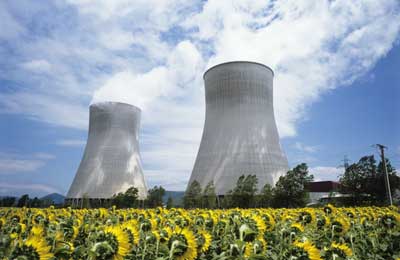
Nuclear…..Reliable, Efficient, and our Best Option for Green Energy!

Psst, Wanna “Save” the Planet? Then it’s Time to Go Nuclear

nuclear-power-a

The nuclear option must be high on agenda of energy green paper
The Australian
Gary Johns
4 November 2014

THE Abbott government is finalising an energy green paper (not to be confused with a green energy paper). Submissions are due today. Every group is in there pitching, including nuclear engineers.

China has under construction, planned or proposed 207 new nuclear reactors, tripling nuclear capacity by 2020. Our little green friends love to tout China as huge in windmills and solar panels, but China is really powered by coal, hydro and nuclear power. Stick that in your windmill and twist it!

Australia has an overcapacity in electricity generation, which is not forecast to disappear until 2023-24. Unless we cut the renewable energy target, it will force expensive renewables into an oversupplied market and strand existing assets.

Following the abolition of the carbon tax and touted adjustments to the RET, it should be clear there is no certainty in government support for future generators that are reliant on subsidies.

In this context, small modular nuclear reactors, which can deliver up to 100 megawatts base load, low-emission power, are ready now. They are most likely to be deployed in remote areas where other sources of power are expensive or where steam is required in addition to electricity.

If SMRs can make it in this market, without the level of subsidies that applies to renewables, then good luck to them. Last year, the Bureau of Resources and Energy Economics found that, across the projection period to 2050, nuclear would remain cost-competitive with renewable and non-renewable technologies on a level cost of electricity generated basis (capacity of a plant divided by its energy output and cost).

A recent paper by Charles Frank of the Brookings Institution uses a methodology based on avoided emissions and avoided costs, rather than comparing levelised costs. The key finding was that nuclear, hydro and combined cycle natural gas have far greater net benefits than wind and solar, which suffer from a very high-capacity cost per megawatt, very low-capacity factors and low reliability, resulting in low avoided emissions and low avoided energy cost per dollar invested. Avoided emission calculations may become less relevant, however, as political support for climate abatement strategies wane.

The main safety concern regarding nuclear power is the possibility of an uncontrolled release of radioactive material, leading to contamination and radiation exposure off-site. In fact, the Three Mile Island (1979) and Chernobyl (1986) “disasters” were not only less disastrous than imagined, but comparing these reactors to current models is to compare the Model T to any recent car. Even the reactors involved in the Fukushima (2011) disaster were 1960s design and no one died from nuclear exposure at Fukushima.

Advanced reactors are inherently safer. Generation IV full-scale reactors, and SMRs under development, incorporate passive safety features that require no active controls or operational intervention to avoid accidents in the event of malfunction.

The major impediments to building SMRs in Australia are not safety or science, environment or economics but the law.

The Environment Protection and Biodiversity Conservation Act 1999, for example, states that the minister must not approve the construction or operation of a nuclear power plant. Such prohibition is unwarranted.

In its green paper, the Abbott government has promised to “review the current regulatory framework that governs nuclear and waste facilities to remove any duplication and streamline regulations”. This is not good enough. The ban on nuclear power must be lifted. These laws are based on old politics and old science. It is time that prohibition was repealed so all sources of power are on the table and assessed according to commercial and environmental risks.

Nuclear politics is hard. The commonwealth has still not secured a site for Australia’s low-level radioactive waste, following the failure to secure Muckaty Station, north of Alice Springs.

Nevertheless, community attitudes are changing to one aspect of the nuclear cycle, the export of uranium. In 2012, the Queensland government repealed a ban on uranium mining and the NSW government repealed a ban on uranium exploration. In South Australia — the main source of uranium exports — 48 per cent of the community support nuclear power while 33 per cent oppose it.

The white paper on energy should be neutral; any source of energy should be allowed to compete in the marketplace on its merits. Nuclear should be subject to the same stringent regulations as apply to coal and gas — no more, no less.
The Australian

For more detail on Charles Frank’s study on how nuclear power wins by a mile on CO2 abatement costs see our post here.

Let’s assume (as STT does, for the sake of argument) that the global warming/climate change Chicken Littles are right: the sky really is falling and it’s all CO2’s fault.

So what the HELL are we doing pouring hundreds of billions of dollars into subsidies for wind power? (see our posts here and here)

STT has always thought that if man-made CO2 emissions really were destroying the planet, then sensible governments would have moved to build nuclear power plants from the moment the Chicken Littles started wailing about the heavens collapsing.

The French generate over 75% of their sparks using nukes – and have used nuclear power – without any serious incident – for over 50 years: the first plant kicked off in 1962.

Nuclear power is the only stand-alone thermal power source that is base-load and which does not emit CO2 emissions when generating power.

It’s true that geothermal falls into the same category, but away from volcanic zones (think New Zealand and Iceland) depends on accessing “hot-rocks” deep underground – which tends to limit its scope for operation. Although STT thinks – as a “base-load” generator – it’s a source worth pursuing, with more funds directed at research and development (see our post here and this article).

STT readers know that we are a big fan of hydro power, the development of which stalled after the Greens “No Dams” mantra shot them to political power (and see our post here).  The perversities of our renewable energy legislation mean that the cleanest and most reliable source of renewable energy – hydro – does not benefit from the incentives given to ludicrously expensive and completely unreliable wind power.  That’s right, the “Waterboys” don’t get RECs (only hydro generating capacity built after 1998 is eligible – the 99% of total hydro capacity that was built before then gets nothing).

Although, as STT has predicted, the “old” hydro-snub may not last for much longer (see our post here).

Recent comments by PUP leader, Clive Palmer on ABC’s Lateline have sent the wind industry into a tail-spin. Big Clive (following the lead from Tasmania’s PUP Senator, Jacqui Lambie) made it plain that the PUP wants to include “old” hydro’s massive contribution to renewable energy generation (around 16,000 GWh annually) in the calculations that go to satisfying the annual targets set by the Large-Scale RET – that escalates to 41,000 GWh from 2020 through to 2031. This is what’s got the wind industry in a flap:

CLIVE PALMER: Well, why don’t you listen to what Clive Palmer says, Tony? I’m on the program, you’re interviewing me. If you want to interview Jacqui Lambie, invite her on. But I’m just telling you that electricity in Tasmania is generated by hydro. Hydro is clean energy. There’s an anomaly in the bill that doesn’t recognise that. So we think – same with the Snowy Mountain Scheme, if you’ve got hydroelectricity, it’s clean energy, it’s something that shouldn’t be categorised the same as you would a coal-fired power station, for example. But on the current legislation, that’s how they deal with it. That’s an anomaly which is not in the country’s interest and we think it should be rectified.

snowy hydro

There is huge potential for further investment in hydro power in Australia (upgrades of existing plants and new schemes) – all up and down the Great Divide: bringing with it the ability to harvest huge volumes of water in times of flood; and to beneficially manage that water during periods of drought. However, the perverse nature of the mandatory RET provides every advantage to unreliable and costly wind power at the expense of hydro power: the former takes a matter of months to construct and begin earning revenue (ie RECs); whereas the latter takes years and sometimes decades to complete and for investors to start earning a return (see this video). Investors looking for a quick return on their cash have simply plumped for the soft option and piled in to wind power, with disastrous results on every level (see our post here).

The nuclear power debate has revved up in recent times, with numerous leaders of green groups coming out in favour of nukes as the only sensible answer to generating CO2 free sparks.  These boys have been rounded on by their own kind as “heretics” in a style more befitting of the Spanish Inquisition.

The nuke debate is one that STT will leave to others (see our post here). But if the ever-more hysterical Chicken Littles are to retain any vestige of credibility, it’s high time they got serious about tackling the CO2 emissions they claim to dread so much – starting with a grown-up discussion about the merits of nuclear power.

chicken-little-poster

Tom Harris, executive director of ICSC, talks about Suffering People Deserving Priority over Alleged Climate Problems.

ICSC: IPCC focus on stopping global warming and extreme weather is unscientific and immoral

Ottawa, Canada, November 2, 2014: “IPCC Chairman Dr. Rajendra Pachauri was right toadvocate “a global agreement to finally reverse course on climate change” when he spoke to delegates tasked with approving the IPCC Synthesis Report, released on Sunday,” saidTom Harris, executive director of the Ottawa, Canada-based International Climate Science Coalition (ICSC). “The new direction governments should follow must be one in which the known needs of people suffering today are given priority over problems that might someday be faced by those yet to be born.”

“Yet, exactly the opposite is happening,” continued Harris. “Of the roughly one billion U.S. dollars spent every day across the world on climate finance, only 6% of it is devoted to helping people adapt to climate change in the present. The rest is wasted trying to stop improbable future climatic events. That is immoral.”

ICSC chief science advisor, Professor Bob Carter, former Head of the Department of Earth Sciences at James Cook University in Australia and author of Taxing Air explained, “Science has yet to provide unambiguous evidence that problematic, or even measurable, human-caused global warming is occurring. The hypothesis of dangerous man-made climate change is based solely on computerized models that have repeatedly failed in practice in the real world.”

New Zealand-based Terry Dunleavy, ICSC founding chairman and strategic advisor remarked, “U.N. Secretary General Ban Ki-moon often makes unjustified statements about climate change and extreme weather. However, in their still unansweredNovember 29, 2012 open letter to the Secretary General, 134 scientists from across the world asserted, ‘The U.K. Met Office recently released data showing that there has been no statistically significant global warming for almost 16 [now 18] years. During this period…carbon dioxide concentrations rose by nearly 9%…The NOAA “State of the Climate in 2008” report asserted that 15 years or more without any statistically-significant warming would indicate a discrepancy between observation and prediction. Sixteen years without warming have therefore now proven that the models are wrong by their creators’ own criterion.”

“Although today’s climate and extreme weather are well within the bounds of natural variability and the intensity and magnitude of extreme events is not increasing, there is, most definitely, a climate problem,” said Carter. “Natural climate change brings with it very real human and environmental costs. Therefore, we must carefully prepare for and adapt to climate hazards as and when they happen. Spending billions of dollars on expensive and ineffectual carbon dioxide controls in a futile attempt to stop natural climate change impoverishes societies and reduces our capacity to address these and other real world problems.”

“The heavily referenced reports of the Nongovernmental International Panel on Climate Change demonstrate that, scientifically speaking, the global warming scare is over,” concluded Harris. “It is time to defund the IPCC and dedicate our resources to helping solve today’s genuine humanitarian problems.”


The ICSC is a non-partisan group of scientists, economists and energy and policy experts who are working to promote better understanding of climate science and related policy worldwide. We aim to help create an environment in which a more rational, open discussion about climate issues emerges, thereby moving the debate away from implementation of costly and ineffectual “climate control” measures. Instead, ICSC encourages effective planning for, and adaptation to, inevitable natural climate variability, and continuing scientific research into the causes and impacts of climate change. 

ICSC also focuses on publicizing the repercussions of misguided plans to “solve the climate crisis”. This includes, but is not limited to, “carbon” sequestration as well as the dangerous impacts of attempts to replace conventional energy supplies with wind turbines, solar power, most biofuels and other ineffective and expensive energy sources.


For more information about this announcement or ICSC in general, visithttp://www.climatescienceinternational.org,

Victims of the Windweasels & Their Turbines, are Treated with Disdain!

Macarthur Wind Farm Disaster: Jim Doukas Slams Fellow Moyne Shire Councillors’ Utter Contempt for Victims

jim doukas

Moyne councillor Jim Doukas critical of Macarthur wind farm report
The Standard
Anthony Brady
30 October 2014

A DEFIANT Moyne Shire councillor angered his fellow councillors but delighted the wind farm critics during a heated exchange in the council chambers this week.

A large gallery of wind farm critics cheered on Jim Doukas when he criticised the council’s response to complaints about noise issues relating to the giant Macarthur wind farm.

Cr Doukas was the only councillor to oppose the passing of a report approving the council’s handling of the complaints.

Cr Doukas claimed the report was biased and weak and brought into question the council’s relationship with wind farm owner AGL.

“The report is so light on information and facts it seems like it is bias. Is AGL doing something for us we don’t know about, because it looks that way.”

This comment brought an indignant response from mayor James Purcell.

“I may have misheard your representation, it appeared you were insinuating that this council, the integrity of councillors, was at risk here,” Cr Purcell said.

“This council has the highest integrity of any council any where in the world,” the mayor said.

Cr Doukas denied he had questioned the integrity of his fellow councillors but remained strong in his attack of the report.

He said council should do the right thing by the community and revisit this issue by conducting another investigation to come up with an “unbiased” outcome.

“It is not treating the people being affected fairly and not treating the other residents of the Moyne Shire fairly, because it’s the rate money we are going to have to spend when it goes to court.

“It’s all very well for us to sit here and act tough because we have ratepayers’ money, but if we had to defend ourselves with our own money maybe we’d have a different outlook.”

Earlier in the meeting Macarthur resident Jan Hetherington addressed the councillors, warning them of dire consequences should they approve the report.

“It is the opinion of the residents you may put yourselves in a position where you may be held accountable under the Australian Criminal Code Act,” Ms Hetherington said.

“Of which you have been made fully aware and in which case you most probably will not be covered by Moyne Shire’s insurance policies.”

She labelled information from the council’s solicitors that noise from the wind farm is not substantial and unreasonable as “utter rubbish” and said council should be ashamed of itself if it accepts such a poorly presented report.

“Should you approve of this report and its totally wrong conclusion you, through your continual ignorance and seeming willingness to hide and ignore all the evidence of cruel, inhuman and degrading treatment, will be knowingly allowing ongoing torture in the form of sleep deprivation.”

Cr Ralph Leutton caused a stir in his address supporting the report when he put forward his own scenario to Cr Doukas’ suggestion that wind farms should be turned off at night time.

He asked Moyne CEO David Madden if he could turn off the waves crashing on the beach in Port Fairy at night if that noise was causing a lack of sleep for residents.

A member of the gallery injected loudly that she had not chosen to live next to wind farms and that councillors had no idea of what residents are going through.
The Standard

Ralph Leutton’s attitude towards the suffering of his constituents tends to undermine James Purcell’s wild claim about the Moyne Shire Council having the “highest integrity any where in the world”.

That would be a mighty big claim at the best of times, but with this council thumbing its nose at its statutory duty “to achieve the highest attainable standard of public health and wellbeing by protecting public health and promoting conditions in which persons can be healthy” (set by s4 of the Public Health and Wellbeing Act 2008) – Purcell’s claim that it has world beating “integrity” falls just a little flat.

When it comes to “noise or other emissions” the Council (under s60 of that Act) comes under an express “duty to remedy as far as is reasonably possible all nuisances existing in its municipal district”. That duty applies to “nuisances which are, or are liable to be, dangerous to health or offensive”.  Where “offensive” means noxious or injurious to personal comfort”.

The decision of the majority simply cocks a snook at the Council’s absolute duty under the Act, which is clearly designed to protect and promote the health of ALL Victorian citizens. ALL citizens, that is, except those with the misfortune of being stuck next to 140 giant 3MW, Vestas V112s – according to the Moyne Shire Council.

Jim Doukas’ comment that the Council’s report is “biased” in favour of the operator, AGL is mastery in understatement.

In dismissing the residents’ well-documented complaints out of hand, the Council’s whitewash asserts that: “The social utility of the Macarthur WEF is significant, in that it is a source of renewable energy that does not cause greenhouse gases or other pollutants”.

So, let’s get this straight: if the Macarthur Wind Energy Facility was being run on coal or gas instead, the residents’ complaints would have been treated seriously; the Council would have acted consistently with its duty under the Public Health and Wellbeing Act; and ordered that the Facility be shut down at night?

But because we’re talking about “wonderful” wind power, the Council gets to ignore their suffering; abdicate its statutory duty to its residents (and ratepayers); treat them as “road-kill” and leave them to rot in what have become sonic torture traps (see our post here).

As we said in this post: “When those that govern us become indifferent to the reasonable demands of those they’re paid handsomely to represent, the very integrity of the institution of government suffers. When that indifference turns to open contempt (as it has), it isn’t long before ordinary people become fed-up, grab their pitchforks and revolt.”

Using the tag “renewable energy” in a cynical effort to “justify” the suffering caused to the health and well-being of hard-working, tax-paying citizens by incessant turbine generated low-frequency noise and infrasound is nothing short of monstrous (see our post here).

The Council’s report concedes that the noise generated by AGL’s turbines causes “sleep disturbance” and yet says that suffering from “sleep deprivation” is not “dangerous to health”.

That “finding” will come as news to the World Health Organization which – in its Night-time Noise Guidelines for Europe – the Executive Summary at XI to XII covers the point – says:

NOISE, SLEEP AND HEALTH

There is plenty of evidence that sleep is a biological necessity, and disturbed sleep is associated with a number of health problems. Studies of sleep disturbance in children and in shift workers clearly show the adverse effects.

Noise disturbs sleep by a number of direct and indirect pathways. Even at very low levels physiological reactions (increase in heart rate, body movements and arousals) can be reliably measured. Also, it was shown that awakening reactions are relatively rare, occurring at a much higher level than the physiological reactions.

The review of available evidence leads to the following conclusions.

  • Sleep is a biological necessity and disturbed sleep is associated with a number of adverse impacts on health.
  • There is sufficient evidence for biological effects of noise during sleep: increase in heart rate, arousals, sleep stage changes and awakening.
  • There is sufficient evidence that night noise exposure causes self-reported sleep disturbance, increase in medicine use, increase in body movements and (environmental) insomnia.
  • While noise-induced sleep disturbance is viewed as a health problem in itself (environmental insomnia), it also leads to further consequences for health and well-being.
  • There is limited evidence that disturbed sleep causes fatigue, accidents and reduced performance.
  • There is limited evidence that noise at night causes hormone level changes and clinical conditions such as cardiovascular illness, depression and other mental illness. It should be stressed that a plausible biological model is available with sufficient evidence for the elements of the causal chain.

But what would the World Health Organization know about night-time noise, sleep and health, hey? Apparently, half-a-dozen country bumpkins wedded to defending the wind industry at all costs know better than the world’s top public health experts.

Maybe it’s that level of “expertise” that’s led to the Moyne Shire Council having the “highest integrity any where in the world”? This is one group of councillors who will never be accused of modesty.

STT loves Ralph Leutton’s specious comparison between noise from turbines and waves lapping on a moonlit beach –  a line that comes straight from the wind industry play book.

The wind industry wrote the noise standards that councils (see our post here), planning departments (see our post here) and EPAs (see our post here) use to cover up the noise problem (see our post here); invented lies about wind turbines sounding like a refrigerator 500m away; or like waves lapping on a moonlit beach (see our post here); and invented a nonsense theory that the only people suffering from turbine noise impacts are red-necked climate change DENIERS who refuse to fall in love with the “majestic” look of giant fans – a class of people that one advocate of the “nocebo” story calls “wind farm wing nuts” (see our post here).

For Ralph Leutton’s benefit here’s a video of what his beloved turbines really sound like – the first sequence is from Macarthur. STT finds it hard to believe that anyone in touch with their earthly senses could compare wind turbine noise to waves lapping on a beach:

****

 ****

Waves_on_Straddie_beach

Ridiculous Faux-green Energy Policies Wrecking Economies and Hurting the Poor!

The Hard-“Green”-Left Promote Energy Policies that Wreck Economies & Smash the Poor

USSR

A little while back, the good Senator from Victoria, John “Marshall” Madigan launched an Exocet missile at the seedy world of hard-green-left politics and the wind power outfits that fund the Australian Greens (seeour post here).

The Greens have been particularly coy about where the hundreds of thousands of dollars used to fund their last Federal election campaign (including the rerun of the West Australian Senate election) came from. The Greens set out to crush SA’s favourite Greek, Nick Xenophon due to his efforts to bring the wind power fraud to an end: the Green vote went backwards, but Nick (a true STT Champion) – who ran as an independent candidate – polled a snicker under 25% in the South Australian Senate race (beating the Labor Party’s vote of 22.7%) – an all-time record for an independent Senator.

But, we digress. Since the launch of Vestas’ “Act on Facts” campaign in June last year it was evident that the Vestas were throwing mountains of cash at the Greens (see this article and see our post here).

With Vestas as their new paymaster, the Greens have completely abandoned any claim to be friends of the environment and have instead become rabid spruikers for the wind industry: ignoring the millions of birds and bats being slaughtered (see our posts here and here) and lambasting and ridiculing wind farm neighbours suffering from turbine noise generated sleep deprivation – bending over backwards to prevent any research into the problem, in a naked effort to protect their financial backers (see our post here).

Recently, it’s come to light that the billionaire founder of wotif.com, Graeme Wood has poured hundreds of thousands of dollars into the Green’s coffers. And, just like Vestas, is using the Greens to advance his wind farm interests, proving that the Greens truly are the best party money can buy.

Paying $millions to so-called “green” politicians and astro-turfing propaganda outfits like the WWF (see our post here), Getup! and 350.org (see our post here) has become a central wind industry strategy: if you’re a foreign owned company worth $billions, with no political credibility and rolling in mountains of (other peoples’) cash, why not pay a bunch of slick little political manipulators to plead and beg to governments on your behalf?

But the purpose of all this propaganda and political manipulation goes way beyond promoting wind power; and ensuring it has unobstructed access to an overflowing subsidy trough.

Piglets-Snout-2270058

Still bitter about the fact that their team lost the ideological battle when the Berlin Wall succumbed to sledgehammers back in 1989, the hard-green-left have redoubled their efforts to command and control the economic fortunes of countries around the Globe; both rich and poor alike.

The shortest route to wrecking an economy is to deprive it of cheap, reliable power. By portraying fossil fuel generators as evil; and nuclear generators, more so, the new Trotsky-ites aim to hammer energy intensive industry (which they hate) and the poor (who they couldn’t care less about).

Heat or Eat?

If you’ve ever wondered about the motivation of so-called “green” groups – and how their hysterical propaganda manages to garner so much attention – then take your time and enjoy this detailed analysis from the Daily Mail.

EXPOSED: How a shadowy network funded by foreign millions is making our household energy bills soar – for a low-carbon Britain
Daily Mail
David Rose
26 October 2014

  • Shadowy pro-green lobbyists working at every level of the Establishment
  • Organisations are channelling tens of millions of pounds into green policies
  • Elite lobby group linked to Friends of the Earth, Greenpeace and the WWF
  • Current energy policies shaped by the Green Blob will cost up to £400 billion
  • If continued, there will be further eye-watering energy bill rises for Britons

The Mail on Sunday today exposes how a ‘Green Blob’ financed by a shadowy group of hugely wealthy foreign donors is driving Britain towards economically ruinous eco targets.

The phrase the ‘Green Blob’ was coined by former Environment Secretary Owen Paterson after he was sacked from the Cabinet in July.

He was referring to a network of pro-green lobbyists working at every level of the British Establishment, who have helped shape the eco policies sending household energy bills soaring.

But investigations by this newspaper reveal the Blob is not just an abstract concept.

We have found that innocuous-sounding bodies such as the Dutch National Postcode Lottery, the American William and Flora Hewlett Foundation and the Swiss Oak Foundation are channelling tens of millions of pounds each year to climate change lobbyists in Britain, including Greenpeace and Friends of the Earth.

They have publicly congratulated themselves on their ability to create green Government policy in the UK – most notably after Ed Miliband steered through aggressive CO2 reduction targets in his 2008 Climate Change Act, and announced there would be no more coal power stations.

Yet the consequences of their continuing success are certain: further eye-watering rises in energy costs for millions of Britons and an increasing risk of blackouts.

studying candle

According to leading energy analyst Peter Atherton of Liberum Capital, current UK energy policies shaped by the Blob will cost between £360 billion and £400 billion to implement by 2030. He said this will see bills rise by at least a third in real terms – on top of the increases already seen over the past ten years.

This bill dwarfs the EU’s £1.7 billion demand from Britain last week.

Lobbying by the Blob helped lead to a new European Union emissions deal announced on Friday, when EU leaders including the Prime Minister agreed to triple the current pace of emissions cuts.

Following earlier deals, EU-wide emissions of CO2 are supposed to fall 20 per cent over the 30-year period 1990 to 2020.

Under the new agreement, this reduction must be doubled in just a decade, reaching ‘at least’ 40 per cent by 2030 – a goal that could only be accomplished through further massive investment in wind and nuclear energy.

At the heart of the Blob is a single institution – the European Climate Foundation (ECF) – which has offices in London, Brussels, The Hague, Berlin and Warsaw.

Every year it receives about £20 million from ‘philanthropic’ foundations in America, Holland and Switzerland, and channels most of it to green campaign and lobby groups.

It refuses to disclose how much it gives to each recipient, and does not publish its accounts. But it admits that the purpose of these grants is to influence British and EU climate and energy policy across a broad front.

Many more millions are fed directly to British and European lobby groups from the same overseas foundations which also fund ECF.

In its last annual report, ECF said working towards a 2030 deal was ‘a big focus area for ECF as a whole’.

ECF managing director Tom Brookes told The Mail on Sunday he provides ‘a fact-base’ to help policy-makers make the ‘many complex decisions that are necessary to move towards a high-innovation, prosperous and low-carbon future’. He added: ‘The UK is a leader in many of these fields.’

The Blob and Red Ed

Friday’s EU deal contains a get-out clause: if the rest of the world fails to agree a binding global emissions treaty at a UN conference in Paris next year, then Europe’s targets can be ‘reviewed’ – or in other words, abandoned.

Giants such as China, India and Australia have insisted they will not sign such a treaty. It is also unlikely to be approved by the US Congress, which is Republican-controlled.

However, thanks to Ed Miliband and his 2008 Climate Change Act, the get-out will make no difference for Britain. The UK is the only country which already has a binding target for 2050. By then, the law says, UK emissions must be 80 per cent down on 1990.

ed milliband

Mr Miliband’s Act also created a mechanism for ensuring the country sticks to a path that achieves this target – the so-called ‘carbon budget’. The scale of the challenge that its latest version poses is not widely realised.

Over the next 15 years, the electricity industry has to cut the CO2 it emits for every kilowatt it generates by 90 per cent – an unprecedented transformation.

But the carbon budget also means the total amount of power generating capacity has to more than double. In order to meet the 2050 target, there has to be a massive shift towards electric vehicles and heating. While fossil fuel power plants will close, both their replacements and this vast additional capacity will have to be wind or nuclear – by far the most expensive types of power.

Remarkably, green lobby group Friends of the Earth not only conceived the Climate Change Act, but Bryony Worthington, the FoE official who came up with the idea and lobbied MPs to support it, later actually drafted it.

‘When you’re on the outside lobbying, you kind of hope that you are going to have an impact, [but] you’re never really very sure,’ she told a green seminar three years ago.

But she hit the jackpot. Her proposal was taken up first by the new Tory leader, David Cameron, and followed by the then-Labour Government. Worthington, who was seconded into the civil service, was asked to rewrite her lobbyist’s memo, this time as a law.

Once it was safely on the statute book, she left the civil service to form a new green campaign group, Sandbag, which presses the Government to adopt more stringent forms of carbon taxes. Like her previous employer FoE, it is now funded by ECF. Ed Miliband made her a Labour peer in 2011.

While the Act was going through Parliament, the ECF, which was launched in 2007-8, was giving money to Greenpeace UK, FoE, Christian Aid and the WWF to mount a campaign against coal-fired power plants. Also funded was Client Earth, a group of lawyers who secured court acquittals for ‘direct action’ protesters who broke into the Kingsnorth plant in Kent, climbed its chimneys and occupied it.

The campaign persuaded Mr Miliband to announce the cancellation of a planned new generating unit at Kingsnorth – and that there would be no new coal plants built in Britain.

Afterwards, the ECF president, Jules Kortenhorst, boasted that Miliband had acted in response to ‘a complex, multifaceted effort over a year and a half, with grass-roots mobilisation campaigns [and] behind the scenes lobbying’.

He added: ‘All of this work, backed by substantial philanthropic investment, resulted in UK Climate Change Secretary Ed Miliband announcing that no new coal-fired power plants would be built… This is an example of a policy that can be replicated, increasing its impact.’

Follow the money

The most significant source for the ECF’s millions is a body called Climate Works – a private foundation which channels colossal sums to climate campaigners worldwide.

The Climate Works manifesto was set out in 2007 in a document entitled ‘Design to Win: Philanthropy’s Role in the Fight Against Global Warming’. It said that to be effective, a campaign to change government policies on energy and emissions would need at least $600 million from donors.

It was driven by the belief that without radical action, ‘we could lose the fight against global warming over the next ten years’.

It advocated the giving of generous grants to local campaigners in countries such as Britain who had detailed knowledge of the way their political systems operated.

As well as better energy efficiency, carbon taxes and emissions caps, they must ‘promote renewables and low emission alternatives’. Utility companies must be given ‘financial incentives’ – in other words, enormous subsidies from tax and bill payers – to make this happen.

Climate Works soon achieved its ambitious fundraising target, with a grant in 2008 of $500 million from the William and Flora Hewlett Foundation, which spends the fortune amassed by the co-founder of the Hewlett-Packard computer firm. This was followed by further grants of up to $100 million, and donations of $60 million from the sister Packard foundation. In July, a report by a US Senate committee named the Hewlett foundation as a key element in a ‘billionaires’ club’ which effectively controlled the environmental movement, pumping more than half a billion dollars a year into green groups around the world.

It claimed these ‘wealthy liberals fully exploit the benefits of a generous tax code meant to promote genuine philanthropy and charitable acts’, but instead were transferring money to ‘activists’ to ‘promote shared political goals’.

One of the US-based Climate Works’s first acts was to set up and fund ECF as its European regional office. All ECF’s main funders are represented on ECF’s board, including Charlotte Pera, who is also Climate Works’s CEO. Susan Bell, ECF’s vice-chairman, was formerly the Hewlett foundation’s vice-president.

Another director is Kate Hampton, an executive director at the Children’s Investment Fund, a UK charity with assets worth £324 million.Others come from finance and business. ECF’s chairman is Caio Koch-Weser, vice-chairman of Deutsche Bank, whose contacts in Brussels could not be better: from 2003–5, he chaired the EU’s Economic and Financial committee. Yet another director is Mary Robinson, the former president of Ireland.

No transparency

It is hard to assess the ECF’s full impact for a simple reason – although it publishes the names of some of the organisations it funds, it does not state how much it gives, nor exactly how this money is used.

The ECF’s Tom Brookes said: ‘The projects we fund all fall within the overall mission of the Foundation to support the development of a prosperous low-carbon economy in Europe.’

He would not explain why no amounts were stated, saying only that ECF’s annual report ‘describes the objectives of each ECF programme area and its significant grantees.

‘We are confident that this is a sufficient level of detail to provide insight into the work of the Foundation… Our policy on the information we publish reflects our responsibilities to our grantees and donors.’

Nevertheless, it is clear from the information that is available that the list of ECF funding recipients is a Who’s Who of the green movement, including Friends of the Earth, Greenpeace, the WWF, Client Earth, Carbon Brief, the Green Alliance, and E3G, the elite lobby group that persuaded the Government to set up the £3 billion Green Investment Bank.

The 2013 ECF report sets out its priorities for Britain, praising its ‘leadership on the climate front’ – thanks to the Climate Change Act.

It also boasts that its grants had an impact on this year’s Energy Act: ‘ECF grantees such as Green Alliance, E3G, and Greenpeace helped secure important milestones such as an emissions performance standard for new power stations.’

To ECF’s dismay, however, the supposed UK ‘consensus’ on climate and energy is now in jeopardy: ‘Household energy bills have shot to the top of the political agenda, and progress on decarbonisation is tangled in competing visions of the country’s energy future… A growing number of media and political voices are casting doubt on the climate science and the economic case for action.’

Against this opposition, ECF’s 2013 report says it intends to work with British greens to ‘rebuild confidence in the low-carbon transition’, by ‘fact-checking the UK media’s coverage of climate and energy issues’.

It says it will ‘establish a new unit that will promote evidence-based discussions in the media and mobilise authoritative voices on the low-carbon economy’.

Since the report was published, this unit has come into being, run by former BBC environment correspondent Richard Black. How effective it will be remains to be seen.

Meanwhile, it is clear that the sheer scale of this lavishly funded lobbying effort dwarfs that of its opponents.

The Global Warming Policy Forum in London, Europe’s only think-tank which is sceptical about climate science and energy policy, has an annual budget of £300,000 and employs just three people.

Its director, Dr Benny Peiser, said yesterday: ‘At the end of the day, someone will have to be held accountable for us committing economic suicide. We are the only organisation that does what we do – against hundreds on the other side, all saying the same thing.’
Daily Mail

Josef Stalin

New Paper on Measuring Wind Turbine Coherent Infrasound! by: J. Vanderkooy & R. Mann

New paper published by Vanderkooy and Mann: Measuring Wind Turbine Coherent Infrasound

Measuring Wind Turbine Coherent Infrasound
MannVanderkooyJohn Vanderkooy and Richard Mann
Department of Physics and Astronomy, Department of Computer Science University of Waterloo, Waterloo, ON, Canada
Date posted: 2 October, 2014

Abstract
To extract the optimum coherent infrasound signal from a wind turbine whose rotation is not precisely periodic, we use an optical telescope fitted with a photodetector to obtain reference blade passage periods, recording these together with the microphone infrasound signal. Signal processing of the quasi-periodic microphone signal is then used to obtain periodic data, which are analyzed by an appropriate length DFT to extract optimum values for the fundamental and harmonics of the coherent signal. The general procedure is similar to order domain analysis for rotating machines and is thoroughly explained and illustrated with measurements and analysis from a number of different wind farms. If several turbines are measured by a single microphone with blade passage periods obtained from several separate reference tracks, it may be possible to retrieve separate useful coherent signals from multiple turbines by appropriate processing.

Conclusion
Our paper shows how the coherent part of the infrasound from a single WT can be extracted from a microphone signal by using a blade passage reference track from the turbine under study.

Our analysis reveals a characteristic infrasonic pulse. We conjecture that the pulse from a single WT is caused by the interaction of the blades against the pylon, while the rather more complex background
signal relates to the radiation of the Tyler-Sofrin spinning modes.

The random component of the infrasonic signal exceeds the coherent part, and this random component is related to wind noise, which appears to be similar whether one is near or far from a wind farm.

Our paper avoids the issue of health effects from WT infrasound. Information on both sides of the controversy abounds in the literature. Read full article

Oxford Professor Tells the Truth About Green Energy!

OXFORD PROF SHREDS GOVERNMENT’S GREEN ENERGY POLICY

An Oxford University Professor has torn the UK government’s energy policy to shreds in his appearance before the House of Lords Science and Technology Committee.

Speaking to the Lords yesterday, Professor Dieter Helm said that the “Miliband-Huhne-Davey” policy (referring to the last three energy secretaries), which is based on an assumption that fossil fuel prices would rise, was “dramatically wrong”. (h/t to Bishop Hill, where the full exchange of views can be seen).

The Lords Committee gathered to hear evidence from a range of energy experts including power companies and the National Grid to determine whether there was indeed a risk of the lights going out this winter, as has been widely reported (including on Breitbart London).

Opening the second session, Professor Helm gave his name and title, before delivering a short two minute speech lambasting the governance of energy policy in recent times.

“It is a quite extraordinary state of affairs for a major industrialised economy to find itself even debating whether there is a possibility that the margins may not be sufficient of electricity to guarantee supply,” he said.

“If it was achieving carbon objectives and if it was producing low prices there might be some consolation. The wholesale price in Great Britain is twice that of northern Europe and on a CO2 front we’ve been switching from gas to burn as much coal as possible, and our emissions are actually rising on a production basis and of course on a carbon consumption basis which is the basis that matters for decarbonisation.

“For a major industrial economy to fail on one of the three objectives is a serious problem. But to fail on security and on competitiveness of price, and on decarbonisation is a sad state of affairs. And it’s even sadder in the context of which the problem isn’t fundamentally particularly difficult.

“It’s ultimately about having enough power stations and enough wires to supply the needs of the population. It’s a problem that’s been with us for a century. Many other countries solve these problems and it’s, as I say, rather sad that we’ve got to this particular point.”

The Committee probed the professor on a range of aspects including “resilience”, which the Professor explained was a matter not just of physical capability, but also the price which people are asked to pay for the energy supplied. If prices rise above people’s desire or ability to pay, people simply “turn themselves off, as happened in California”, he pointed out.

“The kit is there. If the will is there to do it, and the expertise and capacity of the grid I think is up to it, they will manage to make supply equal demand. The question is: how much higher will the price go as a result, and how long will Britain carry on having such high wholesale prices with all the consequences there are for British industry and also consumers?” he asked.

When questioned about medium term threats to resilience, Prof Helm was particularly scathing. Pointing to the fact that “the commodity super-cycle is over” and that gas, coal and oil prices are all falling, he blasted energy secretary Ed Davey, saying “We have a policy with the secretary of state repeatedly reminds us is based on the idea that gas prices are rising and volatile. Well, they’re falling and the volatility is something that we don’t want to protect customers from. [That is, downwards volatility is good for customers who want the benefit of cheaper prices immediately].

“Should we worry about resilience of fuel supplies? No, I don’t think so. The world is awash with gas. Unconventional gas is popping up all over the place America is no longer importing, plenty of supplies around, plenty more being discovered.

“The one medium term ‘risk’ that I would pay much less attention to but clearly the government thinks they should pay much more attention to is whether or not we’ll get enough supplies of fossil fuels. We have enough fossil fuels in the world to fry the planet many times over.”

He then set his target wider, laying into the “Miliband-Huhne-Davey policy”, so called “because it’s very consistent through that period”, as a whole. Successive energy secretaries had based their policy on the assumption that fossil fuel prices would continue to rise, making renewables comparatively cheaper by the 2020s and allowing subsidies to fall away; an assumption that the professor said  “[doesn’t have] any part in energy policy.

“That fossil fuel prices are going to go up. … That’s an outcome of the market, not a policy assumption to make. … If your bet turns out to be dramatically wrong, you’re going to have lots of technologies which are ‘out of the market’ for some considerable period to come. We will have to subsidise those technologies right through the 2020s and beyond.

“This knowledge that politicians have, that politicians know what the winners are, we’ve been there so many times before.  It usually turns out badly and it has done this time.”

Wind Turbines are “Novelty Energy”. They Will Never Be Feasible for Everyday Use!

Why Wind Power Will Never be a Serious Alternative to Conventional Power Generation

yacht

Study: Wind Turbines are ‘Expensive, Unreliable and Inefficient’
Breitbart.com
Donna Rachel Edmunds
27 October 2014

Wind power is too variable and too unpredictable to provide a serious alternative to fossil fuels, a new study by the Scientific Alliance and the Adam Smith Institute has confirmed. The researchers concluded that, although it is true that the wind is always blowing somewhere, the base line is only around 2 percent of capacity, assuming a network capacity of 10GW.

The majority of the time, wind will only deliver 8 percent of total capacity in the system, whilst the chances of the wind network running at full capacity is “vanishingly small”. As a consequence, fossil fuel plants capable of delivering the same amount of energy will always be required as backup.

The report was undertaken by the Scientific Alliance and the Adam Smith Institute. Using data on wind speed and direction gathered hourly from 22 sites around the UK over the last nine years, the researchers were able to build a comprehensive picture of how much the wind blows in the UK, where it blows, and how variable it is.

They found that, contrary to popular opinion, variability was a significant factor as “swings of around 10 percent are normal” across the whole system within 30 – 90 minute timeframes. “This observation contradicts the claim that a widespread wind fleet installation will smooth variability,” the authors write.

Likewise, and again contrary to popular assumptions, wind does not follow daily or even seasonal outputs. There were long periods in which the wind was not blowing even in winter, making it difficult to match generation of wind power to demand. The report concludes that covering these low periods would either need 15 storage plants the size of Dinorwig (a pumped storage hydroelectric power station in Wales with a 1.7GW capacity), or preserving and renewing our fossil plants as a reserve.

Most significantly, it found that the system would be only running at 90 percent of capacity or higher for 17 hours a year, and at 80 percent or higher for less than one week a year; conversely, total output was at less than 20 percent of capacity for 20 weeks of the year, and below 10 percent during nine weeks a year. “The most common power output of this 10GW model wind fleet is approximately 800MW. The probability that the wind fleet will produce full output is vanishingly small,” the authors note. The consequence is that many more wind turbines will have to be built than is often assumed, as the capacity of the fleet can’t be assumed to be synonymous with actual output.

The findings will deliver a body blow to governmental claims that their current target of generating 27 percent of energy from renewable sources – mostly wind and solar – by 2030 is credible.

“If there were no arbitrary renewable energy target, governments would be free to focus on what most voters expect: providing a framework in which a secure and affordable energy supply can be delivered,”commented Martin Livermore, director of the Scientific Alliance.

“If emissions are also to be reduced, the most effective measures currently would be a move from coal to gas and a programme of nuclear new build. In the meantime, the renewables industry continues to grow on a diet of subsidies, and we all pick up the tab. Getting out of this hole is not going to be easy, but it’s time the government started the process rather than continuing to dig deeper.”

According to the 2013 Renewable Energy Roadmap (the most recent to date), offshore wind capacity reached 3.5GW by June 2013, and onshore capacity reached 7GW in the same month. Governmental modelling suggests that offshore wind capacity will hit 16GW by 2020, and 39GW by 2030.

In the introduction to the Roadmap, the ministerial team headed by Ed Davey, secretary of state for energy and climate change wrote “The Government’s commitment to cost effective renewable energy as part of a diverse, low-carbon and secure energy mix, is as strong as ever. Alongside gas and low-carbon transport fuels, nuclear power and carbon capture and storage, renewable energy provides energy security, helps us meet our decarbonisation objectives and brings green growth to all parts of the UK.”
Breitbart.com

The report is available in pdf here.

The same conclusions apply to the “performance” of Australia’s installed wind power “capacity”.

Every wind farm in South Australia, Victoria, Tasmania and New South Wales is connected to the same Eastern Grid.

On the Eastern Grid, Australia’s wind farms are spread from: Jamestown in the Mid-North, west to Cathedral Rocks on lower Eyre Peninsula and south to Millicent in South Australia; down to Cape Portland (Musselroe) and Woolnorth (Cape Grim) in Tasmania; all over Victoria; and right up to Cullerin on the New South Wales Tablelands.

Eastern grid3

Despite being spread over a geographical expanse of 632,755 km² – an area which is 2.75 times the combined area of England (130,395 km²) Scotland (78,387 km²) and Wales (20,761 km²) of 229,543 km² – there are hundreds of occasions each year when – for substantial periods – the combined output of all of these interconnected wind farms is less than 10% of total capacity; around 100 or so when combined output is less than 5%; and dozens when combined output is less than 2%.

For a few examples of why wind power will never be a serious alternative to generation sources which are available on demand, see our posts here:

Intermittent & Unreliable Wind Power in Australia

Intermittent & Unreliable Wind Power: Texas, Germany & the UK

If this wasn’t costing us $billions in wasted subsidies and rocketing power bills, it would almost be funny.

circus_clowns-30541