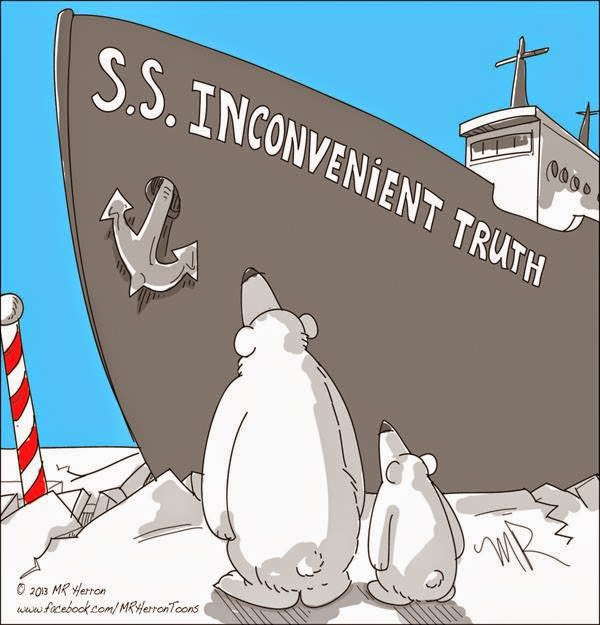
Leading Meterologist Tells Us What We Already Knew….Climate Alarmism is a Scam!

Climate change PROVED to be ‘nothing but a lie’, claims top meteorologist

THE debate about climate change is finished – because it has been categorically proved NOT to exist, one of the world’s leading meteorologists has claimed.

Published: Wed, October 22, 2014

climate-changeClimate change has been ‘disproved’ and polar ice is ‘increasing’ [ AP]

John Coleman, who co-founded the Weather Channel, shocked academics by insisting the theory of man-made climate change was no longer scientifically credible.

Instead, what ‘little evidence’ there is for rising global temperatures points to a ‘natural phenomenon’ within a developing eco-system.

In an open letter attacking the Intergovernmental Panel on Climate Change, he wrote: “The ocean is not rising significantly.

“The polar ice is increasing, not melting away. Polar Bears are increasing in number.

“Heat waves have actually diminished, not increased. There is not an uptick in the number or strength of storms (in fact storms are diminishing).

“I have studied this topic seriously for years. It has become a political and environment agenda item, but the science is not valid.”

climate change global warming mythMan made climate change is a myth according to Coleman, inset [AP]

I have studied climate change seriously for years. It has become a political and environment agenda item, but the science is not valid

John Coleman, co-founder of the Weather Channel

Mr Coleman said he based many of his views on the findings of the NIPCC, a non-governmental international body of scientists aimed at offering an ‘independent second opinion of the evidence reviewed by the IPCC.’

He added: “There is no significant man-made global warming at this time, there has been none in the past and there is no reason to fear any in the future.

“Efforts to prove the theory that carbon dioxide is a significant greenhouse gas and pollutant causing significant warming or weather effects have failed.

“There has been no warming over 18 years.”

The IPCC argue their research shows that man-made global warming will lead to extreme weather events becoming more frequent and unpredictable.

US News and World Report noted that many of the world’s largest businesses, including Coke, Pepsi, Walmart, Nestle, Mars, Monsanto, Kellogg, General Mills, Microsoft, and IBM, “are now engaged and actively responding to climate science and data.”

Mr Coleman’s comments come as President Barack Obama came under fire from climatologists as federal data revealed The United State’s energy-related carbon pollution rose 2.5 per cent despite the President’s pledges to decrease it.

President Obama told 120 world leaders at the United Nations climate summit last month that America had done more under his watch in cutting greenhouse gases than any other country.

Despite this, the Energy Information Administration’s Monthly Energy Review showed an increase in the use of energy from coal.
World leaders have pledged to keep the global average temperature from rising two degrees Celsius above pre-industrial levels to prevent the worst consequences of climate change.

The US, along with the UK and other developed countries, is expected to pledge furtheractions on climate change early next year.

Owen Paterson No Longer Silent. Willing to Tell the Truth About the Faux-Green Scam!!!

A Green Mess

With the Right of the Tory party mutinous, and clear signs that the Conservatives’ support in their rural hinterland is drifting away, the decision by David Cameron to fire environment minister Owen Paterson, a leading figure on the Conservative right who also appeared to “get “ the countryside, earlier this year made little political sense.

Predictably enough, Paterson has taken advantage of the freedom that his firing has brought him, proclaiming a series of inconvenient truths about Britain’s environmental policy and, for that matter, environmental-policy-making.

EUReferendum’s Richard North discusses this here and here at some length, noting Paterson’s opposition to the wind turbines that are so loathed in the countryside:

In the Global Warming Policy Foundation lecture on Wednesday, Mr Paterson said of wind farms that “this paltry supply of onshore wind, nowhere near enough to hit the 2050 targets, has devastated landscapes, blighted views, divided communities, killed eagles” . . .

He went on to say that wind turbines had devastated ‘the very wilderness that the ‘green blob’ claims to love, with new access tracks cut deep into peat, boosted production of carbon-intensive cement, and driven up fuel poverty, while richly rewarding landowners”.

This, Mr Paterson also said, is “the single most regressive policy we have seen in this country since the Sheriff of Nottingham” . . .

North continues:

Readers here do not need to rehearse Mr Paterson’s arguments, but it can never be said too many times that the current energy policy is unattainable – and at a cost of £1.3 trillion, which is roughly the size of the national debt….

We hear quite a bit — and rightly so — about what the current Conservative-led coalition has done to fix the British economy, but the ever-increasing costs of its climate-change policy ought not to be left out of the equation.

Back to North:

Even if Britain and the whole of the EU were to stick to our emissions targets (which we surely won’t), and to hit them (which, actually, we can’t), we would still not come anywhere close to what we are told is needed to save the planet. This is for a very simple reason: the rest of the world won’t do it. Last year, carbon emissions per head in China exceeded those of Britain for the first time, and China has more than 20 times as many heads as we do. The EU is responsible for less than 10 percent of global emissions, so when we set our targets we knew – and said – that we were in no position to stop global warming. The point was to set a lead which others would follow.

They haven’t…

Isn’t it rather extraordinary, [British journalist Charles] Moore concludes, that no mainstream party has dared to point any of this out? Don’t they know there’s an election on? Is it surprising that voters think: “They’re all the same?”

When it comes to orthodoxies of contemporary environmentalism there’s quite a bit to that: There’s a reason that UKIP is winning the support that it is.

Wind Power….A Faux-Green Political Nightmare for the U.K.

UK’s Disastrous Wind Power Policy the Result of Deluded “Green Blob” Politics

Owen-Paterson_323885k

Britain needs political climate change to cut soaring energy bills
The Telegraph
Charles Moore
17 October 2014

Targets for renewables are unattainable, futile – and will cost us trillions of pounds

It is surprisingly common for our main political parties and policy-makers to agree about something. When they do, they are usually wrong; the longer they agree, the wronger they get. Few important people dare challenge them.

Forty years ago, all three parties thought that you could control inflation only by having prices and incomes policies. The government, businesses and trade unions negotiated the levels of both. The guru economist JK Galbraith announced that such policies would “last forever”. Then Mrs Thatcher questioned them. By the turn of the century, no free country in the world had prices and incomes policies.

Some time in this century, we reached a similar state of clever-silly unanimity over green policies, especially carbon emission controls and renewables targets. All parties (except five brave Tories voting against) voted for the second reading of the Climate Change Act in 2008.

I have just re-read the environmental sections of the three main party manifestos at the last general election. Although they lay in to one another (“Labour have said the right things about climate change, but these have proved little more than warm words”), they are comically interchangeable. They all want the same policy – answering 15 per cent of energy demand from renewables by 2020, and making the British economy “carbon-neutral” by 2050. The latter target is agreed by all EU states, but only Britain, in that Act, actually made it law.

In any subject involving “science”, we voters still respond more deferentially than we do to ordinary political discourse. So, for some years, we humoured the climate-change lobby, and nodded our heads gravely when experts told us we must help save the planet. But most of us behaved like churchgoers listening to boring sermons. We accepted what we were told, on the unspoken assumption that it wouldn’t make much difference to anything and because the vicar (originally the Rev T Blair) seemed quite a nice chap.

This began to change for at least two direct reasons – rising electricity bills and sprouting wind-farms. We started to wonder whether it was true, as environmentalists argue, that conventional energy costs must inevitably rise and so a green levy would miraculously cut our bills in the end. We began to notice that in the United States, thanks to the shale revolution, prices have fallen dramatically and so have carbon emissions. Today, we observe that coal, gas and oil prices are falling too.

As for wind farms, it seemed a bit strange that an innovation designed to save our beautiful world wreaked unique havoc on the best landscape. When we learnt that wind power needed vast amounts of conventional power back-up because of intermittency, we started to see it as the greatest physical folly in our island story.

Yet no mainstream political party engaged with this. You could tell that they were worried about the symptoms of their own policies – hence Ed Miliband’s call for an energy price freeze. But none wanted to discuss the causes. Owen Paterson, then the environment secretary, was the only minister who dared raise doubts. He annoyed what he calls the “green blob”. David Cameron duly sacked him this summer.

In the Global Warming Policy Foundation lecture on Wednesday, Mr Paterson said of wind farms that “this paltry supply of onshore wind, nowhere near enough to hit the 2050 targets, has devastated landscapes, blighted views, divided communities, killed eagles …” When this was quoted on the BBC News, he was saying no more than millions of ordinary people have been saying for years. Yet it was very striking to hear it in public, because no other elected person charged with these responsibilities had said anything like this before.

It would have been better still if the BBC had completed the Paterson sentence. He went on to say that wind turbines had devastated “the very wilderness that the ‘green blob’ claims to love, with new access tracks cut deep into peat, boosted production of carbon-intensive cement, and driven up fuel poverty, while richly rewarding landowners”.

This, Mr Paterson also said, is “the single most regressive policy we have seen in this country since the Sheriff of Nottingham”. He is right, and because his party, and the Liberal Democrats, and Labour, have all agreed to the sheriff’s extortions, they are letting Nigel Farage play Robin Hood. As the theme song of the TV version used to say, “He cleared up all the trouble on the English country scene, and still found plenty of time to sing”.

robin hood famous duel 4

Mr Paterson’s argument is that there are much better ways to get cleaner energy. He talks about shale, Combined Heat And Power, “small modular nuclear” and the interesting things that NHS hospitals and others who have their own generators can do to “shave the peaks off demand”. Being no expert, I cannot tell whether he is right here, though these ideas seem to accord with his desire to bring common sense to the subject. He also raises a bigger point, which is that what we have set ourselves is unattainable.

The wind power needed for the EU to hit the 2050 targets would have to rise from the current 42,000 turbines to 500,000. For this you would need, Mr Paterson calculates, an area which would “wall-to-wall carpet Northern Ireland, Wales, Belgium, Holland and Portugal combined”. According to International Energy Agency figures broken down into national components, target fulfilment would cost Britain £1.3 trillion. That is roughly the size of our national debt.

So obviously Mr Paterson is right to say that we should invoke the clause in the Climate Change Act which allows for its suspension. But, despite his notable trenchancy, I would say he is being quite cautious about what is really happening. Even if Britain and the whole of the EU were to stick to our emissions targets (which we surely won’t), and to hit them (which, actually, we can’t), we would still not come anywhere close to what we are told is needed to save the planet. This is for a very simple reason: the rest of the world won’t do it.

Last year, carbon emissions per head in China exceeded those of Britain for the first time, and China has more than 20 times as many heads as we do. The EU is responsible for less than 10 per cent of global emissions, so when we set our targets we knew – and said – that we were in no position to stop global warming. The point was to set a lead which others would follow.

They haven’t. Since the debacle of the Copenhagen Summit of 2009 when the developed world failed to persuade the developing one to join our saintly masochism, this has been obvious.

There is a “second commitment period” of the process started by the Kyoto Protocol. New Zealand has withdrawn from it. Canada has repudiated Kyoto altogether. The only two non-European countries still in the second period are Kazakhstan and Australia, and Australia is now reviewing its commitment. Europe’s gesture has proved futile, and is getting ever more expensive, in taxes, bills and jobs. Even the European Commission has spotted this, and is beginning to tiptoe away from the policy.

But not the British parties and policy elites. In August 1914, Sir Edward Grey famously said, “The lamps are going out all over Europe”. He was speaking of the war we had inflicted on ourselves. A century later, we are threatening to put them out again, with different motives, but equal folly. Everywhere else, the lamps are staying on.

Isn’t it rather extraordinary that no mainstream party has dared to point any of this out? Don’t they know there’s an election on? Is it surprising that voters think “They’re all the same”?
The Telegraph

studying candle

Britts Facing Energy Shortages Due to Unreliable, Unaffordable Wind Turbines!

Fantasy policies will not solve our energy crisis

Our power stations are ageing fast and replacements are urgently needed. Yet for years, our politicians have failed to act

The Didcot fire raises serious questions for Ed Miliband, who lumbered us with the Climate Change Act in the first place

The underlying problem, as Brian Wilson spells out on the opposite page, is simple. Our power stations are ageing fast. We have eked out their lifespan for longer than expected, but replacements are urgently needed. Yet for years, our politicians have failed to act, promoting costly and over-subsidised renewables rather than building new gas or nuclear plants. To make matters worse, much of our capacity has been scrapped, in compliance with environmental restrictions set in Brussels.

If things continue as they are, the prospect has been raised of Seventies-style restrictions on energy use, even rolling blackouts. That is a grim prospect for a 21st-century economy. To avoid it, we first need to get serious about energy efficiency. Even if they do not help to save the planet, measures such as better insulation, or more watchful monitoring of the electricity meter, would make sound financial sense. Unfortunately, it seems to go against the spirit of the times to put on a jumper to cope with the chill; it is far easier simply to turn up the thermostat.

Beyond that, there is an obvious need for more generating capacity. New nuclear plants are at last being approved, but they are expensive to build and take years to construct. There is also a case for suspending the provisions of the Climate Change Act, to buy Britain some time to get itself out of this mess: given the amount of CO2 emitted worldwide, it will hardly doom the planet if we take off our hair shirt for a spell. We should also consider the proposal by Owen Paterson, the former environment secretary, that we build small-scale nuclear reactors rather than pointless offshore wind farms.

The Didcot episode also raises extremely serious questions for Labour. Ed Miliband, who lumbered us with the Climate Change Act in the first place, has repeatedly promised that Labour will decarbonise the electricity supply by 2030. As the Didcot accident makes clear, it will already cost tens of billions just to keep the lights on – so where on earth would Mr Miliband find the tens of billions more to replace our coal and gas capacity completely? And what source of power would he use instead? This is fantasy policy, on an issue that could not be more important to Britain’s citizens, or Britain’s future.

Britts Will Suffer, Because of The Insane Energy Practices of their Government!

Brits Belted by Insanely Expensive and Utterly Unreliable Wind Power

ed-davey_885751c

Britain’s political betters have set it up for one enormous gamble.  Britain is wagering its entire economic future on its – out of control – wind power boondoggle.

Back in January, The Economist reported on the INSANE cost of delivering offshore wind power – where generators are guaranteed obscene returns – being able to charge “three times the current wholesale price of electricity and about 60% more than is promised to onshore turbines.”

The Economist reported that “offshore wind power is staggeringly expensive” and “among the most expensive ways of marginally reducing carbon emissions known to man”.  But that is merely to compare the insane costs of onshore wind power with the completely insane costs of offshore wind power (see our post here).

Now Britain’s House of Lords has weighed in with an inquiry into their runaway wind power policy – a policy which promises to not only put them in the poor house, but to leave them in the dark. Here’s the Daily Express with the latest on Britain’s wind power debacle.

UK’s wind farm ‘folly’: Electric bills to soar by £1000 thanks to reliance on wind power
Daily Express
John Ingham
15 October 2014

HOUSEHOLDERS are facing soaring energy bills and winter power cuts thanks to the “folly” of relying on wind power, experts said last night.

The green crusade of successive governments is set to double electricity bills for households and cost homes £26billion a year by 2030, it was claimed yesterday.

The cost of renewable energy and carbon taxes will put an extra £983 a year on household bills by then, compared to relying on a mix of nuclear and new gas-fired power stations, three experts told a Lords committee.

They also said the “foolhardy” green policy will do little to cut emissions of the greenhouse gases blamed for global warming.

The Scientific Alliance report highlights warnings by the regulator Ofgem that the margin for electricity production for the 2015-16 winter will be at an all-time low of 2 per cent compared to the pre-privatisation requirement of at least 20 per cent.

It means that in times of high demand, such as during very cold weather, Britain would be at risk of power cuts.

The alliance argues that wind power – which is the main renewable energy source depended on by Government – is unreliable.

One of the experts, Sir Donald Miller, former chairman of Scottish Power, said: “The blind reliance by successive governments on unreliable, intermittent renewable energy has reduced the margin of safety to a critical level.

“This has brought the country to a position where power cuts could become a regular feature of cold winters for several years.”

The written report has been submitted to the Lords Science and Technology Committee’s inquiry into the nation’s electricity infrastructure.

At the inquiry’s launch its chairman, the Earl of Selborne, said: “We are set to see our safety cushion between demand and supply drop to particularly low levels over the next two winters.”

And yesterday’s report stated: “The foolhardy policy of replacing reliable and efficient gas, nuclear and coal power stations by expensive and inefficient wind turbines and solar farms has raised energy prices while doing little to cut emissions of carbon dioxide.

“The total costs are some £12billion per year more in 2020 than an optimum programme of gas turbines and nuclear, and almost £26billion per year more by 2030.”

The alliance calls for new nuclear power plants to help plug shortfalls caused by the closure of ageing coal-fuelled power stations and rising demand.

The report was released as former Environment Secretary Owen Paterson prepares to deliver a lecture tonight urging the Government to stand up to green bullies and go nuclear.

Last night Dr Benny Peiser of the Global Warming Policy Forum said: “The irony is that energy prices around the world are falling, particularly for oil and gas. But households are not profiting because Government policies are making energy more expensive.”

The wind energy body RenewableUK said the study was “out of line” with other research.

The Department of Energy and Climate Change said onshore wind is cheaper than coal, gas or nuclear energy when the costs of factors like air quality, toxicity and climate change are taken into account.

“Our policies are designed to keep the lights on, cut energy use and reduce polluting emissions, at the lowest possible cost to gas and electricity customers.”
Daily Express

Predictably deluded ramblings coming from RenewableUK and the Department of Energy and Climate Change. We’d love to see the evidence to support the story about wind power reducing CO2 emissions.

DECC’s wild claims about wind power reducing “polluting emissions, at the lowest possible cost” is, well, nothing more than hot air.

Nowhere in the world has the wind industry produced a shred of evidence to support its – long on emotion and short on facts – claims about cutting emissions in the electricity sector. Probably because all of the evidence that’s been properly gathered points in the opposite direction – ie, that trying to incorporate wildly intermittent wind power into a gas and coal-fired grid results in an increase in CO2 emissions (seeour post here).

If DECC was serious about reducing CO2 emissions in the electricity sector, it would be pushing for massive investment in nuclear power plants: nuclear power plants, which run at about 90% of capacity, avoid almost four times as much CO2 per unit of capacity as do wind turbines, which run at about 25% (although they can’t tell you just which 25% of the time that might be) and at a fraction of the cost (see our post here).

As DECC says it’s all about reducing “pollution” (although we’re pretty sure they’re talking about CO2 gas – an odourless, colourless, beneficial trace gas essential for life on earth – plants are lapping it up, right now) – but their perverted ideology means they can’t see the gas for the trees.

STT has long held the view that if governments were seriously committed to reducing CO2 emissions to avert “climate change” (formerly known as “global warming”), they would have started building nuclear power plants at a cracking pace 20 years ago, when the alarmists started wailing “climate catastrophe” at every available opportunity.

But, no. Instead they’ve redirected $billions of subsidies to wind power outfits – filched from unwitting taxpayers and power consumers – to support a “technology” that will never be any kind of sensible alternative to anything (unless freezing or boiling in the dark are your kind of thing) – let alone a substitute for coal, gas, hydro or nuclear power (see our post here).

Luckily for Brits, the House of Lord’s inquiry is being presented with some of these (unavoidable) facts about the cost and pointlessness of wind power.

As the second leg of a ripping “Daily Double”, here’s the Editor.

Costly, ineffective and ugly: It is time to confront wind power
Daily Express
15 October 2014

ENERGY sources should be cheap and reliable but wind power is neither.

A Lords committee was told by energy experts yesterday that our “foolhardy” reliance on wind energy will double electricity bills for households by 2030 so it cannot be considered cheap.

And because they do not work when there is too much or too little wind they cannot be considered reliable.

The experts say this unreliability has left us at risk of power cuts.

In fact wind power does not even have a significant impact on reducing greenhouse gas emissions.

Due to their extreme unreliability, conventional power stations have to be kept on standby, burning coal or oil all the while to make up for when wind turbines are out of action.

Hitting us in the pocket may be bad enough but wind farms have also ruined huge swathes of our most picturesque countryside as well as being deafeningly loud and presenting a significant danger to various forms of wildlife.

These facts mean nothing to the green lobby who will continue to forcefully oppose shale gas exploration and the building of nuclear power plants even though these sources could provide us with reliable energy at a fraction of the cost of wind power.

The Government needs to stand up to environmentalists, stop listening to their misleading claims and start putting our energy security first.
Daily Express

Hear, hear!!

house of lords

Saul Alinski’s Rules for Radicals, and the Path to Communism….FIGHT AGENDA 21

SAUL ALINSKY’S
RULES FOR RADICALS

(or understanding current Democratic tactics)

Rule 1: Power is not only what you have, but what the enemy thinks you have

Rule 2: Never go outside the experience of your people.

Rule 3: Whenever possible, go outside the experience of the enemy.

Rule 4: Make the enemy live up to its own book of rules.

Rule 5: Ridicule is man’s most potent weapon

Rule 6: A good tactic is one your people enjoy.

Rule 7: A tactic that drags on for too long becomes a drag.

Rule 8: Use different tactics and actions and use all events of the period.

Rule 9: The threat is more terrifying than the thing itself.

Rule 10: Maintain a constant pressure upon the opposition.

Rule 11: If you push a negative hard and deep enough, it will break through into its counterside.

Rule 12: The price of a successful attack is a constructive alternative.

Rule 13: Pick the target, freeze it, personalize it, polarize it.

COMMUNIST MANIFESTO 10 PLANKS

10 Conditions For Transition To Communism

  1. Abolition of property in land and application of all rents of land to public purposes.
  2. A heavy progressive or graduated income tax.
  3. Abolition of all right of inheritance.
  4. Confiscation of the property of all emigrants and rebels.
  5. Centralisation of credit in the hands of the State, by means of a national bank with State capital and an exclusive monopoly.
  6. Centralisation of the means of communication and transport in the hands of the State.
  7. Extension of factories and instruments of production owned by the State; the bringing into cultivation of waste-lands, and the improvement of the soil generally in accordance with a common plan.
  8. Equal liability of all to labour. Establishment of industrial armies, especially for agriculture.
  9. Combination of agriculture with manufacturing industries; gradual abolition of the distinction between town and country, by a more equitable distribution of the population over the country.
  10. Free education for all children in public schools. Abolition of children’s factory labour in its present form. Combination of education with industrial production.

Wind Energy….Not Fit For Commercial Use. Not reliable or affordable!

SATURDAY, OCTOBER 18, 2014

Another environmentalist lie. Here about the benefits of wind power.

Electricity Prices Soaring In Top Wind Power States

Electricity prices are soaring in states generating the most wind power, U.S. Energy Information Administration data show. Although U.S. electricity prices rose less than 3 percent from 2008-2013, the 10 states with the highest percentage of wind power generation experienced average electricity price increases of more than 20 percent.
According to the U.S. Energy Information Administration (EIA), the 10 states in which wind power accounts for the highest percentage of the state’s electricity generation are:
Iowa – 27%
South Dakota – 26
Kansas – 19
Idaho – 16
Minnesota – 16
North Dakota – 16
Oklahoma – 15
Colorado – 14
Oregon – 12
Wyoming – 8
The wind power industry claims switching from conventional power to wind power will save consumers money and spur the economy. However, data from the top 10 wind power states show just the opposite. From 2008-2013 electricity prices rose an average of 20.7 percent in the top 10 wind power states, which is seven-fold higher than the national electricity price increase of merely 2.8 percent.
wind turbines transmission photos 1
The 2008-2013 price increases in the top 10 wind power states were:
Iowa – 16%

South Dakota – 25

Kansas – 26
Idaho – 34
Minnesota – 22
North Dakota – 23
Oklahoma – -2
Colorado – 14
Oregon – 16
Wyoming – 33
With the sole exception of Oklahoma, every one of the top 10 wind power states saw its electricity prices rise at least 14 percent. For each of these states, electricity prices rose at least five times faster than the national average.
The electricity price increases in states producing the most wind power don’t tell the whole story. Federal and state taxpayer subsidies to wind power producers hide additional costs of wind power. The federal wind power Production Tax Credit (PTC), for example, gave wind power producers 2.3 cents for every kilowatt hour of wind power production last year. With U.S. retail electricity prices at 10.08 cents per kilowatt hour, the PTC allowed wind power producers to hide over 20 percent of wind power costs. This allowed the wind power industry to charge the American people still more money in backdoor tax bills, in addition to the higher retail electricity prices documented above.
Higher electricity prices in states producing the most wind power are taking a devastating toll on disposable incomes and the overall economy.
In Colorado, for example, electricity consumers spent $5.3 billion on electricity in 2013. Had Colorado electricity prices risen at merely the national average from 2008-2013, however, Colorado electricity consumers would have spent only $4.8 billion on electricity. That’s $500 million in excess electricity costs in 2013. If we divide that up among Colorado’s 2 million households, the extra electricity costs drained $250 from the average Colorado household in 2013.
In Minnesota, electricity consumers spent $6.4 billion on electricity in 2013. Had Minnesota electricity prices risen at merely the national average from 2008-2013, however, Minnesota electricity consumers would have spent only $5.4 billion on electricity. That’s $1 billion in excess electricity costs in 2013. If we divide that up among Minnesota’s 2.1 million households, the extra electricity costs drained $476 from the average Minnesota household in 2013.
In Kansas, electricity consumers spent $3.8 billion on electricity in 2013. Had Kansas electricity prices risen at merely the national average from 2008-2013, however, Kansas electricity consumers would have spent only $3.1 billion on electricity. That’s $700 million in excess electricity costs in 2013. If we divide that up among Kansas’ 1.1 million households, the extra electricity costs drained $636 from the average Kansas household in 2013.
The wind power industry’s fallback position is wind power benefits state economies, despite rapidly rising electricity costs, because the switch from conventional power to wind power generates jobs within the wind power industry. This argument, however, amounts to nothing more than a misleading head-fake. Shifting electricity production from conventional power to wind power does not create any net new jobs – it merely shifts jobs from one sector (conventional power) to another sector (wind power). Jobs created in the wind power industry come at the price of eliminating jobs in the conventional power industry.

Worse yet, the jobs shifted to the wind power industry fail to equal the number of jobs eliminated in other sectors of the economy for two important reasons.

Even among the top seven manufacturers of the wind turbines that are deployed in the United States, only one is located in the United States.
By contrast, conventional power plant operation requires far more workers than wind farms. More jobs are created in the conventional power industry even while electricity production costs go down. And unlike wind power jobs, nearly all U.S. conventional power plant manufacturing and operational jobs go to American workers – and especially to workers within the resident state of the conventional power plant.
Second, higher electricity prices caused by wind power kill jobs throughout the entire state and national economy. For example, when the average household in Kansas spends an extra $636 on electricity each year due to unnecessarily high electricity prices, that means the average Kansas household spends $636 less on other goods and services. The aggregate effect of such reduced spending in the Kansas economy (equaling $700 million in Kansas economy-wide reduced spending in 2013) eliminates thousands of jobs that would otherwise be created or sustained throughout all segments of the Kansas economy with higher consumer spending.
Any way you cut it, wind power is needlessly raising living costs, reducing living standards, and destroying American jobs. Fortunately, states can easily rectify the problem by repealing renewable power mandates and taxpayer subsidies that perpetuate higher electricity costs and widespread job destruction.

Unreliable, Unaffordable, Unwanted Wind Turbines…They’ve got to go!

Parker Gallant Uncovers the Hidden Costs of Ontario’s Insane Wind Power Policy

turbines ontario

Ever tried to imagine hell on earth?

Ever imagined a nightmare turned to reality?

Then you’ve probably landed in Ontario.

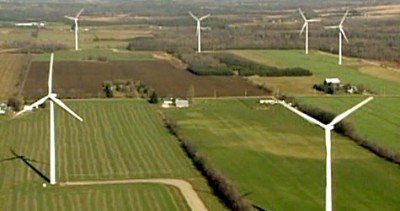
Ontario is the place where the most bizarre energy policy in the world has seen thousands of giant fans speared into the backyards of homes – in the most agriculturally productive part of Canada. When we say “bizarre” we mean completely bonkers.

Canada has one of the “cleanest” power generation mixes on the planet, with the vast bulk of its electricity coming from zero emissions sources such as nuclear and hydro.

Ontario energy mix 2013

As Professor Ross McKitrick explains in this post, Ontario has built a policy that sees wind power (when the wind is blowing) “displace” emissions free hydro at enormous cost to power consumers and taxpayers.

And then there’s the colossal human impact of plonking thousands of turbines as close as 550m from hundreds of homes (see our posts hereand here).
image

Adding to the lunacy is the fact that wind power outfits are guaranteed to reap fat profits despite market conditions.

Where the wholesale market price for power in Ontario is between $30-50 per MWh, wind power generators pocket a fixed price of $135 MWh – even if there is absolutely no market for it and the Province literally has to pay neighbouring US States to take it.

Parker Gallant – a former banker – is out to ensure that Ontario’s power consumers and taxpayers are aware of just how ludicrous its energy policy has become.

Parker Gallant: the cost of curtailing wind is borne by all

Parker has been busy letting everyone know about the the hidden financial costs of Ontario’s wind farm fever.

Late last year the Ontario Energy Minister said that the cancelling a gas plant would cost the people of Ontario no more than the price of a cup of “Timmies”: coffee brewed up by Canada’s favourite coffee franchise, Tim Horton’s.

A few weeks back, during a windy weekend, Ontario was “blessed” with an abundance of wind power – which – on the first pass – cost it $135 per MWh in guaranteed payments to wind power outfits. But – because what was produced was excess to requirements – Ontario’s taxpayers were stung a second time for the cost of paying New York and Michigan and Quebec to take it.

The total cost was hardly small change – whether measured in cups of coffee or hard cold cash. Here’s Parker doing the sums.

Another expensive weekend, thanks to Ontario wind farms
Parker Gallant
7 October 2014

On the weekend just past, October 4 and 5, wind turbines in Ontario once again proved they can produce lots of electricity—when demand for power is low. At the same time, they drove down the hourly Ontario electricity price (HOEP) and played a role in generating lots of power that was then exported to our neighbours at a substantial cost to Ontario’s ratepayers.

Total demand for electricity on October 4 was 393,816 MWh (megawatt hours); 18.1% (71,328 MWh) of it was exported. In the process of exporting the HOEP generated a negative “weighted average price” of minus 32 cents a MWh. Ontario paid our neighbours to snap up our excess power which presumably included all of wind’s production of 32,958 MWh. Ontario’s ratepayers picked up the tab which for wind power alone ($135.00/MWh + .32 cents = $135.32 MWh) was $4,459,877.

Sunday, October 5 wasn’t much better: total demand was 379,656 MWh and 66,408 MWh (17.5%) was exported at a negative “weighted average price” of minus $2.64 a MWh. Wind production for that day was 30,359 MWh and we must assume it again played a role in driving down the HOEP. So, those wind exports alone cost Ontario’s ratepayers $4,181,649 ($135/MWh + $2.64 = $137.24 MWh).

Ontario ratepayers picked up the tab of approximately $8.6 million for those two days. That $8.6 million would be equivalent, to paraphrase our Energy Minister Bob Chiarelli, the price of a “Timmies” coffee for Ontario’s 4.6 million ratepayers.

If one also includes the $7 million or so that the other 75,000 MWh exported cost it becomes two “Timmies”! Add in the price of the steamed off power from Bruce Nuclear, payments to the gas plants for idling, to OPG for the Atikokan biomass plant and their spilled hydro, to the NUG (non utility generators) contracted parties, the weekend probably hit the ratepayers with total costs well over $20 million.

If that happened every weekend the cost would be equivalent to the cost of moving a couple of gas plants! Lots and lots of Timmies.

When will Ontario’s Energy Minister, Bob Chiarelli wake up and smell the coffee?

This story was also picked up Sun News – aptly describing Ontario’s wind turbines as a money pit. Here’s an interview between journalist Jerry Agar and Parker Gallant, that was aired on October 8. The transcript follows…

**********

Jerry Agar: So over the weekend, this one just past it was proven in Ontario, that by golly those big wind turbines can pump out some power so Parker Gallant is here. So this is all good news?

Parker Gallant: Well not really Jerry, no because when they were pumping….

Jerry Agar: Are you going to be grumpy about this?

Parker Gallant:  I am, that’s my usual ploy isn’t it?

Jerry Agar: I see.

Parker Gallant: Yes they were pumping out out the power, but we didn’t need it so that meant we had to export it. As a result of that it drove down the wholesale price so we were paying New York and Michigan and Quebec to take our excess power.

Jerry Agar: I see, so when we export power – we don’t sell it, we pay people to take it from us.

Parker Gallant: You’ve got it.

Jerry Agar: Are we making it up in volume – I mean – how exactly does that make any sense?

Parker Gallant: It doesn’t make any sense and that’s certainly been my efforts is to make the Ministry of energy aware of that. We shouldn’t be handing out any more wind turbine contracts because we don’t need the excess power.

Jerry Agar:: Well what was the point of even producing power then?

Parker Gallant:  Well, there was a lot, believe it or not, there was a lot of wind turbine developers in that same weekend, that were paid for not producing power. That’s on top of those that were paid for producing the power.

Jerry Agar: Just a minute, I want to add this up. We were paying people not to produce power then we were producing power and we were paying people to take that power.

Parker Gallant: You’ve got it.

Jerry Agar: All right. This from the government that spent $1 billion not building a power plant.

Parker Gallant: That’s right, or moving a power plant.

Jerry Agar: Yes, yes. Now the government got re-elected.

Parker Gallant: I know. Its unfortunate but.

Jerry Agar: We live in a world we could never have imagined.

Parker Gallant: No we can’t.

Jerry Agar: So then what’s the addiction to these wind turbines if in fact they were pumping out power, and they were reducing our cost because hey they turn around and around for free apparently with wind power, it would all be great.

Parker Gallant:  it would be yeah, but we don’t offer, we don’t get competitive contracts. We just simply say we are going to pay you $135 a MWh four 13 1/2 cents per kilowatt hour
if you throw up a wind farm. You know that makes…

Jerry Agar: So for the producers it’s a no lose situation.

Parker Gallant: It’s a no lose situation. Exactly. They get paid whether they produce power or they don’t produce power as long as that wind turbine up, and they don’t actually produce power,
they still get paid.

Jerry Agar: But we don’t need the power. So what are we building them for?

Parker Gallant: Well, I don’t know. Perhaps to green the province, to save the planet from climate change. I mean that seems to be the objective.

Jerry Agar:  Its ideological?

Parker Gallant: Yes it’s very ideological.

Jerry Agar: Because it’s certainly not economical.

Parker Gallant: No it doesn’t make any economic sense and of course they never did a cost benefit analysis.

Jerry Agar: There is another issue here. Do you give credence to those people who actually say that living next to them is damaging?

Parker Gallant: Oh definitely. I’ve met people that have lived next to them and are forced to move out of their homes. There is a percentage of the population – there was a study just came out of the UK I believe that says that a certain percentage of the population will be affected by the infrasound, the noise that we can’t hear, that’s emanating from these wind turbines throughout the province.

Jerry Agar: It doesn’t bother everybody?

Parker Gallant: No it doesn’t bother – its like (sea sickness) …

Jerry Agar: So I’d go and it would bother me but it wouldn’t bother you.

Parker Gallant: That’s correct. Yes. There’s a percentage of the population, so 5 to 15% that will be affected. Autistic children are very much at risk when they live near a wind turbine.

Jerry Agar: Really?

Parker Gallant: Yes.

Jerry Agar: Okay but there’s never any consideration. This government  has, I would use the word foisted these things on communities. They haven’t even asked the community. They haven’t even had the deference to go to the Mayor – much less the local citizens.

Parker Gallant: No. That’s true. The Green Energy Act gave the provincial government all the powers to be able to put these wind turbines up no matter where, just as long as they meet the setback requirements and you know the minimum standards that they set under the Green Energy Act.

Jerry Agar: There are more being built. Construction of a giant wind turbine project in Huron County will go on. The judge denied the work stoppage proposed by local residents.

Parker Gallant: The judge did not grant the stay that the citizens had brought to stay motion before the courts to basically stop the construction. But there is still an appearance that will be coming up in the Superior Court of Ontario. So that means that if the citizens win in the Superior Court, the developers will have to remove and decommission those wind turbines. So why they’re taking the chance is beyond me, except maybe they get them in before the cold weather season hits.

Jerry Agar: You know, this is one of those situations I believe where the mass of the population in urban areas here in Toronto, where you and I are right now, love these things, because they love that greenie idea, but they don’t live next to them.

Parker Gallant: No they don’t. Well a lot of people in the green movement will say “Oh we live next to one” because there is one at Exhibition Place.

Jerry Agar: The thing barely turns.

Parker Gallant: It barely turns and it doesn’t provide any power. And it’s mostly all…

Jerry Agar: Not hooked up? A show thing?

Parker Gallant: It’s sort of hooked up. It really is a show thing. If you go back …

Jerry Agar: And nobody lives there anyway.

Parker Gallant: Yes, no, right.

Jerry Agar: All right. But if they went and stuck one right next to one of the condo buildings, although I don’t know if you will be able to fit one in now in down town Toronto. They will feel differently about it.

Parker Gallant: Yeah, I thought they should mandate putting 49 metre blades on top of the buildings that they’re allowing to be built here. The condo buildings. And maybe we could generate some power because they would be way up there in the higher atmosphere and….

Jerry Agar: And then your condo could just jiggle you to sleep. That would be nice. All right, thanks very much.

Parker Gallant: Well thank you Jerry.

Jerry Agar: I don’t know if you made us feel better but thanks for the information.
Sun News

Toronto turbine at Exhibition Place

Parker then knocked up this spreadsheet itemising the total cost of paying neighbours to take Ontario’s excess wind power.

Ontario’s expensive electricity week: what could $44M have bought?
Ontario Wind Concerns
13 October 2014

Blowing Ontario’s ratepayer dollars Money lost in just one week could have paid for 580 nurses

So far this October, Ontario’s electricity sector has been blowing our money away at an awesome pace.

Scott Luft, whom I admire for his ability to assimilate comprehensible data, posted on Tumblr some disturbing information about the first 10 days of electricity production (and curtailed production) in Ontario. Because the fall means low demand for electricity, our current surplus energy supply (principally, wind, solar and gas) was curtailed to the extent that it cost ratepayers $20 million, while the HOEP (hourly Ontario energy price) generated only $8.2 million. That $20 million of curtailment cost will find its way to the Global Adjustment (GA) pot and onto ratepayers’ bills.

I took a different route and looked at the cost of Ontario’s exports for the week of October 3rd to October 9th —those numbers are also disturbing. During those seven days, Ontario exported 399,048 MWh (megawatt hours) which was 15.7% of total Ontario demand. Wind turbines generated and delivered 184,204 MWh, which was surplus to our needs and probably exported. The money generated via the HOEP from all of the export sales was $56,300 or 14 cents a MWh. Wind turbines produced just $15,164 and we sold that production for just 8 cents a MWh.

To put this in perspective, the exported production’s cost all-in (contract value per MWh + regulatory + transmission + debt retirement charge) averaged $110/MWh, according to the latest monthly IESO Market Summary August 2014 report’s findings. Using $110/MWh the 399,000 MWh exported in those seven days hit Ontario’s ratepayers with about $44 million (less the $56,300) via allocation to the GA—that will show up on the electricity line on our bills.

Wind generation alone at the contracted rate of $135/MWh cost ratepayers $24,900,000 plus another $5 to $6 million for their curtailed production, according to Scott Luft. That $30 to $31 million plus the cost of steaming off Bruce Nuclear, paying idling gas plants, etc., and the additional cost of solar generation, would confirm the $44 million is a reasonable estimate.

What has Ontario missed out on by having ratepayers subsidizing those exports by $44 million for those seven days?

  • the annual salary of 293 family physicians, or
    580 nurse practitioners, or
  • repairing all the Toronto District School Board’s school roofs, or
  • one and a half days of interest on Ontario’s public debt, or
  • all of Ontario’s 301 MPP salaries for a full year, or
  • 40 MRI machines, or
  • 100 months of mortgage payments on the empty MaRS Phase 2 building, or
  • increasing funding for autistic children by 30% over current levels.

Just a few examples of how the wasted subsidy money that cost each Ontario ratepayer $10 for just one week could have been used!
Parker Gallant

Windpushers Need to Prove That They are NOT Harming Residents!

Wisconsin Health Board Puts Onus on Wind Company

OCTOBER 16, 2014

Enz homeAfter a year-long health study, the Duke Energy wind turbine project in Wisconsin was declared a human health hazard. The  Board of Health of Brown County voted to take the action on October 14, 2014, according to JMKraft writing in Illinois Leaks (Duke Energy’s Shirley Wind Farm Declared Health Hazard).

The decision was based on a report of a year-long study conducted by the Enz family to document infrasound in homes within a radius of 6 miles of the Shirley Wind turbines.

The vote to declare it a Human Health Hazard puts Duke Energy’s Shirley Wind utility on the defensive to prove to the Board they are not the cause of the health complaints documented in the study and could result in a shut down order.

According to the Waubra Foundation, the wording of the motion was:

To declare the Industrial Wind Turbines in the Town of Glenmore, Brown County WI a Human Health Hazard for all people (residents, workers, visitors, and sensitive passersby) who are exposed to Infrasound/Low Frequency Noise and other emissions potentially harmful to human health.

Proximity of Enz home to 6 turbinesFour different acoustical engineering firms performed the study, “A Cooperative Measurement Survey and Analysis of Low Frequency and Infrasound at the Shirley Wind Farm in Brown County, Wisconsin,” which was partially funded by the Wisconsin Public Service Commission.  The technicians recorded readings from several  homes the residents had abandoned (citing turbine emission health impacts).  The results included a statement agreed upon by all four firms – some of whom work for wind turbine developers – that in their opinion, “enough evidence and hypotheses have been given herein to classify LFN and infrasound as a serious issue, possibly affecting the future of the industry.”  WWMA summarized the study in a January 2014 post.

Sarah Laurie, of the Waubra Foundation in Australia, noted earlier this year (“Letter to Slovenia re Known Adverse Health Impacts of Wind Turbine Noise” Aug. 11, 2014) that:

Unlike most other products, where prior product safety is established, the wind industry has never been required to show there are no adverse health effects. … [I]n fact the wind industry are well aware of the serious health problems their productsdirectly cause, and indeed that they have known for thirty years.

There are eight 500-foot turbines in the Shirley Wind project.