NASA Scientists Puzzled by Global Cooling on Land and Sea
(iStock)
Monday, 06 Oct 2014
The deep ocean may not be hiding heat after all, raising new questions about why global warming appears to have slowed in recent years, said the US space agency Monday.
Scientists have noticed that while greenhouse gases have continued to mount in the first part of the 21st century, global average surface air temperatures have stopped rising along with them, said NASA.
Some studies have suggested that heat is being absorbed temporarily by the deep seas, and that this so-called global warming hiatus is a temporary trend.
But latest data from satellite and direct ocean temperature measurements from 2005 to 2013 “found the ocean abyss below 1.24 miles (1,995 meters) has not warmed measurably,” NASA said in a statement.
The findings present a new puzzle to scientists, but co-author Josh Willis of NASA’s Jet Propulsion Laboratory (JPL) said the reality of climate change is not being thrown into doubt.
“The sea level is still rising,” said Willis.
“We’re just trying to understand the nitty-gritty details.”
A separate study in August in the journal Science said the apparent slowdown in the Earth’s surface warming in the last 15 years could be due to that heat being trapped in the deep Atlantic and Southern Ocean.
But the NASA researchers said their approach, described in the journal Nature Climate Change, is the first to test the idea using satellite observations, as well as direct temperature measurements of the upper ocean.
“The deep parts of the ocean are harder to measure,” said researcher William Llovel of NASA JPL.
“The combination of satellite and direct temperature data gives us a glimpse of how much sea level rise is due to deep warming. The answer is — not much.”
Remember all that huff and puff put out over the last few months by the Clean Energy Council and near-bankrupt wind power outfit, Infigen about wind power becoming so cheap as to be competitive with coal and gas fired generators?
You know, the fantastic tales about wind power causing a reduction in Australian retail power prices?
Never mind, that nowhere in Australia have retail power prices decreased; and that – thanks to its ludicrous efforts to “rely” on wind power – South Australians pay the highest retail power prices in the world (see our post here).
In a “hey, quick look over there” approach to media manipulation, the CEC and its clients bang on about the effect of wind power on the wholesale market (on those rare occasions when the wind happens to be blowing, of course – see our post here) – while steering well clear of the actual cost of wind power to retailers.
These hucksters never talk about the prices fixed under Power Purchase Agreements with retailers – set at $90-120 per MWh versus $30-40 for conventional power – and recovered from retail customers, irrespective of the wholesale price (see our post here); and they run a mile from any mention of the Renewable Energy Certificates that get directed to wind power outfits; that have added $9 billion to power bills already; and that will add $50 billion to Australian power bills over the next 17 years, if the Large-Scale RET remains in place (see our post here).
No, the wind industry’s main pitch over the last few months has been that it’s delivering a “stand-alone” product at a price which is lower than its conventional generation “competitors” (see our post here).
Now, if there was a just a whiff of substance to the wind industry’s spin, then you’d think the industry would welcome the chance to stand on its own two feet – and jump at the opportunity to finally take on coal and gas generators in a head-to-head battle that the wind industry (with its abundant source of “free” fuel) is just bound to win, right?
But, hold the phone. It seems all that wind industry talk was … well …, just “talk”.
Despite all that chest-thumping and “big-boy” posturing, the wind industry turns out to be a sooky little mummy’s boy, after all. Here’s The Age stripping away a little of the wind industry’s false bravado.
Pacific Hydro write-down
The Age
Tim Binsted
6 October 2014
Heavyweight fund manager IFM Investors has taken a $685 million write-down on its Pacific Hydro renewable energy business due to the adverse impact of the Abbott government’s Warburton review, weaker electricity demand in Australia, and tax changes in Chile.
IFM Investors has $50 billion in assets under management and is owned by 30 pension funds with more than 5 million Australian members, including funds such as AustralianSuper, Cbus and HostPlus.
The hefty valuation changes to Pacific Hydro – which has hydro, wind, solar and geothermal projects in Australia, Brazil and Chile – were driven partly by businessman Dick Warburton’s review into the renewable energy target. His report is with the government for its consideration.
IFM Investors chief executive Brett Himbury said the review had undermined confidence for renewable energy investors.
“There’s two primary factors [impacting the Australian assets]: a lowering of energy demand and uncertainty around the current laws,” he said.
“It’s a great shame that at a time when the likes of President Obama are saying there’s no bigger challenge for the globe than climate change, we’ve got this policy uncertainty.”
On August 28, the Warburton RET review made two recommendations to the government: either allow the large-scale RET to continue to operate until 2030 for existing and committed renewable generators, but close it to new investment, or modify the fixed target for 20 per cent renewable energy by 2020 to a “real 20 per cent” of actual electricity demand.
Both of these outcomes would be negative for the renewable energy sector. Pacific Hydro has assumed a “20 per cent real” RET in its valuation.
The “real target” would reduce the annual production of renewable energy in 2020 from 41,000 gigawatt hours to about 27,000GWh.
Compounding the sector’s woes, the Australian Energy Market Operator in June made big cuts in its annual forecasts for electricity demand over the next decade.
The combined impact of lower anticipated energy demand and assuming a “20 per cent real” RET have hit the valuation of Pacific Hydro by $220 million.
“We’d like to see continued commitment to the current bipartisan agreed target and more broadly as investors we’d prefer to see a relatively certain [regulatory] environment,” Mr Himbury said. “As long-term investors you’d like to think that there is economic value in renewable energy, but what we need is clarity and certainty.”
Infigen Energy boss Miles George has previously warned that an overhaul of the target would be “disastrous” for the industry and push investment overseas.
Infigen, one of Australia’s biggest wind farm operators, has warned it could breach its debt covenants within three months if the RET is wound back without compensation for investors.
The renewable energy industry has warned any moves to scrap the target would jeopardise $15 billion in renewable energy investment.
The RET review also contributed to a further $60 million write-down on the value of the company’s development portfolio in Australia and South America.
“Under the current environment it wouldn’t be economic to bring the development book to market. There’s a knock-on effect that could impact thousands of construction jobs,” Mr Himbury said.
Grattan Institute energy director Tony Wood said the proposed Warburton RET changes were not just a headache but entering “serious migraine territory” for anyone exposed to renewable energy investments.
“It’s not like a slight change in the offside rule in AFL or NRL. This is changing the game,” he said.
“Existing projects are almost certainly not making money at the moment. The REC [renewable energy credit price] is suppressed because there is an oversupply of credits, and renewable energy itself has suppressed the wholesale [energy] price. It’s good for consumers but it hurts the return on capital.”
Underscoring the dangers of regulatory change, Pacific Hydro’s Chilean assets have taken a $210 million hit after tax reforms proposed by Chilean President Michelle Bachelet were approved by the country’s congress.
The reforms include a rise in the base corporate tax rate from 20 per cent to 25 per cent by 2017 and an increase in the stamp tax payable on financing proceeds from 0.4 per cent to 0.8 per cent.
Chilean hydro generation has also been hurt by prolonged drought in that country.
Primarily as a result of the Pacific Hydro write-downs, IFM’s mammoth Australian Infrastructure Fund is expected to decline in value by about 5 per cent for the September quarter. This is a major hit given infrastructure investments are supposed to be stable, defensive assets for the long term.
IFM will host an investor briefing, with a special focus on Pacific Hydro, on October 7.
The fund manager is undertaking a strategic review of Pacific Hydro called Project Primavera that is expected to be completed by the end of the year.
The RET was introduced with bipartisan support by the Howard government in 2001 and was expanded by the Labor government in 2009.
According to its 2013 report, Pacific Hydro has 18 operating assets, employs 294 people and generates annual revenues of $224 million. The Age
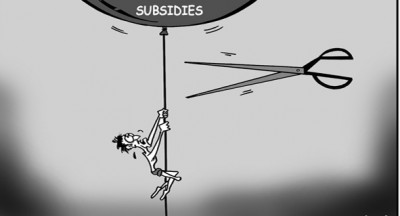
There. Pac Hydro’s write-down proves it: wind farms don’t run on wind, they run on subsidies (see our post here).
The wind industry was created by the mandated target set by the LRET – and the $billions worth of RECs directed to wind power outfits at power consumer expense, issued under it.
Without the guaranteed transfer of $billions worth of RECs, wind power outfits would be out of business in a heartbeat – which explains the wind industry’s desperation to maintain the mandatory LRET at all costs.
It also explains why wind industry rhetoric never seems to match reality. Or, as the Americans put it, why “money talks, and bullshit walks.”
Wind Turbines: Even Worse Than We Feared
Russell Lewis
Most of the criticism of wind turbines until now has, with every justification, been directed at their economic folly and spectacular inefficiency. They only work when the wind blows above 7 mph; in a good year they typically operate at a quarter of their stated capacity, and they shut down when the wind blows too hard – typically in excess of 50 mph. And for the vast tracts of land they take up, they also have a low power density, producing only 1.2 watts per square metre – compared with 53 watts per square metre for a gas power station. In a small country like Britain, what a criminal waste of space!
What then is the point of building them?
The answer is that their installation is entirely subsidy- and penalty-driven. Power-producers are required by law to produce a growing percentage of their output from renewables or pay someone else to do so. Some may shrug their shoulders and accept the official explanation that this is the price we pay for preventing future global warming, through the reduction of carbon emissions. This is based on the mistaken assumption that intermittent renewables are a better way to reduce CO2 than gas or nuclear power. But as the penetration of intermittent renewables rises, the only way they can be accommodated for backup when the blades are not turning requires an unseen armada of mobile and dirty diesel generators to quickly match power demand, whose emissions make a joke of the professed aim of CO2 reduction.
The good news is that the tide is turning. The Prime Minister – or someone close to him – made a famous outburst about ‘green crap’ and seems finally to have realized that people don’t like ballooning fuel bills. Some also have the most powerful of reasons for hating them in terms of pounds, shillings and pence. There is mounting evidence that the proximity of wind turbines threatens the value of your property. Not long ago, a study by the London School of Economics showed that the value of homes close to wind farms could be slashed by 11 per cent.
There may be even more extreme consequences. There have been cases in America where an individual possessing a home near a wind farm found that it was unsellable. All this is without even considering the report that claims that only one in ten wind farm fires are reported. The real number has been about 1500, including one in North Ayrshire in 2011 in which a 300 foot turbine was burnt out. In general, the report says, these fires tend to be ‘catastrophic’ – ie the end of the turbine and a total loss to the taxpayer and the investor.
There are other very good reasons why people don’t fancy having a wind turbine near their home.
Scientific studies have shown that wind farm noise harms sleep and health, causing headaches, anxiety and stress. Apparently it is not what you can hear that does the damage, but what you can’t. Known as the infrasound, or low frequency noise, is what does the physiological damage.
This is perhaps the main factor in the rise of anti-wind energy groups of which there are now 400 in Europe. They are well represented even in Denmark – often considered the Mecca of wind energy enthusiasts. The consensus among the opponents of wind turbines is that they should be located at least two kilometres from any residence. No such requirements however exist in the UK.
Wind turbines are not merely damaging to humans paradoxically for environmentalists, they are lethal to wildlife. According to the research group SEO/Birdlife in Spain alone, these avian death traps kill 18 million birds and bats every year. Of course it’s not that easy to measure, because to use the jargon, you can’t account for ‘scavenger removal’ – and offshore at sea, well, pick a number.
The unfortunate thing is that birds, particularly rare-ish soaring birds like eagles, disorientated by the artificial change in air currents from wind turbines, or migrating flocks blindly following each other and a magnetic field, are very prone to get the chop.
In America there has always been official concern about protecting rare and valuable species of birds like the bald eagle. The Obama administration, which has been active in prosecuting oil, gas and other businesses for harming protected bird species, has turned a blind eye to the deaths of the same creatures caused by wind turbines.
It’s a tragedy then that the Royal Society for the Protection of Birds is far too committed to policies aimed at protecting the planet against global warming at the end of the century to make a fuss about the appalling massacre of birds by wind turbines in the present day. The situation is even worse for bats, for which there is much protective legislation to conserve them as they breed very slowly. That is why the finding that German turbines slay three million bats a year is particularly worrying for nature lovers. For bats, their final moments are different to birds and this type of death is known as barotrauma. They are attracted to turbines as they think they look like tall trees from which to attract a mate. But on approach, the dramatic change in air pressure near the turbine blades gives them the bends and may cause their lungs to explode.
As if all that wasn’t bad enough, wind turbines are not only dangerous but ugly and ever more of a blot on the landscape. The latest extra-large version is as
tall as the London Eye!
Studies show that they are driving tourists away from the loveliest parts of our countryside. Over two-thirds of those surveyed were put off visiting Scotland by wind farms. The Scottish Nationalists have particular reason to be worried because it is their announced intention to produce 100 per cent of Scotland’s electricity from wind power. The trouble with this policy – apart from its economic insanity – is that, since the wind farms are generally at a long distance from their market in the urban areas, their pernicious growth must mean swathes of the countryside being populated with pylons, making the landscape even more unappealing to visitors and odious to the locals.
One might expect that all landowners would heartily welcome the boon offered them by the hugely subsidised wind farms. However The Duke of Northumberland, the biggest landowner in England, who owns 100,000 acres, has no time for wind farms and refuses to have a single wind turbine on his domain. The Crown Estate also has large acreages suitable for wind farms, but Prince Philip has expressed strong opposition to them. He told a wind farm developer that wind farms were absolutely useless, completely reliant on subsidy and an absolute disgrace. ‘You don’t believe in fairy stories do you?’ he asked Mr Wilmar of Infinergy, who expressed surprise at the Prince’s very frank views.
I really can’t think of anyone I’m happier to have trumping my detestation of these evil, misbegotten and inhuman machines.
Russell Lewis was a journalist on the Daily Mail. Picture: whirlopedia.com:wind-turbine-accidents.htm
———————————————————————————————–
Important letter date august 10th 2014 from Waubra Fondation to Ms Katarina Dea Zetko,
Civil Initiative for the Protection of Senožeška Brda (Slovenia): http://www.senozeska-brda.si/
“In my opinion, based on my first hand knowledge of what has happened to wind turbine neighbours in Australia and elsewhere internationally, this is a recklessly irresponsible and dangerous plan and will inevitably result in serious adverse health effects for citizens of Slovenia who are neighbours of such turbines, out to significant distances. This is happening around the world, and I know of no reason why Slovenian citizens will not have the same adverse health impacts being reported internationally. Breaches of UN Convention Against Torture
Decisions made by public officials to approve such an unsafe development, or to allow a development to continue to operate in spite of directly causing adverse health consequences such as sleep deprivation and “sensory bombardment from noise”, could be held to be breaches of the UN Convention Against Torture. Both “sleep deprivation” and “sensory bombardment from noise” have been acknowledged as methods of torture by the Physicians for Human Rights. The UN Committee Against Torture has also specifically acknowledged that sleep deprivation is used as a method of torture”. Download letter here
Why the oil majors are backing away from renewable energy
David Ferris and Nathanial Gronewold, E&E reportersEnergyWire: Friday, October 3, 2014
Chevron Corp.’s new solar and geothermal business seemed to be having a great year. In January, after just one year in operation, it had established projects with returns of 15 to 20 percent and had plans to build several geothermal plants in Europe.
Then Chevron changed its mind. In a series of transactions, it sold off the unit, as well as others that do smaller solar installations and energy efficiency upgrades, and canceled a pair of giant solar farms in Hawaii, according to reports fromBloomberg Businessweek. With that, the oil majors have beaten a near-final retreat from solar power.
Why? It is a puzzling question for those who have watched the oil majors bestow their dollars and attention on clean energy and a few years later abruptly walk out the door.
Three of the supermajors — BP PLC, Chevron and Royal Dutch Shell PLC — have since 2000 taken on ventures in wind, biofuels and geothermal. All took big positions in solar, sometimes more than once. They were positioned to compete or even dominate.
Now, as solar is gaining market momentum like never before, the oil majors are nowhere to be found.
Analysts who cover the industry say it isn’t that oil and gas companies want to kill their brood of adopted low-carbon children, or that they even perceive them as a threat. They have a straightforward answer: The oil business is changing, and times are tough. Projects that made sky-high profits are a little lower in the sky.
“It’s not their strong suit to be spending a lot of money and time on [renewables] when they are definitely challenged in their core industry,” said Lysle Brinker, an oil and gas equity analyst at IHS.
Even those depressed profits tower over the margins earned in renewables, where projects are slow, bureaucratic and hard-won. If there are any profits to be had, they are too meager to impress an oil executive.
But there is yet another explanation.
An executive who has worked with both Chevron and the solar industry says that although the oil company was happy to nurture solar power with seed money, it lost interest when the investment began to require real money — real money for a business that, at its heart, it didn’t understand.
It’s all about the core
When talking to experts about why the oil industry has turned away from renewables, the word “core” comes up a lot. An oil industry buffeted by change has needed to return to the basics, even though the basics are a lot more exotic than they used to be.
In recent years, the major oil players have been absorbed with searching for and extracting fuels from a bewildering array of new places.
A growing portion of oil companies’ portfolios these days is in the “unconventionals” — the oil sands of Alberta, the natural gas formations of the Marcellus Shale, the ultra-deep waters of the Gulf of Mexico, the frigid Arctic, and the tight oil reserves that underlie South and West Texas and western North Dakota.
They require new techniques that are extraordinarily risky and expensive, and so the companies have turned their venture dollars away from “clean” technology and toward innovations in drilling, subterranean mapping and hydraulic fracturing.
The supermajors were “caught quite unaware of the potential of shale,” said Chirag Rathi, an energy analyst at Frost & Sullivan. A flood of shale gas has upended America’s fuel markets in recent years, and it took a lot of investment to get there. “All those trends kind of meant that it was important to focus on the core again,” Rathi said.
Meanwhile, the big oil firms are finding themselves less welcome at the foreign oil fields that have been mainstays for decades. National oil companies like Aramco of Saudi Arabia and Petronas of Malaysia are renegotiating old contracts and exerting more control over their turf, Rathi added.
The Arctic Circle provides just one example of the difficulties. Shell has so far spent $6 billion on setting up drilling rigs in the Chukchi Sea between Alaska and Russia but has been beleaguered with safety and equipment problems (EnergyWire, July 18). Two weeks ago, Exxon announced it would scuttle plans to drill in Russia’s Kara Sea because of Western sanctions against Russia related to its aggressions in Ukraine.
Shell is in trouble with investors for stagnant production figures and rising exploration and development costs that are eating away at company revenues. In response, the company is in the midst of a major restructuring effort, vacating much of the U.S. shale oil business and focusing investments instead on offshore exploration and production and other projects that could help the company make major gains in its global oil and gas output figures.
Meanwhile, as venture dollars have become more precious, those earlier investments in renewable energy projects often struggled or floundered.
KiOR Inc., a once-promising maker of biofuel from wood chips and switchgrass, is in severe financial trouble. In general, biofuels have labored under uncertainly about how much the federal government will mandate to be blended into fuels. The renewable energy production tax credit expired at the end of 2013, depressing the profits of all future wind farms.
Since the tax credit expired, “there wasn’t much meat in the market,” Rathi said.
“I have this much money to spend,” said Daniel Choi, an energy analyst at Lux Research. “Am I going to use it to buy new plots of land, to develop this plot of land, or will I allot it to investing in a new renewable energy company?”
Investments in wind and solar shine, then fade
Remember a few years ago, when BP said it stood for “Beyond Petroleum” and Chevron’s ads declared, “It’s time oil companies get behind the development of renewable energy”?
A survey of the oil majors’ holdings reveals that the investments that gave those claims a ring of truth are now mostly stalled or sold. What momentum exists is near the oil majors’ core competencies: biofuels, geothermal and solar projects that make fossil fuel extraction more efficient.
Shell and BP still have significant holdings in wind but seem to hold them at arm’s length.
Shell WindEnergy Inc. pulled out of a major project in California two years ago but still operates eight U.S. wind farms that comprise 720 wind turbines, said Shell spokesman Ray Fisher. The corporate parent, Royal Dutch Shell, maintains a small wind energy branch, though its future is only vaguely defined. Investors are watching for signs that Shell may move out of the wind business in the coming years.
BP invested $3 billion in wind farms starting in 2005, eventually operating 16 of them in nine states, producing 2,600 megawatts of power. In 2013, as the company struggled to pay for the damage from its Gulf of Mexico oil spill, it was determined to sell them. Then, a few months later, it decided to hold onto wind after all because no one offered a good buying price.
“Despite receiving a number of bids, the company determined that it was not the right time to sell the business,” said Jason Ryan, a BP spokesman.
Investments in solar photovoltaics (PV), where the oil majors were once formidable, have vanished.
BP at one point boasted of having the most efficient thin-film solar panels in the world, and in 2001 hatched a plan to put solar on all new BP service stations. In 2009, it arranged to build solar plants on the roofs of Wal-Mart stores in California (ClimateWire, April 23, 2009). But BP shut down these operations in 2011.
“The continuing global economic challenges have significantly impacted the solar industry, making it difficult to sustain long term returns for the company, despite our best efforts,” BP said in an internal letter to staff.
Shell in 2002 bought a German solar company (from Siemens AG), established it as one of the leaders in the then-tiny U.S. solar market, and then sold it back to the Germans (to SolarWorld AG) in 2006.
Chevron’s exit has been the most recent. In the wake of its divestments this year, Chevron’s holdings are limited to a few solar photovoltaic projects in California and a small wind farm in Wyoming. It says it is experimenting in solar technology.
The one oil company that maintains a vital interest in solar panels is Total SA, the French petroleum giant. In 2011, it spent almost $1.4 billion to buy a controlling interest in SunPower Corp., one of the U.S.’s leading solar panel makers, which it runs as a semi-independent arm.
Clean, as long as it’s core
For the oil industry’s other big players, though, the remaining oomph in solar power is in what is called “enhanced oil recovery.” Mirrors are positioned to bounce sunbeams to a central point, where a fluid is superheated to create steam. The steam, in turn, is injected in the ground to increase the productivity of an existing oil well.
Chevron has a demonstration enhanced oil recovery plant in Coalinga, Calif., that has 7,600 mirrors, while Shell has allied with GlassPoint Solar Inc. on a project in Oman.
In geothermal power, which uses hot subterranean rocks to create steam that makes electricity, Chevron operates sizable plants in the Philippines and in Indonesia.
One vein that almost all the supermajors still pursue is biofuels, though often on a smaller scale than a few years ago, according to Bloomberg.
Chevron and Exxon Mobil Corp. both dabble in advanced biofuels research. By comparison, Shell and BP are more bullish. Shell has a deep history with biofuels that spans about three decades, said Shell’s Fisher, adding that Shell is one of the world’s largest distributors of biofuels and that capacity expansions are ongoing. BP’s green-fuels scope includes the largest bioethanol plant in the United Kingdom, operated with DuPont, and three mills in Brazil that help convert sugar cane into ethanol. In 2012, BP scrapped plans for a $300 million cellulosic ethanol refinery in Florida.
One name that rarely enters the conversation, when it comes to renewables, is Exxon Mobil.
America’s second-largest company by gross revenue showed relatively little enthusiasm for renewable energy projects and ventures in the past, even as interest in renewables grew prominently in 2008 and 2009, and the firm largely maintains this attitude today.
Exxon Mobil officials have also expressed deep skepticism of electric cars at past events, arguing that it was unlikely that advanced batteries would ever match the energy density that is contained in liquid petroleum fuels.
Exxon Mobil does, however, support renewable energy research indirectly, as a sponsor of the Global Climate and Energy Project, a research initiative at Stanford University that exists to “conduct fundamental research on technologies that will permit the development of global energy systems with significantly lower greenhouse gas emissions,” according to the GCEP website.
Chevron’s 2 flirtations with solar
When it comes to understanding why the big oil companies can’t seem to embrace clean energy, the experience of Robert Redlinger proves instructive.
Redlinger began at Chevron in 2003, when it bought the energy contracting company he worked for, Viron Energy Services. Redlinger headed up Viron’s distributed solar business and became a leader in Chevron’s clean energy subsidiary, Chevron Energy Services. By the mid-2000s, Chevron Energy Services had become the second-biggest solar integrator in California. It built ground-mount systems and solar canopies, and on rooftops.
But by 2007, Redlinger said in an interview, it was becoming clear to him that solar panels were becoming a commodity and that Chevron would make tiny profits.
So at his prodding, Chevron expanded into building utility-scale plants. Redlinger headed the team that secured attractive sites for solar farms. For a brief time, it appeared that a major oil company would have been in a leading position in what is now one of the world’s top utility-scale markets for solar.
Along with the budding projects came the need for letters of credit and deposits to create interconnections to the grid. It was when it began to require millions of dollars of capital investment that Redlinger’s bosses started having second thoughts. “In fact, my superiors at Chevron Energy Solutions never even took it to the corporation and never asked for the funds because they knew it would be rejected,” Redlinger said in an email.
By 2009, Chevron had sold its solar assets, and Redlinger left the company in 2010.
“There was always a disconnect,” Redlinger said of Chevron’s relationship with solar. “It never really had the buy-in of the corporation. It was always a bottom-up effort of the staff rather than a top-down strategy directed from above.”
Around 2012, after Redlinger’s departure, Chevron Energy Solutions again got an infusion of cash from its parent to pursue big geothermal and solar projects. And again, last month, the company got cold feet.
Do oil companies understand electrons?
Many aspects of the electricity business were unfamiliar and uncomfortable to an oil executive, Redlinger said.
One was debt. Like most equipment-intensive industries, the solar industry incurs lots of debt to build its projects. But Chevron’s leaders were allergic to incurring debt and employing other financing structures commonly used to build electric infrastructure. The oil industry, with its huge cash reserves and extraordinary appetite for risk, is used to paying costs from its own pocket. One loan on an oil field gone bad can bankrupt an entire company.
As a result, Redlinger said, he could never make the case that a solar project, despite its lower returns, in the end could be as profitable as an oil project if you structured it differently.
Furthermore, Chevron executives bristled at the relationship with a solar plant’s primary customer — the electric utility.
The oil companies are used to high risk and high reward. The utilities offered low risk, low reward — and an inferior bargaining position. Utilities are monopolies, and a monopoly defines the terms. Chevron does tango with the utilities as the operator of some big cogeneration electric stations. But when it came to building solar plants, Chevron was distressed by its lower status.
“The utility business is not a good one,” Redlinger said, “unless you’re a utility.”
Redlinger addressed a question that occurs to many when they think of the oil companies and renewable energy. The oil majors are better than anyone at energy. Solar, wind and geothermal power are all energy. So what’s the problem?
The problem, Redlinger said, is that the oil companies know molecules, and solar isn’t about molecules. It’s about electrons.
What the oil companies do, Redlinger said, is one part exploration — geology, geophysics, computer simulation of oil reserves, drilling and heavy earthwork. The other part is chemical engineering, massaging chemical bonds with treatment and heat to convert crude into usable fuels like diesel and gasoline.
What solar and other electricity-generation business do, by contrast, is electronics engineering and manufacturing. “The electrons business is just not core to what the oil majors do,” Redlinger said.
“It’s not that the oil companies can’t get good at it,” he said. “They’re very, very talented and have very good personnel. The question they have to ask themselves is why. If you have a business model that is profitable, and will remain profitable for 20 or 30 years, and that takes all your resources to remain profitable, why change it?”
The United Nations is preparing the world for an overt admission that Ebola is airborne. Anthony Banbury, the United Nations’ Ebola response chief warned of the “nightmare scenario” that Ebola is possibly now, and probably soon will be an airborne pathogen. This is precisely what I reported when I cited several peer review studies which demonstrated that Ebola was already known, by many researchers in the scientific community, to be airborne.
In order to maintain any semblance of credibility, the CDC, through the process ofincrementalism, is moving towards the position that Ebola is indeed airborne. The clearly constitutes an about face reversal of the CDC on this issue and this about face is clearly on display in the following paragraphs in which the very words of the CDC are usedto expose their lies and subsequent endangerment of the public health and welfare.
This Was Then
The Original CDC Position on How is Ebola Spread
The following was on the CDC website in early September and this is the mantra that the mainstream media is parroting as the “official and irrefutable doctrine of science”.
“The virus is spread through direct contact (through broken skin or mucous membranes) with blood and body fluids (urine, feces, saliva, vomit, and semen) of a person who is sick with Ebola, or with objects (like needles) that have been contaminated with the virus. Ebola is not spread through the air or by water or, in general, by food; however, in Africa, Ebola may be spread as a result of handling bushmeat (wild animals hunted for food) and contact with infected bats.”
“Ebola is killed with hospital-grade disinfectants (such as household bleach). Ebola on dried on surfaces such as doorknobs and countertops can survive for several hours; however, virus in body fluids (such as blood) can survive up to several days at room temperature.
If a symptomatic patient with Ebola coughs or sneezes on someone, and saliva or mucus come into contact with that person’s eyes, nose or mouth, these fluids may transmit the disease.
Ebola on dried on surfaces such as doorknobs and countertops can survive for several hours; however, virus in body fluids (such as blood) can survive up to several days at room temperature.”
A CDC released a very hastily prepared advisory entitled Interim Guidance about Ebola Virus Infection for Airline Flight Crews, Cleaning Personnel, and Cargo Personnel. This smoking gun document reveals that the CDC is clearly concerned about likely airborne contamination of Ebola. The CDC urges airline staff to provide surgical masks to potential Ebola victims in order “to reduce the number of droplets expelled into the air by talking, sneezing, or coughing”. The phrase “expelled into the air” means that there is clearly the existence of the “airborne transmission of Ebola “.
Of course, the aforementioned facts do not constitute new revelations to the CDC and the NIH. On May 8, 2002, over 12 years ago, a National Institute of Health publication stated that airborne transmission of Ebola “cannot be ruled out”. And for 12 years, the CDC has been publishing lies to contrary.
Doctors Are Dramatically and Openly Questioning the Integrity of the CDC
“If they’re not lying, they are grossly incompetent,” said Mobley, a microbiologist and emergency trauma physician from Springfield, Mo.
Mobley said the CDC is “sugar-coating” the risk of the virus spreading in the United States.
“For them to say last week that the likelihood of importing an Ebola case was extremely small was a real bad call,” he said.
“Once this disease consumes every third world country, as surely it will, because they lack the same basic infrastructure as Sierra Leone and Liberia, at that point, we will be importing clusters of Ebola on a daily basis,” Mobley predicted. “That will overwhelm any advanced country’s ability to contain the clusters in isolation and quarantine. That spells bad news.”
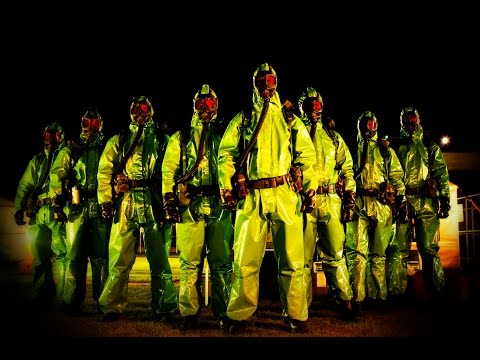
To call attention to the fraud being perpetrated by the CDC, Dr. Mobley dressed himself up in a biohazard suit and paraded through the Atlanta airport to call attention the danger that the Center for Disease Creation (CDC) is posing to the general health and welfare of the American people.
Dr Lisa Brosseau and Dr Rachael Jones, in a research article published by CIDRAP, the Center for Infectious Disease Research and Policy, clearly state that Ebola currently has “unclear modes of transmission…We believe there is scientific and epidemiologic evidence that Ebola virus has the potential to be transmitted via infectious aerosol particles both nearand at a distance from infected patients, which means that healthcare workers should be wearing respirators, not facemasks…and the CDC’s contention that Ebola is only communicable via direct contact is inaccurate.”
The Omnipresent Threat of Bioterrorism on American Soil
As recently as this week, ISIS has clearly, and unmistakably threatened, the United States and their allies with spreading the Ebola virus within those countries if they continue to wage war on the organization inside Syria and Iraq. It is now rumored that Jihadist suicide “disease spreaders” will deliberatively allow themselves to be infected with Ebola and expose the American public before their suicidally imposed demise. Don’t believe it? Well, did you believe 19 terrorists only armed with box cutters could bring down the four planes 9/11 narrative perpetrated by the Bush administration? Of course this rhetorical question is only for those who believe everything that is broadcasted on CNN and their controlled opposition, FOX News.
Gross Incompetence by Local Health Officials
Dallas health officials are a prime example that even local health officials cannot be trusted to ensure the safety of the public and even its own employees.
Dallas ParamedicGeoffrey Aklinski, has expressed his concern that the ambulance he was driving was the same ambulance used to transport the infamous Ebola patient, Thomas Duncan, a couple of days earlier. in a discussion on Facebook stated that ““All the people in the back of the ambulance 48 hours later before they finally took the ambulance out of service… none of them have been contacted. None of the paramedics that were on that shift and went in the ambulance were contacted. I’ve been off three days now. No one contacted me and I was in and drove that ambulance after it was infected…This is definitely a concern and exposed workers have not been contacted or tested…I had to call into control in Dallas at 8 pm and complain to get evaluated… Three days after the fact… I had to demand exposure testing and they are reporting following up with all the people in the ambulance??? Bull crap!!! They haven’t even followed up with the ten firefighters that were on duty Sunday.”
Obama’s Two-Pronged Approach to His Overt Malfeasance of Office
By my count, there are over 50 peer reviewed studies which demonstrate that Ebola can be transmitted through various airborne means. Further, it is an indisputable fact that Ebola cannot be contained in Africa. Subsequently, this current President needs to answer two very pressing questions:
1).Why isn’t air travel, both through direct and indirect flights from West Africa, being immediately banned under the name of national security?
2). Why haven’t you used your Executive authority to close the southern border given the threat of bioterrorism?
The CDC, a private corporation operating with a government charter, owns the patent on Ebola. This would only be possible if Ebola had already mutated from its original state. This means that it was more than likely weaponized. Maybe we should ask the boys at Ft. Dietrich how that could happen? Having the CDC oversee the diagnosis, institute mythical containment procedures and subsequent treatment is like having the fox watch the henhouse. Because the CDC owns the patent to Ebola and all strains within 70% of the original pathogen, they will make money on all treatment of Ebola through royalties because treatment would constitute a violation of their intellectual property rights under US patent law. The inescapable conclusion is that the CDC will make money on the spread of Ebola throughout the United States. If this is such an outrageous allegation, then I publicly call on the CDC to renounce all claims to intellectual property rights on Ebola and any resulting treatments. I make the same challenge to the NIH who owns the patent on the 8 year old vaccine for Ebola created by Crucell.
Until these public renouncements take place, I heretofore refer to the CDC as the Center for Disease Creation and the NIH as the National Institute of Harm. I am also calling on President Obama to revoke the charters that allows the CDC and the NIH to act with impunity as a monopoly with selfish purposes being perpetrated upon the people of this nation.
Final Questions
Why has the State Department ordered 160,000 HAZMAT suits? My immediate suspicion is that these suits will be needed for the Russian and Chinese troops, operating under the guise of the UN, to enforce medical martial law.
Please spare me the emotional rhetoric in response to this article. I have provided documented links to the claims presented here. In response, I only want to see the same which may serve to refute my position that the people of this country are deliberately and purposefully being endangered for purposes of profit and political control. Until I see documentable proof that this position is wrong and the evidence presented in this article is in error, I stand by this position.
PUBLISHED: 18:11 GMT, 5 October 2014 | UPDATED: 10:14 GMT, 6 October 2014
Vince Cable has launched an astonishing broadside against the party’s green agenda, saying that it imposes too high a cost on industry.
The Business Secretary said industries with high energy costs such as steel, are struggling against their international competitors because of soaring electricity costs.
Chancellor George Osborne has given £250million compensation to ‘energy intensive’ industries, but Mr Cable admitted this ‘doesn’t go the whole hog’.
It is a surprise admission from a Liberal Democrat, because the party is passionate about renewable energy which is funded by levies on households and businesses.
+4
Vince Cable today warned Lib Dems not to overlook the fact that pollution could simply be ‘exported’ abroad if green taxes put British companies out of business
Press Release 06/10/14
UK Business Minister Finally Admits Carbon Taxes Are Damaging British Businesses London, 6 October: The Global Warming Policy Forum has welcomed Vince Cable’s belated admission that the government’s climate policy is damaging British businesses.
Of course it is not just the Carbon Floor Price that is driving up the cost of energy, but so are the ever rising subsidies for green energy which will amount to £8 billion p.a. by 2020.
Mr Cable is right to highlight the growing risk to British businesses that “are struggling against international competition because of the cost of energy.”
“At a time when most major economies are turning to cheap and abundant fossil fuels, Britain alone seems prepared to risk its economic competitiveness by adopting policies that are making energy ever more expensive,” said Dr Benny Peiser, the GWPF’s director.
“Given the manifest reluctance of major economies to follow Britain’s unilateral policy, the government should now suspend the fourth carbon budget and all post-2020 climate targets,” he added.
The Australian government – and ministers Greg Hunt and Ian Macfarlane in particular, like to tell everyone how much they support renewable energy. But they seem to be doing their level best to trash the industry in Australia.
Key data released late last week underlines the disastrous state of the large-scale renewable sector: for all intents and purposes, it doesn’t exist.
Bloomberg New Energy Finance data shows that Australia is on track to record its lowest level of asset financing for large-scale renewables since 2002 – as just $193 million was committed in the third quarter of the year. From ranking No 11, in the world in 2013, Australia has fallen behind Algeria and even Myanmar.
Australia, which should be one of the world’s leaders in the industry, is seeing its industry collapse. The three biggest Australian investors in renewable energy are in deep trouble.
Industry Funds Management is being forced to write down the value of Pacific Hydro, the largest specialised investor in renewables in the country, by $685 million, according to the Australian Financial Review. This from a business that was to have been floated a year or so ago with a value of more than $2 billion.
Infigen Energy, the largest listed investor in renewables, has said it is facing massive writedowns, and potentially taking dramatic action to protect shareholder funds. It has brought Australian investments to a halt. So has Silex Systems, which has effectively abandoned the solar industry.
International investors have also made clear that their investment in Australia will end soon un less policy stability is restored. These include First Solar, Chinese wind turbine leader Goldwind, and numerous others. The US-based Recurrent Energy has already packed its bags, Spanish based FRV has said its $1.5 billion pipeline is at risk.
The reason for this? Despite the protestations of the Abbott government, it is the uncertainty they have created. Each of the private companies has cited uncertainty about the RET, a situation that Hunt and Macfarlane know only too well because they kept complaining about it in opposition when the RET legislation was delayed in 2009 and 2010.
IFM CEO Brett Hinbury said the two biggest factors affecting the company was the fall in energy demand – and the uncertainty around the current laws.
As BNEF explains:
“The severe downturn in investment – and total freeze in private investment – has been caused by the Abbott government’s review of the Renewable Energy Target,” it writes.
“Its controversial review panel recommended scrapping the target or radically diminishing it in August, but the government is yet to announce its position and faces blockage in the Senate to changes.
“Private investment is likely to remain frozen until the government’s position is clarified, which is expected in the coming months. However the hiatus in investment will continue for several years if the recommendations of the review panel are not rejected.”
Of course, it makes an absolute nonsense of the claims by Macfarlane and Hunt that the government supports the industry. They understand full well the impact of their decision to appoint a group of climate science deniers and fossil fuel lobbyists to “review” the RET under the tutelage of Dick Warburton, and of comments by Treasurer Joe Hockey that he finds wind turbines “absolutely offensive” and from Prime Minister Tony Abbott, who complains about cost impact.
This is despite the findings of the Warburton review that the target could be met, and would deliver cost savings to consumers. Still, it recommended the RET be stopped in its tracks or halted, for fear of a “transfer of wealth” from fossil fuel generators to consumers.
The irony is that even the paltry $193 of new finance in the third quarter came from initiatives put in place by the previous Labor government, and by institutions that the Abbott government wants to shut down.
A total of 7 projects have been financed since the start of the calendar year – all are the subject of government funding through the Australian Renewable Energy Agency, Clean Energy Finance Corporation or state governments. None were backed by non-government lenders or investors.
In the first two quarters of the year, there was just $45 million of financing.
This contrasts with the continuing surge in rooftop solar – mostly for the purposes of self consumption – and the growing boom in renewables investment across the world.
Globally, clean energy investment in the first three quarters of this year was 16 per cent ahead of the same period of 2013, at $175.1billion.
The highlight of the third quarter was a leap in Chinese solar investment to a new record of $12.2 billion. China is building a large number of utility-scale photovoltaic projects linked to its main transmission grid.
In Japan, investment grew 17 per cen to $8.6 billion, with solar again the dominant renewable energy source. Other countries showing a bounce in investment in the latest quarter were Canada, France and India, while there were significant projects financed in a number of new markets, including Myanmar and Sri Lanka.
Michael Liebreich, chairman of the advisory board at BNEF said the figures were heartening, but still not enough to herald the “rapid transformation of the power systems” that is required. That would require investment of $200 billion and $300 billion a year.
The third quarter figures showed that global investment in wind farms, solar parks and geothermal plants reached $33.3 billion, a slight rise on year earlier figures, while investment in small-scale projects such as rooftop solar was $18.3 billion, up nearly a third from a year earlier.
Of course, there is a way that Hunt and Macfarlane can deliver on their claim that they really do want the best for the Australian renewable energy industry. That is to quickly reach a deal with the Labor Party and the industry on the way forward.
The Labor Party has indicated it may be prepared to defer the target to 2022, the Clean Energy Council has indicated it could accept an exemption for the aluminium industry. All the Coalition government has to do is to drop the ideological nonsense from the Warburton Review, and accept that Australia has to follow the rest of the world and put in place a rapid de-carbonisation of its electricity industry.
The late Dr. Michael Crichton in a speech at the California Institute of Technology made the following observation:
“I want to …talk about … the rise of what has been called consensus science. I regard consensus science as an extremely pernicious development that ought to be stopped cold in its tracks. Historically, the claim of consensus has been the first refuge of scoundrels; it is a way to avoid debate by claiming that the matter is already settled. …
“Let’s be clear: the work of science has nothing whatever to do with consensus. Consensus is the business of politics. Science, on the contrary, requires only one investigator who happens to be right, which means that he or she has results that are verifiable by reference to the real world. In science consensus is irrelevant. What is relevant is reproducible results … .
“There is no such thing as consensus science. If it’s consensus, it isn’t science. If it’s science, it isn’t consensus. … .” … Consensus is invoked only in situations where the science is not solid enough. Nobody says the consensus of scientists agrees that E = mc². Nobody says the consensus is that the sun is 93 million miles away. It would never occur to anyone to speak that way.”
In recent decades, the term consensus science has come to be associated with climate change/global warming. The appeal to a consensus has been used to avoid honest and open debate about the extent of human influence on the climate system. Climate change has become the poster child for the widely documented corruption in many fields of science resulting from competition for funding, tying funding to specific policy outcomes, and the increasing pressure to publish or perish.
Norman Rogers in the May 14 issue of the American Thinker began his article citing President Eisenhower’s farewell address warning that a “scientific-technological elite” dependent on government money would exert undue influence on government policy”. Scientific advice to policy makers has become heavily influenced by political agendas and rewards to organizations and scientists that provide the necessary scientific support for political objectives. In the case of climate change, the influence can be traced back to the White House and Al Gore.
Climate change is the primary example of how science can be perverted by money and politics. Today there is an international climate establishment that is supported annually by billions of dollars to advance a war on fossil energy, promote an agenda of fear, and undermine capitalism’s market driven system. Anyone who does not subscribe to the climate orthodoxy is subjected intimidation and not to subtle threats to their careers. Some climate advocates have called so called skeptics war criminals who should be jailed, the equivalent of holocaust deniers, flat earthers, and industry pawns.
The crime of these skeptics is to challenge the asserted consensus that human activities involving fossil energy and economic development are threatening the planet. Advocates point to computer model results that project dramatic increases in global temperatures that will lead to extreme climate events—more intense hurricanes, extended droughts, and sea level rises that threaten coastal cities for example.
To increase their power and influence, the climate establishment has adopted the mantra that the “science is settled” and 97% of scientists agree that human activities are the primary cause of climate change over the past 50 plus years.
The Intergovernmental Panel on Climate Change (IPCC) does not claim that the science is settled. Its latest report has a chart that shows level of understanding about major climate forcing processes. Many are shown as low or medium levels of understanding. Throughout its report, the IPCC refers to topics reflecting great uncertainty—natural variability, cloud formation, climate sensitivity, for example. The now 18-year pause in warming has so befuddled the establishment that it has come up with 52 different explanations.
In making projections of future global temperatures, the IPCC relies on over 50 models, each of which reflects different assumptions about how the climate system functions. None of the models has been able to project actual temperatures or the pause. And, the only way these models can “back cast” past temperatures is by a process of adjustments. If climate science was settled, 50 plus models would be unnecessary and they would be highly accurate.
Finally, there is the claim that 97% of climate scientists agree that climate change is real and man-made. It is a bogus claim based on a paper by John Cook of the University of Queensland’s Climate Change Institute. Reviews of Cook’s work demonstrate that is a case of cooking the books. One of those critiques was by Richard Tol, a professor at the University of Sussex and an IPCC lead author, while the most detailed and quantitative was by Steve McIntyre—Climate Audit website. Other critiques have included articles in the American Thinker, Debunking the 97% Consensus on Global Warming, February 4, 2014, The New American, Global Warming “Consensus: Cooking the Books, May 21, 2013, and a blog The Collapsing Consensus by Christopher Monckton of Brenchley.
The Cook paper is a classic example of what Darrell Huff wrote about in his book, How to Lie With Statistics. The fact that the climate change establishment creates such misleading information to manipulate opinion is clear evidence that its scientific foundation doesn’t exist. It is also evidence of desperation because the climate is not conforming to its orthodoxy of dread.
Science has provided the foundation for tremendous advances in technology, innovation that have contributed to advances in human health and wealth. Its corruption threatens to undermine the potential future advances that will benefit the generations of tomorrow.