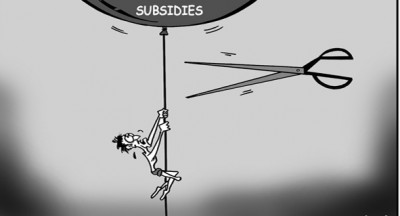
What d’ya Mean….It’s the wind’s Fault? You depend Upon the Weather? That’s Dumb!

Germans Blame “Missing Wind” for their Wind Power Debacle
yacht

Germany’s Debacle: 2/3 Of Wind Projects “Running Badly To Very Badly”… Case Of The “Missing Wind”
NoTricksZone
P Gosselin
20 September 2014

Germany-based European Institute for Climate and Energy (EIKE) here brings up a television report on the disappointing returns from wind parks, recently appearing on SWR South German public television.

The days of the media not questioning green energy are over.

Wind parks experienced a gold rush atmosphere, with thousands of turbines being erected over the last 15 years. Now the data are coming in on their real performance, and it looks bad. The German SWR TV report (can be viewed at Youtube) first presents the background on wind energy development in Germany and tells the story of “disappointed investors”, especially in the western German state of Rhineland Palantinate.

Initially investors’ expectations of getting rich on wind were high, the report says. Big returns were promised (between 400 and 800% in 2006). But for a wide majority that dream has shattered violently as losses mount.

“2/3 of all projects are running badly to very badly”

The SWR report at the 1:20 mark says the promises of huge returns were based on overly optimistic wind model forecasts. Werner Haldorf of the pro-wind-energy German Association of Wind Energy analyzed wind park performance and sums up the “surprising” results at the 1:38 mark:

We can say that one third of all projects have pleased the investors, or at least have been satisfactory – depending on how high or low the subjective expectations were, satisfied also with respect to the planning results. And two thirds of all projects are running somewhat badly to very badly.”

In his summary report he concludes:

SWF wind report

The origin of the plight for commercial windparks in Germany is the excessive “planning optimism” (Garrad Hassan) that was created among investors.”

Unexpectedly high repair, maintenance and insurance costs

At the 2:06 mark Daldorf tells SWF that the cause is “the missing wind, too much wind was planned, shoddy planning, improper planning, and unexpected (or falsely expected) high repair, maintenance, and insurance costs“.

These are the results of Daldorf’s nationwide windpark analysis. More and more it is becoming obvious that many of the investors were conned to some extent by Big Wind.

The missing wind

The report then focusses on the wind parks in the German state of Rhineland Palatinate. There the picture is even worse. The problem is that the necessary amount of wind needed to make the projects profitable there often just does not materialize. At the 2:51 mark economist Uwe Pilgram tells viewers that a turbine must run a minimum of 1700 hrs at full capacity each year in order to make a profit. But Pilgram says the average in 2013 was barely over 1400 hours.

Mainz Public Utility Director Detlev Höhner sullenly says that his community’s 20 wind plants put into operation between 2005 and 2010 so far have not made any profit and has made a “light loss”.

In the city of Trier (3:55) the result for its public utility is also disappointing. Public utility manager Rudolf Schöller:

We planned for average wind conditions, but in the first years we had relatively weak winds, and that’s why the wind yields were not so high.”

The reporter tells viewers that some years saw as little as 80% of the expected wind. The reporter adds: “That’s a disaster, experts tells us. A privately run company would certainly have gone bankrupt.”

The problem, the SWR reporter says (5:15), lies in false wind projections. Often times the planning goes out of control and is thus too costly. For the city of Mainz the new wisdom has become: “Don’t trust any planning office“.

Wind index adjusted downward three times!

At the 6:30 mark SWF brings in a wind energy expert Prof. Uwe Leprich, who warns that wind turbines “are not money printing machines” and says that the last years have seen weak wind conditions, yet hopes that will change in the years ahead. Interestingly he says that future wind conditions are based on data from the past and from these data a wind-index is computed for future planning. Here he admits (7:00 mark) that the wind index has been “adjusted three times” downward. Leprich blames the unpredictable weather conditions specifically in Rhineland Palatinate for the wind park profit problems.

The moderator then asks why that had not been foreseen (7:27 mark). Leprich replies that data from the previous decades were used, and blames “changes in wind conditions over the last few years”, adding that the wind index had to be adjusted nationwide. He repeats that especially in Rhineland Palatinate the wind conditions are especially difficult.

Skeptics’ warnings were ignored

Later Leprich says that “new framework conditions” have since been drawn up for planning future projects and that planners will need to be extra careful when siting wind projects. Readers here need to know that wind-park opponents and skeptics provided plenty of warnings on the poor profitability of wind parks, but in the mad and blind gold rush, no one heeded the warnings. Skeptics were branded crackpots, naysayers and complainers.

And what about the communities that have already falsely speculated (8:40) and lost money? Who pays for the losses, asks the moderator? Leprich doesn’t answer the question, making a huge circle around it. It was a rhetorical question anyway.

German green energy companies collapsing

The SWR report also looks at how Germany’s recent cut in subsidies for green energies and on how renewable energy companies are really feeling the pain. At the 9:30 mark the report features German renewable energy company Juwi., which years earlier had boomed mightily in the wind and solar businesses. In 2012 the company even broke the €1 billion mark in sales. But the report continues: “However 2 years later, everything is different“. Today the mood at Juwi is especially bleak as the company lays off its workers: Every third worker is getting a pink slip – 400 in all.

Government to blame…CEO drives expensive sports car

Without the subsidy nipple, the orders disappear and green energy companies die off. At the 12:20 mark the reporter says that the Juwi managing director Matthias Willenbacher blames the government for the misery, just before he is shown cruising in his ultra-high-priced sports car.

Back in the studio at the 14:00 mark, Leprich says the industry grew too fast and was led by inexperienced managers. He says the move into green energies was too rash and uncontrolled. He calls the massive investment in solar energy a mistake and concedes that the industry was too dependent on politics. At the end Leprich still thinks that solar and wind energy are the energies of the future – a seemingly obstinate position in view of the monumental debacle they are turning out to be. Leprich keeps clinging.

Historic industrial debacle

In reality, however, what we are actually seeing is the unfolding of one of history’s greatest industrial debacles, all driven by a fraudulent climate science and a deceptive industry. Slowly realizing they’ve been bamboozled, the German media, government and the numerous green energy promoters are scrambling to save face.

USA poised to follow same ruinous path

With the debacle now clear to the rest of the world, one would think other countries would sober up and be more cautious about following a similar path. They aren’t. Indeed it is truly astonishing that other countries, like the USA for example, are ignoring it all and are now attempting to put themselves on the very same ruinous path to repeat the German debacle, and to do so on an even grander scale.

If there ever was a definition for madness, this is it.
NoTricksZone

After pouring billions of euros into wind power, the Germans are left with spiralling power prices, energy market chaos (see our post here) and, now, collapsing wind power outfits. In concert with wind industry whining everywhere, German wind power outfits moan that their failing fortunes are all the government’s fault. Never mind that the wind industry circus would have never hit the road without a fat pile of government subsidies and mandated targets.

Irony is a subtle art; and one that the wind industry and its parasites struggle to identify, let alone master. After years of telling us how competitive wind power is with conventional generators, when the subsidies are pulled they yelp and do what any (inherently) unprofitable venture does: sack their workers.

And if the irony of biting the hand that feeds them isn’t enough, why not blame the vagaries of the wind?

STT loves the breezy optimism of Prof. Uwe Leprich, who says that “the last years have seen weak wind conditions“, but hangs on the hope that this “will change in the years ahead“. Although, unless the weather turns on consistently solid blows, the German wind industry could be in more trouble than Ned Kelly.

As Prof Leprich points out “wind park profit problems” are all about “unpredictable weather conditions” and goes on to blame: “changes in wind conditions over the last few years”.

Well fancy that! Who would have thought that wind power output – and, therefore, wind power outfits’ profits – might have a teensy weensy relationship with – ahem, ur – the wind?

That the fortunes of wind power outfits might wane a little when the wind doesn’t blow seems fairly obvious to an adult of moderate intelligence.

STT thinks seeing wind power outfits being done in by the vagaries of the wind is simply the inevitable result of an intellectual mismatch – of the kind that occurs when parents let toddlers play with sharp objects.

kites

Anyone Who Believes We Are In A Climate Catastrophe, I Think Is Deluding Themselves”…Dr. Caleb Rossiter

Politically Left Scientist Dissents – Calls President Obama ‘delusional’ on global warming

By: Climate DepotSeptember 23, 2014 12:29 AM with 8 comments

Climate Depot Exclusive

As President Obama attends the UN Summit climate summit in New York City, a fellow member of his Democratic Party, who is also a scientist, is publicity renouncing the Presidents climate change claims as “delusional.” Rossiter reversed his view on man-made climate change and now says belief in a climate catastrophe is “simply not logical.”

Climate Statistics Professor Dr. Caleb Rossiter of American University, is an outspoken anti-war activist, has a flawless progressive record on a range of political issues – and he is a climate skeptic.  Rossiter is a former Democratic congressional candidate and he campaigned against U.S. backed wars in Central America and Southern Africa.

In an exclusive interview for the upcoming documentary Climate Hustle, Rossiter, an adjunct professor in American University’s Department of Mathematics and Statistics, explained how he converted his views from accepting to challenging the so-called “consensus” on climate change after examining the scientific evidence.  Rossiter has taught courses in climate statistics and holds a PhD in policy analysis and a masters degree in mathematics. (Note: The upcoming climate documentary will reveal how politically progressive scientists and other former warmists are now challenging the “consensus” claims of man-made global warming. See: Watch Now: Morano on TV (humbly) promotes new climate film: ‘We are going to have the greatest climate documentary of al-l-l-l-l ti-i-i-ime!’)

“If we had this interview ten years ago, I would have said I never thought about climate and I assumed all the scientist’s reporting and telling a president and a prime minister in England are right,” Rossiter explained. (Note: Rossiter was joined this week by one of President Obama’s own scientists in expressing skepticism on global warming. See: Obama’s Own Scientist Runs Cold on Warming – Outs Himself as a Skeptic! – Physicist Dr. Steven E. Koonin, Undersecretary for Science during Obama’s first term and former professor of theoretical physics at Caltech)

Fired for ‘Diverging’ on Climate: Progressive Professor’s fellowship ‘terminated’ after WSJ OpEd calling global warming ‘unproved science’

When Rossiter called global warming “unproved science” in a Wall Street Journal OpEd in May 2014, he found that his credentials as a long-time progressive could not trump his climate skepticism. He was immediately terminated due to his ‘diverging’ climate views from his 23 year fellowship at the liberal group Institute for Policy Studies. See: Fired for ‘Diverging’ on Climate: Progressive Professor’s fellowship ‘terminated’ after WSJ OpEd calling global warming ‘unproved science’

Rossiter, whose research has focused on the construction of climate models and the statistical evidence of extreme weather,  started to suspect that climate-change data was what he termed “dubious” 10 years ago while teaching statistics at American University.

“So, doubling carbon dioxide, the higher you get, the less effect you get.  So logically, in a complex system, like atmosphere, you’re going lot of feedbacks that you don’t have much forcing at a certain point.  We really don’t know. It’s very hard to model, models are run way past their usefulness, because they are tuned,” Rossiter explained.

As a progress anti-war Democrat, Rossiter has found his climate skepticism ostracized him.

“I would say since 2004 I’ve been very lonely. I’ve been lonely working on the Hill for the Democratic Party. I thought I was the only person in the room with all my colleagues and all the members of Congress on our foreign affairs committee who held these views about the weakness of the data on climate change and the need to keep Africa developing,” he said.

Obama is ‘delusional’ on climate change

Rossiter has declared: “My blood simply boils too hot when I read the blather, daily, about climate catastrophe.”

“Obama has long been delusional on this issue,” Rossiter declared.

“Anyone who believes we are in a climate catastrophe I think is deluding themselves,” he explained.

He mocked President Obama’s claim that his Presidency will slow the rise of the oceans.

“So when President Obama says, ‘this will be the time that the water started to recede because I’m elected’, that reminds me of King Canute — who took all his advisers to the shores of England and said ‘see how powerful I am? Tell the waters to go out’ and the tides were coming in,” Rossiter said.

Rossiter is disgusted by the way political leaders have portrayed climate science.

“I find it irresponsible, but I find that’s what politicians do, try to seize onto one cause and show the other effect without looking at the other possible intervening variables that’s what we do all the time,” Rossiter said.

Excerpts of Rossiter’s interview adapted from the upcoming Climate Hustle documentary (set for early 2015 release):

As a man of the political Left, Rossiter has felt lonely with his climate skepticism.

“You are very isolated on the Democratic Party on the left — one is, I am — for having this conclusion of analysis — I don’t call it a belief because I feel that I am analyzing — and you’re very isolated in the conservative circles if you believe as Newt Gingrich did for a very brief period that you need to have carbon trading to control this threat,” Rossiter told Climate Depot’s Marc Morano in the interview.

Rossiter bristles when asked about Al Gore and his film “An Inconvenient Truth.”

“Worst Nobel Prize for peace since Henry Kissinger,” Rossiter declared.

Rossiter gives Gore’s film a failing grade in science.

“I think it’s a wonderful teaching tool because it shows how we don’t do science,” he explained.

“Gore’s irresponsible. He pretends carbon dioxide is driving temperature when temperature is driving carbon dioxide. He does all these crazy things, he vilifies people. He does nothing different, from what the president of our country, president Obama, advised by John Holden, the top scientist in the county does every day,” he said.

Rossiter sees Al Gore as a political centrist.

“I had battled Mr. Gore so much in the 1980’s. He is a Dixie — he is part of the Democratic Leadership Council, conservative on foreign policy, as proved by his opposition to us in all these issues,” Rossiter explained.

Rossiter chastised his colleagues on the political Left for “hopping into bed” with Gore when it comes to climate change.

“I know why the left is supporting Al Gore on this when they didn’t on anything else, it’s because it give them the lever to move away from an industrial society to what they call a postindustrial society,” he said.

Progressive using global warming issue to ‘dismember the carbon-driven capitalism’

Rossiter says the political Left in the U.S. is using climate fears to achieve a “welcome license to dismember the carbon-driven capitalism.”

“They want to use the concern about the climate catastrophe is what they called Archimedes  giant lever to move away from industrialization toward this postindustrial non-fossil fuel, non-corporate world,” he said.

Rossiter dismisses CO2 as the climate control knob.

“We always, as humans, are looking for cause-and-effect but it’s extremely difficult to find a complex system like the Earth’s climate of over thousands years,” he explained.

“It boggles the mind that I could be certain that I know what caused a half degree rise in the last hundred fifty years. It’s simply not large enough to find a physical cause,” he said. (Note: Other scientists agree. See: Top Swedish Climate Scientist Says Warming Not Noticeable: ‘The warming we have had last a 100 years is so small that if we didn’t have climatologists to measure it we wouldn’t have noticed it at all’)

Rossiter had harsh words for the UN’s climate panel, the IPCC and its claim that they were 95% certainty of human caused climate change.

“When the IPCC uses words like very likely, like 95% likely or somewhat like, about 90% — that’s an alarm bell for people who know statistics. We never use those words — 95% certainty — unless we have a standard deviation and we are estimating how often we get within two standard deviations of the mean. That’s the nature of statistics,” he explained.

When Rossiter called global warming “unproved science” in a Wall Street Journal OpEd, he found that his credentials as a long-time progressive could not trump his climate skepticism. He was immediately terminated due to his ‘diverging’ climate views from his 23 year fellowship at the liberal group Institute for Policy Studies. See: Fired for ‘Diverging’ on Climate: Progressive Professor’s fellowship ‘terminated’ after WSJ OpEd calling global warming ‘unproved science’

“At the Institute of Policy Studies I was obviously very lonely because nobody would debate me and finally fired me for having an article in Wall Street Journal,” Rossiter said.

“Two days later I was handed my walking papers from 23 years association with that think tank,” he added.

“They felt that it was best that I’ve been terminated because my views on African development and climate change and climate justice were divergent from theirs. So I’m willing to express my opinions and have them come out. This is the first time I’ve expressed an opinion that was alien to the left,” he said.

Rossiter says the left has a zero tolerance policy when it comes to dissent on global warming.

“One item out of everything that is the agenda for the institute policy studies I’ve expressed disagreement with and I’m gone,” he noted.

Rossiter’s failure to follow his colleagues on the Left on the claims of global warming has left him isolated.

“What we are supposed to do as professors is follow the data to our conclusion, and then put it out there to be debated,” he explained.

But his colleagues refuse to debate global warming.

“I have been invited the Union of concerned scientists, Greenpeace, Institute for policy studies, random members of Congress who I knew I worked up there on the Hill, to come to my classes to A.U. to debate — they simply refused,” he said.

Rossiter says refusal to debate is part of a strategy.

“There was an agreement among the groups who believe strongly that there’s the catastrophic climate change not to debate, and not to engage in a debate because it gives a credit to those of us who have questions about the certainty which they operate,” he said.

“It is absolutely true that the money available for global warming statements and research is driving academia right now and people line up to get it. I know it from scientists. I know it’s absolutely true,” he noted.

“But it’s nothing new. If you were here 100 years ago and I was in the psychology department, I’d be telling you about the science of craniology – that black people are stupider than white people, that West Europeans are smarter and more creative than Eastern Europeans — and this is called phrenology,” he said.

“And all the data and statistics that they could line up supported it, and everybody believed it. And anybody outside phrenology didn’t believe it. Academia is no different from anywhere else. We wimp out when we are under pressure; we do,” Rossiter said.

More Rossiter quotes appearing in Climate Hustle:

Rossiter pressure in academia to conform on global warming: “It is deadly to your career to be a young dissenter. But a young person, I can tell you by being here on the campus, if you’re in the sciences and environmental studies you are going to be seen as such a kook (if you are a climate skeptic). It will definitely hurt you. See, I don’t care! I don’t give a monkey’s uncle. I’m old enough that I’m just going to say what’s on my mind. I’ll get by, but if I were early in my career, I know that I would be tagged as a kind of crazy, extremist, denialist, and it would hurt my academic career; there’s no question about it.

Rossiter on IPCC: For the IPCC to say nothing else can explain (global warming except mankind’s CO2) is the opposite of what we do in science. We are trying to test the known hypothesis that there is no effect to anthropogenic warming. And in order to do that, you have to have data that removes all the other causes — factors out all the other elements, and isolate yours. It is simply not true; it is simply not true that you can only model how temperature has changed from 1850 to today using a doubling of carbon dioxide levels.  I can model it for you with baseball statistics from that same period, if you give me enough time to scrub the models.

Related Links: 

Another Prominent Scientist Dissents! Fmr. NASA Scientist Dr. Les Woodcock ‘Laughs’ at Global Warming – ‘Global warming is nonsense’ Top Prof. Declares

More Than 1000 International Scientists Dissent Over Man-Made Global Warming Claims – Challenge UN IPCC & Gore

Top Swedish Climate Scientist Says Warming Not Noticeable: ‘The warming we have had last a 100 years is so small that if we didn’t have climatologists to measure it we wouldn’t have noticed it at all’ – Award-Winning Dr. Lennart Bengtsson, formerly of UN IPCC: ‘We Are Creating Great Anxiety Without It Being Justified’

‘High Priestess of Global Warming’ No More! Former Warmist Climate Scientist Judith Curry Admits To Being ‘Duped Into Supporting IPCC’ – ‘If the IPCC is dogma, then count me in as a heretic’

German Meteorologist reverses belief in man-made global warming: Now calls idea that CO2 Can Regulate Climate ‘Sheer Absurdity’ — ‘Ten years ago I simply parroted what the IPCC told us’

UN Scientists Who Have Turned on the UN IPCC & Man-Made Climate Fears — A Climate Depot Flashback Report – Warming fears are the “worst scientific scandal in the history…When people come to know what the truth is, they will feel deceived by science and scientists.” – UN IPCC Japanese Scientist Dr. Kiminori Itoh, an award-winning PhD environmental physical chemist.

‘Some of the most formidable opponents of climate hysteria include politically liberal physics Nobel laureate, Ivar Giaever; Freeman Dyson; father of the Gaia Hypothesis, James Lovelock — ‘Left-center chemist, Fritz Vahrenholt, one of the fathers of the German environmental movement’

Flashback: Left-wing Env. Scientist Bails Out Of Global Warming Movement: Declares it a ‘corrupt social phenomenon…strictly an imaginary problem of the 1st World middleclass’

Visiting With Prime Minister Harper…

Another step forward, in my fight to protect our children….

Meeting with the Prime Minister, was a very exciting experience.  In person, you see the true warmth and caring, in his personality.  He has a wonderful sense of humour, and is very easy to speak with!   Now that we have met, I can begin the process, of sharing my information, and seeking his assistance!  The Provincial Liberals have not made any avenues available, to protect our children, or citizens of any age, from wind turbines being placed too close to their homes, and in fact, are denying the negative effects, their wind projects are having on people.  We need to look for help, Federally, because this is indeed, a health issue.  One more step forward!   Shellie Correia

Meeting with the Prime Minister...

Meeting with the Prime Minister…

Nothing Clean, or Green, about Industrial Wind Turbines!

Clean Energy’s Dirty Secrets

Renewable energy has become a potent rallying cry uniting Hollywood and the Beltway. “We can move our economy town by town, state by state to renewable energy and a sustainable future,” Leonardo DiCaprio says in his eight-minute climate movie Carbon, released in August. In his fiscal-showdown speech during his first term, in April 2011, President Obama put Paul Ryan’s proposals for a 70 percent cut in clean energy at the top of his list of reprehensible and unnecessary reductions. “These aren’t the kind of cuts you make when you’re trying to get rid of some waste or find extra savings in the budget,” he said. “These are the kinds of cuts that tell us we can’t afford the America that I believe in and I think you believe in.”

In May of this year, President Obama declared the shift to clean energy a “fight” that was about shaping the sector “that is probably going to have more to do with how well our economy succeeds than just about any other.” At least on that, the president was right. If we get energy wrong, America will throw away the world-leading energy advantages bestowed on it by geology, technology, and capitalism.

Presenting the administration’s Clean Power Plan, EPA administrator Gina McCarthy admitted it was not about pollution control. “It’s about investments inrenewables and clean energy,” she told the Senate Committee on Environment and Public Works in July. “This is an investment strategy.” The president’s favorite corporate-tax inverter has a different take on the nature of the investment opportunity. “We get a tax credit if we build a lot of wind farms,” Warren Buffett told Berkshire Hathaway’s investors. “That’s the only reason to build them. They don’t make sense without the tax credit.” While wind investors hoover up the $23 production tax credit per megawatt hour (MWh) of electricity produced, the real costs of intermittent renewables such as wind and solar are many times greater. And they’re not even good at what they’re meant to do — reduce carbon dioxide emissions.

Deriving a large proportion of energy from renewables is proving extremely costly for Germany. Last year, Peter Altmaier, then the energy and environment Minister and now one of Chancellor Angela Merkel’s closest advisers, said that Germany’s effort to decarbonize electricity generation could cost one trillion euros by the end of the 2030s. Not that you would necessarily see that from Germany’s carbon dioxide emissions. Despite lower economic growth in Germany than in the U.S., German emissions have been rising seven times faster — up 9.3 percent between 2009 and 2013 compared with 1.3 percent for the United States.

Indeed, renewable energy provides a textbook case of what the French 19th-century economist Frédéric Bastiat meant when he described the difference between a bad economist and a good one: The bad economist confines himself to the visible effect; the good economist takes into account both the effect that can be seen and those effects that must be foreseen. The visible effect of renewables is their use of “free” wind, sun, and running water. All that’s needed to transition from a world of dark, satanic power stations to a clean, low-carbon world are temporary subsidies until renewable power becomes competitive. Hailing the closure of nuclear-power plants in the Midwest due to a glut of wind power, Howard Learner of Chicago’s Environmental Law and Policy Center last year declared: “It’s a matter of economic competitiveness.” This is the story told by Bastiat’s bad economists.

The closure of a nuclear-power station shows that something is amiss. Nuclear-power stations emit no carbon dioxide. Their running costs are low and much of the costs are unavoidable whether the stations are kept open or closed — construction and commissioning at the front-end, de-commissioning at the back. Since 2008, the output of America’s nuclear-power stations has fallen by 0.480 billion MWh, a decline of 6 percent. In a properly functioning market, this shouldn’t be happening.

Advocates of renewables are getting excited about falling costs of solar photovoltaic (PV) panels. According to the Department of Energy (DoE), PV costs have fallen by two thirds since 2010 and the cost of solar-generated electricity has fallen from $21.4 per MWh in 2010 to $11.2 per MWh in 2013, leading the DoE toclaim that solar will be “fully cost-competitive” by the end of the decade.” A growing number of Bastiat’s “good” economists have been looking behind the visible costs of renewables. They reveal a very different picture. A 2010 paper by MIT professor Paul Joskow, a leading economist in the field, shows why the DoE’s cost-competitiveness claim is thoroughly misleading. Using levelized costs (life-cycle costs per MWh) to assess the economics of intermittent energy gives the wrong answer because they ignore the changes in the value of electricity throughout the day and the costs of coping with unpredictable renewable energy.

To the life-cycle cost of renewables must be added short-term balancing and longer-term-capacity adequacy to match supply to demand. Because renewables output depends on the weather, an electricity system with a high proportion of renewables needs much more generating capacity. Without renewables, Britain would need 22GW of new capacity to replace aging coal and nuclear-power stations. With renewables, Britain will need 50GW, i.e., 28 GW extra to deal with the intermittency problem. And the more renewables in the system, the worse the problem is. A 2012 analysis by the OECD illustrates the problems caused by the increase in cost due to the increasing scale of wind and solar power. For onshore wind with 10 percent penetration (meaning that wind supplies 10 percent of the energy in that market), the Organisation for Economic Cooperation and Development (OECD) estimates extra balancing and adequacy costs of $7.61 per MWh rising to $11.14 per MWh at 30 percent penetration.

Levelized costs also ignore extra spending on grid infrastructure. Texas is the leading wind state, accounting for nearly 22 percent of the nation’s wind-generated electricity.  Transmitting electricity from wind farms in the rural north and west of the state to cities such as Dallas and Houston caused grid congestion. The state decided to have consumers back the inaptly named Competitive Renewable Energy Zones (CREZ) grid program to give wind investors a windfall subsidy in the form of access to nearly 3,600 miles of transmission lines. Subsidies via grid infrastructure spending can be more costly than overt plant-level subsidies. Bill Peacock and Josiah Neeley of the Texas Public Policy Foundation reckon that CREZ costs attributable to wind amount to $6.8 billion. This compares to plant-level subsidies of $4.14 billion in the ten years between 2005 and 2015.

Perhaps the dirtiest secret of renewables is how ineffective they are at displacing carbon dioxide emissions. Brookings senior fellow Charles Frank has calculated that replacing coal with modern combined-cycle gas turbines cuts 2.6 times more emissions than using wind does, and cuts four times as many emissions as solar.  If anything, these figures are likely to be too generous to renewables. Frank uses conservative assumptions about the energy consumed for balancing and cycling (starting up or shutting down gas-fired plants). Based on recent research, Edinburgh University’s Professor Gordon Hughes found that balancing costs are nearly ten times higher than Frank’s assumptions and that cycling reduces the amount of CO2 up to 50 percent more than wind turbines do (relative to the classic grid-average method of calculation used by most official bodies such as the International Energy Agency).

The most insidious and destructive effect of renewables, however, is on the wholesale electricity markets. Intermittent renewables, particularly wind, can flood the market at random times of day with zero marginal-cost electricity. The production tax credit means that renewable investors make money from negative prices down to minus $23 per MWh. Episodes of negative prices are evidence of an electricity market that isn’t working. They imply that what is being produced is garbage — someone has to be paid to take the electricity away.

Negative prices crush incentives to invest in the conventional capacity needed to keep the power on when the wind doesn’t blow and the sun doesn’t shine. The OECD report warns that gas, coal, and nuclear-power stations would experience lower electricity prices, reduced load factors, and higher costs because of intermittent renewables. To avoid the risk of “green outs” caused by inadequate investment in conventional and nuclear capacity, governments and regulators have to intervene and construct capacity markets to redress the distortion created by renewables. These don’t come cheap. In the case of Texas, the Brattle Group estimates that a capacity market would cost Texans an extra $3.2 billion a year.

Unseen system costs highlight a critical flaw in the EPA’s Clean Power Plan. With the exception of Texas, electricity systems cross state boundaries. Yet the EPA’s approach, in the words of Gina McCarthy, is to provide states with a flexible path toward compliance. One state’s mandates affect all the other states served by the same system, so the impacts of renewables are on systems, rather than states. Thus the EPA approach risks sparking energy wars between states, illustrating the cluelessness of the EPA and the dangers of allowing an environment agency to craft energy policy. Already North Dakota has refused to co-fund the costs of Minnesota’s renewable energy mandate, which is costing North Dakotans an extra $5.7 million a year. Yet for the EPA to recognize the systems costs of renewables would be to destroy any objective justification for them.

The bad economist, Bastiat wrote, pursues a small present good that will be followed by a great evil to come, while the good economist pursues a great good to come, at the risk of a small present evil. Across the Atlantic, the calamity of renewable energy is becoming more visible each day. It will not be only good economists who see that imitating Europe would be a colossal blunder.

— Rupert Darwall is the author of The Age of Global Warming: A History.

Stop the Outrageous Subsidies, and the Wind Scam Dies!

US Wind Industry Under Siege: Congress Set to Cut Subsidies as Communities Boil Over

turbine collapse 9

Wind power opponents seek repeal of tax credit
The Seattle Times
Hal Bernton and Erin Heffernan
21 September 2014

FOREST, Wisconsin — When wind-power developers prospected the rolling hills around this small dairy town, they found plenty of gusty sites for turbines. In 2011, they proposed a $250 million project with up to 44 turbines that could produce enough energy to power thousands of homes.

Since then, nothing has come easy for the developer in a state that has emerged as a stronghold of resistance to the spread of wind power.

In Forest, opponents gained enough votes to take over the town government, sued in state court to try to block the project, and added their support to a national movement that seeks to end the federal tax credit for the wind-power industry.

“We are here to protect our property values, our eagles, our health and our town,” said Brenda Salseg, spokeswoman for the Forest Voice, the local opposition group, which posted online a form letter urging the Wisconsin congressional delegation to oppose the tax credit.

The tax credit was passed by Congress in 1992 and has been periodically extended. It is currently set at 2.4 cents per kilowatt hour, and, during times of glutted electricity markets, can be worth more than the wholesale price of power.

This tax credit has helped catapult wind power to the front of the U.S. efforts to launch a renewable-energy industry.

By the end of 2012, wind power represented 43 percent of all new U.S. electric generation installed that year and was hailed by the Obama administration as a key in the global effort to combat climate change.

Wind power also has been bolstered by state mandates that require utilities to acquire a certain percentage of the power from renewable-energy sources.

The turbines operate in more than three dozen states, from Washington’s Columbia River Plateau to the Allegheny Mountains of Maryland, and in 2013 provided more than 4 percent of the nation’s power, according to a Lawrence Berkeley National Laboratory report.

In many areas, wind turbines have been welcomed as an economic boon to landowners who are paid for leasing acreage.

But as wind power has grown, so, too, has the opposition.

In some communities, such as Forest, developers have faced a backlash from residents concerned about the noise and health effects of living near wind-power projects.

The toll on birds and bats killed by turbine blades has drawn scrutiny.

Critics have attacked wind power as a fickle source of electricity that ebbs whenever the wind dies down. They fault the tax credit for encouraging new projects when many utilities have plenty of power.

Over time, the politics of wind power have become more partisan.

Most of the wind-power capacity is within Republican congressional districts, but many politicians in the party have made ending the tax credit part of their agenda. This year, efforts to extend the tax credit have made little headway in the Republican-controlled House.

Some House Republicans such as Rep. Dave Reichert, R-Wash., still back the tax credit, according to Reichert’s spokeswoman. But some former supporters have turned against it.

Rep. Kevin McCarthy, the House majority leader, once advocated the tax credit that helped spur investment in wind farms in his California district. But before his June election to his leadership position, he told the Wall Street Journal he thinks wind companies no longer need the tax credit.

“My feeling is the current situation is as bad as it has ever been,” said Robert Kahn, a Seattle consultant who represents wind-power developers. “Congress is so polarized about so many things that if some people are for it, other people are going to have to be against it.”

The fight against the tax credit also has been championed by Americans for Prosperity. One of the nation’s most prominent conservative advocacy groups, it was co-founded by billionaire David Koch, who has extensive interests in the fossil-fuels industry.

The organization last fall sent an open letter to Congress signed by more than 100 groups, including many smaller groups formed to fight wind power.

Wind-power advocates note that fossil-fuel industries have received federal subsidies for decades, such as a tax provision that allows favorable write-offs of oil-drilling costs. They say the government should put a price on carbon, or continue offering incentives for technologies that produce energy without carbon emissions. “We don’t want to lower or eliminate our tax credit when everyone else gets to keep theirs,” said Jim Reilly, a senior vice president of the American Wind Energy Association.

The wind-power tax credit extends over the first 10 years of a project’s operation. Congress has typically extended the credit a few years at a time, creating financial uncertainties for the wind-power industry.

In 2013, installations of wind farms declined by more than 90 percent from the previous year, reflecting concerns that the credit would not be extended.

Congress did extend the credit that year, eventually prompting many companies to break ground on projects.

Many are going in this year, putting the industry on a record pace for construction, according to the American Wind Energy Association.

The cost of new power has plummeted to record lows. The average price of about $25 per megawatt hour for power-purchase agreements in 2013 was nearly a third less than in 2009, according to a study by the Lawrence Berkeley lab.

What would happen if the tax credit dies?

Ryan Wiser, a co-author of the Berkeley report, said that would push the price of wind power past $40 a megawatt hour, and cool investor interest.

“The number of projects would be much less, but there is no doubt there would be some,” Wiser said.

Even without a tax credit, wind power also would receive a boost from President Barack Obama’s proposed rule to limit emissions from existing power plants. It could prompt the closing of some coal plants and open up more demand for turbine power.

But the proposed rule is opposed by many Republicans, and already is facing court challenges.

Conflict still rages Wisconsin once was swept up in the wind-power boom. But it’s now an example of how a state, even with federal incentives in place, can put the brakes on turbines. Many wind-power projects in Wisconsin are on relatively small properties, increasing the potential for conflicts with neighbors who don’t receive any lease payments but find themselves living next to turbines.

“The first day the turbines came on, I thought it was a jet plane taking off,” said Gerry Meyer, a retired mail carrier who complains of health effects from living near turbines in rural southeast Wisconsin.

Meyer has testified at state legislative hearings and also networked with Forest activists seeking to block the wind-power project proposed there by Emerging Energies.

These opponents have found some powerful allies among state Republican politicians.

“Wind turbines have proved to be an expensive, inefficient source of electricity, and thus any future construction of turbines simply is not a policy goal or object that should be pursued further,” Gov. Scott Walker wrote in a 2010 campaign memo obtained by the Milwaukee Journal Sentinel.

Walker, once in office, backed a legislative effort to increase setbacks for turbines by increasing the distance they must be located from a neighbor, and measuring that setback from the neighbor’s house rather than property line. That 2011 effort failed.

But a legislative committee voted to suspend the state’s wind-siting rule to study the health effects of wind turbines.

By the time the rule was reinstated a year later, five Wisconsin wind projects had been suspended or canceled, according to Clean Wisconsin, a wind-power advocacy group. New installations of turbines plummeted in the state.

In the months ahead, developers’ attorneys will argue in court for the right to finally move ahead on the Forest project.

Meanwhile, an emotional battle over the project continues to rage within the community. “It’s been devastating for the town,” said Carol Johnson, a Forest resident who supports the project. “Many family members will never speak again … It’s just torn the town apart.”
The Seattle Times

As it goes in Wisconsin, it goes all around the globe: spear giant fans into closely settled rural communities and the only thing guaranteed to be generated isn’t meaningful power, but a constant source of anger, hostility and community division. What makes these people so wild is that all their suffering has done nothing for the economy or the environment, leaving them feeling like dupes in the greatest fraud of all time (see our post here).

We love the line about how closing coal plants would “open up more demand for turbine power”. We think that’s a form of flattery best reserved for first dates. There is no “demand for turbine power”. In the absence of mandated targets (shortfall charges, penalties and the like) or massive subsidies there is NO demand for an unreliable and intermittent power source that can only ever be delivered at crazy, random intervals (see our post here). Wind power is not an alternative energy source (unless you’re prepared to sit in the dark for hours and days on end?) and will never be a substitute for conventional generation sources available on demand (see our post here).

We note a lot of “brave” talk about the wind industry being able to survive if the US Congress does away with the Production Tax Credit (PTC).

If the tax credit dies, the US wind industry dies – it will not be a case – as Ryan Wiser asserts – that: “The number of projects would be much less, but there is no doubt there would be some”.

What utter piffle. Cut the subsidies and there will never be another wind turbine erected anywhere, ever again.

The massive stream of subsidies – like the REC and PTC – provide the ONLY explanation for the wind industry – as recognised by the “Sage of Omaha”, billionaire Warren Buffett – whose company Berkshire Hathaway has invested $billions in wind power in order to get at federal subsidies – namely the PTC – which is worth US$23 per MW/h for the first 10 years of operation.

A subsidiary of the Buffett-owned MidAmerican Energy Holdings owns 1,267 turbines in the US with a capacity of 2,285 MW – eventually when the company’s Wind VIII expansion is finished, MidAmerican will own 1,715 turbines with a capacity of 3,335 MW. Buffett has piled into giant fans for one reason only: to lower the tax rate paid by Berkshire Hathaway.

As Buffett put it earlier this year at his annual investor jamboree in Omaha, Nebraska:

“I will do anything that is basically covered by the law to reduce Berkshire’s tax rate. For example, on wind energy, we get a tax credit if we build a lot of wind farms. That’s the only reason to build them. They don’t make sense without the tax credit.”

There, Warren Buffett said it, not us.

At least he had the honesty and integrity to explain the only conceivable basis for the greatest rort of all time. And isn’t it so much better when those that profit from it choose not to speak with “forked tongue”. Maybe Ryan Wiser, the CEC and AWEA can take a leaf out of Warren’s book?

subsidies

Wind Turbines Monitored by Unbiased Sound Experts Prove Noise Levels are Intolerable!

Hansen, Zajamsek, Hansen, Noise Monitoring, Waterloo Wind Farm

Noise Monitoring in the Vicinity of the Waterloo Wind Farm

Kristy Hansen, Branko Zajamsek and Colin Hansen, School of Mechanical Engineering
University of Adelaide May 26, 2014

This report by the above authors describes the results of their concurrent full spectrum acoustic monitoring conducted at a number of homes located between 2 km out to nearly 10km from the Waterloo Wind Development. This monitoring was independent of the South Australian Environment Protection Authority (SA EPA) and was requested by Mrs Mary Morris and other concerned residents in the Waterloo district. The monitoring occurred during the period of the South Australian EPA Acoustic Survey, conducted in mid 2013.

The results in this independent survey as well as the conclusions are in marked contrast to the results and conclusions of the SA EPA Acoustic Survey report, and reinforce the Waubra Foundation’s opinion expressed at the time the initial SA EPA report was released that there were serious problems with the methodology used by the SA EPA in its acoustic survey at Waterloo. This report provides further evidence that the current SA EPA Wind Farm Noise Guidelines do not protect the health and sleep of the neighbours to these wind developments, out to nearly 10km from the closest wind turbine, because they do not regulate the acoustic emissions to protect health, and most importantly, the sleep of the neighbours.

Emeritus Professor Colin Hansen has advised that he sent the report to the EPA, requesting their comment. To date, three months later (19th August, 2014) no comment or feedback has been received by the Adelaide University researchers from the SA EPA responsible public officials.

Extract from the Conclusions:

“Therefore, the results show that there is a low frequency noise problem associated with the Waterloo wind farm. Therefore, it is extremely important that further investigation is carried out at this wind farm in order to determine the source of the low frequency noise and to develop mitigation technologies. In addition, further research is necessary to establish the long‐term effects of low frequency noise and infrasound on the residents at Waterloo. This research should include health monitoring and sleep studies with simultaneous noise and vibration measurements.”

Key Extracts from the report are reproduced below, and the report is downloadable from the link beneath.

1 Introduction

This report details independent noise measurements and their analysis taken in the vicinity of the Waterloo Wind Farm during the period 9/4 – 22/6, which is the same period as the study undertaken by the EPA and reported in EPA (2013). Measurements were taken outside of as well as inside a number of residences. Due to the potential for data contamination by background noise during the day, only data measured between midnight and 5am are reported here, as during those hours, the dominant noise source was generally the wind farm. The following sections of this report detail the measurement equipment, measurement procedures, data analysis and data interpretation, followed by a conclusion summarising the results detailed in the rest of the report.

The data analysis and interpretation comprises four sections:

  • overall levels averaged over 10‐minutes for all night‐time data collected at each residence;
  • unweighted third‐octave spectra and overall levels for the shutdown periods;
  • unweighted third‐octave spectra and narrowband spectra for measurement times corresponding to noise diary entries; and
  • unweighted and A‐weighted third‐octave spectra for measurements which exceeded 40 dB(A).

2 Measurement Details

Three B&K 4955 microphones were used for the indoor measurements. These microphones have a low noise floor of 6.5 dB(A) and a flat frequency response down to 6 Hz. While these microphones do not have a flat frequency response below 6 Hz, they are still capable of measuring the blade‐pass frequency and harmonics (Hansen, 2013). The microphones were connected toLANXI hardware and continuous 10‐minute recordings were made using Pulse software. The average sound pressure level of the three microphones was calculated in accordance with the Danish guidelines for indoor low‐ frequency noise measurements (Jakobsen, 2001). This average includes one microphone positioned in the room corner. In this position, the maximum sound pressure level would be measured since this is an anti‐node for all room response modes. A singleGRAS 40AZ / SV 17 microphone was connected to a SVAN 979 sound level meter. This microphone was used as a back‐up and check for the indoor measurements made with the Pulse system.

The outdoor measurements were made using GRAS 40AZ / SV 12L microphones connected to aSVAN 958 sound level meter, which measured continuously over 10‐minute intervals. The microphones have a noise floor of 17 dB(A) and a flat frequency response down to 0.8 Hz. Hemispherical secondary windshields were used to minimise wind‐induced noise experienced by the outdoor microphones, and they were designed to be consistent with the IEC 61400‐11 standard, which specifies the use of these secondary windshields for measurements close to a wind turbine. A spherical secondary windshield and box windshield with specifications described in Hansen (2013) were also used for comparison but these results are only presented in the narrowband analysis in Section 6.2. Wind speed and direction were measured at heights of 1.5 m and 10 m using Davis Vantage Vue and Vantage Pro weather stations, respectively. The weather measurements were collected in 5‐minute intervals and then the 10‐minute average was calculated during post‐ processing.

3 Guidelines

It is well known that wind farm noise is dominated by low‐frequency energy (Moller & Pedersen, 2011), particularly at large distances from the wind farm, where the high‐frequency noise has been more attenuated than the low‐frequency noise. As such, a number of different weighting functions have been applied to the data in Section 4 to highlight different characteristics of the noise. A detailed description of these weightings and their applications is given in the report by the EPA(2013). This section provides a brief analysis of the limitations of some of these weighting functions in the context of wind turbine noise. Additionally, some drawbacks of the current SA EPA guidelines (EPA, 2009) are discussed and recommendations for improvements are suggested.

In South Australia, compliance of a wind farm is determined based on the applicable outdoor limit specified in the SA EPA guidelines (2009). Most of the measurement locations detailed in this report correspond to “rural industrial” zones where the allowable limit is 40 dB(A). One of the township locations is situated in an area which has been zoned “township” according to the Clare and Gilbert Valleys Council regulations. For lack of additional information, it is assumed that this translates to “rural living” in the context of the SA EPA guidelines (2009), which has a corresponding outdoor limit of 35 dB(A). According to the EPA guidelines (2009), a compliance analysis requires collection of over 2,000 data points, with 500 data points recorded for the worst‐case wind direction. For the measurements outlined in this report, such a large amount of data were not collected at any one location, however it was still considered valuable to plot a regression curve to illustrate the degree of compliance over short periods as well. In any case, the use of night‐time data is expected to reduce the degree to which data are contaminated by extraneous sources, thus giving a reasonable estimate of the degree to which the wind farm is compliant.

The SA EPA guidelines also specify use of the LA90 metric, which is the A‐weighted noise level that is exceeded 90% of the time. It should be noted that wind farm noise can be significantly underestimated using LA90 levels due to the unsteady nature of the noise. Hence, the LAeq, which is the energy average of the noise, is considered to be a more realistic representation of the actual noise level attributed to the wind farm, particularly between midnight and 5am when there are very few other noise sources of a similar level to the wind farm noise.

Despite the fact that low‐frequency noise has been identified as a potential issue associated with wind turbine operation, the SA EPA guidelines (2009) do not provide guidance for acceptable levels of low‐frequency noise and infrasound, even though there are several recommendations available in the literature. For example, the C‐weighting can be used to provide an indicator of the presence of low‐frequency noise. According to Broner (2010), a night‐time limit of 60 dB© is recommended, and this limit was included in the NSW draft guidelines (2011). Low‐frequency noise can also be identified by finding the difference between the overall C‐weighted and A‐weighted levels. When LCeq – LAeq > 20, a potential low‐frequency noise problem is indicated, and Broner and Leventhall (1983) and DIN 45680 (1997) would recommend further investigation into the time‐dependent low‐ frequency noise characteristics including noise fluctuations, spectral balance and amplitude modulation.

The G‐weighting is used to indicate the level of infrasound. According to ISO 7196 (1995) and DIN45680 (1997), the audible threshold for the overall G‐weighted noise level is 85 dB(G). On the other hand, this does not preclude the possibility that lower levels of infrasound will have an effect on people (Salt & Lichtenhan, 2014).

The SA EPA guidelines (2009) suggest that the indoor A‐weighted noise level should not exceed 30 dB(A). According to the World Health Organisation night‐time guidelines (WHO, 2009), the no observed effect limit for outdoor noise is 30 dB(A). To quantify the low‐frequency contribution to the indoor noise, it is useful to refer to the Danish guidelines for indoor low‐frequency noise (DanishEPA, 1997) and the UK Department of Food and Rural Affairs criteria (DEFRA, 2005). The Danish limit considers A‐weighted levels in the frequencies from 10 Hz to 160 Hz and the limit is the calculated average of the sound pressure level measured at three different locations in a room. According to the Danish guidelines, the indoor noise level, LpA,lf in the frequency range from 10 Hz to 160 Hz should not exceed 20 dB(A). The DEFRA criteria are frequency dependent and also span the frequency range from 10 Hz – 160 Hz. The allowable limits for each third‐octave frequency bin in this range are specified in the relevant report (DEFRA, 2005). The specified limits can be relaxed for steady noise and for daytime measurements but the measurements in this report did not fall into either of these categories. It is well‐known that wind farm noise is an unsteady noise source due to sudden changes in wind speed/direction, inflow turbulence, wind shear (van den Berg, 2005) and directivity (Oerlemans & Shepers, 2009). It has also been found that wind farm noise is modulated at the blade‐pass frequency (Hansen et al., 2013), which causes a periodic variation in the loudness of the sound.

It is worth noting that wind farm compliance according to the SA EPA guidelines is based on a regression line fitted to 2000 or more data points plotted on a graph of noise level (dBA) (y‐axis) vs hub height wind speed (x‐axis). Each data point is a 10‐minute average, which means that the influence on people of a noise source that is highly variable in nature will be underestimated. In addition, many 10‐minute average data points are above the acceptable 35 or 40 dB(A) requirement and as compliance is based on the regression line only, these times of relatively high noise level are ignored. In other words, compliance with the EPA guidelines does not mean that noise levels will never exceed the recommended limits – in fact, they can exceed the recommended limits many times as can be seen by the graphs shown in this report. Furthermore, the 10‐minute average values are lower than the peak values, which means that the wind farm could generate high levels of intermittent noise and still be compliant.

It is also important to recognise that thresholds of audibility are not dependent on the 10‐minute average of the root mean square (rms) value of the noise signal alone. This type of analysis ignores any difference in character between the measured noise and the noise used in the laboratory to determine threshold levels. The main differences in character that are important include the presence of multiple harmonics of the blade passage frequency and the crest factor of the noise. The crest factor is the ratio of the peak noise level to the average (or rms) noise level. The measured average noise levels for wind farm noise have been shown to contain peaks that are up to 20 dB above the reported average level. Even for “compliant” wind farms, such peaks are well above the levels required to disturb sleep (according the 2009 WHO document, “Night Noise Guidelines for Europe”). It is also worth noting that traffic noise, on which the WHO document on night noise levels is based, is not characterised by such high crest factors and thus has less potential for disturbing sleep. Nevertheless, this is an area of future work for our research group and the purpose of this report is to provide an analysis similar to that carried out in the EPA study so that comparison can be made between the two sets of results.

4 Overall Noise Levels

The following section presents data that were measured at the same residences as the EPA study (EPA, 2013), as well as three additional residences. The North East residence is not included in the analysis as we were unable to measure inside at this location. A number of weighting functions have been applied to the data and where applicable, a linear regression curve has been included. The DEFRA criteria and the Danish guidelines for indoor low‐frequency noise have only been applied to the indoor data, as they are not considered relevant for outdoor noise.

The figures presented in this section show data plotted against the wind speed at a height of 10 m in the left hand column and data plotted against the wind speed at hub height in the right hand column. Data points shown in red correspond to times when the residence was downwind from the proposed wind farm, according to the definition that downwind is ±45from the direction of the residence relative to the wind farm. Data points shown in green indicate times where the wind speed at a height of 1.5 m was greater than 5 m/s. For such wind speeds, noise measurements can be contaminated by wind‐induced noise. The sources of wind‐induced noise are pseudo‐noise and acoustic noise. Pseudo‐noise is caused by turbulent pressure fluctuations and vortex shedding incident on the microphone which lead to false indications of the sound pressure level whereas wind‐induced acoustic noise arises when objects such as tree branches and leaves are put in motion by the wind. Pseudo‐noise is only relevant for outdoor measurements but wind‐induced acoustic noise is relevant to both indoor and outdoor measurements. Both indoor and outdoor measurements taken during periods of rain have been discarded from the analysis.

In this section, all plotted data corresponds to night‐time measurements made between 12 am and 5 am. During the night, people are trying to sleep and this time also represents the greatest contrast between ambient noise and wind turbine noise, due to the absence of other sources such as traffic and farming machinery. These times were also selected to minimise contamination from noise sources other than the wind farm.

8 Conclusions

Based on the findings in this report, the following conclusions can be drawn:

  • For the 50 Hz third‐octave band, the sound pressure level difference between shutdown and operational conditions can be higher than 25 dB for both outdoor and indoor measurements.
  • The noise level in the 50 Hz third‐octave band is often above the audibility threshold (ISO389‐7, 2005) when the wind farm is operating.
  • The peak in the 50 Hz third‐octave band would be classified as a tone according to some standards (NZS 6808:2010, 2010; ANSI S12.9 ‐ Part 4, 2005).
  • The allowable limits should be reduced by 5 dB(A) to account for such tonal noise.
  • The outdoor and indoor noise levels measured during the shutdown cases were consistently lower than those measured when the wind farm was operating.
  • The most significant differences between shutdown and operational conditions can be observed when the residence is downwind from the nearest wind turbine and the hub height wind speed is greater than 8 m/s.
  • The shutdown periods should have occurred during 12 am – 5 am when the contribution from extraneous sources would be minimised and the contribution from the wind farm more able to be quantified.
  • For all shutdowns reported here, the closest wind turbine to the residence did not reach its rated speed of 15 m/s. In most cases, the wind speed at hub height was significantly lower than rated speed for the shutdown and adjacent times.
  • The peak in the 50 Hz third‐octave band is a consistent feature of the noise diary results and is often above the audibility threshold (ISO 389‐7, 2005).
  • A narrow‐band analysis with frequency resolution of 0.1 Hz reveals distinct peaks at the blade‐pass frequency and harmonics for many of the results corresponding to noise diary entries.
  • The narrow‐band analysis also shows the existence of tones, which occur at 23 Hz, 28 Hz, 46 Hz, 56 Hz and 69 Hz.
  • These tones have several sidebands which are spaced at the blade‐pass frequency and allude to the occurrence of amplitude modulation.
  • There is a good correlation between low frequency noise events and complaints registered in noise diaries.
  • At many of the residences, there were many occasions during the hours of 12 am and 5 am where the outdoor noise level exceeded the SA EPA (EPA, 2009) criteria of 40 dB(A).
  • The indoor limit for wind turbine hosts of 30 dB(A) recommended by the SA EPA (EPA, 2009) was exceeded on many occasions between 12 am and 5 am. This is also the no observed health effect limit for outdoor noise according to the WHO (2009).
  • The range in the overall A‐weighted levels was noticeably large indoors and could be as low as 5 dB(A) and as high as 38 dB(A). The lower value highlights that the night‐time noise levels in this rural environment are sometimes so low that even low levels of wind turbine noise would be noticeable. It is plausible that the upper value is related to the presence of wind turbine noise.
  • It has been shown that there can be a large variation in the results obtained by considering the LAeq as opposed to the LA90, between the hours of 12 am and 5 am.
  • Since the number of extraneous noise sources is expected to be low during these night‐time hours and wind turbine noise can be highly variable with time, it does not seem justified to only consider noise levels which were exceeded 90 % of the time.
  • The C‐weighted level was often higher for downwind conditions and hub height wind speeds greater than 8 m/s. However, consideration of the overall level with respect to recommended limits did not prove useful in identifying any low frequency noise issues.
  • The LCeq ‐ LAeq criteria was often exceeded and there was a large scatter in the data.
  • The overall G‐weighted level of 85 dB(G) was never exceeded however this does not preclude the possibility that infrasound was not detectable.
  • The Danish low frequency noise guidelines were exceeded on a number of occasions. In general, the exceedences occurred for downwind conditions and hub height wind speeds greater than 8 m/s.
  • The DEFRA criteria were exceeded on multiple occasions, usually corresponding to downwind conditions and hub height wind speeds greater than 8 m/s.

Therefore, the results show that there is a low frequency noise problem associated with the Waterloo wind farm. Therefore, it is extremely important that further investigation is carried out at this wind farm in order to determine the source of the low frequency noise and to develop mitigation technologies. In addition, further research is necessary to establish the long‐term effects of low frequency noise and infrasound on the residents at Waterloo. This research should include health monitoring and sleep studies with simultaneous noise and vibration measurements.

Download the complete report of the acoustic survey by Hansen, Zajamsek and Hansen →

For access to the SA EPA Waterloo Acoustic Survey 2013, and documents expressing concerns which have been raised about that acoustic survey, please seehttp://waubrafoundation.org.au/resources/waterloo-wind-farm-environmental-noise-study-sa-epa/

Careful reading of the UN Convention Against Torture makes it very plain that public officials who know of the damage to human beings and allow it to continue could be facing criminal charges (sleep deprivation is acknowledged as torture by a number of bodies including the Committee Against Torture http://waubrafoundation.org.au/resources/un-convention-against-torture/ and also the Physicians for Human Rights — see pp 22 — 26 of their report called “Leave no Marks” http://physiciansforhumanrights.org/library/reports/leave-no-marks-report-2007.html

The Waubra Foundation advised the Clean Energy Regulator (CER) Board members over a year ago about the damage to human health from proximity to wind turbines — and their response was that they preferred the explanation that it was a Nocebo effect:http://waubrafoundation.org.au/resources/letter-notice-clean-energy-regulator-5-april-2013/

Consequently in 2013 the Waubra Foundation advised both South Australian Premier, Jay Weatherill and the Chair of the CER, Ms Chloe Munro of the Foundation’s concerns about the Waterloo Acoustic Survey — neither of whom responded to the letter:http://waubrafoundation.org.au/resources/open-letter-premier-south-australia-clean-energy-regulator-concerning-sa-epa-acoustic-survey-2/

What a Relief…..We are Not to Blame! (Climate Alarmists will deny anyway!)

Surprising PNAS paper: CO2 emissions not the cause of U.S. West Coast warming

pdo warm and cold phases

The rise in temperatures along the U.S. West Coast during the past century is almost entirely the result of natural forces — not human emissions of greenhouse gases, according to a major new study released today in the Proceedings of the National Academy of Sciences.

Northeast Pacific coastal warming since 1900 is often ascribed to anthropogenic greenhouse forcing, whereas multidecadal temperature changes are widely interpreted in the framework of the Pacific Decadal Oscillation (PDO), which responds to regional atmospheric dynamics. This study uses several independent data sources to demonstrate that century-long warming around the northeast Pacific margins, like multidecadal variability, can be primarily attributed to changes in atmospheric circulation. It presents a significant reinterpretation of the region’s recent climate change origins, showing that atmospheric conditions have changed substantially over the last century, that these changes are not likely related to historical anthropogenic and natural radiative forcing, and that dynamical mechanisms of interannual and multidecadal temperature variability can also apply to observed century-long trends.

From a Seattle Times newspaper story: (h/t Dale Hartz)

The vast majority of coastal temperature increases since 1900 are the result of changes in winds over the eastern Pacific Ocean, the authors found. But they could find no evidence that those weather patterns were themselves being influenced by the human burning of fossil fuels.

Since the ocean is the biggest driver of temperature changes along the coast, the authors tracked land and sea surface temperatures there going back 113 years. They found that virtually all of the roughly 1 degree Celsius average temperature increase could be explained by changes in air circulation.

“It’s a simple story, but the results are very surprising: We do not see a human hand in the warming of the West Coast,” said co-author Nate Mantua, with NOAA Fisheries Southwest Fisheries Science Center. “That is taking people by surprise, and may generate some blowback.”

Source: http://seattletimes.com/html/localnews/2024601865_climateweatherstudyxml.html

The paper:

Atmospheric controls on northeast Pacific temperature variability and change, 1900–2012

James A. Johnstone and Nathan J. Mantua

Abstract

Over the last century, northeast Pacific coastal sea surface temperatures (SSTs) and land-based surface air temperatures (SATs) display multidecadal variations associated with the Pacific Decadal Oscillation, in addition to a warming trend of ∼0.5–1 °C. Using independent records of sea-level pressure (SLP), SST, and SAT, this study investigates northeast (NE) Pacific coupled atmosphere–ocean variability from 1900 to 2012, with emphasis on the coastal areas around North America. We use a linear stochastic time series model to show that the SST evolution around the NE Pacific coast can be explained by a combination of regional atmospheric forcing and ocean persistence, accounting for 63% of nonseasonal monthly SST variance (r = 0.79) and 73% of variance in annual means (r = 0.86). We show that SLP reductions and related atmospheric forcing led to century-long warming around the NE Pacific margins, with the strongest trends observed from 1910–1920 to 1940. NE Pacific circulation changes are estimated to account for more than 80% of the 1900–2012 linear warming in coastal NE Pacific SST and US Pacific northwest (Washington, Oregon, and northern California) SAT. An ensemble of climate model simulations run under the same historical radiative forcings fails to reproduce the observed regional circulation trends. These results suggest that natural internally generated changes in atmospheric circulation were the primary cause of coastal NE Pacific warming from 1900 to 2012 and demonstrate more generally that regional mechanisms of interannual and multidecadal temperature variability can also extend to century time scales.

http://www.pnas.org/content/early/2014/09/16/1318371111.abstract

We Are Systematically Slaughtering Our Birds, With Useless Wind Turbines!

Bird Carcass Count proves AGL’s Macarthur Wind Farm is an Avian Slaughterhouse

dead_eagle_at_base_of_turbine

Wind farm turbines take toll on birds of prey
The Australian
Graham Lloyd
22 September 2014

EAGLES, falcons and other raptors make up to a third of the estimated 1500 birds killed each year at Australia’s biggest wind farm.

The finding of an independent report for Macarthur Wind Farm operator AGL follows 12 monthly searches of 48 turbines at the 140-turbine operation in Victoria that found 576 bird carcasses.

After adjusting for birds eaten by scavengers between searches and the total 140 turbines, Australian Ecological Research Services estimated each turbine killed about 10 birds a year.

The analysis said this would include 500 raptors a year.

AGL has confirmed that 64 bird fatalities were found during the official searches and an additional 10 carcasses were found near turbines by maintenance personnel, landowners or ecologists when not undertaking scheduled carcass searches.

The total included eight brown falcons, seven nankeen kestrels, six wedge-tailed eagles, one black falcon, two black-shouldered kites and one spotted harrier.

But an AGL spokesman said the report had “shown no significant impact on threatened species”. The company said overall estimates of bird and bat mortality “are subject to several sources of bias which may result in inaccurate estimates”.

The report recommended more frequent searches of a smaller number of turbines to get a more accurate assessment.

Australian Ecological Research Services said there were several reasons for the high percentage of raptors killed. They were at higher risk of collision with turbine blades possibly due to a combination of factors such as the altitude they mostly fly at, the proportion of time spent flying and flying behaviour.

“Raptors tend to glide slowly and are constantly looking downward for potential prey, rather than flying in a single ­direction and looking where they are heading,” the report said. “This may increase their risk of flying through the rotor-swept area of turbines.

“Other studies have also suggested that raptors are more ­likely to collide with turbine blades than many other avian species due to their morphology and foraging behaviour.”

Anti-windfarm campaigner Hamish Cumming said: “If someone shot this many birds they’d be fined and jailed and there would be public outrage.

“But, somehow, we’re expected to just accept it if they are killed by a wind farm.

“And before anyone rolls out the tired old mantra of ‘statistics show more birds get killed flying into suburban windows’, just tell me when was the last time a wedge-tailed eagle flew into your lounge room window?”
The Australian

The report referred to above is available here: Macarthur bat and avifauna mortality monitoring report full. For a detailed rundown on what it says see Hamish Cumming’s email below.

The wind industry and its parasites have – from the outset – pitched their fans as a “planet saving, clean, green and environmentally friendly technology”; which doesn’t quite gel with the wholesale slaughter of birds and bats. Let’s call it an “inconvenient truth” (see our post here).

Were anyone caught shooting eagles or other protected raptors they would face prosecution.

wedge_tail_eagle

Kill a relatively common Wedge-Tailed Eagle in Australia and you’ll face 6 months imprisonment or a $10,000 fine. As the stories in these links show – when lads with a .22 do it – there is media “shock” and “outrage” at a crime worthy of condign punishment.

But the operators of wind farms face no such criminal penalties – and get to slice and dice birds and bats of all shapes and sizes with impunity (see our posts here and here).

The one thing that giant fans can’t be accused of is “prejudice”: they’ll slaughter anything that flies by; from bats to lowly seagulls, pelicans, majestic raptors and everything in between. Here’s just a few of their range of victims:

Seagull_head_11

pelican

eagle 1

bat

STT Champion, Hamish Cumming has always been on the front foot when it comes to protecting our feathered friends (see our posts here and hereand here).

hamish-cumming

Armed with the report detailing the carnage at Macarthur, Hamish sent this pointed email to a couple of monstrous “green” hypocrites: Victorian Green, Greg Barber and Cam Walker who heads up economy wrecking ecofascist outfit, Enemies of the Earth:

Well Greg and Cam,

I know you both hug wind turbines more than you do trees these days, but what are you going to do about the slaughter of raptors at Macarthur.

AGL’s own report, which they state is likely to be conservative due to monitoring methods being poor, estimates a kill of 10.19 birds per turbine, (1426 per years) 30% of which are raptors.

This is 5 times the original estimation of bird kills and nearly 100 times the original raptor kill estimate.

AGL are also not following Planning Panel recommendations and are not shutting down problem turbines which are in some cases killing 80 birds per turbine just in two seasons.

So-called Greens and so-called Friends of the Earth are just standing by and watching it happen just because it is a wind farm.

If this was a forest being cleared, a developer destroying habitat or coal fired power station causing such carnage and devastating species numbers in a region, you would be beating your chests and in every media possible. Yet you both just sit there and do nothing, because it is a wind farm.

Bob Brown stood up to the wind farm companies at Woolnorth in Tasmania when 11 eagles were killed, because they found that as one is killed another comes in to take over the territory. Raptors are attracted to wind farms to feed on the smaller birds killed by turbines. Wind farms become a species sink for raptors and can deplete a whole area out to many kilometres. This is now happening at Macarthur, with hundreds being killed in just one year.

Today I received the Bat and Avifauna Mortality Monitoring report published June 2014.

Page 22 of the report (attached) shows AGL turbines are reportedly killing 10.19 birds per turbine per year or 1426 birds a year. That is killing birds at approximately 5 times the rate estimated at the time the permit was issued. Page 22 also shows that 30% of these deaths are raptors, even though they are less than 1% of the birds observed at the site during utilisation studies.

On Page 23 the report concludes that the once a month monitoring of 28% of turbines is insufficient, and should be changed to weekly surveys, as data from pages 14 to 17 shows many carcasses are removed within 2 weeks of death by predators

In the Macarthur Panel Hearing, consultant Bret Lane stated that there were very few birds of prey utilising the site and even fewer water birds. The panel commented at the time that this record was unexpectedly low considering the waterways, wetlands and terrain.

It was stated that the risk of collision of raptors was low.

The claim by wind farm consultants at that time was mortality at Australian wind farms was between 2 and 4 birds per turbine a year, but as Macarthur would not be shore based, the mortality would be lower. The consultant compared overseas (European and American) wind farm declared mortalities of .04 to 3.4 deaths per turbine per year, but concluded Macarthur would be half of that.

So the permit was granted with the expectation that mortality would be in the order of a maximum of 2 deaths per turbine per year.

In reality, the first year AGL have declared an average of 10 dead birds per turbine per year, with some individual turbines killing more than 80 each per year.

The panel concluded that:

The BAM Plan must include:

a) A strategy for managing and mitigating any significant bird and bat strike arising from the wind energy facility operations. The strategy must include procedures for the regular removal of carcasses likely to attract raptors to areas near generators and reporting on the species and numbers of carcasses found near generators. Such a strategy must ensure that any bird or bat strikes are detected within a short time frame.

(This has not happened and is likely to be increasing the problem)

The proponent also had to ascertain, the mortality rate for specified species which triggers the requirement for responsive mitigation measures to be undertaken by the proponent either on or off the wind farm site, to the satisfaction of the DSE.

Monitoring timing and frequency must be stated within the plan with intensity of monitoring increasing to coincide with the behaviours and movements of specific species.

A strategy to offset impacts if impacts are detected during monitoring.

(None of this has happened)

6. The panel recommends that the DSE recommended Management Actions required to address potential impacts on Brolga (and other species) be included in the EMP. They are:

  • Upon approval (including pre-construction), commitment to ongoing observations of Brolgas within a defined radius (eg. 20 km or 30 km) and at specified times of the year – to better understand Brolga behaviour and record species numbers and breeding sites; this could involve local land owners. This information should be provided to DSE for sharing with the wider research community;

(This has not happened)

  • Commitment to extended monitoring of bird and bat strike (on a specified schedule) with all species recorded. This information should be provided to DSE for sharing with the wider research community;
  • Link the survey and monitoring to collection of relevant information such as rainfall and climate data and wind farm operations so that patterns over time can be tracked and analysed;

(This has partially been addressed in the report June 2014)

  • Define the acceptable local population impact threshold. If this threshold is met at interval milestones, then continue the monitoring program but defer other mitigation measures. If the threshold is not met, then mitigation measures should be implemented. These might include measures to enhance habitat in the immediate vicinity of the wind farm or else in more protected locations, wind generator shutdown at critical times, and any other measure identified as the survey and monitoring programs are implemented; and

(None of this has happened)

  • The management of the wind farm should be flexible enough to account for unanticipated impacts on Brolga (and other species), and include turbine shutdown protocols. The panel recommends that in addition to dead bird searches, bird monitoring include protocols for indirect disturbance impact assessments and avoidance studies as part of the EMP.

(I do not believe this has happened either)

How about both of you do something to stop the raptor deaths? The turbines should be switched off until there is a realistic and workable plan.

Take action now if you really care for the environment at all.

Hamish Cumming

Nice work Hamish! STT doesn’t expect to see any meaningful response from Greg or Cam.

The wind industry kills millions of birds and bats across the world every year. In Spain alone, wind farms are killing between 6,000,000 and 18,000,000 birds every year. The figures come from 136 monitoring studies collected by the Spanish Ornithological Society. Here’s one take on the numbers killed by the Spectator.

A recent study in the US shows that the numbers of bird deaths accredited to turbines underestimates the true figure by more than 30%. (for the full story refer Smallwood, K Shawn. 2013. Comparing bird and bat fatality-rate estimates among North American wind-energy projects.Wildlife Society Bulletin 37: 19-33.)

When challenged about the slaughter, the standard wind industry response is to lie by denying it even happens.

When that fails to wash (mounting piles of carcasses at the bases of turbines don’t help), its spin doctors admit the “problem” but downplay the kill-rate, by asserting that the numbers are “made up” by “mysterious forces” backed by “big coal”.

If an unsatisfied challenger persists, the response is a resort to the ol’ chestnut about “saving the planet from cataclysmic climate change”. And, for dramatic effect, calling the challenger an anti-wind, climate change DENIER.

Of course, giant fans have absolutely NOTHING to do with global warming or climate change (whichever is your poison) – as they require 100% of their capacity to be backed up 100% of the time with fossil fuel generation sources (see our post here). That simple and unassailable fact means wind power cannot and will never reduce CO2 emissions in the electricity sector: the sole justification for the wind industry’s heavily subsidised existence.

After more than 20 years in operation the wind industry has yet to produce a shred of credible evidence to support its claims about wind power abating CO2 – and all the evidence is to the contrary effect (seeour post here and this European paper here; this Irish paper here; this English paper here; and this Dutch study here).

In the result, there is no environmental gain for an awful lot of avian pain.

Once the wind industry’s fallacious (self) justification is stripped away, the deaths of millions of birds and bats can be seen for what it is: nothing more than senseless slaughter.

eagle at waterloo

“Watermelons”, as James Delingpole so aptly describes them, Green on the Outside, & Red on the Inside!

Communists coming out of the Green Closet.

Image source: Oliver Darcy/TheBlaze

Christopher Monckton is presently in Australia. Previously he has said: (link – WUWT)

So at last the communists who piled out of the Berlin Wall and into the environmental movement and took over Greenpeace so that my friends who founded it left within a year because they’d captured it. Now the apotheosis is at hand. They are about to impose a communist world government on the world.

Patrick Moore who will soon visit Australia,  co-founder of Greenpeace, left the Green Movement when it was infiltrated by communists: (link)

The collapse of world communism and the fall of the Berlin Wall during the 1980s added to the trend toward extremism. The Cold War was over and the peace movement was largely disbanded. The peace movement had been mainly Western-based and anti-American in its leanings. Many of its members moved into the environmental movement, bringing with them their neo-Marxist, far-left agendas.

Further:

Progressives are very resilient, so when Soviet communism finally collapsed after 70 years of world wide tyranny, progressives and liberal Democrats pushed the existential green movement to the forefront, which was in reality the same old exhausted red communism in a new disguise.

The “Green” Movement tried to disguise their “Red” Socialist/Communist ideas, however, now they are coming out of the closet.

The New York “Climate” March, as reported by the Blaze had socialists elements spread through it. (link)

Dozens of signs denouncing capitalism were spotted at the demonstration, often held by self-proclaimed socialists.
“Capitalism is destroying the planet,” a sticker on one woman’s shirt read, “We need revolution, nothing less.”

Image source: Oliver Darcy/TheBlaze

Members of the Socialists Workers Party also manned a table, passing out flyers attempting to make “the case for ecosocialism.”

Ontario Residents Forced to Go To Court, To Challenge Wind Turbine Approval…

WIND TURBINES

Aberarder family challenges Suncor wind turbine approval

By Paul Morden, Sarnia Observer

Ontario’s Environmental Review Tribunal may just be the first stop for opponents of a 46-turbine wind project Suncor Energy plans to build in Lambton County.

The provincial government’s approval of Suncor’s Cedar Point renewable energy project is being appealed to the tribunal by Lambton County, and Aberarder Line residents Kimberley and Richard Bryce.

The Town of Plympton-Wyoming is also seeking to participate in the hearings.

The tribunal’s hearings are scheduled to begin in early November at the Camlachie Community Hall, with a preliminary hearing set for October.

The Bryce family is being represented by the Toronto-based law firm headed by Julian Falconer.

“They have four young kids and they’re just concerned about the possible health effects associated with having their young children living in close proximity to these wind turbines,” said Asha James, an associate of Falconers LLP.

She added the family’s concern is heightened by the fact Health Canada is currently studying the health impacts of wind turbines, “because there are data gaps, and there just isn’t enough research to show how these will affect families, or residents living in close proximity to these turbines.”

A notice of appeal filed on behalf of the family says it will be surrounded by eight turbines within 2.5 kilometres of the Bryce home, and adds that they have young children with “pre-existing health concerns that will be adversely affected by the project.”

The notice also says the appeal will argue the province’s approval of the Suncor wind project violates the Canadian Charter of Rights and Freedoms.

Falconer spoke in Camlachie back in May at a meeting held by the group We’re Against Industrial Turbines, Plympton-Wyoming.

Since then, the group has been collecting donations to fund court challenges of Suncor’s wind project.

James said Falconer has described appeals to the provincial tribunal as “a long shot.” The tribunal has rejected nearly all of the wind project approval appeals it has heard.

“But, at this point, we don’t see another option that’s available to them,” James said.

She added the only way to preserve the right to raise issues with the courts is to first go through the tribunal process.

James said the law firm has been involved in three previous appeals to the tribunal, and has appealed its decisions to the divisional court in London. Those appeals are to be heard Nov. 17, 18 and 19.

Lambton County is expected to raise concerns at the tribunal hearings about the wind project’s electricity collection and transmission lines along road allowances creating traffic safety hazards for the travelling public.

Suncor has said the turbines it’s planning to build in Plympton-Wyoming, Lambton Shores and Warwick Township could be up and operating by late 2015.

paul.morden@sunmedia.ca​