Bankers & Investors Close Ranks & Doom Wind Industry to Death By A Thousand Cuts

solar-panels-at-Nyngan

****

Earlier this week we looked at how Australia’s big power retailers have turned their backs to the wind to face the Sun, instead.

Commercial retailers (we don’t count the ACT Government) haven’t entered any Power Purchase Agreements with wind power outfits since November 2012; and, we hear, have determined not to enter any more PPAs for wind power, ever again.

The big operators have absolutely no interest in wind power; and every interest in killing off the Large-Scale RET that created, and for the time being sustains, the wind industry.

As pointed out previously, the retailers’ switch to large-scale solar is a canny, but fleeting move – designed to avoid the shortfall penalty for the few years it takes for the LRET to collapse; as the political and economic toxicity of the policy escalates over the next year or two.

It is, after all, a pointless $3 billion a year power tax that runs until 2031 – for no other reason than to subsidise the production of insanely expensive and wholly unreliable wind power; at a time when Australia’s grid is swamped with oodles of the reliable, secure and affordable stuff.

Without PPAs with retailers, wind power outfits haven’t a hope in hell of obtaining bank finance to build any new wind farm capacity; and the retailers’ recalcitrance has investors spooked, too – as the following articles attest.

Wind optimism stalls
The Courier
Matthew Dixon and Peter Hannam
16 January 2016

STALLED: Investment in large wind projects isn’t coming as quickly as expected.

THE confidence that everyone had expected to return to the renewable energy sector following the demise of Tony Abbott is yet to come to fruition.

Investors spent just $15 million since February 2014 on big wind, solar or other clean energy projects that were not otherwise supported by government programs such as the Australian Renewable Energy Agency.

That figure is a huge drop from when investment peaked in 2011 on the back of government support for renewables.

The figures and belief that the industry may have stagnated according to an annual survey by Bloomberg New Energy Finance.

Despite Mr Abbott’s removal as prime minister, and many key figures in the industry expectations of a return to bigger levels of investment, there is no certainty that the investment will return in 2016.

With a number of major wind farms in the Ballarat area already securing planning approval and only waiting on investment for construction to begin, development has stagnated.

This includes huge farms planned in Stockyard Hill and within the Moorabool Shire.

Australian Wind Alliance national coordinator Andrew Bray said the industry had not rebounded as some had hoped, but there was still a lot of optimism.

“It is definitely the case that the market has not recovered since the Abbott government’s attack on the Renewable Energy Target,” he said.

“While there appears to be some optimism surrounding projects starting to progress, that hasn’t eventuated.

“It is now up to all the players, the banks, the retailers to come to the table and start resolving this impasse.”

The Abbott government’s repeal of the carbon tax in July 2014 – which removed long-term price support – and a mishandled review that led ultimately to a cut of about one-fifth in the 2020 Renewable Energy Target meant “confidence evaporated” in the sector according to Kobad Bhavnagri, head of Bloomberg New Energy Finance in Australia.

“It can’t be understated that the actions of the Abbott government have destroyed confidence in the renewable energy market,” Mr Bhavnagri said.

“Lenders in the market are almost all of the view that the political risks in the RET … have made it too risky to invest in.”
The Courier

Predictable ‘sackcloth and ashes’ stuff from a pair of typically deludedFairfax wind-cultists, but the line they pull from Bloomberg’s boffin that: “Lenders in the market are almost all of the view that the political risks in the RET … have made it too risky to invest in” is absolutely spot on!

Not only are investors not game to throw so much as a shekel at wind power in Australia anymore, those with skin in the game are cutting and running as fast as their panicked, jelly-legs can carry them.

To give some insight into the fear that’s driving them, we’ll head back in time to trace a little tale about a Spanish wind power outfit’s efforts to ditch the Taralga wind farm in NSW.

Renewable energy sector crisis forces Banco Santander to quit Taralga wind farm
Sydney Morning Herald
Angela Macdonald-Smith
31 March 2015

Banco Santander, a major investor in renewable energy, will sell its only Australian wind farm and exit the local sector because of policy uncertainty that has dragged the industry into crisis.

Santander will seek a buyer for its 90 per cent stake in the 106.8 megawatt Taralga wind farm near Goulburn, which is not being included in the renewable energy fund it set up late last year with two Canadian pension giants because of the perceived poor prospects for the sector in Australia, say sources.

David Smith, executive director of Santander in Sydney, declined to comment.

Australia’s renewable energy sector has been left in limbo by the political debate surrounding the country’s 2020 renewable energy target. The government and Labor Opposition agree the 41,000GWh target for large-scale renewable energy needs to be reduced to suit the downturn in total power demand from the grid, but have been unable to agree on a compromise.

As of last week, the government was proposing a 2020 target of 32,000GWh, while Labor wants a target in the high 30,000GWh range. A compromise suggested by the Clean Energy Council at 33,500GWh, up from the current level of about 17,000GWh, has failed to find backing.

Investment in large-scale renewable energy collapsed by almost 90 per cent in 2014 as a result of the deadlock, which has been criticised by several large foreign investors in the local renewable energy sector, including GE, Spain’s Fotowatio Renewable Venture and Infigen Energy cornerstone shareholder, the Children’s Investment Fund. They have all warned of the harm to Australia’s sovereign risk, which will deter long-term infrastructure investors.

In December, Santander struck a deal with the Ontario Teachers’ Pension Plan and the Public Sector Pension Investment Board in Canada to transfer its portfolio of renewable energy and water infrastructure assets into a new company owned equally by all three parties. But despite the partners having an appetite for other infrastructure assets in Australia, the wind farm was excluded from the $US2 billion-plus ($2.6 billion) portfolio of assets in the new company because of the uncertainty around the RET and the decision by the Coalition government to ditch the carbon tax, say sources close to the company.

The new company will, however, invest in Brazil and Mexico, which are seen as offering better prospects for renewable energy investors than Australia.

“It is quite clear that the uncertainty around the RET and other changes to policy that have occurred over the past few years has created a lot of uncertainty for investors in the renewable energy space,” said Richard Pillinger at BlueNRGY LLC, which owns 10 per cent of the Taralga wind farm.

The Taralga wind farm, which has a 10-year contract to supply power to EnergyAustralia, was financed with about $280 million from Santander, CBD Energy, Danish export credit agency EKF, ANZ and the federal government’s Clean Energy Finance Corporation. Production of electricity from the first of the 51 wind turbines began in December.

CBD Energy has since gone into administration and been acquired by US-based BlueNRGY LLC.

Santander is closing the Sydney office for its equity investment arm, which focuses on renewable energy, in mid-2015.
Sydney Morning Herald

banshee

****

With the dreaded Tony Abbott little more than political history, and the ‘immutable’ 33,000 GWh annual LRET target now set in stone (just like the previous 41,000 GWh target!), Banco Santander should have been knocked to the floor with a rush of cashed-up and willing buyers.

So, let’s wind the clock forward and tally up the bids for Taralga.

Taralga Wind Farm sale runs out of puff
The Australian
Bridget Carter and Gretchen Friemann
22 January 2016

The sale of the Taralga Wind Farm could be put on hold, with sources suggesting the sales process for the asset generated limited buyer interest.

Apparently, one mystery bidder did circle the operation, but it is now thought unlikely it is still interested.

AMP Capital is among other groups that had a look in the early stages.

But sources say that the carrying value of the asset is too high, and long-dated swaps in the capital structure that are difficult to change are deterring buyers.

The Spanish owners, Banco Santander, appointed ANZ last year to sell the wind farm on the NSW coast, 45km north of Goulburn.

Taralga was expected to sell for about $200 million.

It gained state approval in 2012 to build 51 wind turbines, generating 106.8 megawatts of electricity.

Banco Santander, the world’s third-largest clean energy lender, had moved to sell the asset as part of its decision to exit the Australian market.

It is understood to have reached a global tie-up with some of Canada’s pension funds in recent times.
The Australian

Not a serious bid in sight! Whatever could have got investors to balk at a ‘sure-fire’ one-way bet?

Could it be that investors have worked out that ANY business that depends entirely on a piece of government policy can be done in at the stroke of a pen?

For STT’s analysis of what’s behind the investors’ panic see: Wind Industry Still Wailing About ‘Uncertainty’ as Australian Retailers Continue to Reject Wind Power ‘Deals’

We’ve said it before and we’ll keep saying it: the wind industry is among the greatest Ponzi schemes of all time. If you have so much as a penny anywhere near it, then grab it and get out fast.

please-take-a-moment-and-look-around-and-find-the-nearest-exit

Wind Weasel Wants To Attack Innocent Victims…

Wind Industry Peopled by Career Criminals: Convicted Felon Launches Ludicrous Defamation Claim Against Opponents

Definition of fraud

The wind industry seems to attract a particular class of bloke, in much the same way that the Prohibition era drew lots of heavy-set Italians to the Mob.

Maybe that seemingly endless stream of massive subsidies filched from taxpayers and power consumers generates the same allure as festering dung does for swarms of flies?

Whatever it is, the whiff that surrounds the wind industry has attracted (and continues to attract) a class that has no hesitation lying, cheating, stealing and even bonking their way to the easy loot on offer.

The Italian Mob were in on the wind power fraud from the get-go: applying their considerable (and perfectly applicable) skills – leading the European wind power fraud, with what economists call “first-mover-advantage” (see our post here).

We’ve reported on just how rotten the wind industry is – from top to bottom – and whether it’s bribery and fraud; vote rigging scandals; tax fraud; investor fraud or REC fraud – wind weasels set a uniform standard that would make most businessmen blush.

Now, here’s another story detailing not only the fact that the wind industry is peopled by career criminals, but also that their audacity knows no bounds.

Wind farm developer sues project opponents for defamation
Arkansas Online
Dan Holtmeyer
16 January 2016

The CEO of the company hoping to build the state’s first wind farm west of Springdale has sued two of the project’s opponents for defamation.

Jody Davis, head of Texas-based Dragonfly Industries International, claims several disparaging posts made by Jonathon and Vivian Hamby on the “Stop the Elm Springs Wind Farm” Facebook page aren’t true and have damaged his and his company’s reputation. Davis filed the lawsuit in Washington County Circuit Court and asks for a judge to order the married couple to remove the posts, compensate Davis for the damage done and pay punitive damages.

The lawsuit cites five examples of the posts, including one in November asking of Davis and another man involved in the project, “Do these look like ‘experts’ in wind energy to you, or do they look like career criminals who scam people out of their hard-earned money?” Davis claims the Hambys knew the statements were false or were published with reckless disregard of the truth.

That post referred to Davis’s history of crimes involving money. Davis pleaded guilty in 2009 to embezzling about $785,000 from three organizations in Oklahoma and served 17 months in prison, according to federal court documents. He was also sentenced to probation in Arkansas for a hot-check violation in 1999.

The Hambys’ attorney, Travis Story, dismissed the complaint in a statement as an attempt to intimidate the Hambys. The truth is “an absolute defense” in defamation cases, Story wrote.

“This is a pathetic and desperate move by Jody Davis,” Jonathon Hamby said Friday evening. “His criminal history is what is causing him problems, not some Facebook post.”

Davis didn’t return an email or phone message requesting comment Friday evening. Last year he said he had paid for and had grown past his mistakes.

“It is really sad that the press and the community wish to put more emphasis on tearing a person down who has truly changed their life and worked hard to build a life and future for their family that is structured around Godly relationships,” Davis wrote in an email last month.

Davis and other Dragonfly representatives have said they plan to build dozens of turbines on a 300-acre site on the western edge of Elm Springs, a town of about 1,700 people. They have said they intend to use a unique turbine design that’s quieter, safer for wildlife and more efficient than the standard design.

The Hambys live next to the land. They and other neighbors worried about the project’s impact on their health and property value and said the turbine design was untested and unproven. After the City Council approved the land’s annexation into Elm Springs last fall, the Hambys were involved with the successful petition drive to put the annexation up for a public vote. The vote’s scheduled for March 1.

Elite Energy, a related company that owns the site, tried to get the land rezoned from residential-agricultural use for the project but dropped the request in December. Hamby said he believed the project could still go forward, because residential-agricultural zoning allows utility facilities under city code.

At the Planning Commission’s meeting Monday, chairman Matt Casey said he agreed the 150-foot turbines could be built on the land as zoned, according to a recording of the meeting. The project would still need building permits and perhaps other permitting before going forward, Casey said. The commission didn’t take any formal action.

Jonathon Hamby attended the meeting and said neighbors’ concerns must be addressed.

“It seems like you’re trying to find a way around this,” he told the commission.

Mayor Harold Douthit said Hamby and others had several public opportunities to speak their minds. Hamby and Douthit argued for a moment before Casey ended public comment and adjourned the meeting.
Arkansas Online

As attorney, Travis Story, correctly points out, “the truth is “an absolute defense” in defamation cases”. Indeed it is.

Now, here’s the unvarnished truth about Jody Davis

Wind Farm Company CEO Responds To Past Embezzlement Conviction
5 News KFSM
Zuzanna Sitek
19 November 2015

ELM SPRINGS (KFSM) — The chief executive officer of a Texas-based company that has proposed building a wind farm on 300 acres in Elm Springs addressed his past embezzling conviction Thursday (Nov. 19).

Jody Douglas Davis is the CEO of Dragonfly Industries International, LLC. On Aug. 10, 2009 he pleaded guilty to 18 counts of wire fraud and 64 counts of money laundering in the U.S. District Court for the Northern District of Oklahoma. Upon sentencing 46 counts of money laundering were dropped and Davis was sentenced to a little over three years in federal prison. Davis was released July 18, 2011 and was put on supervised release until July 17, 2014, according to records from the Federal Bureau of Prisons.

On Thursday, he released the following statement to 5NEWS:

“I made some mistakes in my past. I paid a high price for these mistakes, including a debt to society. The experience transformed me. Since that time, I have tried to live my life as an example, so others might understand how they can be transformed.   I hope and believe my business and personal achievements in recent years reflect that example.”

The Board of Directors of Dragonfly Industries also sent 5NEWS at statement:

“The Board of Directors of Dragonfly Industries International, LLC are completely behind Mr. Davis as our Chief Executive Officer. As a company, we believe that there are such things as second chances when a person does not just modify their behavior but one goes through complete heart change. Mr. Jody Davis has our full support and we eagerly look forward to the future in all our business endeavors.”

Davis embezzled $1,153,627 from Windsong Marketing, LLC, Newsong Assembly and Buyers Assistance, LLC, according to a federal indictment. All three companies were involved in home-buying assistance and Davis was employed as an account executive from about August 2003 to February 2005, the indictment states.

Windsong, Newsong and Buyers would advance money to help home buyers in meeting their financial obligations for their home purchases. When the home purchase was completed, the seller of the home would send Windsong, Newsong and Buyers an amount that equaled or exceeded that which had been advanced to the home buyer. If the sale failed completely, then the home buyer would be obligated to return the amount which had been advanced to him or her to purchase the home.

From January 2004 to February 2005, Davis would contact home buyers and sellers and instruct them to wire transfer the money that was supposed to be returned to Newsong, Windsong and Buyers to a bank account he had set up at First Pryority Bank in Pryor, Oklahoma instead of wiring the money into bank accounts belonging to Newsong, Windsong and Buyers, according to the indictment. Davis had listed the account at First Pryority Bank as belonging to Autos, Inc. even though Davis was not in the business of vehicle sales or servicing, the indictment states.

Davis used the money sent to the Auto, Inc. account to settle prior debts, as well as to purchase vehicles, real estate, building and property improvements, boats, personal water craft, all-terrain vehicles, tractors and jewelry, including a diamond ring and earrings, according to the indictment.

As part of his plea agreement Davis must make restitution to his victims. Newsong, Windsong and Buyers were owned by Gayle Towry before the companies were dissolved, according to court documents. Upon Towry’s death in December 2009, just months after Davis’ guilty plea, restitution payments were transferred to one of his children, Kenneth Towry.

Kenneth Towry spoke with 5NEWS about the case and identified the Jody Davis pictured in the photograph on the Dragonfly Industries website as the same man who embezzled money from his father. Towry said of the amount Davis has been order to pay back, he has seen about $1,000 so far.

Towry’s attorney also confirmed the CEO of Dragonfly Industries and the man who defrauded his client were the same person.

Federal court documents show jurisdiction over Davis’ 2009 case was transferred from the U.S. District Court for the Northern District of Oklahoma to the U.S. District Court for the Eastern District of Arkansas in August 2012.

Documents filed with the Texas Secretary of State’s office show Dragonfly Industries International, LLC filed its certificate of formation Sept. 5, 2014. The registered agent on the formation form is listed as Nadine R. King-Mays, an attorney based out of Dallas, Texas.

On a Texas Franchise Tax Public Information Report filed in 2015 Jody Davis is listed as a governing member of the company. His address on the form is listed as being in Farmington, Arkansas. The other governing members listed on the report are Phillip Ridings and Craig Cook. Both of their addresses are listed as being in Jupiter, Florida. According to the Dragonfly Industries website, Ridings is listed as the inventor of the wind turbine that the company has proposed to use in Elm Springs and Cook is listed as the chief operating officer.

5NEWS contacted the address where Dragonfly Industries has its office and was told the suite is undergoing renovation.

The wind farm project proposed in Elm Springs would be Dragonfly Industries’ first wind farm, according to the company’s website. Mayor Harold Douthit said he didn’t know about Davis’ criminal history, and said it wasn’t his place to ask.

“We give every business that wants to operate in Elm Springs no matter what they are, the same level of scrutiny,” Douthit said. “If they’re approved we welcome them, and we wish them well, but the scope of what we can do is limited to the proposal that’s in front of us.”

The Elm Springs City Council tabled a motion Monday (Nov. 16) to rezone the property for the wind farm to give council members more time to look into Dragonfly Industries and to address residents’ concerns.

Stop the Elm Springs Wind Farm, which opposes the project, issued the following statement Thursday:

“We were surprised to learn of Jody Davis’ criminal history this morning when the news story aired. Needless to say, we have been suspicious of this operation from the beginning. The individuals involved with Dragonfly have no wind energy experience, they have never built one of their “experimental” turbines, and they don’t have a buyer for their energy. In addition, they wanted to build a wind farm in an area that does not have the wind speeds necessary to sustain a wind farm. Mr. Davis is supposed to be present at the Elm Springs Planning Commission meeting on Dec. 14 to answer all of the public’s questions. We look forward to hearing what he has to say on Dec. 14.”

A court records search shows Jody Davis also has a criminal record in Arkansas.

In April 1999, Davis was accused of violating the Arkansas hot check law, according to records filed in Washington County Circuit Court. In January 1999 Davis wrote himself a check in the sum of $10,000 on an account at McIlroy Bank (now Arvest Bank) based on a deposit from Peoples Bank in Westville, Oklahoma which would later deny payment because of insufficient funds on deposit, the documents state.

In June 1999, Davis pleaded guilty and was sentenced to six years probation, according to court records. He was also ordered to pay $10,096 in restitution. Davis satisfied the conditions of his judgement in September 2002, records show.

Records show Davis was also arrested in May 2007 in Faulkner County on possession of a controlled substance. He later pleaded guilty and was sentenced to five years of probation. In 2009, just months before he pleaded guilty to federal embezzlement charges, he was arrested on a probation violation, according to court records.

In a letter from 2009 to a federal judge, Davis asks the court to let him voluntarily surrender to serve his time in federal prison. In the letter, Davis writes he developed a drug problem four years earlier because of a series of tragic events. He also asks the court to give him time to make sure his ill mother is taken care of and to see his children before beginning his federal prison sentence.

As part of his federal prison sentence, the court recommended Davis be put in a facility where he will have the opportunity to participate in the Bureau of Prisons’ Residential Drug Abuse Treatment Program. The court also recommended Davis be placed in a facility as close to Searcy, Arkansas as possible. The closest federal facility to Searcy is in Forrest City.

A search of the Arkansas Secretary of State website also shows Davis had three companies in Northwest Arkansas registered in his name: Global Growth Investments, Inc in Fayetteville in 2001, J.D. Davis, Inc in Springdale in 1998 and Star City Collision Center, LLC in Star City in 2009. The licenses for all three were revoked.
5 News KFSM

jody-davis-mug-shot

****

And it seems that Jody Davis wasn’t the only felon attracted by the wind industry’s impeccable record for probity and integrity ….

Records show proposed wind farm representative has history of financial trouble
5 News KFSM
Zuzanna Sitek and Dillon Thomas
24 November 2015

ELM SPRINGS (KFSM) – Another key player involved in the proposal to build a wind farm in Elm Springs has a history of criminal and civil cases involving his finances.

Court documents obtained by 5NEWS show Cody Fell has a history of financial issues in Arkansas and Oklahoma. According to city council meeting minutes, Fell and two others represented Dragonfly Industries International at initial meetings with Elm Spring city leaders in December 2014. However, Fell’s official role in the company is unclear and he is not listed on the company’s website.

Court documents that go back to May 2003 show Fell has a history of failure to appear, failure to pay for services and a conviction for violating Arkansas’ hot check law.

In 2003, Fell was ordered to pay $5,357 in Washington County when he didn’t appear for a case involving one of his companies, Creative Home Designs, after he failed to pay his account with Smith Tile Company.

Later in March 2004, court records show Fell pleaded guilty to a misdemeanor violation of Arkansas’ hot check law after he knowingly made out a check to Air Control Corporation for $2,462 that wouldn’t clear. Fell was sentenced to 12 months of probation with minimal supervision.

Also in 2004, documents show Fell faced foreclosure on a property in Tontitown after owing Arkansas National Bank more than $316,000.

In 2005, after failing to respond to another court case, Fell and another one of his companies, Builder Services of Northwest Arkansas, were ordered to pay nearly $5,400 to United Bank of Springdale.

Then in 2009, First State Bank of Northwest Arkansas took Fell to court after he failed to make payments on a loan and again didn’t respond to a summons. Fell was ordered to pay nearly $29,000.

Fell also has a record of financial cases in Oklahoma.

In 2007, in Adair County, Fell was order to pay more than $40,500 to the Theodore R. Murray Living Trust after defaulting on a promissory note and mortgage.

That same year, Fell and one of his companies in Oklahoma, Custom Structures, was summoned to court by Tulsa Casting and ordered to pay nearly $3,500. Records show a bench warrant was issued for Fell in 2009, but was returned several months later after Fell couldn’t be located.

In 2008, Fell and another one of his companies, Eagle Management, were summoned to court for breach of contract, although the sum sought in the case was not available in online records. The records show a judge issued several bench warrants for Fell after he failed to appear in court. Fell and his wife filed for bankruptcy, but their case was dismissed “because of various misrepresentations of the defendants,” according to a citation for contempt.

And as recently as 2012, Fell and Eagle Management were once again brought to court for breach of contract after failing to pay a $55,000 contract. Again, the judgment was by default because records show Fell never showed up for court or responded to any summons.

Records show Fell has also been a defendant in several cases in Delaware County. In two of the civil cases the sought monetary relief exceeded $10,000.

Dragonfly Industry’s CEO, Jody Davis, released a statement last week regarding an embezzlement conviction from 2009 for which he served time in federal prison.

5NEWS contacted Davis regarding Fell’s background, but didn’t receive a response.

Elm Springs Mayor Harold Douthit sent the following statement to 5NEWS Tuesday (Nov. 14):

The information brought to light recently surrounding Dragonfly personnel no doubt has put a cloud on the future of the wind farm project. I am confident the Planning Commission and City Council will make the right decisions for the citizens of Elm Springs. I respectfully support those decisions.

According to Washington County real estate records, the plot of land for the proposed wind farm project is located at Tally Gate Road and Kenneth Price Road and was annexed into Elm Springs by the city council in October.

Records indicate the land is owned by Elite Energy, LLC, a company that’s registered to Brandon Smith, and was purchased in February 2015 from Chambers Bank. City council meeting minutes show Smith was also present to discuss the wind farm project with city leaders in December 2014. Fell, Smith and Ron Filbeck are listed in the minutes are representing Dragonfly Industries. None of the three men are listed on the company’s website.

Arkansas Secretary of State records show Fell, Smith and Filbeck listed as managing members of CBR Investments, also Auto Solutions Used Cars, in Springdale.

Documents from the Arkansas Department of Environmental Quality indicate the Arkansas One Elite Energy Wind Facility has been granted a stormwater construction general permit. The permit correspondence was addressed to Arkansas Wind Power, LLC and Jody Davis. Arkansas Secretary of State records indicate Arkansas Wind Power is registered to Phillip Ridings, who is listed as the inventor of the wind turbine technology that will be used in Elm Springs, according to the Dragonfly Industries webpage.
5 News KFSM

cody-fell-mugshot

Wind Turbine Torture….Denied, and Ignored by Authorities!

Group says wind farm causing health issues

Credit:  Sharon Roznik, USA TODAY NETWORK-Wisconsin | January 24, 2016 | www.fdlreporter.com/ ~~

Joan Lagerman likens the sound to “shoes in a clothes dryer,” or “someone shutting a dumpster lid over and over.”

The Malone woman is among a group of residents who are suffering from a variety of ailments they believe are caused from living in the shadow of wind turbines.

On certain days, when the blades are coated in ice, the noise is so bad it shakes the walls of her home.

Calling themselves Concerned Citizens of Fond du Lac County, the group plans to attend the next meeting of the Fond du Lac County Health Department at 6:30 p.m. on Feb. 2 to voice health concerns they say are caused by the whirl of the seven-ton blades.

Their main goal is to shut down the turbines at night so residents can get some sleep.

Blue Sky Green Field is a WE Energies, 88-turbine wind farm set on 10,600 acres, spread between the townships of Calumet and Marshfield in Fond du Lac County, not far from the east shore of Lake Winnebago. Lagerman and her neighbors are surrounded by the 44 towering turbines spinning in Marshfield.

The wind farm generates energy for the southeastern Wisconsin power grid, producing enough for service to 35,000 homes, according to WE Energies.

Choking back tears, Lagerman, 55, said Thursday she can’t take it anymore – the constant headaches, insomnia, hypertension and anxiety that came on after the wind farm was erected in 2008.

“Doctors can’t find what is causing my health problems, but I can tell you when I leave home, they all go away,” Lagerman said.

Just down the road, Elizabeth Ebertz, 73, lives in quiet agony in her home. From her west window, six turbines are visible, and from a south window five can be seen.

She said sleep is the biggest problem, and uses phrases like low frequency noise and infrared sound – both associated with wind turbines and sleep disturbance, according to a report by the World Health Organization.

“Most of the time when I wake up, I am nauseous with a severe headache and pain in my ears,” Ebertz said, hardly able to get the words out. “I have lived here all my life and it has turned into a living hell.”

But Brian Manthey, a spokesperson for WE Energies, said that, over the years, they have been getting complaints from the same handful of people. The rest of the citizens living among 88 turbines seem to be content. Some, he said, are even asking for waivers to build closer to the turbines than setback requirements of 1,000 feet allow. (More recent updates now require a distance of 1,250 feet from a residence).

The company sees no need to shut down the turbines, he said. A sound study completed in 2008 indicates the noise output is at or below permitted levels. As for studies on wind turbines and health problems, there have not been any peer-reviewed science studies that show any link, Manthey said.

“For the most part, we have very successful relationships with neighbors in the area,” he said. “And if there is a problem, ice build-up or a lightning strike, we address the issue.”

But resident Larry Lamont, 75, said WE Energies doesn’t consider that, when trees are leafless in winter, or there is heavy moisture content, the noise is overbearing. The hum from transformers is constant, and it’s compounded by the dozens of turbines in the area.

“They don’t take into consideration that while they may be monitoring noise output, they aren’t adding them all up together,” he said.

The group has appeared before town boards and state legislators to voice their concerns. Back in 2008, some farmers in the area requested that there be a citizen vote, but the town board went ahead and approved the wind farm, Lamont said.

When WE Energies first approached families living in the area in 2008, Bernie and Rose Petrie, like most people, thought green energy would be a good thing. About 55 landowners leased land or easements to the energy company to erect wind turbines, with one turbine taking up about a half an acre and co-existing with crop production and dairy farming.

Looking back, allowing wind farms to the area was a huge mistake, said 55-year-old Rose Petrie.

The couple is living on a family farm that dates back to 1928. Moving is not an option for them and for others annoyed by the whoosh of turbines.

“Roots run deep around here,” Rose Petrie said, “and before the wind turbines came, our lives were peace and quiet.”

How to Attend

Concerned Citizens of Fond du Lac County is asking residents concerned about the health impact of wind turbines to attend the next meeting of the Fond du Lac County Board of Health at 6:30 p.m. on Tuesday, Feb. 2 in Room H at the City County Government Center, 160 S. Macy St.

Source:  Sharon Roznik, USA TODAY NETWORK-Wisconsin | January 24, 2016 | www.fdlreporter.com/

My Wind-Fighting Mentor….”Calvin Luther Martin”

How to Fight the Big Wind Onslaught

Calvin Luther Martin, January 2009

Yesterday I turned 61. I’ve been fighting the wind bastards well over 4 years. Four years devoted to almost nothing else. Put a big book on hold with Yale Univ. Press for this. In those years I’ve answered thousands of emails from people around the world. Japan. Cyprus. Norway. Sweden. Czechoslovakia. Australia. New Zealand. Ireland. England. Wales. France. Canada. Many states of the Union. On and on.

In those years (which included years of fighting the wind thugs in three or four different iterations) in my backyard and beating the sons of bitches (at least for now), I’ve learned some valuable lessons. I oughta write a book. Consider this the first installment of that book.

I am no longer an academic. I’m a writer. Writers write to convey something in the most appropriate language for the matter at hand. For wind energy the most appropriate language is profanity, vulgarity, and obscenity. The louder the better. These are not honorable people. Wind energy is not an honorable enterprise.

Big Wind is obscene, profane, and vulgar.

Okay, rough draft of book:

Chapter 1. Courtesy doesn’t work.

Chapter 2. Questions don’t work. Stop going to meetings and asking questions. Problem is, you’re asking questions of the wind sharks. This is akin to the hens asking questions of the foxes who are about to pounce on the henhouse. Wake up!

Second, stop expressing your concerns at meetings. Weenie word. Your biggest rhetorical enemy in this fight is this word, concerns. Drop it! The media (see below) loves to describe you as concerned. (“The hens expressed some concerns to the foxes.”) Screw concerned and start getting angry and defiant. And stop asking the windies questions and start informing them of the fact they and their goddam monster turbines and substations are not welcome in town. This is the your conversation with them: Get the hell out of Dodge!

Chapter 3. Real evidence doesn’t work. The wind sharks fabricate their own, using whorish little companies to perform noise measurements and do environmental impact studies, including bird and bat studies. Companies often consisting of four guys with sweaty balls and BS degrees from nondescript bullshit state colleges, from which they graduated three years ago. But they’ve got a website and stationery and PO Box — and they’re rarin’ to get those permits for Big Wind. Give me a break!

Chapter 4. Meetings with state senators, governors, premiers, department heads, county commissioners, the media, other various and assorted lawmakers — don’t work.

Chapter 5. Following the rules at public meetings does not work. The meetings are (a) a charade, (b) a farce, (c) a hoax, and (d) altogether a mockery of public participation. The fix has already been made, the deal bought and paid for. Refuse to be silenced by Robert’s Rules of Order. Screw Roberts! Major Henry Martyn Robert never had to abandon his home to a wind turbine!

Chapter 6. Lawsuits don’t work. They might appear to initially, but ultimately, at some level of court, they fail. With very few exceptions, lawyers and lawsuits are a waste of time, money, and mostly strategic advantage. You’re barking up the wrong tree with a lawyer. Your town board and county commissioners are poised and prepared for you to take them on legally; they’ve got attorneys on retainer and they can swallow you whole in the byzantine legal process.

Don’t bother going down that road. Dr. Martin Luther King (see below) didn’t use lawyers. Neither did Gandhi, who was a trained lawyer. Wrong strategy. If you think the Big Wind Onslaught is not on the scale of a Gandhi and King, but just a minor issue — think again. I suggest you do some reading on the English Enclosure Movement. Look for parallels. The Big Wind Onslaught is a big deal. Stop imagining otherwise. This from a (retired) professional historian (see attached c.v.).

Chapter 7. Wind energy is bullshit. Nitwits who begin their case by telling the local newspaper, “Well, Gee, we fully support renewable energy, including wind energy, and we feel wind turbines are marvelous so long as they’re placed in the right spot” — nitwits who start off their campaign with this are doomed. Wind energy, folks, is horseshit. From beginning to end. Fairy Godmother economics. Right up there with the Easter Bunny. This is 4.5 years of reading thousands of documents, yes, much of it on the physics and economics of wind energy. (By the way, my BA is in science and I did several years of graduate training in hard core science. Science doesn’t scare me.) Wind energy, when subjected to Physics 101, falls apart. It’s laughable. Buy a textbook in introductory physics. Start reading.

Chapter 8. Wind energy works because of (a) carbon credits (an unspeakable scam), (b) federal and state subsidies of various sorts, (c) a slow bleed from your monthly energy bill (check it out), (d) PILOT (Payment in Lieu of Taxes) arrangements with communities, and (e) huge tax write-offs for wind investors, including big Wall Street banks. It does not work because it is economically feasible — it’s not — or because it produces meaningful electricity — it does not. And if I hear that it “gets us off foreign oil” I’m gonna scream. For that statement, you need not a beginning physics text, you need your head examined.

Chapter 9. Wind energy companies are bullshit. I guarantee you, you know virtually nothing about that wind company that’s been schmoozing your town board. You know nothing about their financial records, background, credit, or trustworthiness. Nothing. In fact, you know nothing about 98% of their personnel, including what they like to call the Principals. (You will love the pretentious names they bestow on themselves.) These people just drop out of the sky — like snake oil salesmen in the Old West. No different. They’re carnies, carpet baggers, grifters, and cons. All of ’em. Including more than a few Enron re-treads. Amazing, in fact, how many are from Ireland. (I’m Irish.) To treat these people with respect is hilarious. Like treating the Three Stooges-who-turn-out-to-be-your executioner with respect. One more thing: most of these companies are 200% leveraged (no money of their own).

Chapter 10. Most of the jerks who sign wind leases either (a) don’t live there, or (b) if they do, their property’s big enough they make sure those turbines are next to your house, not theirs, or (c) they’re so stupid and such losers and so desperate for money they’d sell their first-born for several grand a year. Successful, smart farmers don’t sign wind leases. Except for a slight modification. It’s called the Domino Principle. It’s insidious. Consider Farmer Brown. He’s smart, he’s successful. But he’s surrounded by Farmers Jones, Smith, and Martin — all of whom are losers and pikers. Jones, Smith, and Martin have signed on with the windies. Brown realizes he’s gonna be looking at these damn things and listening to them whether he “hosts” them or not. So he turns to Hortense, the wife, “Jeez honey, we might as well have a couple and make some money, too, since we’re gonna have to be dealing with these friggin things anyhow.” Nasty, yes. Remember, it’s called the Domino Principle. Windies play this game every day. It’s their favorite strategy for winning the hearts and minds of the community.

Chapter 11. We need to take a look at Economics 101. This is a long one. I apologize. America (insert any nation here, as you wish) is in a profound recession. Profound in the sense it has exposed a systemic, structural flaw within the nation’s economy. A strong argument can be made that America’s economy has for decades (probably since WWII) run on “bubbles.” Perhaps it would be more accurate to say the “bubble” ratio in the overall economy has grown since WWII.

The most recent bubble, the housing bubble, accounted for a surprisingly large part of the nation’s economy. To wit, people used their homes as piggy banks, and Wall Street rode this bubble (mixing metaphors, but we’ll let it pass).

My point is for you to notice that at the bottom of a bubble is something which appears to have real value. Your house. Or that house you’re thinking of buying over there and which you know will increase dramatically in value, real quick. (Remember, the USA no longer has a gold standard, so gold ain’t it.) There was a whole financial sand castle built on the back of your house. But, alas, the sea inexorably came in and washed away the sand castle (Wall Street, mortgage lenders like Countrywide Financial), and your house has gone back to being worth far less than you dreamed it was. (Or your house is on its way to readjusting to its more realistic value. May not have reached that level yet.)

Now listen. We need another thing that gives the appearance of value. That seems tangible, solid, ubiquitous, and can somehow enter the nation’s financial account, funny numbers, Enron-esque imagination, and bizarre Wall Street lingo. And, on the back of this New Basis of Bubble we will build the Next Big Bubble.

I’m here to strongly suggest that your property value has become, and is becoming, the basis of the Next Big Bubble.

Consider Barbara Ashbee, in rural Ontario. You can read about her plight on the windturbinesyndrome.com website. Barbara’s a realtor, which makes this story even more poignant. Barbara and husband Dennis are just like you and me: our major investment is in our home and property. Notice this: she just had her property value stolen from her. Bam, just like that. Her property, to her, is now nearly worthless. Same with Daniel d’Entremont (Nova Scotia), Gerry Meyer (Wisconsin), Jane and Julian Davis (England), Charlie Porter (Missouri), Cheryl LeClair (New York State), and so on. Hundreds of people? Nope, thousands. Or more.

Now, think: Who just gained from Barbara Ashbee’s loss? The wind developer. Worthless wind power and worthless turbines have now acquired something worthwhile and real, something tangible, something that gives the appearance of value — the value of your property (even though you are not “hosting” turbines) and, even more so, the value of “host” properties.

More than this, wind companies now control the value of whole communities. Churubusco, NY (next door to me), Chateaugay, NY (next door to me), Bellmont, NY (next door to me), Ellenburg, NY (next door to me), Altona, NY (next door to me). All these communities have become (or are becoming) industrial wastelands — in my eyes and yours. But not so for wind developers and their stockholders and the banks that own them: this is now financially controlled and financially-manipulable land. Read those lease contracts.

Even without a contract your property value plunges when turbines go up in your community. Land use has now changed from “lovely rural bucolic I want to live here and raise my kids it’s so quiet and nights are dark and magical we’ve farmed this land for eight generations and I want to pass it on to my kids” to “I can’t stand living here I hate these turbines the noise drives me nuts and the spinning blades are horrible and the whole landscape looks surreal and nobody in his right mind would move here and my kids won’t live here when they grow up and dear God I pray the developer buys me out.”

In Enron and Wall Street economics, the value of your community — a value that has now shifted to Enron-spawned wind companies and Wall Street banker control — is something that can be traded, bought and sold, reassigned, financially speculated in, financially gambled with, sold as hedge funds, investments, preferred stock.

I’ll stop with this, since it gives you the gist of what I believe is happening. I admit I don’t have the details worked out fully, and one can certainly make corrections and additions and refinements to my argument, but I suspect you, dear reader, are creating the basis for the next bubble. The Renewable Energy Bubble (read, Wind Bubble), built on the stolen value of your land and your town’s value.

Anyhow, ponder this and consider that this forms yet another reason to stop being polite and cordial and reasonable with the wind/Wall Street sharks. Wall Street: You don’t believe me that big banks are heavily invested in that cutely-named wind company that’s moved into town? Better look harder, buddy.

Chapter 12. Given the last chapter, why on earth do you think any lawmaker or other government official or agency is going to listen to your pleas about not building wind turbines in your backyard? Are you nuts? Wind energy is the perfect storm, as I keep saying: it’s our solution to Global Warming, The Energy Crisis, Jobs, The Economy, The Recession, Environmentalism, Foreign Oil, General Electric’s Bottom Line, and Fill-in-the-Blank. (Note to Barbara Ashbee: Wind energy is the answer to Ontario Premier McGuinty’s most fervent wish and fantasy. Even Obama, clearly an intelligent man, has embraced Big Wind with the devotion of a Born Againer.)

One of the problems with nukes, by the way, is that they don’t provide a basis for a New Bubble: nuclear plants don’t rob millions of people of the value of their land, which land the wind developers in a weird sense now control (for trading and investment purposes).

I have been paying attention to the feverish activity of little wind companies going around and snapping up “wind leases” even as the bum economy prevents them from building “wind farms,” as yet, on those properties. One company in particular, whom I won’t name, has been working New England and the Midwest (now Minnesota) even as this company, to our eyes, appears to be bankrupt. Hmmm. Interesting.

(Here’s a tip to anyone unscrupulous reading this: Wanna get in on the ground floor of The Next Bubble? Form a bullshit wind energy company and start buying up wind leases which, I believe, also control underground rights. There you get into natural gas and fracking. Fracking? Look it up and be prepared to be horrified. Fracking is now about to move to the Marcellus Shale, NY State and indeed much of the Appalachian region, from the West and Southwest.)

Okay. What works, and the only thing that’s going to work, is . . .

Chapter 13. Civil disobedience. Use it imaginatively, floridly, boisterously, loudly, and as obnoxiously, extravagantly, creatively, and brilliantly as you possibly can. Start this weekend.

Here is exactly what I mean by civil disobedience. Signs, placards, banners, handbills, marches, demonstrations, picketing, shutting down public meetings both large and small and both high falutin’ and low falutin’, shouting matches, getting arrested for refusing to shut up and sit down. As Rosa Parks did, when she sparked the Civil Rights movement: you need to refuse to give up your seat to the wind bastard on the bus. Do this with the wind sharks and your town officers, all the way up to state and federal government.

Here is exactly what I don’t mean by civil disobedience: Breaking the law. Nor am I advocating violence. I detest violence. For me, violence is not only illegal; it’s abhorrent, it’s inelegant, and nothing can be stupider. It accomplishes nothing good. Ever. I say this as a former professor of history. I stand with Gandhi and M.L. King on this matter. My sympathies lie with Quakers, not jihadists.

I believe in working within the system, and the system includes the Bill of Rights in the US Constitution. “Congress shall make no law … abridging the freedom of speech, or of the press; or the right of the people peaceably to assemble, and to petition the government for a redress of grievances.”

This is all you need. Add in the right to vote, by the way. Working within these parameters, apply what Martin Luther King in his letter from the Birmingham jail called direct action.

“The purpose of our direct action program is to create a situation so crisis-packed that it will inevitably open the door to negotiation …. Indeed, this is the very purpose of direct action …. It seeks so to dramatize the issue that it can no longer be ignored …. My citing the creation of tension as part of the work of the nonviolent resister may sound rather shocking. But I must confess that I am not afraid of the word “tension.” I have earnestly opposed violent tension, but there is a type of constructive, nonviolent tension which is necessary for growth.”

None of the public agencies and bureaucracies will take seriously any of your marvelous evidence about the follies and dangers of wind energy (including Nina Pierpont’s, or Rick James’s, or Glenn Schleede’s, or God’s for that matter) until — à la Martin Luther King — you demonstrate to them that they are going to have to take your evidence seriously.

The operative word is demonstrate. This is not done by reason or argument or a sense of fairness or justice. Sorry to disillusion you, and sorry to shoot down one of the cornerstones of academia: that “the truth will set you free” and “reason prevails over ignorance.” Gandhi, Nelson Mandela, Martin Luther King all knew the vital word in their struggle was demonstrate.

Dr. King had plenty of sociological and economic and constitutional and statutory and even theological evidence in his briefcase — but it was going nowhere until he showed Alabama and the nation and the US Attorney General and Congress: “Ladies and gentlemen, we are all going to take my evidence of racism and Jim Crow and lynching and economic and political harassment and general disfranchisement very seriously, okay? And to drive home my point that you whities are gonna take the evidence seriously, we colored folks are gonna get in your face about it until you take us seriously.”

It’s precisely for this that he wound up in the Birmingham jail.

Let me rephrase. You can have all the Nina Pierponts and Rick James and Glenn Schleedes you want, yet they amount to nothing if you have failed to convince your audience (lawmakers) that they are going to have to take this seriously. This is the role of civil disobedience. Reason, meetings, arguments, fairness, justice: reliance on these will not and does not work. Civil disobedience. King’s “direct action.” Nonviolent tension that’s “so crisis-packed that it will inevitably open the door” to being listened to. This is the route to follow.

The wind developers and their shills? You will never convince them. They are not your audience. Don’t make the blunder of imagining them to be your audience, and don’t argue with them. Cut them out of the discourse! Don’t rise to them! The people whom you need to impress with your nonviolent tension are not the developers; it’s the lawmakers.

By the way, stop reading wind developer websites. These carpetbaggers are not your audience: I can’t emphasize this enough. It’s like reading the handbills distributed by snake oil salesmen at 19th-century carnivals. Why bother? For entertainment, yes. But for truth, use your brain. As in, “If it smells like a turd and looks like a turd and tastes like a turd, chances are it is.” Likewise, “if it sounds almost too good to be true: it is.”

The media? Simpering assholes who have all gone with the wind. (Don’t you love it when they interview the smilin’ smirkin’ salesman sayin’ “Them turbines, folks — why them turbines is gonna electrify 35,000 American homes” — except nobody mentions it’s only if the wind’s blowing 25-35 mph 24/7, 365 days a year. That’s my all-time favorite line, right after “Don’t you worry ’bout them turbines and noise. No louder than a hummin’ ‘frigerator, and God’s my witness!” Newspaper reporters always fall for this crap. Always. Everywhere.)

Anyhow, media. This is where you need to place large, costly, frequent ads in the local newspaper. And start your own website.

You’ve got your facts, your figures, your data. What you don’t have is civil disobedience. Till you do, your facts, including your Wind Turbine Syndrome facts, are valueless. Remember M.L. King. He knew his facts (Jesus, he even had the law on this side!) were worthless until he began marching and picketing and getting in their face.

Whether you call it civil disobedience or direct action, I suggest that before you begin, check with your local police department and find out the local regulations on peaceful demonstration. (Matters like not blocking public access, not blocking automobile traffic, etc.) If you need a permit, get one. Police and the courts are not your enemy. Police, the law, and the courts are not the issue; the issue is demonstrating to lawmakers that your evidence and your plight must be taken seriously.

Second, when elections come round in November, it is essential you run anti-Wind candidates for town board, county legislature, state senator, etc. But mostly town board. Work within the electoral process: it works! To elect these people means you’re going to have to do a lot of leg work and advertising. Lots of door to door. Pamphlets. Leaflets. Public meetings to meet the candidates. It works.

Many people seem to think the Big Wind Onslaught doesn’t call for such measures. People are being driven from their homes, and made ill besides — and they don’t seem to think these measures are appropriate. They write letters to bureaucrats. They speak politely at town meetings where the Wind Mafia are “presenting.” These thugs need to be shouted down. These meetings need to be legally obstructed to the point where they can’t function.

Best of all — ready for this? — get arrested. Before TV cameras: arrested. Hundreds of you. Old ladies, ministers, college professors and deans, doctors. Arrested. Little kids too. Then, watch to see how the county commissioners and the conniving lawyers — watch how they come around. It’s miraculous how they change.

Big Wind is being given a free pass to destroy communities and lives and homes and health. Pretend these assholes are Martians, with little antennae and a Mother Ship parked somewhere, and they’re taking over your community. (When you survey an operating windplant, the analogy is not far fetched.) What would you do then? Still discuss the matter politely with your county commissioners and health commissioner and department of environmental conservation and town board? Still “follow the usual channels”?

Hell no! You’d take to the barricades and the streets and shout to these commissioners, “Hey, wake up! We’ve been invaded!”

My apologies for being cranky. I’ve been playing games with wind bullshit for too many years. I’ve seen too many sheep led to the slaughter. Sheep now have to take up the instruments of civil disobedience. Otherwise sheep is toast. (Mixing metaphors again.)

One last time: What doesn’t work in this mass movement (which I’ve outlined above in caricature) is polite discourse. Nor do letters to politicians berating them for not doing “their job.” Their job! Their job? Their job, dear reader, is to promote big business and big ideas and panaceas. That’s their job. To think otherwise is naïve.

Politicians hate (make that HATE) public demonstrations. Nothing worse. They hate marches and banners and slogans and placards and picketing. The television crew arrives with cameras rolling, the klieg lights suddenly switch on, and the town board, minister of the environment, county commissioner, state senator — writhe.

Consider Barbara Ashbee’s home. It’s worthless. Toxic. She’s a realtor; she knows better than I that she could not give away her home. Nor can she bear to live in it. She’s now in the horrible world of the d’Entremonts: Abandonment.

Abandon your home: that’s really the only option for many people, isn’t it? Or get bought out by the so-called developer. (Isn’t there a more appropriate name for people who do this to you?)

Big Wind picks you off, one township at a time. Like shooting fish in a barrel.

So, what have you got left? You’ve got your pen, you’ve got your voice, your wits, and your anger. Use them effectively.

Calvin Luther Martin

Ph.D. (History) 1974 University of California, Santa Barbara

Author, Keepers of the Game: Indian-Animal Relationships and the Fur Trade (California 1978). Winner of the American Historical Association’s Albert J. Beveridge Award 1979 for the “best book of the year in American History.” Subject of Shepard Krech, ed., Indians, Animals, and the Fur Trade: A Critique of Keepers of the Game (Georgia 1981).

Editor, The American Indian and the Problem of History (Oxford 1987)

Author, In the Spirit of the Earth: Rethinking History and Time (Johns Hopkins 1992)

Author, The Way of the Human Being (Yale 1999). Winner of the Westchester County Library System’s Anne Izard Storyteller’s Choice Award 2000. See Calvin Luther Martin, Insanin Yolu, Turkish trans. by Ayse Sirin Okyayuz Yener (Phoenix 2002).

Author, The Language of Wildness (Yale, probably. Slowly forthcoming)

Hartwick College, assistant professor 1974

Rutgers University, assistant professor 1975, associate professor (with tenure) 1978

Queen’s University (Kingston, Canada), visiting professor 1978

Dartmouth College, visiting professor summer 1983

Alaska (Native) Moravian Seminary (Bethel, Alaska), visiting professor 1995-1996

Hartwick College, Distinguished Visiting Scholar in the Humanities, 2000-2003

Newberry Library Center for the History of the American Indian 9/73-6/74

Henry E. Huntington Library, summer 1976

Henry E. Huntington Library, June 1980

National Endowment for the Humanities, July and August 1980

National Endowment for the Humanities Senior Fellowship 7/81-6/82

John Simon Guggenheim Memorial Fellowship 7/82-6/83

American Council of Learned Societies Fellowship 7/86-6/87

http://www.aweo.org/Martin.html

Backlash Against the “Climate Change Scam”!

“Climate change” is toxic: Republican Candidates now competing to be skeptics

The Green Blob must be hating this. It’s the worst kind of momentum shift…

In 2008 the main US Presidential contenders were all supporters or “the free market solution” for carbon (called cap n’ trade in the US). But in 2015 the political landscape cracked, and now they’re going out of their way to reverse that. It’s now seen as a bad thing to look like a gullible patsy for Big Green.

How times have changed.

U.S. Republicans Increasingly Sceptical Of Climate Alarm

Amy Harder and Beth Reinhard, The Wall Street Journal

GOP presidential candidates who had generally accepted the scientific consensus on climate change have said recently that it is unclear how much, if at all, humans are contributing to warmer temperatures.

Shortly after a conservative website on Wednesday posted 2008 footage of Sen. Marco Rubio backing a cap-and-trade program to combat climate change, his campaign roared back with a counterattack that included an entire web page aimed at debunking the video.

In media-speak, this is not so much about Republicans waking up to something, it’s Obama’s fault:

Mr. Rubio’s muscular response revealed how toxic the issue of climate change has become in the Republican Party under President Barack Obama, who has sought to make reducing carbon emissions to alleviate global warming one of his signature accomplishments.

Until 2008, many Republicans, including then-presidential nominee John McCain, supported cap-and-trade to address climate change. Once Mr. Obama won the White House, Republicans swiftly unified against nearly all of his initiatives, including a cap-and-trade bill that would have set limits on carbon emissions and allowed companies to trade pollution credits to comply.

As I’ve said before, having GOP candidates compete on this changes everything. The shift that occurred in the US in 2015 was big. There is an opportunity for sensible people all over the world to pick up this momentum and run with it.

Novelty Energy Like Wind Turbines, NOT Fit for “Prime Time”!

Disintegrating Wind Turbines & Mass ‘Planned’ Blackouts in Germany: What’s Not to Like About Wind Power?

claudia schiffer

****

The wind industry, its parasites and spruikers, around the globe, hail Germany as THE wind power ‘Super Model’. Trouble is, in Germany – as elsewhere – the ‘gloss’ has well-and-truly worn off – and the ‘Model’ is looking more than just a little worse for wear.

The Germans went into wind power harder and faster than anyone else – and the cost of doing so is catching up with a vengeance. The subsidies have been colossal, the impacts on the electricity market chaotic and – contrary to the environmental purpose of the policy – CO2 emissions are rising fast: if “saving” the planet is – as we are repeatedly told – all about reducing man-made emissions of an odourless, colourless, naturally occurring trace gas, essential for all life on earth – then German energy/environmental policy has manifestly failed (see our post here).

Some 800,000 German homes have been disconnected from the grid – victims of what is euphemistically called “fuel poverty”. In response, Germans picked up their axes and headed into their forests in order to improve their sense of energy security – although foresters apparently take the view that this self-help measure is nothing more than blatant timber theft (see our post here).

And the economics are so bizarre, that you’d think its “Energiewende” policy had been put together by the GDR’s ‘brains trust’, before the Berlin Wall took its tumble in 1989.

In Germany, around €100 billion has already been burnt on renewable subsidies; currently the green energy levy costs €56 million every day. And, the level of subsidy for wind and solar sees Germans paying €20 billion a year for power that gets sold on the power exchange for around €2 billion.

Squandering €18 billion on power – which Germans have in abundance from meaningful sources – has them asking the fair and reasonable question: just how much power are they getting for the €billions that they’ve thrown – and continue to throw at wind and solar?

The answer at 3.3% is – NOT MUCH.

But beyond the economy destroying costs of subsidising a meaningless power source, with NO commercial value – apart from the subsidies it attracts – there’s also the (not insignificant) issue of turbines flinging their 10 tonne blades to the four winds and/or yielding to gravity and allowing their entire 290 tonne bulk to crash back to Earth.

The increasing number of self-destructing turbines and ‘component liberation’ events might almost be forgiven if the power produced were even a tad reliable. But, that source of potential mitigation has dried up in Germany, too.

Due the intermittent and chaotic delivery of wind power, the Germans are now coming to terms with deliberate ‘targeted blackouts’ – where grid mangers are chopping power to major consumers and even whole cities in response to wild and unpredictable wind power collapses (just like Adelaide, in South Australia).

Catastrophic Turbine Failures, Targeted Blackouts Plague German Power As Wind, Solar Energy Increase
NoTricksZone
Pierre Gosselin
31 December 2015

Thanks in large part to wind and solar energy, not only have German electricity prices paid by consumers skyrocketed over the past years, thus casting a large number of homes into home fuel poverty, but also the supply itself is rapidly becoming precarious and unreliable.

One problem is the stabilization of the power grid in the face of wildly fluctuating wind and solar energy feed-in. The other problem is the mechanical integrity associated the wind turbines themselves.

Catastrophic wind turbine failures

Increasingly it is becoming apparent that wind turbines have a way of just collapsing – often without notice – due to mysterious causes. One might suspect mechanical fatigue due to the complex cyclic loading that wind turbines are subjected to.

Consequently wind parks are becoming hazardous zones for persons and property in the vicinity – never mind the proven detrimental health effects of infrasound.

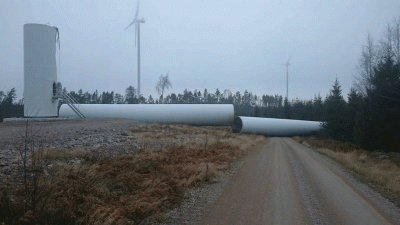
One example (of many) of a recent catastrophic turbine failure is reported by the North German Ostesee Zeitung here. According to the article, just 2 days ago, the blade of a wind turbine snapped off unexpectedly, boring itself into the ground.

turbine blade germany

****

The Ostsee Zeitung writes that local residents were “shocked” and the reason for the collapse is unknown. The online news site writes:

“At the time of the accident there was neither a storm nor unusual weather conditions. ‘We are baffled as well,’ says Carlo Schmidt, Managing Director of Windprojekt company, which operates the turbine in question.”

Luckily no one was injured, or killed.

Wind turbine in Sweden fails with “incredible bang”

vestas v112

Another recent catastrophic failure occurred in Sweden, so reports the Swedish online svt.se news site here.

Forestry machinery operator Erik Karlsson of the Vetlanda municipality heard an “incredible bang” while working on Christmas Eve, but thought nothing of it. Later as went home he discovered that a nearby wind turbine had fallen to the ground across the road.

Vestas_V112-Collapse-1_preview

The huge turbine mast had snapped some 15 meters up and the unit came crashing down, the SVT writes. Authorities quickly cordoned off the wind park area. Here as well the cause of the failure is unknown. The wind park has since been designated as a hazardous area: “The public has been asked to keep away.”

Vestas_V112-Collapse_preview

These are just two recent examples of many of wind turbine collapses.

Blackouts to prevent blackouts

studying candle

****

In addition to catastrophic mechanical failures, wind and solar energy are wreaking havoc on power grid stability, so writes the German onlinemittelhessen.de here.

The online newssite reports that the future for the residents of Wetzlar may be looking bleak. Why?

“If in the future the power goes out, the reason maybe rooted in the energy management act. In order to eliminate the possibility of widespread blackouts, grid operators such as Enwag are obligated to switch off consumers or even entire parts of the city.”

These targeted blackouts are necessary, mittelhessen.de writes, because it is the only way left to keep the power grid from over or under-loading. The site tells readers:

“The probability of large blackouts is increasing with the strongly growing power generation from wind and sun. Experts have long seen the power grid threatened by this.”

Unfortunately grid operators will have to react very quickly to the power grid fluctuations. The mittelhessen.de reports that “there won’t be any time for operators to make long calculations” and that “there will be only an hour to react”. Just how vulnerable is the power grid in the Wetzlar region? Mittelhessen.de writes:

“A chain of seemingly harmless single incidents can in the worst case lead to a domino effect and lead to outages in all connected power networks.”

In plain English: one small problem could lead to a widespread blackout.

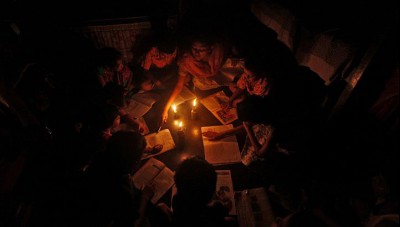
To keep this from happening, the solution is now to conduct targeted blackouts in an attempt to keep the grid balanced. If you are running a company, or merely working on an important document at your PC, then it’ll just be tough luck. Just use paper and pen, and light up a candle.

Junk energy at a high price. Other countries may wish to think twice before copying the model.
NoTricksZone

divine

Scotts Finally Waking Up to the Wind Scam?

Scots Demand an End to Government’s ‘Un-Democratic Fixation’ with Unreliable, Insecure & Unaffordable Wind Power

Wind turbines near Stirling, in Scotland

****

It took a little under a decade, but the message is finally getting out: THESE THINGS DON’T WORK – on any level.

There are 3 electricity essentials – that the power source and its delivery to homes and businesses be: 1) reliable; 2) secure; and 3) affordable.

Try to skimp on any one or more of those essential elements and you’re no longer talking about an energy ‘system’, you’re condemning your economy to social and economic ‘chaos’.

Reliability and security mean that power is delivered precisely when and where it’s needed; without exception – satisfying those critical requirements means the supplier doesn’t get off the hook by glibly claiming the wind didn’t blow, the Sun didn’t shine, or the dog ate my homework.

As to affordability, you can have the most reliable and secure system on Earth, but if the cost of what’s to be delivered is beyond the reach of households; or puts power hungry businesses to the wall, then reliability and security become irrelevant: suppliers without customers don’t last for very long, before they too are out of business.

June 2015 National

Passing the ‘reliability’ ruler over wind power draws an obvious blank; so too with the idea that a wholly weather dependent power source could, somehow, earn the tag ‘secure’.

Then, on the totally unpredictable occasions when some of its capacity might become available, the cost to Australian retailers sits at over $110 per MWh (AGL, in its capacity as retailer, locked in a fixed price for all of the wind power produced by its suppliers at $112 per MWh, for which it collects a REC as part of the bargain, currently worth $72). That figure (the whole of which is added to retail power bills) compares with an average wholesale price of $35-40 per MWh.

In South Australia – Australia’s ‘wind power capital’, futures contracts on the ASX Energy market for electricity delivered in 2016-18 are between $86 and $90 a MWh. That compares to between just $37 and $41 MWh in Victoria and between $43 and $48 per MWh in NSW. Both NSW and Victoria draw the vast bulk of their power from coal-fired plant. And South Australia draws heavily on Victoria’s and NSW’s coal-fired plant via the Heywood and Murraylink interconnectors. Heywood has a notional capacity of 460MW and Murrylink a notional capacity of 220MW. A recent wind power collapse in SA overloaded the interconnectors, which shut down to avoid a thermal melt-down, and resulted in an almost State-wide blackout (see our post here).

Australia’s Large-Scale RET will add a further $45 billion to retail power bills in wind power subsidies and/or retailer fines between now and 2031 – all designed to be directed to wind power outfits (see our post here).

Already, tens of thousands of Australian households can no longer afford power (see our post here).

In SA, the number of permanently disconnected homes exceeds 50,000 (see our post here).

And one of its biggest employers, Port Pirie’s Nyrstar Smelter is considering its future, due to the phenomenal cost of wind power and the insane cost of running banks of highly inefficient Open Cycle Gas Turbines to cover wind power output collapses: when the wind drops out, on a totally unpredictable basis, the spot price rockets from around $50-70 per MWh (on average) to over $2,000 and often hits the regulated cap of $13,800 per MWh – all borne by power consumers, of course (see our post here).

Nystrar’s completely justified complaint about South Australia’s energy debacle is directed at all 3 of the fundamentals – thanks to its 17 wind farms and the haphazard delivery of any fraction of their notional capacity of 1,477MW – SA’s power supply is no longer reliable, secure or affordable.

And it’s the same 3 essential rules for a meaningful power supply that has Scots demanding an end to its government’s bizarre fixation on wind power; and, instead, has them pushing for reliable, secure and affordable nuclear power.

Former Dana oil chief urges Scot-Govt. to build new nuclear stations for baseload power and end its ‘fixation’ with wind power
Scottish Energy News
30 December 2015

A former North Sea oil company boss and now independent energy advisor has called on the Government to curtail its ‘fixation’ with wind power and to drop its moratorium on building new Scottish nuclear power stations to provide carbon-free baseload electricity generation.

Stuart Paton, former chief executive of Dana Petroleum, publishes his ‘new Scottish energy policy’ in a pamphlet due to be issued in January 2016 by the pro-market Edinburgh-based think-tank, Reform Scotland, where board members include a former Tory MSP.

In his chapter for “Reforming Scotland”, Paton says: “Scotland has to develop its energy policy beyond a fixation on wind power and point scoring with Westminster.

“The challenge of climate change does require a de-carbonisation of energy, but support for nuclear power, unconventional gas, and increased emphasis on reducing energy usage, are all required to meet the challenges of the coming decades”.

Paton is explicitly critical of the Scottish Government’s ‘un-democratic’ policy of continued expansion of wind power, stating that:

“The increase in wind generation is essentially increasing the amount of electricity that will be exported from Scotland.

“Although local campaigners against wind farms often use the ‘we are already generating more than we use locally’ argument, the national question of should we be building more windfarms in Scotland, with the impact on the natural environment, to export power to England has not been asked.

“This is a major energy policy that has been progressed without an explicitly democratic mandate.”

Geoff Mawdsley, Director of Reform Scotland, welcomed Paton’s contribution. He said: “With the challenges we face to our North Sea oil industry, as well as recent substantial changes to UK government support to the renewable sector, this is an ideal time to stand back and consider new approaches to our energy policy.

“Stuart Paton is a recognised expert in his field who makes a powerful argument for a new approach. His contribution to “Reforming Scotland” is a real challenge to this generation of energy policy-makers.

Paton recommends a four-pronged approach to strengthening Scotland’s energy policy, with a focus on alleviating climate change, reducing fuel poverty, establishing security of supply and continuing technological development.

The following policies are extracts from the forthcoming Reforming Scotland pamphlet.

Climate change

First and foremost there should be a focus on achieving the target on carbon free electricity production.

However the Scottish government’s current approach which relies on onshore and, to a lesser extent, offshore wind farms is far too narrow. This does not provide base load capacity, is expensive and is re-distributive to wealthy land-owners.

Further, the huge pressure there is now on any new onshore wind farm development, both from an economic point of view given the removal of Renewable Obligations and local pressure, means this cannot be a significant further contributor to electricity generation.

The government should change its stance and support the construction of new nuclear power stations, most likely at the existing sites at Torness and Hunterston.

This will likely have to follow the British government’s approach and largely be dependent on foreign investment. However, the necessity of providing base load capacity makes support for nuclear electricity generation essential.

Continued use of gas for electricity generation and domestic heating is likely to be inevitable as a ‘bridging’ technology until alternative sources are found. However, support for carbon capture and storage (CCS) development in Scotland for the country’s own use and also as a basis for international leadership is important.

Given the removal of the UK government’s support for the CCS project at Peterhead, the Scottish government should step in with its support.

As discussed above, the challenge of climate change requires changes in domestic heating, domestic insulation and transportation as well as electricity generation. The Scottish government is already playing an active role in this area, through support for local generation, domestic heat generation and improved insulation.

This should be extended. These initiatives will also play a significant role in dealing with fuel poverty both through providing cheaper sources of power and allowing households to use less energy.

Fuel Poverty is a key issue for Scotland, particularly in rural areas where households often rely on oil for heating. Fuel poverty can be alleviated through some of the same approaches as for reducing carbon emissions.

Security of supply

Many of the issues and proposals identified above not only target the challenges of climate change and address fuel poverty, but also address issues of security of supply. Building two new nuclear power stations and the development of shale gas improve security of supply both in terms if reducing requirement for importing power but also in terms of base load supply.

Technological development

Within the framework outlined above, there should be three focus areas for technological focus. Onshore unconventional development and CCS development can benefit from existing expertise in the offshore oil and gas industry and the existing supply chain. In addition to the local impact, both technologies could generate significant export earnings. Thirdly, the construction of nuclear power stations in Scotland could invigorate the expertise already existing at Dounreay”.

Scottish Energy News

anti-wind1

‘Climate criminal’ blows whistle: ‘It’s just about the money!’


Secretary of State John Kerry told the Paris climate conference that ending all U.S. carbon emissions, or even those in all the industrialized world, would do nothing to impact the climate, leading one of the top critics of the climate-change movement to call the speech additional proof that the effort is all about wealth redistribution.

In another major development, the latest draft of the climate agreement does not include the creation of the International Climate Justice Tribunal, which would have been a U.N. agency that billed industrialized nations for the cleanup of natural disasters around the world.

In Kerry’s address to the conference, he made a push to get developing nations to make major commitments in reducing carbon emissions. However, his comments also gave considerable fuel to those who believe Kerry and others are on a fool’s errand.

“The fact is that even if every single American citizen biked to work, carpooled to school, used only solar panels to power their homes, if we each planted a dozen trees, if we somehow eliminated all our domestic greenhouse gas emissions, guess what? That still wouldn’t be enough to offset the carbon pollution from the rest of the world,” Kerry said.

He took a step further.

“If all the industrialized nations went down to zero emissions, remember what I said all the industrialized nations went down to zero emissions, it wouldn’t be enough, not when more than 65 percent of the world’s carbon pollution comes from the developing world,” Kerry added.

Christopher C. Horner is a senior fellow at the Competitive Enterprise Institute and author of multiple books challenging the basis for the climate-change movement. He is in Paris as an observer at the conference, where he has been branded a “climate criminal.”

Horner said Kerry accidentally lurched toward the truth in trying to implore global cooperation.

“What he’s doing is inadvertently pointing out that this is all pain, no gain,” Horner said. “He won’t admit to the pain. They still say that if the state uses its coercive power and forces you into energy rationing and so on … it still wouldn’t impact the climate.”

Kerry used the hypothetical of zero carbon emissions, which is a far cry even from the hotly contested Obama environmental regulations calling for major carbon reductions by 2030. Horner said the real goals go much further and are plenty frightening.

“They’re talking 70-95 percent reductions in this document,” Horner said. “They really do think that they can bring us back to the renewable age, which we left over 100 years ago because we could. Suddenly we liberated hydrocarbon energy. We didn’t have to live on hydro power or solar power.”

While going back to renewables is the stated goal of climate-change activists, Horner said there’s a good reason we moved away from it generations ago.

“We’re not going back to that,” he said. “We left it. It was a time of much-shortened lifespans, disease, drudgery and mortality, crop failures leading to catastrophe and so on.”

Meanwhile, the scrapping of the International Climate Justice Tribunal marks a win on one of Horner’s highest priorities since he envisioned the panel blaming the U.S. and other advanced nations for the severe weather events throughout the world. It’s a charge he believes would have stuck at the tribunal because signatories at the conference will be expected to confess their responsibility for climate change in any final agreement.

But while Horner is thrilled, he said many others in Paris are not.

“It’s clearly going to leave the greens upset and some countries upset because it’s kicking the can down the road on a few issues,” Horner said.

Persistent sticking points are leading some climate-change activists to call for Pope Francis to come and demand unity in advancing a climate deal. Horner said the pontiff had better be ready for a debate.

“He’s going to couch this in terms of social justice, and as I have mentioned to you, that is truly perverse,” he said. “I’m not saying the pope knows this, but social justice, as they see it, is killing tens of thousands of the most vulnerable in every country.”

Listen to the WND/Radio America interview with Christopher C. Horner:

Horner said the explanation for that charge is simple. Implementing emissions reductions places major costs on energy providers, which pass the costs on to consumers. Soaring utility rates will then impact the poor most negatively and European nations that already do this see people having to choose between buying food and paying to heat or cool their homes.

As for the logistics of the conference and any forthcoming agreement, Horner said officials are twisting themselves in legal knots to avoid this being a treaty since they know Congress won’t approve it.

“The buzz here in Paris is that the U.S. Congress is the greatest obstacle to them obtaining the treaty they refuse to call a treaty,” Horner said. “That means the democratic process. There’s nothing democratic about this. If you allow Congress to get a crack at this, it’s over.

“Under Article II, Section 2 of the Constitution, this would never fly. No free society would ever do to itself what they’re demanding of us,” he said.

Horner is one of seven activists opposed to any deal to have their face plastered around Paris on posters branding them climate criminals. After, first joking that activists could have picked a better picture of him, Horner said there is a message of intimidation involved with the posters.

“It’s getting a little long in the tooth, putting up all the bad guys’ pictures so everybody knows what they look like,” Horner said. “We can play the ‘What if Sarah Palin Did It’ game if you want, but they really want everybody here to now what we look like.”

In the end, Horner said the activists’ definition of climate criminal is really an indictment on those working to preserve freedom.

“We point out the policies, history, that it won’t effect the climate, that’s it’s about a wealth transfer, that it will kill the most vulnerable, that it’s a gesture about clearly what they’re openly acknowledging here – to redesign the global economic system,” he said. “When you point those things out, because they aren’t popular in the United States, you are a criminal.”

Copyright 2015 WND

Read more at http://www.wnd.com/2015/12/climate-criminal-blows-whistle-its-just-about-the-money/#gT60jPdzHOZ7qf8l.99

GREENPEACE….Sworn enemy of all life on earth!

Greenpeace Founder Reports It to the FBI Under RICO and Wire-Fraud Statutes

December 8th, 2015 by Roy W. Spencer, Ph. D.

Here is the article I was referring to in today’s post, Whose Supported Policies Kill More People: ISIS…or Greenpeace? It is by Dr. Patrick Moore.

Greenpeace has made itself the sworn enemy of all life on Earth

By Patrick Moore, a founder of Greenpeace

Greenpeace, in furtherance of what is in effect its war against every species on the planet, has now turned to what, on the face of things, looks to me like outright breach of the RICO, wire-fraud, witness-tampering and obstruction-of-committee statutes. I have called in the FBI.

Greenpeace appears to have subjected Dr. Will Happer, Cyrus Fogg Brackett Professor of Physics at Princeton University, to a maladroit attempt at entrapment that has badly backfired on it.

Greenpeace used this dismal rent-by-the-hour office block in the Beirut souk for its entrapment scam.

The organization I founded has become a monster. When I was a member of its central committee in the early days, we campaigned – usually with success – on genuine environmental issues such as atmospheric nuclear tests, whaling and seal-clubbing.

When Greenpeace turned anti-science by campaigning against chlorine (imagine the sheer stupidity of campaigning against one of the elements in the periodic table), I decided that it had lost its purpose and that, having achieved its original objectives, had turned to extremism to try to justify its continued existence.

Now Greenpeace has knowingly made itself the sworn enemy of all life on Earth. By opposing capitalism, it stands against the one system of economics that has been most successful in regulating and restoring the environment.

By opposing the use of DDT inside the homes of children exposed to the anopheles mosquito that carries malaria, Greenpeace contributed to the deaths of 40 million people and counting, most of them children. It now pretends it did not oppose DDT, but the record shows otherwise. On this as on so many issues, it got the science wrong. It has the deaths of those children on what passes for its conscience.

By opposing fossil-fueled power, it not only contributes to the deaths of many tens of millions every year because they are among the 1.2 billion to whom its campaigns deny affordable, reliable, clean, continuous, low-tech, base-load, fossil-fueled electrical power: it also denies to all trees and plants on Earth the food they need.

Paradoxically, an organization that calls itself “Green” is against the harmless, beneficial, natural trace gas that nourishes and sustains all green things. Greenpeace is against greenery. Bizarrely, it is opposed to returning to the atmosphere a tiny fraction of the CO2 that was once present there.

In November 2015, out of the blue, Professor Happer received an email from “Hamilton Ellis”, a soi-disant “business consultancy” operating out of rent-by-the-hour offices in a crumbling concrete block in the Beirut souk.

The bucket-shop “consultancy’s” email said that a “client”, an energy and power company “concerned about the impacts of the UN climate talks”, wanted to commission Professor Happer to prepare a “briefing” to be released early in 2016 “which highlights the crucial role that oil and gas have to play in the developing economies, such as our client’s Middle East and North Africa region”.

The email smarmed on: “Given your influential work in this area and your position at Princeton we believe a very short paper authored or endorsed by yourself could work strongly in our client’s favour. Does this sound like a project you would be interested in discussing further?”

Will Happer replied enclosing a white paper written, with major input from him, by the CO2 Coalition, a new group that he had helped to establish earlier in 2015. He also sent a copy of testimony on the “social cost of carbon” that he had given at a regulatory hearing in St Paul, Minnesota. Crucially, he added: “I would be glad to try to help if my views, outlined in the attachments, are in line with those of your client.”

In short, he was not prepared to be bought. He would help the “client” of the “business consultancy” if and only if he was not asked to attest to anything that he did not already believe.

The “consultancy” replied: “It certainly sounds like you and our client are on the same page.” It went on to ask whether Professor Happer’s two papers had been “part of the same initiative on CO2 reported on [by Matt Ridley] in the London Times recently, and added: “The focus we envisage for this project comes from a slightly different angle. Our client wants to commission a short briefing paper that examines the benefits of fossil fuels to developing economies, as opposed to a switch to so-called clean energy.”

The “consultancy” also wanted to know whether it “would be able to reference you as Cyrus Fogg Brackett Professor of Physics at Princeton University if this project were to go ahead?”

It also tried to smoke out the identity of Professor Happer’s contacts in the U.S. media, and ended with a classical entrapment line: “It would be useful to know, in your experience, whether you would need to declare the source funding when publishing research of this kind”.

Professor Happer said: “The article … mentions Patrick Moore, like me a member of the CO2 Coalition, and my friend from Princeton, Freeman Dyson, who shares our views.”

He confirmed that his official title is Cyrus Fogg Brackett Professor of Physics, Emeritus. He also reinforced his earlier message indicating he could not be bought by stating, very clearly:

“To be sure your client is not misled on my views, it is clear there are real pollutants associated with the combustion of fossil fuels, oxides of sulfur and nitrogen for most of them, fly ash and heavy metals for coal, volatile organics for gasoline, etc. I fully support regulations for cost-effective control of these real pollutants. But the Paris climate talks are based on the premise that CO2 itself is a pollutant. This is completely false. More CO2 will benefit the world. The only way to limit CO2 would be to stop using fossil fuels, which I think would be a profoundly immoral and irrational policy.”

Professor Happer added that he no longer had external funding following his retirement, and went on: “My activities to push back against climate extremism are a labor of love, to defend the cherished ideals of science that have been so corrupted by the climate-change cult. If your client was considering reimbursing me for writing something, I would ask that whatever fee would have come to me would go directly to the CO2 Coalition. This was the arrangement I had with the attorneys representing the Peabody Coal Company in the regulatory hearings in Minnesota. The fee I would have received was sent instead to the CO2 Coalition, a 501(c)(3) tax exempt educational organization. The CO2 Coalition covers occasional travel expenses for me, but pays me no other fees or salary.”

The “consultancy” replied that the “client” was “completely comfortable with your views on fossil-fuel pollution”. It asked whether Matt Ridley might “help to disseminate our research when it is ready”, and whether the briefing could be peer-reviewed. “On the matter of reimbursement, we would of course remunerate you for your work and would be more than happy to pay the fee to the CO2 Coalition.”

Then another classic entrapment line: “Our client does not want their name associated with the research as they believe it will give the work more credibility. What provisions does the CO2 Coalition provide? Would this be an issue?”

Professor Happer replied that he was sure Matt Ridley would be interested in the briefing and that Breitbart would be among blogs and syndicated columnists that could also be interested.

As for peer review, he explained that “this normally refers to original work submitted to a scientific journal for publication, and not to the sort of articles that Ridley writes for the media, or what I think you are seeking to have written. If you like, I could submit the article to a peer-reviewed journal, but that might greatly delay publication and might require such major changes in response to referees and to the journal editor that the article would no longer make the case that CO2 is a benefit, not a pollutant, as strongly as I would like, and presumably as strongly your client would also like.”

He said his fees were $250 per hour, and that his Minnesota testimony had required four eight-hour days, so that the total cost was $8000. He said that, if he wrote the paper alone, he did not think there would be any problem stating that “The author received no financial compensation for this essay”. He added that he was pretty sure that the “client’s” donation to the CO2 Coalition would not need to be public according to US regulations of 503(c)(3) educational organizations, but that he could get some legal advice to confirm this if asked.

The “consultancy” replied: “The hourly rate works for us and, as previously discussed, we are happy to make a direct donation to the CO2 Coalition, providing it is anonymous. We can look into the official disclosure regulations, but it would be useful to know whether the CO2 Coalition voluntarily discloses its funders? Presumably there are other donors in a similar position to us?”

They added: “With regards to peer review, I raised this issue because Matt Ridley’s article on Dr Indur Goklany’s recent CO2 report said that it had been thoroughly peer reviewed. Would it be possible to ask the same journal to peer review our paper given that it has a similar thrust to Goklany’s? It’s not a deal-breaker, but I felt that it helped strengthen that piece of work.”

Professor Happer replied that early drafts of Goklany’s paper had been reviewed by him and by many other scientists; that he had suggested changes to which the author had responded; and that, although some members of the academic advisory board of the Global Warming Policy Foundation might have been too busy to respond to a request to comment on the first draft, “The review of Golkany’s paper was even more rigorous than the peer review for most journals”. Professor Happer said he would be glad to ask for a similar review for the first drafts of anything he wrote for the “client”.

He said he would double-check on the regulations, but did not think the CO2 Coalition, a 501(3)c tax-exempt educational organization, was required to make public any donors, except in Internal Revenue Service returns.

He checked with the CO2 Coalition, which replied that the Coalition was not obliged to identify any donors, except to the IRS, who would redact the list of donors if it received a request for the Coalition’s form 990.

On December 7 he received an email from one Maeve McClenaghan of Greenpeace, telling him that they had conducted what she grandiosely described as an “undercover investigation” – actually a criminal entrapment scam contrary to the RICO and wire-fraud statutes, and a flagrant attempt both to tamper with a Congressional witness (he is due to testify today, 8 December) and to obstruct committee proceedings – and that they intended to publish a “news article … regarding the funding of climate sceptic science.
She said: “Our article explores how fossil fuel companies are able to pay academics to produce research which is of benefit to them” and added that the story would be published on a Greenpeace website and “promoted widely” in the media. She gave Professor Happer only hours to respond.

Many of the points she said she proposed to include in the article were crafted in such a way as to distort what the above correspondence makes plain were wholly innocent and honest statements, so as to make them sound sinister. The libels Ms McClenaghan proposed to circulate will not be circulated here.

I shall, however pass on a comment made to me by Professor Happer: “I was suspicious about the email exchange from the start, so I wrote every response assuming that it might be public someday. But what I wrote expressed exactly what I believed to be true.”

That is the comment of one of the most transparently honest scientific colleagues I am honoured to know. I am, therefore, profoundly dismayed that the organization I founded – an organization that once did good work addressing real environmental concerns – has descended to what I consider to be criminality and now also proposes to descend to libel.

Accordingly, I have decided to inform the Federal Bureau of Investigation of Greenpeace’s dishonest and disfiguring attempt at entrapment of Professor Happer, whom I know to be a first-rate scientist, colleague and friend, one of the world’s half-dozen most eminent and experienced physicists, and one who would never provide any scientific advice unless in his professional opinion that advice was correct.

The organization’s timing was clearly intended to spring the trap on Professor Happer hours before he was due to appear in front of Congress. This misconduct constitutes a serious – and on many counts criminal – interference with the democratic process that America cherishes.

I have reported Greenpeace to the FBI under 18 USC 96 (RICO statute); 18 USC 1343 (wire fraud); 18 USC 1512 (attempting to intimidate a witness due to appear at a Congressional hearing); and 18 USC 1505 (obstruction of proceedings before committees).

I shall also be asking the Bureau to investigate Greenpeace’s sources of funding. It is now an enemy of the State, an enemy of humanity and, indeed, an enemy of all species on Earth.

Stop the Climate Insanity….It’s a HUGE Scam!

Bjørn Lomborg: Wind Power ‘Tree’ Symbolises Futility of Paris Climate Jamboree

wind tree paris

****

As a baggage train of some 40,000 climate-cultists get set to jet their way home from Paris – burning up a gazillion gallons of (what they normally rail about as being atmosphere incinerating) kerosene – the fair question has to be asked: ‘and all for what?’

The belief that China and India were going to sign up to terms guaranteed to keep more than a billion people (between them) locked in permanent Stone Age poverty was pure infantile nonsense.

Pragmatist, Narendra Modi is quite right to care a whole lot less about Western anti-humanity, eco-zealots, and a whole lot more about the 300 million or so of his constituents who subsist in world of dirt-floored shanties, without so much as the hope of enjoying an affordable supply of around-the-clock electricity.

poverty india

****

The cultists fumed in Paris, as India and China put the needs of their people ahead of demands from selfish lunatics; equipped with little more than ideology, Macbook Airs and Twitter, as an outlet for their self-possessed rantings. So much easier to pontificate about how the poorest in the world should live (now and forever) with a belly full of Veuve Clicquot and Foie Gras while sitting in 5 star, centrally-heated comfort.

China and India aren’t about to deprive their people of an opportunity to have light at the flick of a switch; and they aren’t about to entertain the insane costs of solar and wind power to get there (save at the symbolic margins): between them, India and China are building, and planning to build, hundreds of new coal and nuclear power plants; designed to drag their people out of the darkness and into well-lit homes and bustling new factories (see this article).

Back in reality land, the childish symbolism that is wind power, copped a spray from the wind industry’s loudest critic, Bjørn Lomborg.

STT takes a different view to Bjørn about the ‘connection’ made between wind power and CO2 emissions:

Bjørn Lomborg: Believe in the Easter Bunny and Tooth Fairy? Then You’ll Probably Believe Wind Power Replaces Fossil Fuels, Too

He also falls for the lazy-language trap of referring to CO2 gas (a naturally occurring trace gas essential for life on Earth) as ‘carbon’: the black sooty stuff that makes a mess of white linen.

But Lomborg is right on the money where he points out the ludicrous costs and pointlessness of a wholly weather dependent power source.

Blowing a chance to help the planet
The Australian
Bjørn Lomborg
5 December 2015

‘Wind tree’ sums up the futility of the Paris climate talks

Outside the Paris climate conference centre, organisers have erected a “wind tree” (arbre a vent), which produces electricity using the power of the breeze. In doing so, they have summed up exactly what is wrong with the conference.

The tree will only produce 3500 kWh a year and it costs about $37,100. So, at a production price of about 11c a year, it will take 89 years to make up just the capital cost. Or, put differently, the cost is 300 per cent more expensive than even traditional wind power, which still struggles without subsidies.

The Conference of Parties (COP21) is about feeling good: spending a lot of money to do very little good, and not about making the choices that will make any difference.

This summit is “the last chance” to avert dangerous temperature rises, if we listen to the Earth League or a bunch of others. It’s going to be “too late” if a meaningful treaty isn’t negotiated here in the next few days, says the French President. It’s a familiar script. Doom-laden warnings about the “last chance to save the planet” date as far back as the earliest climate summits 20 years ago. Time magazine declared 2001 “a global warming treaty’s last chance”, and in 1989 the UN Environment Programme’s executive director warned that the planet faced an ecological disaster “as final as nuclear war” by the turn of the century.

Amid this alarmism, for 20 years well-intentioned climate negotiators have tried to do the same thing over and over and over again: negotiate a treaty that makes an impact on temperature rises. The result? Twenty years of failure with no significant effect on climate change.

These summits have failed for a pretty simple reason. Solar and wind power are still too expensive and inefficient to replace fossil fuels. The Copenhagen-Paris approach requires us to force immature green technologies on the world even though they are not ready or competitive. That’s hugely expensive and inefficient.

Thanks to campaigning non-governmental organisations, politicians and self-interested green energy companies that benefit from huge subsidies, many people believe that solar and wind energy are already major sources of energy.

The reality is that even after two decades of climate talks, they account for a meagre 0.5 per cent of total global energy consumption, according to the International Energy Agency.

And 25 years from now, even envisioning everyone doing all that they promise in Paris, the IEA expects we will get just 2.4 per cent from solar and wind. That tells us that the innovation that’s required to wean the planet off reliance on fossil fuels is not taking place.

That’s why the one glimmer of hope in Paris has been the announcement by Bill Gates, along with Australia, China, India and the US, of a multi-billion-dollar fund for green R&D.

The $27 billion fund is just a first step, but it’s a vitally important one. Just as massive support for research and development got us to the moon, the aim is for a massive focus on green research and development to make climate-friendly forms of energy competitive. This is precisely what the Copenhagen Consensus Centre and I have been arguing for more than eight years.

In a recent peer-reviewed research paper, I looked at all the carbon-cutting promises countries committed to ahead of Paris (their so-called intended nationally determined contributions, or INDCs) for the years 2016-30.

These are what the Paris global treaty will be based on (along with a lot of claims about what might happen outside those dates — something that’s easy for politicians of today to talk about, but that we just can’t take seriously).

What I found when I looked at the national promises was that they would cut global temperatures by just 0.05C by 2100.

And even if every government on the planet not only keeps every Paris promise, reduces all emissions by 2030 and shifts no emissions to other countries, but also keeps these emission reductions throughout the rest of the century, temperatures will be reduced by just 0.17C by the year 2100.

And let’s be clear, that is incredibly — probably even ridiculously — optimistic. Consider the Kyoto Protocol, signed in 1997, never ratified by the US, and eventually abandoned by Canada and Russia and Japan. After several renegotiations, the Kyoto Protocol had been weakened to the point that the hot air left from the collapse of the Soviet Union exceeded the entire promised reductions, leaving the treaty essentially toothless.

The cost of these policies? Extraordinarily, UN officials provide no official estimated costs for the likely treaty. So we are left to make an unofficial tally, which we can do easily enough by adding up the costs of Paris promises submitted by the US, European Union, Mexico and China, which together account for about 80 per cent of the globe’s pledged emissions reductions.

In total, the Paris promises of these four countries/groupings will diminish the global economy by at least $1 trillion a year by 2030 — and that is in an ideal world, where politicians consistently reduce emissions in the most effective, smartest possible ways.

But that won’t happen. It never has in history.

Politicians have a habit of wasting money on phenomenally inefficient subsidies for solar and biofuels. And based on the EU experience, such waste can double the costs of carbon-cutting policies to $2 trillion. That’s $1 to $2 trillion that won’t be spent on global challenges such as malnutrition, poverty and communicable diseases.

We are spending a fortune to make ourselves feel like we are saving the planet. The “wind tree” is an excellent symbol of what’s wrong with Paris.

Bjorn Lomborg is an adjunct professor at the Copenhagen Business School and directs the Copenhagen Consensus Centre.
The Australian

Earlier in the week, The Australian’s Editor had the following take on Lomborg’s message on energy innovation; a message that makes it fairly clear: wind power is an abject failure – for fairly obvious reasons – here’s the output from all wind farms connected to the Eastern Grid (installed capacity of 3,669MW – spread over NSW, VIC, TAS & SA) during June:

June 2015 National

And, if there is to be a true alternative to fossil fuel power generation sources, then we should stop praying to the Wind Gods, and find something that’s recognizable as a ‘system’, rather than a lesson in total ‘chaos’.

Climate change demands innovation, not subsidy
The Australian
2 December 2015

Faith in clean energy technology has a long pedigree

No need to get hot under the collar — Malcolm Turnbull’s climate policy is fundamentally the same as Tony Abbott’s. The targets that the Prime Minister took to Paris — emission reductions of 26-28 per cent by 2030 — are those adopted by Mr Abbott in August.

These targets are proportionate to Australia’s economic weight and our small contribution to the world’s greenhouse gases. They are consistent with the precautionary principle that Australia should not get ahead of the northern hemisphere’s big polluters. It’s true that Mr Turnbull has left open the possibility in the future that Australia would concur in a collective agreement to pursue deeper cuts. By definition, this would not involve Australia going it alone.

There is a pseudo controversy over climate mitigation and foreign aid. In Paris, Mr Turnbull announced a five-year diversion of at least $1 billion from the foreign aid budget to climate mitigation projects in the Pacific. Labor’s complaints ring hollow. Only last month Bill Shorten toured the Pacific (remember the prophesied climate refugees?) to talk up the threat of climate change.

Now, in consultation with Pacific nations, Australia is dedicating funds to climate mitigation projects in the region. As for the effect on foreign aid spending more generally, it was Labor that inflated the budget to win a seat on the UN Security Council.

On climate change Mr Turnbull’s point of difference with Mr Abbott is his emphasis on innovation as a tool for mitigation and adaptation. Innovation is a theme of the Turnbull government but it takes on special significance at the Paris climate meeting. Australia has promised to double its clean energy research and development as part of the 20-nation project known as Mission Innovation.

In his Paris speech, Mr Turnbull said: “We firmly believe that it is innovation and technology which will enable us both to drive stronger economic growth and a cleaner environment. We are a highly social and innovative species and so the more we share innovative technologies, the better they will become.” This commitment coincides with the unveiling in Paris of the Breakthrough Energy Coalition spearheaded by Bill Gates, Mark Zuckerberg and other entrepreneurs. They will invest in clean energy projects in sectors such as electricity generation and storage.

As Macquarie University’s Jonathan Symons says, the impetus to innovate sometimes has been misrepresented by environmentalists as a manifesto for inaction. “It is true that the cost of wind and solar are falling rapidly and both can now be competitive at low levels of grid penetration,” Dr Symons says. “However, associated system costs and technical challenges increase with the market share of intermittent energy. Without accelerated innovation, it is clear that existing renewable technologies will not support deep decarbonisation of the global economy.”

He also points out that notwithstanding Mr Turnbull’s timely gospel of climate innovation, this has been a faith subscribed to by figures as diverse as John Howard, Barack Obama, British economist Nicholas Stern and commentator Bjorn Lomborg.

In 2005 Mr Howard joined the Asia-Pacific Partnership on Clean Development and Climate. Known as AP6, this was an initiative of George W. Bush and one that emphasised voluntary climate mitigation through the sharing of clean energy technology. It shows that the conservative side of politics has long recognised the need for climate mitigation by innovation.

Dr Lomborg’s championing of innovation is central to his view that the Paris meeting, like the meetings before it, is likely to generate alarmist rhetoric (anyone like another last chance to save the planet?) but fail to advance the cause of climate mitigation.

“For twenty years, we have insisted on trying to solve climate change by supporting production of mainly solar and wind power,” he says in a blog for this newspaper. “The problem with this approach is that it puts the cart in front of the horse.

Green technologies are not yet mature and not yet competitive, but we insist on pushing them out to the world. Instead of production subsidies, governments should focus on making renewable energy cheaper and competitive through research and development. Once the price of green energy has been innovated down below the price of fossil fuels, everyone will switch.”

Dr Lomborg greeted the Mr Gates-led coalition as a positive sign confirming innovation as the key to climate mitigation. But he points out that today’s favoured subsidies do not encourage innovation, instead making companies stick to inefficient but subsidised technologies such as solar and wind power.

After two decades of climate talks, solar and wind account for just 0.5 per cent of global energy. “And 25 years from now, even with a very optimistic scenario, envisioning everyone doing all that they promise in Paris, the International Energy Agency expects that we will get just 2.4 per cent from solar and wind,” Dr Lomborg says.
The Australian

wind turbines