Greens’ silence on folly of wind and solar powerby Ian Plimer News Weekly, October 25, 2014 A simple evaluation of ideological electricity shows that it is unsustainable. The answer is certainly not blowing in the wind. The amount of energy embedded in steel pylons, concrete footings, blades, wiring, magnets, land clearing and roads is more than a wind pylon would ever generate in its working life. Wind farms cannot generate electricity in a gentle zephyr or a gale, cannot operate continuously and optimistically operate at 20 per cent of nameplate capacity. Professor Ian Plimer Wind farms have the life of a parasite because they freeload themselves onto existing grids paid by conventional efficient energy, need subsidies and drain electricity from the grid when it is too cold. Wind turbines don’t run on wind; they run on subsidies. A single 1,000-megawatt wind farm produces at least 7 million tonnes of carbon dioxide in component construction and concrete. Almost 100,000 truckloads of concrete are required just for the footings. Maintenance by diesel-powered vehicles only adds to emissions. Wind farms need 24/7 back-up from carbon dioxide emitting coal-fired power stations. Wind farms do not reduce human emissions of carbon dioxide; they increase emissions. A wind farm using 660-kilowatt generators requires 7,600 generators at 20 per cent efficiency to produce 1,000 megawatts. At $2,000 per kilowatt installation, this would cost $10 billion. This is more than twice the cost of a reliable, clean, coal-fired 1,000-megawatt generator. The environmental effects of wind farms are devastating. Construction of wind farms in rural areas results in a decline in residents’ mental and physical health, decreased property values and community disharmony. A recent study showed hearing loss for people experiencing low frequency noise. In the United Kingdom, renewable energy costs, principally from wind, create fuel poverty for 2.4 million folk. In the 2012-2013 UK winter, there were an additional 35,000 deaths. This translates as six sick, elderly or vulnerable people killed every year for each installed wind turbine. At 20 per cent efficiency, 1,000 megawatts of delivered electricity requires about 800 square kilometres of cleared land. A nuclear or coal-fired power station requires up to 60 hectares of cleared land. Habitats are destroyed by land-clearing to reduce turbulence. Generator fires are common, and the resultant grass and bushfires cannot be water-bombed from the air as wind pylons are a flight hazard. Is this the modern face of environmentalism? In Spain, at least 18 million birds are slaughtered annually by wind-turbine blades. Bird deaths in Germany are more than 300 per turbine, and in Sweden almost 900 per turbine. German turbines kill more than 200,000 bats per year, and in the U.S. turbines kill some 2.8 million bats. Not to worry. Greens feel morally superior because they think that wind farms emit less carbon dioxide into the atmosphere and hence are saving the planet. We are certainly saving the planet from birds and bats. If a nuclear or coal-fired electricity generator damaged the environment as much as wind farms, there would be an outcry. Wind farms are meant to be a contribution to prevent global warming. However, patient people have been waiting for three decades for the evidence showing human emissions of carbon dioxide drive climate change. The evidence is missing in action. The same calculations can be made for solar power. The amount of embedded energy in the metal, concrete, glass and roads is far greater than can ever be produced in a solar farm’s life. Construction of solar panels leaves toxic chemicals in someone else’s back yard. The amount of carbon dioxide released in manufacture and maintenance is greater than the saving, and coal-fired generators need to be on standby all the time because solar power is not continuous. Solar power has an efficiency of about 10 per cent and, until the laws of physics are changed, this cannot be improved. Greens must be very pleased that the 4,000-megawatt Drax power station in Yorkshire is changing from coal to wood-burning. Some 70,000 tonnes of wood will be burned each day. Clear felling of forests in North Carolina, rail transport, pelletising, ship loading, 5,000 km of ship transport, unloading and train transport do not sound very environmentally friendly and result in huge carbon dioxide emissions from diesel and bunker fuels. The EU has deemed that carbon dioxide emitted from wood burning is recycled by plants yet carbon dioxide emitted from fossil fuel burning is dangerous. Go figure! Why are the Greens silent about the environmental damage of wind and solar electricity generation? Wind power is unreliable, uneconomic and environmentally damaging. No wind farm could provide mains power without generous subsidies, increased electricity charges and horrendous damage to the environment. Few jurisdictions have plans for disassembling a wind farm after its useful life. Defunct wind farms should remain on the skyline as a reminder to future generations of our environmental ecocide and a memorial to our stupidity resulting from caving in to green pressure. Fund managers have invested in wind energy to make money, not to save the environment. Their due diligence would have shown that wind farms are a costly, subsidised, high-risk method of ruining the environment and that a Renewable Energy Target was unsustainable ideology. Rather than plead to the government for even more money, fund managers should be sacked. It is not the role of government to bail out high-risk investors who follow fads and spend more money on advertisements in The Australian than on due diligence. Ian Plimer is an Australian geologist, professor emeritus of earth sciences at the University of Melbourne, professor of mining geology at the University of Adelaide, and the director of multiple mineral exploration and mining companies. He has published many scientific papers, six books and is one of the co-editors of Encyclopedia of Geology. His most recent book, Not For Greens, is available from News Weekly Books. |
wind and solar
Owen Paterson No Longer Silent. Willing to Tell the Truth About the Faux-Green Scam!!!
With the Right of the Tory party mutinous, and clear signs that the Conservatives’ support in their rural hinterland is drifting away, the decision by David Cameron to fire environment minister Owen Paterson, a leading figure on the Conservative right who also appeared to “get “ the countryside, earlier this year made little political sense.
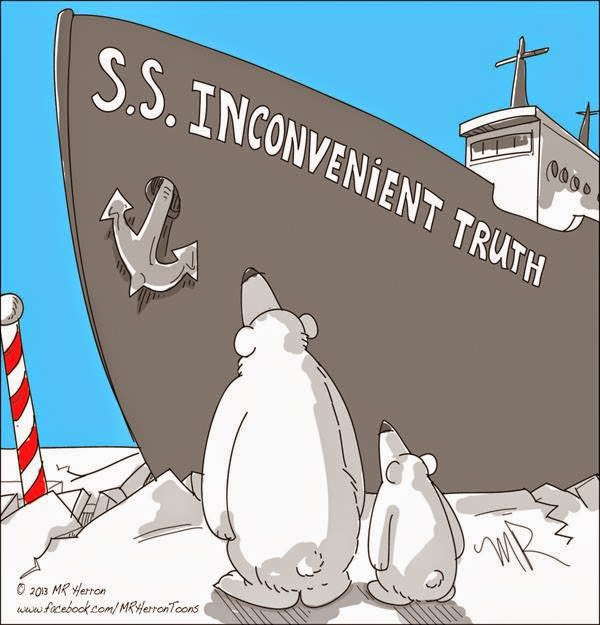
Predictably enough, Paterson has taken advantage of the freedom that his firing has brought him, proclaiming a series of inconvenient truths about Britain’s environmental policy and, for that matter, environmental-policy-making.
EUReferendum’s Richard North discusses this here and here at some length, noting Paterson’s opposition to the wind turbines that are so loathed in the countryside:
In the Global Warming Policy Foundation lecture on Wednesday, Mr Paterson said of wind farms that “this paltry supply of onshore wind, nowhere near enough to hit the 2050 targets, has devastated landscapes, blighted views, divided communities, killed eagles” . . .
He went on to say that wind turbines had devastated ‘the very wilderness that the ‘green blob’ claims to love, with new access tracks cut deep into peat, boosted production of carbon-intensive cement, and driven up fuel poverty, while richly rewarding landowners”.
This, Mr Paterson also said, is “the single most regressive policy we have seen in this country since the Sheriff of Nottingham” . . .
North continues:
Readers here do not need to rehearse Mr Paterson’s arguments, but it can never be said too many times that the current energy policy is unattainable – and at a cost of £1.3 trillion, which is roughly the size of the national debt….
We hear quite a bit — and rightly so — about what the current Conservative-led coalition has done to fix the British economy, but the ever-increasing costs of its climate-change policy ought not to be left out of the equation.
Back to North:
Even if Britain and the whole of the EU were to stick to our emissions targets (which we surely won’t), and to hit them (which, actually, we can’t), we would still not come anywhere close to what we are told is needed to save the planet. This is for a very simple reason: the rest of the world won’t do it. Last year, carbon emissions per head in China exceeded those of Britain for the first time, and China has more than 20 times as many heads as we do. The EU is responsible for less than 10 percent of global emissions, so when we set our targets we knew – and said – that we were in no position to stop global warming. The point was to set a lead which others would follow.
They haven’t…
Isn’t it rather extraordinary, [British journalist Charles] Moore concludes, that no mainstream party has dared to point any of this out? Don’t they know there’s an election on? Is it surprising that voters think: “They’re all the same?”
When it comes to orthodoxies of contemporary environmentalism there’s quite a bit to that: There’s a reason that UKIP is winning the support that it is.
Britts Facing Energy Shortages Due to Unreliable, Unaffordable Wind Turbines!
Fantasy policies will not solve our energy crisis
Our power stations are ageing fast and replacements are urgently needed. Yet for years, our politicians have failed to act

The Didcot fire raises serious questions for Ed Miliband, who lumbered us with the Climate Change Act in the first place

6:10AM BST 21 Oct 2014
The fire at Didcot B power station is not going to bring the National Grid to its knees. But in combination with other fires at Ironbridge and Ferrybridge power stations, and problems with the Heysham and Hartlepool nuclear reactors, it will chip away at our surplus generating capacity, to the point where blackouts will become, if not likely, then far more likely than they should be.
The underlying problem, as Brian Wilson spells out on the opposite page, is simple. Our power stations are ageing fast. We have eked out their lifespan for longer than expected, but replacements are urgently needed. Yet for years, our politicians have failed to act, promoting costly and over-subsidised renewables rather than building new gas or nuclear plants. To make matters worse, much of our capacity has been scrapped, in compliance with environmental restrictions set in Brussels.
If things continue as they are, the prospect has been raised of Seventies-style restrictions on energy use, even rolling blackouts. That is a grim prospect for a 21st-century economy. To avoid it, we first need to get serious about energy efficiency. Even if they do not help to save the planet, measures such as better insulation, or more watchful monitoring of the electricity meter, would make sound financial sense. Unfortunately, it seems to go against the spirit of the times to put on a jumper to cope with the chill; it is far easier simply to turn up the thermostat.
Beyond that, there is an obvious need for more generating capacity. New nuclear plants are at last being approved, but they are expensive to build and take years to construct. There is also a case for suspending the provisions of the Climate Change Act, to buy Britain some time to get itself out of this mess: given the amount of CO2 emitted worldwide, it will hardly doom the planet if we take off our hair shirt for a spell. We should also consider the proposal by Owen Paterson, the former environment secretary, that we build small-scale nuclear reactors rather than pointless offshore wind farms.
The Didcot episode also raises extremely serious questions for Labour. Ed Miliband, who lumbered us with the Climate Change Act in the first place, has repeatedly promised that Labour will decarbonise the electricity supply by 2030. As the Didcot accident makes clear, it will already cost tens of billions just to keep the lights on – so where on earth would Mr Miliband find the tens of billions more to replace our coal and gas capacity completely? And what source of power would he use instead? This is fantasy policy, on an issue that could not be more important to Britain’s citizens, or Britain’s future.
Wind is Novelty Energy…..Scrap the Climate Change Act!
UK’s Wind Power Debacle Threatens to Leave Brits in the Dark
October 17, 2014 by

Scrap the Climate Change Act to keep the lights on, says Owen Paterson
The Telegraph
Christopher Hope
11 October 2014
The Climate Change Act 2008, which ties Britain into stringent environmental measures, should be suspended – and then scrapped – if other countries refuse to agree legally binding targets, says Owen Paterson MP
Britain will struggle to “keep the lights on” unless the Government changes its green energy policies, the former environment secretary will warn this week.
Owen Paterson will say that the Government’s plan to slash carbon emissions and rely more heavily on wind farms and other renewable energy sources is fatally flawed.
He will argue that the 2008 Climate Change Act, which ties Britain into stringent targets to reduce the use of fossil fuels, should be suspended until other countries agree to take similar measures. If they refuse, the legislation should be scrapped altogether, he will say.
The speech will be Mr Paterson’s first significant intervention in the green energy debate since he was sacked as environment secretary during this summer’s Cabinet reshuffle.
In his address, he will set out an alternative strategy that would see British homes serviced by dozens of small nuclear power stations.
The Climate Change Act 2008, which ties Britain into stringent environmental measures, should be suspended – and then scrapped – if other countries refuse to agree legally binding targets, says Owen Paterson MP
He will also suggest that home owners should get used to temporary power cuts — cutting the electricity to appliances such as fridges for two hours at a time, for example — to conserve energy.
Mr Paterson will deliver the lecture at the Global Warming Policy Foundation, a think tank set up by Lord Lawson of Blaby, a climate-change sceptic and former chancellor in Margaret Thatcher’s Cabinet.
In the speech, entitled “Keeping the lights on”, he will say that Britain is the only country to have agreed to the legally binding target of cutting carbon emissions by 80 per cent by 2050.
Campaigners fear that this will bring a big increase in the number of wind farms.
They say that to hit the target Britain must build 2,500 wind turbines every year for 36 years.
Mr Paterson will say that the scale of the investment required to meet the 2050 target “is so great that it could not be achieved”. He will warn that Britain will end up worse off than if it adopted less ambitious but achievable targets. Mr Paterson voted for the 2008 Climate Change Act in opposition and loyally supported it when he was in power.
However, since he left office he has considered the effect of the legislation and has decided that Britain has to change course.
He will argue this week that ministers should exercise a clause in the Act that allows them to suspend the law without another vote of MPs.
In his speech, on Wednesday night, Mr Paterson will state that, without changes in its current policy, large-scale power cuts will plunge homes across the country into darkness.
“Blind adhesion to the 2050 targets will not reduce emissions and will fail to keep the lights on,” he will say. “The current energy policy is a slave to flawed climate action.
“It will cost £1,100 billion, fail to meet the very emissions targets it is designed to meet, and will not provide the UK’s energy requirements.
“In the short and medium term, costs to consumers will rise dramatically, but there can only be one ultimate consequence of this policy: the lights will go out at some time in the future.
“Not because of a temporary shortfall, but because of structural failures, from which we will find it extremely difficult and expensive to recover.”
He will say that the current “decarbonisation route” will end with the worst of all possible worlds.
The Government will have to build gas and coal power stations “in a screaming hurry”.
Britain’s energy needs are better met by investing in extracting shale gas through fracking and capturing the heat from nuclear reactors, Mr Paterson will argue.
He proposes a mix of energy generation based on smaller “modular” nuclear reactors and “rational” demand management. This would see dozens of small nuclear power stations, using reactors that are already fitted into submarines, being built around the country.
Home owners would also have to get used to timed power cuts using special switches that would cut electricity used by appliances.
“Let us hope we have an opportunity to put it into practice,” he will say. “We must be prepared to stand up to the bullies in the environmental movement and their subsidy-hungry allies.
“What I am proposing is that instead of investing huge sums in wind power, we should encourage investment in four possible common sense policies: shale gas, combined heat and power, small modular nuclear reactors and demand management.
“That would reduce emissions rapidly, without risking power cuts and would be affordable. What’s stopping this programme? Simply, the 2050 target is.”
Mr Paterson has spent the past few months visiting rural Tory seats — he visited six in the week after he was sacked by David Cameron in July.
He said he was appalled at the damage to the countryside from new pylons to take electricity from remote onshore wind farms.
This week’s speech will be Mr Paterson’s first intervention since he lost his job in the Cabinet reshuffle in the summer. He is to make another speech on Europe before Christmas as he seeks a more active role on the Right.
Mr Paterson has already set up a think tank called UK2020 to consider new policies on personal taxation, immigration and the economy.
However, his intervention was dismissed last night by Edward Davey, the Liberal Democrat Energy and Climate Change Secretary.
Mr Davey said: “Ripping up the Climate Change Act would be one of the most stupid economic decisions imaginable.
“The overwhelming majority of scientists agree that climate change exists while most leading British businesses and City investment funds agree with the Coalition that taking out an ‘insurance policy’ now will protect the UK against astronomical future costs caused by a changing climate.
“The majority of European countries are ready to implement proposals that would see [them] adopt targets similar to our Climate Change Act in a deal the Prime Minister should seal later this month.
“With the USA, China and India also now taking the climate change threat seriously, the global marketplace for green technology is increasingly strong.”
The Telegraph

Nothing Good About wind Turbines….Inefficient, Unreliable & Unaffordable.
Ex-minister attacks green obession at heart of Whitehall: Owen Paterson accuses ministers of raising energy prices for the poor
- Former Environment Secretary said support for flawed wind and solar power cost billions and made electricity and gas needlessly expensive
- He called on Whitehall to was to scrap the Climate Change Act
- Warned claims of impending environmental disaster were ‘exaggerated’

Owen Paterson said support for flawed wind and solar power cost billions and made electricity and gas needlessly expensive
The former Environment Secretary attacked a so-called ‘green blob’ at the heart of Government yesterday – accusing Whitehall officials and ministers of raising energy prices for the poor.
Owen Paterson said their support for flawed wind and solar power cost billions and made electricity and gas needlessly expensive.
He said the ‘green blob’ included civil servants and quangos in thrall to the climate change and environmental lobby. He claimed it had blocked him from prioritising shale gas exploration as a more efficient way to secure energy for the future.
Mr Paterson, who was removed as Environment Secretary in July, said the only way to ‘keep the lights on’ was to scrap the Climate Change Act, which requires the UK to use more renewable energy and is backed by civil servants.
He warned claims of impending environmental disaster were ‘widely exaggerated’, and accused a series of energy secretaries – including the Lib Dem incumbent Ed Davey – of being ‘Sheriffs of Nottingham’ by taking from the poor.
He said: ‘It amazes me that our last three energy secretaries, Ed Miliband, Chris Huhne and Ed Davey, have merrily presided over the single most regressive policy we have seen in this country since the Sheriff of Nottingham: the coerced increase of electricity bills for people on low incomes to pay huge subsidies to wealthy landowners and rich investors.’
The former minister also said he was disgusted by rich film stars who fly to Africa to preach against the burning of fossil fuels there. His reference to the ‘green blob’ follows former Education Secretary Michael Gove’s description of the teaching establishment as the ‘blob’.
Read more: http://www.dailymail.co.uk/news/article-2794803/ex-minister-attacks-green-obession-heart-whitehall-owen-paterson-accuses-ministers-raising-energy-prices-poor.html#ixzz3GGxIjatq
Follow us: @MailOnline on Twitter | DailyMail on Facebook
Renewable = Unreliable, Unaffordable, Unsustainable, and Unwanted by the Informed!
Four Dirty Secrets about Clean Energy
For years, the International Panel on Climate Change (IPCC) has demanded that the U.S. and other industrialized countries cut carbon emissions to 20% of 1990 levels by 2050.
While most countries claim to support huge carbon caps, in practice they have resisted implementing them. The reason is simple: fossil fuels provide nearly 90% of the energy we use–the cheap, abundant fuel that powers modern farming, manufacturing, construction, transportation, and hospitals. The use of fossil fuels is directly correlated to quality and quantity of life, particularly through the generation of electricity ; in the past two decades, hundreds of millions of people have risen out of poverty because energy production has tripled in Indiaand quadrupled in China, almost exclusively from carbon-based fuels. To drastically restrict carbon-based fuels, countries have conceded in practice, would be an economic disaster.
Now, the IPCC claims that the economics are on the side of drastic CO2 reductions. It recently announced that “Close to 80 percent of the world’s energy supply could be met by renewables by mid-century if backed by the right enabling public policies…”
This announcement is the latest claim by a growing coalition of environmentalists, businessmen, politicians, journalists, and academics that we can ban our fossil fuels and have cheap energy, too–through the panacea of “clean energy”–energy with minimal carbon emissions or other impacts. Clean energy advocates claim that a “clean energy economy” will be far more prosperous than our current “dirty energy” economy. Coal, oil, and natural gas supplies are finite and therefore bound to get more and more expensive as they run out, they argue. By contrast, we have an essentially unlimited, free, never-ending supply of sun and wind available to use–“free forever,” as Al Gore puts it.
What if we could use fuels that are not expensive, don’t cause pollution and are abundantly available right here at home? We have such fuels. Scientists have confirmed that enough solar energy falls on the surface of the earth every 40 minutes to meet 100 percent of the entire world’s energy needs for a full year. Tapping just a small portion of this solar energy could provide all of the electricity America uses. And enough wind power blows through the Midwest corridor every day to also meet 100 percent of U.S. electricity demand.
To those who say the costs are still too high: I ask them to consider whether the costs of oil and coal will ever stop increasing if we keep relying on quickly depleting energy sources to feed a rapidly growing demand all around the world.
By contrast, Gore says, there are “renewable sources that can give us the equivalent of $1 per- gallon gasoline.”
To severely cap carbon emissions, then, won’t be an economic disaster but an economic boon. And it’s not just Al Gore saying this: myriad investors (such as venture capitalist Vinod Khosla), businessmen (such as oil-turned-wind magnate T. Boone Pickens), journalists (such as New York Times superstar Thomas L. Friedman), and politicians (including President Barack Obama), are on board.
The president of the Environmentalist Defense Fund sums up the sentiment: “The winners of the race to reinvent energy will not only save the planet, but will also make megafortunes… fixing global warming won’t be a drain on the economy. On the contrary, it will unleash one of the greatest floods of new wealth in history.”
All that is required, he and others say, is for the government to enact the right “clean energy policy.” These policy proposals vary, but all agree on two things: the government must drastically cap carbon emissions (Al Gore wants a ban on carbon-generated electricity by 2018 ) and the government must extensively fund clean energy research and projects to “unleash one of the greatest floods of new wealth in history.”
But before you pull any levers at the voting booth, you should know that there are some dirty secrets about the campaign for “clean energy.”
Dirty Secret #1: If “clean energy” were actually cheaper than fossil fuels, it wouldn’t need a policy.
Al Gore claims that he knows of “renewable sources that can give us the equivalent of $1 per gallon gasoline.” Then why doesn’t he go make a fortune on it by outcompeting gasoline-powered cars?
More broadly, if other sources of energy are so good, why must the government have a policy to support them and cripple their competitors? Wouldn’t the self-interest of utilities, of automakers, of factories make them more than eager to buy such fuels–and wouldn’t the self-interest of investors make them eager to put billions upon billions of dollars into these game-changing technologies? Energy is, after all, a multi-trillion dollar market in America alone. And if carbon-based fuels are as rapidly-depleting as we’re told, wouldn’t participants in the energy futures market be trying to make a killing by buying coal, oil, and gas contracts? And wouldn’t the rising prices of these fuels make it even easier for “clean energy” to compete?
Energy history is replete with examples of genuinely superior technologies outcompeting the status quo. Petroleum surpassed whale oil and several other now-forgotten products once it could provide the best light at the best price. Natural gas surpassed oil as a source of electricity generation for similar reasons. Can’t new sources of energy do the same?
“Clean energy” advocates often intimate that private investors and existing energy companies are too short-sighted to see the wondrous potential of their products. But this is far-fetched. Oil companies invest billions of dollars in research and development that will only pay off decades into the future. Can anyone doubt that with increasing worldwide demand for energy, they wouldn’t jump at the chance to add new sources of profitable energy to their portfolios? Or even if they are myopic, what about the enormous capital-allocating machine that is U.S. financial markets? Is Wall Street going to pass up on “one of the greatest new floods of wealth in history” by failing to make profitable investments?
But aren’t subsidies needed to correct some unfair advantage possessed by coal, oil, and natural gas? No. Solar and wind are the ones given an unfair advantage; per unit of energy produced, they already receive 90X more subsidies than oil and gas. And they have been subsidized for decades.
The one legitimate argument that energy investment in new technologies, including carbon-free ones, is too low is that heavy government taxation and environmental regulations drive many investors out of the energy sector. But “clean energy policies” such as cap-and-trade bills call for more taxes and regulations, not fewer.
The real reason why activists demand “clean energy policy” is simple: the “clean energy” sources they favor–especially solar and wind–are at present too expensive and unreliable to replace carbon-based fuels on a large scale. The only way activists can hope to have them adopted is to shove them down our throats.
Dirty Secret #2: Clean energy advocates want to force us to use solar, wind, and biofuels, even though there is no evidence these can power modern civilization.
For more than three decades, environmentalists have overwhelmingly favored replacing carbon-based fuels with “natural,” “renewable” energy coming directly from the sun–whether through direct sunlight (solar panels or solar thermal), wind (a product of currents created by the sun’s heat) or biofuels (plants nourished by the sun through photosynthesis.) They have generally opposed carbon-free nuclear energy and hydroelectric energy as unnecessary and insufficiently “green.”
They have acquired billions in taxpayer subsidies for solar, wind, and biofuels, in America and in “progressive” European countries. After three decades, the score is in. 86% of the world’s energy–the energy we use to make food, clothing, shelter, medical care, and everything else our livelihoods depend on–is produced by carbon-based fuels (coal, oil, natural gas). 6% is produced by hydroelectric power. 6% is produced by nuclear power. Thus, 98% of the world’s power generation is regarded as unacceptable by environmentalists. All of 2%–an expensive 2%–is produced by solar, wind, and biofuels. And despite incessant claims that carbon-based fuels will run out, the amount of fossil fuel practically accessible to us has increased greatly as we have discovered new sources for fossil fuels (as well as non-fossil sources such as uranium and thorium)–and if businesses are free to keep exploring, there is no evidence this will stop anytime soon.
So why haven’t solar and wind triumphed? After all, isn’t Al Gore right that the sun gives us more energy than we could ever need, “free forever”?
No. The sun certainly gives off a lot of energy–but harnessing it is anything but free. To harness any form of energy requires land, labor, and equipment. And solar, wind, and biofuels require far, far more resources to harness than other methods of power generation.
One reason is energy density. Most practical energy sources pack a high concentration of energy into a small amount of space, meaning a smaller swath of resources is needed to harness it. Oil, for example, is so energy dense that a gallon of it can move a Hummer and a load of passengers over 10 miles. Uranium has one million times the energy density of oil (though it takes far more complex equipment to extract the energy).
By contrast, the sun’s energy is highly diluted by the time it reaches earth, and therefore it requires massive quantities of land, equipment, materials, manpower, and energy (provided by fossil fuels, incidentally) to concentrate into electric power. A solar or wind farm takes on the order of 100 times the land, materials, and assembly energy to produce the same amount of kilowatt-hours as an equivalent nuclear or coal or natural gas plant –while a cornfield for ethanol requires 1,000 times the land to generate the same amount of energy, with so much energy required that the whole process loses energy by some estimates. The cost of such resources is why solar and wind have been expensive, marginal energy sources for so long.
Another major problem with solar and wind is that they produce energy only intermittently–wind is extremely variable, disappearing throughout the day; solar varies with the weather and disappears altogether at night. Our whole modern power system requires reliable energy, energy that can be counted on.
Consequently, any solar or wind installation attempting to generate reliable energy needs a backup source of energy. One hypothetical way to do this is to build additional solar/wind capacity and try to store it. But since this just adds much more cost, and since no compact, cost-effective storage option exists (large, water-pumping hydroelectric facilities are an option in some locations), the default option is to build additional fossil fuel plants to back up solar and wind power.
A typical case is Texas, where Governor Rick Perry has heralded his state as an archetype of renewable wind-power. But according to those managing the power grids, only “8.7% of the installed wind capability can be counted on as dependable capacity during the peak demand period for the next year.” This means that the wind turbines are hardly doing anything constructive; the natural gas “backup” is doing all the work. Some studies say that the wind turbines only add to CO2 emissions, since natural gas plants are far less efficient and use more fuel when they must cycle to compensate for erratic wind power.
But, you might ask, aren’t there other types of carbon-free energy that are more practical? The answer is yes and no–there are promising types of carbon-free energy, but “clean energy policy” and its environmentalist leaders will always stop or slow them for being insufficiently “green.”
Dirty Secret #3: There are promising carbon-free energy sources–hydroelectric and nuclear–but “clean energy” policies oppose them as not “green” enough.
In 1975, a fledgling energy industry reported that its members were producing electricity at a total cost of less than half of what coal plants could. Better yet, this industry’s technology generated virtually no pollution and no CO2. Better yet still, this industry was in its relative infancy; thousands of scientists and engineers were brimming with ideas about how to make power-generation better, cheaper, more efficient.
If the environmentalist movement–the movement leading today’s “clean energy” campaign–was truly interested in maximum human progress, including making our surroundings maximally conducive to human life, it would have celebrated this industry: nuclear power. Instead, environmentalists effectively destroyed it with lies and propaganda–a tactic they are repeating with the earthquake-and-tsunami-stricken nuclear reactors in Japan.
Environmentalists have always claimed that their concern is safety. But the most reliable indication of a technology’s safety is how many deaths it has caused per unit of energy produced. In the capitalist world, nuclear power in its entire history has not led to a single death from meltdowns, radiation, or any of the allegedly intolerable dangers cited by nuclear critics. This does not mean that deaths are impossible, but as scientists have repeatedly shown, the worst-case scenario for a nuclear reactor is far better than, say, the ravages of a dam breaking or of a natural gas explosion.
In reality, all the “safety” objections come down to the Green premise that nuclear power is “unnatural” and therefore must be bad. Nuclear power is radioactive, they say–not mentioning that so is the sun, and that taking a walk, let alone an airplane ride, exposes you to far more radioactivity than does living next to a nuclear power plant. A nuclear plant could be bombed by terrorists, and bring about some sort of Hiroshima 2, they say–not mentioning that the type of uranium used in a nuclear plant and a nuclear bomb are completely different, and that the uranium in a plant can’t explode.
Nuclear power generates waste, they say–not mentioning that the amount of waste is thousands of times smaller than for any other practical source of energy, that it can be safely stored, and that there are many technologies for utilizing the waste to generate even more energy. Still, Greenpeace proclaims: “Greenpeace has always fought — and will continue to fight – vigorously against nuclear power because it is an unacceptable risk to the environment and to humanity. The only solution is to halt the expansion of all nuclear power, and for the shutdown of existing plants.”
The practical result of all this hysteria was to make permission to build nuclear power plants nearly impossible to get, to impose an astronomical number of unnecessary “safety” requirements that served only to drive up price, and to make the whole process of building a plant a multi-decade affair.
Today, environmentalists say, with relish, that nuclear power can’t compete on the market–“Nuclear is dying of an incurable attack of market forces,” says solar-peddler Amory Lovins–even though before their intervention, it did compete, and was winning. Who knows how spectacularly it could produce cheap, abundant, carbon-free energy today–were it not for the opposition of those who claim to be concerned about carbon emissions?
Nuclear power is not an isolated target. Environmentalists have spent the last three decades shutting down as many hydroelectric dams as possible, despite hydro’s proven track record as a cheap, reliable source of carbon-free power (albeit one more limited than nuclear since there are only so many suitable river sites for hydropower).
The reason is this: environmentalism isn’t just about minimizing our carbon “footprint”–it’s about reducing any footprint on nature: on land, rivers, swamps, animals, bugs. Hydroelectric power, while it doesn’t emit CO2, dramatically changes the natural flow of the rivers where it is used. Nuclear power, in addition to requiring large industrial structures, deals in “unnatural” high-energy, radioactive materials and processes. Therefore, it is not, says Al Gore, “truly clean energy.”
Dirty Secret #4: The environmentalists behind clean energy policy are anti-energy.
If you think that there might be some form of practical “clean energy” that could appease the environmentalists–say, geothermal–you’re missing the point. The whole environmentalist idea of a minimal “footprint” is fundamentally anti-energy. Mass-energy production requires making a substantial impact on nature–in diverted land, in power lines, in any byproducts or waste–and therefore environmentalists can always find something to object to. And this includes solar and wind.
For all the talk of “being green,” solar and wind require far greater amounts of land and materials-use than practical energy–their land “footprint” and resource usage is far larger. Huge, 400-foot tall wind-turbines with 150-foot blades and noise known to cause unbearable headaches a mile away do not exactly embody the environmentalist ideal of “living in harmony with nature.” Nor are tens or hundreds or thousands of square miles of solar panels. Nor are the enormous transmission lines necessary to bring energy from, say, Nevada to California. And so while environmentalists are happy to wax about solar and wind in the abstract while opposing existing power sources, once the shovels start hitting the ground, in practice they often oppose it.
Environmentalist Robert F. Kennedy Jr. is the biggest opponent of Cape Wind , a windmill project off the coast of Nantucket. Environmentalists were the first to object to a giant solar project in the Middle of the Mojave Desert in California.
But where are we supposed to get our energy? “Conservation,” environmentalists answer, which is code for “deprivation.” When pushed, the leaders of the movement admit that they think that humans need to live far more modestly, with perhaps a few solar panels on top of our homes (Amory Lovins attempts this, and has acknowledged agonizing over whether he could accommodate a dog for his daughter), that we need to do with a lot less, and that we need to reduce the world’s population.
As climate-change star Paul Ehrlich says: “Whatever problem you’re interested in, you’re not going to solve it unless you also solve the population problem. Whatever your cause, it’s a lost cause without population control.”
The Sierra Club advocates “development of adequate national and global policies to curb energy over-use and unnecessary economic growth.” This was written in 1974, when the energy-hungry computer revolution was brand-new. Had we listened to them, it wouldn’t have had the power to get off the ground. And they are no exception to this anti-development mentality: “Giving society cheap, abundant energy at this point,” says climate change star Paul Ehrlich, “would be the moral equivalent of giving an idiot child a machine gun.” Or, Amory Lovins: “If you ask me, it’d be little short of disastrous for us to discover a source of clean, cheap, abundant energy because of what we would do with it. We ought to be looking for energy sources that are adequate for our needs, but that won’t give us the excesses of concentrated energy with which we could do mischief to the earth or to each other.”
This is the mentality wielding influence over our energy future. Can one imagine any sort of energy that it would find favorable? Consider the prospect of geothermal energy, which would use heat from the inside of the earth’s crust. Al Gore claims to support this. To be used en masse, such energy (as yet unproven) would require drilling tens of thousands of feet deep. Given environmentalists’ opposition to offshore drilling, can anyone imagine they will actually support geothermal energy in practice?
Anyone who genuinely desires even better energy in the future than we enjoy today must cut all ties with the anti-development environmentalist movement and embrace industrial development.
Instead, the entire “clean energy” movement embraces environmentalists as allies. The Sierra Club, Ehrlich, and Lovins are all regular advisors to government on energy policy. While President Obama isn’t as extreme as they are, we can see their anti-nuclear agenda in his energy plan–which is focused on solar and wind, and includes a couple billion in loan guarantees to a single nuclear plant (this is notable only because the 2008 Democratic platform contained zero references to nuclear energy).
The same is true for “clean energy” advocates such as Thomas L. Friedman andBill Gates; they advocate nuclear, but only half-heartedly, with infinite regulation. So, in practice “clean energy policy” will mean preserving the draconian controls on nuclear power, stunting its growth, while subsidizing the impractical fuels that environmentalists least object to.
The end result of this is pure destruction. This includes destruction of what “clean energy” is supposed to ensure: a livable climate. The number one precondition of a livable climate is industrial-scale energy. Loose talk of a “climate change catastrophe” evades the fact that industrial energy makes catastrophes non-catastrophic. In Africa, a drought can wipe out hundreds of thousands of lives thanks to that continent’s lack of capitalism and resultant lack of industrial energy. In America, we irrigate so well that deserts have become among the most desirable places to live (Southern California, Las Vegas).
Left free to discover and harness energy, human beings can adapt to changes in weather. Anyone who cares about the plight of the poor must recognize that what they desperately need is not a stagnant average global temperature but capitalism, including cheap, affordable fossil fuels now, and the freedom to find even better fuels later, unhampered by environmental hysteria.
If we want more, better, energy, we should be considering, not policies to control the energy economy, but policies to allow free markets and true competition (not government-rigged stuff). And let the best fuel win.
Alex Epstein is a fellow at the Ayn Rand Center for Individual Rights, focusing on business issues. The Ayn Rand Center is a division of the Ayn Rand Institute and promotes the philosophy of Ayn Rand, author of “Atlas Shrugged” and “The Fountainhead.”
Oil Companies Losing Interest In Investing In Renewables….Smart Move!
Why the oil majors are backing away from renewable energy
Chevron Corp.’s new solar and geothermal business seemed to be having a great year. In January, after just one year in operation, it had established projects with returns of 15 to 20 percent and had plans to build several geothermal plants in Europe.
Then Chevron changed its mind. In a series of transactions, it sold off the unit, as well as others that do smaller solar installations and energy efficiency upgrades, and canceled a pair of giant solar farms in Hawaii, according to reports fromBloomberg Businessweek. With that, the oil majors have beaten a near-final retreat from solar power.
Why? It is a puzzling question for those who have watched the oil majors bestow their dollars and attention on clean energy and a few years later abruptly walk out the door.
Three of the supermajors — BP PLC, Chevron and Royal Dutch Shell PLC — have since 2000 taken on ventures in wind, biofuels and geothermal. All took big positions in solar, sometimes more than once. They were positioned to compete or even dominate.
Now, as solar is gaining market momentum like never before, the oil majors are nowhere to be found.
Analysts who cover the industry say it isn’t that oil and gas companies want to kill their brood of adopted low-carbon children, or that they even perceive them as a threat. They have a straightforward answer: The oil business is changing, and times are tough. Projects that made sky-high profits are a little lower in the sky.
“It’s not their strong suit to be spending a lot of money and time on [renewables] when they are definitely challenged in their core industry,” said Lysle Brinker, an oil and gas equity analyst at IHS.
Even those depressed profits tower over the margins earned in renewables, where projects are slow, bureaucratic and hard-won. If there are any profits to be had, they are too meager to impress an oil executive.
But there is yet another explanation.
An executive who has worked with both Chevron and the solar industry says that although the oil company was happy to nurture solar power with seed money, it lost interest when the investment began to require real money — real money for a business that, at its heart, it didn’t understand.
It’s all about the core
When talking to experts about why the oil industry has turned away from renewables, the word “core” comes up a lot. An oil industry buffeted by change has needed to return to the basics, even though the basics are a lot more exotic than they used to be.
In recent years, the major oil players have been absorbed with searching for and extracting fuels from a bewildering array of new places.
A growing portion of oil companies’ portfolios these days is in the “unconventionals” — the oil sands of Alberta, the natural gas formations of the Marcellus Shale, the ultra-deep waters of the Gulf of Mexico, the frigid Arctic, and the tight oil reserves that underlie South and West Texas and western North Dakota.
They require new techniques that are extraordinarily risky and expensive, and so the companies have turned their venture dollars away from “clean” technology and toward innovations in drilling, subterranean mapping and hydraulic fracturing.
The supermajors were “caught quite unaware of the potential of shale,” said Chirag Rathi, an energy analyst at Frost & Sullivan. A flood of shale gas has upended America’s fuel markets in recent years, and it took a lot of investment to get there. “All those trends kind of meant that it was important to focus on the core again,” Rathi said.
Meanwhile, the big oil firms are finding themselves less welcome at the foreign oil fields that have been mainstays for decades. National oil companies like Aramco of Saudi Arabia and Petronas of Malaysia are renegotiating old contracts and exerting more control over their turf, Rathi added.
The Arctic Circle provides just one example of the difficulties. Shell has so far spent $6 billion on setting up drilling rigs in the Chukchi Sea between Alaska and Russia but has been beleaguered with safety and equipment problems (EnergyWire, July 18). Two weeks ago, Exxon announced it would scuttle plans to drill in Russia’s Kara Sea because of Western sanctions against Russia related to its aggressions in Ukraine.
Shell is in trouble with investors for stagnant production figures and rising exploration and development costs that are eating away at company revenues. In response, the company is in the midst of a major restructuring effort, vacating much of the U.S. shale oil business and focusing investments instead on offshore exploration and production and other projects that could help the company make major gains in its global oil and gas output figures.
Meanwhile, as venture dollars have become more precious, those earlier investments in renewable energy projects often struggled or floundered.
KiOR Inc., a once-promising maker of biofuel from wood chips and switchgrass, is in severe financial trouble. In general, biofuels have labored under uncertainly about how much the federal government will mandate to be blended into fuels. The renewable energy production tax credit expired at the end of 2013, depressing the profits of all future wind farms.
Since the tax credit expired, “there wasn’t much meat in the market,” Rathi said.
“I have this much money to spend,” said Daniel Choi, an energy analyst at Lux Research. “Am I going to use it to buy new plots of land, to develop this plot of land, or will I allot it to investing in a new renewable energy company?”
Investments in wind and solar shine, then fade
Remember a few years ago, when BP said it stood for “Beyond Petroleum” and Chevron’s ads declared, “It’s time oil companies get behind the development of renewable energy”?
A survey of the oil majors’ holdings reveals that the investments that gave those claims a ring of truth are now mostly stalled or sold. What momentum exists is near the oil majors’ core competencies: biofuels, geothermal and solar projects that make fossil fuel extraction more efficient.
Shell and BP still have significant holdings in wind but seem to hold them at arm’s length.
Shell WindEnergy Inc. pulled out of a major project in California two years ago but still operates eight U.S. wind farms that comprise 720 wind turbines, said Shell spokesman Ray Fisher. The corporate parent, Royal Dutch Shell, maintains a small wind energy branch, though its future is only vaguely defined. Investors are watching for signs that Shell may move out of the wind business in the coming years.
BP invested $3 billion in wind farms starting in 2005, eventually operating 16 of them in nine states, producing 2,600 megawatts of power. In 2013, as the company struggled to pay for the damage from its Gulf of Mexico oil spill, it was determined to sell them. Then, a few months later, it decided to hold onto wind after all because no one offered a good buying price.
“Despite receiving a number of bids, the company determined that it was not the right time to sell the business,” said Jason Ryan, a BP spokesman.
Investments in solar photovoltaics (PV), where the oil majors were once formidable, have vanished.
BP at one point boasted of having the most efficient thin-film solar panels in the world, and in 2001 hatched a plan to put solar on all new BP service stations. In 2009, it arranged to build solar plants on the roofs of Wal-Mart stores in California (ClimateWire, April 23, 2009). But BP shut down these operations in 2011.
“The continuing global economic challenges have significantly impacted the solar industry, making it difficult to sustain long term returns for the company, despite our best efforts,” BP said in an internal letter to staff.
Shell in 2002 bought a German solar company (from Siemens AG), established it as one of the leaders in the then-tiny U.S. solar market, and then sold it back to the Germans (to SolarWorld AG) in 2006.
Chevron’s exit has been the most recent. In the wake of its divestments this year, Chevron’s holdings are limited to a few solar photovoltaic projects in California and a small wind farm in Wyoming. It says it is experimenting in solar technology.
The one oil company that maintains a vital interest in solar panels is Total SA, the French petroleum giant. In 2011, it spent almost $1.4 billion to buy a controlling interest in SunPower Corp., one of the U.S.’s leading solar panel makers, which it runs as a semi-independent arm.
Clean, as long as it’s core
For the oil industry’s other big players, though, the remaining oomph in solar power is in what is called “enhanced oil recovery.” Mirrors are positioned to bounce sunbeams to a central point, where a fluid is superheated to create steam. The steam, in turn, is injected in the ground to increase the productivity of an existing oil well.
Chevron has a demonstration enhanced oil recovery plant in Coalinga, Calif., that has 7,600 mirrors, while Shell has allied with GlassPoint Solar Inc. on a project in Oman.
In geothermal power, which uses hot subterranean rocks to create steam that makes electricity, Chevron operates sizable plants in the Philippines and in Indonesia.
One vein that almost all the supermajors still pursue is biofuels, though often on a smaller scale than a few years ago, according to Bloomberg.
Chevron and Exxon Mobil Corp. both dabble in advanced biofuels research. By comparison, Shell and BP are more bullish. Shell has a deep history with biofuels that spans about three decades, said Shell’s Fisher, adding that Shell is one of the world’s largest distributors of biofuels and that capacity expansions are ongoing. BP’s green-fuels scope includes the largest bioethanol plant in the United Kingdom, operated with DuPont, and three mills in Brazil that help convert sugar cane into ethanol. In 2012, BP scrapped plans for a $300 million cellulosic ethanol refinery in Florida.
One name that rarely enters the conversation, when it comes to renewables, is Exxon Mobil.
America’s second-largest company by gross revenue showed relatively little enthusiasm for renewable energy projects and ventures in the past, even as interest in renewables grew prominently in 2008 and 2009, and the firm largely maintains this attitude today.
Exxon Mobil officials have also expressed deep skepticism of electric cars at past events, arguing that it was unlikely that advanced batteries would ever match the energy density that is contained in liquid petroleum fuels.
Exxon Mobil does, however, support renewable energy research indirectly, as a sponsor of the Global Climate and Energy Project, a research initiative at Stanford University that exists to “conduct fundamental research on technologies that will permit the development of global energy systems with significantly lower greenhouse gas emissions,” according to the GCEP website.
Chevron’s 2 flirtations with solar
When it comes to understanding why the big oil companies can’t seem to embrace clean energy, the experience of Robert Redlinger proves instructive.
Redlinger began at Chevron in 2003, when it bought the energy contracting company he worked for, Viron Energy Services. Redlinger headed up Viron’s distributed solar business and became a leader in Chevron’s clean energy subsidiary, Chevron Energy Services. By the mid-2000s, Chevron Energy Services had become the second-biggest solar integrator in California. It built ground-mount systems and solar canopies, and on rooftops.
But by 2007, Redlinger said in an interview, it was becoming clear to him that solar panels were becoming a commodity and that Chevron would make tiny profits.
So at his prodding, Chevron expanded into building utility-scale plants. Redlinger headed the team that secured attractive sites for solar farms. For a brief time, it appeared that a major oil company would have been in a leading position in what is now one of the world’s top utility-scale markets for solar.
Along with the budding projects came the need for letters of credit and deposits to create interconnections to the grid. It was when it began to require millions of dollars of capital investment that Redlinger’s bosses started having second thoughts. “In fact, my superiors at Chevron Energy Solutions never even took it to the corporation and never asked for the funds because they knew it would be rejected,” Redlinger said in an email.
By 2009, Chevron had sold its solar assets, and Redlinger left the company in 2010.
“There was always a disconnect,” Redlinger said of Chevron’s relationship with solar. “It never really had the buy-in of the corporation. It was always a bottom-up effort of the staff rather than a top-down strategy directed from above.”
Around 2012, after Redlinger’s departure, Chevron Energy Solutions again got an infusion of cash from its parent to pursue big geothermal and solar projects. And again, last month, the company got cold feet.
Do oil companies understand electrons?
Many aspects of the electricity business were unfamiliar and uncomfortable to an oil executive, Redlinger said.
One was debt. Like most equipment-intensive industries, the solar industry incurs lots of debt to build its projects. But Chevron’s leaders were allergic to incurring debt and employing other financing structures commonly used to build electric infrastructure. The oil industry, with its huge cash reserves and extraordinary appetite for risk, is used to paying costs from its own pocket. One loan on an oil field gone bad can bankrupt an entire company.
As a result, Redlinger said, he could never make the case that a solar project, despite its lower returns, in the end could be as profitable as an oil project if you structured it differently.
Furthermore, Chevron executives bristled at the relationship with a solar plant’s primary customer — the electric utility.
The oil companies are used to high risk and high reward. The utilities offered low risk, low reward — and an inferior bargaining position. Utilities are monopolies, and a monopoly defines the terms. Chevron does tango with the utilities as the operator of some big cogeneration electric stations. But when it came to building solar plants, Chevron was distressed by its lower status.
“The utility business is not a good one,” Redlinger said, “unless you’re a utility.”
Redlinger addressed a question that occurs to many when they think of the oil companies and renewable energy. The oil majors are better than anyone at energy. Solar, wind and geothermal power are all energy. So what’s the problem?
The problem, Redlinger said, is that the oil companies know molecules, and solar isn’t about molecules. It’s about electrons.
What the oil companies do, Redlinger said, is one part exploration — geology, geophysics, computer simulation of oil reserves, drilling and heavy earthwork. The other part is chemical engineering, massaging chemical bonds with treatment and heat to convert crude into usable fuels like diesel and gasoline.
What solar and other electricity-generation business do, by contrast, is electronics engineering and manufacturing. “The electrons business is just not core to what the oil majors do,” Redlinger said.
“It’s not that the oil companies can’t get good at it,” he said. “They’re very, very talented and have very good personnel. The question they have to ask themselves is why. If you have a business model that is profitable, and will remain profitable for 20 or 30 years, and that takes all your resources to remain profitable, why change it?”
Wind is Novelty Energy, Not Feasible for Everyday Use….
‘Wind energy has come to a limit’: Experts debate on the best way to combat climate change
BRITAIN should stop investing in wind farms as they are no longer an efficient source of energy, a leading global warming expert has warned.
Published: Fri, October 3, 2014
 Dr Benny Peiser said that wind turbines are no longer effective [EXPRESS/GETTY]
In 2009, the UK Budget included meant that the budger for wind power in the UK could amount to £525million between 2011 and the end of this year.
In the latest debate hosted by the Daily Express, two experts maintain mankind is not doomed, despite some scientists pointing to melting ice caps, rising sea levels and erratic weather.
But they debate the extent to which we are to blame for the current situation and question whether new kinds of energy are the solution.
Dr Benny Peiser, Director of The Global Warming Policy Forum, said wind turbines have reached the limit of their effectiveness and money should be spent elsewhere.
“I’m all in favour of alternative energy,” he insisted. “[But] I’m against picking winners and throwing money at technologies that might not have a future.
“Wind energy I think has come to a limit to how efficient can get.
“I think solar has a brighter future.”
Wind energy I think has come to a limit to how efficient can get
Arguing climate change could not be explained by natural phenomena alone, he said mankind had clearly played a part and suggested we need to completely re-think the way that we fuel our planet.
Fossil fuels, he argues, are becoming an outdated means of energy – meaning that we now face pressure to find new sources of energy.
“It’s far better to invest in modern, clean form of energy than looking backward and saying we must continue burning all these old, polluting fossil fuels,” he said.
“Progress is about new, clean energy.”
The pair both acknowledged that even if the UK changes tack on energy, emerging powers like China and India burn massive amounts of dirty fuel and need to change.
Dr Peiser said China was building one new coal-powered plant per week and only ten per cent of its energy needs by 2030 would be met by a renewable source.
However Mr Ward said China did take the situation very seriously because poorer countries are more at risk from the adverse effects of global warming. He added it was easier to put solar power in villages than to build large plants.
 urged the Government to continue investing in new ‘cleaner’ means of fuel [EXPRESS]
Dr Peiser admits that tackling climate change is a tricky problem, because no-one really knows when, if ever, the Earth’s temperature will rise again – and we don’t know what the climate was like thousands of years ago.
“We don’t know if climate change in the next 50 or 100 years will be a big problem, a moderate problem or a small problem,” admits Dr Peiser.
“We’re not sure how much warming we will see.”
Mr Ward agreed there was no easy answer but said the risks of climate change were “clearly huge.”
He added: “We can do this and it’s really up to us. This is a decision not just for ourselves but for our children and our grandchildren.
The debate on global warming comes just weeks after thousands of people gathered around the world to protest against climate change at the People’s Climate March.
It is believed that over 40,000 people attended the march in London, while over 300,000 people protested in New York.
This coincided with the start of the UN Climate Change Summit where US President Barack Obama said it was an issue “that will define the contours of this century more dramatically than any other”.
Wind Turbines are an Overpriced, Novelty Energy Form…..Not Suitable for Prime Time!
The Fantasy of 100% Renewable Energy
Renewable energy is all the rage at the moment. Fears of global warming are ever present (and well-justified, I might add). Tax benefits for solar panels and wind turbines are at an all-time high. On Harvard’s campus, chants and rallies for divestment urge a shift away from fossil fuels toward renewables.
With Denmark’s wind power production exceeding its consumption on certain days last year, there have been calls for the United States to go completely fossil-free and become solely renewable-powered by 2050. After all, if Denmark can do it, why can’t we?
This is the point where I want to grab these 100-percent-renewable-promoting people and scream, “That’s not how it works! That’s not how any of this works!” (Oh, and Denmark isn’t entirely wind powered, that’s a misunderstanding—the true number is around 40 percent of electricity generation.)
Regardless of political pressure (which many have blamed for our lack of renewables), having a fully renewable-powered United States is physically impossible—and you can blame the sorry state of the U.S. energy grid.
Very few people know how the electricity is transmitted from, say, a wind turbine to their light bulb. We are lucky to live in a developed country where electricity can be taken for granted and blackouts are extraordinarily rare. This makes the electric grid appear to be a stable, ever-present figure that quietly and efficiently powers the country. In reality, the electric grid is less a perfectly fine-tuned blanket of distribution and more an ever-evolving patchwork quilt of relatively inefficient power lines.
There are two massive problems that currently plague the electric grid: We can’t store the electricity we produce, and we can’t transmit the electricity far from where it was generated.
There have been times when, in the Midwest on particularly windy days, there is so much energy generated by massive wind farms that there isn’t enough demand in the local area to use up all the electricity. When that happens, it would be fantastic if we could just put aside the excess electricity for another time when we need it. But we can’t. In fact, because there is absolutely no way to efficiently store this excess energy, the wind farm owners must sometimes pay money to offload their electricity.
Not being able to store it wouldn’t be an issue if we could just send all the excess electricity somewhere else though. After all, even if Wyoming’s five residents don’t need the energy at that moment, New York City is always hungry for more electricity. So what would happen if Wyoming’s wind farms generated the only energy available in the country, Wyoming had excess electricity, and a man in the Big Apple turned on his lights in an attempt to increase demand?
Nothing. Absolutely nothing. The light wouldn’t even go on. Due to the structure of our power grid, electricity cannot travel from Wyoming to New York.
In fact, the electric grid in the United States is actually three electric “interconnections”—the Western Interconnection, the Eastern Interconnection, and the Electrical Reliability Council of Texas. Electricity is hardly transferred between the interconnections—not out of choice, mind you. We physically cannot due to the difference between grid structures and a lack of infrastructure. And even within an interconnection, electricity struggles to travel distances of greater than 400 miles.
Now we return to the feasibility of a 100 percent renewable energy United States.
It’s true that if we covered just five percent of Arizona with solar photovoltaic panels, we would have more than enough energy to cover the four trillion kilowatt-hours of electricity consumed annually in the United States. However, if we actually built this massive solar farm, the consequence wouldn’t be a green United States. It would just mean that the Southwest would have massively negative energy prices (assuming the grid in the area could even handle the load) while the rest of the United States would be in a perpetual blackout. No storage, and no long-distance or cross-interconnection transmission, remember? And what happens if it gets cloudy?
Wind power suffers from the same problems—even worse, actually, since wind is less predictable than the sun.
We’ve tapped all the hydropower sources in the country and it only accounts for seven percent of our nation’s electricity production.
Geothermal sites are unlikely to have a production capacity of more than 20 percent of total U.S. consumption (and are currently sitting at 0.41 percent).
Despite the environmental benefits, the fact simply remains that renewable energy—wind and solar in particular—is simply too volatile from minute to minute to produce the steady power we need. And we don’t yet have the storage or transmission technology to address these issues.
Sadly, for the time being, we will simply have to accept that the vast majority of our electricity must come from fossil fuel and nuclear plants.
Sorry, Earth.
Alan Y. Wayne ’16, a Crimson editorial writer, is an economics concentrator in Kirkland House.
“Earth Friendly Energy”, is not as Clean or Green as they Claim!
Perhaps because solar panels and industrial wind farms lack emissions, they seem “clean.” Despite their pristine appearance, however, these “green” electricity sources hammer Mother Nature — often fatally.

Southern California’s Ivanpah Solar Electric Generating System.
Consider the Ivanpah Solar Electric Generating System in California’s Mojave Desert. As Carolyn Lochhead wrote on September 7 in the San Francisco Chronicle, Ivanpah occupies 3,500 previously untouched federal acres. It features 300,000 mirrors that focus sunlight on three 40-story towers of power. Inside, 900-degree temperatures yield steam, propel turbines, and generate electricity for140,000 homes.
Ivanpah’s environmental toll is stunning:
• BrightSource Energy, the project’s owner, could have rehabilitated a brownfield, an abandoned commercial site, or a decommissioned military base. Instead, BrightSource developed 5.5 square miles of virgin desert.
• Lochhead reports that “scientists now say desert soils contain vast stores of carbon that are unleashed by construction of solar facilities.”
• Tortoises native to that area became refugees once BrightSource relocated them en masse.
• Kit-fox dens were flattened during construction.
• Monarch butterflies and birds should avoid Ivanpah at all costs. Those who traverse its highly concentrated sunbeams often ignite. Center for Biological Diversity ecologist K. Shawn Smallwood told the California Energy Commission last July that Ivanpah will roast an estimated 28,380 birds annually.

This MacGillivray’s Warbler suffered fatal burns at the Ivanpah solar plant in October 2013. Photo: Associated Press/U.S. Fish & Wildlife Service.
Ivanpah cost $2.2 billion, including a $1.6 billion federal loan. For its next trick, BrightSource envisions a bigger installation near Joshua Tree National Park — within a migratory path for protected peregrine falcons, golden eagles, and some 100 other bird species.
Meanwhile, environmentalists call wind power as benign as a summer breeze. In fact, wind farms have become avian killing fields. The U.S. Fish & Wildlife Service reports that “wind turbines may kill a half a million birds a year.” Wind blows away another 600,000 bats annually, primarily through lung hemorrhaging. While these “flying vampires” look scary, most are insectivores and vegetarians. Bats actually serve mankind by pollinating crops and devouring mosquitoes. Fewer bats mean more mosquitoes. Swell.
USF&WS explains also that “eagles appear to be particularly susceptible. Large numbers of golden eagles have been killed by wind turbines in the western states,” as have smaller numbers of bald eagles. Team Obama — which could not care less about America’s beautiful, majestic national symbol — almost never prosecuteswind companies for violating the Bald and Golden Eagle Protection Act. Even worse, Obama is granting wind-farm operators 30-year federal eagle-killing permits, to continue their mayhem — all in the name of “clean” energy.
Long before they are installed — which itself consumes open fields — windmills abuse the Earth.
To evaluate any energy technology, “we must remember that it’s a process, starting with mining the materials necessary for the machines,” Alex Epstein notes in his forthcoming Penguin book, The Moral Case for Fossil Fuels. Epstein observes that windmill manufacturing requires “hazardous substances like hydrofluoric acid in order to get usable rare earth elements.”
The Daily Mail’s Simon Parry toured Baotou, China, a source of neodymium, the main ingredient in wind turbines’ electromagnets. He discovered “a five-mile wide ‘tailing’ lake. It has killed farmland for miles around, made thousands of people ill, and put one of China’s key waterways in jeopardy.”

This toxic lake in Baotou, China, is filled with pollution from neodymium factories, which are crucial to wind-turbine production.
Parry added:
This vast, hissing cauldron of chemicals is the dumping ground for seven million tons a year of mined rare earth after it has been doused in acid and chemicals and processed through red-hot furnaces to extract its components.
The lake instantly assaults your senses. Stand on the black crust for just seconds and your eyes water and a powerful, acrid stench fills your lungs.
For hours after our visit, my stomach lurched and my head throbbed. We were there for only one hour, but those who live in Mr. Yan’s village of Dalahai, and other villages around, breathe in the same poison every day.
Environmentalists should stop hallucinating about “sustainable” power sources that unleash puppies and rainbows at no cost to air, water, habitat, and wildlife. “Clean energy” hurts nature. Those who believe otherwise live in Fantasyland.
— Deroy Murdock is a Manhattan-based Fox News contributor and a media fellow with the Hoover Institution on War, Revolution, and Peace at Stanford University.
 "Mothers Against Wind Turbines™" Phoenix Rising...
