Just Like We’ve been saying, Shut off the Money Tap, and it’s ALL OVER!!

Energy Market Gorillas Beat Up on the Wind Power Monkeys

gorillas

The opportunity to make submissions to the RET Review Panel ended last Friday. The Panel’s mailbox has been stuffed with cracking submissions from Australia’s leading energy market economists, business groups and, more importantly, the really BIG players in Australia’s energy market (let’s call them the “energy market gorillas”).

Two of the biggest – Origin Energy and Energy Australia – have been calling for the mandatory RET to be scrapped since July last year. Origin and Energy Australia are both major power generators and also run huge retail power businesses.

Origin Energy’s managing director, Grant King and Energy Australia’s managing director, Richard McIndoe have repeatedly slammed the mandatory RET as “unrealistic” and, quite rightly, blame it for needlessly pushing up energy prices. King went further and called the mandatory RET “unsustainable” (see our post here).

No prizes for guessing what their submissions to the Panel say concerning the fate of the RET.

At the time Origin and Energy Australia came out swinging against the RET, the other 400lb energy market gorilla – AGL – decided to sit quietly on the fence. Its position of apparent indifference, no doubt, due to the fact that it is a major wind power player.

Since then, AGL has clearly reconsidered the “merits” of its foray into wind farm development and as a retailer in the “market” for wind energy. It’s just worked out that it’s paying around $32 per MWh more than it needs to on the 25 year PPAs it entered as a retailer – which will see it paying $40 million more each year for power than it otherwise needed to – with a direct hit to its bottom line (see this report). Oh dear, how sad, never mind.

Despite its earlier indecision, AGL has now lined up with Origin and Energy Australia and has, effectively, called for the mandatory RET to go. AGL has sent a submission to the Panel that has the wind power monkeys howling in fits of terror.

The third gorilla to join the pack has told the RET Review Panel that:

AGL believes that there is a material risk that the Large Scale Renewable Energy Target (LRET) cannot be achieved. A convergence of factors is making future investment in renewable energy intractable. These factors include: policy uncertainty, associated barriers to exit (due to policy uncertainty); declining electricity demand; and the design of the National Electricity Market (being an energy-only market).

In the short term, it is clear that the existing policy will not be able to achieve its objectives … Investment has become intractable. There is little point continuing with higher targets for the LRET in the future if the underlying economic fundamentals prevent investment in new renewable capacity. In this context, it is critical that existing investments be appropriately recognised as having been made due to legal obligations to invest in new renewable energy projects or enter into Power Purchase Agreements (PPAs).

When AGL says that “it is critical that existing investments be appropriately recognised” it’s running much the same line pitched by Infigen’s, Miles George: that wind power companies should automatically be compensated (by Australian taxpayers) for the “losses” sustained, in the (highly likely) event that the government decides to withdraw the most generous subsidy ever paid to any industry in the history of the Commonwealth (see our post here).

The “protection” of existing investments that AGL is looking for has been loosely referred to as “grandfathering”. Let’s put some meat on that expression, shall we?

Infigen (or Babcock and Brown as it then was) has been collecting a pile of Renewable Energy Certificates since 2005 (from Lake Bonney 1) and AGL has been stuffing its pockets with them since 2005, too (from Wattle Point): from 2005 both of them have developed numerous wind farms and, between them, have collected millions of RECs since then, cashing in at prices of up to $60 per REC.

So, when the term “grandfathering” is used, what’s really meant is that the $millions worth of RECs – which wind power operators have already pocketed (at power consumer expense) – are not enough and they want MORE. And by MORE, these thieves want the RET/REC gravy train to continue unabated (to their complete and unbridled advantage – and at power consumer expense) until 2031.

Now, why didn’t they just come out and say so?

From the noises coming from within the Coalition, AGL will get precisely what it wants when it comes to scrapping the mandatory RET. However, with the Coalition in its very first budget signalling an end to the “age of entitlement”, AGL’s plea for its existing investments to be “protected” is likely to fall on deaf ears. And so it should: this is – as Angus “the Enforcer” Taylor described it – “corporate welfare on steroids” (see our post here).

Joining the growing band of energy market gorillas calling for the mandatory RET to be scrapped is Queensland’s largest power generator, Stanwell Corporation. Stanwell have already described the RET as a perverse market distortion which has led to spiralling power prices (see our post here).

Stanwell have delivered a submission to the RET Review Panel that – in no uncertain terms – calls for the mandatory RET to be scrapped outright. Here’s The Australian’s take on Stanwell’s submission.

Renewable Energy Target ‘at odds with Libs vision’
Annabel Hepworth
The Australian
20 May 2014

THE renewable energy target is subsidising technologies that are already widely used around the world and is at odds with the Abbott government’s crackdown on corporate welfare, according to Queensland’s biggest electricity generator.

The demand by Stanwell Corporation for the RET to be abolished to cut power prices comes as major energy users say they have been hit with significant electricity price rises because of the subsidies for rooftop solar panels.

The Stanwell submission to the RET review panel chaired by businessman Dick Warburton points to Joe Hockey’s budget night speech, where he declared that instead of corporate welfare the government wanted to focus on letting business create more jobs.

“Through the RET the government has intervened in the efficient operation of the electricity market in order to subsidise certain electricity generation technologies,” the submission obtained by The Australian says.

“In most cases, these technologies are already established and widely deployed around the world. As well as adding to electricity prices, this behaviour is inconsistent with the government’s desire to end corporate subsidies.”

The submission also warns rooftop solar is causing voltage fluctuations and “power quality issues”, while the volatile nature of wind farms has meant excess capacity has to be kept in reserve to meet the demand for power when there is little wind.

Instead of multiple federal and state green schemes, the electricity generator says these should all be rolled into the Emissions Reduction Fund, the centrepiece of the Coalition’s climate change policy.

Meanwhile, the Energy Users Association of Australia says in its submission it is sceptical that large-scale renewable industry would be able to “scale up” capacity to meet the RET targets by 2020. “Energy users may face a significant impost to meet undeliverable targets. This is the worst of all worlds,” EUAA chief executive Phil Baressi says.
The Australian

When a government policy is unsustainable it will either be scrapped or simply fail.

In Australia, the wind industry is a “dead man walking” and – when it comes to paying attention to the growing roar of the energy market gorillas – is like the wise monkey – refusing to hear any word on the “evil” that’s about to befall it. Well, boys – listen up – the gorillas are angry and they’re after you!

three wise monkeys


The Liberals Belong in Prison, Not Queen’s Park! Check this out!!

Monday, May 19, 2014

A Voice of Reason, from a CAW member (retired)

Why Would Any Ontario Voter Want Even One More Minute Of This?


Let alone 4 more years:

The Liberal record:
1. “We will hold the line on taxes”
— McGuinty’s signature promise in the 2003 election campaign,
which he shredded with a $2.6 billion tax grab, the largest in Ontario history.
The HST, which massively extended the reach of the province’s 8% sales tax
to such necessities as gasoline, electricity and home heating fuels, soon followed.
2. “We will not raise the debt”
— The Liberals have doubled Ontario’s debt to $281 billion since taking office.
Paying interest on debt, at $10.6 billion annually, is now our third-largest expenditure,
after health and education.
3. “We will make sure the debt goes in only one direction, down” — See above.
4. “We will stop the waste of taxpayers’ dollars”
— The Ornge, eHealth and gas plant scandals alone,
in which billions of tax dollars were wasted, put the lie to this Liberal promise.
5. “We will respect your hard-earned tax dollars” — See above.
6. “We will balance the budget” — See above.
7. “We will live by the balanced budget law”
— In 2003, McGuinty pledged, in writing:
“I … promise if my party is elected as the next government, that I will:
Not raise taxes or implement any new taxes without the explicit consent of Ontario voters.
And not run deficits.” After the election, he broke all three promises.
8. “We will measure every investment against results.” If the Liberals had kept this promise,
the eHealth, Ornge and gas plant scandals would never have happened.
9. “We will make sure your health care dollars are invested wisely” — See Ornge and eHealth, above.
10. “We will bring peace and stability to our schools”
— Ontario students have just lived through a year of teacher unrest,
including the shutdown of extra-curricular activities, over the Liberals’ belated
attempt to rein in teacher salaries and benefits, after nine years
of throwing our money at them.
11. “We will ensure there is transparency in public education”
— Instead, the Liberals unleashed a controversial sex education curriculum
with no warning to ordinary parents. Now we’ve learned
Education Minister Liz Sandals doesn’t even read the curriculum documents she signs.
12. “We will ease gridlock with a seamless transportation network across the Greater Toronto Area”
— After 10 years in power, gridlock across the GTA is worse than ever and
the Liberals are making exactly the same broken promise again.
13. “We will shut down Ontario’s coal-burning plants by 2007”
— The Liberals still haven’t closed them, now promising to do so in 2014.
14. “We will bring clean, renewable energy to Ontario”
— Under the Liberals, wind and solar power are producing minuscule amounts of
unneeded, unreliable, inefficient and expensive electricity,
which has to be backed up by fossil fuels. This will, according to the Auditor General,
cost Ontarians billions of dollars extra on their hydro bills, for decades to come.
15. “We will bring stability to Ontario’s electricity market” — See above.
16. “We will respect the views of rural constituents by giving their MPPs free votes”
— If that was true, Liberal MPPs wouldn’t be responding to furious complaints
from their constituents about having industrial wind turbines rammed down their throats
with form letters.
17. “We will ensure that all developers play by the rules”
— Unless they’re wind developers, where the Liberals took away the rights of local citizens
to oppose wind projects.
18. “We will give real legal rights to victims of crime”
— In 2007, Ombudsman Andre Marin described Ontario’s Criminal Injuries Compensation Board
as “unreasonable, oppressive, unjust (and) wrong,” stooping so low as to
humiliate a grieving father when he asked for funds to help bury his five-year-old daughter,
who had been raped and murdered.
19. “We will lift the veil of secrecy on government agencies and appointments”
— In fact, the Liberals routinely resort to obfuscation, stonewalling, misdirection and
deceit when answering even basic questions about who does what in their government.
Think of their farrago of lies in the gas plants scandal.
20. “We will help create jobs and spur economic growth”
— According to the Auditor General, Ontario is losing two to four jobs for every
“green” job the Liberals create, due to skyrocketing electricity costs.
– The EHealth scandal
– The slush fund scandal
– The lottery corp scandals
– The CancerCare scandal
– The MPAC scandal
– The Children’s Aid scandal
– The hospital consultants scandal
– The Niagara Parks Commission scandal
– The tire tax
– The electronics tax
– The cheap beer surtax
– The hidden hydro tax
– The planned hidden gas tax
– The ‘smart meter’ tax
– The ‘Eco’ tax
– The auto pension bailouts
– The Nortel pension bailouts
– No reduction in HST despite $4.3 Billion from the feds
– The forcing of WSIB on all construction owners
– The staggering increase in the Sunshine List
– The failure at Caledonia
– Selling out to the teachers & civic unions
– The blatant Nanticoke lie
– The squandering of record revenues
– The nanny-state banning of nearly everything
– The public funding of sex-changes while de-listing eye exams phsyio & chiro  <<<======
– The billion-dollar-per-year burden of Family Day
– The billion-dollar flip-flop on The Oakville gas plant
– Saddling rate-payers with billions in subsidies to Samsung & Ikea
– The various Ombudsman/Auditor-General condemnations
– Turning Hydro into a luxury for the rich
– The by-election bribery’s
– The refusal to correct foreign ownership of our beer market
– The outrageous property assessments
– The stifling of private health services
– The illegal and unconstitutional secret G20 law
– The acceptance of garbage-striker extortion
– The harassing labour inspectors
– The idiotic preoccupation with homosexuality lessons for third-graders
– Dumping the blue box program onto small businesses
– Imposing blood alcohol rules that punish the innocent
– The $58 Million ‘severance’ to tax-collectors who didn’t miss a single day’s work
– Socialized daycare
– Canceling the ‘mandatory’ LHIN review & giving their CEO’s $15000 raises
– Sneaking tax-dollars into Liberals campaign team coffers
– Raising tuition & auto insurance to highest in Canada
– Sinking Ontario into Have-Not status.
-And just in time for the election: cleaner kickback scandals
-The Centre of Forensic Services cutbacks
-The Ontario Health Premium
-The Introduction of the Harmonized Sales Tax
-Wynne’s brother-in-law appointed as $210,000/year interim eHealth CEO
-The London CAS charged $1.4M for false accusation and deleting documents
-David Peterson, brother-in-law of Deb Matthews,
appointed Pan American Games organizing committee chair
-Health Minister Deb Matthews blames doctors for nursing homes drugging residents at an alarming rate
-The Ring of Fire fiasco
-The 500+ deaths in hospitals with c. difficile and then all reports on the quality of care
made subject to privacy legislation
-Wynne’s wife owns 50% of a consulting company that gets government business – including Ministry of Health
-The numerous CAS problems identified by Provincial Auditor General include luxury vehicles,
resort vacations, etc.
-The lack of oversight regarding how often babies die in unregulated child care
-The lack of enforcement of education law by the Ministry of Education
-The billions in subsidies to Samsung and Ikea
-The Northlands fiasco – more costly to shut down than to operate
-The huge severance packages and bonuses paid out by taxpayer dollars
-The creation of the Ontario College of Trades
-The Solid Gold scandal
-The AGCO decision disallows contract brewers like left field brewery at events that are
licensed with a Special Occasion Permit (SOP)
-The Full Day Early Learning – Kindergarten Program
-The Drive Clean Program changed to cost more
-The 21,000+ adults and children with developmental disabilities on wait lists
-The proposed hospital and winery grant to to win another by-election (fails)
-The minimum wage increase concerns
-The $1.4B Windsor Parkway’s serious safety flaws from substandard materials
-Mike Crawley awarded $456M wind contract while Liberal Party president
-The $2.5B lawsuit from cancellation of turbines of Scarborough shore which
saved 2 Liberal seats and led to WTO ruling
-The mishandling of the outlaw of pit bulls
-The $10 tax on tax increase on license plate stickers every year for the past 3 years
-The introduction of a “modest” 70% increase on the heavy truck licensing sticker fees.
-The lack of provincial action regarding the Law Society of Upper Canada that
does not protect the public from lawyers who steal from their clients.
-Millions spent to remove the “C” from OLGC – to redesign our Provincial logo
while at the same time telling us that $5 was more than enough to feed seniors
in a nursing home every day
– $4 billion dollars taken from the debt retirement charge fund, thereby adding 5 more years
to the payoff time
-The whole new division of civil servants when McGuinty hired people all over Ontario to plan
bus routes for school kids – before that it was done FREE by the school bus companies
and school management – a mess because McGuinty’s people sit in a room with a map and school
bus companies drive the route to make sure it’s safe for kids but McGuinty’s people don’t know
what side of the road the sidewalk is on – total chaos and we now pay more people for a terrible job.
-The Liberal’s clean air reports over the years. They change the data from year to year,
and explain that away as “updated information”. So for example, if you superimpose the
new data over the old, what they claim as a reduction in emissions, is actually stagnant
straight line. Nothing but a constant barrage of lies, lies and more lies.

People of Port Elgin Discuss Wind Turbines, and the Troubles they Cause!

Friday, May 16, 2014 2:38:36 EDT PM

The Unifor (former CAW) wind turbine in Port Elgin

The Unifor (former CAW) wind turbine in Port Elgi

A town hall style meeting was held at Maple Hall in Port Elgin Thursday night on the subject of wind turbines.

The meeting falls shortly after the one year anniversary the Unifor turbine blades started spinning it was fourth in a series of open meetings for continued education. The turbine meeting, which was hosted by Saugeen Shores Turbine Operation Policy (S.T.O.P) brought in two speakers with new theories and histories in the fight against wind power.

Organizer Greg Schmaltz quipped “people are probably tired of hearing from him,” so he brought in some featured speakers from Toronto.

First to speak was Sherri Lange, the co-founder of Toronto Wind Action “whose claim to fame is that they beat the turbines on the Scarborough Bluffs down in Toronto,” said Schmalz.

Lange is also CEO of NAPAW (North American Platform Against Wind).

The second speaker Thursday evening was Kevin Dooley “who likes to be called an inventor and he truly is, with over one hundred US patents’ to his name,” Schamlz added. “He is a retired jet engine turbine specialist; his life’s mission is all about vibration which of course noise is a vibration.”

The S.T.O.P spokesperson said Dooley has interesting theories about how people suffering adverse effects from industrial turbines are in fact identical to motion sickness that you would experience on a boat caused by atmospheric pressure changes “which is a pretty cutting edge scientific data.”

Dooley’s presentation showcased The McMauley Hypothsis about infrasound and how it causes tempera illness. He displayed acoustic data captured from Port Elgin homes showing the rate of the blade passing the tower in a pulse spectra analysis.

“These frequencies of thumping are specific to each wind turbine”, said Dooley.

Following his presentation the room was open to public questioning and Dooley was happy to simplify the statistics that he presented in his presentation which followed Lange’s.

“This is a worldwide movement with cases and court proceedings stretching out as far as Germany,” said Schmalz. “The movement on a worldwide basis needs to be based on scientific fact. You have to really prove without a shadow of a doubt you can show how and why people are being made sick through low frequency noise and that’s [Dooley’s] mission.

“The struggle will continue until you can get to court and prove that they should not be operation,” he said.

A key point that the S.T.O.P wants to make clear is its fight has nothing to do with the people that work for Unifor. That [members] believe it truly is a policy that the directors have taken and they propose a meeting with representatives from Port Elgin.

“We just want a knowledgeable civil discussion on how to mitigate the harm that their machine is doing to the neighbor’s that surround their facility,” added Schmalz. “There is no questions the harm was not there before that change was made–by putting that one machine in the neighborhood.”

S.T.O.P would appreciate the opportunity to sit down and share all the measurement data collected which indicates the high levels of low frequency noise in the victim’s homes.

“There’s a huge amount of information about what extended exposure to low frequency noise does to the human body and it’s identical to what the people of Saugeen Shores are experiencing,” concluded Schmalz.


The “Gang-green”, would like to eradicate the Humans on this earth!

Marita on the Well Being of Humans

Some people are convinced that we have no business on this earth, and we have no right to use the resources–the planet should be some kind of park.

 I would disagree, at least until I am dead or demented. Marita explains how modern exploration and production processes are enviro- friendly. But these greenies are really people haters, no question. If somebody needs electricity in the 3rd world, better not violate some green idea of what’s right for mother Gaia. Guess what, Mother Gaia doesn’t exist, except in their true believer heads.

Marita’s essay for this week.

For immediate release: May 19, 2014

Commentary by Marita Noon

Executive Director, Energy Makes America Great Inc.

Contact: 505.239.8998, marita@responsiblenergy.org

Words: 1606

The liberty and energy connection

Following my appearance on the Daily Show, I’ve received emails and phone calls from people who don’t agree with my views about energy and the advantages America’s energy abundance provides—benefits that drive both progress and prosperity.

Some of the emails can’t be read in polite company, but one that can asked: “Please explain how energy from mountain top removal, fracking, and tar sands makes America great.” The word choices Greg selected tell me that he isn’t truly seeking enlightenment and is instead aiming to antagonize me. The next day, he sent another: “I have yet to hear back on this simple question. Please respond.”

It does seem like a simple question. One I should be able to answer in an instant. But I didn’t want to offer platitudes. I felt the question deserved a thoughtful answer. So, Greg, here you are.

I’ve spent the past couple of days at a conference on “Energy, Economics and Liberty.” There discussions took place on the energy debate, government’s role, market solutions, and the geo-politics of energy. About twenty men—all experts in various aspects of energy—attended. I wasn’t just the only female I was the only energy advocate. The topics brought Greg’s request to mind and the conversations helped form the answers.

One of the participants, Jim Clarkson, wrote an article titled: “The Shale Gas Paradigm,” in which he states: “Increased access to energy is a key to economic progress in the undeveloped world.” Similarly, in my book, Energy Freedom, I quote Robert Bryce, author of Power Hungry, who says: “Electricity is the energy commodity that separates the developed countries from the rest. Countries that can provide cheap and reliable electric power to their citizens can grow their economies and create wealth. Those who can’t, can’t.”

Senate Major Leader Harry Reid (D-NV) once said: “Oil and gas are making us sick.” But I contend that they—along with coal—are the very things keeping us well. In Energy Freedom’s introduction, I point out: “Energy saves lives. When fire strikes or hurricanes are bearing down upon a city, it is energy—in this case in the form of gasoline—that allows people to drive away and escape death. … When weather is extreme, it is energy—usually in the form of electricity (most frequently from coal or natural gas)—that keeps people alive. Air conditioning allows people to live in comfort in Arizona in the summer. Heating keeps people from freezing to death in Alaska in the winter. Energy keeps us well. Energy makes us comfortable.”

The Energy, Economics and Liberty conference was hosted by the Liberty Fund. On its website, it offers this definition of liberty: “the beginning and the source of happiness from which all beneficial things flow in return.” Much like liberty, energy is the source from which many beneficial things flow. Energy has been a source of America’s freedom, a big part of what has made America great.

The conflicts in Ukraine have made the importance of energy freedom clear. Because of being on the Daily Show talking about fracking, I’ve been given other opportunities to address the topic. One was with former Minnesota Governor Jesse Ventura for his show Off the Grid. At the end of the twenty-minute interview, he asked me for closing comments. I said something like: “Because of fracking, OPEC would never be able to use energy as a weapon as it did to America in 1973 and as we see Russia doing to Ukraine today.”

Greg’s email to me used terms that lead to three different energy sources: coal, natural gas, and oil—and each have been big contributors to America’s progress and prosperity. Each has made the personal lives of Americans more pleasant and less painful. Together these energy sources have made America energy secure.

The email used the term “mountain top removal,” which is a method by which coal can be mined. It is safer than underground mines because it removes the risk of mine accidents, the horror of which we’ve recently witnessed in Turkey. (Note: America has far more stringent mining regulations today than does most of the world.) Greg likely selected the term “mountain top removal” because it sounds harsh. In fact, in the mountainous regions of Eastern Kentucky and West Virginia, this surface mining process allows for hospitals, housing developments, shopping centers to be built—all which bring more economic development and much needed jobs.

I’ve toured regions where “mountain top removal” is being done and stood on top of the massive coal seam. The procedure is amazing. Picture the region like lots of upside down ice cream cones next to each other. Hills and valleys—but no place to create a community. In that mountain is a thick layer of coal that goes all the way through the mountain, north to south, east to west. To access it, the dirt, the tip of the ice cream cone, is taken off and the coal is removed.

In the past, when the coal had been extracted, a private landowner could ask the mining company to level out the land—making it economically productive. However, today’s regulations take away that property owner’s rights and require that the mountain be rebuilt and put back to its original condition. If the landowner wants to turn his land into a housing development, he then has to incur the expense of, once again, removing the peak and leveling the land.

The coal provides, and has provided, America with low-cost, base-load electricity—which, as we’ve already addressed, has given us a competitive advantage in the global marketplace and unmatched personal progress. And, therefore, energy from mountain top removal makes America Great.

Fracking—short for hydraulic fracturing—combined with the amazing technology of horizontal drilling, has brought America into a new era of energy abundance. Clarkson states: “Gas using industries are expanding while we enjoy a distinct advantage over the rest of the world.” He explains: “Shale gas lay worthless beneath the earth’s surface for the whole of man’s previous existence until human intelligence made it valuable”—and that was done with fracking.

One of the definitions of liberty found at Dictionary.com is: “freedom from arbitrary or despotic government or control.” Clarkson points out: “There were no federal programs with subsidies, tax breaks, and mandated markets to favor the shale industry. …The new shale order of things is a triumph of free enterprise over government planning. The shale revolution shows that the good old American know-how and individual initiative that made this country great have survived the burden of big government and can still create economic miracles.” Clarkson closes with: “Some observers are already calling this the century of natural gas. This could also be the century of prosperity, free markets, and optimism as America regains its energy mojo.”

Unlike the pariah Greg presumes fracking to be, it is responsible for the shale gas phenomenon.

Last, Greg asked about tar sands and how they make America great. Tar sands, or oil sands, allow America to get oil from our friendly Canadian neighbor and reduce our need to import OPEC’s oil. We then refine that oil into gasoline, diesel, and jet fuel that fuels our transportation fleet—something that wind and solar power cannot do.

I have been to the oil sands of Canada and what they are doing there is, like fracking and horizontal drilling, a technological miracle.

If you have ever walked on a California beach and stepped on a tar ball (created when the oil seeps out of the ground and is washed ashore mixed with sand), you have a clue what the tar sands are like. The naturally occurring tar sands are a layer in the earth (much like coal). This layer has raw crude oil mixed with the dirt/sands. I recall driving to the tar sands from the town where we stayed. As the elevation increased, I noticed that trees reached a certain height and then died. It was explained that as soon as the roots hit the bitumen (or tar) it kills the tree.

At the extraction site, the tar sands are bulldozed and dumped into giant trucks (much like surface coal mining). The tar and sand mixture is processed to separate the oil and the sand. (Think of taking that tar ball from the beach and boiling it. The oil melts and floats while the sand drops to the bottom.) The oil is now available for use and the clean sand is put back into the earth—only now the trees can actually grow. The reclaimed land is teaming with wildlife that lives in the healthy forest the extraction process provides. As a result, when the Keystone pipeline is approved, America would be far less dependent on people who aim to do us harm and OPEC couldn’t cause an instant recession as it did in 1973. Plus, Keystone will be safer and cheaper—not to mention creating more jobs—than shipping the oil via rail as we are currently doing.

And that, Greg, is how tar sands can make America greater.

Yes, mountain top removal—or coal; fracking—or natural gas; and tar sands—or oil, make America great. The use of natural resources are a part of liberty: “freedom from control, interference, obligation, restriction, hampering conditions, etc.; power or right of doing, thinking, speaking, etc., according to choice.”

People like Greg want to interfere, restrict, and hamper North America’s energy abundance—which will take away America’s ability to provide cheap and reliable power to her citizens and take away the ability to grow the economy and create wealth. Why would anyone want to do that?

The author of Energy Freedom, Marita Noon serves as the executive director for Energy Makes America Great Inc. and the companion educational organization, the Citizens’ Alliance for Responsible Energy (CARE)

More Proof, that Wind Turbines can Harm the Health of Nearby Residents!

Wind Study to be Published

Sunday, May 18, 2014 12:08 PM by Matt Villeneuve
MOH report that links turbines to health issues will be published in academic journal.

(Grey Bruce)– 

The Wind Turbine Study completed by the Grey-Bruce Medical Officer of Health and Sudbury based researcher Doctor Ian Arra has been accepted for publication in an academic journal.

Cuerus — a peer-reviewed journal managed by academics from Stanford University, the University of Chicago, John Hopkins, the American Medical Association — has accepted the document following an external review.

In an email, Doctor Arra says only minor adjustments will be made to the paper.

MOH Doctor Hazel Lynn tells Bayshore Broadcasting News the study was fairly comprehensive, prompting its submission for the peer-review process.

And she says the Cuerus journal is a creditable international organization.

Dr. Lynn and Dr. Arra’s report found that there is a link between wind turbines and specific health concerns, such as headaches and sleeplessness.

The report — which analyzed other peer-reviewed studies — was presented last February to the Grey-Bruce Board of Health, and was then submitted to the Ontario Ministry of Health.


Faux-green wind turbine pushers not helping our environment!

Alan Moran: time to Terminate the Great RET Scam

Arnold-Schwarzenegger-look-hd-wallpapers

Alan Moran took on the role of RET “Terminator” some time back (see our post here).

For Alan the driving question is not: “are you John Connor?” – it’s more like “are you Miles George?” – or any other wind industry rent-seeker hoping to continue stealing from Australian power punters, for that matter.

But there’s nothing to fear from this particular Terminator, as Alan has had the protection of Australia’s future economic prosperity hard-wired into his program.

Here’s Alan “The Terminator” Moran setting out just why the mandatory Renewable Energy Target simply has to go now.

Subsidy scam hurt the energy sector
The Australian
Alan Moran
19 May 2014

IN addressing climate change spending and regulatory costs, the government has made some impressive first steps. Few of these are in the wrong direction.

Labor went to last year’s election with more than $5 billion a year in budget outlays for its climate change programs. This included more than $2bn a year to be spent by the Clean Energy Finance Corporation.

In addition, Labor’s carbon tax would be raising $13bn by next year (though Kevin Rudd had foreshadowed reducing this) and its renewable energy target would be raising electricity bills — by $5bn a year by 2020.

In all, Labor’s planned spending on reducing greenhouse gas emissions was ramping up to $23bn a year, similar to the entire defence budget or twice the annual spending planned by the present government on transport and communications, which house its signature infrastructure areas.

In its first move to cut back the climate change impositions, the Coalition put beyond doubt any question of keeping the carbon tax.

The budget reinforces this by curtailing many other programs, though painfully slowly in some cases.

There have been backward steps. Among these is the creation of the Green Army, a sort of “young pioneer” corps of the unemployed doing landcare repair to prepare themselves for future taxpayer-funded environmental jobs. The program’s objectives avoid mentioning climate change but, starting at $48 million this year, spending is ostensibly hurtling towards $230m annually. This is an expensive attempt to deflect green dudgeon.

We have also seen the first spending step of the Direct Action program. Limited to $75m in the current year, this is planned to increase but remains a far cry from the $1bn-a-year spending the Coalition once proposed. “One million roofs”, once flaunted as a $100m program, has been dropped.

Outweighing these new spending measures are many program cuts within the environment and industry departments.

These include savage cuts to the adaptation and international negotiation spend — no more of those 114-delegation team visits such as the one that accompanied Rudd to Copenhagen in 2009.

The budget abolishes the Australian Renewable Energy Agency (ARENA), saving $1.3bn. However, ARENA’s chairman, the World Wildlife Fund’s Greg Bourne, like his counterpart at the Clean Energy Finance Corp, said he would continue “delivering funding to worthy projects” until the agency’s bank account was closed.

Also to be terminated, with a saving of $460m, is the scandalously wasteful carbon capture and storage program, though its commitments might mean it soldiers on to 2017.

Similarly, the government has closed the $17m “clean coal” initiative and axed the $20m a year Clean Technology Innovation program. Also gone is the Green Car Innovation Fund, which became redundant as a result of labour laws and regulatory-induced increases in energy prices that made motor vehicle manufacturing unprofitable in Australia.

Ever so gingerly, Joe Hockey has begun paring back the profligate scam that is ethanol subsidies, grabbing back $120m a year.

The government’s own published estimate of aggregate climate change expenditure is that it falls from $5.75bn this year to $500m two years hence. This includes spending by the Clean Energy Finance Corp.

But it excludes some spending, such as that of the CSIRO, which, when it saw its interest was in being active on climate matters, claimed that about 50 per cent of its budget was being spent in these directions. CSIRO can count itself lucky to have escaped with a mere $33m haircut, less than 5 per cent of its direct budget.

Outside the budget is the renewable energy target, presently under review by a panel headed by Dick Warburton.

Renewable energy from wind and solar, the two major subsidised supply types, remains non-commercial. It is three times the cost of electricity sourced from coal.

Renewable energy lobbyists have done wonders in getting governments to force consumers and other producers to pay $18.5bn on worthless assets.

Even with the carbon tax repealed, according to the electricity market regulator, next year will have renewable subsidies and associated schemes bringing about a 75 per cent increase in the wholesale electricity price.

Those arguing for the retention of the subsidies on renewables nonsensically claim that they reduce overall electricity prices.

In fact, the privileged position of renewables, if left untouched, would entail bankrupting the commercial providers, leaving a legacy of much higher prices and less reliable supply.

It is also claimed that early termination of the renewables program would introduce an element of sovereign risk into Australia’s investment environment.

This is untrue. The withdrawal of a privilege does not constitute a government seizure of property which would undermine investor confidence.

Nobody suggested compensating the motor-vehicle assemblers for the billion or so dollars they have written down as a result of losing government supports.

Nor has Spain suffered from reputational loss since it wound down its previously agreed wind and solar subsidies.

Wind and other renewables should be left to stand on their own feet commercially. Their ongoing subsidisation severely weakens the national economy and should be terminated immediately.

The cuts to Australia’s energy subsidies will force the entrepreneurs who have been so successful in grabbing government favours to make their fortunes elsewhere.

This is a gain to Australia and ways should be explored to allow earlier terminations of wasteful schemes that have been put in place.

Alan Moran is director, deregulation, at the Institute of Public Affairs.
The Australian

As you’d expect from Alan, all pretty sound stuff there.

The idea that the world’s climate could (somehow?) be controlled from a building in Canberra was always hard to fathom. That we’re paying $billions of “bucks” for no proven “bang” is nothing short of an outrage.

With the Coalition government chopping into welfare entitlements (and future health and education spending) in its very first budget – resulting in hysterical, self-interested moaning from the left – it’s pretty hard to justify the $billions being wasted on thousands of Canberra-based pen pushers – who claim to be able to reverse “climate change” (formerly known as “global warming”) with the stroke of a well-aimed biro.

The Clean Energy Finance Corporation and the ARENA Fund are being used as nothing more than wind industry slush funds: propping up totally un-commercial ventures that reputable banks wouldn’t touch with a barge pole – all of which are doomed to end in corporate collapses of monumental proportions – as the RET gets wound back or scrapped.

The loans being doled out by the CEFC are not accompanied with any valuable security, as the borrowers have no valuable security to offer.

Ordinarily, a wind power company looking to finance construction of a wind farm already has a Power Purchase Agreement which it offers to its banker as security for its loan. The bank takes security in the form of a charge over the future income stream guaranteed for 15 years under the PPA, thus protecting itself in the event that the wind power company goes bust.

But none of the wind power companies taking loans from the CEFC have PPAs – if they did they would be borrowing from commercial lenders.

As a result, Australian taxpayers are underwriting $billions in highly-risky, unsecured CEFC loans to wind power companies. When these outfits inevitably go bust, Australian taxpayers will end up carrying the can for $billions. The sooner the CEFC gets the axe, the better.

STT hears that the Coalition is also looking at ways of unwinding existing CEFC lending agreements; the great majority of which fail to meet the CEFC’s own lending criteria. In that event, the Coalition will be able to set aside existing loan agreements and claw back the 100s of $millions already received by wind power companies under those agreements; and prevent them taking any further advances available under those agreements.

While a CEFC loan facility might be for $100 million, say, the wind power company will only draw-down on that facility as the need arises (for example, $3 million for costs associated with getting planning approval) – leaving the balance in the hands of the CEFC. By setting aside CEFC loan agreements now the Coalition will prevent the wind power company from being able to draw-down on the balance of the facility and can then set about recovering amounts already received by the wind power company in question.

Even harder to justify than the CEFC is a retention of the mandatory Renewable Energy Target which – if left in its current form – will lead to a doubling of retail power prices within the next 3 to 4 years – on top of the 110% increase caused by the RET over the last 5 years.

Across Australia, there are tens of thousands of homes that have been disconnected from the grid, simply because they can no longer afford to pay their crippling power bills. If the Coalition is looking to win Brownie points with the poorest in our community – and the welfare groups that purport to represent them – then scrapping the mandatory RET is a surefire winner.

Now, we can’t fault Alan’s reasoning when it comes to scrapping the mandatory RET and axeing the CEFC and ARENA Fund.

But we do take issue with his heartless attack on the creation of the “Green Army” – which Alan describes as: “a sort of “young pioneer” corps of the unemployed doing landcare repair to prepare themselves for future taxpayer-funded environmental jobs.”

You see, in a few short months, there’ll be hundreds of so-called “environmentalists” without any gainful employment. There’ll be a veritable “green” sea of economic refugees flooding out of the Climate Change Authority, the ARENA Fund and the CEFC, just to name a few.

This band of erstwhile eco-warriors will be joined by dozens from wind power outfits like Infigen, RATCH and Pac Hydro – as they inevitably collapse – who’ll obviously be looking to take up the cudgels in defence of the planet.

Remember how Nick Valentine spruiked to packed town halls all over New South Wales about how RATCH’s giant fans were going to save the planet by literally sucking CO2 out of the atmosphere? Surely, Nick and his doppelgänger, Frank Bestic, will want to continue their “wonderful” work in the future? (see our posts here and here and here).

Of course, there’ll be that loyal squad of eco-fascist bloggers who – up till now – have been receiving a fat pile wind industry cash to bleat about the “wonders” of wind power – on sites like The Climate Speculator, ruin-economy and yes2ruining-us – all looking for something to fill in their days and pay the rent. And let’s not forget the champion team of “spinners” from the Clean Energy Council – who’ll have no means of support, once their wind industry clients are all wound-up.

It must be frustrating for all these bright young things to be cooped up in five-star offices in Canberra – or driving around in brand new 4WDs lying to rural communities about your bosses’ “brilliant” giant fans – when they could actually be out doing something positive to improve the health of the environment?

So, instead of throwing this passionate young band on the economic scrapheap, why not make use of their burning desire to “save the planet” and put them to work actually doing something practical to that end?

Now, some might consider that being press-ganged into the “Green Army” is a kind of state sanctioned punishment – akin to the Gulags and “education through labour” camps run by Generalissimo Stalin and Chairman Mao (although we note that these characters are held up as “Poster-Boys” by many of these same political neophytes).

But no, these starry-eyed, underemployed (and soon to be unemployed) ideologues should consider being recruited into the new “Green Army” as a golden opportunity for them to finally put their “green” credentials to the test.

Sure, they’ll experience backaches and blisters for the very first time in their lives – but, as another first – their daily labours will actually result in CO2 abatement.

You see, if they plant just 6 trees they’ll be able to tweet their excitement to all their eco-followers about the fact that they’ve just abated the equivalent of 1 tonne of “dreadful” CO2 gas from the atmosphere.

Once upon a time to be called a “tree hugger” was seen by greenies as a badge of honour. Well, here’s a chance for young-modern environmentalists to truly earn that tag.

When their trees grow up – in a nod to their environmental warrior ancestors – they’ll be able to give them all an almighty hug – clearly a much more “natural” experience than hugging a Vestas V112, which seems to be the fashion amongst their kind today (see our post here).

But wait, there’s more – instead of farmers forming lynch mobs to greet them when they lob into town – as they do now – the locals will welcome them with open arms and set them to work planting trees – as shelter-belts to protect livestock – and to restore eroded creek-lines and gullies – REAL environmental work.

And the billions of trees they’ll get to plant as Green Army Regulars will provide shelter and habitat for millions of native birds and animals – instead of slicing and dicing them – like the giant fans that they’ve all died in a ditch to promote over the last few years.

Truly a “win, win, win” situation.

So Alan – if you want to do something for the environment – then get behind the Green Army now – it really could save the planet – one tree at a time.

treeplanting005f


Liberals believe Others Should Learn from Lib’s Mistakes…But the Libs never did!

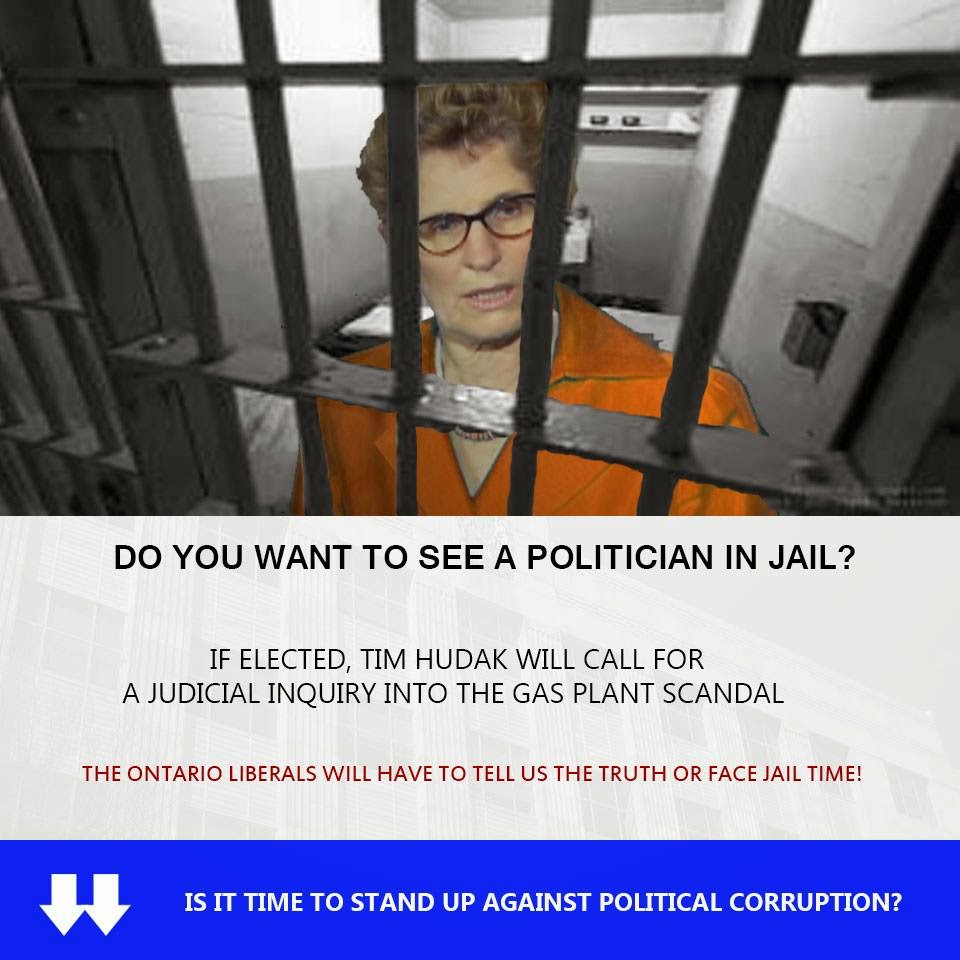
ONTARIO LIBERALS CAN’T HELP THEMSELVES,

IT’S IN THEIR DNA TO LIE!

 from Donna Quixote

(Editor’s note:  Hudak never said that he was going to rip up existing wind and solar contracts.  He specifically said that he would not approve any more contracts because we have too much electricity in this province now.  I wish that these liars would spontaneously combust every time they opened their mouths. — DQ)

Brad Duguid Rips PC Plan for Wind and Solar Contracts 

Antonello Artuso — Toronto Sun — May 18, 2014

TORONTO – Progressive Conservative Leader Tim Hudak has learned nothing from Liberal government mistakes made in the billion-dollar gas plants controversy.

That was the unusual message from Liberal MPP Brad Duguid, who said Hudak is about to waste 20 times as much public money if he proceeds with his plans to tear up solar and wind power contracts.

“Ontarians should be asking Tim Hudak whether he’s learned from the mistakes that were made during the gas plants issue,” Duguid said Sunday. “We certainly as a government have. We’ve taken a number of measures to make sure that doesn’t happen again.

“Tim Hudak, though, in his plan, would repeat the same darn mistake again, costing us tens of billions of dollars.”

The former energy minister said that people understand that governments and politicians make mistakes — as was done in the case of siting two gas plants in residential neighbourhoods without adequate public consultation — but expect that lessons will be learned and not repeated.

Ontarians will fork over up to $1.1 billion extra over the next couple of decades for reneging on two signed gas plant contracts for Oakville and Mississauga.

Continue reading AND leave a comment here…..

mcginty

Liberals Greed Energy Scam is Destroying Our Energy System Entirely!

Figuring out Ontario’s energy future

1
Figuring out Ontario's energy future

OTTAWA, ON. APRIL 4, 2014 — Gary MacDonald’s message was clear: “Fix Hydro Now!” which received dozens of car honks from passing traffic. About 300 people gathered outside Liberal Energy Minister Bob Chiarelli’s office on Carling Avenue Friday to protest rising energy prices. (Julie Oliver/Ottawa Citizen) #116634.

Photograph by: JULIE OLIVER , Ottawa Citizen

Electricity in Ontario is so expensive because generations of governments have treated it as a tool of politics and for intervening in the economy, none of the major parties contesting the current election is going to stop, and nobody, but nobody, will cut your hydro bill meaningfully.

We call it “hydro” but that’s already misleading: Ontario’s electricity is mostly nuclear. Last year almost twice as much of Ontario’s energy came from nuclear reactors as from all other sources put together. Why? Because in the 1950s and ’60s, our governments thought they could kickstart an international export business by developing Canadian nuclear reactors. We sold a few, but to this day hardly anybody in the world uses CANDU reactors but us.

“I see energy as an economic fundamental and not a plaything,” Progressive Conservative Leader Tim Hudak told the Citizen’s editorial board this week. Hudak says the government’s priority should first be to make sure Ontario’s power supply is reliable and, after that, as cheap as possible.

If he didn’t treat energy as a plaything, he’d be the first premier who didn’t.

Supply, at a price

Ontario’s energy supply is in better shape than when the Liberals took office in 2003: Nuclear reactors have been refurbished, new generating stations have been built, old coal plants have been all but wiped out, and we consistently generate more energy than we need. The Liberals crow about all those things and they aren’t wrong.

But they came at a big, big cost. The average price of electricity so far this year is the highest it’s ever been. Usually electricity is most expensive in summer, but according to the agency that monitors Ontario’s power system, the Independent Electricity System Operator, the price this past March was more than double what it was last July — more expensive than it’s been in any June, July or August since 2005, in fact, when the system was at its most delicate and we were buying power from anywhere we could.

The price is going to keep going up. The Liberals’ own long-term energy plan, a government document, predicts the total cost of Ontario’s electricity supply will keep increasing until 2022 before it stabilizes — but even then, it will be more expensive than it is today.

The Liberals have invested heavily in a power grid that was in dangerously ramshackle condition when they took it over. For decades nobody wanted to face up to the reality that Ontario Hydro was dysfunctional and was neither charging nor spending enough; the Tories under Mike Harris and Ernie Eves recognized there was a crisis in the 1990s and broke it up into smaller Crown corporations and agencies, but they hadn’t got around to renovating power plants and replacing power lines.

That was overdue work, it was expensive, and the Liberals kept on with it.

But they also got cocky, investing heavily in wind and solar power — billions of dollars’ worth — to try to kickstart a domestic green-energy industry.

The great green experiment

The Liberals’ green-energy policy has run over local governments by taking away cities’ and towns’ authority over new wind and solar farms. You can hardly drive along any rural highway in Ontario without seeing a billboard, placards on fences, makeshift signs on stakes damning the Liberals for ruining the countryside with wind farms.

Australian Renewable Energy Agency, On the Chopping Block!

Government axes renewable energy agency.

Australian Broadcasting Corporation

Broadcast: 15/05/2014

Reporter: Kerry Brewster

The government plans to axe the funding body for new technologies in renewable energy, ARENA the Australian Renewable Energy Agency, in order to save a billion dollars.

Transcript

TONY JONES, PRESENTER: The clean energy industry is voicing dismay over the Government’s plan to axe the key funding body for new technologies in renewable energy.

The dismantling of ARENA, the Australian Renewable Energy Agency will save more than a billion dollars. But ARENA says that money would have helped to build a $7.7 billion fleet of projects to develop solar, wave and geothermal technologies.

Kerry Brewster reports.

KERRY BREWSTER, REPORTER: Private investors in this solar demonstration plant in New South Wales say ARENA’s financial assistance was crucial.

ANDREW WANT, VASTSOLAR: Without support from ARENA for that private investment, helping absorb the risk, we would have had no option but to go offshore and try to access similar sorts of grant facilities overseas. We didn’t want to do that. We wanted to develop this technology in Australia for Australian markets.

KERRY BREWSTER: But Andrew Want says his dream of large solar thermal plants powering the nation’s cities has been dashed, with the Abbott Government announcing it will axe the Australian Renewable Energy Agency. 

According to the Treasurer, $1.3 billion in savings will go towards repairing the budget and funding policy priorities.

ANDREW WANT: Why Australia would want to send investment signals saying, “We are shut for business,” is beyond me.

KERRY BREWSTER: Solar businesses agree.

MARK TWIDELL, SMA: Just at a time when funding is there for the development of the future technologies, we’re scaling it back.

KERRY BREWSTER: Mark Twidell sells German-made solar inverters, but he’s not sure there’ll be an Australian market to sell to.

MARK TWIDELLL: ARENA was supporting the Australian universities, the Australian researchers, the Australian small-to-medium enterprises, getting their products, getting their technologies in order so that they could compete in a global marketplace.

KERRY BREWSTER: ARENA’s CEO says Australia could be the loser if more than a billion dollars of support for world-leading scientific R&D ends.

IVOR FRISCHKNECKT, AUST. RENEWABLE ENERGU AGENCY: The University of NSW, the ANU, the University of Queensland, CSIRO, all have incredibly strong programs, many people working in this area, lots of intellectual property being exported, lots of foreign students coming in here to be educated in those programs. We risk losing that. We also risk losing the rollout, so essentially delaying our transition to a renewable energy future and having lower-cost energy technologies available.

KERRY BREWSTER: This week the International Energy Agency said that for the world to meet its carbon reduction targets, 65 per cent of all power needed to be generated from renewable sources by 2050.

Energy specialist, journalist Giles Parkinson, says the race is on.

GILES PARKINSON, RENEW ECONOMY: I watch very carefully what’s going on in the rest of the world. I’ve been to Germany, I’ve been to other parts of Europe, I’ve been to the US. They’re all going fast forward on this and in Australia the rhetoric seems to be that nobody else is doing anything and nor should we, but it’s just not true. In the US they’re investing billions and billions of dollars.

KERRY BREWSTER: Andrew Want says he won’t be in the race if there are no ARENA funds to help attract further private investment.

ANDREW WANT: Investors in Europe, in the States, in Japan are thoroughly confused by why Australia is trying to shut down renewable energy.

KERRY BREWSTER: Mark Twidell, who ran the seed funding body that preceded ARENA predicts a renewable energy brain drain.

MARK TWIDELLL: We will see good technologies, good ideas, good companies seeking to go to other countries in the world and we’ll see those companies that were thinking about installing renewables perhaps starting to think again.

KERRY BREWSTER: The Government must pass legislation to abolish the agency, so its fate rests with the Senate. Industry Minister Ian Macfarlane told Lateline his department will focus on bringing to fruition the 180 research and development projects that have already received close to $1 billion of ARENA investments. 

Kerry Brewster, Lateline.

Time to Put an End to the Renewables Scam!

End to solar farm blight as subsidy scheme is scrapped

Green energy subsidy scheme will be shut to large solar farms as ministers attempt to curb blight to countryside

Subsidies for solar panels will be scrapped to help reduce household electricity bills, energy minister in charge of climate change has declared


Subsidies that have driven the spread of large solar farms across Britain are to be scrapped under plans to stop the panels blighting the countryside.

Energy companies that build solar farms currently qualify for generous consumer-funded subsidies through the so-called ‘Renewable Obligation’ (RO) scheme, and had expected to keep doing so until 2017.

But the Department of Energy and Climate Change announced on Tuesday that it planned to shut the RO to new large solar farms two years early, from April next year.

The decision follows an admission by ministers that far more projects have been built than expected, leading to a rising subsidy bill for consumers and increasing local opposition.

Greg Barker, the energy minister, pledged last month that solar farms must not become “the new onshore wind” and said he wanted solar panels installed on factory rooftops instead.

A Whitehall source said: “Large scale solar shouldn’t be in any place or at any cost. The direction of travel is away from farms – especially where communities don’t want them.”

Leonie Greene, head of external affairs for the Solar Trade Association, said the industry was “dismayed” at the proposals.

She said that the replacement subsidy scheme – so-called ‘contracts for difference’ (CfD) – simply “doesn’t work for solar”.

The new scheme will have a capped budget and onshore wind and solar farm projects will be forced to compete with each other in reverse auctions to win subsidy contracts.

Ms Greene said that, on current costs, solar farms “can’t compete with onshore wind”. The uncertainty in the auction process also made solar farm development too risky for the small businesses who typically build them.

“Unless we can get major amendments to CfDs and fair treatment, they [large-scale solar farms] won’t get built,” she said.

The Department of Energy and Climate Change said: “Large-scale solar is deploying much faster than we expected. Industry projections indicate that, by 2017, there could be more solar deployed than is affordable – more than the 2.4-4GW set out in the electricity market reform (EMR) delivery plan.

“We need to manage our financial support schemes effectively and responsibly. That means that we need to ensure that the growth of the solar sector is delivered in a way that gives best value for money to consumers and allows us to offer effective support to the renewables sector as a whole.

“So we are also consulting today on proposals to close the RO to new solar PV capacity above 5MW from 1st April 2015, across England, Wales and Scotland. Those proposals include grace period arrangements to protect developers who have already made significant financial commitments.”

In a solar strategy released last month, the Department of Energy and Climate Change (DECC) said: “We want to move the emphasis for growth away from large solar farms.”

Seb Berry, head of public affairs at solar company Solarcentury, said: “Today’s announcement is unnecessary and totally at odds with the government’s desire to reduce the cost to energy bill payers of delivering the 2020 renewable energy target.

“This policy proposal will undermine investor confidence in the entire UK renewable energy sector, by removing at a stroke the short and medium-term policy certainty required for major project investments.

“It is surprising that the government is trying justify this proposal on cost grounds. Large-scale solar is already significantly cheaper than offshore wind and will be competitive with onshore wind by 2017. In deliberately setting out to strangle the growth of cheaper solar from 2015, Secretary of State Ed Davey can no longer claim that government policy will deliver the most cost-effective mix of technologies by 2020.”