Sea Levels Are NOT Rising…..NO Surprise!
‘Does Obamacare cover global warming now?’ AGW skeptic Steven Goddard torches WH’s ‘climate change’ B.S.
Global warming scam promoted by Obama….
Tea Party whores for solar?
Renewables scam branches out!

It was bound to happen. Money changes hands, shills and charlatans are borne. The Green Tea whores working the solar politics in Louisiana is linked below.
View original post 44 more words
Funny that Wind Proponents refuse to Study REAL PEOPLE! Obvious they know the truth!
FOR IMMEDIATE RELEASE
April 8, 2015
Toronto ON/ On April 9 the Council of Canadian Academies (CCA) will release a report in Canada evaluating the literature on the impacts of wind turbine noise on human health called Understanding the Evidence: Wind Turbine Noise.
The group Canadians for Radiation Emissions Enforcement (CFREE) wants the endless reviewing of the literature on wind turbines and health to cease.
“The people of rural Canada don’t want any more expert reviewers reviewing other expert reviewers year after year”, says Shawn Drennan spokesperson for CFREE. “We are at a crossroads with the wind industry. We want action. The government of Ontario is plowing ahead with the planned 6000 industrial scale wind turbines while communities are desperate to be heard and protected. Why is the Radiation Emitting Devices Act – a Law created to protect Canadians from acoustical waves such as those emitted by wind turbines – being ignored?”
“How many people in rural Canada need to complain and suffer from the operation of wind turbines before justice takes hold?” Drennan added.
“Added to this is the fact that the CCA panel of experts, supported by the federal government and including a member of the wind industry lobby, has no mandate to investigate any individuals reporting health effects for this report. Where do we the public fit in?” adds Drennan.
It is prescribed in the REDA that if an importer or operator of a device such as a wind turbine is made aware of risk of personal injury or impairment of health they must “forthwith notify the Minister” [of Health for Canada]. CFREE asks why wind developers did not follow this law seven years ago when people first reported problems to them about the impacts of the noise emitted from turbines operating in their vicinity.
“If developers had complied with the law and reported the complaints to Health Canada, investigations would have been carried out back then before the Green Energy Act. This could have advanced the understanding a long time ago and avoided risk of harm to those living close to these facilities” said Joan Morris, an epidemiologist and Chair of CFREE.
Drennan adds, “So here we are seven years later- more reviews of the reviews while the problems have not gone away but have become more grievous for the people suffering in rural Canada.”
For more information:
Joan Morris
Oxford County ON
519 851-2092 morrisj99@gmail.com
Shawn Drennan
Ashfield-Colborne-Wawanosh Township in Huron County
Spotlight Thrown on the Regressive Costs that Subsidise UK’s Failed Wind Power Policy & Hammer the Poor
Entire windscam is a wealth transfer, from poor, to rich!

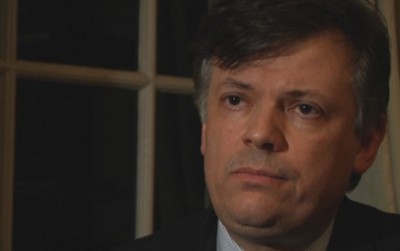 Dr John Constable: wind power is a failure on all scores.
****
Our data shows that climate policies aren’t working. Why does that scare our opponents?
The Telegraph
Dr John Constable
2 Apr 2015
The solution to climate change lies in unleashing the ingenuity of the market – not in top-down subsidies which penalise the poor to prop up inadequate technologies
Since 2004, the charity I run, the Renewable Energy Foundation (REF), has been highlighting the fatal flaws in our energy and climate policies. Despite all their market-style decorations, these boil down to a well-intentioned but misconceived attempt to pick winners – which too often prove to be quite the reverse.
Here’s an example: subsidies to renewable electricity in the UK alone are running at nearly £4 billion a year, and will have risen to about £8 billion a year in 2020, with perhaps another £5 billion a year…
View original post 1,229 more words
How bout this–there is no warming problem–it’s a yawn
The Alarmists are Trying to Scare people. They know it’s not true! Gore owns waterfront property!
Here come people with Asian names–and you know how smart they can be–and they say there is nothing about the current warming that is impressive, compared to the Medieval Warming Period.
View original post 16 more words
The Vancouver Sun’s Video Interview with Freeman Dyson
Climate Alarmists Fight against True Science!

The Vancouver Sun recently published a video interview with “Princeton University’s preeminent” theoretical physicist and mathematician Freeman Dyson, as part of their “Conversation that Matters” series hosted by Stuart McNish. If you don’t know who Freeman Dyson is, see his condensed biography here and detailed biography here. Freeman Dyson is also skeptical of catastrophic CO2-driven global warming/climate change.
View original post 86 more words
Legislators Finally Realizing That Wind Power is Useless! Pull the Subsidy Plug!
US “Wind Power States” Pull the Plug on Massive Wind Power Subsidy Schemes
April 6, 2015 by Leave a Comment

****
This time last year, we took a look at the States in the US where $billions filched from power consumers and taxpayers have been thrown at wind power outfits, as a massive, and seemingly endless, stream of subsidies; and the skyrocketing power prices that have been the result:
Want skyrocketing power prices? Just add Wind Power
In that post, James M Taylor laid out the wind power driven blowout in power prices, noting that:
Skyrocketing Costs in Wind Power States
The 11 states that AWEA identifies as deriving more than 7 percent of their electricity from wind power are Colorado, Idaho, Iowa, Kansas, Minnesota, North Dakota, Oklahoma, Oregon, South Dakota, Texas, and Wyoming. AWEA says these 11 states have had slightly falling electricity prices since 2008, but official U.S. Energy Information Administration (EIA) data show nine of the 11 have dramatically rising prices. Here are EIA’s data on changes in electricity prices for each of the 11 states since 2008:
Colorado – up 14%
Idaho – up 33%
Iowa – up 17%
Kansas – up 29%
Minnesota – up 22%
North Dakota – up 24%
Oklahoma – down 1%
Oregon – up 15%
South Dakota – up 26%
Texas – down 19%
Wyoming – up 33%
The objective U.S. Energy Information Administration data show nine of the 11 largest wind power states are experiencing skyrocketing electricity prices, rising more than four times the national average. Moreover, prices in eight of the 11 states are rising more than twice as fast as in the 39 states with less than 7 percent wind power generation.
James goes on to explain the two outliers, Texas and Oklahoma:
The Two Outliers Explained
Other important factors further rebut AWEA’s claims in the two heavy wind power states where electricity prices are not skyrocketing.
In Oklahoma, where electricity prices remained essentially flat, there is no renewable power mandate. To the extent wind power is produced in Oklahoma, market forces, rather than state government, determine its generation. AWEA curiously argues relatively stable electricity prices in a state without renewable power mandates justify AWEA’s call for renewable power mandates.
In Texas, economists agree, electricity prices have been falling in recent years as a result of the state’s deregulation efforts during the past decade. Texas coal power, natural gas power, nuclear power, and wind power are all experiencing declining prices due to deregulation. Yet AWEA falsely ascribes the state’s declining electricity prices to wind power.
AWEA’s self-serving formula uses Texas’ deregulation to hide the cumulatively skyrocketing electricity prices in the 10 other states that generate the most wind power.
Now, in a cry of “enough is enough”, numerous States, including Ohio, Kansas, New Mexico and West Virginia have either pulled the plug on their “Renewable Energy Mandates” (State based subsidy schemes) or are set on the path to do so. What’s spooked them into action is the fact that:
“Electricity prices in states with mandates are 40 percent higher than in non-REM states.”
Remember, as Ross McKitrick puts it: “wind turbines don’t run on wind, they run on subsidies” (see our post here).
With States chopping the massive and endless subsidies on which the wind industry critically depends, the wind industry will finally be put to proof on its wild claims about about being “competitive” with conventional generators (see this nonsense from ruin-economy and our post here). As the Americans say to the foolish and/or brave: “well, good luck with that!”
Here’s the Washington Times on the beginning of the end for BIG WIND in the US.
Pulling the plug on renewable energy: States with mandates suffer exploding electricity prices
The Washington Times
Sterling Burnett
29 March 2015
There is never a good time for bad public policy. For few policies is this more evident than renewable energy mandates (REM), variously known as renewable portfolio standards, alternative energy standards and renewable energy standards.
The first renewable energy mandate was adopted in 1983, but most states did not impose these mandates until the 2000s. Though the details vary from state to state, in general, renewable energy mandates require utilities to provide a certain percentage of the electric power they supply from “renewable” sources, notably wind and solar, with the required percentages rising over time.
At the height of the renewable-energy mania, 30 states and the District of Columbia had imposed REMs and another seven had established voluntary standards.
Renewable energy mandate proponents included environmental lobbyists with a hatred for capitalism and fossil fuels that make modern society possible, crony socialists who saw the mandates as way of strong-arming exorbitant payments from government and ratepayers alike, and paternalistic politicians who look down on people’s choices in the marketplace, believing they know best what sources of energy people ought to choose.
Green-energy advocates, crony socialists and government elitists have seen their fortunes wax and wane over five decades. Government subsidies for unreliable, expensive renewable fuels had risen, fallen, been scrapped and begun anew since the 1970s. The existence and amount of subsidies tended to rise in fall with various energy crises — crises often created by the same government that then proposed subsidies for renewable energy as the solution for the problems it created.
For 50 years, green-energy gurus in industry and the environmental movement have sold the snake oil that renewable power would soon be as cheap and reliable as coal, oil, nuclear and natural gas. The nation has been told the turning point has always been just around the corner, always requiring a little more public funding and tax breaks before we have abundant, cheap, clean, reliable energy materializing from thin air.
All these promises were false, and the public and more-honest politicians have seen through the sales pitch. Now, support for renewables is as unreliable as the energy it provides.
To guarantee a market for renewables, green lobbyists fought successfully for mandates ensuring green-energy producers a slice of the electricity market regardless of the price and quality of the energy they produced.
Energy prices skyrocketed, as predicted by numerous energy analysts.
Though cost is an important concern, it is not the only problem with renewable power sources.
Renewable energy is not environmentally friendly. Renewable energy mandates have turned millions of acres of wild lands and wildlife habitats into a vast wasteland of wind and solar industrial energy facilities. In the process, renewable energy facilities have condemned to death hundreds of thousands of animals, including endangered birds, bats and tortoises. Finally, the construction and maintenance of these facilities have polluted the air and water. There is nothing green about all this. Still, continuing high costs, not environmental concerns, may finally spell doom for the mandates.
Citing high costs, Ohio became the first state to freeze its renewable energy mandate. Under Ohio’s mandate, utilities would have been required to provide 25 percent of the state’s electricity from qualified renewable sources by 2025. Under a law signed by Republican Gov. John Kasich in June 2014, Ohio froze its mandate at the current level of 12.5 percent, halving the mandated level.
In January, West Virginia repealed its renewable energy mandate entirely, and the New Mexico House of Representatives passed a bill freezing the state’s renewable standards in March.
Kansas has also recently held hearings on repealing its renewable energy mandate, spurred on in part by a new report from Utah State University reporting Kansas ratepayers are paying $171 million more than they would without the mandate. These additional costs have resulted in a loss of $4,367 each year in household disposable income.
What’s true for Kansas is true for other states with renewable energy mandates. States with mandates experienced 10 percent greater unemployment, due to higher energy prices resulting from the REM, than states without mandates. In addition, the U.S. Department of Energy has found electricity prices in states with renewable energy mandates have risen twice as fast as in states with no renewable requirement. Electricity prices in states with mandates are 40 percent higher than in non-REM states.
With these facts, it is little wonder that states are doing a slow walk back from their previous support of costly, environmentally harmful renewable energy mandates. It’s a classic case of legislate in haste, repent in leisure.
H. Sterling Burnett is a research fellow on energy and the environment at the Heartland Institute.
The Washington Times
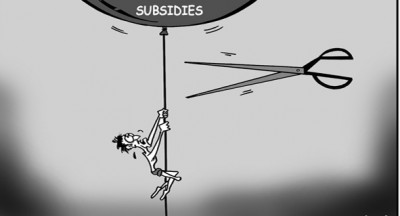
If any further proof were needed for Ross McKitrick’s “wind turbines don’t run on wind, they run on subsidies” adage, this little piece from Associated Press should do the trick.
Plans pulled for 223-turbine wind farm in Central Oregon
The Associated Press
27 March 2015
BEND — Plans for a big wind farm in north-central Oregon have been scrapped, state regulators say.
The Brush Canyon Wind Power Facility would have had as many as 223 turbines in Sherman and Wasco counties, The Bend Bulletin reported Friday.
It would have been in an area of 76,000 acres, or 119 square miles.
The turbines that have spread across the windy Columbia plateau in recent decades have benefited from two government initiatives: requirements by West Coast states that utilities include alternative energy among their energy sources and a federal tax credit based on turbine production.
But in December, Congress let lapse the federal tax break enacted in 1992 to nurture the fledgling wind industry.
The Brush Canyon proposal had its origin like many in the Northwest, proposed by the North American arm of a European or Scandinavian utility company, in this case the German firm E.ON (EE’-ahn) AG.
“We don’t know why they pulled out, but it’s not unusual,” said spokesman Rachel Wray of the state Department of Energy. “We’ve had a number of projects pulled over the last couple of years. Some that had gone a ways through the process . and others that were a lot less far along. It really varies.”
Calls and messages from The Associated Press to the company’s Chicago office and German headquarters were not immediately returned.
In Central Oregon, some were happy and relieved at the decision, saying the project was far too big and disruptive.
Residents of the high-desert town Antelope were anticipating that construction traffic would increase traffic by 600 percent, Mayor John Silvertooth said.
“It’s like a doctor telling a patient he’s in remission, or waking up from brain surgery and hearing everything was a success,” he said.
Antelope’s population is now about 50. It was larger in the 1980s, and got a lot of attention, when thousands of followers of the Indian guru Bhagwan Shree Rajneesh tried to establish a political power base on a commune that was eventually forced out.
The Associated Press

STOP PRESS: Highlanders Seek Help to Save Loch Ness from Wind Farm Insanity
Please Help Preserve the Loch Ness! NO WIND TURBINES!!!
****
From the web site Save Loch Ness
Please help save Loch Ness and the Great Glen the world’s most famous loch and Glen.
The Highland and national planning systems fail to protect the World’s most famous loch and Glen.
Loch Ness is under threat from over 500 wind turbines approved and in the planning stage within a 22 mile radius (Daily Mail 28/1/2015). Loch Ness and the Great Glen are now prime targets for windfarm developers. There are calls to classify Loch Ness and the Great Glen a World Heritage Site because of their international importance. They are Scotland’s second most popular tourist draw. Yet, environmental destruction could threaten some of the Highland’s most scenic areas.
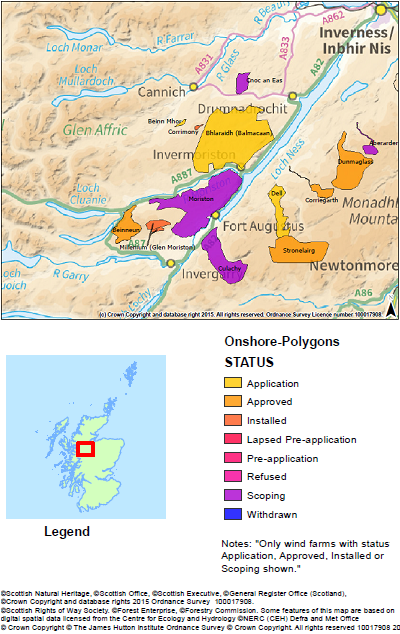
Loch Ness and environs and the Great Glen are under threat as never before from the attention of wind farm companies. You can make a difference by signing a petition to the Scottish Parliament…
View original post 322 more words
Sign a Wind Turbine Contract in Haste? Repent at Your Leisure!
Turbine Hosts’ Lament: Hammered by Wind Power Outfits; Hated by Former Friends, Relatives & Neighbours
April 5, 2015 by

****
After years of being shunned by former friends and neighbours for introducing turbines into their communities (or signing up for that to happen in future), many turbine hosts are keen to wind the clock back and make amends. Community division, angry former friends and hostile neighbours are just one aspect of what’s causing actual and potential turbine hosts to regret their decisions; and, in Australia, encouraging them to present their cases to the Senate Inquiry:
For Australian turbine hosts, the Senate Inquiry into the great wind power fraud provides a golden opportunity to take the lid off the wind industry’s ‘stinky pot’, by exposing the goons and hucksters employed by wind power outfits for what they are: a bunch of liars and chancers. Your chance to tip a bucket by making submissions; to present documents; and to make it known that you’d like to give evidence, has been extended to 4 May. For details on what to do and who to contact see the posts above.
In the posts above we covered the grab-bag of lies and subterfuge used by the goons that stitch up land holder contracts for their masters.
One of the well-worn favourites was to convince a potential target farming family that they were the ONLY farmers who had NOT signed a contract to host turbines for the project concerned.
The development being scoped out might involve a dozen separate farming properties, say; all of which needed to be stitched up in contracts to make the project stack-up in terms of REC subsidies and/or infrastructure layout and associated engineering costs.
The developer’s goons would lob up at each and every one of them – on a one-on-one basis – telling them the very same story: “that all of their neighbours had already signed up”. These words were usually uttered at a point in time when the developer had not signed ANY contracts in relation to its proposed development at all. Pressure was often added by telling the targets that they needed to sign up quickly, because if they didn’t they would be holding up hundreds of $millions in investment, hundreds of jobs etc, etc.
Working on the adage of “loose lips sink ships”, on each occasion, the farmers being targeted were told that they mustn’t breathe a word about the contract being offered to any living soul: so much easier to perpetuate a lie when it can’t be tested by your target with a quick phone call to their neighbours.
In order to add a little more pressure to their targets – and to get their monikers on the contract being offered – the developer’s goons would tell the target farming family that, because everyone else had signed up, they would end up with turbines right up to the boundaries of their properties (sometimes within a few hundred metres of their homes); so they “may as well sign up anyway”, because that way they would at least get paid for hosting some turbines on their own property.
The thrust of the developer’s pitch being that: your life is going to be ruined by dozens of turbines on your neighbour’s property, so you may as well receive a few grand a year for your pending troubles.
The same set of lies would be told repeatedly; until such time as ink appeared on all of the contracts needed to get the wind farm project off the ground, and on its way to a dodgy-development approval.
So far, so insidious. And that particular ruse is one that’s been used around the world, as is made plain from the stories below, one of which reports a turbine host from Wisconsin saying that:
[W]e were also told that we were the ones holding up the project. That all of our neighbors had signed, and we were the last hold-outs. It persuaded us.
What we didn’t know then was the developer was not being truthful. We were not the ‘last hold-out’ at all. In later discussions with our neighbors we found out that in fact we were the very first farmers to sign up. I have since found out this kind of falsehood is a common tactic of wind developers.
But, it’s not just being duped that has turbine hosts wringing their hands.
Oh no.
It’s the fact that wind power outfits couldn’t care less about their farming operations; and being the subjects of social ostracism from former friends, relatives and neighbours that has really hit home.
Over the years, STT has been in contact with a number of disgruntled turbine hosts, from all over the country; and more of them have come forward in the last few months; particularly those who are in contracts where the turbines planned are yet to go up.
One of the facts that tends to rub salt into the turbine hosts’ wounds is just how derisory is the “compensation” they receive in exchange for their personal grief and the hatred of former friends and neighbours.

In Australia, turbine hosts receive a piddling $10,000-$15,000 a year, for a turbine that will receive upwards of $800,000 a year in REC subsidies, alone.
A REC is issued for each MWh of wind power delivered to the grid. A 3 MW turbine – if it operated 24 hours a day, 365 days a year – would receive 26,280 RECs (24 x 365 x 3). Assuming, generously, a capacity factor of 35% (the cowboys from wind power outfits often wildly claim more than that) that single turbine will receive 9,198 RECs annually.
At $94 – the expected price for RECs once the shortfall penalty bites this year – that single turbine will rake in $864,612 in Commonwealth mandated subsidy, which is drawn from all Australian power consumers as a tax on their power bills. But wait, there’s more: that subsidy doesn’t last for a single year.
A turbine operating now will continue to receive the REC subsidy for 16 years, until 2031 – such that a single 3 MW turbine can pocket a further $13,833,792 over the remaining life of the LRET.
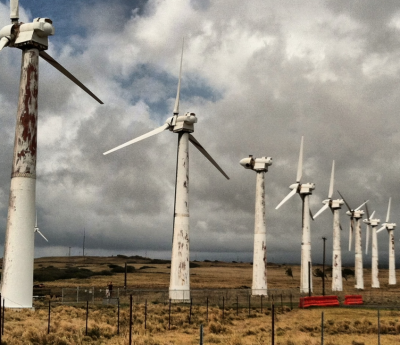
In the meantime, the host gets a nominal $160,000 over the same period (with no index for inflation, the real value falling over time) and will end up with a pile of rusting turbines that they will have to pay to remove when the things fall apart, fling their blades to the four-winds, burst into flame or the subsidy scam inevitably gets scrapped – whichever occurs first.
****
The themes outlined above and detailed below are common, tragic and perfectly avoidable.
The pieces below dealing with the laments of turbine hosts popped up in Wisconsin, but the narratives could have come from anywhere.
“By signing that contract, I signed away the control of the family farm, and it’s the biggest regret I have ever experienced and will ever experience.”
Gary Steinich, Cambria, Wisconsin. June 2011.
Here’s the tale of Gary’s great regret from Better Plan, Wisconsin.
Sometime in late 2001 or early 2002, a wind developer working for Florida Power and Light showed up near the Wisconsin Town of Cambria looking to get in touch with someone at the Steinich family farm.
He wanted to talk to the landowner about leasing a bit of land for the installation of a met tower. He needed to measure the winds in the area for a possible windfarm and Walter Steinich’s land looked like a good place to do it.
The wind developer seemed like a good guy to Mr. Steinich who was in his early 70’s at the time. The money seemed good. A met tower didn’t seem like a big deal. It was just a tall pole with some guy wires, and it was temporary. Mr. Steinich signed the contract.
That was nearly ten years ago. Mr. Steinich has since passed away and now his son, Gary, runs the farm. He’s written an open letter to Wisconsin farmers about his experience with the wind company since then.
From One Wisconsin Farmer to Another:
This is an open letter to Wisconsin farmers who are considering signing a wind lease to host turbines on your land. Before you sign, I’d like to tell you about what happened to our family farm after we signed a contract with a wind developer.

In 2002, a wind developer approached my father about signing a lease agreement to place a MET tower on our land. My father was in his 70’s at the time. The developer did a good job of befriending him and gaining his trust.
He assured my father that the project wasn’t a done deal and was a long way off. They first had to put up the MET tower to measure the wind for awhile.
He told my father that if the project went forward there would be plenty of time to decide if we wanted to host turbines on our farm. There would be lots of details to work out and paperwork to sign well before the turbines would be built. The developer said my father could decide later on if he wanted to stay in the contract.

In 2003 the developer contacted us again. This time he wanted us to sign a contract to host turbines on our land. We were unsure about it, so we visited the closest wind project we knew of at the time. It was in Montfort, WI.
The Monfort project consists of 20 turbines that are about 300 feet tall and arranged in a straight line, taking up very little farmland with the turbine bases and access roads. The landowners seemed very satisfied with the turbines. But we were still unsure about making the commitment.

We were soon contacted again by the developer, and we told him we were undecided. Then he really started to put pressure on us to sign.
This was in March of 2004, a time of $1.60 corn and $1200 an acre land. It seemed worth it have to work around a couple of turbines for the extra cash. We were told the turbines would be in a straight line and only take up a little bit of land like the ones in Monfort.
And we were also told that we were the ones holding up the project. That all of our neighbors had signed, and we were the last hold-outs. It persuaded us.
What we didn’t know then was the developer was not being truthful. We were not the ‘last hold-out’ at all. In later discussions with our neighbors we found out that in fact we were the very first farmers to sign up. I have since found out this kind of falsehood is a common tactic of wind developers.
My father read through the contract. He said he thought it was ok. I briefly skimmed through it, found the language confusing, but trusted my father’s judgment. We didn’t hire a lawyer to read it through with us. We didn’t feel the need to. The developer had explained what was in it.
The wind contract and easement on our farm was for 20 years. By then my dad was 75. He figured time was against him for dealing with this contract in the future so we agreed I should sign it. A few months later, my father died suddenly on Father’s Day, June 20th, 2004
After that, we didn’t hear a whole lot about the wind farm for a couple years. There was talk that the project was dead. And then in 2007 we were told the developer sold the rights to the project. A Wisconsin utility bought it.
After that everything changed. The contract I signed had an option that allowed it to be extended for an additional 10 years. The utility used it.
The turbines planned for the project wouldn’t be like the ones in Monfort. They were going to be much larger, 400 feet tall. And there were going to be 90 of them.
They weren’t going to be in a straight row. They’d be sited in the spots the developer felt were best for his needs, including in middle of fields, with access roads sometimes cutting diagonally across good farm land. Landowners could have an opinion about turbine placement but they would not have final say as to where the turbines and access roads would be placed. It was all in the contract.
Nothing was the way we thought it was going to be. We didn’t know how much land would be taken out of production by the access roads alone. And we didn’t understand how much the wind company could do to our land because of what was in the contract.
In 2008 I had the first of many disputes with the utility, and soon realized that according to the contract I had little to no say about anything. This became painfully clear to me once the actual construction phase began in 2010 and the trucks and equipment came to our farm and started tearing up the field.
In October of 2010 a representative of the utility contacted me to ask if a pile of soil could be removed from my farm. It was near the base of one of the turbines they were putting on my land. I said no, that no soil is to be removed from my farm.
The rep said that the pile was actually my neighbor’s soil, that the company was storing it on my land with plans to move it to another property.
Shortly afterwards I noticed the pile of subsoil was gone.
In November of 2011 I saw several trucks loading up a second pile of soil on my land and watched them exiting down the road. I followed them and then called the Columbia County Sheriff. Reps from the company were called out. I wanted my soil back.
A few days later the rep admitted they couldn’t give it back to me because my soil was gone. It had been taken and already dispersed on someone else’s land. I was offered 32 truck loads of soil from a stockpile they had. I was not guaranteed that the soil would be of the same quality and composition as the truck loads of soil they took from my farm.
I was informed by the lawyer for the utility that I had until April 30, 2011 to decide to take the soil. There would be no other offer. Take it or leave it.
I contacted the Public Service Commission for help. The PSC approved the terms of project and I believed the utility was violating those terms. The PSC responded by telling me they could do nothing because the issue involved a private contract between myself and the utility.
They told me my only option was to sue the utility.
My father and I both worked those fields. Watching the way they’ve been ripped apart would sicken any farmer. But what farmer has the time and money it would take to sue a Wisconsin utility?
By signing that contract I signed away the control of the family farm, and it’s the biggest regret I have ever experienced and will ever experience. I have only myself to blame for not paying close enough attention to what I was signing.
We had a peaceful community here before the developer showed up, but no more. Now it’s neighbor against neighbor, family members not speaking to one another and there is no ease in conversation like in the old days. Everyone is afraid to talk for fear the subject of the wind turbines will come up. The kind of life we enjoyed in our community is gone forever.
I spend a lot of sleepless nights wishing I could turn back the clock and apply what I’ve learned from this experience. Now corn and bean prices are up. The money from the turbines doesn’t balance out our crop loss from land taken out of production. The kind of life we enjoyed on our family farm is gone forever too.
I would not sign that contract today. As I write this, the utility is putting up the towers all around us. In a few months the turbines will be turned on and we’ll have noise and shadow flicker to deal with. If I have trouble with these things, too bad. I’ve signed away my right to complain. These are some of the many problems I knew nothing about when I signed onto the project.
If you are considering signing a wind lease, take the contract to a lawyer. Go over every detail. Find out exactly what can happen to your fields, find out all the developer will be allowed to do to your land. Go through that contract completely, and think hard before make your decision.
I can tell you from first hand experience, once you sign that contract, you will not have a chance to turn back.
Gary Steinich
Steinich Farms, Inc.
Cambria, WI
June, 2011

A Fond Du Lac Farmer has regrets about agreeing to host a wind turbine – Why can’t he speak openly about it?
When you sign a 20 to 30 year contract to host a wind turbine on your property you may be signing away many rights you’re unaware of. A confidentiality agreement in the contract may mean legal action can be taken against you if you complain publicly about the project. A Fond Du Lac farmer signed away his rights. He was interviewed by Don Bangart who wrote the following on behalf of the farmer, whose contract with the wind company prevents him from speaking openly about any problems.
WHAT HAVE I DONE?
Now each morning when I awake, I pray and then ask myself, “What have I done?”
I am involved with the BlueSky/Greenfield wind turbine project in N.E. Fond du Lac County. I am also a successful farmer who cherishes his land. My father taught me how to farm, to be a steward of my fields, and by doing so, produce far better crop production. As I view this year’s crops, my eyes feast on a most bountiful supply of corn and soybeans. And then my eyes focus again on the trenches and road scars leading to the turbine foundations. What have I done?
In 2003, the wind energy company made their first contacts with us. A $2,000 “incentive” started the process of winning us over, a few of us at a time. The city salesmen would throw out their nets, like fishermen trawling for fish. Their incentive “gift” first lured some of us in. Then the salesmen would leave and let us talk with other farmers. When the corporate salesmen returned, there would be more of us ready to sign up; farmers had heard about the money to be made. Perhaps because we were successful farmers, we were the leaders and their best salesmen.
Sometime in 2004 or 2005, we signed $4,000 turbine contracts allowing them to “lease” our land for their needs. Our leases favored the company, but what did we know back then? Nobody knew what we were doing. Nobody realized all the changes that would occur, over which we would have no control. How often my friends and I have made that statement: What have I done?!
I watched stakes being driven in the fields and men using GPS monitors to place markers here and there. When the cats and graders started tearing 22-foot-wide roads into my fields, the physical changes started to impact not only me and my family, but, unfortunately, also my dear friends and neighbors. Later, a 4-foot-deep by 2-foot-wide trench was started diagonally across my field. A field already divided by their road was now being divided again by the cables running to a substation. It was now making one large field into 4 smaller irregularly shaped plots. Other turbine hosts also complained about their fields being subdivided or multiple cable trenches requiring more of their land. Roads were cut in using anywhere from 1,000 feet to over half a mile of land to connect the locations. We soon realized that the company places roads and trenches where they will benefit the company most, not the landowner. One neighbor’s access road is right next to some of his outbuildings. Another’s is right next to his fence line.
At a wind company dinner presented for the farmers hosting the turbines, we were repeatedly told — nicely and indirectly — to stay away from the company work sites once they start. I watched as my friends faces showed the same concern I had, but none of us spoke out. Months later, when I approached a crew putting in lines where they promised me they definitely would not go, a representative told me I could not be there. He insisted that I leave. The line went in. The company had the right. I had signed the lease.
Grumbling started almost immediately after we agreed to 2% yearly increases on our 30-year lease contracts. Some felt we should have held out for 10%. What farmer would lock in the price of corn over the next 5 years, yet alone lock one in at 2% yearly for 30 years? Then rumors emerged that other farmers had received higher yearly rates, so now contracts varied. The fast-talking city sales folk had successfully delivered their plan. Without regard for our land, we were allowing them to come in and spoil it. All of the rocks we labored so hard to pick in our youth were replaced in a few hours by miles of roads packed hard with 10 inches of large breaker rock. Costly tiling that we installed to improve drainage had now been cut into pieces by company trenching machines.
Each night, a security team rides down our roads checking the foundation sites. They are checking for vandals and thieves. Once, when I had ventured with guests to show them foundation work, security stopped us and asked me, standing on my own property, what I was doing there. What have I done?
Now, at social functions, we can clearly see the huge division this has created among community members. Suddenly, there are strong-sided discussions and heated words between friends and, yes, between relatives about wind turbines. Perhaps this is a greater consequence than the harm caused to my land — life is short, and friendships are precious.
I tried, as did some of the other farmers, to get out of our contracts, but we had signed a binding contract. If you are considering placing wind turbines on your property, I strongly recommend that you please reconsider. Study the issues. Think of all the harm to your land, and, in the future, to your children’s land, versus the benefits from allowing companies to lease your land for turbines.
WHAT HAVE I DONE?
PLEASE DO NOT DO WHAT I HAVE DONE!

This was printed as a full page ad in the Chilton, Wisc., Times-Journal, October 25, 2007.
Why A Wisconsin Farmer is Having Regrets
As told in a recent ad, a Johnsburg farmer who will host wind turbines now has many regrets.
He regrets having been the “lure” to draw in other unsuspecting landowners. He regrets that he has allowed fields to be subdivided, road base to be spread on land once picked bare of rocks, costly tiling to be cut up. He regrets that he’s no longer the person who controls his own land and is now told where to go by security guards. He regrets the divide he has created between friends, between neighbors and between family members.
He regrets not having looked into all the ramifications first. That farmer is now locked in to a binding contract. But there are many landowners who have not yet suffered this fate.
Calumet County Citizens for Responsible Energy asks that landowners considering a contract first step back and study the issues. As with any financial transaction, don’t put a lot of trust in those who stand to gain financially.
Look for Web sites and information from those experiencing the effects of this worldwide “gold” rush for wind power. People across world are rebelling. They’re finding that they’ve lost control of their land and their lives. And they’re in danger of financial hardship if these companies dissolve.
Our irresponsible government representatives are forcing this “windfall” for wind investors on us. Their knee-jerk reaction to the global climate change alarms will cause billions of dollars to be wasted, lives to be ruined, and environments degraded for what is, in actuality, a very inefficient energy source.
With a declining tax base and state and U.S. legislators driving us further into massive debt, taxpayer subsidies for wind will be impossible to maintain.
And with the subsidies gone, what will you be left hosting?
Don Bangert,
Chilton, Wisconsin