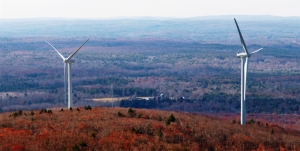
Novelty Energy is Not Suitable for Real Life Applications!

Curt Delvin: Wind Energy’s Fantasy in Green

alice_in_wonderland17

“Being crazy isn’t enough”: Wind energy’s fantasy in green
Curt Devlin
12 July, 2014

“Never let the facts get in the way of a good story,” cautioned Mark Twain. Miles Grant heeded Twain’s famous advice in his recent opinion about global climate change and wind opposition. Grant brims with evangelical fervor when he argues that wind power is necessary for averting climate change.

The problem with the argument is it assumes facts that don’t exist. Wind turbines do not reduce CO2 emission, they increase it. In 2013, the U.S. spent some $80B subsidizing wind power, but CO2 only increased. In proportion to their economies, other industrialized nations around the world have invested far more heavily in wind energy than the U.S., but carbon emissions still go up.

Coal supplies roughly 60% of the energy to the world’s power grids, and all industrial turbines must be connected to a grid. Grid operators maintain an instantaneous balance between energy supply and demand. When turbines are spinning, coal generators are ramped down to balance the grid, a process known as “curtailment.” When turbines stop spinning, coal plants are ramped up, called “cycling” — a procedure that can take hours, since coal plants ramp up slowly.

The problem with cycling is that even the most efficient coal plants produce much greater CO2 emissions when they are not running at peak efficiency. This means that wind farms connected to coal grids virtually ensure increased CO2 emissions — not to mention increased particulate air pollution, a dirty little secret the “wind” lobby wants you to know.

Grant mentioned the people who have to breathe the pollutants being belched out of the Brayton Point coal plant, but forgets to mention that connecting wind turbines to the same grid will make matters worse. The misguided demonstrators who marched into Fairhaven last year to support the turbines, clearly didn’t understand this danger. The people being harmed by pollution from this coal plant should be doing everything to prevent further turbines from being connected to the same grid.

People like Grant, who look at wind power through green-tinted glasses, are quick to argue that at least coal is not being burned when turbines generate power. Unfortunately, this too falls apart under careful scrutiny. The U.S. has become an exporter of its coal surplus. The principal consumer of our surplus is China. When the Chinese burn our coal, however, their plants don’t have to comply with EPA standards. As a result of these dirty coal plants, some industrialized cities in China now have pollution so bad that the air is unbreathable for days on end.

At least we can all agree on one thing; the climate is global, so we’re all inhaling some of this pollution.

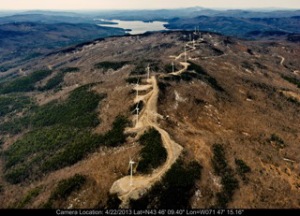
Here are some other facts the green evangelists don’t want you to know. Every living plant growing in huge swaths of land is literally razed to the ground every time a wind turbine goes up. It isn’t just the ten acres needed for the site that get turned into a moonscape. Broad fire lanes and paved roads are often cut across ridges and mountain tops to accommodate the huge vehicles needed to build, service, and maintain these leviathans. The forest habitat is virtually hacked to ribbons, so it can no longer support the complex, balanced ecology of flora and fauna. (Take a look at the wind farms in New Hampshire, Vermont, and Maine with Google Earth to see the true extent of environmental destruction cause by industrial turbines.)

Another impact that Mr. Green Eggs & Ham won’t mention is the economic one. In the U.K., wind power has driven the cost of retail electricity so high that a new class of poverty has emerged. More and more people are slipping below the poverty line, because they can no longer afford the high cost of electricity produced by turbines. In the global economy, the worst impact is placed on those who are already languishing in poverty.

In proportion to its economy, Germany has invested more in wind than any other industrialized nation. Once the powerhouse of the E.U., its economy has been decimated by its gamble on the roulette wheel of wind. According to government-paid researchers, the wind energy misadventure known as the Energiewende (energy transformation) has damaged the German economy so badly that Germans are bringing ten new coal generators online, with more on the way.

Princeton, MA, one of the earliest adopters of wind power in Massachusetts, has now reported a loss of $6 million, and has the highest electric rates in the Commonwealth.

Though the cost of wind energy is hidden by federal subsidies paid for with your tax dollars, a kilowatt of energy from a land-based turbine costs three times more to produce than conventional generators; and from offshore turbines, three times more than that, again. If Cape Wind is ever built in Nantucket Sound, carbon emissions will continue to rise and Massachusetts will have the highest electric rates in the U.S.

By far the greatest cost of all is the human one. There is no benefit to wind power sufficient to justify the damage to human health and well-being they cause. Wind turbine sites are ecological dead zones. The best science we have offers clear evidence that virtually everyone exposed to the pulsed volleys of infrasound produced by industrial wind turbines will begin to suffer from cognitive impairment or cardiovascular disease. Turbines are a silent killer.

“Lasciate onge speranza, voi ch’ingrate.” “Abandon all hope, ye who enter here.” Dante’s inscription over the gates of Hell (“The Inferno”).

Contrary to green dogma, wind power doesn’t make sense, whether you believe global climate change is real or not. In the end, the fantasy-in-green doesn’t amount to even a good story. It’s but a fractured fairy tale, full of sound and fury, signifying nothing.

Curt Delvin

image

Political Correctness….Out of Control! This’ll make you chuckle!

NFL NAME CHANGE


Here is an email sent to Clarence Page of the Chicago Tribune after an article he published concerning a name change for the Washington Redskins.

Dear Mr. Page…

I always love your articles and I generally agree with them.  I would suggest, as in an email I received, they change the name to the “Foreskins” to better represent their community, paying tribute to the dick heads in Congress.

Here are some other politically correct issues to consider: I agree with our Native American population. I am highly insulted by the racially charged name of the Washington Redskins. One might argue that to name a professional football team after Native Americans would exalt them as fine warriors, but nay, nay. We must be careful not to offend, and in the spirit of political correctness and courtesy, we must move forward. Let’s ditch the Kansas City Chiefs, the Atlanta Braves and the Cleveland Indians.  If your shorts are in a wad because of the reference the name Redskins makes to skin color, then we need to get rid of the Cleveland Browns.

The Carolina Panthers obviously were named to keep the memory of militant Blacks from the 60’s alive. Gone.  It’s offensive to us white folk.

The New York Yankees offend the Southern population. Do you see a team named for the Confederacy?  No!  There is no room for any reference to that tragic war that cost this country so many young men’s lives.

I am also offended by the blatant references to the Catholic religion among our sports team names.  Totally inappropriate to have the New Orleans Saints, the Los Angeles Angels or the San Diego Padres.

Then there are the team names that glorify criminals who raped and pillaged.  We are talking about the horrible Oakland Raiders, the Minnesota Vikings, the Tampa Bay Buccaneers and the Pittsburgh Pirates!

Now, let us address those teams that clearly send the wrong message to our children. The San Diego Chargers promote irresponsible fighting or even spending habits. Wrong message to our children.

The New York Giants and the San Francisco Giants promote obesity, a growing childhood epidemic. Wrong message to our children.

The Cincinnati Reds promote downers/barbiturates . Wrong message to our children.

The Milwaukee Brewers—well that goes without saying . . . Wrong message to our children.

So, there you go.  We need to support any legislation that comes out to rectify this travesty, because the government will likely become involved with this issue, as they should.  Just the kind of thing the do-nothing Republican congress loves . . .

As a diehard Oregon State fan, my wife and I, with all of this in mind, it might also make some sense to change the name of the Oregon State women’s athletic teams to something other than “the Beavers.”


Even if they were free, Wind Turbines Don’t do Anything for the Environment; Gov’ts are Crippling Economies, for Nothing.

We shouldn’t be building windmills and all that rubbish’: Rupert Murdoch shares his views on climate change

  • Rupert Murdoch was speaking on Sky News with The Australian’s Editor-at-Large Paul Kelly
  • Murdoch said Australia’s contribution to climate change was virtually non-existent
  • He called for investment in renewable energy to end, declaring ‘windmills were rubbish
  • Described PM Tony Abbott as an ‘admirable, honest, principled man’ who Australians should look up to 

By DANIEL MILLS


Rupert Murdoch says investment in renewable energy, such a windfarms, cost Australia too much

Rupert Murdoch says investment in renewable energy, such a windfarms, cost Australia too much

Australia shouldn’t be building ‘windmills and all that rubbish’ to prevent global warning when the only outcomes would be perhaps the Maldives disappearing beneath the sea, according to media tycoon Rupert Murdoch.

Speaking with Sky News, Mr Murdoch gave his frank assessment of the global warming phenomenon, conceding that because climate change was ‘inevitable’ houses should be built away from the shoreline. 

The News Corp chairman said investment in renewable energy should end and there was probably little that could be done to save the island nation of the Maldives, considered one of the most at the most beautiful places on the planet. 

In the same interview he also declared that Prime Minister Tony Abbott is an ‘admirable, honest, principled man’ who Australians should look up to.

Mr Murdoch was speaking with The Australian’s Editor-at-Large Paul Kelly – who quizzed him on the newspaper’s stance on historical and political issues and how the newspaper, which Murdoch owns, should ‘balance environmental concerns, climate change concerns’ and the need to maintain a competitive economy.

‘What’s the way Australia should approach this (climate change) issue?’

Murdoch said: ‘Well I think we should approach this with great skepticism.’

 
Rupert Murdoch said he had met with Prime Minister Tony Abbott three or four times describing him as an admirable honest and principled man

Rupert Murdoch said Australia should build houses further in land and stop its investment in 'windmills and all that rubbish'

Rupert Murdoch said Australia should build houses further in land and stop its investment in ‘windmills and all that rubbish’

 ‘If the sea level rises six inches, that’s a big deal in the world, the Maldives might disappear or something, but OK, we can’t mitigate that, we can’t stop it,’ he said.

‘We have to stop building vast houses on seashores … we can be the low-cost energy country in the world. We shouldn’t be building windmills and all that rubbish.’

‘The world has been changing for thousands and thousands of years. It’s just a lot more complicated because we are so much more advanced.’

He called on Australians to be skeptical about the science of climate change, and said because the nation basically contributes ‘nothing’ to the global warming compared to the rest of the world, there was very little Australia should be doing.

 ‘Climate change has been going on as long we have been here … things are happening, but how much are we doing, with emissions and so on? Well as far as Australia goes nothing in the overall picture.’

On Prime Minister Tony Abbott, Mr Murdoch said he had met him ‘three, four times, and the impression is that he is an admirable, honest, principled man and somebody that we really need as Prime Minister who we can all look up to and admire.’

‘However, how much does he understand free markets and what should be happening? I don’t know. Only time will tell. It’s too early to make a judgment on this government.’

He praised Australia for its entrepreneurial attitude, encouraging the country to work with its Asian neighbours, particularly China.

‘We have to come to terms with the Chinese and live with them,’ he said.

‘I don’t believe they are aggressive. I don’t believe they want to take us over.’

Colorado-based Juwi Wind, packs up & leaves Tipton County….Yahoo!

July 13, 2014

PUBLIC EYE: Wind shifts focus in Tipton County

The wind died considerably in the northwestern portion of Tipton County last week, leaving the perfect break in the weather for remonstrators of wind farm development in the county to celebrate.

Following 11 months of litigation, Colorado-based juwi Wind will no longer pursue plans to develop Prairie Breeze Wind Farm, a project that would have included 94 wind turbines in Prairie and Liberty townships while investing $300 million in the project.

The turbines that countless members of the public have referred to as “offensive” will remain off of farm property and away from those who claim the structures are too loud while reducing property values.

No matter which side of the aisle residents have been on, Tipton County Commissioner Joe VanBibber described juwi’s decision not to build as “a closure to a difficult time in the community.”

Ultimately, the new stipulations put in place by the Tipton County Board of Zoning Appeals proved to be the biggest contributing factor in juwi’s project not coming to fruition.

Juwi’s lawsuit alleged the BZA had exceeded its authority by increasing the distance wind turbines had to be from property lines and requiring a property value guarantee plan to protect non-participating property owners in the project area.

While some have questioned whether local officials have had the best intentions of the public and landowners as wind energy has become the hot button issue in recent years, there can be little argument that the stipulations played a huge role in preventing the wind turbines from going up. juwi said the stipulations “effectively rendered the project impossible to build.”

VanBibber said he believed juwi “no longer wants to do business in that environment.”

So what type of development is appropriate for the county moving forward?

With one wind farm backing out in the county, attention will no doubt shift back to E.ON’s Wildcat Wind Farm, which still has plans to build a second phase of turbines in center of the county.


Agenda 21 Means, Everything you have, is Up for Grabs…

Submitted by Phoenix Capital Research on 07/10/2014

Behind the veneer of “all is well” being promoted by both world Governments and the Mainstream Media, the political elite have begun implementing legislation that will permit them to freeze accounts and use your savings to prop up insolvent banks.
 
This is not conspiracy theory or some kind of doom and gloom. It’s basic fact.
 
When a Cyprus bank went bust in 2013, the Government SEIZED 40% of ALL SAVINGS DEPOSITS OVER €100,000.
 
Here’s the timeline:
 
·      June 25, 2012: Cyprus formally requests a bailout from the EU.
·      November 24, 2012: Cyprus announces it has reached an agreement with the EU the bailout process once Cyprus banks are examined by EU officials (ballpark estimate of capital needed is €17.5 billion).
·      February 25, 2013: Democratic Rally candidate Nicos Anastasiades wins Cypriot election defeating his opponent, an anti-austerity Communist.
 
The initial stage of this took over six months to develop. But once things got hairy, the seizure took place over the course of ONE WEEKEND.
 
·      March 16 2013: Cyprus announces the terms of its bail-in: a 6.75% confiscation of accounts under €100,000 and 9.9% for accounts larger than €100,000… a bank holiday is announced.
·      March 17 2013: emergency session of Parliament to vote on bailout/bail-in is postponed.
·      March 18 2013: Bank holiday extended until March 21 2013.
·      March 19 2013: Cyprus parliament rejects bail-in bill.
·      March 20 2013: Bank holiday extended until March 26 2013.
·      March 24 2013: Cash limits of €100 in withdrawals begin for largest banks in Cyprus.
·      March 25 2013: Bail-in deal agreed upon. Those depositors with over €100,000 either lose 40% of their money (Bank of Cyprus) or lose 60% (Laiki).
 
The most important thing I want you to focus on is the speed of these events once things hit the fan. Cypriot banks formally requested a bailout back in June 2012. The bailout talks took months to perform. And then the entire system came unhinged in one weekend.
 
One weekend. The process was not gradual. It was sudden and it was total: once it began in earnest, the banks were closed and you couldn’t get your money out (more on this in a moment).
 
Cyprus is not some freak occurrence that could never happen anywhere else. The IMF has suggested to Governments around the world that they do the same (meaning STEAL deposits).
 
Again, this is not conspiracy theory. Germany just passed legislation that would permit PRECISELY this.
 
BERLIN–Germany’s cabinet Wednesday approved plans to force creditors into propping up struggling banks beginning in 2015, one year earlier than required under European-wide plans that set rules for failing financial institutions.
 
The new bail-in rules are part of a package of German legislation on the European banking union–an ambitious project to centralize bank supervision in the euro zone and, when banks fail, to organize their rescue or winding-up at a European level.
 
Germany “leads the way” in Europe by implementing European rules quickly and “creates instruments that allow the winding-down of big systemically relevant institutions without putting the financial stability at risk,” the country’s finance ministry said in its draft bill seen by The Wall Street Journal.
 
 
So… Germany is “leading the way” in promoting plans to do a “bail-in.” What is a “bail-in”? A “bail-in” is when bank accounts are frozen and then seized in order to prop up the bank… a “bail-in” is what happened in Cyprus. It is when savings are STOLEN.
 
The explanation given to those with money in the bank?
 
In common speak, “you can either give us 40% of your savings to keep the bank afloat or the bank collapses and you’re left with NOTHING.”
 
We also want to point out that the above article indicates Germany moved to implement this ayear early in 2015 instead of waiting until 2016.
                                                                                                                     
Quick question…
Why would Germany want to rush in legislation that would allow it to freeze bank accounts and seize assets to prop up bankrupt financial institutions? Is it because everything is fine in Europe?
 
If you think this couldn’t happen elsewhere you are wrong. Canada, New Zealand and even the UK and US have proposed similar measures. The next time stuff hits the fan, savings will be on the hook, not the Central Banks.
 

via ZH

Any one with a Conscience, Could NOT Support the Wind Travesty!

Windfarm risks acceptable? (Evelyn Morrison)

13/07/2014, by 

To the named supporters of the windfarm, I would ask, since we know that the mining of rare earth minerals in China is poisoning the land, lakes and people, how can they equate this with nice green energy? These rare minerals are components modern turbines depend upon.

Supporters must believe this wretched toxicity is acceptable.

These named supporters are aware that children in the windfarm areas will be exposed to infrasound. So after their bedtime story these little children can cuddle their pillows and receive maximum auditory stimulation. The pillow will block audible sound but not infrasound.

Supporters have found this to be acceptable.

The named supporters obviously have no concerns for the physical and psychological ill health that the windfarm occupants will be subjected to when the turbines become operational. Clearly the supporters have a better understanding of the detrimental health effects than Dr Sarah Taylor whose report supports the evidence that individuals living on windfarms will be affected.

The windfarm supporters find this acceptable.

I will not insult the windfarm supporters intelligence by suggesting that they were perhaps unaware of the above. Thankfully there are still many decent people who do not find these facts at all acceptable.
I have only touched on some of the reasons why I will never support this development.

Surprisingly no one in the above supporters group will have to live in the windfarm.

Evelyn Morrison
Setter,
Weisdale.


De-bugging the Climate Alarmists’ Nonsense? No Problem, for this guy!!!

I’m used to working on very difficult problems, like the most complicated electronic circuitry on the planet.

ScreenHunter_994 Jul. 13 09.50

This award was from the IBM/Motorola/Apple Power PC design team in Austin, Texas, which developed the brain of Macs and Playstations for many years.

Microprocessor designs have to be perfect. They can’t make any mistakes, ever. Modern designs contain billions of transistors, and every one of them has to work perfectly – all the time. The way you become a “Debug God” is by analyzing the design through many different approaches. Any single methodology is inadequate and doomed to failure, so I developed and utilized dozens of different methodologies to make sure that no bugs slipped through. During my 20 year career designing microprocessors, no silicon bug was ever found in any part of any design which I worked on.

By contrast, finding flaws with adjustments to the temperature record is like shooting fish in a barrel.  The work being done would fail any reasonable high school science class. It is a complete joke, and doesn’t even vaguely resemble science.

The mistake people keep making is using the same broken methodology to verify the original broken methodology. In order to find problems, you need to analyze the data from many different angles.

No methodology is perfect, but a straight up average of raw temperatures is the simplest, cleanest and most effective way to spot trouble. It may be less precise than other methods, but exposes potential fundamental issues related to accuracy. Once you start gridding, adjusting and infilling, you can no longer see the forest for the trees – and you are lost.

Countries need to Follow the Aussies Lead. Stop the Financial Suicide!

Jennifer Westacott: Time to End Poorly-Designed Energy Policy

Jennifer Westacott

Jennifer Westacott is the chief executive of the Business Council of Australia and has extensive policy experience in both the public and private sectors. She has occupied critical leadership positions in the New South Wales and Victorian governments. This weekend she wrote in The Australian about the devastating impact of poorly-designed energy policy on businesses and energy consumers – and the necessity to make changes now.

Repeal carbon tax to reclaim our lost advantage in energy
The Australian
12-13 July 2014

NEXT week we hope to finally get rid of a piece of badly designed public policy that has placed a serious drag on our economy — the carbon tax.

Coming from the power sharing deal between the former government and the Greens, it was a creature of a political compromise and resulted in the highest carbon tax of any country in the world. It’s not that we shouldn’t have taken action on climate change, but the carbon tax was poorly designed, it was unworkable and an example of a very poor policy process.

We might be able to farewell the carbon tax, but it is just one of a long line of green energy policies which federal and state governments have layered on top of one another that are driving up the cost of electricity.

It is the cumulative impact of these policies that is pushing up the cost of electricity and making our businesses less competitive.

Repeal of the carbon tax therefore must be the beginning of removing shortsighted schemes and programs, and the start of a process to design an integrated approach to climate change and energy policy that supports rather than weighs down our economic competitiveness and jobs.

Let’s get some facts on the table about the real costs of green energy policies on the economy.

Analysis for the Business Council by Synergies Economic Consulting and Roam Consulting of actual electricity prices across the mainland states of the National Electricity Market shows that the cost of electricity has more than doubled in the last 10 years.

This will not come as news for anyone opening their electricity bill each quarter, but what is startling about the analysis is the extent to which a plethora of green energy policies have collectively driven up the cost of electricity, particularly for business who are large consumers of electricity.

The research shows that together, the carbon tax, the Renewable Energy Target, and state-based energy efficiency schemes now account for up to 40 per cent of the total electricity bill for a large business that does not qualify for government assistance, such as non trade-exposed manufacturing, dairy farms, retail outlets and office buildings.

Even for businesses that do receive government assistance, the total cost of green energy policies on their electricity bill is 17-25 per cent. There are thousands of businesses that face the brunt of these higher costs. This erodes the competitiveness of Australia relative to the rest of the world and will be a direct hit to the living standards of all Australians.

For households, the research shows that green energy policies account for 11 per cent of an average household electricity bill. The carbon tax alone is estimated to have accounted for 6 per cent of a household electricity bill and 20 per cent for a large business, less for those that qualify for government assistance.

On top of this, the RET is estimated to cost up to almost 10 per cent of a typical electricity bill for a large business that does not receive any exemption, and 3 per cent of a typical household electricity bill.

State-based schemes, including feed-in tariffs and energy ­efficiency schemes, account for 2 per cent of a household bill and up to 12 per cent of a large business bill — for which there is no compensation available.

What the cumulative cost of these schemes highlights is that when climate change policies are developed in isolation of energy policy, it adds to the cost of reducing emissions and ultimately consumers pay more for electricity than they otherwise should.

Good energy policy should deliver reliable and competitively priced energy in the long-term interests of consumers, and include climate policy that enables lowest-cost emissions reduction that keeps us competitive with the rest of the world.

Business and households remain in the dark as to when the high-cost carbon tax will be repealed as politicians debate trade-offs with the Palmer United Party to rescind the tax. Businesses are increasingly concerned that the proposed PUP amendments will bring new levels of complexity and red tape. If the parliament is serious about reducing electricity costs, a speedy repeal with a workable process to ensure reduced electricity prices are reflected in household bills is required.

Repealing the carbon tax is the first step to putting Australia on track for an integrated approach to climate change and energy policy that supports economic competitiveness and jobs. Australia should work to reclaim our comparative advantage in energy while reducing greenhouse gas emissions in line with global ­efforts, by:

1. Providing access to least cost abatement through international permits and getting the design of the emissions reduction fund right.

2. Amending the RET to a true 20 per cent of demand by 2020 and discontinuing the scheme once all liabilities are met in 2030.

3. Integrating climate change and energy policies as part of the government’s energy white paper.

4. Ensuring that future climate change and energy policies look at the cumulative impact of new policies on the cost of energy to households, businesses and the economy as a whole.

5. Completing the outstanding energy market reform agenda initiated by the Hilmer Review, including privatising energy assets, deregulating retail prices, adopting more uniform and economically efficient reliability standards and moving to more cost-reflective electricity tariffs.

With Australia’s competitiveness slipping, and with many businesses, families and individuals struggling, it is vital that the parliament develop consensus on the big issues facing our country such as our demographic changes, the rise of technology and our declining competitiveness.

Reaching a degree of bipartisanship on the critical principles on energy and climate change policy will ensure we play our role in global efforts to reduce greenhouse gas emissions while we reclaim energy as a comparative advantage for Australia in this increasingly competitive world.

The Australian

The mandatory RET/REC scheme is nothing more then a giant TAX on all Australian power consumers: with the proceeds either channelled as corporate welfare to near bankrupt outfits like Infigen (as RECs); or pocketed by the Government, as the shortfall charge. And all of that adding $50 billion or more to power costs, for absolutely no measurable benefit whatsoever.

The mandatory RET must go now.

electricity-price-rise

Wind Turbines….useless, over-priced, novelty energy producers.

“Being crazy isn’t enough”: Wind energy’s fantasy in green (Editorial)

Jul 12, 2014

Dr. Seuss

.
— Curt Devlin, Guest Editor, Massachusetts (7/12/14)

“Never let the facts get in the way of a good story,” cautioned Mark Twain.  Miles Grant heeded Twain’s famous advice in his recent opinion about global climate change and wind opposition. Grant brims with evangelical fervor when he argues that wind power is necessary for averting climate change.

The problem with the argument is it assumes facts that don’t exist. Wind turbines do not reduce CO2 emission, they increase it. In 2013, the U.S. spent some $80B subsidizing wind power, but CO2 only increased. In proportion to their economies, other industrialized nations around the world have invested far more heavily in wind energy than the U.S., but carbon emissions still go up.

Coal supplies roughly 60% of the energy to the world’s power grids, and all industrial turbines must be connected to a grid. Grid operators maintain an instantaneous balance between energy supply and demand. When turbines are spinning, coal generators are ramped down to balance the grid, a process known as “curtailment.”  When turbines stop spinning, coal plants are ramped up, called “cycling — a procedure that can take hours, since coal plants ramp up slowly.

The problem with cycling is that even the most efficient coal plants produce much greater CO2 emissions when they are not running at peak efficiency. This means that wind farms connected to coal grids virtually ensure increased CO2 emissions — not to mention increased particulate air pollution, a dirty little secret the “wind” lobby wants you to know.

Grant mentioned the people who have to breathe the pollutants being belched out of the Brayton Point coal plant, but forgets to mention that connecting wind turbines to the same grid will make matters worse. The misguided demonstrators who marched into Fairhaven last year to support the turbines, clearly didn’t understand this danger. The people being harmed by pollution from this coal plant should be doing everything to prevent further turbines from being connected to the same grid.

BraytonPoint

People like Grant, who look at wind power through green-tinted glasses, are quick to argue that at least coal is not being burned when turbines generate power. Unfortunately, this too falls apart under careful scrutiny. The U.S. has become an exporter of its coal surplus. The principal consumer of our surplus is China. When the Chinese burn our coal, however, their plants don’t have to comply with EPA standards. As a result of these dirty coal plants, some industrialized cities in China now have pollution so bad that the air is unbreathable for days on end.

At least we can all agree on one thing; the climate is global, so we’re all inhaling some of this pollution.

CHINA AIR POLLUTION

Here are some other facts the green evangelists don’t want you to know. Every living plant growing in huge swaths of land is literally razed to the ground every time a wind turbine goes up. It isn’t just the ten acres needed for the site that get turned into a moonscape. Broad fire lanes and paved roads are often cut across ridges and mountain tops to accommodate the huge vehicles needed to build, service, and maintain these leviathans. The forest habitat is virtually hacked to ribbons, so it can no longer support the complex, balanced ecology of flora and fauna. (Take a look at the wind farms in New Hampshire, Vermont, and Maine with Google Earth to see the true extent of environmental destruction cause by industrial turbines.)

groton-wind-newfound

Another impact that Mr. Green Eggs & Ham won’t mention is the economic one. In the U.K., wind power has driven the cost of retail electricity so high that a new class of poverty has emerged. More and more people are slipping below the poverty line, because they can no longer afford the high cost of electricity produced by turbines. In the global economy, the worst impact is placed on those who are already languishing in poverty.

In proportion to its economy, Germany has invested more in wind than any other industrialized nation. Once the powerhouse of the E.U., its economy has been decimated by its gamble on the roulette wheel of wind. According to government-paid researchers, the wind energy misadventure known as the Energiewende (energy transformation) has damaged the German economy so badly that Germans are bringing ten new coal generators online, with more on the way.

princetonwind

Princeton, MA, one of the earliest adopters of wind power in Massachusetts, has now reported a loss of $6 million, and has the highest electric rates in the Commonwealth.

Though the cost of wind energy is hidden by federal subsidies paid for with your tax dollars, a kilowatt of energy from a land-based turbine costs three times more to produce than conventional generators; and from offshore turbines, three times more than that, again. If Cape Wind is ever built in Nantucket Sound, carbon emissions will continue to rise and Massachusetts will have the highest electric rates in the U.S.

By far the greatest cost of all is the human one. There is no benefit to wind power sufficient to justify the damage to human health and well-being they cause. Wind turbine sites are ecological dead zones. The best science we have offers clear evidence that virtually everyone exposed to the pulsed volleys of infrasound produced by industrial wind turbines will begin to suffer from cognitive impairment or cardiovascular disease. Turbines are a silent killer.

“Lasciate onge speranza, voi ch’ingrate.” “Abandon all hope, ye who enter here.”  Dante’s inscription over the gates of Hell (“The Inferno”).

Contrary to green dogma, wind power doesn’t make sense, whether you believe global climate change is real or not. In the end, the fantasy-in-green doesn’t amount to even a good story. It’s but a fractured fairy tale, full of sound and fury, signifying nothing.

Electricity Bills would be much Higher, if Not for Wind Warriors! Read this!