Acoustics Experts Help to Expose the Corrupt Practices of the Wind Industry…

Incessant Wind Turbine Infrasound: An Acoustic Invader

when-is-wind-energy-noise-pollution

Among the growing list of what’s getting to the wind industry, its parasites and spruikers is the fact that – despite their relentless efforts to cover up both the work and the results – highly skilled people are working flat out around the world to discover the precise mechanism that causes the adverse health effects from incessant turbine generated low-frequency noise and infrasound, including sleep deprivation, vertigo and the like.

It’s not only the fact of their rather obvious conclusions that has wind-spinners in apoplexy, it’s the fact that they’re looking at all.

You see, the line being run is that there is NO problem – a tobacco advertising guru said so – so why on earth should anyone be looking?

For the wind industry and its parasites, the problem is, that there IS a problem: teams of highly skilled scientific investigators don’t generally devote their every waking hour to chase answers and solutions, when there’s nothing to chase.

Here’s just another example of what properly qualified people can do when looking for answers to real problems.

This time the work is that of Rob Rand – a Maine boy, who’s been hunting down acoustic trespassers for 20 years; and who – unlike the wind industry’s pet acoustic ‘experts’ – regards his ethical responsibility to “hold paramount the safety, health and welfare of the public” as a way of professional life, not some throwaway line.

Rob Rand

***

Wind farm and health issues
Lindsey Harrison
New Falcon Herald
September 2015

According to an Aug. 26 El Paso County press release, construction at the NextEra Energy Resources wind farm project in Calhan is nearing completion. “All 145 concrete foundations to support the wind turbine towers have now been completed … and 120 of the authorized 145 turbines are now fully erected, with only electrical work remaining to be completed.”

Although the press release states that the turbines will not be functional until the electrical work has been finished, it also states that the turbines could move in the wind, which is already causing health concerns for residents living within the wind farm’s footprint.

One resident, who wished to remain anonymous, said she knew right away that the turbines were moving because she began to feel nauseous, along with a headache. “I have 100 turbines to the north of me, 25 to the west and 20 to the southwest,” she said. “When the wind was coming out of the north, I woke up feeling dizzy and nauseous.”

She also said her animals were acting strangely. “My donkeys and horses keep wanting to go back into their stalls,” she said. “They have not wanted to leave the barn all day.”

Robert Rand, a Boulder, Colorado, resident and an acoustic investigator and member of the Acoustical Society of America, said the reason for the headaches and nausea is directly related to the wind turbines. It has to do with infrasound and low frequency noise, he said.

According to an article written by acoustic engineer Richard James, published at http://wiseenergy.org Feb. 20, “Infrasound is acoustic energy, sound pressure, just like the low to high frequency sounds that we are accustomed to hearing. What makes infrasound different is that it is at the lowest end of the acoustical frequency spectrum even below the deep bass rumble of distant thunder or all but the largest pipe organ tones.

“As the frequency of an infrasonic tone moves to lower frequencies: 5Hz, 2Hz, 1Hz and lower, the sounds are more likely to be perceived as separate pressure pulsations … . Unlike mid and high frequency sound, infrasound is not blocked by common construction materials. As such, it is often more of a problem inside homes, which are otherwise quiet, than it is outside the home.”

Rand said the separate pressure pulsations are like the “whump, whump, whump,” people sometimes experience when they are riding in a car with the windows down. “I have been attempting to acoustically measure phenomena that could present a conflict to human physiology that could then provide a basis to do more research,” Rand said. “My work in acoustics has really been designing and planning. I don’t need more medical research because I know what they (wind turbines) do to people because it happened to me.”

According to an article accepted into The Journal of the Acoustical Society of America Feb. 4, when the body experiences an external force on the inner ear, such as acoustic pressure pulses — but there is no visual input to associate with that pressure — a sensory conflict occurs. That conflict is felt as motion sickness, and it is felt to the same degree as seasickness.

The wind energy industry has claimed for decades that this phenomenon does not exist, in part, because about one-third of the human population is essentially immune to the effects of motion sickness, which is what these pressure pulsations induce, Rand said. Similarly, about one-third of the population appears to be readily prone to motion sickness, he said. “The third that is not affected by this will never understand it and will not know what you are talking about,” Rand said.

According to an article published in the Bulletin of Science, Technology & Society March 2, 2011, written by Dr. Alec Salt: “Infrasound from wind turbines is unlikely to be harmful in the same way as high-level audible sounds.”

However, Salt also states that numerous reports “are highly suggestive that individuals living near wind turbines are made ill, with a plethora of symptoms, which commonly include chronic sleep disturbance. The fact that such reports are being dismissed on the grounds that the level of infrasound produced by wind turbines is at too low a level to be heard appears to totally ignore the known physiology of the ear.”

Dirty electricity concerns
Rebecca Rivas, a Calhan resident with a wind turbine located about 1 mile from her house, said there are other serious health concerns to consider. “My husband had open heart surgery in 2007 and had a mitral valve replaced,” she said. “It is a metal valve now, and he can’t go through metal detectors or any thing.” Rivas said her husband’s cardiologist told him that, with wind turbines that close to their residence, staying there would be like playing Russian roulette with his life.

Rivas said the reason is because the wind turbines emit not only sound waves or pressure waves, but electromagnetic waves as well.

According to an article published online in the Bulletin of Science, Technology & Society Sept. 30, 2011, “The electromagnetic waves are generated by the conversion of wind energy to electricity. This conversion produces high-frequency transients and harmonics that result in poor power quality … . High-frequency transient spikes that contribute to poor power quality, also known as dirty electricity, can flow along wires, damage sensitive electronic equipment, and adversely affect human and animal health.”

Rivas said she was advised that the electromagnetic waves could send her husband into atrial fibrillation. AFib is a quivering or irregular heartbeat that can lead to blood clots, stroke, heart failure and other heart-related complications, according to the American Heart Association. “I’ve watched doctors flatline my husband (stop his heart) five times to try to get his heart back into rhythm,” Rivas said. “Because my husband’s life is at stake, I have to speak up.”

Brown County, Wisconsin
Residents of Brown County, Wisconsin also decided to speak up when the Shirley Wind Farm, owned by Duke Energy, was under construction.

Barbara Vanden Boogart, vice president of the Brown County Citizens for Responsible Wind Energy, worked with other members of the BCCRWE to present a case in front of the Brown County Wisconsin Board of Health about the dangers of the wind turbines.

Vanden Boogart said the presentation contained various pieces of evidence, including the following: 21 peer-reviewed articles on health and industrial wind turbines; analyses of the effects of wind turbines on property values; personal accounts from residents near the wind farm; and studies done in the homes near the Shirley Wind Farm where infrasound and low frequency noise was detected that emanated from the turbines.

According to the minutes from the Brown County Board of Healthmeeting on Oct. 14, the board voted 4-0 to “declare the Industrial Wind Turbines at Shirley Wind Project in the Town of Glenmore, Brown County, WI a human health hazard for all people (residents, workers, visitors, and sensitive passersby) who are exposed to infrasound/low frequency noise and other emissions potentially harmful to human health.”

“They (Duke Energy) were planning to put up 100 turbines within our town and two other adjacent ones, with six on our country block alone,” Vanden Boogart said. “We fought hard, fast and loud in every way we could, and they succeeded in shutting down the wind farm.

“Wind farms are making people ill and the wind energy industry has known about it since 1979. They knew for decades and instead of notifying people, they have been changing the attention to audible noise. This industry is filthy, dirty, corrupt and committing crimes knowingly against people.”

Laura Wilson, a member of the El Paso County Property Rights Coalition, said Vanden Boogart shared all the information that the BCCRWE presented to their board of health with her; and, on Aug. 26, Wilson and 11 other concerned residents attended the El Paso County Public Health board meeting.

“I gave them all the information and told them everything I knew, and they just looked at me with total indifference,” Wilson said. “They were actually eating their lunches while we were all testifying.”

The EPCPRC has a lawsuit pending against the El Paso County Board of County Commissioners and NextEra, citing that the BOCC “exceeded its jurisdiction when it approved the (Golden West Wind Farm) project” at the Feb. 5 meeting, according to the article, “Wind farm goes to roads,” in the May issue of The New Falcon Herald. No hearing date has been set yet. Because of the pending lawsuit, EPC Public Health declined an interview with the NFH.

David Gil, project manager with NextEra, also declined an interview but sent an email to the NFH, with this statement about the Brown County Board of Health declaration: “I am not aware of the declaration.”

Chris Ollson, who testified on behalf of NextEra at the Feb. 5 BOCC meeting also declined an interview, but sent an email stating he was “on holiday.”

Ollson, vice president of strategic development for Intrinsik Inc., is considered an authority in environmental health issues related to the energy sector and has provided risk communication support for wind turbine projects, according to Intrinsik’s website. Ollson has a doctorate in Environmental Sciences from the Royal Military College of Canada.

Wilson said the property rights coalition is hoping to raise more funds to pay the attorney’s fees for the pending litigation; she and the other coalition members intend to keep fighting.
New Falcon Herald

RobertRand_logo

Windweasels are Definitely a Despicable Bunch of Miscreants!

Scottish Council Demands Copy of Noise Report for Non-Compliant Wind Farm & Its Operator Predictably Runs for Cover

RUN-HIDE-logo_crop

****

One of the slickest moves wind weasels ever made was to have their team write the so-called “wind farm noise guidelines” – which deliberately exclude all reference to the real bane of wind farm neighbours – incessant turbine generated low-frequency noise and infrasound:

Wind Turbine Infrasound: What Drives Wind Farm Neighbours to Despair

Three Decades of Wind Industry Deception: A Chronology of a Global Conspiracy of Silence and Subterfuge

And the next slickest was to write the planning ‘rules’ – designed to have the operators themselves cook up the so-called “compliance data”, which they then hand over to the gullible country bumpkins that work on local Councils; untrained dimwits who simply accept whatever’s dropped on their dreary little desks, by the operator’s highly-paid, pet acoustic consultants.

Fox

****

Some might liken it to handing over security detail at your backyard hen-house to ‘Le Renard & Co’.

That wind power outfits might pull just one or two punches in their obvious commercial interest, might come as a shock to some. However, the same malevolent approach to the manufacture of helpful ‘evidence’ – and the deliberate concealment of the unhelpful stuff – has been adopted all around the globe.

In Australia, Spanish wind conquistadors, Acciona have been turning in fabricated noise data, ever since its Waubra wind farm kicked into gear in 2010.

The operator knows full well that it cannot, and will never, comply with the noise conditions of its planning consent; so does the local Council and the Victorian Planning Department – all of which are sitting on a damming document prepared by an independent consultant, Heggies – which they steadfastly refuse to hand over to their dozens of victims, for obvious reasons:

Victorian Planning Department involved in Waubra Wind Farm Non-Compliance Cover Up

The same ‘method’ has been applied to two other Victorian public health disasters: Macarthur and Cape Bridgewater.

Here’s more of the same from the Highlands of Scotland.

Angus Council may pull plug on Ark Hill windfarm
The Courier
Graham Brown
5 September 2015

Angus planners are on the brink of instigating enforcement action against the operators of the district’s largest windfarm.

The patience of council chiefs is running out over a demand for a noise monitoring report for the eight-turbine Ark Hill windfarm, near Glamis, where the 266-foot structures have been operational since spring of 2012.

A deadline of Friday was set for operators Green Cat Renewables to give an update on the noise monitoring report previously requested by the authority last November.

Residents in the area around the Strathmore site have complained about turbine noise since the windfarm became operational and they said the company was “giving Angus Council the run around”.

Following crunch council discussions within the past week, concerned residents were told that the close of business on Friday was set as the deadline for the operators to give a firm indication of when they plan to submit the monitoring report, or face enforcement action.

The ultimate sanction available to the council is to shut down the windfarm.

One resident said: “These problems have gone on since the turbines went up and they affect our lives, our pets and livestock in the fields around Ark Hill.

“There are so many things which can make a difference to the noise from the turbines, and quite often it is when there is little or no wind.

“People in the area suffering health problems are starting to link them to the windfarm and yet all this time we are still waiting on this noise report.

“The council are not at fault here, they have asked Green Cat for the report and it has not been produced — they are being given the run around.

“No-one can say that there’s not a problem here and it needs to be sorted.”

A council spokesperson said: “Angus Council understands that the wind turbine operator has completed noise monitoring and data gathering at the site and is in the process of preparing a finalised report.

“We have requested a clear timescale for the submission of that report and hope to have clarity on the matter shortly.”

Green Cat Renewables were contacted but made no comment.
The Courier

What? A non-compliant wind farm’s operator running for cover? Who ever heard of such a thing?

Wind Industry RUNS & HIDES as World Wakes Up to the Great Wind Power Fraud

The fact that wind weasels and inconvenient truths are unlikely to appear on the same stage anytime soon, is – these days – pretty much common knowledge – as the following comments to the article above attest.

Anonymous

Green Cat has been dragging its feet for months producing the monitoring report. What have they got to hide?

If anyone has any doubts about the excessive noise visit the site and listen for yourselves.

Disgraceful behaviour from this company.

A public apology from Green Cat would be appropriate. While residents suffer – some without a good night’s sleep – they have dragged their feet in resolving the noise problem.

An appalling stare of affairs.

Concerned Observer

How stupid is this. Has Angus Council learned nothing from the Seed Crushers fiasco in Arbroath?

Asking the offender to provide information is like asking someone to jail themselves – stupid, just plain stupid.

The correct way for noise monitoring is:

1 – the council commission an independent noise monitoring report before any development takes place for which the applicant pays the council.

2 – the noise level above that, then established ambient level, is included in the planning consent as a condition and included in the Environmental Impact Assessment.

3 – the operator is required to keep a noise monitoring log at pre-determined times as part of the planning consent (something like a set date of each month).

4 – any breach is checked against that log.

5 – any continual complaints are investigated by the council, once again commissioning an independent noise monitoring report chargeable to the owners of the site.

6 – any breach of the planning conditions are then rectified by the issuing of an enforcement notice.

Angus Council is at fault here for not applying strict rules to the planning consent and relying on the owners to hang themselves. SEPA who are equally as useless operate in the same way as the council.

It is about time the Scottish government clamped down on the shoddy practices of enforcement and to lackadaisical planning conditions, without any firm pre permission conditions and agreed methods of implementation. Green Cat are at fault, Angus Council are at fault, the Scottish government are at fault. Good luck to the residents but honestly – you are not going to get anywhere now the turbines are up and running and the operator remains responsible for providing evidence.

brave_shield3

Games the Windpushers Play…. Rural residents are always on the losing end. It’s Universal!

Falmouth Wind 1 Turbine : Corruption Speaks Out

Falmouth has to face some facts. Those facts are corruption and its not hard to figure it out !

Falmouth Wind 1 Turbine : Corruption Speaks Out

Falmouth Wind 1: Corruption Speaks Out

Falmouth Flushing Taxpayer Dollars Down The Toilet

The Town of Falmouth is wasting money on its commercial wind turbines

You have to ask how do people sit back and allow politicians to flush our money down the toilet ?

The average citizen is always trying to make ends meet. If Jill or Joe citizen waste or lose money, they feel it in their wallet.

It is clear and obvious – corruption is a huge problem, through corruption we are wasting billions and billions of our taxpayer’s money .

Falmouth has to face some facts. Those facts are corruption and its not hard to figure it out !

The town was warned prior to any installations of wind turbines that the Vestas wind turbine known as Falmout Wind 1 generated 110 decibels of noise almost twice the manufacturers specifications. That warning meant the turbine would break state noise regulations. The end result was the courts shut down the turbines because they broke state noise laws. Everyone always knew they would !

The Massachusetts Clean Energy Center in April 2013 gave a memo to the Town of Falmouth admitting they made mistakes in noise studies prior to the installation of the wind turbines. The Massachusetts Clean Energy Center knew well before the installations because they had owned the turbine for several years being held in storage for over $3300.00 a month for several years. They couldn’t sell the turbine even at auction. The turbine was a political embarrassment. They had to dump it on someone.

The Massachusetts Clean Energy Center offered the Town of Falmouth a one million dollar bribe to take the embarrassing old turbine held in storage off their hands as it was becoming a political embarrassment.

In Massachusetts this is called ( One Hand Washes the Other ). Everyone involved with Falmouth Wind 1 knew prior to the installation the turbine generated 110 decibels of noise almost double the specifications. The Falmouth turbine is a Vestas V-82 1.65 megawatt wind turbine. Vestas wind company had just bought out another company,Neg Micon, prior to the Massachusetts Clean Energy Center making the purchase. Falmouth Wind 1 is actually a Neg Micon NM- 82 1.65 megawatt turbine. A turbine that generates 110 decibels of noise.

In order to sell the Falmouth Wind 1 turbine to Falmouth the Massachusetts Clean Energy Center had to get a good noise test to install the turbine in Falmouth. That was simple they made what they call “mistakes” in the noise tests and then admit a few years later after the installation in an April 2013 memo to the Town of Falmouth they made a “mistake.”

Along with the memo Nils Bolgen the wind turbine manager at the Massachusetts Clean Energy Center around the same time as the memo in a press release tells the public the Falmouth Wind 1 turbine was installed “Ad Hoc.”

Prior to the Falmouth wind turbine installation the Massachusetts Clean Energy Center was caught making “mistakes” in a 23 page wind turbine study in Mattapoisett. There was at least one mistake on each page that included contradictions between several sections and some cases up to three “mistakes” per page and it wasn’t spelling or punctuation. Nils Bolgen the wind turbine manager at the time blamed the mistakes on engineering students. Highly unlikely knowing what we know today.

The turbines were not installed in Mattapoisett because of a reference to two distinct types of noise. The distinct types of noise were “regulatory: and “human annoyance.” Today we know “human annoyance” is infra sound or low frequency noise.

To this day it has never been explained why the reference to “human annoyance” was dropped from the Falmouth wind study and there was NO warning to the Town of Falmouth or its citizens. Three guesses why they dropped the reference !

The only conclusion is everyone for years before the installation of Falmouth Wind 1 was aware of major noise issues with the Falmouth Wind 1 turbine. The noise issues included regulatory noise violations and human annoyance noise issues today known as infra sound or low frequency noise. The Massachusetts Clean Energy Center in 2005 described “ human annoyance” yet today acts like it doesn’t exist. Aka the Mass Clean Energy Center caught again in a contradiction.

The Falmouth Zoning Board of Appeals thinks the Town of Falmouth acted in good faith avoiding getting a special permit 240-166 prior to the installation of Falmouth Wind 1 ? Where have these people been ? At the beach with their heads buried in the sand ?

The facts speak for themselves. Had Falmouth applied for special permit 240-166 it would have required additional studies and the turbine would never have been installed. A simple fact.

This wind turbine installation is not just a mishap or “mistake.” The hiding of the noise warning from Vestas wind company, the noise study “Mistakes” by the Mass Clean Energy Center, Admission of an Ad Hoc installation, dropping noise warnings in prior studies about “human annoyance” aka infra sound and then the one million dollar bribe to the Town of Falmouth

The judicial branch of government could only conclude one thing ; C-O-R-R-U-P-T-I-O-N

The question of the 6 million dollars in stimulus funds, ARRA, American Recovery and Reinvestment Act of 2009 was the money for Falmouth Wind II a loan or a grant has never been answered.

Today everyone has got something on everyone else. The Massachusetts Clean Energy Center made its “mistakes” the town avoided the special permit 240-166 and they all knew well in advance the turbine was too loud.

Now the Town of Falmouth has the Massachusetts Clean Energy Center over a barrel and made them fork over 1.8 million dollars to help pay the town litigation fees.

Folks– You the taxpayers are financing this bunco scheme. You the taxpayers are being taken for ride of your life.

Please for the sake of humanity wake up this isn’t a dream. They are taking your health, property and your money.

Corrupt Wind Industry Treats People Like Trash!

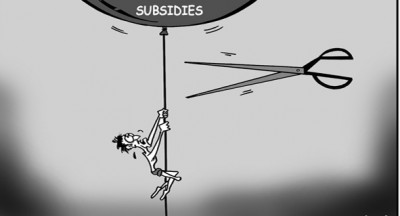
The Wind Industry: Always and Everywhere the Result of Massive & Endless Subsidies (Part 1)

subsidies

****

In Australia, the wind industry exists – and ONLY exists – to wallow in a subsidy stream which will hit $3 billion annually in 2019; and continue at that colossal rate until 2031. The cost of the greatest subsidy rort in the history of the Commonwealth will exceed $45 billion – every last cent of which will be recovered from Australian power consumers through retail power bills:

Wind Power Fraud Finally Exposed: Senator John Madigan Details LRET’s Astronomical 45 Billion Dollar Cost to Power Consumers

Out to Save their Wind Industry Mates, Macfarlane & Hunt Lock-in $46 billion LRET Retail Power Tax

True it is, that the PM is keen to R.E.D.U.C.E the LRET subsidy for these things, but plenty of other Coalition lightweights and wind industry shills – like Dan Tehan, Sarah Henderson and young Gregory Hunt (and two wind industry plants that work in his office) believe (or publicly claim) that the cost of the massive subsidies directed to wind power outfits under the LRET is magically picked up by fairies and pixies; and that the policy is a no-cost, family and business friendly vote winner.

However, the Senators on the Inquiry into the great wind power fraud – including Coalition Members, Chris Back and Matt Canavan – have worked out that the truth is all the other way – which has led to the recommendation of a 5 year limit to the rort:

Senate Recommendations Spell ‘DOOM’ for the Australian Wind Industry

The response from the wind industry, its parasites and spruikers – like the Clean Energy Council – is as galling as it is pathetic; predictably pathetic.

You see, we’re consistently told how wind power is getting cheaper all the time – so cheap, in fact, that it’s cheaper than the cheapest of them all: coal-fired power (for a trip to a parallel universe see this piece of twaddle from ruin-economy).

The Clean Energy Council would have us believe that its clients – although now that it’s headed up by Miles George from near-bankrupt wind power outfit, Infigen (aka Babcock and Brown), it’s hard to tell who’s servant and who’s master – are blessed with a kind of ‘divine altruism’, under which their only objective is to power the world for free, while saving the planet from the ‘dreaded’ CO2 gas; and otherwise spreading health, wealth and happiness all over the planet.

Infigen windy & gusto

****

But all of that benevolent bonhomie seems to melt away, like snow in summer, with the merest hint that the massive stream of power consumer and/or taxpayer subsidies are under threat.

Here’s STT Champion, Graham Lloyd with the parasites’ response to the Senate recommendations.

Subsidy limits ‘a wind farm body blow’
The Australian
Graham Lloyd
1 August 2015

Limiting subsidy payments for new wind farms to five years would destroy the future of renewable energy, says the industry’s peak lobby group, the Clean Energy Council.

A Senate committee will next week recommend the winding back of billions of dollars in subsidy support for wind farms. It will also recommend renewable energy certificates not be issued to projects in states which do not comply with federal guidelines on low frequency noise.

The final Senate report is due to be tabled in federal parliament on Monday.

Federal Environment Minister Greg Hunt said the government presently had no plans to amend the Clean Energy Act but would consider the Senate inquiry recommendations after the report had been tabled.

The government accepted interim recommendations from the Senate committee to establish an independent scientific panel to oversee research into the impact of infrasound and low frequency noise.

It agreed to appoint a wind farm commissioner to receive complaints. And the government also instructed the $10 billion Clean Energy Finance Corporation to concentrate future funding on large-scale solar projects and emerging technologies rather than wind.

The final report of the Senate committee will call for new wind farm projects to be given renewable energy certificates for a maximum of five years, rather than 20. Clean Energy Council chief executive Kane Thornton said this would damage Australia’s international investment reputation.

“Business needs stability and confidence to invest, and this has only recently been restored to the renewable energy sector after 18 months of uncertainty,” he said. “Adopting the headline recommendation of this report would be economically reckless, and shows some of the senators are out of touch with the business community and the Australian people.”

Mr Thornton said the wind industry remained open to scrutiny, provided that the scrutiny was objective and based on evidence. “The wind industry remains committed to constant improvement in the way it interacts with the local communities surrounding wind farms, and to treating all community members with respect,” he said.

Mr Hunt said he would consider the Senate report. “We’ve recently passed Renewable Energy Target legislation that gives certainty to the industry and will see 23.5 per cent of Australia’s energy come from renewable sources by 2020,” he said. “We are not proposing and have no plans to make any changes to RET legislation.”
The Australian

Kane Thornton’s whining is not just pathetic; it’s embarrassing.

Running counter to the CEC’s repeated claims about wind power being competitive and becoming cheaper all the time, Kane tells us that limiting the flow of renewable energy certificates (RECs) to a period of five years, spells the end of the wind industry.

What Kane won’t tell you, is that the amount of subsidy available for a single 3 MW turbine operating 35% of the time (with RECs trading at their expected value of $93) will top $855,000 annually. That single turbine – if planted in 2015 will keep raking in that same amount of subsidy until 2031; allowing its owner to pocket a total in the order of $13,686,624 over the remaining life of the LRET: all at power consumers’ expense.

So, Kane’s complaint breaks down to this: if the subsidy scam is limited to 5 years, his client’s turbines will only get to rack up RECs worth a mere $4,275,000.

And that’s just the federal government’s mandated subsidy: wind power outfits receive guaranteed rates of around $120 per MWh under power purchase agreements, which run for 10-15 years – a price which takes account of the assumed value of the REC received for the MWh dispatched. That figure compares, somewhat unfavourably, with the average wholesale price of around $35 per MWh.

Bear in mind, that a 3MW machine and its installation costs less than $3 million; and that being able to spear it into some dimwit’s back paddock under a landholder agreement costs a piddling $10-15,000 per year. Oh, and as the CEC and its clients keep telling us, the “wind is free”; and that these things run on the smell of an oily rag for over 25 years:

Australia’s Most Notorious Wind Power Outfit – Infigen – says “Move Over Pinocchio, Here We Come”

So, Kane? Where’s the problem?

Under the Senate’s recommendation, your clients would get to pocket RECs worth over $4 million per turbine, at power consumers’ expense – more than the price of the turbine – where, on your case, the “fuel” is “free”; and the power produced is so cheap, retailers are just chafing at the bit to take it (although the fact that commercial retailers haven’t signed a PPA with a wind power outfit since November 2012, suggests otherwise). So, 5 years of RECs should be seen as money for jam, Kane?

The CEC, and the wind power outfits that it’s paid handsomely to represent, are starting to sound like a bunch of spoiled brats being disciplined for the very first time.

brat

****

The other Kane ‘cracker’ – that we just can’t let go – is his throwaway that the “wind industry remains committed to constant improvement in the way it interacts with the local communities surrounding wind farms, and to treating all community members with respect”.

Either Kane has been living under a rock, and remains blissfully unaware of just how his clients “interact” with rural communities and the kind of “respect” that they mete out; or his idea of community “interaction” and “respect” is drawn from the pages of the old GDR’s Stasi Handbook on community relations.

stasi-9

****

As noted above, Kane’s boss, Miles George runs Infigen – an outfit that has had many “interactions” with rural communities; and has, apparently, created its own definition of “respect”.

Back in June, three farmers told the Senate Inquiry about how Infigen managed to force them to enter land holder contracts with it, through a combination of threats, bullying and deceit. One of them, Robert Griffin, told the Senate:

It is hard for us to generalise because we have one man, Jonathan Upson, from one company, Infigen. I must say he was really shocking. He was an incredibly arrogant man. He was arrogant about everyone. All the protesters were just idiots. You could never have any discussion. They were just idiots. The department of planning were dopey. When we raised problems, we were the troublemakers.

We never got anywhere with him at all, except to get threats. Even when the department of planning first said that they would have to get our written signature on a document after the date of approval we never got any consultation. We read in the local newspaper that we were going to be made to come into line. For six months we did not get one bit of consultation from them. They could not come around and try and sweet talk us—’What’s your problem?’- none of that. We just got threats straight away, right from the word go. We were told, ‘They will be made to step into line.’ That was the thing in the local newspaper and that was the attitude.

Funnily enough, the farmers in question have resolved to get out of their contracts with Infigen; and wish to have nothing more to do with goons like Jonathan Upson:

Unwilling Turbine Hosts Tell Senate: Australia’s Most Notorious Wind Power Outfit – Infigen – a Team of Bullies, Liars & Thugs

Then there’s that paragon of community relations, Pac Hydro. The union super fund backed Pac Hydro has destroyed the ability of the Cape Bridgwater community to sleep, live in and otherwise enjoy their homes for over 7 years:

Federal Government’s Mandatory RET pays Pac Hydro to Steal Sonia Trist’s Home

After receiving hundreds of complaints over that time – largely ignoring and dismissing them – Pac Hydro was eventually forced by residents to engage Steven Cooper to carry out some proper acoustic testing. Cooper’s work – properly described as groundbreaking by qualified acoustic experts, including America’s best – demonstrated that the terrible effects being suffered – including constant sleep deprivation – were clearly related to the operation of Pac Hydro’s turbines:

The Smoking Gun: Top US Noise Experts – Paul Schomer & George Hessler – Endorse Steven Cooper’s Wind Farm Study

NHMRC Fails Science 101 in Continued Wind Farm Health Cover Up

After Cooper’s smoking gun research was made public, Pac Hydro was faced with a community and media backlash. True to form, Pac Hydro responded with its own brand of community “respect”. During a “community relations” meeting in February its then head-spruiker, Lane Crocket accepted Cooper’s work, and then practically told its numerous and long-suffering victims to “get stuffed”:

Pacific Hydro’s Cape Bridgewater Wind Farm Public Relations Disaster: Video of a Corporate Calamity Unfolding

After that effort, wind industry corporate relations were never sunnier – well, not since James Hardie spent $millions trying to cover up and avoid its liability for thousands of asbestos-related deaths and illnesses – all with the help of the same class of so-called “academics”, that help run cover for the wind industry today (see our post here).

STT can only endorse the CEC’s brand of “community interaction”; and the type of “respect” dished up by Infigen, Pac Hydro & Co. If there was anything that was guaranteed to result in the demise of the wind industry, it’s treating honest, decent hard-working country people with condescending contempt, of the kind usually reserved for bitter and sworn enemies.

Australians – especially rural Australians – aren’t so gullible and guileless to tolerate the lies, treachery and deceit doled out by the likes of the CEC and its clients. Under the current LRET, the Coalition is expecting rural communities to cosy up alongside another 2,500 of these things; Labor’s 50% renewable energy target lunacy requires more than 10,000.

There is no way that rural Australians will take this rubbish lying down. Not anymore.

STT hears that hundreds of people, in dozens of communities are already organising the mother of all counter-attacks. And it’s the high-handed arrogance of outfits like the CEC, Infigen and Pac Hydro that’s driving them to revolt. Thanks Kane.

storming_the_bastille1-e1318690559144

There is Absolutely NO Doubt About It….Wind Turbines Make People SICK!

FACT: Wind Turbines Make You Sick

From a legal point of view what is important is that the courts, including the Supreme Court, accepted the expert evidence of the authors of this paper concerning the terrible toll that infrasound and low-frequency noise has on both humans and animals, whilst it rejected the opposing evidence led by the wind industry lawyers.

By Neil van Dokkum (B. SocSc; LLB; LLM; PGC Con.Lit)

Neil van Dokkum
Neil van Dokkum is a law lecturer.

I have just finished reading a fascinating article “Low Frequency Noise-Induced Pathology: Contributions Provided by the Portuguese Wind Turbine Case” written by Nuno A. A. Castelo Branco, MD, Senior Surgical Pathologist; Mariana Alves-Pereira, PhD, Biomedical Engineer; Augusto Martinho Pimenta, MD, Senior Neurologist; and José Reis Ferreira, MD, Senior Pneumologist; all resident and practising in Lisbon, Portugal. The authors were involved in giving evidence to the Portuguese courts culminating in a Supreme Court action.

Their findings were presented and accepted as expert evidence to Portuguese courts which eventually resulted in the wind farm developer being ordered by the Supreme Court of Justice of Portugal to remove the wind turbines from the vicinity of the applicant’s property (Supreme Court of Justice of Portugal. Decision No. 2209/08.oTBTVD.L1.S1, 30 May 2013).

These legal proceedings involved four wind turbines (although more were built subsequent to the commencement of the legal proceedings).
The four wind turbines were located adjacent to the family farm as follows:

  • No. 1: 321.83m from the house and 182.36m from the stables,
  • No. 2: 539.92m from the house and 439.64m from the stables,
  • No. 3: 579.86m from the house and 565.50m from the stables,
  • No. 4: 642.08m from the house and 503m from the stables.

The distances are important to Irish readers as our current guidelines suggest a clearance of 500m from residential homes (which wind developers routinely ignore in any event). Therefore, three of the listed turbines would be in a permissible position in Ireland.

What are expert witnesses?

As a general rule, witnesses can only testify about facts. It is the task of the jury, or the judge if there is no jury, to draw inferences from the facts presented in court, and witnesses must not be allowed to usurp this central function.

There are two notable exceptions to this general rule. First, expert witnesses may give opinion evidence, which is their primary function. Secondly, non-experts are sometimes allowed to give opinion evidence in defined circumstances, usually where their evidence would not make any sense if it were not accompanied by opinion.

Generally, a witness is considered an expert on the basis of their experience, training and knowledge. An expert witness is there to assist the court in coming to a conclusion in areas where the trial judge or jury might not have considerable expertise.

The expert witness is called for his or her expertise and as such should regard themselves as ‘neutral’ witnesses, there to help the court rather than to help one of the litigating parties. Indeed, the authors point this out very clearly at the end of their paper, saying that they are only interpreting the evidence, and in fact support the push towards renewable energy.

A famous decision setting out what is expected of expert witnesses is National Justice Compania Naviera S.A. v. Prudential Assurance Co. Ltd (“The Ikarian Reefer”) [1993] 2 Lloyd’s Rep. 68 Where the court held:

  • Expert evidence presented to the Court should be, and should be seen to be, the independent product of the expert, uninfluenced as to form or content by the exigencies of litigation.
  • An expert witness should provide independent assistance to the Court by way of objective unbiased opinion in relation to matters within his expertise.
  • An expert witness should state the facts or assumption upon which his opinion is based. He should not omit to consider material facts which could detract from his concluded opinion.
  • An expert witness should make it clear when a particular question or issue falls outside his expertise.
  • If an expert’s opinion is not properly researched because he considers that insufficient data is available, then this must be stated with an indication that the opinion is no more than a provisional one.
  • If, after exchange of reports, an expert witness changes his view on a material matter having read the other side’s report or for any other reason, such change of view should be communicated to the other side.

What is also important to remember is that an expert witness must be recognised as such by the court. The party who wants to lead expert evidence has to prove to the court that their witness is indeed an expert in their field. The opposition (in this case the wind industry) is entitled to attack the qualifications of the expert witness and attempt to convince the court that the witness should not be allowed to give his or her expert evidence. They can also call an opposing expert witness.

In this case the Portuguese Supreme Court not only accepted the expertise of the authors of this article and allowed them to give evidence, but the Court also preferred their evidence to that of the expert witnesses used by the wind industry, whose evidence was rejected.

So what was that evidence?

The family in question consisted of a father, a mother, and two children. Before the wind farm was built, the eldest son was a high achiever and regularly came top of his class at school. The authors take up the story:

“The Industrial Wind Turbines were installed at a distance of 321-642 m from the residential home. Complaints of sleep disturbances were first reported in December 2006. In mid-March, Mr. and Mrs. R received a letter from their 12-year-old son’s schoolteacher, expressing concern for the growing difficulties in an otherwise outstanding student, “particularly in English, Humanities and Physical Education. He progressed in Mathematics, which is a field that naturally attracts his type of intelligence. However, in the above mentioned coursework, it seems that [the child] has lost interest, makes a lesser effort, as if he were permanently tired. In Physical Education, an abnormal amount of tiredness is also observed. Is [the child] leading a healthy life? Does he sleep sufficient hours during the night?”
This immediately prompted the parents to begin legal proceedings and seek medical assistance, and thus, this team’s first contact with Family R.”

The family hired an accredited acoustical firm to conduct continuous acoustical monitoring both inside and outside their home, for a period of 2 weeks, and that included real time wind speed data. Numerical data regarding acoustical and wind speed information, independently collected by the accredited firm, was then provided to these experts (the abovementioned authors) for analysis and these experts deemed the turbine noise to be dangerous to the health of this family.

On that basis the family were sent for medical examination. The authors summarise the findings of the examinations (my emphasis):

“The 12-yearold child received a neurological test assessing cortical nerve conduction times: P300 Event Related Evoked Potentials (ERP). P300 ERP disclosed nerve conduction time to be 352 ms, when expected value should be closer to 300 ms. Brainstem Auditory Evoked Potentials (BAEP) disclosed asymmetries in the right and left nerve conduction times, and the right I-V interval interlatency value was at the threshold of normal (4.44 ms). Mr. and Mrs. R. disclosed slight to moderate pericardial thickening: between 1.7 mm and 2.0 mm (normal for the equipment in use: <1.2mm) [12]. Respiratory drive was below normalized values in both adults (46%-53%, normal: >60%), suggesting the existence ofbrain lesions in the areas responsible for the neurological control of breathing.

Observations made by the family included animal behavioural changes: Horses were seen to lie down and sleep during the day; Dogs were lethargic, and no longer jumped up requesting attention from their owners. Ants simply disappeared.”

Remember that these examinations are carried out in 2007, just a few months after the wind turbines are erected, and already the effects are dramatic.

Alarmed by these symptoms, the mother and children moved into an apartment in the city in 2007. The boy’s health improved immediately and dramatically:

“After the summer vacation in 2007, spent away from the farm, the 12-year-old child had again received the P300 ERP examination that, this time, disclosed nerve conduction times much closer to normal: 302 ms. In 2010, this child was again an outstanding student, top of his class.”

The father, Mr. R, did not have the option of moving into town, as he had to stay with the family business on the farm. In contrast to his son, his health continued to deteriorate rapidly in those three years between 2007 and 2010:

“Over these 3 years, Mr. R’s health and wellbeing had continuously and visibly deteriorated: intolerance to (any) noise had become more severe; situations compatible with an unregulated sympathetic nervous system increased in frequency; and cognitive impairment became more pronounced.”

I would like a medical person to comment on this but to me this sounds like the father became seriously noise-sensitive, nervous and jumpy, and confused in his thinking.

The family’s business was also threatened:

“Between 2000 and 2006, 13 healthy thoroughbred Lusitanian horses were born and raised on Mr. R’s property. All horses born after 2007 (after the wind farm was erected) on his farm developed asymmetric flexural limb deformities. Besides the IWT (Industrial Wind Turbines) installed in November 2006, no other changes (constructions, industries, etc) were introduced into the area during this time.”

This echoes the findings of another study detailing limb deformities in horses caused by industrial wind turbines.

In 2015 the following alarming observations were made on the father’s health:

“Mr. R continues to live away from Mrs. R and the children, and his health has further deteriorated. The respiratory drive value that in 2007 was 46% (normal: >60%) is now at 28%. The development of balance disturbances associated with loss of consciousness has apparently caused several falls, requiring medical treatment for facial and rib fractures. This situation is still under clinical study, as late-onset epilepsy is one of the most severe outcomes of excessive ILFN (Infrasound & Low Frequency Noise) exposure.”

In May 2013 the Supreme Court of Justice of Portugal decided that the remaining 3 turbines had to be removed from the vicinity of Mr. R’s property. The lower court had ordered the removal of the closest turbine but allowed the other three to stay, hence the appeal to the Supreme Court. The developer is apparently appealing the decision to the European Court.

In addition to ordering the removal of the wind turbines, the court also granted damages to the family. The wind farm developer was ordered to pay damages as follows:

  1. For personal injury, the sums of € 250,000.00 to Mr. R, and the sum of € 150,000.00 each to Mrs. R and the two children.
  2. To Mr. and Mrs. R, as co-owners of the land, the difference in value of the land before and after the wind turbines were erected.
  3. The payment of € 200,000.00 to Mr. R, for his business losses.
  4. The payment of all legal fees and costs, whether judicial or extrajudicial, that the family have incurred in order to bring the legal action and the cost of relocation of people and goods during the period of operation of the wind turbines.

A bittersweet victory given that Mr R’s health is ruined and the family’s way of life destroyed. Money cannot fix that sort of damage. Further turbines have also been built in the area as these legal proceedings concerned only the first four that were built (adjoining the family farm) and therefore the battle is not over yet.

From a legal point of view what is important is that the courts, including the Supreme Court, accepted the expert evidence of the authors of this paper concerning the terrible toll that infrasound and low-frequency noise has on both humans and animals, whilst it rejected the opposing evidence led by the wind industry lawyers.

A court is clearly neutral in this matter and has no hidden interests in a decision going one way or the other. A civil court must decide the evidence on a balance of probabilities. This means that before it accepts evidence, the court must be satisfied that the evidence is probable (capable of belief) and that it is more probable than the evidence given by the other side. In this case the Supreme Court accepted the evidence of the independent and neutral expert witnesses concerning the destructive effect of infrasound and low-frequency sound on the health of this family, whilst rejecting the evidence of the wind farm developer’s expert witnesses who claimed that the noise was within acceptable limits.

As the authors conclude:

An effort toward developing and implementing appropriate construction techniques that would minimize the deleterious effects of in-home ILFN could be, perhaps, an excellent beginning. The hindrance to this apparently viable beginning is the sine qua non prior recognition that ILFN is, de facto, a physical agent of disease.

Again, I am not a medical person but I take that to mean: Wind farms are a danger to our health. Period.

Dr. Robert McMurtry Tells Australian Senate Inquiry About Adverse Health Effects From Wind Turbines!

Dr Robert McMurty tells Senate: ‘Annoyance’ caused by Wind Turbine Noise includes ‘Sleep disturbance’ & is Adverse to Health

senate review

****

The Senate Inquiry has had to wade through a fairly pungent cesspit of ‘material’ dropped on it by the wind industry, its parasites and spruikers. No doubt to their great relief (or, in the case of wind industry stooge, Anne Urquhart, infuriation) the Senators have heard from a raft of genuine and highly qualified people, who are clearly dedicated to protecting their fellow human beings – rather than ridiculing, denigrating or deriding them as “anti-wind farm wing-nuts” or “Dick Brains”.

One voice of common sense and compassion – to the contrary of the nasty nonsense pitched up by the shills that run interference for their wind industry clients – came from Dr Bob McMurty – a highly (and relevantly) qualified Professor from Ontario. Here’s what Bob told the Australian Senate.

Senate Select Committee on Wind Turbines – 29 May 2015

CHAIR: I now welcome Dr Bob McMurtry by teleconference. For the Hansard record, will you please state your name and the capacity in which you appear.

Dr McMurtry: My name is Robert Younghusband McMurtry. The capacity in which I appear today is as an independent witness: I am Professor Emeritus of Western University in London, Ontario, and I have been researching and reviewing this topic for the past eight years; I probably have put in over 10,000 hours over those years. In addition, I have been in communication with or—more to the point—people have been in communication with me who are suffering adverse health effects. I have detailed my curriculum vitae and its summary. I will stop there.

CHAIR: Thank you. Could you please confirm that information on parliamentary privilege and the protection of witnesses and evidence has been provided to you?

Dr McMurtry: I can confirm it has.

CHAIR: The committee has your submission. I now invite you to make a brief opening statement. At the conclusion of your remarks, I will invite members of the committee to put questions to you.

Dr McMurtry: Thank you for the privilege of presenting to this committee. I will make 10 points that are in my executive summary on the assumption that the material has been read. First, adverse health effects have been reported globally in the environs of wind turbines for more than 30 years with the old design and the new. Second, the wind energy industry has denied adverse health effects, preferring to call it ‘annoyance’ even though annoyance, however, is an adverse health effect. Certainly it is a non-trivial effect when sustained because it results in ‘sleep disruption’, ‘stress’ and ‘psychological distress’—those are direct quotes from others’ research. Third, annoyance is recognised and was treated by the World Health Organization as an adverse health effect, which is a risk factor for serious chronic disease including cardiovascular and cancer.

Fourth, experts retained by the wind energy industry have preferred the diagnosis of nocebo effect to explain the adverse health effects, but the claim does not withstand critical scrutiny as there is a dose-response effect and nocebo does not have a dose-response effect. And there is a clear correlation between exposure and adverse health effects. Researchers have talked about dose-response. I should also comment that making that diagnosis without a comprehensive evaluation of a person or patient would qualify as non-practice, and I know that has been said in this committee before.

Fifth, the regulations surrounding noise exposure are based upon out-of-date standards ETSU-97, which fail to evaluate infrasound and low-frequency noise, preferring instead to use DBA. The issue of ILFN is a problem and it has been confirmed by numerous acousticians including Paul Schomer, a leading international acoustician. Sixth, the setbacks for wind turbines are highly variable across jurisdictions and here is the key point: there is no evidence base in human health research for the setbacks. The turbines have gone ahead without an evidence base.

Seven, there is an urgent need for human health research to provide evidence based guidelines for noise exposure. Eight, the call for third-party research and evaluation has been made by many including in France by the Academy of Medicine of France in 2006 and many times since. As I detailed to you, I made it before government bodies in Canada. Nine, there is an urgent need to monitor the health effects of people exposed to turbines over time and that has been missing virtually in all jurisdictions. Tenth, third-party evaluations of the economic and social benefits of wind energy are needed as suggested by the findings of the Auditor-General of Ontario—I sent his reports to you including highlights—and more recently by the Northern Ireland Assembly committee, and I understand that is part of the charge of this committee. With that, I would be very happy to answer questions.

CHAIR: Is it correct to say that in your experience there are different streams of opposition to wind turbines in the wider public? For example, one stream opposes the technology outright but another supports the use of technologies as long as they are appropriately regulated to safeguard people and the environment. Which stream are you in, Dr McMurtry?

Dr McMurtry: I am in the stream that says positioned safely and on an evidence base with, as I mentioned, guidelines. I think that is fine. There are clear applications for wind turbines when they are appropriately deployed, which is not happening currently.

CHAIR: There is a growing community of medical experts, doctors and acoustic engineers questioning the adverse health impacts of wind turbines and inadequate regulatory standards. On the basis of your knowledge on an international level, how are the opinions and standing of these professionals treated publicly by the wind energy industry?

Dr McMurtry: I am afraid there is a routine strategy that proponents of wind turbines, including the industry, on websites will name people and pillory them basically, assail their reputations. That is something that has been seen internationally, most specifically towards Dr Nina Pierpont from the United States, and towards Dr Sarah Laurie in Australia. But I have certainly experienced it personally to a lesser extent. It seems to be: if you do stick-up and say something or you have concerns about the wind industry then you can expect to be attacked.

Senator BACK: We know that.

CHAIR: Your submission comments on researchers in the Department of Biological Engineering at MIT undertaking research for the Canadian Wind Energy Association and also providing expert testimony to wind farm developers in its planning tribunals. I note you say here, however, they did not declare an interest when the research was published. You describe this behaviour as ‘odd’ in your submission. From a professional perspective, what does ‘odd’ mean? What are the professional requirements or etiquette when publishing research and declaring an interest?

Dr McMurtry: The key is to declare a conflict and that was done in the sense that they described their engagements with the wind turbine industry, especially Dr McCunney the lead author, and Dr David Colby. So that was done. But it is only a first step when you declare a conflict. There are many other things you should do to manage the potential conflict of interest, in particular take special care to control for bias. There are various ways of doing that.

I do not want to say negative things about Dr McCunney; I am sure he is a very capable person does good work in this field. The wind industry put the money before MIT and it was from that funding that the research was carried out. It was from funding of the wind industry an earlier part he participated in with the Canadian Wind Energy Association. He appears frequently on behalf of the wind industry and he references his work in both the papers I have cited. I view that as stretching things. I think some better management of the conflicts ought to be carried out. Two points, for example, could be: bring it before an ethics committee or at least get that kind of advice.

CHAIR: Finally, later in your submission I note you discuss the origins of nocebo. I presume from that discussion, you are aware of Prof. Simon Chapman and his work?

Dr McMurtry: I am aware of Prof. Simon Chapman, yes.

CHAIR: Prof. Chapman has also provided expert testimony to a wind farm developer in a planning tribunal but does not declare his interest in subsequent publications. Is there some sort of professional amnesty that allows researchers to withhold disclosure of their interest? How do researchers and practitioners like yourself perceive that kind of behaviour amongst your peers? And what impact does this have on the professional standing of researchers more generally and the tenor of the debate and understanding in the industrial wind turbine area?

Dr McMurtry: There are a lot of elements to that question. The key consideration is that you should always declare a conflict of interest and manage it appropriately so that there is no discomfort being experienced by colleagues from whom you want to seek their opinions. As I said, an ethics committee would be included in that consideration. More importantly, the WHO and many other bodies have found that research sponsored by industry does not have the objectivity that characterises independent research. That has been described time and again with industry. I believe Dr Chris Hanning spoke to that in some detail at his presentation, the sorts of difficulties that you get into. As far as peers are concerned, when you are receiving money and it is a substantial amount for each appearance then I think ought to be extremely cautious about declaring and making a statement as he did in this most recent paper, ‘I declare no conflict of interest.’ That was what I found to be particularly odd. That quotation is included in my submission.

Senator LEYONHJELM: Thank you for your submission. I found it extremely illuminating, very thorough and you addressed many questions that I had in my mind so I really do appreciate it. What I am curious about though is you are a very experienced medical doctor. You have come down fairly clearly in support of annoyance as being the source of the adverse complaints that people have about wind turbines. We have heard from other witnesses who have suggested a vestibular effect, an effect on the vestibular mechanism and others who have suggested either the middle ear or perhaps inner ear. Why have you nominated annoyance as the source? Have you discounted the others? Or is there something else?

Dr McMurtry: Not at all. I do not mean to discount the other symptoms. I have referenced the diagnostic criteria for being exposed to wind turbines and suffering adverse effects. It was most recently in the Journal of the Royal Society of Medicine in the fall of 2014. Those sorts of additional symptoms are listed. What I have made clear, and this was first done by Pederson in her many papers, is that annoyance in the context of wind turbines translates to ‘stress, psychological distress, difficulty initiating sleep and sleep disruption’—I believe those words, although from memory, are a direct quote—so it is a very serious business. The most common problems without question we find are sleep disturbance and stress. Those two are always there. Vestibular disturbance we are also finding. There is no question though when the vestibular gets perturbed, it can make you uneasy, make you feel unwell or nauseated, for example. It may be the mechanism. I am in no way discounting it and it is considered in my diagnostic criteria.

Senator LEYONHJELM: Do you have a feel for what proportion of the community that lives within a nominated distance of wind turbines or a wind farm actually experiences any symptoms?

Dr McMurtry: The lowest number I have ever seen is five per cent. The highest number I have seen is over 30 per cent. There is a range. Firstly, with ongoing exposure, the people I have seen who have been adversely affected become worse. Secondly, increasing numbers of people become adversely affected. What is missing in the research is longitudinal studies. Dr McCunney and I agree on this in terms of his paper that I was talking about earlier. What is needed is something more than cross-sectional epidemiological studies, which are studies at one point in time. They do not follow people longitudinally. Following people longitudinally—that is, over time—is crucial to understand the adverse effects. That has not been done. I agree that we should have cohort studies—that means a group exposed, a group not exposed—and compare them over time, and then you will have some notion of incidence. Anecdotally, when dealing with people, I have found that some do not start experiencing symptoms until a year or two out. I think the incidence might very well go up, and that is a concern.

In relation to the other research, if I may say before stopping again, there has been a missed opportunity. We absolutely should be doing the sort of work that has been done by Steven Cooper, where he looked at six people in three homes. They were adversely affected. You have to study those folks to understand the mechanism better. That is research that is really needed. It is only when that research is done, when we can hone down on the mechanism of the problem, that we can then inform the prospectus for the longitudinal studies of cohorts of people. I hope that is clear. You need research on adversely affected people to understand the mechanism and, secondly, of course, that you confirm that they meet the diagnostic criteria and that their adverse effects are reproducible when they are blinded. You want to do that to be sure. You have that group. Then you want to know exactly what is occurring. Steven Cooper moved things ahead great deal. Then you are well put up for the place to do the cohort studies or the longitudinal studies.

Senator LEYONHJELM: That does raise a question though. These sorts of questions have been asked; there have been complaints about wind turbines. You have been studying this now for six or seven years. Why is it that no definitive, independent research into this has been conducted over those years? It is quite a long time.

Dr McMurtry: I agree with you. I am dismayed by that, especially when it has been asked for nine years. It is coming back to the Academy of Medicine of France. I have pointed out many times in my publications and in my government presentations that there are two opinions and both cannot be right. One is that adverse effects are genuinely occurring and people are being harmed. The other opinion is that that is not the case and that it is in the news, a nocebo effect, or some other manageable problem. Both cannot be right. Always, I have heard calls for research from those concerned about adverse health effects. I have not heard them from those who are proponents—and certainly not from the industry.

To give you a very specific example, Paul Schomer, previously cited, is a leading acoustician internationally known for his standards for noise. He asked Duke Energy—and he has published this—to turn the turbines off and on, and they said they would not. That is pretty much the response you do get. There have been offers to do that. The Steven Cooper work was exceptional because the person who was responsible for that turbine installation in fact did turn off the turbines to enable him to do that research. I believe it was Cape Bridgewater.

CHAIR: Thank you, Senator Leyonhjelm. Senator Urquhart?

Dr McMurtry: By the way, I have debated publicly with proponents, including David Colby. I have always challenged, ‘Why don’t we do the research. Let’s settle this’, and the response has been: ‘There is no need.’ That is the response I have heard in debates, for example.

CHAIR: Thank you, Dr McMurtry. Senator Urquhart?

Senator URQUHART: Thanks, Dr McMurtry. I was just picking up the point that you talked about where the lowest number of people affected by wind farms was five per cent—I think I understood you correctly there—and the highest was 30 per cent. Did I understand you correctly?

Dr McMurtry: Yes you did. That has been the studies to date. As I mentioned, longitudinal studies may reveal a higher number.

Senator URQUHART: Can you just explain to me why the majority of wind farms in Australia do not have any complaints at all.

Dr McMurtry: I think I have heard Simon Chapman make that complaint, if that is who you are quoting. What I noticed about his research is that he was going to the wind farm people themselves and asking them if there were adverse health reports. That does not withstand critical appraisal. You must have an independent determination to determine if in fact there was a problem. That to me undermines this facility, substantially. So I think that claim is dubious. I will stop there.

Senator URQUHART: I did not hear that last point.

Dr McMurtry: The point I made is that when you are trying to glean information from the industry, whose interest is harmed by acknowledging problems, then you are not likely to get as accurate an answer than if you had independent determination of people’s complaints. I am speaking specifically about Simon Chapman’s work, and looking at his methodology.

Senator URQUHART: Do you live or have you lived near an existing or proposed wind farm?

Dr McMurtry: Yes. I do not live near a proposed wind farm. I live near one that is going to be built something in the neighbourhood of 1½ kilometres away. At the moment it is before the courts.

Senator URQUHART: I understand that you are a founder of the Society for Wind Vigilance. Is that right?

Dr McMurtry: Yes, in 2010. I was the founding chair, from 2010 to 2012, at which point I resigned.

Senator URQUHART: The status of the proposal is before the courts, I think you indicated?

Dr McMurtry: That is correct. There is always more than one proposal on the go, but the one that is most proximate to me is still in review legally, through a judicial process.

Senator URQUHART: How is the Society for Wind Vigilance funded?

Dr McMurtry: Just by donations from members.

Senator URQUHART: Who are the major donors?

Dr McMurtry: There is no major donor. The only income the Society for Wind Vigilance ever received was when they held a first conference in adverse health effects, which is described in my submission. We charged people $100 to come, as I recall. We realised some income from that. There was no surplus, I can assure you, because we had to cover the cost of the food and all the usual things you do with a conference. We have received no money whatsoever from any energy-related industry. Not ever.

Senator URQUHART: What about from other companies or organisations?

Dr McMurtry: No private enterprise company, no for-profit company, no agency and no charitable agency. Nothing. That has been suggested before. It is disturbing to me, because we are recurrently having to repeat what to me is obvious: there has simply been no financial support coming from outside. None.

Senator URQUHART: I think it is good to get that on the record. Thank you. Have you ever published any work in a peer-reviewed academic journal about the possible impacts of wind farms.

Dr McMurtry: Yes, probably several times. That is included in my submission. For example, I published two papers on the criteria for diagnosis: one in 2011 in the Bulletin of Science, Technology and Society, and the second one in the Journal of the Royal Society of Medicine, in either October or November of 2014. I have also submitted the peer-reviewed blogs from the Canadian Medical Association Journal, which is the lead journal in Canada, where I comment on the Health Canada study. That was peer-reviewed. We have also had something accepted that I submitted in confidence for the Journal of Occupational and Environmental Medicine. In addition, I have presented before the Acoustical Society of America. I have presented before government at three levels: municipal, provincial and federal.

Senator URQUHART: I wanted to pick up on the point about the Bulletin of Science, Technology and Society. I understand that this publication was de-indexed in 1995.

Dr McMurtry: SAGE Publications have since resurrected it. It now is appearing in the Index Medicus. More significantly, the Journal of the Royal Society of Medicine has been a recognised journal for over 100 years. The Index Medicus did not come along until later, or the similar indices. It is a progression from towards the diagnostic criteria, which is in the Bulletin of Science, Technology and Society to the second paper on diagnostic criteria, which was in 2014. That is a journal that is well recognised.

Senator BACK: In the PowerPoint presentation you sent us, you comment on biological gradients: that greater exposure should generally lead to greater incidence of the effect. It causes me to ask about the proposal with the independent medical research that has been commissioned now by the Abbott government her in Australia. One witness has proposed to our inquiry that a one-off, laboratory-based test for audible and infrasound could be undertaken with people who participate for periods of somewhere around about 10 to 30 minutes, or maybe up to an hour, once only. From your experience do you believe that the results of a study of that type would be of any value in determining possible adverse health effects?

Dr McMurtry: I think it would have value, but not in and of itself. It is perhaps a necessary but insufficient condition. There are features of industrial wind turbine noise that, when people are in their homes, are very different from in the laboratory setting, and capturing all that in the laboratory setting is virtually impossible. This is basically unwanted noise and unpredictable noise. It occurs at night. It pulses and it also has the quality of resonating within the home. The sound energy comes out—it may be low-frequency or infrasound—and there can be resonance in the home. That cannot be captured in the laboratory. Some people, for example, are being disturbed at night and go outside and they are less disturbed. I would cite in particular Malcolm Swinbanks, a well-known acoustician, who described that very thing and presented it in Glasgow two or there months ago. That has been reported by many people. It has been sound for as long as 30 years ago.

Senator BACK: People have put to us that infrasound can occur from waves crashing on the beach and trucks going along highways, and therefore there is nothing special about infrasound from industrial wind turbines, so why all the fuss. Could you comment on the different sources of infrasound and how they might affect people?

Dr McMurtry: What is very important here is to realise that my background is not as an acoustician. You might be better to direct that question to an acoustician. To answer as best as I am able, the acousticians have pointed out that there is a unique signature to wind turbine noise that has not be found elsewhere. I cite, for example, Steven Cooper, whom you have heard. There is also the recent work of Paul Schomer, as well as the 2012 publication with Walker, Hessler, Hessler, Rand and himself, in which they made clear that there were non-auditory and non-visual queues that disturbed people. The other sources of infrasound that people are talking about do not mimic, are not the same as, the signature that is coming from wind turbines. It is unprecedented, so it is crucial that any research captures exactly what people are experiencing.

Senator BACK: You made a comment a moment ago in response to a question from a colleague that you had commented on the Health Canada study. Briefly, could you point us to what your comments were on the Health Canada study?

Dr McMurtry: Yes. You have a copy of that in my submission. It is the CMAJ submission and, I think, appendix 7. Ms Carmen Krogh and I did it. I recently was on the same panel with David Michaud and I pointed out some of the shortcomings, but the single most important one is that it is a cross-sectional study. There are other important problems. They started out with 2,004 houses and some 400 were ruled out of scope—424, as I recall; I am going by memory—and then, when they sent out the questionnaires, another 322 dropped out, which left 766 out of the original group. I wish there had been an analysis of the abandoned or non-eligible homes. I think an opportunity was lost there. Another opportunity lost is that the people most often affected—and I certainly know this from my own experience—are people who are over 79 and under 18. Children are more vulnerable than, say, young adults or middle-aged adults. The Health Canada study looked at people from 18 to 79 and then excluded the rest. They are leaving out the most vulnerable groups.

Senator BACK: Thank you very much. I appreciate that advice.

CHAIR: Thank you, Dr McMurtry, for your appearance before the committee today.

Dr McMurtry: I thank you very much for this opportunity.

Hansard, 29 May June 2015

Dr McMurtry’s evidence is available from the Parliament’s website here. And his submission is available here in a Zip file: documents

bob mcmurtry

Dr. Sarah Laurie sticks up for Victims of Bad Gov’t Policies, re: Wind Turbines!

Senate Wind Farm Inquiry – Dr Sarah Laurie says: “Kill the Noise & give Neighbours a Fair Go”

senate review

****

The Senate Inquiry has had to wade through a fairly pungent cesspit of ‘material’ dropped on it by the wind industry, its parasites and spruikers. No doubt to their great relief (or, in the case of wind industry stooge, Anne Urquhart, infuriation) the Senators have heard from a raft of genuine and highly qualified people, who are clearly dedicated to protecting their fellow human beings – rather than ridiculing, denigrating or deriding them as “anti-wind farm wing-nuts” or “Dick Brains“.

One of those rare breaths of empathetic fresh air arrived before the Committee in the form of Dr Sarah Laurie (one of STT’s ‘Australians of the Year); and a Champion for human health and human rights.

Sarah has been out to protect people from all manner of excessive industrial noise since she pitched up with the Waubra Foundation in 2010.

In the finest tradition of what made (and STT would like to think still makes) Australia a decent place for all comers, Sarah has thrown everything she’s got at getting a solid set of truly relevant noise regulations – that will actually be enforced – with one thing in mind: a “fair go” for all.

STT’s covered the concept of a National Noise Regulator, with the sort of teeth needed to prevent industries of all descriptions – not just wind power outfits –  from destroying peoples’ rights to sleep, live in and otherwise enjoy their homes, a couple of times:

Top Acoustics Professor Calls for Full Compensation for Wind Farm Victims, as Council Calls for “National Noise Cops”

Alan Moran: on the Insane & Pointless Cost of Wind Power

Here’s Dr Laurie detailing to the Inquiry the common-sense-concept of having one noise rule for all.

Senate Select Committee on Wind Turbines – 29 May 2015

LAURIE, Ms Sarah, Chief Executive Officer, Waubra Foundation

CHAIR: Welcome. Could you please confirm that information on parliamentary privilege and the protection of witnesses in evidence has been provided to you?

Ms Laurie: Yes, it has.

CHAIR: Thank you. I now invite you to make a brief opening statement. At the conclusion of your remarks I will invite members of the committee to put questions to you.

Ms Laurie: Thank you, Senators, for the invitation to attend this Senate inquiry into regulatory issues relating to industrial wind turbines.

The systemic regulatory failure with respect to the way industrial and environmental noise pollution is regulated in Australia is not confined to wind turbine noise. As you would have seen from the submissions of the Wollar Progress Association; and residents living near the coalmines in the Upper Hunter region and residents of Lithgow impacted by coal fired power stations and extractor fan noise and vibration. Their stories, both with respect to the range and severity of symptoms and the way they are treated by the noise polluters and the government regulatory authorities, are all too familiar to the growing numbers of rural residents living near industrial wind power generators.

Once sensitised, residents affected by infrasound and low-frequency noise from coal fired power stations find they also react to wind turbines in the same way. The body and the brain do not care about the source of the sound and vibration. The reactions are involuntary and hardwired, and part of our physiological fight/flight response.

At the heart of this systemic regulatory failure of environmental noise pollution is the failure of the planning and noise pollution regulations, because they all fail to varying degrees to predict, measure and regulate the excessive noise and vibration in the lower frequencies—in the infrasound and low-frequency noise regions, specifically between 0.1 and 200 hertz. These regulations also permit levels of audible noise which are guaranteed to cause adverse impacts because they are so much higher than the very quiet background noise environments in rural areas. These rules are not fit for purpose, and guarantee that some residents will be seriously harmed.

There has been pretence that there is no evidence of harm at the levels of infrasound and low-frequency noise being emitted. This is untrue. There is an extensive body of research conducted by NASA and the US Department of Energy 30 years ago, which: established direct causation of sleep disturbance and a range of physiological effects euphemistically called ‘annoyance’; acknowledged that people became sensitised or conditioned to the noise with ongoing exposure; and recommended exposure thresholds in order to ensure residents were protected from harm directly caused by this pulsing infrasound and low-frequency noise.

This research was conducted in residents living with sound and vibration from military aircraft, from gas and from wind turbines. Small rooms facing onto the noise source were described as being the worst. Residents described feeling unpleasant sensations at levels where the sound could not be heard but could still be perceived. These recommended exposure limits and the evidence of direct causation were widely known at the time but appeared to be ignored by noise pollution regulatory authorities and acousticians ever since and have never been adopted. This is a serious failure of the professional and ethical responsibilities of the acoustics profession.

Many medical practitioners remain completely ignorant of the effects of excessive noise in the lower frequencies, other than acknowledging that excessive night time noise could cause sleep disturbance which, if prolonged, could cause serious harm to physical and mental health. They do not realise that the neurophysiological stress, the cardiovascular pathology, the mental health pathology, and the cancers and chronic infections resulting from immunosuppression are all related to chronic sleep deprivation and chronic stress. Both these are designated as indirect effects from noise pollution by some, including the NHMRC in their 2010 rapid review.

However, the effects of chronic sleep deprivation are anything but indirect, as the UN committee against torture and cruel, inhuman and degrading treatment has specifically acknowledged. In addition, there is a substantial body of research which has established a disease complex called vibroacoustic disease, also caused by excessive infrasound and low-frequency noise. Most of that research has been done in an occupational setting. This disease causes permanent damage to a variety of organs and tissues including, for example, damage to cardiac valves from thickened collagen, which is now being reported in residents living near industrial wind turbines in Germany and in Australia. It is concerning that in Portugal this pathology has been identified in a child exposed to excessive infrasound and low-frequency noise in utero and in his early years. People living near coalmines in the Upper Hunter have also started to report pathology consistent with vibroacoustic disease.

Also of concern are the unexplained and life-threatening adrenaline surge pathologies being reported by residents living near coalmines and industrial-scale wind turbines in Canada and Australia: takotsubo heart attacks and acute adrenal crises with reported blood pressures well over 200 millimetres of mercury systolic. There is a concern among some cardiologists with an interest in takotsubo cardiomyopathies that excessive lower frequency sound energy could be causing some of these cases. At the moment we have minimal information about the exposure doses when these events occur but it is hoped that portable dosimeters which can accurately measure these exposures to infrasound will expand our knowledge.

In summary, there has been a fundamental failure of the health, planning and noise pollution regulatory authorities to listen, investigate and act decisively to stop the predictable and serious damage to the health of vulnerable rural community members. The systemic regulatory failure is not confined to rural areas, however. The culture of silence—the use of gag agreements to silence both sick people and independent acoustic consultants—has meant that important scientific knowledge is kept out of the public domain. This problem is increasing in scale because of the increasing industrialisation of our quiet rural areas and because machines are getting bigger, so there is a shift in frequencies generated down to the lower part of the spectrum. This problem is not going to go away. Planning and noise pollution regulatory authorities are invariably physically located hundreds of kilometres away from where the adverse impacts are experienced and are not held accountable to anyone for the public health disasters in rural communities which their decisions are creating.

The National Health and Medical Research Council has gravely failed the Australian public and the governments it advises by failing to ensure that serious conflicts of interest were not prevented with their choice of experts for their literature reviews. These have had a material impact on the quality of the advice from the NHMRC and have led to dangerously optimistic predictions about the safe distance of impact from wind turbine noise, for example. This has been achieved by cherry-picking data, ensuring the goalposts for the inclusion of studies were extremely narrow, and even resorting to misclassification of studies. The only possible reason for it was to ensure these studies were never included because they would damage the commercial interests of the wind industry. Incompetence is another, perhaps less likely, explanation.

The human cost of the failure to protect people from excessive noise pollution, especially at night, is terrible. I have personally helped to prevent a number of suicides of people who were utterly desperate because of the consequences of excessive noise pollution and who reached out for help. It was just lucky that I was available by phone or email and could help them find the help that they needed at the time. However, I am aware of others who did not receive such help and who did take their own lives. Sadly I have good reason to suspect that they are the tip of the iceberg and there will be more.

We need systemic regulatory reform and we need it now across all noise and vibration sources. The current system, where the noise polluters pay the acousticians handsomely to investigate, is not working to protect public health. He who pays the piper calls the tune. We also need tightly targeted research to accurately measure the exposure doses of people reporting adverse impacts inside their homes and to measure objectively their reactions to that noise as well as their reports of their symptoms. We need a commitment from the federal and state ministers of health and the chief medical officers in each state that this health-damaging excessive industrial noise pollution will be dealt with to protect people from further harm. A national noise pollution regulatory authority with strong powers to investigate, regulate, conduct targeted research and set standards free from commercial conflicts of interest, which are then actively and transparently enforced, is required right now.

Finally, there is the matter of which ministers are the most appropriate to have responsibility for this issue. It is the World Health Organization, not the world environment organisation, that has issued major reports over the last 10 or 15 years, such as the 2009 Night noise guidelines for Europe. It is our strong view that this is a public health issue and therefore should be under the direct and regulatory control of ministers for health, not ministers for the environment. Ministers for health have a stronger direct incentive to help prevent disease.

Senator DAY: Thank you, Ms Laurie. You have been here all day today and have heard evidence from a number of witnesses. For me, being on this inquiry has been a bit like living in a parallel universe. We have had people citing evidence from all over the world about the adverse health effects of wind turbines and then we have had evidence from people completely dismissing any connection whatsoever. He who pays the piper calls the tune. I accept that that could explain some, but it would not explain all of it. Can you shed any light on the rest? Why are so many people—public servants and others—so dismissive of there being any health impacts at all?

Ms Laurie: I think there are a variety of motivations. I am quite shocked that even now not one health authority has gone and directly investigated for themselves—not one. I think that says it all, really, in terms of the responsibility of health departments. I think there is enormous ignorance, as I have said, amongst the medical profession. There is a bias against believing that there is a problem with wind turbine noise.

I think people come at it from a variety of different standpoints. I know I myself was very reluctant to accept that there could be anything wrong. I used to take my children to go and watch wind turbines being built locally near our home. I had no idea about any adverse health impacts from wind turbines. I have a lot of friends who are Green-voting environmentalists, very concerned about the planet, very concerned about their children’s futures. I wonder if that has something to do with it.

But, when you listen to the stories of people affected by noise when they are trying to sleep in their beds at night, it does not matter what the source of the noise is if they cannot sleep and they are having these other very distressing symptoms and deteriorating health. The people I speak to do not mind what the source of the noise is; they just want it to stop.

Senator LEYONHJELM: Ms Laurie, I have read your submission and I have heard your comments at various times. I am interested in your thoughts on this because you have spent a lot of time working on this. You are a medical doctor, aren’t you?

Ms Laurie: That is correct.

Senator LEYONHJELM: It seems to me that it is a well-established scientific fact that infrasound can cause human harm.

Ms Laurie: That is correct.

Senator LEYONHJELM: I do not think anybody disputes that, do they?

Ms Laurie: Some do. It depends on the dose and it depends on the exposure time.

Senator LEYONHJELM: Yes. That is where I am going. So infrasound can cause harm. It is also not disputed by anybody that wind turbines emit infrasound. Have you heard anybody deny that, apart from the South Australian government?

Ms Laurie: No. Increasingly now I think the comments are that there is evidence proving that it is in fact emitted.

Senator LEYONHJELM: It seems to me the issue is whether enough infrasound is emitted from wind farms, under some circumstances if not all circumstances, to cause human harm. Would that be the proposition?

Ms Laurie: I think that is right. It is certainly a dose response relationship. However, people living near sources of industrial noise talk at various times about audible noise that is clearly disturbing to them if it is above the level of their television. I think Clive and Petrina Gare talked about that in their evidence. For some it is the pulsating, radiating quality of the sound that penetrates into their home and for some it is the sensations that they feel, which might be correlated to vibrations. Steven Cooper’s work down at Cape Bridgewater went into that in the most considerable detail of anyone in the world.

There is still a lot we do not know, but it is the combination of the frequency that people are exposed to and the features of the house, the acoustic resonance that might happen in certain rooms. Even the position in the a room can have an impact, together with the individual’s susceptibility. But until we measure what people are actually exposed to inside their homes—the sound and the pressure pulsations together with the vibration coming up through the ground—we will not know what their exposures are.

Senator LEYONHJELM: You mentioned chronic sleep deprivation and chronic stress as being key elements in this.

Ms Laurie: Yes.

Senator LEYONHJELM: Is there any particular reason for that? The reason for my question is that we have had other witnesses mention the Canadian health study, which focused on annoyance, which may not include those things. We have also had people suggest it involves the middle ear. I think somebody suggested it relates to the inner ear. We are hearing from a witness this afternoon who thinks it has a relationship to the vestibular mechanism. So why do you think chronic sleep deprivation is the key to it?

Ms Laurie: I think there are four key areas. Chronic sleep deprivation is the most widely reported symptom, and that seems to be the thing that really undoes people. Chronic stress can be associated with that. If you are chronically sleep deprived, that in itself can cause a chronic stress response. However, the chronic physiological stress is also part of what we are hearing from people.

The Japanese study, the Inagaki study, which measured the brain responses of Japanese wind turbine workers when exposed to reproduced wind turbine sound, showed clearly and objectively that the brain could not attain a relaxed state. Those EEG studies are precisely the sorts of studies I believe we need to do inside people’s homes to measure what their brains are responding to, because the clinical stories that they are giving are very consistent—that they are getting a physiological response.

Sometimes it can be that they are waking up in a very anxious, frightened, panicked state, and that can happen repeatedly. One of my colleagues from America, Dr Sandy Reider, has talked about a patient of his who woke up repeatedly in that state 30 to 40 times a night. It did not take long for that combination of sleep deprivation and repeated stress to wear this person down. He left and came back repeatedly. He was fine when he was away. He came back and got the same symptoms. He eventually moved away and his health is now improving. So the two are linked but separate.

However, I believe the vestibular system is actually the mechanism by which the brain is being affected by the sound energy. So it is via the vestibular system. Professor Salt’s work has shown that, if you stimulate the outer hair cells in the inner ear, some of the afferent fibres will take that sound energy and translate it into pulses into the brain that stimulate the alerting response in the brain. I think that is really the crux of the physiological response in what we are seeing.

Senator LEYONHJELM: But we have heard evidence that obviously not everybody—in fact, not even a majority—of people exposed to wind turbine noise or sound are adversely affected. Dr McMurtry suggested it was somewhere between five and 30 per cent of people. If that were the case, it would tend to suggest that there is a source of individual variation and that something like the motion sickness mechanism, a middle ear or vestibular mechanism, might explain it. If chronic sleep deprivation was the explanation, I think you would expect—and I am interested in your thoughts on this—people to be broadly affected the same way, wouldn’t you?

Ms Laurie: No, because everybody is impacted to different levels by the sound. Perhaps some examples will help. There are some couples where one partner was affected immediately when the turbines started operating and for the other partner it was months or years before they noticed an impact. I believe David Mortimer has given evidence to the inquiry. David and Alida are a good example. David was impacted very early on, within days to weeks of being exposed. Alida was fine for four years, and now she is quite badly impacted. Everybody is different, and everybody has different susceptibilities. Malcolm Swinbanks has shared with me some research from the 1970s related to the size of the helicotrema, which is a little hole in the inner ear. The smaller the hole, the greater the sensitivity to low-frequency sound. Alec Salt’s work with guinea pig models has provided some confirmatory evidence of that. Apparently when that hole is blocked the sensitivity to infrasound and low-frequency noise increases markedly. I also have heard from pharmacologists, pharmacists, that if people are on narcotic medication for pain relief then that can increase their sensitivity to sound.

So, a wide variety of individual factors can influence that. From my experience there is a subset of people who are terribly impacted very early on. Those people are the ones who tend to present with acute vestibular disorder type of symptoms—dizziness and motion sickness, which can be accompanied by extreme anxiety. Those people often just cannot last very long, and they move if they can. Trish Godfrey is one who has given evidence; Mrs Stepnell is another. They would fit in that category. However, for people in the same house, exposed to the same levels, like Carl Stepnell, it took a lot longer. Eventually he was impacted but in a different way.

In understanding the public health consequences, when you look at the population surveys that have been done, just looking at the sleep issue, a number have been done in Australia, one by an Adelaide University master’s student called Frank Wang. It was a population survey out to five kilometres, and 50 per cent of the people reported moderate to severe impacts from the turbine noise at Waterloo. From that, Mary Morris repeated his survey out to 10 kilometres—a smaller percentage, because it is a bigger area, so you get the dilution effect, but nevertheless she found that people were adversely impacted in terms of their sleep. Some of those people have subsequently had acoustic measurements done inside their house, which has confirmed that they are being subjected to excessive levels of low-frequency noise and that infrasound from the turbines is present. These people cannot see the turbines. Sometimes they can hear them. But they are being reliably and predictably disturbed—for example, when the wind is blowing towards them or when there is a cold, frosty night, because that cold air acts as a blanket to keep the sound energy down and stop the refraction up. That was something that Kelley and the NASA research showed 30 years ago. So, we have a lot of knowledge about what the impacts are and the distance of impacts.

Senator LEYONHJELM: But I have one final question: you mentioned this distance out to 10 kilometres; I have asked Steven Cooper what he thinks is an appropriate distance for wind turbines currently being constructed, and he says that 10 kilometres is probably about right. What is your view on that?

Ms Laurie: It depends on the size of the turbines and the power-generating capacity.

Senator LEYONHJELM: I mean the ones currently being constructed—three megawatts—

Ms Laurie: Yes, for three megawatts, 10, just based on the reports from the residents.

Senator LEYONHJELM: So, 10 kilometres for three megawatts?

Ms Laurie: Yes.

Senator URQUHART: There has been some controversy over your qualifications and professional standing so, for the record, could you let us know what your standing and professional qualifications are now?

Ms Laurie: Certainly. I am a medical graduate. I graduated from Flinders University with a bachelor of medicine, a bachelor of surgery, in 1995. I subsequently did postgraduate training in rural general practice. I attained my fellowship of the Royal Australian College of General Practitioners in 1998, I think it was, and subsequently was invited to become a clinical examiner for that college, which I did for a couple of years, until I became unwell. I attained my fellowship for the Australian College of Rural and Remote Medicine just after that, and I was one of the councillors on the South Australian Medical Association branch for a period of time, but that was prematurely cut short when I was diagnosed with an illness. I took time off and then subsequently had children, and I had intended to go back to work professionally as a country GP. A few other things got in the way, including finding out about what low-frequency noise is doing to people.

Senator URQUHART: So, currently you are not registered as a—

Ms Laurie: I am not currently registered to practise; that is correct. However, I am very keen to return. I really want to see some progress on this issue, because I do not want to abandon people who have invested a fair amount of trust and hope that things will change.

CHAIR: Just for the record: you have never been deregistered, have you?

Ms Laurie: I have never been deregistered, and apart from the defamatory complaint that was publicised and circulated from the Public Health Association of Australia, in which I believe the wind industry had a fair hand, I have never had any disciplinary complaints against me whatsoever.

Senator URQUHART: Thank you.

Senator BACK: Dr David Iser appeared before the committee in Melbourne. When did Dr Iser first report on what he believed to be the impacts and their causing of adverse health effects to people in the vicinity of industrial wind turbines?

Ms Laurie: May 2004 was when he wrote to Premier Bracks, Minister Brumby, Minister Delahunty and Minister Thwaites about the results of his population survey at Toora in Victoria. That was a world first. To my knowledge nobody else had ever done a population survey which demonstrated that not everybody was impacted but, of the people who were impacted, three were severely impacted, and I think five were moderately impacted.

Senator BACK: Did he report the actual clinical signs he was observing and did he validate medically the symptoms people were reporting to him?

Ms Laurie: He did in the sense that for some of them he was their treating doctor. In fact, that was why he became concerned about what was going on, because these people were presenting. People he had treated and known for a long time were presenting with these new problems, and some of them were very unwell, and that was why he did his research.

Senator BACK: That was the original work done. Can you tell me when the Waubra Foundation formed?

Ms Laurie: The foundation was established by Peter Mitchell in March or April 2010. I was invited to join in July or August 2010. I can give you the exact date, but I cannot remember it off the top of my head.

Senator BACK: We are actually talking about a six-year time gap between when Dr Iser first presented the population survey to the ministers of the Victorian government and when the Waubra Foundation was formed.

Ms Laurie: That is correct.

Senator BACK: Can you explain to me then why it is the Waubra Foundation that has been the butt of so many allegations and accusations of the spreading of fear if indeed Iser’s work was out in the public arena for six years?

Ms Laurie: I think there are a whole lot of reasons for that. I think it is a case of shooting the messenger—clinical whistleblowers—particularly if there are significant sums of money involved, as well as some ideology and concern about the environment. I think there are a whole lot of reasons that the message of the foundation has not been well received. And I should say that from the inception Peter Mitchell, as an engineer, was well aware that large rotating fans could generate noise, some of which was subaudible, so could therefore potentially have an impact on human health. So, from the beginning the foundation has been concerned about a variety of noise sources. We are concerned about the interface of the sound energy on people and promoting research that will help protect people. The source of the noise is a secondary consideration. We have been targeted particularly by the wind industry. If the coal industry and the gas industry were more aware of what we do, helping people directly impacted in communities like Tara in Queensland, up in the Hunter, in Lithgow, in Wellington and at some other sites, perhaps we would generate the same heat from them.

There is clearly a problem. The industry itself has admitted there is a problem. It is time that the facts were faced and we got some hard, objective evidence of what people are exposed to inside their homes, worked out exactly what thresholds are triggering this response and made sure that the noise pollution levels and vibration levels inside homes, no matter the noise source, do not exceed those thresholds.

Senator BACK: As a person with medical degrees and having been a fellow, as you have explained, of the college of rural practice and related areas, can you explain to me the circumstance of why you believe the Australian Medical Association has come out with its statement to the effect that there are no adverse health effects from industrial wind turbines in the face of evidence presented by peers within the medical profession refuting that.

Ms Laurie: I really cannot explain—I really do not understand—why they have come out and said that in the face of the clinical evidence that we know already about what sleep deprivation and chronic stress do to people. That position is not based on scientific evidence. The AMA have been repeatedly asked by people impacted by wind turbine noise to come and visit them, listen to their stories and listen to their own doctors. There are a number of doctors who have been prepared to stick their heads up above the parapet and say, ‘I believe my patient is impacted by wind turbine noise.’ Many of the people I speak to say that their doctors are not prepared to put that opinion in writing because they have seen what has happened to me and they are very concerned that they will be attacked, denigrated and publicly vilified and have their reputations smashed in the media. I can understand why the treating doctors are reluctant to put some of this in writing. For the Australian Medical Association to have come out with that position statement, in the face of the evidence that it was subsequently presented with, and refuse to either change it or investigate it, I think it reflects very poorly on the organisation.

Senator BACK: I have been nonplussed about it, but I just thought you might have had a more recent explanation, particularly given the history of some in the medical profession over time. Thank you very much and thank you for the work you do.

Ms Laurie: It is a pleasure. I should add that I have written on a number of occasions to the AMA and I am yet to receive any response whatsoever from them.

CHAIR: Ms Laurie, could you tell us when it was first known that people exposed to chronic excessive infrasound and low-frequency noise did not get used to that sound?

Ms Laurie: The first reference I can find is in Dr Kelley’s work, the extensive acoustic survey that was conducted in Boone County in America with NASA and, I think, 15 or so American research institutions—General Electric were part of it; there were quite a number of aero-acoustics and mechanical engineering university faculties involved. I was very interested to read that because on, I think, page 199 of that 1985 acoustic survey they specifically say that there are residents who have become conditioned to the sound—the later terminology is ‘sensitised’ to it. What that means is that they do not become used to it and they get progressively more sensitive as time goes on. The reason this is important is that, if you do not have sufficiently low thresholds set to protect people, over time they are going to get worse and we are going to have more and more people in our communities who are chronically sensitised to the sound. That really is a terrible thing for the people concerned because then they can pick up very low-frequency sound energy from other sources. They end up in a situation where they find it often very hard to sleep—they are perpetually sleep deprived—and they have a physiological stress response. They do not do well. They can become profoundly depressed and acutely suicidal.

One of the interesting pieces of research which a marine biologist and acoustician sent to me the other day—and I believe Geoff McPherson gave evidence to the inquiring in Cairns on this—was done into wild seal populations in Scotland. The researchers subjected the seals to different sorts of sound energy but at the same levels. There was sound energy that had a rapid acceleration, so it was very impulsive. And there was sound energy which was at the same level but had a much slower rise of the impulse. They found that the seals that were exposed to the rapidly impulsive sound did really badly. They showed signs of being conditioned and sensitised to the sound. But the seals that were exposed to the slower rising sound energy at the same peak level became used to the noise. They were habituated to it; it just did not worry them. I think there is something very profoundly important about the rate of acceleration.

There is actually one paper—although, I have not managed to track it down—that was cited by Dr Norm Broner, who you will be hearing from this afternoon, and also Dr Leventhall. It was in Dr Broner’s fairly major review from 1978 of infrasound and low-frequency noise. This was a paper by a man called Bryan. It specifically talked about the rate of rise in acceleration of the sound impulse being important with annoyance for this particular case that he was reporting on. I do think there are scientific clues from a long time ago that help us to understand that, perhaps, it is not just the level but the rate of acceleration as well.

CHAIR: Going back to the AMA’s position statement, why does the AMA’s position statement not address audible noise concerns? Do you know?

Ms Laurie: Again, I do not know. You would have to ask the AMA. I think audible noise is reported by the residents to be a major problem. As I said in my opening address, if you have loud levels of audible noise pollution way above the background level, acoustic experts say that anything that is background plus five you are going to start to notice it. Background plus 10 is excessive and is going to cause an impact. Background noise levels in Australia might be 18, 20 dB—maybe 25. You have allowable levels in South Australia of 40 or 35. That is going to cause an impact, a significant adverse impact, particularly because this sound energy is being transmitted especially at night when people are trying to sleep. Quite apart from low-frequency noise or infrasound, if you have excessive audible noise then you have regulations that are not protecting people.

Senator LEYONHJELM: I would be interested in your thoughts again. You have spent so much time on this. In light of the fact there is a paucity of research, I think your investigations are as good as we are likely to get on some of these areas, so I appreciate your thoughts. You can get used to loud noises without becoming sensitised when they are not infrasound. I am a living example. I live under the flight path of Sydney airport. I have done so for 30 odd years. Unless it blocks out the TV, I sort of tune it out. Yet we are not hearing that people, or some people at least, are capable of doing that with very low-frequency sound. Do you have any thoughts on whether anyone can do it? And if they cannot, why not?

Ms Laurie: Professor Salt has done some interesting work looking at this. He uses an analogy which, I think, is a useful one. If you think of the cochlea as being a little bit like the pupil in the eye that regulates the amount of light that gets into your eye, then, in an environment with a lot of light, your pupil constricts, and so less light gets in. And the converse happens. In quiet country environments at night, when people are asleep, because there is not a lot of loud background noise in their environment, the cochlea opens wide open. What happens, according to Professor Salt, is that a higher proportion of the low-frequency sound gets through to the afferent fibres, which are stimulated and send a message to the brain, and that, we believe, is the basis for this waking at night in a panic state, or the disturbed sleep. As to the evidence that supports this, you might remember Mrs Gare talking about how she sleeps with a radio on and ear plugs in her ears. Having some additional noise helps to close the cochlea down, if you like, in terms of the amount of the very-low-frequency sound and infrasound energy that gets transmitted through the brain.

That is where I think EEG studies inside people’s homes would help. We cannot do to the people what Professor Salt did to the guinea pigs, but I think if you have the EEGs you have objective evidence of what is going on. If you have concurrent full-spectrum acoustic monitoring at the same time, then you can see what people are exposed to and see what the brain response is.

Senator LEYONHJELM: Full spectrum, and do you have any thoughts on this argument amongst the acousticians that every 10 minutes is all right—and averages and so forth?

Ms Laurie: It is rubbish. We are talking millisecond responses. We are talking of a stimulus response. So, no, 10-minute averages will not cover it. It hides the peaks. The ear and the brain respond to the peaks.

Senator LEYONHJELM: I have no better idea than you, but I wonder whether it is the peaks we are talking about, rather than anything else, that are responsible for these adverse reactions?

Ms Laurie: My hypothesis is that it is these sudden peaks. That is why I am so interested in this idea that where you have more than one wind turbine generator and you have the synergy of the different frequencies from a number of towers, and the pressure bolt effects that people are describing, I actually think that that is a very, very important point. People are reporting being dropped to their knees suddenly with pressure waves—big, burly farmers being dropped to their knees. That is not happening at developments where there is only one wind turbine, in my experience. This is happening where there are multiple wind turbines. I suspect there is a cumulative impact from the forces.

CHAIR: Thank you for attending and for your evidence.

Hansard, 29 May June 2015

Dr Laurie’s evidence is available from the Parliament’s website here.

sarah laurie

Under the category….”We Told You So!”….Wind Turbine Noise is Harmful!

Can YOU hear wind farms? Researchers prove human hearing is better than thought and ‘turbine phenomenon’ is real
German study found humans hear sounds from around 8 hertz
This is a whole octave lower than had previously been assumed
Wind farms produce something known as infrasound at 16HZ
Wind energy sector has previously claimed noise was inaudible
By ELLIE ZOLFAGHARIFARD FOR DAILYMAIL

Wind farms are not only a blight on the landscape, the noise of these giant structures can make you ill.
This is the controversial claim of some turbine opponents who infrasound from the rotor blades and wind flow is damaging our health.
To settle the debate, scientists have taken a closer look at the frequency range of human hearing – and revealed that humans can hear lower sounds than have been previously assumed.
Infrasound describes very low sounds, below what is thought to be the limit of hearing, which is around 16 hertz. But scientists say humans can hear far more than previously thought. This image shows how the auditory cortex lights up when someone hears infrasound

Infrasound describes very low sounds, below what is thought to be the limit of hearing, which is around 16 hertz. But scientists say humans can hear far more than previously thought. This image shows how the auditory cortex lights up when someone hears infrasound
The project, which is part of the European Metrology Research Programme (EMRP), was coordinated by the German National Metrology Institute (PTB).
Infrasound describes very low sounds, below what is thought to be the limit of hearing, which is around 16 hertz.
It’s not just generated by the ‘turbine phenomenon’ of wind farms, but sometimes when a truck thunders past a house, or
The wind energy sector has previously claimed that infrasound generated by wind farms are inaudible and much too weak to be the source of health problems.
‘Neither scaremongering nor refuting everything is of any help in this situation,’ said PTB researcher Christian Koch.
‘Instead, we must try to find out more about how sounds in the limit range of hearing are perceived.’
To do this, the team generated an infrasonic source which is able to create sounds that are completely free from harmonics.
The researchers didn’t go as far as to say wind farms were damaging health. But their research did find that humans hear lower sounds from around 8 hertz on – a whole octave lower than had been assumed
+2
The researchers didn’t go as far as to say wind farms were damaging health. But their research did find that humans hear lower sounds from around 8 hertz on – a whole octave lower than had been assumed
Volunteers were asked about their hearing experience, and these statements were then compared by to their brain scans.
The results revealed that humans hear lower sounds from around 8 hertz on – a whole octave lower than had previously been assumed.
The study also revealed a reaction in certain parts of the brain which play a role in emotions.
‘This means that a human being has a rather diffuse perception, saying that something is there and that this might involve danger,’ Christian Koch says.
The researchers, however, didn’t go as far as to say wind farms were damaging health.
‘We’re actually at the very beginning of our investigations,’ said Koch. ‘Further research is urgently needed.’
WIND TURBINES ARE NOT MAKING YOU SICK, CLAIMS REPORT
Sickness caused by wind turbines is not a real illness, a controversial report claimed last year.
Instead, symptoms such as nausea, dizziness and migraines are simply imagined by those living nearby, say US scientists.
Compiled by the Energy and Policy Institute in Washington DC, the report says ill-health blamed on turbines is merely the result of the ‘nocebo’ effect.
This is a term for something that creates a negative reaction in a person, despite there actually being nothing to affect their health or well-being.
The new US report reveals how court cases against wind turbines in five Western countries have been regularly dismissed.
In 49 cases brought to court in the US, Canada, New Zealand, Australia and the UK, 48 were dismissed as having no basis to their claims.
And the only winning case, in Falmouth, Massachusetts, related to noise caused early in a turbine’s operation that apparently caused grievance to some nearby residents.
‘These claims about wind turbines causing health impacts are not being upheld, which means there isn’t sufficient evidence to prove that wind turbines cause any problems with human health,’ said Gabe Elsner, the nonprofit’s executive director, according to Climate Central.

Read more: http://www.dailymail.co.uk/sciencetech/article-3156778/Can-hear-wind-farms-hum-electricity-Researchers-claims-human-hearing-better-thought.html#ixzz3fbzfclCb
Follow us: @MailOnline on Twitter | DailyMail on Facebook

Frauds, Crooks and Criminals

Demonstrating daily that diversity is not strength!

Family Hype

All Things Related To The Family

DeFrock

defrock.org's principal concern is the environmental and human damage of industrial wind turbines on rural communities

Gerold's Blog

The truth shall set you free but first it will make you miserable

Politisite

Breaking Political News, Election Results, Commentary and Analysis

Canadian Common Sense

Canadian Common Sense - A Unique Perspective from Grassroots Canadians

Falmouth's Firetower Wind

a wind energy debacle

The Law is my Oyster

The Law and its Place in Society

Illinois Leaks

Edgar County Watchdogs

stubbornlyme.

My thoughts...my life...my own way.

Oppose! Swanton Wind

Proposed Wind Project on Rocky Ridge

Climate Audit

by Steve McIntyre

4TimesAYear's Blog

Trying to stop climate change is like trying to stop the seasons from changing. We don't control the climate; IT controls US.

Wolsten

Wandering Words

Patti Kellar

WIND WARRIOR

John Coleman's Blog

Global Warming/Climate Change is not a problem

diaryofawindtravesty

bearing witness to the gov't sanctioned abuse of vulnerable children by wind developers