Intelligent people Know the Climate Agenda is an Unaffordable Waste of Time and Resources!

Owen Paterson To Call For Suspension Of UK Climate Change Act

power-lines-ukBritain will struggle to “keep the lights on” unless the Government changes its green energy policies, the former environment secretary will warn this week. Owen Paterson will say that the Government’s plan to slash carbon emissions and rely more heavily on wind farms and other renewable energy sources is fatally flawed. He will argue that the 2008 Climate Change Act, which ties Britain into stringent targets to reduce the use of fossil fuels, should be suspended until other countries agree to take similar measures. If they refuse, the legislation should be scrapped altogether, he will say. Mr Paterson will deliver the lecture at the Global Warming Policy Foundation, a think tank set up by Lord Lawson of Blaby, a climate-change sceptic and former chancellor in Margaret Thatcher’s Cabinet. –Christopher Hope, The Sunday Telegraph, 12 October 2013

It is safe to predict that no speech made by a British politician this week will be more surprising or significant than that to be delivered by Owen Paterson, a senior Conservative, who was sacked from the Cabinet last July for being too good at his job. –Christopher Booker, The Sunday Telegraph, 12 October 2014

The high cost of energy could drive companies out of the UK, according to the EEF, the manufacturers’ organisation.  The EEF claims that the projected 50 per cent rise in electricity prices by 2020 would harm British manufacturing. The warning follows research from the EEF which shows that rising energy costs would lead to a quarter of manufacturers considering investment overseas. —Yorkshire Post, 13 October 2014

The very idea that an advanced economy such as ours faces an energy crisis within the next few years should attract the most urgent attention of our political leaders. Yet we appear to be drifting into a situation of great seriousness because they are all wedded to unrealistic decarbonisation targets that none seems willing to revisit. Owen Paterson has begun a debate that cannot be shut down simply because it raises some difficult political questions. If this is not gripped now, then the next government, of whatever stripe, will need to explain to the country why they could have prevented the lights going out, but didn’t. –Editorial, The Sunday Telegraph, 12 October 2014

EU leaders face difficult negotiations to agree a package of climate change targets for 2030 at an end-of-October summit, with coal-reliant Poland leading objections, sources said on Friday. “The European Council will agree on the 2030 climate and energy policy framework for the European Union,” said the draft prepared for the bloc’s 28 member state leaders. But the question of “burden sharing” is central to actually closing a deal, a European source said, with sharp differences between those dependent on fossil fuels, such as Poland, compared with France and Britain which favour nuclear, and Germany which is looking towards renewables. Poland’s new prime minister, Ewa Kopacz, said earlier this month that her coal-reliant country would not rule out vetoing the high carbon cuts. —AFP, 10 October 2014

Forget QE, surely the precipitous oil price decline in the last couple of weeks will finally give the down-trodden European economy the big boost it needs. After three years of prices north of $100 a barrel, surely a big cut in Europe’s energy bill will provide a stimulus effect that Mario Draghi could only dream of? I’m afraid not. Why? Europe is overwhelmed by taxation, subsidy, over-capacity and green incentivisation plans that have conspired to make hydrocarbons a dirty and expensive source of energy. –Steve Sedgwick, City A.M., 7 October 2014

More Fear Mongering from the Eco-Terrorists! Now it’s our Wildlife…

Baseless claim from WWF: Half of global wildlife lost, says new WWF report

from the World Wildlife Fund | World Wildlife Fund issues 10th edition of ‘The Living Planet Report,’ a science-based assessment of the planet’s health

Washington, DC – Monday, September 29: Between 1970 and 2010 populations of mammals, birds, reptiles, amphibians, and fish around the globe dropped 52 percent, says the 2014 Living Planet Report released today by World Wildlife Fund (WWF). This biodiversity loss occurs disproportionately in low-income countries—and correlates with the increasing resource use of high-income countries.

In addition to the precipitous decline in wildlife populations the report’s data point to other warning signs about the overall health of the planet. The amount of carbon in our atmosphere has risen to levels not seen in more than a million years, triggering climate change that is already destabilizing ecosystems. High concentrations of reactive nitrogen are degrading lands, rivers and oceans. Stress on already scarce water supplies is increasing. And more than 60 percent of the essential “services” provided by nature, from our forests to our seas, are in decline.

african-elephant

“We’re gradually destroying our planet’s ability to support our way of life,” said Carter Roberts, president and CEO of WWF. “But we already have the knowledge and tools to avoid the worst predictions. We all live on a finite planet and its time we started acting within those limits.”

The Living Planet Report, WWF’s biennial flagship publication, measures trends in three major areas:

  • populations of more than ten thousand vertebrate species;
  • human ecological footprint, a measure of consumption of goods, greenhouse gas emissions; and
  • existing biocapacity, the amount of natural resources for producing food, freshwater, and sequestering carbon.

“There is a lot of data in this report and it can seem very overwhelming and complex,” said Jon Hoekstra, chief scientist at WWF. “What’s not complicated are the clear trends we’re seeing — 39 percent of terrestrial wildlife gone, 39 percent of marine wildlife gone, 76 percent of freshwater wildlife gone – all in the past 40 years.”

The report says that the majority of high-income countries are increasingly consuming more per person than the planet can accommodate; maintaining per capita ecological footprints greater than the amount of biocapacity available per person. People in middle- and low-income countries have seen little increase in their per capita footprints over the same time period.

While high-income countries show a 10 percent increase in biodiversity, the rest of the world is seeing dramatic declines. Middle-income countries show 18 percent declines, and low-income countries show 58 percent declines. Latin America shows the biggest decline in biodiversity, with species populations falling by 83 percent.

“High-income countries use five times the ecological resources of low-income countries, but low income countries are suffering the greatest ecosystem losses,” said Keya Chatterjee, WWF’s senior director of footprint. “In effect, wealthy nations are outsourcing resource depletion.”

The report underscores that the declining trends are not inevitable. To achieve globally sustainable development, each country’s per capita ecological footprint must be less than the per capita biocapacity available on the planet, while maintaining a decent standard of living.

At the conclusion of the report, WWF recommends the following actions:

  1. Accelerate shift to smarter food and energy production
  2. Reduce ecological footprint through responsible consumption at the personal, corporate and government levels
  3. Value natural capital as a cornerstone of policy and development decisions
###

Why is this a baseless claim? Read this: Where Are The Corpses?

Main Stream Media Refuses to Report the Truth About Climate Change.

The Obvious Failures of Climate Science That Mainstream Media Ignores

Guest Post by Bob Tisdale –

The National Science Foundation press release Cause of California drought linked to climate change found its way into the mainstream media, with science reporters around the globe adding their hype. That press release is based on the recently published study Swain et al. (2014) “The Extraordinary California Drought of 2013/2014: Character, Context and the Role of Climate Change”, which can be found in the Special Supplement to the Bulletin of the American Meteorological Society (BAMS report)Vol. 95, No. 9, September 2014, Explaining Extreme Events of 2013 From A Climate Perspective.

I’ll publish a few comments about Swain et al. (2014) in a few days. But this post is not about that paper.

THE CALIFORNIA DROUGHT – WHO’S TO BLAME FOR THE LACK OF PREPAREDNESS?

As I was reading Anthony Watts excellent post about Swain et al. (2014), Claim: Cause of California drought linked to climate change – not one mention of ENSO or El Niño, a number of reoccurring thoughts replayed, thoughts that have struck me numerous times as the Western States drought unfolded last year and intensified this year.

Was California prepared for a drought?

Obviously, California was not prepared for a drought this intense, and the impacts of that lack of preparedness on California residents will grow much worse if the drought continues.

Why wasn’t California prepared for a short-term (multiyear) drought this intense?

The realistic blame should be the focus of climate science in general under the direction of the IPCC. In the opening paragraph of the IPCC’s History webpage, they state (my boldface and caps):

Today the IPCC’s role is as defined in Principles Governing IPCC Work, “…to assess on a comprehensive, objective, open and transparent basis the scientific, technical and socio-economic information relevant tounderstanding the scientific basis of risk of HUMAN-INDUCED climate change, its potential impacts and options for adaptation and mitigation.

The fact that the IPCC has focused all of their efforts on “understanding the scientific basis of risk of human-induced climate change” is very important. The IPCC has never realistically tried to determine if natural factors could have caused most of the warming the Earth has experienced over the past century. For decades, they’ve worn blinders that blocked their views of everything other than the possible impacts of carbon dioxide. The role of the IPCC has always been to prepare reports that support the reduction of greenhouse gas emissions caused by the burning of fossil fuels. As a result, that’s where all of the research money goes. The decision to only study human-induced global warming is a political choice, not a scientific one. In efforts to justify agendas, politicians around the world jumped on the climate change stump and funded computer model-based studies of human-induced global warming…to the tune of billions of dollars annually.

Because of that political agenda, the latest and greatest climate models still cannot simulate the basic underlying processes that govern the naturally occurring, coupled ocean-atmosphere processes like ENSO (El Niños and La Niñas), like the Pacific Decadal Oscillation…processes that have strong influences on temperature and precipitation in west coast states. So there is no possible way climate models, as they exist today, could forecast what precipitation might be like in the future there. And that basic problem will persist until there is a redirection of climate-research funding. Yes, funding. Research follows the money.

What value do climate model-based studies provide?

None.

The paper Pierce et al. (2013) The Key Role of Heavy Precipitation Events in Climate Model Disagreements of Future Annual Precipitation Changes in California provides an overview of why the climate models have no value when it comes to forecasts like California drought. In their abstract Pierce et al. write (my boldface and caps):

Of the 25 downscaled model projections examined here, 21 agree that precipitation frequency will DECREASE by the 2060s, with a mean reduction of 6–14 days yr−1. This reduces California’s mean annual precipitation by about 5.7%. Partly offsetting this, 16 of the 25 projections agree that daily precipitation intensity will INCREASE, which accounts for a model average 5.3% increase in annual precipitation. Between these conflicting tendencies, 12 projections show drier annual conditions by the 2060s and 13 show wetter.

[Hat tip to blogger “Jimbo” on the WUWT thread Claim: Cause of California drought linked to climate change – not one mention of ENSO or El Niño.]

So some climate models say that daily precipitation intensity will increase and others say it will decrease. In other words, the climate science community is clueless about what the future might bring for west coast precipitation.

Some might say that climatologists for the State of California and other west coast states have been hampered by climate science. It’s tough to make recommendations to state and local governments for long-term planning when the climate science community provides them with nothing to work with.

Is California prepared for a drought that lasts multiple decades or even centuries?

Anthony Watts’s post included a graph from a paleoclimatological study of West Coast drought that showed past droughts have lasted for hundreds of years. For the original graph and discussion, see Figure 10 of Cook et al. (2007) North American drought: Reconstructions, causes, and consequences. (Note: That’s not the John Cook from SkepticalScience.)

Now I hate to make you think about bad news. But if it’s happened in the past, can it happen again?

Why are mainstream media simply parroting press releases?

Climate-change news reports have become echo chambers of the press releases put out by colleges, universities and government research agencies. Individual reporters might provide a more in-depth report by asking the scientist-authors for a few extra word of wisdom.

But why aren’t the media asking the tough questions, like:

  • Why weren’t west-coast residents warned 10 or 15 years ago that a severe drought is just a weather anomaly away?
  • Why aren’t there enough desalinization plants in place to supplement rainfall deficits?
  • Why are the people of the west coast protesting for, and why are state governments funding, more wind farms and solar arrays when they need something more basic to maintain life there, water?

Seems to me we may very soon be seeing a reversal of Steinbeck’s The Grapes of Wrath, with vast flocks of California residents migrating back to the Midwest, which also is subject to periodic droughts.

Poor planning on the parts of a few—based on politically motivated, unsound science—may make for emergencies for millions.

New York Climate Alarmist Convention……Epic Fail!

NY Climate Spin: Putting on a brave face

We met to talk about CO2, and got a forest agreement –

Eric Worrall writes:

Now that its all over, the climate spinners are already hard at work, desperately trying to reframe the New York climate shambles as a win for the environment.

According to “The Australian”, a major Aussie daily newspaper;

“Yet this year’s summit seemed different. UN Secretary-General Ban Ki-moon brought together heads of state, NGOs and business leaders from major global companies such as Unilever, Coca-Cola and Asia Pulp & Paper to sign a declaration to safeguard the world’s forests. … The declaration is a commitment to act, not just to speak. Action on this scale will, though, require collaboration on an unprecedented level. A crucial phrase in the New York Declaration is: “We commit to doing our part to achieve the following outcomes in partnership.”

http://www.theaustralian.com.au/business/opinion/climate-change-talk-is-over-its-time-to-act/story-e6frg9if-1227073204287

However, a declaration to save forests is truly an empty, painless piece of spin. Forests are already recovering worldwide, thanks to globalisation, cheap energy and economic development. In a mirror of our own economic history, large scale urbanisation of countries such as Brazil and Panama, driven by the creation of new jobs in the cities, is luring the younger generation to abandon subsistence farms hacked out of the jungle.

The abandoned farms, contrary to green propaganda, very quickly revert back to a state almost indistinguishable from the original virgin forest.

http://www.spiegel.de/international/world/tropical-comeback-can-new-growth-save-the-amazon-rainforest-a-642199.html

In fact, the only places where forests are not recovering, are places where perverse incentives are encouraging an increase in agriculture.

One of the biggest of these perverse incentives is biofuel subsidies, which are motivating global corporations to clear fell large plots of tropical forest, to make way for palm oil plantations.

http://www.worldwildlife.org/stories/illegal-palm-oil-plantations-threaten-protected-forests

Stepping back from the forest non issue, there is another aspect of the NY climate conference spin which I find disturbing – the continuous emphasis on the need for “widespread collaboration” and “unprecedented cooperation”. Every time I see a reference to how everyone has to allegedly strive to sacrifice their own interests, and work together for a common eco-goal, to save the world, I remember something the famous author Terry Pratchett once said;

“Pulling together is the aim of despotism and tyranny. Free men pull in all kinds of directions.”

Thankfully, for now at least, people appear to be following Pratchett’s sage advice.

Climate Scientist Calls For Common Sense, Not Alarmism, in the Handling of the Environment.

Richard Lindzen–MIT hot shot on climate–declaims on the issues and warns us

Who am I to even comment on the eloquence of Richard Lindzen, who has tried–lord how he’s tried, to educate people on climate science done by real scientists.

Here he provides some wisdom on the mess that is the debate on Anthropogenic Warming.

I would add, as a humble physician–warm is better, what’s the damn panic about a few degrees of warming?

Dr. Lindzen:

Reflections on Rapid Response to Unjustified Climate Alarm
The Cato Institute’s Center for the Study of Science today kicks off its rapid response center that
will identify and correct inappropriate and generally bizarre claims on behalf of climate alarm. I
wish them luck in this worthy enterprise, but more will surely be needed to deal with this issue.
To be sure, there is an important role for such a center. It is not to convince the ‘believers.’ Nor
do I think that there is any longer a significant body of sincere and intelligent individuals who
are simply trying to assess the evidence. As far as I can tell, the issue has largely polarized that
relatively small portion of the population that has chosen to care about the issue. The remainder
quite reasonably have chosen to remain outside the polarization. Thus the purpose of a rapid
response Center will be to reassure those who realize that this is a fishy issue, that there remain
scientists who are still concerned with the integrity of science. There is also a crucial role in
informing those who wish to avoid the conflict as to what is at stake. While these are important
functions, there are other issues that I feel a think tank ought to consider. Moreover, there is a
danger that rapid response to trivial claims lends unwarranted seriousness to these claims.
Climate alarm belongs to a class of issues characterized by a claim for which there is no
evidence, that nonetheless appeals strongly to one or more interests or prejudices. Once the
issue is adopted, evidence becomes irrelevant. Instead, the believer sees what he believes.
Anything can serve as a supporting omen. Three very different previous examples come to mind
(though there are many more examples that could be cited): Malthus’ theory of overpopulation,
social Darwinism and the Dreyfus Affair. Although each of these issues engendered opposition,
only the Dreyfus Affair led to widespread societal polarization. More commonly, only the
‘believers’ are sufficiently driven to form a movement. We will briefly review these examples
(though each has been subject to book length analyses), but the issue of climate alarm is
somewhat special in that it appeals to a sizeable number of interests, and has strong claims on the
scientific community. It also has the potential to cause exceptional harm to an unprecedented
number of people. This has led to persistent opposition amidst widespread lack of interest.
However, all these issues are characterized by profound immorality pretending to virtue.
Malthus’ peculiar theory wherein the claimed linear growth of food loses out to the exponential
growth of population has maintained continuous popularity in the faculty lounge for about two
centuries. It is, therefore, worth noting that Malthus had no evidence that food supply would
increase only linearly. Nor did he have evidence for exponential population growth. Malthus
initially went so far as to estimate an e-folding time for population of 25 years, based on the
population of North America, and ignoring the role of immigration. Although Malthus, himself,
eventually acknowledged these problems, the enthusiasm for his anti-human conclusions remains
strong. Neither the green revolution nor the diminution of famine amidst increasing population
dissuades them. The fact that Chad is poor and the Netherlands is rich never strikes the believer
as odd. Apparently, the growth of cities, the movement of workers from the farm to the city,
and, for much of the developed world, immigration, all served to convince people of means that
there were too many other people around, and Malthusian theory formed a framework for
something they were (and are) eager to believe.
Social Darwinism and its corollary, eugenics, represents another case of a theory without support
that was widely accepted with, at times, horrid consequences. Darwin’s “The Origin of the
Species” had immense influence. It presented a theory whereby natural selection and what were
essentially mutations could account for biological evolution. While it offered valuable insights
into the development of finch beaks, it was hardly meant to describe societal evolution.
Nevertheless, the notion of ‘survival of the fittest’ applied to society had obvious appeal to those
who perceived themselves to be the fittest and who naturally regarded the application as
scientifically justified. It was a small step to eugenics which was the counterpart of modern day
environmentalism during the first third of the twentieth century, and was supported by all the
‘best’ people (including George Bernard Shaw, Margaret Sanger, Alexander Graham Bell, and
Theodore Roosevelt) despite the fact that there actually was a mathematical theorem (the Hardy-
Weinberg Theorem) that showed that the impact of eugenics on the gene pool would be
negligible. Needless to add, mathematics is of no importance to the ‘best’ people. Malthusian
population fears continue to the present, but eugenics was rendered unfashionable by the obvious
implications presented by the Nazis.
While science is a common vehicle for such misuse, the Dreyfus Affair shows that other vehicles
exist. In 1894, Captain Alfred Dreyfus was accused of passing secret French military
information to the Germans. There was, in fact, no evidence to support this accusation.
Nevertheless, there was again a strong desire on the part of many people in France to believe the
accusation. To be sure, there was the endemic anti-Semitism in France. However, there was
also the humiliation of France’s loss in the Franco-Prussian War, and the desire to blame such
loss not on the army, but on the perfidy of a group that some considered to be ‘outside’. (The
Nazis’ ‘stab in the back’ theory for the German loss in WW1 represents a similar instinct).
Dreyfus was tried (several times) and sentenced to Devil’s Island. Prominent Frenchmen (Emile
Zola in particular) , incensed by the obvious injustice campaigned for Dreyfus, and the issue
literally split France in half (partly because the conflict between Catholics and Secularists also
entered the Affair). Dreyfus was eventually exonerated after the identification of the actual spy
became undeniable.
The current issue of global warming/climate change is extreme in terms of the number of special
interests that opportunistically have strong interests in believing in the claims of catastrophe
despite the lack of evidence. In no particular order, there are the leftist economists for whom
global warming represents a market failure, there are the UN apparatchiks for whom global
warming is the route to global governance, there are third world dictators who see guilt over
global warming as providing a convenient claim on aid (ie, the transfer of wealth from the poor
in rich countries to the wealthy in poor countries), there are the environmental activists who love
any issue that has the capacity to frighten the gullible into making hefty contributions to their
numerous NGOs, there are the crony capitalists who see the opportunity to cash in on the
immense sums being made available for ‘sustainable’ energy, there are the government
regulators for whom the control of a natural product of breathing is a dream come true, there are
newly minted billionaires who find the issue of ‘saving the planet’ appropriately suitable to their
grandiose pretensions, etc., etc. Strange as it may seem, even the fossil fuel industry is generally
willing to go along. After all, they realize better than most, that there is no current replacement
for fossil fuels. The closest possibilities, nuclear and hydro, are despised by the
environmentalists. As long as fossil fuel companies have a level playing field, and can pass
expenses to the consumers, they are satisfied. Given the nature of corporate overhead, the latter
can even form a profit center. The situation within science itself is equally grim. Huge sums of
government and private funding have become available to what was initially a small backwater
field. Science becomes easy when emphasis is on malleable models supported by hugely
uncertain data that can be readily found ‘consistent’ with the models supplemented by fervidly
imagined catastrophic ‘implications.’ Indeed, uncertainty is often exaggerated for just this
purpose. Opposition within the scientific community is immediately met with ad hominem
attacks, loss of funding, and difficulty in publishing.
Of course, science is not the only victim of this situation. Affordable energy has been the
primary vehicle for the greatest advance in human welfare in human history. This issue
promises to deny this to the over 1 billion humans who still lack electricity. For billions more
energy will be much less affordable leading to increased poverty. Poverty, itself, is a major
factor in reduced life expectancy. It requires a peculiarly ugly obtuseness to ignore the
fundamental immorality of this issue.
Although all these issues have strong political consequences, it is by no means clear that their
origin is, itself, political. I would suggest that a more likely situation is that politics is always
opportunistically seeking some cause that fits its needs. However, once an illusional issue
becomes a passionate belief, it becomes impervious to argument. Given how dangerous some
illusional positions are, it is an important problem to know how to avoid them. This is a problem
that is truly worthy of Cato’s attention. Rapid response can only do so much; belief seems to
inevitably trump objective reality when one is free to choose ones narrative.
Richard S. Lindzen
Sloan Professor of Atmospheric Sciences, Emeritus, MIT
Distinguished Senior Fellow, Cato Institute
September 14, 2014

China is Not Being Reeled in With Climate Alarmism Nonsense!

Breaking!!!!! China Clowns Zero And The Climate Nutters!!!!

image

This is how pathetic the climate nutters have become, and how pathetic Zero is.

Climate change? China rebuts Obama

EXCLUSIVE: While President Obama challenged China at the United Nations to follow the U.S. lead in pushing for drastic reductions in national carbon emissions to save the planet from “climate change,” it appears that China has dramatically different ideas. As in: no.

According to a document deposited at the Geneva-based U.N. Framework Convention on Climate Change (UNFCCC) in advance of a planned meeting next month, China — now the world’s largest source of greenhouse gases — insists that the U.S. and other developed countries endure most of the economic pain of carbon emission cutbacks, and need to make significantly more sacrifices in the months ahead.

Carbon emission cutbacks by China and other developing countries, the document says, will be “dependent on the adequate finance and technology support provided by developed country parties” to any new climate accord.

In other words, only if Western nations pay for it.

More specifically, only if Western taxpayers ante up.  Among other things, the Chinese communist regime insists that the incentive payments it demands must come from “new, additional, adequate, predictable and sustained public funds” — rather than mostly private financing, as the U.S. hopes.

In addition, the Chinese state:

A promised $100 billion in annual climate financing that Western nations have already pledged  to developing countries for carbon emission control and other actions by 2020 is only  the “starting point” for additional Western financial commitments that must be laid out in a “clear road map,” which includes “specific targets, timelines and identified sources;”

–In the longer run, developed countries should be committing “at least 1 percent” of their Gross Domestic Product — much more than they spend on easing global poverty” into a U.N.-administered Green Carbon Fund to pay for the developing country changes;

–In the meantime, the $100 billion pledge to the same fund should be reached by $10 billion increments, starting from a $40 billion floor this year;

Western countries also need to remove “obstacles such as IPRs [intellectual property rights]” to “promote, facilitate and finance the transfer” of “technologies and know-how” to developing countries in advance of any future climate deal; ……..

There’s more to read at the link, but, there’s really not much more to say.

I’ve no doubt there will be some pinheads who wish to negotiate with China over their insistence.  But, China has made it clear they don’t care about the West’s imaginary problem.  However, if we continue to pay them a few hundred $billion, they will continue to pretend to care, and continue to emit all the GHG’s they desire.

They’re laughing at us.  They’re especially laughing at Zero.  But, they’re also laughing at all the watermelons worried about the climate doing something which it has always done, which is, change.

For this, I thank the Chinese.  This let’s us know some things.

Anyone who believes we should negotiate or acquiesce to the Chinese, we know they simply hate the West.

Oddly, as the watermelons continue their move towards totalitarian socialism, China is rushing headlong towards capitalism, and thus, liberty. And, China’s taunting these watermelon lunatics, especially Zero.

How long must the US suffer this international embarrassment?

What a Relief…..We are Not to Blame! (Climate Alarmists will deny anyway!)

Surprising PNAS paper: CO2 emissions not the cause of U.S. West Coast warming

pdo warm and cold phases

The rise in temperatures along the U.S. West Coast during the past century is almost entirely the result of natural forces — not human emissions of greenhouse gases, according to a major new study released today in the Proceedings of the National Academy of Sciences.

Northeast Pacific coastal warming since 1900 is often ascribed to anthropogenic greenhouse forcing, whereas multidecadal temperature changes are widely interpreted in the framework of the Pacific Decadal Oscillation (PDO), which responds to regional atmospheric dynamics. This study uses several independent data sources to demonstrate that century-long warming around the northeast Pacific margins, like multidecadal variability, can be primarily attributed to changes in atmospheric circulation. It presents a significant reinterpretation of the region’s recent climate change origins, showing that atmospheric conditions have changed substantially over the last century, that these changes are not likely related to historical anthropogenic and natural radiative forcing, and that dynamical mechanisms of interannual and multidecadal temperature variability can also apply to observed century-long trends.

From a Seattle Times newspaper story: (h/t Dale Hartz)

The vast majority of coastal temperature increases since 1900 are the result of changes in winds over the eastern Pacific Ocean, the authors found. But they could find no evidence that those weather patterns were themselves being influenced by the human burning of fossil fuels.

Since the ocean is the biggest driver of temperature changes along the coast, the authors tracked land and sea surface temperatures there going back 113 years. They found that virtually all of the roughly 1 degree Celsius average temperature increase could be explained by changes in air circulation.

“It’s a simple story, but the results are very surprising: We do not see a human hand in the warming of the West Coast,” said co-author Nate Mantua, with NOAA Fisheries Southwest Fisheries Science Center. “That is taking people by surprise, and may generate some blowback.”

Source: http://seattletimes.com/html/localnews/2024601865_climateweatherstudyxml.html

The paper:

Atmospheric controls on northeast Pacific temperature variability and change, 1900–2012

James A. Johnstone and Nathan J. Mantua

Abstract

Over the last century, northeast Pacific coastal sea surface temperatures (SSTs) and land-based surface air temperatures (SATs) display multidecadal variations associated with the Pacific Decadal Oscillation, in addition to a warming trend of ∼0.5–1 °C. Using independent records of sea-level pressure (SLP), SST, and SAT, this study investigates northeast (NE) Pacific coupled atmosphere–ocean variability from 1900 to 2012, with emphasis on the coastal areas around North America. We use a linear stochastic time series model to show that the SST evolution around the NE Pacific coast can be explained by a combination of regional atmospheric forcing and ocean persistence, accounting for 63% of nonseasonal monthly SST variance (r = 0.79) and 73% of variance in annual means (r = 0.86). We show that SLP reductions and related atmospheric forcing led to century-long warming around the NE Pacific margins, with the strongest trends observed from 1910–1920 to 1940. NE Pacific circulation changes are estimated to account for more than 80% of the 1900–2012 linear warming in coastal NE Pacific SST and US Pacific northwest (Washington, Oregon, and northern California) SAT. An ensemble of climate model simulations run under the same historical radiative forcings fails to reproduce the observed regional circulation trends. These results suggest that natural internally generated changes in atmospheric circulation were the primary cause of coastal NE Pacific warming from 1900 to 2012 and demonstrate more generally that regional mechanisms of interannual and multidecadal temperature variability can also extend to century time scales.

http://www.pnas.org/content/early/2014/09/16/1318371111.abstract

Why Have So Many People Gone Enviro-Mental? It’s a Scam!

FULL-FRONTAL ENVIRONMENTALISM: WE KNEW IT ALL ALONG

There’s an old line that environmentalists are “watermelons”—green on the outside, red on the inside. A lot of environmentalists will take great offense if you say this: No no! We like economic growth and capitalism just fine! We just want it to be “sustainable,” whatever that means. And don’t ask for specificity about what “sustainability” means in detail, unless you have a lot of time and a full bottle of hootch handy. Before long you’ll figure out that “sustainable” is just a code word for green things we like, and that it has no rigor whatsoever aside from old-fashioned factor-efficiency, which economists figured out over a century ago at least.

No it doesn't.

But anyway, environmentalists resist being called socialists. But next week Naomi Klein is coming out with a book called This Changes Everything. In case you’ve forgotten your show notes, Klein is the author of The Shock Doctrine, a book ragingly popular with the far left that is so far gone into absurd conspiracizing and looney renderings of “neoliberalism” that it makes Lyndon LaRouche look positively staid by comparison.

What is the “this” that “changes everything” in her title? Why climate change, don’t you know? And what does it “change”? Why capitalism, of course. The argument of the book in one sentence is that only overthrowing capitalism can solve climate change. Don’t take my word for it. Here’s how the progressive lefty site CommonDreams described it today: “Forget everything you think you know about global warming. The really inconvenient truth is that it’s not about carbon—it’s about capitalism.” For this bit of candor about what we’ve long suspected of the climate campaign, we owe Klein and her followers a debt of thanks. I’m going to send her a bouquet of (sustainably-raised) flowers.

Climate change is just the ultimate in “late capitalism” I guess but what’s really getting late is the odor of this badly decayed Marxism. (Klein still uses the uproariously hilarious term “late capitalism” without a trace of irony in her pre-publications articles.) Talk about trying to sell something past its “use by” date! Wasn’t World War I the crisis that “changed everything”? Then the Great Depression? Then the Cold War? The panic and crash of 2008? “This changes everything,” as G.K. Chesterton probably said somewhere, is the refrain of the lunatic in the asylum who thinks he’s Napoleon. It’s always something.

The book unwittingly reveals that none of this crusading and posturing is about the environment at all. Bill McKibben’s dust jacket blurb gives the game away: “This is the best book about climate change in a very long time—in large part because it’s about much more.” Silly me: I thought it was about greenhouse gas emissions.Thought experiment: if we wave a magic wand, will Klein, McKibben, et al suddenly say, “Oh, I guess capitalism is okay after all”? Anyone want to buy some sustainable swampland in Florida?

It will be interesting to see whether “mainstream” environmental groups will distance themselves from Klein’s book. I intend to ask them about her argument at every opportunity. I expect every kind of weasel excuse imaginable. So I guess I better put in for a large order of free-range, gluten-free, sustainably-raised Green Weenies.

Even Scientists Do Not All Agree on Climate Change – It is NOT Settled!

Climate Science Is Not Settled

Sept. 19, 2014 12:19 p.m. ET

The crucial scientific question for policy isn’t whether the climate is changing. That is a settled matter: The climate has always changed and always will. Mitch Dobrowner

The idea that “Climate science is settled” runs through today’s popular and policy discussions. Unfortunately, that claim is misguided. It has not only distorted our public and policy debates on issues related to energy, greenhouse-gas emissions and the environment. But it also has inhibited the scientific and policy discussions that we need to have about our climate future.

My training as a computational physicist—together with a 40-year career of scientific research, advising and management in academia, government and the private sector—has afforded me an extended, up-close perspective on climate science. Detailed technical discussions during the past year with leading climate scientists have given me an even better sense of what we know, and don’t know, about climate. I have come to appreciate the daunting scientific challenge of answering the questions that policy makers and the public are asking.

The crucial scientific question for policy isn’t whether the climate is changing. That is a settled matter: The climate has always changed and always will. Geological and historical records show the occurrence of major climate shifts, sometimes over only a few decades. We know, for instance, that during the 20th century the Earth’s global average surface temperature rose 1.4 degrees Fahrenheit.

Nor is the crucial question whether humans are influencing the climate. That is no hoax: There is little doubt in the scientific community that continually growing amounts of greenhouse gases in the atmosphere, due largely to carbon-dioxide emissions from the conventional use of fossil fuels, are influencing the climate. There is also little doubt that the carbon dioxide will persist in the atmosphere for several centuries. The impact today of human activity appears to be comparable to the intrinsic, natural variability of the climate system itself.

Rather, the crucial, unsettled scientific question for policy is, “How will the climate change over the next century under both natural and human influences?” Answers to that question at the global and regional levels, as well as to equally complex questions of how ecosystems and human activities will be affected, should inform our choices about energy and infrastructure.

But—here’s the catch—those questions are the hardest ones to answer. They challenge, in a fundamental way, what science can tell us about future climates.

Even though human influences could have serious consequences for the climate, they are physically small in relation to the climate system as a whole. For example, human additions to carbon dioxide in the atmosphere by the middle of the 21st century are expected to directly shift the atmosphere’s natural greenhouse effect by only 1% to 2%. Since the climate system is highly variable on its own, that smallness sets a very high bar for confidently projecting the consequences of human influences.

A second challenge to “knowing” future climate is today’s poor understanding of the oceans. The oceans, which change over decades and centuries, hold most of the climate’s heat and strongly influence the atmosphere. Unfortunately, precise, comprehensive observations of the oceans are available only for the past few decades; the reliable record is still far too short to adequately understand how the oceans will change and how that will affect climate.

A third fundamental challenge arises from feedbacks that can dramatically amplify or mute the climate’s response to human and natural influences. One important feedback, which is thought to approximately double the direct heating effect of carbon dioxide, involves water vapor, clouds and temperature.

Scientists measure the sea level of the Ross Sea in Antarctica. National Geographic/Getty Images

But feedbacks are uncertain. They depend on the details of processes such as evaporation and the flow of radiation through clouds. They cannot be determined confidently from the basic laws of physics and chemistry, so they must be verified by precise, detailed observations that are, in many cases, not yet available.

Beyond these observational challenges are those posed by the complex computer models used to project future climate. These massive programs attempt to describe the dynamics and interactions of the various components of the Earth system—the atmosphere, the oceans, the land, the ice and the biosphere of living things. While some parts of the models rely on well-tested physical laws, other parts involve technically informed estimation. Computer modeling of complex systems is as much an art as a science.

For instance, global climate models describe the Earth on a grid that is currently limited by computer capabilities to a resolution of no finer than 60 miles. (The distance from New York City to Washington, D.C., is thus covered by only four grid cells.) But processes such as cloud formation, turbulence and rain all happen on much smaller scales. These critical processes then appear in the model only through adjustable assumptions that specify, for example, how the average cloud cover depends on a grid box’s average temperature and humidity. In a given model, dozens of such assumptions must be adjusted (“tuned,” in the jargon of modelers) to reproduce both current observations and imperfectly known historical records.

We often hear that there is a “scientific consensus” about climate change. But as far as the computer models go, there isn’t a useful consensus at the level of detail relevant to assessing human influences. Since 1990, the United Nations Intergovernmental Panel on Climate Change, or IPCC, has periodically surveyed the state of climate science. Each successive report from that endeavor, with contributions from thousands of scientists around the world, has come to be seen as the definitive assessment of climate science at the time of its issue.

There is little doubt in the scientific community that continually growing amounts of greenhouse gases in the atmosphere, due largely to carbon-dioxide emissions from the conventional use of fossil fuels, are influencing the climate. Pictured, an estuary in Patgonia. Gallery Stock

For the latest IPCC report (September 2013), its Working Group I, which focuses on physical science, uses an ensemble of some 55 different models. Although most of these models are tuned to reproduce the gross features of the Earth’s climate, the marked differences in their details and projections reflect all of the limitations that I have described. For example:

• The models differ in their descriptions of the past century’s global average surface temperature by more than three times the entire warming recorded during that time. Such mismatches are also present in many other basic climate factors, including rainfall, which is fundamental to the atmosphere’s energy balance. As a result, the models give widely varying descriptions of the climate’s inner workings. Since they disagree so markedly, no more than one of them can be right.

• Although the Earth’s average surface temperature rose sharply by 0.9 degree Fahrenheit during the last quarter of the 20th century, it has increased much more slowly for the past 16 years, even as the human contribution to atmospheric carbon dioxide has risen by some 25%. This surprising fact demonstrates directly that natural influences and variability are powerful enough to counteract the present warming influence exerted by human activity.

Yet the models famously fail to capture this slowing in the temperature rise. Several dozen different explanations for this failure have been offered, with ocean variability most likely playing a major role. But the whole episode continues to highlight the limits of our modeling.

• The models roughly describe the shrinking extent of Arctic sea ice observed over the past two decades, but they fail to describe the comparable growth of Antarctic sea ice, which is now at a record high.

• The models predict that the lower atmosphere in the tropics will absorb much of the heat of the warming atmosphere. But that “hot spot” has not been confidently observed, casting doubt on our understanding of the crucial feedback of water vapor on temperature.

• Even though the human influence on climate was much smaller in the past, the models do not account for the fact that the rate of global sea-level rise 70 years ago was as large as what we observe today—about one foot per century.

• A crucial measure of our knowledge of feedbacks is climate sensitivity—that is, the warming induced by a hypothetical doubling of carbon-dioxide concentration. Today’s best estimate of the sensitivity (between 2.7 degrees Fahrenheit and 8.1 degrees Fahrenheit) is no different, and no more certain, than it was 30 years ago. And this is despite an heroic research effort costing billions of dollars.

These and many other open questions are in fact described in the IPCC research reports, although a detailed and knowledgeable reading is sometimes required to discern them. They are not “minor” issues to be “cleaned up” by further research. Rather, they are deficiencies that erode confidence in the computer projections. Work to resolve these shortcomings in climate models should be among the top priorities for climate research.

Yet a public official reading only the IPCC’s “Summary for Policy Makers” would gain little sense of the extent or implications of these deficiencies. These are fundamental challenges to our understanding of human impacts on the climate, and they should not be dismissed with the mantra that “climate science is settled.”

While the past two decades have seen progress in climate science, the field is not yet mature enough to usefully answer the difficult and important questions being asked of it. This decidedly unsettled state highlights what should be obvious: Understanding climate, at the level of detail relevant to human influences, is a very, very difficult problem.

We can and should take steps to make climate projections more useful over time. An international commitment to a sustained global climate observation system would generate an ever-lengthening record of more precise observations. And increasingly powerful computers can allow a better understanding of the uncertainties in our models, finer model grids and more sophisticated descriptions of the processes that occur within them. The science is urgent, since we could be caught flat-footed if our understanding does not improve more rapidly than the climate itself changes.

A transparent rigor would also be a welcome development, especially given the momentous political and policy decisions at stake. That could be supported by regular, independent, “red team” reviews to stress-test and challenge the projections by focusing on their deficiencies and uncertainties; that would certainly be the best practice of the scientific method. But because the natural climate changes over decades, it will take many years to get the data needed to confidently isolate and quantify the effects of human influences.

Policy makers and the public may wish for the comfort of certainty in their climate science. But I fear that rigidly promulgating the idea that climate science is “settled” (or is a “hoax”) demeans and chills the scientific enterprise, retarding its progress in these important matters. Uncertainty is a prime mover and motivator of science and must be faced head-on. It should not be confined to hushed sidebar conversations at academic conferences.

Society’s choices in the years ahead will necessarily be based on uncertain knowledge of future climates. That uncertainty need not be an excuse for inaction. There is well-justified prudence in accelerating the development of low-emissions technologies and in cost-effective energy-efficiency measures.

But climate strategies beyond such “no regrets” efforts carry costs, risks and questions of effectiveness, so nonscientific factors inevitably enter the decision. These include our tolerance for risk and the priorities that we assign to economic development, poverty reduction, environmental quality, and intergenerational and geographical equity.

Individuals and countries can legitimately disagree about these matters, so the discussion should not be about “believing” or “denying” the science. Despite the statements of numerous scientific societies, the scientific community cannot claim any special expertise in addressing issues related to humanity’s deepest goals and values. The political and diplomatic spheres are best suited to debating and resolving such questions, and misrepresenting the current state of climate science does nothing to advance that effort.

Any serious discussion of the changing climate must begin by acknowledging not only the scientific certainties but also the uncertainties, especially in projecting the future. Recognizing those limits, rather than ignoring them, will lead to a more sober and ultimately more productive discussion of climate change and climate policies. To do otherwise is a great disservice to climate science itself.

Dr. Koonin was undersecretary for science in the Energy Department during President Barack Obama’s first term and is currently director of the Center for Urban Science and Progress at New York University. His previous positions include professor of theoretical physics and provost at Caltech, as well as chief scientist of BP,BP.LN +0.42% where his work focused on renewable and low-carbon energy technologies.

Climate Alarmism has been going on for a Very Long Time! (It’s never true!)

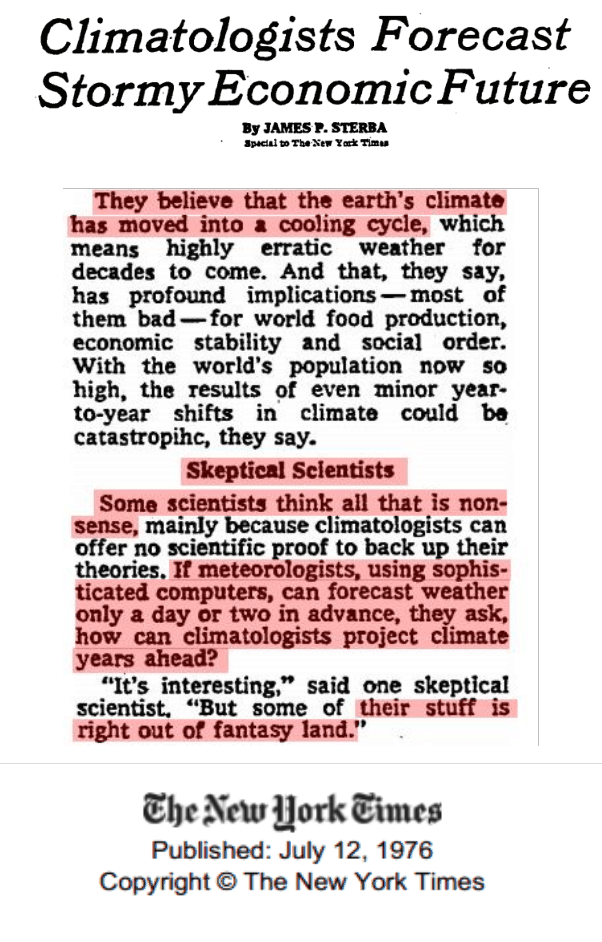
Time To Silence The Skeptics

In 1976, foolish skeptics didn’t trust official forecasts of catastrophic global cooling – doubting the ability of climate models to predict the weather years ahead. Forty years later, these same evil skeptics are blocking global warming acceptance for the same reason. Don’t the skeptics ever learn?

ScreenHunter_242 Feb. 06 08.11

Climatologists Forecast Stormy Economic Future – Climatologists Forecasting Dire Effects of Weather on World Economy and Social Order – View Article – NYTimes.com

Frauds, Crooks and Criminals

Demonstrating daily that diversity is not strength!

Family Hype

All Things Related To The Family

DeFrock

defrock.org's principal concern is the environmental and human damage of industrial wind turbines on rural communities

Gerold's Blog

The truth shall set you free but first it will make you miserable

Politisite

Breaking Political News, Election Results, Commentary and Analysis

Canadian Common Sense

Canadian Common Sense - A Unique Perspective from Grassroots Canadians

Falmouth's Firetower Wind

a wind energy debacle

The Law is my Oyster

The Law and its Place in Society

Illinois Leaks

Edgar County Watchdogs

stubbornlyme.

My thoughts...my life...my own way.

Oppose! Swanton Wind

Proposed Wind Project on Rocky Ridge

Climate Audit

by Steve McIntyre

4TimesAYear's Blog

Trying to stop climate change is like trying to stop the seasons from changing. We don't control the climate; IT controls US.

Wolsten

Wandering Words

Patti Kellar

WIND WARRIOR

John Coleman's Blog

Global Warming/Climate Change is not a problem