Wind and Solar are Crippling Economies, Foolish Enough to Have Them….

« How did CO2 necessary for life on Earth & only 4 parts in 10,000 of our atmosphere get rebranded as some sort of deadly gas? | Main

16 June 2014

Wind Industry is a Job-thief, Not a Job-creator!

Wind Industry Built on the Graves of

6,000 Australian Manufacturing Workers

449332-ford-workers

As the RET Review Panel sharpens their axes, Members of the Coalition are making it known that the mandatory Renewable Energy Target simply has to go. Here’s what appeared on the front page of The Australian today.

‘Jobs risk’ in clean energy targets
The Australian
Adam Creighton
16 June 2014

THOUSANDS of jobs across Australia are at risk as Labor’s rising renewable energy target undermines economic growth and saps exports, fuelling Coalition backbench discontent with a policy Environment Minister Greg Hunt is widely seen to favour.

The RET, which has prompted electricity retailers to source a rising share of energy from high-cost wind farms, is forecast to lead to the loss of 4900 full-time jobs by 2020, and more than 6000 by 2030 as higher power prices ripple through the economy, undermining competitiveness and household budgets.

Only weeks before the government’s review of the RET is due to report on the policy’s efficiency and effectiveness, new modelling by Deloitte Access Economics, commissioned by the Australian Chamber of Commerce and Industry and the Business Council of Australia, shows keeping the RET entails a $34 billion hit to Australia’s economy, including a near $3bn cut in exports by 2020.

“The current scheme is likely to impose a considerable cost to the Australian economy going forward,” the report concludes, noting the RET is abating carbon at an effective cost to the economy of $125 a tonne — or about five times more than the current carbon tax, which the Coalition plans to repeal from July.

“While the RET is in place, investment is directed to less efficient and higher cost renewable technologies — at the expense of more efficient and lower cost generators,” it adds.

It points out that the share of total electricity generation stemming from renewable sources is on track to rise to 27 per cent by 2020, which is far above the 20 per cent RET originally intended.

The study will galvanise the growing number of Coalition backbench MPs who want Mr Hunt, who is seen to be in favour of the status quo, to make significant changes to the RET after the review chaired by businessman Dick Warburton reports next month.

Introduced by the Howard government in 2001, Labor expanded the RET — which now makes up about 5 per cent or $70 a year in the typical household’s electricity bill — almost five-fold in 2010 in order to boost the amount of renewable energy that must be sourced to 41 terawatt hours by 2020.

DeanSmith20120328_1167

Senator Dean Smith, chairman of the Coalition backbench energy committee, said the “great majority” of Liberals were in favour of significant change.

Craig Laundy

Craig Laundy, Liberal member for Reid in Sydney’s west, said “the Liberal backbench is acutely aware of the impact of rising power bills as a result of the RET”.

“While we have to empathise with investors in the renewable sector, the impact on day to day power bills for ordinary families is not acceptable,” Mr Laundy said.

A spokesman for Mr Hunt, who has commissioned a study into the policy in keeping with promises made in opposition, said the minister was reserving his judgment until he read the RET review panel report.

With a large manufacturing base and an electricity grid powered mainly by brown coal, Victoria stands to lose 1400 jobs by 2020 (more than any other state) compared with 250 in South Australia, where up to a quarter of energy is supplied by wind, according to the study.

“Fixing the RET is just another step towards ending the age of entitlement — wind industry entitlement,” said Angus Taylor, a NSW regional Liberal member.

The Deloitte analysis anticipates an extra $10.3bn in investment in renewable energy if policies remain unchanged and electricity prices to remain well above where they would otherwise be until 2030. “The upward pressure on retail prices flows on to affect the rest of the economy, raising the cost of many day-to-day functions that depend on electricity,” the study said.

Burchell Wilson

Burchell Wilson, chief economist at ACCI, said: “The renewables industry has been standing over the graves of Australian manufacturing concerns, crowing about the jobs the RET is creating in the wind industry.”

Matthew Warren, chief executive of the Energy Supply Association, which represents “clean” and “dirty” energy suppliers said: “The RET was designed to take up most new investment in a growing energy market, but instead the market has been shrinking aggressively, forcing renewable energy into an oversupplied market.”
The Australian

Angus “the Enforcer” Taylor is going harder than ever in his sworn quest to tear the wind industry apart piece by stinking piece. STT hears that Angus has been exhorting his colleagues to “man-up” and scrap the legislation in its entirety.

Faced with a few back-sliders – like young Gregory Hunt – Angus backed himself with Parliamentary advice that the recent wind industry tosh about scrapping the RET creating “sovereign risk” is just that (see our post here). And, ditto, concerning wind industry threats about being entitled to compensation from the Commonwealth for “losses” they will suffer when the RET is wound back or scrapped (see our post here).

Angus’s effort has met with the approval of his colleagues, who are now keener than ever to put the RET to the sword.

Expect to hear more from the Coalition and the Australian Chamber of Commerce and Industry as the week rolls on and the Deloitte Access Economics report is published.

STT thinks it’s the beginning of the end.

Angus Taylor

Renewable Energy Targets Are Ridiculous! They Should ALL be Scrapped!

Queensland says: Time to Scrap the Renewable Energy Target

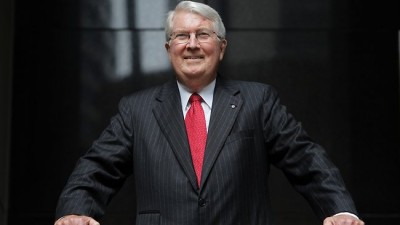
dick-warburton

The RET Review Panel’s interim report is expected within the next few weeks and we hear there is no joy in it for the wind industry and its parasites. The big end of town have made some walloping submissions – all targeting the mandatory RET as the costly and ineffective market distortion that it is. Here’s The Australian’s take on the position taken by the Business Council of Australia.

RET no longer relevant, says BCA
The Australian
Barry Fitzgerald
13 June 2014

THE nation’s peak business lobby has called for the controversial renewable energy target to be amended ahead of the scheme being brought to an end in 2030.

In a submission to the Abbott government’s expert panel reviewing the RET, the Business Council of Australia said the scheme in its current form was no longer relevant to Australia’s circumstances.

It said the RET was a poor climate change mitigation measure as it reduced greenhouse gas emissions at a high cost of abatement relative to other measures. Without changes, it said, the RET would continue the “wealth transfer from households and business electricity consumers and baseload generators to the renewable energy industry because it increases electricity prices to pay for renewable energy’’.

It said the RET should be amended and suggested “smoothly transitioning out of the RET by amending the target and ending the scheme in 2030”.

It noted when the RET was established under the Howard government, Australia’s electricity demand was expected to grow in perpetuity, and was forecast to reach 300,000 gigawatt hours by 2020. It is now forecast to reach only 230,000GWh due to a decline in demand.

“This means the legislated (20 per cent) target is now forecast to see renewable energy represent at least 27 per cent of Australia’s electricity generation,” the submission said.

“In an electricity market that is already oversupplied, there is no economic justification for electricity consumers to pay for additional generation capacity that is not required.”

The BCA also argued since the cost of “some” renewable energy has declined since the scheme was established, in some cases, it does not require a subsidy to be commercially deployed. It wants the RET amended to a “true” target of 20 per cent by 2020, and the government not to extend the target once all obligations have been met in 2030.

“Any amendments considered as part of the review of the RET should not adversely affect investments that have already been made and should be mindful of their impact on investments currently being planned or already subject to approval,” the BCA said.

The submission repeated previous BCA statements that the RET as its stands distorts electricity markets.
The Australian

The BCA seem to be taking the “Goldilocks” approach – avoiding the “too hot” and “too cold” extremes of the policy spectrum. From what STT hears, it’s not the approach the Federal Coalition are going to take – nor is it the approach of the Queensland State government (see below).

The Federal Coalition have received Parliamentary advice that the recent wind industry tosh about scrapping the RET creating “sovereign risk” is just that (see our post here). And, ditto, concerning wind industry threats about being entitled to compensation from the Commonwealth for “losses” they will suffer when the RET is wound back or scrapped (see our post here).

The advice has stiffened the resolve of a few who were momentarily spooked that scrapping the RET could cost the Commonwealth a small fortune in claims from wind power outfits. Realising the “sovereign risk/compensation” story was nothing more than the deluded and panicked pleading of an industry on the ropes, these boys are now keener than ever to put the RET to the sword.

mark mccardle

And the Queensland State government’s submission to the Panel pulls no punches and calls for the RET to be scrapped. So does Aloca (an aluminium processor) and the Australian Industry Greenhouse Network (representing miners and manufacturers).

Here’s The Australian again.

Rooftop solar should go, RET told
The Australian
Annabel Hepworth
12 June 2014

A LANDMARK review should consider closing the federal scheme promoting the installation of rooftop solar panels and wind farms to new projects, the Queensland government says.

It argues that reducing the Renewable Energy Target will help alleviate bills.

In a submission to the RET review panel chairman Dick Warburton, obtained by The Australian, Queensland Energy Minister Mark McArdle warns that the RET would add about $60 to a typical residential customer’s bill in 2014-15.

“Given the impact it is now having on household bills it is timely that the review panel has an opportunity to propose amendments to the RET ensuring it is appropriately aligned with other objectives such as addressing cost-of-living expenses,” the submission says.

Solar prices have fallen for residential systems, with the prices on the larger-sized 5kW systems dropping by more than 32 per cent between August 2012 and last April.

Even though Queensland has slashed its feed-in tariff — which pays households to generate electricity from the panels — there are still about 3000 new PV systems being installed each month.

And when further cuts kick in on June 30, a significant fall in uptake of solar panels is not expected, the submission says.

“The phasing-out of support is an appropriate approach for maturing or established technologies,” it says.

It comes as some of the nation’s biggest emitters have also called for the RET to be wound back, a move that is being resisted by the clean energy industry.

Alcoa has told the review that the costs involved in the small solar scheme are a “substantial and unwarranted impost on large electricity users” and that the “highly volatile” nature of the scheme “erodes business confidence and planning certainty”.

The Australian Industry Greenhouse Network — which represents big emitters in sectors such as mining and manufacturing — says that the scheme should be abolished as it would lead to “a reduction in the cost burden immediately without affecting existing assets or sovereign risk”.

But the Australian Solar Council argues the solar industry needs the scheme as it is in decline because of the close of state and territory feed-in tariffs, uncertainty created by the RET review and the phasing out of the solar credits multiplier.

Queensland says the RET “undermines the viability of generation assets which were built in response to market signals rather than a government mandated subsidy”.
The Australian

Queensland has seen a huge uptake of rooftop solar – but it hasn’t replicated the wind rush of Australia’s south-eastern states (NSW, Victoria, SA and Tasmania). Queensland has a cluster of 20 tiny 600kw fans (with a piddling 12 MW of installed capacity) at Windy Hill, west of Cairns – run by Thai-turbine terrorists, RATCH; and that’s it. There are a number of “pipe-dream” projects proposed, but none of them have PPA’s – so are going nowhere fast. Hence the Queensland government’s focus on the cost impact of solar panels installed as a result of the RET and feed-in tariffs.

The solar boys shouldn’t be so worried about their future when the RET goes.

With spiralling power costs – and falling panel costs – there is already a healthy market for rooftop solar PV among domestic users (albeit, perhaps, a smaller market in the short-term than if the RET rort continued unabated).

But the big future for solar is in rural and remote locations, where it is more economic for a home, farm or station to go “off-grid”.

Supplying power transmitted through networked grids costs serious money (think installation and maintenance over generations): doing so for a few remote farms or a sheep station – with transmission lines extending for dozens and sometimes hundreds of kilometres just to reach them all – is uneconomic; the returns in revenue from those few users represent a pittance by comparison with the enormous upfront costs of connection to the grid and ongoing maintenance of the connection, over time.

In one case in NSW, a transmission line was upgraded recently at a cost of just over $2million: the line in question services a total of 9 farms, which together pay less than $14,000 in annual network service fees. The revenue recovered will never repay even a fraction of the cost of the upgrade – in the result, that cost will effectively be borne by all power consumers, thus subsidising the few remote users involved. The example cited is not an isolated case.

In NSW, the State government has just announced plans to privatize parts of its electricity network. It also has serious plans to address the costs of supplying remote rural homes and towns on the rural part of the network (which it plans to retain) by way of “off-grid” solar solutions.

The plan is fairly simple. Instead of maintaining transmission lines to small, remote rural towns, remote homes, farms or sheep stations, a “stand-alone solar system” will be provided. Solar panels sufficient to provide for the town or customer’s needs will be installed; with battery storage; and a diesel generator for back up. The idea has been around for 20 years, but with increasing costs attached to maintaining remote transmission lines and falling solar PV costs the concept has come into its own (see this paper from 1995 here).

The forecast cost of providing such a stand-alone solar setup to a home, farm or station ranges from between $35,000 to $70,000 per unit – depending, obviously, on the capacity of the unit needed to supply the particular customer. The manner in which these systems can be consumer-financed is being explored at the moment (with a lease/buy-back option on the table). The units are likely to last at least 20 years and, even allowing for maintenance costs of the units, will be far more economic than maintaining thousands of kilometres of transmission line and network gear for the sake of a relative handful of remote customers.

desert-sun

Solar trumps wind in the scenario above simply because inland Australia has an abundance of sunny days – even in winter – thereby giving solar PV a reasonable degree of reliability; whereas, no-one in their right mind would rely on the vagaries wind for anything (see our posts here andhere).

Moreover, solar PV prices continue to fall and face downward pressure due to the scale of China’s investment in manufacturing capacity. The Americans and the Germans – who also piled into solar panel making – are currently crying foul over being under-cut by Chinese panel manufacturers, trying to prevent the Chinese from competing in Europe and the US.

STT understands that the smartest among the solar boys – aware of the plans above – are already sharpening their pencils ready to do some serious business. Stand-alone solar – taking users off-grid in remote locations – doesn’t require the “support” of the fat pile of power consumer subsidies currently generated by the mandatory RET and REC Tax: it just makes pure economic sense and, therefore, good business. We wish them well – for a happy, prosperous and unsubsidised future.

Narndee Station  PAYNES FIND

Faux-green Energy is Just a Novelty Power source. Not for Prime-Time!

Britain’s economy comes under energy attack

The wind blows the hair of Britain  

Britain Braces For World War II-style Energy Rationing

Great Britain is in the midst of an energy crisis. The country’s climate agenda

has curtailed electricity production and now there may not be

enough power to continually keep the lights on in the UK.

Britain’s energy crisis is getting so bad that the country faces “Second World War-style” rationing in order to keep the lights on throughout the country, according to the Register.
The government is launching major energy reforms to lower power demand and reopen power plants previously shut down to comply with European Union environmental rules. One such reform is that the government will pay factories to “voluntarily” shut down during peak hours when wind energy can’t produce enough power.
The government will also start paying companies to provide their own back-up power and energy producers will be able to “name their own price” for bringing coal plants online that were shuttered due to strict environmental regulations.
EU environmental rules forced many UK coal plants and other fossil fuel-fired plants to shut down. The problem is they were largely replaced with green energy, like wind power, which only produces electricity when the wind is blowing.
Opting to build costly green energy with reliability issues means UK officials are going to look at more demand-side policies to lower energy consumption. Paying factories voluntarily to shut down is just one of those options.
Despite the huge problems, Britain still plans on building more wind turbines and other green energy sources to fight global warming, reports the UK Telegraph. The UK’s National Grid CEO Steve Holliday said plans to pay factories to shut down were “just the beginning” of more policies to reduce energy demand.
“We should be optimistic that demand response could avert the need to build significant amounts of power stations in ten years’ time or so,” Holliday said. He added that people have always had “expectations that the supply will always be there”, but this will no longer be the case with more green energy on the grid.
Holliday added that building new sources of green energy that are subject to wind speeds and sunlight would be much costlier than encouraging people to lower their demand for power.

Read more: http://dailycaller.com/2014/06/11/britain-braces-for-world-war-ii-style-energy-rationing/#ixzz34hfB0qdY

Ezra warns of Destruction We are About to Witness, at the Hands of the Liberals

EZRA LEVANT - LEVANT: Ontario, yours to dismantle

Credits: MICHAEL PEAKE/Toronto Sun

EZRA LEVANT | QMI AGENCY


Put aside the scandals and corruption and police investigations into the Ontario Liberal Party. That’s just morality and ethics stuff, and Ontarians are apparently fine with that.

But what about the economy created by the Liberals, happily accepted by voters last Thursday?

For seven years running, Ontario has had a higher unemployment rate than the national average. Ontario is a have-not province, now subsidized by others, including Saskatchewan and Newfoundland, two new have provinces.

Stop and let that sink in.

Ontario’s taxes are high, and about to grow higher: Premier Kathleen Wynne’s campaign centrepiece was a new payroll tax for a provincial pension plan, deducted from every employee’s paycheque.

In other words, a job tax.

There will be other taxes too, including on Pearson Airport, the airport already saddled with the highest user fees in the world.

And Ontario’s disastrous experiment with wind turbines and solar panels will continue for decades — that’s the length of time Ontario will force residents and companies to buy power at inflated rates to subsidize their green schemes.

Even as power prices fall in other provinces and competitor states in the U.S. It’s surely a coincidence that the former president of the Liberal Party is a wind turbine executive.

That’s what’s so dispiriting.

Not that Ontarians are fine with a corrupt political class.

But that Ontarians are fine with economic decline and that more and more economic “success stories” aren’t entrepreneurs, but rather crony capitalists with ties to the government.

Ontarians, for more than a century the economic engine of Canada, are fine now being an economic brake. The decline first brought on by Dalton McGuinty is no longer a blip. It’s a trend.

It seems unthinkable that Ontario could ever be anything other than the biggest and strongest province. But it surely felt that way in Montreal, too, for the longest time.

But take the story of the Bank of Montreal to see how things don’t last forever.

The Bank of Montreal is Canada’s oldest bank, founded in 1817. And for 160 years, it was headquartered in — obviously — Montreal. But in 1970, politics brought risk and cost to Quebec in a way not seen before.

The FLQ crisis brought terrorism and martial law. In 1976, the Parti Quebecois won the election. So in 1977, the Bank of Montreal moved its head office operations to Toronto.

For two lifetimes it was unthinkable that the Bank of Montreal would leave Montreal. But in the course of 20 years it happened.

Politics matters.

Ontarians just renewed their bonds with a party that deliberately campaigned to the left of the NDP; a party that has overtly joined the cause of government workers unions, against the interests of taxpayers.

Ontario’s so-called Sunshine List — the annual publication of government workers earning more than $100,000 — used to be a source of embarrassment. Now it’s the government’s base of support.

Ontario has chosen the takers against the makers. Thirtynine percent of Ontarians were fine with that and voted Liberal. And most of the 24% who voted for the NDP were fine with it too.

The day after the election was instructive. Mere hours after the election, Joe Fontana, the Liberal mayor of London, was convicted of fraud. But Wynne happily met with Fontana earlier this year, while he was before the courts — and merely by associating with him, gave him her political stamp of approval.

At exactly the same time, banks from around the world issued credit warnings about Ontario’s debt, and the province’s cost to borrow jumped the most it had in six months.

An official credit downgrade is imminent, though some banks say they’re waiting for the provincial budget, to make it official.

Corruption and debt.

Can they really bring down Canada’s economic colossus?

Ask Detroit — for decades, the highest-paid, most industrialized city in America. After two generations of Democratic rule, it’s an impoverished ghost town.

Oh, this is just the beginning.

Let’s see what new taxes and rules Toronto’s next mayor, socialist Olivia Chow, will bring with her.

Anyone want to bet on when the Bank of Montreal moves to Calgary?

Academic, Ian Plimer, Tells About the Faux-Green Movement, and What it Has Become

Academic slams tyranny of the greens

Academic slams tyranny of the greensIan Plimer describes the greens as a ‘malevolent, unelected group’. Photo: Paul Harris

TREVOR SYKES

Professor Ian Plimer has never been renowned for moderation in his opinions about the extremist elements of the green movement and in this book he launches on them in a full-blooded, broken-bottle attack.

In his own words: “What started as a ­laudable movement to prevent the despoilation of certain areas of natural beauty has morphed into an authoritarian, anti-progress, anti-democratic, anti-human monster.” That Plimer should attack the greens is no surprise. More impressive is the book’s foreword, written by Patrick Moore, a co-founder of Greenpeace, who fully ­supports Plimer.

He congratulates Plimer for a book that provides a “different . . . and extremely rational look at the agenda of the green movement today”. “In many respects, they have become a combination of extreme political ideology and religious fundamentalism rolled into one,” Moore says.

“There is no better example of this than the fervent belief in human-caused ­catastrophic climate change.” Moore even rejects the core green belief that carbon dioxide emissions are harmful.

Plimer’s thesis is that the real agenda of green groups (often registered as charities) is nothing less than the destruction of modern civilisation and that a key aim is to kneecap the global energy industry which provides society with electricity. It has always seemed odd that greens are so hostile to a gas which is vital for the life of trees. As a trained geologist, Plimer is well aware that the planet’s climate has been changing since its birth 4½ billion years ago. “If the Earth’s climate did not constantly change, then I would be really worried,” he says.

What he contests is that manmade carbon dioxide has anything much to do with such change. It must be comforting for left-wingers to blame evil industrialists for destroying our planet, but in fact carbon dioxide accounts for only 0.04 per cent of the atmosphere and man-made carbon dioxide accounts for maybe 4 per cent of that, so Plimer regards the proposition as nonsense.

Also, carbon dioxide emissions do not accumulate quickly in the atmosphere.

After five to seven years, they are absorbed by the oceans, trees or rocks. Plimer believes that for scientists to argue that traces of a trace gas can be the driving force for climate change is fraudulent.

WHAT CAUSES CLIMATE CHANGE?


Sceptical scientists do not know what causes climate change but it would seem a complex combination of factors. Plimer believes the atmosphere is merely the medium through which climate change manifests itself and the major driver is “that giant fusion reactor we call the sun”.

He says: “It is quite capable of throwing out immense clouds of hot, ionised gases many millions of kilometres into space, sometimes with drastic effects on both the Earth’s atmosphere and on spacecraft travelling outside the lower atmosphere and the Earth’s protective magnetic shield.” Plimer, who is not renowned for pulling his punches, describes green extremists as hypocritical – “a malevolent unelected group attempting to deconstruct healthy societies that have taken thousands of years to build”.

That may sound extreme, but it’s difficult to find an alternative explanation for the change they have forced upon the Drax power station in Yorkshire.

Drax used to boast it was the largest, cleanest and most efficient coal-fired power station in Europe, generating up to 3960 megawatts. Greens demonstrated against it, saying Drax was the largest carbon dioxide emitter in Europe. So Drax is changing from coal to biomass. Plimer says it intends to import timber from North Carolina for fuel. This is madness, both economically and ecologically. A plant which used to burn 36,000 tonnes of coal a day will instead burn 70,000 tonnes of wood.

Forests will have to be chopped down in North Carolina, which must involve some destruction of native habitats of creatures such as otters and woodpeckers. Habitat destruction kills birds and animals more surely than climate change ever will. The timber will be reduced to pellets in factories fuelled by conventional fuels, then shipped across the Atlantic in diesel-burning boats. Over the 20-year life of the power station, that would involve the destruction of ­511 million tonnes of wood.

The energy density of wood is about half that of an equivalent weight of coal, so wood will produce more expensive ­electricity. Burning wood also releases its stored carbon dioxide.

WIND AND SOLAR POWER UNRELIABLE


The European Environment Agency has ruled that burning wood is carbon neutral because the carbon dioxide will be absorbed over time by the oceans or other trees.

That leaves the EEA in the odd position of believing that a molecule of carbon dioxide emanating from wood behaves differently to a molecule emanating from coal.

The greens, having achieved their aim, have stopped demonstrating although there is a strong argument that the conversion of Drax will make it more, not less, harmful to the planet.

Wind farms and solar power stations are unreliable and totally unable to provide base load electricity.

Plimer gives calculations which show that wind turbines are barely able to generate as much electricity in their lifetime as it takes to make them.

. Even more bizarre was the Spanish solar plant which enjoyed such large subsidies that it could make profits generating electricity at night by shining floodlights on the panels. The floodlights were powered by a diesel generator. These are only three examples of green illogic from a book crammed with them.Plimer has assembled a massive case which needs answers.

Even more bizarre was the Spanish solar plant which enjoyed such large subsidies that it could make profits generating electricity at night by shining floodlights on the panels. The floodlights were powered by a diesel generator. These are only three examples of green illogic from a book crammed with them

Not For Greens, by Ian Plimer, Connor Court. $29.95.

Much like the U.N….Greenpeace is Not what it Used to Be!!

Government asks Greenpeace to furnish details on foreign funding

The NGO has been asked to give detailed replies on the source of its funds, the beneficiaries and on what activities the funds are spent.
NEW DELHI: Acting on an Intelligence Bureau report that claimed that NGOs were derailing India’s economic growth, the Home Ministry has sent a questionnaire toGreenpeace asking it to explain its foreignfunding and its spending pattern including the causes on which the fund is spent.

A ministry official said all NGOs named in the IB report would face a review of the clearances to them under Foreign Contribution (Regulation) Act of 2010 (FCRA).

Greenpeace had vehemently denied charges made in the IB report that labeled the NGO as “a threat to national economic security” and alleged that it was violating provisions of the Foreign Contribution (Regulation) Act of 2010 (FCRA).

The home ministry questionnaire to Greenpeace, a ministry official said, has been sent by the foreigners division of the home ministry which manages FCRA clearances.

The ministry has asked the NGO to give detailed replies regarding the source of its funds, the beneficiaries and on what activities the funds are spent.

Greenpeace has denied any violation of FCRA and said on Wednesday that it was funded by individual donors in the country and does not accept any donation from corporate or government entities.

“In 2013-14, Greenpeace India raised around Rs 20 crore from over three lakh individual supporters in India. More than 60% of our funds come from Indian supporters. Foreign grants form 37% of our funds,” Greenpeace said in a statement on Wednesday.

The NGO said it had not received any questionnaire from the home ministry yet but promised to cooperate with the government saying it had always abided by the law.

The IB report dated June 3 had been submitted to the PMO, besides the home minister, finance minister and heads of all other intelligence agencies.

The report is said to have blamed numerous foreign-funded NGOs like Greenpeace andAmnesty for “stalling development projects” in India and said the activities of such NGOs was negatively impacting economic development besides shaving off 2-3% of GDP growth.

The report also identified specific sectors which have been allegedly impacted by the activity of the said NGOs, saying nuclear and coal-fired power plants are among major casualties.


The Whole CO2 scam, was designed to steal our money–legally!

Asthma caused by carbon dioxide–not a chance

I just received a post that included commentary by the great Morano on how the EPA and the Bamster would like to do an agit prop head fake–make carbon dioxide an air pollutant that causes asthma.


In the world of public perceptions is science just a secondary consideration–sure it is–big lies and little lies are what agit prop is about.

Morano makes the argument that the EPA has found asthmatic children such a good hook, they had to conflate carbon dioxide regs with air pollution regs. Gina McCarthy starts spouting numbers about reduced asthma attacks, and heart attacks.

http://mobile.wnd.com/2014/06/global-warming-threat-now-its-asthma/

Well, in fact small particle air pollution doesn’t cause heart attacks or asthma.

Sorry Marc, you can easily back up a couple more steps in your criticism of this crap.

The epidemiology is so bad on small particle air pollution that the EPA had a human exposure project going for the last 20 years hoping to find something that would be good evidence. They admit in sworn statements to the court in Virginia in our lawsuit to stop the human exposure experiments that the small associations they find and have found in premature death populations studies don’t prove anything.

Asthma is increasing in incidence and air pollution is declining dramatically.

Carbon dioxide cannot be an allergen, and it cannot increase pulmonary problems or health problems until it gets to above 10% or 10000 ppm in the ambient or inspired air. It presently sits at 400 ppm, or 0.04%. That’s the air we breath in, the air we breathe out has a carbon dioxide level of 4% or 4000 ppm.

The only way that small particles would be related to asthma is allergens in the air, pollen, and such, and allergenic particles are proteinacious so they stimulate immune reactions. The Immune system is designed to identify molecules that are foreign to the body and set up inflammatory reactions to fight the invasion.

In the case of an allergic reaction, the mast cells are engaged and release histamine that causes itching, rashes, welts (we call urticaria), angioedema (swelling of tissues with fluid released from histamine effects) swelling and inflammation of the airways, causing stridor and wheezing.

The treatment is antihistamines and cortisone type steroids to reduce the release of fluids and inflammatory mediators that cause allergic rashes and swelling and wheezing. Pretty simple, but you can count on the EPA and the lefty greenies to lie and deceive. Amazing they can do such a thing on top of the evidence that Asthma goes up as air pollution goes down. But agit prop is not about telling the truth.

Show a pic of a pretty kid with oxygen on and a stack in the background with steam coming out (portrayed as “smoke”) and watch the mommies put on their matching tee shirts.

Milloy and I have waxed eloquent on the bad air pollution epidemiology at JunkScience and American Thinker

http://junkscience.com/?s=asthma+and+air+pollution

Links to dunn essays

EPA

Jon Samet silliness acsh 2005

Part 1

http://heartland.org/policy-documents/epa-junk-science-air-pollution-deaths

http://junksciencecom.files.wordpress.com/2013/12/epa-junk-science-on-air-pollution.pdf

Part II on legal precedents that allow delegation and discretion.

http://junksciencecom.files.wordpress.com/2013/12/mpre-on-epa-and-air-pollution.pdf

more on the delegation/discretion problem

http://junkscience.com/2014/01/30/dingell-says-scotus-screwed-up/comment-page-1/#comment-201664

http://www.nejm.org/doi/full/10.1056/NEJMp1103332

Harvardresearch claims sm part cause cancer.

http://www.reuters.com/article/2011/10/28/us-air-pollution-idUSTRE79R5NM20111028

Subsidies make the energy world go round

http://heartland.org/policy-documents/subsidies-make-energy-world-go-round

2013 EPA project

Holding EPA to account Joe Barton speech

http://www.americanthinker.com/blog/2012/03/holding_the_epa_to_account.html

EPA can be stopped

http://www.americanthinker.com/blog/2012/03/holding_the_epa_to_account.html

a strategy to stop the epa science abuse

http://www.americanthinker.com/2012/04/a_strategy_to_stop_epa_science_abuse.html

the EPAs unreliable science

http://www.americanthinker.com/2012/03/the_epas_unreliable_science.html

epa unethical research

http://www.americanthinker.com/2012/06/epas_unethical_air_pollution_experiments.htm

Milloy and Dunn at JPANDS on EPA Human Experiments

http://www.jpands.org/vol17no4/dunn.pdf

EPW report on Beal Brenner and the playbook

http://www.epw.senate.gov/public/index.cfm?FuseAction=Files.View&FileStore_id=b90f742e-b797-4a82-a0a3-e6848467832a

http://junkscience.com/2013/11/16/epa-hearing-exercise/

http://junksciencecom.files.wordpress.com/2014/03/dunn-on-epa-battle.pdf

http://junksciencecom.files.wordpress.com/2014/04/dunn-let-to-congress-ii-with-att.pdf

http://junksciencecom.files.wordpress.com/2014/04/dunn-let-to-ehp-on-the-study.pdf

http://junksciencecom.files.wordpress.com/2014/04/dunn-let-ii-to-drs-in-congress.pdf

http://junksciencecom.files.wordpress.com/2014/04/dunn-let-to-deans-1.pdf

Legal strategies for EPA problems

http://junksciencecom.files.wordpress.com/2014/03/2nd-and-3rd-epi-highlights-ref-manual.pdf

http://junkscience.com/2013/11/16/epa-hearing-exercise/

http://junkscience.com/2014/02/20/lawyer-losers-who-work-for-our-side-rich-losers-but-still-losers/

http://junkscience.com/2014/02/27/physician-condemns-epa-cargo-cult-science-guess-who/

http://junkscience.com/2014/02/23/daren-jonescu-on-climate-science-totalitarian-thugs-and-hypocrites/

http://junkscience.com/2013/11/16/epa-hearing-exercise/

http://junkscience.com/2014/04/01/epa-medical-schools-complicit-in-unethical-and-immoralillegal-human-experiments/

California enviro policy issues

http://www.americanthinker.com/2010/03/californias_toxic_air_scare_ma.html

toxic air scare

http://www.americanthinker.com/2010/03/science_and_the_toxic_scare_ma_1.html

Milloy Ozone study in CA

http://junkscience.com/2013/09/03/study-ozone-not-linked-with-asthma-hospitalizations-in-major-california-hospital-system/

Milloy study on small particles in CA

http://junkscience.com/2013/12/26/epa-air-pollution-scare-debunked-by-best-data-set-ever-assembled-on-particulate-matter-deaths/

.
Asthma is not caused by air pollution. Asthma is an allergic disease.

Take a look at the commentary here at JunkScience and scroll down until you get to Milloy’s report on a multi year study of ozone and asthma in southern CA. No Association.

But before that you get to a Johns Hopkins study that shows that dirty environments for small children desensitizes them and reduces their rate of asthma.

http://junkscience.com/?s=asthma+and+air+pollution

enough for today.

What the Liberals Have Done to Our Province, Is Unforgivable!

Opinion: Ontario is deeply in debt

The Liberal record on energy, health care and education

By Ron Cirotto

In a Comment page article May 23, Bryan Kerman compared apples to oranges in comparing Canadian provincial politics to American state politics. Let us look at the facts and forget about the past and the Mike Harris era. That was then, this is now, 2014. Now Ontario is a province deeply in debt and sitting on a poor credit rating and lavishly spending taxpayers’ money without consultation or proper bidding.

In simple numbers, after 10 years of Liberal government, Ontario has a provincial debt that has doubled from $150 billion to $300 billion. Ontario has increased yearly spending from $65 billion to $130 billion. Ontario, now in 2014, is running a $10 billion-plus deficit each year. Ontario’s population, now in 2014, is 13 million, up from 12 million a decade ago.

Where have all the jobs gone? Where has all the money gone?The size of provincial government has increased dramatically, along with the total provincial debt and yearly deficit. Yet, the population has only increased by about one million. Government mismanagement is the reason. There is plenty of opportunity to allow 100,000 government employees to be released by attrition over the next four to eight years. This means the well paid remaining government employees will have to work more efficiently just like the private sector.

Energy:

There is plenty of opportunity to allow 100,000 government employees to be released by attrition over the next four to eight years.

Energy is not a luxury, it’s a necessity, especially because of our Northern climate. Ontario’s growing population cannot cut back on energy usage to heat their homes, run their appliances or turn on the lights when it is dark. Steel mills or any manufacturing company cannot run a business on expensive electric power and try to compete internationally. The Ontario Liberals signed an untendered $19-billion electrical energy contract for 25 years with Samsung without a cost-benefit analysis.

For example, aluminum production companies are located near cheap electricity, as is the case in Northern Quebec. The excess electricity Ontario generates, it sells to Quebec at a loss, which resells it to the Northern New York power grid for a profit. A billion dollars-plus, wasted on cancelling two natural gas plants for political reasons. This is not responsible management of taxpayers’ money. This is a blatant example of misguided ideology, needlessly saving the planet on the taxpayers’ dime!

A billion dollars has been spent on smart meters, yet Ontario’s electricity rates are at 15 cents per kilowatt hour in Burlington and Hamilton. Before Dalton McGuinty took Ontario’s rudder, electricity was four cents per kilowatt hour. Currently there are 1,000 wind turbines in Ontario and another 5,000 planned and they will be forced upon municipalities by the Liberal government. Why did the Liberal government spend billions on the new tunnel at Niagara Falls to get inexpensive hydro electricity and still go ahead with very expensive wind turbines? Why did the government plow ahead with a solar panel installation in southern Ontario? They promised it would provide 300 jobs, yet when finished it provided only three jobs and they are low-paying security guard positions.

Health care:

Billions of dollars have been spent on an unfinished computerized eHealth database and taxpayers are still not reaping the benefits. Money has been wasted on the Ornge helicopter mess, an arms-length, government company that only benefitted its directors, not to mention the tragic Ornge helicopter crash that killed innocent people.

Privatization:

At one LCBO location, a union leader justifiably pointed out there are eight employees and 11 managers. This is insulting to taxpayers.

Religious Schools:

In his article, Kerman appeared to be intentionally regurgitating the religious school issue by alluding to a hidden Conservative “agenda,” saying at least one lobbyist is running under the Conservative banner in the provincial election, thus rekindling fear in the voters. Who is this lobbyist? Name him or her so that he or she can be questioned. Publicly funded private schools are not the same as publicly funded private religious schools. This so-called “short step” is scare mongering.

Ontario is in deep, deep financial trouble. Kathleen Wynne’s government needs to be replaced. When you vote on Thursday consider jobs, jobs and jobs. Please do some serious soul searching before voting.


Ron Cirotto, BASc., P.Eng., lives in Burlington.

Canada & Australia Stand up to Save their Economies from Loony Left-Wing Policies!

Australia And Canada Form

Climate Realist Alliance 

Obama Isolated As Western Allies

Oppose Unilateral Climate Policies

The political leaders of Canada and Australia declared on Monday they won’t take any action to battle climate change that harms their national economies and threatens jobs. Prime Minister Stephen Harper said that no country is going to undertake actions on climate change — “no matter what they say” — that will “deliberately destroy jobs and growth in their country.” –Mark Kennedy, Ottawa Citizen, 9 June 2014

Australian Prime Minister Tony Abbott is seeking an alliance among “like-minded” nations to thwart efforts to introduce carbon pricing and American President Barack Obama’s move to push climate change through global forums like G20. Abbott, who is visiting Canada for talks with the country’s prime minister and his close friend Stephen Harper, said efforts are underway to form a new “center-right” alliance under the leadership of Canada, UK, Australia, India and New Zealand. Reports said the alliance is a “calculated attempt” to push back on what both Mr Abbott and Mr Harper sees as a “left-liberal agenda” to raise taxes and “unwise” plans to address the issue of global warming. –Reissa Su, International Business Times, 10 June 2014