|

View Post on Facebook · Edit Email Settings · Reply to this email to add a comment.

|
View Post on Facebook · Edit Email Settings · Reply to this email to add a comment.
World | Agence France-Presse | Updated: May 11, 2014 11:10 IST

AFP
The sun is reflected in a solar panel in a field of Mahora, near eastern Spanish city of Albacete on May 7, 2014.
Albacete: “The sun could be yours,” the Spanish government promised in 2007, encouraging citizens to invest in solar power. Many who did now wish they could give it back.
Tens of thousands of indebted Spaniards have found themselves lumbered with fields full of expensive solar panels whose subsidies have been unexpectedly cut in the financial crisis.
“How do I feel? Completely fooled,” said David Utiel, a 37-year-old teacher who invested in a solar plant, recalling the government’s sunshine slogan.
“Fooled, swindled, disappointed, disgusted.”
He was one of the 62,000 ordinary citizens in Spain who campaign groups say have been caught in a financial sun trap.
Along with 23 of his neighbours from Madrigueras, near the eastern city of Albecete, he jointly owns nearly 360 solar panels which stand in a field of wild grass and red poppies.
“It was the government that gave us the idea,” he said, walking at the foot of the vast black panels.
“It was supposed to be a good idea to put your money in the whole solar energy thing. They said it could be very profitable.”
In return for promises of a regular return, he invested 450,000 euros ($620,000) in the field in 2007.
“We are completely ordinary people, country people from the village. Some of us work in education, some in farming, others in small businesses,” he said.
“The idea was not to go chasing after subsidies and become millionaires or anything like that. It was to have some kind of pension.”
Long favoured by the state, renewable energies are now feeling the pain of Spain’s economic austerity policies.
Spain’s government is taking drastic measures to slash a 26-billion-euro electricity deficit after years of paying subsidies to keep prices down.
– Betting the farm –
“It’s the government that encouraged us to invest our savings to generate solar energy,” said Miguel Angel Martinez-Roca, president of ANPIER, an association of small sun power producers.
“It then started to apply retroactive cuts by law once the solar plants were already built. They changed the rules half way through the game.”
UNEF, another solar energy association, estimates that since 2007 earnings by owners of solar panels have fallen by up to half in the worst cases, with losses varying according to the type of installation.
It estimated that the complex series of subsidy cuts would cost owners 920 million euros in 2014.
Meanwhile solar companies owe 22 billion euros to the banks, it says.
“It’s a frankly awful situation. Thousands of Spanish citizens are trapped,” lumbered with solar plants costly to maintain, weak revenues and loans, said Martinez-Roca.
David, who mortgaged his house for the solar investment, has received just 3,000 euros in aid in the past six months, six times less than he pays in maintenance and loan repayments.
Another local man, Manuel Alonso Caballero, 39, left his job in the airport sector to set up his own solar power plant.
He says he invested nearly 1.5 million euros and risks losing it all. His farmer parents have had to mortgage their house as his guarantors.
“I went into the solar business because I really believed what they were saying and I really believed in renewable energy, but I realise now that I was wrong,” he said.
“I’ve lost any trust I had and I wouldn’t invest another euro in Spain.”
ANPIER has lodged complaints in the courts against the state and vows to turn to the European Union authorities if its case in Spain fails.
Martinez-Roca said the group is calling a demonstration in Madrid on June 21 against the government.
“We are not prepared to let them ruin us, insult us and cheat us like this.”
Coleman: ‘When the temperature data could no longer be bent to support global warming, they switched to climate change and now blame every weather and climate event on CO2 despite the hard, cold fact that the “radiative forcing” theory they built their claims on has totally failed to verify.’
‘The current bad science is all based on a theory that the increase in the amount of carbon dioxide in the atmosphere from the exhaust of the burning of fossil fuels leads to a dramatic increase in “the greenhouse effect” causing temperatures to skyrocket uncontrollably. This theory has failed to verify and is obviously dead wrong. But the politically funded and agenda driven scientists who have built their careers on this theory and live well on the 2.6 billion dollars of year of Federal grants for global warming/climate change research cling to this theory and bend the data spread to support the glorified claims in their reports and papers.’
“Climate Change” is running wild and disaster is certain unless we immediately stop burning coal and oil and move quickly to “green energy” to eliminate use of fossil fuels. Heat waves, huge floods, powerful storms, droughts and rising seas are on the verge of killing millions of us and destroying our civilization. That is my summary of the new Federal Assessment of Climate Change issued by a Obama administration team of more than 300 specialists guided by a 60-member federal advisory committee produced the report. It was reviewed by federal agencies and a panel of the National Academy of Sciences.
This 600 page litany of doom and gloom has received extensive coverage by the panting anchors of the national media who feel important when tell their audience that “the sky is falling.” Horrible pictures of storms, floods, drought and heat waves leaped out of the TV sets as the New York and Washington DC headquartered media was particularly excited to tell us how the huge increases in floods and storms was the worst in that part of the nation.
If you accept the picture painted by this report, the weather was just right, steady and nice in the historic past but because our industrialized society has powered its heating and air conditioning, its transportation by train, plane, cars and trucks, generated it’s electric power to run our lights, computers, television and smart phones with fossil fuels it has triggered this nightmare of awful storms, droughts and heat waves.
I am deeply disturbed to have to suffer through this total distortion of the data and agenda driven, destructive episode of bad science gone berserk. The only good news is that I least where I am and on the channels and websites I saw I was not further insulted by fawning TV Weathercasters visiting the White House and interviewing the President. I best I can tell, on a national level, that turned out to be a non-event (thank goodness).
Please allow me to hold your attention for a few minutes to explain why I don’t buy into this Climate Change alarmism. The climate of Earth has never been “normal” or stable. It has continuously changed through this planet’s 4.5 billion year history. Powerful storms, floods, droughts, heat waves and ice and snow storms have come and gone as long as Earth has existed.
The current bad science is all based on a theory that the increase in the amount of carbon dioxide in the atmosphere from the exhaust of the burning of fossil fuels leads to a dramatic increase in “the greenhouse effect” causing temperatures to skyrocket uncontrollably. This theory has failed to verify and is obviously dead wrong. But the politically funded and agenda driven scientists who have built their careers on this theory and live well on the 2.6 billion dollars of year of Federal grants for global warming/climate change research cling to this theory and bend the data spread to support the glorified claims in their reports and papers.
When the temperature data could no longer be bent to support global warming, they switched to climate change and now blame every weather and climate event on CO2 despite the hard, cold fact that the “radiative forcing” theory they built their claims on has totally failed to verify. Continue reading here…..

1) Lennart Bengtsson: He Knows How Little We Know
Basler Zeitung, 7 May 2014
Hans Jörg Müller
One of the most eminent climate scientists, the Swede Lennart Bengtsson, has defected to the camp of climate sceptics. For the climate debate, this could have beneficial effects.

How the global climate will develop in coming years and decades, and what influence mankind has upon the climate, is a question that has been discussed with almost religious fervor until a few years ago. That is, there were no discussions really; rather, one of the two parties declared the other insane: “climate denier“ was the term used for those who were of the opinion that global warming does not take place or that it may be warming less rapidly as most scientists believed. In any case, the human impact on climate change was far from proven.
The similarity between “climate denier” and Holocaust denier was intentional: the term should insinuate that anyone who deviated from the widely prevailing consensus was a crank, possibly driven by sinister motives. Above all, very few climate sceptics were leading experts, and this was probably the alarmists’ strongest argument. While climatologists and meteorologists warned and warned, those who were becalming and moderate were often economists. As one of the leading climate sceptics, one ex-politician stood out: Nigel Lawson, Britain’s former Chancellor of the Exchequer and the chairman of the Global Warming Policy Foundation (GWPF).
Thaw
Gradually, however, the ice seems to be melting – if not at the polar caps, then at least in the climate debates: for the first time, a widely recognized expert has changed camps. Lennart Bengtsson , the Swedish climatologist, meteorologist and former director of the Max Planck Institute for Meteorology in Hamburg, has now joined the GWPF’s academic advisory council.
After his decision was announced Bengtsson was attacked, says Lawson, which shows what kind of emotions the issue can still generate. The reason cited by the 77-year-old scientist for his decision comes in a bone-dry scientific language: The relationship between greenhouse gases and global warming was “complex and only partially understood,” Bengtsson wrote in a commentary for the Swiss newspaper Neue Zürcher Zeitung.
Apart from that, all empirical observations showed that global warming has been “no serious problem up to now.” How the climate would develop in the future only model simulations could show, and these were rather “problematic”.
Nothing is settled
Bengtsson’s conclusion: “It would be wrong to conclude from the IPCC report and similar reports that the science is settled.” Against this background, so the professor, it would be wrong to undertake any energy transition hastily.
Bengtsson’s arguments do not sound like the radicalism of old age. Rather, he exhorts his colleagues to be more prudent and empirical. For the uninitiated, this approach may be comforting, because the climate debate has long been a highly complex issue. Now, for the first time, an expert like Bengtsson admits that he and others like him fare little better: how the world’s climate will develop in coming years and decades remains pure speculation.
Translation Philipp Mueller
2) Dispute Over Global Warming: Respected Meteorologist Joins Climate Sceptics
Spiegel Online, 5 May 2014

A delicate academic matter has disrupted the climate science community: One of the most respected climatologists, Emeritus Max Planck Director Lennart
Bengtsson, has switched to the camp of climate sceptics. In this SPIEGEL ONLINE interview he explains his surprising decision.
One of the most renowned climatologists has changed sides. Lennart Bengtsson, former director of the Max Planck Institute for Meteorology in Hamburg, one of the world’s leading climate research centres, has joined the Academic Advisory Council of theGlobal Warming Policy Foundation (GWPF)…
Bengtsson has always been known for his moderate viewpoints during the hot climate debates of the 1990s. In a SPIEGEL ONLINE interview, he explained his move into the camp of skeptics.
About the person
The meteorologist Lennart Bengtsson, born in 1935, was director of the European Centre for Medium-Range Weather Forecasts from 1981 to 1990, then director of the Max Planck Institute for Meteorology in Hamburg, one of the world’s leading climate research centers. Since his retirement in 2000, he has worked as a professor at the University of Reading in England. He has been given many awards, among them the German Environmental Award of the Federal Foundation for the Environment. He has dealt mainly with the modeling of climate and weather.
SPIEGEL ONLINE: Mr. Bengtsson, why have you joined the climate sceptic Global Warming Policy Foundation?
Bengtsson: I think it is important to enable a broad debate on energy and climate. We urgently need to explore realistic ways to address the scientific, technical and economic challenges in solving the energy problems of the world and the associated environmental problems.
SPIEGEL ONLINE: Why do you think the lobby (sic) group GWPF is particularly suitable?
Bengtsson: Most members of the GWPF’s Academic Advisory Council are economists, and this is a chance for me to learn from some of these highly qualified experts in areas outside my own expertise. I want to contribute there through my meteorological knowledge to open the debate.
SPIEGEL ONLINE: But the people at GWPF do not have the reputation of reconsidering their opinions. Have you also become a so-called climate sceptic?
Bengtsson: I have always been a skeptic, and I think that is what most scientists really are.
SPIEGEL ONLINE: But were you not one of the alarmists 20 years ago? Do you think your position at that time was wrong?
Bengtsson: I have not fundamentally changed my opinion in this area. And I have never considered myself an alarmist, but as a scientist with a critical eye. In this sense, I have always been a skeptic. I have used most of my career to develop models for predicting the weather. I have learned the importance of forecasting validation, i.e. the verification of predictions with respect to what has really happened. So I am a friend of climate forecasts. But the review of model results is important in order to ensure their credibility.
SPIEGEL ONLINE: And here you see a demand for climate research?
Bengtsson: It is frustrating that climate science is not able to validate their simulations correctly. The warming of the Earth has been much weaker since the end of the 20th century compared to what climate models show.
SPIEGEL ONLINE: But the IPCC report discusses these problems in detail.
Bengtsson: Yes, but it does not do so sufficiently critical. I have great respect for the scientific work that goes into the IPCC reports. But I see no need for the endeavor of the IPCC to achieve a consensus. I think it is essential that there are areas of society where a consensus cannot be enforced. Especially in an area like the climate system, which is incompletely understood, a consensus is meaningless.
SPIEGEL ONLINE: You complain about the strong tendencies towards politicisation in climate research. Why do you join now a political (sic) organisation?
Bengtsson: I was fascinated my whole life by predictions and frustrated by our inability to make forecasts. I do not think it makes sense to think for our generation that we will solve the problems of the future – for the simply reason that we do not know future problems. Let us do a thought experiment and go back to May 1914: Let us try from the perspective of that point in time to make an action plan for the next hundred years – it would be pointless!
SPIEGEL ONLINE: Do you suggest we should carry on with business as usual just because forecasts are complicated?
Bengtsson: No, but I think the best and perhaps only sensible policy for the future is to prepare society for adaptation and change. In 25 years the world will have nine to ten billion people. This will require twice as much primary energy as today. We need to foster new science and technology. We need a more open approach, especially here in Europe, which includes the issues of nuclear energy and genetic engineering, in order to supply the growing world population with energy and food.
Translation Philipp Mueller
3) Judith Curry: U.S. National Climate Assessment Report
Climate Etc., 6 May 2014
My main conclusion from reading the U.S. National Climate Assessment Report report is this: the phrase ‘climate change’ is now officially meaningless. The report effectively implies that there is no climate change other than what is caused by humans, and that extreme weather events are equivalent to climate change. Any increase in adverse impacts from extreme weather events or sea level rise is caused by humans. Possible scenarios of future climate change depend only on emissions scenarios that are translated into warming by climate models that produce far more warming than has recently been observed.
Some of the basic underlying climate science and impacts reported is contradictory to the recent IPCC AR5 reports. Pat Michaels and Chip Knappenberger have written a 134 page critique of a draft of the NCADAC report [link].
Even in the efforts to spin extreme weather events as alarming and caused by humans, Roger Pielke Jr. has tweeted the following quotes from the Report:
An interesting feature of the report is Traceable Accounts – for each major conclusion a Traceable Account is given that describes the Key Message Process, Description of evidence base, New information and remaining uncertainties, Assessment of confidence based on evidence. The entertainment value comes in reading the description of very substantial uncertainties, and then seeing ‘very high confidence’. This exercise, while in principle is a good one, in practice only serves to highlight the absurdity of the ‘very high confidence’ levels in this report.
White House
Apparently President Obama is embracing this Report, and the issue of climate change, in a big way, see this WaPo article For President Obama A Renewed Focus On Climate. Motherboard has an interesting article How extreme weather convinced Obama to fight climate change.
In an interesting move, Obama Taps TV Meteorologists to Roll Out New Climate Report, which describes how Obama is giving interviews to some TV weathermen. It will be interesting to see how this strategy plays out, since TV weathermen tend to be pretty skeptical of AGW.
The politics on this are interesting also, see especially these two articles
White house set to lay out climate risks as it touts U.S. energy boom
Podesta: Congress can’t stop Obama on global warming
JC reflections
While there is some useful analysis in the report, it is hidden behind a false premise that any change in the 20th century has been caused by AGW. Worse yet is the spin being put on this by the Obama administration. The Washington Post asks the following question: Does National Climate Assessment lack necessary nuance? In a word, YES.
The failure to imagine future extreme events and climate scenarios, other than those that are driven by CO2 emissions and simulated by deficient climate models, has the potential to increase our vulnerability to future climate surprises (see my recent presentation on this Generating possibility distributions of scenarios for regional climate change). As an example, the Report highlights the shrinking of winter ice in the Great Lakes: presently, in May, Lake Superior is 30% cover by ice, which is apparently unprecedented in the historical record.
The big question is whether the big push by the White House on climate change will be able to compete with this new interview with Monica Lewinsky 🙂
4) We Can Easily Adapt To Sea Level Changes, New Report Says
Breitbart London, 7 May 2014
James Delingpole
Attempts to stem sea level rises by reducing CO2 levels in order to “combat” global warming are a complete waste of time says a new report by two of the world’s leading oceanographic scientists.
Over the last 150 years, average global sea levels have risen by around 1.8 mm – a continuation of the melting of the ice sheets which began 17,000 years ago.
Satellite measurements (which began in 1992) put the rate higher – at 3mm per year. But there is no evidence whatsoever to support the doomsday claims made by Al Gore in 2006 that sea levels will rise by 20 feet by the end of the century, nor even the more modest prediction by James Hansen that they will rise by 5 metres.
Such modest rises, argue oceanographer Willem P de Lange and marine geologist Bob Carter in their report for the Global Warming Policy Foundation, are far better dealt with by adaptation than by costly, ineffectual schemes to decarbonise the global economy.
They say:
No justification exists for continuing to base sea-level policy and coastal management regulation upon the outcomes of deterministic or semi-empirical sea-level modelling. Such modelling remains speculative rather than predictive. The practice of using a global rate of sea-level change to manage specific coastal locations worldwide is irrational and should be abandoned.
It is irrational not least because it is based on a complete misunderstanding of the causes and nature of sea-level rises. There are parts of the world where the sea level is rising, others where it is falling – and this is dependent as much on what the land is doing (tectonic change) as on what the sea is doing.
In other words – a point once made very effectively by Canute – it is absurdly egotistical of man to imagine that he has the power to control something as vast as the sea. The best he can hope to do is to adapt, as previous generations have done, either by deciding to shore up eroding coastal areas or abandon them and move further inland.
And for those still in doubt, here is what Vincent Courtillot, Emeritus professor of geophysics at Paris Diderot University has to say in his introduction to the report:
Sea level change is a naturally occurring process. Since the last glacial maximum, some 18,000 years ago, de-glaciation has taken place and this natural global warming has led to sea-level rise of on average 120 m or so. At some times, pulses of melt water coming from large peri-glacial lakes led to rates of sea level rise as high as 3 m per century. The rate slowed down some 7000 years ago and since then has been naturally fluctuating by only a few metres. The remaining global sea-level rise has been about 20 cm in the 20th century. Has this led to global disasters? The answer is no. If the projected rise over the 21st century is double what was seen in the 20th, is it likely that it will result in global disasters? Again, the answer is most likely no; human ingenuity, innovation and engineering, and the proper material and financial resources should solve local problems if and when they arrive, as they have in the 20th century.

America’s wind farms are actually slaughtering millions of birds and bats annually
By Mark Duchamp
 The Obama administration is issuing 30-year permits for “taking” (killing) bald and golden eagles. The great birds will be legally slaughtered “unintentionally” by lethal wind turbines installed in their breeding territories, and in “dispersion areas” where their young congregate (e.g. Altamont Pass).
By chance (if you believe in coincidences), a timely government study claims wind farms will kill “only” 1.4 million birds yearly by 2030. This new report is just one of many, financed with taxpayers’ money, aimed at convincing the public that additional mortality caused by wind plants is sustainable. – It is not.
Dr. Shawn Smallwood’s 2004 study, spanning four years, estimated that California’s Altamont Pass wind “farm” killed an average of 116 Golden Eagles annually. This adds up to 2,900 dead “goldies” since it was built 25 years ago. Altamont is the biggest sinkhole for the species, but not the only one, and industry-financed research claiming that California’s GE population is stable is but a white-wash.

Eagles are not the only victims. Smallwood also estimated that Altamont killed an average of 300 red-tailed hawks, 333 American kestrels and 380 burrowing owls annually – plus even more non-raptors, including 2,526 rock doves and 2,557 western meadowlarks.
In 2012, breaking the European omerta on wind farm mortality, the Spanish Ornithological Society (SEO/Birdlife) reviewed actual carcass counts from 136 monitoring studies. They concluded that Spain’s 18,000 wind turbines are killing 6-18 million birds and bats yearly.
Extrapolating that and similar (little publicized) German and Swedish studies, 39,000 U.S. wind turbines would not be killing “only” 440,000 birds (USFWS, 2009) or “just” 573,000 birds and 888,000 bats (Smallwood, 2013), but 13-39 million birds and bats every year!
However, this carnage is being covered up by self-serving and/or politically motivated government agencies, wind industry lobbyists, environmental groups and ornithologists, under a pile of misleading studies paid for with more taxpayer money.
Wildlife expert Jim Wiegand has documented how areas searched under wind turbines are still confined to 200-foot radiuses, even though modern monster turbines catapult 90% of bird and bat carcasses much further. Windfarm owners, operating under voluntary(!) USFWS guidelines, commission studies that search much-too-small areas, look only once every 30-90 days, ensuring that scavengers remove most carcasses, and ignore wounded birds that happen to be found within search perimeters. (Details at MasterResource.org)
These research protocols are designed to guarantee extremely low mortality statistics, hiding the true death tolls – and the USFWS seems inclined to let the deception continue. In addition, bird mortality data are now considered to be the property of windfarm owners, which means the public no longer has a right to know.
Nevertheless, news has leaked that eagles are being hacked to death all across America. This is hardly surprising, as raptors are attracted to wind turbines. They perch on them to rest or scan for prey. They come because turbines are often built in habitats that have abundant food (live or carrion) and good winds for gliding.

Save the Eagles International (STEI) has posted photographs of raptors perched on nacelles or nonmoving blades, and ospreys building a nest on a decommissioned turbine. Moving blades don’t deter them either: videos show a turkey vulture perched on the hub of a spinning turbine, and a griffon vulture being struck. Birds perceive areas traveled by spinning blades as open space, unaware that blade tips are moving at up to 180 mph. Many are focused on prey. These factors make wind turbines “ecological death traps,” wherever they are located.
By 2030, the United States plans to produce 20% of its electricity from wind. That’s nearly six times as much as today, from three or four times as many turbines, striking more flying creatures due to their bigger size (even the mendacious study predicting 1.4 million bird kills recognizes this). Using the higher but still underestimated level of mortality published by Smallwood in 2013, by 2030 our wind turbines would be killing over 3 million birds and 5 million bats annually.
But this is shy of reality by a factor of ten, because 90% of casualties land outside the search perimeter and are not counted. We are thus really talking about an unsustainable death toll of 30 million birds and 50 million bats a year – and more still if we factor in other hide-the-mortality tricks documented by STEI.
This carnage includes protected species that cars and cats rarely kill: eagles, hawks, falcons, owls, condors, whooping cranes, geese, bats and many others. The raptor slaughter will cause rodent populations to soar. Butchery of bats, already being decimated by White Nose Syndrome, will hammer agriculture.
The U.S. Geological Survey says the value of pest-control services to US agriculture provided by bats ranges from $3.7 billion to as much as $53 billion yearly. These chiropters also control forest pests and serve as pollinators. A Swedish study documents their attraction from as far as nine miles away to insects that swarm around wind turbines. Hence the slaughter.
Wind lobbyists claim they need “regulatory certainty.” However, eagle “take” permits will also ensure extinction certainty – and ecological, agricultural, economic and social disasters that America cannot afford.
____________
Mark Duchamp is president of Save the Eagles International, a nonprofit conservation organization:www.SaveTheEaglesInternational.org and Chairman of WCFN, the World Council for Nature – www.wcfn.org
(Image at top of page: Red kites agonizing under wind turbines, State of Navarre, Spain. – courtesy of the association of ecologists GURELUR, Navarre, Spain)
TORONTO – Ontario is heading to the polls.
NDP Leader Andrea Horwath said she will vote against Premier Kathleen Wynne’s spring budget which means that the Liberal minority government would fall on a confidence vote as early as May 7.
“It’s time for change,” Horwath said Friday. “You deserve a better government.”
Horwath said the growing list of scandals attached to the Liberal government and her lack of confidence in Wynne to deliver on her budget promises are behind her party’s decision to pull the plug on its support.
“Kathleen Wynne cannot even build a raft. How do we expect her to actually build a ship?” Horwath said. “We will not be voting in favour of any confidence motion including the budget.”
A confidence vote could be held any time between May 7 and June 2, but Wynne could also trigger an earlier election herself.
Premier Kathleen Wynne, speaking on the Lorne Brooker Show on CJBQ radio in Belleville, said Friday that she was disappointed that Horwath would not meet with her as requested to discuss the budget.
“I think there’s a lot in this budget that needs to be implemented in the province,” Wynne said. “But I’ve said all along if we didn’t have a partner in the Legislature then we would taken this budget to the people of the province. And we will do that.”
The global warming “consensus” has been maintained by silencing scientists through funding. Those who don’t tow the line, don’t get paid. 97% of scientists understand that.
But as more scientists retire, their interest turns towards setting the record straight. Once they are out of the clutch of the government propaganda ponzi scheme, they unleash.
www.nzcpr.com/wp-content/uploads/2014/04/Global-Warming-Dr-David-Kear.pdf
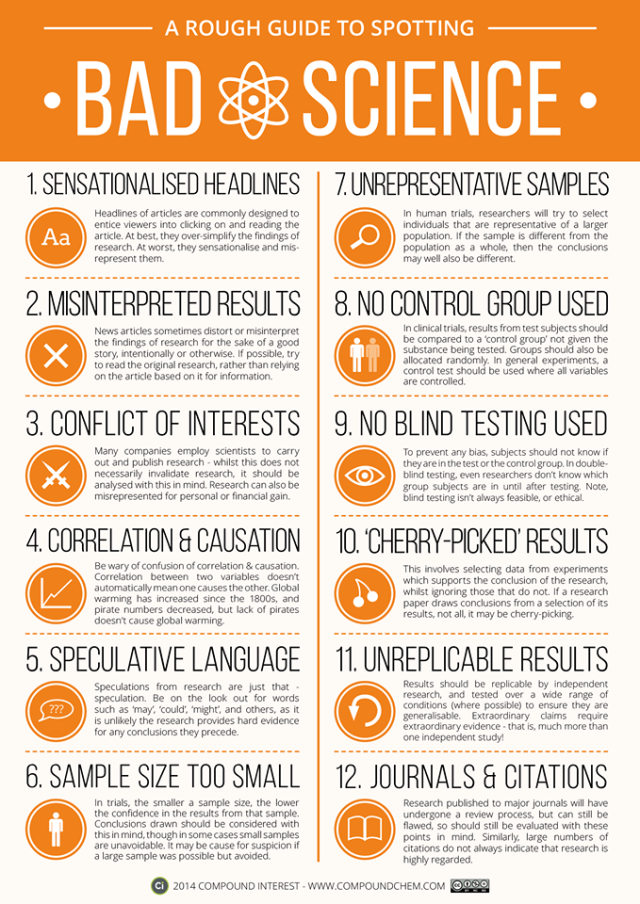
Found this on Facebook. Pretty much, Climate Science is the basis, the fundamental example, of how NOT to do science, of how to screw science up!
Standpoint, May 2014
This essay is based on the text of a speech given to the Institute for Sustainable Energy and the Environment at the University of Bath.
There is something odd about the global warming debate — or the climate change debate, as we are now expected to call it, since global warming has for the time being come to a halt.
I have never shied away from controversy, nor — for example, as Chancellor — worried about being unpopular if I believed that what I was saying and doing was in the public interest.
But I have never in my life experienced the extremes of personal hostility, vituperation and vilification which I — along with other dissenters, of course — have received for my views on global warming and global warming policies.
For example, according to the Climate Change Secretary, Ed Davey, the global warming dissenters are, without exception, “wilfully ignorant” and in the view of the Prince of Wales we are “headless chickens”. Not that “dissenter” is a term they use. We are regularly referred to as “climate change deniers”, a phrase deliberately designed to echo “Holocaust denier” — as if questioning present policies and forecasts of the future is equivalent to casting malign doubt about a historical fact.
The heir to the throne and the minister are senior public figures, who watch their language. The abuse I received after appearing on the BBC’s Today programme last February was far less restrained. Both the BBC and I received an orchestrated barrage of complaints to the effect that it was an outrage that I was allowed to discuss the issue on the programme at all. And even the Science and Technology Committee of the House of Commons shamefully joined the chorus of those who seek to suppress debate.
In fact, despite having written a thoroughly documented book about global warming more than five years ago, which happily became something of a bestseller, and having founded a think tank on the subject — the Global Warming Policy Foundation — the following year, and despite frequently being invited on Today to discuss economic issues, this was the first time I had ever been asked to discuss climate change. I strongly suspect it will also be the last time.
The BBC received a well-organised deluge of complaints — some of them, inevitably, from those with a vested interest in renewable energy — accusing me, among other things, of being a geriatric retired politician and not a climate scientist, and so wholly unqualified to discuss the issue.
Perhaps, in passing, I should address the frequent accusation from those who violently object to any challenge to any aspect of the prevailing climate change doctrine, that the Global Warming Policy Foundation’s non-disclosure of the names of our donors is proof that we are a thoroughly sinister organisation and a front for the fossil fuel industry.
As I have pointed out on a number of occasions, the Foundation’s Board of Trustees decided, from the outset, that it would neither solicit nor accept any money from the energy industry or from anyone with a significant interest in the energy industry. And to those who are not-regrettably-prepared to accept my word, I would point out that among our trustees are a bishop of the Church of England, a former private secretary to the Queen, and a former head of the Civil Service. Anyone who imagines that we are all engaged in a conspiracy to lie is clearly in an advanced stage of paranoia.
The reason why we do not reveal the names of our donors, who are private citizens of a philanthropic disposition, is in fact pretty obvious. Were we to do so, they, too, would be likely to be subject to the vilification and abuse I mentioned earlier. And that is something which, understandably, they can do without.
That said, I must admit I am strongly tempted to agree that, since I am not a climate scientist, I should from now on remain silent on the subject — on the clear understanding, of course, that everyone else plays by the same rules. No more statements by Ed Davey, or indeed any other politician, including Ed Milliband, Lord Deben and Al Gore. Nothing more from the Prince of Wales, or from Lord Stern. What bliss!
But of course this is not going to happen. Nor should it; for at bottom this is not a scientific issue. That is to say, the issue is not climate change but climate change alarmism, and the hugely damaging policies that are advocated, and in some cases put in place, in its name. And alarmism is a feature not of the physical world, which is what climate scientists study, but of human behaviour; the province, in other words, of economists, historians, sociologists, psychologists and — dare I say it — politicians.
And en passant, the problem for dissenting politicians, and indeed for dissenting climate scientists for that matter, who certainly exist, is that dissent can be career-threatening. The advantage of being geriatric is that my career is behind me: there is nothing left to threaten.
But to return: the climate changes all the time, in different and unpredictable (certainly unpredicted) ways, and indeed often in different ways in different parts of the world. It always has done and no doubt it always will. The issue is whether that is a cause for alarm — and not just moderate alarm. According to the alarmists it is the greatest threat facing humankind today: far worse than any of the manifold evils we see around the globe which stem from what Pope called “man’s inhumanity to man”.
Climate change alarmism is a belief system, and needs to be evaluated as such.
There is, indeed, an accepted scientific theory which I do not dispute and which, the alarmists claim, justifies their belief and their alarm.
This is the so-called greenhouse effect: the fact that the earth’s atmosphere contains so-called greenhouse gases (of which water vapour is overwhelmingly the most important, but carbon dioxide is another) which, in effect, trap some of the heat we receive from the sun and prevent it from bouncing back into space.
Without the greenhouse effect, the planet would be so cold as to be uninhabitable. But, by burning fossil fuels — coal, oil and gas — we are increasing the amount of carbon dioxide in the atmosphere and thus, other things being equal, increasing the earth’s temperature.
But four questions immediately arise, all of which need to be addressed, coolly and rationally.
First, other things being equal, how much can increased atmospheric CO2 be expected to warm the earth? (This is known to scientists as climate sensitivity, or sometimes the climate sensitivity of carbon.) This is highly uncertain, not least because clouds have an important role to play, and the science of clouds is little understood. Until recently, the majority opinion among climate scientists had been that clouds greatly amplify the basic greenhouse effect. But there is a significant minority, including some of the most eminent climate scientists, who strongly dispute this.
Second, are other things equal, anyway? We know that, over millennia, the temperature of the earth has varied a great deal, long before the arrival of fossil fuels. To take only the past thousand years, a thousand years ago we were benefiting from the so-called medieval warm period, when temperatures are thought to have been at least as warm, if not warmer, than they are today. And during the Baroque era we were grimly suffering the cold of the so-called Little Ice Age, when the Thames frequently froze in winter and substantial ice fairs were held on it, which have been immortalised in contemporary prints.
Third, even if the earth were to warm, so far from this necessarily being a cause for alarm, does it matter? It would, after all, be surprising if the planet were on a happy but precarious temperature knife-edge, from which any change in either direction would be a major disaster. In fact, we know that, if there were to be any future warming (and for the reasons already given, “if” is correct) there would be both benefits and what the economists call disbenefits. I shall discuss later where the balance might lie.
And fourth, to the extent that there is a problem, what should we, calmly and rationally, do about it?
It is probably best to take the first two questions together.
According to the temperature records kept by the UK Met Office (and other series are much the same), over the past 150 years (that is, from the very beginnings of the Industrial Revolution), mean global temperature has increased by a little under a degree centigrade — according to the Met Office, 0.8ºC. This has happened in fits and starts, which are not fully understood. To begin with, to the extent that anyone noticed it, it was seen as a welcome and natural recovery from the rigours of the Little Ice Age. But the great bulk of it — 0.5ºC out of the 0.8ºC — occurred during the last quarter of the 20th century. It was then that global warming alarmism was born.
But since then, and wholly contrary to the expectations of the overwhelming majority of climate scientists, who confidently predicted that global warming would not merely continue but would accelerate, given the unprecedented growth of global carbon emissions, as China’s coal-based economy has grown by leaps and bounds, there has been no further warming at all. To be precise, the latest report of the Intergovernmental Panel on Climate Change (IPCC), a deeply flawed body whose non-scientist chairman is a committed climate alarmist, reckons that global warming has latterly been occurring at the rate of — wait for it — 0.05ºC per decade, plus or minus 0.1ºC. Their figures, not mine. In other words, the observed rate of warming is less than the margin of error.
And that margin of error, it must be said, is implausibly small. After all, calculating mean global temperature from the records of weather stations and maritime observations around the world, of varying quality, is a pretty heroic task in the first place. Not to mention the fact that there is a considerable difference between daytime and night-time temperatures. In any event, to produce a figure accurate to hundredths of a degree is palpably absurd.
The lessons of the unpredicted 15-year global temperature standstill (or hiatus as the IPCC calls it) are clear. In the first place, the so-called Integrated Assessment Models which the climate science community uses to predict the global temperature increase which is likely to occur over the next 100 years are almost certainly mistaken, in that climate sensitivity is almost certainly significantly less than they once thought, and thus the models exaggerate the likely temperature rise over the next hundred years.
But the need for a rethink does not stop there. As the noted climate scientist Professor Judith Curry, chair of the School of Earth and Atmospheric Sciences at the Georgia Institute of Technology, recently observed in written testimony to the US Senate:
Anthropogenic global warming is a proposed theory whose basic mechnism is well understood, but whose magnitude is highly uncertain. The growing evidence that climate models are too sensitive to CO2 has implications for the attribution of late-20th-century warming and projections of 21st-century climate. If the recent warming hiatus is caused by natural variability, then this raises the question as to what extent the warming between 1975 and 2000 can also be explained by natural climate variability.
It is true that most members of the climate science establishment are reluctant to accept this, and argue that the missing heat has for the time being gone into the (very cold) ocean depths, only to be released later. This is, however, highly conjectural. Assessing the mean global temperature of the ocean depths is — unsurprisingly — even less reliable, by a long way, than the surface temperature record. And in any event most scientists reckon that it will take thousands of years for this “missing heat” to be released to the surface.
In short, the CO2 effect on the earth’s temperature is probably less than was previously thought, and other things — that is, natural variability and possibly solar influences — are relatively more significant than has hitherto been assumed.
But let us assume that the global temperature hiatus does, at some point, come to an end, and a modest degree of global warming resumes. How much does this matter?
The answer must be that it matters very little. There are plainly both advantages and disadvantages from a warmer temperature, and these will vary from region to region depending to some extent on the existing temperature in the region concerned. And it is helpful in this context that the climate scientists believe that the global warming they expect from increased atmospheric CO2 will be greatest in the cold polar regions and least in the warm tropical regions, and will be greater at night than in the day, and greater in winter than in summer. Be that as it may, studies have clearly shown that, overall, the warming that the climate models are now predicting for most of this century (I referred to these models earlier, and will come back to them later) is likely to do more good than harm.
This is particularly true in the case of human health, a rather important dimension of wellbeing. It is no accident that, if you look at migration for climate reasons in the world today, it is far easier to find those who choose to move to a warmer climate than those who choose to move to a colder climate. And it is well documented that excessive cold causes far more illnesses and deaths around the world than excessive warmth does.
The latest (2013-14) IPCC Assessment Report does its best to ramp up the alarmism in a desperate, and almost certainly vain, attempt to scare the governments of the world into concluding a binding global decarbonisation agreement at the crunch UN climate conference due to be held in Paris next year. Yet a careful reading of the report shows that the evidence to justify the alarm simply isn’t there.
On health, for example, it lamely concludes that “the world-wide burden of human ill-health from climate change is relatively small compared with effects of other stressors and is not well quantified” — adding that so far as tropical diseases (which preoccupied earlier IPCC reports) are concerned, “Concerns over large increases in vector-borne diseases such as dengue as a result of rising temperatures are unfounded and unsupported by the scientific literature.”
Moreover, the IPCC conspicuously fails to take proper account of what is almost certainly far and away the most important dimension of the health issue. And that is, quite simply, that the biggest health risk in the world today, particularly of course in the developing world, is poverty.
We use fossil fuels not because we love them, or because we are in thrall to the multinational oil companies, but simply because they provide far and away the cheapest source of large-scale energy, and will continue to do so, no doubt not forever, but for the foreseeable future. And using the cheapest source of energy means achieving the fastest practicable rate of economic development, and thus the fastest elimination of poverty in the developing world. In a nutshell, and on balance, global warming is good for you.
The IPCC does its best to contest this by claiming that warming is bad for food production: in its own words, “negative impacts of climate change on crop yields have been more common than positive impacts”. But not only does it fail to acknowledge that the main negative impact on crop yields has been not climate change but climate change policy, as farmland has been turned over to the production of biofuels rather than food crops. It also understates the net benefit for food production from the warming it expects to occur, in two distinct ways.
In the first place, it explicitly takes no account of any future developments in bio-engineering and genetic modification, which are likely to enable farmers to plant drought-resistant crops designed to thrive at warmer temperatures, should these occur. Second, and equally important, it takes no account whatever of another effect of increased atmospheric carbon dioxide, and one which is more certain and better documented than the warming effect. Namely, the stimulus to plant growth: what the scientists call the “fertilisation effect”. Over the past 30 years or so, the earth has become observably greener, and this has even affected most parts of the Sahel. It is generally agreed that a major contributor to this has been the growth in atmospheric CO2 from the burning of fossil fuels.
This should not come as a surprise. Biologists have always known that carbon dioxide is essential for plant growth, and of course without plants there would be very little animal life, and no human life, on the planet. The climate alarmists have done their best to obscure this basic scientific truth by insisting on describing carbon emissions as “pollution” — which, whether or not they warm the planet they most certainly are not — and deliberately mislabelling forms of energy which produce these emissions as “dirty”.
In the same way, they like to label renewable energy as “clean”, seemingly oblivious to the fact that by far the largest source of renewable energy in the world today is biomass, and in particular the burning of dung, which is the major source of indoor pollution in the developing world and is reckoned to cause at least a million deaths a year.
Compared with the likely benefits to both human health and food production from CO2-induced global warming, the possible disadvantages from, say, a slight increase in either the frequency or the intensity of extreme weather events is very small beer. It is, in fact, still uncertain whether there is any impact on extreme weather events as a result of warming (increased carbon emissions, which have certainly occurred, cannot on their own affect the weather: it is only warming which might). The unusual persistence of heavy rainfall over the UK during February, which led to considerable flooding, is believed by the scientists to have been caused by the wayward behaviour of the jetstream; and there is no credible scientific theory that links this behaviour to the fact that the earth’s surface is some 0.8ºC warmer than it was 150 years ago.
That has not stopped some climate scientists, such as the publicity-hungry chief scientist at the UK Met Office, Dame Julia Slingo, from telling the media that it is likely that “climate change” (by which they mean warming) is partly to blame. Usually, however, the climate scientists take refuge in the weasel words that any topical extreme weather event, whatever the extreme weather may be, whether the recent UK rainfall or last year’s typhoon in the Philippines, “is consistent with what we would expect from climate change”.
So what? It is also consistent with the theory that it is a punishment from the Almighty for our sins (the prevailing explanation of extreme weather events throughout most of human history). But that does not mean that there is the slightest truth in it. Indeed, it would be helpful if the climate scientists would tell us what weather pattern would not be consistent with the current climate orthodoxy. If they cannot do so, then we would do well to recall the important insight of Karl Popper — that any theory that is incapable of falsification cannot be considered scientific.
Moreover, as the latest IPCC report makes clear, careful studies have shown that, while extreme weather events such as floods, droughts and tropical storms, have always occurred, overall there has been no increase in either their frequency or their severity. That may, of course, be because there has so far been very little global warming indeed: the fear is the possible consequences of what is projected to lie ahead of us. And even in climate science, cause has to precede effect: it is impossible for future warming to affect events in the present.
Of course, it doesn’t seem like that. Partly because of sensitivity to the climate change doctrine, and partly simply as a result of the explosion of global communications, we are far more aware of extreme weather events around the world than we used to be. And it is perfectly true that many more people are affected by extreme weather events than ever before. But that is simply because of the great growth in world population: there are many more people around. It is also true, as the insurance companies like to point out, that there has been a great increase in the damage caused by extreme weather events. But that is simply because, just as there are more people around, so there is more property around to be damaged.
The fact remains that the most careful empirical studies show that, so far at least, there has been no perceptible increase, globally, in either the number or the severity of extreme weather events. And, as a happy coda, these studies also show that, thanks to scientific and material progress, there has been a massive reduction, worldwide, in deaths from extreme weather events.
It is relevant to note at this point that there is an important distinction between science and scientists. I have the greatest respect for science, whose development has transformed the world for the better. But scientists are no better and no worse than anyone else. There are good scientists and there are bad scientists. Many scientists are outstanding people working long hours to produce important results. They must be frustrated that political activists then turn those results into propaganda. Yet they dare not speak out for fear of losing their funding.
Indeed, a case can be made for the proposition that today’s climate science establishment is betraying science itself. During the period justly known as the Enlightenment, science achieved the breakthroughs which have so benefited us all by rejecting the claims of authority — which at that time largely meant the authority of the church — and adopting an overarching scepticism, insisting that our understanding of the external world must be based exclusively on observation and empirical investigation. Yet today all too many climate scientists, in particular in the UK, come close to claiming that they need to be respected as the voice of authority on the subject — the very claim that was once the province of the church.
If I have been critical of the latest IPCC report, let me add that it is many respects a significant improvement on its predecessors. It explicitly concedes, for example, that “climate change may be beneficial for moderate climate change” — and moderate climate change is all that it expects to see for the rest of this century — and that “Estimates for the aggregate economic impact of climate change are relatively small . . . For most economic sectors, the impact of climate change will be small relative to the impacts of other drivers.” So much for the unique existential planetary threat.
What it conspicuously fails to do, however, is to make any assessment of the unequivocally adverse economic impact of the decarbonisation policy it continues to advocate, which (if implemented) would be far worse than any adverse impact from global warming.
Even here, however, the new report concedes for the first time that the most important response to the threat of climate change must be how mankind has always responded, throughout the ages: namely, intelligent adaptation. Indeed, the “impacts” section of the latest report is explicitly entitled “Impacts, Adaptation and Vulnerability”. In previous IPCC reports adaptation was scarcely referred to at all, and then only dismissively.
This leads directly to the last of my four questions. To the extent that there is a problem, what should we, calmly and rationally, do about it?
The answer is — or should be — a no-brainer: adapt. I mentioned earlier that a resumption of global warming, should it occur (and of course it might) would bring both benefits and costs. The sensible course is clearly to pocket the benefits while seeking to minimise the costs. And that is all the more so since the costs, should they arise, will not be anything new: they will merely be the slight exacerbation of problems that have always afflicted mankind.
Like the weather, for example — whether we are talking about rainfall and flooding (or droughts for that matter) in the UK, or hurricanes and typhoons in the tropics. The weather has always varied, and it always will. There have always been extremes, and there always will be. That being so, it clearly makes sense to make ourselves more resilient and robust in the face of extreme weather events, whether or not there is a slight increase in the frequency or severity of such events.
This means measures such as flood defences and sea defences, together with water storage to minimise the adverse effects of drought, in the UK; and better storm warnings, the building of levees, and more robust construction in the tropics.
The same is equally true in the field of health. Tropical diseases — and malaria is frequently (if inaccurately) mentioned in this context — are a mortal menace in much of the developing world. It clearly makes sense to seek to eradicate these diseases — and in the case of malaria (which used to be endemic in Europe) we know perfectly well how to do it — whether or not warming might lead to an increase in the incidence of such diseases.
And the same applies to all the other possible adverse consequences of global warming. Moreover, this makes sense whatever the cause of any future warming, whether it is man-made or natural. Happily, too, as economies grow and technology develops, our ability to adapt successfully to any problems which warming may bring steadily increases.
Yet, astonishingly, this is not the course on which our leaders in the Western world generally, and the UK in particular, have embarked. They have decided that what we must do, at inordinate cost, is prevent the possibility (as they see it) of any further warming by abandoning the use of fossil fuels.
Even if this were attainable — a big “if”, which I will discuss later — there is no way in which this could be remotely cost-effective. The cost to the world economy of moving from relatively cheap and reliable energy to much more expensive and much less reliable forms of energy-the so-called renewables, on which we had to rely before we were liberated by the fossil-fuel-driven Industrial Revolution — far exceeds any conceivable benefit.
It is true that the notorious Stern Review, widely promoted by a British prime minister with something of a messiah complex and an undoubted talent for PR, sought to demonstrate the reverse, and has become a bible for the economically illiterate.
But Stern’s dodgy economics have been comprehensively demolished by the most distinguished economists on both sides of the Atlantic. So much so, in fact, that Lord Stern himself has been driven to complain that it is all the fault of the integrated assessment models, which — and I quote him — “come close to assuming directly that the impacts and costs will be modest, and close to excluding the possibility of catastrophic outcomes”.
I suggested earlier that these elaborate models are scarcely worth the computer code they are written in, and certainly the divergence between their predictions and empirical observations has become ever wider. Nevertheless, it is a bit rich for Stern now to complain about them, when they remain the gospel of the climate science establishment in general and of the IPCC in particular.
But Stern is right in this sense: unless you assume that we may be heading for a CO2-induced planetary catastrophe, for which there is no scientific basis, a policy of decarbonisation cannot possibly make sense.
A similar, if slightly more sophisticated, case for current policies has been put forward by a distinctly better economist than Stern, Harvard’s Professor Martin Weitzman, in what he likes to call his “dismal theorem”. After demolishing Stern’s cost-benefit analysis, he concludes that Stern is in fact right but for the wrong reasons. According to Weitzman, this is an area where cost-benefit analysis does not apply. Climate science is highly uncertain, and a catastrophic outcome which might even threaten the continuation of human life on this planet, cannot be entirely ruled out however unlikely it may be. It is therefore incumbent on us to do whatever we can, regardless of cost, to prevent this.
This is an extreme case of what is usually termed “the precautionary principle”. I have often thought that the most important use of the precautionary principle is against the precautionary principle itself, since it can all too readily lead to absurd policy prescriptions. In this case, a moment’s reflection would remind us that there are a number of possible catastrophes, many of them less unlikely than that caused by runaway warming, and all of them capable of occurring considerably sooner than the catastrophe feared by Weitzman; and there is no way we can afford the cost of unlimited spending to reduce the likelihood of all of them.
In particular, there is the risk that the earth may enter a new ice age. This was the fear expressed by the well-known astronomer Sir Fred Hoyle in his book Ice: The Ultimate Human Catastrophe, and there are several climate scientists today, particularly in Russia, concerned about this. It would be difficult, to say the least, to devote unlimited sums to both cooling and warming the planet at the same time.
At the end of the day, this comes down to judgment. Weitzman is clearly entitled to his; but I doubt if it is widely shared; and if the public were aware that it was on this slender basis that the entire case for current policies rested I would be surprised if they would have much support. Rightly so.
But there is another problem. Unlike intelligent adaptation to any warming that might occur, which in any case will mean different things in different regions of the world, and which requires no global agreement, decarbonisation can make no sense whatever in the absence of a global agreement. And there is no chance of any meaningful agreement being concluded. The very limited Kyoto accord of 1997 has come to an end; and although there is the declared intention of concluding a much more ambitious successor, with a UN-sponsored conference in Paris next year at which it is planned that this should happen, nothing of any significance is remotely likely.
And the reason is clear. For the developing world, the overriding priority is economic growth: improving the living standards of the people, which means among other things making full use of the cheapest available source of energy, fossil fuels.
The position of China, the largest of all the developing countries and the world’s biggest (and fastest growing) emitter of carbon dioxide, is crucial. For very good reasons, there is no way that China is going to accept a binding limitation on its emissions. China has an overwhelmingly coal-based energy sector — indeed it has been building new coal-fired power stations at the rate of one a week — and although it is now rapidly developing its substantial indigenous shale gas resources (another fossil fuel), its renewable energy industry, both wind and solar, is essentially for export to the developed world.
It is true that China is planning to reduce its so-called “carbon intensity” quite substantially by 2020. But there is a world of difference between the sensible objective of using fossil fuels more efficiently, which is what this means, and the foolish policy of abandoning fossil fuels, which it has no intention of doing. China’s total carbon emissions are projected to carry on rising — and rising substantially — as its economy grows.
This puts into perspective the UK’s commitment, under the Climate Change Act, to near-total decarbonisation. The UK accounts for less than 2 per cent of global emissions: indeed, its total emissions are less than the annual increase in China’s. Never mind, says Lord Deben, chairman of the government-appointed Climate Change Committee, we are in the business of setting an example to the world.
No doubt this sort of thing goes down well at meetings of the faithful, and enables him and them to feel good. But there is little point in setting an example, at great cost, if no one is going to follow it; and around the world governments are now gradually watering down or even abandoning their decarbonisation ambitions. Indeed, it is even worse than that. Since the UK has abandoned the idea of having an energy policy in favour of having a decarbonisation policy, there is a growing risk that, before very long, our generating capacity will be inadequate to meet our energy needs. If so, we shall be setting an example all right: an example of what not to do.
So how is it that much of the Western world, and this country in particular, has succumbed to the self-harming collective madness that is climate change orthodoxy? It is difficult to escape the conclusion that climate change orthodoxy has in effect become a substitute religion, attended by all the intolerant zealotry that has so often marred religion in the past, and in some places still does so today.
Throughout the Western world, the two creeds that used to vie for popular support, Christianity and the atheistic belief system of Communism, are each clearly in decline. Yet people still feel the need both for the comfort and for the transcendent values that religion can provide. It is the quasi-religion of green alarmism and global salvationism, of which the climate change dogma is the prime example, which has filled the vacuum, with reasoned questioning of its mantras regarded as little short of sacrilege.
The parallel goes deeper. As I mentioned earlier, throughout the ages the weather has been an important part of the religious narrative. In primitive societies it was customary for extreme weather events to be explained as punishment from the gods for the sins of the people; and there is no shortage of this theme in the Bible, either — particularly, but not exclusively, in the Old Testament. The contemporary version of this is that, as a result of heedless industrialisation within a framework of materialistic capitalism, we have directly (albeit not deliberately) perverted the weather, and will duly receive our comeuppance.
There is another aspect, too, which may account for the appeal of this so-called explanation. Throughout the ages, something deep in man’s psyche has made him receptive to apocalyptic warnings that the end of the world is nigh. And almost all of us, whether we like it or not, are imbued with feelings of guilt and a sense of sin. How much less uncomfortable it is, how much more convenient, to divert attention away from our individual sins and reasons to feel guilty, and to sublimate them in collective guilt and collective sin.
Why does this matter? It matters, and matters a great deal, on two quite separate grounds. The first is that it has gone a long way towards ushering in a new age of unreason. It is a cruel irony that, while it was science which, more than anything else, was able by its great achievements, to establish the age of reason, it is all too many climate scientists and their hangers-on who have become the high priests of a new age of unreason.
But what moves me most is that the policies invoked in its name are grossly immoral. We have, in the UK, devised the most blatant transfer of wealth from the poor to the rich — and I am slightly surprised that it is so strongly supported by those who consider themselves to be the tribunes of the people and politically on the Left. I refer to our system of heavily subsidising wealthy landlords to have wind farms on their land, so that the poor can be supplied with one of the most expensive forms of electricity known to man.
This is also, of course, inflicting increasing damage on the British economy, to no useful purpose whatever. More serious morally, because it is on a much larger scale, is the perverse intergenerational transfer of wealth implied by orthodox climate change policies. It is not much in dispute that future generations — those yet unborn — will be far wealthier than those — ourselves, our children, and for many of us our grandchildren — alive today. This is the inevitable consequence of the projected economic growth which, on a “business as usual” basis, drives the increased carbon emissions which in turn determine the projected future warming. It is surely perverse that those alive today should be told that they must impoverish themselves, by abandoning what is far and away the cheapest source of energy, in order to ensure that those yet to be born, who will in any case be signally better off than they are, will be better off still, by escaping the disadvantages of any warming that might occur.
However, the greatest immorality of all concerns the masses in the developing world. It is excellent that, in so many parts of the developing world — the so-called emerging economies — economic growth is now firmly on the march, as they belatedly put in place the sort of economic policy framework that brought prosperity to the Western world. Inevitably, they already account for, and will increasingly account for, the lion’s share of global carbon emissions.
But, despite their success, there are still hundreds of millions of people in these countries in dire poverty, suffering all the ills that this brings, in terms of malnutrition, preventable disease, and premature death. Asking these countries to abandon the cheapest available sources of energy is, at the very least, asking them to delay the conquest of malnutrition, to perpetuate the incidence of preventable disease, and to increase the numbers of premature deaths.
Global warming orthodoxy is not merely irrational. It is wicked.
Demonstrating daily that diversity is not strength!
All Things Related To The Family
defrock.org's principal concern is the environmental and human damage of industrial wind turbines on rural communities
The truth shall set you free but first it will make you miserable
Breaking Political News, Election Results, Commentary and Analysis
Canadian Common Sense - A Unique Perspective from Grassroots Canadians
a wind energy debacle
The Law and its Place in Society
Edgar County Watchdogs
My thoughts...my life...my own way.
Proposed Wind Project on Rocky Ridge
by Steve McIntyre
Trying to stop climate change is like trying to stop the seasons from changing. We don't control the climate; IT controls US.
Wandering Words
WIND WARRIOR
Global Warming/Climate Change is not a problem

 "Mothers Against Wind Turbines™" Phoenix Rising...