More Proof that Climate Change Hysteria is a HOAX!

Realities Of Climate Change, Politics And Public Knowledge.

Guest Opinion: Dr. Tim Ball

The minute a small cabal hijacked climate for a political agenda it determined that setting the record straight required political answers. Naomi Klein admitted it wasn’t about the science directly. That fighting climate change was necessary to combat capitalism. This was the objective all along and expressed in 1993 when Senator Wirth admitted,

“We’ve got to ride the global warming issue. Even if the theory of global warming is wrong, we will be doing the right thing …” 


The “right thing” is achieving Maurice Strong’s objective of getting rid of the industrialized nations.

Too many skeptics continue to think that scientific points are going to change the public understanding. Most of the public don’t understand, but, more important, don’t want to understand. I doubt the 75% who failed the Yale Education Climate Change test lost any sleep. Polls, such as those of the Pew Center and overall analysis of trends indicate global warming or climate change are not a concern for most people. I suspect they don’t care because they don’t understand or want to understand. They also know how about the unreliability of weather forecasts, and that is all the science they need. One Pew pollconfirms that the public believes global warming is a political issue. Because of this, politicians and environmentalists with political agendas continue to control the story.James Delingpole puts the amount of money wasted because of this control at $4 billion a day.

Because science is ideally amoral and apolitical most scientists avoid politics, which results in a failure to provide necessary information to open-minded politicians and media. They need this to counter the pseudo-science of the IPCC proponents. They knew what to do from the start. Stephen Schneider set it out succinctly in Discover magazine a year after Hansen appeared before Wirth’s Senate committee and put the entire issue into the political realm.

On the one hand we are ethically bound to the scientific method, in effect promising to tell the truth, the whole truth, and nothing but& which means that we must include all the doubts, caveats, ifs and buts. On the other hand, we are not just scientists, but human beings as well. And like most people, we’d like to see the world a better place, which in this context translates into our working to reduce the risk of potentially disastrous climate change. To do that we have to get some broad-based support, to capture the public’s imagination. That, of course, entails getting loads of media coverage. So we have to offer up scary scenarios, make simplified, dramatic statements, and make little mention of any doubts we might have. This double ethical bind which we frequently find ourselves in cannot be solved by any formula. Each of us has to decide what the right balance is between being effective and being honest. I hope that means being both.

If this sounds familiar today, it is because it summarizes the words in the recent Encyclical of Pope Francis. Schneider is wrong. There is no decision about right and wrong, which is why the Pope’s connection with climate deceivers contradicts his central role as upholder of truth and is so deeply troubling. It is the rationale Naomi Klein and other use, which is why they brought her on board. It is basic Alinsky; the end justifies the means.

I spoke about the need to counter the false science from a political and social perspective, in my presentation at the First Heartland Conference in New York ten years ago. I pointed out that Gore’s movie was a brilliant piece of propaganda. A view supported by Justice Burton the UK judge who ruled on its use in the classroom.

It is now common ground that it is not simply a science film – although it is clear that it is based substantially on scientific research and opinion – but that it is a political film, albeit of course not party political.

Justice Burton recommended teachers provide balance by also showing The Great Global Warming Swindle. I proudly advised producer Martin Durkin and appeared in the movie. I also warned him that the US media would not run it, as proved the case, although it is now generally available. The problem is that only a small percentage of people watch documentaries on television. Gore bypassed that by using Hollywood to make the movie but also to market it through all their traditional venues. They knew how to achieve Schneider’s goal of getting “broad-based support” and “capturing the public’s imagination.”

Skeptics have, for a variety of reasons, avoided the “Hollywood” approach. It is a major error. We need to realize that tactics are tactics, and that the adage that you fight fire with fire is true. The first thing to do in any strategy is define the problem and the second is to determine the target and thirdly use tactics appropriate to the situation.

The problem is a failure to explain climate science and its abuse in a way a majority can understand. The following points are gleaned from my experience with media interviews, school visits, questions after a presentation, and questions via email. They represent the issues I confront every day. They are the real challenges anybody trying to offset the misinformation about climate and climate change must consider. They are the political dynamics that influence how you help people understand and deal with science issues.

1. People can’t believe a small group of people could mislead the world. Nowadays, the explosion of conspiracy theories because of the Internet, make the idea even more remote and unpalatable. They need to heed world-renowned anthropologist Margaret Mead’s observation.

“Never doubt that a small group of thoughtful, committed citizens can change the world. Indeed, it is the only thing that ever has.”

This comment implies that “thoughtful” and “committed” are pursuing positive changes. History indicates they are never positive as power centralizes and corrupts and people lose freedoms.

2. People can’t believe scientists would distort, manipulate, or do anything other than proper science. They accept the view that science and scientists are amoral and apolitical. As Mary McCarthy said,

“In science, all facts, no matter how trivial or banal, enjoy democratic equality.”

This is reinforced by the practice of most scientists to avoid politics. The public assumes the silence is a tacit agreement with what is in the media about global warming.

3. It is mostly the politicians who talk about the 97% manufactured consensus. The public asks as happened to me twice on radio this week,

“How come thousands of scientists believe there is global warming and climate change?”

The simple answer is, very few are familiar with the science. They, like most of the public, assume other scientists would not distort, manipulate, or do anything other than proper science. When scientists find out, they are shocked as exemplified in Klaus-Eckert Pulscomment.

Ten years ago I simply parroted what the IPCC told us. One day I started checking the facts and data—first I started with a sense of doubt but then I became outraged when I discovered that much of

what the IPCC and the media were telling us was sheer nonsense and was not even supported by any scientific facts and measurements. To this day I still feel shame that as a scientist I made presentations of their science without first checking it.

IPCC proponents promoted and perpetuated this deception through science societies as I explained.

A particularly egregious exploitation was carried out through science societies and professional scientific groups. They were given the climate science of the IPCC and urged to support it on behalf of their members. Certainly a few were part of the exploitation, but a majority, including most of the members simply assumed that the rigorous methods of research and publication in their science were used. Lord May of the UK Royal Society was influential in the manipulation of public perception through national scientific societies. They persuaded other national societies to become involved by making public statements. The Russian Academy of Science, under its President Yuri Israel, refused to participate.

4. To paraphrase Winston Churchill, “Never in the history of mankind have so many been deceived by so few, with so few facts.” The more you try to counteract what the public knows using scientific facts, the more you lose the battle. If you use scientific facts you must couch them in terms and analogies everybody understands. I know this from 25 years of teaching a compulsory science credit course for Arts students. The abilities and techniques I developed there of explaining climate in ways the public understand made me a double threat to IPCC proponents because I was also qualified.

5. Most people don’t know what is “normal” or “natural” in nature. This made it easy to imply or infer that they were abnormal or unnatural. It works well with the modern practice of “sound bites” in which information is presented without context. Climate change is innately historical and demands context. There are two basic options to counter the problem. Publish the context for each story as soon as possible after it appears. Publish stories of true facts that are outside of people’s comprehension using analogies. For example, alarmists add human scale to stories with analogies. One year they reported Arctic sea ice melted more by an area the size of Texas than the previous year. Texas is 695,662 km2, which is approximately 4.6% of the total Arctic ice of 15 million km2. The change is within the natural annual variability, but Texas is big so it must be a problem.

6. We tell people CO2 isn’t causing the warming but fail to explain why. This is for people who don’t know what a greenhouse gas is or that water vapor is far more important. (Figure 1)

clip_image002

Figure 1 Source: Yale Education Climate Change Test.

We then fail to explain what is the most likely cause. As politicians learn to their peril, you can’t just be against something.

Today they push the global warming claims with increasing deception because the 21stParis Conference of the Parties on climate is scheduled for 7-8 December 2015. They consider it imperative to pass a Kyoto type set of policies. Ironically, one thing that diminishes their chances is continued economic decline, the very objective of Wirth, Klein and the gang. It is ironic because politicians will reset their priorities to promote development, growth, and job creation because they don’t want angry voters. What they will get is angry global warming activists with a political agenda.

The Irony of Using Wind Turbines to Fight `Global Warming`….

Wind farms can cause climate change, finds new study

Wind farms can cause climate change, according to new research, that shows for the first time the new technology is already pushing up temperatures.

Wind farms can cause a rise in temperature, found a study in Nature.

Wind farms can cause a rise in temperature, found a study in Nature. Photo: Alamy

Usually at night the air closer to the ground becomes colder when the sun goes down and the earth cools.

But on huge wind farms the motion of the turbines mixes the air higher in the atmosphere that is warmer, pushing up the overall temperature.

Satellite data over a large area in Texas, that is now covered by four of the world’s largest wind farms, found that over a decade the local temperature went up by almost 1C as more turbines are built.

This could have long term effects on wildlife living in the immediate areas of larger wind farms.

It could also affect regional weather patterns as warmer areas affect the formation of cloud and even wind speeds.

It is reported China is now erecting 36 wind turbines every day and Texas is the largest producer of wind power in the US.

Liming Zhou, Research Associate Professor at the Department of Atmospheric and Environmental Sciences at the University of New York, who led the study, said further research is needed into the affect of the new technology on the wider environment.

“Wind energy is among the world’s fastest growing sources of energy. The US wind industry has experienced a remarkably rapid expansion of capacity in recent years,” he said. “While converting wind’s kinetic energy into electricity, wind turbines modify surface-atmosphere exchanges and transfer of energy, momentum, mass and moisture within the atmosphere. These changes, if spatially large enough, might have noticeable impacts on local to regional weather and climate.”

The study, published in Nature, found a “significant warming trend” of up to 0.72C (1.37F) per decade, particularly at night-time, over wind farms relative to near-by non-wind-farm regions.

The team studied satellite data showing land surface temperature in west-central Texas.

“The spatial pattern of the warming resembles the geographic distribution of wind turbines and the year-to-year land surface temperature over wind farms shows a persistent upward trend from 2003 to 2011, consistent with the increasing number of operational wind turbines with time,” said Prof Zhou.

However Prof Zhou pointed out the most extreme changes were just at night and the overall changes may be smaller.

Also, it is much smaller than the estimated change caused by other factors such as man made global warming.

“Overall, the warming effect reported in this study is local and is small compared to the strong background year-to-year land surface temperature changes,” he added.

The study read: “Despite debates regarding the possible impacts of wind farms on regional to global scale weather and climate, modelling studies agree that they can significantly affect local scale meteorology.”

Professor Steven Sherwood, co-Director of the Climate Change Research Centre at the University of New South Wales, said the research was ‘pretty solid’.

“This makes sense, since at night the ground becomes much cooler than the air just a few hundred meters above the surface, and the wind farms generate gentle turbulence near the ground that causes these to mix together, thus the ground doesn’t get quite as cool. This same strategy is commonly used by fruit growers (who fly helicopters over the orchards rather than windmills) to combat early morning frosts.

Stop the Subsidies for Novelty “Wind Energy”! It is a waste!

Wind Industry Pockets Lion’s Share of Subsidies for Commercially Generated Power

Subsidies_for_electricity_production_2013-14 (1)

****

STT followers are painfully aware that the wind industry exists – and ONLY exists – to wallow in an endless stream of subsidies filched from power consumers and/or taxpayers:

The Wind Industry: Always and Everywhere the Result of Massive & Endless Subsidies (Part 1)

The Wind Industry: Always and Everywhere the Result of Massive & Endless Subsidies (Part 2)

One of the sillier claims made by wind-worshippers is that to focus on the massive pile of cash added to power bills and directed to these things, is to overlook what are said to be ‘colossal subsidies’ paid to BIG COAL and BIG GAS.

However, like most eco-fascist fictions, scratch the surface of their fossil-fuel subsidy myth, and you’ll find that there’s nary a tad of subsidy directed to electricity producers using coal or gas (see above).

True it is that solar generation is well soaked in subsidy (see above), but that’s to limit the analysis to the cost per MWh delivered to the grid.

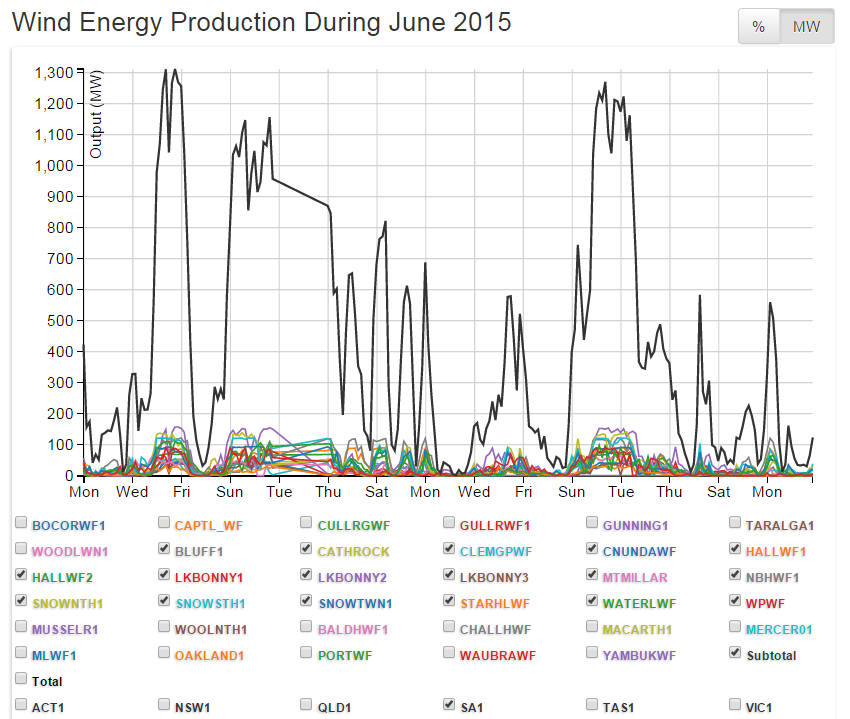
Wind power – provided the subsidies keep flowing – is (occasionally) delivered in commercial quantities. Wind farms connected to the Eastern Grid sometimes deliver around 75% of their 3,669MW installed capacity – at least for a few short hours – until the whole outfit completely downs tools, and produces a tiny fraction of that, or even next-to-nothing, for hours; and even days at a time:

The Wind Power Fraud (in pictures): Part 2 – The Whole Eastern Grid Debacle

June 2015 National

Solar, however, is, in the main, generated on the rooftops of domestic dwellings; and barely adds 1% to total power production in Australia – there is very little ‘large-scale’ solar in Australia, as yet.

So, while the subsidy per MWh for solar is colossal, its impact on retail power prices pales by comparison to what is pocketed by the wind industry. Here’s a little wrap-up from the Minerals Council on a report put together by Principal Economics.

The high cost of renewable energy subsidies
Minerals Council
Brendan Pearson
7 August 2015

A report, undertaken by economic consultancy Principal Economics, has found that Australia’s renewable energy sector received subsidies (including the Renewable Energy Target, feed in tariffs and other green policy costs) worth $2.8 billion in 2013-14.  This dwarfed the public support for research and demonstration projects for low emissions coal technologies being conducted by the CSIRO and other research bodies (and matched by the coal industry).

On an output basis, these renewable subsidies translated into almost $412 per megawatt hour (MWh) for solar technologies, $42 per MWh for wind and $18 per MWh for all other renewable sources (including hydro).

By comparison coal fired power received less than $1 per MWh and natural gas less than 1 cent per MWh delivered.

In 2013/14, these renewable energy subsidies added between 3 to 9 per cent to the average household bill and up to 20 per cent for some industrial users.

The report uses the World Trade Organisation’s definition of subsidies, an approach similar to the method used by the Productivity Commission in its annual Trade and Assistance Review.

At face value, increasing Australia’s share of renewable energy is a laudable goal.  The minerals industry is a user of renewable energy and hopes that it will provide a solution to provision of competitively priced energy, especially in remote areas.  And renewable energy depends on the minerals sector – after all, every off shore wind turbine contains 250 tonnes of metallurgical coal.

But renewable energy must win increased market share on its own merits, not be guaranteed it by expensive mandatory targets and feed-in tariffs, the cost of which is simply borne by householders and industrial users. For household consumers, the burden falls heaviest on low income households.  For industrial users, the burden shackles export and import-competing businesses in many sectors.
Minerals Council

You can read the report in full here: Electricity production subsidies in Australia.

Here’s an important little snippet from the report.

Implications for electricity customers
Principal Economics
2015

While the cost of public support financed through government budgets is recovered from taxpayers, the subsidies created by the RET and FiT schemes are levied on electricity customers.

Given the very large sums involved, the impacts on electricity bills for households and businesses have been substantial.

Estimates of the impacts of the RET and FiT schemes on customer bills vary. According to the Australian Energy Market Commission (AEMC, 2014), an average household paid around $109 per annum in South East Queensland, $107 in New South Wales and $155 in South Australia for the combined LRET, SRES and FiT components of household bills in 2013-14. These payments are estimated by the AEMC to make up between 3 and 9 per cent of annual household bills. In contrast, the Independent Pricing and Regulatory Tribunal (IPART, 2013) estimated the combined costs of the RET and FiT schemes for a typical residential customer in New South Wales at around $145 in 2013-14.

ROAM/Synergies Consulting (2014) considered the impacts of renewable schemes on electricity bills of households and businesses, and concluded that the RET accounts for a significant component of bills (Chart 1). ROAM/Synergies estimate that during 2013-14, the RET comprised 3 per cent of the typical household or small business electricity bill and 9.6 per cent for a large business that consumes more than 5 GWh of electricity per annum and is not eligible for partial exemption certificates. They conclude that, as is the case for other renewable schemes, the LRET and SRES contribute a relatively higher percentage of costs for large businesses.

According to ROAM/Synergies (2014), state-based energy policies – of which FiT schemes are by far the most costly – impose comparable or higher costs than the LRET and SRES combined. They estimate that these state-based schemes account for up to 12 per cent of the electricity bill for a large business.

***

bills

***

Overall, ROAM/Synergies highlight the proliferation of green energy policies over the last decade at both the federal and state level and the significant cumulative impacts of these policies:

  • For residential and small business customers, green energy policies (excluding a carbon price) represents 5 per cent of electricity bills
  • For large business customers, green energy policies represent around 20 per cent of electricity bills (with the RET up to 9.6 per cent and state-based schemes up to 12 per cent respectively) excluding carbon price.

Looking forward, the burden on electricity customers as a result of the RET and FiT schemes is unlikely to diminish:

  • While the most generous FiT schemes have now been closed to new applicants, the obligations entered into by state governments imply that considerable subsidies will continue to have to be paid to eligible households for many years into the future. For instance, the Queensland Competition Authority (QCA 2013) has estimated that Energex and Ergon Energy will incur accumulated feed-in tariff payments of around $2.9 billion by the end of the scheme in 2028, and that these costs will flow directly through to network charges and electricity bills.
  • The RET will similarly continue to represent a significant burden on customers. The LRET has been revised to achieve a target of 33,000 GWh in 2020 (Australian Government 2015), almost double the 2014 target of 16,950 GWh. No changes have been made to the SRES, which will continue to offer significant financial incentives for customers with PV installations by legislating demand for the corresponding certificates.

Principal Economics

Like most efforts to tally up the insane costs of Australia’s Renewable Energy Target, Principal Economics largely takes the “rear-view mirror” approach, by focusing on what’s been and gone. Although, in the very last dot point above its at least noted that the LRET target doubles – from its current annual target of 16,950 GWh – to 33,000 GWh by 2020 – at which poverty inducing and economy killing level it remains until 2031.

STT has, instead, had its eyes peeled on the road ahead, from the very beginning, as did Victorian Senator, John Madigan, when spelling out in his speech to the Senate, that the future cost of the LRET will add $45 billion to retail power bills, in terms of the REC Tax/Subsidy alone:

Wind Power Fraud Finally Exposed: Senator John Madigan Details LRET’s Astronomical 45 Billion Dollar Cost to Power Consumers

But even that horrifying prospect for Australian power punters, is to ignore the chaos that attempting to integrate a wholly weather dependent power generation system has on power markets, such as Australia’s so-called wind power capital – and resultant economic basket case – South Australia:

South Australia’s Unbridled Wind Power Insanity: Wind Power Collapses see Spot Prices Rocket from $70 to $13,800 per MWh

So, with the Coalition’s 33,000 GWh LRET target – and Labor’s plan for a 100,000 GWh target – Australia’s poorest and most vulnerable can look forward to eating tins of cold baked beans, while sitting freezing (or boiling) in the dark.

Child-poverty-007

Every Country That Has Wind Turbines, Has People Suffering From the Effects!

Lilli-Anne Green – no ‘Green’ Dupe – tells Senate: Wind Farm Health Impacts ‘Universal’

senate review

****

Following almost 6 months of solid graft, 8 hearings in 4 States and the ACT, dozens of witnesses and almost 500 submissions, the Senate Inquiry into the great wind power fraud delivered its ‘doorstop’ final report, which runs to some 350 pages – available here: Senate Report

The first 200 pages are filled with facts, clarity, common sense and compassion; the balance, labelled “Labor’s dissenting report”, was written by the wind industry’s parasites and spruikers – including the Clean Energy Council (these days a front for Infigen aka Babcock & Brown); theAustralian Wind Alliance; and Leigh Ewbank from the Enemies of the Earth.

Predictably, Labor’s dissenting report is filled with fantasy, fallacy and fiction – pumping up the ‘wonders’ of wind; completely ignoring the cost of the single greatest subsidy rort in the history of the Commonwealth; and treating the wind industry’s hundreds of unnecessary victims – of incessant turbine generated low-frequency noise and infrasound – with the kind of malice, usually reserved for sworn and bitter foreign enemies.

To get to the truth, the Inquiry had to wade through a fairly pungent cesspit of ‘material’ dropped on it by the wind industry, its parasites and spruikers. No doubt to their great relief (or, in the case of wind industry stooge, Anne Urquhart, infuriation) the Senators heard from a raft of genuine and highly qualified people, who are clearly dedicated to protecting their fellow human beings – rather than ridiculing, denigrating or deriding them as “anti-wind farm wing-nuts” or “Dick Brains”.

One voice of common sense and compassion – to the contrary of the nasty nonsense pitched up by the shills that run interference for their wind industry clients – came from Lilli-Anne Green – an active environmentalist and CEO of a healthcare consultancy that covers the USA. Lilli-Anne was – with her late husband – the creator of ‘Pandora’s Pinwheels: the Reality of Living with Wind Turbines‘ – the first and best account of the hell-on-earth these things create for those who have to suffer incessant low-frequency noise and infrasound on a daily basis. If you haven’t seen it, here it is:

***

***

Backing up the insights in that hard-hitting documentary, here’s what Lilli-Anne told the Australian Senate.

Senate Select Committee on Wind Turbines – 29 June 2015

GREEN, Ms Lilli-Anne, Private capacity
Committee met at 08:35
Evidence was taken via teleconference

CHAIR ( Senator Madigan ): Welcome. I declare open this final public hearing of the Senate Select Committee on Wind Turbines. We acknowledge the traditional owners of the land on which we meet and pay our respect to elders past and present. This is a public hearing and a Hansard transcript of the proceedings is being made. The audio of this public hearing is also being broadcast via the internet. Before the committee starts taking evidence, I remind all present here today that in giving evidence to the committee witnesses are protected by parliamentary privilege. It is unlawful for anyone to threaten or disadvantage a witness on account of evidence given to the committee and such action may be treated by the Senate as a contempt. It is also a contempt to give false or misleading evidence to the committee.

The committee prefers all evidence to be given in public, but under the Senate’s resolutions witnesses have the right to request to be heard in private session. It is important that witnesses give the committee notice if they intend to ask to give evidence in camera. If you are a witness here today and you intend to request to give evidence in camera, please bring this to the attention of the secretariat staff as soon as possible.

Do you have any comments to make on the capacity in which you appear?

Ms Green:  I am CEO of a healthcare consulting firm with a national reach in the United States. My company works in all sectors of the healthcare industry. One of the core competencies of the firm is to develop educational programs to help doctors, nurses and other healthcare workers to better communicate with their patients around the various disease states. Currently, as a volunteer in my town, I am secretary of our energy committee and a delegate to the Cape Cod National Seashore Advisory Commission as an alternate. Cape Cod National Seashore is part of the United States National Park Service. In the late 1970s, I built a passive solar superinsulated home. I directed an environmental education school for several years. I work seasonally as a naturalist interpretive ranger for the National Park Service. I have been interested and active in the environmental movement since the early seventies. Today, I speak as a private citizen.

CHAIR:  Thank you. Could you please confirm that information on parliamentary privilege and the protection of witnesses and evidence has been provided to you?

Ms Green:  It has.

CHAIR:  Thank you. The committee has your submission and we now invite you to make a brief opening statement and at the conclusion of your remarks, I will invite members of the committee to put questions to you.

Ms Green:  Thank you. Until the beginning of 2010, I believed wind turbines were good and green. My town was interested in constructing wind turbines and a friend visited my office in early March 2010 to provide my husband and business partner and me with new information. Following the visit, I spent the next 10 hours researching wind turbines. That very day, after concluding my research, I was saddened but I became convinced there was credible evidence that wind turbines cause adverse health impacts for some people who live nearby. In the past, over five years, I have learned it is a global phenomenon that wind turbines make some people who live nearby sick and it is a dose response so these people become more ill over time.

My husband, who is now deceased, and I travelled to Australia and New Zealand in 2010-11 and subsequently created a film called Pandora’s Pinwheels: The Reality of Living with Wind Turbines. We then travelled around the world in 2012 and conducted interviews in 15 different countries. Most of the people we interviewed expressed that they were in favour of wind energy prior to wind turbine construction nearby. There are some common symptoms people the world over report who live and work too close to wind turbines. A good summary is found in the book Wind Turbine Syndrome: A Report on a Natural Experiment by Nina Pierpont, MD, PhD.

It does not matter whether people live in English-speaking countries or in countries where people do not speak English. People reported to us they are made sick when they live too close to wind turbines, no matter what country they live in. We interviewed people in both English-speaking countries and non-English-speaking countries alike who reported to us they were not ill prior to wind turbine construction nearby and after the wind turbines were operational nearby they were made sick.

We interviewed people in five countries — France, Germany, Holland, Denmark and Sweden — who either needed an interpreter to speak with us or who spoke broken English. Some locations were quite rural with little or no internet connection. Still, the people we interviewed through interpreters expressed the same symptoms, others the world over described to us. These people with no or limited internet connection even used similar phrases, analogies and gestures, as others did globally to describe their symptoms. What we actually found is most people are reluctant to speak about their health problems.

In the United States, there are privacy laws regarding medical information. Culturally, people do not openly discuss their health problems with strangers. We found this to be the case in the countries we visited around the world. It was a brave person who opened up to us about their health problems. Usually, the people we interviewed expressed they wanted to help others. If anything, people tended to minimise their symptoms of try to attribute the symptoms to other circumstances. Even when they acknowledged a common symptom such as sleep deprivation, many people who experienced additional common symptoms were reluctant to attribute these other symptoms to the wind turbines nearby. Furthermore, people the world over reported that they and their healthcare providers puzzled over health problems that appeared after wind turbines were constructed near their homes.

Many endured a huge battery of medical tasks to try to determine what the cause of their health problems were. The medical tasks, at a huge cost to the healthcare system, only ruled out various diseases. Typically, the cause of their sickness was not diagnosed by their healthcare professional. Frequently, we heard that the patients would be in a social situation with others in their neighbourhood and eventually people they knew well confided they had similar health problems that recently appeared, or after research online about a different topic these people reported stumbling upon the cause of their health problems, which were the wind turbines constructed nearby.

We even interviewed people who lived for 11 years near wind turbines in a non-English speaking country — and that was in 2012. Several people came to an interview to talk about their property devaluation. It was only during the interviews when they heard others speak about health problems that the people realised they had been suffering because they lived too close to wind turbines. One man in his 80s sobbed during his interview. He had been visiting his doctor for 11 years trying to figure out what was wrong with his health.

The woman who invited us to interview her and her neighbours learned about health problems from wind turbines when she saw the film I produced Pandora’s Pinwheels, with interviews conducted in Australia and New Zealand, that was translated into her language. These people needed an interpreter; they did not speak English. She told me that her husband had passed away in the not too distant past due to heart problems. Before he died, he had complained quite frequently of common health symptoms people living near wind turbines experience. Although they visited their doctor frequently, no-one could figure out why he was so sick. She thanked us because, in seeing our film, it helped her to understand what her husband had been going through and why. It gave her closure that she did not have prior to viewing our film.

Another person at the interview told us she had to hold on to the walls of her house some days in order to walk from room to room and felt nauseous frequently. She knew she was unwell in her home and abandoned it. She did not know why until she saw our film. She came back to the area for the interview because she wanted to tell the world that wind turbines made her so ill that she sold her home at a huge loss.

One of the people I have known for the past five years lives in Falmouth, Massachusetts, which is very close to where I live — it is an hour and a half away. In 2010, he had recently retired to his dream home of many years. He was in great physical health, very fit and has over a 20-year record of normal to low to blood pressure. Since the wind turbines have been constructed in Falmouth, Massachusetts, he has reported that his blood pressure skyrockets to heart attack and stroke levels when the wind is coming in the wrong direction for him.

In Falmouth there are three wind turbines that are 1.65 megawatts near this person’s home. This person’s doctor, whom he has seen over the past 20 years, is in the Boston area and his doctor has been quite blunt. The doctor has told the patient that his life is in danger and he must move. Unfortunately, the Falmouth resident is crushed and cannot bear to leave his dream home at this point in time. He goes to other locations when the wind is predicted to be coming from the wrong direction. Others we interviewed in many different countries told us similar stories. Many reported they have abandoned their homes, sold their homes at a huge loss, purchased other homes to live in when the wind is coming from the wrong direction or in order to sleep in, and others spend time away from their homes at a huge and unexpected expense. People considered their homes as sanctuaries prior to the construction of wind turbines nearby. Now their opinion is not the same.

We have interviewed people on three continents who live more than five miles from the nearest wind turbine and are sick since wind turbine construction. I contend that we need honest research to determine how far wind turbines need to be sited from people in order to do no harm. People report to us that over time their symptoms become more severe. Many report not experiencing ill effects for some time following wind turbine construction, meanwhile their spouse became ill the day the wind turbines nearby became operational. They speak of thinking they were one of the lucky ones at first, but after a number of months or years they become as ill as their spouse. Not one person who stayed near wind turbines reported to us that they got used to it or got better; they all became more ill over time.

Since we are dealing with a dose response, we do not know over the projected lifetime of a wind turbine — say, 20 to 25 years — how far from people it is necessary to site wind turbines. To me, it is just wrong to knowingly harm the health and safety of people. There are responsible solutions to environmental issues that do not impact the health and safety of people nearby. Our humanity is in question when we continue to knowingly harm others. I thank you for your time today. I sincerely hope that you do take active steps to help the people in your country who are suffering due to living and working too close to wind turbines, and I am glad to answer questions you may have.

CHAIR:  Thank you.

Senator LEYONHJELM:  Good morning, Ms Green — I suppose it is not morning there. Thank you for your submission —

Ms Green:  No, it is Sunday evening here.

Senator LEYONHJELM:  Sunday evening? I am sorry to being interrupting your evening.

Ms Green:  I am glad to speak with you.

Senator LEYONHJELM:  You have interviewed people in 15 countries, I think you said, under all different circumstances and so on. I appreciate we are not pretending this is a gold-plated, statistical survey, but I am interested in your impressions because I think you have more experience of this than any other witness we have heard from. What do you think, based on your experience, are the common factors in the people you have interviewed in different communities living near wind turbines? What are the common factors to all of them?

Ms Green:  I think we seriously do not have enough research to understand this problem fully. We saw the same symptoms. Slide 17 that I submitted has a listing of the common symptoms that Dr Pierpont lists in her book. I really believe that we just do not have enough information yet. But throughout the interviews, country by country, people described the same symptoms. Many times they used the same phrases to describe them and the same gestures — and they were not speaking English. There is a common thread here.

Senator LEYONHJELM:  Do you get the impression that not everybody exposed to wind turbines is affected the same? Have you seen evidence of substantial individual variation?

Ms Green:  I have, indeed. Just as some people are more prone to asthma and some people are more prone to lung cancer, let’s say, or any disease, we did see a variation. It appeared that if there were people who were, say, prone to migraine headaches, they were severely affected. But, again, there were people who did not seem to have the symptoms who were living either in the same house or nearby. I do not know whether it is a question of time, if over 20 years people become more sensitised and they will become sick. Very frequently we did hear the same theme running through the stories of the people we interviewed, where, say, the husband thought he was one of the lucky ones and six months later he could not sleep, he was experiencing ear pressure, ear pain and severe headaches or other symptoms.

Senator LEYONHJELM:  We are aware of community groups in English-speaking countries who have expressed opposition to wind turbines, but we are not aware of that sort of phenomenon in non-English speaking countries. Have you encountered that?

Ms Green:  Yes, indeed. We travelled around the world. It was a 10-year goal. We had it very well planned out and we thought it was for pleasure. But people kept emailing us and asking us to come and interview them. So we met people in a lot of non-English speaking countries, and they were such nice people, I have to say. They had just about any profession you would like to mention. They just wanted to tell their story. Many times these people wanted to talk to us for other reasons such as their house had been devalued because the wind turbines were nearby. As they were listening to other people in the room talking about their health problems, these people realised that they had been struggling with the same illness since the wind turbines were constructed nearby. They had never made that correlation before; in fact, they were quite frustrated. They told us that they would go back and back continually to their healthcare provider and talk about these symptoms, and they could not find a resolution or a reason. As I said, there is one man I recall quite vividly just sobbing — and that was in 2012; he was in his 80s. He had realised that since the wind turbines had been constructed nearby he was experiencing these symptoms that were the common symptoms.

Senator LEYONHJELM:  Some witnesses have suggested to us that there is a relationship between not only the distance their residence is from the turbine but also the power of the turbine, the size of the turbine. Have you been able to come to any conclusions on that or is that outside your interest area?

Ms Green:  No, it is not outside my interest area. In fact, it is quite alarming to me, because I have interviewed people who live near wind turbines that you in Australia would probably consider to be quite small and solitary — wind turbines that are 100 kilowatts, even — and they are experiencing health problems, even people living near a 10-kilowatt wind turbine. Frankly, it is the nearest wind turbine to where I live, and a number of neighbours are having problems, and not just with the audible noise but with the infrasound and low-frequency noise, based upon the symptoms they are reporting to me. It really is quite alarming. In my state, Massachusetts, there is a woman who has told me she lives more than five miles from the nearest wind turbine and she is quite ill. The onset of her symptoms was when the wind turbine was constructed. When she went on trips she was fine; when she came back she was ill, and it has only become worse over time. That wind turbine is not as powerful as wind turbines in Australia, and it is a solitary wind turbine.

Again, we travelled quite a distance in France — mid-south-eastern France — over a number of days at the invitation of the people in the area and visited several different communities where there were wind turbines. One of the situations is that the wind turbine is 10 kilometres from one of the neighbours who is very ill and 12 kilometres from the other neighbour. The person who lives 12 kilometres away reported to us that she had been very supportive of the wind turbines. She is very well known as an environmentalist in the area, has quite a reputation as an environmentalist and is highly regarded. But she is quite ill, and it was very difficult for her to speak with us.

The other person related a story of trying to detect what the problem was because he could not sleep and was becoming so frustrated that he would go in his car to try to find the source of what was keeping him awake. He talked about going night after night until he went into the wilderness. He could not imagine what was there, and then he found the wind turbines. They were creating a humming noise in his head at that point. He could actually hear this frequency. In our discussions with researchers, medical professionals and scientists, one of the scientists told us that what people hear is mostly a bell curve — that is the way it was described to us. Most people hear audible noise within a certain range, but there are people who are more sensitive to noise, and they hear sounds that most people would consider inaudible.

Senator URQUHART:  I have a lot of questions. I am not going to get through them all, so I am wondering whether you are able to take some on notice at the end.

Ms Green:  I will try. I am very busy, but I will try.

Senator URQUHART:  In your submission you say you run a healthcare consultancy. Do you have any qualifications in health care or medicine?

Ms Green:  I have a background in education.

Senator URQUHART:  What is the name of your company?

Ms Green:  I do not want that on the record.

Senator URQUHART:  Can I ask why?

Ms Green:  I am speaking today as a private citizen. I would be glad to give you that information if it is held as in-confidence.

Senator URQUHART:  Okay. How many employees do you have?

Ms Green:  My husband has passed away. He was my business partner, and I have scaled back the business. I am the only employee at this point in time. However, I will tell you that I have created in our company, with teams of people, educational programs that have been implemented throughout the United States. One of the oncology programs that was created by my team, which was quite a large team, interviewed over 100 oncology patients throughout the United States and numerous doctors and nurses and was mandatory for all of the nurses in the Kaiser health system in California.

Senator URQUHART:  In your submission you say that 300,000 physicians have undertaken training through your company.

Ms Green:  That is correct.

Senator URQUHART:  What are the products or services? Is it communication? What is it that you actually sell?

Ms Green:  There is a number of different core competencies in our company. One is developing educational programs around different disease states, such as oncology, diabetes, heart disease and various other disease states. Another path we have taken is to develop a service quality initiative. My husband was an extraordinary speaker and was often the keynote speaker for national conferences in all sectors of the healthcare industry.

Senator URQUHART:  In your opening statement you talked about how you had interviewed many people from various countries. I could not find any of the transcripts, either in your submission or online. I am sorry if I have missed them.

Ms Green:  You have not missed them. In the company we are still in the process of editing the films. It is a huge undertaking of many months, at huge expense. There is a lot of information that is still being edited.

Senator URQUHART:  Are you able to provide copies of the transcripts and the full names of the people you interviewed?

Ms Green:  No. It is on film; it is videotaped interviews, and the film is being edited.

Senator URQUHART:  You talked about how you undertook the research after you had new information from people within your area who were concerned about wind farms. Was that the purpose of the interviews?

Ms Green:  No. In my town, one month after we learned that our energy committee wanted to put a 1.65 wind turbine in our town — and we had conducted the research and people in our town were quite concerned — our board of selectmen, which is like your town councils, decided to not move forward with the project. I am on my energy committee, as secretary, and we are devising a plan to become 100 per cent electrical energy efficient without wind energy but using other alternative methods. Are you asking me what propels me to do the interviews?

Senator URQUHART:  Yes. I guess my real reasoning was whether the purpose of the interviews was to inform the body of research on international attitudes to wind farms. Is that why —

Ms Green:  No. It is not an attitude; it is to understand the realities of living near wind turbines — living, working, attending school, being incarcerated near wind turbines.

What happened was that my stepson was living in Australia and we went to Australia at the end of 2010. I knew there was a location called Waubra and I had seen the Dean report that had been recently published. I put out one little email asking ‘Do you happen to be in the Melbourne area and is it possible to meet some of the people that are living near the wind turbines at Waubra? Is it possible to see the Waubra area?’

It was amazing that I was connected with the people in that area of Australia. My husband and I drove to the area and we interviewed over 17 people in one day. They welcomed us into their homes. We did not know what to expect. We turned the camera on and we asked them questions, and they told us their story. We had no idea what we were going to find. We went to New Zealand and people emailed us after they had heard we had been to Waubra. They asked us if we would come and visit them and interview them. We did that in two different locations in New Zealand. When we came home we put together this film called Pandora’s Pinwheels —

Senator URQUHART:  You interviewed people —

Ms Green:  We just thought we would go back to Waubra and talk to the people at Waubra because we had been emailing them over the year. People around the world kept on emailing us and asking us to come and interview them.

Senator URQUHART:  So you conducted interviews in 15 countries, as I understand it from your submission. Is that how you got the contact information on the people you interviewed?

Ms Green:  I do not understand your question. Everywhere we were travelling people kept on emailing us and contacting us and asking if we would come and interview them and talk with them. They wanted to go on camera and tell their story. We had no agenda; we had no plan. We work in the healthcare industry; we talk about various illnesses and disease states, and we educate doctors and nurses about disease states. I am sorry; I want to retract that: we find a cross-section where patients are having issues with the communication around their disease state, and the doctors and nurses are having issues around communicating with their patients. We find those intersections and help doctors and nurses better communicate with the patients. So we are trying to improve patient care. That is what we do as one of the core competencies of our business.

When we found the health problems with the wind turbines and when we saw in every country we visited that people were saying the same thing, we wanted to get that word out to people like you who are hearing from your constituents that they are having health problems. That is all I want to do — to provide you with the truth.

Senator DAY:  Ms Green, as you might imagine, we have received submissions from hundreds of people who have reported adverse health impacts and yet we are being accused of trying to destroy the wind industry. We are being accused of rigging this inquiry and of being engaged in a political stitch up. What has been your experience with such hostility towards genuine inquiry?

Ms Green:  I really do not have a response for you, Senator. I have heard a lot of stories from people and I have experiences myself, but I really do not have a response on that topic.

Senator DAY:  Okay. I will follow up then: you say that a number of governments around the world are realising there is a need for more or better regulation surrounding the wind energy industry. Which governments are doing better in this area, in your opinion?

Ms Green:  I know that in my state, I have a new governor and my governor has a background in health care, and I am expecting that my governor understands that people do have health problems when they live and work too close to wind turbines in my state.

Senator BACK:  Ms Green, I have just one quick question; I know that we are over time. In Australia, we are proceeding to have independent medical research undertaken for the first time. One of the proposals put to us is that they try and simulate this effect of either noise or infrasound, and do so in a one-off exposure in a clinically sterile circumstance for exposure times of somewhere between 10 to 30 minutes and an hour. From what you have learned and heard — and from interviewing people — do you think there would be anything to be learned in exposing somebody for a very limited period of time, and once only, in a sort of laboratory-type circumstance? Do you believe that is likely to lead to any reasonable outcome or result that we might be able to use?

Ms Green:  Senator, I am not a researcher or a doctor. But given what I have heard from people and what people have reported to me, I find it highly unlikely that that would have any results that would have any validity.

Senator BACK:  Thank you.

CHAIR:  Thank you for evidence today to the committee, Ms Green. You will receive questions on notice and if you are able to come back to us with answers to those, that would be appreciated.

Ms Green:  Absolutely. I would like to thank the committee; the chair, Senator Madigan, and the members of the committee, and also to thank you, Graham.

CHAIR:  Thank you, Ms Green.

Hansard 29, June 2015

Ms Green’s evidence is available on the Parliament’s website here. And her submission to the Inquiry is available here (sub467_Green).

Ordinarily, STT has let the Senate’s witnesses do the talking, but the Inquisition launched by Labor’s Anne Urquhart is, self-evidently, worthy of a little passing comment.

That her questions were virulently loaded in favour of the wind power fraud, is largely a product of the fact that the vast bulk of them were drawn up by wind industry parasites and spruikers; like Andrew Brayfrom the Australian Wind Alliance and/or Leigh Ewbank from the Enemies of the Earth – who, during the Inquiry’s hearings, fed Urquhart with a constant stream of pointed fact-dodging, ‘Dorothy Dixers’ – directed to her iPad – in an infantile effort to protect their pay-masters’ interests.

Having adopted her usual tactic throughout the hearings – of trying to shoot the messenger because they did not hold highly relevant qualifications, such as journalism or sociology degrees – Urquhart – in a fit of disgust – drills Lilli-Anne about the obviously “insidious” purpose of the interviews that she’s carried out around the world.

And, from her – rabid-dog-with-a-bone – line of questioning, it’s apparent that Urquhart was utterly horrified that Lilli-Anne had the unmitigated temerity to interview ANYONE, ANYWHERE at ALL. This outrage would have never been sanctioned if Urquhart – and the other apparatchiks from the Ministry of Truth – had known about it.

You see, the wind industry, its parasites and spruikers – like Urquhart – cannot abide even the merest possibility that facts and evidence might see the light of day.

Suppression, obfuscation, denial – and, when all that fails – downright lying, characterises the wind industry; and all those that supp from the same subsidy trough.

Thankfully, however, those good Senators – not in the pay or thrall of the wind industry – were able to defeat efforts – by the likes of Urquhart – to suppress the truth; and, to thereby, maintain the stinking status quo.

URQUHART2

The Wind Scam in Germany, (and elsewhere), Keeps on Getting Worse….

Germany’s Wind Power Surges Plunge Their Neighbours Into Darkness

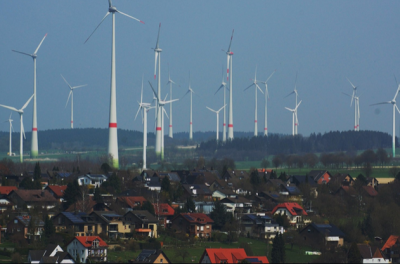
German wind farm

****

The economics of Germany’s “Energiewende” are so bizarre, that you’d think it had been put together by the GDR’s ‘brains trust’, before the Berlin Wall took its tumble in 1989.

In Germany, around €100 billion has already been burnt on renewable subsidies; currently the green energy levy costs €56 million every day. And, the level of subsidy for wind and solar sees Germans paying €20 billion a year for power that gets sold on the power exchange for around €2 billion.

Squandering €18 billion a year on power – which Germans have in abundance from meaningful sources – has them asking the fair and reasonable question: just how much power are they getting for the €billions that they’ve thrown – and continue to throw at wind and solar?

The answer is: NOT MUCH: Germans Spend 100s of €Billions on their “Energiewende” & Get Only 3% of their Power in Return

But that’s merely to focus on the insane cost to German power consumers and taxpayers – and the meagre returns for their hundreds of €billions in subsidies – of what can only be described as an energy market fiasco.

At a more practical – and to power punters more significant – level chaotic unpredictable surges in wind power output have brought the German grid to the brink of collapse:

Germany’s Wind Power Debacle Escalates: Nation’s Grid on the Brink of Collapse

Unable to build any further transmission capacity of its own – principally because Germans are fed up with having their bucolic homeland turned into an industrial wasteland – not to mention the colossal and wholly unnecessary cost of building a duplicated network simply to take occasional bursts of wind power output – Germany is dumping power into its neighbours’ grids.

The result is that their Czech, Polish, Dutch, Belgian and French neighbours’ grids are being swamped with excess power – whenever the wind picks up in Germany’s North – resulting in grid instability and blackouts.

Germany has – from time to time – been a somewhat boisterous neighbour. With Germany dumping excess wind power on an unscheduled basis – into grids which are simply not designed to take rapid increases in volume – neighbours are fuming again about German arrogance and the cost of accommodating it.

Here’s a couple of takes on yet another aspect of Germany’s wind power disaster.

Germany’s Neighbors Rankled by Its Energiewende
The American Interest
4 August 2015

The German energy mix has been radically changed in recent years, predominantly driven by two forces: a desire to expand renewables’ market share (a task accomplished by generous state subsidies called feed-in tariffs), and an aversion to nuclear power following the 2011 Fukushima disaster. Within Germany these changes have had a number of perhaps unforeseen and certainly unfortunate consequences, including jacked-up power bills for businesses and households and, somewhat bizarrely, an increased reliance on the particularly dirty type of coal called lignite. But the ripple effects of Berlin’s energiewende are expanding past national boundaries, and, as Politico reports, Germany’s neighbors are finding their own grids strained by intermittent solar and wind production:

The country’s move away from nuclear power and increase in production of wind or solar energy has pushed it to the point where its existing power grids can’t always cope. And it’s the Czech Republic, Poland, the Netherlands, Belgium and France that have taken the brunt.

“If there is a strong blow of the wind in the North, we get it, we have the blackout,” Martin Povejšil, the Permanent Representative of the Czech Republic to the EU said at a briefing in Brussels recently.

Germany has failed to beef up its energy transmission infrastructure at the same pace as its burgeoning solar and wind industries, that is, and on especially sunny and windy days it relies on the hospitality of its neighbors to distribute those supplies. Poland and the Czech Republic have been forced to pony up $180 million “to protect their systems from German power surges”, while within Germany itself NIMBY-ism is preventing the construction of some key transmission lines.

When examining the costs of boosting renewables, it’s a big mistake to leave out the expense of building out the grids needed to handle production. Germany seems to have made just that error with its energiewende, and central Europe is struggling to cope.
The American Interest

germany

German winds make Central Europe shiver: Junking nuclear power is creating problems for Germany’s neighbors.
Politico
Kalina Oroschakoff
3 August 2015

Germany’s shift to renewable energy has been hailed as an historic policy move — but its neighbors don’t like it.

The country’s move away from nuclear power and increase in production of wind or solar energy has pushed it to the point where its existing power grids can’t always cope. And it’s the Czech Republic, Poland, the Netherlands, Belgium and France that have taken the brunt.

“If there is a strong blow of the wind in the North, we get it, we have the blackout,” Martin Povejšil, the Permanent Representative of the Czech Republic to the EU said at a briefing in Brussels recently.

Germany’s north-south power lines have too limited a capacity to carry all the power that is produced from wind turbines along the North Sea to industrial states like Bavaria or Baden-Württemberg and onto Austria. That means the extra electricity is shunted through the Czech Republic and Poland.

To put an end to the often unexpected power flows from Germany — so-called loop flows — the countries are taking the matter into their own hands. Concerned about the stability of their own grids, additional costs and the ability to export their own power, the Czechs, for example, are installing devices to block the power from 2016 onwards.

Poland is also working on the devices, known as phase shifters, and expects to have some operating this year. To the west, the Netherlands, Belgium and France have also installed phase shifters to deal with the flows.

These separate moves come as Brussels pushes for integration of Europe’s energy markets. The struggle shows how the drive toward more renewables, combined with outdated infrastructure and inconsistent cooperation within the EU, is having unintended consequences.

“In the past, with coal and nuclear power plants, the power system was extremely predictable. Now, with ever more renewable energy coming online, the system isn’t as predictable anymore, which can cause challenges also for the single market debate,” said Joanna Maćkowiak Pandera, a senior associate with German think tank Agora Energiewende.

“We have been telling that to the Germans, ‘Increase your transmission system, or we will shut you off’,” an EU diplomat said at a briefing in Brussels recently.

Power loop flows occur when a country’s power grid infrastructure isn’t sufficient to handle new production, so the electricity is automatically diverted through neighboring countries on its way to its destination in the producing country.

“This also leads to congestion in neighboring systems,” said Georg Zachmann of the Brussels-based Bruegel think tank, adding that to deal with the situation countries can also reduce their own electricity exports to South Germany to make space for the German power. That, however, means that Germany’s energy transition is affecting the export potential of countries like the Czech Republic and France.

Pressure is building on Germany to expand its north-south connection. But the idea has aroused local opposition in Bavaria, with residents unwilling to see their picturesque countryside spoiled by unsightly transmission towers.

“If we want to have a growing share of renewables, we must build the grids,” Walter Boltz, vice chair of the regulators board of the EU’s Agency for the Cooperation of Energy Regulators (ACER), told POLITICO.

The simplest solution, he said, would be for Germany to build up the necessary links. But that will take time. Alternatively, Germany could simply shut down wind power on highly productive days. But the country’s current policy stands in the way.

“It’s an uncomfortable problem and has to do with Germany’s irrational priority dispatch policy under which you cannot shut down renewables,” Boltz said.

Germany’s neighbors aren’t immune from criticism on the issue.

Poland, for instance, could also consume the power it imports from Germany, something it resists to shield its own industry, Boltz said. Further, Poland’s grids needed expansion, he said.

More cooperation

Germany, for its part, has stepped up cooperation with its neighbors to remedy the issue.

Energy Secretary Rainer Baake recently addressed criticism that Germany’s energy transition was an unilateral policy move, Germanmedia reported, saying, “People in this country and also outside of Germany who believe this must be some kind of act of re-nationalization of energy policy […] could not be more wrong.”

In 2014, German transmission operators agreed with the Czechs to regulate cross-border power flows to protect the Czech grid from overloading and reduce the danger of blackouts. A similar agreement was struck between the Polish and German sides.

On a political level in June, Germany signed a pact with 11 “electrical” neighbors, including France, Poland and the Czech Republic, to promote the integration of the respective power markets, counter overcapacity and let the market determine power prices.

Still, Poland’s regulator last year sent a letter to the ACER, asking it to come forward with an opinion on the loop flows from Germany. The response is expected in September.

In 2013, the agency issued an opinion on unscheduled loop flows, concluding that “in most cases these flows are a threat to a secure and efficient functioning of the Internal Electricity Market.”

Energy mix is a national policy

The situation is delicate for the Czech Republic and Poland, which have long insisted that choosing whether power should be generated by solar, wind, coal, nuclear or other ways remains a national issue, not one for Brussels.

So Germany is free to make decisions about how to generate electricity, in this case to shut down its nuclear plants.

Brussels has stepped up efforts to connect the bloc’s energy markets, with the European Commission in a policy paper in February stressing “the interconnection of the electricity markets must be a political priority.”

The Commission released an initial plan in mid-July about how to build a borderless power market that can deal with the rise in renewables. Draft legislation is expected in 2016.

“We haven’t developed the grids,” the EU bloc’s energy chief Miguel Arias Cañete told POLITICO last month, adding that while there has been a lot of investment in renewables, grids aren’t up to standard. That’s also why Brussels is keen on increasing cross-border power interconnections.

It’s making political and financial efforts to finally link up at least 10 percent of the EU’s installed electricity production capacity by 2020.

But it’s a long slog to connect the bloc: EU countries had originally pledged that target in 2002.
Politico

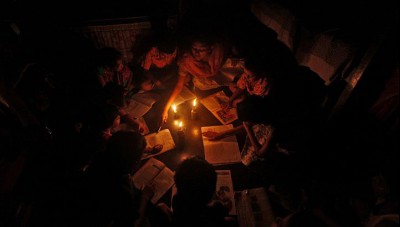
studying candle

Dr. Robert McMurtry Tells Australian Senate Inquiry About Adverse Health Effects From Wind Turbines!

Dr Robert McMurty tells Senate: ‘Annoyance’ caused by Wind Turbine Noise includes ‘Sleep disturbance’ & is Adverse to Health

senate review

****

The Senate Inquiry has had to wade through a fairly pungent cesspit of ‘material’ dropped on it by the wind industry, its parasites and spruikers. No doubt to their great relief (or, in the case of wind industry stooge, Anne Urquhart, infuriation) the Senators have heard from a raft of genuine and highly qualified people, who are clearly dedicated to protecting their fellow human beings – rather than ridiculing, denigrating or deriding them as “anti-wind farm wing-nuts” or “Dick Brains”.

One voice of common sense and compassion – to the contrary of the nasty nonsense pitched up by the shills that run interference for their wind industry clients – came from Dr Bob McMurty – a highly (and relevantly) qualified Professor from Ontario. Here’s what Bob told the Australian Senate.

Senate Select Committee on Wind Turbines – 29 May 2015

CHAIR: I now welcome Dr Bob McMurtry by teleconference. For the Hansard record, will you please state your name and the capacity in which you appear.

Dr McMurtry: My name is Robert Younghusband McMurtry. The capacity in which I appear today is as an independent witness: I am Professor Emeritus of Western University in London, Ontario, and I have been researching and reviewing this topic for the past eight years; I probably have put in over 10,000 hours over those years. In addition, I have been in communication with or—more to the point—people have been in communication with me who are suffering adverse health effects. I have detailed my curriculum vitae and its summary. I will stop there.

CHAIR: Thank you. Could you please confirm that information on parliamentary privilege and the protection of witnesses and evidence has been provided to you?

Dr McMurtry: I can confirm it has.

CHAIR: The committee has your submission. I now invite you to make a brief opening statement. At the conclusion of your remarks, I will invite members of the committee to put questions to you.

Dr McMurtry: Thank you for the privilege of presenting to this committee. I will make 10 points that are in my executive summary on the assumption that the material has been read. First, adverse health effects have been reported globally in the environs of wind turbines for more than 30 years with the old design and the new. Second, the wind energy industry has denied adverse health effects, preferring to call it ‘annoyance’ even though annoyance, however, is an adverse health effect. Certainly it is a non-trivial effect when sustained because it results in ‘sleep disruption’, ‘stress’ and ‘psychological distress’—those are direct quotes from others’ research. Third, annoyance is recognised and was treated by the World Health Organization as an adverse health effect, which is a risk factor for serious chronic disease including cardiovascular and cancer.

Fourth, experts retained by the wind energy industry have preferred the diagnosis of nocebo effect to explain the adverse health effects, but the claim does not withstand critical scrutiny as there is a dose-response effect and nocebo does not have a dose-response effect. And there is a clear correlation between exposure and adverse health effects. Researchers have talked about dose-response. I should also comment that making that diagnosis without a comprehensive evaluation of a person or patient would qualify as non-practice, and I know that has been said in this committee before.

Fifth, the regulations surrounding noise exposure are based upon out-of-date standards ETSU-97, which fail to evaluate infrasound and low-frequency noise, preferring instead to use DBA. The issue of ILFN is a problem and it has been confirmed by numerous acousticians including Paul Schomer, a leading international acoustician. Sixth, the setbacks for wind turbines are highly variable across jurisdictions and here is the key point: there is no evidence base in human health research for the setbacks. The turbines have gone ahead without an evidence base.

Seven, there is an urgent need for human health research to provide evidence based guidelines for noise exposure. Eight, the call for third-party research and evaluation has been made by many including in France by the Academy of Medicine of France in 2006 and many times since. As I detailed to you, I made it before government bodies in Canada. Nine, there is an urgent need to monitor the health effects of people exposed to turbines over time and that has been missing virtually in all jurisdictions. Tenth, third-party evaluations of the economic and social benefits of wind energy are needed as suggested by the findings of the Auditor-General of Ontario—I sent his reports to you including highlights—and more recently by the Northern Ireland Assembly committee, and I understand that is part of the charge of this committee. With that, I would be very happy to answer questions.

CHAIR: Is it correct to say that in your experience there are different streams of opposition to wind turbines in the wider public? For example, one stream opposes the technology outright but another supports the use of technologies as long as they are appropriately regulated to safeguard people and the environment. Which stream are you in, Dr McMurtry?

Dr McMurtry: I am in the stream that says positioned safely and on an evidence base with, as I mentioned, guidelines. I think that is fine. There are clear applications for wind turbines when they are appropriately deployed, which is not happening currently.

CHAIR: There is a growing community of medical experts, doctors and acoustic engineers questioning the adverse health impacts of wind turbines and inadequate regulatory standards. On the basis of your knowledge on an international level, how are the opinions and standing of these professionals treated publicly by the wind energy industry?

Dr McMurtry: I am afraid there is a routine strategy that proponents of wind turbines, including the industry, on websites will name people and pillory them basically, assail their reputations. That is something that has been seen internationally, most specifically towards Dr Nina Pierpont from the United States, and towards Dr Sarah Laurie in Australia. But I have certainly experienced it personally to a lesser extent. It seems to be: if you do stick-up and say something or you have concerns about the wind industry then you can expect to be attacked.

Senator BACK: We know that.

CHAIR: Your submission comments on researchers in the Department of Biological Engineering at MIT undertaking research for the Canadian Wind Energy Association and also providing expert testimony to wind farm developers in its planning tribunals. I note you say here, however, they did not declare an interest when the research was published. You describe this behaviour as ‘odd’ in your submission. From a professional perspective, what does ‘odd’ mean? What are the professional requirements or etiquette when publishing research and declaring an interest?

Dr McMurtry: The key is to declare a conflict and that was done in the sense that they described their engagements with the wind turbine industry, especially Dr McCunney the lead author, and Dr David Colby. So that was done. But it is only a first step when you declare a conflict. There are many other things you should do to manage the potential conflict of interest, in particular take special care to control for bias. There are various ways of doing that.

I do not want to say negative things about Dr McCunney; I am sure he is a very capable person does good work in this field. The wind industry put the money before MIT and it was from that funding that the research was carried out. It was from funding of the wind industry an earlier part he participated in with the Canadian Wind Energy Association. He appears frequently on behalf of the wind industry and he references his work in both the papers I have cited. I view that as stretching things. I think some better management of the conflicts ought to be carried out. Two points, for example, could be: bring it before an ethics committee or at least get that kind of advice.

CHAIR: Finally, later in your submission I note you discuss the origins of nocebo. I presume from that discussion, you are aware of Prof. Simon Chapman and his work?

Dr McMurtry: I am aware of Prof. Simon Chapman, yes.

CHAIR: Prof. Chapman has also provided expert testimony to a wind farm developer in a planning tribunal but does not declare his interest in subsequent publications. Is there some sort of professional amnesty that allows researchers to withhold disclosure of their interest? How do researchers and practitioners like yourself perceive that kind of behaviour amongst your peers? And what impact does this have on the professional standing of researchers more generally and the tenor of the debate and understanding in the industrial wind turbine area?

Dr McMurtry: There are a lot of elements to that question. The key consideration is that you should always declare a conflict of interest and manage it appropriately so that there is no discomfort being experienced by colleagues from whom you want to seek their opinions. As I said, an ethics committee would be included in that consideration. More importantly, the WHO and many other bodies have found that research sponsored by industry does not have the objectivity that characterises independent research. That has been described time and again with industry. I believe Dr Chris Hanning spoke to that in some detail at his presentation, the sorts of difficulties that you get into. As far as peers are concerned, when you are receiving money and it is a substantial amount for each appearance then I think ought to be extremely cautious about declaring and making a statement as he did in this most recent paper, ‘I declare no conflict of interest.’ That was what I found to be particularly odd. That quotation is included in my submission.

Senator LEYONHJELM: Thank you for your submission. I found it extremely illuminating, very thorough and you addressed many questions that I had in my mind so I really do appreciate it. What I am curious about though is you are a very experienced medical doctor. You have come down fairly clearly in support of annoyance as being the source of the adverse complaints that people have about wind turbines. We have heard from other witnesses who have suggested a vestibular effect, an effect on the vestibular mechanism and others who have suggested either the middle ear or perhaps inner ear. Why have you nominated annoyance as the source? Have you discounted the others? Or is there something else?

Dr McMurtry: Not at all. I do not mean to discount the other symptoms. I have referenced the diagnostic criteria for being exposed to wind turbines and suffering adverse effects. It was most recently in the Journal of the Royal Society of Medicine in the fall of 2014. Those sorts of additional symptoms are listed. What I have made clear, and this was first done by Pederson in her many papers, is that annoyance in the context of wind turbines translates to ‘stress, psychological distress, difficulty initiating sleep and sleep disruption’—I believe those words, although from memory, are a direct quote—so it is a very serious business. The most common problems without question we find are sleep disturbance and stress. Those two are always there. Vestibular disturbance we are also finding. There is no question though when the vestibular gets perturbed, it can make you uneasy, make you feel unwell or nauseated, for example. It may be the mechanism. I am in no way discounting it and it is considered in my diagnostic criteria.

Senator LEYONHJELM: Do you have a feel for what proportion of the community that lives within a nominated distance of wind turbines or a wind farm actually experiences any symptoms?

Dr McMurtry: The lowest number I have ever seen is five per cent. The highest number I have seen is over 30 per cent. There is a range. Firstly, with ongoing exposure, the people I have seen who have been adversely affected become worse. Secondly, increasing numbers of people become adversely affected. What is missing in the research is longitudinal studies. Dr McCunney and I agree on this in terms of his paper that I was talking about earlier. What is needed is something more than cross-sectional epidemiological studies, which are studies at one point in time. They do not follow people longitudinally. Following people longitudinally—that is, over time—is crucial to understand the adverse effects. That has not been done. I agree that we should have cohort studies—that means a group exposed, a group not exposed—and compare them over time, and then you will have some notion of incidence. Anecdotally, when dealing with people, I have found that some do not start experiencing symptoms until a year or two out. I think the incidence might very well go up, and that is a concern.

In relation to the other research, if I may say before stopping again, there has been a missed opportunity. We absolutely should be doing the sort of work that has been done by Steven Cooper, where he looked at six people in three homes. They were adversely affected. You have to study those folks to understand the mechanism better. That is research that is really needed. It is only when that research is done, when we can hone down on the mechanism of the problem, that we can then inform the prospectus for the longitudinal studies of cohorts of people. I hope that is clear. You need research on adversely affected people to understand the mechanism and, secondly, of course, that you confirm that they meet the diagnostic criteria and that their adverse effects are reproducible when they are blinded. You want to do that to be sure. You have that group. Then you want to know exactly what is occurring. Steven Cooper moved things ahead great deal. Then you are well put up for the place to do the cohort studies or the longitudinal studies.

Senator LEYONHJELM: That does raise a question though. These sorts of questions have been asked; there have been complaints about wind turbines. You have been studying this now for six or seven years. Why is it that no definitive, independent research into this has been conducted over those years? It is quite a long time.

Dr McMurtry: I agree with you. I am dismayed by that, especially when it has been asked for nine years. It is coming back to the Academy of Medicine of France. I have pointed out many times in my publications and in my government presentations that there are two opinions and both cannot be right. One is that adverse effects are genuinely occurring and people are being harmed. The other opinion is that that is not the case and that it is in the news, a nocebo effect, or some other manageable problem. Both cannot be right. Always, I have heard calls for research from those concerned about adverse health effects. I have not heard them from those who are proponents—and certainly not from the industry.

To give you a very specific example, Paul Schomer, previously cited, is a leading acoustician internationally known for his standards for noise. He asked Duke Energy—and he has published this—to turn the turbines off and on, and they said they would not. That is pretty much the response you do get. There have been offers to do that. The Steven Cooper work was exceptional because the person who was responsible for that turbine installation in fact did turn off the turbines to enable him to do that research. I believe it was Cape Bridgewater.

CHAIR: Thank you, Senator Leyonhjelm. Senator Urquhart?

Dr McMurtry: By the way, I have debated publicly with proponents, including David Colby. I have always challenged, ‘Why don’t we do the research. Let’s settle this’, and the response has been: ‘There is no need.’ That is the response I have heard in debates, for example.

CHAIR: Thank you, Dr McMurtry. Senator Urquhart?

Senator URQUHART: Thanks, Dr McMurtry. I was just picking up the point that you talked about where the lowest number of people affected by wind farms was five per cent—I think I understood you correctly there—and the highest was 30 per cent. Did I understand you correctly?

Dr McMurtry: Yes you did. That has been the studies to date. As I mentioned, longitudinal studies may reveal a higher number.

Senator URQUHART: Can you just explain to me why the majority of wind farms in Australia do not have any complaints at all.

Dr McMurtry: I think I have heard Simon Chapman make that complaint, if that is who you are quoting. What I noticed about his research is that he was going to the wind farm people themselves and asking them if there were adverse health reports. That does not withstand critical appraisal. You must have an independent determination to determine if in fact there was a problem. That to me undermines this facility, substantially. So I think that claim is dubious. I will stop there.

Senator URQUHART: I did not hear that last point.

Dr McMurtry: The point I made is that when you are trying to glean information from the industry, whose interest is harmed by acknowledging problems, then you are not likely to get as accurate an answer than if you had independent determination of people’s complaints. I am speaking specifically about Simon Chapman’s work, and looking at his methodology.

Senator URQUHART: Do you live or have you lived near an existing or proposed wind farm?

Dr McMurtry: Yes. I do not live near a proposed wind farm. I live near one that is going to be built something in the neighbourhood of 1½ kilometres away. At the moment it is before the courts.

Senator URQUHART: I understand that you are a founder of the Society for Wind Vigilance. Is that right?

Dr McMurtry: Yes, in 2010. I was the founding chair, from 2010 to 2012, at which point I resigned.

Senator URQUHART: The status of the proposal is before the courts, I think you indicated?

Dr McMurtry: That is correct. There is always more than one proposal on the go, but the one that is most proximate to me is still in review legally, through a judicial process.

Senator URQUHART: How is the Society for Wind Vigilance funded?

Dr McMurtry: Just by donations from members.

Senator URQUHART: Who are the major donors?

Dr McMurtry: There is no major donor. The only income the Society for Wind Vigilance ever received was when they held a first conference in adverse health effects, which is described in my submission. We charged people $100 to come, as I recall. We realised some income from that. There was no surplus, I can assure you, because we had to cover the cost of the food and all the usual things you do with a conference. We have received no money whatsoever from any energy-related industry. Not ever.

Senator URQUHART: What about from other companies or organisations?

Dr McMurtry: No private enterprise company, no for-profit company, no agency and no charitable agency. Nothing. That has been suggested before. It is disturbing to me, because we are recurrently having to repeat what to me is obvious: there has simply been no financial support coming from outside. None.

Senator URQUHART: I think it is good to get that on the record. Thank you. Have you ever published any work in a peer-reviewed academic journal about the possible impacts of wind farms.

Dr McMurtry: Yes, probably several times. That is included in my submission. For example, I published two papers on the criteria for diagnosis: one in 2011 in the Bulletin of Science, Technology and Society, and the second one in the Journal of the Royal Society of Medicine, in either October or November of 2014. I have also submitted the peer-reviewed blogs from the Canadian Medical Association Journal, which is the lead journal in Canada, where I comment on the Health Canada study. That was peer-reviewed. We have also had something accepted that I submitted in confidence for the Journal of Occupational and Environmental Medicine. In addition, I have presented before the Acoustical Society of America. I have presented before government at three levels: municipal, provincial and federal.

Senator URQUHART: I wanted to pick up on the point about the Bulletin of Science, Technology and Society. I understand that this publication was de-indexed in 1995.

Dr McMurtry: SAGE Publications have since resurrected it. It now is appearing in the Index Medicus. More significantly, the Journal of the Royal Society of Medicine has been a recognised journal for over 100 years. The Index Medicus did not come along until later, or the similar indices. It is a progression from towards the diagnostic criteria, which is in the Bulletin of Science, Technology and Society to the second paper on diagnostic criteria, which was in 2014. That is a journal that is well recognised.

Senator BACK: In the PowerPoint presentation you sent us, you comment on biological gradients: that greater exposure should generally lead to greater incidence of the effect. It causes me to ask about the proposal with the independent medical research that has been commissioned now by the Abbott government her in Australia. One witness has proposed to our inquiry that a one-off, laboratory-based test for audible and infrasound could be undertaken with people who participate for periods of somewhere around about 10 to 30 minutes, or maybe up to an hour, once only. From your experience do you believe that the results of a study of that type would be of any value in determining possible adverse health effects?

Dr McMurtry: I think it would have value, but not in and of itself. It is perhaps a necessary but insufficient condition. There are features of industrial wind turbine noise that, when people are in their homes, are very different from in the laboratory setting, and capturing all that in the laboratory setting is virtually impossible. This is basically unwanted noise and unpredictable noise. It occurs at night. It pulses and it also has the quality of resonating within the home. The sound energy comes out—it may be low-frequency or infrasound—and there can be resonance in the home. That cannot be captured in the laboratory. Some people, for example, are being disturbed at night and go outside and they are less disturbed. I would cite in particular Malcolm Swinbanks, a well-known acoustician, who described that very thing and presented it in Glasgow two or there months ago. That has been reported by many people. It has been sound for as long as 30 years ago.

Senator BACK: People have put to us that infrasound can occur from waves crashing on the beach and trucks going along highways, and therefore there is nothing special about infrasound from industrial wind turbines, so why all the fuss. Could you comment on the different sources of infrasound and how they might affect people?

Dr McMurtry: What is very important here is to realise that my background is not as an acoustician. You might be better to direct that question to an acoustician. To answer as best as I am able, the acousticians have pointed out that there is a unique signature to wind turbine noise that has not be found elsewhere. I cite, for example, Steven Cooper, whom you have heard. There is also the recent work of Paul Schomer, as well as the 2012 publication with Walker, Hessler, Hessler, Rand and himself, in which they made clear that there were non-auditory and non-visual queues that disturbed people. The other sources of infrasound that people are talking about do not mimic, are not the same as, the signature that is coming from wind turbines. It is unprecedented, so it is crucial that any research captures exactly what people are experiencing.

Senator BACK: You made a comment a moment ago in response to a question from a colleague that you had commented on the Health Canada study. Briefly, could you point us to what your comments were on the Health Canada study?

Dr McMurtry: Yes. You have a copy of that in my submission. It is the CMAJ submission and, I think, appendix 7. Ms Carmen Krogh and I did it. I recently was on the same panel with David Michaud and I pointed out some of the shortcomings, but the single most important one is that it is a cross-sectional study. There are other important problems. They started out with 2,004 houses and some 400 were ruled out of scope—424, as I recall; I am going by memory—and then, when they sent out the questionnaires, another 322 dropped out, which left 766 out of the original group. I wish there had been an analysis of the abandoned or non-eligible homes. I think an opportunity was lost there. Another opportunity lost is that the people most often affected—and I certainly know this from my own experience—are people who are over 79 and under 18. Children are more vulnerable than, say, young adults or middle-aged adults. The Health Canada study looked at people from 18 to 79 and then excluded the rest. They are leaving out the most vulnerable groups.

Senator BACK: Thank you very much. I appreciate that advice.

CHAIR: Thank you, Dr McMurtry, for your appearance before the committee today.

Dr McMurtry: I thank you very much for this opportunity.

Hansard, 29 May June 2015

Dr McMurtry’s evidence is available from the Parliament’s website here. And his submission is available here in a Zip file: documents

bob mcmurtry

Wind Industry Shills want More Money Wasted on Useless Wind Energy…Aussies say NO!

Adam Creighton: Labor’s Ludicrous Wind Power Policy to Squander more than $100 Billion

Money Wasted

****

In Sunday’s post, we detailed Labor’s descent into wind power madness – with its impossible push for a 50% renewable energy target.

One of the immediate responses has come from the press-pack; who have now turned on the great wind power fraud with a vengeance.

Journalists with a modicum of common sense have woken up to the fact that they’ve been lied to and taken for fools by the wind industry, its parasites and spruikers for years now.

The backlash amongst journos to Labor’s lurch to the infantile left, has caused an ‘awakening’, which has been swift and scathing. The Australian’s Adam Creighton – a lad with a solid economics background – is among those who have caught on to the scale and scope of the fraud.

In this thumping little piece, Adam slams “rent-seeking global turbine manufacturers” – which we take to mean struggling Danish fan maker, Vestas – and otherwise clobbers the pointlessness and insane cost of trying to rely on a power generation source that means future power “supply would depend on the weather” – rather than on that silly old economic chestnut: power consumers’ actual ‘demand’. Over to Adam.

Labor’s renewable energy target policy would waste $100bn
The Australian
Adam Creighton
24 July 2015

To make sure we have enough electricity over the next 15 years we can either spend $100 billion on new generating capacity, or we can spend next to nothing.

Both strategies will meet our electricity needs. Labor has decided the former makes a lot more sense, given its new policy to require 50 per cent of electricity to be generated by renewable energy by 2030. In practice this would require tripling the Renewable Energy Target to about 100 terawatt hours by 2030.

This is bizarre policy, not least because Labor agreed with the government to lower the RET to 33 by 2020, only last month. It reflects an almost religious and increasingly pervasive devotion to wind and solar power, whatever the cost.

Hiking the RET so dramatically would divert massive resources into construction of unreliable and costly generating capacity with limited environmental benefits.

ACIL-Allen reckons the cost of new wind, geothermal and solar capacity would come to about $100bn. The extra 11,000 wind turbines alone — 10 times the present number — would cost $65bn.

This is money that could have been used for projects that don’t require government compulsion to make them viable. Or it could have used to research ways to curb carbon emissions rather than enrich rent-seeking global turbine manufacturers.

Australia doesn’t need to invest in any new electricity supply; spending billions to get zero extra output is economic vandalism. In fact, electricity demand has been steadily falling (from 198 TwH in 2009 to 184 in 2014) because of higher network prices, our dwindling industrial base and popular energy-efficiency initiatives.

Current estimates see modest increases to 2030, which could be accommodated by existing capacity. Gas and coal-fired power stations are already being mothballed or closed, Alinta’s Port Augusta plants being recent examples.

Yet an axis of ignorance and self-interest is trying to argue Labor’s 50 per cent mandate will ultimately lower prices for households and create jobs. They seized on initial modelling by Frontier Economics this week that showed typical electricity bills under Labor’s plan would fall by $30 a year from 2016 to 2022 and then rise by $4 a year will 2030.

This occurs because existing fossil-fuel generators are assumed to bear heavy losses. The policy-induced glut of new supply pushes wholesale electricity prices down (especially in a market where demand was falling anyway), in some cases by more than the cost of the renewable energy certificates that the RET compels retailers to buy. The RET, as the government’s 2014 review found, “transfers wealth from electricity consumers and other participants in the electricity market to renewable generators”.

Existing generators might put up with this for a while — shutting a coal power station can cost more than running it at a loss — but in the longer run Alfred Marshal’s basic principle that the prices we pay for goods and services must ultimately cover their costs will begin to kick in.

“We might see a serious backlash from consumers in the medium to long run as fossil fuel generators leave the market, and retail costs start to reflect the cost and fundamentals of renewable energy,” says Tony Wood, an impartial energy expert at the Grattan Institute.

Consider a 100 per cent RET. Without base-load, conventional power sources — be they nuclear, coal or gas — supply would depend on the weather, and prices would reflect the far greater actual costs of production.

Large-scale wind and solar-powered electricity is two to four times more expensive than coal-power electricity, a discrepancy that could grow if the sunniest and windiest sites have been used up already. Whenever in doubt, ask: if renewable energy were so much more efficient and cost-effective than fossil fuels, why do we need to force people to buy it, by law?

Of course, wind and sunshine are free, so the marginal costs of renewable energy can be lower than those for fossil fuels once the turbines and solar grids are built. But it is irrational to ignore their upfront costs and junk perfectly satisfactory power stations unless other benefits were truly massive.

But they aren’t. Yes, the RET will create jobs, but so would deliberately complicating the tax system and hiring 10,000 public servants to enforce it.

Furthermore, the RET, along with the government’s Emissions Reduction Fund, is a terribly inefficient way to reduce greenhouse emissions. Large-scale solar, for instance, does so at about $200 a tonne or 10 times the cost of a simple carbon tax or emissions trading scheme, which both Labor and Coalition now spurn. Wind is about $100 a tonne.

Surely $100bn could be better spent on developing Australia’s rich uranium reserves to create a base-load power industry that can replace fossil fuel generators when they naturally expire.

But when renewable energy is seen as a religion, the case is far stronger. Certain religious observances might appear irrational but if they make people happy they serve a valid purpose. This is the best argument for a $65bn wind turbine building program.
The Australian

adam-creighton

****

A very solid wrap-up from Adam – who, based on that effort, is likely to end up in STT’s Hall of Fame. However, Adam needs to drill a little deeper on the true costs of the greatest economic and environmental fraud of all time; and – given his apparent antipathy to the wind power rort – we fully expect him to.

As we detailed in Sunday’s post, contrary to Matt Harris’ musings, the impact of momentary spurts of wind power on power prices is limited to the dispatch price (when the wind is actually blowing).

When the wind is blowing – the impact on retail prices (the price that troubles households and businesses) has retailers paying up to $120 per MWh (AGL pays $112) for every MWh of wind power dispatched to the grid – irrespective of the dispatch or wholesale price – which at night time will often be close to – or less than – zero. The rates retailers pay are set by long-term Power Purchase Agreements.

Wind power outfits steadfastly refuse to disclose their PPAs, for obvious political reasons. Infigen and the like aren’t going to win many hearts and minds if they revealed the fact that – in order to remain profitable over the long-term – they need a guaranteed price of around 4 times the average wholesale price of $35 – which doesn’t quite gel with their PR spruiker’s endless nonsense about the ‘wind being free‘.

The other critical detail that Adam needs to expand on, is the actual operating costs of wind turbines – such as operating and maintenance costs (recurring and increasing over time as these things grind their way to a halt): costs that – at $25 per MWh for every MWh dispatched – compare, not so favourably, with the ability of Victorian coal fired power generators to profitably deliver power to the grid, at less than $25 per MWh.

The operation of PPAs and their effect on retail power prices is covered in detail here – as is the actual operating costs of turbines:

When will the Wind Industry Stop Lying?

Australia’s Most Notorious Wind Power Outfit – Infigen – says “Move Over Pinocchio, Here We Come”

Then there’s the way in which the REC Subsidy paid to wind power outfits operates as an additive tax on all Australian power consumers – under the current LRET – a figure that runs to more than $45 billion:

Out to Save their Wind Industry Mates, Macfarlane & Hunt Lock-in $46 billion LRET Retail Power Tax

The other misconception – arising from guff pitched up by Tony Wood from the Grattan Institute – is that increasing wind power capacity will see “fossil fuel generators leave the market”. In terms of the fossil fuel generating capacity required to meet total consumer demand – no it won’t.

Fossil fuel generators – with a capacity at least equal to 100% of any installed wind power capacity – will be required to be available and online as ‘spinning reserve’ – 100% of the time – to account for total (and totally) unpredictable collapses in wind power output.

It does not matter whether there are 2,000, 5,000 or 10,000 turbines spread out across the Eastern Grid, as a natural, meteorological phenomenon the wind will stop blowing across that entire area, such that wind power output will drop to a doughnut hundreds of times every year. And that’s a FACT:

The Wind Power Fraud (in pictures): Part 2 – The Whole Eastern Grid Debacle

June 2015 National

The cost of building and maintaining – what is now referred to as ‘redundant’ capacity – essential to provide back-up ‘cover’ for a further 11,000 3MW turbines – would be astronomical:

Lessons from Germany’s Wind Power Disaster

Not to mention the need to pay fossil fuel generators millions upon millions of dollars in ‘capacity payments’ to ensure sufficient ‘spinning reserve’ and/or fast start up peaking power plants such as Open Cycle Gas Turbines and diesel generators to cover wind power output collapses, almost every day:

Power Punters to Pay Double for Wind Power “FAILS” – REAL Power Generators Paid to Cover Wind Power Fraud

Labor’s latest move has simply magnified the costs of the current LRET debacle by a factor of two or more. However, with journalists like Adam Creighton on the trail it won’t be long before Australians work out just why their power bills are going through the roof, now. And when they do, it will be a matter of when, not if, the LRET policy meets its political doom.

CPI and electricity

Wynne Protects her Granddaughters “Future”, at the Expense of My Child’s Well-Being, NOW!

An Ill-Wind in Ontario

78808847Despite rising public complaints about adverse health effects from industrial wind turbines, thousands continue to be erected across the province.

Environmentalists often talk about people whose lives are ruined by man-made global warming.

But they never mention the lives that are devastated by misguided climate change policy.

There is no better example than the debilitating human health impacts of the hundreds of thousands of industrial wind turbines (IWTs) that are being erected around the world to supposedly mitigate climate change.

In “Adverse health effects of industrial wind turbines,” a 2013 paper in the magazine of the College of Family Physicians of Canada, Dr. Roy D. Jeffery, Carmen Krogh, and Brett Horner explained, “People who live or work in close proximity to IWTs have experienced symptoms that include decreased quality of life, annoyance, stress, sleep disturbance, headache, anxiety, depression, and cognitive dysfunction.”

“The problem is not just cyclical audible noise keeping people awake but also low frequency infrasound which can travel many kilometres,” notes Dufferin County-based Barb Ashbee, who says she was forced out of her Amaranth, Ontario home by the siting of IWTs too close to it.

“Infrasound goes right through walls,” said Ashbee, operator of the Wind Victims Ontario website. “It pummels your body.”

Tens of thousands of complaints have been received by governments around the world.

Sherri Lange, CEO of North American Platform Against Wind, said, “I have personally received hundreds of phone calls from distressed people who need to vacate their homes [because of IWTs].”

Lange contended governments try to not address the issue.

“It is my experience from talking to doctors, researchers and other high-level professionals, that governments seem to be (under the influenced of) the industry.”

Ontario Premier Kathleen Wynne promised her government would not force any of the 6,736 IWTs being erected by the province into “unwilling communities”.

To date, 90 communities have declared themselves as “Unwilling Hosts”, yet construction is underway, or planned, in many of these areas.

For example, in West Lincoln and surrounding regions, wind developers have received approval to install at least 77 three-Megawatt IWTs, each as tall as a 61-storey building, despite strong public objections.

Local resident Shellie Correia is particularly concerned.

Her 12-year-old son, Joey, has been diagnosed with Sensory Processing Disorder and it is crucial that he live in a quiet environment.

But now, as part of the Ontario government’s climate change plans, an IWT will be sited only 550 metres from his home, the closest “setback” allowed in Ontario for residents who do not sign lease agreements with wind companies.

The province, which cites a 2010 report from its Chief Medical Officer of Health that found no direct causal links between IWTs and adverse health effects, has claimed the province’s setbacks are “the most stringent in North America”.

In reality, most jurisdictions in Canada, the U.S., Australia, and Europe require greater setbacks. Two kilometres is commonplace.

As Correia explained in her January, 2015 presentation before the government’s Environmental Review Tribunal, “On top of the incessant, cyclical noise, there is light flicker, and infrasound. This is not something that my son will be able to tolerate.”

Correia is supported by her son’s pediatrician, Dr. Chrystella Calvert, a specialist in the care of children with developmental and mental health problems.

Calvert says, “I, as a ‘normal brain’ individual would not want this risk [of an IWT] to my mental health (or my children’s) in my neighbourhood.”

Like most governments, Ontario officials insist the adverse health effects of IWTs are minimal, citing various studies.

But there is much scientific evidence to the contrary and studies are lacking with regards to children.

Krogh, one of the authors of the report on health problems linked to IWTs that appeared in the magazine of The College of Family Physicians of Canada, wrote in a May 13, 2013 open communication to Canada’s health minister, “Vigilance and long-term surveillance systems regarding risks and adverse effects related to children are lacking. … This evaluation should take place before proceeding with additional approvals.”

But the approvals go ahead regardless.

As Correia notes, “Wynne speaks about ‘protecting’ her granddaughter’s future (in defending her government’s plan to introduce carbon pricing through cap-and-trade.) Why then, is it not important for her to protect my son, now?”

More Evidence, that Wind Power is a FRAUD!

The Wind Power Fraud (in pictures): Part 1 – the South Australian Wind Farm Fiasco

Definition of fraud

****

In today’s post we lay out the wind power fraud in pictures, as it’s perpetrated in, what’s referred to as, ‘Australia’s wind power capital’, South Australia (tomorrow we expand the net to capture the debacle on the entire Eastern Grid).

To call the ‘performance’ of SA’s 17 wind farms (spread over a vast area of the State – with an installed capacity of 1,477MW) over the last few months “diabolical” is to flatter them.

SA’s Labor government has been talking up a wind powered future for months now – it’s presiding over the worst unemployment in the Nation, at 8.2% and rising fast – and seems to thinks the answer is out there somewhere – ‘blowin’ in the wind’. The fact that its wind power debacle has led to South Australians paying the highest power costs in the Nation – if not (on a purchasing power parity basis) the highest in the world – and, yet, the dimwits that run it wonder why it’s an economic train wreck (see our posts here and here).

Well, today, STT – always ready to rain on the wind industry’s parade – as well as the gullible and corrupt that cheer it on – spells it out in pictures – that even the most intellectually interrupted should be able to grasp.

The derisory data that follows comes courtesy of Aneroid Energy. We’ll start with a quick look at SA’s monthly performance (oh, and if the graphs appear fuzzy, click on them and they’ll pop up crystal clear in a new window).

May 2015 SA

Looking a bit like the meanderings of a drunken spider that had dipped one leg in the ink-well and staggered over the page, that’s the nonsense that wind farms can deliver power as an “alternative” to on-demand power generation sources such as hydro, gas and coal belted, yet again.

With 31 ‘chances’ to make a meaningful contribution to lighting up the230,000 homes said by wind power outfits to be ‘powered’ by their wind farms in SA – output collapses 13 times to less than 100MW – or less than 6.8% of the total installed capacity of 1,477MW.

Here’s the total output from all wind farms in SA for June 2015.

June 2015 SA

Having hardly lit up the screen for much of May, you’d think that June would see a better effort – but, oh no. Total output spends more time below 200MW (or 13% of installed capacity) than above. And hits the bottom of the pool more than 7 times – with ‘output’ failing to power a single kettle – let alone the hundreds of thousands of SA homes we’re constantly told are ‘powered’ by the wind.

Here’s the total output from all wind farms in SA for the start of July 2015.

July 2015 SA

Looking more like the fat bloke bouncing around in the deep-end of the local pool, after a long lunch, July’s effort (so far) isn’t much better than the months before.

A couple of short-lived ‘spurts aside, and the rest is largely a ‘joke’: crashing by around 1,000 MW over 24 hours; and almost repeating the ‘performance’ a few days later with a precipitous plummet of over 500 MW in a couple of hours – makes it pretty clear that the words ‘reliable’ and ‘wind power’ don’t belong on the same page, let alone in a sensible sentence.

Spending days struggling to produce 200MW; hours and hours producing less than half that (or less than 6.7% of capacity); and 50MW (3.38%) or less for hours at a stretch, tends to take the gloss off the glory heaped on SA’s wind power dream; and suggests its future will be more of an energy nightmare.

Having taken a ‘helicopter view’, we’ll zoom in now – for a closer look at some of the more outlandish results on: May 3, 16, 25 and 26; June 12, 13, 14, 16, 17, 20, 29 and 30; July 2, 3 and 7.

3 May 2015 SA

Entire SA Grid – 3 May 2015 – from midnight to 9pm (21hrs):

Total wind farm output: midnight to 9pm – never more than 100MW; from 3am to 8pm (17hrs) – never much more than 50MW; and during the same period collapsing to ZERO around 6am, and 5pm to 6pm.

Output as a percentage of total installed wind farm capacity: midnight to 2 am – 3.4%; 7am to 2pm – 1.7%; 2am to 9pm – 3.38%; 6am and 5pm to 6pm – ZERO%.

16 May SA

Entire SA Grid – 16 May 2015 – from 1am to 12.30pm – a total collapse of 720MW to ZERO:

Total wind farm output: 11.30am to 5pm (5.5hrs) – never more than 100MW; collapsing to ZERO from 12.30pm to 2pm (1.5hrs).

Output as a percentage of total installed wind farm capacity: 11.30am to 5pm (5.5hrs) – never more than 6.8%; collapsing to ZERO% – from 12.30pm to 2pm (1.5hrs).

25 May SA

Entire SA Grid – 25 May 2015 – from 8am to noon – a collapse of 325MW to ZERO – a 100% drop in output, in around 4hrs.

Total output: from 11am to 9pm (10hrs) – never more than 50MW; from noon to 4pm (4hrs) – ZERO.

Output as a percentage of total installed wind farm capacity: 11am to 9pm – less than 3.85%; from noon to 4pm – ZERO%.

26 May SA

Entire SA Grid – 26 May 2015 – from midnight to 6pm (18hrs):

Total wind farm output: from midnight to 6pm – never much more than 350MW; from midnight to 2am 150MW; from 8am to 4pm – never more than 200MW; and falling to 90MW at 11am.

Output as a percentage of total installed wind farm capacity: from midnight to 2am – 10%; 8am to 4pm – never more than 13.5%; and dropping to 6.1% – at 11am.

Now for a closer look at June 2015.

12 June SA

Entire SA Grid – 12 June 2015 – from midnight to 4pm a collapse of over 600MW:

Total wind farm output: 10am to 6pm – less than 150MW; 3pm to 5pm – dropping to 50MW.

Output as a percentage of total installed wind farm capacity: 10am to 6pm – 10%; and 3pm to 5pm  – dropping to 3.85%.

13 June SA

Entire SA Grid – 13 June 2015 – from 9am to 3pm – a collapse of 750MW – 800MW to 50MW – or an output drop of 94% – at a rate of 125MW/hour:

Total wind farm output: from 2pm to 8pm – never much more than 100 MW; from 3pm to 5pm – around 50MW.

Output as a percentage of total installed wind farm capacity: 2pm to 8pm – between 6.8% and 10%; 3pm to 5pm – around 3.85%.

14 June SA

Entire SA Grid – 14 June 2015 – from 8am to 3pm – a collapse of over 650MW – from 700MW to 30MW – or a 96% drop in output:

Total wind farm output: from 1pm to 4pm (3hrs) – less than 100MW – dropping to 30MW.

Output as a percentage of total installed wind farm capacity: 1pm to 4pm – less than 6.8% – dropping to 2.03%.

16 June SA

Entire SA Grid – 16 June 2015 – 24 hours – never more than 140MW:

Total wind farm output: from midnight to 5pm (17hrs) – less than 30 MW; from 3am to 7am (4hrs) – ZERO; falling to ZERO between 9am and 11am.

Output as a percentage of total installed wind farm capacity: never more than 10% for the entire 24 hour period; midnight to 5pm – less than 2%; with ZERO% produced for around 5hrs.

17 June SA

Entire SA Grid – 17 June 2015 – 24 hours – never more than 260MW – or 17.6% of capacity:

Total wind farm output: from 5am to 8am – less than 140MW; dropping to 100MW at 8.30am.

Output as a percentage of total installed wind farm capacity: never more than 17.6%; 5am to 8am less than 9.4%; falling to 6.8%.

20 June SA

Entire SA Grid – 20 June 2015 – from midnight to 6pm (18hrs) – never more than 70MW:

Total wind farm output: from midnight to 6pm – less than 70MW; 3am to 6am (3hrs) – around 25MW; from 1pm to 6pm (5hrs) – 25MW; falling to 10MW – around 4pm.

Output as a percentage of total installed wind farm capacity: midnight to 5pm – less than 4.7%; 3am to 6am – 1.7%; 1pm – 6pm – 1.7%, falling to 0.7% – at 4pm.

29 June SA

Entire SA Grid – 29 June 2015 – from 3am to 1pm – an almost total collapse of 550MW to 10MW – or a 98% drop in output:

Total wind farm output: from 1pm to 5pm (4hrs) – never more than 10MW; from 6pm to midnight (6hrs) – 50MW – briefly rising to 170MW and dropping to 90MW.

Output as a percentage of total installed wind farm capacity: from 1pm to 5pm – 0.7%; 6pm to midnight – 3.3% – briefly rising to 11% – dropping back 6.1%.

30 June SA

Entire SA Grid – 30 June 2015 – for the 24 hour period – never more than 200MW:

Total wind farm output: from 1am to 7pm (18hrs) – never more than 80MW; from around 3am to around noon – less than than 40MW and closer to 20MW for that period; falling to less than 20MW around 4pm.

Output as a percentage of total installed wind farm capacity: 1am to 7pm (6hrs) – never more than 5.4%; from around 3am to around noon (9hrs) – less than than 2.7% and closer to 1.3% for that period; falling to less than 1.3% around 4pm.

Now a look at the scoreboard for July, so far.

2 July SA

Entire SA Grid – 2 July 2015 – a total collapse of output over the period – 700MW to around 10MW:

Total wind farm output: from noon to midnight (12hrs) – never more than 150MW; generally around 100MW – falling to 10MW around 10pm to midnight.

Output as a percentage of total installed wind farm capacity: from noon to midnight (12hrs) – never more than 10%MW; generally around 6.8% – falling to 0.7% around 10pm to midnight.

3 July SA

Entire SA Grid – 3 July 2015 – for the 24 hour period – never more than 150MW:

Total wind farm output: from midnight to 3am (3hrs) – never more than 20MW; twice falling to around 10MW; short burst to reach 80MW by 6am; dropping back to 40MW by 8am; with peaks and troughs later in the day – before dropping back to less than 100MW – 7pm to midnight.

Output as a percentage of total installed wind farm capacity: never more than 11% for the 24 hour period; much of it producing less than 6% – and often less than 2%.

7 July SA

Entire SA Grid – 7 July 2015 – from 2am to 1pm – a collapse (almost total) of 450MW – from 470MW to 20MW – or a 97% drop in output:

Total wind farm output: from 10am to midnight (14hrs) – never more than 60MW; twice falling to less than 20MW; and to ZERO around 10pm to midnight.

Output as a percentage of total installed wind farm capacity: from 10am to midnight (14hrs) – never more than 4.1%; twice falling to less than 1.3%; and to ZERO% – around 10pm to midnight.

We’re bored now – we’ve made our point: the idea that SA (or anywhere else for that matter) can ditch fossil fuel power generation sources and – by relying on wind power – go ‘100% renewable’ is pure fantasy.

Anyone who – after perusing the pitiful pictorial above – tries to tell you otherwise is probably not playing with the full deck. Either that, or they’ve got their trotters firmly planted in the wind power fraud trough.

At STT we love scorching wind power myths – and all the more so when it can be done with pictures.

In the last few months the lunatics from the fringes of the Labor party – and other hard-green-left nutjobs – have ramped up their rhetoric – pressing all and sundry join in their ultimate mission to go “fossil free” – they mean abstaining from the use of “fossil fuel”, rather than ceasing to rely on T-Rex and his – now stony/boney – kin. Although they have no apparent hesitation when it comes to burning up millions of litres of kerosene, flying to groovy backpacker must-sees, and “climate change” jamborees, all over the globe (see our post here).

Contrary to the anti-fossil fuel squad’s ranting, there isn’t a ‘choice’ between wind power and fossil fuel power generation: there’s a ‘choice’ between wind power (with fossil fuel powered back-up equal to 100% of its capacity) and relying on wind power alone. If you’re ready to ‘pick’ the latter, expect to be sitting freezing (or boiling) in the dark more than 60% of the time.

Wind power isn’t a ‘system’, it’s ‘chaos’ – the pictures tell the story.

One thing that amuses the STT gang, is seeing links to our posts appearing on the comments pages of online news sites, blog forums and the like: often they’re dropped into a ‘debate’ about the ‘wonders of wind’, with an apparently gleeful ‘splat’ – in a ‘get around that, and play fair’ kind of moment – that usually pulls the ‘debate’ to a shuddering halt.

STT predicts that this is going to be one such post.

So, next time you find yourself dealing with the intellectual pygmies, that are still clinging to their wind power myths and fantasies, why not flick them a link to this post – or have a little fun with an STT ‘splat moment’, on their favourite blogs and news sites?

Why not pitch a few sitters along with it, such as: on 3 May; after lunch on 25 May; after lunch on 13 June; on 16 June; on 20 June; and after lunch on 7 July:

How many South Australian homes (not kettles) were actually being powered by ‘wonderful wind’?

Where did all the power come from that kept the lights on and got the kettles boiling?

Was it coal? Was it gas? Or a bit of both?

In the light of your last answer, how much ‘dreaded’ CO2 gas was saved by SA’s 17 wind farms?

And what effect did wind power have on power prices in SA’s wholesale market for electricity?

We don’t expect them to enjoy it; but wind power worshippers have never been that keen on the facts.

Facts

Tom Harris Talks About the Negative Effects From Wynne’s Turbines….

An ill-wind in Ontario

 TOM HARRIS, GUEST COLUMNIST  

Despite rising public complaints about adverse health effects from industrial wind turbines, thousands continue to be erected across the province

FIRST POSTED: SATURDAY, JULY 18, 2015 07:00 PM EDT

But they never mention the lives that are devastated by misguided climate change policy.

There is no better example than the debilitating human health impacts of the hundreds of thousands of industrial wind turbines (IWTs) that are being erected around the world to supposedly mitigate climate change.

In “Adverse health effects of industrial wind turbines,” a 2013 paper in the magazine of the College of Family Physicians of Canada, Dr. Roy D. Jeffery, Carmen Krogh, and Brett Horner explained, “People who live or work in close proximity to IWTs have experienced symptoms that include decreased quality of life, annoyance, stress, sleep disturbance, headache, anxiety, depression, and cognitive dysfunction.”

“The problem is not just cyclical audible noise keeping people awake but also low frequency infrasound which can travel many kilometres,” notes Dufferin County-based Barb Ashbee, who says she was forced out of her Amaranth, Ontario home by the siting of IWTs too close to it.

“Infrasound goes right through walls,” said Ashbee, operator of the Wind Victims Ontario website. “It pummels your body.”

Tens of thousands of complaints have been received by governments around the world.

Sherri Lange, CEO of North American Platform Against Wind, said, “I have personally received hundreds of phone calls from distressed people who need to vacate their homes [because of IWTs].”

Lange contended governments try to not address the issue.

“It is my experience from talking to doctors, researchers and other high-level professionals, that governments seem to be (under the influenced of) the industry.”

Ontario Premier Kathleen Wynne promised her government would not force any of the 6,736 IWTs being erected by the province into “unwilling communities”.

To date, 90 communities have declared themselves as “Unwilling Hosts”, yet construction is underway, or planned, in many of these areas.

For example, in West Lincoln and surrounding regions, wind developers have received approval to install at least 77 three-Megawatt IWTs, each as tall as a 61-storey building, despite strong public objections.

Local resident Shellie Correia is particularly concerned.

Her 12-year-old son, Joey, has been diagnosed with Sensory Processing Disorder and it is crucial that he live in a quiet environment.

But now, as part of the Ontario government’s climate change plans, an IWT will be sited only 550 metres from his home, the closest “setback” allowed in Ontario for residents who do not sign lease agreements with wind companies.

The province, which cites a 2010 report from its Chief Medical Officer of Health that found no direct causal links between IWTs and adverse health effects, has claimed the province’s setbacks are “the most stringent in North America”.

In reality, most jurisdictions in Canada, the U.S., Australia, and Europe require greater setbacks. Two kilometres is commonplace.

As Correia explained in her January, 2015 presentation before the government’s Environmental Review Tribunal, “On top of the incessant, cyclical noise, there is light flicker, and infrasound. This is not something that my son will be able to tolerate.”

Correia is supported by her son’s pediatrician, Dr. Chrystella Calvert, a specialist in the care of children with developmental and mental health problems.

Calvert says, “I, as a ‘normal brain’ individual would not want this risk [of an IWT] to my mental health (or my children’s) in my neighbourhood.”

Like most governments, Ontario officials insist the adverse health effects of IWTs are minimal, citing various studies.

But there is much scientific evidence to the contrary and studies are lacking with regards to children.

Krogh, one of the authors of the report on health problems linked to IWTs that appeared in the magazine of The College of Family Physicians of Canada, wrote in a May 13, 2013 open communication to Canada’s health minister, “Vigilance and long-term surveillance systems regarding risks and adverse effects related to children are lacking. … This evaluation should take place before proceeding with additional approvals.”

But the approvals go ahead regardless.

As Correia notes, “Wynne speaks about ‘protecting’ her granddaughter’s future (in defending her government’s plan to introduce carbon pricing through cap-and-trade.) Why then, is it not important for her to protect my son, now?”

— Harris is executive director of the Ottawa-based International Climate Science Coalition, which opposes the hypothesis carbon dioxide emissions from human activities are known to cause climate problems