Lawyer, Julian Falconer, Challenges Constitutionality of Wind Turbine Approval Process

Ontario’s wind farm approval process faces constitutional challenge

Drew Hasselback | November 17, 2014 

Julian Falconer, no stranger to public interest cases, represents families challenging the development of three wind farms near Lake Huron

Photo: Peter J. Thompson/National PostJulian Falconer, no stranger to public interest cases, represents families challenging the development of three wind farms near Lake Huron.

Governments love windmills, people who live near them hate them. The result is a beautiful recipe for lawyers.

On Monday, lawyer Julian Falconer will rise in a London, Ont. courtroom to ask for a judicial order blocking the development of three wind farms near Lake Huron.

Mr. Falconer is one of the country’s top constitutional and human rights lawyers. He represented the Smith family in a lawsuit into the death of Ashley Smith in custody. He worked on the Ipperwash Inquiry. He represented Maher Arar in a suit against the federal government over his rendition and torture in Syria. The list goes on. Point is, Mr. Falconer takes a special interest in holding government to account.

On Monday he’ll be taking on windmills. He wants Ontario’s Divisional Court to overturn the regulatory approvals of three projects, the St. Columban Wind and K2 Wind Energy project in Huron County, and the SP Armow Wind project near Kincardine, Ont.

His clients, who live near the projects, fear the noise and vibration of the wind turbines will trigger a host of serious health problems. Mr. Falconer will argue in court that Ontario’s process for approving wind farms violates the Charter of Rights and Freedoms. Provincial legislation says anyone challenging a wind farm project before Ontario’s Environmental Review Tribunal must prove “serious harm” to human health. Mr. Falconer says that threshold is unfair because it is too high.

“The effects of wind turbines are felt in the most private and personal areas of residents’ lives, in their homes and beds, where the state has its lowest interest in intrusion,” Mr. Falconer submits in his written argument.

The Charter argument is a fairly new wrinkle in the fight against wind farms. But litigation itself isn’t. When the Divisional Court rules on the appeal, its decision will join the more than 30 Canadian reported court cases that have dealt with wind turbines — a number that shoots to nearly 100 when you include hearings before Canadian regulatory tribunals.

Wind farm opponents haven’t had a great track record in the courts. Until now, the biggest anti-turbine victory involves the Ostrander Point GP Inc. project in Prince Edward County. Opponents claim wind farms cause numerous health problems, but the Ostrander project was blocked after the Prince Edward County Field Naturalists successfully argued that construction of the project would cause “serious and irreversible harm” to a population of Blanding’s turtles. The case is under appeal. A hearing takes place next month at the Ontario Court of Appeal.

The mighty Blanding’s turtle may have succeeded where humans have so far failed. Wind farm opponents claim industrial turbines cause a litany of health problems to nearby residents — higher blood pressure, stress, tinnitus, loss of sleep, and migraine headaches. Yet a Health Canada study on wind farms released earlier this month found no direct links between turbines and health problems.

“It’s pretty clear that after doing this fairly exhaustive study they found no causative links between wind turbine noise and all these other health impacts,” says Jack Coop, a lawyer with Osler, Hoskin & Harcourt LLP who has represented wind farm proponents.

But wait a sec. The Health Canada study connected wind turbine noise with reports of “annoyance.” People exposed to such annoyances were more likely to report stress-related health effects. Mr. Coop says that doesn’t go far enough to give opponents the evidence of serious harm they would need to block projects.

“While the study hints that there could be a connection, it doesn’t make any finding of a serious impact,” Mr. Coop says. “In fact, it strongly suggests that the impacts are no different than what people experience from road noise.”

Eric Gillespie, who has represented project opponents in most of the wind farm cases in Ontario, disagrees. He says the Health Canada study bolsters the position of his clients.

“The authors have found a statistically significant relationship between industrial wind turbine noise and annoyance leading to reports of high blood pressure, migraines, tinnitus, and stress effects,” Mr. Gillespie says. “This is the first time in Canada that those types of effects have been scientifically linked to wind turbine noise exposures.”

Whether turbines merely “annoy” or are the source of significant harm to human health won’t be an issue if Mr. Falconer succeeds during the three-day hearing that begins Monday.

In his written argument, he says the need for the Health Canada study demonstrates that governments haven’t yet determined whether wind turbines affect human health. This “knowledge gap” offends a “precautionary principle” in which governments should not implement policies unless they’re sure those policies pose no health impacts.

Counsel for St. Columban Energy LP, Darryl Cruz and Eric Pellegrino of McCarthy Tétrault LLP, describe the constitutional challenge as a “last resort” to address a problem wind turbine opponents can’t fix: “Namely, that they failed to adduce any evidence capable of establishing that the Project will cause harm to human health at any level of materiality.”

When the constitutional hearing closes Wednesday, the matter will be left in the hands of Ontario’s Divisional Court. Regardless what the court decides, opposition to wind farms will remain. Lawyers will come up with new ways to challenge turbines. Wind farm litigation will continue to go around. And around. And around. And around.

Financial Post
dhasselback@nationalpost.com
twitter.com/legalpost

Residents Being Tortured by the Noise from Wind turbines!

OCOTILLO RESIDENTS SAY WIND TURBINE NOISE CREATES “LIVING HELL”

“It’s a horror beyond words; something you have to live to understand. Something must be done to stop the noise.” – Ocotillo resident Parke Ewing

November 14, 2014 (Ocotillo) – Residents in Ocotillo say that during windy conditions in early November, noise from wind turbines is making their lives unbearable.

Jim Pelley captured the loud noise on videotape, juxtaposed with footage of Pattern Energy’s Glenn Hodges selling the project to supervisors in Imperial Valley by claiming that noise would not be an issue due to setbacks.  “The project was sold on the understanding to be five miles from the community of Ocotillo,” Pelley wrote on a Youtube post. “We have turbines as close as 1/2 mile, we are now forced to live with the horrible noise of 112 turbines when the wind blows.”

His neighbor, Parke Ewing, says his complaints to Imperial County and Bureau of Land Management officials, as well as Pattern Energy, have fallen on deaf ears, with no meaningful responses.

“The turbines have created a living hell to us as we try to continue on with our lives after the Ocotillo Wind Facility was constructed over our objections,” he wrote in a November 1st letter sent to officials at those entities.”Turbines 176 and 169 and others are so loud when the wind blows that they disrupt everything.  We can’t enjoy our property.  The turbines are even more disruptive to our lives than even we could have imagined. It’s a horror beyond words; something you have to live to understand.

Something must be done to stop the noise.  We are one of several families that have homes obviously too close to the turbines.  The turbines located near my home need to be removed or relocated.  We can’t go on trying to live our lives around the turbine noise.  No body, including people that have objected to Ocotillo Wind, should have to live with the noise when the wind blows.  We just can’t do it any longer…”

Ewing asked the County, BLM and Pattern to mitigate the problem, noting that the sound is much louder than Pattern’s description of a dishwasher in the next room. “Whoever’s idea of using that term as an adequate description of the noise we would experience has obviously never lived near a turbine in their life.. Let alone 112 “dishwashers” all running at the same time in the next room,” Ewing observed, adding that no officials have taken steps to measure the decibels, let alone measurements such as low-frequency infrasound.

“The turbine noise is creating a high degree anxiety in our lives.  We don’t believe it is lawful for this to continue,” the beleaguered Ocotillo resident concluded. “I invite any of you to visit our property when the wind blows and stay awhile. Live the experience as we do- try to talk across your yard over the crashing sound of 336 blades turning and listening to the turbines as they generate their very irritating noise, nobody should be forced to endure this torture.”

Update November 15, 2014:   After our story ran, we received this update from Parke Ewing the next morning, which reads in part:

“Believe it or not, of all days, after I contacted the site manager for Ocotillo Wind today, two representatives visited my home today for the first time.  They listened for awhile, as today was one of those very loud turbine days, their only comment after I asked was, TBD (To Be Determined). Still no return calls or letters from the County of Imperial or BLM.  A general manager for Pattern Energy, a Samuel Tasker, quit returning generic answers to me and Jim’s questions and concerns.  Carrie Simmons at BLM turned us over to him after we questioned one of her comments regarding the oil leaks and a few other issues.  (not noise)

Interestingly, I stood a hundred feet or so in front of a wind turbine yesterday and the noise was very much greater than standing underneath a turbine or even behind the turbine.  I assumed that the noise would blow away from me, not into me against the wind, just the opposite of what we would expect.  So since our home is in front of turbines 176 and 169 when the wind is coming from the west south west, we hear the turbines much more loudly than Jim Pelley, which is down wind.  Then when wind is coming from the east we hear turbine 174 more, because we are in front of that one, weird how that works.”

Insane Windpushers Causing Energy Poverty – People Freezing!

UK’s Out of Control Wind Power Debacle Sets Brits up for Winters of Discontent

cold lady

Homeowners face £1,000 increase in electricity bills: ‘Folly’ of relying on wind power ‘will cost homes £26bn by 2030’
The Daily Mail
Corey Charlton
15 October 2014

  • Wind farm reliance could see costly electricity bills and winterpower cuts
  • Experts claim it will lead to costs being passed on to consumers
  • Next winter’s electricity production margins are at an ‘all time low’

Homeowners are facing electricity bill increases of £1,000 and winter power cuts if the Government continues to rely on wind farms, experts warn.

A new report claims that if the Government continues to chase renewable wind power, the average household bill will soar by £1,000, costing homes £26billion by 2030.

The report, submitted to the Lords Science and Technology Select Committee, was authored by the Scientific Alliance.

By 2030, it projected the costs of meeting future energy demands using wind farms would be £26billion per year, which was a 53 per cent increase in the average consumer’s power bill.

Further to this would be increased costs coming from the industry and carbon taxes, which in total would add almost £1,000 onto the average consumer’s bill, the Daily Express reported.

The Scientific Alliance said the Government’s aims to have 35 per cent of electrical energy generated from renewable sources by 2020 will ‘not be achieved in their entirety’.

Sir Donald Miller, the former chairman of Scottish Power, said: ‘The blind reliance by successive governments on unreliable, intermittent renewable energy has reduced the margin of safety to a critical level,’ the paper reported.

‘This has brought the country to a position where power cuts could become a regular feature of cold winters for several years.’

The report, of which Sir Miller was a contributor, stated the electricity production margin for winter next winter was at an ‘all time low’ of 2 per cent.

‘It has been reported that National Grid are taking emergency measures to increase these margins by contracting with owners of small private standby generators for emergency supplies.

‘It is not known to what extent this will be helpful, but the costs per KWhr are likely to be high.’

By 2020, the supply margins will remain at a ‘critical’ level due to the planned withdrawal of conventional power generators over the next two years and the inadequate replacement of these with wind farms.

‘It should be remembered that these margins are against the background of no growth in demand and, even so, are likely to result in extended periods of loss of supply over periods of high winter demand.’

The crisis facing Britain regarding lack and surety of power supply was also acknowledged by the chair of the committee, Earl of Selborne.

In launching the inquiry, he said: ‘An investigation into the resilience of the UK’s electricity infrastructure is a timely one, given that we are set to see our safety cushion between demand and supply drop to particularly low levels over the next two winters.’
The Daily Mail

ed davey DECC

And here’s another take on Britain’s out of control wind power debacle from the Daily Express.

UK’s wind farm ‘folly’: Electric bills to soar by £1000 thanks to reliance on wind power
The Daily Express
John Ingham
15 October 2014

HOUSEHOLDERS are facing soaring energy bills and winter power cuts thanks to the “folly” of relying on wind power, experts said last night.

The green crusade of successive governments is set to double electricity bills for households and cost homes £26billion a year by 2030, it was claimed yesterday.

The cost of renewable energy and carbon taxes will put an extra £983 a year on household bills by then, compared to relying on a mix of nuclear and new gas-fired power stations, three experts told a Lords committee.

They also said the “foolhardy” green policy will do little to cut emissions of the greenhouse gases blamed for global warming.

The Scientific Alliance report highlights warnings by the regulator Ofgem that the margin for electricity production for the 2015-16 winter will be at an all-time low of 2 per cent compared to the pre-privatisation requirement of at least 20 per cent.

It means that in times of high demand, such as during very cold weather, Britain would be at risk of power cuts.

The alliance argues that wind power – which is the main renewable energy source depended on by Government – is unreliable.

One of the experts, Sir Donald Miller, former chairman of Scottish Power, said: “The blind reliance by successive governments on unreliable, intermittent renewable energy has reduced the margin of safety to a critical level.

“This has brought the country to a position where power cuts could become a regular feature of cold winters for several years.”

The written report has been submitted to the Lords Science and Technology Committee’s inquiry into the nation’s electricity infrastructure.

At the inquiry’s launch its chairman, the Earl of Selborne, said: “We are set to see our safety cushion between demand and supply drop to particularly low levels over the next two winters.”

And yesterday’s report stated: “The foolhardy policy of replacing reliable and efficient gas, nuclear and coal power stations by expensive and inefficient wind turbines and solar farms has raised energy prices while doing little to cut emissions of carbon dioxide.

“The total costs are some £12billion per year more in 2020 than an optimum programme of gas turbines and nuclear, and almost £26billion per year more by 2030.”

The alliance calls for new nuclear power plants to help plug shortfalls caused by the closure of ageing coal-fuelled power stations and rising demand.
The Daily Mail

hell-freezing-over1

Green Energy Nightmare Worsens in Ontario…

Wynne’s billion-dollar hydro boondoggle

Ontario hydro customers are trapped by the Wynne Liberals’ mad obsession with expensive and unneeded green energy

lorrie-goldstein

BY , TORONTO SUN

FIRST POSTED: SATURDAY, NOVEMBER 08, 2014 

windtubines
Ontario is heavily subsidizing companies to construct electricity generating wind turbines in a push for more renewable energy. 

TORONTO – For anyone who wants to understand what a complete mess Ontario’s Liberal government has made of our hydro bills, Parker Gallant is must reading.

A retired banking executive, he easily dissects and explains in English the never-ending nonsense the Liberals pump out to justify their green energy financial disaster.

An occasional Sun News Network contributor and newspaper columnist, Parker and Scott Luft, an energy analyst and blogger, published a report last week on energy pricing for Wind Concerns Ontario — an anti-wind turbine group — that was truly alarming.

Titled: “October, 2014, Ontario’s breath-taking, record-breaking month for electricity bills”, Parker and Luft reveal that last month, Premier Kathleen Wynne’s Liberal government paid $1 billion more for electricity than the market value of that power.

Put another way, the so-called “Global Adjustment” in Ontario — the difference between the market value of electricity and what it actually cost to produce — topped $1 billion, for the first time, ever.

For the average Ontario household, Parker and Luft note, that will mean an extra charge of about $30 on November’s hydro bill alone, although it won’t appear as a separate item on many residential hydro bills because the Global Adjustment is incorporated into “time of use” rates.

The Liberals say the main reason for the Global Adjustment is to “cover the cost of building new electricity infrastructure … as well as providing conservation and demand response programs.”

But as Parker and Luft explain it:

“The situation has developed as a result of Ontario’s rush to incorporate renewable energy in the form of wind, solar and biomass into the grid, without proper planning on how this new capacity would align with demand.

“The result is that during the spring and fall seasons, when demand is lower, IESO (Independent Electricity System Operator) has a surplus supply capacity of over 100% during many hours of the day. Through the Global Adjustment fund, Ontario’s electricity consumers pay contracted generators to idle or curtail generation of thousands of megawatts.

“In October, wind power generators produced almost 600,000 MWh of electricity at a cost of $81 million and additionally were paid another $11 million for 100,000 MWh that they could have produced, but were asked not to add to the grid.

“Due to the glut of power in October, Ontario sold this power to neighbouring jurisdictions at an average of 4.31 per MWh, or $2.6 million, meaning a loss of almost $90 million for Ontario electricity users.”

Parker and Luft note these costs do not include the amount the government had to pay to the province’s privately-run nuclear operator not to produce electricity, because under the 20-year deals it signed with wind (and solar) operators, it has to buy their power first, meaning other sources have to be reduced when there’s a surplus of wind and solar .

Their advice to the Liberals is the same as energy analyst Tom Adams and University of Guelph economist Ross McKitrick gave in their recent report for the Fraser Institute, What Goes Up.

That is, at least stop making the situation worse by bringing more wind and solar power on line.

As Adams put it: “Wind and solar power systems provide less than 4% of Ontario’s power but account for 20% of the cost paid by Ontarians, yet the government wants to triple the number of wind and solar generators. That’s a good deal for wind and solar producers but a raw deal for consumers.”

(The Liberals insist wind and solar power only account for 8% of the cost of our energy bills — and that they were needed to close down polluting, coal-fired electricity. But that’s absurd because the Liberals didn’t replace coal power with wind and solar, but with nuclear power and natural gas).

Sadly, the longer the Liberals double down on their green disaster, the faster hydro rates are going to rise.

Even the Liberals acknowledged last year that hydro bills would jump 42% over the next five years.

Now-retired auditor general Jim McCarter produced similar numbers in his 2011 report that was sharply critical of the Liberals’ renewable energy programs, noting green energy initiatives would account for more than half (56%) of a 7.9% annual increase in hydro bills over the next five years.

Hydro rates were bumped up again on Nov. 1 and there’s no relief in sight.

Then again, Al Gore does think the world of the Liberals.

Massive Wind Project Planned for Key Migratory Bird Corridor-Lake Huron

MEDIA RELEASE

Short-eared Owl by Ashok Khosla

The Short-eared Owl, a species listed as endangered in Michigan, is one of many birds using the area in Huron County slated for major wind energy expansion.
(Washington, DC, November 6, 2014) American Bird Conservancy (ABC) has raised serious concerns about a plan by Heritage Sustainable Energy, DTE Energy, Exelon Corporation, and NextEra Energy to construct additional commercial wind turbines in Huron County, Michigan, which could eventually result in up to 900 turbines in the area. This plan is advancing despite the fact that U.S. Fish and Wildlife Service (FWS) radar studies show vast numbers of birds migrating through or wintering in this area.
In an October 30 letter to the FWS Regional Director, ABC charged that the proposed expanded wind development—which already includes 328 turbines—threatens a major confluence of neotropical migratory birds and raptors, including federally protected Bald and Golden Eagles.
“Many species that are threatened or endangered in the U.S. and within the state of Michigan, such as the Piping Plover, Kirtland’s Warbler, Henslow’s Sparrow, and Short-eared Owl, migrate through or inhabit this area. This triggers serious Endangered Species Act (ESA) concerns,” said ABC’s Dr. Michael Hutchins, National Coordinator, Bird Smart Wind Energy Campaign.
“We have reviewed the recent radar studies conducted by FWS in this area and must conclude that Huron County is not an appropriate area for wind energy development, given the potential and substantial risks it poses to federally protected birds. If this is an example of ‘proper’ siting of wind energy development, then we wonder what criteria are being used to make such decisions,” Hutchins said further.
“An annual spring migration of thousands of eagles, hawks, and falcons travel through this area and congregate along the Huron County shoreline,” said Monica Essenmacher, President of Port Crescent Hawk Watch, a raptor conservation group in Michigan. “We have documented this occurrence since 1992, so there is a high likelihood of major raptor mortality from continued construction of these turbines.”

The ABC letter says that in addition to ESA-protected birds, vast numbers of other migrants also move through or breed in these areas. Although there is no current provision for a federal permit to harm or kill these birds (called a “take permit”) under the Migratory Bird Treaty Act (MBTA), ABC suggests that the FWS should consider this option as soon as possible, so that it can be used as an additional tool for proper siting and operation of future wind energy facilities.

Under FWS’ current voluntary permitting guidelines, wind energy companies are not required to apply for incidental take permits under the Bald and Golden Eagle Protection Act or the ESA when the project sits on private property. ABC asserts that this is a loophole allowing wind developers to kill federally protected birds with impunity. To remedy this, the organization is calling for independent post-construction monitoring and for the institution of a permit process that imposes fines to developers who kill more protected birds than their permit would allow.
ABC supports the development of clean, renewable sources of energy such as wind and solar power, but also believes that it must be done responsibly and with minimal impact on our public trust resources, including native birds and bats and particularly threatened, endangered, and other protected species. ABC supports Bird Smart Wind Energy, which emphasizes the importance of careful siting and mitigation to prevent unintended impacts to wildlife. As this study suggests, the risk to birds and bats can be substantial, depending on the circumstances. Another studysuggests even higher mortality.
Developers typically argue that they can effectively mitigate the impacts of wind development, but ABC—and the U.S. Department of Energy (DOE)—caution that most forms of mitigation touted by the wind industry have not yet been scientifically tested for their efficacy. ABC strongly agrees with the DOE’s recent statement that “…technologies to minimize impacts at operational facilities for most species are either in early stages of development or simply do not exist.”
Regarding the Huron County wind energy expansion, ABC has requested that an Environmental Impact Statement be prepared for the project and says that “… the voluntary (FWS) guidelines (must) be followed to the letter, which means consultation under Section 7 of the ESA, applications for incidental take permits under the ESA and Bald and Golden Eagle Protection Act, a three-mile setback from any shoreline, and an Avian Protection Plan … before the companies are allowed to go ahead with any construction.”
ABC also asks that the wind energy companies share bird mortality data with the public. “At present, these data are being treated as proprietary information, but these are public trust resources being taken,” said Hutchins. “The public has a right to know.”
#
American Bird Conservancy is the Western Hemisphere’s bird conservation specialist—the only organization with a single and steadfast commitment to achieving conservation results for native birds and their habitats throughout the Americas. With a focus on efficiency and working in partnership, we take on the toughest problems facing birds today, innovating and building on sound science to halt extinctions, protect habitats, eliminate threats, and build capacity for bird conservation.

Wind Turbines Get the Green Light, to Slaughter Birds & Bats…NOT GREEN!

It just gets worse:

[…] Wildlife consultant Jim Wiegand has written several articles that document these horrendous impacts on raptors, the devious methods the wind industry uses to hide the slaughter, and the many ways the FWS and Big Green collude with Big Wind operators to exempt wind turbines from endangered species, migratory bird and other laws that are imposed with iron fists on oil, gas, timber and mining companies. The FWS and other Interior Department agencies are using sage grouse habitats and White Nose Bat Syndrome to block mining, drilling and fracking. But wind turbines get a free pass, a license to kill.

Big Green, Big Wind and Big Government regulators likewise almost never mention the human costs – the sleep deprivation and other health impacts from infrasound noise and constant light flickering effects associated with nearby turbines, as documented by Dr. Sarah Laurie and other researchers.

In short, wind power may well be our least sustainable energy source – and the one least able to replace fossil fuels or reduce carbon dioxide emissions that anti-energy activists falsely blame for climate change (that they absurdly claim never happened prior to the modern industrial age). But of course their rants have nothing to do with climate change or environmental protection.

The climate change dangers exist only in computer models, junk-science “studies” and press releases. But as the “People’s Climate March” made clear, today’s watermelon environmentalists (green on the outside, red on the inside) do not merely despise fossil fuels, fracking and the Keystone pipeline. They also detest free enterprise capitalism, modern living standards, private property … and even pro football!

They invent and inflate risks that have nothing to do with reality, and dismiss the incredible benefits that fracking and fossil fuels have brought to people worldwide. They go ballistic over alleged risks of using modern technologies, but are silent about the clear risks of not using those technologies. And when it comes to themselves, Big Green and the Billionaires Club oppose and ignore the transparency, integrity, democracy and accountability that they demand from everyone they attack.

Read it all …

Typical of the political green class, and ‘Big Media’. Hypocrites. Climate Change was just the line needed to cover their extortion.

Wind Company Admits That Barb Ashbee’s Home, was Uninhabitable….

Barb Ashbee: wind company “agreed that we couldn’t live there any more”

barbara-ashbees-homeI’m sure everyone reading this has had the experience of phoning some corporate entity (Hydro, Bell, Visa, etc.) and heard the pre-recorded message, “This call is being recorded for quality assurances purposes…”. Yeah right. Well, a similar act is played out in the ERT hearings. Often the wind company will engage a court reporter to provide a transcript of the testimony. Other parties will be offered copies IF they pony up a portion of the costs. Often the MOE will do so. They will use this record further down the line when final submissions are made. What they likely will not do is get the transcript certified. Why, you ask? Because certified transcripts must be submitted to the ERT and then it becomes a public document that anyone can a have access to.

There’s lots of stuff that happens in an ERT that a wind company and their helpers (MOE) wouldn’t want the public to hear. I wish we could have afforded the cost of a court reporter for Nextera’s Adelaide ERT appeal. That’s the way the game is played.

So when an actual certified transcript becomes available, it’s a rare thing indeed. Such is the case with the St.Columban and K-2 appeals and excerpts appeared in the factum submitted for the court case in London in mid-November. Of particular note is the testimony of the post-turbine witnesses for those appeals.  The first installment is Barb Ashbee’s testimony for both appeals.

Read on:

Evidence of post-turbine witnesses heard on all three appeals 

The Dixon-Ryan Appellants called the evidence of two post-turbine witnesses, Barb Ashbee and Sandy MacLeod, both of whom were forced to leave their home because of the effects that the wind turbines were having on their health. Their evidence was subsequently entered before the Tribunal by way of transcript on the Drennan and Kroeplin appeals.

In 2005, Barb Ashbee and her husband moved into a home located in Shelbourne, Ontario. The home was intended to be their retirement property. Shelbourne is home to one of the first wind power projects in Ontario, the Melancthon EcoPower Project. The project consists of two phases and is comprised of approximately 123 wind turbines.

When Ms. Ashbee first learned of the project she was excited about the prospect of wind energy. She recalled telling her family and friends about how exciting it was that they were getting turbines, and would go out in her backyard and take pictures.

Ms. Ashbee’s home was affected by phase two of the project which began commercial operation in 2008. Ms. Ashbee’s home was located 457 meters from the closest turbine. She had four more turbines located within one kilometer, and another 15 turbines within two kilometers.

She began keeping a journal to describe what the noise sounded like and any symptoms she and her husband were experiencing.

Ms. Ashbee experienced sleep deprivation, stomach aches, heart palpitations, headaches, and dizziness. In addition, she began having nosebleeds and experiencing terrible cognitive and memory problems as time wore on.

Ms. Ashbee never sought medical attention specifically for the symptoms she was experiencing but did explain to her doctors what was going on with the wind turbines. Ms. Ashbee recounted that she informed her doctors about the wind turbines “because when I had the appointment with them I was severely sleep deprived and impacted and I wasn’t my normal self and I did want to tell them about what was going on.”

Ms. Ashbee immediately reported her symptoms to the project owner and they began conducting testing. Soon thereafter the MOE became involved in the process of monitoring the turbines and of receiving complaints. After the MOE and the project owner began testing on the project, they indicated to Ms. Ashbee that the project was in compliance with the guidelines and the 40dBA level permitted by the regulatory guidelines.

To try and mitigate the effects that the Ashbees were experiencing in their home, the wind company shut down the five turbines closest to their home. Despite this, the Ashbees reported still feeling a vibration and humming in the house, and they continued to be deprived of sleep and to experience headaches.24

The Ashbees tried to adjust to the turbine noise with ear plugs, but found no relief with these because the vibration was being felt throughout the house. They moved their bed out into the detached garage to see if it would help but this did not give much relief.25

During the period from May 8, 2009 to June 25th, 2009, at which time they left their home for good, the Ashbees moved into a tent in their backyard with their animals to gain respite from the vibration they were experiencing within their home.

Q. Okay. And so during the entire period did you remain in your house?

A. Yeah.

Q. And so you slept the entire time in your bedroom?

A. No, we got to the point we started looking for a rental and because our, like, we were all affected and we started, first I started looking for a rental, but we had three dogs, two cats to move and there’s not very many people that will rent with that many pets. And plus we were paying the mortgage and would have to pay out money for rent again and it was horrible.

And we thought well, we’ll rent a trailer, like, park it on the driveway; four wheel trailer thing. And I phoned around to a few places and there was nothing. I couldn’t find anything, nobody rented them.

We moved the bed out into the detached garage hoping it would be quieter out there so we wouldn’t have the vibration and noise and it was actually out there too. So it really didn’t help anything.

The wind company offered us a house a concession over from us and we did attempt to move into it. There were problems with it, with mould in it, so we couldn’t move in. So we were stuck, again.

So we ended up moving into a tent in the backyard because the turbines were being shut down at night and the vibration wasn’t there like it was in the house. You would feel it a little bit, a little bit of it but it wasn’t resonating like it was in the house. So we bought a tent. We went through two, actually, put the tent in the backyard, put our bed out there, a little table and a heater and a light and all the animals slept out there with us and that’s how we coped.

Q. And how long did you have to do that for?

A. May until we left.

Q. And when did you leave?

A. June 25th. I think it was May, early May. It’ll be in here, actually I guess. Do you want the date?

Q. If you have it.

A. May 7 we bought the tent.

Q. Okay. So then would May 8 be your first night in the tent?

A. Yeah, that was yeah, we set it up and put the bed in.

Q. And, sorry, you said you left June 25th?

A. Twenty fifth.

Q. So for almost two months did you sleep in the tent constantly every night?

A. Pretty much. The odd night when it didn’t seem too bad we would try it in the house. We put the spare bed in the tent and we still had the bed in there but there weren’t very many nights we were able to stay in the house.

Q. So did you have some alleviation from your symptoms while you slept in the tent?

A. Oh, yeah, we could sleep again, yeah. It still wasn’t the best because we were in a tent and it was still pretty cold still, but it was better than the house.26

Once Ms. Ashbee and her husband moved from their home, they no longer experienced any of the adverse health effects they had while living in the home.

Q. And so the symptoms that you described for us earlier, do you still suffer from any of those symptoms?

A. No.

Q. Okay. And when did those symptoms stop altogether?

A. Within pretty much within weeks, a month after we moved. Like, the sleep deprivation stopped immediately. The headaches stopped and that. I mean, the other effects, the upset and anger and that lasted a little bit longer, but as far as the stomach aches, the chest pressure, that was pretty much gone.

Q. Okay. And just so that we make sure it’s on the record, can you tell us how long you were in the environment when you were exposed to the wind turbines and these adverse health effects?

A. From early December 2008 to June 25th, 2009.

During cross examination, Ms. Ashbee was vigorously questioned about the source of the noise and vibration that she experienced in her home. The questioning was directed at demonstrating that her concerns arose not from the audible noise, but rather from some low frequency sound. This low frequency sound and its impacts is the same issue that Health Canada is now investigating through their study.

Q. And how long after they became operational did you notice that you were having problems?

A. Pretty much right away, like, within the first week, two weeks.

Q. And you talked about and I know from reading through your journal that the vibration was particularly a problem for you, correct?

A. Yeah, mm hmm.

Q. Would you say that that was the bigger problem than the noise?

A. It was as big a problem. The noise was a big problem. When they started shutting them down, it alleviated that, but the vibration was just as bad. Like, it didn’t fix that part of it.

Q. And you would know that because when five of the closest turbines were down around you, you were still bothered significantly by the noise?

A. The vibration.

Q. Or by the vibration, yes.

A. Yeah.

Q. Including the fact that you were in a tent and it was better in the tent than in your home, right?

A. Yes, it was.

Q. Okay. And you think that’s because of the and I don’t mean to demean you by saying you think your belief is that that’s because there was vibrations at that time with the turbines down was the problem?

A. Well, it was in the house. Whether it was coming from the turbines or the electrical, I don’t know.

Q. Okay. So you still have never been given an answer on that?

A. No. Excuse me, there was a 160 spike measured by the wind developer, low frequency spike and so that was determined that it was in our house. It was measured. And Gary Tomlinson told me that that 160 hertz was coming off all the turbines, not just the one behind us.

Q. So when you say a spike, was that a one time thing?

A. No, it’s acoustical terminology. And I don’t know acoustics.

Q. You’re as blind as me on that.

A. They showed us the graph and it’s a spike. It’s continuous, but it shows the spike and they were outside measuring and inside measuring and a spike happened and they went oh, there’s a 160 spike and then the wind developer told us there’s definitely a problem with the low frequency in our house. So I don’t understand the rest.

Q. That was going to be my next question that you have said the wind turbine company acknowledged to you that there was a problem in your home because of the turbine, some aspect of the operation of the turbines?

A. Yeah.

Q. And to your knowledge, was that the reason for the buy out of your home?

A. They agreed that we couldn’t live there any more, yeah.

Although Ms. Ashbee and her husband suffered these adverse health effects, they did not seek medical attention. Ms. Ashbee chose not to seek medical attention because her doctors “were not very engaging with wind turbine problems” at the time she was experiencing her symptoms. Additionally, Ms. Ashbee felt that she knew that the wind turbines were what was causing her health problems.

Q. And it’s fair to say that they weren’t concerning you enough that you went to a doctor to have them checked out?

A. I knew what was causing them so.

Q. Okay, but even if you know the cause of something, it didn’t concern you enough to go to a doctor to have them check out whether or not they should be doing something, putting you on heart medication?

A. I talked to this doctor and I talked to my doctor in Toronto, and they weren’t very engaging with wind turbine problems. So I mean, I — what do you want me to do? I know what’s causing them. If they stopped them, we knew because, I mean, we were both going through the same thing, sometimes at different times it would come on.

Ms. Ashbee’s evidence is consistent with the evidence of other post-turbine witnesses that when they left the vicinity of the wind project, they no longer experienced the adverse health effects. Another witness that provided similar evidence before the Tribunal was Ms. Sandy MacLeod. Ms. MacLeod is a high school teacher and lived in Ripley, Ontario, the home of the Ripley Wind Project.

Oxford Professor Tells the Truth About Green Energy!

OXFORD PROF SHREDS GOVERNMENT’S GREEN ENERGY POLICY

An Oxford University Professor has torn the UK government’s energy policy to shreds in his appearance before the House of Lords Science and Technology Committee.

Speaking to the Lords yesterday, Professor Dieter Helm said that the “Miliband-Huhne-Davey” policy (referring to the last three energy secretaries), which is based on an assumption that fossil fuel prices would rise, was “dramatically wrong”. (h/t to Bishop Hill, where the full exchange of views can be seen).

The Lords Committee gathered to hear evidence from a range of energy experts including power companies and the National Grid to determine whether there was indeed a risk of the lights going out this winter, as has been widely reported (including on Breitbart London).

Opening the second session, Professor Helm gave his name and title, before delivering a short two minute speech lambasting the governance of energy policy in recent times.

“It is a quite extraordinary state of affairs for a major industrialised economy to find itself even debating whether there is a possibility that the margins may not be sufficient of electricity to guarantee supply,” he said.

“If it was achieving carbon objectives and if it was producing low prices there might be some consolation. The wholesale price in Great Britain is twice that of northern Europe and on a CO2 front we’ve been switching from gas to burn as much coal as possible, and our emissions are actually rising on a production basis and of course on a carbon consumption basis which is the basis that matters for decarbonisation.

“For a major industrial economy to fail on one of the three objectives is a serious problem. But to fail on security and on competitiveness of price, and on decarbonisation is a sad state of affairs. And it’s even sadder in the context of which the problem isn’t fundamentally particularly difficult.

“It’s ultimately about having enough power stations and enough wires to supply the needs of the population. It’s a problem that’s been with us for a century. Many other countries solve these problems and it’s, as I say, rather sad that we’ve got to this particular point.”

The Committee probed the professor on a range of aspects including “resilience”, which the Professor explained was a matter not just of physical capability, but also the price which people are asked to pay for the energy supplied. If prices rise above people’s desire or ability to pay, people simply “turn themselves off, as happened in California”, he pointed out.

“The kit is there. If the will is there to do it, and the expertise and capacity of the grid I think is up to it, they will manage to make supply equal demand. The question is: how much higher will the price go as a result, and how long will Britain carry on having such high wholesale prices with all the consequences there are for British industry and also consumers?” he asked.

When questioned about medium term threats to resilience, Prof Helm was particularly scathing. Pointing to the fact that “the commodity super-cycle is over” and that gas, coal and oil prices are all falling, he blasted energy secretary Ed Davey, saying “We have a policy with the secretary of state repeatedly reminds us is based on the idea that gas prices are rising and volatile. Well, they’re falling and the volatility is something that we don’t want to protect customers from. [That is, downwards volatility is good for customers who want the benefit of cheaper prices immediately].

“Should we worry about resilience of fuel supplies? No, I don’t think so. The world is awash with gas. Unconventional gas is popping up all over the place America is no longer importing, plenty of supplies around, plenty more being discovered.

“The one medium term ‘risk’ that I would pay much less attention to but clearly the government thinks they should pay much more attention to is whether or not we’ll get enough supplies of fossil fuels. We have enough fossil fuels in the world to fry the planet many times over.”

He then set his target wider, laying into the “Miliband-Huhne-Davey policy”, so called “because it’s very consistent through that period”, as a whole. Successive energy secretaries had based their policy on the assumption that fossil fuel prices would continue to rise, making renewables comparatively cheaper by the 2020s and allowing subsidies to fall away; an assumption that the professor said  “[doesn’t have] any part in energy policy.

“That fossil fuel prices are going to go up. … That’s an outcome of the market, not a policy assumption to make. … If your bet turns out to be dramatically wrong, you’re going to have lots of technologies which are ‘out of the market’ for some considerable period to come. We will have to subsidise those technologies right through the 2020s and beyond.

“This knowledge that politicians have, that politicians know what the winners are, we’ve been there so many times before.  It usually turns out badly and it has done this time.”

Wind Turbines are “Novelty Energy”. They Will Never Be Feasible for Everyday Use!

Why Wind Power Will Never be a Serious Alternative to Conventional Power Generation

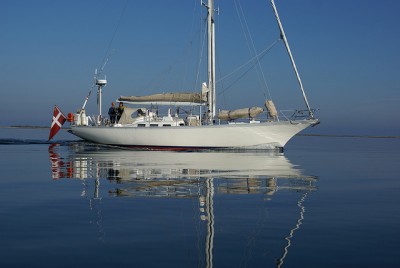
yacht

Study: Wind Turbines are ‘Expensive, Unreliable and Inefficient’
Breitbart.com
Donna Rachel Edmunds
27 October 2014

Wind power is too variable and too unpredictable to provide a serious alternative to fossil fuels, a new study by the Scientific Alliance and the Adam Smith Institute has confirmed. The researchers concluded that, although it is true that the wind is always blowing somewhere, the base line is only around 2 percent of capacity, assuming a network capacity of 10GW.

The majority of the time, wind will only deliver 8 percent of total capacity in the system, whilst the chances of the wind network running at full capacity is “vanishingly small”. As a consequence, fossil fuel plants capable of delivering the same amount of energy will always be required as backup.

The report was undertaken by the Scientific Alliance and the Adam Smith Institute. Using data on wind speed and direction gathered hourly from 22 sites around the UK over the last nine years, the researchers were able to build a comprehensive picture of how much the wind blows in the UK, where it blows, and how variable it is.

They found that, contrary to popular opinion, variability was a significant factor as “swings of around 10 percent are normal” across the whole system within 30 – 90 minute timeframes. “This observation contradicts the claim that a widespread wind fleet installation will smooth variability,” the authors write.

Likewise, and again contrary to popular assumptions, wind does not follow daily or even seasonal outputs. There were long periods in which the wind was not blowing even in winter, making it difficult to match generation of wind power to demand. The report concludes that covering these low periods would either need 15 storage plants the size of Dinorwig (a pumped storage hydroelectric power station in Wales with a 1.7GW capacity), or preserving and renewing our fossil plants as a reserve.

Most significantly, it found that the system would be only running at 90 percent of capacity or higher for 17 hours a year, and at 80 percent or higher for less than one week a year; conversely, total output was at less than 20 percent of capacity for 20 weeks of the year, and below 10 percent during nine weeks a year. “The most common power output of this 10GW model wind fleet is approximately 800MW. The probability that the wind fleet will produce full output is vanishingly small,” the authors note. The consequence is that many more wind turbines will have to be built than is often assumed, as the capacity of the fleet can’t be assumed to be synonymous with actual output.

The findings will deliver a body blow to governmental claims that their current target of generating 27 percent of energy from renewable sources – mostly wind and solar – by 2030 is credible.

“If there were no arbitrary renewable energy target, governments would be free to focus on what most voters expect: providing a framework in which a secure and affordable energy supply can be delivered,”commented Martin Livermore, director of the Scientific Alliance.

“If emissions are also to be reduced, the most effective measures currently would be a move from coal to gas and a programme of nuclear new build. In the meantime, the renewables industry continues to grow on a diet of subsidies, and we all pick up the tab. Getting out of this hole is not going to be easy, but it’s time the government started the process rather than continuing to dig deeper.”

According to the 2013 Renewable Energy Roadmap (the most recent to date), offshore wind capacity reached 3.5GW by June 2013, and onshore capacity reached 7GW in the same month. Governmental modelling suggests that offshore wind capacity will hit 16GW by 2020, and 39GW by 2030.

In the introduction to the Roadmap, the ministerial team headed by Ed Davey, secretary of state for energy and climate change wrote “The Government’s commitment to cost effective renewable energy as part of a diverse, low-carbon and secure energy mix, is as strong as ever. Alongside gas and low-carbon transport fuels, nuclear power and carbon capture and storage, renewable energy provides energy security, helps us meet our decarbonisation objectives and brings green growth to all parts of the UK.”
Breitbart.com

The report is available in pdf here.

The same conclusions apply to the “performance” of Australia’s installed wind power “capacity”.

Every wind farm in South Australia, Victoria, Tasmania and New South Wales is connected to the same Eastern Grid.

On the Eastern Grid, Australia’s wind farms are spread from: Jamestown in the Mid-North, west to Cathedral Rocks on lower Eyre Peninsula and south to Millicent in South Australia; down to Cape Portland (Musselroe) and Woolnorth (Cape Grim) in Tasmania; all over Victoria; and right up to Cullerin on the New South Wales Tablelands.

Eastern grid3

Despite being spread over a geographical expanse of 632,755 km² – an area which is 2.75 times the combined area of England (130,395 km²) Scotland (78,387 km²) and Wales (20,761 km²) of 229,543 km² – there are hundreds of occasions each year when – for substantial periods – the combined output of all of these interconnected wind farms is less than 10% of total capacity; around 100 or so when combined output is less than 5%; and dozens when combined output is less than 2%.

For a few examples of why wind power will never be a serious alternative to generation sources which are available on demand, see our posts here:

Intermittent & Unreliable Wind Power in Australia

Intermittent & Unreliable Wind Power: Texas, Germany & the UK

If this wasn’t costing us $billions in wasted subsidies and rocketing power bills, it would almost be funny.

circus_clowns-30541

If We Had More Politicians Like This One, We Could Have True Democracy

New post on lsarc

No Challenge, No Democracy

by lsarc

Herewith a statement by Terry Mokriy, formerly a council candidate and now a Grey Highlands Council member who got top votes out of all 14 candidates running.

We feel it is well worth sharing as his comments are particularly appropriate given what many have all felt and experienced over the past 10 to 12 years.

Please share.

Below is Terry’s statement in full:

“Years of experience in government and public service arenas have left an indelible mark on my world view and psyche.

Federally, I was the Youth, Education, and Ontario Chair for a cross Canada national council dealing with Multiculturalism. We reported directly, and made recommendations, to the Federal Minister of Multiculturalism. I had the opportunity to travel across Canada and meet, conference with, and listen to many groups and individuals. Our mandate was to make recommendations to the Minister and Cabinet. I also wrote and delivered speeches for, and on behalf of, the Minister. That was my first foray into political and bureaucratic frustration.

I have also served as a Federal Riding Association President, Canvass Chair, Campaign Chair, and Treasurer of a GTA wide political association comprised of some 63 ridings. I had the chance to work with, support and meet a wide range of politicians and politicos, some who were movers and shakers and some not.

At the provincial level, I was actively involved as a Campaign Chair, advisor to elected politicians, campaign strategist, and speech and pamphlet writer.

That being said these experiences have led me to my present state. I consider myself to be philosophically and politically a realist with, what could be considered, strong populist tendencies. That is why I volunteered to help establish and Chair the South East Grey Community Health Centre in Markdale. I believe in, what the Americans refer to as, “government for the people”. That is not what the current trends appear to be.

Today’s governments, especially at the political party levels, often times seem to serve, not the electorate, but their own interests. This trend has been years in its development. I witnessed it in Ottawa when bureaucratic and party priorities took precedence over the obvious needs, concerns and wishes of the people.

The past provincial government of Ontario took this self interest to its zenith. We need not discuss the examples for they are obvious.

It is now even harder not to become more cynical vis a vis political institutions which are increasingly less interested in the “common good” and more in political and party expedience. Government is supposed to be for the people and is supposed to aid, provide for and assist. It is to expedite a common quality of life and ease the experience of the community. Instead, it has become more and more intrusive, invasive and dictatorial, taking into account vested interests and hidden political and personal agendas.

The Municipal level of government has, willingly or not, become the last bastion of true democracy. It is the place where people can directly interact with government. It is the arena in which the democratic principals of “what is right for the people” can still hold sway.

We can and must continue to involve ourselves and participate. We must not fall into apathy or complacency for that will be the death knell of democracy. That apathy can take the form of simply agreeing to, ignoring, or accepting without question. We need to stop simply shrugging our shoulders saying, “What can I do about it? The decision has already been made”.

I have witnessed government, both political and bureaucratic, in action. I have seen how decisions are made and what influence personal, party and political agendas have in the process and the outcomes. People, individuals and groups, make decisions and people, individuals and groups, must continue to question and challenge those decisions.

We must continue to ask the question, “Why?” If there is no reasonable answer forthcoming then we should not simply acquiesce because, “They said so!”.

If there is no one to question and to challenge then there truly is no democracy.”