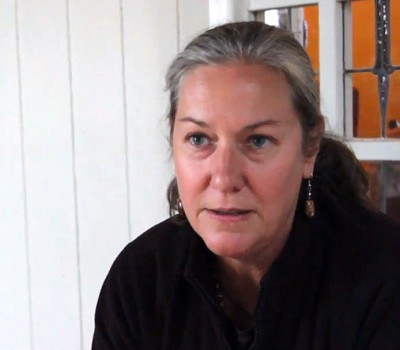
Australia’s “Melissa Ware”, Attacks the Ignorance, Surrounding the Effects of Infrasound!

Pac Hydro Cape Bridgewater Wind Farm Victim – Melissa Ware – Attacks Infrasound Ignorance

200355536-002

****

Melissa Ware is one of the long-suffering victims of Pac Hydro’s Cape Bridgewater disaster.

No sooner had Melissa given Labor-in-Liberal clothing Federal MP, Disappointing Dan Tehan a solid whack – for his wind industry backed plea to salvage the completely unsustainable Large-Scale Renewable Energy Target – (see our post here), than she was back lining up another, ignoramus with this cracking letter to the Ballarat Courier.

Ill-informed opinions build on wind farm ignorance
The Courier
By Melissa Ware
5 May 2015

SENATORS and public servants, please listen to the doctors and [not] Ms Hawkins’ ill informed knowledge on wind farm health issues, and publicly remedy the ignorance without delay.

For those failing to understand simple physics and dynamics of wind turbines and resulting impacts of noise, vibration and sensation to human and animal health then you can surely understand IWEF ‘noise’ is not always ‘heard’ by the ear but by the brain. Vibrations from turbines that ripple through the ground and air, through our homes and bodies, [are] not always consciously ‘felt’, [but] are detected.

These turbine emitted noise and vibrations and sensations are torturous to many, not only in south west Victoria but around the world.

Educate yourself with some facts and figures about impacts, read Mr Cooper’s recent findings and summary of the Cape Bridgewater Wind Farm, read the submissions into the senate inquiry into wind farms: or if you can’t manage to recognise what you allow to occur in your backyard, try some empathy. Adapt.

Recognise wind farm health issues being cruelly scorned or dismissed has only one purpose, and it is not to promote good public health or well-being.

Science is purely based on a theory which is founded on fact. When new information or facts are provided then the theory is supposed to adapt accordingly.

Harmed rural people like myself tell scientists, acousticians and the medicos we are getting sick and sicker near turbines and many adversely impacted residents are prepared to assist in learning why and how we are getting sick. We are willing to open our homes and share our experiences, what we don’t need from Ms Hawkins is an accusation there is a dubious sounding, completely unbelievable ‘health scare’ campaign being undertaken by Senator Madigan.

Wind energy [is] an illusion, is illustrated and promoted as clean and safe as expected from a huge business raking in huge sums of taxpayer funding through the RECs. It is gullible believing the surface story investigate, read up on some facts or live 900m from a wind farm for six years and experience first hand the oil leaks, the chemicals, the cement, the cost, the never ending maintenance, the bombardment and the cruelty, and the utter uselessness of wind energy.

Rural people [are] forced through the inaction of the AMA and the NHMRC, and inadequate planning laws, to endure impacting emissions of wind turbines and are being prescribed the only recommendation available by GPs, and that is to ‘move away’.

Imagine, if you are able, what your response would be to the imposition of a wind farm built next door, which damages your health, which the company and the government refuse to acknowledge and you are told for your health to move away.

You can’t sell because no-one will live by choice in close proximity to these monstrosities. Senator Madigan is not the only one doing a great job in having our voices heard in parliament and seeing that this marginalisation of rural people, including my family, being adversely impacted is recognised.
Melissa Ware
Cape Bridgewater

Melissa is on very solid scientific ground, when she talks about the known, and well-established, relationship between incessant, turbine generated low-frequency and infrasound and adverse health consequences, for those constantly exposed to it.

The wind industry have known about it for over 30 years; and, in all of that time, have done precisely what you’d expect from people without a shred of empathy or human decency – they lied through their back teeth and covered it up:

Three Decades of Wind Industry Deception: A Chronology of a Global Conspiracy of Silence and Subterfuge

Melissa-Ware

Whenever they Do a “Study” on Wind Turbine Emissions, It is Never Done Properly! Science Ignored!

Massachusetts Wind Turbine Health Impact Study- Fraud, Hoax Sham,

http://patch.com/massachusetts/falmouth/bogus-mass-wind-turbine-noise-study-2012-update-0

Jeffrey M. Ellenbogen, MD; MMSc
Assistant Professor of Neurology, Harvard Medical School Division Chief, Sleep Medicine, Massachusetts General Hospital

Sheryl Grace, PhD; MS Aerospace & Mechanical Engineering Associate Professor of Mechanical Engineering, Boston University

Wendy J Heiger-Bernays, PhD
Associate Professor of Environmental Health, Department of Environmental Health, Boston University School of Public Health
Chair, Lexington Board of Health

James F. Manwell, PhD Mechanical Engineering;
MS Electrical & Computer Engineering; BA Biophysics
Professor and Director of the Wind Energy Center, Department of Mechanical & Industrial Engineering University of Massachusetts, Amherst

Dora Anne Mills, MD, MPH, FAAP
State Health Officer, Maine 1996–2011
Vice President for Clinical Affairs, University of New England

Kimberly A. Sullivan, PhD
Research Assistant Professor of Environmental Health, Department of Environmental Health, Boston University School of Public Health

Marc G. Weisskopf, ScD Epidemiology; PhD Neuroscience
Associate Professor of Environmental Health and Epidemiology Department of Environmental Health & Epidemiology, Harvard School of Public Health

Facilitative Support provided by Susan L. Santos, PhD, FOCUS GROUP Risk Communication and Environmental Management Consultants

Bogus Mass Wind Turbine Noise Study 2012 Update
Counter Points To The 2012 Massachusetts Wind Turbine Noise Study -110 Decibels Equal To A Loud Out Door Rock Band

Share  CommentsBogus Mass Wind Turbine Noise Study 2012 Update

Bogus Mass Wind Turbine Noise Study 2012 Updated –May 2015

Counter Points To The Massachusetts Wind Turbine Noise Study. This study was done in 2012

Not One Victim Was Ever Interviewed or Examined

– Massachusetts has not installed a megawatt wind turbine since 2013.

First it has been found the Town of Falmouth had known three years prior to the Massachusetts DEP 2012 noise report in 2009 that the turbines being installed would produce noise levels over 110 Decibels of noise equivalent to a loud outdoor rock band .

The August 3, 2010 noise letter from Vestas wind company is at the link :
http://www.windaction.org/posts/41357-vestas-raises-concerns-about-turbine-noise-letter#.VVJlVflVikp
Since the installation of the Falmouth wind turbines the Massachusetts Clean Energy Center has admitted the turbines were placed “Ad Hoc” and now looks at setbacks over 2000 feet and has changed their noise testing procedures.

Counter Points To The Massachusetts Wind Turbine Noise Study In Which Not One Victim Was Ever Interviewed or Examined

What the Study Says: On page 1: “…It should be noted that the scope of the Panel’s effort was focused on wind turbines and is not meant to be a comparative analysis of the relative merits of wind energy vs. non-renewable fossil fuel sources such as coal, oil, and natural gas.”

However: The second paragraph of Chapter 1 of the study discusses a significant decrease in the consumption of conventional fuels and a corresponding decrease in the production of carbon dioxide and nitrogen and sulfur oxides.

The second paragraph states that reductions in the production of these pollutants will have demonstrable and positive benefits on human and environmental health

Appendix A has a 28 page summary on the origin of wind energy, the mechanics and operation of wind turbines, and the reduction of emissions if more turbines were providing energy (Section 12 is titled“Wind Turbines and Avoided Pollutants”)

On page 1: “The overall context for this study is that the use of wind turbines results in positive effects on public health and environmental health…local impacts of wind turbines, whether anticipated or demonstrated, have resulted in fewer turbines being installed than might otherwise have been expected. To the extent that these impacts can be ameliorated, it should be possible to take advantage of the indigenous wind energy resource more effectively.”

This passage indicates the true purpose of the Massachusetts study—to create an expansion of the wind industry through a slanted interpretation of wind health study documents.

The Panel merely reviewed literature and public media sources and met only three times.

Stated that sleep disruption is the most commonly reported complaint by people and discusses this primarily as a result of “unwanted sound” and audible, amplitudemodulated noise (“whooshing”)

Writes off most self-reported “annoyance” as a combination of sound, sight of the turbine, and attitude towards the wind project (ES-5)

Therefore, according to the Panel, because they “found” no negative health effects to humans as a result of their literature research, it must necessarily follow that there are positive health effects.

Yet, these positive health effects are not the result of wind turbines being safe, but that the turbines’ “green” impact on the environment will result in a decrease of conventional sources of fuel.

This endorsement of safety is an admission that the Panel failed to strictly adhere to the scope of their charge.

Expert “Independent” Panel Members:Dr. James F. Manwell and Dora Anne Mills are extreme pro-wind advocates:

Manwell oversaw the first utility scale wind turbine and the largest wind turbine constructed in Massachusetts

Manwell has won several awards from American Wind Association and U.S. Department of Energy Mills has provided public testimony and “op-ed” newspaper pieces supporting wind turbines while a member of the Commission and before the findings were released Posted information on Maine’s CDC website as Maine’s public health director that wind turbines do not have negative health effects in 2009

Page 2 of the study states that 5 of the panel members “did not have any direct experience with wind turbines.”

While the other members had backgrounds in epidemiology, toxicology , neurology, and sleep medicine, they had no past direct experience with wind turbines

Massachusetts Study Cites Sources that Contain Information that Wind Turbines Cause Negative Health Effects:

The Panel used several articles by the same authors of other studies that Senator Lasee provided to the PSC

The Panel used several articles that Senator Lasee provided to the PSC that found that infrasound from wind turbines can have negative health effects, yet the Massachusetts panel comes to different conclusions than the study authors: Ambrose, S.E. & Rand R. W., (2011, December).

The Bruce McPherson Infrasound and Low Frequency Noise Study: Adverse Health Effects Produced By Large Industrial Wind Turbines Confirmed.

http://randacoustics.com/wp-content/uploads/2011/12/The-Bruce-McPherson-ILFN- Study.pdf
http://docs.wind-watch.org/Infrasound-Measurements-Falmouth-Wind-Turbines-NCE.pdf

http://legis.wisconsin.gov/eupdates/sen01/Massachusetts%20Wind%20Turbine%20Health%20Impact%20Study%20Talking%20Points.pdf

Infrasound Measurements of Falmouth Wind Turbines Wind #1 and Wind #2NoiseControl Engineering, LLC (NCE) – February 27, 2015 Impact on People  Noise Massachusetts
This important study conducted at a home situated within 1300 feet of the Falmouth MA wind turbines identified infrasonic sound pressure levels inside the residence. These results are similar to results from other international researchers with references given in the report.
http://www.windaction.org/posts/42443-infrasound-measurements-of-falmouth-wind-turbines-wind-1-and-wind-2#.VVJmU_lViko

Counter Points To The 2012 Massachusetts Wind Turbine Noise Study -110 Decibels Equal To A Loud Out Door Rock Band

More Proof of Harm, that Windpushers & Government Choose to Ignore!

Systematic Review 2013: Association Between Wind Turbines and Human Distress


Abstract

Background and Objectives: The proximity of wind turbines to residential areas has been associated with a higher level of complaints compared to the general population. The study objective was to search the literature investigating whether an association between wind turbines and human distress exists.

Methods: A systematic search of the following databases (EMBASE, PubMed, OvidMedline, PsycINFO, The Cochrane Library, SIGLE, and Scirus) and screening for duplication led to the identification of 154 studies. Abstract and full article reviews of these studies led to the identification of 18 studies that were eligible for inclusion as they examined the association of wind turbines and human distress published in peer-review journals in English between 2003-2013. Outcome measures, including First Author, Year of Publication, Journal Name, Country of Study, Study Design, Sample Size, Response Rate, Level of Evidence, Level of Potential Bias, and Outcome Measures of Study, were captured for all studies. After data extraction, each study was analyzed to identify the two primary outcomes: Quality of Study and Conclusion of Study Effect.

Results: All peer-reviewed studies captured in our review found an association between wind turbines and human distress. These studies had levels of evidence of four and five. Two studies showed a dose-response relationship between distance from wind turbines and distress, and none of them concluded no association.

Conclusions: In this review, we have demonstrated the presence of reasonable evidence (Level Four and Five) that an association exists between wind turbines and distress in humans. The existence of a dose-response relationship (between distance from wind turbines and distress) and the consistency of association across studies found in the scientific literature argues for the credibility of this association. Future research in this area is warranted as to whether or not a causal relationship exists.

Introduction

Unlike most industries, the global wind industry grows annually by 21% despite the recent economic challenges. Canada is the ninth largest producer of wind energy in the world with a 45-fold growth in the industry in the year 2012 relative to 2000 [1-2].

The invention of the wind turbine as an electricity generating machine dates back to 1887 by James Blyth, a Scottish academic, and it used to light his holiday home in Marykirk, Scotland[3]. Wind turbines were at first welcomed by the public as being a source of energy that is both renewable and carbon emission-free. The need to generate electrical power on a large scale was the main driver in establishing the industrial wind turbines (IWTs) [4].

Wind turbines can be located as solo wind or in groups called “Wind Farms”. In either form and for various reasons (e.g., minimizing transmission costs), wind turbines are usually positioned in close proximity to residential areas (farms, villages, towns, and cities). This proximity to residential areas has been associated with a higher level of complaints compared to the general population [5]. These complaints are coined in research conducted and articles written on the subject under different terms, such as “Extreme Annoyance”, “Wind Turbine Syndrome (WTS)”, and “Distress”, among others. In this article, the term “distress” will be used unless we are quoting other articles.

Complaints resulting from the proximity to wind turbines vary in their nature, and distress is often attributed to different mechanisms, such as noise, visual impact, sleep disturbance, infrasound, and others [5-7]. Noise is the complaint that has been studied most often, especially given that environmental noise has become one of the major public health concerns of the 21st century [8].

These complaints triggered the debate about possible mechanisms of effect. Several hypothetical mechanisms have been suggested to explain the possible link(s) between wind turbines and the reported distress; some of these hypotheses attribute distress to one or more of the following: chronic noise exposure, infrasound effect, visual impact, perceived lack of control over noise, attitudes, personality, and age [5-6].

To assess the possible effects of wind turbines on human health, different outcome measures have been suggested, including annoyance, sleep disturbance, and cortisol levels. An alternative approach to health assessment involves the subjective appraisal of health-related quality of life, a concept that measures general well-being in all domains, including physical, psychological, and social domains [8].

Although the focus on researching mechanisms of effect may very well be a good first step to identifying the cause, finding an association is a cornerstone of establishing any causality, according to Hill’s Criteria of Causality [9]. A key missing piece of the scientific literature is that of an up-to-date and thorough review that examines the possible existence of an association between wind turbine and human distress. Therefore, the objective of our study was to search the literature investigating whether or not an association between wind turbines and human distress exists.

Materials & Methods

Study design

A systematic review of the existing literature of published peer-reviewed studies investigating the association between wind turbines and human distress between January 2003 – January 2013 was undertaken. This study was conducted as a collaboration between the Northern Ontario School of Medicine (NOSM), Sudbury, and Grey Bruce Health Unit, Owen Sound, Ontario, Canada.

Eligibility criteria

Inclusion Criteria:

– Peer-reviewed studies

– Studies examining association between wind turbines and distress

– Studies published in peer-review journals

– English language

– Studies involving humans

– Studies published between January 2003 – January 2013

Exclusion Criteria:

– Non-English language reports

– Investigations reporting interim analysis that did not result in stopping the study

– Secondary and long-term update reports

– Duplicate reports

– Cost effectiveness and economic studies

– Engineering studies

– Studies involving animals

Information sources

The following bibliographic databases were searched: EMBASE, PubMed, Ovid Medline, PsycINFO and The Cochrane Library, SIGLE, and Scirus, the last two of which deal with grey literature (materials that cannot be found easily through conventional channels, such as publishers; for example, thesis, dissertations, and unpublished peer-reviewed studies). Authors who published multiple studies included in our review were also contacted to identify any additional studies.

Search

Two search approaches were taken: subject heading and keyword searching. Electronic keyword searches were conducted in EMBASE, PubMed, PsycINFO, The Cochrane Library, SIGLE, and Scirus for published peer-reviewed studies according to the study inclusion criteria. All search strategies included the same search terms and combinations ([Wind power OR wind farm OR air turbine OR wind turbine] AND [Distress OR annoyance, sleep disturbance, noise OR sound OR infrasound OR sonic OR low-frequency OR acoustic OR hear OR ear OR wind turbine syndrome]).

Appropriate subject headings and limiters were identified in consultation with the corresponding author and were used to conduct electronic searches in the following bibliographic databases: EMBASE, PsycINFO, Ovid Medline, and PubMed. In order to retrieve all relevant published studies, subject headings were exploded; select subject headings were also chosen as the major focus of the search. Searches were refined by setting a publication restriction of 2003 to current and limiting results to humans.

Study selection

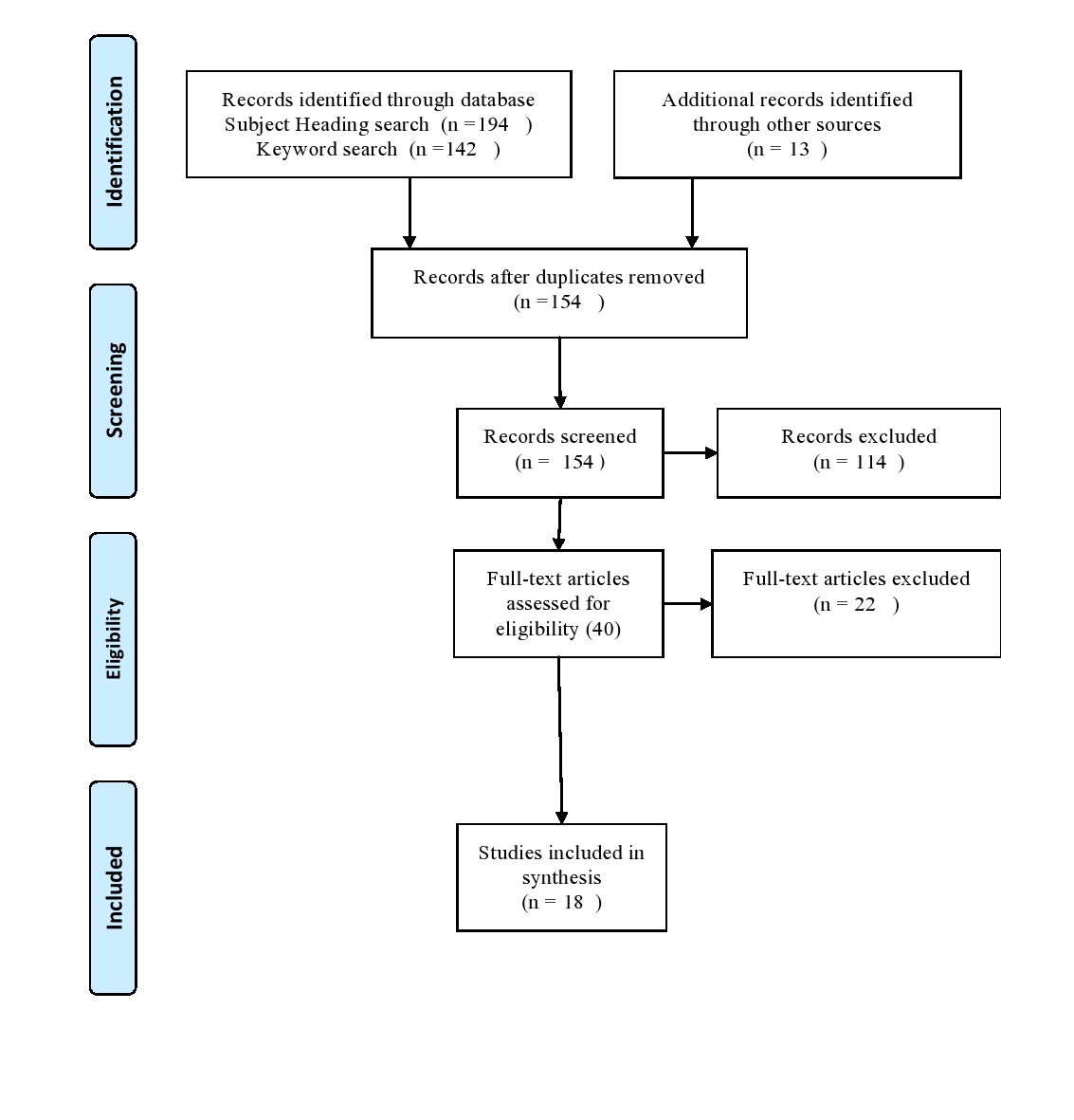
Study selection was performed in three stages (Figure 1):

Stage 1: Database Search

The studies that were identified through the database subject heading search (194 studies), the keyword search (142), and other sources (13 studies) were screened for duplication, yielding 154 studies.

Stage 2: Titles and Abstract Review

Screening of the titles and abstracts of the 154 retrieved studies was conducted by one qualified reviewer (the first author) in order to exclude any obvious non-eligible studies. Of these, 40 studies were deemed eligible for inclusion in a full article review.

Stage 3: Full Article Review

Two qualified reviewers conducted a full article review of the 40 studies. This review had two goals: first, to exclude any studies of non-eligible trials; second, to extract data on specific variables for further analyses. Of the 40 studies, 18 studies were deemed eligible for inclusion in our analysis.

Flowchart of the Review Screening Process

Data collection process

Data extraction was conducted by a qualified reviewer (the first author) during the full article review of the 18 included studies. The source of data in the individual studies was confirmed by contacting investigators who authored multiple studies included in the review, due to the aggregated weight of these studies potentially affecting our conclusion. The confirmation aimed to verify whether the data examined in the individual studies were collected from a single population and used in more than one study, or from different independent populations.

Data items

Primary Outcomes:

– Quality of Study: The quality of the study was categorized into three groups (Low, Moderate, High) (categorical variable)

– Conclusion of Study Effect: (whether the study concluded association of wind turbines with the effect on human health that was under investigation) (binary variable)

Variables (Outcome Measures of Individual Studies):

– First Author: The name of the first author (nominal variable)

– Year of Publication: The year in which the study was published (ordinal variable)

– Journal Name: The name of the publishing journal (nominal variable)

– Country of Study: The name of the country where the trial was originated (nominal variable)

– Study Design: The design of the study (nominal variable)

– Sample Size: The study sample size (continuous variable)

– Response Rate: The response rate of subjects in the study (continuous variable)

– Level of Evidence: The Level of evidence of the study (nominal variable)

– Level of Potential Bias: The level of risk of bias. Categorized into three groups according to Cochrane’s recommendations [10]. (Low risk of bias: Plausible bias unlikely to seriously alter the results; Unclear risk of bias: Plausible bias that raises some doubt about the results; High risk of bias: Plausible bias that seriously weakens confidence in the results) (categorical variable)

– Outcome Measures of Study: The outcome measure under investigation in the study (nominal variable); these outcome measures are:

– Annoyance (Sensitivity to Noise)

– Sleep disturbance

– Visual impact

– Well-being (Quality of Life/Mental Effect)

– Dose-response (description of the change in distress caused by differing distances from a wind turbine)

– Infrasound effect

– Existing background noise (comparison of stress associated with wind turbines to stress associated with road traffic noise/quiet rural environment)

– Attitude to wind turbines (whether people who complain have negative personal opinions toward wind turbines)

– Economical benefit (whether people who benefit economically from wind turbines have a decreased risk of distress)

Risk of bias in individual studies

Assessing the risk of bias of individual studies was performed at both the study level (study design, sample size, response rate, direction and magnitude of any potential bias and how it was handled, limitations, and reporting quality) and the outcome level (a cautious overall interpretation was drawn of the study’s conclusions, whether effect of human distress exists, considering the specific study’s objectives).

Summary measures and synthesis of results

After data extraction, each study was analyzed to identify the two primary outcomes: First, quality of study, taking into account the study’s principle outcome measures; all outcomes, exposures, predictors, potential confounders, and effect modifiers; how the study size was arrived at; how quantitative variables were handled in the analyses; description of all statistical methods; and how loss to follow-up and missing data were addressed. Second, conclusion of study effect as a cautious overall interpretation of the study’s conclusions, taking into account the specific study’s objectives and how well these conclusions were supported by the study results.

Risk of bias across studies

To reduce potential sampling bias (for example, the quality of study could be confounded by journal name and name of first author), the reviewers blinded themselves to the name of the journal and authors until all data on the other variables of interest were collected. To reduce potential measurement bias, the following three measures were undertaken: The data were directly entered into the database instead of using collection forms, quality assurance on all steps of data collection and management was performed, and in any case of uncertainty in deciding the quality of study, the reviewer consulted one of our senior authors to confirm the decision. Furthermore, the source of data was confirmed by contacting investigators who authored multiple studies included in the review, due to the weight their aggregated studies would have in affecting our conclusions.

Ethics approval

This study used previously published data making it exempt from institutional ethics board approval.

Results

Study selection

Figure 1 presents a flowchart depicting the study screening process. The database searches produced 154 publications. From this group, 40 publications were eligible following screening the titles and abstracts. From this group, 18 publications were eligible for inclusion after full article review. These 18 studies, shown in Table 1, consist of six original studies and 12 non-original studies (secondary analyses and literature reviews based on some of these original studies). Only the six original studies were included in the final analysis shown in Table 2. The 12 non-original studies were excluded from the analysis to minimize potential bias associated with repeated results.

This review used previously published data; therefore, there was no missing data for any of the variables of interest.

                                                                                  Study Characteristics
1st Author, Year Country Design Sample Size Response Rate % Level of Evidence Risk Of Bias Within Studies Quality of Study
Bakker [11]2012 ^ Netherlands Cross-sectional 725 37 4 Unclear risk of bias Moderate
Hanning [12]2012 ^ UK Expert Opinion/Review N/A N/A 5 Unclear risk of bias Moderate
Nissenbaum[13] 2012 ¥ USA Cross-sectional 106 75 4 Low risk of bias Moderate
Knopper [6]2011 ^ Canada Review 15 N/A 4 Unclear risk of bias High
Shepherd[14] 2011 ¥ New Zealand Cross-sectional 39, 158 34, 32 3,4 Low risk of bias High
Janssen [15]2011 ^ Netherlands Secondary analysis 1820 68, 58,  <30 4 Low risk of bias High
Pedersen[16] 2011 ^ Sweden Secondary analysis 1755 * 4 Low risk of bias High
Bolin [17]2011 ^ Sweden Review N/A N/A 4 Unclear risk of bias Low
Pedersen[18] 2010 ^ Sweden Secondary analysis 725 37 4 Low risk of bias High
Salt [7] 2010 ¥ USA Expert Opinion Report N/A N/A 5 Unclear risk of bias High
Pedersen[19] 2009 ¥ Netherlands Cross-sectional 1948 37 4 Low risk of bias High
Keith [20]2008 ^ Canada Expert Review N/A N/A 5 Unclear risk of bias High
Pedersen[21] 2008 ^ Sweden Secondary analysis 1095 N/A 4 Low risk of bias High
Pedersen[22] 2008 ^ Sweden Secondary analysis 1822 60 4 Low risk of bias High
Pedersen[23] 2007 ^ Sweden Qualitative Study 15 N/A 5 Low risk of bias High
Pedersen [5]2007 ¥ Sweden Cross-sectional 754 58 4 Low risk of bias High
Leventhall[24] 2006 ^ UK Report N/A N/A 5 Unclear risk of bias High
Pedersen[25] 2004 ¥ Sweden Cross-sectional 351 68 4 Low risk of bias High
1st Author, Year Does-response Road Traffic Noise / quiet rural environment Sleep Disturbance Annoyance/ sensitivity to noise Visual impact Attitude to wind turbines Infrasound effect Well-being (Quality of Life / mental effect) Economical Benefit
Nissenbaum[13] 2012 p < 0.05 p = 0.03 p = 0.002
Shepherd[14] 2011 U-R = 0.43 p < 0.001 U-R = 0.44 p < 0.001 U-R = 0.20 p < 0.01
Salt [7] 2010 Exp Exp
Pedersen[19] 2009 LRC = 0.50 p < 0.001 LRC = 1.07- p < 0.01 LRC = 0.35 p < 0.001 LRC = 1.04 p <0.001 LRC = 0.54 p < 0.001 LRC = -2.77 p < 0.001
Pedersen [5]2007 OR = 1.1 (95% CI 0.91 to 1.21) OR = 1.1 (95% CI 1.01 to 1.25) OR = 1.1 (95%  CI 0.97 to 1.21) OR = 1.1 (95%  CI 1.00 to 1.25)
Pedersen[25] 2004 Rs = 0.35  p < 0.001 Rs = 0.42  p < 0.001 Rs = 0.52  p < 0.001 Rs = 0.33  p < 0.001

Study characteristics and risk of bias within studies

Table 1 shows data on the 18 peer-reviewed studies captured in our review, including individual study characteristics, level of potential bias, and quality of study.

Results of individual studies

Table 2 shows summary data on the six original studies’ objectives, p-values, and outcome measures.

Risk of bias across studies

One main source of potential bias across these studies was that 10 of them, listed below, were mainly based on three data sets. The first data set (SWE00) was collected in Sweden in the year 2000 in agricultural areas, the second (SWE05) was collected in different environments in Sweden 2005, and the third (NL07) was collected all over the Netherlands in 2007. This potential bias was eliminated by using only the three original studies that collected the data sets [5, 19, 25].  The rest of the 10 studies (non-original studies) were excluded from the analysis to avoid repeated results.

– Bakker [11] 2012 Science of the Total Environment (NL07)

– Pedersen [16] 2011 Noise Control Eng J (SWE00) + (SWE05) + (NL07)

– Janssen [15] 2011 Acoustical Society of America (SWE00) + (SWE05) + (NL07)

– Pedersen [18] 2010 Energy Policy (NL07)

– Pedersen [19] 2009 Acoustical Society of America (NL07)

– Pedersen [21] 2008 Journal of Environmental Psychology (SWE00) + (SWE05)

– Pedersen [22] 2008 Environ Res Lett (SWE00) + (SWE05)

– Pedersen [23] 2007 Qualitative Research in Psychology (SWE00)

– Pedersen [5] 2007 Occup Environ Med (SWE05)

– Pedersen [25] 2004 Acoustical Society of America (SWE00)

Another source of bias was that three of the studies were reviews of previous literature [6, 12, 17].

Key results

– All 18 peer-reviewed studies captured in our review found an association between wind turbines and one or more types of human distress. These studies had a level of evidence of four and five.

– None of the studies captured in our review found any association (potential publication bias).

– These studies were published in a variety of journals (representative sample).

– Two of these studies showed a dose-response relationship between distance from wind turbines and distress (Table 2).

– There is still no evidence of whether or not a causal relationship between distance from wind turbines and distress exists.

Discussion

Summary of evidence

The peer-reviewed studies we reviewed provide reasonable evidence (Levels Four and Five) that an association exists between wind turbines and distress in humans.

Two of these studies showed a dose-response relationship between distance from wind turbines and distress, and none of the 18 studies concluded no association (consistency of association). The existence of a dose-response relationship and consistency, two of the Hill’s Criteria of Causality, argues for the credibility of the association.

All the evidence comes from expert opinion, case studies, and cross-sectional studies. No higher level of evidence observational studies, namely case-control and cohort studies, were utilized to investigate the subject. For example, although Shepherd, et al’s study [14] had a sound design and was well conducted and reported, it is considered at a lower level of evidence as a cross-sectional study has an increased potential for bias of its results.

Although three of the studies [6-7, 24] suggested that low-frequency sound energy wind turbines (i.e., infrasound below 20 Hz) may directly and negatively affect health, the level of evidence for these studies is also weak (expert opinions [7, 24] and a review [6] citing these two studies).

Economic benefit found in two of the studies [15, 19] could be intuitively and prematurely viewed as a factor lowering the credibility of the complaint. However, in our opinion, compensation would have lowered the credibility of the complaint only if these people had no distress following compensation. People in the studies who benefited economically from wind turbines had a decreased risk of distress but not a complete elimination of distress. Furthermore, the fact that the level of distress could be altered with financial compensation only speaks to the existence of distress.

It is worth pointing out that no causality has been established. The distress could be due to factors other than actual noise exposure. For example, the distress experienced by the participants in the original studies may have been generated or exaggerated by exposure to negative opinions on wind turbine.

Limitations

This study has a number of limitations and sources of bias. One source of bias is the exclusion of non-English studies. For example, China is the world’s leading country in the number of wind turbines [1]. The exclusion of non-English studies might have affected the overall conclusions of our review.

Another source of bias is the fact that the reviewer could not be completely blinded to the journals’ or authors’ names. There might be a theoretical incline to give studies in high impact journals higher quality because of their reputation (potential sampling bias). Nevertheless, if this bias took place, it would have an effect on the magnitude of evidence and not on the existence of the association due to the dichotomous nature of this variable (the number of studies that speaks for an association will not change).

Publication bias could be the reason for the finding that none of the 18 peer-reviewed studies captured in our review found no association. However, potential publication bias was decreased by conducting a search in two major grey literature databases (SIGLE, and Scirus).

Generalizability

The 18 studies were published in a variety of journals, making the captured studies a representative sample, which in turn increases our results’ generalizability (external validity).

The fact that the data in two of the three mentioned data sets were collected in Sweden may decrease the external validity, but simultaneously may increase the internal validity following the above logic. Furthermore, although these data were collected from one country, it still would be a safe assumption that the people and their experience with wind turbines, on which these data were collected, are not fundamentally different from people and experiences in other countries.

Future research

Further research in the area of exposure assessment and measurement is needed. The mechanism and physiology of harm needs to be confirmed. There is a need to identify the actual risk of harm and the health outcomes in people exposed. Until research can separate out specific sets of significant factors for the exposure with higher-level evidence than is available now, our ability to mitigate the harm is limited. Possible future research could be conducting longitudinal studies, performing measurements before wind turbines and after, and observing what happens to people over time.

Conclusions

We have demonstrated in our review the presence of reasonable evidence (Levels Four and Five) supporting the existence of an association between wind turbines and distress in humans. The existence of a dose-response relationship between distance from wind turbines and distress as well as the consistency of association across studies found in the scientific literature argues for the credibility of this association. Future research in this area is warranted.


References

  1. The Global Wind Energy Council. Accessed: October 30, 2013: http://www.gwec.net/?s=canada.
  2. The Global Wind Energy Council.. (2012). Accessed: October 30, 2013:http://www.gwec.net/wp-content/uploads/2012/06/Top-10-Cumulative-Capacity-December-2012.jpg.
  3. University of Strathclyde Archives. Accessed: January 20, 2014:http://stratharchives.tumblr.com/post/85511105886/week-18-windmill-designed-and-built-by-james.
  4. Krogh C, Gillis L, Kouwen N, Aramini J: WindVOiCe, a self-reporting survey: adverse health effects, industrial wind turbines, and the need for vigilance monitoring. Bull Sci Technol Soc. 2011, 31:334-45.
  5. Pedersen E, Hallberg L, Waye KP: Living in the vicinity of wind turbines–a grounded theory study. Qualitative Research in Psychology. 2007, 4:49–63.
  6. Knopper LD, Ollson CA: Health effects and wind turbines: A review of the literature. Environ Health. 2011, 10:78. 10.1186/1476-069X-10-78
  7. Salt AN, Hullar TE: Responses of the ear to low frequency sounds, infrasound and wind turbines. Hear Res. 2010, 268:12-21. 10.1016/j.heares.2010.06.007
  8. World Health Organisation: Night noise guidelines for Europe. (2009). Accessed: October 30, 2013:http://www.euro.who.int/__data/assets/pdf_file/0017/43316/E92845.pdf.
  9. Hill AB: The Environment and Disease: Association or Causation?. Proc R Soc Med. 1965, 58:295-300.
  10. Higgins JPT, Altman DG, Sterne JAC on behalf of the Cochrane Statistical Methods Group and the Cochrane Bias Methods Group: Chapter 8: Assessing risk of bias in included studies. Cochrane Handbook for Systematic Reviews of Interventions. 2011, Version 5.1.0:Accessed: October 30, 2013:http://handbook.cochrane.org/chapter_8/8_assessing_risk_of_bias_in_included_studies.htm.
  11. Bakker RH, Pedersen E, van den Berg GP, Stewart RE, Lok W, Bouma J: Impact of wind turbine sound on annoyance, self-reported sleep disturbance and psychological distress. Sci Total Environ. 2012, 425:42-51. 10.1016/j.scitotenv.2012.03.005
  12. Hanning CD, Evans A: Wind turbine noise. BMJ. 2012, 344:e1527. 10.1136/bmj.e1527
  13. Nissenbaum MA, Aramini JJ, Hanning CD: Effects of industrial wind turbine noise on sleep and health. Noise Health. 2012, 14:237-43. 10.4103/1463-1741.102961
  14. Shepherd D, McBride D, Welch D, Dirks KN, Hill EM: Evaluating the impact of wind turbine noise on health-related quality of life. Noise Health. 2011, 13:333-9.10.4103/1463-1741.85502
  15. Janssen SA, Vos H, Eisses AR, Pedersen E: A comparison between exposure-response relationships for wind turbine annoyance and annoyance due to other noise sources. J Acoust Soc Am. 2011, 130:3746-53. 10.1121/1.3653984
  16. Pedersen E: Health aspects associated with wind turbine noise—Results from three field studies. Noise Control Eng J. 2011, 59:47-53.
  17. Bolin K, Bluhm G, Eriksson G, Nilsson ME: Infrasound and low frequency noise from wind turbines: Exposure and health effects. Environ Res Lett. 2011, 6:1-6. 10.1088/1748-9326/6/3/035103
  18. Pedersen E, van den Berg F, Bakker R, Bouma J: Can road traffic mask the sound from wind turbines? Response to wind turbine sound at different levels of road traffic. Energy Policy. 2010, 38:2520–2527. 10.1016/j.enpol.2010.01.001
  19. Pedersen E, van den Berg F, Bakker R, Bouma J: Response to noise from modern wind farms in The Netherlands. J Acoust Soc Am. 2009, 126:634-43. 10.1121/1.3160293
  20. Keith SE, Michaud DS, Bly SHP: A proposal for evaluating the potential health effects of wind turbine noise for projects under the Canadian Environmental Assessment Act. Low Freq Noise Vib Active Control. 2008, 27:253-65.
  21. Pedersen E, Larsman P: The impact of visual factors on noise annoyance among people living in the vicinity of wind turbines. J Environ Psychol. 2008, 28:379–89.10.1016/j.jenvp.2008.02.009
  22. Pedersen E, Waye KP: Wind turbines – low level noise sources interfering with restoration?. Environ Res Lett. 2008, 3:1–5.
  23. Pedersen E, Waye KP: Wind turbine noise, annoyance and self-reported health and well-being in different living environments. Occup Environ Med. 2007, 64:480-6.
  24. Leventhall HG: Low frequency noise and annoyance. Noise Health. 2004, 6:59-72.
  25. Pedersen E, Waye KP: Perception and annoyance due to wind turbine noise–a dose-response relationship. J Acoust Soc Am. 2004, 116:3460-70.

Infrasound, from Wind Turbines, makes Life Unbearable, and we Have Proof!

Top Acoustic Engineer – Malcolm Swinbanks – Experiences Wind Farm Infrasound Impacts, First Hand

Swinbanks

****

Top Acoustic Engineer, Dr Malcolm Swinbanks has been at the forefront of investigating the impacts of infrasound and low-frequency noise for over 40 years; and has been on the wind industry’s stinky trail in Michigan since 2009.

Last month, he delivered this technically brilliant paper: “Direct Experience of Low Frequency Noise and Infrasound within a Windfarm Community” at the 6th International Meeting on Wind Turbine Noise – the conference poster is available here: M.A.Swinbanks Poster

The results and observations as to the character and nature of incessant turbine generated low-frequency noise and infrasound backs up the groundbreaking work done by Steven Cooper at Pac Hydro’s Cape Bridgewater disaster (see our post here).

In that respect, the work sits amongst fine company. However, it’s Malcolm’s own experience with turbine noise and vibration that makes his paper all the more remarkable. Here’s a few extracts that tend to knock the wind industry’s ‘nocebo’ story for six.

Summary

The author first became aware of the adverse health problems associated with infrasound many years ago in 1974, when an aero-engine manufacturer approached him to consider the problems that office personnel were experiencing close to engine test facilities. He had been conducting research into the active control of sound, and the question was posed as to whether active sound control could be used to address this problem. At that time, this research was in its infancy, and the scale of the problem clearly lay outside practical implementation. Five years later, however, the author was asked to address a related problem associated with the low-frequency noise of a 15,000SHP ground-based gas-turbine compressor installation, having a 40 foot high, 10 foot diameter exhaust stack.

This problem was of a more tractable scale, and the author and his colleagues successfully reduced the low-frequency noise of the installation by over 12dB. He subsequently was requested to address a similar installation of significantly greater size and power, again with accurately predicted results.

As a consequence of this and subsequent work, the author has gained considerable experience of the disturbing effects of low-frequency noise and infrasound. So when he first became aware of the nature of adverse health reports from windfarm residents, they were immediately recognisable as effects with which he had been familiar for as many as 35 years.

Since late 2009, the author has lived part-time within a Michigan community where windturbines have been increasingly deployed. Consequently he has had significant interaction with residents whose lives and well-being have been damaged, and moreover has experienced the associated very severe effects directly, at first hand. His resultant perspective is thus based on both detailed theoretical analysis, and extensive personal, practical experience.

Introduction

In the latter part of 2009, the intention was announced to install up to 2,800 wind turbines in Huron County, Michigan, together with adjacent regions of the Thumb of Michigan. The agricultural areas of the county are made up of 1 square mile sections, bounded by a grid of roads running north-south and east-west. The proposed wind-turbine density would amount to approximately 2-3 turbines per square mile, but in each square mile there can be typically 4 to 6 residences, usually located around the perimeter. Consequently, the requirement for adequate turbine separation would very substantially restrict the possible setbacks from residences. At that time, there existed two recently commissioned windfarms in Huron county, at Elkton (32 Vestas 80m diameter V80 turbines) and Ubly (46 GE 1.5MW 77m diameter turbines). The Elkton windfarm is in unobstructed open country, but the Ubly windfarm is in an area with significant clusters of trees, which in certain wind directions could obstruct and disrupt the low-level airflow to the turbines.

Following this announcement, the author attended an Open Meeting of the Michigan Public Services Commission, at which a number of residents spoke of the problems that they were already encountering from the windfarms, in particular the windfarm at Ubly.

This author immediately recognized these problems as relating to the characteristics of low-frequency noise and infrasound, with which he had been familiar for many years. But on subsequently visiting the windfarms, it became clear that the higher frequency audible noise levels were also unacceptable, at Ubly in particular, with up to 50dBA L10 being permitted by the ordinances. The author was astonished that any professional acoustician could possibly regard the levels as acceptable.

Following the county’s early experience the ordinances were reconsidered, so that the existing setbacks of 1000 feet, and levels of 50dBA L10, were changed for non-participating landowners to 1320 feet and 45dBA L10. But problems at Ubly were still apparent even at 1500 feet and 45dBA.

The author obtained data from one such residence, which was immediately downwind of 6 turbines located approximately in a line at distances of 1500 feet to 1.25 miles, and found that there could be significant impulsive infrasound present, even though these turbines were of modern, upwind rotor design. Under some circumstances this infrasound took the form of single pulses per blade passing interval, presumably from the nearest turbine, but sometimes up to 6 separate impulses could be detected from the turbine array.

The commissioning of further wind-turbine developments was initially hampered by the lack of high capacity transmission lines, but more recently a 5GW high voltage transmission line has been routed through the county, permitting more than adequate capacity for any intended number of windfarms and turbines. Several further windfarms, with larger 100m and even 114m diameter turbines up to 500 feet in height have now been constructed, resulting in a total of more than 320 wind-turbines installed to date.

Recently, the county has turned to reconsidering the ordinances, but as of the present date has not finalized any changes. Currently permitted wind turbine sound levels and setbacks appear to be dictated primarily by an over-riding incentive to install the requisite number of turbines per square mile.

The author has attended and commented at many public meetings, but has found that the reluctance to acknowledge adverse effects associated with low frequency and infrasound, has resulted in a situation where little traction can be gained.

Several aspects deriving from his first-hand experience will now be described in the following sections.

During the early 1980’s while working on an industrial gas turbine compressor, the author became very aware that the very low-frequency sound can quickly become imperceptible when outside in any moderate breeze. More recently, while attempting to sleep in a house 3 miles from the nearest wind-turbine of a new wind farm consisting of 35 GE 1.6 100m diameter wind turbines, the author and his wife have sometimes been kept awake by the lowfrequency rumble or infrasonic “silent thump” of the turbines.

This situation can occur when the wind has veered from a cold north wind from Canada, to a warm wind from the south blowing over cold ground. Such conditions give rise to a classic temperature inversion, and the resultant wind turbine infrasound can readily propagate for 3 miles or more.

On such occasions, the author has more than once donned outdoor clothes at 1am and gone out onto the road outside the house, clear of trees and obstructions, but in the airflow of an outside wind has been consistently unable to detect any similar subjective disturbance.

It is often argued that infrasound is more readily detectable within a residence simply because the building structure greatly attenuates the higher frequencies, but has little effect on the lower frequencies. There is an additional effect, however, that tends to be overlooked. Outside, individual ears effectively represent unshrouded pointwise microphones, equally sensitive to the full effects of airflow and true infrasound. In contrast, the conditions within a building are very different.

Pressure due to wind turbulence tends to be only locally correlated over the outside surface of the building, whereas true infrasound acts coherently over the entire structure. This gives rise to an additional spatial filtering effect, whereby the wind induced pressure distribution tends to cancel itself out, but the fully coherent very low frequency wind-turbine infrasound acts to fully reinforce itself over the entire structure.

This characteristic has been exploited for many years in the design of conformal sonar arrays – distributed pressure sensing surfaces which preferentially detect acoustic signals that are fully coherent over the surface, yet “average-out” the uncorrelated pressures due to hydrodynamic flow, yielding a significant improvement in signal-to-noise ratio.

A direct consequence of this difference between inside and outside observation is that observers visiting windfarms in the open air may quite correctly comment that they cannot hear any significant low-frequency sound. Put simply, they are not observing under the appropriate conditions. Perception within a residence, particularly in a quiet bedroom, can be entirely different.

This difference is significantly enhanced by the fact that the threshold of hearing is not a constant threshold, but is automatically raised or lowered according to the background ambient sound conditions. It is for this reason that people in urban areas, with typical ambient sound levels around 55dBA, have a naturally raised threshold and are able to tolerate additional noise of comparable level, yet this same level of noise would be completely intolerable in rural areas where ambient levels can be very much lower, not infrequently in the region of 25-30dBA.

This is one of the most important effects with respect to perception of low-frequency noise and infrasound, yet the widely cited AWEA/CANWEA Expert Health Report of 2009 (3), completely failed to indicate the consequences of this process of automatic threshold adjustment.

First Hand Experience of the Severe Adverse Effects of Infrasound.

Approximately 18 months ago, the author was asked by a family living near the Ubly windturbines to help set up instrumentation and assess acoustic conditions within their basement, which is partially underground, where they hoped to encounter more tolerable sleeping conditions.

In the early evening, the author arrived at the site. It was a beautiful evening, with very little wind at ground level, but the turbines were operating. Within the house, however, it was impossible to hear any noise from the turbines and it became necessary to go outside from time-to-time to confirm that they were indeed running.

The author did not expect to obtain any significant measurements under these conditions, but nevertheless proceeded to help set up instrumentation in the form of a B&K 4193-L-004 infrasonic microphone and several Infiltek microbarometers. Calibration of the microbarometers had previously been confirmed by performing background infrasonic measurements directly side-by-side with the precision B&K microphone. The intention was to define measurement locations, to establish instrumentation gains having appropriate headroom, and to agree and go through practice procedures so that the occupants could conduct further measurements themselves.

After a period of about one hour, which time had been spent setting up instrumentation in the basement and using a laptop computer in the kitchen, the author began to feel a significant sense of lethargy. As further time passed this progressed to difficulty in concentration accompanied by nausea, so that around the 3 hour mark, he was feeling distinctly unwell.

He thought back over the day, to remember what food he had eaten and whether he might have undertaken any other action that might bring about this effect. He had light meals of cereal for breakfast and salad for lunch, so it seemed unlikely that either could have been responsible. Meanwhile, the sun was going down leaving a beautiful orange-pink glow in the sky, while ground windspeed levels remained almost zero and the evening conditions could not have been more tranquil and pleasant.

It was only after about 3.5 hours that it suddenly struck home that these symptoms were being brought about by the wind-turbines. Since there was no audible sound, and the infrasound levels appeared to be sufficiently low that the author considered them to be of little consequence, he had not hitherto given any thought to this possibility.

As further time passed, the effects increasingly worsened, so that by 5 hours he felt extremely ill. It was quite uncanny to be trying to concentrate on a computer in a very solid, completely stationary kitchen, surrounded by solid oak cabinets, with granite counter tops and a cast-iron sink, while feeling almost exactly the same symptoms as being seasick in a rough sea.

Finally, after 5 hours it was considered that enough trial runs had been taken and analysed that it was decided to set up for a long overnight run, leaving the instrumentation under the control of the home owners. The author was immensely relieved finally to be leaving the premises and able to make his way home clear of the wind turbines.

But it was by no means over. Upon getting into the car and driving out of the gateway, the author found that his balance and co-ordination were completely compromised, so that he was consistently oversteering, and the front of the car seemed to sway around like a boat at sea. It became very difficult to judge speed and distance, so that it was necessary to drive extremely slowly and with great caution.

Arriving home 40 minutes later, his wife observed immediately that he was unwell – apparently his face was completely ashen. It was a total of 5 hours after leaving the site before the symptoms finally abated.

It is often argued that such effects associated with wind turbines are due to stress or annoyance brought about by the relentless noise, but on this occasion there was no audible noise at all within the house. Moreover, it was a remarkably tranquil evening with a very impressive sunset, so any thought that problems could arise from the turbines was completely absent.

It was only once the symptoms became increasingly severe that the author finally made the connection, having first considered and ruled out any other possibilities. So explanations of “nocebo effect” would hardly appear to be appropriate, when such awareness occurred only well into the event.

In the following two figures, the typical measured infrasound levels in the basement are shown, as measured with one of the Infiltek microbarometers.

Swinbanks Fig 8

Figure 8 shows the power spectrum, measured with a nominal 0.1Hz FFT bandwidth. As can be seen, the peak of the fundamental blade rate component, at 55dB, might not normally be considered to represent a particularly obtrusive level of infrasound. Several higher harmonics of progressively reducing amplitude are visible, but this characteristic is very much as one would expect for an upwind-rotor turbine operating in comparatively smooth airflow.

Swinbanks fig 9

The corresponding time-trace is shown in Figure 9. It can be seen that there is a single comparatively sharply defined pulse per blade-passage, so it would appear that only the closest wind-turbine is contributing significantly.

Nevertheless, it should be noted that while the fundamental harmonic of blade-passage is at only 55dB, the cumulative effect of the higher harmonics can raise the peak level of the waveform on occasion to 69-72dB. Most of the author’s prior work has concentrated on time-history analysis of the waveform, consistent with the 2004 observation by Moller & Pedersen (4) that at the very lowest frequencies it is the time-history of infrasound which is most relevant to perception. Simply observing separate spectral levels at discrete frequencies and regarding these as independent components can lead to considerable underestimate of the true levels of repetitive infrasound.

The fact that balance and coordination were found to be adversely compromised during the night drive home would suggest interference with the vestibular organs, as proposed by Pierpont (5) and subsequently by Schomer (6).

An important additional observation, however, is that the effects persisted for 5 hours afterwards, when the immediate excitation was no longer present. In contrast, for sea-sickness, effects tend to dissipate rapidly once sea conditions moderate. It is of interest that a 1984 investigation (7), in which test subjects experienced 30 minutes exposure to 8Hz excitation at very much higher levels of 130dB, reported that some adverse effects could persist for several hours later.

Conclusions

It has been shown that upwind-rotor turbines can indeed sometimes give rise to impulsive low-frequency infrasound – a characteristic commonly attributed only to old-fashioned downwind rotor configurations. But perception of wind turbine low frequency noise and infrasound can be quickly suppressed by the effects of wind-induced airflow over the ears, with the result that incorrect conclusions can easily result from observations made when exposed to outside breezy conditions.

The effects within a residence are much more readily perceptible, and cannot be ignored. An account has been given of an occurrence of severe direct health effects experienced by the author, and considered to be due entirely to wind-turbine infrasound, yet manifest under superficially benign conditions where no such adverse effects were anticipated.

MA Swinbanks
23 April 2015

Sea-sick-while-fishing

The Inability to Sleep Due to Wind Turbine Noises…..Very Dangerous!

Wind Turbine Noise Deprives Farmers and Truckers of Essential Sleep & Creates Unnecessary Danger for All

sleep with turbines

****

Deprive someone of a decent night’s sleep and the wheels start to fall off pretty quickly.

In the absence of quality sleep, it’s not long and people start suffering mood swings, impaired mental function, lose capacity for abstract thought and – if operating heavy machinery or driving – become a danger to workmates and/or fellow road users.

Next time some tobacco advertising guru or other apologist for the harmcaused by giant fans starts mouthing off that there are no adverse health effects from turbine noise, flick them a copy of the WHO Night-time Noise Guidelines for Europe – the Executive Summary at XI to XII covers the point – and a copy of Anne Schafer’s brilliant survey of AGL’s victims at Macarthur.

STT thinks they’ll be reduced to arguing the unarguable.  The only response left is, of course, to attack the victims.  Ah, but that takes very special kind of person.

Sleep is essential for good health.  THE most prevalent adverse health impact from giant industrial wind turbines is noise related sleep deprivation.

We’ve covered the fact that Industrial Noise – is always and everywhere a public health issue and that Sleep Deprivation the Most Common Adverse Health Effect Caused by Wind Turbine Noise.

Depriving anyone of a decent night’s sleep is tantamount to cruel and unusual punishment; to inflict that punishment on people trying to sleep in their own homes is an invasion of their property rights; and, therefore, amounts to a form of theft, as well:

Wind Turbine Infrasound: an “Acoustic Trespasser” 

But stealing someone’s ability to get a solid 8 in the sack, has particular consequences for those who work with dangerous tools, machinery; or those who jump behind the wheel of a 60 tonne B-Double, and thunder off on days long treks, on Australia’s endless highways.

tired driver

****

Australian heavy vehicle drivers are all subject to very strict rules about the maximum time behind the wheel, rest intervals and sleep. The assumption is that if the driver is off the road, then he or she will be catching some ZZZs; and, thereafter, be refreshed for yet another 8 hour slog down the road, before taking another scheduled break. All of these common sense rules are aimed at road safety – the driver’s own, and every other road user. And fair enough, too.

post hole digger2

****

Farmers often jump behind the wheel of trucks in the wee-hours to get stock to markets or grain to silos; and spend endless hours on tractors during cropping activities. And there are a range of other dangerous activities that require a farmer to have their wits about them: operating post-hole diggers; and hanging onto a whirring handpiece while shearing or crutching a thumping big wether keen to avoid losing any part of its fibrous coat, to name a couple.

sheep-shearing

****

So, to deprive this class of people of a decent night’s sleep creates a health and safety problem, with the potential for some very serious impacts.

Ron and Chris Jelbart are farmers who live next door to AGL’s Macarthur wind farm disaster in Western Victoria. Chris has detailed, in graphic terms, her suffering, caused by the incessant low-frequency noise and infrasound generated by 140 3MW Vestas V112s, since they kicked into operation in October 2012, in hundreds of complaints to AGL; and as set out in this letter to the local rag:

From: Chris JelbartSent: Tuesday, September 10, 2013 7:05 PM
To: editor@thestandard.net.au
Subject: wind farm noise

Dear Sir,

I write in answer both to Nick Thies (Saturday letter), and to AGL (Tuesday Standard article). No-one who has not lived next to a wind farm can speak about the effects.

Multi-disciplinary scientific research has NOT been carried out.  Any evidence is usually produced by groups or individuals who don’t want the truth known.  Any evidence contrary to their views is ignored.

The extensive testing done by AGL by “independent” acoustic companies rely on parameters set by AGL so that full spectrum testing is not done.  Sounds or noise that they don’t want are filtered out.  Their testing could be compared with Collingwood being able to choose their own umpire on Saturday.  I am sure the result would have been to Collingwood’s advantage.

The Senate recommended TWO years ago that research should be done, but nothing has happened.  Now people surrounding the Macarthur Wind Energy Facility are suffering the consequences.

Why should we have to put up with disturbed and broken night’s sleep?  Why should I have to hang over the sink dry-retching as I get lunch organised for the day? (I am 58 and not pregnant.)  Why should my friends and neighbours suffer headaches, palpitations and head pressure?  Why should families have to leave their homes to escape the effects of both audible and inaudible noise?

Not all people suffer from these problems.  Some began experiencing symptoms immediately, for me it took at least 6 months.  Others around the district are becoming more aware of problems as time goes on.  It is NOT Simon Chapman’s nocebo effect. Some of those suffering believed we were talking utter nonsense 12 months ago.

We have to put up with the ridicule of people who live in their cities and towns with no clue of what is happening in our homes, expressing their disbelief at our suffering.

If AGL truly believes that their WEF at Macarthur is compliant, and not causing the distress that the surrounding residents are suffering, then it should encourage totally independent research to refute our suggestion to the contrary.
Chris Jelbart
Penshurst

anti wind car

****

Ron, and their son, Peter recently gave evidence to the Senate Inquiry into the great wind power fraud at Portland (see our post here) – evidence of the kind described by Senator Bob Day as “harrowing”:

Australian Senators – Day, Leyonhjelm & Canavan – Line Up to Can Big Wind

Peter also presented this submission.

Peter Jelbart
Penshurst, Victoria

This is my submission in regard to the senate enquiry to wind farms.

My name is Peter Jelbart, I am 31 years old and grew up at our home property, where mum and dad farm to this day. It was a great place to grow up and my upbringing, although it was not perfect, was very good.

I remember as a young child dad working away shearing 5 days a week and farming on weekends, to hold onto the dream of farming grandpa’s block.

I remember them having to sell land up the road, and only just holding onto the home block. I remember as a primary school age kid feeding hay and grain to sheep after school, while dad was away for, at times, weeks.

I remember sheep being pitted and being told to play while the crack of 22 bullets rang out and truck load after truck load of sheep got dumped in a pit. This was in the early 90’s, wool was bad, land was worth nothing and interest rates were running into the 20% region.

However, as bad as things were at home mum and dad did everything they could for us. Obviously education was a priority, as was being involved with local football and cricket. The farm and home means everything to us. It is my parent’s life’s work, superannuation and life savings, all in one neat block of Western Victorian dirt.

From the age of 19 I moved to Port Fairy to play football and fell into work driving trucks, which I have loved from as early as I can remember. I lived in town for 3 years, and then moved to Portland for a year before ending up in Western Australia.

Since I started driving trucks I have been very focused on firstly building a career and secondly trying to work toward financial security. I have been quite successful at this early stage.

As I sit here writing this I am financially secure, happy and healthy. But there is a big problem. I am back at home after working away and the Macarthur Industrial Wind Turbines are driving me mad. I have had disrupted sleeps since day one of operation, but only when I stay at home. I am not neurotic or psychotic, I do not suffer from “The Nocebo Effect”, I have very disrupted sleep at home.

As a truck driver I have become used to sleeping in different environments. I have worked big hours in the past. I have slept beside busy highways often, and in Western Australia I regularly slept with an “Ice Pack” running, which is basically a diesel motor that runs a refrigerated air con unit and an alternator, which is used when the truck is parked, to cool the bunk. Initially these take a lot of getting used to. They are noisy and they cycle. They cut in and out but once I’m asleep they don’t worry me. I have become very aware of the way I sleep since I started to be disrupted by the Macarthur IWF.

My parent’s farm is within a couple of kilometres from the nearest tower, not that that means anything to you or to us, as we may as well have a tower on the back lawn.

From an aesthetic point of view they are unattractive. It is not this that that worries me. The Industrial Wind Turbines are not necessarily noisy, although they are audible most days. The problem is the sleep disruption, the inaudible noise and the “un-feelable” vibration.

We are suffering a very real and serious problem at home. Dad is suffering from severe sleep disruption; I have severely interrupted sleep, mixed with lucid dreams. I have been fortunate to spend most of my time away from home since the Macarthur IWTs started.

I have recently ended up living at home again and this has only reinforced what I already knew, that there is a serious problem coming from the emissions of the IWTs next door.

As a professional heavy vehicle driver I know about fatigue. I have sat through courses related to fatigue management yearly for the last ten years. I have worked big hours, illegal hours, and I know what tired is. I know what sleep is. I know the principals of circadian rhythms, how to handle shift work, what to eat, what to drink and what to avoid.

I also know that the sleep, or lack of, that happens at home, is completely foreign. It is not a problem with my head, my mind, my body, or anything else. It is a problem from being externally stimulated by the IWTs close to home. It is a combination of infrasound and low frequency noise. “Noise” that doesn’t get measured by planners, government, hosts or acousticians. “Noise” that doesn’t exist. “Noise” that is all in our heads. “Noise” that is completely denied by wind farm companies.

For years I have dreamed of running a truck of my own. Ideally I would use home as a base. This is no longer a viable option because of the sleep issue. How can I as a heavy vehicle driver, whose fatigue is measured in 15 minute intervals, with fines starting at $600 for minor breaches, work out of a place where I can’t sleep? What am I to do when I can’t turn up fit for duty, even if I spent 8 hours in bed?

Wind is a dirty industry, built on lies, mistruths and hypotheticals. It is an unsustainable industry. It will cost Australia dearly, not just now but into the future. We at home are merely political road kill. We don’t matter. As the great green con rolls on, our lives have been disrupted to a level unimaginable to almost all. Unless you personally experience the disruption, the sleepless nights, the constant battering, you don’t get it.

I have only touched on the most personal issue to me, the disrupted sleep. There are far more qualified people out there who will hopefully make submissions outlining the political and financial failings of wind farms. I can live in the shadows of a wind farm, I can put up with the industrialisation of the landscape. The thing I can’t handle is not being able to sleep at home.

My submission is to outline purely the fact there is a real and proper concern as far as sleep deprivation and sleep disturbance go as neighbours of a wind farm. I realise there are too many people investing too much money and I realise that politicians and policy makers don’t like knowing or admitting that they have been lied to, conned and bluffed by wind energy, and as such I doubt any real outcome will be achieved by this senate enquiry, although I thank anyone who holds real concern for us.

The only thing that I can realistically relate wind energy to is asbestos, and maybe tobacco. For how long have we heard the proponents claiming all the upsides with no side effects, at all, EVER!!

Wake up to the con, the lies, the bullshit, that is wind, before more disruption to good everyday people takes place. There is a reason a senate enquiry is taking place and it is about time some real answers were heard from people affected by wind farms.

Peter Jelbart
Submission 270
Select Committee on Wind Turbines

truck crash

Aussies Fight Back, Against Corruption in the Wind Industry!

Australian Senators – Day, Leyonhjelm & Canavan – Line Up to Can Big Wind

senate review

STT likes to go in hard, call it early and keep on backing it up. Sure we descend to colourful language, and polish it off with a healthy smear of good old-fashioned sarcasm. But the idiom and imagery we use sits atop a pile of festering wind industry generated lies, deception and common garden variety fraud.

Back in January this year, we likened Steven Cooper’s groundbreaking acoustic study into the harm caused by Pac Hydro’s Cape Bridgewater wind farm disaster, to the detonation of a small, but effective, nuclear device:

Steven Cooper’s Cape Bridgewater Wind Farm Study the Beginning of the End for the Wind Industry

We wrote that:

Earlier this week, a small, but very effective, nuclear device was detonated at Cape Bridewater, which – before Union Super Funds backed Pacific Hydro destroyed it – was a pristine, coastal idyll in South-Western Victoria.

The bomb that went off was a study carried out by one of Australia’s crack acoustic specialists, Steven Cooper – and some typically solid journalism from The Australian’s Graham Lloyd – that put the Pac Hydro initiated pyrotechnics in the International spotlight.

Over the next few posts, STT will analyse just what the detonation, its aftermath and fallout means for an industry which, in Australia, is already on the ropes.

And we’ll look at what it means to the thousands of wind farm victims here – and around the world.

Three months on, and we don’t shy away from any of that. Oh no. If anything likening events at Cape Bridgewater to the wind industry’s very own Hiroshima, was mastery in understatement.

You see, Cooper’s work became the central focus of day one of the Senate Inquiry into the great wind power fraud – which kicked off on 30 March, at Portland, Victoria; right next to Cape Bridgewater.

Steven Cooper giving evidence to the Senate Committee on wind farms

Not only did Cooper impress the Senators (save Anne Urquhaut – a wind industry apologist and mouthpiece for Friends of the Earth’s propaganda parrot, Leigh Ewbank), the subjects of Cooper’s study gave evidence to the Committee in camera (privately); and a number of the Senators (save Urquhaut, of course) visited them in their homes the night before the hearing. A number of other wind farm victims laid out the suffering they’ve been forced to endure by wind farm operators, like AGL at Glenthompson and Macarthur, as well.

senators visiting

From what STT hears, to say that the Senators were “moved” is to put it mildly.

The gut-wrenching evidence of the symptoms and sensations experienced by these people and caused by incessant turbine generated low-frequency noise, infrasound and vibration, left a group of seasoned political performers and parliamentary knuckle men, including libertarian tough-nut, David Leyonhjelm, with watery eyes and lumpy throats.

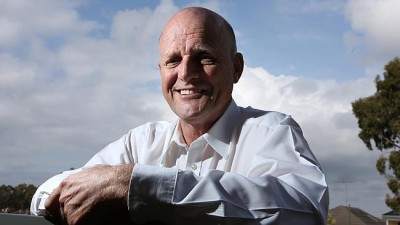
Senator David Leyonhelm

And rightly so: Pac Hydro’s continued mistreatment of its wind farm’s neighbours is nothing short of a disgrace – it is unnecessary, unjustifiedand, in STT’s view, criminal.

And, so it was, that South Australian Senator, Bob Day came to describe their evidence as “harrowing”: thankfully, not a word that gets much of a run these days; but, given the gravity of the harm being caused, and the genuineness and obvious sincerity of the victims, one that’s right on the money.

Senator Bob Day

The real significance of the day was not only what Day had to say, but that he, and the other Senators on the Committee, including David Leyonhjelm from NSW and Matt Canavan from Queensland have had their eyes opened to the scale of the wind power fraud; and the entirely unnecessary suffering it continues to cause.

These boys have uniformly stiffened their opposition to the wind industry; and have joined forces to call for a halt to the greatest rort of all time.

‘Wait for wind inquiry before changing RET’: Bob Day
The Australian
Rosie Lewis
22 April 2015

Family First senator Bob Day has asked Tony Abbott and Industry Minister Ian Macfarlane to delay a vote to change the Renewable Energy Target for six months, until the conclusion of a Senate inquiry into wind turbines.

Any lengthy delay to the scheme is likely to frustrate the renewables sector and energy ­intensive businesses, which have urged the Prime Minister to end the RET stalemate.

Senator Day said he had heard “harrowing” evidence about the impact of wind turbines on humans and animals during the inquiry’s first hearing last month and wanted to know all the “facts and figures” before a RET deal was reached. “I think it’s not unreasonable to ask that we don’t come to any agreement on the Renewable Energy Target until such time that we get to the bottom of this,” he said.

“I’m not talking about ending the RET, I’m just talking about ‘let’s defer the decision on it’. Nothing’s going to happen in the next six months anyway. It’s more important to do this right than do this quick.”

Labor has backed a compromise from the Clean Energy Council, which would cut the large-scale RET from 41,000-GWh by 2020 to 33,500GWh, but the government’s final offer remains at 32,000GWh.

Without support from Labor or the Greens the government needs six crossbench votes to see legislation pass the Senate.

Liberal Democrat senator David Leyonhjelm, who is also on the wind turbine committee, said he had given the government’s RET offer conditional support.

Senator Leyonhjelm said he was much more likely to support the government’s target if there was less of a “big leg up” to the wind power industry.

“Ian Macfarlane is doing the rounds in an effort to get six votes,” he said. “I think he probably will get six votes. (The government) will have my vote, with conditions. I’m not a fan of wind turbines, they are killing birds and they are also making some people sick.

“My support for 32,000GWh relates to not giving a particularly big leg up to wind and giving more scope for other sources.”
The Australian

Bob Day followed up with this letter to The Australian on 27 April 2015.

No rush on RET

Because I have asked Industry Minister Ian Mcfarlane and the Prime Minister to defer a vote on the Renewable Energy Target until a Senate inquiry into wind turbines has handed down its report, Kane Thornton of the Clean Energy Council tells me I have little regard for the many thousands of people whose jobs are at risk every day this review remains unresolved.

This inquiry held its first hearing on March 30 and heard evidence about the adverse effects of wind turbines on humans and animals. The evidence was compelling. There was also evidence on the efficacy of wind turbines to reduce carbon dioxide given the amount of the gas required to manufacture and install them.

Since that hearing, information has been provided regarding reports from the 1980s about the adverse effects of wind turbines. The enquiry is keen to understand what wind turbine owners know, and how long they have known it.

The inquiry hands down its report in August. Given the seriousness of the evidence so far, I do not think it unreasonable to request deferring a vote on the RET until then.
Bob Day, Senator for South Australia

The claim by the CEC’s head spruiker, Kane Thornton that “thousands of jobs are at risk” is utter bunkum.

It’s the installation of domestic rooftop solar that’s created the thousands of jobs he’s referring to; and none of them are under threat. No-one is out to scrap the Small-Scale Renewable Scheme (SRES) – which provides the subsidies for rooftop solar – it’s got plenty of backers and – unlike the wind industry – no sworn enemies.

Contrary to the CEC’s wailing, there are no wind industry jobs under threat. Construction activity has ground to a standstill, simply because retailers stopped entering Power Purchase Agreements over 2½ years ago, in November 2012, long before the RET Review kicked off in April 2014 (see our post here).

In the absence of PPAs, wind power outfits have been unable to obtain finance to sling up any new fans. And it’s that fact that means that there are no construction jobs under threat – jobs which are fleeting, in any event. And the handful of wind industry jobs that have any permanence – such as changing oil, replacing generators and blades etc – are under no threat at all from the RET Review. No the CEC’s “case” is all about conflating domestic solar and industrial wind power, when they have absolutely nothing in common – in its efforts to ensure the LRET remains untouched, the wind industry has been using the domestic solar business as a kind of political “human shield”:

Angus Taylor: Coalition set to kill the wind industry, while supporting rooftop solar

As to the claims about the LRET creating thousands of “groovy green” jobs, to debunk that myth you need look no further than Germany, where its insane rush into wind power has seen major energy intensive industries head to the USA to avoid rocketing power prices, while at the same time the millions of so-called “green” jobs, promised by the wind industry there, simply failed to materialise:

German industry set to flee renewable power price punishment

Germany’s Unsustainable “Green” Jobs “Miracle” Collapses

So, Bob Day needn’t worry too much about the CEC’s last ditch attempts to save the LRET; and to avoid the unavoidable: the wind industry is on its last legs, and the CEC knows it.

matt canavan

Matt Canavan – who hails from Rockhampton in Queensland, and was another on the Senate Inquiry Committee whose eyes and ears were opened at Portland – has now taken a keen interest in the disaster planned by one of Queensland’s cheesy “white-shoe brigade” for the pristine, tropical wilderness of Mt Emerald, on the Atherton Tablelands:

The Battle for Mt Emerald FNQ: What’s the Price for the Sound of Your Silence?

STT’s covered the politically stinky relationships and wheel greasing that’s gone on behind closed 5 Star Resort doors in the developer’s efforts to side-step the obstacle to his plans to wallow in the REC Subsidy trough, created by a thousand or so dedicated pro-farming and pro-community advocates:

Mt Emerald: Tablelands Regional Council Puts People & Environment Before Proposed Wind Farm Disaster

It’s an economic nonsense and environmental disaster in the making that has locals seething – over 90% of locals are dead set against it:

1,000 Sign Petition Against Mt Emerald Wind Farm: Survey says 92% Opposed

Now Matt Canavan has entered the fray.

SENATOR REQUESTS DELAY TO DECISION ON MT EMERALD WIND FARM
Media Release
23 April 2015

Senator Matt Canavan has requested the Queensland Government to delay making a final decision on the Mt Emerald wind farm proposal west of Cairns.

This follows a decision by a Senate committee inquiring into wind turbines to hold a public hearing in Cairns on May 18.

Senator Canavan is a member of the Committee and has written to Deputy Premier Jackie Trad requesting a decision on the Mt Emerald proposal be deferred until after the Cairns hearing.

“One of the purposes of the Committee’s hearing in Cairns will be to hear from the local community, and the proponent, about the proposed wind farm at Mt Emerald,” Senator Canavan said. “My understanding is that the Queensland Government is currently considering whether to approve this project.”

“In the interests of wide stakeholder consultation and best-practice policy-making principles, I have requested that the Queensland Government delay making a final decision on the Mt Emerald proposal until it has the opportunity to hear the evidence presented to the Senate Committee.”

“Previous hearings have heard compelling evidence from residents living close to wind turbines about their impact on residents’ health and wellbeing. Unlike other States, Queensland has no specific regulatory guidelines on the minimum distance turbines can be from a place of residence.

“Parliamentary committees provide witnesses with a range of protections. As a result, the evidence provided at this public hearing may add to the statements made at other public consultations that the Queensland Government has already conducted in regards to the Mt Emerald wind turbines proposal.”

Senator Canavan said the Senate Select Committee on Wind Turbines confirmed on Wednesday that it will conduct a public hearing in Cairns on May 18. The Committee is tasked with inquiring into and reporting on the application of regulatory governance and economic impact of wind turbines.
Senator Matt Canavan

Despite Matt’s more than reasonable call for a little public health prudence, Labor wind industry shill, Jackie Trad went ahead and gave planning approval, in accordance with the Labor Party/Union Super Fund business model.

Were Trad to have canned the project, it would have cut across Labor’s cash cow, by further threatening the Ponzi scheme in which Labor/Union heavy owned and (badly) run outfits, like Pac Hydro are well ensconced. In a cunning move, Trad’s press release giving the disaster the nod, was slipped out on Anzac Day, so that there would be no way the media would give it any oxygen at all.

STT thinks that it’s no surprise that the Senators on the wind farm Inquiry Committee have turned sharply against the great wind power fraud. And, with Jackie Trad’s sly little move at Mt Emerald, we expect Matt Canavan will come back swinging just that little bit harder.

Human beings, possessed of a modicum of empathy and decency, generally don’t like to sit back and watch the common law rights of hard-working people to live in, use and enjoy their homes get steam-rolled. And much less so, when there’s no justification at all for the harm and suffering being endured by the wind industry’s victims – which it regards as “road-kill” – and which the mock-medicos that spruik for it sneeringly call “wind farm wing-nuts“.

However, as we’ve pointed out before, the endless lies tossed up by the wind industry and its parasites just don’t wash anymore. These days, people are becoming switched on to the fraud; and angry for having been taken for gullible dupes.

Once reasonable people are introduced to the facts about the insane costs of intermittent and unreliable wind power they cease to support it.

When they learn of the senseless slaughter of millions of birds and bats, and the tragic suffering caused to hard working rural people by giant fans, reasonable people start to bristle.

But when they learn that – contrary to the ONLY “justification” for the$billions filched from power consumer and taxpayers and directed as perpetual subsidies to wind power outfits – wind power INCREASES CO2 emissions in the electricity sector – rather than decreasing them, as claimed – their attitude stiffens to the point of hostility to those behind the fraud and those hell-bent on sustaining it.

In our travels we’ve met plenty of people that started out in favour of wind power and turned against it.  But we’ve yet to meet anyone who started out opposed to wind power, who later became a supporter.  Funny about that.

Present the facts to reasonable people – and they’ll want to know how the scam got started in the first place, and why it hasn’t been stopped in its tracks already?

Watching the Senators on the Inquiry arriving at that point, provides STT with more than just a little encouragement: from here-on, the wind industry hasn’t got a hope in hell of convincing them as to any part of its pitch.

As seminal mod-rockers, The Who, wailed in 1971, STT thinks it’s a case of we Won’t Get Fooled Again:

****

Wind Turbine Noise and Action: Open Letter from Waubra, EPAW & NAPAW


April 23 2015


Open letter on wind turbine noise and action
in response to this letter

Dear decision-makers, politicians, Members of the EU Parliament, EU-Commission and other responsible public officials,


 1) 29th April, 2015 is the 20th anniversary of International Noise Awareness Day, so we would like to warn you about the dangers of wind turbine infrasound and low frequency noise (ILFN) which have been largely and intentionally ignored by the global wind industry, politicians and even health authorities. Worldwide the wind industry has been trying to force their wind turbines (WT) as close to people’s homes as possible, for the sake of profit but at the expense of the health of the local residents, by deliberately ignoring the known sleep disturbance and serious health problems caused directly by impulsive wind turbine ILFN.  Government authorities have been complicit in ignoring the existing scientific evidence, and the harm.

2) We therefore request you do your own due diligence on this issue, and investigate for yourself.  There is an abundance of acoustic, scientific and clinical information independent of wind industry influence at websites such as epaw.org;na-paw.org; waubrafoundation.org.au and scientific evidence found there, and books as Wind Turbine Syndrome by a medical doctor Dr. Nina Pierpont, MD PhD, 2009 (see also: windturbinesyndrome.com) and The Wind Farm Scam by a Reader in Ecology at the University of Wales Dr. John Etherington, 2009).

3) The facts are that wind turbine noise: audible (low frequency noise LFN – under 200 Hz) and inaudible, but sensed very much (infrasound– under 20 Hz) results in serious adverse health effects, and is extremely dangerous to human health.  Direct causation of symptoms and sensations from wind turbine generated impulsive infrasound and low frequency noise was established by US scientist Dr Neil Kelley in the 1980’s.  More recently Steven Cooper’s work in Australia at Cape Bridgewater for wind developer Pacific Hydro has confirmed many aspects of Kelley’s research thirty years earlier.

4) The lifetime span of wind-turbines is from 20 up to 25 years and there are another 25 years to be expected with new turbines at the same place, therefore there is no escape from them for people in their lifetime. People are mostly exposed to pulsating infrasound. These pulses arise as the wind turbine blades pass the pillar.

5)  Therefore we firmly demand that you, as one of the decision-makers:

5.1.  Start considering the scientific evidence on the dangers of wind turbine noise, which go back as far as 30 years (NASA study, others and a historical overview on the wind turbine noise). These studies have shown that especially infrasound penetrates through closed windows and walls, and even resonates and amplifies within rooms to cause even stronger effects (cdn.knightlab.com ),

    5.2.   Stop ignoring so many people all over the world crying for help and even leaving their homes due to the wind turbine noise (for example: epaw.org; na-paw.org),

   5.3.   Recognize that wind farms are one of the worst night time noise pollutants of today and that prolonged sleep deprivation is also considered to be a method of torture by the ‘’The UN Committee against Torture (CAT),

   5.4.   Recognize what the wind industry does not want the general public and responsible public officials to learn, that there is much evidence on infra- and LFN wind turbine noise including the facts that:

– More megawatts produced by more powerful wind turbines means a greater proportion of infrasound and low frequency noise is generated,

– Infrasound is known to travel very, very long distances,

– Noise-pollution by wind power developments with many wind turbines is much, much stronger than one with only wind turbine, although serious health damage can occur from just one wind turbine if it is too close to homes and workplaces,

– Infrasound from wind turbines on hills will travel greater distances,

– Stronger winds, higher air moisture, lower background noise in rural areas, temperature inversion, etc., can mean greater adverse impacts from relatively higher levels of infra- and LFN noise pollution,

– No current models exist which accurately predict real wind farm infrasound and low frequency noise pollution,

– Children, older people, pregnant women are especially sensitive and threatened,

– Safe setback distances for different sized wind turbines in different terrain have NOT yet been established and demonstrated to protect the surrounding population.

– Change the current noise measurements to full spectrum measurement inside homes and recognize that A-Weighted Sound Level (dBA) is inappropriate and unsafe because it does not include low-frequency noise and infrasound,

– Stop the use of dBA for wind turbine noise assessments immediately,

– Stop the wind power subsidies immediately. 


                We look forward to hearing from you soon. Thank you in advance.


                                                 Yours faithfully,


Jean -Louis Butré
European Platform Against Wind Farms
EPAW : 877 organisations from 24 European Countries
President  3 rue des eaux Paris 75016 France
contact@epaw.org
www.epaw.org
+33 6 80 99 38 08

Sherri Lange
North American Platform Against Wind Power
NA-PAW, USA-Canada : 106 organisations
CEO
416-567-5115
kodaisl@rogers.com
www.na-paw.org


Sarah Laurie
WAUBRA FOUNDATION
The Waubra Foundation is a national Australian organisation formed  to facilitate properly conducted, independent multidisciplinary research into the new health problems identified by residents living near wind turbines
BMBS CEO PO Box 7112 Banyule VIC 3084 AUSTRALIA

+61 474 050 463
sarah@waubrafoundation.org.au
www.
waubrafoundation.org.au/

Why Does Wynne’s Granddaughter Deserve Protection, But NOT My Son???

The SELFISH Granny…
Kathleen Wynne is not your friend. She says she wants to let you buy beer in the grocery store and save her granddaughter Olivia from Climate Change but she is not your friend.
Here is how I know.
My son Joey has a diagnosed neurological condition which has made his young life a great trial. He is extremely sensitive to noises and visual stimulations which can trigger seizures and cause serious harm to his health.
His neurological Specialist composed a letter for me to give to Kathleen Wynne describing his condition which I did have delivered to her and to the Minister of Energy Bob Chiarelli.
All say that they are concerned and that their ministry will make green energy to protect human health and that they are sure he will be ok. But they can’t say this. And they never tell the wind company not to come to your area because your son will have debilitating health problems for the rest of his life.
We moved to quiet rural area to protect Joey’s health. He has grown up here and at 14 making him leave our home will be devastating to his sense of safety and comfort. He will lose his school friends who have accepted him the way he is. His familiar surrounding will disappear.
Ms. Wynne though, only cares about her granddaughter Olivia. But I wonder what Olivia would say if she knew this? Would this make her feel good about her granny?
Like most innocent children I am sure Olivia would be very upset if she knew that this young boy Joey was going to have an impossible struggle to survive if he had to live surrounded by giant wind turbines at home and at school all day and all night? Where does he go?
I have had no help from my premier. But I have received some kind advice form an unlikely source. The Environmental Review Tribunal coordinator Eva Petrysik – a rare civil servant who seems to actually care suggested I write a pleading letter to the Mr. Dennis Maloney  lawyer for the wind developer at Tory’s LLP.
My son’s personal safety matters. There are thousands of special needs and autistic kids in rural Ontario who will be chronically exposed to wind turbine emissions both noise and visual effects. So which ones does our devoted granny select to protect?  Would you like to make this choice? Is unreliable, low performing, costly and harmful wind energy good enough to ruin these kids’ lives? We have international treaties and organizations to protect children from harm but your premier does not care. She is abusing her power and my son.

Australian Senate Inquiry Drags Wind Industry’s “Dirty Secrets” Into Light if Day!

Senate Inquiry: Hamish Cumming & Ors tip a bucket on the Great Wind Power Fraud

senate review

****

The Australian Senate Inquiry into the great wind power fraud kicked off on 30 March.

And, fitting it was, that this band of merry men – Queensland National Senator, Matthew Canavan, WA Liberal, Chris Back, independents Nick Xenophon and John Madigan, Liberal Democrat, David Leyonhjelm, Family First Senator, Bob Day (and one, not-so-happy, Labor women, and wind power fraud apologist), Tasmanian ALP Senator, Anne Urquhart – set to work taking the lid off the wind industry’s “stinky pot”, at Portland, Victoria: the town next door to Pacific Hydro’s Cape Bridgewater disaster.

The hall was packed with people from threatened communities from all over Victoria and South Australia; and long-suffering wind farm neighbours from there – and from elsewhere – keen to hear Steven Cooper’s exposition on the findings of his groundbreaking study (see our posts here and here and here). And see our last few posts for Cooper’s evidence to the Inquiry; and the ripping report from Today Tonight’s Rodney Lohse.

Beyond that it was also an opportunity for witnesses to tip a bucket on the great wind power fraud, and the state-sanctioned malfeasance of wind power outfits, more generally.

On that score, set out below is the Hansard (transcript) of the evidence given by a number of STT Champions, like Hamish Cumming, Annie Gardner and Keith Staff.

The way that their evidence played out and was received speaks volumes about the calibre of the witnesses. It also points to the very obvious fact that the Senators on the Inquiry, all bar one, are out to help the wind industry’s countless and unnecessary victims. Whereas, on the other hand, the wind industry and its apologists, like Anne Urquhaut, are hell-bent on preventing that from ever happening.

Senate Select Committee on Wind Turbines
Application of regulatory governance and economic impact of wind turbines
Private Capacity
HANSARD
30 March 2015

CUMMING, Mr Hamish, Private capacity
EZARD, Ms Catherine, Private capacity
GARDNER, Mrs Ann, Private capacity
HETHERINGTON, Mrs Janet, Private capacity
POLLARD, Mrs Robin, Private capacity
POLLARD, Mr John, Private capacity
ROGERSON, Mr Bill, Private capacity
ROGERSON, Mrs Sandy, Private capacity
STAFF, Mr Keith, President, Southern Grampians Landscape Guardians
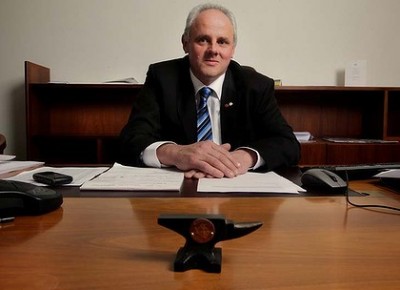
John Madigan

****

CHAIR: I welcome Mr Bill and Mrs Sandy Rogerson, Mr John and Mrs Robin Pollard, Mr Keith Staff, Mrs Jan Hetherington, Mr Hamish Cumming, Ms Cathy Ezard and Mrs Ann Gardner to the hearing. Thank you for your submissions. The committee has a copy of these before them. Before we begin, can I again remind everyone that, in giving evidence to a parliamentary committee, witnesses are protected by parliamentary privilege. It is a contempt of the Senate for a witness to be threatened or disadvantaged on the basis of their evidence to a parliamentary committee. Privilege resolutions 6.11 and 6.12 clearly state that interference with or molestation of witnesses may constitute a criminal offence under section 12 of the Parliamentary Privileges Act.

I want to repeat the following advice from the Clerk of the Senate that was provided to this Senate Community Affairs References Committee inquiry into wind farms in 2011:

If a person who is covered by a confidentiality provision in an agreement gave evidence to a parliamentary committee about the contents of that agreement, they could not be sued for breaching that confidentiality agreement.

I also remind everyone here today that a person who is adversely named in evidence to a parliamentary committee has a right of reply. A right of reply has been afforded to those people who have been adversely named in written submissions to this inquiry. For the purposes of the public hearings, where a witness adversely reflects on another person, I will interrupt the witness and may suspend proceedings. It is the committee’s intention to gather evidence that is directly relevant to the terms of reference for this inquiry. While adverse reflections on third parties may be a matter of related interest, they do not assist the committee in responding directly and objectively to the terms of reference.

Information on parliamentary privilege and the protection of witnesses and evidence has been provided to you and copies are available from the secretariat. I now invite you to make a short opening presentation, and at the conclusion of your remarks I will invite members of the committee to put questions to you. Who would like to make a brief opening statement?

Mr Rogerson: Good afternoon, Senator Madigan and panel members. My wife and I are third-generation farmers and live adjacent to the 32-turbine Oaklands Hill Wind Farm at Glenthompson, Victoria, operated by AGL. Our home is 2.5 kilometres and our woolshed, where we work almost every day, is 1.7 kilometres from the nearest turbine, in an area deemed as an extreme fire risk through its location relative to the Grampians National Park. The Oaklands Hill Wind Farm, which is sited over the ridge lines of rolling hills in a saline, tunnel-erodible area, on a breached volcano, began operating in August 2011.

By September 2011, one of our sheepdogs became severely affected. Soon after, we both started to experience physical changes. I began to wake suddenly at night with heart palpitations, and my wife started to experience humming and vibration in her ears and waking up frequently at night. We notified AGL, and they conducted noise testing at our woolshed and home. AGL identified what they termed a tonality problem at three to five minutes per second wind speed. They replicated our dog kennels at the woolshed, moving the dogs to the house. By 14 March 2012, nine turbines west of the Caramut-Glenthompson road were turned off between 8 pm and 7 am Australian Eastern Standard Time. In April 2012, we found deformed lambs, something we had never seen before in all our years of farming. By marketing time, we found the mob closest to the turbines had lambed at the rate of only 37 per cent, down from a normal average of 85 per cent for our merinos.

AGL told us: ‘We are going to fit dampeners to the gearboxes of the turbines to fix the tonality problem and return operations to full capacity by November 2013.’ However, this did not happen at that time. But last Wednesday night, 25 March 2015, the turbines were all turned back on at night, after being off for three years. With the turbines off at night, we had been able to survive and work our farm. Whilst my wife’s ear problems persist, my palpitations have subsided. Our sheepdogs, however, have never fully recovered; there is a marked alteration in their personalities and their ability to work. And, despite our best efforts to reduce the effects by moving our lambing ewes from the paddocks closest to the wind farm, there are still deformities evident.

There is a huge problem between wind farms and life. The effects are debilitating. The National Health and Medical Research Council must investigate our concerns and do something about the problems we have to endure. In fact, there is a real need for all wind turbines, Australia wide, to be turned off at night to ensure life’s essential—sleep. The current guidelines for wind farms are based on outdated and inappropriate standards, with measurement of infra-sound, low-frequency noise and vibration non-existent. The siting of wind farms is incomprehensible where human and animal detriment, geological and environmental affliction—including fire risk—are precariously reconciled as net gain. Thank you.

CHAIR: Is there anybody else who wishes to make a brief statement? Just so that people are clear: the committee does want to ask questions of all of you, and it is very easy for us to chew up the time allocated for your presentations. That is just so you are conscious of it. So you are welcome to make a statement, but can we just keep them condensed so that we can get time to ask questions of you.

Mrs Pollard: Good afternoon. My message is short. Most aspects will be covered by others and are already in our submission. I did not believe for one moment that I would be affected by low-frequency infra-sound. Three to four months after the wind farm commenced, I realised I was badly affected. It was still extremely difficult but I managed to cope when the turbines were turned off at night. It varies with climatic conditions and is worst when the wind drops in the late afternoon but there is still wind turning the turbines on the hill. Infra-sound is more severe in various parts of the house. I could only cope because I knew I had a few more hours before they ceased for the night. The turbines were off for three years but were turned on again five days ago, and for two nights since it has been impossible to sleep. I appeal again to the Senate for help. Thank you.

CHAIR: Thank you.

Gardners

****

Mrs Gardner: Thank you very much to all the senators for instigating this inquiry and allowing me the opportunity to speak. The suffering at Cape Bridgewater has been appalling. Steven Cooper has done a great job with his studies, and the residents must be commended for their cooperation during this groundbreaking investigation.

It is well known that the larger the turbines the larger the noise emissions. I would like to point out to the committee that at Macarthur we are forced to live with 140 three-megawatt turbines as close as 90 metres from our fence. In August 2013, a preliminary health survey was conducted around the wind farm. Sixty-six per cent of responding households reported acoustic impact; 96 per cent of those reported disturbance during the day; 100 per cent reported disturbance from turbines at night. Twenty-three households were affected, with 62 people being affected—out to eight to nine kilometres.

In January 2014 Piper Alderman acted on behalf of 42 residents, issuing Moyne Shire with a claim of nuisance under the Victorian Public Health and Wellbeing Act. This was denied, with reference to the NHMRC statement: ‘No consistent or reliable evidence of health impacts.’ My family have made nearly 200 health complaints to AGL and government agencies, and AGL has received hundreds more complaints from other impacted residents. AGL denies responsibility for our health symptoms. They refer to the NHMRC statement, the AMA and Victoria health department’s two reports, and then recommend we visit our doctor—the same district doctors who had received AGL’s letter mischievously informing them that there is no infra-sound from turbines. AGL breached the doctor-patient relationship with this action. I received a letter from AGL asking permission for them to contact my doctor, no doubt to inform him that my complaints of infrasound were not due to their turbines. AGL has treated us very shabbily.

We were offered turbines in 2005. We refused. Several years later we were offered a relocation package by Meridian Energy, which we also refused. Not long after being awarded second prize in the Zegna of Italy prize for the finest fleece in the world, our ultrafine sheep enterprise was destroyed by dust inundation, contaminating drinking water over months and poisoning the sheep. We were one of only 10 producers in the world producing this wool. We lost a projected income of several million over the next 10 to 20 years. This business was 80 per cent of our farm income.

Despite ongoing complaints to AGL, they denied responsibility even though we were forced to clean our house several times. We had fraudulent compliance noise testing carried on at our property not according to the New Zealand standard. Moyne Shire and the Victorian department of planning ignored this and deemed the Macarthur Wind Farm compliant. We have comprehensive acoustic evidence proving noncompliance all around the wind farm. AGL wrote to us saying that, if infrasound testing takes place at our home, I must make a public statement claiming the Macarthur Wind Farm is compliant.

Nobody has ever visited our property to investigate our complaints of pain and suffering. My husband and I are forced to leave our farm for two nights every week to get some sleep. We cannot see or necessarily hear the turbines from our home, but we are being hammered with infrasound low-frequency noise. There is every indication that the New Zealand standard does not protect sleep as it does not measure the infrasound low-frequency noise inside homes. Thirty years ago, NASA research confirmed wind turbine infrasound and low-frequency noise directly cause sleep disturbance. Why is this crucial evidence from the US Department of Energy and NASA led by Dr Neil Kelley still being ignored, in particular by the NHMRC?

My husband experienced bolts of pressure which tallied up with pressure peaks measured by Les Houston 86 per cent of the time while my husband was blind to the acoustic measurements of the time. Refer to his recap statement. I suffer day and night from headaches, nose and ear pressure, nausea, heart palpitations and chest burning from vibrations through the floor, couch, chair and in bed all night.

Lack of accountability for all health authorities is a scandal. We cannot guarantee a safe working place for employees. I can no longer work in the paddocks. The current standards are just a joke. The New Zealand standard does not protect sleep as it does not measure infrasound inside homes. Infrasound is a real problem, and Steven Cooper’s results have demonstrated what Dr Neil Kelley’s study discovered 30 years ago. There are real safety issues on our farms.

Ongoing sleep deprivation is particularly dangerous when driving or operating farm machinery. I refer the committee to the case of Mr Peter Jelbart who has a huge problem driving his truck. He is exhausted. He has discovered he cannot continue his trucking business and live at his home at the same time due to severe sleep deprivation. Moyne Shire has refused to accept our peer reviewed assessment report by Les Houston. The shire has failed to protect us from noise nuisance despite hundreds of complaints. One councillor even suggested that residents may have tampered with noise-testing equipment. At a meeting in 2014, I along with one other neighbour was verbally abused by a representative of the Ararat Shire Council when we attempted to discuss health issues. Needless to say, we left that meeting in tears. There is no transparency in the authorship of the two Victorian department of health reports released in May 2013. Many peer reviewed reports were ignored, and my FOI request for information regarding authors and correspondence was refused. My appeal was upheld and now this case has been going on for nearly two years already. What does the Victorian department of health have to hide?

This is not about money, as you will have realised from our refusal of AGL’s offer to us. We just want to be able to live in our own home and work on our property the way we had for 32 years before the Macarthur Wind Farm began to create a nuisance and to trespass on our property rights with acoustic emissions from turbines 1.7 kilometres from our home. Please do not ignore our pain and suffering. These same symptoms were reported in 2004 by Dr David Iser at the Toora wind farm.

We need thorough compliance investigation and proper enforcement. We need thorough multidisciplinary health research in the field. Infrasound measurements must take place both inside and outside people’s homes. It is essential that Steven Cooper is employed at the Macarthur Wind Farm, as the symptoms are exactly the same to those in Cape Bridgewater. We need the turbines turned off at night so we can sleep in our own homes, which is our common law right.

Instead of moving to rectify this public health disaster, all levels of government and the wind industry are hiding behind the smokescreen of the NHMRC’s statements when in fact Professor Anderson recently admitted at, I believe, a Senate estimates hearing that there are health effects from turbines. To continue to ignore our pain and suffering is pure wilful blindness. Once again, I invite the committee to visit the Macarthur Wind Farm to speak to the impacted residents. Thank you very much.

Mrs Hetherington: My name is Jan Hetherington. I am an artist, I am a widow, I live three kilometres from the Macarthur wind facility and I am heavily impacted on by the low-frequency and infrasound emitted by the 140 three-megawatt turbines. The Macarthur wind facility was accredited in September 2012 before it was fully operational. In late January 2013 AGL was receiving recs for the wind facility which was not necessarily compliant and was not deemed compliant until the Moyne Shire voted in September 2014, ignoring residents’ pleas for council to view their independent acoustic report showing ample evidence that the Macarthur wind facility was not compliant. Residents have done independent noise testing for two years at their own expense where they have proved that there is infrasound, but no-one seems to want to listen to the truth. There is no-one looking out for us. The Victorian planning department and the Victorian health department take no responsibility for us. The system is broken. It has failed us, all because money and profits are the priority.

My business has suffered as I find it hard to work solidly in my studio for any length of time because of a vibration which feels like an electrical charge running through my body and noise nuisance. My ability to earn a living has diminished. My family no longer enjoy lengthy holidays with me on the farm for fear for their health and their children’s health from the damaging infrasound and noise nuisance. I have now become sensitised. After a recent procedure in hospital in Melbourne I experienced the same sensations of vibration, palpitation and tinnitus as I experience at home. I have become permanently damaged through the exposure to infrasound from the Macarthur wind facility.

At my farm, I experience severe adverse health effects such as vibration, heart palpitations, tinnitus, head pressure, headaches, sleep deprivation, anxiety, night sweats, nausea, itchy skin, cramps, and ear, nose and throat pain. Twice now I have experienced horrendous pain in my chest stabbing through to my backbone in between my shoulder blades. I contemplated calling an ambulance both times but could not move to do so because of the severity of the pain. Ten minutes later it had dissipated, leaving me with great stress and anxiety and feeling washed out. All these sensations leave me drained in the morning. I find it very hard to start work that day.

When I make a formal complaint to AGL they respond in the most contemptuous manner, with references from the NHMRC statement saying there is no reliable or consistent evidence that proximity to wind farms or wind farm noise directly causes health effects. The wind industry uses this statement to deny claims of health impacts; therefore, they refuse to do anything about it. Warwick Anderson from the NHMRC admitted in a Senate estimates hearing that there are health impacts from wind farms. What is going on?

AGL’s objectionable letter to the doctors at 12 medical clinics in the western district made my blood boil. I had a perfectly healthy, happy and trusting relationship with my doctor before AGL started meddling with my doctor-patient relationship. Many times I spoke to him about my health complaints due to the Macarthur wind facility and he was caring and wanted to help me. But one day during a consultation he turned to me and told me that infrasound will not hurt me and that I will just have to get used to it. I was gobsmacked and could not believe my ears. I asked him where he got his information from. He rifled through some paperwork on his desk and, as he did so, I noticed a letter with an AGL letterhead. I asked him to explain himself. That is when he told me that this information came from AGL, asking doctors to refer patients to the AGL website if they presented themselves with complaints due to the wind farm. This interference is outrageous. AGL have no medical expertise and have no right to interfere in a doctor-patient relationship. In my opinion, it should be a criminal offence to interfere in a doctor’s medical assessment of a patient.

We need comprehensive, multidisciplinary research into the health impacts from this noise nuisance. This research has to be carried out in the field and not behind a desk in downtown Melbourne. We need to have the same research carried out at Macarthur wind farm by Stephen Cooper as he did with Cape Bridgewater wind farm, where he found ground-breaking evidence that there is infrasound. I have pleaded with AGL to turn the turbines off at night between 7 pm and 7 am so I can get a good night’s sleep, but they simply ignore my pleas and refer me to the NHMRC statement. What a crock! AGL’s Glenthompson wind farm is turned off at night because of the health impacts and noise nuisance on residents. Why can AGL not do the same at Macarthur? Lord knows we continually request that, and the answer is still no.

Mr Pollard: My name is John Pollard. I am a retired station manager and we live on a lifestyle property of approximately 80 acres. Firstly, I would to say that Robin and I find it very difficult to appear here today as a number of our friends have turbines on their land. It is such a serious problem for us and many others that we felt compelled to be heard. Too many people have had to leave their homes. One family near us left their home almost 3½ years ago, and they are here today—Adrian and Helen Lyon.

The wind farm guidelines on health issues of this very serious problem have to be assessed. They will not acknowledge infrasound. I will relate one incident that happened in our home one night. My wife was sleeping in the chair beside me and I was watching television. This is after they had turned the turbines off. She was dead to the world and I was just watching the television. All of a sudden she woke up, completely startled and disorientated, and I was really worried about her because I thought she had had a stroke or something. Eventually she came to her senses and she said the turbines must be on. I said, ‘No, they’re not. It’s 10.30. They turn off at nine o’clock.’ I went outside and they were still running. So I thought that next day I would ring AGL. When I was about to ring, they rang me and said, ‘I’m sorry, John. We forgot to turn the turbines off last night.’ This is before it was computerised.

It really is a problem, and there are people further away from the turbines than us who are badly affected. One property is 3.5 kilometres away and she has got exactly the same symptoms that Rob has. Our property is on the bottom of a volcanic breach and it is the end of the lava flow and the turbines are well above us. Whether there is a seismic effect I would not know, and there have been queries about that. Dr Mosley in New Zealand said that they are tuning forks on hills. I do not know whether that applies to us, but we are certainly suffering from infrasound very badly.

Mr Cumming: I have tabled my opening statement in lieu of time. It just talks about the destructive impact of wind farms on brolgas and raptors and how greenhouse gases are not being abated. If you are happy with that, I would prefer to take the time in questions.

Keith staff

****

Mr Staff: I have lived in Penshurst for the last seven years plus. My wife and myself, after 30 years of living and working in Melbourne, decided that it was time for retirement, and what better part of the world could we retire to but the Southern Grampians. It was beautiful, quiet and rural. Were we wrong! After two years or so of making the big move, or tree change, we found out by accident about a proposal for an industrial wind energy facility of 223 turbines 175 metres tall to be located three kilometres from the edge of our historic property and the Penshurst township. This proposal would adjoin the Macarthur facility. The implications are horrendous.

If I could backtrack, at first I had an open mind about wind farms when we found out about this proposal. However, being a fairly independent minded sort of person, I decided that I would do some of my own research into the whole topic and question. This included visiting some impacted residents at Waubra. I had heard of Waubra but I had never visited. People said to me, ‘If you want to find out a little bit about this wind farm, visit these people.’ So we did. I was horrified. For the first time, I got up close and personal to a gigantic wind turbine—several of them. I heard the noise. These people were badly impacted—their health. That was the first indication to me that all is not what the proponents say. Secondly, we visited people at Glenthompson—and you have just heard some comments. There were the same repercussions, the same problems, the same impact. Then there was Macarthur. We visited Macarthur and we know people at Macarthur. To all of our quiet questions, our inquiries, the same message came back. Cape Bridgewater was the same. I visited the residents. I know how badly they are impacted. So we packed away a lot of personal experience and meeting people over a period of maybe two years.

So then I decided to get active. I changed from being non-committal and open minded to being anti industrial wind farms—and I am proud to use the word ‘anti’. Rather than just complain, I did one or two things. I formed a group. I am president of the Southern Grampians Landscape Guardians. Also I am an active member of the Australian Industrial Wind Turbine Awareness Network—a bit of a mouthful but there is such a group. We estimate that we have over 3,000 members in that network nationally. So it is not just a few people complaining in a few isolated rural areas; this is happening nationally. I am a committee member of the recently formed group in Victoria called Wind Industry Reform Victoria. Also I am a committee member of the Brolga Recovery Group—and that is a whole different situation. The brolga is a threatened species and an iconic bird in the south-west. Wind farms are the natural enemy of brolgas—they leave.

I sometimes have to justify my position to people. Locally, the town is bitterly divided. Families are divided. I do not have to justify my position—I am perfectly comfortable with my position and my knowledge—but I sometimes have to state the obvious facts. When people—and maybe the media—infer that I have connections I have to tell them that I do not receive any funding from the fossil fuel industry, I do not belong to any political party and I do not belong to a religious organisation; all of this is formed from my own contacts, knowledge and travel, including to the previous Senate inquiry in Canberra two or three years ago.

I will not go into the detail of my submission but it is based on my informed view that the whole industrial wind power business is a catastrophe on every level—environmental, social, fiscal and economic. The whole industry is characterised by exaggerated claims and false propaganda put out by the wind industry. I will finish with some comments about planning issues, the full text of which is in my submission. The planning issues are many and varied, and there is a strong case of fraud to be levelled at wind proponents and their paid consultants. If anybody wants clarification about what fraud means, it is easy. Fraud is an individual, a company, an organisation or a business supplying incorrect and misleading information in the pursuit of making a financial gain—and that is the wind industry.

Proponents’ consultants are paid large amounts of money to produce reports and assessments with one aim in mind, and that is to ensure that their clients gain a planning permit approval. These same consultants are then retained to make expert witness submissions at planning hearings, such as the VCAT scheme in Victoria. Individual community members making submissions at the panel hearings—and we have attended some in Melbourne—are effectively closed down by lawyers and barristers acting on behalf of the proponents. The common phrase is that you are not regarded as an expert witness. These are people who have lived and worked on their properties in rural areas for ages, and they are told: ‘You really don’t know what you are talking about; you are not an expert witness.’

Finally, the same misleading and inaccurate assessments by the consultants are then presented to planning and environment ministers and shire councils, with no independent experts appointed to check on the assessments. Shire councils, I believe, sometimes act with vested interests. Their first priority should be the health and wellbeing of their residents and their ratepayers, not to make it easy for wind proponents to gain planning permit approvals. Shire councils can be accused of wilful blindness; you have already heard some comments. Openness, honesty and transparency are a joke, as are shire councils’ community consultation processes. They are simply a ‘tick the box’ exercise run by slick city-based PR organisations acting on behalf of proponents. Thank you.

Ms Ezard: My statement is very short. I wish to thank the committee for taking on this important debate. The wind turbines at Cape Bridgewater have impacted on my enjoyment of my area. We are currently trying to sell our property so we can relocate away from the turbines in retirement. At the time the turbines were proposed for the Portland area, there was talk of 5,000 turbines for Victoria, a very small state. Where do you relocate to in order to get away from the impact of turbines? Some people have relocated, only to find another proposal for a wind factory in their new area.

Climate change is spruiked as the reason for the necessity of wind factories; it is said that, if we do not act, we leave a burden on future generations. Wind turbines will also cause a burden, with compromised landscapes even when turbines are decommissioned. Many companies, or wind factories, may no longer exist in 20 to 25 years, so who will be responsible for removing these monstrosities and rehabilitating the landscapes? Advances in technology will also cause the wind industry to become obsolete. Thank you.

Senator LEYONHJELM: I have a question for Ann Gardner. I think you said AGL has written to you, saying that you are not to say anything about infrasound.

Mrs Gardner: No. I had been complaining about the infrasound and wanting them to carry out testing on our property, because we have our own evidence anyway. They wrote to me—and I have a copy of the letter in my submission—informing me that, should the infrasound testing take place at our property, if this resulted in not breaking the rules or whatever, I had to make a public statement claiming the Macarthur Wind Farm is compliant. Compliance has nothing to do with infrasound anyway. I have the letter.

Senator LEYONHJELM: That is in your submission?

Mrs Gardner: Yes.

Senator BACK: We would like you to table that letter, if you would.

Senator LEYONHJELM: You put it in your submission, did you?

Mrs Gardner: It is in my submission.

Senator LEYONHJELM: I have not got to that bit. There are 330 pages to read for today, and so I haven’t got to that.

Mrs Gardner: I am sorry about that, but it is in there.

Senator LEYONHJELM: It is page 201, is it?

Mrs Gardner: It is a copy of the email.

Senator LEYONHJELM: Thank you. I have a couple more questions, and then I will give someone else a go. Mr Cumming, in your submission you say that the Loy Yang A power station annual report shows a rising carbon intensity, which is increasing proportionally to the increase in wind turbine output. Why is this so?

hamish-cumming

****

Mr Cumming: If you look through the annual reports from 2005 report through to about 2013 you will see that carbon intensity has continued to rise. Off the top of my head, it was something like 1.14 tonnes of carbon per megawatt and it is currently running at about 1.35. If you look at all the power stations, you will see where you can get the information—it is very hard to get some of it—and you will see that it is happening across the board, even in Queensland. The Queensland power stations are the same. It is all to do with backing up wind farms and making the grid safe so that it will not blackout. The more wind farms that come on, the higher the backup has to be. In 2005, it was something like 600 megawatts and now it is over 1,000. Nothing has changed in the grid. In fact, demand is less. The reasons for having it should be less. Industry is less. And it is all in line with wind farms coming on line.

Senator LEYONHJELM: So you think Loy Yang, Yallourn and Hazelwood burn more coal now than prior to the penetration of wind energy capacity into the grid?

Mr Cumming : Very much so. The data for Loy Yang is very clear and very public—much to their horror when I point it out to them. Now they have even changed the way they do their carbon intensity calculation. They have removed a third of the input data to try and make it look smaller, but it is very public for Loy Yang. If you look at the savings that they have made in thermal efficiency and other in-house savings of performance of the plant and then you look at the coal-led burning, there is a gap for Loy Yang of six million tonnes of coal a year today versus 2005.

Senator LEYONHJELM: Did you hear the evidence of Pacific Hydro this morning?

Mr Cumming: No. I was not here for that, sorry.

Senator LEYONHJELM: They basically put a completely alternative point of view to us on that.

Mr Cumming: Did he use Loy Yang’s annual reports and public data?

Senator LEYONHJELM: He did not provide any data. The view was simply that there was no increase in spinning capacity.

Mr Cumming: That is incorrect. You have to look at the documents that the industry runs on. There is a guy called Hugh Saddler, who works for Pitt & Sherry. He does what are called CEDEX reports, ACIL Tasman reports. That is what the industry is always based on. All the emissions, all the RECs—everything—is based on that. It is all reverse calculated. It is all calculated from what power is sold through theoretical thermal efficiency and data. It has a number of errors in it, including a seven per cent error for the Yallourn power station. When I highlighted this to them, they said, yes, they know. It is the closest thing they have got, whereas carbon intensity is actual fuel burnt. You cannot get away from it.

Senator LEYONHJELM: Do you think the Clean Energy Regulator’s reports of emissions reductions are accurate?

Mr Cumming: No, not at all.

Senator LEYONHJELM: Why is that?

Mr Cumming: Because they are relying on the CEDEX reports and the ACIL Tasman reports and those are all based on reverse calculation. None of it is based on fact. The fact has to come from the actual carbon, the actual fuel burnt—

Senator LEYONHJELM: The actual fuel burnt?

Mr Cumming: The actual fuel burnt. If you have actual fuel burnt for a half-hour period and then you use the AEMO data for the same half-hour period, you can see exactly what is happening. And this was highlighted in my submission on 4 July 2013, when McArthur, Lake Bonney and another one went off line at the same time. The power was instantly picked up, without a flicker of a light bulb, without down time of any industry. It was picked up by New South Wales and Queensland coal-fired power stations—450 megawatts. That is a massive amount of power. It is bigger than the largest Victorian single generating plant, and it was picked up instantly. The only way they can do that is if they are burning the coal already and venting for steam as backup. None of that is covered in the reports that are used officially by government.

Senator LEYONHJELM: Do you have a view on how effectively the Clean Energy Regulator is performing its legislated responsibilities?

Mr Cumming: My personal belief is that they cannot perform their responsibilities if they are not using facts. If they are using reverse calculated data estimates, they cannot perform their responsibilities. They have got to get the facts.

Senator LEYONHJELM: What would you do? Would you broaden their responsibilities or change the way they calculate what they are supposed to calculate already?

Mr Cumming: I would change the rules so that they have to use base data from the entire power industry. That will force the generators to provide the hourly coal feed, gas feed, fuel feed data. At the moment there is no regulation to enforce those companies to provide the data—and it is not in their interests to because it affects how they get paid. If they tell the truth about what they are doing then the investors are not going to allow AGL to buy more wind farms or build more wind farms when AGL owns Loy Yang A. It is the same with the other power stations. They all own wind farms, power stations and coal seam gas. It is in none of their interests to tell the truth.

Senator LEYONHJELM: Do you have some data on raptors and brolgas in relation to turbines?

Mr Cumming: Yes.

Senator LEYONHJELM: Could you quickly summarise that for us?

Mr Cumming: Raptors are being killed at an alarming rate by wind turbines. At one of the first Portland plants to start up at Codrington one turbine was killing 11 falcons every two weeks. Turbines in Woolnorth in Tasmania were killing at such an alarming rate that they were stopped. They come in from outside areas to feed on the dead birds and get killed themselves. AGL Macarthur employed consultants to look at it and they are estimating that the Macarthur wind farm is killing 10 birds per turbine per year, 30 per cent of which are raptors. That is 10 times what their planning permit has said they would do, yet the responsible authorities have done nothing about stopping it, limiting it or making them abide by their permit conditions.

With brolgas you have a separate issue. You have got displacement. Studies have been done in America and Australia that show that the turbines are displacing cranes—and brolgas are a crane—for a distance of up to 14 kilometres but regularly a distance of six kilometres. Since the Macarthur wind farm started—and I try to use all these people’s own reports; they are the best thing to use—their reports have said that 45 wetlands were abandoned in the first 12 months, and 25 of them were potential breeding wetlands, and no brolgas have successfully nested within six kilometres of turbines.

Three attempts at nesting were made during the first year of operation when the wind turbines were stopped. I have the whole year’s data from the AEMO from Macarthur and from other means through DSE. There were three attempts at nesting and as soon as the turbines hit 30 per cent capacity they abandoned their nests. On the first attempt they stuck it out for a few days, on the second attempt they stuck it out for one day and on the third attempt they did not stick it out—they just took off. That is what the American studies have found. The problem is getting worse over time. The displacement is greater and the time is shorter. They are a disaster for brolgas and raptors.

Senator LEYONHJELM: It is the equivalent of habitat loss, is it?

Mr Cumming: Yes, it is forcing them out of habitat. For brolgas there is very little habitat left. I am trying to stop RES at Penshurst and Trustpower at Dundonnell. Half of the remaining brolga habitat is going to be destroyed by those two wind farms if they are allowed to go ahead. They have to be stopped.

Senator CANAVAN: What would happen if you went out into the backyard and shot a few raptors in Victoria? Are you allowed to do that?

Mr Cumming: If you shot a raptor in Victoria it would be a $5,000 fine and potentially two years in jail. Macarthur’s own estimates is they killed 500 in the first year of operation. That is their own estimate and there was no penalty. They are not even told to try to prevent it.

Senator DAY: I know we have a veterinarian on our committee here.

CHAIR: Two of them.

Senator DAY: Are there any veterinarian studies you are aware of into the effects on animals of these wind turbines?

Mr Rogerson: None that I am aware of. We actually had one sent to the Werribee research place just out of Melbourne. They did not find any results. They could not pin down what caused anything to the lamb we sent down. He was badly deformed. Like I said in my thing this is the first time we have had deformities and I have been on the farm all of my life.

Senator DAY: You are not aware of any studies that have been undertaken?

Mr Rogerson: No, none whatsoever.

Senator BACK: No chemicals used?

Mr Rogerson: No.

Mr Cumming: If I can just very briefly jump in there. When touring Gippsland there was a dairy farmer who lost 30 per cent of his dairy calves that were born. When he moved them a distance away from the turbines the following year there were no losses. That is just a very strange possible coincidence.

Senator LEYONHJELM: Not exactly strange. I can understand the conception, the low fertility, but it is very hard to equate that with what Mr Rogerson is arguing about with deformities. I cannot think of any reason.

Senator URQUHART: Was there any evidence, any veterinary studies, on that one?

Mr Cumming: They based it on a study on goats that was done in Thailand, where half of a goat herd died.

Senator URQUHART: No, particular to the farm you were talking about.

Mr Cumming: No. They based their study on the Thailand one. There was no direct study on it. The Thailand one was a proper study.

Senator URQUHART: You were talking about studies in relation to the raptors and cranes.

Mr Cumming: In America, it was done by a person called—

Senator URQUHART: What about here, in relation to the comments you made about AGL?

Mr Cumming: The AGL one was done by consultants paid for by AGL. It was their own report and their own consultant.

Senator URQUHART: Can you direct us to that? Maybe not now, if you can provide it on notice.

Mr Cumming: I think I sent it as an attachment, and I attached my own analysis of it. Also, there was another study done, for Codrington-Yambuk by Biosis, again paid for by Pacific Hydro, that said the same thing: within five kilometres half of the native bird population had disappeared in the first year and it got worse in the second year and in the third year.

Senator URQUHART: Senator Leyonhjelm was asking about your claims that wind farms result in an increase rather than a decrease in greenhouse gas emissions. I think you have also claimed that coal is burnt without generating power as a result of wind turbines, so it is all sort of wrapped up.

Mr Cumming: As backup spinning reserve, yes.

Senator URQUHART: I understand that you sent a letter recently which was printed in the Mortlake Dispatch, the local paper.

Mr Cumming: Yes.

Senator URQUHART: Is that a regular daily?

Mr Cumming: It is a weekly.

Senator URQUHART: Is that all around this region?

Mr Cumming: It would be Mortlake, Camperdown, that sort of area.

Senator URQUHART: So it has a fairly broad reach. I have a letter from AGL who are the owners of Loy Yang A power station, on which you based your claims. It was sent to the Mortlake Dispatch. AGL sent this letter to the editor of the newspaper last Friday, as I understand. I am happy to table the letter for the committee. I will take you through it. Referring to the letter you had published in the paper, it says, ‘In a letter dated 19th March, Hamish Cumming claimed that wind farms operating in the electricity grid have resulted in an increase rather than a decrease in greenhouse gas emissions from the electricity sector.’ That was what was in your letter. Their comment then goes on to say, ‘This is completely untrue.’ It also states: ‘On average, the amount of emissions produced per unit of electricity sold into the network has gone down by over eight per cent since 2006, according to the national greenhouse accounts.’ The letter goes on to say that you also claimed: ‘Over this period the emissions intensities of coal power stations, including AGL’s Loy Yang A power station, have increased substantially because they necessarily burn a lot of coal without generating power so that they can be on standby to back up the intermittent power generated by wind farms.’ AGL say in their letter that this also is untrue: ‘Over the past six years the emissions intensity of AGL’s Loy Yang A power station has not substantially changed. In financial year 2009 it was 1.27 tonnes of greenhouse gas emissions per megawatt-hour of electricity sent into the network. In financial year 2014 it was 1.28 tonnes and the average tonnes of coal burnt to produce each unit of electricity sold also has not changed significantly. Over the same period, wind generation in the network has increased dramatically, with numerous wind farms built in Victoria and other states. If Mr Cumming’s claims were true both the emissions intensity and the tonnes of coal burnt per megawatt-hour of power sold would have increased during this period as additional wind power came into the market, but this has simply not occurred.’ In light of that information from AGL, would you agree that your arguments have been revealed as being incorrect?

Mr Cumming: No, not at all. What AGL are saying there is totally incorrect. I can prove that very easily, and have provided you—

Senator URQUHART: Just to clarify, you have put the letter in and they have responded to the paper, and you are saying that what they are saying is wrong—

Mr Cumming: Correct.

Senator URQUHART: that they are actually lying.

Mr Cumming: Correct, as they did when we put in the paper their report that they refused to give us for several weeks about the brolgas and raptors. They said that I was wrong as well, but it was their report I was quoting. It is the same now. I am quoting AGL’s annual report and Loy Yang A’s annual reports for 10 years. The data I am quoting is out of their annual reports. They have not said there that for last year’s figure, which has gone from 1.35 down to 1.29, they have changed the calculation of carbon intensity to reflect that. They have not gone back and changed the calculation for the last 10 years to show that the graph has gone up. In my submission there is a graph, which I did not create. It is their graph out of their own annual report that they put on the Australian Stock Exchange. They cannot argue with that.

Senator URQUHART: I am not arguing; I am just trying to get the facts, that is all.

Mr Cumming: The facts are that they are lying through their teeth.

Senator URQUHART: So, basically, what you are saying is that they are lying.

Senator BACK: To assist the committee—this is very important point—was that a letter to you, Senator Urquhart?

Senator URQUHART: It was a letter to the editor.

Senator BACK: I ask, through the chair, Mr Cumming if you would be kind enough, when you have seen the text of the AGL letter, to respond to the secretariat and explain to the committee through the secretariat where you believe AGL’s response to your correspondence is wrong so that the committee can understand completely.

Mr Cumming: I will not see that until Thursday unless you give it to me.

Senator URQUHART: The secretariat might be able to get copies. I will table it with the secretariat.

Mr Cumming: It will not be published in the paper until Thursday.

Senator BACK: We do not need it in five minutes; we just need to get your response to it.

Mr Cumming: And the community will also get my response in next week’s paper!

Senator URQUHART: Mr Staff, you said you are anti-wind and proud of it. I think those were your words.

Mr Staff: I said ‘industrial wind’.

Senator URQUHART: Industrial wind, sorry. I understand that one of the most prominent anti-wind campaigns in Australia seems to be the website stopthesethings.com, which proudly states:

We’re not here to debate the wind industry – we’re here to destroy it.

The site has also been known to use abusive language and to attack individuals who support wind. I could not find any contact information from the owners of the site on any of its pages. The contact details were also removed from a domain name own research. Did know about the site are referring to?

Mr Staff: STT? No. There must be some very committed, knowledgeable people who put that together. I am not involved with it and do not do not know of anybody who is, but they have access to a lot of factual information, including from overseas. They tend to put over their point of view in a tongue-in-cheek, rather cynical way in order to make a point. It is very well researched. I have no idea who is behind STT.

Senator URQUHART: In 2013, there was an anti-wind rally at Parliament House. You were interviewed by the ABC is the co-organiser of the stopthesethings anti-wind rally.

Mr Staff: Excuse me? The ABC said I was the co-author?

Senator URQUHART: You were interviewed by the ABC as the co-organiser of the stopthesethings anti-wind rally. That is not correct?

Mr Staff: Wrong! I never said that. They never asked me that. It is completely wrong.

Senator URQUHART: Were you interviewed by the ABC at that stage about the rally?

Mr Staff: I was asked some questions, but not whether I was an organiser.

Senator URQUHART: But you were interviewed by the ABC at the time?

Mr Staff: Can I tell you what the ABC said?

Senator URQUHART: Certainly.

Mr Staff: They said, ‘Mr Staff, it appears to us that you,’ meaning the large group of protesters who were there in front of Parliament House, ‘have reached critical mass,’ which in media speak means you can no longer be ignored—your group, supporters, the people. It was nothing to do with STT.

Senator URQUHART: I am happy to throw this open to anybody else who feels like they want to have a say: some of you have mentioned in your statements, and in your submissions as well, that you are genuinely concerned about the health impacts of wind farms, and I think we have heard from a number of you today outlining that. A 2011 article in the Medical Journal of Australia, by four Australian doctors, cited studies showing that the risk of premature death for people living within 30 miles of coal-burning power plants is three to four times that of people living at a greater distance. In that context, I would be interested in whether you would be more concerned about living near a coal plant than a wind plant.

Mr Cumming: What about solar? What is wrong with solar? We do not need to do wind turbines. What is wrong with thermal molten salt solar, which is baseload, does work, does not displace brolgas, does reduce greenhouse gas and does not make people sick? Why not use that? Why are we entertaining the idea of trying to keep something supported and alive that has so many things against when there are technologies there that do work and do not have these issues?

Senator URQUHART: Anybody else?

Mr Staff: Could I just add that all of the pictures and the visuals that ABC in particular like to throw up on their news items showing coal fired power stations have cooling towers—everybody knows the cooling towers—and all the apparent smoke and pollution billowing out. It is not pollution; it is water vapour. But there are certain people—political parties and others—with vested interests in trying to indicate that that is actual pollution coming out of those cooling towers. It is not; it is water vapour.

Senator URQUHART: I just want to go the issue of birds and bats. I think, Mr Cumming, you outlined this in some of your answers. There was a 2007 study by the government of South Australia—I am not sure whether you are aware of that—that showed that one domestic cat kills more birds in a year than one wind turbine.

Mr Cumming: Next time I see a cat take down an eagle or a brolga, I will let you know.

Senator URQUHART: That is a very good point. I am just wondering whether you are aware of that report.

Mr Cumming: I am also aware of a report that says more birds fly into windows in Melbourne as well, but they are talking about sparrows, starlings and other small birds, not iconic birds that are protected and carry a $5,000 fine; if you killed one, you would be charged $5,000.

Senator URQUHART: Yes, that is what the 2007 report is referring to, not the bigger birds. I am just trying to get to the bottom of what you are referencing in terms of the big birds versus the other birds.

Mr Cumming: It is not relevant to wind turbines.

Senator URQUHART: I think I will leave mine there and give someone else a go. I might come back if I have some time.

brolga112

****

Senator BACK: Mrs Gardner, we cannot find the correspondence, so would you be kind enough to provide the correspondence.

Senator CANAVAN: Sorry, we have. It is being sent through.

Senator BACK: No worries. Okay. Mr Rogerson, I will be interested—and Senator Leyonhjelm might also be interested—in whether we can actually see some records going back over time of lambing percentages et cetera in different paddocks. We cannot advance it here, but I would be interested to have a look at that.

Mr Rogerson: Yes, no worries.

Senator BACK: I have actually never spoken at all publicly about any issues associated with animals but, because I am a veterinarian, I suppose advice has come to me over time from France, Italy and other places of foetal abnormalities in different species, including a well-documented case in thoroughbred foals. I do not want to spend the time here, but I am just saying to you I am interested, and I am sure other colleagues would be.

Mr Cumming, the net greenhouse gas beneficial effect of industrial wind turbines has often been discussed, when you take into account the manufacturing of the steel and obviously the engineering work associated with the fabrication of the steel, the concrete that is poured et cetera. Do you have any advice for the committee as to what length of time—in terms of days, weeks, months or years—an industrial turbine would have to operate for before you would reverse that greenhouse gas negative from its construction and actually start seeing some benefit to the environment? Are these figures, or estimates, available?

Mr Cumming: I did a study some years ago now for a planning panel regarding this sort of thing. I used as much information as I could glean for the construction, maintenance and other associated greenhouse gas costs for the wind farm. I then used their manufacturer’s up time of the 30 per cent generation. I was then very conservative in favour of the wind farm company’s backup requirements. I used gas fired power stations. I used open cycle power stations, the most cost effective for the wind farm, making it look good for them as much as I could, so to speak. It came out with a 20-year life return payback of greenhouse gas.

Senator BACK: Could you explain what you mean by 20-year return?

Mr Cumming: It would mean it would take the wind farm 20 years running 30 per cent of its time generating into the grid to pay back those emissions.

Senator BACK: Before it would get back to equality.

Mr Cumming: That is right.

Senator BACK: Before it would start making a beneficial effect.

Mr Cumming: Yes. Without any major catastrophic bearing failure or anything like that, it would take 20 years. The industry claims four or five months, and I question those numbers quite seriously.

Senator BACK: You have also been quoted at different times—and even in today’s discussion you have been giving us the benefit of your advice—in terms of calculations, real versus apparent, et cetera. Can you tell us what data is needed from power stations to accurately determine what greenhouse gas impact wind farms are having on the grid? I am only talking about grid based industrial wind turbines now. I am not talking about those standing apart from the grid.

Mr Cumming: If they were genuine in wanting to show how good they were they would have provided this already. What you need to do it accurately is at least hourly actual fuel feed generation data—and preferably five minute, because AEMO data is every five minutes for generation and sales—from each of the power stations. Then you could crossmatch that against the AEMO’s data and you would see instantly who is burning coal and not producing power, if they are venting steam to the atmosphere waiting to back up, if they are spinning in reserve, if they are shut down, You will see that instantly. At the moment, the companies are not willing to give that willingly because it highlights too many problems on their side.

Senator BACK: A core concern of this committee, given the fact that we represent, at the federal level, expenditure by taxpayers, is that all these other issues, as I said earlier in the day, are interesting, but they are constitutionally the role of the states and territories and, through them, local government. But where this body—and where the Senate—has a direct involvement is in defending and justifying to taxpayers where their money is being spent. In view of the Clean Energy Regulator and renewable energy certificates, which the Clean Energy Regulator has responsibility for, what is the basis upon which the companies running industrial wind turbines should be, in your view, paid the renewable energy certificates?

Mr Cumming: In my view, if you have a transparent view of the entire grid and the inputs to the grid, the wind farm companies should only be paid for a net reduction of greenhouse gas. At the moment they have got open slather. Whatever they put into the grid is accepted, and coal is put offline. There is no saving in that. If it was a net saving then companies like AGL would think twice about burning an extra 6 million tonnes of coal to back it up, because there is no net gain for them between their wind farms and their power station if they have to declare that.

Senator BACK: If I am wrong my committee member colleagues will tell me, but I understood Mr Richards to say that the Australian Energy Market Operator, the AEMO, can predict out, with a high degree of accuracy—as in the high 90s percentage accuracy—some time into the future what the contribution will be from a wind farm. Therefore, the AEMO can make adjustments. In your view, is that correct?

Mr Cumming: In my view, it is bordering on some correctness. Yes, they can say, ‘We expect the demand to be this. We expect the power stations to do that. We expect the wind to be available for this period of time.’ But it cannot predict accurately enough how much capacity the turbines are going to generate, because they will not generate under 40 kilometres per hour and they will not generate over 90 kilometres per hour. Do not quote me on that, but there is a band where their generation is not efficient. They are relying on Bureau of Meteorology weather forecasts, wind directions and other things to come up with that number. If that was the case and it was able to predicted, on 4 July 2013, when Macarthur and so on went off line, it was a fault. When they went off line, there should have been a blackout because, if they were predicting and running the grid in such a finetuned way as was claimed—

Senator BACK: It was a sudden fault, was it?

Mr Cumming: It was an unplanned fall off the line. They lost an interconnector—

Senator BACK: Without advance notice?

Mr Cumming: Yes, 450 megawatts fell off the line and was picked up from Queensland and New South Wales. If that was, supposedly, such a super finetuned grid and they were predicting all this, you would have had a blackout then, and we did not have a blackout. For those power stations to be able to deliver, you are talking coal fired power stations that take eight hours to ramp up from zero to full capacity. They can do about 10 to 15 per cent in half an hour; they cannot instantly respond in less than a second unless that power was available—

Senator BACK: Whereas, by contrast, would it be your argument that solar—and certainly those who promote wave energy can say that they can tell with a high degree of accuracy 48 to 72 hours out what the wave action is going to be and the amplitude of the waves—is an equivalent? Can people predict with a high degree of accuracy what it is going to be like on Wednesday afternoon in the peak demand time on the Melbourne-Sydney-Hobart-Brisbane grid?

Mr Cumming: You are talking about two different sorts of solar here: one is the household—

Senator BACK: I am talking about the large-scale; not the household.

Mr Cumming: With large-scale molten salt solar, yes, you can predict it well because their ability to store molten salt means that they can have a capacity of X megawatts up their sleeve ready to flash water onto the heat exchanger to produce steam. So the prediction ability is great, but the responsibility is even greater. It is almost like having your own little nuclear power plant running off the sun.

Senator BACK: And hydroelectricity, again, has the same degree of predictive accuracy.

Mr Cumming: Yes. I have been arguing with the Victorian government for 10 years now that we should be using the backup coal that is being wasted and the wind off-peak that is being sold for 1c a megawatt hour because no-one wants it in the middle of the night. We should be pumping the water back up the mountain—the hydro. We have the technology and the ability; they do it in other countries. The Victorian government will not entertain that at all.

Mr Staff: If I could make one comment which I think is really pertinent with Mr Cumming’s comments, these are our official figures. I think behind many of the questions and comments today is: just how efficient are industrial wind farms? These official figures are produced from the National Electricity Market board. Figures as of Saturday in Victoria for electricity generation in Victoria by category are very pertinent. For brown coal, which is obviously in the Latrobe Valley, Yallourn, capacity produced generation for Saturday was 5,714 megawatts. This is one day: Saturday just passed. Next is gas, which was 30 megawatts. Hydro was 245 megawatts. Wind was 29 megawatts. These are official figures. Large solar capacity was zero. The smaller solar capacity, which is obviously rooftop panels, was 194 megawatts. That is the total electricity generated in Victoria last Saturday.

Senator BACK: Large solar was zero?

Mr Staff: Large solar was zero.

Senator CANAVAN: Ms Ezard, I believe in your submission you raise the issue of the impact on land values or your ability to sell your property. Would you expand a little on your experience of the impact of wind turbines in that regard.

Ms Ezard: We have had the property on the market for four years. A lot more people have come in. Not long ago one came all the way from Western Australia to have a look at the property, and she was very upset when she got there and saw the wind turbines and with the fact that we had not mentioned that there were wind turbines in the area. It was just a wasted trip, as far as she was concerned. We also had the issue of using an agent in Melbourne. He was trying to sell the property for us and he brought the issue up with a client. He said: ‘There are wind turbines in that area. If the client is prepared to drop the price down, we’ll negotiate from a lower figure’—which means downwards again. So it is definitely having an impact.

Mr Pollard: We are in a similar position. We have 80 acres and we have wind turbines beside us. We have been devalued. If anybody wanted to buy our place, we would have to say, ‘You could be impacted by the turbines.’ Some people are affected and some are not—you know, Rob is badly affected but I am not so badly affected. You just have to explain to them that there could be an impact.

Senator CANAVAN: You are not going to know until you live there, of course, and it is too late then. Have you estimated a figure for the devaluation?

Mr Pollard: It has been quoted as 30 to 40 per cent. I do not know whether that is a figure that has been bandied around a lot and how true it would be.

Senator CANAVAN: Is anyone aware of sales that have occurred post wind turbine construction that might give a market valuation?

Mr Pollard: Not really, no.

Senator CANAVAN: You can’t properly say?

Mr Pollard: No.

Senator URQUHART: Has there been any valuation doe since then?

Mr Staff: A study is being done at the moment by the University of Melbourne. Two or three people visited the Penshurst-Macarthur area 18 months ago and they were specifically studying the possible impact on rural property values—related obviously to wind turbine facilities. I have not heard the result of that report. It was sponsored by the University of Melbourne.

Senator CANAVAN: It was done by the University of Melbourne or by some researchers there?

Mr Staff: Researchers from the University of Melbourne.

Senator CANAVAN: If you can provide any more detail on that to the committee it might be worthwhile.

Senator URQUHART: Do you know who the researchers were?

Mr Staff: I have the names and I can supply them.

Senator URQUHART: That would be great. Ms Ezard, you spoke about the real estate agent. Have you had a property valuation done?

Ms Ezard: Not personally, but the council has had one done. According to the council, our property value has actually gone up.

Senator URQUHART: I do not know how it works in Victoria. Is that a government valuation? Government valuers come around every couple of years and do that. Is that what they are basing that on?

Ms Ezard: Yes.

Senator CANAVAN: Presumably those valuations are for a broad area, not for individual properties.

Ms Ezard: They apparently drive around and value each individual property.

Senator CANAVAN: I have a couple more questions for the Rogersons. Senator Day was asking about the lambing percentages. Senator Back, you have already asked for more detail on that.

Senator BACK: I have.

Senator CANAVAN: Mr Rogerson, have you had any more discussions with AGL? Is that the company you are impacted by?

Mr Rogerson: Yes.

Mrs Rogerson: They took videos of the lambs.

Senator CANAVAN: Have you broached the topic of compensation for the impact on your business?

Mr Rogerson: No.

Senator CANAVAN: You have not had any discussions about it at all? They do not accept there is a direct link between the turbines and the lambing percentage?

Mrs Rogerson: No, they do not. But they still have the video; they actually took it themselves.

Senator CANAVAN: What is it a video of?

Mrs Rogerson: Of the deformed lambs.

Senator CANAVAN: Can I just clarify this. In your view, there is an impact on percentages as well as the deformities?

Mr Rogerson: Yes.

Senator CANAVAN: Can you give us a ballpark figure on the percentages? Is that lambing percentage just straight births regardless of whether they are deformed?

Mrs Rogerson: Regardless of deformities.

Senator CANAVAN: That has reduced? And after you have taken account of that reduction there is also the impact on lambs not being able to live?

Mr Rogerson: We take our percentages from when we mark the lamb.

Senator BACK: And these are paddocks that you have used over the years?

Mr Rogerson: Yes, that is right.

Senator BACK: You have not suddenly changed and put the lambing ewe flock over there under the wind turbines?

Mr Rogerson: No, that is right. What we have to do now is: we have to take our flock, our lambing ewes, away from that area and put them in another part of the property. And that is what we have tried to do.

Senator CANAVAN: And Mrs Gardner, you had a similar—

Mrs Gardner: We have had the same experience. In the paddock of ours, which is 90 metres from a turbine, where we had always lambed 85 per cent, we had between five per cent and seven per cent the first year of operation. Needless to say, we do not lamb in that paddock anymore.

Senator BACK: Down by five or seven?

Mrs Gardner: No, no; it was only five per cent.

Senator BACK: Lambs marked?

Mrs Gardner: Absolutely. I was talking to a neighbour on the other side of the wind farm and he said, ‘Hey—that’s exactly the same as happened to me.’ He had less than 10 per cent. But of course there is no control. We are not going to keep lambing in that paddock, because it was such an enormous financial loss that we have just abandoned that paddock for lambing.

Senator CANAVAN: I think you are saying you have moved your lambing operation.

Mrs Gardner: Yes.

Senator CANAVAN: What sort of buffer zone do you think that it has an impact over?

Mrs Gardner: I do not know. It is a bit hard to tell, because we do not know. There are other factors for our other lambing or whatever.

Senator CANAVAN: So you have moved the lambs. Where are they now? How far away are they now—the lambing ewes?

Mrs Gardner: One or two paddocks over, and there is nowhere near the impact of that. That was just unbelievable.

Senator CANAVAN: So you are getting good lambing percentages—

Mrs Gardner: Yes—the same as normal; up and down 10 per cent a year.

Senator CANAVAN: So a couple of paddocks over, but you were saying that 90 metres was the proximity?

Mrs Gardner: Yes. I cannot even go into that paddock; the noise, the vibration—just the roar—

Senator CANAVAN: But you were not hosting the turbines then at 90 metres; they were just that close, on someone else’s property?

Mrs Gardner: They are right next to our fence. If they fell over they would fall into our property. We were told by AGL that the closest turbine to our fence would be 130 metres and now it is 90, if not fewer, metres.

Senator CANAVAN: And likewise, Mrs Gardner, you are not offered compensation at all for that impact?

Mrs Gardner: No. AGL denied anything, totally.

Senator CANAVAN: Can I ask a broader question that is related to that. Has anyone here spoken to lawyers or legal firms about the impact? I would be interested to hear. Anyone can comment, but I will go to Mr Staff to start with.

Mr Staff: Our group, the Southern Grampians Landscape Guardians group, and its supporters retained the services of a lawyer and barrister some two years ago. They sent—can I call it this—a warning letter to landholders south of us where the proposed turbines would go—’proposed’—and essentially it was a warning letter to say that there was a danger that they could be sued under that small but very important word ‘nuisance’ if they caused noise and problems to a neighbour who has not signed up. That is law. That is legal. Every person has a legal right to live in peace and quiet in their own home.

Mrs Gardner: Thirty families around the Macarthur wind farm also employed, several years ago, a barrister and solicitor to represent them.

Senator CANAVAN: Can I ask what the status of these engagements is at the moment? Is there court action that you—

Mrs Gardner: Not as yet, because none of us can afford it. And we are fighting AGL, probably the most powerful and wealthy power company in Australia. Everything we say they deny. The media will not put our case over. It is David and Goliath, and Goliath at this stage, particularly with the media, has precedence over the people, who are literally just collateral damage. It is ongoing.

Mr Rogerson: Just going back to the bit in this paper that I read out to you about our dogs: we have been compensated for the dogs. They did shift our dog kennels from our woolshed—they were up there all the time—to our house. As I said, the woolshed is 1.7 kilometres away and the house is 2.5 kilometres away. That cost AGL $20,000.

Senator CANAVAN: What did they do? Was it compensation or was it being paid for something?

Mr Rogerson: No, it paid for something—to shift the dog kennels. They relocated the dog kennels, for 20 grand.

Senator CANAVAN: Have there been other examples where AGL have, if you like, admitted an issue?

Mr Rogerson: There is a house being done not far from us, on the northern edge of the wind farm at Oaklands Hill. That was double-glazed.

Senator CANAVAN: In the same vein, I was interested in the operation at night. I think, Mrs Pollard, you might have mentioned they had switched them off at night. Why did they do that? Did they accept at the time that there were issues with running them at night?

Mrs Pollard: We just found it impossible, and we appealed to them.

Senator CANAVAN: Did they accept that there was an issue?

Mrs Pollard: Yes, they did.

Mr Pollard: They did testing out in our paddock, and they said there was a tonality problem. They were blaming the gearboxes and, as we said, they put dampeners on the gearboxes. They did that over at Hallett with no effect at all. They came one Sunday morning with their computer and showed us what was happening on the thing. I think they did realise there was a problem there, but they could not put their finger on it, so they kindly turned the turbines off each night for us. That lasted for three years, which we were very grateful for. Otherwise it would have been absolute hell to stay there.

Senator CANAVAN: But they are back on now.

Mr Pollard: They are on now. When there is wind on the hill and it is calm where we are, that is when we get the worst effect. If it is blowing a gale, it does not worry you so much, but, if the turbines are turning on the hill and it is calm where our house is, that is when the infrasound is at its worst. They are east of us, so an easterly wind would make it worse, but with other directions you feel it. Rob feels it too. If there is a gale blowing, it does not affect us all that much.

Senator LEYONHJELM: Could I ask a follow-up to that. On this issue about the tonality, were you able to identify yourself what they thought was a tonality issue?

Mr Pollard: No, we could not. They had it on the computer, and I could not identify it.

Senator LEYONHJELM: Did you try to compare what you felt with what they were finding?

Mrs Pollard: There was no correlation.

Mr Pollard: No correlation. Robin is affected badly. I can hear them, but I do not feel them. Rob feels them but cannot hear them, but I can hear it; it sounds like a train coming over the hill.

Mrs Pollard: It is pressure to the body, the temples and the ears and down my spine. But we were tested three years ago by Steven Cooper.

Mr Pollard: Steven Cooper tested our house three years ago, yes.

Senator LEYONHJELM: Has there been any attempt to compare what he found with what AGL conceded was a tonality issue?

Mr Pollard: I do not know. I do not think so.

Mrs Pollard: No.

Senator LEYONHJELM: You are not aware of anything? Okay, thank you.

Senator URQUHART: Mrs Pollard, have you sought medical treatment and advice about what is happening with you?

Mrs Pollard: Absolutely, with an ENT specialist. Yes.

Senator URQUHART: What are they saying is the cause of your problem?

Mrs Pollard: They agree that there is a problem with infrasound and it is very serious.

Senator URQUHART: So that is your ear, nose and throat specialist?

Mrs Pollard: Yes.

Senator URQUHART: Do you have a report or something that verifies that?

Mrs Pollard: No, I have not.

CHAIR: Mrs Gardner, I was just going through this letter from AGL that you tabled with the committee, where they say, in response to your comments on infrasound, that there have been multiple scientific, thorough, peer-reviewed studies on wind farm noise that have found that infrasound from wind farms is not problematic. It goes on to say, ‘AGL will soon be publishing the results of its own infrasound studies at the Macarthur Wind Farm, which we will send to you.’ This letter is dated 20 June 2013. Have you received a copy of the infrasound studies that they said here that they would be sending to you?

Mrs Gardner: I am not sure, actually. I possibly have. I would have to check on that.

CHAIR: Would it be possible for you to take on notice and, if you have received a copy of this infrasound study that AGL claimed to be doing, for you to provide the committee with a copy of that infrasound report?

Mrs Gardner: I am sure it was just their general infrasound report that was released.

Senator LEYONHJELM: It says that is a result of its own infrasound studies at Macarthur Wind Farm. I was thinking that it was probably another thing in the submission which I had missed. But, if you cannot think of it, then perhaps it was not. If you have it, that would be interesting to see.

Mrs Gardner: I will see. Whether I was sent it personally, I am not sure.

Senator LEYONHJELM: Yes, exactly.

Mrs Gardner: I am sorry. I cannot quite remember that one.

CHAIR: Ladies and gentlemen, with your experience with the wind farm operators in your areas and the complaints procedure that you are asked to follow with them, how would you rate that and the wind farm proponents’ response to you?

Mrs Gardner: I would say it is absolutely appalling. It is total denial, as I said in my statement. All they do is respond to us giving that one particular pet phrase, which I think the whole wind industry uses, of the NHMRC statement saying there is no consistent and reliable evidence of health impacts due to proximity of wind turbines. Then they quote—and I could read this to you:

Thank you for your email recorded on our database. Your reference number is … The health and wellbeing of the communities in which we operate remains a priority for AGL. To date we have carried out extensive noise monitoring at various locations around the wind farm. Over 40,000 hours of data has been captured, well above our permit obligations. All the information from our noise monitoring program shows that the wind farm remains compliant with the noise levels outlined in the planning permit. Independent infrasound monitoring also confirms that there has been no change in infrasound levels from before the turbines started to current operations today. In February 2014 Australia’s medical and scientific research body, the National Health and Medical Research Council, published a study titled—

And this is in blue—

Evidence on Wind Farms and Human Health, which concludes ‘there is no reliable or consistent evidence that proximity to wind farms or wind farm noise directly causes health effects.’

Again in blue—

The Australian Medical Association has concluded that ‘the infrasound and low-frequency sound generated by modern wind farms in Australia is well below the level where known health effects occur.’ The Victorian department of health have also released a report on wind turbines and infrasound which can be found here…. The South Australian Environmental Protection Agency has also released a report on wind turbines and infrasound which can be found here…. We encourage you to seek medical attention for any health-related matters.

Regards

Community Engagement Manager.

That is the response we receive every single time we put in a report, a complaint, as from 2014 when the NHMRC report came out. Prior to that, they were a little different, depending on what studies were out, but this is what we get every single time.

CHAIR: The monitoring that AGL referred you to that they say they are continuing—I think you said it was 40,000 hours.

Mrs Gardner: Yes, at two homes. Two homes apparently, neither of whom had complained of any health impacts as far as I am aware.

CHAIR: Do you know if the research that they have conducted is publicly available for public scrutiny?

Mrs Hetherington: I asked them to send me that report, and they declined.

Senator BACK: Perhaps the committee might ask for it. As a follow on, Mrs Gardner, I refer to the letter from Ms Frances Duffy of June 2013. Did you comply with the requirements that AGL had?

Mrs Gardner: No, we did not.

Senator BACK: I imagine you did not.

Mrs Gardner: We did not proceed at all. That was just appalling.

Senator CANAVAN: That was just to clarify and put on the record that that request was to require a public statement from yourself to say that AGL were compliant with existing standards.

Mrs Gardner: Yes, because I am the one who has been complaining. I had to get out there and make it.

Senator BACK: Had it gone ahead, regardless of what the outcome of the infrasound testing would have been, this document still required you to make a public statement to acknowledge that compliance with the standards required by the permit have been established?

Mrs Gardner: Correct.

Senator BACK: Regardless of what the outcome of the infrasound might have been, because the infrasound did not form part of the original compliance requirement.

Mrs Gardner: It is not part of the planning permit obligations.

Mr Staff: On the point of complaints, I attended in Canberra the Senate Community Affairs References Committee on the Social and Economic Impacts of Rural Wind Farms. Recommendation 2 was:

The Committee recommends that the responsible authorities should ensure that complaints are dealt with expeditiously and that the complaints processes should involve an independent arbitrator. State and local government agencies responsible for ensuring compliance with planning permissions should be adequately resourced for this activity

My comment is: I do not believe anything is happened.

Mr Pollard: Your previous question was about AGL; we had numerous meetings with AGL. They have come to see us. We have always been polite to them but we have had quite a few aggressive meetings. The second last meeting we had with them, she was very rude to Rob and upset Rob for about a month afterwards. The next time she came she apologised. I am in my 80s. We are too old for that sort of treatment. We are past that. We just want to live quietly on our block and do not need that sort of thing.

Ms Ezard: Can I table this for the committee? It is the latest response from Pacific Hydro when we requested a guarantee that wind farms do not cause health impacts, a guarantee that there is no devaluation of property as a result of the wind farm and a response to Pacific Hydro regarding trees that were removed from our property.

CHAIR: Thank you for your submissions today.

Mr Cummings: Cranes and brolgas do not have any land values to worry about. They are not nimbys and have no vested interests but they cannot live next to a wind farm. In America the crane studies showed that within two kilometres of a wind farm, when they fed cranes to see the reaction, they could not eat enough food as was needed to offset the stress they were under. They lost weight and in some cases were deemed to be about to die. A crane has no vested interests. When these people say they cannot live there, I would tend to believe them—when you see what the cranes do.

CHAIR: Thank you for appearing today.

Hansard, 30 March 2015

stinky pot

Letter to Physicians, about the health Effects Caused by Wind Turbines.

Letter to physicians

Dear Doctor,

For more than 30 years, the promoters of wind turbines know that they are harmful for the health. The president of VESTAS himself admitted to the Danish State…
Nevertheless, the opponents are named foolish, legal actions against them are taken!

Claude Brasseur
Claude Brasseur, mathematician

A statistical, simple and little expensive analysis can demonstrate objectively what is now known by “subjective” inquiries in Denmark, in Portugal, in the USA, in Australia, in the Netherlands, etc…

The following text presents a working proposal for which I suggest you to ask an official authorisation. This authorisation is necessary to be able to gather the essential data. These data, I may, as a mathematician – statistician, treat.
No name of person or institution will be known or be useful. That means that a bailiff will be necessary to certify their authenticity.

With my thanks, please accept, dear Doctor, the expression of my very high consideration.

Claude Brasseur

Claude BrasseurApril 12, 2015BelgiumBelgique

Infrasonic vibrations of wind turbines: a statistical test of sanitary harmfulness

This method excludes – for the first time – any subjectivity.
The subjectivity is systematically exploited by the wind lobby for 30 years!

Personne agée et éolienne
Infrasonic vibrations seem to be particularly harmful to the elderly.

By Claude Brasseur, mathematician, researcher, and founder of a research centre for renewable energy

Perturbed children who work badly on the school, the deformed feet of horses, minks who have a miscarriage or the dysfunction of human menstruations… all the people whose health degrades (1) in the environment of huge wind turbines, still prove nothing as for the direct link of cause to effect. It is necessary and it is possible to make an objective statistical study of the harmfulness for the health of the infrasonic vibrations of wind turbines by excluding any other sanitary risk factor. Here is a method proposed to compare the length of stay of the people of the 3rd age in institutions before the installation of wind turbines and later. This method excludes – for the first time – any subjectivity. The subjectivity is systematically exploited by the wind lobby for 30 years!

Introduction

The more we shall gather measures of stay ended with death, the more the results will be significant. We shall watch to make sure that the study is not biased, that there are no other changes in the environment or the management of old people’s homes concerned. We shall avoid the biases in particular thanks to institutions of the 3rd age not concerned by the wind industrial estates which have to be the object of similar statistical studies. These tests will show if these institutions have to have a distance of 5, 10 or 15 km to prevent the effects of the industrial wind turbines (IWT for Industrial Wind Turbine).

It is a hunch that if the average of length of stay before the installation of the industrial wind turbines is clearly longer than the average of the stays after the installation of the IWT, the demonstration will be clear. We suppose – but it must be verified – that the average lengths of stay in homes shielded from wind turbines do not vary statistically in time.

The IWT will obviously not much influence on the length of stay of old people of which the death will be noticed just after the starting up of wind turbines. Therefore, the average of lengths of stay observed after the starting up of the IWT will not reveal completely their role on the health of the concerned people. If it is possible to have – by making observations for numerous institutions – a large number of deaths every year after the installation of IWT, it will be possible to see if the rhythm of the deaths accelerates, that means that the stays in the institutions of the 3rd age shorten statistically…

In practice

  1. We note the length of stay of the elderly in one or several institutions before the installation of wind turbines (in a 4 km circle following the NASA).
    We go back up to 10 years behind for the deaths if the institution already existed in past.
  2. We note lengths of stay before deaths after the installation of the IWT.
  3. We do the same for several institutions far from the IWT (5, 10 or 15 km?).
    We can separate the samples of measures relative to the deaths before and after the installation of the IWT of the cases 1. and 2.
  4. The samples of measures which we have are supposed extracted statistically from a “normal” population. We calculate the diverse arithmetic means and the corresponding standard deviations.
  5. We return these values in reduced centered units which allow to compare samples between them.
  6. We remind the central theorem of the limit which demonstrates that the validity of the approximation increases here as the number of measures of available deaths.
  7. We compare the means and their standard deviations by the method of “unilateral no worthless test of hypothesis” because it is a question of considering if the life expectancy of people decreased after the installation of the IWT.

Statistical treatment of the data

The purpose of what follows is to show – through an example of imaginary measures- a procedure to be followed to process statistically the collected data.

Data: 10 lengths of stay before the installation of wind turbines: 10, 9, 8, 7, 6, 5, 4, 3, 2, 1 year and 10 durations after their installation: 9, 8, 7, 6, 5, 4, 3, 2, 1, 0 year.
We suppose that we introduced all the available data. The stays “later” often began before the installation of wind turbines.

The average of the stays before wind turbines:
M1 = 5.5 = (10 + 9 + 8 + 7 + 6 + 5 + 4 + 3 + 2 + 1) / 10
The average of the stays after the putting into service of wind turbines:
M2 = 4.5 = (9 + 8 + 7 + 6 + 5 + 4 + 3 + 2 + 1 + 0) / 10
Standard deviation concerning M1: S1
S1² = {(10² + 9² + 8² + 7² + 6² + 5² + 4² + 3² + 2² + 1²) / 10} – {M1²} = 8.25
S1 = 2.9

Standard deviation concerning M2: S2
S2² = {(9² + 8² + 7² + 6² + 5² + 4² + 3² + 2² + 1² + 0²) / 10} – {M2²} = 8.25
S2 = 2.9

Then we suppose that 2 samples go out of the same population, that means that wind turbines have no effect on the health of the senior citizens. In statistics it is called the null hypothesis.

Standard deviation of the difference of average M1 and M2:

S of M1–M2 = {(8.25/10) + (8.25/10)}1/2 = 1.3

To be able to compare distributions of data between them, we calculate the reduced centered variable: z = (5.5 – 4.5) / 1.3 = 0.77

With an unilateral level test of meaning 0.05 (5% of chances to make a mistake), we adopt the worthless hypothesis because z is smaller than 1.645 supplied by the normal law).
Both samples can come from the same population. No observable effect of wind turbines with our data.
Let us suppose that our 2 samples multiply tenfold as for the number of measures while having the same averages and the standard deviations of the same values.
What changes, is the value of S:

S of M1–M2 = {(8.25/100) + (8.25/100)}1/2 = 0.4

Then z = (5.5 – 4.5) / 0.4 = 1 / 0.4 = 2.5

Even with an unilateral level test of meaning 0.01 (1 chance on 100 to make a mistake) we see that z is more tall than 2.33. The hypothesis is refused, 2 samples are not extracted from the same population. Wind turbines are harmful and we can then be interested to know which hurts would create the exposure in the infrasonic vibrations chopped by the IWT named “Wind Turbine Signatures”.

(1) Some references:

1. NASA Technical Memorandum 83288, Guide to the evaluation of human exposure to noise from large wind turbines, March 1982

2. NASA Contractor Report 172482 Response measurements for two building structures excited by noise from a large horizontal axis wind turbine generator, November 1984

3. D.S.Nussbaum, S.REINIS, Some individual differences in human response to infrasound, Insitute for Aerospace Studies, University of Toronto, January 1985

4. Acoustic Noise Associated with the MOD-1 Wind Turbine : its Source, Impact and Control, Prepared for the U.S. Department of Energy, February 1985

5. J.Chatillon, Limites d’exposition aux infrasons et aux ultrasons, INRS, 2006

6. Nina Pierpont, MD, PhD, Le Syndrome Eolien : un rapport sur une expérimentation naturelle, décembre 2009 (traduction autorisée et approuvée par l’auteur)

7. Shepherd Daniel & alter. Evaluating the impact of wind turbine noise on health related quality of life – Noise & Health – 7-10-2011

8. Carl V. Phillips, Properly Interpreting the Epidemiologic Evidence About the Health Effects of Industrial Wind Turbines on Nearby Residents, Bulletin of Science, Technology & Society, 2011

9. Nissenbaum Michael A & alter, Effects of industrial wind turbine noise on sleep and health – noise & health. 7-10-2012, vol.14, p.243

10. Rand Acoustics, Brunswick, ME, A Cooperative Measurement Survey and Analysis of Low Frequency and Infrasound at the Shirley Wind Farm in Brown County, Wisconsin, decembre, 2012

11. Steven Cooper, Cape Bridgewater Wind Farm Acoustic Study, january, 2014

12. Steltenrich Nate. Wind Turbines. A different Breed of Noise ? Environmental Health Perspectives, vol. 122 – number 1, 1-2014

13. Dr.Mariana Alves Pereira, How to test for the effects of low-frequency turbine noise, Lusofona University, Portugal, February 2014

14. Robert Y McMurtry, Carmen ME Krogh, Diagnostic criteria for adverse health effects in the environs of wind turbines, JRSM Open, October 2014

15. Denise Wolfe, Review of the Health Canada Wind Turbine Noise and Health Study, November 2014

By Claude Brasseur | April 12, 2015