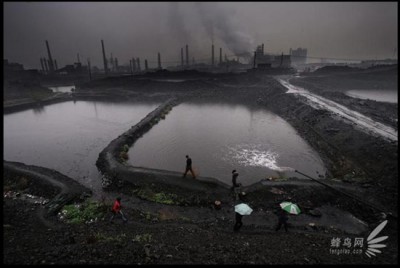
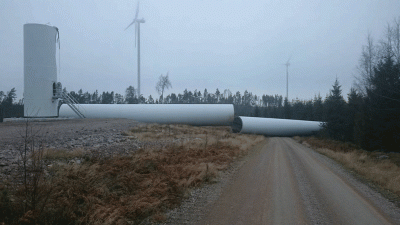
Why Industrial Wind Turbines, are a Waste of Time & Money!

11 Fatal Flaws with Wind Power

Facts

The wind industry is copping a flogging all over the World. Increasingly, as the industry’s lies and propaganda are replaced by facts, more and more are coming to the obvious conclusion: THESE THINGS DON’T WORK – on any level.

Getting there was only a matter of time.

What has surprised STT is not that journos, pundits and even Global Warming hysterics have sussed the wind power fraud for what it is; it’s that those that previously championed wind power have, instead, joined a chorus calling for serious investment in nuclear power.

Here’s a little ‘paint-by-numbers’ breakdown that reaches that very same conclusion, for much the same reasons.

Top 11 Problems Plaguing Solar And Wind Power
Daily Caller
Andrew Follett
25 December 2015

Despite President Barack Obama’s pocket veto Saturday of attempts to repeal the Clean Power Plan and recent increases in taxpayer support, solar and wind energy are in a tough spot, requiring an estimated $90 trillion of investment to meet carbon dioxide reduction goals.

The fundamental issues of solar and wind power are numerous, so let’s review the top 11.

1: Power Storage Is Incredibly Expensive On A Large Scale

It is currently impossible to economically store power for times when the sun isn’t shining and the wind isn’t blowing. Purchasing enough batteries to provide just three days of storage for an average American household costs about $15,000, and those batteries only last for about five years and are very difficult to recycle.

This is true for home power storage as well, even with the latest batteries. A Tesla power-wall capable of powering a home costs $7,340 to buy. A conservative analysis estimates that a power-wall can save its owner a maximum of $1.06 a day. Such a system would take approximately 25 years to pay for itself, according to the same analysis.

One of the world’s largest and most powerful batteries, located in Fairbanks, Ala., weighs 1,300-metric tons and is larger than a football field. It can only provide enough electricity for about 12,000 residents, or 38 percent of Fairbanks’ population, for seven minutes. That’s useful for short outages, which happen a lot in Alaska, but isn’t effective enough to act as a reserve for solar and wind.

The best way we have of “storing” power is pumping water up a hill, which actually accounts for 99 percent of all global energy storage.

2: The U.S. Power Grid Is Older, And Has Trouble Handling Solar And Wind

“Our power grid works well today. Some complain, but blackouts are rare and large-scale blackout are really rare. The power grid was set up for the [electrical] generation we have. Building a lot of new wind and solar requires much greater expenditure on the grid,” Vice President for Policy of the Institute for Energy Research Daniel Simmons told The Daily Caller News Foundation.

According to the Department of Energy, 70 percent of the transmission lines and power transformers in the country are at least 25 years old.

In order for the power grid to function, demand for energy must exactly match supply. Power demand is relatively predictable and conventional power plans, like nuclear plants and natural gas, can adjust output accordingly. Solar and wind power, however, cannot easily adjust output. They also provide power unpredictably relative to conventional power sources.

On an especially cloudy or windless day, the electrical grid can’t supply enough power from solar or wind alone. Wind and solar also run the risk of producing too much power which can overload and fry the power grid. This is why electrical companies will occasionally pay consumers to take electricity.

3: Rebuilding The Power Grid To Handle Solar And Wind Is Absurdly Expensive

The three power grids that supply the United States with energy are massive and expensive pieces of infrastructure. The power grids are valued at trillions of dollars and can’t be replaced in a timely manner. It takes more than a year to manufacture a new transformer, and transformers aren’t interchangeable, as each one must be individually built specifically for its location. At a time when the U.S. government is more than $18 trillion in debt, building power grids that can handle solar and wind may not be feasible.

Merely building a 3,000-mile network of transmission lines capable of moving power from wind-rich West Texas to market in East Texas proved to be a $6.8 billion effort that began in 2008 and still isn’t entirely finished. Building the infrastructure to move large amounts of solar or wind power from the best places to generate it to the places where power is needed would be incredibly expensive and could cost many times the price of generating the power.

4: Solar and Wind Don’t Provide Power At Useful Times

“Solar is better than wind for providing electricity when electricity is used,” says Simmons. “But during much of the year in, for example, peak electricity demand comes after dark. For example, [on December 17] in California peak electricity demand was at 6pm. But peak solar was at 12:36 and by 6pm, solar production was a zero.”

Power demand is relatively predictable. The output of a solar or wind power plant is quite variable over time and generally doesn’t coincide with the times when power is most needed. Peak power demand also occurs in the evenings, when solar power is going offline. Adding power plants which only provide power at intermittent and unpredictable times makes the power grid more fragile.

5: Solar And Wind Can’t Keep the Lights On By Themselves

Solar and wind power systems require conventional backups to provide power when they cannot. Since the output of solar and wind plants cannot be predicted with high accuracy by forecasts, grid operators have to keep excess reserve running just in case.

But natural gas, coal-fired, or nuclear plants are not simple machines. They can require days to fully turn on from a dead stop. This means that solar and wind power require conventional sources in “stand-by” mode, which means they’re still generating electricity.

Despite this, environmental groups like The Sierra Club still call for “100 percent” solar and wind power.

6: The Best Places For Solar And Wind Are Usually Far Away From Consumers

The places with the highest potential for generating solar or wind power are typically relatively far away from the people who will consume power, according to the Department of Energy. The government agency even maintains maps of how unfeasible long-range transmission can become.

The vast majority of people who use power do not live in deserts or consistently windy areas. The kind of high voltage power lines needed to transport even relatively small amounts of power cost $1.9 to 3.1 million per mile built. Additionally, the kind of “smarter” power systems which can be adjusted to varying energy production created by wind and solar power can cost up to 50 percent more.

7: Solar And Wind Are A Very Small Percent Of The Power Grid Despite Years of Subsidies

“The first 8 months of 2015 wind and solar combined to produce 2.3% of the energy the U.S. consumed. Also wind production is down this year compared to last year,” says Simmons.

Solar and wind have been heavily subsidized since at least the 1970s. In 2010, wind power alone received $5 billion in subsidies, swamping the $654 million oil and gas received in subsides. One in four wind suppliers have gone out of business in the past two years.

In 2014, solar and wind power accounted for only 0.4 and 4.4 percent of electricity generated in the United States, respectively, according to the Energy Information Administration. The total amount of energy created by solar and wind is relatively small even though both systems are heavily subsidized.

8: The Solar And Wind “Low-Hanging Fruit” Have Already Been Taken

The locations where solar and wind power make the most economic sense generally already have a solar or wind power system. Since solar and wind power are only effective in a limited number of locations, “green” power sources are difficult to expand and are simply not practical in some areas.

9: Natural Gas Prices Are Very Low In The United States

Natural gas prices are currently incredibly low in the United States, making it much more difficult for solar and wind power to become cost competitive. Natural gas is already passing coal power as the most used source of electricity. Additionally, natural gas is quite environmentally friendly.

The Department of Energy agrees with research organization Berkeley Earth that “the transition from coal to natural gas for electricity generation has probably been the single largest contributor to the … largely unexpected decline in US CO2 emissions.”

10: Nuclear Energy Has Enormous Potential

The United States just approved its first new nuclear reactor in 20 years. New nuclear reactor designs are much safer and emit less radiation than the coal plants they replace. Nuclear plants take up far less space than wind or solar and do not emit any carbon dioxide.

Recent breakthroughs in fusion could also potentially restart the atomic age when nuclear progress was lauded as a pinnacle of human achievement. Operational fusion power will put most other forms of electricity generation permanently out of business and could occur very soon. Fusion power could easily be “too cheap to meter,” meaning that the cost of generating new power would be below the cost of determining how much power an individual was using, effectively making electricity generation nearly free.

11: Encouraging Wind And Solar Creates Incentives For Massive Corruption

Attempts by governments to encourage solar and wind power have created incentives for corruption even environmentalists acknowledge. The recent Volkswagen scandal illustrates that regulatory attempts to force a specific technology, in this case the adoption of cleaner diesel engines, create incentives that lead to sophisticated cheating by companies. The main incentive of the regulatory agencies is to make rules while avoiding bad publicity, not to actually solve the problem.

The push to encourage “green” systems has already led to serious corruption, such as the Solyndra scandal. Such corruption “crowds out” investment dollars that could be better spent on more workable solutions.
Daily Caller

turbine fire 3

vestas v112

eagle 1

Wonderful news for the Aussies!

Aussie Green Power Scheme Collapse

money_sucking_vortex

Guest essay by Eric Worrall

h/t JoNova – “The Australian” newspaper reports that a rise in costs, climate “fatigue”, and a rise in green tokenism has caused a collapse in demand for an Aussie green energy scheme.

Climate change fatigue, cost hits renewable GreenPower scheme

GreenPower, a scheme run by state governments in which people and businesses pay more for their power to buy non-fossil-fuel electricity, has been hit by up to a 40 per cent increase in cost as retailers pass on the rising price of large-scale renewable energy certificates.

Even before the price jump, the willingness of customers to pay more for renewable energy has ebbed in line with the political debate over climate change policies.

The scheme has gone from more than 900,000 customers in 2008 who bought about 1 per cent of total generation to just over 500,000 who bought just 0.6 per cent of all the electricity generated in 2013.

Since, sales have dropped a further 21 per cent.

A report by UTS’s Institute of Sustainable Futures for the NSW Department of Resources and Energy — which administers the scheme on behalf of all the states — said the rise in roof- top solar panels had contributed to the demise of GreenPower. “It seems that once customers have ‘done their bit’ by paying for solar PV, they no longer see the need to pay extra for GreenPower.”

Read more (paywalled): http://www.theaustralian.com.au/national-affairs/climate/climate-change-fatigue-cost-hits-renewable-greenpower-scheme/news-story/f539152e18a55644110c07a508415a7a

So why is the price of green power rising?

According to the Sydney Morning Herald;

“Retailers are making it more expensive than it needs to be for the consumer,” said Richie Farrell, group manager of investor relations and strategy at Infigen Energy.

“The consumer is entering into a contract with them to buy renewable energy and they are not taking action to enter into a contract with renewable energy providers to supply the electricity, they are just entering into short-term agreements on the spot market to meet the liability the customer has imposed on them through purchasing their product.”

Mr Farrell said it all comes down to supply and demand.

“For a long time the renewable energy certificate market was oversupplied. Everyone knew there was going to be an upcoming shortfall and to avoid that shortfall retailers were required to enter into long-term contracts with people like ourselves to ensure that more renewable supply came into the market.”
Unfortunately for consumers, he said, retailers have so far refused to do that.

“They have sat on their hands and not entered into these new contracts. Basically, by our projections, by 2017-18 we will have more demand than supply for renewable energy, and as such prices increase in that scenario.”

Read more: http://www.smh.com.au/nsw/why-are-green-energy-prices-going-through-the-roof-20160105-glzgva.html

You can hardly blame energy retailers for being hesitant to commit to long term contracts. There simply isn’t an upside, to taking financial risks, to try to revive the already aneamic green energy market.

Australia is facing difficult economic conditions, and the Australian government is carrying a substantial and growing debt.

If the global economic slowdown worsens, Aussie government debt could very rapidly balloon to dangerous levels. In other countries, a public debt crisis was the trigger forretroactive, uncompensated cuts to green subsidies.

When individuals, businesses and governments tighten their belts, unnecessary luxuries like expensive green energy are often top of the list of costs to be cut.

Same Damning Evidence of Cover-up, in all Countries with Wind Turbines

Queensland Government Cover Up: New Wind Farm Planning Code Deliberately Ignores its own Noise Expert’s Damning Advice

Definition of fraud

Hidden documents reveal expert advice on health dangers from wind farms ignored
Wind Energy Queensland
11 December 2015

Right to information search reveals government noise expert’s advice withheld.

The Queensland Government’s own noise expert has warned proposed rules for wind farms in the State could cause public health and environment problems.

Bryan Lyons, spokesman for the community-based Wind Energy Queensland (WEQ) group, said today the warnings were revealed in documents obtained under a Right To Information (RTI) search.

“These documents show that warnings from the Queensland Government’s own noise expert were hidden from the relevant Minister and from the public,” Mr Lyons said.

“The expert report reveals that the proposed Queensland Government Wind Farm Code (V2) will not protect resident’s health and well-being and will not protect their environmental values.

“The documents obtained under RTI also reveal these concerns were not passed on the Planning Department or the Minister for Planning.”

Mr Lyons said the documents show that, on August 26, the noise expert in the Department of Environment and Heritage Protection provided his superiors with a list of nine points of concern regarding the draft Wind Farm Code.

“Those concerns were not subsequently forwarded from the Department of Environment and Heritage Protection to the Department of Infrastructure, Local Government and Planning, who have developed the current draft (version 2) of the Wind Farm Code.

“The concerns raised by the Queensland Government’s own noise expert confirm existing advice that independent noise experts conducting research in this area have already provided to courts, governments, Senate inquiries and community members dealing with wind farm proposals across Queensland.

Mr Lyons said the Department of Environment and Heritage Protection had withheld the expert report.

“Wind Energy Queensland have previously asked Deputy Premier Jackie Trad to seek advice from her own Government noise expert. It is now clear from these documents that concerns were deliberately withheld by the department of Environment and Heritage Protection.

A Senior Official from the Environment and Heritage Protection Department advised the Premier’s Department that they have ‘no fundamental concerns’ with the draft Wind Farm Code.

“However, the advice from the Noise Expert indicates that proposed wind farm standards in Queensland will not protect the health and well-being of our communities. It is extremely disturbing that this advice appears to have been kept secret from the Government department developing the Wind Farm Code, kept secret from the Minister for Planning, and kept hidden from the public.

“We are calling on the Deputy Premier to have the noise sections of the Wind Farm Code redrafted by Noise Experts in the Department of Environment and Heritage Protection and scrutinised by an independent panel of Noise Experts, with those peer reviews made publicly available.

“This newly-revealed advice from the EHP Noise Expert also affects the recently approved Mt Emerald Wind Farm on the Atherton Tableland in North Queensland,” Mr Lyons said. “We believe the Mt Emerald approval is presently being negotiated by the applicant, and we call on the Deputy Premier to take this opportunity to immediately amend the approval.”

Mr Lyons said the Government noise expert’s concerns confirm the concerns of residents in the Mt Emerald area that, if developed, the proposed wind farm will harm their community members even if it complies with the conditions of approval.

WEQ is a community-based group formed to ensure better planning of wind farms in Queensland.

The communities represented include Dalveen, Crows Nest, Cooranga north (west of Kingaroy) and Mareeba.”

Copies of the RTI documents are available on request.

Media inquiries: Bryan Lyons Ph 07 4668 6780
Wind Energy Queensland

Jackie Trad

Wind Turbine Torture….World-wide

Germany’s Wind Farm Noise Victims Detail Their Daily Misery

insomnia

****

One of the myths pedalled by Australia’s self-appointed wind farm noise, sleep and health ‘expert’ (a former tobacco advertising guru) is that the known and obvious adverse health impacts from incessant turbine generated low-frequency noise and infrasound are a cooked-up “phenomenon”, exclusive to the English speaking world. Trouble with that little tale is that’s been scotched by the Danes:

Vestas’ Danish Victims Lay Out the FACTS

Denmark Calls Halt to More Wind Farm Harm

And the Germans:

German Medicos Demand Moratorium on New Wind Farms

And the Tawainese:

Winning Taiwanese Hearts and Minds?

And the Turks:

Turkish Court Shuts Down 50 Turbines: Yaylaköy Residents Delighted at 1st Chance to Sleep in Years

Now, back to Germany where – in the video below (it comes with English subtitles) – Heimke and Pieter Hogeveen lay bare their family’s daily despair at being unable to sleep in their very own home.

Ground down by incessant turbine generated low-frequency noise and infrasound, these people have constructed a ‘bedroom’ in their cellar in an attempt to escape their sonic torment; and sent their children to a boarding school in Denmark for the same reason. Clearly fighters, Hiemke and Pieter have enlisted two lawyers in an action against the wind power outfit responsible.

World-wide Wind Industry Corruption!

Falmouth Officials Partake In World Wide Wind Turbine Corruption

News Media Corporations are helping the wind industry hide documents. They say they can’t afford investigative journalisam. They Are Lying !
Falmouth Officials Partake In World Wide Wind Turbine Corruption

Falmouth Official Partake In World Wide Wind Turbine Corruption

Falmouth Wind Turbine Studies Common Denominator : Hidden Documents

Those paid to represent us have no right to impose an energy policy that is harmful to our physical, mental or economic health or the environment in which we live.

Worldwide commercial wind projects have one thing in common- hidden documents.

The facts are well know to Massachusetts state and local politicians about the hidden documents.

News Media Corporations are helping the wind industry hide documents. A news editor from SE Massachusetts was recently rewarded with a job at the Wind Energy Center upon retirement.

State and local officials have been caught red handed hiding official documents.

The documents we know about just in Falmouth, Massachusetts are the 2010 Vestas 2010 noise warning , April 2, 2013 MassCEC admission of acoustic noise “mistakes” during testing and deleting the warnings to two distinct types of noise “regulatory” and “human annoyannce” today known as infrasound.

If the public knows about just three hidden documents in Falmouth how many more are there statewide ?

Worldwide Irish officials were recently caught taking kickbacks in the Government’s wind energy policy program . A sting operation caught politicans accepting bribes.

Today : Australia

Hidden documents reveal expert advice on health dangers from wind farms ignored

Credit: 11th December, 2015 –

Wind Energy Queensland ~~

The Queensland Government’s own noise expert has warned proposed rules for wind farms in the State could cause public health and environment problems.

Bryan Lyons, spokesman for the community-based Wind Energy Queensland (WEQ) group, said today the warnings were revealed in documents obtained under a Right To Information (RTI) search.
“These documents show that warnings from the Queensland Government’s own noise expert were hidden from the relevant Minister and from the public,” Mr Lyons said.

“The expert report reveals that the proposed Queensland Government Wind Farm Code (version 2) will not protect residents’ health and wellbeing and will not protect their environmental values.

“The documents obtained under RTI also reveal these concerns were not passed on to the Planning Department or the Minister for Planning.”

Mr Lyons said the documents show that, on August 26, the noise expert in the Department of Environment and Heritage Protection provided his superiors with a list of nine points of concern regarding the draft Wind Farm Code.

“Those concerns were not subsequently forwarded from the Department of Environment and Heritage Protection to the Department of Infrastructure, Local Government and Planning, who have developed the current draft (version 2) of the Wind Farm Code.
“The concerns raised by the Queensland Government’s own noise expert confirm existing advice that independent noise experts conducting research in this area have already provided to courts, governments, Senate inquiries and community members dealing with wind farm proposals across Queensland.”

Mr Lyons said the Department of Environment and Heritage Protection had withheld the expert report.

“Wind Energy Queensland have previously asked Deputy Premier Jackie Trad to seek advice from her own Government noise expert. It is now clear from these documents that concerns were deliberately withheld by the department of Environment and Heritage Protection. A Senior Official from the Environment and Heritage Protection Department advised the Premier’s Department that they have ‘no fundamental concerns’ with the draft Wind Farm Code.

“However, the advice from the Noise Expert indicates that proposed wind farm standards in Queensland will not protect the health and wellbeing of our communities. It is extremely disturbing that this advice appears to have been kept secret from the Government department developing the Wind Farm Code, kept secret from the Minister for Planning, and kept hidden from the public.

“We are calling on the Deputy Premier to have the noise sections of the Wind Farm Code redrafted by Noise Experts in the Department of Environment and Heritage Protection and scrutinised by an independent panel of Noise Experts, with those peer reviews made publicly available.

“This newly-revealed advice from the EHP Noise Expert also affects the recently approved Mt Emerald Wind Farm on the Atherton Tableland in North Queensland,” Mr Lyons said. “We believe the Mt Emerald approval is presently being renegotiated by the applicant, and we call on the Deputy Premier to take this opportunity to immediately amend the approval.”

Mr Lyons said the Government noise expert’s concerns confirm the concerns of residents in the Mt Emerald area that, if developed, the proposed wind farm will harm their community members even if it complies with the conditions of approval.

WEQ is a community-based group formed to ensure better planning of wind farms in Queensland. The communities represented include Dalveen, Crows Nest, Cooranga north (west of Kingaroy) and Mareeba.

Copies of the RTI documents are available on request. Media inquiries : Bryan Lyons Ph 07 4668 6780.
Source: 11th December, 2015 – Wind Energy Queensland

https://www.wind-watch.org/news/2015/12/10/hidden-documents-reveal-expert-advice-on-health-dangers-from-wind-farms-ignored/

Stop the Climate Insanity….It’s a HUGE Scam!

Bjørn Lomborg: Wind Power ‘Tree’ Symbolises Futility of Paris Climate Jamboree

wind tree paris

****

As a baggage train of some 40,000 climate-cultists get set to jet their way home from Paris – burning up a gazillion gallons of (what they normally rail about as being atmosphere incinerating) kerosene – the fair question has to be asked: ‘and all for what?’

The belief that China and India were going to sign up to terms guaranteed to keep more than a billion people (between them) locked in permanent Stone Age poverty was pure infantile nonsense.

Pragmatist, Narendra Modi is quite right to care a whole lot less about Western anti-humanity, eco-zealots, and a whole lot more about the 300 million or so of his constituents who subsist in world of dirt-floored shanties, without so much as the hope of enjoying an affordable supply of around-the-clock electricity.

poverty india

****

The cultists fumed in Paris, as India and China put the needs of their people ahead of demands from selfish lunatics; equipped with little more than ideology, Macbook Airs and Twitter, as an outlet for their self-possessed rantings. So much easier to pontificate about how the poorest in the world should live (now and forever) with a belly full of Veuve Clicquot and Foie Gras while sitting in 5 star, centrally-heated comfort.

China and India aren’t about to deprive their people of an opportunity to have light at the flick of a switch; and they aren’t about to entertain the insane costs of solar and wind power to get there (save at the symbolic margins): between them, India and China are building, and planning to build, hundreds of new coal and nuclear power plants; designed to drag their people out of the darkness and into well-lit homes and bustling new factories (see this article).

Back in reality land, the childish symbolism that is wind power, copped a spray from the wind industry’s loudest critic, Bjørn Lomborg.

STT takes a different view to Bjørn about the ‘connection’ made between wind power and CO2 emissions:

Bjørn Lomborg: Believe in the Easter Bunny and Tooth Fairy? Then You’ll Probably Believe Wind Power Replaces Fossil Fuels, Too

He also falls for the lazy-language trap of referring to CO2 gas (a naturally occurring trace gas essential for life on Earth) as ‘carbon’: the black sooty stuff that makes a mess of white linen.

But Lomborg is right on the money where he points out the ludicrous costs and pointlessness of a wholly weather dependent power source.

Blowing a chance to help the planet
The Australian
Bjørn Lomborg
5 December 2015

‘Wind tree’ sums up the futility of the Paris climate talks

Outside the Paris climate conference centre, organisers have erected a “wind tree” (arbre a vent), which produces electricity using the power of the breeze. In doing so, they have summed up exactly what is wrong with the conference.

The tree will only produce 3500 kWh a year and it costs about $37,100. So, at a production price of about 11c a year, it will take 89 years to make up just the capital cost. Or, put differently, the cost is 300 per cent more expensive than even traditional wind power, which still struggles without subsidies.

The Conference of Parties (COP21) is about feeling good: spending a lot of money to do very little good, and not about making the choices that will make any difference.

This summit is “the last chance” to avert dangerous temperature rises, if we listen to the Earth League or a bunch of others. It’s going to be “too late” if a meaningful treaty isn’t negotiated here in the next few days, says the French President. It’s a familiar script. Doom-laden warnings about the “last chance to save the planet” date as far back as the earliest climate summits 20 years ago. Time magazine declared 2001 “a global warming treaty’s last chance”, and in 1989 the UN Environment Programme’s executive director warned that the planet faced an ecological disaster “as final as nuclear war” by the turn of the century.

Amid this alarmism, for 20 years well-intentioned climate negotiators have tried to do the same thing over and over and over again: negotiate a treaty that makes an impact on temperature rises. The result? Twenty years of failure with no significant effect on climate change.

These summits have failed for a pretty simple reason. Solar and wind power are still too expensive and inefficient to replace fossil fuels. The Copenhagen-Paris approach requires us to force immature green technologies on the world even though they are not ready or competitive. That’s hugely expensive and inefficient.

Thanks to campaigning non-governmental organisations, politicians and self-interested green energy companies that benefit from huge subsidies, many people believe that solar and wind energy are already major sources of energy.

The reality is that even after two decades of climate talks, they account for a meagre 0.5 per cent of total global energy consumption, according to the International Energy Agency.

And 25 years from now, even envisioning everyone doing all that they promise in Paris, the IEA expects we will get just 2.4 per cent from solar and wind. That tells us that the innovation that’s required to wean the planet off reliance on fossil fuels is not taking place.

That’s why the one glimmer of hope in Paris has been the announcement by Bill Gates, along with Australia, China, India and the US, of a multi-billion-dollar fund for green R&D.

The $27 billion fund is just a first step, but it’s a vitally important one. Just as massive support for research and development got us to the moon, the aim is for a massive focus on green research and development to make climate-friendly forms of energy competitive. This is precisely what the Copenhagen Consensus Centre and I have been arguing for more than eight years.

In a recent peer-reviewed research paper, I looked at all the carbon-cutting promises countries committed to ahead of Paris (their so-called intended nationally determined contributions, or INDCs) for the years 2016-30.

These are what the Paris global treaty will be based on (along with a lot of claims about what might happen outside those dates — something that’s easy for politicians of today to talk about, but that we just can’t take seriously).

What I found when I looked at the national promises was that they would cut global temperatures by just 0.05C by 2100.

And even if every government on the planet not only keeps every Paris promise, reduces all emissions by 2030 and shifts no emissions to other countries, but also keeps these emission reductions throughout the rest of the century, temperatures will be reduced by just 0.17C by the year 2100.

And let’s be clear, that is incredibly — probably even ridiculously — optimistic. Consider the Kyoto Protocol, signed in 1997, never ratified by the US, and eventually abandoned by Canada and Russia and Japan. After several renegotiations, the Kyoto Protocol had been weakened to the point that the hot air left from the collapse of the Soviet Union exceeded the entire promised reductions, leaving the treaty essentially toothless.

The cost of these policies? Extraordinarily, UN officials provide no official estimated costs for the likely treaty. So we are left to make an unofficial tally, which we can do easily enough by adding up the costs of Paris promises submitted by the US, European Union, Mexico and China, which together account for about 80 per cent of the globe’s pledged emissions reductions.

In total, the Paris promises of these four countries/groupings will diminish the global economy by at least $1 trillion a year by 2030 — and that is in an ideal world, where politicians consistently reduce emissions in the most effective, smartest possible ways.

But that won’t happen. It never has in history.

Politicians have a habit of wasting money on phenomenally inefficient subsidies for solar and biofuels. And based on the EU experience, such waste can double the costs of carbon-cutting policies to $2 trillion. That’s $1 to $2 trillion that won’t be spent on global challenges such as malnutrition, poverty and communicable diseases.

We are spending a fortune to make ourselves feel like we are saving the planet. The “wind tree” is an excellent symbol of what’s wrong with Paris.

Bjorn Lomborg is an adjunct professor at the Copenhagen Business School and directs the Copenhagen Consensus Centre.
The Australian

Earlier in the week, The Australian’s Editor had the following take on Lomborg’s message on energy innovation; a message that makes it fairly clear: wind power is an abject failure – for fairly obvious reasons – here’s the output from all wind farms connected to the Eastern Grid (installed capacity of 3,669MW – spread over NSW, VIC, TAS & SA) during June:

June 2015 National

And, if there is to be a true alternative to fossil fuel power generation sources, then we should stop praying to the Wind Gods, and find something that’s recognizable as a ‘system’, rather than a lesson in total ‘chaos’.

Climate change demands innovation, not subsidy
The Australian
2 December 2015

Faith in clean energy technology has a long pedigree

No need to get hot under the collar — Malcolm Turnbull’s climate policy is fundamentally the same as Tony Abbott’s. The targets that the Prime Minister took to Paris — emission reductions of 26-28 per cent by 2030 — are those adopted by Mr Abbott in August.

These targets are proportionate to Australia’s economic weight and our small contribution to the world’s greenhouse gases. They are consistent with the precautionary principle that Australia should not get ahead of the northern hemisphere’s big polluters. It’s true that Mr Turnbull has left open the possibility in the future that Australia would concur in a collective agreement to pursue deeper cuts. By definition, this would not involve Australia going it alone.

There is a pseudo controversy over climate mitigation and foreign aid. In Paris, Mr Turnbull announced a five-year diversion of at least $1 billion from the foreign aid budget to climate mitigation projects in the Pacific. Labor’s complaints ring hollow. Only last month Bill Shorten toured the Pacific (remember the prophesied climate refugees?) to talk up the threat of climate change.

Now, in consultation with Pacific nations, Australia is dedicating funds to climate mitigation projects in the region. As for the effect on foreign aid spending more generally, it was Labor that inflated the budget to win a seat on the UN Security Council.

On climate change Mr Turnbull’s point of difference with Mr Abbott is his emphasis on innovation as a tool for mitigation and adaptation. Innovation is a theme of the Turnbull government but it takes on special significance at the Paris climate meeting. Australia has promised to double its clean energy research and development as part of the 20-nation project known as Mission Innovation.

In his Paris speech, Mr Turnbull said: “We firmly believe that it is innovation and technology which will enable us both to drive stronger economic growth and a cleaner environment. We are a highly social and innovative species and so the more we share innovative technologies, the better they will become.” This commitment coincides with the unveiling in Paris of the Breakthrough Energy Coalition spearheaded by Bill Gates, Mark Zuckerberg and other entrepreneurs. They will invest in clean energy projects in sectors such as electricity generation and storage.

As Macquarie University’s Jonathan Symons says, the impetus to innovate sometimes has been misrepresented by environmentalists as a manifesto for inaction. “It is true that the cost of wind and solar are falling rapidly and both can now be competitive at low levels of grid penetration,” Dr Symons says. “However, associated system costs and technical challenges increase with the market share of intermittent energy. Without accelerated innovation, it is clear that existing renewable technologies will not support deep decarbonisation of the global economy.”

He also points out that notwithstanding Mr Turnbull’s timely gospel of climate innovation, this has been a faith subscribed to by figures as diverse as John Howard, Barack Obama, British economist Nicholas Stern and commentator Bjorn Lomborg.

In 2005 Mr Howard joined the Asia-Pacific Partnership on Clean Development and Climate. Known as AP6, this was an initiative of George W. Bush and one that emphasised voluntary climate mitigation through the sharing of clean energy technology. It shows that the conservative side of politics has long recognised the need for climate mitigation by innovation.

Dr Lomborg’s championing of innovation is central to his view that the Paris meeting, like the meetings before it, is likely to generate alarmist rhetoric (anyone like another last chance to save the planet?) but fail to advance the cause of climate mitigation.

“For twenty years, we have insisted on trying to solve climate change by supporting production of mainly solar and wind power,” he says in a blog for this newspaper. “The problem with this approach is that it puts the cart in front of the horse.

Green technologies are not yet mature and not yet competitive, but we insist on pushing them out to the world. Instead of production subsidies, governments should focus on making renewable energy cheaper and competitive through research and development. Once the price of green energy has been innovated down below the price of fossil fuels, everyone will switch.”

Dr Lomborg greeted the Mr Gates-led coalition as a positive sign confirming innovation as the key to climate mitigation. But he points out that today’s favoured subsidies do not encourage innovation, instead making companies stick to inefficient but subsidised technologies such as solar and wind power.

After two decades of climate talks, solar and wind account for just 0.5 per cent of global energy. “And 25 years from now, even with a very optimistic scenario, envisioning everyone doing all that they promise in Paris, the International Energy Agency expects that we will get just 2.4 per cent from solar and wind,” Dr Lomborg says.
The Australian

wind turbines

More Evidence of the Wind Scam!

Wind Power: Not ‘Cheap’, Not ‘Clean’ and Not ‘Green’

steel in turbine

The central, endlessly repeated lie upon which the wind industry seeks to ‘justify’ the colossal and endless subsidies upon which it critically depends; the destruction of wind farm neighbours’ health, wealth and happiness; and the slaughter of millions of birds and bats, is that wind power causes substantial reductions of CO2 emissions in the electricity sector.

STT has been slamming that myth since we cranked into gear nearly 3 years ago. It’s a topic that attracts plenty of interest.

Our post – How Much CO2 Gets Emitted to Build a Wind Turbine? – has clocked over 11,000 hits; and still attracts plenty of attention.

One petulant retort is that building a coal-fired power plant (or, heaven forbid, a skyscraper) using thousands of tonnes of concrete and steel adds mountains of CO2 gas (incidentally, an odourless, colourless naturally occurring trace gas, essential for all life on Earth) to a soon to incinerate atmosphere. Ah, but the distinction, lost on these ‘wits’ is that those building meaningful power generation sources (or high-rise buildings in densely packed cities) don’t make any claims to reduce/abate CO2 emissions in the electricity sector, or at all.

Out on its own, the wind industry claims – as the ‘justification’ for the $billions in endless subsidies and the excuse for the fact that it is meaningless as a power source – simply because it cannot be delivered on demand – that wind power makes very substantial reductions in CO2 emissions, when, in fact it does no such thing.

This little piece from Christine Whitaker shows that the ‘wind power is saving the planet’ mantra has lost whatever persuasive power it may once have had, save amongst infants and the intellectually lazy and/or dishonest.

Wind power as a form of “green energy” is far from green
Leader-Post
Christine Whitaker
29 November 2015

We are climbing on the wind power bandwagon just as other countries are jumping off.

As suggested by recent announcements by Premier Brad Wall and SaskPower, we are likely to see more wind farm projects in Saskatchewan in the near future.

There are many reasons why wind power has fallen into disrepute. It is not the most reliable source of electricity. Turbines are only 30 per cent efficient at best and they must be taken offline in adverse weather conditions, which cause malfunctions. At one wind farm in Britain, diesel-powered generators are on standby to cut in when the turbines are shut down.

diesel generators UK

Wind power is also extremely expensive. Governments have poured millions of dollars into the construction of wind farms, in the form of subsidies and other incentives, resulting in high power bills for consumers — as Ontario residents know well.

Turbine blades are very efficient killers of bats and birds. One British environmentalist claims that 200,000 bats are killed every year in Germany; tens of thousands of eagles in America. As Saskatchewan is on a major flight path of migrating birds, we should consider the consequences to species such as whooping cranes and many others.

eagle at waterloo

The main reason, however, is that this form of “green energy” is far from green.

The manufacture and construction of wind farms contributes more to global CO2 emissions than they will save in their useful life (which is approximately between 15 and 20 years).

turbine base1

The construction of one typical turbine involves the use of heavy equipment to create roads to the site; dig a hole 10 feet deep and 100 feet wide. Into this are deposited 53 truckloads of concrete and 96,000 lbs of steel rebar.

Then eight truckloads of components arrive: a base tower weighing 87,450 lbs; a mid-section of 115,500 lbs; a top tower of 104,167 lbs, and then the rotor assembly and blades.

The transportation and erection of these components require the use of heavy machinery and large cranes. These facts are taken from a video produced by a wind energy company. The total CO2 emissions to build one turbine is estimated at 241.85 tons.

The supreme irony is that in Baoding, China’s most polluted city, the major industry is the production of turbine towers and blades. The power for this industry is supplied by several large coal-fired plants. By attempting to cut Canadian emissions (currently 1.6 per cent of global totals), we are adding to China’s emissions, at 24.1 per cent and growing.

china rare earth toxic lake

A Leader-Post article (Nov. 21) promotes the advantages of wind power, as perceived by its supporters. One refers to all the “space” in Saskatchewan where turbines could be built. I live in rural Saskatchewan, and can look at this space through every window of my home. Rather than seeing a place for wind farms. I see land that produces essential food ingredients, such as wheat, barley, lentils and canola, and pastures where cattle graze.

Many of my rural neighbours are opposed to the destruction of our agricultural land and the desecration of our landscape by hosts of monstrous engines striding across the countryside like white giants with arms flailing wildly.

There are many other problems for those living near wind turbines. There are the emotional and physical effects of listening to the constant hum, 24/7. There is also the depreciation of property values.

lake winds

Nobody will buy a home or farm close to turbines. There are well-documented cases of rural Ontario residents who have walked away from their property because they can no longer live with the effects of the wind farms on their health — but cannot sell their homes.

Landowners who signed leases to allow turbines on their property eventually will discover that when the useful life of the wind farm is over, nobody is responsible for dismantling the turbines and hauling them away. Instead, these towers will remain as eroding monuments to the misguided energy policies that put them there in the first place.

Christine Whitaker is a freelance writer from Edgeley.
Leader-Post

Vestas turbine on fire

Falmouth Liars! Same Corrupt Behaviour In Ontario!!

FALMOUTH HID NOISE LETTER 5 YEARS TO AVOID ABUTTER NOTIFICATIONS

The 2010 Vestas noise warning letter kept secret for 5 years. It is clear public officials always knew the turbines were too loud.
FALMOUTH HID NOISE LETTER 5 YEARS TO AVOID ABUTTER NOTIFICATIONS

FALMOUTH HID NOISE LETTER 5 YEARS TO AVOID ABUTTER NOTIFICATIONS AND SPECIAL PERMITS WHICH WOULD REQUIRE ADDITIONAL NOTIFICATIONS

Section 240-166 incorporates by reference the Bylaw’s general special permit requirements and also states that the ZBA shall consider adverse impacts on the neighborhood including noise. The ZBA has the power to impose conditions on the grant of a windmill permit.

THE TOWN FAILED TO FILE THE SPECIAL PERMITS TO AVOID ABUTTER NOTIFICATIONS & SPECIAL PERMITS

The Town of Falmouth has never posted or made public the Vestas 2010 wind turbine noise letter.

Falmouth public officials owe it to the public to explain why they hid the letter for 5 years.

After 5 years of noise complaints why didn’t at least one public official come forward.

Thousands of certified written noise complaints have been made.

The letter warned the town that the Vestas wind turbines they were purchasing were 6 decibels higher than the smaller General Electric turbines used in prior noise study models.

The public-duty doctrine holds that the government and its officials owe a legal duty to the public at large. Why was the letter omitted and when do omissions become lies ?

Federal prosecutors have weapons to prosecute public corruption, especially with respect to state and local corruption, where the pertinent statutes empowers them to challenge almost any unlawful, questionable or unethical conduct of a public official, subject to the prosecutor’s exercise of sound discretion.

More from Falmouth Patch

RICO prosecutions give prosecutors even more discretionary prosecution power.

The Town of Falmouth never applied for Special Permits for their two town owned wind turbines.

The turbines are named Falmouth Wind 1 and Falmouth Wind 2.

Prior to the installations a private company conducted flawed acoustic noise models using 1.5 megawatt General Electric wind turbines that generate a maximum of 104 decibels of noise.

The original flawed tests “mistakes” were admitted by the Massachusetts Clean Energy Center three years after the installation of Falmouth Wind 1. The admission date came in a memo from MassCEC staff to the MassCEC Board of Directors on April 2, 2013

The private wind testing company actually prepared Special Permit applications under the Town of Falmouth wind turbine bylaws. The Town of Falmouth never filed Special Permits for either turbine.

In the past few months information has come to light that shows why the Town of Falmouth never filed “ Special Permits.”

The Town of Falmouth ignored its own wind turbine bylaw 240 -166 because the bylaw would require additional wind studies, notifications and additional time to install the Vestas wind turbines with a high rating of 110 decibels of noise .

Recently through a FOIA, Freedom of Information Request it has been found the Town of Falmouth was holding back a year 2010 warning letter from Vestas wind company that the wind turbines being installed generated up to 110 decibels of noise. This is 6 decibels higher than the Falmouth Community Wind Project Site Screening Report November 2005.

Special Permits would never have been issued under the Falmouth wind turbine bylaw 240 -166 with turbines that generated 110 decibels of noise. Under the Special Permit process additional notifications and time may have alerted local residents. There were NO noise studies for Falmouth Wind II. There were NO studies for a combination of Falmouth Wind 1 and Wind II.

The town hid the embarrassing letter from public view. The town has never posted the letter on its website or mentioned the letter at any public meeting.

The town while in possesion of the August 2010 letter made abutters to the wind turbines file elaborate certified written notifications to the town that the turbines were too loud. The town had always know the turbines were too loud. Vestas wind company told them in writing . It’s in Black and White !

Falmouth Town Meeting Members and the public in general are being kept in the dark over this letter while the town spends hundreds of thousands of dollars on a legal defense that is indefensable.

Taxpayers are paying litigation fees for up to eleven types of ongoing litigation including nuisance, bylaw. permitting and appeals while the Town of Falmouth sat on this letter for five years.

The Town of Falmouth was aware the turbines were 7 Decibels higher that the manufactures specifications. Every 3 DCB increase is a doubling of sound and acoustic power to the human ear and that is simply an intolerable increase.

In the following letter Vestas wind company reiterates in writing that the Town of Falmouth had been previously warned the turbine generates up to 110 decibels


“The Town has previously been provided with the Octave Band Data / Sound performance for the V82 turbine. This shows that the turbine normally operates at 103.2dB but the manufacturer has also stated that it may produce up to 110dB under certain circumstances.”

August 3, 2010
Mr. Gerald Potamis
WasteWater Superintendent
Town of Falmouth Public Works
59 Town Hall Square
Falmouth, MA 02540

RE: Falmouth WWTF Wind Energy Facility II “Wind II”, Falmouth, MA
Contract No. #3297

Dear Mr. Potamis,

Due to the sound concerns regarding the first wind turbine installed at the wastewater treatment facility, the manufacturer of the turbines, Vestas, is keen for the Town of Falmouth to understand the possible noise and other risks associated with the installation of the second wind turbine.

The Town has previously been provided with the Octave Band Data / Sound performance for the V82 turbine. This shows that the turbine normally operates at 103.2dB but the manufacturer has also stated that it may produce up to 110dB under certain circumstances. These measurements are based on IEC standards for sound measurement which is calculated at a height of 10m above of the base of the turbine.

We understand that a sound study is being performed to determine what, if any, Impacts the second turbine will have to the nearest residences. Please be advised that should noise concerns arise with this turbine, the only option to mitigate normal operating sound from the V82 is to shut down the machine at certain wind speeds and directions. Naturally this would detrimentally affect power production.

The manufacturer also needs confirmation that the Town of Falmouth understands they are fully responsible for the site selection of the turbine and bear all responsibilities to address any mitigation needs of the neighbors.

Finally, the manufacturer has raised the possibility of ice throw concerns. Since Route 28 is relatively close to the turbine, precautions should be taken in weather that may cause icing.

To date on this project we have been unable to move forward with signing the contract with Vestas. The inability to release the turbine for shipment to the project site has caused significant [SIC] delays in our project schedule. In order to move forward the manufacturer requires your understanding and acknowledgement of these risks. We kindly request for this acknowledgement to be sent to us by August 4, 2010, as we have scheduled a coordination meeting with Vestas to discuss the project schedule and steps forward for completion of the project.

Please sign in the space provided below to indicate your understanding and acknowledgement of this letter. If you have any questions, please do not hesitate to call me.

Sincerely,

(Bruce Mabbott’s signature)
___________________
Bruce Mabbott Gerald Potamis
Project Manager Town of Falmouth

CC: Sumul Shah, Lumus Construction, Inc.
(Town of Falmouth’s Wind-1 and Wind-2 Construction contractor)

Stephen Wiehe, Weston & Sampson
(Town of Falmouth’s contract engineers)

Brian Hopkins, Vestas
(Wind-1, Wind-2’s turbine manufacturer, and also Webb/NOTUS turbine)

http://www.windaction.org/posts/41357-vestas-raises-concerns-about-turbine-noise-letter#.Ve9oyhFVikp

Note #

The specific problems with location of wind turbines near human populations are as follows:

1.) Health of nearby residents at serious risk: Sleep deprivation from wind turbine low frequency noise (thumping and rumbling heard and felt inside the homes of neighbors) have caused problems for many families.

2.) Turbine malfunctions, fires, ice throw sudden catastrophic blade failures: Wind turbine manuals detail that workers should “run upwind” a minimum distance of 1640 feet from a wind turbine which is on fire or in danger of blade failure to avoid the danger of flying debris.

Time For the Windweasels, to Swim, or Sink….No more Financial Water Wings!

The Wind Industry: After 30 Years, It’s Time to Remove the Training Wheels

training-wheels

****

At an economic level, subsidising the production of a good or the provision of a service makes sense where there is complete market failure, such that the good or service will never be supplied (or only at a price which is practically un-affordable to the majority of consumers); and where the total benefit to the welfare of consumers equals the cost of the subsidy.

As to the supply of electricity, there is NO market failure; affordable power is available around-the-clock in all developed economies; and has been so for half-a-century or more. So that point of ‘justification’ for endless wind-welfare goes nowhere.

Short of true ‘market failure’, another potential justification for subsidies paid to producers is where an ‘infant industry’ needs a ‘kickstart’ to get going. The argument is that the ‘new’ industry will ‘create’ new jobs; and, therefore, justify the subsidy, which can be withdrawn after a period sufficient to allow the industry to develop to a point where the subsidy is no longer needed, at all.

That’s where wind power scores two strikes: the wind industry has been telling us it can ween itself off subsidies (but just not now) for over 30 years.

The third – and final – strike is that wind power (despite being able to slosh in a massive subsidy trough) simply cannot provide meaningful power (ie, power available on-demand) – as they’re learning to their horror in Britain:

Another Wind Power Collapse has Britain Scrambling to Keep its Lights On (Again)

And in South Australia:

Wind Industry’s Armageddon: Wind Farm Output Collapse Leaves 110,000 South Australian Homes & Businesses Powerless

Never to be accused of consistency, the wind industry in the US is – under that old adage about ‘being careful about what you wish for’ – about to face up to its own internal inconsistency.

You see, on the one hand its parasites and spruikers keep trumpeting about how their marvellous product is ‘free’ – and getting cheaper all the time; but the minute there’s the merest hint that the subsidy gravy-train might be derailed, they start wailing like demonic banshees.

Americans can prepare from some panicked, high-pitched screaming, as its Congress gets set to finally remove the longest-serving set of ‘training wheels’ that ever rolled into action.

Maine Voices: It’s time for Congress to end the wind production tax credit (again)
Press Herald
Rand Stowell
11 November 2015

SOUTH FREEPORT — As winter approaches, Congress is being overrun by wind industry lobbyists (again). Their annual year-end money dance has become routine as we have seen the 1992 energy production tax credit die more deaths than the proverbial nine-lived cat.

Just as routinely, we have become accustomed to picking up the newspaper on New Year’s Day to read that in the cold, dark holiday night, Congress has revived the production tax credit (again).

Over time, most of Maine’s congressional delegation has supported throwing additional taxpayer money at the expired or expiring production tax credit, often at the eleventh hour. It stands to reason that aggressive wind developers in Maine have influenced the Maine delegation’s decision to support the production tax credit.

“Subsidy” is a lightning rod word. But subsidies can be justified when they contribute to the public good. In the general public, wind energy’s positive benefits are regularly overstated, while conversely, wind’s negative impacts are understated. Because of this flawed value equation, wind energy has enjoyed the public’s favor and gratuitous federal subsidy dollars (in addition to state mandates).

For the sake of Maine’s environment and economy, it is time for Congress to finally let the production tax credit subsidy die. The Maine delegation can help make this happen by ending its historic support.

Maine’s wind energy buildup in the last decade has been dominated by one developer: First Wind (now SunEdison). In a 2012 Recharge News article, “First Wind chief executive says life without PTC is possible,” First Wind CEO Paul Gaynor discussed the production tax credit:

“I know the industry has needed it. I think the question for all of us is, ‘Do we need it any more or forever?’ I believe the answer is no.”

In a Bloomberg News article, “U.S. tax breaks that clean power doesn’t seem to mind losing,” Ahmad Chatila, CEO of SunEdison (which is now in financial difficulty), discussed the production tax credit just a few weeks ago:

“If the (production tax credit) expires we will be fine, we can get by.”

The wind production tax credit expired (again) in December 2014. Because the wind lobby inserted a “begin construction/safe harbor” provision into the law, and thanks to loose Internal Revenue Service rules that allow it, wind projects we don’t even know about yet can still sneak in as production tax credit-eligible even if they have not turned a shovelful of dirt.

The wind industry is losing its window for starting projects, so the wind lobby is back in holiday mode, applying pressure in Congress (again).

Last summer, the Senate Finance Committee voted out a $95 billion tax extender bill that included a two-year extension of the wind production tax credit (2015-2016). The production tax credit was the third most expensive provision in the bill at $10.5 billion.

In October, U.S. Sen. James Lankford, R-Okla., submitted a bill to end the wind production tax credit. In the House, the Production Tax Credit Elimination Act offered by U.S. Reps. Kenny Marchant, R-Texas, and Mike Pompeo, R-Kan., is still pending, and new co-sponsors have signed on every month since the bill was introduced.

We might see action on the production tax credit by year’s end, and it won’t be a surprise if votes finally occur while the rest of the country is sipping eggnog at holiday parties (again).

The wasteful production tax credit has become politically toxic, gaining the nickname “wind welfare.” We cannot afford more billions to spur the growth of a mature industry that does little good.

With the Department of Energy and the American Wind Energy Association regularly crowing that wind is cost-competitive with (or more competitive than) conventional generation sources, there is no justification for further subsidies. The wind training wheels have been on the bike since 1992. They have done their job and it is now time to remove them.

The production tax credit has rarely been considered in the House or Senate as a stand-alone vote. The last time was 2012, in New Jersey Democratic Sen. Bob Menendez’s amendment to the transportation bill. It failed.

If the Senate and House consider the wind production tax credit in the eleventh hour (again) this year, it must be as a stand-alone vote in each chamber. That way, the wind lobby cannot gain a free ride by attaching to the more beneficial tax credits seen as “must pass.”

If Maine’s wind development leaders are telling us they don’t need all that production tax credit money, then why would the Maine delegation throw it at them (again)?

The Maine delegation should not endorse spending billions more to spur the growth of a mature industry that does little good for the U.S.
Press Herald

be-careful-what-you-wish-for-because-you-just-might-get-it-167947

Frauds, Crooks and Criminals

Demonstrating daily that diversity is not strength!

Family Hype

All Things Related To The Family

DeFrock

defrock.org's principal concern is the environmental and human damage of industrial wind turbines on rural communities

Gerold's Blog

The truth shall set you free but first it will make you miserable

Politisite

Breaking Political News, Election Results, Commentary and Analysis

Canadian Common Sense

Canadian Common Sense - A Unique Perspective from Grassroots Canadians

Falmouth's Firetower Wind

a wind energy debacle

The Law is my Oyster

The Law and its Place in Society

Illinois Leaks

Edgar County Watchdogs

stubbornlyme.

My thoughts...my life...my own way.

Oppose! Swanton Wind

Proposed Wind Project on Rocky Ridge

Climate Audit

by Steve McIntyre

4TimesAYear's Blog

Trying to stop climate change is like trying to stop the seasons from changing. We don't control the climate; IT controls US.

Wolsten

Wandering Words

Patti Kellar

WIND WARRIOR

John Coleman's Blog

Global Warming/Climate Change is not a problem