Last month’s announcement by Ontario Premier Kathleen Wynne that her province would link up with the existing Quebec and California carbon dioxide cap-and-trade systems prompted an editorial in this newspaper headlined, “Is this Green Energy Act Round Two?”
Ontario’s Green Energy Act offered so-called “feed-in rates” almost four times existing electricity rates for wind and more than 10 times for solar power. Like bees to honey, wind and solar companies rushed in. By the time the government realized that these subsidies were driving Ontario from one of the lowest to one of the highest power cost jurisdictions in North America, the province had signed myriad 20-year-locked-in-rate-guaranteed contracts that will drive power rates up a further 40 per cent to 50 per cent in coming years. Adding salt to this self-inflicted wound is the reality that much of the green power comes on stream when it isn’t needed. This unneeded electricity is dumped into the United States at bargain-basement prices that Ontario’s Auditor-General found has already cost Ontario power consumers billions of dollars, with much bigger losses yet to come before those 20-year contracts expire.
Given these disastrous results, one would think that Ms. Wynne and her cabinet colleagues would have carefully studied experience in other jurisdictions before implementing green policy two. The first and largest carbon cap-and-trade scheme is Europe’s 10-year-old system. As in Ontario, the story begins with huge subsidies for wind and solar power that drove up electricity prices precipitously. Cap-and-trade handed wind and solar power companies a second windfall by creating a “carbon trading market” that allowed them to sell “carbon offsets” from their low-emission projects.
On the other hand, many factories and industrial plants, already struggling with high power costs, found it more profitable to shut down and sell their carbon credit allocation in the carbon trading market. As a result, the bulk of Europe’s emissions reductions have been achieved by the departure of energy-intensive industries to overseas locations. Many of the products consumed by Europeans are now produced in countries without emissions limits, demonstrating the futility of imposing local carbon cap measures without global commitments. And since European industry was already among the world’s most energy efficient, the emissions embedded in most of those imported goods are higher than when the same goods were produced domestically.
Adding irony to this job-exporting fiasco, some European countries, including Germany, have implemented subsidies in an effort to keep the remnants of their industrial sector from shutting down. German electricity consumers paid some €20-billion ($27.2-billion) in green power subsidies last year, while at the same time their government spent billions of euros to help industrial plants survive the combination of high electricity and cap-and-trade costs that made them uncompetitive in the first place.
The Ontario announcement has promulgated a debate as to whether cap-and-trade is a tax. Clearly, for those having to buy carbon credits, it amounts to a tax. But for those who have credits to sell, it amounts to a subsidy.
But what most commenters have missed is that former premier Dalton McGuinty’s Green Energy Act created what is, for practical purposes, an indirect tax on energy consumers. Now comes Ms. Wynne’s equally ill-considered cap-and-trade tax. In mirror image to Europe’s green-power-driven levy on electricity consumers followed by cap-and-trade, Ontario’s ill-considered green scheme No. 2 could strike the final blow that drives industry elsewhere.
This leaves the question as to why Quebec so warmly welcomed Ontario’s decision to join its cap-and-trade system. Quebec’s electricity comes almost entirely from cheap, emissions-free hydropower, mitigating much of the competitive impact of cap-and-trade. Quebec has just announced a massive expansion of its hydropower capacity and is looking for markets. The net effect of signing Ontario onto its cap-and-trade system may well be the export of jobs from Ontario to Quebec businesses and the export of electricity from Quebec to Ontario consumers, along with the added bonus of selling carbon credits to Ontario businesses unable to meet cap-and-trade targets.
Ontario generates just 0.5 per cent of global carbon emissions. Even a giant 20-per-cent reduction would knock just a tenth of 1 per cent off global emissions. A minuscule gain for the globe, at a potentially enormous cost to the people of Ontario, and all Canadians.
Gwyn Morgan is a retired Canadian business leader who has been a director of five global corporations
In 1987, the American historian and philosopher Allan Bloom wrote a best-selling book, The Closing of the American Mind. It was about the mediocrity and intellectual conformity of American universities. Bloom died in 1992. If he was alive today and writing about Australian universities his book could be titled The Closed Australian Mind.
The reaction of university academics to the Abbott government’s decision to provide $1 million to fund a branch of Bjorn Lomborg’s Copenhagen Consensus Centre at the University of Western Australia demonstrates all that’s wrong with Australia’s universities. Their culture tends to be distrustful, insular and choked in unthinking intellectual uniformity. That’s why the number of Australian researchers who rival Lomborg’s global renown can be numbered on the fingers of one hand. Probably the closest any Australian comes to having anything like Lomborg’s international standing in the field of philosophy and policy is the ethicist Peter Singer now at Princeton University. (Singer who supports infanticide in some circumstances was voted one of Australia’s most outstanding public intellectuals. He’s also been awarded the Companion of the Order of Australia, the country’s second-highest honour.)
Instead of welcoming a world-class public policy thinker coming to Australia and to their university, academics and students at the University of Western Australia are outraged. The vice-president of the university’s staff association talked of having the funding revoked, while the student guild launched a ‘Say No to Bjorn Lomborg’ campaign.
Lomborg’s problem is he’s a climate “contrarian”. As the The Guardian newspaper has helpfully pointed out a climate “contrarian” is someone who is not a climate “denialist” but who nevertheless says things that “infuriate” people who believe climate change is the world’s most serious and urgent problem. And the reason we know Lomborg is not a “denialist” is because the university’s vice-chancellor says so. At a meeting last week of 150 angry academics the vice-chancellor attempted to placate his staff by reassuring them Lomborg most definitely wasn’t a “denialist” and his institution “had a history of defending its climate change research staff against the most extreme views of climate change deniers”. (There’s no record of the vice-chancellor defining what he meant by the term “denialist”. Presumably his university doesn’t employ any.)
LOMBORG’S BELIEFS
Lomborg believes humans are causing the climate to change and he believes it’s a problem. But he also believes that much of the money spent on fighting climate change would be better spent on overcoming malaria and HIV/Aids and assisting the 700 million people on the planet who don’t have clean water. These views apparently make Lomborg unfit to hold a position at the University of Western Australia. As yet it’s not clear what Lomborg would have to believe to satisfy the staff and students of the university.
In The Closing of the American Mind, Bloom examines how the teaching of humanities has been affected by postmodernism and moral relativism. For Bloom, what’s even worse is that so many academics think the same things and they won’t tolerate anyone disagreeing with them. He tells the story of what happened to him as a student.
“We are used to hearing the Founders charged with being racists, murderers of Indians, representatives of class interests. I asked my first history professor in the university, a very famous scholar, whether the picture he gave us of George Washington did not have the effect of making us despise our regime. ‘Not at all,’ he said, ‘it doesn’t depend on individuals but on our having good democratic values.’ To which I rejoined, ‘But you just showed us that Washington was only using those values to further the class interests of the Virginian squirearchy.’ He got angry, and that was the end of it.”
What Bloom said about the humanities in American universities 30 years ago is true of science in Australian universities today. Those who dare to question whether the science of climate change actually is “settled” provoke anger and name calling from many in Australia’s scientific community.
Australia’s Nobel Laureate Peter Doherty is a leader of that community. He’s another one angry Lomborg is coming to this country. Doherty’s attitude is disappointing but also perplexing. Without contrarian thinkers there wouldn’t be many Nobel Prizes to hand out.
It called its new public relations model “Act on Facts” – we covered some of their “facts” in this post.
Well, as is often the case, the facts eventually surface; and, when they do, the ‘unhelpful’ ones have a nasty habit of working against those that, like Vestas, have worked hardest to suppress them:
Danes complain about precisely the same effects from the incessant turbine generated low-frequency noise and infrasound that Vestas’ victims at Macarthur in Victoria do (see our posts here and here).
And the Danes’ complaints have seen victims awarded substantial compensation for the sonic torture being inflicted unnecessarily and endlessly by Vestas & Co:
Danish wind power outfits have had to concede that human beings and giant fans simply don’t mix, and have taken to buying up huge numbers of homes, and even whole villages; bulldozing them in order to carpet the entire country in their blade-chucking, pyrotechnic, sonic torture devices:
Now, the Danish government has gone into legal liability damage control by refusing to issue any further permits for wind farms. Here’s NoTrickZone on the Danes’ latest lament.
Under Fire Due To Health Impacts From Infrasound … Danish Permitting Halts!
NoTricksZone P Gosselin
21 April 2015
Beleaguered Industry: Wind Parks Coming Under Fire Due To Health Impacts From Infrasound … Danish Permitting Halts!
The debate on the effects of infrasound on the health of people and animals living near wind parks has been raging on with more intensity than ever – especially since Denmark unexpectedly halted the permitting of new wind parks due to “health concerns” from infrasound.
Infrasound is defined as low frequency sound under 16 Hz – below the threshold of human hearing. Wind farms are notorious for generating these potentially harmful sub-audible frequencies. It is said that infrasound can be sensed as pressure to the ears or to the stomach, or as a slight vibration.
There’s a Swedish report available on the hazard, click here. It calls for the legal framework for the creation of wind parks to be revised.
German NTV public television reports recently that in Denmark mink farm operator Kaj Bank Olesen from Herning is a neighbor to four large-scale wind turbines only 330 meters away. Olesen and other neighbors had protested the planning of the wind turbines, fearing negative consequences from their noise and shadows.
However the community rejected their claims, basing it on a lack of credibility. The turbines were installed. Now it seems that Olesen’s earlier fears may have had merit as he claims that the infrasound generated by the turbines are making the mink animals on the farm aggressive and is leading them to die. After one night he found 200 dead minks the next morning. The incident has since sparked the Danish government to take action. Permitting of wind parks in Denmark is now on hold.
In Schleswig Holstein, Germany, the Hogeveens have been forced to sleep and eat in their basement in a desperate attempt to find refuge from the maddening infrasound emitted by recently installed turbines near their home.
The wind industry and many government authorities deny there’s a connection between infrasound from wind turbines and health impacts on humans. Hermann Albers of a wind lobby group says there’s no connection between the turbines and the irritation sensed by those living close by, claiming that it is a “subjective” perception or that it’s “politically motivated”. In other words, people living close to wind turbines are just making it all up and they should instead just shut up and live with it.
The German government says it will study the matter further and consider if infrasound should be taken into consideration during the wind park permitting process.
In Australia a link has also been found between wind turbines and health in the so-called Cape Bridgewater report. Steven Cooper investigated the possible link, saying that availbale data so far is very small, but adds:
“There’s definitely a trend. There’s definitely a connection between the operation of a wind farm and what the residents were identifying as disturbances, and so it’s definitely open to debate as to what the cause or link is in terms of that data.”
Data from comprehensive studies are difficult to come by. Wind farms are reluctant to share their data with researchers, fearing unfavorable results and consequences.
The impacts from infrasound on human health will continue to be debated in the future. But other things are already sure and beyond debate: Wind farms are rapidly losing their attractiveness and support from the public due to their poor performance, hazard to birdlife, ruining of property values, and their blighting of the natural landscape.
An adverse connection to human health would be yet another large nail in the coffin of the now increasingly controversial wind industry.
In the piece above it’s said that “Permitting of wind parks in Denmark is now on hold“.
STT’s Danish operatives have confirmed that that is, indeed, the case. Not that you’ll read about in the Australian press; or see or hear it on your ABC.
Governments – Federal, State and Local – around the world are getting jumpy about their legal liability to their citizens, for having set up planning laws so lax as to be risible and/or for manifestly failing to enforce even those derisory rules. Moreover, the very existence of the wind industry is the direct result of massive subsidies and/or mandated government targets, fines and penalties, so governments are in it up to their necks; and can’t possibly hope to get out of trouble by pulling the Sergeant Schultz defence:
In liability terms, governments that continue to allow turbines to be speared into peoples’ backyards, or which fail to shut them down wherever neighbours can’t sleep, are sitting ducks as defendants in negligence actions. The evidence of harm and personal injury is clear enough; and those in power can no longer claim to be unaware of it (seeour post here).
Having set themselves up for compensation claims that will run into the hundreds of $millions, governments (and their insurers) are keen to limit their exposure by pointing to others: for example, wind power outfits and their pet acoustic consultants who claimed the noise standards they wrote were the gold-standard in protecting public health (see our post here). Or, in the case of Brown County, Wisconsin making it clear that it’s not game to rely on the lies pitched up the wind industry’s mercenary acoustics acolytes by coming out publicly:
“To declare the Industrial Wind Turbines in the Town of Glenmore, Brown County. WI. a Human Health Hazard for all people (residents, workers, visitors, and sensitive passersby) who are exposed to Infrasound/Low Frequency Noise and other emissions potentially harmful to human health.” (see our post here)
Now, it seems that the Danish government is also out to draw a line between it and the wind industry; if only in an attempt to quarantine its liability to thousands of its victims.
STT likes to go in hard, call it early and keep on backing it up. Sure we descend to colourful language, and polish it off with a healthy smear of good old-fashioned sarcasm. But the idiom and imagery we use sits atop a pile of festering wind industry generated lies, deception and common garden variety fraud.
Back in January this year, we likened Steven Cooper’s groundbreaking acoustic study into the harm caused by Pac Hydro’s Cape Bridgewater wind farm disaster, to the detonation of a small, but effective, nuclear device:
Earlier this week, a small, but very effective, nuclear device was detonated at Cape Bridewater, which – before Union Super Funds backed Pacific Hydro destroyed it – was a pristine, coastal idyll in South-Western Victoria.
The bomb that went off was a study carried out by one of Australia’s crack acoustic specialists, Steven Cooper – and some typically solid journalism from The Australian’s Graham Lloyd – that put the Pac Hydro initiated pyrotechnics in the International spotlight.
Over the next few posts, STT will analyse just what the detonation, its aftermath and fallout means for an industry which, in Australia, is already on the ropes.
And we’ll look at what it means to the thousands of wind farm victims here – and around the world.
Three months on, and we don’t shy away from any of that. Oh no. If anything likening events at Cape Bridgewater to the wind industry’s very own Hiroshima, was mastery in understatement.
You see, Cooper’s work became the central focus of day one of the Senate Inquiry into the great wind power fraud – which kicked off on 30 March, at Portland, Victoria; right next to Cape Bridgewater.
Not only did Cooper impress the Senators (save Anne Urquhaut – a wind industry apologist and mouthpiece for Friends of the Earth’s propaganda parrot, Leigh Ewbank), the subjects of Cooper’s study gave evidence to the Committee in camera (privately); and a number of the Senators (save Urquhaut, of course) visited them in their homes the night before the hearing. A number of other wind farm victims laid out the suffering they’ve been forced to endure by wind farm operators, like AGL at Glenthompson and Macarthur, as well.
From what STT hears, to say that the Senators were “moved” is to put it mildly.
The gut-wrenching evidence of the symptoms and sensations experienced by these people and caused by incessant turbine generated low-frequency noise, infrasound and vibration, left a group of seasoned political performers and parliamentary knuckle men, including libertarian tough-nut, David Leyonhjelm, with watery eyes and lumpy throats.
And, so it was, that South Australian Senator, Bob Day came to describe their evidence as “harrowing”: thankfully, not a word that gets much of a run these days; but, given the gravity of the harm being caused, and the genuineness and obvious sincerity of the victims, one that’s right on the money.
The real significance of the day was not only what Day had to say, but that he, and the other Senators on the Committee, including David Leyonhjelm from NSW and Matt Canavan from Queensland have had their eyes opened to the scale of the wind power fraud; and the entirely unnecessary suffering it continues to cause.
These boys have uniformly stiffened their opposition to the wind industry; and have joined forces to call for a halt to the greatest rort of all time.
‘Wait for wind inquiry before changing RET’: Bob Day
The Australian
Rosie Lewis
22 April 2015
Family First senator Bob Day has asked Tony Abbott and Industry Minister Ian Macfarlane to delay a vote to change the Renewable Energy Target for six months, until the conclusion of a Senate inquiry into wind turbines.
Any lengthy delay to the scheme is likely to frustrate the renewables sector and energy intensive businesses, which have urged the Prime Minister to end the RET stalemate.
Senator Day said he had heard “harrowing” evidence about the impact of wind turbines on humans and animals during the inquiry’s first hearing last month and wanted to know all the “facts and figures” before a RET deal was reached. “I think it’s not unreasonable to ask that we don’t come to any agreement on the Renewable Energy Target until such time that we get to the bottom of this,” he said.
“I’m not talking about ending the RET, I’m just talking about ‘let’s defer the decision on it’. Nothing’s going to happen in the next six months anyway. It’s more important to do this right than do this quick.”
Labor has backed a compromise from the Clean Energy Council, which would cut the large-scale RET from 41,000-GWh by 2020 to 33,500GWh, but the government’s final offer remains at 32,000GWh.
Without support from Labor or the Greens the government needs six crossbench votes to see legislation pass the Senate.
Liberal Democrat senator David Leyonhjelm, who is also on the wind turbine committee, said he had given the government’s RET offer conditional support.
Senator Leyonhjelm said he was much more likely to support the government’s target if there was less of a “big leg up” to the wind power industry.
“Ian Macfarlane is doing the rounds in an effort to get six votes,” he said. “I think he probably will get six votes. (The government) will have my vote, with conditions. I’m not a fan of wind turbines, they are killing birds and they are also making some people sick.
“My support for 32,000GWh relates to not giving a particularly big leg up to wind and giving more scope for other sources.” The Australian
Bob Day followed up with this letter to The Australian on 27 April 2015.
No rush on RET
Because I have asked Industry Minister Ian Mcfarlane and the Prime Minister to defer a vote on the Renewable Energy Target until a Senate inquiry into wind turbines has handed down its report, Kane Thornton of the Clean Energy Council tells me I have little regard for the many thousands of people whose jobs are at risk every day this review remains unresolved.
This inquiry held its first hearing on March 30 and heard evidence about the adverse effects of wind turbines on humans and animals. The evidence was compelling. There was also evidence on the efficacy of wind turbines to reduce carbon dioxide given the amount of the gas required to manufacture and install them.
Since that hearing, information has been provided regarding reports from the 1980s about the adverse effects of wind turbines. The enquiry is keen to understand what wind turbine owners know, and how long they have known it.
The inquiry hands down its report in August. Given the seriousness of the evidence so far, I do not think it unreasonable to request deferring a vote on the RET until then. Bob Day, Senator for South Australia
The claim by the CEC’s head spruiker, Kane Thornton that “thousands of jobs are at risk” is utter bunkum.
It’s the installation of domestic rooftop solar that’s created the thousands of jobs he’s referring to; and none of them are under threat. No-one is out to scrap the Small-Scale Renewable Scheme (SRES) – which provides the subsidies for rooftop solar – it’s got plenty of backers and – unlike the wind industry – no sworn enemies.
Contrary to the CEC’s wailing, there are no wind industry jobs under threat. Construction activity has ground to a standstill, simply because retailers stopped entering Power Purchase Agreements over 2½ years ago, in November 2012, long before the RET Review kicked off in April 2014 (see our post here).
In the absence of PPAs, wind power outfits have been unable to obtain finance to sling up any new fans. And it’s that fact that means that there are no construction jobs under threat – jobs which are fleeting, in any event. And the handful of wind industry jobs that have any permanence – such as changing oil, replacing generators and blades etc – are under no threat at all from the RET Review. No the CEC’s “case” is all about conflating domestic solar and industrial wind power, when they have absolutely nothing in common – in its efforts to ensure the LRET remains untouched, the wind industry has been using the domestic solar business as a kind of political “human shield”:
As to the claims about the LRET creating thousands of “groovy green” jobs, to debunk that myth you need look no further than Germany, where its insane rush into wind power has seen major energy intensive industries head to the USA to avoid rocketing power prices, while at the same time the millions of so-called “green” jobs, promised by the wind industry there, simply failed to materialise:
So, Bob Day needn’t worry too much about the CEC’s last ditch attempts to save the LRET; and to avoid the unavoidable: the wind industry is on its last legs, and the CEC knows it.
Matt Canavan – who hails from Rockhampton in Queensland, and was another on the Senate Inquiry Committee whose eyes and ears were opened at Portland – has now taken a keen interest in the disaster planned by one of Queensland’s cheesy “white-shoe brigade” for the pristine, tropical wilderness of Mt Emerald, on the Atherton Tablelands:
STT’s covered the politically stinky relationships and wheel greasing that’s gone on behind closed 5 Star Resort doors in the developer’s efforts to side-step the obstacle to his plans to wallow in the REC Subsidy trough, created by a thousand or so dedicated pro-farming and pro-community advocates:
SENATOR REQUESTS DELAY TO DECISION ON MT EMERALD WIND FARM
Media Release
23 April 2015
Senator Matt Canavan has requested the Queensland Government to delay making a final decision on the Mt Emerald wind farm proposal west of Cairns.
This follows a decision by a Senate committee inquiring into wind turbines to hold a public hearing in Cairns on May 18.
Senator Canavan is a member of the Committee and has written to Deputy Premier Jackie Trad requesting a decision on the Mt Emerald proposal be deferred until after the Cairns hearing.
“One of the purposes of the Committee’s hearing in Cairns will be to hear from the local community, and the proponent, about the proposed wind farm at Mt Emerald,” Senator Canavan said. “My understanding is that the Queensland Government is currently considering whether to approve this project.”
“In the interests of wide stakeholder consultation and best-practice policy-making principles, I have requested that the Queensland Government delay making a final decision on the Mt Emerald proposal until it has the opportunity to hear the evidence presented to the Senate Committee.”
“Previous hearings have heard compelling evidence from residents living close to wind turbines about their impact on residents’ health and wellbeing. Unlike other States, Queensland has no specific regulatory guidelines on the minimum distance turbines can be from a place of residence.
“Parliamentary committees provide witnesses with a range of protections. As a result, the evidence provided at this public hearing may add to the statements made at other public consultations that the Queensland Government has already conducted in regards to the Mt Emerald wind turbines proposal.”
Senator Canavan said the Senate Select Committee on Wind Turbines confirmed on Wednesday that it will conduct a public hearing in Cairns on May 18. The Committee is tasked with inquiring into and reporting on the application of regulatory governance and economic impact of wind turbines. Senator Matt Canavan
Despite Matt’s more than reasonable call for a little public health prudence, Labor wind industry shill, Jackie Trad went ahead and gave planning approval, in accordance with the Labor Party/Union Super Fund business model.
Were Trad to have canned the project, it would have cut across Labor’s cash cow, by further threatening the Ponzi scheme in which Labor/Union heavy owned and (badly) run outfits, like Pac Hydro are well ensconced. In a cunning move, Trad’s press release giving the disaster the nod, was slipped out on Anzac Day, so that there would be no way the media would give it any oxygen at all.
STT thinks that it’s no surprise that the Senators on the wind farm Inquiry Committee have turned sharply against the great wind power fraud. And, with Jackie Trad’s sly little move at Mt Emerald, we expect Matt Canavan will come back swinging just that little bit harder.
Human beings, possessed of a modicum of empathy and decency, generally don’t like to sit back and watch the common law rights of hard-working people to live in, use and enjoy their homes get steam-rolled. And much less so, when there’s no justification at all for the harm and suffering being endured by the wind industry’s victims – which it regards as “road-kill” – and which the mock-medicos that spruik for it sneeringly call “wind farm wing-nuts“.
However, as we’ve pointed out before, the endless lies tossed up by the wind industry and its parasites just don’t wash anymore. These days, people are becoming switched on to the fraud; and angry for having been taken for gullible dupes.
Once reasonable people are introduced to the facts about the insane costs of intermittent and unreliable wind power they cease to support it.
When they learn of the senseless slaughter of millions of birds and bats, and the tragic suffering caused to hard working rural people by giant fans, reasonable people start to bristle.
But when they learn that – contrary to the ONLY “justification” for the$billions filched from power consumer and taxpayers and directed as perpetual subsidies to wind power outfits – wind power INCREASES CO2 emissions in the electricity sector – rather than decreasing them, as claimed – their attitude stiffens to the point of hostility to those behind the fraud and those hell-bent on sustaining it.
In our travels we’ve met plenty of people that started out in favour of wind power and turned against it. But we’ve yet to meet anyone who started out opposed to wind power, who later became a supporter. Funny about that.
Present the facts to reasonable people – and they’ll want to know how the scam got started in the first place, and why it hasn’t been stopped in its tracks already?
Watching the Senators on the Inquiry arriving at that point, provides STT with more than just a little encouragement: from here-on, the wind industry hasn’t got a hope in hell of convincing them as to any part of its pitch.
As seminal mod-rockers, The Who, wailed in 1971, STT thinks it’s a case of we Won’t Get Fooled Again:
Our Toxic Relationship with Wind Power
The Valley Patriot
Christine Morabito
February, 2015
If clean, safe and efficient energy is to be our standard, then why use wind power at all?
When we examine the entire process, the construction and operation of wind turbines is a dangerous and toxic affair. It begins with the mining of rare earth minerals, a collection of chemical elements manufactured mostly in China. The ill-protected workers are exposed to hazardous materials like hydrofluoric acid and radioactive particles. These substances are then exported worldwide, for use in wind turbines as well as computers, cell phones, hybrid cars and energy saving light bulbs.
The process of refining of these elements leaves death and destruction in its wake, polluting farmland, killing livestock, seeping into waterways and poisoning drinking water. Besides the devastation to the environment, nearby villagers report significant health problems, like bone, respiratory and heart diseases. Some residents suffer helplessly while their teeth fall out. But, since all this is occurring in the Far East, Western environmentalists don’t seem particularly concerned.
Meanwhile, in the United States, the massive windmills gobble up valuable habitat, as do the roads needed to access them. These eyesores ruin otherwise picturesque landscapes, and are built with little regard for the migratory paths of protected wildlife. The deadly blades can reach speeds up to 170 mph, often chopping birds into pieces. Most recent data estimates that 600,000 birds and hundreds of thousands of bats fall prey to this “green” technology every year.
Just east of San Francisco lies a 58 square mile wind farm called theAltamont Pass. The turbines have reportedly killed some 3,000 golden eagles, putting their population in serious jeopardy.
In the 30-odd years that wind energy has existed, only 2 companies have been prosecuted for illegally killing protected birds. The first was in 2013, when the U.S. Department of Justice and Duke Energy, of Wyoming, announced a $1 million settlement related to the deaths of 14 golden eagles and 149 hawks, blackbirds, larks, wrens and sparrows.
In January, 2015, Pacific Corp, also in Wyoming, was ordered to pay $2.5 million for killing 38 golden eagles and 336 other protected birds.
Under the auspices of fighting climate change, the Obama Administration is awarding wind-power companies a 30-year amnesty in the form of “take permits,” which allow the killing of endangered species. It’s ironic that our tax dollars are being used to study and protect endangered species, while simultaneously subsidizing an industry that is killing the aforementioned animals.
By working with the U.S. Fish and Wildlife Service, wind producers can avoid creating killing fields. The key is to bypass well-known migration routes.
I spoke to Bob Johns, Public Relations Director at the American Bird Conservancy. When holding energy companies accountable, Johns says, “green energy is held to a different standard.” The problem is one of selective enforcement. Fish and Wildlife Service guidelines are voluntaryand not enforced via regulation like those governing oil and electric companies. Johns stressed that “wind producers are not ‘mom and pop’ businesses, but large corporations,” with little incentive to follow mere guidelines. He believes regulations are needed to stop the egregious killing of birds and level the playing field. Deadly turbines are a worldwide problem, with wind farms in Spain, Belgium, Sweden, Germany and the Netherlands, among others.
What exactly is the up-side? Wind energy is expensive, costing about twice as much as conventional power sources. And, since wind is heavily subsidized, taxpayers fund it before and after it is produced, as evidenced by the infamous Cape Wind project in Massachusetts, which is already $10 million over budget. Wind energy is not particularly efficient, producing only between 3 to 4 percent of our country’s electricity. Like other alternative energy sources, turbines must be backed-up by fossil fuels when the wind isn’t blowing.
Like all fledgling energy sources, new technologies, combined with regulations, will make wind energy safer, cleaner and more efficient. Through innovative filtration systems, we have made great strides inremoving pollutants from fossil fuel emissions. The plastics we have come to rely on were once discarded waste products from oil refining, proving that the human race will continue to innovate – because that’s what we do.
While there is risk in producing every type of energy, the risks of using fossil fuels are greatly exaggerated; the benefits rarely mentioned. The well-funded, well-connected environmental lobby has an ideological, knee-jerk reaction to energy. In their world, fossil fuels = bad, alternative energy = good.
Massachusetts State Senator, Kathleen O’Connor Ives plans to introduce legislation to ban the practice of hydraulic fracturing (fracking) in Massachusetts. While carrying some hypothetical risk, fracking has the phenomenal ability to make America energy independent. Lower energy costs make us all richer, and we are sending billions less to our oil producing enemies – who, as we speak, are plotting our demise.
I know Senator Ives to be a reasonable legislator, and I’m hoping she and others will consider the pros and cons of every energy source at our disposal. In our quest for energy alternatives, facts should trump ideology. The earth and all its inhabitants deserve nothing less. The Valley Patriot
One of the great mysteries behind the lunacy that is the great wind power fraud is how and why so many governments launched into mandating massive and endless subsidies (filched from unwitting power consumers and/or taxpayers) for an utterly meaningless power generation source – WITHOUT ever having carried out a cost/benefit analysis?
You know, the kind of analysis that economists put together on a daily basis; and which are used to give the thumbs up (or down) to government policies BEFORE they’re set rolling like unstoppable locomotives; especially where, as here, they involve massive streams of corporate welfare.
****
In a better late than never move, economists the world over are now taking the scalpel to the wind industry and, especially, its wilder claims about being “competitive” with conventional generation sources. Of course, if there was a shred of truth in that ripping yarn, the wind industry and its parasites wouldn’t need to spend every waking hour on the rent-seeker trail; bleating about the need for Renewable Energy Targets (written in stone), and the need to keep the subsidy gravy train rolling, interminably.
As the myth, fantasy and fallacy gets sliced away to reveal the true costs of wind power, the number crunchers are finding that wind power simply doesn’t measure up, on any score. Here’s Newsweek with one such dissection.
What’s the True Cost of Wind Power?
Newsweek Randy Simmons
11 April 2015
As consumers, we pay for electricity twice: once through our monthly electricity bill and a second time through taxes that finance massive subsidies for inefficient wind and other energy producers.
Most cost estimates for wind power disregard the heavy burden of these subsidies on US taxpayers. But if Americans realized the full cost of generating energy from wind power, they would be less willing to foot the bill – because it’s more than most people think.
Over the past 35 years, wind energy – which supplied just 4.4% of US electricity in 2014 – has received US$30 billion in federal subsidies and grants. These subsidies shield people from the uncomfortable truth of just how much wind power actually costs and transfer money from average taxpayers to wealthy wind farm owners, many of which are units of foreign companies.
Financial advisory firm Lazard puts the cost of generating a megawatt-hour of electricity from wind at a range of $37 to $81. In reality, the true price tag is significantly higher.
This represents a waste of resources that could be better spent by taxpayers themselves. Even the supposed environmental gains of relying more on wind power are dubious because of its unreliability – it doesn’t always blow – meaning a stable backup power source must always be online to take over during periods of calm.
But at the same time, the subsidies make the US energy infrastructure more tenuous because the artificially cheap electricity prices push more reliable producers – including those needed as backup – out of the market. As we rely more on wind for our power and its inherent unreliability, the risk of blackouts grows. If that happens, the costs will really soar.
Many government agencies are in the wind business these days. GAO
Where the subsidies go
Many people may be familiar with Warren Buffet’s claim that federal policies are the only reason to build wind farms in the US, but few realize how many of the companies that benefit most are foreign. The Investigative Reporting Workshop at American University found that, as of 2010, 84% of total clean-energy grants awarded by the federal government went to foreign-owned wind companies.
More generally, the beneficiaries of federal renewable energy policies tend to be large companies, not individual taxpayers or small businesses. The top five recipients of federal grants and tax credits since 2000 are: Iberdrola, NextEra Energy, NRG Energy, Southern Company and Summit Power, all of which have received more than $1 billion in federal benefits.
Iberdrola Renewables alone, a unit of a Spanish utility, has collected $2.2 billion in federal grants and allocated tax credits over the past 15 years. That’s equivalent to about 6.7% of the parent company’s 2014 revenue of $33 billion (in current US dollars).
President Obama’s proposed 2016 budget would permanently extend the biggest federal subsidy for wind power, the Production Tax Credit (PTC), ensuring that large foreign companies continue to reap most of the taxpayer-funded benefits for wind. The PTC is a federal subsidy that pays wind farm owners $23 per megawatt-hour through the first ten years of a turbine’s operation. The credit expired at the end of 2013, but Congress extended it so that all projects under construction by the end of 2014 are eligible.
In all, Congress has enacted 82 policies, overseen by nine different agencies, to support wind power.
I explained in December why Congress shouldn’t revive the PTC, which expired at the end of 2014. In this article, I’m adding up the true cost of wind power in the US, including the impact of the PTC and other subsidies and mandates. It’s part of a study I’m doing of other energy sources including solar, natural gas, and coal to determine how much each one actually cost us when all factors are considered.
As Warren Buffett has said, there wouldn’t be a wind industry without the PTC. UCS, DOE, AWEA
Tallying the true costs of wind
Depending on which factors are included, estimates for the cost of wind power vary wildly. Lazard claims the cost of wind power ranges from $37 to $81 per megawatt-hour, while Michael Giberson at the Center for Energy Commerce at Texas Tech University suggests it’s closer to $149. Our analysis in an upcoming report explores this wide gap in cost estimates, finding that most studies underestimate the genuine cost of wind because they overlook key factors.
All estimates for wind power include the cost of purchasing capital and paying for operations and maintenance (O&M) of wind turbines. For the studies we examined, capital costs ranged from $48 to $88 per megawatt-hour, while O&M costs ranged from $9.8 to $21 per megawatt-hour.
Many estimates, however, don’t include costs related to the inherent unreliability of wind power and government subsidies and mandates. Since we can’t ensure the wind always blows, or how strongly, coal and natural gas plants must be kept on as backup to compensate when it’s calm. This is known as baseload cycling, and its cost ranges from $2 to $23 per megawatt-hour.
This also reduces the environmental friendliness of wind power. Because a coal-fired or natural gas power plant must be kept online in case there’s no wind, two plants are running to do the job of one. These plants create carbon emissions, reducing the environmental benefits of wind. The amount by which emissions reductions are offset by baseload cycling ranges from 20% to 50%, according to a modeling study by two professors at Carnegie Mellon University.
While the backup plants are necessary to ensure the grid’s reliability, their ability to operate is threatened by wind subsidies. The federal dollars encourage wind farm owners to produce power even when prices are low, flooding the market with cheap electricity. That pushes prices down even further and makes it harder for more reliable producers, such as nuclear plants, that don’t get hefty subsidies to stay in business.
For example, the Kewaunee Nuclear Plant in Wisconsin and the Yankee Nuclear Plant in Vermont both switched off their reactors in 2013. Dominion Energy, which owned both plants, blamed the artificially low prices caused by the PTC as one of the reasons for the shutdown.
As more reliable sources drop off and wind power takes their place, consumers are left with an electrical infrastructure that is less reliable and less capable of meeting demand.
Lost in transmission
Another factor often overlooked is the extra cost of transmission. Many of America’s wind-rich areas are remote and the turbines are often planted in open fields, far from major cities. That means new transmission lines must be built to carry electricity to consumers. The cost of building new transmission lines ranges from $15 to $27 per megawatt-hour.
In 2013, Texas completed its Competitive Renewable Energy Zone project, adding over 3,600 miles of transmission lines to remote wind farms, costing state taxpayers $7 billion.
Although transmission infrastructure may be considered a fixed cost that will reduce future transmission costs for wind power, these costs will likely remain important. Today’s wind farms are built in areas with prime wind resources. If we continue to subsidize wind power, producers will eventually expand to sub-prime locations that may be even further from population centers. This would feed demand for additional transmission projects to transport electricity from remote wind farms to cities.
The final bill comes to…
Finally, federal subsidies and state mandates also add significantly to the cost, even as many estimates claim these incentives actually reduce the cost of wind energy. In fact, they add to it as American taxpayers are forced to foot the bill. According to Giberson, federal and state policiesadd an average of $23 per megawatt-hour to the cost of wind power.
That includes the impact of state mandates, which end up increasing the cost of electricity on consumer power bills. California is one of the most aggressive in pushing so-called Renewable Portfolio Standards (RPS), requiring the state to consume 33% of its electricity from renewables by 2020. Overall electricity prices in states with RPS are 38% higher than those without, according to the Institute for Energy Research, a non-profit research group that promotes free markets.
The best estimate available for the total cost of wind power is $149 per megawatt-hour, taken from Giberson’s 2013 report.
It is difficult to quantify some factors of the cost of wind power, such as the cost of state policies. Giberson’s estimate, however, includes the most relevant factors in attempting to measure the true cost of producing electricity from wind power. In future reports, Strata will explore the true cost of producing electricity from solar, coal, and natural gas. Until those reports are completed, it is difficult to accurately compare the true cost of wind to other technologies, as true cost studies have not yet been completed.
Blowing in the wind
The high costs of federal subsidies and state mandates for wind power have not paid off for the American public. According to the Mercatus Center at George Mason University, wind energy receives a higher percentage of federal subsidies than any other type of energy while generating a very small percentage of the nation’s electricity.
In 2010 the wind energy sector received 42% of total federal subsidies while producing only 2% of the nation’s total electricity. By comparison, coal receives 10% of all subsidies and generates 45% and nuclear is about even at about 20%.
Wind gobbles up the largest share of subsidies yet produces little power. EIA
But policymakers at the federal and state level, unfortunately, have decided that the American people will have renewable energy, no matter how high the costs. As a result, taxpayers will be stuck paying the cost of subsidies to wealthy wind producers.
Meanwhile, electricity consumers will be forced to purchase the more expensive power that results from state-level mandates for renewable energy production. Although such policies may be well intended, the real results will be limited freedom, reduced prosperity and an increasingly unreliable power supply.
Randy Simmons is professor of political economy at Utah State University. Megan Hansen, a Strata policy analyst, co-authored this article, which first appeared on The Conversation. Full disclosure: Randy Simmons receives funding from the U.S. Department of Energy (grant has been completed and there is no current funding) and Strata, a 501 (c)3 non-profit organization. Megan Hansen, a Strata policy analyst, co-authored this article.
The tip of the climate spending iceberg
CFACT
Paul Driessen
31 March 2015
Lockheed Martin, a recent Washington Post article notes, is getting into renewable energy, nuclear fusion, “sustainability” and even fish farming projects, to augment its reduced defense profits. The company plans to forge new ties with Defense Department and other Obama initiatives, based on a shared belief in manmade climate change as a critical security and planetary threat.
It is charging ahead where other defense contractors have failed, confident that its expertise, lobbying skills and “socially responsible” commitment to preventing climate chaos will land it plentiful contracts and subsidies.
As with its polar counterparts, 90% of the titanic climate funding iceberg is invisible to most citizens, businessmen and politicians. The Lockheed action is the mere tip of the icy mountaintop.
The multi-billion-dollar agenda reflects the Obama Administration’s commitment to using climate change to radically transform America. It reflects a determination to make the climate crisis industry so enormous that no one will be able to tear it down, even as computer models and disaster claims become less and less credible – and even if Republicans control Congress and the White House after 2016. Lockheed is merely the latest in a long list of regulators, researchers, universities, businesses, manufacturers, pressure groups, journalists and politicians with such strong monetary, reputational and authority interests in alarmism that they will defend its tenets and largesse tooth and nail.
Above all, it reflects a conviction that alarmists have a right to control our energy use, lives, livelihoods and living standards, with no transparency and no accountability for mistakes they make or damage they inflict on disfavored industries and families.
And they are pursuing this agenda despite global warming again beingdead last in the latest Gallup poll of 15 issues of greatest concern to Americans: only 25% say they worry about it “a great deal,” despite steady hysteria; 24% are “not at all” worried about the climate. By comparison, 46% percent worry a great deal about the size and power of the federal government.
But Climate Crisis, Inc. is using our tax and consumer dollars to advance six simultaneous strategies.
1) Climate research. The US government spends $2.5 billion per year on research that focuses on carbon dioxide, ignores powerful natural forces that have always driven climate change, and generates numerous reports and press releases warning of record high temperatures, melting icecaps, rising seas, stronger storms, more droughts and other “unprecedented” crises. The claims are erroneous and deceitful.
They are consistently contradicted by actual climate and weather records, and so alarmists increasingly emphasize computer models that reinvent and substitute for reality. Penn State modeler Michael Mann has collected millions for headline-grabbing work like his latest assertion that the Gulf Stream is slowing – contrary to 20 years of actual measurements that show no change. Former NASA astronomer James Hansen received a questionable $250,000 Heinz Award from Secretary of State John Kerry’s wife, for his climate crisis and anti-coal advocacy. Al Gore and350.org also rake in millions. Alarmist scientists and institutions seek billions more, while virtually no government money goes to research into natural forces.
Tesla Motors received $256 million to produce electric cars for wealthy elites who receive $2,500 to $7,500 in tax credits, plus free charging and express lane access. From 2007 to 2013, corn ethanol interests spent$158 million lobbying for more “green” mandates and subsidies – and $6 million in campaign contributions – for a fuel that reduces mileage, damages engines, requires enormous amounts of land, water and fertilizer, and from stalk to tailpipe emits more carbon dioxide than gasoline.
General Electric spends tens of millions lobbying for more taxpayer renewable energy dollars; so do many other companies. The payoffs add up to tens of billions of dollars, from taxpayers and consumers.
3) Regulatory fiats increasingly substitute for laws and carbon taxes thatCongress refuses to enact, due to concerns about economic and employment impacts, and because China, India and other countries’ CO2 emissions dwarf America’s. EPA’s war on coal has already claimed thousands of jobs, raised electricity costs for millions of businesses and families, and adversely affected living standards, health and welfare for millions of families. The White House and EPA are also targeting oil and gas drilling and fracking.
Now the Obama Administration is unleashing a host of new mandates and standards, based on arbitrary “social cost of carbon” calculations that assume fossil fuel use imposes numerous climate and other costs, but brings minimal or no economic or societal benefits. The rules will require onerous new energy efficiency and CO2 emission reduction standards that will send consumer costs skyrocketing, while channeling billions of dollars to retailers, installers, banks and mostly overseas manufacturers.
As analyst Roger Bezdek explains, water heaters that now cost $675-1,500 will soon cost $1,200-2,450 – with newfangled exhaust fans, vent pipes and condensate removal systems. Pickup trucks with more fuel efficiency and less power will nearly double in price. Microwaves, cell phones, vacuum cleaners, hair dryers, toasters, coffee pots, lawn mowers, photocopiers, televisions and almost everything else will cost far more. Poor and middle class families will get clobbered, to prevent perhaps 5% of the USA’s 15% of all human CO2 emissions toward 0.04% of atmospheric CO2, and maybe 0.00001 degrees of warming.
4) A new UN climate treaty would limit fossil fuel use by developed countries, place no binding limits or timetables on developing nations, and redistribute hundreds of billions of dollars to poor countries that claim they have been harmed by emissions and warming due to rich country hydrocarbon use. Even IPCC officials now openly brag that climate policy has “almost nothing” to do with protecting the environment – and everything to do with intentionally transforming the global economy and redistributing its wealth.
5) Vicious personal attacks continue on scientists, businessmen, politicians and others who disagree publicly with the catechism of climate cataclysm. Alarmist pressure groups and Democrat members of Congress are out to destroy the studies, funding, reputations and careers of all who dare challenge climate disaster tautologies. At President Obama’s behest, even disaster aid agencies are piling on.
New FEMA rules require that any state seeking disaster preparedness funds from the Federal Emergency Management Agency must first assess how climate change threatens their communities. This will mean relying on discredited, worthless alarmist models that routinely spew out predictions unrelated to reality. It likely means no federal funds will go to states that include or focus on natural causes, historical records or models that have better track records than those employed by the IPCC, EPA and President.
6) Thought control. In addition to vilifying climate chaos skeptics, alarmists are determined to control all thinking on the subject. They are terrified that people will find realist analyses and explanations far more persuasive. They refuse to debate skeptics, respond to NIPCC and other studies examining natural climate change and carbon dioxide benefits to wildlife and agriculture, or even admit there is no consensus.
They want the news media to ignore us but cannot put the internet genie back in the bottle. The White House is trying, though. It even sent picketers to FCC Chairman Tom Wheeler’s home, to demand that he knuckle under and apply 1930s’ telephone laws to the internet, as a first step in content control States must refuse to play the climate crisis game.
Through lawsuits, hearings, investigations and other actions, governors, legislators, AGs and other officials can delay EPA diktats, educate citizens about solar and other natural forces, and explain the huge costs and trifling benefits of these draconian regulations.
Congress should hold hearings, demand an accounting of agency expenditures, require solid evidence for every climate claim and regulation, and cross-examine Administration officials on details. It should slash EPA and other agency budgets, so they cannot keep giving billions to pressure groups, propagandists and attack dogs. Honesty, transparency, accountability and a much shorter leash are long overdue. CFACT
David Ramos/Getty ImagesA wind turbine spins at a wind farm on February 19, 2015 near Zaragoza, Spain.
Ontario will follow the EU at its peril — power rates will soar while industries depart
As the Ontario government announces new unilateral climate policies, Canadian policymakers would be well advised to heed the lessons of Europe’s self-defeating green energy debacle.
The European Union has long been committed to unilateral efforts to tackle climate change. For the last 20 years, Europe has felt a duty to set an example through radical climate policy-making at home. Political leaders were convinced that the development of a low-carbon economy based on renewables would give Europe a competitive advantage.
European governments have advanced the most expensive forms of energy generation at the expense of the least expensive kinds. No other major emitter has followed the EU’s aggressive climate policy and targets. As a result, electricity prices in Europe are now more than double those in North America and Europe’s remaining and struggling manufacturers are rapidly losing ground to international competition. European companies and investors are pouring money into the U.S., where energy prices have fallen to less than half those in the EU, thanks to the shale gas revolution.
Although EU policy has managed to reduce CO2 emissions domestically, this was only achieved by shifting energy-intensive industries to overseas locations without stringent emission limits, where energy and labour is cheap and which are now growing much faster than the EU.
Most products consumed in the EU today are imported from countries without binding CO2 targets. While the EU’s domestic CO2 emissions have fallen, if you factor in CO2 emissions embedded in goods imported into EU, the figure remains substantially higher.
Of all the unintended consequences of EU climate policy perhaps the most bizarre is the detrimental effect of wind and solar schemes on the price of electricity generated by natural gas. Many gas power plants can no longer operate enough hours. They incur big costs as they have to be switched on and off to back-up renewables.
Most products consumed in the EU today are imported from countries without binding CO2 targets
This week, Germany’s energy industry association warned that more than half of all power plants in planning are about to fold: Even the most efficient gas-fired power plants can no longer be operated profitably.
Every 10 new units worth of wind power installation has to be backed up with some eight units worth of fossil fuel generation. This is because fossil fuel plants have to power up suddenly to meet the deficiencies of intermittent renewables. In short, renewables do not provide an escape route from fossil fuel use without which they are unsustainable.
Gas-fired power generation has become uneconomic in the EU, even for some of the most efficient and least carbon-intensive plants. At the end of 2013, 14 per cent of the EU’s installed gas-fired plants stood still, had closed or were at risk of closure. If all gas plants currently under review were to close, this would amount to 28 per cent of current capacity by 2016. Almost 20 per cent of gas power plants in Germany have already become unprofitable and face shutdown as renewables flood the electricity grid with preferential energy.
To avoid blackouts, the government has to subsidize uneconomic gas and coal power plants. Already half of the 28 EU countries have in place or are planning to subsidize fossil fuel power plants to keep the lights on.
Germany’s renewable energy levy, which subsidizes green energy production, rose from 14 billion euros to 20 billion euros in just one year as a result of the fierce expansion of wind and solar power projects. Since the introduction of the levy in 2000, the electricity bill of the typical German consumer has doubled.
As wealthy homeowners and business owners install wind turbines on their land and solar panels on their homes and commercial buildings, low-income families all over Europe have had to foot the skyrocketing electric bills. Many can no longer afford to pay, so the utilities are cutting off their power. The German Association of Energy Consumers estimates that up to 800,000 Germans have had their power cut off because they were unable to pay the country’s rising electricity bills.
The EU’s unilateral climate policy is absurd. First consumers are forced to pay ever increasing subsidies for wind and solar energy; secondly they are asked to subsidize nuclear energy too; thirdly, they are forced to pay for increasingly uneconomic coal and gas plants to back up power needed by intermittent wind and solar energy; fourthly, consumers are additionally hit by multi-billion subsidies that become necessary to upgrade the national grids; fifthly, the cost of power is made even more expensive by adding a unilateral Emissions Trading Scheme. Finally, because Europe has created such a foolish scheme that is crippling its heavy industries, consumers are forced to pay even more billions in subsidizing almost the entire manufacturing sector.
In the last few years, major economies such as Canada, Australia and Japan have begun to realize the futility of going it alone and have retreated from unilateral policies and targets. Now even the EU has decided to walk away and has adopted a conditional climate pledge. It has burdened European taxpayers and businesses with astronomical costs while shifting its heavy industry and CO2 emissions to other parts of the world. Europe’s climate policy failure demonstrates beyond doubt that its unilateralism has been a complete fiasco. The lessons of this self-defeating debacle are clear: Don’t make the same mistakes or you will face the same fiasco.
Benny Peiser is the director of the London-based Global Warming Policy Forum. The text is based on written evidence he gave to the Committee on Environment and Public Works of the U.S. Senate.
Acoustic Engineering Investigation at Cape Bridgewater Wind Facility
Acoustic Engineering Investigation into Airborne and Ground-Borne Pressure Pulses from Pacific Hydro’s Wind Turbines at Cape Bridgewater
Waubra Foundation Definitive Document
1 February, 2015
A Simplified Explanation of the Findings, Previous Research, and the Consequences
1. Background
Turbines create “waste energy” in the form of airborne pressure waves (sound) and ground-borne pressure waves (vibration).
Noise is that part of the sound frequency spectrum which is audible, but “noise” is also defined by psychoacousticians as “unwanted sound”.
The strength (sometimes expressed as a loudness in the case of noise) of the sound is measured in decibels (“dB”).
The wavelength of individual sound waves is a measure of the distance between the peaks of the pressure waves. The speed of sound divided by the wavelength gives the frequency of the sound and is expressed in hertz (Hz).
Where the frequency of the sound waves is below 20 Hz, the distance between the waves is relatively long, and the general term for this portion of the frequency spectrum is known as infrasound. Infrasound is only audible at very high levels (dB). However it can be damaging to the human body at levels well below audibility.
Impulsive infrasound from a variety of industrial sources has long been known to have the potential to be harmful to humans, especially with chronic exposure. For example, human and animal studies have shown infrasound directly causes both physiological stress, and collagen thickening in a variety of tissues including cardiac valves, arteries, and pericardium which themselves lead to a variety of cardiovascular diseases.
Infrasound persists for much greater distances than audible sound and, unlike audible sound, penetrates well insulated building structures (including double glazing) with ease; and often increases the impact by resonating within the house, like a drum. This occurs, regardless of the source of sound & vibration energy. Penetration of buildings and amplification via resonance can also occur from sound and vibration from natural sources such as earthquakes and thunder.
Standards for wind turbine noise pollution in Australia are set in audible decibels (“dBA”) outside houses. Use of dBA excludes accurate measurement of frequencies below 200 Hz, including both infrasound (0 – 20 Hz) and low frequency noise (20 – 200 Hz). These Standards do not require infrasound (either within or outside homes) to be predicted in planning submissions nor to be measured in the required compliance testing to the planning permit noise conditions. Most jurisdictions do not require wind turbine generated low frequency noise to be predicted or measured either (unlike other sources of industrial noise). In fact most noise measuring instruments and microphones are unable to measure accurately in the infrasound range, especially below 8 Hz., and some Standards explicitly specify the use of equipment which cannot measure infrasound.
Wind turbines produce infrasound along with audible noise. The more powerful the wind turbine the greater the proportion of infrasound and low frequency noise emitted, which then increases significantly if the turbines are sited too close together, now common practice in Australia. Most newer wind turbines are now 3 MW or 3.5 MW, compared to2MW at Cape Bridgewater.
By the use of different sound meters and microphones, and in narrow (frequency) bands it is quite possible to identify and measure infrasound specifically from wind turbines, in the field. This unique “wind turbine signature” has now been demonstrated by the acoustic consultants involved in the Health Canada Study, and by Professor Colin Hansen’s team at Waterloo, in addition to Mr Cooper’s measurements at a number of locations in Australia prior to, and including, the Cape Bridgewater Acoustic Investigation.
Increasing numbers of residents living within 10km of wind turbines have suffered, and are still suffering, severe adverse health impacts since the wind turbines started operating. Many have left their homes repeatedly, and eventually permanently, to live in greatly diminished financial circumstances, as their homes are no longer habitable or saleable. Some residents become too unwell to work. Wind turbines are not the only source of impulsive infrasound and low frequency noise causing severe health damage. The same pattern of identical serious adverse health effects, sleep deprivation and home abandonments, sometimes out to similar distances are being reported by neighbours to other known sources of infrasound and low frequency noise, at open cut coal mining (e.g. Hunter Valley in New South Wales), underground mines with large extractor fans (eg Lithgow, in New South Wales), gas turbine power stations (e.g. Uranquinty, in New South Wales, Port Campbell in Victoria) and numerous other sources (eg Tara gas field in Queensland).
Wind power projects and other energy generating noise polluting industrial developments involve very large sums of money in construction, in revenues and in the case of industrial wind turbines — public subsidies. It is not uncommon to find companies with large investments and large cash flows going to great and improper lengths to maintain their cash flows.
The wind industry has never been asked to prove that their machines are safe, unlike other products on the market. When queries are raised about impacts on neighbours, the industry and its supporters trigger the “Four Ds” of denial, dissemble, delay and destroy the messenger, despite the wind industry being well aware of the seminal research by Dr Neil Kelley and NASA which established direct causation of symptoms from impulsive infrasound and low frequency noise from wind turbines and other sources in the 1980s, by both field and laboratory research.
2. The Purpose of the Cape Bridgewater Acoustic Investigation
The purpose of the investigation was simply to find out what was causing the symptoms and sensations, resulting in sleep disturbance and health damage, reported to Pacific Hydro between 2009 and 2014 by the residents of three homes sited between 600 – 1600 metres from wind turbines sited at the Cape Bridgewater Wind Project in Victoria, Australia.
3. What Are the Key Findings of the Cooper Acoustic Investigation?
The findings include:
By using sound meters and microphones that can accurately measure infrasound and recording the infrasound levels in narrow frequency bands (rather than dBA or 1/3 octave bands) it was clear that infrasound generated specifically by the wind turbines was present in the three homes.
Wind turbines emit a recognisable and repeatable sound “signature” (or profile), being the relationship between the blade pass frequency and multiple harmonics of that frequency. At times the acoustic signature included audible characteristics and modulation across the full frequency spectrum. Further, this signature, whilst it contains significant energy in the infrasound range, is in no way comparable to other sources of infrasound such as waves on the beach, other fast rotating machinery, i.e. refrigerators, trains, road traffic, as claimed by wind industry “experts” and supporters.
This discovered profile ”wind turbine signature” does not need further research, and has been independently documented by other acousticians and researchers around the world.
Wind turbine infrasound is present inside each of the three homes investigated (when the turbines are operating), at levels known thirty years ago to directly cause the same symptoms and sensations including sleep disturbance and body vibrations. The intensity of the infrasound levels inside the houses varied between and within rooms (probably due to resonances and different outlooks to the wind farm).
A potentially causative energy problem was identified in each of the three houses.
It was determined from early testing by Steven Cooper and the residents that recording of impacts solely by the previously used parameters of noise and vibration was not enough. A third impact being “sensation” was added to cover, as it transpired, the reaction of the body to infrasound.
Diaries used by the SAEPA at the Waterloo project were not designed to investigate the reported impacts from “sensations”. The SAEPA’s conclusions in that study were wrong, and are therefore now irrelevant.
The residents’ impact diaries (based on the South Australian EPA Waterloo Acoustic Survey diary format) were substantially modified to improve their ease of use, reliability and differentiation between perceptions of noise, vibration (external to the body), and “sensations” (determined in this study to be reactions to infrasound).
The form of these diaries must be the minimum standard for future multidisciplinary investigations.
Since measurements and predictive noise models for wind turbines being expressed in dBA exclude accurate measurement of infrasound and low frequency noise, it follows that dBA is useless as a proxy for predicting damage to neighbours, or for setting Standards to protect them from harm. Even before Steven Cooper’s investigation, the wind turbine noise Standards were known to be dangerously inadequate. Responsible authorities should have altered the Standards to include sound as a whole and infrasound in particular, especially after Dr Neil Kelley’s work establishing direct causation from infrasound and low frequency noise resurfaced in mid 2013. Steven Cooper’s work at Cape Bridgewater reinforces the need for urgent revision of existing Australian standards and regulations, and to develop a standard for “sensation”.
These current Standards are now known to be dangerous, clearly do not protect people, and must not ever be used again.
Methods of measuring sound must: utilise instruments able to monitor the whole spectrum of sound; be conducted inside as well as outside homes; produce results in narrow bands not one third octaves or dBA as is currently standard, and must continue over sufficient periods of time, to cover most if not all environmental conditions (wind speed and direction etc.).
No other acoustic investigations have been so inclusive of a range of environmental conditions, apart from Dr Neil Kelley and NASA’s work, funded by the US Department of Energy in the 1980’s which originally identified the direct causal relationship between symptoms and sensations and impulsive ILFN from the various sound sources which included wind turbines, gas turbines and military aircraft.
Changes in wind speed, wind direction, turbine start up, and operating at near shutdown speed coincided with sensations being at the highest level (characterised as equivalent to a compulsive need to flee the house).
Causality of intolerable symptoms and sensations from infrasound has been established, repeatedly and predictably. This means it is now indefensible for any public authority or official to rely on the nocebo nonsense to explain residents’ symptoms and sensations.
Without any argument the investigation showed that the six residents in the three houses were regularly subject to wind turbine derived infrasound, inside their homes particularly in the 4 to 5 hertz range of infrasound frequencies, at levels known thirty years ago to be dangerous to health. The residents’ own diaries and personal health histories demonstrate that all of the residents have been severely impacted.
4. Commentary
With better instruments, more reliable and useful diaries, plus eight weeks of data and the opportunity to measure sound and vibration when the turbines were shut down, this thorough acoustic investigation by a highly regarded, ethical acoustic engineer was established to find the truth whatever it may be.
A number of lesser studies previously conducted by other acousticians, show signs of intellectual corruption and/or ineptitude, and of being designed to find no problems; thereby shielding the flow of cash to wind project owners; whilst holding off the liability for supposedly expert but incorrect opinions delivered by a group of acousticians on behalf of project operators and of companies seeking planning permits.
Predictably, the wind turbine product defence team are still trying to fault the Cooper investigation.
A guide to understanding the key claims follows.
a) Misrepresenting an Engineering Investigation as an all embracing academic research project, and then criticizing it because it was not.
The brief was very specific — to determine whether certain wind speeds and certain sound levels related to disturbances related to specific local residents. This was a thorough, independent, acoustic investigation into why these three houses were virtually uninhabitable. The answer was found and the cause established. Evidence of court quality has been established. It was not a generously funded academic research project.
b) No Peer Review
It is correct that this report was not peer reviewed prior to public release.
Pacific Hydro did not allow peer review to occur, prior to its publication. However, peer reviews by acoustic consultants are occurring now, and preliminary peer reviews from acousticians with first hand knowledge of the reported health problems and the challenges of conducting research inside the homes of impacted residents have acknowledged the quality and usefulness of this acoustic investigation.
Engineers seek a repeatable result. The way a repeatable result is sought includes checking the suitability and location of the instruments, then painstakingly calibrating them before measurements start. The calibration and measurement processes are repeated ad nauseumuntil it is clear, without out any doubt, that the results are repeatable. This is precisely what Steven Cooper has done. It is also of great value that the methodology of the study, and the problems he encountered, have been so clearly described in detail in the report, for the benefit of future researchers.
c) No Control Group
Some non epidemiologists and wind industry employees and supporters who have commented publicly on this research have said it is meaningless because there is no “control” group for comparison. The brief from Pacific Hydro prohibited a separate control group of separate non exposed “controls”. In fact, the residents were their own controls in this acoustic investigation, which in epidemiological terms is a “prospective case (series) crossover” design, also used in pharmacological research to assess the individual responses to differing doses of drugs over time.
In other words this particular study design gives detailed information about a number of individuals’ responses to specific doses (in this instance “exposure doses at specific sound frequencies”) over time, and also the human responses when no drug (wind turbine infrasound) is present. Prospective case (series) crossover studies are well known to epidemiologists as a powerful epidemiological study design, and help to establish causation, as well as therapeutic and safety thresholds, depending on those varied individual responses.
d) Small Sample Size
This was a detailed investigation into three houses, over eight weeks, with six residents who had reported serious adverse health impacts for many years. The sample size limits were established by Pacific Hydro, who commissioned the study, and are to be commended for doing so. This level of detailed direct investigation of acoustic exposures and human impacts has not been seen for thirty years, since the US Department of Energy funded acoustic field research conducted by Dr Neil Kelley and NASA in 1985.
The results are consistent with Kelley’s research, which established direct causation between infrasound and low frequency noise emissions and reported sensations. Predictably the wind industry and its supporters have denied the current relevance of the Kelley research, despite it being instrumental in forcing a significant design change of wind turbines to reduce the generation of impulsive infrasound and low frequency noise, in order to prevent health damage.
e) Can the Results be Extrapolated to Other Locations?
To answer this question it is necessary to consider probabilities. The relevant inputs are:
modern wind turbines produce impulsive infrasound, in increasing proportions as the turbine power increases;
impulsive infrasound can and does cause serious impacts on humans, known for thirty years;
impulsive infrasound from wind turbines penetrates homes, and the characteristic symptoms are being reported by residents at distances of at least 8km –10km from wind turbines, and correlate directly with exposure to operating wind turbines;
multiple home abandonments at multiple wind projects have taken place because the owners are suffering symptoms associated with turbine proximity, and their medical practitioners are increasingly advising them to move, in order to prevent further serious health damage;
in Australia nearly every wind project with turbines of 1.5MW or more has generated public complaints from residents who live nearby, unless those residents have been silenced with non disclosure clauses in various agreements – the use of which have been denied by the industry despite documented evidence to the contrary.
The answer to the question posed is:
“where there are or have been multiple complaints of the characteristic symptoms and “sensations” by residents, there is a very high probability of infrasound at health damaging levels being present inside those homes, and that being the cause of the complaints and serious adverse health effects reported by residents.”
The research protocol and tools developed by Steven Cooper and the residents are easily reproducible at other locations where similar adverse health impacts are being reported, regardless of the source of the sound and vibration.
This study can be easily extended to include concurrent physiological data collection with the full spectrum acoustic measurements inside and outside homes. There is no reason why information about specific indicators of health status cannot also be collected from study participants, such as those used by Dr Bob Thorne , Dr Daniel Shepherd and Dr Michael Nissenbaum in their respective studies, which have established adverse health effects in different wind turbine noise affected study populations previously.
The realization that this acoustic investigation study design is also a prospective case (series) cross over design increases the power of this specific study design to provide important answers as to causation and safety thresholds, when replicated at any site where these characteristic symptom and sensation complaints have been reported by residents living within ten km. As one of the acoustic peer reviewers said, “may the medical testing begin”.
5. Finally – the Consequences
The operator at Cape Bridgewater and the responsible authorities now have to deal fairly and equitably with these three families.
More broadly, the various public authorities involved in regulating the wind industry (and indeed noise pollution regulation in Australia from any source) need to take notice.
Steven Cooper’s study design can now be used to investigate the acoustic impacts at any wind power or other noise emitting development where the characteristic health problems have been reported by nearby residents. When combined with the concurrent physiological data collection (e.g. heart rate, sleep EEG, non invasive blood pressure, and stress hormones) the results will demonstrate both direct causation of the physiological impacts the residents are clearly describing, and also reliable and consistent thresholds of perception for those chronically exposed, from which new and much safer “noise” pollution guidelines can be implemented and properly enforced, to prevent further serious harm to physical and mental health.
The relevant politicians, public authorities and officials need to ensure that the requisite research is adequately funded, and properly conducted, as a matter of urgency. Research directly investigating the sound frequencies inside people’s homes was recommended “as a priority” in June 2011, by the Senate Committee Report into the Social and Economic Impacts of Rural Wind Farms, chaired by Greens Senator Rachel Siewert and has since been endorsed by both houses of Australian Federal Parliament. This multidisciplinary research was also a pre election promise of the current Federal Government.
The conduct of such research must be undertaken in a transparent manner adhering to the highest ethical standards and must involve the community in such investigations and vetting the investigation team. It cannot be conducted in laboratories but must use operational wind farms and existing residents (for both affected and control groups). The wind development operators and owners must be required to provide all necessary operational data, and to cooperate without restriction with “on off testing”.
If this Cape Bridgewater research, commissioned by a wind developer, conducted by an ethical independent acoustician with the cooperation of both the wind developer and the affected residents, is not acted upon immediately to prevent further harm, the public authorities and politicians who choose not to act are then in a position of knowingly allowing the serious damage to physical and mental health from impulsive infrasound and low frequency noise from wind turbines to continue.
Given that the most serious and common complaint around the world from neighbours to industrial wind turbines and other sources of impulsive infrasound and low frequency noise is repeatedly disturbed and interrupted sleep, (resulting in prolonged and chronic sleep deprivation, which itself is acknowledged as a method of torture by the UN Committee against Torture ), the individual public officials are risking future charges against them of either committing or acquiescing to torture, which if proven could lead to custodial sentences. The maximum penalty under the Criminal Code Act 1995 as amended in 2010 for torture or acquiescence to torture is a twenty year jail sentence.
Immediate action is required from public officials at every level of government who are responsible for the current situation. This is not only to prevent further serious damage to human health, but also to reduce officials’ personal risk of future successful prosecution against them by severely impacted rural residents, for torture or acquiescence to torture, or for ignoring ongoing cruel, inhuman and degrading treatment, about which officials have been repeatedly personally advised.
[x] Please see the noise impact surveys on the Waubra Foundation website for further details of the systematically gathered data by Morris (2012, Waterloo, South Australia), Schneider (2012 &2013, Cullerin, New South Wales) and Schafer (2013, Macarthur, Victoria) which concur with what the Waubra Foundation has been told directly by individuals living near wind developments in Australia, out to distances of ten km and in some locations even further under some weather (temperature inversion) and wind (downwind) conditions:http://waubrafoundation.org.au/library/community-noise-impact-surveys/
This time last year, we took a look at the States in the US where $billions filched from power consumers and taxpayers have been thrown at wind power outfits, as a massive, and seemingly endless, stream of subsidies; and the skyrocketing power prices that have been the result:
In that post, James M Taylor laid out the wind power driven blowout in power prices, noting that:
Skyrocketing Costs in Wind Power States
The 11 states that AWEA identifies as deriving more than 7 percent of their electricity from wind power are Colorado, Idaho, Iowa, Kansas, Minnesota, North Dakota, Oklahoma, Oregon, South Dakota, Texas, and Wyoming. AWEA says these 11 states have had slightly falling electricity prices since 2008, but official U.S. Energy Information Administration (EIA) data show nine of the 11 have dramatically rising prices. Here are EIA’s data on changes in electricity prices for each of the 11 states since 2008:
Colorado – up 14%
Idaho – up 33%
Iowa – up 17%
Kansas – up 29%
Minnesota – up 22%
North Dakota – up 24%
Oklahoma – down 1%
Oregon – up 15%
South Dakota – up 26%
Texas – down 19%
Wyoming – up 33%
The objective U.S. Energy Information Administration data show nine of the 11 largest wind power states are experiencing skyrocketing electricity prices, rising more than four times the national average. Moreover, prices in eight of the 11 states are rising more than twice as fast as in the 39 states with less than 7 percent wind power generation.
James goes on to explain the two outliers, Texas and Oklahoma:
The Two Outliers Explained
Other important factors further rebut AWEA’s claims in the two heavy wind power states where electricity prices are not skyrocketing.
In Oklahoma, where electricity prices remained essentially flat, there is no renewable power mandate. To the extent wind power is produced in Oklahoma, market forces, rather than state government, determine its generation. AWEA curiously argues relatively stable electricity prices in a state without renewable power mandates justify AWEA’s call for renewable power mandates.
In Texas, economists agree, electricity prices have been falling in recent years as a result of the state’s deregulation efforts during the past decade. Texas coal power, natural gas power, nuclear power, and wind power are all experiencing declining prices due to deregulation. Yet AWEA falsely ascribes the state’s declining electricity prices to wind power.
AWEA’s self-serving formula uses Texas’ deregulation to hide the cumulatively skyrocketing electricity prices in the 10 other states that generate the most wind power.
Now, in a cry of “enough is enough”, numerous States, including Ohio, Kansas, New Mexico and West Virginia have either pulled the plug on their “Renewable Energy Mandates” (State based subsidy schemes) or are set on the path to do so. What’s spooked them into action is the fact that:
“Electricity prices in states with mandates are 40 percent higher than in non-REM states.”
Remember, as Ross McKitrick puts it: “wind turbines don’t run on wind, they run on subsidies” (see our post here).
With States chopping the massive and endless subsidies on which the wind industry critically depends, the wind industry will finally be put to proof on its wild claims about about being “competitive” with conventional generators (see this nonsense from ruin-economy and our post here). As the Americans say to the foolish and/or brave: “well, good luck with that!”
Here’s the Washington Times on the beginning of the end for BIG WIND in the US.
Pulling the plug on renewable energy: States with mandates suffer exploding electricity prices
The Washington Times
Sterling Burnett
29 March 2015
There is never a good time for bad public policy. For few policies is this more evident than renewable energy mandates (REM), variously known as renewable portfolio standards, alternative energy standards and renewable energy standards.
The first renewable energy mandate was adopted in 1983, but most states did not impose these mandates until the 2000s. Though the details vary from state to state, in general, renewable energy mandates require utilities to provide a certain percentage of the electric power they supply from “renewable” sources, notably wind and solar, with the required percentages rising over time.
At the height of the renewable-energy mania, 30 states and the District of Columbia had imposed REMs and another seven had established voluntary standards.
Renewable energy mandate proponents included environmental lobbyists with a hatred for capitalism and fossil fuels that make modern society possible, crony socialists who saw the mandates as way of strong-arming exorbitant payments from government and ratepayers alike, and paternalistic politicians who look down on people’s choices in the marketplace, believing they know best what sources of energy people ought to choose.
Green-energy advocates, crony socialists and government elitists have seen their fortunes wax and wane over five decades. Government subsidies for unreliable, expensive renewable fuels had risen, fallen, been scrapped and begun anew since the 1970s. The existence and amount of subsidies tended to rise in fall with various energy crises — crises often created by the same government that then proposed subsidies for renewable energy as the solution for the problems it created.
For 50 years, green-energy gurus in industry and the environmental movement have sold the snake oil that renewable power would soon be as cheap and reliable as coal, oil, nuclear and natural gas. The nation has been told the turning point has always been just around the corner, always requiring a little more public funding and tax breaks before we have abundant, cheap, clean, reliable energy materializing from thin air.
All these promises were false, and the public and more-honest politicians have seen through the sales pitch. Now, support for renewables is as unreliable as the energy it provides.
To guarantee a market for renewables, green lobbyists fought successfully for mandates ensuring green-energy producers a slice of the electricity market regardless of the price and quality of the energy they produced.
Energy prices skyrocketed, as predicted by numerous energy analysts.
Though cost is an important concern, it is not the only problem with renewable power sources.
Renewable energy is not environmentally friendly. Renewable energy mandates have turned millions of acres of wild lands and wildlife habitats into a vast wasteland of wind and solar industrial energy facilities. In the process, renewable energy facilities have condemned to death hundreds of thousands of animals, including endangered birds, bats and tortoises. Finally, the construction and maintenance of these facilities have polluted the air and water. There is nothing green about all this. Still, continuing high costs, not environmental concerns, may finally spell doom for the mandates.
Citing high costs, Ohio became the first state to freeze its renewable energy mandate. Under Ohio’s mandate, utilities would have been required to provide 25 percent of the state’s electricity from qualified renewable sources by 2025. Under a law signed by Republican Gov. John Kasich in June 2014, Ohio froze its mandate at the current level of 12.5 percent, halving the mandated level.
In January, West Virginia repealed its renewable energy mandate entirely, and the New Mexico House of Representatives passed a bill freezing the state’s renewable standards in March.
Kansas has also recently held hearings on repealing its renewable energy mandate, spurred on in part by a new report from Utah State University reporting Kansas ratepayers are paying $171 million more than they would without the mandate. These additional costs have resulted in a loss of $4,367 each year in household disposable income.
What’s true for Kansas is true for other states with renewable energy mandates. States with mandates experienced 10 percent greater unemployment, due to higher energy prices resulting from the REM, than states without mandates. In addition, the U.S. Department of Energy has found electricity prices in states with renewable energy mandates have risen twice as fast as in states with no renewable requirement. Electricity prices in states with mandates are 40 percent higher than in non-REM states.
With these facts, it is little wonder that states are doing a slow walk back from their previous support of costly, environmentally harmful renewable energy mandates. It’s a classic case of legislate in haste, repent in leisure.
H. Sterling Burnett is a research fellow on energy and the environment at the Heartland Institute. The Washington Times
If any further proof were needed for Ross McKitrick’s “wind turbines don’t run on wind, they run on subsidies” adage, this little piece from Associated Press should do the trick.
Plans pulled for 223-turbine wind farm in Central Oregon
The Associated Press
27 March 2015
BEND — Plans for a big wind farm in north-central Oregon have been scrapped, state regulators say.
The Brush Canyon Wind Power Facility would have had as many as 223 turbines in Sherman and Wasco counties, The Bend Bulletin reported Friday.
It would have been in an area of 76,000 acres, or 119 square miles.
The turbines that have spread across the windy Columbia plateau in recent decades have benefited from two government initiatives: requirements by West Coast states that utilities include alternative energy among their energy sources and a federal tax credit based on turbine production.
But in December, Congress let lapse the federal tax break enacted in 1992 to nurture the fledgling wind industry.
The Brush Canyon proposal had its origin like many in the Northwest, proposed by the North American arm of a European or Scandinavian utility company, in this case the German firm E.ON (EE’-ahn) AG.
“We don’t know why they pulled out, but it’s not unusual,” said spokesman Rachel Wray of the state Department of Energy. “We’ve had a number of projects pulled over the last couple of years. Some that had gone a ways through the process . and others that were a lot less far along. It really varies.”
Calls and messages from The Associated Press to the company’s Chicago office and German headquarters were not immediately returned.
In Central Oregon, some were happy and relieved at the decision, saying the project was far too big and disruptive.
Residents of the high-desert town Antelope were anticipating that construction traffic would increase traffic by 600 percent, Mayor John Silvertooth said.
“It’s like a doctor telling a patient he’s in remission, or waking up from brain surgery and hearing everything was a success,” he said.
Antelope’s population is now about 50. It was larger in the 1980s, and got a lot of attention, when thousands of followers of the Indian guru Bhagwan Shree Rajneesh tried to establish a political power base on a commune that was eventually forced out. The Associated Press




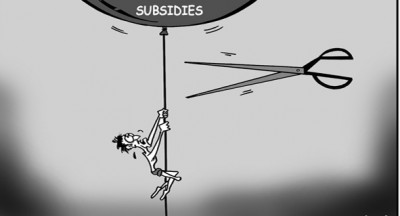

 "Mothers Against Wind Turbines™" Phoenix Rising...