Energy costs unaffordable

Climate Change Alarmists Cannot Handle the Truth! We Are Not In Control of the Climate!!!
Federal Study Confirms Climate Change is Natural, Not Caused by Humans

New federal study confirms that climate change is caused by nature, not by man. Released even while President Obama was saying the opposite at the United Nations.
What is the the world’s biggest problem?
President Obama told the United Nations that it’s not terrorism, poverty or disease, but global warming and climate change that he claims will have the most dramatic impact on our future.
On the same day, the National Academy of Science published a new study that shows 80% of climate change on the West Coast is due to natural causes and is not caused by humans.
The official study is by the National Oceanic and Atmospheric Administration, working with the University of Washington,
Plus global temperatures have been cooling for 18 years now.
Obama promotes billions in crony capitalism for green energy, higher electric rates, and raising costs of autos and appliances , all based on scaring us into thinking there’s no other way to save the planet.
Thankfully, despite efforts to silence them, now some brave scientists are promoting truth rather than propaganda.
With insights, I’m Ernest Istook.
Communists Masquerading as Environmentalists…..Watermelons!
Climate Movement Drops Mask, Admits Communist Agenda
September 23rd, 2014 – 4:31 pm
Communists along with a few environmental groups staged a “People’s Climate Rally” in Oakland, California on Sunday, September 21, in conjunction with the larger “People’s Climate March” in New York City on the same day.
Wait — did I say communists? Isn’t that a bit of an exaggeration?
Well…no.
At the New York event, many people noticed that gee, there sure are a lot of communists at this march. But in Oakland — always on the cutting edge — the entire “climate change” movement at last fully, irrevocably and overtly embraced communism as its stated goal. Any concerns about “optics” or operating in “stealth mode” were abandoned.
The “climate change” “crisis” is now nothing but the latest justification for “total revolution” and getting rid of capitalism forever.
Yes, capitalism itself is the problem. The primary message of the People’s Climate Rally was this: Climate change is caused by capitalism, and merely attempting to reform capitalism will not stop global warming; it is impossible to work within the existing system if we want to save the planet. We must replace it with a new social and economic system entirely.
Until recently, those attacking the capitalist system as the cause of global warming were intentionally a little vague as to what will replace it if we are to solve the problem. But on Sunday in Oakland, that curtain was drawn back and the new system was finally revealed: Communism. Or at least hardcore socialism as Marx defined it — the necessary transitional phase before true complete communism (i.e. no private property, no families, no individualism). Most countries we tend to think of as “communist” actually self-defined as “socialist”: The USSR, the Union of Soviet Socialist Republics, for example, was (as its name reveals) socialist. I point out this detail in case anybody reading this article thinks that the “socialism” advocated at the rally was merely some kind of squishy soft-hearted semi-capitalism; no, it is the same type of socialism one finds in places generally thought of as communist.
Below you will find irrefutable proof that communist ideologies, organizations and phraseologies have completely moved to the forefront of the “climate change” movement. (I was originally tempted to say that the communists, as they are wont to do, have merely “co-opted” environmentalism. But that would imply that the goal of global warming scaremongering was something other than “destroying capitalism” in the first place. At this point I now know that destroying capitalism has always been the goal; the only thing that changed on Sunday is that the mask was dropped.)
This proof will necessarily entail posting a lot of photographs; in situations like this, the only way to conclusively demonstrate a point is through repetition of evidence. One could summarize the evidence with a few shorthand images, but that would leave open the possibility that the case was being overstated. To quash that counter-argument before it arises, I will post lots and lots and lots and lots of images from all over the rally, from the sponsors, to the attendees, to the booths, to the speakers, to show beyond any doubt that the entire rally was thoroughly saturated with communism and socialism to the point where these ideologies were the overarching theme of the event.
Ready? All the photos below were taken at the People’s Climate Rally in Oakland on September 21, 2014.
As you enter the rally you encounter booths hosted by Socialist Action, a Trotskyist/Marxist group…
…and the Communist Party USA, a Marxist-Leninist political party who like to think of themselves as the communists, since they’ve been around for almost a century…
…and the Revolutionary Communist Party USA, a Maoist political cult devoted to overthrowing the United States in a total revolution.
Along the way, you encounter the rally’s attendees, carrying signs advocating concepts like…
…”eco-socialism,” which I nominate as “word of the day,” since the theme of the rally was the fusion of ecology with socialism.
“Another Big, Fat, straight, Midwestern, White Man for WORLD REVOLUTION.”
“Capitali$m is Destroying the Environment.”
Do I even need to point out that socialist and communist countries like China, the Soviet Union, North Korea and elsewhere have absolutely appalling environmental histories, past present and future, which far exceed in ecological destruction anything encountered in capitalist societies? No, I don’t need to point that out, because you already know it. You do — but apparently the people at this rally live in a fantasy world where “socialism” is the opposite of “pollution.”
“Capitalism is Killing the Planet. FIGHT FOR A SOCIALIST FUTURE!” This same message from the International Socialist Organization, a self-professed Marxist/Leninist/Trotskyist revolutionary group, was also prominent at the New York climate march.
If you enter the rally from the other side, you encounter
The Socialist Alternative, one of the few socialist parties to actually have a member elected to public office in mainstream society…
…The Democratic Socialists of America, a comparatively mild-mannered group who want to make America communist via peaceful democratic transition instead of the violent revolution advocated by most other extreme left revolutionary parties….
…and Freedom Socialist, a lesser-known group who nonetheless managed to gain control of the coveted “socialism.com” URL which they use to promote their radical feminist version of communism in “the living tradition of Marx, Engels, Lenin, and Trotsky.”
Many of these Marxist, communist and socialist groups, by the way, were official sponsors of the event. They weren’t hangers-on — they helped to organize the rally.
Children were encouraged to hang out in the protest’s kid-friendly zone, where they could draw their own signs promoting “revolution.”
Had enough? Sorry. I apologize. Because we’re just getting started with the proof that communists dominate the narrative of the climate change movement.
Everywhere I turned, I encountered people with the message, “System Change, Not Climate Change.” If anything, this was the motto of the entire rally.
Anyone Who Believes We Are In A Climate Catastrophe, I Think Is Deluding Themselves”…Dr. Caleb Rossiter
Politically Left Scientist Dissents – Calls President Obama ‘delusional’ on global warming
Climate Statistics Professor Dr. Caleb Rossiter of American University: ‘Obama has long been delusional on this issue. Anyone who believes we are in a climate catastrophe I think is deluding themselves.’
Rossiter on his conversion to a climate skeptic: ‘You are very isolated on the Democratic Party on the left — one is, I am — for having this conclusion of analysis…I would say since 2004 I’ve been very lonely. I’ve been lonely working on the Hill for the Democratic Party.’
Rossiter on Gore’s film: ‘I think it’s a wonderful teaching tool because it shows how we don’t do science. Gore’s irresponsible.’
On Gore winning the Nobel: ‘Worst Nobel Prize for peace since Henry Kissinger.’
Rossiter: ‘My blood simply boils too hot when I read the blather, daily, about climate catastrophe. It boggles the mind that I could be certain that I know what caused a half degree rise in the last hundred fifty years. It’s simply not large enough to find a physical cause.’
Climate Depot Exclusive
As President Obama attends the UN Summit climate summit in New York City, a fellow member of his Democratic Party, who is also a scientist, is publicity renouncing the Presidents climate change claims as “delusional.” Rossiter reversed his view on man-made climate change and now says belief in a climate catastrophe is “simply not logical.”
Climate Statistics Professor Dr. Caleb Rossiter of American University, is an outspoken anti-war activist, has a flawless progressive record on a range of political issues – and he is a climate skeptic. Rossiter is a former Democratic congressional candidate and he campaigned against U.S. backed wars in Central America and Southern Africa.
In an exclusive interview for the upcoming documentary Climate Hustle, Rossiter, an adjunct professor in American University’s Department of Mathematics and Statistics, explained how he converted his views from accepting to challenging the so-called “consensus” on climate change after examining the scientific evidence. Rossiter has taught courses in climate statistics and holds a PhD in policy analysis and a masters degree in mathematics. (Note: The upcoming climate documentary will reveal how politically progressive scientists and other former warmists are now challenging the “consensus” claims of man-made global warming. See: Watch Now: Morano on TV (humbly) promotes new climate film: ‘We are going to have the greatest climate documentary of al-l-l-l-l ti-i-i-ime!’)
“If we had this interview ten years ago, I would have said I never thought about climate and I assumed all the scientist’s reporting and telling a president and a prime minister in England are right,” Rossiter explained. (Note: Rossiter was joined this week by one of President Obama’s own scientists in expressing skepticism on global warming. See: Obama’s Own Scientist Runs Cold on Warming – Outs Himself as a Skeptic! – Physicist Dr. Steven E. Koonin, Undersecretary for Science during Obama’s first term and former professor of theoretical physics at Caltech)

When Rossiter called global warming “unproved science” in a Wall Street Journal OpEd in May 2014, he found that his credentials as a long-time progressive could not trump his climate skepticism. He was immediately terminated due to his ‘diverging’ climate views from his 23 year fellowship at the liberal group Institute for Policy Studies. See: Fired for ‘Diverging’ on Climate: Progressive Professor’s fellowship ‘terminated’ after WSJ OpEd calling global warming ‘unproved science’
Rossiter, whose research has focused on the construction of climate models and the statistical evidence of extreme weather, started to suspect that climate-change data was what he termed “dubious” 10 years ago while teaching statistics at American University.
“So, doubling carbon dioxide, the higher you get, the less effect you get. So logically, in a complex system, like atmosphere, you’re going lot of feedbacks that you don’t have much forcing at a certain point. We really don’t know. It’s very hard to model, models are run way past their usefulness, because they are tuned,” Rossiter explained.
As a progress anti-war Democrat, Rossiter has found his climate skepticism ostracized him.
“I would say since 2004 I’ve been very lonely. I’ve been lonely working on the Hill for the Democratic Party. I thought I was the only person in the room with all my colleagues and all the members of Congress on our foreign affairs committee who held these views about the weakness of the data on climate change and the need to keep Africa developing,” he said.
Obama is ‘delusional’ on climate change
Rossiter has declared: “My blood simply boils too hot when I read the blather, daily, about climate catastrophe.”
“Obama has long been delusional on this issue,” Rossiter declared.
“Anyone who believes we are in a climate catastrophe I think is deluding themselves,” he explained.
He mocked President Obama’s claim that his Presidency will slow the rise of the oceans.
“So when President Obama says, ‘this will be the time that the water started to recede because I’m elected’, that reminds me of King Canute — who took all his advisers to the shores of England and said ‘see how powerful I am? Tell the waters to go out’ and the tides were coming in,” Rossiter said.
Rossiter is disgusted by the way political leaders have portrayed climate science.
“I find it irresponsible, but I find that’s what politicians do, try to seize onto one cause and show the other effect without looking at the other possible intervening variables that’s what we do all the time,” Rossiter said.
Excerpts of Rossiter’s interview adapted from the upcoming Climate Hustle documentary (set for early 2015 release):
As a man of the political Left, Rossiter has felt lonely with his climate skepticism.
“You are very isolated on the Democratic Party on the left — one is, I am — for having this conclusion of analysis — I don’t call it a belief because I feel that I am analyzing — and you’re very isolated in the conservative circles if you believe as Newt Gingrich did for a very brief period that you need to have carbon trading to control this threat,” Rossiter told Climate Depot’s Marc Morano in the interview.
Rossiter bristles when asked about Al Gore and his film “An Inconvenient Truth.”
“Worst Nobel Prize for peace since Henry Kissinger,” Rossiter declared.
Rossiter gives Gore’s film a failing grade in science.
“I think it’s a wonderful teaching tool because it shows how we don’t do science,” he explained.
“Gore’s irresponsible. He pretends carbon dioxide is driving temperature when temperature is driving carbon dioxide. He does all these crazy things, he vilifies people. He does nothing different, from what the president of our country, president Obama, advised by John Holden, the top scientist in the county does every day,” he said.
Rossiter sees Al Gore as a political centrist.
“I had battled Mr. Gore so much in the 1980’s. He is a Dixie — he is part of the Democratic Leadership Council, conservative on foreign policy, as proved by his opposition to us in all these issues,” Rossiter explained.
Rossiter chastised his colleagues on the political Left for “hopping into bed” with Gore when it comes to climate change.
“I know why the left is supporting Al Gore on this when they didn’t on anything else, it’s because it give them the lever to move away from an industrial society to what they call a postindustrial society,” he said.
Progressive using global warming issue to ‘dismember the carbon-driven capitalism’
Rossiter says the political Left in the U.S. is using climate fears to achieve a “welcome license to dismember the carbon-driven capitalism.”
“They want to use the concern about the climate catastrophe is what they called Archimedes giant lever to move away from industrialization toward this postindustrial non-fossil fuel, non-corporate world,” he said.
Rossiter dismisses CO2 as the climate control knob.
“We always, as humans, are looking for cause-and-effect but it’s extremely difficult to find a complex system like the Earth’s climate of over thousands years,” he explained.
“It boggles the mind that I could be certain that I know what caused a half degree rise in the last hundred fifty years. It’s simply not large enough to find a physical cause,” he said. (Note: Other scientists agree. See: Top Swedish Climate Scientist Says Warming Not Noticeable: ‘The warming we have had last a 100 years is so small that if we didn’t have climatologists to measure it we wouldn’t have noticed it at all’)
Rossiter had harsh words for the UN’s climate panel, the IPCC and its claim that they were 95% certainty of human caused climate change.
“When the IPCC uses words like very likely, like 95% likely or somewhat like, about 90% — that’s an alarm bell for people who know statistics. We never use those words — 95% certainty — unless we have a standard deviation and we are estimating how often we get within two standard deviations of the mean. That’s the nature of statistics,” he explained.
When Rossiter called global warming “unproved science” in a Wall Street Journal OpEd, he found that his credentials as a long-time progressive could not trump his climate skepticism. He was immediately terminated due to his ‘diverging’ climate views from his 23 year fellowship at the liberal group Institute for Policy Studies. See: Fired for ‘Diverging’ on Climate: Progressive Professor’s fellowship ‘terminated’ after WSJ OpEd calling global warming ‘unproved science’
“At the Institute of Policy Studies I was obviously very lonely because nobody would debate me and finally fired me for having an article in Wall Street Journal,” Rossiter said.
“Two days later I was handed my walking papers from 23 years association with that think tank,” he added.
“They felt that it was best that I’ve been terminated because my views on African development and climate change and climate justice were divergent from theirs. So I’m willing to express my opinions and have them come out. This is the first time I’ve expressed an opinion that was alien to the left,” he said.
Rossiter says the left has a zero tolerance policy when it comes to dissent on global warming.
“One item out of everything that is the agenda for the institute policy studies I’ve expressed disagreement with and I’m gone,” he noted.
Rossiter’s failure to follow his colleagues on the Left on the claims of global warming has left him isolated.
“What we are supposed to do as professors is follow the data to our conclusion, and then put it out there to be debated,” he explained.
But his colleagues refuse to debate global warming.
“I have been invited the Union of concerned scientists, Greenpeace, Institute for policy studies, random members of Congress who I knew I worked up there on the Hill, to come to my classes to A.U. to debate — they simply refused,” he said.
Rossiter says refusal to debate is part of a strategy.
“There was an agreement among the groups who believe strongly that there’s the catastrophic climate change not to debate, and not to engage in a debate because it gives a credit to those of us who have questions about the certainty which they operate,” he said.
“It is absolutely true that the money available for global warming statements and research is driving academia right now and people line up to get it. I know it from scientists. I know it’s absolutely true,” he noted.
“But it’s nothing new. If you were here 100 years ago and I was in the psychology department, I’d be telling you about the science of craniology – that black people are stupider than white people, that West Europeans are smarter and more creative than Eastern Europeans — and this is called phrenology,” he said.
“And all the data and statistics that they could line up supported it, and everybody believed it. And anybody outside phrenology didn’t believe it. Academia is no different from anywhere else. We wimp out when we are under pressure; we do,” Rossiter said.
More Rossiter quotes appearing in Climate Hustle:
Rossiter pressure in academia to conform on global warming: “It is deadly to your career to be a young dissenter. But a young person, I can tell you by being here on the campus, if you’re in the sciences and environmental studies you are going to be seen as such a kook (if you are a climate skeptic). It will definitely hurt you. See, I don’t care! I don’t give a monkey’s uncle. I’m old enough that I’m just going to say what’s on my mind. I’ll get by, but if I were early in my career, I know that I would be tagged as a kind of crazy, extremist, denialist, and it would hurt my academic career; there’s no question about it.
Rossiter on IPCC: For the IPCC to say nothing else can explain (global warming except mankind’s CO2) is the opposite of what we do in science. We are trying to test the known hypothesis that there is no effect to anthropogenic warming. And in order to do that, you have to have data that removes all the other causes — factors out all the other elements, and isolate yours. It is simply not true; it is simply not true that you can only model how temperature has changed from 1850 to today using a doubling of carbon dioxide levels. I can model it for you with baseball statistics from that same period, if you give me enough time to scrub the models.
Related Links:
Top Swedish Climate Scientist Says Warming Not Noticeable: ‘The warming we have had last a 100 years is so small that if we didn’t have climatologists to measure it we wouldn’t have noticed it at all’ – Award-Winning Dr. Lennart Bengtsson, formerly of UN IPCC: ‘We Are Creating Great Anxiety Without It Being Justified’
UN Scientists Who Have Turned on the UN IPCC & Man-Made Climate Fears — A Climate Depot Flashback Report – Warming fears are the “worst scientific scandal in the history…When people come to know what the truth is, they will feel deceived by science and scientists.” – UN IPCC Japanese Scientist Dr. Kiminori Itoh, an award-winning PhD environmental physical chemist.
‘Some of the most formidable opponents of climate hysteria include politically liberal physics Nobel laureate, Ivar Giaever; Freeman Dyson; father of the Gaia Hypothesis, James Lovelock — ‘Left-center chemist, Fritz Vahrenholt, one of the fathers of the German environmental movement’
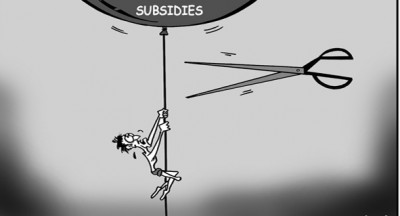
Stop the Outrageous Subsidies, and the Wind Scam Dies!
US Wind Industry Under Siege: Congress Set to Cut Subsidies as Communities Boil Over
September 23, 2014 by

Wind power opponents seek repeal of tax credit
The Seattle Times
Hal Bernton and Erin Heffernan
21 September 2014
FOREST, Wisconsin — When wind-power developers prospected the rolling hills around this small dairy town, they found plenty of gusty sites for turbines. In 2011, they proposed a $250 million project with up to 44 turbines that could produce enough energy to power thousands of homes.
Since then, nothing has come easy for the developer in a state that has emerged as a stronghold of resistance to the spread of wind power.
In Forest, opponents gained enough votes to take over the town government, sued in state court to try to block the project, and added their support to a national movement that seeks to end the federal tax credit for the wind-power industry.
“We are here to protect our property values, our eagles, our health and our town,” said Brenda Salseg, spokeswoman for the Forest Voice, the local opposition group, which posted online a form letter urging the Wisconsin congressional delegation to oppose the tax credit.
The tax credit was passed by Congress in 1992 and has been periodically extended. It is currently set at 2.4 cents per kilowatt hour, and, during times of glutted electricity markets, can be worth more than the wholesale price of power.
This tax credit has helped catapult wind power to the front of the U.S. efforts to launch a renewable-energy industry.
By the end of 2012, wind power represented 43 percent of all new U.S. electric generation installed that year and was hailed by the Obama administration as a key in the global effort to combat climate change.
Wind power also has been bolstered by state mandates that require utilities to acquire a certain percentage of the power from renewable-energy sources.
The turbines operate in more than three dozen states, from Washington’s Columbia River Plateau to the Allegheny Mountains of Maryland, and in 2013 provided more than 4 percent of the nation’s power, according to a Lawrence Berkeley National Laboratory report.
In many areas, wind turbines have been welcomed as an economic boon to landowners who are paid for leasing acreage.
But as wind power has grown, so, too, has the opposition.
In some communities, such as Forest, developers have faced a backlash from residents concerned about the noise and health effects of living near wind-power projects.
The toll on birds and bats killed by turbine blades has drawn scrutiny.
Critics have attacked wind power as a fickle source of electricity that ebbs whenever the wind dies down. They fault the tax credit for encouraging new projects when many utilities have plenty of power.
Over time, the politics of wind power have become more partisan.
Most of the wind-power capacity is within Republican congressional districts, but many politicians in the party have made ending the tax credit part of their agenda. This year, efforts to extend the tax credit have made little headway in the Republican-controlled House.
Some House Republicans such as Rep. Dave Reichert, R-Wash., still back the tax credit, according to Reichert’s spokeswoman. But some former supporters have turned against it.
Rep. Kevin McCarthy, the House majority leader, once advocated the tax credit that helped spur investment in wind farms in his California district. But before his June election to his leadership position, he told the Wall Street Journal he thinks wind companies no longer need the tax credit.
“My feeling is the current situation is as bad as it has ever been,” said Robert Kahn, a Seattle consultant who represents wind-power developers. “Congress is so polarized about so many things that if some people are for it, other people are going to have to be against it.”
The fight against the tax credit also has been championed by Americans for Prosperity. One of the nation’s most prominent conservative advocacy groups, it was co-founded by billionaire David Koch, who has extensive interests in the fossil-fuels industry.
The organization last fall sent an open letter to Congress signed by more than 100 groups, including many smaller groups formed to fight wind power.
Wind-power advocates note that fossil-fuel industries have received federal subsidies for decades, such as a tax provision that allows favorable write-offs of oil-drilling costs. They say the government should put a price on carbon, or continue offering incentives for technologies that produce energy without carbon emissions. “We don’t want to lower or eliminate our tax credit when everyone else gets to keep theirs,” said Jim Reilly, a senior vice president of the American Wind Energy Association.
The wind-power tax credit extends over the first 10 years of a project’s operation. Congress has typically extended the credit a few years at a time, creating financial uncertainties for the wind-power industry.
In 2013, installations of wind farms declined by more than 90 percent from the previous year, reflecting concerns that the credit would not be extended.
Congress did extend the credit that year, eventually prompting many companies to break ground on projects.
Many are going in this year, putting the industry on a record pace for construction, according to the American Wind Energy Association.
The cost of new power has plummeted to record lows. The average price of about $25 per megawatt hour for power-purchase agreements in 2013 was nearly a third less than in 2009, according to a study by the Lawrence Berkeley lab.
What would happen if the tax credit dies?
Ryan Wiser, a co-author of the Berkeley report, said that would push the price of wind power past $40 a megawatt hour, and cool investor interest.
“The number of projects would be much less, but there is no doubt there would be some,” Wiser said.
Even without a tax credit, wind power also would receive a boost from President Barack Obama’s proposed rule to limit emissions from existing power plants. It could prompt the closing of some coal plants and open up more demand for turbine power.
But the proposed rule is opposed by many Republicans, and already is facing court challenges.
Conflict still rages Wisconsin once was swept up in the wind-power boom. But it’s now an example of how a state, even with federal incentives in place, can put the brakes on turbines. Many wind-power projects in Wisconsin are on relatively small properties, increasing the potential for conflicts with neighbors who don’t receive any lease payments but find themselves living next to turbines.
“The first day the turbines came on, I thought it was a jet plane taking off,” said Gerry Meyer, a retired mail carrier who complains of health effects from living near turbines in rural southeast Wisconsin.
Meyer has testified at state legislative hearings and also networked with Forest activists seeking to block the wind-power project proposed there by Emerging Energies.
These opponents have found some powerful allies among state Republican politicians.
“Wind turbines have proved to be an expensive, inefficient source of electricity, and thus any future construction of turbines simply is not a policy goal or object that should be pursued further,” Gov. Scott Walker wrote in a 2010 campaign memo obtained by the Milwaukee Journal Sentinel.
Walker, once in office, backed a legislative effort to increase setbacks for turbines by increasing the distance they must be located from a neighbor, and measuring that setback from the neighbor’s house rather than property line. That 2011 effort failed.
But a legislative committee voted to suspend the state’s wind-siting rule to study the health effects of wind turbines.
By the time the rule was reinstated a year later, five Wisconsin wind projects had been suspended or canceled, according to Clean Wisconsin, a wind-power advocacy group. New installations of turbines plummeted in the state.
In the months ahead, developers’ attorneys will argue in court for the right to finally move ahead on the Forest project.
Meanwhile, an emotional battle over the project continues to rage within the community. “It’s been devastating for the town,” said Carol Johnson, a Forest resident who supports the project. “Many family members will never speak again … It’s just torn the town apart.”
The Seattle Times
As it goes in Wisconsin, it goes all around the globe: spear giant fans into closely settled rural communities and the only thing guaranteed to be generated isn’t meaningful power, but a constant source of anger, hostility and community division. What makes these people so wild is that all their suffering has done nothing for the economy or the environment, leaving them feeling like dupes in the greatest fraud of all time (see our post here).
We love the line about how closing coal plants would “open up more demand for turbine power”. We think that’s a form of flattery best reserved for first dates. There is no “demand for turbine power”. In the absence of mandated targets (shortfall charges, penalties and the like) or massive subsidies there is NO demand for an unreliable and intermittent power source that can only ever be delivered at crazy, random intervals (see our post here). Wind power is not an alternative energy source (unless you’re prepared to sit in the dark for hours and days on end?) and will never be a substitute for conventional generation sources available on demand (see our post here).
We note a lot of “brave” talk about the wind industry being able to survive if the US Congress does away with the Production Tax Credit (PTC).
If the tax credit dies, the US wind industry dies – it will not be a case – as Ryan Wiser asserts – that: “The number of projects would be much less, but there is no doubt there would be some”.
What utter piffle. Cut the subsidies and there will never be another wind turbine erected anywhere, ever again.
The massive stream of subsidies – like the REC and PTC – provide the ONLY explanation for the wind industry – as recognised by the “Sage of Omaha”, billionaire Warren Buffett – whose company Berkshire Hathaway has invested $billions in wind power in order to get at federal subsidies – namely the PTC – which is worth US$23 per MW/h for the first 10 years of operation.
A subsidiary of the Buffett-owned MidAmerican Energy Holdings owns 1,267 turbines in the US with a capacity of 2,285 MW – eventually when the company’s Wind VIII expansion is finished, MidAmerican will own 1,715 turbines with a capacity of 3,335 MW. Buffett has piled into giant fans for one reason only: to lower the tax rate paid by Berkshire Hathaway.
As Buffett put it earlier this year at his annual investor jamboree in Omaha, Nebraska:
“I will do anything that is basically covered by the law to reduce Berkshire’s tax rate. For example, on wind energy, we get a tax credit if we build a lot of wind farms. That’s the only reason to build them. They don’t make sense without the tax credit.”
There, Warren Buffett said it, not us.
At least he had the honesty and integrity to explain the only conceivable basis for the greatest rort of all time. And isn’t it so much better when those that profit from it choose not to speak with “forked tongue”. Maybe Ryan Wiser, the CEC and AWEA can take a leaf out of Warren’s book?
Why Have So Many People Gone Enviro-Mental? It’s a Scam!
FULL-FRONTAL ENVIRONMENTALISM: WE KNEW IT ALL ALONG
There’s an old line that environmentalists are “watermelons”—green on the outside, red on the inside. A lot of environmentalists will take great offense if you say this: No no! We like economic growth and capitalism just fine! We just want it to be “sustainable,” whatever that means. And don’t ask for specificity about what “sustainability” means in detail, unless you have a lot of time and a full bottle of hootch handy. Before long you’ll figure out that “sustainable” is just a code word for green things we like, and that it has no rigor whatsoever aside from old-fashioned factor-efficiency, which economists figured out over a century ago at least.

But anyway, environmentalists resist being called socialists. But next week Naomi Klein is coming out with a book called This Changes Everything. In case you’ve forgotten your show notes, Klein is the author of The Shock Doctrine, a book ragingly popular with the far left that is so far gone into absurd conspiracizing and looney renderings of “neoliberalism” that it makes Lyndon LaRouche look positively staid by comparison.
What is the “this” that “changes everything” in her title? Why climate change, don’t you know? And what does it “change”? Why capitalism, of course. The argument of the book in one sentence is that only overthrowing capitalism can solve climate change. Don’t take my word for it. Here’s how the progressive lefty site CommonDreams described it today: “Forget everything you think you know about global warming. The really inconvenient truth is that it’s not about carbon—it’s about capitalism.” For this bit of candor about what we’ve long suspected of the climate campaign, we owe Klein and her followers a debt of thanks. I’m going to send her a bouquet of (sustainably-raised) flowers.
Climate change is just the ultimate in “late capitalism” I guess but what’s really getting late is the odor of this badly decayed Marxism. (Klein still uses the uproariously hilarious term “late capitalism” without a trace of irony in her pre-publications articles.) Talk about trying to sell something past its “use by” date! Wasn’t World War I the crisis that “changed everything”? Then the Great Depression? Then the Cold War? The panic and crash of 2008? “This changes everything,” as G.K. Chesterton probably said somewhere, is the refrain of the lunatic in the asylum who thinks he’s Napoleon. It’s always something.
The book unwittingly reveals that none of this crusading and posturing is about the environment at all. Bill McKibben’s dust jacket blurb gives the game away: “This is the best book about climate change in a very long time—in large part because it’s about much more.” Silly me: I thought it was about greenhouse gas emissions.Thought experiment: if we wave a magic wand, will Klein, McKibben, et al suddenly say, “Oh, I guess capitalism is okay after all”? Anyone want to buy some sustainable swampland in Florida?
It will be interesting to see whether “mainstream” environmental groups will distance themselves from Klein’s book. I intend to ask them about her argument at every opportunity. I expect every kind of weasel excuse imaginable. So I guess I better put in for a large order of free-range, gluten-free, sustainably-raised Green Weenies.
“Watermelons”, as James Delingpole so aptly describes them, Green on the Outside, & Red on the Inside!
Communists coming out of the Green Closet.
 |
| Image source: Oliver Darcy/TheBlaze |
Christopher Monckton is presently in Australia. Previously he has said: (link – WUWT)
So at last the communists who piled out of the Berlin Wall and into the environmental movement and took over Greenpeace so that my friends who founded it left within a year because they’d captured it. Now the apotheosis is at hand. They are about to impose a communist world government on the world.
Patrick Moore who will soon visit Australia, co-founder of Greenpeace, left the Green Movement when it was infiltrated by communists: (link)
The collapse of world communism and the fall of the Berlin Wall during the 1980s added to the trend toward extremism. The Cold War was over and the peace movement was largely disbanded. The peace movement had been mainly Western-based and anti-American in its leanings. Many of its members moved into the environmental movement, bringing with them their neo-Marxist, far-left agendas.
Further:
Progressives are very resilient, so when Soviet communism finally collapsed after 70 years of world wide tyranny, progressives and liberal Democrats pushed the existential green movement to the forefront, which was in reality the same old exhausted red communism in a new disguise.
The “Green” Movement tried to disguise their “Red” Socialist/Communist ideas, however, now they are coming out of the closet.
The New York “Climate” March, as reported by the Blaze had socialists elements spread through it. (link)
Dozens of signs denouncing capitalism were spotted at the demonstration, often held by self-proclaimed socialists.
“Capitalism is destroying the planet,” a sticker on one woman’s shirt read, “We need revolution, nothing less.”
 |
| Image source: Oliver Darcy/TheBlaze |
Members of the Socialists Workers Party also manned a table, passing out flyers attempting to make “the case for ecosocialism.”
This man, Bobby Jindal, Exposes the Truth Behind Skyrocketing Energy Costs….Outrageous
Another Reason We Have to Fight Agenda 21! This is happening worldwide!
ENERGYNEWS
Bobby Jindal: How the ‘Radical Left’ Uses Energy Costs to Control Americans

Louisiana Gov. Bobby Jindal speaking at The Heritage Foundation to a group of reporters about his new energy plan. (Photo: Steven Purcell)
Louisiana Gov. Bobby Jindal yesterday accused the Obama administration of making energy more expensive with the goal of making Americans more dependent on government.
“The Left, they like to tell us they are the ones [who] are following science and we’re the science deniers,” Jindal said to a small group of reporters after delivering a speech at The Heritage Foundation to debut his energy jobs plan. “But I think overall, their approach to energy is telling.”
The Republican governor said the “radical” Left wants energy to be scarce and expensive because it empowers the federal government to be more involved in Americans’ lives.
Doing so, the potential 2016 presidential candidate said, essentially allows the Obama administration to decide what kind of car you drive, what kind of home you live in, what kind of education your children receive, what kind of health care insurance is adequate for you, and what size soda you can drink.
Right now, Jindal said, America “is on the road to failure.” He said:
It’s war on coal today; it’s going to be a war on natural gas tomorrow—it’s a war on any natural energy source. [The Left] wants it to be scarce; they want it to be expensive. You can see it in their actions, you can see it in their policies.
Jindal, elected governor of Lousiana in 2008 after two terms in Congress, has presided over a state hit by the 2010 oil spill in the Gulf of Mexico while still recovering from Hurricane Katrina.
The Left wants energy to be scarce and expensive. You can see it in their actions, you can see it in their policies. -@BobbyJindal
He cited what he called the Left’s “startling” views on natural gas.
“When [natural gas] was 13 dollars, boy they loved it. As soon as it became affordable, all of the sudden they decided they didn’t like it so much,” Jindal said.
>>> What Contributes to Gas Prices and Solutions to Help
Nicolas Loris, a Heritage economist who specializes in energy policy, agreed that some liberals initially supported natural gas “as a bridge fuel to take us to renewables.” But because the revolution in shale gas provided an abundance of cheap natural gas, he said, “that bridge became a lot longer than they anticipated.”
“While it may be bad news for other sources of energy,” Loris added, “the low-cost energy is great news for American families and businesses.”
>>> Commentary: Obama May Be Bypassing Congress on Climate
Jindal also cited regulations on carbon dioxide as proof of an “ideologically extreme” agenda by President Obama and other liberals. He said:
“For much of the Left, the whole debate about [carbon dioxide] is really a Trojan horse because these are folks that never did want a free market. This was a group that was always looking for an excuse to impose more government regulation, more government oversight. … This is just their latest vehicle to do it.”
Jindal’s energy plan, co-authored by Rep. Bill Flores, R-Texas, is called “Organizing Around Abundance: Making America an Energy Superpower” and promises to usher in an “unprecedented” era of energy development and job growth.
Here are the main points:
1. Promote responsible development of domestic energy resources and construct infrastructure to transport it.
2. Encourage technological innovation of renewables and emerging energy without picking winners and losers. In other words:Stop giving taxpayer-funded handouts to politically preferred energy sources and technologies. Let the market work.
3. Unlock the economic potential of the manufacturing renaissance by putting America’s energy resources to work.
4. Eliminate burdensome regulations such as the Obama administration’s increased carbon dioxide restrictions on power plants.
5. Bolster national security by ending policies that ban the exporting of natural resources.
6. Pursue “no regrets” policies that reduce carbon dioxide emissions without punishing the U.S. economy by putting it at a disadvantage to those of other nations.
Loris gave points to the Jindal-Flores plan for building on “what we see and know to be successful” when it comes to American energy production.
“Free market policies that open access, remove handouts and peel back burdensome regulations will reward risk-taking, stimulate economic growth and provide Americans with affordable energy,” he said.
What the nation shouldn’t pursue, Loris added, is a policy of reducing carbon dioxide.
“That assumes carbon emissions are a problem,” he said. Instead, “we can recognize that free markets that reward technological innovation can fuel the economy and reduce emissions.”
Watch this video for Jindal’s complete public remarks at The Heritage Foundation.
Faux-green Windpushers Wreaking Havoc on the Poorest Citizens!
It’s the Poor Who Suffer Most from the Great Wind Power Fraud
September 18, 2014 by

In a number of posts we’ve covered Bjørn Lomborg’s critical analysis of how runaway renewables policies – and the spiralling power costs they cause – are having a devastating (and disproportionate) impact on the poorest in developed economies – and how they threaten to lock the poorest billion or so of our planet’s inhabitants into a future of misery, poverty and darkness (see our posts here and here and here).
When it comes to assessing the costs, risks and benefits of environmental policy Bjørn Lomborg has always tried to provide balanced, detailed analysis supported by facts and evidence. The economic choices we make – about allocating scarce resources to unlimited wants – should – as Lomborg consistently points out – be made taking into account all of the costs weighed against properly measured benefits (see our post here).
When it comes to renewable energy policy, however, fundamental economic doctrine has been simply thrown to the wind.
The wind industry and its parasites tout spurious and unproven benefits in terms of CO2 emissions reductions – reductions which cannot and will never be delivered by a generation source delivered at crazy, random intervals that adds nothing to the entire Eastern Australian Grid hundreds of times each year – and which, therefore, requires 100% of its capacity to be backed up 100% of the time by fossil fuel generation sources (see our posts here and here).
Despite (or, rather, because of) its mad wind-rush Germany has seen CO2 emissions increase as it has had to build and re-commission coal fired plants to provide reliable base-load power to keep the grid up and running (see our posts here and here).
Not content with claiming fictional environmental benefits, the wind industry and its parasites dissemble and obfuscate on the true and hidden cost of wind power – only ever pointing to the wholesale price – when it falls – on those rare occasions when wind power output contributes something meaningful to the grid – which is usually at night-time, coinciding with the overnight plummet in demand, naturally resulting in a depressed wholesale price. The industry never discusses the costs that retailers pay through their Power Purchase Agreements – that guarantee minimum prices to wind power generators and which – at $90-120 per MW/h – are 3-4 times the cost of power from conventional sources. And it’s the price retailers pay under their PPAs and pass on to consumers that really matters to power punters.
Wherever there’s been any significant investment in wind power retail power prices have gone through the roof – witness Denmark, Germany and South Australia – which all jostle for the top spot on the table for the highest power prices in the world. See the table at page 11 in this paper: INTERNATIONAL-PRICE-COMPARISON-FOR-PUBLIC-RELEASE-19-MARCH-2012 – noting that the figures are from 2011 and SA’s retail power costs have risen significantly since then (and see our post here).

With thousands of Australian households living without power – having been chopped from the grid simply because they can no longer afford what used to be a basic necessity of life – and thousands more suffering “energy poverty” as they find themselves forced to choose between heating (or cooling) and eating – Australia risks the creation of an entrenched energy underclass, dividing Australian society into energy “haves” and “have-nots”.
For a taste of the scale (so far) of a – perfectly avoidable – social welfare disaster, here are articles from Queensland (click here); Victoria (click here); South Australia (click here); and New South Wales (click here).
Slapping a further $50 billion in REC Tax on top of already spiralling Australian power bills – all to be directed to wind power outfits over the next 17 years can only add to household misery (see our post here).
The Germans launched into massively subsidised wind and solar power, causing power prices to rise 80 per cent in real terms in little over a decade. Unable to pay skyrocketing power bills, 800,000 German households have been disconnected from the grid – with that number growing by 300,000 each year. In addition, almost 7 million German households are suffering “fuel poverty” – forced to choose between eating or heating. Large numbers of them have headed to their forests, stealing wood to cook with and heat their homes (see our post here).
The impact of spiralling power prices hits the poorest the hardest and hits those in the developing world the hardest of all – depriving them of the opportunity of ever having access to cheap and reliable power. Here’s a piece from Forbes detailing how it’s the poor that suffer most from the costs of “green” fantasies.
Who Pays For Green Dreams?
Forbes
Loren Steffy
15 September 2014
Renewable energy is coming to an economic crossroads, one that could have dire unintended consequences for some of the most vulnerable populations – the poor and the elderly.
As renewable energy expands, activists around the world are calling for programs that would supplant conventional fuels – coal, oil and, to a lesser extent, natural gas – with renewable sources such as wind and solar.
Programs such as the misguided fossil fuel divestiture movement, ignore the costs that forcing a move away from fossil fuels imposes on those who are slowest to embrace the change. While there are benefits to diversifying our fuel portfolio, in its current form, the growing use of renewables requires a subsidy from fossil fuels.
This isn’t a cost being foisted upon those who deny climate change. Quite the opposite. In many cases, it is those who already face the biggest impact from global warming who are being saddled with the greatest cost for switching to renewables.
Caleb Rossiter, an adjunct professor with American University’s School of International Service recently outlined his concerns with how the fossil fuel divestiture program could affect Africa:
Africa accounts for 5 percent of global emissions. America’s per-person emissions are 20 times higher. Successful divestment would freeze African economic development while having little effect on global emission levels. Africa has not taken part in the energy revolution that has boosted education, comfort, income and life expectancy. According to the World Bank, only 24 percent of Africans have access to electricity. The rest must resort to burning dung and wood in their houses and huts, leading to horrific rates of lung and heart disease.
The typical African business loses power 56 days each year, constraining commerce, agriculture, education and industry. Growth suffers, and because wealth allows people to live healthily, so does life expectancy.
Energy poverty is stunting the sort of economic growth that Africa needs if it is to move from 59 years of life expectancy to the 79 that China has achieved through 20 years of economic growth fueled by intense, government-backed promotion of carbon-based electrical capacity.
It isn’t just Africa, though. The cost of increasing renewables use is being borne in developed countries, too. On Sunday, the New York Times had a story about the expanding use of renewables in Germany. Germany leads in the industrialized world in renewable energy production, and it will soon get 30 percent of its power from renewable sources.
That sounds great, but as the Times piece points out, all of Germany’s investment in offshore wind and solar has resulted in an increase in intermittent power sources. The country’s conventional utilities are still expected to find a way to keep the lights on when the wind doesn’t blow.
That means in Germany, just as in the U.S. and other countries, the shift to renewable power is being subsidized by those who continue to use conventional energy sources.
In most countries, customers pay for electricity based on the amount they use. Using less – by, say, putting solar panels on your house — means paying less. But renewables, despite their growth, remain supplemental energy sources. Utilities are still responsible for maintaining reliability of the electric system, and they still bear most of the same costs as they did before renewables entered the mix.
Those costs get spread disproportionately among ratepayers who are still using conventional power. As a result, customers who don’t use renewables wind up subsidizing the reliability for those who do. In many cases that means poorer customers who can’t afford to install solar panels, or the elderly who are slower to embrace new technology.
The irony is that if everyone embraced renewables completely, no one would be able to afford them. Like it or not, in the developed world, the shift to renewables is being funded by fossil fuels, and probably will be for decades.
In developing regions like Africa, the subsidies are even more damning, because the development of affordable and reliable power is the road out of poverty. Activists in the west would have their green dreams financed by the continued poverty of the poorest nations on earth.
Forbes

Dictatorial Governments Bound to Get Backlash! Listen When We Say NO!!
NIMBYs are not the problem
Ontario’s failure to develop broader support for building wind and other renewable energy projects stems from a lack of local democracy.
The sweeping changes to Ontario’s renewable energy policy regime in the past few years have spawned a highly charged public debate. Much of the controversy focuses on the public payments offered to wind and solar developers, and there has been an accompanying backlash from dissenting neighbours and other critics against the proliferation of turbines and solar panels in rural areas. But that noisy clash obscures a deeper and more dangerous tendency in the province’s approach to new energy projects: an approval framework that sees the public as inherently selfish, prone to irrational opposition and incapable of considering the greater public interest. This policy approach reflects the bureaucracy’s mistrust of the ability of the Ontario public to make wise energy choices.
The belief that individual selfishness prevails over a sense of the common good inhibits good energy policy and is unhealthy for the province’s democracy. It springs from a conviction of the power of NIMBYism. NIMBY, of course, is the catchy acronym coined in the 1980s for the “not in my backyard” phenomenon that expresses individuals’ desire to protect their own turf from new building or development, despite broad societal agreement that the development is necessary. The concept holds that while most citizens might agree on the need for a new road, landfill, prison or wind generator, few want to live next to one.
Framed this way, the NIMBY question is a variation of the free-rider problem in economic theory: how to avoid everyone freely benefiting from a service without paying their share. Traditionally, this has been dealt with by having a planning authority compel or compensate citizens to host these facilities for the greater good. But recently there has been a growing acknowledgement of the public’s readiness to appreciate trade-offs and participate more fully in planning decisions. Public policy practitioners and researchers alike recognize that decisions about where to build new developments are messy and highly political, and frequently involve trade-offs and multiple changes to original plans. If conflict is to be minimized and decisions given greater legitimacy, the public must be involved in the process.
Unfortunately, Ontario’s approach to building wind generators and other renewable energy projects has ignored this tenet. Instead of more public participation, there has been less. In 2009, a dozen pieces of legislation were amended to create uniform provincial standards, streamlining the patchwork of local rules that had grown up around the province’s first wind projects on matters such as setbacks (the distance a facility must be from dwellings, roads, rivers and other places that need protection), noise bylaws and community benefit arrangements. Any requirement for lower-tier government approval was erased and a stringent legal test was put in place in case of appeals against wind project approvals. The approach was designed in the conviction that Ontario’s citizens were not to be trusted, and that anyone opposing wind energy was simply in the grip of NIMBYism.
This is a flawed premise. As early as 2000, Dutch researcher Maarten Wolsink showed that only a small minority of people living next to proposed and existing wind farms fit the classic profile of a NIMBY. Research published in 2013 by Jamie Baxter and colleagues from the University of Western Ontario showed a similar phenomenon. In a study that surveyed Ontario communities with and without turbines, they showed that only 9 percent of residents fit the NIMBY profile. Instead, their research revealed that Ontarians are much more likely to either oppose the installation of wind turbines altogether (not in anybody’s backyard, or NIABY) or, if they favour renewables, agree to have them built in their communities (yes in my backyard, or YIMBY).
My research into public attitudes to renewable energy projects backs this up. I have looked at the process for approving wind projects both before and after the rule changes to the 2009 Ontario Green Energy Act, and I found that the YIMBY constituency is effectively sidelined by the lack of a process for discussing and debating projects at the local level, including the failure to require municipal authority approval for projects.
The lack of a process to involve citizens in decisions means supporters of renewable energy development projects have less incentive – and little opportunity – to influence project approval.
The lack of a process to involve citizens in decisions at the local level means those who support new renewable energy development projects have less incentive — and little opportunity — to meaningfully influence project approval. The feeling among YIMBYs is that the province is the only authority that matters under the current rules, so why engage in potentially unpleasant arguments and debates with neighbours? Furthermore, as Trent University’s Stephen Hill and James Knott point out in their 2010 article in the journal Renewable Energy Law and Policy, local planners are sidelined from the process of approving new renewable energy projects, removing a vital cog in lending legitimacy to projects. Local planners are the skilled and trusted actors normally designated to shepherd controversial developments to completion.
Yes, requiring local approval and getting local politicians and planners onside takes time. And the need for deeper support at the local level may mean that some projects with excellent technical and economic foundations may not get built. But in the long run, trust and social licence are assets that need to be nurtured during this transition to a greater reliance on green energy. Wind, solar and other renewables are a type of resource that is different from more centralized energy systems like nuclear and coal power plants. Wind and solar resources are disparate and spread out across communities and landscapes. The change to a low-carbon energy system thus involves new actors and new winners and losers. Ontario needs to implement more, not fewer, meaningful opportunities for local residents to impact project decisions.
A high rate of project appeals in Ontario is associated with another policy problem: poor communication of the health risks involved in wind power generation. The potential for producing serious harm to human health is one of only two bases for appeals under the Ontario legislation (the other is serious and irreversible harm to plant and animal life). Fear of ill-health effects has become a mantra of the wind opposition movement in the province. Testimonials of negative health impacts are thus raised in the adversarial setting of a legal process, instead of in a more open environment where the health issues could be discussed openly by citizens and experts alike. The health discourse has become polarized, with wind developers on one side labelling the alleged ill-health impacts as “quack science” while critics raise the spectre of alarming risks to public health if wind turbines are built. This turns legitimate discussion of health risks into fevered tribal warfare.

It is not even clear that Ontario’s streamlined approval regime has provided the stable environment for investment in wind energy that was a primary goal of the legislation. In reaction to an absence of democratic process, local protests against what is seen as provincial heavy-handedness have grown into a well-organized and effective anti-wind movement. Industry watchers note that every single wind project approved under the new Ontario rules has been appealed. The legal delays forced the province earlier this year to extend the contractual deadlines for approved power projects to account for these delays. By comparison, Quebec has had far fewer appeals for roughly the same production level of installed wind projects.
One reason for Quebec’s lower level of community conflict over wind power generation may lie with the province’s ability to successfully establish a sense of community ownership of some wind projects. There is wide agreement among experts that wind energy success in jurisdictions like Germany and Denmark is partially due to high levels of community ownership of projects. Hydro-Québec has signed agreements for a dozen wind projects in which community interests have a 50 percent ownership stake. These ownership groups include regional municipal governments and First Nations. The arrangements vary, but typically wind revenue is returned to general coffers or earmarked to a special fund.
Ontario’s framework for supporting community ownership of wind projects, on the other hand, has been an utter failure. Instead of setting aside a guaranteed portion of the province’s wind power purchases to come from projects with community ownership as was done in Quebec, Ontario offered to pay a premium price for a particular type of community ownership arrangement. Local renewable energy co-ops first had to be established, and then these entities had to partner with developers with at least a 15 percent ownership stake in order to capture the premium price. Five years after the law was passed, no wind projects with co-op ownership have emerged in the province.
Policy-makers should have recognized the lack of uptake in Ontario earlier and experimented with different options, such as lower percentage thresholds for the premium. A more equitable sharing of the financial benefits from wind projects is part of the answer to host-community conflicts. Typically, only the wind company and a select number of landowners with turbines on their properties receive compensation for the energy produced. Other models such as the community ownership arrangements in Quebec or compensation for all landowners in close proximity to turbines could help. The more actors that are receiving even modest financial benefits to offset the costs of having a wind project in their backyard, the better.
Thankfully, there are signs that the province is getting the message that it cannot override local democracy if its orchestrated transition to greater renewable energy use is to succeed. Earlier this year, provincial civil servants were directed to revamp community engagement requirements for large wind procurement contracts. Early proposals are that wind development companies would have to show community involvement through equity interest or an agreement to comply with local site control processes.
However, the that reality is that there is a legacy of dozens of wind projects approved under the old rules that have yet to be built and will continue to create unnecessary community conflict for years to come. One area in which to monitor the Wynne government’s commitment to more -citizen involvement is a planned move to more decentralized energy planning. This would see regional-level input into selecting a mix of energy sources appropriate to the energy needs of regions.
The litmus test is who gets invited to participate and agrees to join in these deliberations. Will it be only energy utilities and government departments, or will community groups and landowners also be involved? To truly succeed, policy-makers must realize that not all citizens are selfish NIMBYs. If the transition to renewables is to work by consent, people must be consulted at a local level. The diktat approach is destined to fail.
Stewart Fast is a postdoctoral fellow in the Department of Geography and the Queen’s Institute for Energy and Environmental Policy, Queen’s University.
 "Mothers Against Wind Turbines™" Phoenix Rising...