Vermonters Stand Up Against the Windpushers!

Vermonters in Full-Scale Open Rebellion Against Planned Wind Turbine Roll-Out
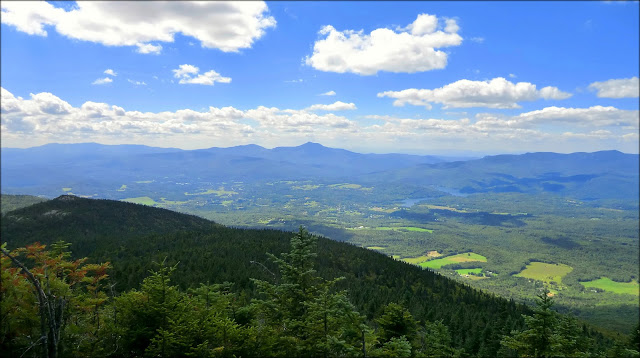
Mount Hunger

****

Vermont is the place where dreams of peace and tranquility come true. Rolling waves of verdant hills, interspersed with fertile valleys and filled with a tenacious band that endure bitter winters and short bursts of what those in America’s North-East think passes for ‘Summer’: that’s Vermont.

But the element that’s brewed to the surface in the Green Mountain State– and that’s now reached boiling point – is unbridled anger.

Vermonters are set upon by the same cowardly, callous and criminal chancers found all around the Globe – that appear from nowhere – like flesh-craving zombies – slobbering at the thought of massive and (seemingly) endless subsidies.

While their so-called political betters dance to their back-handing benefactors’ tune, the communities set upon have risen to the point of a full-scale, open rebellion. The following pieces tell the story of a mass movement of Vermonters venting fury and of a few politicians gifted with grace (rather than beguiled by wind industry ‘grease’) who’ve decided to put a halt to the most ludicrous energy ‘policy’ ever imagined.

ridges not renewable

Vermont’s energy siting struggle hits crescendo
Michael Bielawski and Bruce Parker
Vermont Watchdog
21  January 2016

MONTPELIER, Vt. — What started as a letter from Rutland regarding a lack of local control over renewable energy siting has culminated in an 86-town strong “Vermont energy rebellion.”

On Wednesday, more than 100 protesters gathered at the Statehouse to demand local control for energy siting.

Leading the demonstration were state Sen. John Rodgers, D-Essex/Orleans; Karen Horn, policy director for the Vermont League of Cities and Towns; and Don Chioffi, a member of the Rutland Selectboard. Together they argued the energy project siting process as it now stands oversteps the will of ratepayers.

“I would like to acknowledge those here today whose homes and lives have been sacrificed by our state’s energy policy, those of you who have been encroached upon and bullied by energy developers, and those of you who have lost not only property values but the health of your families to industrial wind plants. The process that we use to site energy in Vermont is broken and it’s long past time to fix it,” Rodgers said, opening the event.

According to Rodgers, renewable energy developers, with rubber-stamp support from the Public Service Board, have been given unrestrained power over land use in Vermont to the detriment of cities, towns and the environment, adding that the process had become “anti-environmental and anti-democratic.”

His two-part solution was also the largest applause line of the day: “First, I propose that we ban the development of industrial wind in Vermont. … Second, I propose that we require land use decisions related to energy generation to go through Act 250.”

To that end, Rodgers is sponsoring S210 and a slew of of other bills to ban industrial wind and subject the Public Service Board’s energy development certification process to stipulations found in Vermont’s strict land use and development law.

bear

****

Other community leaders, including Chioffi, offered comments about the problem.

“You may as well throw selectboards and planning boards out the window if you are going to operate the state this way. They are being treated as if they are nonexistent and useless,” Choiffi told Vermont Watchdog. “… There has never been a solar projected rejected by this Public Service Board — there’s the proof in the pudding.”

Mark Whitworth, board member of Energize Vermont, a pro-renewable energy group, attended the event to protest the manner in which renewable energy projects are being implemented.

“They’re industrializing wildlife habitat, they are fragmenting forests,” Whitworth said. “They are developing our ridgelines, which is going to result in a loss of flood resiliency, and they’re converting farm land for meager energy production — so we are jeopardizing our food security. We think that these guys are just worsening the very problems that they claim they are helping us to avoid.”

Vermonters from across the state traveled to the Statehouse to have their voices heard as well.

“There aren’t any constraints on where they put them up or how big they are,” said Rachael Carr, of St. Albans. “If they don’t get some legislation to put some restrictions on these projects, it’s going to be too late.”

vote

****

Her young son, Alex Carr, added an imaginative twist on the problem: “I’m here to protect the state from these huge monsters,” he said. “People think they are good, but they are not.”

Giselle Chevallay, a Newark resident dressed up as a displaced Vermont bear, said, “We want to help make sure we are more careful about our siting choices, whether it’s solar, wind, nuclear, hydro or anything.”

Given such urgency and backing by 86 towns, Rutland’s 2014 letter seems almost prophetic: “We are attempting, through this resolution, to form a coalition of Vermont communities which will support reasonable legislation to restore local community input to the regulatory process when addressing the issue of solar citing in our state.”

Whitworth explained what it means for a town to be part of the rebellion.

“These towns have either signed onto the Rutland resolution or they’ve adopted town plans which have explicit language regarding energy citing or certain energy technology,” Whitworth said, adding that his town of Newark has a town plan that says industrial wind turbines are inappropriate.

Currently, energy projects are exempt from Act 250 requirements. These requirements include adhering to regional municipal plans not unlike those of Newark. Rodgers’ bills attempt to make energy development subject to the same requirements other commercial developers face.

The plan is certain to hit resistance, largely because of the money involved. Chioffi said public money, including federal subsidies of 30 percent and state subsidies of about 8 percent, is what drives these projects. He argues that a 40 percent up-front return is also fueling the green energy rush.

“The best kept secret in the world is that these are really, really big cash cows,” he said. “There’s a lot of money to be made in these things. I’ve always been told if you ever want to get to the bottom of any argument on this kind of stuff, follow the money.”

Whitworth said the state’s renewable portfolio standards — which require every municipality to periodically increase its percentage of renewable energy sources — is another driving force. “It really lit a fire under this,” Whitworth said.

He added that while there are no current calls to freeze or repeal Vermont’s RPS, he thinks if legislators don’t respond to the pushback from communities, that will change. At least four of 29 states with such standards have halted or repealed them.

When asked about the status of Vermont’s RPS, Rodgers expressed concern about the economics of renewable energy. “There are a huge number of manufacture and installation jobs with solar today — I think it’s like 16,000 jobs,” he said. “The problem is, after the construction, we have basically set up a pipeline of our cash out of state because most of the owners of the big installations are out-of-state people or corporations.

“So it’s basically taking the tax credits out of state and the ratepayer money out of state. If we were building more on Vermonter’s homes and businesses, the tax credits and savings would stay more in Vermont” Rodgers said.
Vermont Watchdog

ridgeline destruction

****

Energy Critics Make Strongest Statehouse Push
Terri Hallenbeck
Seven Days
20 January 2016

tubine protest

The makeshift wind turbine erected in front of the Statehouse, emblazoned with the governor’s last name, was the first hint. Then there were the sign-bearing protesters flanking the Statehouse doors.

Inside, in the halls of the Statehouse, the cafeteria and committee rooms, scores more were dressed in bright green vests to highlight their presence and emphasize the danger they feel.

Wednesday brought the biggest show of force yet by Vermonters upset with the state’s siting process for energy projects. What has in recent years been a relatively small group of wind opponents has grown into a legion of people worried about wind and solar, including town leaders from across the state.

“Now, it’s being taken more seriously,” LuAnn Therrien said of the opposition. Therrien has spent years speaking against the Sheffield wind project, which she said drove her family out of town.

The proliferation of solar projects around Vermont has changed the volume of the opposition, said Mark Whitworth, who is with the organization Energize Vermont. The group has long opposed decisions about the siting of wind projects, and it now finds new friends opposed to suggested solar sites. “That is what really has lit a fire under this energy rebellion. When it was wind in the Kingdom, it was pretty easy for people in other parts of the state to ignore it,” Whitworth said.

protest

****

Wind and solar siting opponents filled the Senate chamber. Now, many town officials are also fired up. The Vermont League of Cities and Towns, not exactly a rebellious organization, joined in Wednesday’s event. Nearly a dozen local officials testified to legislative committees about how their towns have spent thousands of dollars and still feel powerless during the process to determine renewable energy sites.

“We’ve been inundated with solar,” Russ Hodgkins, Westminster town manager, told the House Natural Resources and Energy Committee on Wednesday. He said his town supports renewable energy, but the locations chosen so far are taking prime agriculture and industrial sites out of the economy. “There’s not one of them that’s in a great location.”

Whether this growing throng of rebels will get their way is another matter. While they are railing against what they consider poorly sited projects, Gov. Peter Shumlin has been touting the growth of renewable energy and the jobs it brings.

Wednesday’s events — hours of meetings with the Senate and House Natural Resources and Energy committees and a noontime press conference and rally — were organized by Sen. John Rodgers (D-Essex/Orleans), author of a bill calling for a ban on industrial wind projects.

“In 1968, Vermont passed a landmark anti-billboard law,” Rodgers told those gathered for the press conference. The “billboard ban is what inspired me to do what I’ve known to be right for years, and that is introduce S. 210, to ban industrial wind from Vermont.”

Prospects for a ban seem as weak this year as in previous years, however. “We’ll listen, but I think the problem with that proposal is we have an orderly development process,” said Sen. Chris Bray (D-Addison), chair of the Senate Natural Resources and Energy Committee.

Bray insists, though, that he’s working on changes that will help, at least on the solar front. “That is the most urgent need we are responding to,” Bray said.

His committee is putting together a bill — S.230 — that he hopes will offer incentives to build solar projects in specific locations and direct the Public Service Board to consider town plans in approving projects. Changes coming to the state’s net metering regulations will also likely slow down the proliferation of solar projects, he said.

Bray’s House counterpart, Rep. Tony Klein (D-East Montpelier), said he’ll await the Senate’s bill, but he agreed changes to energy-project siting should be made this year, even if there is not yet agreement on what those should be. He said, “There’s a pretty clear message that towns do not think they’re being heard.”
Seven Days

This video pulls together reports on the uprising from Burlington Free Press and NewsChannel 5.

****

Vermonters rally at Statehouse for new rules governing wind projects – Sen. Rodgers sponsors bill to ban more industrial-scale turbines
Stewart Ledbetter
WPTZ-News Channel 5
21 January 2016

MONTPELIER, Vt. — More than 100 Vermonters turned out Wednesday at the Statehouse to demand changes in the law governing the siting of industrial-scale energy projects.

At noon, the noisy crowd jammed into the Statehouse gallery to cheer Sen. John Rodgers, the Essex-Orleans Democrat who has introduced Senate Bill 210.

“This rebellion has spread to dozens of towns across Vermont and I believe it will continue to spread,” Rodgers told the crowd. “We won’t achieve our energy goals in the face of this rebellion. And I offer a solution. First, I propose we ban industrial wind in Vermont.”

The crowd erupted in applause.

Rodgers said Vermonters resent a system which allows wind developers who stand to earn millions from turbines to hire lawyers to argue their case before the Vermont Public Service Board — while citizens most impacted and the towns that host the projects have little voice and no veto power.

S. 210 would make a second key change, shifting permitting for renewable energy projects from the PSB to district environmental commissions and the development review process known as ACT 250. Supporters think Act 250 would provide citizens a far better shake.

Anthony Iarrapino, spokesman for Swanton Wind, a proposed turbine project in Franklin County, said the criticism was unfounded.

“If you look at the polls and the success of the projects we have (in Vermont) the majority of Vermonters understand how important wind is to our economy and getting us to clean energy goals,” he said.

Paul Burns, executive director of the Vermont Public Interest Research Group, said the state’s goal of securing 90 percent of its energy from renewable sources will mean Vermonters have to get used to seeing turbines on mountaintops and large solar arrays in farm fields.

S. 210 has been referred to the Senate Natural Resources Committee for consideration.
WPTZ.com

angry-mob

Funny about all that!

That Vermonters are furious about the destruction of their thriving and healthy communities in ‘exchange’ for a wholly weather dependent power source; that’s intermittent and unreliable, requiring 100% of it’s capacity to be backed-up 100% of the time by conventional power generators; that, accordingly, has NO commercial value (save the massive power consumer and/or taxpayer subsidies it attracts); kills millions of birds and bats; and, with the incessant low-frequency noise and infrasound it generates, drives people mad in their homes, or drives them out of them altogether, is hardly a surprise.

What the wind industry hates most are facts. And anyone with the temerity to present them is targeted in a style and with a zeal that would have made the East German Stasi proud. Here’s just another example of the wind industry’s standard tactics.

AG’S Office investigating complaints against Annette Smith, anti-wind advocate
Mike Polhamus
VT Digger.org
23 January 2016

The state attorney general’s office has opened an investigation into criminal complaints against a prominent champion of Vermonters who are adversely affected by renewable development.

The attorney general’s office is investigating whether Annette Smith, executive director of Vermonters for a Clean Environment, has practiced law without a license — a charge with penalties left entirely to the court’s discretion.

Smith says the complaints that prompted the AG’s investigation are politically motivated.

Attorneys who have argued against Smith’s clients say she gives bad advice, unconstrained by the sanctions licensed attorneys would incur for similar behavior.

Smith says the AG’s investigation “is very intimidating.”

“I don’t know what to do. I think our work’s being shut down,” Smith said. “I believe this has the potential to shut down my organization of 16 years. It clearly falls under the definition of harassment.”

Residents who live near planned and existing renewable projects have claimed she’s their only advocate.

Smith said she represents people who too frequently have nowhere else to turn. Renewable energy developers hire talented attorneys against whom landowners near project sites have no other way of successfully representing themselves.

Many of these cases involve people who can’t afford a lawyer, and who didn’t want to become involved in legal proceedings to protect their interests, she said. Lawyers know it’s impossible to fight renewable energy developers, Smith said, and won’t take on affected landowners’ cases anyway.

“Anybody who does this with a lawyer has wasted tens of thousands of dollars,” she said. “The reason I’m doing this is so people have a voice without bankrupting themselves.”

The attorney general’s office would not offer comment on the case.

“There is a matter under investigation by the criminal division, and we can’t comment on it further, and we never comment on ongoing criminal investigation,” said John Treadwell, Chief of the Criminal Division at the AG’s office.

Practicing law without a license is a charge that has rarely been prosecuted in Vermont, Treadwell said. It carries potentially severe penalties. “It is punished as criminal contempt of the Vermont Supreme Court, and is potentially punishable by fine or imprisonment or both, in the court’s discretion,” Treadwell said.

“In the court’s discretion,” Treadwell said, means there are no maximum defined penalties.

Assistant Attorney General Zachary Chen named five cases in a letter notifying Smith of the investigation, and two attorneys were involved in both cases. Smith said one of them had previously accused her of practicing law without a license. Both have given Smith reason to believe they’ve sought to instigate an investigation against her, she said.

Joslyn Wilschek is one of the attorneys, and in a previous Public Service Board hearing she told hearing officers that Smith had been in that instance practicing law without a license.

Non-lawyers aid participants in legal and other proceedings all the time to good effect, Wilschek said, but Smith represents herself as having training that she actually lacks.

“She gives legal advice to landowners, and she drafts their filings to the Public Service Board, and I think it’s a real disservice, because she puts herself out there as having the knowledge of a lawyer, when she doesn’t,” Wilschek said.

Wilschek said she didn’t file a complaint against Smith with the AG’s office, but said she supports it and said that if asked, and if her clients consented, she’d testify Smith had done what she’s been accused of. Wilschek said her remarks reflect only her personal observation, and not her clients or their positions.

Based on what she’s seen, such charges have no basis in political motives, Wilschek said. “I disagree with people all the time — that’s what a lawyer does — but when someone does something this egregious, it’s not political, it’s protecting the public,” she said. “When you see someone putting themselves out there like a lawyer, it’s a real disservice to people who don’t understand the training a lawyer needs.”

People who Smith has assisted say they have no other effective advocate, and say they’re shut out of the hearing process for renewable projects by the excessive legality of the proceedings.

“What she does is she provides citizens — normal, everyday citizens in the state of Vermont — with a possibility of having any chance at participating in the Public Service Board process,” said Christine Lang.

Lang, with her husband and with Smith’s assistance, is attempting to persuade the Public Service Board to assess penalities on prospective wind developer Travis Belisle for constructing a meteorological tower without a permit. The met tower is a precursor to the wind turbine development project, and she says a permit filed with the board would have given the public advance notice.

State agencies and developers are well-represented by lawyers at Public Service Board hearings, while ordinary citizens are shut out of the process, Lang said.

“I think it’s a witch hunt to distract her from the work she’s trying to do to help citizens, because she’s the only one out there who’s helping citizens,” Lang said. “Does that make sense I should have to have an attorney to participate in what is supposed to be a public process?

“This is why this entire process is completely broken,” she said. “It is a developer-run process run by the developers and their lawyers, and they are getting everything they want, and they are going to destroy this state.”

Leslie Cadwell, another attorney who has represented wind developer David Blittersdorf, says Smith has led her clients to bad ends. Cadwell participated in a case against Smith that complaints with the AG’s office have highlighted as representative of Smith’s alleged illegal behavior.

“As a result of Annette’s participation in a case she was involved with before the Public Service Board, the town of Irasburg has violated open meetings law twice, and has admitted it,” Cadwell said.

Professional ethical standards lawyers abide by prohibit this kind of behavior, Cadwell said.

“If Annette wants to represent people in the Public Service Board process, or advise people about how to participate in the Public Service Board process, she ought to go to law school,” Cadwell said. “Or, in Vermont, she can actually do a four-year clerk program where she can learn how to be a lawyer and understand how to ethically represent her clients in courts.”

Vermont is one of few states that allows lawyers to work as clerks in lieu of law school as a means of studying to become an attorney, Cadwell said.

Cadwell said that she did not file complaints against Smith with the attorney general’s office.
VT Digger

What utter bunkum.

Annette Smith has absolutely no case to answer. She hasn’t represented herself to be legally qualified to practice law (to those she represents or anyone else); hasn’t raised a fee for her services; and hasn’t pretended to have qualifications that she does not possess.

Instead, all she has done, is to have given collective advice to, and advocated for and on behalf of, people who simply cannot afford legal representation; and done so in ‘Mickey Mouse’ hearings before an administrative planning panel (the Public Service Board); which has no Curial authority – and all the Judicial formality of the process required to obtain a driver’s licence at the DMV.

Planning panels and tribunals (indeed, Supreme and High Courts) hear self-presented plaintiffs, applicants and defendants on a routine and regular basis. It’s now so common as to be unremarkable – especially in planning cases.

In Australia, and other common law jurisdictions, otherwise unrepresented litigants are entitled to have what’s called a ‘McKenzie friend‘ represent them in courts of law.

The McKenzie friend openly gives legal advice and assistance in and out of court; and does not need to be legally qualified to do so. The crucial point is that litigants in person are entitled to have assistance, lay or professional, unless there are exceptional circumstances. Provided the McKenzie friend does not represent themselves to be legally qualified to practice law and doesn’t charge for their time (although charging for time is permitted in England and Wales), there can be no complaint from the court hearing the case, other parties or their lawyers about them giving advice, assistance and otherwise advocating for the litigants they help to present their cases.

Given the fact that there is no obligation on litigants, in any forum, to retain and pay for the services of a qualified lawyer, the charge against Annette Smith is pure, unadulterated nonsense; and is nothing more than the usual bullying, stand-over tactics employed by the wind industry and its parasites – tactics that see its goons beating up on pensioners, disabled farmers and middle-aged mothers.

The ridiculous nature of the developer instigated trumped-up charge against Annette Smith was noticed by another famous American community defender, Erin Brockovich – who has endorsed a crowd funding page for Annette’s legal defence costs on her facebook page – Erin Brockovich – noting that:

The head of Vermonters for a Clean Environment, Annette Smith, is under criminal investigation by the Vermont Attorney General’s office for alleged “unauthorized practice of law”. Whoever could have imagined helping people have a voice in regulatory proceedings would lead to this; it is obviously politically motivated. I am outraged. The charge is highly unusual; if there is prosecution, it would be tried at the Vermont Supreme Court. This hasn’t happened since 1962 and only five times in the history of Vermont. The legal community in Vermont is scratching their heads, outraged, and various things in between. A gofundme page was set up yesterday to help with her legal fees https://www.gofundme.com/74kx663w

With its ham-fisted attempt to crush Annette Smith and the communities she helps to defend, the wind industry can expect nothing but fury and revenge in Vermont, from here on. Let’s call it the beginning of a ‘revolution’.

vive la resistance

Bankers & Investors Close Ranks & Doom Wind Industry to Death By A Thousand Cuts

solar-panels-at-Nyngan

****

Earlier this week we looked at how Australia’s big power retailers have turned their backs to the wind to face the Sun, instead.

Commercial retailers (we don’t count the ACT Government) haven’t entered any Power Purchase Agreements with wind power outfits since November 2012; and, we hear, have determined not to enter any more PPAs for wind power, ever again.

The big operators have absolutely no interest in wind power; and every interest in killing off the Large-Scale RET that created, and for the time being sustains, the wind industry.

As pointed out previously, the retailers’ switch to large-scale solar is a canny, but fleeting move – designed to avoid the shortfall penalty for the few years it takes for the LRET to collapse; as the political and economic toxicity of the policy escalates over the next year or two.

It is, after all, a pointless $3 billion a year power tax that runs until 2031 – for no other reason than to subsidise the production of insanely expensive and wholly unreliable wind power; at a time when Australia’s grid is swamped with oodles of the reliable, secure and affordable stuff.

Without PPAs with retailers, wind power outfits haven’t a hope in hell of obtaining bank finance to build any new wind farm capacity; and the retailers’ recalcitrance has investors spooked, too – as the following articles attest.

Wind optimism stalls
The Courier
Matthew Dixon and Peter Hannam
16 January 2016

STALLED: Investment in large wind projects isn’t coming as quickly as expected.

THE confidence that everyone had expected to return to the renewable energy sector following the demise of Tony Abbott is yet to come to fruition.

Investors spent just $15 million since February 2014 on big wind, solar or other clean energy projects that were not otherwise supported by government programs such as the Australian Renewable Energy Agency.

That figure is a huge drop from when investment peaked in 2011 on the back of government support for renewables.

The figures and belief that the industry may have stagnated according to an annual survey by Bloomberg New Energy Finance.

Despite Mr Abbott’s removal as prime minister, and many key figures in the industry expectations of a return to bigger levels of investment, there is no certainty that the investment will return in 2016.

With a number of major wind farms in the Ballarat area already securing planning approval and only waiting on investment for construction to begin, development has stagnated.

This includes huge farms planned in Stockyard Hill and within the Moorabool Shire.

Australian Wind Alliance national coordinator Andrew Bray said the industry had not rebounded as some had hoped, but there was still a lot of optimism.

“It is definitely the case that the market has not recovered since the Abbott government’s attack on the Renewable Energy Target,” he said.

“While there appears to be some optimism surrounding projects starting to progress, that hasn’t eventuated.

“It is now up to all the players, the banks, the retailers to come to the table and start resolving this impasse.”

The Abbott government’s repeal of the carbon tax in July 2014 – which removed long-term price support – and a mishandled review that led ultimately to a cut of about one-fifth in the 2020 Renewable Energy Target meant “confidence evaporated” in the sector according to Kobad Bhavnagri, head of Bloomberg New Energy Finance in Australia.

“It can’t be understated that the actions of the Abbott government have destroyed confidence in the renewable energy market,” Mr Bhavnagri said.

“Lenders in the market are almost all of the view that the political risks in the RET … have made it too risky to invest in.”
The Courier

Predictable ‘sackcloth and ashes’ stuff from a pair of typically deludedFairfax wind-cultists, but the line they pull from Bloomberg’s boffin that: “Lenders in the market are almost all of the view that the political risks in the RET … have made it too risky to invest in” is absolutely spot on!

Not only are investors not game to throw so much as a shekel at wind power in Australia anymore, those with skin in the game are cutting and running as fast as their panicked, jelly-legs can carry them.

To give some insight into the fear that’s driving them, we’ll head back in time to trace a little tale about a Spanish wind power outfit’s efforts to ditch the Taralga wind farm in NSW.

Renewable energy sector crisis forces Banco Santander to quit Taralga wind farm
Sydney Morning Herald
Angela Macdonald-Smith
31 March 2015

Banco Santander, a major investor in renewable energy, will sell its only Australian wind farm and exit the local sector because of policy uncertainty that has dragged the industry into crisis.

Santander will seek a buyer for its 90 per cent stake in the 106.8 megawatt Taralga wind farm near Goulburn, which is not being included in the renewable energy fund it set up late last year with two Canadian pension giants because of the perceived poor prospects for the sector in Australia, say sources.

David Smith, executive director of Santander in Sydney, declined to comment.

Australia’s renewable energy sector has been left in limbo by the political debate surrounding the country’s 2020 renewable energy target. The government and Labor Opposition agree the 41,000GWh target for large-scale renewable energy needs to be reduced to suit the downturn in total power demand from the grid, but have been unable to agree on a compromise.

As of last week, the government was proposing a 2020 target of 32,000GWh, while Labor wants a target in the high 30,000GWh range. A compromise suggested by the Clean Energy Council at 33,500GWh, up from the current level of about 17,000GWh, has failed to find backing.

Investment in large-scale renewable energy collapsed by almost 90 per cent in 2014 as a result of the deadlock, which has been criticised by several large foreign investors in the local renewable energy sector, including GE, Spain’s Fotowatio Renewable Venture and Infigen Energy cornerstone shareholder, the Children’s Investment Fund. They have all warned of the harm to Australia’s sovereign risk, which will deter long-term infrastructure investors.

In December, Santander struck a deal with the Ontario Teachers’ Pension Plan and the Public Sector Pension Investment Board in Canada to transfer its portfolio of renewable energy and water infrastructure assets into a new company owned equally by all three parties. But despite the partners having an appetite for other infrastructure assets in Australia, the wind farm was excluded from the $US2 billion-plus ($2.6 billion) portfolio of assets in the new company because of the uncertainty around the RET and the decision by the Coalition government to ditch the carbon tax, say sources close to the company.

The new company will, however, invest in Brazil and Mexico, which are seen as offering better prospects for renewable energy investors than Australia.

“It is quite clear that the uncertainty around the RET and other changes to policy that have occurred over the past few years has created a lot of uncertainty for investors in the renewable energy space,” said Richard Pillinger at BlueNRGY LLC, which owns 10 per cent of the Taralga wind farm.

The Taralga wind farm, which has a 10-year contract to supply power to EnergyAustralia, was financed with about $280 million from Santander, CBD Energy, Danish export credit agency EKF, ANZ and the federal government’s Clean Energy Finance Corporation. Production of electricity from the first of the 51 wind turbines began in December.

CBD Energy has since gone into administration and been acquired by US-based BlueNRGY LLC.

Santander is closing the Sydney office for its equity investment arm, which focuses on renewable energy, in mid-2015.
Sydney Morning Herald

banshee

****

With the dreaded Tony Abbott little more than political history, and the ‘immutable’ 33,000 GWh annual LRET target now set in stone (just like the previous 41,000 GWh target!), Banco Santander should have been knocked to the floor with a rush of cashed-up and willing buyers.

So, let’s wind the clock forward and tally up the bids for Taralga.

Taralga Wind Farm sale runs out of puff
The Australian
Bridget Carter and Gretchen Friemann
22 January 2016

The sale of the Taralga Wind Farm could be put on hold, with sources suggesting the sales process for the asset generated limited buyer interest.

Apparently, one mystery bidder did circle the operation, but it is now thought unlikely it is still interested.

AMP Capital is among other groups that had a look in the early stages.

But sources say that the carrying value of the asset is too high, and long-dated swaps in the capital structure that are difficult to change are deterring buyers.

The Spanish owners, Banco Santander, appointed ANZ last year to sell the wind farm on the NSW coast, 45km north of Goulburn.

Taralga was expected to sell for about $200 million.

It gained state approval in 2012 to build 51 wind turbines, generating 106.8 megawatts of electricity.

Banco Santander, the world’s third-largest clean energy lender, had moved to sell the asset as part of its decision to exit the Australian market.

It is understood to have reached a global tie-up with some of Canada’s pension funds in recent times.
The Australian

Not a serious bid in sight! Whatever could have got investors to balk at a ‘sure-fire’ one-way bet?

Could it be that investors have worked out that ANY business that depends entirely on a piece of government policy can be done in at the stroke of a pen?

For STT’s analysis of what’s behind the investors’ panic see: Wind Industry Still Wailing About ‘Uncertainty’ as Australian Retailers Continue to Reject Wind Power ‘Deals’

We’ve said it before and we’ll keep saying it: the wind industry is among the greatest Ponzi schemes of all time. If you have so much as a penny anywhere near it, then grab it and get out fast.

please-take-a-moment-and-look-around-and-find-the-nearest-exit

Wind Turbine Torture….Denied, and Ignored by Authorities!

Group says wind farm causing health issues

Credit:  Sharon Roznik, USA TODAY NETWORK-Wisconsin | January 24, 2016 | www.fdlreporter.com/ ~~

Joan Lagerman likens the sound to “shoes in a clothes dryer,” or “someone shutting a dumpster lid over and over.”

The Malone woman is among a group of residents who are suffering from a variety of ailments they believe are caused from living in the shadow of wind turbines.

On certain days, when the blades are coated in ice, the noise is so bad it shakes the walls of her home.

Calling themselves Concerned Citizens of Fond du Lac County, the group plans to attend the next meeting of the Fond du Lac County Health Department at 6:30 p.m. on Feb. 2 to voice health concerns they say are caused by the whirl of the seven-ton blades.

Their main goal is to shut down the turbines at night so residents can get some sleep.

Blue Sky Green Field is a WE Energies, 88-turbine wind farm set on 10,600 acres, spread between the townships of Calumet and Marshfield in Fond du Lac County, not far from the east shore of Lake Winnebago. Lagerman and her neighbors are surrounded by the 44 towering turbines spinning in Marshfield.

The wind farm generates energy for the southeastern Wisconsin power grid, producing enough for service to 35,000 homes, according to WE Energies.

Choking back tears, Lagerman, 55, said Thursday she can’t take it anymore – the constant headaches, insomnia, hypertension and anxiety that came on after the wind farm was erected in 2008.

“Doctors can’t find what is causing my health problems, but I can tell you when I leave home, they all go away,” Lagerman said.

Just down the road, Elizabeth Ebertz, 73, lives in quiet agony in her home. From her west window, six turbines are visible, and from a south window five can be seen.

She said sleep is the biggest problem, and uses phrases like low frequency noise and infrared sound – both associated with wind turbines and sleep disturbance, according to a report by the World Health Organization.

“Most of the time when I wake up, I am nauseous with a severe headache and pain in my ears,” Ebertz said, hardly able to get the words out. “I have lived here all my life and it has turned into a living hell.”

But Brian Manthey, a spokesperson for WE Energies, said that, over the years, they have been getting complaints from the same handful of people. The rest of the citizens living among 88 turbines seem to be content. Some, he said, are even asking for waivers to build closer to the turbines than setback requirements of 1,000 feet allow. (More recent updates now require a distance of 1,250 feet from a residence).

The company sees no need to shut down the turbines, he said. A sound study completed in 2008 indicates the noise output is at or below permitted levels. As for studies on wind turbines and health problems, there have not been any peer-reviewed science studies that show any link, Manthey said.

“For the most part, we have very successful relationships with neighbors in the area,” he said. “And if there is a problem, ice build-up or a lightning strike, we address the issue.”

But resident Larry Lamont, 75, said WE Energies doesn’t consider that, when trees are leafless in winter, or there is heavy moisture content, the noise is overbearing. The hum from transformers is constant, and it’s compounded by the dozens of turbines in the area.

“They don’t take into consideration that while they may be monitoring noise output, they aren’t adding them all up together,” he said.

The group has appeared before town boards and state legislators to voice their concerns. Back in 2008, some farmers in the area requested that there be a citizen vote, but the town board went ahead and approved the wind farm, Lamont said.

When WE Energies first approached families living in the area in 2008, Bernie and Rose Petrie, like most people, thought green energy would be a good thing. About 55 landowners leased land or easements to the energy company to erect wind turbines, with one turbine taking up about a half an acre and co-existing with crop production and dairy farming.

Looking back, allowing wind farms to the area was a huge mistake, said 55-year-old Rose Petrie.

The couple is living on a family farm that dates back to 1928. Moving is not an option for them and for others annoyed by the whoosh of turbines.

“Roots run deep around here,” Rose Petrie said, “and before the wind turbines came, our lives were peace and quiet.”

How to Attend

Concerned Citizens of Fond du Lac County is asking residents concerned about the health impact of wind turbines to attend the next meeting of the Fond du Lac County Board of Health at 6:30 p.m. on Tuesday, Feb. 2 in Room H at the City County Government Center, 160 S. Macy St.

Source:  Sharon Roznik, USA TODAY NETWORK-Wisconsin | January 24, 2016 | www.fdlreporter.com/

Wind Turbine Investors Losing Their Shirts…

Germans Losing €Millions on Community Wind Farm ‘Investments’

wind-turbine-money

Anyone that’s looking to make a small fortune, need only hand a very large one to a community wind farm operator:

More Wind Power Outfits Go Bust: “Farmer-Investors” Lose their Shirts in the US

Community Wind Farm Investors Losing their Shirts

Part of their pitch (some might call it laying bait for the more gullible fish in the pond) is to throw a few grand at the local footy team (new jumpers all round) or theatre group (new curtains and lights); or wombat preservation (see our post here).

STT has pointed out just a few times that the wind industry is little more than the most recent and elaborate Ponzi scheme in a list that dates back to “corporate investment classics”, like the South-Sea Bubble and Dutch tulip mania.

In the wind industry, the scam is all about pitching bogus projected returns (based on overblown wind “forecasts”) (see our posts here andhere and here and here); claiming that wind turbines will run for 25 years, without the need for so much as an oil change (see our posts hereand here and here); and telling investors that massive government mandated subsidy schemes will outlast religion (see our post here).

STT has also had a go at unpicking the scale and scope of the financial precariousness at the BIG end of town in our posts:

The Wind Industry: You Know It’s a ‘Ponzi’ Scheme When its Targets Include Schools & Councils

Pacific Hydro’s Ponzi Scheme Implodes: Wind Power Outfit Loses $700 Million of Mum & Dad Retirement Savings

In the first of the above, we pointed to the efforts of Simon Holmes a Court to build an “empire” around 2 clapped out Suzlon/REPower 2MW turbines speared into Leonard’s Hill, using money siphoned from 1,900 gullible, greentard ‘investors’. That community calamity (see our post here) kicked off in 2011, but has yet to return a single cent to investors in that time.

But, hang on a minute? Whatever happened to all that ‘love’ for ‘clean, green’ power – that’s said to drive power consumers to lap it up with a fork and spoon – and all that talk about wind power being ‘free’? Surely, there couldn’t be a safer bet for anyone looking to grow their rainy day savings?

Well, maybe not …

German ‘investors’ in so-called ‘community wind farms’ are licking their wounds, as their operators rack up cumulative losses in the tens of €millions.

Lured By “Unrealistic Promises” Of Profit, German Communities Wind Up With “Financial Disasters” And Damaged Environments
NoTricksZone
Pierre Gosselin
1 January 2016

The FDP Free Democrat party in the state of Hesse (central Germany) writes in a press release how local utilities and communities are suing wind park development company JUWI, accusing it of “making unrealistic promises” regarding wind energy projects, and calls them “highly speculative business with enormous risks for public budgets“.

Over the years German local utilities and communities have invested tens of millions of euros in local wind parks with the hopes of seeing a ruddy return on investment and making a noble contribution to climate protection at the same time. That dream, it is turning out, has shattered.

The FDP press release in English:

Millions in losses with wind power projects

WIESBADEN – Once again wind projects are producing negative headlines. In the spotlight is “wind energy pioneer” JUWI, which is one of the largest project developers in Hesse. With the Pfalz City Utility and the City Utility of Mainz, two large community electric utilities are suing currently JUWI because the wind prognoses made never materialized, and thus the returns fell way below the planned budget. Instead of posting profits after more than ten years in operation, community company “Pfalzwind GmbH“ has seen double-digit millions in losses. Pfalzwind operates more than 60 turbines.

‘We see the same result in Hesse as well. Everywhere communities, utilities and energy co-ops were lured by large profits, but in the end most wound up with losses that the citizens will have to cope with. Not only are they stuck with damage to the environment and the landscape, but now they also have a financial disaster to cope with,’ says René Rock, energy policy speaker of the FDP faction in the Hesse state parliament.

Rock adds:

‘The lawsuits by the community utilities once again show that promises made by the wind industry are unrealistic. And due to the falling feed-in rates, the economic prospects are worsening in addition. Also large utilities in Hesse, such as Mainova AG in Frankfurt, are losing money with their stakes in wind parks.

Currently alone in Hesse some 470 wind turbines are in the permitting process. Instead of blindly trusting the promises made by project developers, planned wind power projects involving investment by communities should be halted based on economic sense. In truth wind parks are highly speculative businesses with enormous risks for public budgets.’”

And never mind the industrial blight and environmental destruction they are causing to Germany’s once idyllic landscape, and the threat to human health and wildlife.
NoTricksZone

empty-wallet1

YES! to Nuclear….NO! to Wind!

India’s Energy Experts Baffled by ‘Greens’ Hostility to Nuclear Power

nuclear-power-a

****

After the Paris Climate Jamboree, the wind industry, its parasites and spruikers are licking their chops at the prospect of having the rich world fund the construction of millions of these things in the dark corners of the Planet.

But, while the eco-fascists that ponced around Paris are ready to foist a wholly weather dependent technology – that was abandoned in the 19th Century, for fairly obvious reasons – on people who are still left cooking with twigs and dung, sensible first world economies have tumbled (albeit, belatedly) to the fact the wind power is patent nonsense.

world wind investment

STT has always thought that if man-made CO2 emissions really were destroying the planet, then sensible governments would have moved to build nuclear power plants from the moment the Chicken Littles started wailing about the heavens collapsing.

The French generate over 75% of their sparks using nukes – and have used nuclear power – without any serious incident – for over 50 years: the first plant kicked off in 1962.

Nuclear power is the only stand-alone thermal power source that is base-load; and which does not emit CO2 emissions when generating power.

It’s a fact not lost on those with the task of dragging hundreds of millions out of stone age poverty in the World’s largest democracy, India. And its hard-pressed populace, who have already worked out the significant difference between ‘real’ electricity – available 24 x 365 and ‘fake’ electricity – that’s as fickle as a summer breeze (see our post here).

Experts ignite debate on nuclear power as clean energy
The Hindu
7 January 2016

Experts participating in a two-day seminar which began here on Wednesday expressed divergent views on the role of nuclear energy as a cleaner alternative to fossil fuel sources.

Governor P. Sathasivam, who inaugurated the seminar, set the ball rolling by stressing the role of nuclear energy in the move towards cleaner energy sources necessitated by India’s climate change commitments. T.P. Sreenivasan, Vice Chairman, Kerala State Higher Education Council, said it was time to think of a world without nuclear energy and set a timeframe for the transition from nuclear power to cleaner sources such as solar and wind energy.

Pointing out that countries such as Germany, France, Switzerland and Austria were either committed to closing down nuclear plants or opposing nuclear renaissance, he stressed the need to formulate a new approach between nuclear enthusiasts and opponents. A former Ambassador and governor for India at the International Atomic Energy Agency, Vienna, Mr. Sreenivasan said India, China, and Russia were the only countries enthusiastic about nuclear power today.

Striking a different stand, Ashok Chauhan, Director (Technical), Nuclear Power Corporation of India, said the increase in greenhouse gas (GHG) emissions posed a greater threat to the world than nuclear energy. “In fact, nuclear energy offers a solution to the threat posed by greenhouse gases that are responsible for climate change and rise in sea level.”

Citing the assessment of lifecycle GHG emissions, Mr. Chauhan said solar and wind energy were no match for nuclear power as an alternative to fossil fuel. The lifecycle GHG emission of nuclear energy is 15 gm of co2/ kwh against 45 gm for solar power and 11 gm for wind energy. But wind energy had the disadvantage of a lower conversion rate of 22 per cent against nuclear power (90%). Solar power generation also required huge tracts of land and was not capable of uninterrupted power supply.

Mr. Chauhan said India would have to augment its nuclear generation capacity in a big way to meet its climate change commitments. He added that nuclear plants in the country conformed to international regulations in safety and technology.

Mr. Sreenivasan, who chaired the session, pointed out that the Paris climate change summit had not endorsed nuclear energy as a solution to the problem caused by GHG emissions.
The Hindu

The reason that the climate-cult haven’t “endorsed nuclear energy as a solution to the problem caused by GHG emissions” is twofold: there’s $billions to be pocketed in massive subsidies directed to meaningless power sources that are never available on demand; and the cultist, in a form of perverse neo-Marxism, is hell-bent on depriving the poorest on the planet from ever approaching the Champagne and Caviar lifestyle, that they selfishly enjoy and take for granted; like the ACF’s CEO Kelly O’Shanassy.

india wind farm

****

The Hindu’s piece was picked up and parsed by WattsUpWithThat.

Indian Energy Experts Baffled by Green Hostility to Nuclear Power
WattsUpWithThat
Eric Worrall
7 January 2016

The Hindu reports on a fascinating top level debate occurring at a conference in India, between politicians and energy experts. The energy experts are struggling to understand why nuclear power is not the favoured Western option for reducing CO2 emissions.

… Pointing out that countries such as Germany, France, Switzerland and Austria were either committed to closing down nuclear plants or opposing nuclear renaissance, he [Governor P. Sathasivam] stressed the need to formulate a new approach between nuclear enthusiasts and opponents. A former Ambassador and governor for India at the International Atomic Energy Agency, Vienna, Mr. Sreenivasan said India, China, and Russia were the only countries enthusiastic about nuclear power today.

Striking a different stand, Ashok Chauhan, Director (Technical), Nuclear Power Corporation of India, said the increase in greenhouse gas (GHG) emissions posed a greater threat to the world than nuclear energy. “In fact, nuclear energy offers a solution to the threat posed by greenhouse gases that are responsible for climate change and rise in sea level.”

Mr. Sreenivasan, who chaired the session, pointed out that the Paris climate change summit had not endorsed nuclear energy as a solution to the problem caused by GHG emissions.

I suspect it won’t take the Indian energy experts long to conclude that Western opposition to nuclear power is irrational, which will likely lead them to question the legitimacy of other things Western “experts” have told them.

Former NASA GIS director James Hansen, and a handful of other leading climate alarmists, have repeatedly stated, that the only plausible means of reducing CO2 emissions, is a vast expansion of nuclear capacity.

But as the Indian energy experts will quickly discover, pointing out the bleeding obvious to green fanatics rapidly leads to bullying and name calling – even if you are James Hansen.
WattsUpWithThat

Deprive Indians of secure, reliable and affordable power and they’ll remain dirt poor forever, but who cares, right?

poverty india

Wind Turbine Terror: Spanish Home Hit by Flying Blade – Just 1 of 3,800 Blade ‘Fails’ Every Year

turbine blade germany

****

The number of cases involving collapsing turbines and flying blades (aka “component liberation”) has become so common that, if we were a tad cynical, we would go so far to suggest the possibility of some kind of pattern, along the lines proffered by Mr Bond’s nemesis, Goldfinger: “Once is happenstance. Twice is coincidence. Three times it’s enemy action”.

turbinedutchbladeaccident

****

Turbines have been crashing back to earth in frightening numbers – from Brazilto KansasPennsylvaniaGermany and ScotlandDevon and everywhere in between: Ireland has been ‘luckier’ than most (see our posts here and here) and their luck is being enjoyed in Sweden too (see our posts here and here).

Then there’s the wild habit of these little ‘eco-friendlies’ unshackling their 10 tonne blades, and chucking them for miles in all directions – as seen in the video below – and see our posts here and here and here and hereand here.

turbine blade donegal

****

Fire (spontaneous combustion), wind and gravity have taken their toll on these things all over the Globe – with fatal results, snuffing out over 160 lives, so far; a fair bit sooner than the victims expected. For a breakdown on wind power fatalities: 290 Tonne Vestas Wind Turbines Dropping Like Giant Wounded Flies

Blade failure is the most common ‘accident’ on the wind industry’s list of death and destruction. For a taste of the chaos, let’s head to Spain

House hit by debris following blade failure
Windpower Monthly
Michael McGovern
5 January 2016

BladeFailure_Spain

SPAIN: A house has been hit by pieces of a turbine blade that fell from a 300kW turbine in Spain following high winds, several local press are reporting.

Two 15-metre blades from the turbine disintegrated in the early morning of 3 January, striking an occupied house 280-metres away.

The blade failure occurred on one of 61 Desa A300 turbines at the 18.3MW Corme wind plant in the Ponteceso district of Spain’s northernmost province of Coruna.

The project is owned and operated by EDP Renovavais and has been online since 2000. Desa once belonged to Spanish turbine pioneer Abengoa and is now partly owned by EDP.

The owner of the house affected reported to local media that the turbine had been making “unbearable noises” for a few days before the incident, following high winds in the area.

On the eve of national holidays in Spain, EDP failed to comment to Windpower Monthly on the incident. But the company had issued a provisional statement to the local press saying it was “too early” to pinpoint the causes.

Its statement firmly denied that an explosion had occurred in the turbine, as reported by some local witnesses.

It also confirmed the turbine was operating at the time of the incident, as wind speeds at the time were within safe operational limits, at 90km/h (25m/s). Turbines had been halted in recent weeks due to higher winds, the statement said.
Windpower Monthly

turbine001 kerry

****

Now, if the 50m plus blades of giant industrial turbines were engaging in just the odd burst for component liberation neighbours’ anxiety levels might settle around the mild-edginess level.

However, those bunking down within less than 2km of these things can be forgiven for feeling a state of constant panic in the knowledge that close to 4,000 blades are busting free from their moorings every year.

In one serious scientific study into the distances blades are likely to travel during “component liberation” – covering over 37 “component liberation” events – blade throw distances of up to 1,600 m were recorded: that study was completed in 2007 – there have been many more bids for blade “freedom” since then (up to 2014 there have been 309 ‘incidents’, as detailed here).

In Australia, for “planning” purposes, the various states have a variety of “set-back” distances between wind turbines and residential homes – said (laughably) to avoid noise impacts: in South Australia it’s 1km.

For a few years the Victorians set it at 2km – but, before 2007 there was no set-back required and plenty of homes ended up with turbines within 600m. However, there is no such limit placed on the distance between roads and turbines.

So drivers, too, might be excused for being more than just a little nervous  – with whole (50m) blades travelling up to 200m, bigger heavier chunks likely to travel well over 300m and the smaller pieces (referred to in the study linked above as “10% blade fragments”) flying out to distances of up to 1,600m (for a 10% blade fragment – think 5m long blade chunks weighing a tonne or so) – and hundreds of turbines planted within 100m of roads at places like Cullerin, Waterloo and Macarthur.

And, from the reported numbers of blade ‘failures’, for very good reason.

Annual blade failures estimated at around 3,800
Windpower Monthly
Shaun Campbell
14 May 2015

WORLDWIDE: Wind turbine rotor blades are failing at a rate of around 3,800 a year, 0.54% of the 700,000 or so blades that are in operation worldwide.

The figures, from research carried out by renewable energy undewriter GCube, were delivered by Andrew Bellamy, former head of Areva’s 8MW blade programme, in his opening address to Windpower Monthly’s blade manufacturing and composites conference in London on 12 May.

Bellamy, co-founder of renewables advisory firm Aarufield, pointed out that blade failures are the primary cause of insurance claims in the US onshore market. They account for over 40% of claims, ahead of gearboxes (35%) and generators (10%).

The wind industry also faces a struggle to secure the carbon fibre materials it needs for lighter and stronger blade designs, warned Bellamy.

“There’s growing competition for these materials from the automotive and aerospace industries,” he said. “And they are willing, and able, to pay more than we are.”

Recent examples of blade failures include a blade from a Vestas V90 3MW turbine that snapped on a wind farm in the north of Denmark last year. At the time, Vestas said the winds were not particularly high.

In another case last year, GE was forced to replace 33 blade on its turbines at a Michigan wind farm after a blade broke on the project.

GE put the failure down to a “spar cap anomaly”. It was the second such incident involving the 1.6-100 model, and was followed by a third at the 94MW Orangeville wind farm in New York State, also in November.

Possibly the biggest blade issue was faced by Siemens in 2013 when it was forced to curtail around 700 turbines worldwide. This was caused by a bonding failure in its B53 blade.
Windpower Monthly

bladethrow-shredding-ocotillo

****

Good to know that when these whirling Danish Dervishes were throwing their 10 tonne spears to all points of the compass when “wind speeds at the time were within safe operational limits”; and when “the winds were not particularly high”….

One can only wonder at the chaos and carnage when the wind really picks up. Although this video of one of Vesta’s ‘eco-friendlies’ letting loose gives a bit of a clue.

****

Wind Turbine Industry is a Job-Killer!

US Study Shows Wind Power Push to Kill 1.2 Million Real Jobs

economics101

Most, gifted with the slightest grip on the basics of economics, pick up on the fact that producers of widgets (and the like) are driven by the prospect of profits (a motive lost on Labor/Green apparatchiks), which, in turn depend upon input costs.

For widget makers, butchers, bakers and the like, drive up input costs and, all things equal, their profits will fall; and their ability to invest in their business and employ people will drop off, too.

Where the item is high on the list of inputs, a jump in its cost may see that business, or even whole industries, collapse; as they end up insolvent.

As just the most glaring example, where the input is electricity, industries that use stacks of it – like manufacturers, miners and mineral processors – have been literally crushed, as power prices have skyrocketed; thanks to wind power subsidies and the additional and unnecessary costs of peaking power to back it up when it disappears every day:

Britain’s Economic Nightmare Unfolds: Wind Power Costs Killing Thousands of REAL Jobs

While Spaniards watched their government squandering hundreds of €billions on renewable subsidies, they headed for the dole queue – unemployment rocketed out of control. And, in a double whammy, the promised wind industry jobs ‘bonanza’ turned out to be little more than a cruel hoax.

Instead, of being its economic salvation, the insane cost of subsidising wind and solar power helped to kill off productive industries, with the general unemployment rate rocketing from 8% to 26% – youth unemployment nudged 50% in many regions (see our post here). For more detail on Spain’s renewables disaster see the study produced by the Institute for Energy Research available here.

In Spain, just as everywhere else, the great bulk of employment in the wind industry involves fleeting construction work (once the turbines are up, there’s nought to do) – of the jobs created:

“two-thirds of which came in construction, fabrication and installation, one quarter in administrative positions, marketing and projects engineering, and just one out of ten jobs has been created at the more permanent level of actual operation and maintenance”.

That the Spaniards had to stump up “subsidies of more than €1 million” to create each wind industry job; that each wind industry job thus created, killed off 2.2 jobs elsewhere in the economy; and that each MW of wind power capacity installed destroyed 4.27 jobs – is nothing short of an economic disaster (see our post here).

South Australia is Australia’s ‘wind power capital’ and has seen power prices and unemployment skyrocket. Under its current vapid leader, Jay Weatherill, SA’s Labor government has been talking up a completely wind powered future for months now; swanning off to Paris via Labor’s fantasy world, where the wind blows and the sun shines 24 x 365; and the power is, of course, totally “free” – with his claims that SA can ‘enjoy’ more than 50% of its power from the sun and the wind, with just a little (more) government “help”.

Back in ‘harsh reality land’, however, Jay’s presiding over the worst unemployment in the Nation, at 8% – and soon to rocket – worse still than perpetual basket case, Tasmania. Power hungry businesses, like mineral processor, Nyrstar are gripped with panic, as they face a further doubling of power prices and a grid on the brink of collapse (see our post here).

Throw massive and endless subsidies to producers of an unreliable and, therefore, inferior product (with the superior product already in abundant supply and available on-demand at 1/3 the cost); add the entire cost of those subsidies to the price of a key input; sit back; and watch your economy wilt.

Any job that relies on a subsidy results in a loss of employment elsewhere in the economy.

In Germany, the subsidies for “green” jobs are paid for in rocketing power prices, which impacts on the profitability and competitiveness of all businesses and industries. German manufacturers – and other energy intensive industries – faced with escalating power bills are set to pack up and head to the USA – where power prices are 1/3 of Germany’s (see our posts here and here and here).

In the result, Germany faces a decline in industrial output and, therefore, declining employment.

In the US, the same false promises have been pitched by wind worshippers for the same mercenary ends. However, in a monumental own goal, one study purporting to lay out America’s path to a 100% wind powered future, came to the obvious (but somewhat ‘inconvenient’ conclusion) that it’s a path to penury, with more than 1.2 million Americans facing permanent unemployment.

Enviros Accidentally Tout Study Showing 100% Green Energy Will Permanently Kill Millions Of Jobs
Daily Caller
Michael Bastasch
8 January 2016

Environmentalists are pushing a Stanford University study they claim proves the economy could run on 100 percent green energy, but they must not have realized the study also shows nearly 1.2 million Americans permanently out of work.

Stanford professor Mark Jacobson published a study last summerclaiming “each of the 50 United States to convert their all-purpose energy systems… to ones powered entirely by wind, water, and sunlight” by 2050. The study is touted by environmental groups and liberal news outlets featured Jacobson saying things like going 100 percent green “will create 22 million more jobs worldwide than the fossil economy.”

But Jacobson’s study doesn’t show net job increases anywhere close to what he claims, according to an investigation by Energy In Depth (EID) — an oil and gas industry-backed education project. EID dug into Jacobson’s data and found the professor’s study actually shows 3.8 million Americans put out of work. A greener America would only add 2.6 million long-term jobs — that’s a net loss of 1.2 million jobs.

“In transportation, more than 2.4 million men and women would be put out of work. Over 800,000 people working to produce oil and natural gas would lose their jobs,” according to EID’s Steve Everley. “Nearly 90,000 jobs connected to coal mining would be wiped out. All told, more than 3.8 million jobs would be lost, far more than the nearly 2.6 million long-term jobs that Jacobson has estimated would be created.”

“In a highlighted column entitled ‘Net Long Term Jobs,’ Jacobson’s table shows a negative 1,284,030,” Everley writes.

renewables-job-loss

And the job losses won’t be spread evenly throughout the economy. Even states already aggressively mandating green energy will be hit.

California, for example, mandated 50 percent of its electricity come from green energy by 2030. Environmentalists cheered California’s decision, but Jacobson’s study predicts if California gets 100 percent of its energy from green sources it will lose more than 221,000 long-term jobs.

“Other states would also see huge losses,” Everley notes. “Texas, the country’s largest oil and natural gas producer, would shed more than a quarter million long-term jobs by transitioning to 100 percent renewables. In Wyoming, the largest coal producing state, the transition would destroy more than 32,000 jobs connected to the energy sector.”

Interestingly enough, green groups have ignored this inconvenient truth about a study claiming the U.S. will prosper using only green energy.

Anti-fracking filmmaker Josh Fox feature Jacobson’s work in his “Gasland” film series. Fox even went on a tour last year to tout green energy and said it “can benefit culture and democracy as well as being the next major economic development force.”

Environmentalists like the Sierra Club and Greenpeace also tout Jacobson’s study. The Sierra Club says using 100 percent green energy will have “positive environmental, social, and economic benefits,” like “new jobs and sources of revenue.”

Greenpeace says Jacobson’s plan is “the answer to alarming climate science” and will “eliminate most air pollution and global warming, create jobs, and provide energy stability and energy price stability.”
Daily Caller

The desire to condemn more than 1.2 million Americans to poverty is evidence enough to show that the wind industry and its mouthpiece, Greenpeace are a band of delusional human-haters – who regard people, in the words of Greenpeace founder, Patrick Moore “as the enemies of the Earth, a cancer on the planet”.

But, as this study shows, the facts never seem to run with the propaganda that they pedal.  Let these lunatics dictate energy policy, and we’ll all be on the dole queue – and that’s a fact.

depression

Wind Turbines are Torture, for Nearby Residents!

Irish Wind Farm Neighbours Detail Unnecessary Daily Acoustic Misery

wind power growth

As the World reacts to the insane cost of backing an utterly pointless power source, by slashing subsidies and removing the only ‘reason’ for ‘investing’ in the greatest environmental and economic fraud of all time, there remains the suffering of thousands of unnecessary wind industry victims; ‘road-kill’ as its parasites like to refer to them.

STT takes their suffering and our ‘sanctuary’ status seriously – providing our comments space for the use of people who have been tragically impacted by – or who are fighting the threat of – giant industrial wind turbines.

STT is an exclusive place where our followers can speak openly and freely – and without fear of vilification or ridicule from trolls like Ketan Joshi,Mike Barnard & Co. And that’s something we have no intention of changing any time soon.

STT thinks compassion and empathy far greater virtues than self-righteous condescension.

True it is that the roll-out of these things has, thankfully, ground to a halt in Australia and elsewhere, but for many unfortunates, their daily misery continues unabated. Here’s a journal detailing the wholly unnecessary suffering meted out by Irish wind power outfits with incessant turbine generated low-frequency noise and infrasound.

The Misfortune Of Living By A Wind Farm
windfarmtorture.blogspot.ie
1 January 2016

The truth about having to live near Grouselodge wind farm, Co. Limerick, the illness they cause, the noise, the discomfort, the lies from developers, wind farm owners/operators

Daily Notes December 2015

A new month and still being subjected to LFN/Infrasound and audible noise

1st A low buzzing/humming noise could be heard all night, this morning ears ringing feel numb, face tingling, itchy head, headache

2nd Constant audible buzzing humming sound all night long again, ears ringing feel numb and full, face tingling, headache, eyes twitching

3rd Low cloud and rain feels like that helps to keep the noise and infrasound in, blades forcing it this way, ears ringing, eyes twitching, head ache, pressure in ears making them feel like they are pulsating and feel full, not a nice feeling

4th After yesterday onslaught we are still suffering with headache, eyes watering/twitching. ears ringing feel pulsating and swollen, thank god for panadol mints

5th Ears ringing, headache, itchy skin, eyes watering still recovering from the other day LFN onslaught, 3 turbines going at the moment still being invaded by industrial noise though, could be worse and have all 6 going

6 DEC 2015

6th Last night we were subjected to noise and by the way my head feels about to explode we were subjected to LFN/infrasound ears feel full, pulsating, headache, face tingling, thankfully all turbines are off at the moment

noise 1

7th Noise again last night a constant buzzing/humming sound all night, today ears feel full, pulsating, ringing sound, itchy head, face feels numb and tingling, eyes twitchy

8th An audible buzzing/humming noise was heard all night and still the same this morning, headache ears feel pulsating and full and ringing, headache, itchy skin, eyes twitching, loud swoosh thump noises can be heard coming from the turbines

9th Another night of a constant humming/buzzing noise heard inside and outside sounded like airboats in the back garden, no change on the noise levels today and this morning ears ringing, headaches, feeling breathless, itchy/tingling skin

10th Same as yesterday, Another night of a constant humming/buzzing noise heard inside and outside sounded like airboats in the back garden, no change on the noise levels today and this morning ears ringing, headaches, feeling breathless, itchy/tingling skin, the headaches and ringing in the ears seem to be a result of the constant humming/buzzing noise that can be heard all day long, especially at night when normal daytime noises, such as cars tractors, TV radio etc are gone

11th Another night of humming/buzzing noise i had ear plugs in with radio on and this noise could still be heard, today it can still be heard inside and outside we have what sounds like airboat noise, the blades are forcing all of the LFN/infrasound this way, headache, ears ringing, eyes twitchy, itchy skin, i know today will be a rough one

12th, Again pretty much the same as the past few days another night of humming/buzzing noise, today it can still be heard inside and outside we have what sounds like air boat noise, ears ringing, headache, eyes watering, trouble breathing these symptoms are pretty much daily occurrences now

13th Fog Today cant see the turbines at the moment, but can still hear them, swooshing and thumping in the distance, ears ringing feel like they are pulsating and exploding, headache, eyes watering

noise 2

14th Rain, fog, low cloud all compounding the LFN/infrasound ears feel like exploding, pounding headache, dizzy feeling

15th Last night we were subjected to very loud swooshing noises outside which went to a buzzing/humming low droning sound inside, this morning ears feel like they are exploding, very acute headache, eyes watering, ears ringing

16th Last night swoosh thump clunk squeal etc etc all night outside, inside the normal humming/buzzing allnight, today ears ringing feel pulsating, eyes watering/twitchy, headache

17th Only 5 working today and still swoosh thump swoosh thump constantly, never ending, headache, ears ringing, i have concluded that ears ring worse when inside than when outside, tingling face, sea sick feeling of constantly moving horrible feeling

18th 5 working again but still air boats outside ears ringing, itchy skin, eyes twitchy

19th Only 5 working again, hope its broke for good, headache difficulty breathing out of breath just walking across the field this morning, eyes watering

20th Only 5 working again, crane at the broken one yesterday doing something, woke up trouble breathing again, ears ringing, headache ithcy skin, eye twitchy/watering

noise 3

21st Only 5 working again, but still air boat noise outside and a constant humming buzzing inside all night and still going on this morning, trouble sleeping, woke up hard to breath, face tingling, eyes twitching, ears ringing, blurred vision

22nd You know it is going to be bad day, when you have had a bad nights sleep due to the constant audible noise and LFN/infrasound, and you are woken up by the noise unable to breath, feels like you have run a marathon but you have just woke up, ears ringing feel pulsating, headache, eyes watering. n a good note still only 5 working today again

23rd 6 working again, woken up early again trouble breathing, felt like i had run a marathon, ears feel full, like they want to explode, ringing, tingling/numb feeling face, eyes twitchy blurry vision

24th A constant buzzing/humming noise since yesterday afternoon, woken up early again trouble breathing, face tingling, eyes watering, ears feel full,numb and ringing, headache

25th Difficulty breathing all night and this morning, can only be related to the same as having a asthma attack and struggling to get a breath, face tingling, eyes watering, ears tingling, throbbing, cant see them at the moment due to fog but i can hear them and feel them pulsing the air that we live in

26th All seems nice, quiet and clean undisturbed air at the moment, i cant see the wind farm but i cant hear it, so it must be off, but after Christmas days onslaught of LFN/infrasound and audible noise ears ringing feel numb, headache. itchy skin, eyes twitchy

27th Woken up early trouble breathing as usual, eyes watering, face numb, ears ringing, numb, tingling, blurred vision, lack of concentration

noise 4

28th Disturbed sleep again woken up with headache, ears ringing throbbing, blurred vision, face tingling

29th Another night of constant audible noise being heard inside the house, if the noise was at the allowed levels set out by planning we would not hear it, woken up early again due to the audible and infrasound, ears ringing/pulsating/throbbing, face numb/tingling, skin itchy, headache, out of breath

30th Woken up early again, 5am, disturbed sleep due to LFN/infrasound, constant audible industrial noise all night, ears ringing/numb/pulsing, headache, eyes twitching, blurred vision, storm frank needs to blow harder and blow the damn turbines over or spin the blades out of control, the good thing about this amount of wind is it hides the noise from the turbines

31st Now the storm has passed the turbines can be heard again inside the house woken up early again, 5am, disturbed sleep due to LFN/infrasound, constant audible industrial noise all night, ears ringing/numb/pulsing, headache, eyes twitching, blurred vision

noise 5

windfarmtorture.blogspot.ie

insomnia

****

For those fortunate enough to have never experienced the effects of constant industrial wind turbine noise, here’s a little primer:

****

****

However, the malicious melody belted out by Vestas & Co in that video goes nowhere near covering the effect of the sub-audible stuff (aka ‘infrasound’) that can’t be heard but is most certainly felt by those exposed.

Trying to explain the combined effect of the audible low-frequency and sub-audible frequencies generated by giant turbines, to those that haven’t had to live with it on a daily basis, is like trying to explain a migraine to someone who has never had a headache.

One fairly clear and succinct explanation was given in this video by Professor Alec Salt:

****


****

What is detailed in the diary above is perfectly consistent with the experiences of wind farm neighbours across the Globe. Here’s an extract from an earlier post (here), which includes Rob Rand and Rick James explaining the symptoms caused by pulsing infrasound (of precisely the kind detailed above):

One resident, who wished to remain anonymous, said she knew right away that the turbines were moving because she began to feel nauseous, along with a headache. “I have 100 turbines to the north of me, 25 to the west and 20 to the southwest,” she said. “When the wind was coming out of the north, I woke up feeling dizzy and nauseous.”

She also said her animals were acting strangely. “My donkeys and horses keep wanting to go back into their stalls,” she said. “They have not wanted to leave the barn all day.”

Robert Rand, a Boulder, Colorado, resident and an acoustic investigator and member of the Acoustical Society of America, said the reason for the headaches and nausea is directly related to the wind turbines. It has to do with infrasound and low frequency noise, he said.

According to an article written by acoustic engineer Richard James, published at http://wiseenergy.org Feb. 20, “Infrasound is acoustic energy, sound pressure, just like the low to high frequency sounds that we are accustomed to hearing. What makes infrasound different is that it is at the lowest end of the acoustical frequency spectrum even below the deep bass rumble of distant thunder or all but the largest pipe organ tones.

“As the frequency of an infrasonic tone moves to lower frequencies: 5Hz, 2Hz, 1Hz and lower, the sounds are more likely to be perceived as separate pressure pulsations … . Unlike mid and high frequency sound, infrasound is not blocked by common construction materials. As such, it is often more of a problem inside homes, which are otherwise quiet, than it is outside the home.”

Rand said the separate pressure pulsations are like the “whump, whump, whump,” people sometimes experience when they are riding in a car with the windows down. “I have been attempting to acoustically measure phenomena that could present a conflict to human physiology that could then provide a basis to do more research,” Rand said. “My work in acoustics has really been designing and planning. I don’t need more medical research because I know what they (wind turbines) do to people because it happened to me.”

According to an article accepted into The Journal of the Acoustical Society of America Feb. 4, when the body experiences an external force on the inner ear, such as acoustic pressure pulses — but there is no visual input to associate with that pressure — a sensory conflict occurs. That conflict is felt as motion sickness, and it is felt to the same degree as seasickness.

The problem of incessant turbine generated low-frequency noise and infrasound has been known about (covered up and lied about) by the wind industry for around 30 years:

Three Decades of Wind Industry Deception: A Chronology of a Global Conspiracy of Silence and Subterfuge

And our Irish victim rightly fingers infrasound as the real villain responsible for their daily torment:

Wind Turbine Infrasound: What Drives Wind Farm Neighbours to Despair

And all that state-sanctioned misery and suffering is inflicted for an utterly meaningless power source, abandoned in the 19th Century for pretty obvious reasons.

June 2015 National

Same Damning Evidence of Cover-up, in all Countries with Wind Turbines

Queensland Government Cover Up: New Wind Farm Planning Code Deliberately Ignores its own Noise Expert’s Damning Advice

Definition of fraud

Hidden documents reveal expert advice on health dangers from wind farms ignored
Wind Energy Queensland
11 December 2015

Right to information search reveals government noise expert’s advice withheld.

The Queensland Government’s own noise expert has warned proposed rules for wind farms in the State could cause public health and environment problems.

Bryan Lyons, spokesman for the community-based Wind Energy Queensland (WEQ) group, said today the warnings were revealed in documents obtained under a Right To Information (RTI) search.

“These documents show that warnings from the Queensland Government’s own noise expert were hidden from the relevant Minister and from the public,” Mr Lyons said.

“The expert report reveals that the proposed Queensland Government Wind Farm Code (V2) will not protect resident’s health and well-being and will not protect their environmental values.

“The documents obtained under RTI also reveal these concerns were not passed on the Planning Department or the Minister for Planning.”

Mr Lyons said the documents show that, on August 26, the noise expert in the Department of Environment and Heritage Protection provided his superiors with a list of nine points of concern regarding the draft Wind Farm Code.

“Those concerns were not subsequently forwarded from the Department of Environment and Heritage Protection to the Department of Infrastructure, Local Government and Planning, who have developed the current draft (version 2) of the Wind Farm Code.

“The concerns raised by the Queensland Government’s own noise expert confirm existing advice that independent noise experts conducting research in this area have already provided to courts, governments, Senate inquiries and community members dealing with wind farm proposals across Queensland.

Mr Lyons said the Department of Environment and Heritage Protection had withheld the expert report.

“Wind Energy Queensland have previously asked Deputy Premier Jackie Trad to seek advice from her own Government noise expert. It is now clear from these documents that concerns were deliberately withheld by the department of Environment and Heritage Protection.

A Senior Official from the Environment and Heritage Protection Department advised the Premier’s Department that they have ‘no fundamental concerns’ with the draft Wind Farm Code.

“However, the advice from the Noise Expert indicates that proposed wind farm standards in Queensland will not protect the health and well-being of our communities. It is extremely disturbing that this advice appears to have been kept secret from the Government department developing the Wind Farm Code, kept secret from the Minister for Planning, and kept hidden from the public.

“We are calling on the Deputy Premier to have the noise sections of the Wind Farm Code redrafted by Noise Experts in the Department of Environment and Heritage Protection and scrutinised by an independent panel of Noise Experts, with those peer reviews made publicly available.

“This newly-revealed advice from the EHP Noise Expert also affects the recently approved Mt Emerald Wind Farm on the Atherton Tableland in North Queensland,” Mr Lyons said. “We believe the Mt Emerald approval is presently being negotiated by the applicant, and we call on the Deputy Premier to take this opportunity to immediately amend the approval.”

Mr Lyons said the Government noise expert’s concerns confirm the concerns of residents in the Mt Emerald area that, if developed, the proposed wind farm will harm their community members even if it complies with the conditions of approval.

WEQ is a community-based group formed to ensure better planning of wind farms in Queensland.

The communities represented include Dalveen, Crows Nest, Cooranga north (west of Kingaroy) and Mareeba.”

Copies of the RTI documents are available on request.

Media inquiries: Bryan Lyons Ph 07 4668 6780
Wind Energy Queensland

Jackie Trad

‘Climate criminal’ blows whistle: ‘It’s just about the money!’


Secretary of State John Kerry told the Paris climate conference that ending all U.S. carbon emissions, or even those in all the industrialized world, would do nothing to impact the climate, leading one of the top critics of the climate-change movement to call the speech additional proof that the effort is all about wealth redistribution.

In another major development, the latest draft of the climate agreement does not include the creation of the International Climate Justice Tribunal, which would have been a U.N. agency that billed industrialized nations for the cleanup of natural disasters around the world.

In Kerry’s address to the conference, he made a push to get developing nations to make major commitments in reducing carbon emissions. However, his comments also gave considerable fuel to those who believe Kerry and others are on a fool’s errand.

“The fact is that even if every single American citizen biked to work, carpooled to school, used only solar panels to power their homes, if we each planted a dozen trees, if we somehow eliminated all our domestic greenhouse gas emissions, guess what? That still wouldn’t be enough to offset the carbon pollution from the rest of the world,” Kerry said.

He took a step further.

“If all the industrialized nations went down to zero emissions, remember what I said all the industrialized nations went down to zero emissions, it wouldn’t be enough, not when more than 65 percent of the world’s carbon pollution comes from the developing world,” Kerry added.

Christopher C. Horner is a senior fellow at the Competitive Enterprise Institute and author of multiple books challenging the basis for the climate-change movement. He is in Paris as an observer at the conference, where he has been branded a “climate criminal.”

Horner said Kerry accidentally lurched toward the truth in trying to implore global cooperation.

“What he’s doing is inadvertently pointing out that this is all pain, no gain,” Horner said. “He won’t admit to the pain. They still say that if the state uses its coercive power and forces you into energy rationing and so on … it still wouldn’t impact the climate.”

Kerry used the hypothetical of zero carbon emissions, which is a far cry even from the hotly contested Obama environmental regulations calling for major carbon reductions by 2030. Horner said the real goals go much further and are plenty frightening.

“They’re talking 70-95 percent reductions in this document,” Horner said. “They really do think that they can bring us back to the renewable age, which we left over 100 years ago because we could. Suddenly we liberated hydrocarbon energy. We didn’t have to live on hydro power or solar power.”

While going back to renewables is the stated goal of climate-change activists, Horner said there’s a good reason we moved away from it generations ago.

“We’re not going back to that,” he said. “We left it. It was a time of much-shortened lifespans, disease, drudgery and mortality, crop failures leading to catastrophe and so on.”

Meanwhile, the scrapping of the International Climate Justice Tribunal marks a win on one of Horner’s highest priorities since he envisioned the panel blaming the U.S. and other advanced nations for the severe weather events throughout the world. It’s a charge he believes would have stuck at the tribunal because signatories at the conference will be expected to confess their responsibility for climate change in any final agreement.

But while Horner is thrilled, he said many others in Paris are not.

“It’s clearly going to leave the greens upset and some countries upset because it’s kicking the can down the road on a few issues,” Horner said.

Persistent sticking points are leading some climate-change activists to call for Pope Francis to come and demand unity in advancing a climate deal. Horner said the pontiff had better be ready for a debate.

“He’s going to couch this in terms of social justice, and as I have mentioned to you, that is truly perverse,” he said. “I’m not saying the pope knows this, but social justice, as they see it, is killing tens of thousands of the most vulnerable in every country.”

Listen to the WND/Radio America interview with Christopher C. Horner:

Horner said the explanation for that charge is simple. Implementing emissions reductions places major costs on energy providers, which pass the costs on to consumers. Soaring utility rates will then impact the poor most negatively and European nations that already do this see people having to choose between buying food and paying to heat or cool their homes.

As for the logistics of the conference and any forthcoming agreement, Horner said officials are twisting themselves in legal knots to avoid this being a treaty since they know Congress won’t approve it.

“The buzz here in Paris is that the U.S. Congress is the greatest obstacle to them obtaining the treaty they refuse to call a treaty,” Horner said. “That means the democratic process. There’s nothing democratic about this. If you allow Congress to get a crack at this, it’s over.

“Under Article II, Section 2 of the Constitution, this would never fly. No free society would ever do to itself what they’re demanding of us,” he said.

Horner is one of seven activists opposed to any deal to have their face plastered around Paris on posters branding them climate criminals. After, first joking that activists could have picked a better picture of him, Horner said there is a message of intimidation involved with the posters.

“It’s getting a little long in the tooth, putting up all the bad guys’ pictures so everybody knows what they look like,” Horner said. “We can play the ‘What if Sarah Palin Did It’ game if you want, but they really want everybody here to now what we look like.”

In the end, Horner said the activists’ definition of climate criminal is really an indictment on those working to preserve freedom.

“We point out the policies, history, that it won’t effect the climate, that’s it’s about a wealth transfer, that it will kill the most vulnerable, that it’s a gesture about clearly what they’re openly acknowledging here – to redesign the global economic system,” he said. “When you point those things out, because they aren’t popular in the United States, you are a criminal.”

Copyright 2015 WND

Read more at http://www.wnd.com/2015/12/climate-criminal-blows-whistle-its-just-about-the-money/#gT60jPdzHOZ7qf8l.99