Scotlands Conservative Politicians, Step Up To The Plate, & Stop Wind Subsidies!

Rural Scotland’s delight at wind farm subsidy axe

Campaigners say the SNP should be ashamed that only a Tory Government listened to their warnings about the impact of turbines on Scotland’s countryside.

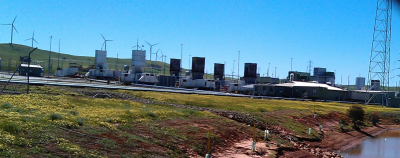
Whitelee Windfarm on the outskirts of Glasgow

Whitelee Windfarm on the outskirts of Glasgow Photo: PA

Rural communities have reacted with relief and delight after David Cameron called time on the SNP’s wind farm march across Scotland’s countryside.

Anti-turbine campaigners praised the UK Government’s decision to exclude new onshore wind farms from claiming a key subsidy from April next year, 12 months earlier than expected.

They said the move, which is expected to stop the construction of many developments not yet given planning permission, was a welcome respite for communities “besieged by subsidy chasers” taking advantage of the SNP’s “open door” policy.

But they said it was to the “eternal shame” of the Scottish Government that it was only the Conservatives who had heeded the concerns of rural Scots, with one prominent campaigner stating: “Thank God for Westminster.”

SNP ministers were furious with the decision, even claiming they may challenge it in the courts, with Nicola Sturgeon describing it as “wrong-headed”, “perverse” and “downright outrageous”.

In a letter to Mr Cameron, she warned the wind farm companies may sue the taxpayer for compensation for planned schemes “rendered useless by this decision.” The industry claimed the move would cost consumers up to £3 billion.

However, the John Muir Trust, the eminent environmental protection group, said it was the “right time” to work out an energy mix that is affordable “without damaging our wild and natural landscapes.”

The funding for the subsidy comes from the Renewable Obligation (RO), which is funded by levies added to household bills. The Department of Energy and Climate Change (DECC) said there will be grace period for projects already with planning permission.

Although energy policy is reserved to Westminster, the SNP government in Edinburgh has used its control over the planning system in Scotland to encourage the construction of thousands of turbines across the countryside.

Alex Salmond, the former First Minister, set a target of generating the equivalent of all Scotland’s electricity from renewable sources by 2020, with the vast majority coming from onshore wind.

Amid growing opposition from local communities, Scotland’s most senior planning officials even warned that the countryside risked becoming a “wind farm landscape”.

But the Scottish Government told council planners they had set aside too little land for wind farms and Scotland now hosts more than half the UK’s onshore turbines.

Nicola Sturgeon was outraged at the UK Government’s decision

Scotland Against Spin, a national alliance of groups and individuals which campaigns against turbines being built in unsuitable locations, said it was “delighted” the Tories had honoured an election manifesto promise to “end the ludicrously generous subsidies for onshore wind farms.”

Graham Lang, the group’s chairman, said: “ Speculative developers from across the world have flocked to Scotland because of the SNP’s open door policy to the wind industry. Scottish communities besieged by subsidy-chasers can at last look forward to some respite.

“Yet to its eternal shame the Scottish Government has ignored the clamour for reform from its own people. There is a terrible irony that the Conservatives at Westminster, not the nationalists at Holyrood, have finally stood up to the wind speculators and put the interests of communities and consumers first.”

Lyndsey Ward said she hoped the decision would stop the construction of 25 turbines near her home just outside of Beauly, in the Scottish Highlands.

She said she was “fairly disgusted” with the Scottish Government as Fergus Ewing, the SNP Energy Minister, had “parroted wind industry propaganda”. She added: “They should be thoroughly ashamed of themselves. Thank God for Westminster.”

Campaigners against a plan to erect 18 410ft-tall turbines in rural Angus, above the Blackwater Reservoir, also welcomed the announcement.

Sue Smith, a spokesman for the Friends of Backwater and Glenisla Against Turbines group, whose husband Maj Gen Martin Smith is Commandant General of the Royal Marines, said: “The removal of obscene levels of financial gain which these subsidies offer should discourage land owners and turbine developers from exploiting irresistible opportunities to make a fast buck, at the expense of local communities and their environments.”

She also praised the UK Government plans to give communities the final say on large wind farm developments south of the Border and attacked the SNP for failing to introduce this in Scotland.

But, speaking at First Minister’s Questions, Ms Sturgeon said the decision was “utterly wrong-headed” and her government would “do everything in our power” to get it changed.

Mr Ewing said repeated the wind farm companies’ claims the move could cost consumers £3 billion, adding: “We have warned the UK Government that the decision, which appears irrational, may well be the subject of a judicial review.”

But Murdo Fraser, Scottish Tory energy spokesman, said: “This is a Conservative Government standing up for communities that the central belt SNP couldn’t care less about.”

He added: “The latest figures show that, with all the wind projects already constructed, those under construction or given consent, we have already met the SNPs 100 per cent target for renewable electricity.”

A DECC spokesman said: “If we’d allowed the RO to stay open longer, we could have ended up with more projects than we can afford – which would have led to either higher bills, or other renewable technologies losing out on support.”

Australian Senate Committee Recommends More Research on Infrasound, Produced by Wind Turbines!

18/06/15AustraliaAustralia

Interim Report from the Australian Senate inquiry

“This report records the committee’s concern with the issue of infrasound and low frequency noise emitted from wind turbines and the possible impact on human health.
Independent, multi-disciplinary and high quality research into this field is an urgent priority.”

Senate Committee reports

Interim report

1.1 The Senate Select Committee on Wind Turbines was established in December 2014. To date, it has received 464 submissions from a wide range of stakeholders. It has conducted public hearings in Portland in south-west Victoria on 30 March, in Cairns on 18 May, in Canberra on 19 May, in Melbourne on 9 June and in Adelaide on 10 June 2015. Further public hearings are planned in Canberra on 19 June and 23 June and in Sydney on 29 June 2015.

1.2 This represents a considerable volume of evidence relating directly to the committee’s terms of reference. The committee has received written and verbal evidence from State Governments, local councils, various federal government agencies, wind farm operators and manufacturers, country fire authorities, acousticians, medical experts and representatives from various associations and institutes. In addition, many private citizens have had the opportunity to voice their concerns with the planning, consultation, approval, development and operation of wind farms in Australia.

1.3 Access to all public submissions and public hearing transcripts can be found on the committee’s website.

The committee’s headline recommendations

1.4 This report presents seven headline recommendations. The committee believes that these recommendations are important and urgent given that legislation on the renewable energy target is due to be debated in the Senate shortly. The final report in August this year will provide supporting evidence and supporting recommendations. It will also address other terms of reference, including the merit of subsidies for wind farm operators and the effect of wind power on household power prices.

Recommendation 1

1.5 The committee recommends the Commonwealth Government create anIndependent Expert Scientific Committee on Industrial Sound responsible for providing research and advice to the Minister for the Environment on the impact on human health of audible noise (including low frequency) and infrasound from wind turbines. The IESC should be established under the Renewable Energy (Electricity) Act 2000.

Recommendation 2

1.6 The committee recommends that the National Environment Protection Council establish a National Environment Protection (Wind Turbine Infrasound and Low Frequency Noise) Measure (NEPM). This NEPM must be developed through the findings of the Independent Expert Scientific Committee on Industrial Sound. The Commonwealth Government should insist that the ongoing accreditation of wind turbine facilities under the Renewable Energy (Electricity) Act 2000 in a State or Territory is dependent on the NEPM becoming valid law in that State or Territory.

Recommendation 3

1.7 The committee recommends that the Commonwealth Government introduceNational Wind Farm Guidelines which each Australian State and Territory Government should reflect in their relevant planning and environmental statutes. The committee proposes these guidelines be finalized within 12 months and that the Commonwealth Government periodically assess the Guidelines with a view to codifying at least some of them.

Recommendation 4

1.8 The committee recommends that eligibility to receive Renewable Energy Certificates should be made subject to general compliance with the National Wind Farm Guidelines and specific compliance with the NEPM. This should apply immediately to new developments, while existing and approved wind farms should be given a period of no more than five years in which to comply.

Recommendation 5

1.9 The committee recommends that the Commonwealth Government establish aNational Wind Farm Ombudsman to handle complaints from concerned community residents about the operations of wind turbine facilities accredited to receive renewable energy certificates. The Ombudsman will be a one-stop-shop to refer complaints to relevant state authorities and help ensure that complaints are satisfactorily addressed.

Recommendation 6

1.10 The committee recommends that the Commonwealth Government impose a levy on wind turbine operators accredited to receive renewable energy certificates to fund the costs of the Independent Expert Scientific Committee on Wind Turbines—including the funding of additional research—and the costs of a National Wind Farm Ombudsman.

Recommendation 7

1.11 The committee recommends that the data collected by wind turbine operators relating to wind speed, basic operation statistics including operating hours and noise monitoring should be made freely and publicly available on a regular basis. The proposed Independent Expert Scientific Committee should consult with scientific researchers and the wind industry to establish what data can be reasonably made freely and publicly available from all wind turbine operations accredited to receive renewable energy certificates.

Wind farms and human health

1.12 Why are there so many people who live in close proximity to wind turbines complaining of similar physiological and psychological symptoms? As with previous Senate inquiries, this committee has gathered evidence from many submitters attributing symptoms of dizziness, nausea, migraines, high blood pressure, tinnitus, chronic sleep deprivation and depression to the operation of nearby wind turbines. The committee invites the public to read and consider the evidence of people who have experienced these symptoms and who attribute their anxiety and ill health to the operation of turbines.

1.13 These health affects should not be trivialised or ignored. The committee was particularly distressed by renewable energy advocates, wind farm developers and operators, public officials and academics who publicly derided and sometimes lampooned local residents who were genuinely attempting to make known the adverse health effects they were suffering.

1.14 The committee is aware of people complaining of these impacts who have since left their family home. Some now live a nomadic and uncertain existence. In one case, the now deserted home had been in the family for five generations—since the 1840s. These are not decisions taken lightly. Having left the turbine vicinity, several witnesses noted that the symptoms had faded if not disappeared.

1.15 Some submitters attribute these illnesses to a ‘nocebo effect’—a result of expectations of harm rather than exposure to turbine activity. This claim has been made by Professor Simon Chapman, a sociologist by training and a professor of Public Health at Sydney University. He has labelled wind turbine syndrome ‘a communicated disease’, claiming that it ‘spreads by…being talked about and is therefore a strong candidate for being defined as a psychogenic condition’.

1.16 However, most people recognise that noise including low frequency noise could cause these impacts and emphasise that noise standards, properly enforced, are crucial to ensuring public safety. This view acknowledges that the noise from wind turbines creates annoyances which can manifest in sleep disruption. The clear remedy is to set noise standards (such as the New Zealand Standard) and enforce these standards. This is essentially the public position of the relevant authorities in Australia.

The need to investigate infrasound and low frequency noise from turbines and its effect on human health

1.17 The committee highlights the need for more research into the impact of low frequency noise and infrasound (0–20 hertz) from wind turbines on human health. A 2014 pilot study conducted by acoustician Mr Steven Cooper found a correlation between infrasound emitting from turbines at Cape Bridgewater in Victoria and ‘sensations’ felt, and diarised, by six residents of three nearby homes. By identifying a unique infrasound ‘wind turbine signature’, recording it as present in the homes, and linking it to ‘sensations’ felt by the residents, Mr Cooper’s research has received international attention.

1.18 It is clear that the extent and nature of wind turbines’ impact on human health is a contested issue. The nocebo effect, the existing standards for measuring audible noise and the NHMRC’s 2011 literature review have all been criticised by submitters and witnesses to this inquiry. The criticisms relate both to flaws in methodology and to inaccurate and incomplete findings.

1.19 Fundamentally, the lack of detailed, reliable data does not allow for a proper scientific conclusion to be drawn. The committee is struck by the considerable gaps in understanding about the impact of wind turbines on human health. These gaps have widely acknowledged key issues, both explicitly and implicitly:

  • the NHMRC found in February 2014 that ‘there is currently no consistent evidence that wind farms cause adverse health effects in humans’. While maintaining this stance, in February 2015, the NHMRC recognised that the body of direct evidence on wind farms and human health is ‘small and of poor quality’. It concluded that ‘high quality research into possible health effects of windfarms, particularly within 1,500 metres, is warranted’;
  • In June 2015, the German Medical Assembly forwarded a motion to the board of the German Medical Association for further research into the possible side effects of wind turbines. The committee has received advice from the German Medical Association that this motion proposes that the German Government provide the necessary funding to research potential adverse effects to health. The motion also argues that wind turbines should not be erected in the vicinity of residential areas until this research has yielded results. The Board of the German Medical Association has advised the committee that it will revisit the motion in July 2015;
  • the position of several well-informed submitters that more research is needed, including;
    • criticism of the composition of the NHMRC Reference Group, and in particular the lack of acoustical expertise. One witness, who was a formal observer of the Reference Group process, noted that only one member of the panel was an acoustician, adding: ‘No-one else on the panel had any idea of acoustics. They could not tell when they were being misled or information was being withheld’;
    • criticism of the 2010 and 2015 NHMRC reviews which ignored studies in situ of people reporting serious adverse effects and the nature of the exposures to which they are subject. A submitter noted: ‘The NHMRC did examine some of these types of study but it was done as a secondary activity rather than the main focus and allowed it to base its conclusions predominantly on research settings that inevitably have weak power to detect material effects’;
    • the importance of research that has a rigorous methodology, a level of independence and the outcomes of which are peer reviewed;
    • the claim of one eminent acoustician that wind farm entities have stifled some genuine research into the possible effects of wind farms. A prominent international organisation well equipped to evaluate infrasound data and analysis declined his invitation to examine his own research into wind farm infrasound; and
    • a submitter’s proposal for a thorough noise audit of all existing wind farms, using the methodology of Mr Steven Cooper, and incorporating the objective measurement of health effects (sleep quality, blood pressure, heart rate, stress hormones, etc) on neighbours, out to 10 kilometres from turbines.

1.20 Independent scientific research is needed into acoustic matters—such as whether each wind turbine has unique ‘signature’ and the effect of that signature on neighbouring turbines—and into health matters.

Some People are Extremely Susceptible to Motion Sickness AND Wind Turbines

Living Next to Wind Farms & Feeling Queasy, then you’re Probably No Happy High Seas Traveller

Sea-sick-while-fishing

****

More than once or twice, STT has picked up on hard-hitting scientific research that shows that those who suffer the worst effects of incessant turbine generated low-frequency noise and infrasound are generally prone to suffer seasickness:

Sick Again – motion sickness sufferers cop it worst from giant fans

Top Acoustic Engineer – Malcolm Swinbanks – Experiences Wind Farm Infrasound Impacts, First Hand

Adverse Health Effects of Wind Turbine Infrasound Explained

Now, a top Neuroscientist from Sydney University – Simon Carlile – is set to build on that body of research.

Wind farm effect on balance ‘akin to seasickness’: scientist
The Australian
Simon King
12 June 2015

The scientist who set up the Sydney University Auditory Neuroscience Laboratory — and who was asked to be involved in assessing the National Health and Medical Research Council’s targeted research examining the effect of wind turbines — says the growing body of evidence points to the low-frequency infrasound they create directly affecting the human nervous system.

Medical faculty associate professor of neuroscience Simon Carlile said it was time to properly examine the effects of low-frequency wavelengths and recognise that, like seasickness, they don’t affect everybody.

“In terms of the physiology, in terms of how we know the nervous system responds to this low-frequency noise, the evidence says ‘yes, the nervous system is activated at these frequencies’,” he told The Australian.

“But not in the traditional way you might think hearing works — it’s stimulating the system that’s involved in balance — the vestibular system. So there’s some good physiology, some good neuro­science, that this does exist and it’s been shown in animal models.”

But Associate Professor Carlile said its existence was only “one part of the story”.

“The other part is that some people are susceptible and some aren’t,” he said.

“It just means that when you look across 1000 people you can’t see a statistical effect across that population — because 90 per cent of them aren’t affected. Then the question is: why are some people affected and other people aren’t?

“And the answer to this could be because it’s not stimulating the ears — you can’t hear it at low frequency — it’s stimulating the vestibular system.’’

Associate Professor Carlile said that was similar to people who suffered seasickness.

“They get seasick because of the simulation of the vestibular system — and there seems to be quite significant variations of susceptibility to vestibular-induced nausea.

“A lot of the symptoms some people report around wind turbines are very similar to vestibular induced nausea or seasickness, like sleep disturbance.

“The nervous system is definitely sensitive to this stimulus.”

He said research could feed back to design: “This is going to be an important energy source and if we’re building tons of these things in the wrong places or building them in the wrong way then we’ve got big trouble.”

He felt the statistical and epidemiological approaches informing the debate had not been “hitting the mark. You have got potentially a wide range of individual difference on this: you’ve really got to be homing in on those differences.”
The Australian

Simon Carlile may well have the nouse to crack the precise mechanism that has turbine infrasound causing vertigo and nausea among wind farm neighbours. However, his claim that: “This is going to be an important energy source” has him straying well outside his area of expertise. As STT followers well know, wind power is not, and will never be a meaningful power generation source, simply because it will never be available on-demand:

Wind Power Myths BUSTED

What we have is a nonsense power source – on which billions of dollars in subsidies have been squandered – that causes wholly unnecessary suffering to thousands of people around the world.

While Carlile’s planned investigation is clearly worthy, those people who suffer the worst effects (eg, vertigo, nausea etc) form a subset of a much, much larger group that suffer from the most common adverse health effect – sleep deprivation:

Danish Experts: Sleep Deprivation the Most Common Adverse Health Effect Caused by Wind Turbine Noise

For every wind farm neighbour that suffers problems with balance or nausea, there are dozens more that suffer from what the World Health Organisation calls “environmental insomnia” – which it views as an adverse health effect in and of itself, and has done for over 60 years: see its Night-time Noise Guidelines for Europe – the Executive Summary at XI to XII which covers the point.

With researchers focusing on a small group of sufferers, there is a tendency to overlook the suffering of the many more who can no longer obtain a healthy night’s sleep.

Where people like Carlisle start talking about 10 or 15% of people affected with nausea and vertigo, that proportion – in the hands of the eco-fascists that run cover for the wind industry – quickly turns into a “tiny minority”, which is then used to feed that classic, malicious Marxist line about “the greatest good for the greatest number”. You know, the kind of argument that has wind farm neighbours tagged as “collateral damage” or “road-kill”; in an effort to justify the unjustifiable.

Civil societies (like ours once was) have used a bundle of common sense rules aimed at protecting the sanctity of sleep.

Humane societies have separated noisy activities since the time of the ancient Greeks – booting roosters, tinsmiths and potters out of Greek cities – and, in later times, organ grinders out of London.

In Australia today, roosters are banned in cities, suburbs and in most country towns.  They have a body clock set earlier than most people and have a routine habit of waking up the whole neighbourhood.  Faced with an errant rooster, authorities are quick to act against Foghorn Leghorn & Co on PUBLIC HEALTH GROUNDS.

foghorn

****

Planning laws in most States prevent panel beaters from operating in built up areas before 8am and after 6pm.

And – either by operation of EPA regulations or planning laws – there is a total ban on the operation of chainsaws and lawn mowers in cities, suburbs and most towns.  That strictly enforced prohibition operates, in Victoria, for example, Monday to Friday: before 7 am and after 8 pm; and on weekends and public holidays: before 9 am and after 8 pm.

So, if night-time noise isn’t a health problem, then why is it that there are strict rules about the permitted times for operating chainsaws, leaf blowers and lawn mowers – rules that keep roosters out of towns and cities – and rules that mean the plug gets pulled on rock bands and music venues at midnight in residential areas?

None of those long-settled rules required the ‘magic wand’ of peer-reviewed science; or the stamp of approval from the NHMRC. No. Those rules were the product of plain, old common sense – well rested individuals are happier and healthier, wherever they might plop down for some kip.

In short, sleep matters – and having turbines grinding and thumping away in the next paddock without let-up, all night long, deprives people of the ability to enjoy it – and that has consequences for everyone:

Wind Turbine Noise Deprives Farmers and Truckers of Essential Sleep & Creates Unnecessary Danger for All

With a solid set of rules set up to benefit one class (all those not forced to live next door to giant fans) by prohibiting night-time noise from a variety of rather innocuous sources, the only question is why the same type of rule isn’t there to benefit the other class?

With everyone waxing lyrical about the Magna Carta’s 800 years of helping to keep tyrants honest – and ensuring that the little man got treated the same whoever he was – now is a fair time to ask, just what’s fair about having one set of rules for the 99% and no rule at all for the 1% forced to suffer sonic torture night-after-merciless-night?

sleeping baby

Government’s Energy Insanity Has People Looking For Better Solutions….

Power move: ‘It’s going to change the world, and some parts of the world aren’t going to like it,’ King says of energy independence bill

AUTHOR:David Carkhuff

Strange bedfellows, indeed, but when it comes to power policy, politicians sometimes cross traditional party lines.

And sometimes they even take issue with traditional power lines.

Here’s a timely example: U.S. Sen. Angus King, I-Maine, who came under political fire from Republicans for his involvement with wind energy prior to his election, now counts Tea Party activists among his supporters when it comes to a piece of legislation that King is championing that would allow “individual power generation.”

The senator says the bill promotes individual sovereignty, and it doesn’t get a lot more Tea Party than that.

King contends that his Free Market Energy Act of 2015, introduced just last month, “would help foster the movement toward personal energy independence by protecting the right of consumers to connect their distributed resources to the larger electric grid without having to pay an exorbitant fee to the utilities.”

During a May 26 tour, King promoted the bill against the backdrop of the new Cumberland-based campus for the Friends School of Portland, a Quaker day school. The 15,000-square-foot building, when completed this fall, will attain “passive house” certification, the highest international standard for energy efficiency.

The new school will not rely on traditional fuels – such as oil, gas, coal or wood – but instead use distributed energy technologies, like solar electric panels from Portland’s ReVision Energy, to help produce as much energy as it uses, King noted.

The tour also pointed out more mundane but highly efficient construction methods.

Naomi Beal, chair of the building committee, explained that the school features air tightness and ventilation, with 6 inches of cellulose and exterior rigid insulation.

“It’s not super, super high tech. … Actually, the simpler system worked well for us,” she said.

Crews painstakingly taped every crease around doors.

“It’s very important that we seal every draft for passive house standards,” said Dave Merrill, Warren Construction project manager.

“We’ve got ERVs, energy recovery ventilators, throughout the building which take in exhaust air, extract the heat out of that, extract the cold air out and bring the heat in, so it’s actually transferring energy that’s already in the building and reusing that,” Merrill said.

“The ‘passive house’ standard is .6 ACH (air changes per hour), and we in our first try did it at .34, so we were almost half the value we needed to be and with only the skin of the building at that point in time,” he added.

King used the Friends School tour to underscore his argument that anyone should be allowed to create their own power plant.

“Right here in Maine, Friends School of Portland is deploying innovative technologies that will help it operate almost entirely independent of the electric grid. My legislation would ensure that people can do what FSP has done: take their energy future into their own hands,” he said in a statement.

King pivoted from the tour to a question-and-answer session with some of the nearly 100 pre-K through eighth grade students who attend the day school.

“We’re trying to make energy more democratic, with a small D, for people who make their own energy not only at their schools but at their houses. More and more people are doing that,” King told the students.

But King acknowledged resistance to his legislation. Oil, gas and coal producers will push back, he predicted.

“It’s going to change the world, and some parts of the world aren’t going to like it,” he said.

“Where there’s going to be a comprehensive energy bill this summer, I’m working really hard to see that this is part of it, but we have some very powerful opponents,” King said.

“What we’re proposing to do is leave the details to the state of how it would be implemented, but it would establish a right to self-generate, and for the fees that the utilities charge to be reasonable,” he explained.

“It’s stirred up quite a hornet’s nest,” King said.

Disruptions such as cyber attacks or ice storms would no longer threaten widespread outages under a decentralized power system, King said. The model flies in the face of American electrification.

“You have a big central place that makes electricity and sends it through the wires to the house, and you just take it. That’s the way energy has worked forever,” King said. “Now what we’re talking about, the big change is, you’re going to make your own energy at your own house, and maybe when you don’t need it, you’ll send it back, to everybody else. It’s like instead of one central plant, you’ll have a million plants.”

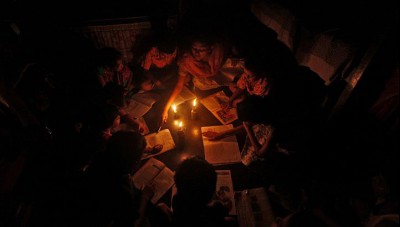
“Load-shedding”. As Countries Lose More Reliable Power Sources….this will result.

Rolling blackout

From Wikipedia, the free encyclopedia

Rolling blackouts are a common or even a normal daily event in many developing countries where electricity generation capacity is underfunded or infrastructure is poorly managed. Rolling blackouts in developed countries are rare because demand is accurately forecasted, adequate infrastructure investment is scheduled and networks are well managed; such events are considered an unacceptable failure of planning and can cause significant political damage to responsible governments. In well managed under-capacity systems blackouts are scheduled in advance and advertised to allow people to work around them but in most cases they happen without warning, typically whenever the transmission frequency falls below the ‘safe’ limit. Rolling blackouts are also used as a response strategy to cope with reduced output beyond reserve capacity from power stations taken offline unexpectedly such as through an extreme weather event.

Canada

In January 2014, the Canadian province of Newfoundland & Labrador renewed rolling blackouts to compensate for the cascading failure of the Holyrood generating station after a fire at the Sunnyside substation on Jan 4 following a blizzard. The rolling blackouts started before the storm on the 4th, rather were caused by extreme cold weather and a high demand for power at the time.[1]

On 9 July 2012, the Alberta Electric System Operator ordered power companies in the province of Alberta to institute rolling blackouts during a heat wave as six generating plants failed during peak demand in the heat of the afternoon. Because the shortage increased the amount consumers paid to generators, Members of the Alberta Legislative Assembly voiced concerns that price manipulation might have been involved[2]

In both cases the blackouts were rolled fairly rapidly, so that no area had to spend more than one hour without power.[1][2]

Egypt

Summer blackouts have been common in Egypt since 2010 but became more severe and widespread after the 2011 revolution. In April 2014, the Minister of Electricity and Renewable Energy said that the problem would take a few years to resolve.[3] The government is blaming on the unrest the country is experiencing for the blackouts. However, blame between the different ministries reveals their poor organization. Some also point to the fact that the infrastructure is old and lacks maintenance.[4]

Ghana

See main article at dumsor

In Ghana, rolling blackouts occurred in 2007-2008 and again after 2012. At the beginning of 2015, the dumsor schedule went from 24 hours with light and 12 without to 12 hours with light and 24 without.[5]

Italy

After the great 2003 blackout in Italy, a rolling blackout program PESSE (it:Piano di Emergenza per la Sicurezza del Sistema Electrico en: Emergency plan for national grid safety) was issued. It has 5 degrees of severity, any controlled blackout can’t exceed 90 minutes.

India

Due to a chronic shortage of electricity, power-cuts are common throughout India, adversely affecting the country’s potential for economic growth.[6][7] Even in the country’s capital of New Delhi, rolling blackouts are common, especially during the hot summer season when demand far outstrips supply capacity. Rural areas are the most severely affected; it is common for the 44% of rural households having access to electricity to lose power for more than 12 hours each day.[8] The states periodically and chronically affected by load-shedding are Delhi, Uttar Pradesh, Tamil Nadu, Bihar, Odisha, Assam, Maharashtra, Madhya Pradesh,Rajasthan and Andhra Pradesh. The states of Punjab, Goa, Gujarat and Kerala are largely free of any load-shedding due to surplus power. Karnataka still occasionally experiences power cuts.[9]

Japan

Rolling blackout in Japan after the 2011 Tohoku Earthquake.

South Africa

There is a long history of rolling blackouts in South Africa, with multiple causes. In South Africa the major producer and distributor of electricity is Eskom, which provides over 95% of the country’s energy usage. During the 1980s Eskom mothballed three of their coal-fired power stations, as there was an excess of generation capacity at the time. With the demise of Apartheid in the 1990s came massive investment and economic growth. At the same time the government tried to deregulate the electricity supply industry by inviting the private sector to build new power stations to meet the rapidly growing demand for electricity. Eskom was at the time prevented from building new power stations (including de-mothballing the three existing power stations) or from strengthening the transmission network. The transmission network is especially important in delivering power from Mpumalanga, where the majority of the power stations are located, to other parts of the country such as KwaZulu-Natal and the Western Cape. With no bidders coming forward to construct new power stations, there was effectively no investment into new generation plants during the early 1990s, which eventually led to the shortage of capacity that was experienced in the 2000s.

In 1998, the Department of Minerals and Energy released a detailed energy review in which it explicitly warned that unless “timely steps were taken to ensure that demand does not exceed available supply capacity”, generating capacity would reach its limit by 2007.[15]

Country-wide blackouts 2007–2008

With the freeze on any new developments being placed on Eskom during the early 1990s, South Africa was faced with a situation where for the next few years the electricity demand kept rising, without any new power stations being built to keep up the necessary supply. By October 2007 the situation had deteriorated to such an extent that Eskom implemented rolling blackouts throughout the country. Blackouts occurred in most suburbs throughout the country for a period of two hours at a time.

The situation came to a head on 24 January 2008 when the national grid was brought to near collapse. Multiple trips at a number of different power stations rapidly reduced the available supply, resulting in Eskom declaring force majeure[16] and instructing its largest industrial customers (mainly gold and platinum mining companies) to shut down their operations and reduce consumption to “minimal levels”, just sufficient to evacuate workers that were still in the mines.[17]

In January 2008, with no short- or medium-term relief available to ease the power shortages, Eskom warned the public that the country’s electricity demand would exceed the supply until 2013 (when the first new power stations would be brought online).

Eskom also began recommissioning older power stations which had been mothballed in earlier decades.[18]

Country-wide blackouts 2014-2015

Load shedding was reintroduced in early November 2014. The Majuba power plant lost its capacity to generate power after a collapse of one of its coal storage silos on 1 November 2014. The Majuba power plant delivered approximately 10% of the country’s entire capacity and the collapse halted the delivery of coal to the plant.[19] A second silo developed a major crack on 20 November causing the shut down of the plant again. This was after temporary measures were instated to deliver coal to the plant.[20]

On 5 December, Eskom launched a major stage three load shedding in South Africa after the shut down of two power plants on Thursday 4 November 2014 due to diesel shortages. It was also reported that the Palmiet and Drakenburg stations were also experiencing difficulties due to a depletion of water reserve to the Hydro plants.[21] On Thursday 4 November, Eskom fell 4,000MW short of the electricity countries demand of 28,000MW. The power utility has the ability to produce 45,583MW, but could only supply 24,000MW due to “planned and unplanned” maintenance. One turbine at Eskom’s Duvha Power Station is also currently out of commission due to an “unexplained incident” in March 2014.[22]

Tajikistan

In January 2008 Tajikistan faced its coldest winter in 50 years, and the country’s energy grid began to fail. By February 2008 Tajikstan’s energy grid was near collapse and there were blackouts in most of the country. Hospitals throughout the country were on limited electricity use, and nurses and doctors were forced to keep newborn babies warm with hot water bottles. There were reports of newborns freezing to death. The UN reported that with so much energy required to keep warm there was a danger of people starving to death.[23][24]

Ukraine

Lack of coal for Ukraine’s coal-fired power stations due to the War in Donbass and a shut down one of the six reactors of the Zaporizhia Nuclear Power Plant lead to rolling blackouts throughout Ukraine from early till late December 2014.[25]

United States

Texas

In February 2011, North and Central Texas experienced rolling blackouts due to 50 power plants tripping offline.[26] Temperatures ranged between 8 °F and 19 °F, the coldest in 15 years. The time of the power outages ranged from twenty minutes to over eight hours. Areas affected included Bell, Bexar, Brazos, Collin, Comal, Dallas, Delta, Denton, El Paso, Fort Bend, Guadalupe, Harris, Hays, Hill, Hidalgo, Hunt, McLennan, Montgomery, Navarro, Palacios, Smith, Tarrant, Travis, Webb and Williamson counties, as well as some counties in New Mexico, including Doña Ana, Otero, and Eddy Counties.[27]

The 2006 and 2011 blackouts were the only two to occur in two decades.[28]

California

Though the term did not enter popular use in the U.S. until the California electricity crisis of the early 2000s, outages had indeed occurred previously. The outages were almost always triggered by unusually hot temperatures during the summer, which causes a surge in demand due to heavy use of air conditioning. However, in 2004, taped conversations of Enron traders became public, showing that traders were purposely manipulating the supply of electricity to raise energy prices.[29]

On 13 December 2003, shortly before leaving office, Governor Gray Davis officially brought the energy crisis to an end by issuing a proclamation ending the state of emergency he declared on 17 January 2001. The state of emergency allowed the state to buy electricity for the financially strapped utility companies. The emergency authority allowed Davis to order the California Energy Commission to streamline the application process for new power plants. During that time, California issued licenses to 38 new power plants, amounting to the addition of 14,365 megawatts of electricity production when completed.

References

  1. Jump up to:a b “Newfoundland outages worsen amid sudden ‘generation problems'”. January 5, 2014.
  2. Jump up to:a b Gerein, Keith (9 July 2012). “Rolling electricity blackouts strike Edmonton and across the province”The Vancouver Sun. Archived from the original on 18 July 2012.
  3. Jump up^ “Preventing summer blackouts in Egypt is ‘impossible’: Minister”.Daily Egypt News. April 13, 2014.
  4. Jump up^ “Egypt to see blackouts for three years at least: Experts”Ahram Online. June 12, 2013.
  5. Jump up^http://www.ghanaweb.com/GhanaHomePage/NewsArchive/artikel.php?ID=344788
  6. Jump up^ “Electricity and power shortage holding India back”. Free-press-release.com.
  7. Jump up^ Range, Jackie (28 October 2008). “India Faulted for Failure to Improve Power Supply”The Wall Street Journal.
  8. Jump up^ [1][dead link]
  9. Jump up^ “Serving Mangaloreans Around The World!”. Mangalorean.Com.
  10. Jump up^ [2] – Tokyo Electric Power Company
  11. Jump up^ [3] – nikkansports.com
  12. Jump up^ “India offers Pakistan electricity to curb load-shedding”The Express Tribune.
  13. Jump up^ “Unscheduled loadshedding irks people in Punjab”The Nation. 2 October 2011.
  14. Jump up^ “Another day of outrage at outages across Punjab”Dawn (Karachi, Pakistan). 18 June 2012. Archived from the original on 18 June 2012. Retrieved 18 June 2012.
  15. Jump up^ “Mail and Guardian – Govt chose guns over power stations”. Mg.co.za.
  16. Jump up^ “Eskom declares force majeure”Moneyweb. 25 January 2008. Retrieved 12 February 2009.[dead link]
  17. Jump up^ McGreal, Chris (26 January 2008). “Gold mines shut as South Africa forced to ration power supply”The Guardian (London). Retrieved12 February 2009.
  18. Jump up^ Old Eskom power stations revived, Fin 24, 2 February 2011
  19. Jump up^ “http://citizen.co.za/269093/video-majuba-power-station-seconds-silo-collapse/”The citizen. 4 November 2014. Retrieved 6 December2014.
  20. Jump up^ “Eskom admits another coal-storage silo at Majuba is cracked”.Business day live. 21 November 2014. Retrieved 6 December 2014.
  21. Jump up^ “Tripped coal stations add to load shedding burden”Business day live. 5 December 2014. Retrieved 6 December 2014.
  22. Jump up^ “This is a catastrophe: electricity expert”Moneyweb. 6 December 2014. Retrieved 6 December 2014.
  23. Jump up^ Farangis Najibullah (13 January 2008). “Tajikistan: Energy shortages, extreme cold create crisis situation”EurasiaNet. Retrieved2008-02-08.
  24. Jump up^ Situation Report No. 4 – Tajikistan – Cold Wave/C

The Futility of Wind, Becomes More Apparent….

Closer look: Mary Morris, at the Waterloo wind farm north of Adelaide, conducted one of t

Closer look: Mary Morris, at the Waterloo wind farm north of Adelaide, conducted one of the only studies accepted by the National Health and Medical Research Council. Picture: Kelly Barnes

WIND farms could face greater Federal Government scrutiny after a last-minute intervention by Tony Abbott ahead of the Senate vote on the revised ­renewable energy target today.

Yesterday, the Prime Minister met four crossbench senators concerned about the cost and possible health impacts of the ­renewable energy technology.

After the meeting, Environment Minister Greg Hunt was asked to write to senators David Leyonhjelm, John Madigan, Bob Day and Jacqui Lambie setting out the new protections.

A spokesman for Mr Hunt confirmed last night that a letter was being prepared.

The government is hoping a written pledge will avoid amendments to the RET legislation, which is expected to be voted on in the Senate today.

The crossbench senators have raised concerns about a range of issues regarding wind-farm developments and the fact that the revised RET will strongly favour wind.

Mr Abbott has said the reduced RET was designed to limit the number of wind farms built.

A Senate inquiry into wind farms will today release an inte­rim report into its hearings, which have taken evidence from the wind industry, acoustics ­experts and residents who claim to have been affected.

The wind industry maintains claims that the technology is inefficient or poten­tially harmful to nearby residents have been thoroughly investigated and discounted. But one farm couple who has been paid $1 million to host 19 wind turbines over five years told the Senate inquiry that the noise had been unbearable.

South Australian cattle grazier Clive Gare told a hearing in Adelaide he was initially excited about hosting renewable energy, but now believed “towers should not be any closer than 5km to a dwelling”.

“If we had to buy another property it would not be within a 20km distance to a wind farm. I think that says it all,” Mr Gare said.

The wind industry has said complaints about noise impacts had not been made by people who received lucrative contracts to host them. Wind farm company AGL has paid thousands to insulate the Gare property from the noise of the wind turbines, which are as close as 800m from the house, but Mr Gare and his wife, Trina, told the inquiry they were still impacted.

Mary Morris, who conducted one of the only studies accepted by the National Health and Medical Research Council, said she would welcome any undertakings by the federal government to increase supervision.

Ms Morris became involved in the wind farms initially to support people who claimed to be affected by the Waterloo wind farm in South Australia.

In a speech to the Senate on the federal government’s compromise RET bill, Senator Leyonhjelm said the revised RET would be “no more than a wind industry support fund”.

Jacqui Lambie received support from Coalition senators for a speech in which she criticised reliance on renewable energy.

“Apart from hydro, the only way to decarbonise energy is to move very quickly to nuclear,” she said. “And it’s about time we move to that option.”

Congratulations to Our Friends in the UK….Sanity Begins to Show Her Face!

Residents to be given onshore wind farm veto: Tories vow to ‘halt the spread’ of turbines by preventing them being ‘imposed on communities without consultation’

  • Councils in consultation with residents will have final say over windmills
  • 3,000 are currently awaiting consent and could be affected by new rules 
  • Local Government Secretary says communities ‘should be free to decide’
  • Trade body Renewable UK expresses concerns about new regulations

Residents are to be handed powers to stop onshore wind farms being built, ministers will announce today.

The Tories have vowed to ‘halt the spread’ of unsightly turbines by preventing wind farms from being ‘imposed on communities without consultation or public support’.

Changes to the planning laws will ensure that councils in England and Wales – in consultation with residents – have the final say over whether windmills get the green light.

Powers: The Tories have vowed to ‘halt the spread’ of unsightly turbines by preventing wind farms from being ‘imposed on communities without consultation or public support’. A wind farm in Scotland is pictured above 

Powers: The Tories have vowed to ‘halt the spread’ of unsightly turbines by preventing wind farms from being ‘imposed on communities without consultation or public support’. A wind farm in Scotland is pictured above

It follows opposition by local campaigners and Tory MPs to the spread of new turbines up to 400-feet high, which they say blight the landscape and cause noise to nearby households.

There are more than 5,000 onshore turbines across the UK, of which around half are in Scotland. About 3,500 more have planning permission.

'Long-term plan': Energy secretary Amber Rudd (pictured) said the Government wants to 'keep bills as low as possible for hard-working families'

‘Long-term plan’: Energy secretary Amber Rudd (pictured) said the Government wants to ‘keep bills as low as possible for hard-working families’

But just under 3,000 are awaiting consent, and could be affected by the new rules if the operators cannot prove they have the support of residents who are affected.

Greg Clark, the Local Government Secretary, said: ‘Communities should be free to decide whether they want wind turbines in their local area and, if so, where they should go.’

Currently, at least half of wind farm applications are rejected by local planners due to local opposition or because their location is considered inappropriate.

But many of these decisions are then overturned on appeal by the Planning Inspectorate, on the grounds that Britain needs renewable energy to meet climate change targets.

The changes mean that wind farms will only get the go-ahead if they are included in the council’s local plan for the area, which is drawn up every few years in consultation with residents.

Even if turbines meet the criteria set out in the plan, if there is considerable concern from residents about noise or the local environment, the application will need to be amended.

A spokesman for the Department for Communities and Local Government said the new rules would ‘reassure a local community that… any concerns they have about its impact will be addressed.’

Generous subsidies paid to landowners who allow wind farms to be built will also be cut, under proposals announced in the Tory manifesto. This is expected to be announced soon.

In 2014, 57 per cent of all onshore wind applications were rejected, according to figures published in January.

Local people should have a say on development that affects them
Councillor Gary Porter, vice chairman of the Local Government Association

This compares with only 37 per cent rejected in 2013, and 24 per cent back in 2009.

The rate of wind farms being rejected more than doubled in the last Parliament, amid concerns from more than 100 Tory backbenchers that they blight the landscape and upset residents.

Wind farms will continue to be built offshore, where they are more expensive but they attract far less opposition from voters. Small turbines on farm land will not be affected by the rules.

Britain has a legally-binding target to produce 15 per cent of energy from low-carbon sources – such as wind, solar and nuclear plants – by 2020.

But ministers say there are enough wind farms which have already been approved or applications put in, to meet this target.

Choices: Local Government Secretary Greg Clark (above) said communities 'should be free to decide whether they want wind turbines in their local area'

Choices: Local Government Secretary Greg Clark (above) said communities ‘should be free to decide whether they want wind turbines in their local area’

Exceeding it would pile more costs onto household electricity bills.

Amber Rudd, the Energy Secretary, said: ‘Onshore wind is an important part of our energy mix but we now have enough projects in the pipeline to meet our renewable energy commitments.

‘We have a long-term plan to keep our homes warm, power the economy with cleaner energy, and keep bills as low as possible for hard-working families.’

The wind industry trade body Renewable UK expressed concerns about the new planning rules.

Deputy chief executive Maf Smith said introducing tough new rules for wind farms would ‘tilt the playing field’ towards fracking which deeply concerns residents.

He said: ‘We support local councils taking decisions about local projects.

‘Onshore wind is the most cost effective way to generate clean electricity, consistently enjoying two-thirds public support in all the opinion polls, so councils will want to take this into consideration.

‘The Government will wants to keep the lights on at the lowest possible cost – that has to include supporting onshore wind.’

But Councillor Gary Porter, vice chairman of the Local Government Association, said: ‘Local people should have a say on development that affects them.

‘The local planning system provides a democratically accountable and effective means for councils to consult local people and take decisions based on local planning policies.

Read more: http://www.dailymail.co.uk/news/article-3128924/Conservatives-vow-halt-spread-wind-farms-countryside.html#ixzz3dNMTKSYP

Aussie PM, Tony Abbott, Trying To Stop The Onslaught of Wind Turbines…

Australia’s PM – Tony Abbott – Out to STOP THESE THINGS

tony abbott on 2GB

****

Australia’s PM, Tony Abbott has never had a soft spot for the wind industry (see our posts here and here). Now, he’s effectively set fire to its chances of obtaining the finance it needs to carpet Australia with another 2,500 giant fans. The match was lit on Alan Jones’ breakfast Show last Thursday.

Alan Jones Breakfast
2GB
11 June 2015

ALAN JONES: Now, you have just done a deal with the Labor Party over Renewable Energy Targets which I personally think are ridiculous. I don’t know how any Government could give a green light to wind power. You have got a Senate Inquiry into wind farms. It is an inquiry with all government and most crossbench support. It had its fifth public hearing yesterday.

Senator Leyonhjelm wrote yesterday and I have talked about this for years – quote, “it is beyond dispute that wind turbines emit infrasound and low frequency noise. It is well established that inappropriate levels of infrasound, regardless of the source, cause adverse health impacts. Since 1987,” he wrote, when Neil Kelley and I spoke about this a million times, “identified a direct cause or link between impulsive infrasound and low frequency noise had adverse effects on people.” He said, as part of the inquiry, “I have met these effected people, they tell me they mainly suffer from chronic sleep, some suffer from sinus pressure, tinnitus, pains in the chest, headaches, nausea and vertigo.”

Prime Minister, these people are refugees in their own homes. You have done a deal on Renewable Energy which includes wind power when there is a Senate Inquiry highlighting the deleterious effects these turbines are having on public health. When will someone in Government listen to these poor people and the problems they face? I mean if it didn’t effect health put them on top of parliament House, put them on Macquarie Street, put them on Parramatta Road.

PRIME MINISTER: Well, there are two issues here, Alan. One is the proximity of these things to people’s dwellings and I think that is a very important issues and the state government here in New South Wales, as I understand it, has increased the distance that these have got to be kept away from dwellings…

ALAN JONES: Not really.

PRIME MINISTER: … and the former Liberal Government in Victoria did likewise.

ALAN JONES: No.

PRIME MINISTER: Well, Alan, look, I do take your point about the potential health impact of these things. When I have been up close to these windfarms there’s no doubt not only are they visually awful but they make a lot of noise…

ALAN JONES: So, why are we allowing this? We have done a deal. Why are we allowing this? Leyonhjelm wrote yesterday, he said, “this all reminds me of big tobacco’s denials 50 years ago that cigarettes caused lung cancer.” They denied it. This is having deleterious effects on people’s health and no one, they have written to you, they have written to Sussan Ley, they don’t get an answer.

PRIME MINISTER: Well, I hope they get an answer from me because I do try to respond to the letters that I get.

ALAN JONES: So, what are you saying to these poor people?

PRIME MINISTER: The sites of these things is a matter for the state government.

ALAN JONES: It is!

PRIME MINISTER: What we did recently in the Senate was reduce, Alan, reduce capital R E D U C E, we reduce the number of these things that we are going to get in the future. Now, I would frankly have liked to reduce the number a lot more.

ALAN JONES: Good, well you are the boss.

PRIME MINISTER: We got the best deal we could out of the Senate and if we hadn’t had a deal, Alan, we would have been stuck with even more ofthese things.

ALAN JONES: Isn’t it fair to say, Prime Minister, if it such a good thing, I mean there are people listening to you now and they have got up at 5 o’clock they are only going to make $900 a week if they are lucky. They have rolled their sleeves up. You are not subsidising their little business whether they are breaking bread. Why are we subsidising China’s windfarm at Gullen Range which is illegal? Why?

PRIME MINISTER: Alan, this particular policy was a policy that was put in place in the late days of the Howard Government. Knowing what we know now I don’t think we would have gone down this path in this way. At the time we thought it was the right way forward. Sometimes you have got to deal with the situation that you have got rather than the ideal and what we have managed to do through this, admittedly imperfect but better than the alternative deal with the Senate is reduce the growth rate of this particular sector as much as the current Senate would allow us to do.
Alan Jones Breakfast, 2GB

Glad to see the PM using the correct terminology there (as highlighted)!!

But we have to pull the PM into gear over one or two furphies.

One is the claim that the impacts of the great wind power fraud are all the fault of the States. Without the Coalition’s latest $46 billion wind industry rescue package, there is no way any more of these things would be built, anywhere, FULL STOP:

Out to Save their Wind Industry Mates, Macfarlane & Hunt Lock-in $46 billion LRET Retail Power Tax

Tony Abbott’s line that the “sites of these things is a matter for the state government” is a whole lot like the bloke that sells the sawn-off shotgun to an armed robber; and who then protests his innocence for what follows.

armed robber

****

Sure, the illegal firearm vendor didn’t actually pull the trigger and send a bank teller for an unscheduled trip to the morgue. However, in the absence of the weapon supplied, there may have been no robbery – certainly not an “armed” one – and no harm done to bank tellers, in any event.

In the criminal law, the concept of liability for those who provide the arms to known bandits is picked up in the concepts of accessorial liability – the ol’ chestnuts about aiding and abetting, accessory before the fact and all that.

In this case, though, the Coalition is not only providing the weapon, from now until 2031 it will be supplying the offenders with an endless stream of ammunition – in the form of over 500 million Renewable Energy Certificates; designed to be worth over $90 – as young Gregory Hunt calls them: “a massive $93 per tonne carbon tax” – the $46 billion cost of which will be borne by all Australian power consumers.

Tony, the only way to stop “these things” is to disarm the bandits by killing the LRET now.

The other serious misconception popped up (and jumped on by AJ) is the nonsense that State governments have increased setback distances.

In South Australia – Australia’s wind power capital – it’s a derisory 1,000m. In Victoria, the lunatics from Labor recently cut theirs from 2km to 1,000m too. And Labor’s wind industry masters are pushing hard to do away with even that miniscule distance.

And if the PM thinks that 2km is a fair thing, he might like to pay attention to what Clive and Trina Gare told the Senate last week; viz.:

“towers should not be within five kilometres of residences, and I would personally not buy a house within 20 kilometres of a wind farm”.

And that’s not coming from your average “wind farm wing-nuts”. Oh no. The Gares have, so far, pocketed $1 million for hosting 19 of these things on their property since 2010:

SA Farmers Paid $1 Million to Host 19 Turbines Tell Senate they “Would Never Do it Again” due to “Unbearable” Sleep-Killing Noise

But, hats off to the PM for recognising the adverse health effects suffered by the likes of the Gares – and hundreds of other Australians – forced to live next to these things: the most common and obvious of which is sleep deprivation caused by incessant turbine generated low-frequency noise and infrasound at night-time.

And, not afraid to go on with it, Tony Abbott backed it up with comments reported in The Australian.

RET deal ‘saved windfarm explosion’
The Australian
Sarah Martin
13 June 2015

Tony Abbott claims the government was “right and proper” to scale back the renewable energy target, saying it had prevented an “explosion” of windfarms across the country.

The Prime Minister said the RET deal struck with the Senate — which resulted in the Coalition and Labor agreeing to lower the target from 41,000 gigawatt hours to 33,000GWh — was a good outcome.

“It’s right and proper that we have reduced the renewable ­energy target because, as things stood, there was going to be an explosion of these things right around our country,” he said.

“There will still be some growth, but it will be much less than it would otherwise have been thanks to measures that this government has taken.”

Mr Abbott also revealed his ­experience encountering an “ugly” wind turbine during a cycling trip on Western Australia’s Rottnest Island.

“I cycled around the island most mornings and my path took me almost directly under the big wind turbine which has been on Rottnest Island for some time,” Mr Abbott said.

“Now, up close, they’re ugly, they’re noisy and they may have all sorts of other impacts which I will leave to the scientists to study, and that’s why I think it’s right and proper that state governments should have increased the distance from habitations that these installations now need to keep.”

The comments come after the renewable energy sector and Labor reacted angrily to Mr Abbott’s claim he had wanted to further slash the growth of wind generation through negotiations on the RET scheme.

But he said what the government could achieve had been limited by a hostile Senate.

When asked if he supported Mr Abbott’s view that wind turbines were “visually awful”, Environment Minister Greg Hunt said he was “neutral” on their appeal.

“Look, I’d put it this way — beauty is in the eye of the beholder,” Mr Hunt said.

“I’m less fussed about them but I know there are many people who are concerned and they have a right to be heard and they have a right to be heard without those who don’t live with them in their backyards deriding them.”

He said he expected more wind power would be required to meet the government’s policy goal of having 20 per cent of energy production from renewable sources by 2020, but said solar was becoming “more competitive.”
The Australian

Good to see young Gregory Hunt continuing to spread the lines fed to him by the wind industry plants and stooges that people his office – like Patrick Gibbons, who just happens to be best mates with Ken McAlpine, the head spruiker for struggling Danish fan maker, Vestas. Although, as events are unfolding, Hunt’s limp efforts at wind industry advocacy are likely to fall entirely flat.

You see, in the last week or so the response by the lunatics from the hard-green-left to the PM’s comments – laid out above – and efforts by the good Senators on the Inquiry to expose the scale and scope of the great wind power fraud (including recent media forays by David Leyonhjelm) – have been little short of hysterical.

2_77

****

STT couldn’t have asked for better. There is no easier battle to win, than the one that your enemies win for you.

Every time one of the wind industry’s parasites or spruikers chimes in with a rant about there being “no evidence …” or “the NHMRC said that …”, these idiots simply highlight the fact that there is a problem.

It’s a bit like police at the scene of a multiple car pileup telling passers-by that “there’s nothing to see here, move on”. The natural human response is to stand fast and gawp at the gore.

And so it is among the wind industry’s erstwhile “helpers”. The more they rant, the more they rave the more attention they attract to the carnage.

From STT’s perspective, the more attention the better. You see, the wind industry’s ability to roll out the 2,500 giant fans needed to satisfy the latest LRET doesn’t depend upon Alan Jones, Tony Abbott or David Leyonhjelm – it depends upon commercial lending institutions (ie banks).

With all the sound, fury and bloodletting taking place in the media on a daily basis, no banker in touch with their earthly senses is going to lend so much as a penny to a wind power outfit to build any new wind farms from here on. The insurmountable obstacle to that event can be summed up in a single word: RISK.

Whether or not the wind industry’s parasites and spruikers’ “case”, about there being no adverse health impacts from wind turbine noise stacks up, is neither here nor there.

What matters is the potential for wind power outfits to be sued by wind farm neighbours; or, of governments responding with increasingly stringent regulation on the operation of wind farms – such as shutting them down at night-time to let the neighbours sleep, say. And it’s the potential realisation of those facts, that will keep bankers from even considering lending any more money to wind power outfits, from here on in.

While there may not always be fire where there’s smoke, sometimes, smoke on its own, is more than enough to signal the risk that one might just get burnt.

Turbine fire with black smoke

The Absolute Futility of Wind Turbines for Electricity! Unreliable, Unaffordable, Unnecessary!

SA – Australia’s ‘Wind Power Capital’ – Pays the World’s Highest Power Prices and Wonders Why it’s an Economic Basket Case

tom playford-anzac-parade

****

Once upon a time, in a land far, far away there was a veritable manufacturing and industrial nirvana. Post WWII, its population grew at a phenomenal rate; and so too did the level of prosperity enjoyed by thousands of migrants fleeing to it from war ravaged Europe – cheap and abundant food, decent, affordable housing, motor cars, televisions – all within reach for the first time for this aspiring class of people; it soon became a paradise for the working class: it was called South Australia.

And it got that way through the efforts of a legendary political performer, Sir Tom Playford.

In the 1940s, Playford (Premier for 26 years from 1938 to 1965) had a gift in the form of vast untapped reserves of brown coal located at Leigh Creek, about 260 km north of Port Augusta which sits at the top of the Spencer Gulf.

Through Tom’s tireless efforts he coupled that resource with his own creation, the Electricity Trust of South Australia (ETSA), which went on to provide cheap reliable power to almost every home, farm and business in very short order: from 1946 to 1965, the proportion of South Australians connected to electricity increased from 70% to 96%.

Port Augusta Power Station

***

Central to his efforts to populate and industrialise South Australia, was the power station at Port Augusta – for a detailed rundown on Tom Playford’s pragmatic political genius see our essay here:

ETSA: Sir Tom Playford’s Ghost

News last week that Alinta Energy will shut down the Port Augusta power station (which carries Tom Playford’s name), was greeted by the economics lightweights that write for The Australian (and others) with seemingly jubilant headlines such as “Jobs blown away as turbines kill coal”. We’ll return to the nonsense contained in that type of infantile journalistic hubris in a moment.

We have no doubt that the closure of the Port Augusta power station will have Sir Tom turning in his grave.

Kicking off in a big way from 2009, South Australia led Australia’s ludicrous “wind rush”: it currently has over 40% of the installed wind power capacity connected to the Eastern Grid (1,477MW out of the 3,669MW total).

Since then, power prices have skyrocketed – and its unemployment rate with it. Last week, South Australia received the dubious honour of having the highest unemployment rate in the Nation: at 7.6% and rising, it’s even worse than moribund Tasmania, which usually tops that list with ease.

Now, those with some sense of economics – like STT Champion, Danny Price – have chimed in to warn that South Australia’s dismal economic situation can only get worse from here –  given that the closure of the Port Augusta power station can only “drive up [power] prices”.

Coal shutdown ‘will drive up power price’
The Australian
Michael Owen, Meredith Booth
13 June 2015

The federal government and economic forecasters are warning South Australia that the closure of coal-fired power stations by April will push up power prices in the state, which has the highest electricity bills in the nation.

South Australia has pursued the rise of green energy since 2002 and generates 37 per cent of its power through solar and wind.

Frontier Economics managing director Danny Price yesterday said it was unusual “so much wind is going into such a market”.

This was raising prices and ­reducing demand for coal power.

“There’s no doubt in my mind that the closure of Alinta’s plant will drive up prices,” he said.

“In the last 10 years, new coal-fired power stations (globally) outstrip new renewable generation by five times,” he said.

He said the Alinta power stations at Port Augusta, 310km north of Adelaide, that were slated for closure supplied 16 per cent of the state’s power and their loss would leave it short of cheap base­load electricity.

On Thursday Alinta Energy announced its two power stations, one already mothballed, and an associated coalmine at Leigh Creek, 260km north of Port Augusta, would close 12 years early because they were unviable. Alinta blamed the rise in renewable power, much of it government subsidised.

Federal Liberal MP Rowan Ramsey, whose seat of Grey takes in Port Augusta and Leigh Creek, yesterday called on Alinta Energy to delay closure until at least 2018.

“Their absence will create a lot of issues about baseline power supply and will lead to price rises across South Australia and difficulties for businesses and other parts of the community,” he said.

Experts say the cheapest solution for the state to deal with a shortage of baseload power was to enlarge the interconnector between South Australia, NSW and Victoria, allowing the state to tap into an excess national supply.

The Australian Energy Regulator last year approved funding to upgrade the interconnector linking South Australia and Victoria, with the $47 million project expected to be commissioned by July next year.

State Treasurer Tom Koutsantonis insisted electricity prices would not rise.

He said coalmining was a dying industry and suggested workers affected by Alinta’s closure were highly skilled and would either take redundancies or find work elsewhere.

South Australia posted its worst unemployment figures in 14 years on Thursday, the rate rising to 7.6 per cent last month, up from 7.2 per cent in April. It was the worst result since July 2001.

Mr Koutsantonis said Thursday’s state budget “would be focused on creating jobs”.

University of Adelaide workforce academic John Spoehr warned the state faced a return to double-digit unemployment.

“Unless we can fill the void, unemployment will rise to 10 per cent over the next two years,” Associate Professor Spoehr said.

“We need to boost infrastructure and the capacity of the public sector with a combination of debt and direct-funded infrastructure. Let’s not be deficit fetishists.”

Alinta chief executive Jeff Dimery said South Australia would have no problems with securing baseload electricity supply.

Additional reporting: Verity Edwards
The Australian

Now, we promised earlier that we would skewer the naive nonsense about wind power “killing coal”.

STT just loves it when a case can be made simply – and even more so when it can be done in pictures.

Aneroid Energy (formerly windfarmperformance.info) tosses up the facts that the wind industry loves to hate; on a daily basis. It’s the very stuff that scotches wind industry bunkum – such as, “the wind is always blowing somewhere”; and “if you build enough turbines and spread them out far enough you’ll have baseload wind power coming out of your ears”:

Wind Power Myths BUSTED

We’ll start with a quick look at Australia’s wind power May-hem. Here’s the chaos delivered by all of the Australian wind farms connected to the Eastern Grid (which covers the ACT, Tasmania, South Australia, Victoria, NSW and Queensland) for the month of May (oh, and if the graphs appear fuzzy, click on them and they’ll pop up crystal clear in a new window).

May 2015 National

Looking a bit like the meanderings of a drunken spider that had dipped one leg in the ink-well and staggered over the page, that’s the nonsense that wind farms can deliver power as an “alternative” to on-demand power generation sources such as hydro, gas and coal belted, yet again.

With 31 ‘chances’ to make a meaningful contribution to lighting up the 1.4 million homes said by wind power outfits to be ‘powered’ by their wind farms – output collapses 7 times to less than 250MW – or less than 6.8% of the total installed capacity of 3,669MW.

Now, let’s have a look at what SA’s 1,477MW of installed capacity was up (or, rather down) to during May.

May 2015 SA

Hmmm …

Instead of ‘blowing coal away’ as the wind industry, its parasites and spruikers would have us believe, wind power managed to produce 5 complete ‘doughnuts’ during May – ie complete collapses in wind power output. So much for the pitch about ‘powering’ all those homes with ‘wonderful, FREE wind energy’ …

And – on 7 other occasions – collapsed to less than 200MW – or less than 13.5% of SA’s the total installed capacity of 1,477MW.

Those inconvenient pics and numbers are more than enough to skewer the typical line spread by fawning and gullible journos, about the contribution from wind power – such as the drivel in the piece above where it gushes that SA “generates 37 per cent of its power through solar and wind”. No it doesn’t.

ICU Respiratory_therapist

****

The demand for power is a ‘here and now kind’ of thing; and from the graphs above (and below), with wind power it’s a case of here for a few hours today; and gone for the day, tomorrow.

But, STT, never afraid to kick a wind industry myth when it’s down, thinks it’s worth drilling a little deeper into the numbers for this month.

Here’s the total output from all wind farms on the Eastern Grid for 2 June 2015.

2 June 2015 National

Thumping stuff – if chaos is your thing: a whopping collapse of 380MW – from 450MW to 70MW in less than 6 hours; with 70MW being around 1.9% of the total installed capacity of 3,669MW.

Now, let’s have a look at SA alone.

2 June 2015 SA

Another phenomenal effort – a 250MW collapse – taking less than 6 hours to bottom out with a big fat ZERO. And struggling to top 20MW (or 1.3% of capacity) for 4 hours – 1pm to 5pm – right at the point when demand hits its straps.

Sure, everyone is entitled to a little down time, so let’s have a look at the situation on the Eastern Grid on 5 June 2015, to see if wind power was able to benefit from its unscheduled R&R two days earlier.

5 June 2015 National

No, apparently the rest didn’t help much. From 10am to midnight total output bubbles along between 200-400MW (or between 5% and 10% of capacity) – with more than 90% of Australia’s wind power capacity taking most of the day off (yet, again).

And, to see if SA’s wind farms were pulling any of what little weight was being pulled by wind power, here’s the numbers from the same day for SA.

5 June 2015 SA

Looking more like the profile of a Swiss ski run, another coal ‘crushing’ effort there from SA’s finest.

Over the day, there’s an almost total collapse of 1,200MW or 81% of capacity going missing. By lunchtime, wind power is off for a well-earned siesta, with output sliding from 200MW (or 13.5% of capacity) to less than 50MW (or less than 3% of capacity) – a whole lot less than the 37% contribution to SA’s power output touted by the gullible young pups from The Australian (solar’s contribution to total output in SA is a pittance, and is, of course, ZERO when the sun sets).

Wind power hasn’t ‘killed coal’ in SA – it hasn’t anywhere.

On the dozens of occasions outlined above – where wind power output struggled to top 10% of its capacity – the balance of the power being chewed up in SA (and elsewhere on the Eastern Grid) ALL came from conventional, on-demand generation sources, predominantly coal, gas and hydro – in that order.

When SA’s wind watts go AWOL for hours – and even days at a time – South Australia imports huge volumes of cheap coal-fired power from Victoria’s La Trobe Valley and NSW, using the Heywood and Murraylink Interconnectors (with a combined notional capacity of 680 MW).

It also has 1,280MW of gas-steam capacity with AGL’s Torrens Island plant near Port Adelaide (see this article).

And – when demand outstrips those base-load sources – SA has a fleet of highly inefficient (and therefore costly to run) Open Cycle Gas Turbines and diesel generators to cover the shortfall.

Peaking power at Hallett

****

The cost of providing power using OCGTs and diesel generators to provide back-up for unpredictable but inevitable wind power collapses is astronomical: the dispatch price has to hit $300 per MWh before OCGT owners even begin to think about firing them up.

In this Wattclarity post on 9 June (on a typically cold SA winter evening) as wind power output collapsed (again) – heading in the opposite direction to demand – OCGTs were cranked into gear, as were diesel generators (referred to as liquid fuel generators in the Wattclarity article). The cost of wind power’s disappearance and the use of OCGTs and diesel generators to meet demand saw the dispatch price zoom from its usual $30-40 per MWh mark to $589.50 per MWh in order to keep the grid up and lights burning (see the NEM data here).

On plenty of other similar occasions the dispatch price in SA hits or gets close to the regulated cap of $12,500 per MWh (see our posts here andhere).

South Australians are already lamenting the fact that they pay the highest power prices in the world:

Why South Australians Pay the World’s Highest Power Prices

And that there are 50,000 homes (in a state with a population of around 1.6 million) that have no electricity whatsoever – and thousands more having their power cut every year – simply because they can no longer afford it:

Casualties of South Australia’s Wind Power Debacle Mount: Thousands Can’t Afford Power

What Danny Price points out is that – with the closure of the cheapest generator in the State – the Port Augusta power station – things can only get worse from here.

The furphy that ‘turbines kill coal’ is covered by the pictures above – how on earth could SA’s wind power be ‘killing’ anything on 2 and 5 June – and on 5 occasions in May – when it was struggling to produce anything at all, let alone enough to boil a kettle?

In truth, what led to Alinta Energy’s decision to ditch its Port Augusta plant is the monstrous market distortion generated by the Large-Scale Renewable Energy Target – a Federally mandated $50 billion wind industry subsidy scheme paid for by all Australian power consumers as a hidden tax on retail power bills (see our post here).

On the rare occasions when wind power is able to deliver meaningful output to the grid – which is usually at night-time – wind power outfits are more than happy for the dispatch price (the price paid by the grid operator to generators) to hit zero – and often pay the grid operator to take their output.

The LRET effectively forces retailers to take wind power output ahead of every other generation source. Failure to take wind power and the Renewable Energy Certificates (RECs) that go with it, leaves the retailer liable to pay a fine (the “shortfall charge”) of $65 for each MW/h the retailer falls short of the LRET’s mandated target.

The REC that is issued to wind power generators for each MWh of wind power dispatched (currently worth around $50) forms part of the bargain struck under the Power Purchase Agreements wind power generators hold with retailers, containing fixed and guaranteed minimum prices of between $90-120 per MW/h (3-4 times the cost of conventional power). The wind power outfit collects the REC, which passes to the retailer who then surrenders it to the Clean Energy Regulator, thereby, avoiding the “shortfall charge”. The price fixed by the PPA is tied to the expected value of the REC, the wind power outfit gets the price fixed by the PPA, irrespective of the dispatch price; and the power consumer pays the price fixed by the PPA, plus a retail margin on top.

As a result of the above, when they’re delivering to the grid, wind power outfits are happy to watch the dispatch price plummet, punishing base-load generators – like Alinta Energy, while having no impact on their own returns. It’s what’s called “predatory pricing”:

Perverse Renewables Policy turns Wind Power into Super-Predator

What SA’s turbines have ‘killed’ is meaningful employment.

While the article talks of unemployment at 7.6%, that masks the pockets of regional and youth unemployment: Adelaide’s northern suburbs, like Elizabeth have youth unemployment rates in the order of 40% – and, with the imminent closure of big employers, like motor manufacturer, General Motors Holden (with another 1,300 jobs on the chopping block) SA can only look forward to a generation of even more despair (see this Advertiser article).

And that brings us to another well-worn wind industry myth: the yarn about wind power creating thousands of ‘groovy-green’ jobs – lately used by wind industry spruikers to garner support for the retention of the LRET.

SA has more wind turbines per head than any other state – its great ‘wind rush’ took off in earnest in 2010. Since then, its power prices have surged to be among the highest in the world (with the closure of the Port Augusta power station they’re about to rocket again). Over the same time scale, its unemployment rate has jumped to be the worst in the Nation; and – with escalating power prices – can only worsen from here.

Unemployment-Rate-SA-line-2fromGFC

So, with $billions ‘invested’ in wind power in SA, STT puts the poser: what happened to all of the lasting, well-paid jobs promised by wind power outfits during their nauseating community ‘consultations’?  Maybe the answer is found by taking a look at Germany, which, like SA, was beguiled with the self-same same pitch:

Germany’s Unsustainable “Green” Jobs “Miracle” Collapses

Will the last South Australian to leave, please turn out the lights – if anyone can still afford to keep them going, that is?

studying candle