Don’t Follow Germany’s Green Path…..They’re Lost! Epic Fail!

Germany’s Green Energy Failure

  • Date: 29/09/14
  • Doug L Hoffman, The Resilient Earth

The first grand experiment in renewable energy is a catastrophe. The vast scale of the failure has only started to become clear over the past year or so.

A new analysis answers the question “should other nations follow Germany’s lead on promoting solar Power?” That question was asked on Quora and answered by Ryan Carlyle, BSChE, and a Subsea Hydraulics Engineer. His detailed and well reasoned answer is the most forceful possible NO. According to Carlyle Germany’s program has the “absurd distinction” of hitting the trifecta of bad energy policy: bad for consumers, bad for industry, and bad for the environment. So while misguided greens point to Germany as a solar success, a rising tide of opposition and resentment is growing among the German public.

Along with all the other troubles besetting the world, Germany has watched its economy, the so called “engine of Europe,” stumble. This is mostly attributable to the horribly botched shift to a renewable energy economy. In Carlyle’s own words:

I was shocked to find out how useless, costly, and counter-productive their world-renowned energy policy has turned out. This is a serious problem for Germany, but an even greater problem for the rest of the world, who hope to follow in their footsteps. The first grand experiment in renewable energy is a catastrophe! The vast scale of the failure has only started to become clear over the past year or so. So I can forgive renewables advocates for not realizing it yet — but it’s time for the green movement to do a 180 on this.

Pretty strong stuff, but as good skeptics we should demand evidence to back up these statements. Fortunately, the author provides data to back up his claims. Here are some of Carlyle’s “awful statistics”:

Germany is widely considered the global leader in solar power, with over a third of the world’s nameplate (peak) solar power capacity. Germany has over twice as much solar capacity per capita as sunny, subsidy-rich, high-energy-cost California. (That doesn’t sound bad, but keep going.)

Germany’s residential electricity cost is about $0.34/kWh, one of the highest rates in the world. About $0.07/kWh goes directly to subsidizing renewables, which is actually higher than the wholesale electricity price in Europe. (This means they could simply buy zero-carbon power from France and Denmark for less than they spend to subsidize their own.) More than 300,000 households per year are seeing their electricity shut off because they cannot afford the bills. Many people are blaming high residential prices on business exemptions, but eliminating them would save households less than 1 euro per month on average. Billing rates are predicted by the government to rise another 40% by 2020.

Germany’s utilities and taxpayers are losing vast sums of money due to excessive feed-in tariffs and grid management problems. The environment minister says the cost will be one trillion euros (~$1.35 trillion) over the next two decades if the program is not radically scaled back. This doesn’t even include the hundreds of billions it has already cost to date. Siemens, a major supplier of renewable energy equipment, estimated in 2011 that the direct lifetime cost of Energiewende through 2050 will be $4.5 trillion, which means it will cost about 2.5% of Germany’s GDP for 50 years straight. That doesn’t include economic damage from high energy prices, which is difficult to quantify but appears to be significant.

Here’s the truly dismaying part: the latest numbers show Germany’s carbon output and global warming impact is actually increasing despite flat economic output and declining population, because of ill-planned “renewables first” market mechanisms. This regime is paradoxically forcing the growth of dirty coal power. Photovoltaic solar has a fundamental flaw for large-scale generation in the absence of electricity storage — it only works for about 5-10 hours a day. Electricity must be produced at the exact same time it’s used. The more daytime summer solar capacity Germany builds, the more coal power they need for nights and winters as cleaner power sources are forced offline. This happens because excessive daytime solar power production makes base-load nuclear plants impossible to operate, and makes load-following natural gas plants uneconomical to run. Large-scale PV solar power is unmanageable without equally-large-scale grid storage, but even pumped-storage hydroelectricity facilities are being driven out of business by the severe grid fluctuations. They can’t run steadily enough to operate at a profit. Coal is the only non-subsidized power source that doesn’t hemorrhage money now. The result is that utilities must choose between coal, blackouts, or bankruptcy. Which means much more pollution.

The emphasized passages are the author’s from the original posting.

Full post

– See more at: http://www.thegwpf.com/germanys-green-energy-failure/#sthash.fFTAlKrn.dpuf

Waiting on Word About a Moratorium on the K2 Wind Project!

ACW Resident Waits For Word On K2 Moratorium Request

Wind Turbine

An Ashfield-Colborne-Wawanosh resident says he is hoping to hear within the next couple of weeks whether his legal request to stop Phase 2 of the wind energy project in the Kingsbridge area has been successful.

Shawn Drennan had a hearing in London earlier this week but says realistically he doubts this will be the last one.  Drennan wants the K-2 project, which will place an additional 140 turbines in the Kingsbridge area north of Goderich and around his house, stopped until several studies into health impact have been completed

He argues the province is asking for extensive research on the impact on marine life before proceeding with off-shore turbines, so the same concerns should be addressed regarding the impact of turbines on residents of A-C-W.

Drennan says at the hearing this week the request for a stay was based on concern for people but the wind company’s main argument was they should be allowed to proceed because they have already spent a lot of money.

Drennan points out this is a precedent-setting constitutional challenge so he expects both sides will appeal to the highest court before it is ultimately settled.

Jihadis and Warmunists….Both want to Destroy Our Way of Life!

September 28, 2014
Jihadis and Warmunists: Brothers Under the Skin
By Clarice Feldman
Watching the parade of the naïve, the far left, and their energy-hogging celebrity manipulators marching in New York City this week, I was struck by how much these true believers had in common with jihadis, a notion reinforced by Purdue Professor Louis Rene Beres’ description of jihadis in Gatestone Institute and my friend “Ignatz’s’” comment at Just One Minute.

Both movements seem to these authors to be a means of denying death and change and making the mortal, immortal and the insignificant individual life, a significant force when massed with others.

If this is true — and I think it is — we cannot defeat these irrational movements in the ordinary ways. New strategies are called for.

Jihadis

Beres’ argument (and you should read it all to fully understand it) is, in sum, that the bloody depredations of jihadism provide its adherents with a “delusion of immortality” and a “religious justification” for erotic satisfaction.

If this is the case, he says, we cannot stifle its advance by treating terrorism simply as a normal striving for land or politics or strategy. It’s a different kind of enemy.

Among more “normal” conflict scenarios, America, Europe and Israel now need to consider mega-threats of both unconventional war and unconventional terrorism. Faced with determined adversaries — who are not only willing to die, but who actively seek their own “deaths” in order to live forever — Washington and Jerusalem should finally address the what needs to be done in addition to military remediation.

Sustained and selective armed force against IS and related Jihadist targets is certainly necessary and appropriate. However, it is also important to remind our leaders that force always needs to be combined with reinforcing efforts to convince these terrorists that their expected martyrdom is ultimately just an elaborate fiction.

Jihadists, in killing Americans, Israelis, and all other “unbelievers,” may not even intend to commit evil, so much as to do themselves and Allah good — and to do so with an absolute purity of heart. In their view, waging Holy War can never be shameful; it can only be heroic.

Going forward, our main task should be to systematically undermine these fantasies and doctrinal “underpinnings.” In conjunction with the recommended nuanced persuasions of military firepower, it can be done.

Warmunists

The New York demonstration, full as it was of communist organizers and sympathizers, inspired one wag to argue the marchers really were warmunists — that is, far left-wingers posing as environmentalists. (Any question respecting their commitment to environmentalism and keeping the planet clean were resolved by shots of the mounds of trash they left behind while purporting to save the planet.)

Ignatz made observations about the marchers which strike me as related to Beres’ comments about jihadis:

Lefties love to talk about revolution, “cause change” fundamental transformations, progress, etc., but they are the most retrograde reactionaries imaginable. They want a one-time revolution to cement and codify utter stasis.

People who talk about change are scared to death of the creative destruction of free markets. People who worship Darwinian progress, which after all implies millions of extinctions, want to save every single evolutionary cul-de-sac of a species they can find living in some pothole or cave somewhere. Their desire to somehow fix our climate to an optimum they have arbitrarily decided is in all our interests is obvious. Less obvious is their desire for the tranquility and stultifying sameness of socialism, not because it’s fair but because it’s predictable and controllable and therefore not as disruptive and scary. They seek the perennial childlike state of someone else supplying their security while they indulge their pleasures, presumably because they regret ever having to grow up.

These fools of all ages are on a children’s crusade to compel the adults of the world to create an actual real-world Neverland for them where nothing ever changes, they’ll never age and they can pretend they’re somehow going to be the magical ones picked by fate to cheat death.

The jihadis’ “heresy” charges against those who oppose their tyranny is simply another version of the warmunists’ “treason”. If you had any doubt about that, here’s Robert F Kennedy, Jr, who disproves his existential claims about climate warming by flying in private planes to warn us we will perish if we don’t stop using conventional energy.

Kennedy lamented in an interview with Climate Depot, [he]is not permitted by law to “punish” or to imprison those who disagree with him — and this, he proposed, is a problem of existential proportions. Were he to have his way, Kennedy admitted, he would cheer the prosecution of a host of “treasonous” figures — among them a number of unspecified “politicians”; those bêtes noires of the global Left, Kansas’s own Koch Brothers; “the oil industry and the Republican echo chamber”; and, for good measure, anybody else whose estimation of the threat posed by fossil fuels has provoked them into “selling out the public trust.” Those who contend that global warming “does not exist,” Kennedy claimed, are guilty of “a criminal offense — and they ought to be serving time for it.”
Just as Eric Hoffer warned us a half century ago about all mass movements in his book The True Believer: Thoughts On The Nature Of Mass Movements such movements thrive in climates where individual opportunities are limited. He said then that they had not had much purchase in the United States because capitalism and our Constitution permitted so much advancement and freedom. Don’t the warmunists and the jihadis imperviousness to reality and fact share a common root? Doesn’t the drive of both to convert us all to their way of thinking echo Hoffer’s belief that the death denier “strengthen[s] his own faith by converting others”? Can you think of a better explanation, for example, of Kennedy’s tyrannical wish?

As anti-capitalist laws and regulations cooked up by this administration impoverish the middle class and shrink it while expanding the numbers now on the dole and pc restrictions of free speech in the workplace and colleges strangle us, do you suppose the climate for pernicious mass movements will grow or will it shrink?

I think we need to redouble our efforts to separate fact from fiction here and abroad even as we undertake warfare in the Middle East and to strengthen free markets and free speech rights here even though to do so means challenging in every available forum the ridiculous notions of the adherents of both of these mass movements.

Read more: http://www.americanthinker.com/2014/09/9_27_2014_18_33.html##ixzz3Ef1vqfKg
Follow us: @AmericanThinker on Twitter | AmericanThinker on Facebook

Windweasels are Known Worldwide, for their Coercion, and Corruption!

The Wind Industry: Rotten to the Core

dirtyrottenscoundrelsoriginal

We’ve reported on just how rotten the wind industry is – from top to bottom – and whether it’s bribery and fraud; vote rigging scandals; tax fraud; investor fraud or REC fraud – wind weasels set a uniform standard that would make most businessman blush.

In previous posts we’ve looked at how the goons that work for RATCH didn’t hesitate to invent a character – Frank Bestic – in a half-cunning attempt to infiltrate their opponents at Collector and elsewhere – see our posts here and here and here.

These boys have no shame and, apparently, moral business conduct is an “opt in” model, rather than a day-to-day proposition – like it is for most everybody else.  It’s all about “ways and means”, really.

Here’s a tale from Mexico about just how low they can go – pulled together by STT Champion, James Delingpole.

Environmental Researcher: Wind Industry Riddled with ‘Absolute Corruption’
Breitbart.com
James Delingpole
20 September 2014

A Mexican ecologist has blown the whistle on the corruption, lies and incompetence of the wind industry – and on the massive environmental damage it causes in the name of saving the planet.

Patricia Mora, a research professor in coastal ecology and fisheries science at the National Institute of Technology in Mexico, has been studying the impact of wind turbines in the Tehuantepec Isthmus in southern Mexico, an environmentally sensitive region which has the highest concentration of wind farms in Latin America.

The turbines, she says in an interview with Truthout, have had a disastrous effect on local flora and fauna.

When a project is installed, the first step is to “dismantle” the area, a process through which all surrounding vegetation is eliminated. This means the destruction of plants and sessilities – organisms that do not have stems or supporting mechanisms – and the slow displacement over time of reptiles, mammals, birds, amphibians, insects, arachnids, fungi, etc. Generally we perceive the macro scale only, that is to say, the large animals, without considering the small and even microscopic organisms…

After the construction is finalized, the indirect impact continues in the sense that ecosystems are altered and fragmented. As a result, there is a larger probability of their disappearance, due to changes in the climate and the use of soil.

Then there is the damage caused by wind turbine noise:

There is abundant information about the harm caused by the sound waves produced by wind turbines. These sound waves are not perceptible to the human ear, which makes them all the more dangerous. They are also low frequency sound waves and act upon the pineal and nervous systems, causing anxiety, depression (there is a study from the United States that found an elevated suicide rate in regions with wind farms), migraines, dizziness and vomiting, among other symptoms.

But the wind turbine operators are able to get away with it because the system is so corrupt.

What happens is absolute corruption. I have to admit that generally there are “agreements” behind closed doors between the consultants or research centers and the government offices before the studies are conducted. They fill out forms with copied information (and sometimes badly copied), lies or half truths in order to divert attention from the real project while at the same time complying with requirements on paper. Unfortunately, consultants sometimes take advantage of high unemployment and hire inexperienced people or unemployed career professionals without proper titles. Sometimes the consultants even coerce them into modifying the data.

Research centers, pressured by a lack of funding, accept these studies. It is well known that scientists recognized by CONACYT (National Counsel on Science and Technology) accept gifts from these companies, given that they need money to buy equipment for their laboratories and to fill their pocketbooks to maintain their lifestyles. This is the extent of the corruption. Upon reviewing these studies, it is clear that the findings are trash, sometimes even directly copied from other sources online. These studies tend to focus on the “benefits of the project” and do not include rigorous analysis.

The Secretary of Environment and Natural Resources (SEMARNAT) does follow-up to the studies, but everything can be negotiated. The bureaucrats have the last word.

Though Professor Mora is talking specifically about Mexico, what she says applies equally well to supposedly more transparent democracies such as Britain, Australia, the US, Canada and Denmark. The wind industry is necessarily one of the most corrupt enterprises on earth because it depends for its entire existence on government favours, backhanders, dishonest environmental impact assessments and on regulators turning a blind eye to the known health problems caused by wind turbine noise. Without crony capitalism, the wind industry simply would not exist.

Here are some links to a few of Breitbart’s hits on the subject. As I can personally testify from a decade spent covering this scandal, there are few forms of life on the planet lower than those parasites who make their fortune out of bird-chomping, bat-slicing eco-crucifixes.
Breitbart.com

james-delingpole_3334

AGENDA 21….WEAPON OF MASS DESTRUCTION!!! Fight Agenda 21!

AGENDA 21: THE ROCKEFELLERS ARE BUILDING HUMAN SETTLEMENT ZONES

According to many “experts”, such as the World Health Organization, and the United Nations, 70% of the world’s population will be living in cities, by 2050.  Usually left out of the reporting of this statistic, are the determining factors that will be causing people to move off of rural land, and into the crowded cities.  What would make so many people leave their quiet, rural community, to go and live in a city, that is becoming evermore crowded, or what would stop someone that is living in a crowded city, from moving to a more quiet, rural community?  Surely more than 30% of the people in the world will want to have their own piece of land, with a house, away from the city, in 2050.

What these organizations are not telling you is that a massive shift of the population into cities is not a random projection, but a planned goal of many of the world’s top “leaders”, and leading organizations.  By causing an increase in the cost of owning, and living on, property in rural areas (property tax, car tax, utilities, etc.), governments will cause a shift of population from rural communities to the city.  This is one of the goals of United Nations Agenda 21.  Agenda 21 is a massive plan, or program of action, for the 21st century, developed by the United Nations, and connected organizations, that would require every resource in the world, including humans, to be collectivized, and controlled.  If you have never heard of, or are looking to become more familiar with, UN Agenda 21, I have read, and analyzed, the document, and have written a report titled, A Critical Analysis of Agenda 21 – United Nations Program of Action, which I highly recommend.

In the following report I will be attempting to convey to the reader, the reality that Agenda 21 has made its way into our local communities, pushed using friendly-sounding terms like “livable communities”, “complete streets”, and “resilient cities”, and is being used to cause a demographic shift, away from rural communities, and into cities, as envisioned, and planned, by the United Nations….

http://www.thegoodmanchronicle.com/2014/03/agenda-21-rockefellers-are-building.html

This is a continuation of the great ripoff of the 1930’s by other means.  And it implies depopulation, psychological control (by obstetrical abuse, circumcision, “diet, injections, and injunctions”) and social regimentation.

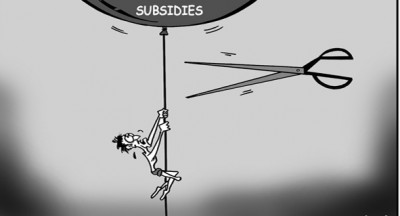
Stop the Outrageous Subsidies, and the Wind Scam Dies!

US Wind Industry Under Siege: Congress Set to Cut Subsidies as Communities Boil Over

turbine collapse 9

Wind power opponents seek repeal of tax credit
The Seattle Times
Hal Bernton and Erin Heffernan
21 September 2014

FOREST, Wisconsin — When wind-power developers prospected the rolling hills around this small dairy town, they found plenty of gusty sites for turbines. In 2011, they proposed a $250 million project with up to 44 turbines that could produce enough energy to power thousands of homes.

Since then, nothing has come easy for the developer in a state that has emerged as a stronghold of resistance to the spread of wind power.

In Forest, opponents gained enough votes to take over the town government, sued in state court to try to block the project, and added their support to a national movement that seeks to end the federal tax credit for the wind-power industry.

“We are here to protect our property values, our eagles, our health and our town,” said Brenda Salseg, spokeswoman for the Forest Voice, the local opposition group, which posted online a form letter urging the Wisconsin congressional delegation to oppose the tax credit.

The tax credit was passed by Congress in 1992 and has been periodically extended. It is currently set at 2.4 cents per kilowatt hour, and, during times of glutted electricity markets, can be worth more than the wholesale price of power.

This tax credit has helped catapult wind power to the front of the U.S. efforts to launch a renewable-energy industry.

By the end of 2012, wind power represented 43 percent of all new U.S. electric generation installed that year and was hailed by the Obama administration as a key in the global effort to combat climate change.

Wind power also has been bolstered by state mandates that require utilities to acquire a certain percentage of the power from renewable-energy sources.

The turbines operate in more than three dozen states, from Washington’s Columbia River Plateau to the Allegheny Mountains of Maryland, and in 2013 provided more than 4 percent of the nation’s power, according to a Lawrence Berkeley National Laboratory report.

In many areas, wind turbines have been welcomed as an economic boon to landowners who are paid for leasing acreage.

But as wind power has grown, so, too, has the opposition.

In some communities, such as Forest, developers have faced a backlash from residents concerned about the noise and health effects of living near wind-power projects.

The toll on birds and bats killed by turbine blades has drawn scrutiny.

Critics have attacked wind power as a fickle source of electricity that ebbs whenever the wind dies down. They fault the tax credit for encouraging new projects when many utilities have plenty of power.

Over time, the politics of wind power have become more partisan.

Most of the wind-power capacity is within Republican congressional districts, but many politicians in the party have made ending the tax credit part of their agenda. This year, efforts to extend the tax credit have made little headway in the Republican-controlled House.

Some House Republicans such as Rep. Dave Reichert, R-Wash., still back the tax credit, according to Reichert’s spokeswoman. But some former supporters have turned against it.

Rep. Kevin McCarthy, the House majority leader, once advocated the tax credit that helped spur investment in wind farms in his California district. But before his June election to his leadership position, he told the Wall Street Journal he thinks wind companies no longer need the tax credit.

“My feeling is the current situation is as bad as it has ever been,” said Robert Kahn, a Seattle consultant who represents wind-power developers. “Congress is so polarized about so many things that if some people are for it, other people are going to have to be against it.”

The fight against the tax credit also has been championed by Americans for Prosperity. One of the nation’s most prominent conservative advocacy groups, it was co-founded by billionaire David Koch, who has extensive interests in the fossil-fuels industry.

The organization last fall sent an open letter to Congress signed by more than 100 groups, including many smaller groups formed to fight wind power.

Wind-power advocates note that fossil-fuel industries have received federal subsidies for decades, such as a tax provision that allows favorable write-offs of oil-drilling costs. They say the government should put a price on carbon, or continue offering incentives for technologies that produce energy without carbon emissions. “We don’t want to lower or eliminate our tax credit when everyone else gets to keep theirs,” said Jim Reilly, a senior vice president of the American Wind Energy Association.

The wind-power tax credit extends over the first 10 years of a project’s operation. Congress has typically extended the credit a few years at a time, creating financial uncertainties for the wind-power industry.

In 2013, installations of wind farms declined by more than 90 percent from the previous year, reflecting concerns that the credit would not be extended.

Congress did extend the credit that year, eventually prompting many companies to break ground on projects.

Many are going in this year, putting the industry on a record pace for construction, according to the American Wind Energy Association.

The cost of new power has plummeted to record lows. The average price of about $25 per megawatt hour for power-purchase agreements in 2013 was nearly a third less than in 2009, according to a study by the Lawrence Berkeley lab.

What would happen if the tax credit dies?

Ryan Wiser, a co-author of the Berkeley report, said that would push the price of wind power past $40 a megawatt hour, and cool investor interest.

“The number of projects would be much less, but there is no doubt there would be some,” Wiser said.

Even without a tax credit, wind power also would receive a boost from President Barack Obama’s proposed rule to limit emissions from existing power plants. It could prompt the closing of some coal plants and open up more demand for turbine power.

But the proposed rule is opposed by many Republicans, and already is facing court challenges.

Conflict still rages Wisconsin once was swept up in the wind-power boom. But it’s now an example of how a state, even with federal incentives in place, can put the brakes on turbines. Many wind-power projects in Wisconsin are on relatively small properties, increasing the potential for conflicts with neighbors who don’t receive any lease payments but find themselves living next to turbines.

“The first day the turbines came on, I thought it was a jet plane taking off,” said Gerry Meyer, a retired mail carrier who complains of health effects from living near turbines in rural southeast Wisconsin.

Meyer has testified at state legislative hearings and also networked with Forest activists seeking to block the wind-power project proposed there by Emerging Energies.

These opponents have found some powerful allies among state Republican politicians.

“Wind turbines have proved to be an expensive, inefficient source of electricity, and thus any future construction of turbines simply is not a policy goal or object that should be pursued further,” Gov. Scott Walker wrote in a 2010 campaign memo obtained by the Milwaukee Journal Sentinel.

Walker, once in office, backed a legislative effort to increase setbacks for turbines by increasing the distance they must be located from a neighbor, and measuring that setback from the neighbor’s house rather than property line. That 2011 effort failed.

But a legislative committee voted to suspend the state’s wind-siting rule to study the health effects of wind turbines.

By the time the rule was reinstated a year later, five Wisconsin wind projects had been suspended or canceled, according to Clean Wisconsin, a wind-power advocacy group. New installations of turbines plummeted in the state.

In the months ahead, developers’ attorneys will argue in court for the right to finally move ahead on the Forest project.

Meanwhile, an emotional battle over the project continues to rage within the community. “It’s been devastating for the town,” said Carol Johnson, a Forest resident who supports the project. “Many family members will never speak again … It’s just torn the town apart.”
The Seattle Times

As it goes in Wisconsin, it goes all around the globe: spear giant fans into closely settled rural communities and the only thing guaranteed to be generated isn’t meaningful power, but a constant source of anger, hostility and community division. What makes these people so wild is that all their suffering has done nothing for the economy or the environment, leaving them feeling like dupes in the greatest fraud of all time (see our post here).

We love the line about how closing coal plants would “open up more demand for turbine power”. We think that’s a form of flattery best reserved for first dates. There is no “demand for turbine power”. In the absence of mandated targets (shortfall charges, penalties and the like) or massive subsidies there is NO demand for an unreliable and intermittent power source that can only ever be delivered at crazy, random intervals (see our post here). Wind power is not an alternative energy source (unless you’re prepared to sit in the dark for hours and days on end?) and will never be a substitute for conventional generation sources available on demand (see our post here).

We note a lot of “brave” talk about the wind industry being able to survive if the US Congress does away with the Production Tax Credit (PTC).

If the tax credit dies, the US wind industry dies – it will not be a case – as Ryan Wiser asserts – that: “The number of projects would be much less, but there is no doubt there would be some”.

What utter piffle. Cut the subsidies and there will never be another wind turbine erected anywhere, ever again.

The massive stream of subsidies – like the REC and PTC – provide the ONLY explanation for the wind industry – as recognised by the “Sage of Omaha”, billionaire Warren Buffett – whose company Berkshire Hathaway has invested $billions in wind power in order to get at federal subsidies – namely the PTC – which is worth US$23 per MW/h for the first 10 years of operation.

A subsidiary of the Buffett-owned MidAmerican Energy Holdings owns 1,267 turbines in the US with a capacity of 2,285 MW – eventually when the company’s Wind VIII expansion is finished, MidAmerican will own 1,715 turbines with a capacity of 3,335 MW. Buffett has piled into giant fans for one reason only: to lower the tax rate paid by Berkshire Hathaway.

As Buffett put it earlier this year at his annual investor jamboree in Omaha, Nebraska:

“I will do anything that is basically covered by the law to reduce Berkshire’s tax rate. For example, on wind energy, we get a tax credit if we build a lot of wind farms. That’s the only reason to build them. They don’t make sense without the tax credit.”

There, Warren Buffett said it, not us.

At least he had the honesty and integrity to explain the only conceivable basis for the greatest rort of all time. And isn’t it so much better when those that profit from it choose not to speak with “forked tongue”. Maybe Ryan Wiser, the CEC and AWEA can take a leaf out of Warren’s book?

subsidies

Wind Turbines Monitored by Unbiased Sound Experts Prove Noise Levels are Intolerable!

Hansen, Zajamsek, Hansen, Noise Monitoring, Waterloo Wind Farm

Noise Monitoring in the Vicinity of the Waterloo Wind Farm

Kristy Hansen, Branko Zajamsek and Colin Hansen, School of Mechanical Engineering
University of Adelaide May 26, 2014

This report by the above authors describes the results of their concurrent full spectrum acoustic monitoring conducted at a number of homes located between 2 km out to nearly 10km from the Waterloo Wind Development. This monitoring was independent of the South Australian Environment Protection Authority (SA EPA) and was requested by Mrs Mary Morris and other concerned residents in the Waterloo district. The monitoring occurred during the period of the South Australian EPA Acoustic Survey, conducted in mid 2013.

The results in this independent survey as well as the conclusions are in marked contrast to the results and conclusions of the SA EPA Acoustic Survey report, and reinforce the Waubra Foundation’s opinion expressed at the time the initial SA EPA report was released that there were serious problems with the methodology used by the SA EPA in its acoustic survey at Waterloo. This report provides further evidence that the current SA EPA Wind Farm Noise Guidelines do not protect the health and sleep of the neighbours to these wind developments, out to nearly 10km from the closest wind turbine, because they do not regulate the acoustic emissions to protect health, and most importantly, the sleep of the neighbours.

Emeritus Professor Colin Hansen has advised that he sent the report to the EPA, requesting their comment. To date, three months later (19th August, 2014) no comment or feedback has been received by the Adelaide University researchers from the SA EPA responsible public officials.

Extract from the Conclusions:

“Therefore, the results show that there is a low frequency noise problem associated with the Waterloo wind farm. Therefore, it is extremely important that further investigation is carried out at this wind farm in order to determine the source of the low frequency noise and to develop mitigation technologies. In addition, further research is necessary to establish the long‐term effects of low frequency noise and infrasound on the residents at Waterloo. This research should include health monitoring and sleep studies with simultaneous noise and vibration measurements.”

Key Extracts from the report are reproduced below, and the report is downloadable from the link beneath.

1 Introduction

This report details independent noise measurements and their analysis taken in the vicinity of the Waterloo Wind Farm during the period 9/4 – 22/6, which is the same period as the study undertaken by the EPA and reported in EPA (2013). Measurements were taken outside of as well as inside a number of residences. Due to the potential for data contamination by background noise during the day, only data measured between midnight and 5am are reported here, as during those hours, the dominant noise source was generally the wind farm. The following sections of this report detail the measurement equipment, measurement procedures, data analysis and data interpretation, followed by a conclusion summarising the results detailed in the rest of the report.

The data analysis and interpretation comprises four sections:

  • overall levels averaged over 10‐minutes for all night‐time data collected at each residence;
  • unweighted third‐octave spectra and overall levels for the shutdown periods;
  • unweighted third‐octave spectra and narrowband spectra for measurement times corresponding to noise diary entries; and
  • unweighted and A‐weighted third‐octave spectra for measurements which exceeded 40 dB(A).

2 Measurement Details

Three B&K 4955 microphones were used for the indoor measurements. These microphones have a low noise floor of 6.5 dB(A) and a flat frequency response down to 6 Hz. While these microphones do not have a flat frequency response below 6 Hz, they are still capable of measuring the blade‐pass frequency and harmonics (Hansen, 2013). The microphones were connected toLANXI hardware and continuous 10‐minute recordings were made using Pulse software. The average sound pressure level of the three microphones was calculated in accordance with the Danish guidelines for indoor low‐ frequency noise measurements (Jakobsen, 2001). This average includes one microphone positioned in the room corner. In this position, the maximum sound pressure level would be measured since this is an anti‐node for all room response modes. A singleGRAS 40AZ / SV 17 microphone was connected to a SVAN 979 sound level meter. This microphone was used as a back‐up and check for the indoor measurements made with the Pulse system.

The outdoor measurements were made using GRAS 40AZ / SV 12L microphones connected to aSVAN 958 sound level meter, which measured continuously over 10‐minute intervals. The microphones have a noise floor of 17 dB(A) and a flat frequency response down to 0.8 Hz. Hemispherical secondary windshields were used to minimise wind‐induced noise experienced by the outdoor microphones, and they were designed to be consistent with the IEC 61400‐11 standard, which specifies the use of these secondary windshields for measurements close to a wind turbine. A spherical secondary windshield and box windshield with specifications described in Hansen (2013) were also used for comparison but these results are only presented in the narrowband analysis in Section 6.2. Wind speed and direction were measured at heights of 1.5 m and 10 m using Davis Vantage Vue and Vantage Pro weather stations, respectively. The weather measurements were collected in 5‐minute intervals and then the 10‐minute average was calculated during post‐ processing.

3 Guidelines

It is well known that wind farm noise is dominated by low‐frequency energy (Moller & Pedersen, 2011), particularly at large distances from the wind farm, where the high‐frequency noise has been more attenuated than the low‐frequency noise. As such, a number of different weighting functions have been applied to the data in Section 4 to highlight different characteristics of the noise. A detailed description of these weightings and their applications is given in the report by the EPA(2013). This section provides a brief analysis of the limitations of some of these weighting functions in the context of wind turbine noise. Additionally, some drawbacks of the current SA EPA guidelines (EPA, 2009) are discussed and recommendations for improvements are suggested.

In South Australia, compliance of a wind farm is determined based on the applicable outdoor limit specified in the SA EPA guidelines (2009). Most of the measurement locations detailed in this report correspond to “rural industrial” zones where the allowable limit is 40 dB(A). One of the township locations is situated in an area which has been zoned “township” according to the Clare and Gilbert Valleys Council regulations. For lack of additional information, it is assumed that this translates to “rural living” in the context of the SA EPA guidelines (2009), which has a corresponding outdoor limit of 35 dB(A). According to the EPA guidelines (2009), a compliance analysis requires collection of over 2,000 data points, with 500 data points recorded for the worst‐case wind direction. For the measurements outlined in this report, such a large amount of data were not collected at any one location, however it was still considered valuable to plot a regression curve to illustrate the degree of compliance over short periods as well. In any case, the use of night‐time data is expected to reduce the degree to which data are contaminated by extraneous sources, thus giving a reasonable estimate of the degree to which the wind farm is compliant.

The SA EPA guidelines also specify use of the LA90 metric, which is the A‐weighted noise level that is exceeded 90% of the time. It should be noted that wind farm noise can be significantly underestimated using LA90 levels due to the unsteady nature of the noise. Hence, the LAeq, which is the energy average of the noise, is considered to be a more realistic representation of the actual noise level attributed to the wind farm, particularly between midnight and 5am when there are very few other noise sources of a similar level to the wind farm noise.

Despite the fact that low‐frequency noise has been identified as a potential issue associated with wind turbine operation, the SA EPA guidelines (2009) do not provide guidance for acceptable levels of low‐frequency noise and infrasound, even though there are several recommendations available in the literature. For example, the C‐weighting can be used to provide an indicator of the presence of low‐frequency noise. According to Broner (2010), a night‐time limit of 60 dB© is recommended, and this limit was included in the NSW draft guidelines (2011). Low‐frequency noise can also be identified by finding the difference between the overall C‐weighted and A‐weighted levels. When LCeq – LAeq > 20, a potential low‐frequency noise problem is indicated, and Broner and Leventhall (1983) and DIN 45680 (1997) would recommend further investigation into the time‐dependent low‐ frequency noise characteristics including noise fluctuations, spectral balance and amplitude modulation.

The G‐weighting is used to indicate the level of infrasound. According to ISO 7196 (1995) and DIN45680 (1997), the audible threshold for the overall G‐weighted noise level is 85 dB(G). On the other hand, this does not preclude the possibility that lower levels of infrasound will have an effect on people (Salt & Lichtenhan, 2014).

The SA EPA guidelines (2009) suggest that the indoor A‐weighted noise level should not exceed 30 dB(A). According to the World Health Organisation night‐time guidelines (WHO, 2009), the no observed effect limit for outdoor noise is 30 dB(A). To quantify the low‐frequency contribution to the indoor noise, it is useful to refer to the Danish guidelines for indoor low‐frequency noise (DanishEPA, 1997) and the UK Department of Food and Rural Affairs criteria (DEFRA, 2005). The Danish limit considers A‐weighted levels in the frequencies from 10 Hz to 160 Hz and the limit is the calculated average of the sound pressure level measured at three different locations in a room. According to the Danish guidelines, the indoor noise level, LpA,lf in the frequency range from 10 Hz to 160 Hz should not exceed 20 dB(A). The DEFRA criteria are frequency dependent and also span the frequency range from 10 Hz – 160 Hz. The allowable limits for each third‐octave frequency bin in this range are specified in the relevant report (DEFRA, 2005). The specified limits can be relaxed for steady noise and for daytime measurements but the measurements in this report did not fall into either of these categories. It is well‐known that wind farm noise is an unsteady noise source due to sudden changes in wind speed/direction, inflow turbulence, wind shear (van den Berg, 2005) and directivity (Oerlemans & Shepers, 2009). It has also been found that wind farm noise is modulated at the blade‐pass frequency (Hansen et al., 2013), which causes a periodic variation in the loudness of the sound.

It is worth noting that wind farm compliance according to the SA EPA guidelines is based on a regression line fitted to 2000 or more data points plotted on a graph of noise level (dBA) (y‐axis) vs hub height wind speed (x‐axis). Each data point is a 10‐minute average, which means that the influence on people of a noise source that is highly variable in nature will be underestimated. In addition, many 10‐minute average data points are above the acceptable 35 or 40 dB(A) requirement and as compliance is based on the regression line only, these times of relatively high noise level are ignored. In other words, compliance with the EPA guidelines does not mean that noise levels will never exceed the recommended limits – in fact, they can exceed the recommended limits many times as can be seen by the graphs shown in this report. Furthermore, the 10‐minute average values are lower than the peak values, which means that the wind farm could generate high levels of intermittent noise and still be compliant.

It is also important to recognise that thresholds of audibility are not dependent on the 10‐minute average of the root mean square (rms) value of the noise signal alone. This type of analysis ignores any difference in character between the measured noise and the noise used in the laboratory to determine threshold levels. The main differences in character that are important include the presence of multiple harmonics of the blade passage frequency and the crest factor of the noise. The crest factor is the ratio of the peak noise level to the average (or rms) noise level. The measured average noise levels for wind farm noise have been shown to contain peaks that are up to 20 dB above the reported average level. Even for “compliant” wind farms, such peaks are well above the levels required to disturb sleep (according the 2009 WHO document, “Night Noise Guidelines for Europe”). It is also worth noting that traffic noise, on which the WHO document on night noise levels is based, is not characterised by such high crest factors and thus has less potential for disturbing sleep. Nevertheless, this is an area of future work for our research group and the purpose of this report is to provide an analysis similar to that carried out in the EPA study so that comparison can be made between the two sets of results.

4 Overall Noise Levels

The following section presents data that were measured at the same residences as the EPA study (EPA, 2013), as well as three additional residences. The North East residence is not included in the analysis as we were unable to measure inside at this location. A number of weighting functions have been applied to the data and where applicable, a linear regression curve has been included. The DEFRA criteria and the Danish guidelines for indoor low‐frequency noise have only been applied to the indoor data, as they are not considered relevant for outdoor noise.

The figures presented in this section show data plotted against the wind speed at a height of 10 m in the left hand column and data plotted against the wind speed at hub height in the right hand column. Data points shown in red correspond to times when the residence was downwind from the proposed wind farm, according to the definition that downwind is ±45from the direction of the residence relative to the wind farm. Data points shown in green indicate times where the wind speed at a height of 1.5 m was greater than 5 m/s. For such wind speeds, noise measurements can be contaminated by wind‐induced noise. The sources of wind‐induced noise are pseudo‐noise and acoustic noise. Pseudo‐noise is caused by turbulent pressure fluctuations and vortex shedding incident on the microphone which lead to false indications of the sound pressure level whereas wind‐induced acoustic noise arises when objects such as tree branches and leaves are put in motion by the wind. Pseudo‐noise is only relevant for outdoor measurements but wind‐induced acoustic noise is relevant to both indoor and outdoor measurements. Both indoor and outdoor measurements taken during periods of rain have been discarded from the analysis.

In this section, all plotted data corresponds to night‐time measurements made between 12 am and 5 am. During the night, people are trying to sleep and this time also represents the greatest contrast between ambient noise and wind turbine noise, due to the absence of other sources such as traffic and farming machinery. These times were also selected to minimise contamination from noise sources other than the wind farm.

8 Conclusions

Based on the findings in this report, the following conclusions can be drawn:

  • For the 50 Hz third‐octave band, the sound pressure level difference between shutdown and operational conditions can be higher than 25 dB for both outdoor and indoor measurements.
  • The noise level in the 50 Hz third‐octave band is often above the audibility threshold (ISO389‐7, 2005) when the wind farm is operating.
  • The peak in the 50 Hz third‐octave band would be classified as a tone according to some standards (NZS 6808:2010, 2010; ANSI S12.9 ‐ Part 4, 2005).
  • The allowable limits should be reduced by 5 dB(A) to account for such tonal noise.
  • The outdoor and indoor noise levels measured during the shutdown cases were consistently lower than those measured when the wind farm was operating.
  • The most significant differences between shutdown and operational conditions can be observed when the residence is downwind from the nearest wind turbine and the hub height wind speed is greater than 8 m/s.
  • The shutdown periods should have occurred during 12 am – 5 am when the contribution from extraneous sources would be minimised and the contribution from the wind farm more able to be quantified.
  • For all shutdowns reported here, the closest wind turbine to the residence did not reach its rated speed of 15 m/s. In most cases, the wind speed at hub height was significantly lower than rated speed for the shutdown and adjacent times.
  • The peak in the 50 Hz third‐octave band is a consistent feature of the noise diary results and is often above the audibility threshold (ISO 389‐7, 2005).
  • A narrow‐band analysis with frequency resolution of 0.1 Hz reveals distinct peaks at the blade‐pass frequency and harmonics for many of the results corresponding to noise diary entries.
  • The narrow‐band analysis also shows the existence of tones, which occur at 23 Hz, 28 Hz, 46 Hz, 56 Hz and 69 Hz.
  • These tones have several sidebands which are spaced at the blade‐pass frequency and allude to the occurrence of amplitude modulation.
  • There is a good correlation between low frequency noise events and complaints registered in noise diaries.
  • At many of the residences, there were many occasions during the hours of 12 am and 5 am where the outdoor noise level exceeded the SA EPA (EPA, 2009) criteria of 40 dB(A).
  • The indoor limit for wind turbine hosts of 30 dB(A) recommended by the SA EPA (EPA, 2009) was exceeded on many occasions between 12 am and 5 am. This is also the no observed health effect limit for outdoor noise according to the WHO (2009).
  • The range in the overall A‐weighted levels was noticeably large indoors and could be as low as 5 dB(A) and as high as 38 dB(A). The lower value highlights that the night‐time noise levels in this rural environment are sometimes so low that even low levels of wind turbine noise would be noticeable. It is plausible that the upper value is related to the presence of wind turbine noise.
  • It has been shown that there can be a large variation in the results obtained by considering the LAeq as opposed to the LA90, between the hours of 12 am and 5 am.
  • Since the number of extraneous noise sources is expected to be low during these night‐time hours and wind turbine noise can be highly variable with time, it does not seem justified to only consider noise levels which were exceeded 90 % of the time.
  • The C‐weighted level was often higher for downwind conditions and hub height wind speeds greater than 8 m/s. However, consideration of the overall level with respect to recommended limits did not prove useful in identifying any low frequency noise issues.
  • The LCeq ‐ LAeq criteria was often exceeded and there was a large scatter in the data.
  • The overall G‐weighted level of 85 dB(G) was never exceeded however this does not preclude the possibility that infrasound was not detectable.
  • The Danish low frequency noise guidelines were exceeded on a number of occasions. In general, the exceedences occurred for downwind conditions and hub height wind speeds greater than 8 m/s.
  • The DEFRA criteria were exceeded on multiple occasions, usually corresponding to downwind conditions and hub height wind speeds greater than 8 m/s.

Therefore, the results show that there is a low frequency noise problem associated with the Waterloo wind farm. Therefore, it is extremely important that further investigation is carried out at this wind farm in order to determine the source of the low frequency noise and to develop mitigation technologies. In addition, further research is necessary to establish the long‐term effects of low frequency noise and infrasound on the residents at Waterloo. This research should include health monitoring and sleep studies with simultaneous noise and vibration measurements.

Download the complete report of the acoustic survey by Hansen, Zajamsek and Hansen →

For access to the SA EPA Waterloo Acoustic Survey 2013, and documents expressing concerns which have been raised about that acoustic survey, please seehttp://waubrafoundation.org.au/resources/waterloo-wind-farm-environmental-noise-study-sa-epa/

Careful reading of the UN Convention Against Torture makes it very plain that public officials who know of the damage to human beings and allow it to continue could be facing criminal charges (sleep deprivation is acknowledged as torture by a number of bodies including the Committee Against Torture http://waubrafoundation.org.au/resources/un-convention-against-torture/ and also the Physicians for Human Rights — see pp 22 — 26 of their report called “Leave no Marks” http://physiciansforhumanrights.org/library/reports/leave-no-marks-report-2007.html

The Waubra Foundation advised the Clean Energy Regulator (CER) Board members over a year ago about the damage to human health from proximity to wind turbines — and their response was that they preferred the explanation that it was a Nocebo effect:http://waubrafoundation.org.au/resources/letter-notice-clean-energy-regulator-5-april-2013/

Consequently in 2013 the Waubra Foundation advised both South Australian Premier, Jay Weatherill and the Chair of the CER, Ms Chloe Munro of the Foundation’s concerns about the Waterloo Acoustic Survey — neither of whom responded to the letter:http://waubrafoundation.org.au/resources/open-letter-premier-south-australia-clean-energy-regulator-concerning-sa-epa-acoustic-survey-2/

We Are Systematically Slaughtering Our Birds, With Useless Wind Turbines!

Bird Carcass Count proves AGL’s Macarthur Wind Farm is an Avian Slaughterhouse

dead_eagle_at_base_of_turbine

Wind farm turbines take toll on birds of prey
The Australian
Graham Lloyd
22 September 2014

EAGLES, falcons and other raptors make up to a third of the estimated 1500 birds killed each year at Australia’s biggest wind farm.

The finding of an independent report for Macarthur Wind Farm operator AGL follows 12 monthly searches of 48 turbines at the 140-turbine operation in Victoria that found 576 bird carcasses.

After adjusting for birds eaten by scavengers between searches and the total 140 turbines, Australian Ecological Research Services estimated each turbine killed about 10 birds a year.

The analysis said this would include 500 raptors a year.

AGL has confirmed that 64 bird fatalities were found during the official searches and an additional 10 carcasses were found near turbines by maintenance personnel, landowners or ecologists when not undertaking scheduled carcass searches.

The total included eight brown falcons, seven nankeen kestrels, six wedge-tailed eagles, one black falcon, two black-shouldered kites and one spotted harrier.

But an AGL spokesman said the report had “shown no significant impact on threatened species”. The company said overall estimates of bird and bat mortality “are subject to several sources of bias which may result in inaccurate estimates”.

The report recommended more frequent searches of a smaller number of turbines to get a more accurate assessment.

Australian Ecological Research Services said there were several reasons for the high percentage of raptors killed. They were at higher risk of collision with turbine blades possibly due to a combination of factors such as the altitude they mostly fly at, the proportion of time spent flying and flying behaviour.

“Raptors tend to glide slowly and are constantly looking downward for potential prey, rather than flying in a single ­direction and looking where they are heading,” the report said. “This may increase their risk of flying through the rotor-swept area of turbines.

“Other studies have also suggested that raptors are more ­likely to collide with turbine blades than many other avian species due to their morphology and foraging behaviour.”

Anti-windfarm campaigner Hamish Cumming said: “If someone shot this many birds they’d be fined and jailed and there would be public outrage.

“But, somehow, we’re expected to just accept it if they are killed by a wind farm.

“And before anyone rolls out the tired old mantra of ‘statistics show more birds get killed flying into suburban windows’, just tell me when was the last time a wedge-tailed eagle flew into your lounge room window?”
The Australian

The report referred to above is available here: Macarthur bat and avifauna mortality monitoring report full. For a detailed rundown on what it says see Hamish Cumming’s email below.

The wind industry and its parasites have – from the outset – pitched their fans as a “planet saving, clean, green and environmentally friendly technology”; which doesn’t quite gel with the wholesale slaughter of birds and bats. Let’s call it an “inconvenient truth” (see our post here).

Were anyone caught shooting eagles or other protected raptors they would face prosecution.

wedge_tail_eagle

Kill a relatively common Wedge-Tailed Eagle in Australia and you’ll face 6 months imprisonment or a $10,000 fine. As the stories in these links show – when lads with a .22 do it – there is media “shock” and “outrage” at a crime worthy of condign punishment.

But the operators of wind farms face no such criminal penalties – and get to slice and dice birds and bats of all shapes and sizes with impunity (see our posts here and here).

The one thing that giant fans can’t be accused of is “prejudice”: they’ll slaughter anything that flies by; from bats to lowly seagulls, pelicans, majestic raptors and everything in between. Here’s just a few of their range of victims:

Seagull_head_11

pelican

eagle 1

bat

STT Champion, Hamish Cumming has always been on the front foot when it comes to protecting our feathered friends (see our posts here and hereand here).

hamish-cumming

Armed with the report detailing the carnage at Macarthur, Hamish sent this pointed email to a couple of monstrous “green” hypocrites: Victorian Green, Greg Barber and Cam Walker who heads up economy wrecking ecofascist outfit, Enemies of the Earth:

Well Greg and Cam,

I know you both hug wind turbines more than you do trees these days, but what are you going to do about the slaughter of raptors at Macarthur.

AGL’s own report, which they state is likely to be conservative due to monitoring methods being poor, estimates a kill of 10.19 birds per turbine, (1426 per years) 30% of which are raptors.

This is 5 times the original estimation of bird kills and nearly 100 times the original raptor kill estimate.

AGL are also not following Planning Panel recommendations and are not shutting down problem turbines which are in some cases killing 80 birds per turbine just in two seasons.

So-called Greens and so-called Friends of the Earth are just standing by and watching it happen just because it is a wind farm.

If this was a forest being cleared, a developer destroying habitat or coal fired power station causing such carnage and devastating species numbers in a region, you would be beating your chests and in every media possible. Yet you both just sit there and do nothing, because it is a wind farm.

Bob Brown stood up to the wind farm companies at Woolnorth in Tasmania when 11 eagles were killed, because they found that as one is killed another comes in to take over the territory. Raptors are attracted to wind farms to feed on the smaller birds killed by turbines. Wind farms become a species sink for raptors and can deplete a whole area out to many kilometres. This is now happening at Macarthur, with hundreds being killed in just one year.

Today I received the Bat and Avifauna Mortality Monitoring report published June 2014.

Page 22 of the report (attached) shows AGL turbines are reportedly killing 10.19 birds per turbine per year or 1426 birds a year. That is killing birds at approximately 5 times the rate estimated at the time the permit was issued. Page 22 also shows that 30% of these deaths are raptors, even though they are less than 1% of the birds observed at the site during utilisation studies.

On Page 23 the report concludes that the once a month monitoring of 28% of turbines is insufficient, and should be changed to weekly surveys, as data from pages 14 to 17 shows many carcasses are removed within 2 weeks of death by predators

In the Macarthur Panel Hearing, consultant Bret Lane stated that there were very few birds of prey utilising the site and even fewer water birds. The panel commented at the time that this record was unexpectedly low considering the waterways, wetlands and terrain.

It was stated that the risk of collision of raptors was low.

The claim by wind farm consultants at that time was mortality at Australian wind farms was between 2 and 4 birds per turbine a year, but as Macarthur would not be shore based, the mortality would be lower. The consultant compared overseas (European and American) wind farm declared mortalities of .04 to 3.4 deaths per turbine per year, but concluded Macarthur would be half of that.

So the permit was granted with the expectation that mortality would be in the order of a maximum of 2 deaths per turbine per year.

In reality, the first year AGL have declared an average of 10 dead birds per turbine per year, with some individual turbines killing more than 80 each per year.

The panel concluded that:

The BAM Plan must include:

a) A strategy for managing and mitigating any significant bird and bat strike arising from the wind energy facility operations. The strategy must include procedures for the regular removal of carcasses likely to attract raptors to areas near generators and reporting on the species and numbers of carcasses found near generators. Such a strategy must ensure that any bird or bat strikes are detected within a short time frame.

(This has not happened and is likely to be increasing the problem)

The proponent also had to ascertain, the mortality rate for specified species which triggers the requirement for responsive mitigation measures to be undertaken by the proponent either on or off the wind farm site, to the satisfaction of the DSE.

Monitoring timing and frequency must be stated within the plan with intensity of monitoring increasing to coincide with the behaviours and movements of specific species.

A strategy to offset impacts if impacts are detected during monitoring.

(None of this has happened)

6. The panel recommends that the DSE recommended Management Actions required to address potential impacts on Brolga (and other species) be included in the EMP. They are:

  • Upon approval (including pre-construction), commitment to ongoing observations of Brolgas within a defined radius (eg. 20 km or 30 km) and at specified times of the year – to better understand Brolga behaviour and record species numbers and breeding sites; this could involve local land owners. This information should be provided to DSE for sharing with the wider research community;

(This has not happened)

  • Commitment to extended monitoring of bird and bat strike (on a specified schedule) with all species recorded. This information should be provided to DSE for sharing with the wider research community;
  • Link the survey and monitoring to collection of relevant information such as rainfall and climate data and wind farm operations so that patterns over time can be tracked and analysed;

(This has partially been addressed in the report June 2014)

  • Define the acceptable local population impact threshold. If this threshold is met at interval milestones, then continue the monitoring program but defer other mitigation measures. If the threshold is not met, then mitigation measures should be implemented. These might include measures to enhance habitat in the immediate vicinity of the wind farm or else in more protected locations, wind generator shutdown at critical times, and any other measure identified as the survey and monitoring programs are implemented; and

(None of this has happened)

  • The management of the wind farm should be flexible enough to account for unanticipated impacts on Brolga (and other species), and include turbine shutdown protocols. The panel recommends that in addition to dead bird searches, bird monitoring include protocols for indirect disturbance impact assessments and avoidance studies as part of the EMP.

(I do not believe this has happened either)

How about both of you do something to stop the raptor deaths? The turbines should be switched off until there is a realistic and workable plan.

Take action now if you really care for the environment at all.

Hamish Cumming

Nice work Hamish! STT doesn’t expect to see any meaningful response from Greg or Cam.

The wind industry kills millions of birds and bats across the world every year. In Spain alone, wind farms are killing between 6,000,000 and 18,000,000 birds every year. The figures come from 136 monitoring studies collected by the Spanish Ornithological Society. Here’s one take on the numbers killed by the Spectator.

A recent study in the US shows that the numbers of bird deaths accredited to turbines underestimates the true figure by more than 30%. (for the full story refer Smallwood, K Shawn. 2013. Comparing bird and bat fatality-rate estimates among North American wind-energy projects.Wildlife Society Bulletin 37: 19-33.)

When challenged about the slaughter, the standard wind industry response is to lie by denying it even happens.

When that fails to wash (mounting piles of carcasses at the bases of turbines don’t help), its spin doctors admit the “problem” but downplay the kill-rate, by asserting that the numbers are “made up” by “mysterious forces” backed by “big coal”.

If an unsatisfied challenger persists, the response is a resort to the ol’ chestnut about “saving the planet from cataclysmic climate change”. And, for dramatic effect, calling the challenger an anti-wind, climate change DENIER.

Of course, giant fans have absolutely NOTHING to do with global warming or climate change (whichever is your poison) – as they require 100% of their capacity to be backed up 100% of the time with fossil fuel generation sources (see our post here). That simple and unassailable fact means wind power cannot and will never reduce CO2 emissions in the electricity sector: the sole justification for the wind industry’s heavily subsidised existence.

After more than 20 years in operation the wind industry has yet to produce a shred of credible evidence to support its claims about wind power abating CO2 – and all the evidence is to the contrary effect (seeour post here and this European paper here; this Irish paper here; this English paper here; and this Dutch study here).

In the result, there is no environmental gain for an awful lot of avian pain.

Once the wind industry’s fallacious (self) justification is stripped away, the deaths of millions of birds and bats can be seen for what it is: nothing more than senseless slaughter.

eagle at waterloo

This man, Bobby Jindal, Exposes the Truth Behind Skyrocketing Energy Costs….Outrageous

Another Reason We Have to Fight Agenda 21!  This is happening worldwide!

ENERGYNEWS

Bobby Jindal: How the ‘Radical Left’ Uses Energy Costs to Control Americans

Louisiana Gov. Bobby Jindal speaking at The Heritage Foundation to a group of reporters about his new energy plan. (Photo: Steven Purcell)

Louisiana Gov. Bobby Jindal yesterday accused the Obama administration of making energy more expensive with the goal of making Americans more dependent on government.

“The Left, they like to tell us they are the ones [who] are following science and we’re the science deniers,” Jindal said to a small group of reporters after delivering a speech at The Heritage Foundation to debut his energy jobs plan. “But I think overall, their approach to energy is telling.”

The Republican governor said the “radical” Left wants energy to be scarce and expensive because it empowers the federal government to be more involved in Americans’ lives.

Doing so, the potential 2016 presidential candidate said, essentially allows the Obama administration to decide what kind of car you drive, what kind of home you live in, what kind of education your children receive, what kind of health care insurance is adequate for you, and what size soda you can drink.

Right now, Jindal said,  America “is on the road to failure.” He said:

It’s war on coal today; it’s going to be a war on natural gas tomorrow—it’s a war on any natural energy source. [The Left] wants it to be scarce; they want it to be expensive. You can see it in their actions, you can see it in their policies.

Jindal, elected governor of Lousiana in 2008 after two terms in Congress, has presided over a state hit by the 2010 oil spill in the Gulf of Mexico while still recovering from Hurricane Katrina.

The Left wants energy to be scarce and expensive. You can see it in their actions, you can see it in their policies. -@BobbyJindal

He cited what he called the Left’s “startling” views on natural gas.

“When [natural gas] was 13 dollars, boy they loved it. As soon as it became affordable, all of the sudden they decided they didn’t like it so much,”  Jindal said.

>>>  What Contributes to Gas Prices and Solutions to Help

Nicolas Loris, a Heritage economist who specializes in energy policy, agreed that some liberals initially supported natural gas “as a bridge fuel to take us to renewables.” But because the revolution in shale gas provided an abundance of cheap natural gas, he said, “that bridge became a lot longer than they anticipated.”

“While it may be bad news for other sources of energy,” Loris added, “the low-cost energy is great news for American families and businesses.”

>>> Commentary: Obama May Be Bypassing Congress on Climate

Jindal also cited regulations on carbon dioxide as proof of an “ideologically extreme” agenda by President Obama and other liberals. He said:

“For much of the Left, the whole debate about [carbon dioxide]  is really a Trojan horse because these are folks that never did want a free market. This was a group that was always looking for an excuse to impose more government regulation, more government oversight. … This is just their latest vehicle to do it.”

Jindal’s energy plan, co-authored by Rep. Bill Flores, R-Texas, is called “Organizing Around Abundance: Making America an Energy Superpower” and promises to usher in an “unprecedented” era of energy development and job growth.

Here are the main points:

1. Promote responsible development of domestic energy resources and construct infrastructure to transport it.

2. Encourage technological innovation of renewables and emerging energy without picking winners and losers. In other words:Stop giving taxpayer-funded handouts to politically preferred energy sources and technologies. Let the market work.

3. Unlock the economic potential of the manufacturing renaissance by putting America’s energy resources to work.

4. Eliminate burdensome regulations such as the Obama administration’s increased carbon dioxide restrictions on power plants.

5. Bolster national security by ending policies that ban the exporting of natural resources.

6. Pursue “no regrets” policies that reduce carbon dioxide emissions without punishing the U.S. economy by putting it at a disadvantage to those of other nations.

Loris gave points to the Jindal-Flores plan for building on “what we see and know to be successful” when it comes to American energy production.

“Free market policies that open access, remove handouts and peel back burdensome regulations will reward risk-taking, stimulate economic growth and provide Americans with affordable energy,” he said.

What the nation shouldn’t pursue, Loris added, is a policy of reducing carbon dioxide.

“That assumes carbon emissions are a problem,” he said.  Instead, “we can recognize that free markets that reward technological innovation can fuel the economy and reduce emissions.”

Watch this video for Jindal’s complete public remarks at The Heritage Foundation.

Fighting the Corruption Behind the Windscam!

How to Fight the Great Wind Power Fraud

Money Wasted

In this post we documented over 2,000 Anti-Wind Power Fraud groups operating world-wide, fighting to protect their homes, farms, families and communities from being overrun and destroyed by giant industrial wind turbines.

The battles being waged have a common enemy, but the tactics and strategies employed are diverse – and, unfortunately, in some cases play into the hands of wind power outfits, their advocates and apologists.

In Australia, when the battle to save communities began some years back, the usual response from those opposed to wind farms was along the lines of: “we’re all in favour of renewable energy, so long as wind farms are built in the right place”.

Thankfully, it’s a line rarely heard these days as people switch on to the scale and scope of the great wind power fraud – and open their eyes, for the first time, to the phenomenal cost of the subsidies directed at wind power through the mandatory RET (see our post here) – and the impact on retail power prices (see our post here).

Fair minded country people are usually ready to give others the benefit of the doubt; and, not used to being lied to, accepted arguments pitched by wind power outfits about the “merits” of wind power: guff like “this wind farm will power 100,000 homes and save 10 million tonnes of CO2 emissions” (see our post here).

Not anymore.

Apart from the very few farmers that stand to profit by hosting turbines, rural communities have woken up to the fact that wind power – which can only ever be delivered at crazy, random intervals – is meaningless as a power source because it cannot and will never replace on-demand sources, such as hydro, gas and coal. And, as a consequence, that wind power cannot and will never reduce CO2 emissions in the electricity sector. The wind industry has never produced a shred of actual evidence to show it has; and the evidence that has been gathered shows intermittent wind power causing CO2 emissions to increase, not decrease (see our post here and this European paper here; this Irish paper here; this English paper here; and this Dutch study here).

The realisation that the wind industry is built on series of unsustainable fictions has local communities angrier than ever and helps explain the phenomenal numbers opposed to wind farms within those communities: 90% or more in plenty of cases (see our post here).

However, if your group (wherever it is) is still running the line that: “there’s nothing wrong with wind farms just as long as they’re in the right place”, you might as well run up the white flag now. Likewise, if your pitch is based on a proposed wind farm’s negative impact on your visual amenity.

When arguments like these are reduced to their common denominator they’re all based on the “my patch of paradise is special, so go and find somewhere else” proposition.

Wind farm developers have faced that pitch thousands of times in hundreds of places. Their obvious response is that ALL of these places can’t be “special”; governments set up policies to save the planet; therefore, wind farms have to go somewhere, so it may as well be at [insert place name], right next to your place ….

Having stuck with a “wind farms are alright somewhere else” case, pro-community and pro-farming groups find themselves being steamrolled by the combined forces of lying, cheating wind farm developers and corrupt planning systems.

STT thinks your group will have far more success if you don’t concede that there is any right place for a wind farm, anywhere, ever.

STT has hammered the fact that wind power is both an economic and environmental fraud, making it plain that there is never a “right” place for any wind farm: we’d like to think that we’ve got that message across; to the benefit of many, we hope.

While the wind industry in Australia is on its knees, there are plenty of threatened communities here still taking it up to slimy developers and bent planning panels, to make damn sure that the country surrounding their towns, farms and homes remains turbine free.

In any battle, it is always sound practice to settle on a strategy from the beginning and to stick with it, no matter what the enemy throws back.

Fighting planning battles at the local level requires a different strategy than that required to get the Federal government to chop the mandatory RET, where the case to kill the wind industry is largely about subsidies and power prices. However, there are some arguments that will win traction in both forums; such as the absurdity of trying to rely on a power source that has to have 100% of its capacity backed up 100% of the time by conventional generation sources, among others.

If you’re engaged in a local battle, STT thinks that this wrap up from American Physicist and Environmental Activist, John Droz Jr is as good a template as you’ll find.

An Analysis of Anti-Wind Farm Strategies
John Droz Jr
16 May 2009

As a “concerned citizen” I often (probably too frequently) find myself in the situation of trying to fix some type of community problem — like propagating wind power.

Through years of valiant efforts — often successful but sometimes not — one thing I have learned is that being right isn’t enough. As a scientist, this concept is not intuitive to my way of thinking. It generally seems to me that the facts should determine the outcome.

But no, people being people, that often is not what happens.

This had lead me to a greater appreciation of the value of Public Relations. Most people do not understand Public Relations very well, as they confuse it with “advertising”, or categorized as a “pseudo-science” that amounts to a lot of subjective opinions. It’s neither.

I now understand Public Relations as really meaning “effective communication.” Clearly any issue stands a better chance of being resolved when there is better communication.

Public Relations is most applicable at public meetings, Letters to the Editor, websites, etc.

So how does this apply to local groups or environmental organizations who are against industrial wind power?

Since you will be up against well-financed businesses, money-focused politicians, and maybe even well-intentioned (but misinformed) environmental organizations, it is critical that your group employ a well thought out strategy if you have any hope of success — and there HAVE been grassroots groups that were successful in fighting off wind developers.

In my opinion, by far the most important decision that needs to be made is exactly where you want to have the battle, and then carefully controlling things to keep it there.

The problem I see with most groups trying to resist the wind power conglomerate, is that they are fighting the war on the wrong front.

These groups say something like “we will accept wind power if it is sited properly.” Then they work to get “proper siting” to deal with one or more (legitimate) concerns: noise levels, bird flyways, habitat destruction, property devaluation, view setbacks, etc.

In my opinion, this is a MAJOR and usually lethal mistake. Here’s why:

1 – This position amounts to a counter-proposal to the developers: that if the turbines are moved X feet in some direction, then the project will be acceptable. Implicit in that is an admission that wind power really works.This admission is erroneous and is usually fatal.

2 – Once the developers have your acknowledgment that wind power will work (with just a different positioning of turbines), they will then focus on undermining your proposed adjustments. They do this by bringing in their experts who dispute your noise, etc. findings.

The result usually is that it ends up being “He says, She says”. There is almost never a clear cut victory for you on such points — even though you may well be 100% right!

3 – Let’s say that the developer agrees with your objection and moves the wind towers X feet in some direction. Are you saying that this is now a good thing, that these wind towers are now an asset to your community?Hopefully not, but that is also implied with this strategy.

4 – Framing your group’s position as a siting issue gives the appearance (right or wrong) that this is a NIMBY matter. Be assured that the proponents will put it that way.

5 – You are unlikely to get widespread public support using such tactics, because if another community member isn’t personally affected by your issue (e.g. noise levels) then they could probably care less. You need broad public support!

6 – Another problem in garnering public support is presenting multiple, technical issues for average citizens to absorb. What does Joe Public know about acceptable decibel levels?

7 – Going down this path will also likely fracture your group. Some will want certain issues front and center, others will want different ones. This is not a recipe for success.

8 – Even under the best circumstances — that you prove your point (e.g. that in some cases the noise will be too loud), you will then have to deal with their trump card:

Yes that may be so, but we all have to make real sacrifices to save the planet.”

Now what are you going to say? Effectively you’ve lost.

All this happened because of one thing: you fought the wrong battle.

————————————————————————————————————

Let’s start over. Your one position is that you support sound scientific solutions — and wind power is not acceptable as: it fails to deliver the goods.

By this you mean that wind energy:

1) is not a technically legitimate solution for our grid, or to meaningfully reduce CO2, and

2 is not a commercially viable source of energy on its own; and

3) is not environmentally responsible.

Those basic criteria haven’t been selected to make wind power look bad, but are what should be used to evaluate the legitimacy of any proposed new alternative source of energy. You are not against global warming or renewable energy or economic incentives: you are only against proposals that don’t make good scientific sense.

Here are some benefits of this approach:

1 – You are on MUCH stronger technical ground than you would be on any of the secondary issues, as the wind power industry does NOT have proof — anyplace in the world — that CO2 has been materially reduced, or that any coal power plant has been shut down due to wind power added to the grid.

Since there are some 100,000 wind turbines now in operation world wide, such evidence should be plentiful and easy to produce. Maybe it has been too long since I got out of graduate school, but my recollection of how science is supposed to work is this:

When a new idea is proposed as a potential solution of a problem, it is up to the solution proponents to PROVE its efficacy — not the other way around.

Here we have businessmen, investors and politicians proposing wind power as part of an energy “solution” to global warming. So the ball is in their court as to providing independent, objective proof that wind poweris a viable solution from all pertinent perspectives. THIS HAS NOT YET HAPPENED, and your group should stay focused on that significant vulnerability of theirs.

2 – Once you fully absorb the understanding that wind power does not work, then you can see the foolishness of saying that it is OK if it is “sited properly.” {Exactly what is proper siting for something that does not work?} Since siting is no longer a major issue, there is an increased likelihood that (if you win) that there will be NO wind project in your community. Isn’t that a MUCH better result than getting one with setbacks?

3 – Once you get your members educated, they can ALL be on the same page. Who would be in favor of something that doesn’t work?

4 – Your group will no longer come across to the public as a fractured collection of malcontents trying to protect some niche area of personal interest.

5 – It will be easier to educate the public on this one issue.

6 – You can still bring in some secondary issues (but only as need be) under the auspices of “wind power is not environmentally responsible because…”.

7 – Taking this approach will less likely result in criticism of your group being NIMBYs.

Saying that you are against something because it doesn’t work, is quitedifferent from saying that you are against it because it’s in your backyard.

8 – You are also less likely to be labeled as anti-green, because you are infavor of green solutions to our energy situation — but wind power isn’t green and isn’t a meaningful solution. There are alternative energy sources that better meet the science/economics/environmental tests much better than wind: like geothermal.

9 – The only good reason to support setbacks is to make them so restrictive that the cost of the project becomes prohibitive and the developer leaves. It is important to do this ONLY after making clear that your position is that wind power does not work. [An excellent example of scientifically based setbacks is from an ordinance in Trempealeau County, Wisconsin. Find this and others at my site <<http://www.wiseenergy.org>>.]

10 – Most importantly of all, the “it doesn’t work” strategy removes the developer’s trump card. There is no “sacrifice for the planet” anymore, as you have proved that his development doesn’t help the planet one whit.

————————————————————————————————————

Hopefully this should show you which path is in your best interest. Let’s say you take my suggestion and fight on the “It doesn’t work” front. Are you still home free?

Almost, but they will likely throw out a new trump card: “OK it may not work, but look at all the money our community will get!”

That’s good as you will have successfully ferreted out the real driving force here: MONEY.

Here’s how to deal with that:

1 – Anticipate this ending, at the beginning. Get your town board (or whoever is advocating this) to make a commitment before you show your hand. Get on the pubic record their answer to your question: “Are you supporting this project because of the global warming benefits, or the money?” It is almost 100% assured that they will say the former.

2 – Now at the end, you bring out their documented position and say that you have addressed their good objective of helping with global warming, and shown that this project does NOT help. Therefore you expect them to be good to their word and not support it.

3 – You can point out the fact that the money that the developer is so generously tossing around is not through his own largess — it is taxpayer money in the first place. Are we really so gullible that we can be bribed with our own money?

4 – Let’s say that they now admit that it’s only all about the money. This is where you put that position in context. “OK, what I hear you say is that you want to bring money into our community — despite the fact that wind power has no other meaningful benefit to anyone, and despite the fact that wind power has proven environmental liabilities. Well then I ask you, since this seems to be your thinking, what’s next?”

“Should we expect that you will be signing us up for a regional landfill? How about a toxic chemical plant? How about a slaughterhouse? Maybe a prison for terrorists? Should we clear-cut all our trees to cash in on their value? Maybe a strip mining operation? How about selling our water to Nestle to bottle? These businesses would also employ people and pay taxes — just like wind power.”

“We live here. We work here. We have brought up our children here. Our life is here. What is at stake here is our quality of life. As our representative, we want to make this very clear: our quality of life is not for sale at any price.”

If done right, this approach will have widespread community support, and that is your best chance for victory.

————————————————————————————————————

Let’s wrap it up here and just say that despite ALL your good efforts that your representatives refuse to listen to reason, and still choose not to do the right thing.

Unfortunately, it happens!

In brief you have two options: a) replace them, or b) sue them.

The obvious way to replace a person who is a poor representative is to vote them out. But how do you do this if they are entrenched in the system, or elections are a long way off?

One strategy that does work is to get them to resign, through public pressure. (Again you only embark on this option after you have exhausted the polite attempts at conversion.)

Another effective tactic is to form a Political Action Committee (PAC). Since this is a legal matter, it is discussed in our Some Legal Optionsreport (see wiseenergy.org).

The good news is that if you have gone about this in the proper way, then you have set the stage for a lawsuit (a latter level recourse) that is likely to be successful.

Because there is a lot to the legal aspect topic, please refer to the aforementioned Some Legal Options report for more information.

Whatever your strategy, to be successful your group must get a sound understanding of the wind power matter before taking on the developers or local politicians.

There is a wealth of applicable information at my web page: <<http://www.wiseenergy.org>>. Please consider the findings of independent, environmentally concerned scientists that are listed at that page, especially “Essential Reading” which also has more links to detailed information.

John Droz, jr.
Physicist & Environmental Activist
Brantingham Lake, NY

1397574371-dublin-thousands-gather-to-protest-against-pylons-and-wind-turbines_4479876

Frauds, Crooks and Criminals

Demonstrating daily that diversity is not strength!

Family Hype

All Things Related To The Family

DeFrock

defrock.org's principal concern is the environmental and human damage of industrial wind turbines on rural communities

Gerold's Blog

The truth shall set you free but first it will make you miserable

Politisite

Breaking Political News, Election Results, Commentary and Analysis

Canadian Common Sense

Canadian Common Sense - A Unique Perspective from Grassroots Canadians

Falmouth's Firetower Wind

a wind energy debacle

The Law is my Oyster

The Law and its Place in Society

Illinois Leaks

Edgar County Watchdogs

stubbornlyme.

My thoughts...my life...my own way.

Oppose! Swanton Wind

Proposed Wind Project on Rocky Ridge

Climate Audit

by Steve McIntyre

4TimesAYear's Blog

Trying to stop climate change is like trying to stop the seasons from changing. We don't control the climate; IT controls US.

Wolsten

Wandering Words

Patti Kellar

WIND WARRIOR

John Coleman's Blog

Global Warming/Climate Change is not a problem