European Union Finally “Gets It”….The Faux-Green Scam, is Nothing But a Money-Grab!

When can we expect the same sanity from the Liberals, in Canada, especially Ontario?  They are ruining our manufacturing sector, with their outrageous energy prices!  Families can no longer afford their electricity bills.  It has to STOP!

EU Dismantles Its Climate Commission Amid Economic Struggles

European Union leaders announced they will be consolidating energy and environmental goals under a new commissioner, effectively axing the intergovernmental groups’ climate arm as green policies are making it harder for citizens to pay their power bills.

Former Spanish agriculture and environment minister Miguel Arias Canete was tapped by the EU Commission to take over a consolidated energy and climate office. Canete will be replacing Climate Commissioner Connie Hedegaard and Energy Commissioner Guenther Oettinger in what is seen as a huge blow to Europe’s global warming efforts.

“The EU is signalling a historical shift away from its green priority towards a new focus on economic recovery, competitiveness and energy cost,” Dr. Benny Peiser, director of the Global Warming Policy Forum, told The Daily Caller News Foundation.

“This policy shift has been in the making for the last two years, but only now has Europe new leaders who are no longer obsessed with climate change,” said Peiser, who is based in the UK.

The change in EU energy and climate leadership was partly spurred by Russia’s aggression in Ukraine, which has put Europe’s natural gas supplies at risk. The Ukraine crisis also sparked calls for Europe to drill for its oil and gas using hydraulic fracturing and begin importing more energy from allies, like the U.S.

Europeans are also being burdened by rising energy bills from domestic green policies and EU rules that effectively mandate higher cost electricity generation from renewables, like wind and solar power. The UK, in particular has seen numerous power plants close down and is even considering WWII-style energy rationing to keep the lights and heat on this winter.

Canete preside over the drafting of new energy rules after the EU hashes out cap-and-trade reform and green energy targets in October. The former Spanish official will also have to balance Europe’s energy needs against pressures from interest groups and the United Nations to enter into a legally binding global climate treaty.

Environmentalists have expressed concerns that the EU Commission is abandoning too many of its environmental goals, especially by getting rid of its independent climate arm. Activists have even accused Canete of being too cozy with fossil fuels companies.

Do THIS Before Eating Carbs (Every Time)
Fix Your Blood Sugar
The #1 Exercise That Accelerates AGING (Stop Doing It!)
Lifegooroo
NYC Mayor’s Daughter Reveals Her Addictions
Cliffside Malibu
9 Unique Dog Breeds You May Never Come Across
Amerikanki
by TaboolaSponsored Links
“The choice of a Climate and Energy Commissioner with well-known links to the fossil fuel industry raises issues of conflict of interest,” reads a letter to the EU Commission from Green10 — a coalition of environmental groups.

“The fact that sustainable development, resource efficiency and the green economy are not covered at all at Vice-President level implies a Commission that will be operating on the basis of an outdated paradigm of economic growth, one that benefits the industries and jobs of the past over those of the future, and detached from real world constraints and limits,” the coalition said in its letter.

“Canete is a surprising choice, given his connections to the oil industry,” Greenpeace’s managing director in the EU, Mahi Sideridou, told Bloomberg in an emailed statement. “To prove he is the right man for the job, he’ll have to resolve conflicts of interests and improve on his environmental record as a minister.”

Canete is a lawyer by training and worked for Spanish Prime Minister Mariano Rajoy’s government from 2011 to 2014, reports Bloomberg. Canete was elected to EU Parliament in May 2014.

He has been described as “an acute politician” by analysts and could help make the EU’s fragmented energy and environmental goals more coherent and workable.

“His number one challenge will be to bring coherence into very fragmented policies, reflecting the commission’s recent proposal to put the [emissions trading system] back in the center of EU energy and climate policy,” Laurent Donceel, director at the consulting firm G+Europe, told Bloomberg.

Read more: http://dailycaller.com/2014/09/12/eu-dismantles-its-climate-commission-amid-economic-struggles/#ixzz3DPWpd0Z1

Scrap Renewable Energy Targets! It’s all a big scam!

Terry McCrann: The Mandatory RET – It’s Only a RORT When You’re Not In On It

terry_mcrann

Follow the money trail, and RET spells rort not power
Herald Sun
Terry McCrann
8 September 2014

TWO eternal pieces of advice emerged from the Watergate saga that kneecapped Richard Nixon’s presidency and then the president himself.

The first was the observation that it’s not the crime that gets you but the cover-up; the second was the instruction to follow the money.

While we’ve seen dozens if not indeed hundreds of examples of the former in the subsequent four decades, arguably it’s the latter that has proved more absolutely durable.

That’s been the case, if for no other reason than that, all too often, neither the crime nor the cover-up gets the — usually, political — “criminal”, with or without the quotation marks.

But “the money” always, always, leads somewhere. Throw in the great and piercingly accurate quote from Australia’s larrikin entrepreneur John Singleton that it’s only a rort when you are not in on it, and we arrive at the RET.

More specifically, we arrive at the long overdue and fundamentally necessary review of the RET — Renewable Energy Target — by businessman and both economic and climate realist Dick Warburton.

Somewhere along the line, as I’ve previously noted, it lost the “M” from its original acronym of M (for mandatory) RET, even though it remained just as punitively obligatory.

Well, the release of Warburton’s punishingly rational and even-handed review has unleashed a primeval scream across the renewable energy sector as if torn from Munch’s famous painting.

Follow the money, your money — and the screams. They lead directly to all those who have been sucking on the taxpayer and consumer teat: so far, as Warburton detailed, to the tune of over $9 billion (of your money) with another $22 billion (still, of your money) to come, if the scheme is left untouched.

Those figures are in NPV (net present value) terms — which mean the total of actual dollars wasted every year through until at least 2030 will be much, much bigger.

We have seen the usual campaign of misrepresentation and outright lies to scare the Federal Government out of turning off the money flows to all the renewable energy main-chancers.

This has been done in the context of a vicious campaign to demonise Warburton as a climate sceptic, by deliberately mischaracterising and indeed simply ignoring what he recommended. If anything Warburton went too lightly on the extraordinary fraud that is so-called renewable energy.

Extraordinary, but so obvious. What part of: when the wind don’t blow the power don’t flow; and when the moon comes out the glass doesn’t glow, do assorted otherwise intelligent people and useful idiots find impossible to comprehend?

That, on a more substantive level, every single MW of installed (sic) wind and solar capacity (sic) has to be backed up by real sources of power generation, otherwise known as carbon-based coal or gas?

Even in the country which is the poster boy for wind power — Denmark — which gets close to a third of its total power from wind, there are times when it gets zero, nothing, nada, from that source.

It then has to use its own coal-fired generators or tap into the power generation of its neighbours — mostly Norway, Sweden and Germany.

That means it gets access to a mix of hydro — when the water’s flowing; nuclear; and coal, with “green” Germany building more Hazlewood-style brown coal stations because, ahem, even in Germany some times the winds don’t blow.

The bottom line with wind so-called power — for all the lazy allure of solar panels on rooftops and even massive solar “farms”, almost all future RET-imposed renewable spending will be on wind — is that its actual cost of production is two-to-three times that of coal.

We have seen an innovative form of deception with the claim that massive increases in wind will work to reduce future power prices.

The claim is true, in terms of potential prices to the power buyer, because the RET would swamp energy supply with compulsory wind. Generators of real and reliable (coal-fired) power would cut prices to buy a slice of the lower non-RET available demand.

To understand why it’s a fraud, imagine if we’d done that to “save” the car industry. The government could have mandated 20 per cent of cars bought had to be locally made. It might well have sparked a cut in prices by importers fighting over the remaining 80 per cent, but it would not be sustainable.

Whether cars or power, the market would correct. In the case of power, generators of (actual) cheap power would be forced to close, leaving us with mandatory (actual) expensive wind power.

Somebody, somewhere, would have to pay the bill for producing wildly expensive wind power.

Warburton didn’t actually go near any of these core absurdities; there wasn’t an ounce of climate scepticism in his analysis, far less the recommendations.

All he did was to arrive at the inescapable conclusion that using the RET to try to reduce emissions of carbon dioxide was grossly wasteful and inefficient. He was also very mindful of the legitimate point that, whether sane or not (my comment, not), people had invested money on the basis of the RET, and to simply scrap it would be unfair.

So he offered two alternatives. The first was to continue the scheme until 2030, but freeze it at its current level of investment, including projects that had just only been committed.

As he noted: this would “provide investors in existing renewable generation with continued access to certificates so as to avoid substantial asset value loss and retain the CO2 emissions reductions that have been achieved so far.

“Importantly, this approach avoids the costs to the community associated with subsidising additional generation capacity that is not required to meet electricity demand.”

Alternatively, to grow the RET in line with growth in electricity demand; and indeed, allocate it 50 per cent of that growth.

That is hardly the recommendation of a so-called sceptic, but of a businessman — who doesn’t think you can simply ignore both arithmetic and reality — doing the job he was asked to do.

But no, no, that was not enough for the reality-deniers sucking on the renewable target teat. They don’t want us to follow the money, just to keep it coming.
Herald Sun

dirtyrottenscoundrelsoriginal

Withdrawal of Wind Turbine Bid, Brings Joy and Relief, to Residents!

Withdrawal of turbines bid delights residents

Urban Wind Ltd had put forward an application to install two Northern Power Systems (NPS) structures, 35metres to blade tip, on land south-west of Watch Hill farm in the parish of Whalton.

Although smaller than other bids for turbines on the edge of Morpeth, the choice of site caused great concern among many people in the community. They were among the hundreds that had spent 18 months fighting a proposal by Wind Ventures for a windfarm at the former Tranwell Airfield, which was turned down by the county council’s planning and environment committee in December.

There were more than 25 objections to the Watch Hill bid.

Those against the plans said that the wind turbines would be visually intrusive from the road and part of the main street in Whalton, they would have a detrimental impact on tourism and the site is in one of the county council’s proposed green-belt extension areas.

Whalton Parish Council chair Penny Norton said: “We were all cock-a-hoop when we heard that the application had been withdrawn.

“We haven’t been told why but we hope that whatever the reason, it won’t be re-submitted.

“The turbines would have been on a ridge, so they would have been seen for miles and miles and this meant that there were people in nearby villages who were also concerned.

“We’re also relieved because it was completely gutting when the bid was lodged.

“We had 18 months of stress with the Tranwell windfarm plans and we were just a month away from the appeal deadline.

“We have worked well with Mitford and Stannington Parish Councils to fight these bids.

“There is a definite feeling of how we want our neighbourhoods to look.”

In its application, Urban Wind said that NPS turbines are capable of generating a significant amount of electricity despite their size.

It also said: “There are only a very small number of natural and cultural heritage assets in proximity to the proposal site and no significant negative impacts to these are predicted.

“An unobstructed view of the turbines is not anticipated from any part of the Whalton Conservation Area, owing to the mature trees that stand to the east of the village and along the village’s main street.”

As well as individuals and parish councils, the Tranwell Windfarm Action Group (set up to oppose the windfarm application for the former Tranwell Airfield site) also objected.

Its submission included the following: “Whilst the proposed turbines are lower in size than some recent applications, they would be placed on a highly prominent position along a well-used recreational route from Morpeth to Belsay through the conservation village of Whalton and they will be in a direct line to the main street of Whalton.

“The turbines will also be visually intrusive to residents within the parishes of Belsay, Stannington and Mitford.

“The cumulative impact of the proposed development on the landscape is a relevant planning consideration.

“It must include windfarms in Wingates, Cramlington, Widdrington and Lynemouth and other major development in the locality, including opencast mining at Shotton and Well Hill, flood defences at the Mitford Estate and major development taking place at St Mary’s Hospital.

“We also object to the application on the potential impact on tourism.

“Tourism in Northumberland is one of the main employers and also one of the most significant in terms of income.”

Economic Storage of Wind Power will Never be Feasible!

The Economic Storage of Wind Power is a Pipe-Dream

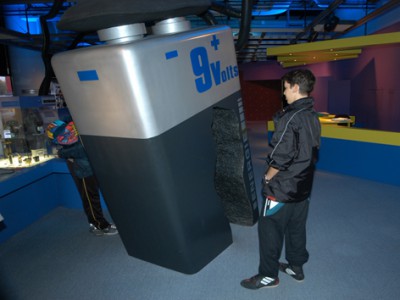
giant battery 2

The wind industry is the perpetual infant of power generation: always looking for the subsidies to last that little bit longer; always promising to improve its performance; always claiming it will outdo hydro, coal and gas – provided, of course, that the subsidies keep flowing. STT for one thinks the wind industry has had ample time to grow up and stand on its own two feet.

Like the brat that it is, the wind industry can’t be told what to do and, especially, won’t ever respond to demands from power users about when its product should be delivered.

output vs demand

It’s quite happy to produce plenty of power when it’s not needed at night time; and much less during the day, when it is (as seen in the graph above); and often, none at all during periods of peak demand: as seen in the graph below, showing the entire fleet of wind farms connected to the Eastern Grid (based in SA, NSW, Tasmania and Victoria, which in July had a notional capacity of 2,952 MW) producing 20 MW or 0.67% of total capacity, just as demand starts to peak – and see our posts here and hereand here and here and here and here and here and here.

JULY20

In it’s “quick, look over there” response to any inconvenient facts, the wind industry never concedes that wind power is “intermittent” – it prefers the term “variable” – which we showed to be a monstrous abuse of both the facts and the English language (see our post here).

When challenged about its consistent failures to match output with demand, the wind industry and its parasites respond by mumbling about “battery technology improving”.

The pitch is that – one day “soon” – there will batteries big enough and cheap enough to allow huge volumes of wind power produced when it’s not needed, to be stored for the occasions when it is. That way, the “variable” output from wind farms could be delivered when there might just be a market for it.

Of course, the pitch is made so the subsidies keep flowing to allow an endless sea of giant fans to be erected now – in order to take advantage of the (so far, elusive) storage technology that’s just over the “horizon”. Except that the “soon” is more like light-years and the “horizon” is a mirage.

Even if a technology was invented (STT likens it to the chances of finding a perpetual motion machine or alchemy turning lead into gold) to store large volumes of the electricity output (in bulk) from all of the wind farms connected to the Eastern Grid, say (which now have a notional capacity of 3,342 MW) – the economic cost would be astronomical – and readily eclipse the value of the power produced. Not that the wind industry has ever made any economic sense.

One way of analysing the economics (ie costs versus benefits) of storing, in bulk quantities, the electricity generated from wind farms is to quantify what’s called the “energy returned on energy invested” (EROEI). Put simply, that’s the amount of energy required as an input in order to return a given energy output. To be economically viable, a generation source has to produce a surplus of energy well over and above what was required to establish it.

In this article, Dr John Morgan – an Adjunct Professor at RMIT – comes up with the (not so surprising) conclusion that energy storage cannot (and will never) provide an economic solution to the intermittency of wind power.

The Catch 22 of Energy Storage
Brave New Climate
22 August 2014

Pick up a research paper on battery technology, fuel cells, energy storage technologies or any of the advanced materials science used in these fields, and you will likely find somewhere in the introductory paragraphs a throwaway line about its application to the storage of renewable energy. Energy storage makes sense for enabling a transition away from fossil fuels to more intermittent sources like wind and solar, and the storage problem presents a meaningful challenge for chemists and materials scientists… Or does it?

Guest Post by John Morgan.

Several recent analyses of the inputs to our energy systems indicate that, against expectations, energy storage cannot solve the problem of intermittency of wind or solar power. Not for reasons of technical performance, cost, or storage capacity, but for something more intractable: there is not enough surplus energy left over after construction of the generators and the storage system to power our present civilization.

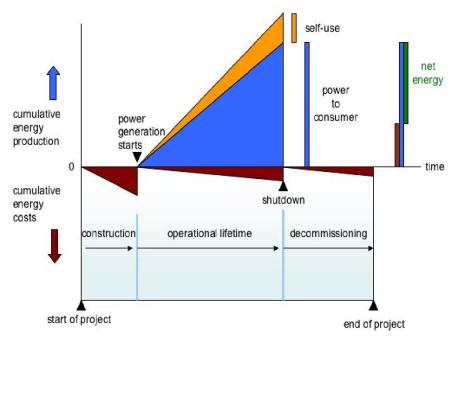
The problem is analysed in an important paper by Weißbach et al. (1) in terms of energy returned on energy invested, or EROEI – the ratio of the energy produced over the life of a power plant to the energy that was required to build it. It takes energy to make a power plant – to manufacture its components, mine the fuel, and so on. The power plant needs to make at least this much energy to break even. A break-even powerplant has an EROEI of 1. But such a plant would pointless, as there is no energy surplus to do the useful things we use energy for.

There is a minimum EROEI, greater than 1, that is required for an energy source to be able to run society. An energy system must produce a surplus large enough to sustain things like food production, hospitals, and universities to train the engineers to build the plant, transport, construction, and all the elements of the civilization in which it is embedded.

morganesbox

For countries like the US and Germany, Weißbach et al. (1) estimate this minimum viable EROEI to be about 7. An energy source with lower EROEI cannot sustain a society at those levels of complexity, structured along similar lines. If we are to transform our energy system, in particular to one without climate impacts, we need to pay close attention to the EROEI of the end result.

The EROEI values for various electrical power plants are summarized in the figure. The fossil fuel power sources we’re most accustomed to have a high EROEI of about 30, well above the minimum requirement. Wind power at 16, and concentrating solar power (CSP, or solar thermal power) at 19, are lower, but the energy surplus is still sufficient, in principle, to sustain a developed industrial society. Biomass, and solar photovoltaic (at least in Germany), however, cannot. With an EROEI of only 3.9 and 3.5 respectively, these power sources cannot support with their energy alone both their own fabrication and the societal services we use energy for in a first world country.

morganesfig1

Energy Returned on Invested, from Weißbach et al.,(1) with and without energy storage (buffering). CCGT is closed-cycle gas turbine. PWR is a Pressurized Water (conventional nuclear) Reactor. Energy sources must exceed the “economic threshold”, of about 7, to yield the surplus energy required to support an OECD level society.

These EROEI values are for energy directly delivered (the “unbuffered” values in the figure). But things change if we need to store energy. If we were to store energy in, say, batteries, we must invest energy in mining the materials and manufacturing those batteries. So a larger energy investment is required, and the EROEI consequently drops.

Weißbach et al. calculated the EROEIs assuming pumped hydroelectric energy storage. This is the least energy intensive storage technology. The energy input is mostly earthmoving and construction. It’s a conservative basis for the calculation; chemical storage systems requiring large quantities of refined specialty materials would be much more energy intensive. Carbajales-Dale et al. (2) cite data asserting batteries are about ten times more energy intensive than pumped hydro storage.

Adding storage greatly reduces the EROEI (the “buffered” values in the figure). Wind “firmed” with storage, with an EROEI of 3.9, joins solar PV and biomass as an unviable energy source. CSP becomes marginal (EROEI ~9) with pumped storage, so is probably not viable with molten salt thermal storage. The EROEI of solar PV with pumped hydro storage drops to 1.6, barely above breakeven, and with battery storage is likely in energy deficit.

This is a rather unsettling conclusion if we are looking to renewable energy for a transition to a low carbon energy system: we cannot use energy storage to overcome the variability of solar and wind power.

In particular, we can’t use batteries or chemical energy storage systems, as they would lead to much worse figures than those presented by Weißbach et al (1). Hydroelectricity is the only renewable power source that is unambiguously viable. However, hydroelectric capacity is not readily scaled up as it is restricted by suitable geography, a constraint that also applies to pumped hydro storage.

This particular study does not stand alone. Closer to home, Springer have just published a monograph, Energy in Australia, (3) which contains an extended discussion of energy systems with a particular focus on EROEI analysis, and draws similar conclusions to Weißbach. Another study by a group at Stanford (2) is more optimistic, ruling out storage for most forms of solar, but suggesting it is viable for wind. However, this viability is judged only on achieving an energy surplus (EROEI>1), not sustaining society (EROEI~7), and excludes the round trip energy losses in storage, finite cycle life, and the energetic cost of replacement of storage. Were these included, wind would certainly fall below the sustainability threshold.
energy-outputs-and-energy-costs

It’s important to understand the nature of this EROEI limit. This is not a question of inadequate storage capacity – we can’t just buy or make more storage to make it work. It’s not a question of energy losses during charge and discharge, or the number of cycles a battery can deliver. We can’t look to new materials or technological advances, because the limits at the leading edge are those of earthmoving and civil engineering. The problem can’t be addressed through market support mechanisms, carbon pricing, or cost reductions. This is a fundamental energetic limit that will likely only shift if we find less materially intensive methods for dam construction.

This is not to say wind and solar have no role to play. They can expand within a fossil fuel system, reducing overall emissions. But without storage the amount we can integrate in the grid is greatly limited by the stochastically variable output. We could, perhaps, build out a generation of solar and wind and storage at high penetration. But we would be doing so on an endowment of fossil fuel net energy, which is not sustainable. Without storage, we could smooth out variability by building redundant generator capacity over large distances. But the additional infrastructure also forces the EROEI down to unviable levels. The best way to think about wind and solar is that they can reduce the emissions of fossil fuels, but they cannot eliminate them. They offer mitigation, but not replacement.

Nor is this to say there is no value in energy storage. Battery systems in electric vehicles clearly offer potential to reduce dependency on, and emissions from, oil (provided the energy is sourced from clean power). Rooftop solar power combined with four hours of battery storage can usefully timeshift peak electricity demand, (3) reducing the need for peaking power plants and grid expansion. And battery technology advances make possible many of our recently indispensable consumer electronics. But what storage can’t do is enable significant replacement of fossil fuels by renewable energy.

If we want to cut emissions and replace fossil fuels, it can be done, and the solution is to be found in the upper right of the figure. France and Ontario, two modern, advanced societies, have all but eliminated fossil fuels from their electricity grids, which they have built from the high EROEI sources of hydroelectricity and nuclear power. Ontario in particular recently burnt its last tonne of coal, and each jurisdiction uses just a few percent of gas fired power. This is a proven path to a decarbonized electricity grid.

But the idea that advances in energy storage will enable renewable energy is a chimera – the Catch-22 is that in overcoming intermittency by adding storage, the net energy is reduced below the level required to sustain our present civilization.
John Morgan
22 August 2014

John is Chief Scientist at a Sydney startup developing smart grid and grid scale energy storage technologies. He is Adjunct Professor in the School of Electrical and Computer Engineering at RMIT, holds a PhD in Physical Chemistry, and is an experienced industrial R&D leader. You can follow John on twitter at @JohnDPMorgan. First published in Chemistry in Australia.

Brave New Climate Postscript

When this article was published in CiA some readers had difficulty with the idea of a minimum societal EROI. Why can’t we make do with any positive energy surplus, if we just build more plant? Hall (4) breaks it down with the example of oil:

Think of a society dependent upon one resource: its domestic oil. If the EROI for this oil was 1.1:1 then one could pump the oil out of the ground and look at it. If it were 1.2:1 you could also refine it and look at it, 1.3:1 also distribute it to where you want to use it but all you could do is look at it. Hall et al. 2008 examined the EROI required to actually run a truck and found that if the energy included was enough to build and maintain the truck and the roads and bridges required to use it, one would need at least a 3:1 EROI at the wellhead.

Now if you wanted to put something in the truck, say some grain, and deliver it, that would require an EROI of, say, 5:1 to grow the grain. If you wanted to include depreciation on the oil field worker, the refinery worker, the truck driver and the farmer you would need an EROI of say 7 or 8:1 to support their families. If the children were to be educated you would need perhaps 9 or 10:1, have health care 12:1, have arts in their life maybe 14:1, and so on. Obviously to have a modern civilization one needs not simply surplus energy but lots of it, and that requires either a high EROI or a massive source of moderate EROI fuels.

The point is illustrated in the EROI pyramid.(4) (The blue values are published values: the yellow values are increasingly speculative.)

morganesfig2

Finally, if you are interested in pumped hydro storage, a previous Brave New Climate article by Peter Lang covers the topic in detail, and the comment stream is an amazing resource on the operational characteristics and limits of this means of energy storage.

References

(1). Weißbach et al., Energy 52 (2013) 210. Preprint available here.

(2). Carbajales-Dale et al., Energy Environ. Sci. DOI: 10.1039/c3ee42125b

(3). Graham Palmer, Energy in Australia: Peak Oil, Solar Power, and Asia’s Economic Growth; Springer 2014.

(4). Pedro Prieto and Charles Hall, Spain’s Photovoltaic Revolution, Springer 2013.

light-in-darkness

Investing in the Wind Turbine Scam, is a Risky Business!

Australia’s wind turbines may stop spinning as banks foreclose


Australian analysts have warned that some of the country’s wind farms could be forced to close down under proposals made by the Abbott government’s RET Review panel.

Insiders are aghast at the assumptions made by the panel about the possibility of closing the scheme to new entrants and providing “grandfathering” arrangements for existing assets.

They say the proposals – and the assumption that LGCs, the certificates that are the currency of the scheme – will hold value are flawed, and the panel has not considered the basic refinancing risks of all projects under any scenario.

“I’m amazed at how flawed this document is,” said one close observer. “It is internally inconsistent, it is intellectually flawed … and it doesn’t even try to cover up its bias. It is 160 pages of self-serving logic.”

Another noted that almost every wind farm in the country will be up for refinancing for next 3 years. “They will be in major financial distress, and they are all at risk of falling over.”

While wind farms in Australia can have long term power purchase agreements out to 2030, the financing arrangements are much shorter, usually around 5 years.

This means that most, if not all, wind farms, will be up for refinancing in the next few years. When that happens, the major banks will review the state of the market, and are either likely to raise the price of debt, or do an “equity sweep” – calling on project owners to invest more cash.

None are likely to do so.

And in some cases – because the value of the LGCs will be effectively zero – as Bloomberg New Energy Finance has pointed out – and the price of wholesale electricity has fallen due to the removal of the carbon price and over-capacity brought about by the construction of thousands of megawatts of gas-fired generation – many wind farms will struggle to make debt obligations under current terms.

In its report, BNEF warned that a “whole host of Australian and foreign companies and lenders could be exposed to asset impairments, and almost all will suffer significant write-downs in the mark-to-market value of their investments.”

This dire situation was confirmed last week by Infigen Energy, which warned of potential bankruptcieslast week (an extraordinary enough statement for a listed company). Infigen Energy head Miles George – who doubles as the chair of the Clean Energy Council – warned that many other companies are in a similar situation.

Those wind farms on merchant contracts are most at risk, but even those with PPAs have clauses which allow bankers to review the financing arrangements.

Analysts suggest that Australian banks will be mortified when they understand the full implications of the review panel’s recommendations.

“Every time there is a refinancing, banks redo the base case model for the project. As the situation gets worse – with a lower LGC price – they will have to squeeze all of their parameters to make sure they get repaid,” one said.

“When they pull all those levers – a shorter amortisation period, a higher debt-equity ratio, then the equity holders are going to have to tip in additional capital to keep the projects going. The project owners are not in position to do that.

“And if the equity holders start falling over, banks might be left with wind farms to run and operate. But there will be no real market left, and no real market value in those projects. It may be that they have to turn them (the wind turbines) off.”

Even the other scenario recommended by the RET Review panel – that of downgrading the target from its current level of 41,000GWh to a “real” 20 per cent target of around 25,000GWh with targets set annually, would not be practical.

Analysts warn that there would unlikely be any new entrants because of the price uncertainty with rolling targets and – as a result – the higher cost of capital.  It is highly unlikely that any Australian bank would provide debt finance in these circumstances.

All of Australia’s big four banks are at risk, but particularly NAB and ANZ, who have project financed most wind farms in Australia.

bnef debt

Aussies Determined to Scrap the Renewable Energy Targets to Save the Poor!

Senator David Leyonhjelm: “Wake Up Clive!” – It’s Time to Kill the RET & Save the Poor

clive palmer sleeping

STT hears that Tony Abbott is hard at work on his mission to kill off the mandatory RET – with the aim of bringing an end to the most expensive and pointless policy of all time. One of the cross-bench Senators the PM needs to help demolish it during this parliament is David Leyonhjelm – the Liberal Democrats Senator for NSW – and he gets it.

David has come out with a cracking piece published by The Australian – which is pitched squarely at Clive Palmer and his PUPs. The Palmer United Party’s 3 Senators – Glenn Lazarus (QLD), Dio Wang (WA) and Jacqui Lambie (Tasmania) – are the only obstacle that stands in the way of scrapping the mandatory RET during the life of this parliament. Big Clive and his Senators should consider David’s article a timely “wake up” call.

Ditch RET to set economy free
The Australian
David Leyonhjelm
27 August 2014

If Labor and Clive Palmer care about the poor they will stop subsidies for windmills.

ELECTRICITY bills are a huge worry for many Australians. In coming months a lot of people will receive the biggest household utility bills they have seen.

The latest figures from the Australian Bureau of Statistics show that in the five years to June 2012, Australia’s retail electricity prices rose by 72 per cent with even higher increases in Melbourne and Sydney.

The Queensland Competition Authority’s annual report revealed recently that 344 households were disconnected every week in the Sunshine State because of non-payment of electricity bills.

Senators and MPs, however, don’t need to worry about whether staying warm in chilly Canberra may send them broke. Perhaps if they had to pay for their own heating and airconditioning in Parliament House, it would concentrate their minds on the important discussion we need to have on the future of the renewable energy target.

The repeal of the carbon tax will help, but studies show that the RET has an even greater impact on the bottom line, reducing our living standards and the competitiveness of our entire economy.

The dramatic surge in power bills has been a major factor in the decline of our manufacturing sector and the loss of thousands of jobs. In a little more than 10 years the RET has rocketed Australia from almost the cheapest to almost the most expensive electricity in the world: Australian states occupy four of the top six spots beaten only by Denmark and Germany. These countries also are sapped pointlessly with punishing renewable energy policies producing small amounts of extremely expensive, intermittent power that has to be backed up by fossil fuel power anyway.

Contrary to claims by industry lobby groups and consultants representing Big Wind producers and merchant bankers, it is no coincidence that power prices went up so steeply when mandatory renewable energy targets were introduced. A report from the accounting firm Deloitte shows the RET will stifle the economy, cost jobs and drive up prices, and is a very inefficient means of reducing greenhouse gas emissions. It concludes that abolishing the RET would increase real GDP by $29 billion in net present terms relative to the RET continuation.

The chief beneficiary of the RET is the wind industry, which receives Renewable Energy Certificates worth about $30 for every megawatt of electricity it produces, on top of the price paid to it for electricity generated by wind turbines. The certificates are funded by electricity customers as a hidden charge on their bills. The net effect of this subsidy is to hand an additional $17bn of our money to these companies over 15 years for no measurable environmental benefit.

It is undisputed that despite being a mature technology the wind generation industry is not viable anywhere in the world without government or customer subsidies. It is just government mandated corporate welfare.

Grant King, chief executive of Origin Energy, one of Australia’s largest electricity retailers with extensive interests in gas and wind energy generation, has said that the RET would be the main driver of electricity price rises by 2020 and that renewable energy costs now accounted for 14 per cent of electricity bills, up from 2 per cent five years ago; for larger users it is 30 per cent of their bills.

If Labor, the Greens and Clive Palmer really care for social justice they will not allow working families, pensioners and the disadvantaged to be ripped off by wealthy wind generators and will back the abolition of the RET.

David Leyonhjelm is the Liberal Democrats senator for NSW.
The Australian

david leyonhjelm

When David talks about handing wind power outfits “$17bn of our money … over 15 years for no measurable environmental benefit”, he bases that figure on a REC price of $30.

While RECs are currently trading at $30, from 2017 – when the annual figure for the RET starts to increase dramatically – RECs will be worth at least as much as the mandated shortfall charge of $65 per MWh.

The total renewable energy target between 2014 and 2031 is 603,100 GWh, which converts to 603.1 million MWh (1 GW = 1,000 MW). In order for the target to be met, 603.1 million RECs have be purchased and surrendered over the next 17 years: 1 REC is issued for every MWh of renewable energy dispatched to the grid. The REC is a Federal Tax on all Australian electricity consumers.

The cost of subsiding the wind industry through the REC Tax is born entirely by Australian power consumers. As Origin Energy chief executive Grant King correctly put it earlier this week:

“[T]he subsidy is the REC, and the REC certificate is acquitted at the retail level and is included in the retail price of electricity”.

It’s power consumers that get lumped with the “retail price of electricity” and, therefore, the cost of the REC subsidy to wind power outfits.

Even at the current REC price of $30, the amount to be added to power consumers’ bills will hit $18 billion (David gets pretty close with his figure of $17 billion). However, beyond 2017 (when the target ratchets up from 27.2 million MWh to 41 million MWh and the $65 per MWh shortfall charge starts to bite) the REC price will almost certainly reach $65 and, due to the tax benefit attached to RECs, is likely to exceed $90.

Between 2014 and 2031, with a REC price of $65, the cost of the REC Tax to power consumers (and the value of the subsidy to wind power outfits) will approach $40 billion – with RECs at $90, the cost of the REC Tax/Subsidy balloons to over $54 billion (see our post here).

This massive stream of subsidies for wind power stands as the greatest wealth transfer in the history of the Commonwealth.

That transfer comes at the expense of the poorest and most vulnerable; struggling businesses; and cash-strapped families.

If Clive Palmer is serious when he says he is out to represent the poorest in society, he has a golden opportunity to put his money where his mouth is.

With thousands of Australian households living without power – having been chopped from the grid simply because they can no longer afford what used to be a basic necessity of life – and thousands more suffering “energy poverty” as they find themselves forced to choose between heating (or cooling) and eating – Australia risks the creation of an entrenched energy underclass, dividing Australian society into energy “haves” and “have-nots”.

For a taste of the scale (so far) of a – perfectly avoidable – social welfare disaster, here are articles from Queensland (click here); Victoria (click here); South Australia (click here); and New South Wales (click here).

Slapping a further $50 billion on top of already spiralling Australian power bills over the next 17 years can only add to household misery. So Clive, if you really do care about the poor? – then it’s time to muscle up and help kill the mandatory RET now.

Beyond the RET’s perverse impact on the poorest and most vulnerable is its wealth and job destroying impact on the economy as a whole.

The Australian Chamber of Commerce and Industry (ACCI) – the top body representing Australian business – came out with this press release in full support of the position taken by David Leyonhjelm – calling for the mandatory RET to be scrapped outright.

Australian Chamber of Commerce and Industry
MEDIA RELEASE
WEDNESDAY, August 27, 2014

BUSINESS WELCOMES LEADERSHIP ON RENEWABLE ENERGY TARGET

The Australian Chamber of Commerce and Industry (ACCI), Australia’s largest and most representative business organisation, welcomes the leadership of Independent Senator David Leyonhjelm in calling for the abolition of the Renewable Energy Target (RET).

The RET is a major policy failure that drives up electricity prices and is a highly inefficient means of emissions abatement. Economic modelling by Deloitte Access Economics commissioned by ACCI makes a powerful policy case for the abolition of the RET. The modelling shows that persisting with the policy in its current form will cost the economy $29bn in lost economic output and more than 5,000 jobs.

“It is a matter of deep regret that a policy with such appalling economic foundations has remained uncontested for so long”, remarked Chief Economist Burchell Wilson.

“This insidious tax needs to be taken off energy users and is important step toward restoring the competitiveness of Australian industry.”

“The business community remains hopeful that the Palmer United Party after examining the findings of the Deloitte Access Economics modelling will reconsider their support for a policy that is driving up electricity prices, sending businesses to the wall and destroying jobs”.

While options for appropriate compensation for sunk investment under the scheme will need to be considered, it is clear that abolition of the RET is the best outcome for energy users and the economy.

At the very least the target should be wound back to a level consistent with 20 per cent of demand in the wake of the collapse in actual and projected electricity consumption over the past five years.

A robust Parliamentary debate in which all the facts are on the table is the first step in achieving that objective.
Australian Chamber of Commerce and Industry
27 August 2014

kate carnell

The Truth About Wind Turbines….A Victim’s Testimony!

Victims of industrial wind
 

We are “Victims of Industrial Wind” (which is also the name of our open Facebook group, with members from around the world).

We are the Therriens of Sheffield. Many already know our story. We own 50 acres abutting First Wind’s Sheffield project. We have spent more than 18 years living here, cultivating a beautiful sugar bush. Yes, we live off grid. Yes, we live near the Interstate. The interstate is quiet at night, unlike the wind turbines that make noise 24/7 more often than not. The Interstate also does not make a repetitive obnoxious noise that wakes you then keeps you awake, night after night.

We did not oppose the industrial wind power plant at any stage. From proposal to construction, we had no idea what to expect so we were not about to judge.

We never once harassed any employees working on the project nor with First Wind. Not until the project began operating, only when we experienced the noise first-hand, did we begin to understand and wonder just what we were facing. About six months in, we started to realize the project was affecting us. Less than one year in, everything started to add up for us, correlating the connection between the sounds and how we felt. We hardly could believe it was true until we started reading up on wind turbine syndrome. This syndrome is real, too darn real. The exact same symptoms are echoed worldwide.

These facts about wind turbine noise and health have been known for a long time and totally ignored by our federal and state governments. These elected people who are in charge of protecting the public have chosen to blindly believe the big wind developers, while turning a deaf ear to towns and residents to be impacted for the good or bad by industrial power plants.

Health studies should have been done before big wind turbines were put close to people, but they weren’t. Instead we get literature reviews done by people with financial ties to the wind industry who claim there are no “direct” health effects. It has also been spread far and wide that anyone who opposes clean green energy (laugh) is a NIMBY (not in my back yard) or that people are only seeking financial gain by falsely claiming to being negatively impacted.

Positive outcome studies are funded by industrial wind, and they get to hand-pick their experts. The nonpositive studies are done by honest hard-working individuals who face public persecution and possibly the loss of their jobs if they go public with their negative findings.

Just ask Dr. Henrik Moller of Denmark, a highly respected academic noise researcher who was fired after exposing the Danish government’s role in covering up the health risks caused by wind turbine noise pollution. Kind of says a lot right there, doesn’t it?

Even with all this information, no precautions were taken to prepare in advance to rectify any problems that may arise. Various problems have arisen, and yet they are still largely ignored because no one knows how to solve any problems pertaining to industrial wind power plants. We hear “this is all new to us.” Well, it is old hat to us.

The Public Service Board has held hearings and workshops to hear both sides of the story. Now you would be led to believe that both sides would be given equal time to be heard. No, that couldn’t be further from the truth. The developers’ side has gotten most of the time while attending victims have to sit and be further insulted and mistreated in the process and are lucky to speak at all. We attended the PSB’s Morrisville workshop and will never participate in another unless it is to protest. It was that much of an insult.

So here we are nearly three years into this nightmare and no closer to a resolution then we were on day one. We had asked First Wind to buy us out for $150,000. This prompted a meeting where we were told of a possible option to pay us $45,000 for our house and two acres, but it was not an official offer. This is what we were told: “It’s what I think I can do so it’s not as though it’s First Wind’s thing.”

Yeah, right, the head of safety and compliance out of Boston is not about to stick his neck out with talk of a “possible option” if he hadn’t already had some kind of approval. We expected to be low-balled but not to this extreme.

It seems they are well schooled in the art of approaching a town, making promises that the project will cause no harm — while quietly buying/paying off select home/land owners because they know there will be harm. The paid-off residents have signed nondisclosure agreements so they cannot say one word against the project. The developer then sits back after construction and waits for surrounding residents to become so desperate to move they will sell at almost any price. Then try to act like a good neighbor by offering a possible option at a ridiculously low insulting price. And they wanted us to sign a nondisclosure for this pittance.

Luann Therrien lives in Sheffield.

Global Warming Alarmists Being Less Than Honest With The Public! Not Surprised….

This article ties in nicely, with the previous one

posted, telling Why they Lie


Are scientists cooking the books?

Warming scientists accused of adjusting temperature data to show warming

 Australian cooling turns to warming z

Can there be a valid discussion about the climate if warmist scientists are cooking the books?

The failure of climate computer models to accurately project recent temperatures is a major embarrassment for warming campaigners.   The models nearly universally call for more warming than has actually occurred.  This has left the warming crowd scrambling to explain the missing warming.  The folks who publish the Hockey Schtick blog are now up to 38 excuses for the missing warming.  Marc Morano has details at Climate Depot.

Meteorologist Anthony Watts has been documenting accusations of researchers placing their thumbs on the scale to create warming for years.

Now comes reports that the Australian Met Office has been adjusting temperature data to cool the past and create a warming trend that does not appear in the raw data.

The escalating row goes to heart of the climate change debate — in particular, whether computer models are better than real data and whether temperature records are being manipulated in a bid to make each year hotter than the last. Marohasy’s research has put her in dispute with BoM over a paper she published with John Abbot at Central Queensland University in the journal Atmospheric Research concerning the best data to use for rainfall forecasting. BoM challenged the findings of the Marohasy-Abbot paper, but the international journal rejected the BoM rebuttal, which had been prepared by some of the bureau’s top scientists. This has led to an escalating dispute over the way in which ­Australia’s historical temperature records are “improved” through homogenisation, which is proving more difficult to resolve.  (The Australian, h/t Benny Peiser).

Marc Morano is also featuring reports that NASA is erasing past Arctic warming from its records.

Nothing is more fundamental to the scientific method than the rule that we must adjust our hypotheses to fit the data.  Adjusting the data to fit the hypothesis is an academic/scientific crime no matter how plush the funding.

Accusations of global warming data manipulation demand full and unbiased investigations.

Political correctness has no place in science.  Only scientifically correct will do.

– See more at: http://www.cfact.org/2014/08/23/are-scientists-cooking-the-books/#sthash.b5UY1NzA.dpuf

The Real Truth Behind the Global Warming/Climate Change Agenda!

It’s about the money, not the climate

  • Who wants to be a millionaire

Oscar Wilde (1854-1900), the Irish poet and dramatist, wrote “Pray don’t talk to me about the weather. Whenever people talk to me about the weather, I always feel quite certain that they mean something else.”

These days, when some world leader or politician speaks of the climate—the weather is what is happening right now wherever you are—they are not talking about sunshine or rain. They are talking about a devilishly obscene way of raising money by claiming that it is humans that are threatening the climate with everything they do, from turning on the lights to driving anywhere.

That’s why “global warming” was invented in the late 1980s as an immense threat to the Earth and to mankind. Never mind that Earth has routinely passed through warmer and cooler cycles for billions of years; much of which occurred before mankind emerged. And never mind that the Earth has been a distinct cooling cycle for the past seventeen years and likely to stay in it for a while. If the history of ice ages is any guide, we could literally be on the cusp of a new one.

If, however, a government can tax the use of energy, it stands to make a lot of money. That is why carbon taxes have been introduced in some nations and why the nearly useless “clean energy” options of wind and solar have been introduced even though they both require the backup of traditional coal, natural gas and nuclear energy plants because they cannot produce electricity if the wind isn’t blowing and the sun is obscured by clouds.

Taxing energy use means taxing “greenhouse gas” emissions; primarily carbon dioxide (C02) so that every ton of it added to the atmosphere by a power plant and any other commercial activity becomes a source of income for the nation. The Australians went through this and rapidly discovered it drove up their cost of electricity and negatively affected their economy so much that they rid themselves of a prime minister and the tax within the past year.

Fortunately, every effort to introduce a carbon tax has been defeated by the U.S. Congress, but that it has shelled out billions for

Rep. Henry Waxman

“climate research” over the years. That doesn’t mean, however, that 41 demented Democrats in the House of Representatives haven’t gotten together in a “Safe Climate Caucus” led by Rep. Henry A. Waxman. The Washington Post reported that when it was launched in February 2013, the members promised to talk every day on the House floor about “the urgent need to address climate change.”

Check out the caucus and, if your Representative is a member, vote to replace him or her with someone less idiotic.

When you hear the President or a member of Congress talk about the climate, they are really talking about the scheme to generate revenue from it through taxation or to raise money from those who will personally benefit from any scheme related to the climate such as “clean energy.”

The need of governments to frighten their citizens about the climate in order to raise money is international in scope. A United States that has a $17 trillion debt is a prime example, much of it due to a government grown so large it wastes taxpayer’s money in the millions with every passing day whether it is sunny or rainy, warm or cold.

In late July, Reuters reported that Christine Lagarde, the chair of theInternational Monetary Fund, (IMF) opined in her new book that “energy taxes in much of the world are far below what they should be to reflect the harmful environmental and health impact of fossil fuels use.”

Please pay no attention to the billions of dollars that coal, oil and natural gas already generate for the nations in which they are found. Nations such as India and China are building coal-fired plants as fast as possible to provide the electricity every modern nation needs to expand its economy, provide more employment, and improve their citizen’s lives in every way imaginable.

“For the first time,” Reuters reported, “the IMF laid out exactly what it views as appropriate taxes on coal, natural gas, gasoline, and diesel in 156 countries to factor in the fuel’s overall costs, which include carbon dioxide emissions, air pollution, congestion and traffic accidents.” The problem with this is that the costs cited are bogus.

Christine Lagarde

“Nations,” said Lagarde, “are now working on a United Nations deal for late 2015 to rein in greenhouse gas emissions that have hit repeated highs this century, but progress has been slow as nations fret about the impact any measures may have on economic growth.” As in bad impacts!

Ignore the claims that carbon dioxide affects the climate. Its role is so small it can barely be measured because CO2 represents 380 parts per million. When our primate ancestors began to climb down out of the trees, CO2 levels were about 1,000 parts per million. More CO2 means more crops, healthy growing forests, and all the other benefits that every form of vegetation provides. The breath we humans exhale contains about 4% of CO2.

The fact is that the United States and other nations are being run by politicians who are incapable of reducing spending or borrowing more in order to spend more. Venezuela just defaulted again on the payment of bonds it issued to raise money. They did this in 2001 and one must wonder why any financial institution purchases them.

There are eleven other nations whose credit ratings are flirting with big trouble. They include Greece, Ukraine, Pakistan, Cypress, and in the Americas Argentina, Venezuela, Cuba, Ecuador and Belize. Borrowing by such nations is very expensive. A U.S. Treasury Note pays an annual coupon of just 2.5%, but the yields on 10-year bonds issue by Greece reached 29% in early 2012, just before it defaulted.

Adding to problems in the U.S. is the Obama agenda being acted upon by the Environmental Protection Agency whose “war on coal” has shuttered several hundred plants that produce the electricity needed to maintain the economy. In coal producing states this is playing havoc and it is driving up the cost of electricity in others.

The growth of oil and natural gas production in the U.S. is almost entirely on privately owned land as opposed to that controlled by the government. Supporting the attack on energy are the multi-million dollar environmental organizations like Friends of the Earth and the Sierra Club.

The world has not warmed since the nineties and many factors influence the climate other than CO2, the Sun, the oceans, clouds, and volcanic activity. Nothing any government does, here and worldwide, has any meaningful impact on it, but if nations can demonize the use of energy and tax the CO2 it produces, they can generate more money to spend and waste.

The lies that governments, the United Nations, and the International Monetary Fund tell about the climate are about the money they can extract from citizens who must be kept frightened enough to pay taxes on their use of energy.


– See more at: http://www.cfact.org/2014/08/22/its-about-the-money-not-the-climate/#sthash.2UXTRUgG.dpuf

Here is a list of Companies Making Huge Profits, From the Physical, and Financial Fallout, Caused by Wind Turbines


CanWEA Members 2014*
 
 
3M Canada Company
 
ABB Inc.
 
Acciona Wind Energy Canada
 
Activa Environnement Inc
 
Aeolis Wind Power Corp.
 
Aercoustics Engineering Ltd.
 
Aird & Berlis LLP
 
Airway Services Canada
 
Alberta Wind Energy Corporation
 
Algonquin Power
 
ALL Canada Crane Rental Corp.
 
Alstom Power
 
AltaGas Ltd.
 
Alterra Power Corp.
 
Altus Group
 
AMEC Black & McDonald
 
American Wire Group
 
AMSOIL INC.
 
Anemos Energy Corporation
 
Ascent Solutions Inc.
 
ATCO Power
 
Atlantic Power
 
Automodular Corporation
 
Avanti Wind Systems Inc.
 
Avertex Utility Solutions Inc.
 
Avro Wind Energy Inc.
 
AWS Truepower LLC
 
Barnhart Canada LLC
 
BASF Canada
 
BBA Inc.
 
Bellemare Groupe
 
Benign Energy Canada Inc.
 
Bennett Jones LLP
 
BGB Technology Inc.
 
Black River Wind Ltd.
 
Blake, Cassels & Graydon LLP
 
Blattner Energy Inc.
 
BluEarth Renewables Inc.
 
Boralex Inc.
 
Borden Ladner Gervais LLP
 
Borea Construction
 
BowArk Energy Ltd.
 
Brookfield Renewable Energy Group
 
Brüel & Kjær Vibro
 
Bullfrog Power Inc.
 
Burndy Canada Inc.
 
BZEE Academy GmbH
 
C.H. Robinson Project Logistics Ltd.
 
Callon Dietz
 
Campbell Scientific (Canada) Corp.
 
CanACRE
 
Canadian Clean Energy Conferences
 
Canadian Copper & Brass Development Association
 
Canadian German Chamber of Industry and Commerce
 
Capital City Renewables LLC
 
Capital Power Corp.
 
Capstone Infrastructure
 
Carleton University
 
Carlsun Energy Solutions Inc.
 
Cartier Energie Eolienne Inc.
 
Challenger Motor Freight Inc.
 
Chinodin Wind Power
 
Chinook Power Corp.
 
Clark Wilson LLP
 
Consulate General of Argentina in Toronto
 
CSA International
 
CSS Wind Inc.
 
Curry & Kerlinger LLC
 
Customized Energy Solutions
 
Dale & Lessmann LLP
 
Dentons Canada LLP
 
DESSAU
 
Dialight Corporation
 
Dillon Consulting Ltd.
 
DNV GL
 
DP Energy Ireland Ltd.
 
E.ON Climate & Renewables Ltd.
 
EBC Inc.
 
EchoTrack Inc.
 
EDF EN Canada
 
EDP Renewables Canada Ltd.
 
Elemental Energy Inc.
 
Elevator One
 
Elexco Ltd.
 
EMA Electromechanics
 
Emera Inc.
 
Enbridge Inc.
 
Enel Green Power Canada Inc.
 
ENERCON
 
Enerfin Energy Company of Canada Inc.
 
Enmax Corporation
 
Enterprise Commercial Truck
 
Eolectric Inc.
 
Eon WindElectric Inc.
 
EPTCON / One Line Engineering
 
Ernst & Young
 
ESAC Inc.
 
Essar Steel Algoma
 
Exelon Wind, a Division of Exelon Power
 
F Rohmann
 
Fabrication Delta
 
Firelight Infrastructure Partners
 
Flash Technology
 
Fri-El Green Power
 
Fritz Construction Services Inc.
 
G Seven Generations Ltd.
 
G&W Electric Co.
 
Gamesa Technology Corporation
 
GasTOPS Ltd.
 
Gaz Metro
 
GDF SUEZ Canada Inc.
 
GE Power & Water
 
Gilead Power
 
Golder Associates Ltd.
 
Goldwind USA Inc.
 
Gowling Lafleur Henderson LLP
 
Graham Infrastructure Ltd.
 
Grand Valley Wind Farms Inc.
 
GRANT THORNTON LLP
 
Graybar Energy Ltd.
 
Greengate Power Corporation
 
Greenwind Global Inc
 
Groupe Delom Inc.
 
Groupe Robert
 
H.B. White Canada Corp.
 
Hatch Energy
 
Heenan Blaikie LLP
 
Hemmera
 
Hempel (Canada) Inc.
 
Henkels & McCoy Canada Inc.
 
HGC Engineering
 
Holland College
 
Honeywell Safety Products
 
Horizon Legacy Energy Corp.
 
Hydro One Networks
 
Hydro Quebec Distribution
 
Hytorc Ontario
 
IBI Group
 
Innergex Renewable Energy Inc.
 
Inspec-Sol Inc.
 
International Tower Lighting LLC
 
Invenergy Canada LLC
 
IPS Trico
 
Jones Group Engineering Ltd.
 
Joss Wind Power Inc.
 
Juwi Wind Canada Ltd.
 
K-Line Maintenance & Construction Ltd.
 
Knight Piesold
 
KPMG
 
Kruger Energy Inc.
 
Lafarge Canada Inc.
 
Lahave Renewables Inc.
 
Landstar Transportation Logistics
 
Lapp Canada
 
Le Groupe Ohmega Inc.
 
Leader Resources Services Corp.
 
LEITWIND
 
Lethbridge College
 
Lincoln Electric Company of Canada
 
Local Content Assurance Bureau
 
Longyuan Canada Renewables Ltd.
 
Mammoet Canada Western Ltd.
 
Manitoba Hydro
 
Manulife Financial
 
Maritime Electric Company Ltd.
 
Marmen Inc.
 
Mastec Renewables Construction, LTD
 
McCann Equipment Ltd.
 
McCarthy Tetrault LLP
 
McElhanney Land Surveys Ltd.
 
Michels Canada
 
Miller Thomson LLP
 
Moloney Electric Inc.
 
Morgan AM&T
 
Mortenson Construction
 
Motion Industries (Canada) Inc.
 
Moventas Ltd.
 
Myshak Crane & Rigging Ltd
 
Nalcor Energy
 
Natural Forces Wind Inc.
 
Natural Resource Solutions Inc.
 
NaturEner Canada Inc.
 
NB Power
 
NCSG Crane & Heavy Haul Services
 
Neoen North America
 
NextEra Energy Canada Development and Acquisitions, Inc.
 
Niagara Region Wind Corporation
 
Northern Lights College
 
Northland Power Inc.
 
Northwind Solutions
 
Norton Rose Fulbright Canada LLP
 
Olympus
 
Ontario Sustainable Energy Association
 
ORTECH Consulting Inc.
 
Osler, Hoskin & Harcourt LLP
 
Pattern Renewable Holdings Canada ULC
 
PCL Constructors Canada Inc.
 
PESCA Environnement
 
Power Climber Wind
 
PowerTel Utilities Contractors Ltd.
 
Prowind Canada Inc.
 
PSB Securite
 
R.J. Burnside & Associates Ltd.
 
R360 WIND INC. (A JR Group Company)
 
Rabobank
 
Rankin Construction Inc.
 
Regional Power
 
Renewable Energy Systems Canada Inc.
 
Renewable NRG Systems
 
Rigarus Construction Inc.
 
Rittal Systems Ltd.
 
Rodan Energy Solutions
 
Rombro Solar Energy Inc.
 
Rope Partner Canada, Inc.
 
Royal & Sun Alliance Insurance Co.
 
Run Energy
 
RWDI
 
S&C Electric Canada Ltd.
 
Samsung Renewable Energy Inc.
 
Samuel Son & Co. Ltd.
 
Saskatchewan Research Council
 
SaskPower
 
Saturn Power Inc.
 
Schaeffler Canada Inc.
 
Schneider Electric Canada Inc.
 
Schunk Graphite Technology
 
Scotian WindFields
 
Sea Breeze Power Corp.
 
Second Wind Inc.
 
Select Elevator Solutions Inc.
 
Sentrex Wind Services Inc.
 
Sentry Electrical (Canada) Inc.
 
Senvion Canada Inc.
 
SgurrEnergy Ltd.
 
Shell Canada Ltd.
 
Shermco Industries
 
Sherwood Electromotion Inc.
 
Siemens Canada Limited
 
Signal Energy Constructors
 
Sika Canada Inc.
 
SNC-Lavalin Environnement Inc.
 
Solas Energy Consulting Inc.
 
Spirit Pine Energy Corporation
 
SPX Hydraulic Technologies
 
Stantec
 
Stikeman Elliott LLP
 
Stoel Rives LLP
 
Stonebridge Financial Corporation
 
Suncor Energy Services Inc.
 
Surespan Wind Energy Services
 
Sussex Strategy Group
 
Suzlon Wind Energy Corporation
 
Synergy Cables USA Ltd.
 
Synergy Land Services Ltd.
 
TE CONNECTIVITY
 
TEAM-1 Academy
 
TechnoCentre Eolien
 
Technostrobe
 
Telecon Inc.
 
Terrafix Geosynthetics Inc.
 
Tetra Tech
 
Thomas & Betts Canada
 
Thunder Bay Port Authority
 
TimberWest Forest Corp.
 
Toronto Hydro Corporation
 
Torys LLP
 
TransAlta Corporation
 
TransCanada Energy Ltd.
 
Tribute Resources Inc.
 
TSP Canada Towers Inc.
 
Tulloch Engineering Inc.
 
TWR Lighting Inc.
 
Ultra Torq Hydraulic Bolting
 
Unirope Ltd.
 
Valard Construction
 
Vestas Canada
 
Virelec Ltd
 
WEB Wind Energy North America Inc.
 
Westburne
 
Williams Form Hardware & Rockbolt
 
Wind Dynamics Inc.
 
Wind Energy Institute of Canada
 
Wind Power Inc.
 
Wind Simplicity Inc.
 
Wind Systems Magazine
 
WindAxis
 
Winergy Drive System Corporation
 
Woodward Inc.
 
wpd Canada
 
WSP Canada Inc.
 
Zephyr North Ltd.