Government has NO Business Funding Useless Wind Turbines!

May 11. 2014 

George Fenwick: Taxpayers should

not be forced to subsidize bird-killing

wind turbines

SINCE EARLY in our nation’s founding, we have placed a high value on conserving native wildlife so that future generations will be able to experience and benefit from wild species as we do today. Yet even as our federal government has ’sequestered’ federal funds and been forced to shutter national parks during contentious government shutdowns, we taxpayers have been regularly tapped, year after year, by large corporate wind companies to provide them with tax credits they demand in order to make a profit of their ventures.

Taxpayers may not be aware that they have funded for several years — through the federal government’s Production Tax Credit (PTC) — a public subsidy that can create a perverse incentive to put wind turbines in areas that produce little electricity but would have a devastating impact on migratory birds.

As presently configured, the PTC provides 2.3 cents per kilowatt generated, largely to wind energy companies. Poorly sited wind energy development kills significant numbers of birds and bats and alters sensitive wildlife habitat. At the current estimated mortality rate, the wind industry is killing hundreds of thousands of birds and bats per year and is expected to kill well over one million per year as projects are built to reach the federal goal of 20 percent renewable energy by 2030.

While these numbers represent a relatively small percentage of the total number of birds and bats estimated to reside in or breed in North America, many of the species being killed are already declining for other reasons, and this mortality can exacerbate these declines. In fact, the North American Breeding Bird Survey shows that between 1966 and 2010, 40 percent of neotropical migratory birds (55 of 137 species assessed) had significant negative population trends. The mortality due to wind turbines is just one more factor contributing to the cumulative impact of humans on wild bird and bat populations.

In addition, many species are protected under the Migratory Bird Treaty Act, Endangered Species Act, and the Bald and Golden Eagle Protection Act. Killing them is a violation of federal law punishable by significant fines.

We all want clean, renewable energy, but wind power cannot be considered “green” if it is unnecessarily killing large numbers of birds and bats. However, we truly can have it both ways. Making wind power a win-win proposition for conservation-minded taxpayers is not overly complicated. Two key actions need to be taken.

The first is that “no-go” zones need to be established for the industry in the most sensitive locations where the toll on birds simply outweighs the benefits of wind development. American Bird Conservancy has already developed maps showing those areas.

The second is that the voluntary U.S. Fish and Wildlife Service (FWS) permitting guidelines, by which the wind industry is currently guided, need to be made mandatory. Since the Energy Policy Act of 1992 established the PTC, the federal government has doled out billions of dollars and hoped that the for-profit wind industry would voluntarily do the right things to minimize impacts to birds and bats.

In addition to their inherent beauty and cultural and scientific importance, birds and bats also have an incalculable value by maintaining the ecosystems on which humans depend. For example, birds and bats eat billions of insects each year that left unchecked could decimate our crops, damage our forests, or lead to more use of troubling pesticides. Bats are equally valuable. In one eight-county region of Texas, Brazilian free-tailed bats saved local farmers an estimated $740,000 annually in crop damage and pesticide costs by feeding on corn earworm and cotton bollworm.

Unfortunately, in the case of wind energy, rapid development has gotten way out ahead of the science and regulatory framework. Setting reasonable regulatory sideboards for the industry and putting key, sensitive areas off limits are two principles that should be non-negotiable as renewal of the PTC is considered. It harkens back to an old standard in business dealings to which most of us have grown accustomed. It is called quid pro quo.

George Fenwick is president of the American Bird Conservancy in Washington, D.C.


If People don’t have enough food….why burn it?

The Ethanol Disaster

America’s renewables policy is bad for consumers, the environment, and the global poor.

Creative Commons Attribution-ShareAlike 2.0 Generic (CC BY-SA 2.0)Creative Commons Attribution-ShareAlike 2.0 Generic (CC BY-SA 2.0)Last November, when the Environment Protection Agency (EPA) proposed moderating years of escalating mandates by reducing the amount of ethanol that must be mixed into gasoline, a top ethanol lobbyist seemed perplexed. “We’re all just sort of scratching our heads here today and wondering why this administration is telling us to burn less of a clean-burning American fuel,” Bob Dineen, head of the Renewable Fuels Association, told The New York Times

Here are a few possible reasons why: America’s ethanol requirement destroys the environment, damages car engines, increases gas prices, and contributes to the starvation of the global poor. It’s an unmitigated disaster on nearly every level.

Start with the environment. After all, when the renewable fuel standard (RFS), which since 2005 has set forth a minimum annual volume of renewable fuels nationwide, was first set, one of the primary arguments for mandating ethanol use was that it was a greener, more environmentally friendly source of fuel that released fewer greenhouse gasses into the atmosphere.

This turns out to be complete hogwash. Researchers have known for years that, when the entire production process is taken into account, most supposedly green biofuels actuallyemit more greenhouse gasses than traditional fuels.

Some proponents of the ethanol mandate have argued that the requirement was nonetheless necessary in order to spur demand for and development of more advanced, environmentally friendly biofuel like cellulosic ethanol, which is converted into fuel from corn-farm leftovers. But there are two serious problems with cellosic ethanol. The first is that cellulosic ethanol turns out to be rather difficult to produce; despite EPA projections that the market would produce at least 5 million gallons in 2010 and 6.6 million in 2011, the United States produced exactly zero gallons both years—and just 20,069 gallons in 2012.

The second is that cellulosic ethanol is also bad for the environment. At least in the short-term, the corn-residue biofuels release about 7 percent more greenhouse gases than traditional fuels, according to a federally funded, peer-reviewed study that appeared in the journal Nature Climate Change last month.

The environmental evidence against ethanol seems to mount almost daily: Another study published last week in Nature Geoscience found that in São Paulo, Brazil, the more ethanol that drivers used, the more local ozone levels increased. The study is particularly important because it relies on real-world measurements rather than on models, many of which predicted that increased ethanol use would cause ozone levels to decline.

To make things worse, ethanol requirements are bad for cars and drivers. Automakers say that gasoline blended with ethanol can damage vehicles by corroding fuel lines and injectors. An ethanol glut caused by a misalignment of regulatory quotas and demand has helped drive up prices at the pump. And the product is actually worse: ethanol blends are less energy dense than regular gasoline, which means that cars relying on it significantly worse mileage per gallon.

American drivers have it bad, but the global poor have it far worse. Ethanol requirements at home have helped drive up the price of food worldwide by diverting corn production to energy, which dramatically reducing the available calorie supply. A 25-gallon tank full of pure ethanol requires about 450 pounds of corn—roughly the amount of calories required to feed someone for a year. Some 40 percent of U.S. corn crops go to ethanol production, which in effect means we’re burning food for automobile fuel rather than eating it. Studies by economists at the World Bank have found that a one percent increase in world food prices correlates with a half-percent decrease in calorie consumption amongst the world’s poor. When world food prices spiked between 2007 and 2008, between 20 and 40 percentof the effect was attributable to increased global reliance on biofuels. The effect on world hunger is simply devastating.

Ethanol lobbyists are still pretending the renewable fuels mandate is a success, and Senators from corn-friendly states in the Midwest are still urging the agency not to proceed with the proposed reduction to the mandate. But at this point, ethanol requirements have few serious defenders except the people who profit from its production and the politicians who rely on those people for votes and campaign contributions.

Judging by the cut it proposed last November, even the EPA seems to be wavering. A final regulation has yet to be submitted, but the proposal would reduce the amount of renewable fuels the agency requires this year from 18.15 billion gallons to 15.2 billion gallons. That’sif the EPA sticks to its original plan. The agency is under heavy pressure to moderate its proposed cuts, or avoid them entirely.

Those cuts, if approved, would represent a productive step forward. But they wouldn’t be enough. Congress should vote to repeal the renewable fuel standard entirely. The federal government shouldn’t be telling people to burn less ethanol; it shouldn’t be telling anyone to burn any of it at all.

The Windweasels KNOW they are Harming people, and wildlife…..They don’t care!!!

WIND FARMS SEVERELY HARMFUL TO WILDLIFE, NEW STUDY FINDS

HAWAII’S WIND TURBINES DEADLY TO BIRDS,…
According to the U.S. Fish and Wildlife Service, 195 birds and other flying animals have been killed by turbines at five of the largest wind farms on Maui and Oahu since Aug. 2007.

A new study from the Swedish University of Agricultural Sciences, combining an impressive six hundred other studies, describes the severe effects wind turbines can have on wildlife. Not only are the disturbances and noise of the building of turbines an issue but also the sound of the windmills rotating and electromagnetic fields (EMF) caused by transferring the electricity produced to the mainland.

At the construction phase, for example, “extreme noise from pile-driving” is observed to cause “significant avoidance behaviour in marine mammals” and “highly likely to cause mortality and tissue damage in fish.”

On the noise of the blades there was “avoidance of the offshore wind farm (OWF) area by harbour porpoise, and possibly a habituation over time.”

EMF affects “cartilaginous fish, which use electromagnetic signals in detecting prey” and EMF could also disturb fish migration patterns.”

The OWF “may also alter local biodiversity patterns and lead to undesired effects.”

Onshore wind farms also have severe effects on animals and birds. A paper published in 2013 from Poland looked at domestic geese (Anser anser f domestica) bred 50m from a wind turbine against 500m for the control group.

After twelve weeks monitoring noise levels and the stress measuring cortisol levels the researchers concluded: “Lower activity and some disturbing changes in behavior of animals from group I (50m) were noted.

“Results of the study suggest a negative effect of the immediate vicinity of a wind turbine on the stress parameters of geese and their productivity.”

In Portugal a study also found that foals born near wind turbines developed Equine Flexural Limb Deformities.

Biologist Dr. Lynne Knuth, in a letter to the Public Service Commission of Wisconsin,testified: “The problems with animal reproduction reported in the wind farms in Wisconsin are lack of egg production, problems calving, spontaneous abortion (embryonic mortality), stillbirth, miscarriage and teratogenic effects:

In chickens: Crossed beaks, missing eyeballs, deformities of the skull (sunken eyes), joints of feet/legs bent at odd angles. In cattle: missing eyes and tails.”

While these effects seem to occur in the immediate vicinity of a wind turbine they are hugely important to humans. It has long been reported that those living near wind farmssuffer from ill health.  Sleep deprivation, headaches, tinnitus, balance problems, motivational difficulties and depression are just some of the alleged effects.

Wind farms continue to be a controversial subject both on and offshore. Not only is the power in need of government subsidies, the comparative cost of producing a Megawatt (MWh) of power ranges from £60 to £65 for coal and gas through to £90 to £150 respectively for onshore and offshore wind farms. Certainly in the UK there is increasing resistance from the population, being the proverbial blot on the landscape.

Many wind farm proponents point to psychogenesis and its subset psychsomaticism, where the person has the real symptoms but they are psychological induced, rather than physically induced. One has to say with animals it is highly unlikely.

When the West Country band The Wurzels release a new record bemoaning wind farms, resistance has to be taken seriously.


The Only ones who Gain, are the Rich Wind Pushers….the rest Lose, Big-time!

Dick Warburton: is the RET worth the Pain inflicted on Families & Business?

bread and water for dinner

As STT followers know, the RET Review Panel is headed up by Dick Warburton – a man who’s acutely aware of the pain being inflicted on Australian families and business by the mandatory Renewable Energy Target.

Since Dick was appointed to conduct the first thorough cost/benefit analysis of the mandatory RET ever undertaken, the wind industry and its parasites have been reduced to screaming “climate change denier” – as if that were some kind of immunising hex.

As pointed out previously, these boys are just working through the 5 stages of grief: denial, anger, bargaining, depression and acceptance. From the hysterical ranting emanating from eco-fascist blogs – like the Climate Speculator, yes2ruining-us and ruin-economy – it appears they’ve got a lot more work to do before they finally come to grips with the demise of their beloved wind industry.

Adding to their grief is the fact that Dick Warburton is a hardened business-man, who couldn’t care less about the juvenile hectoring coming from the lunatic fringe of the hard-green-left. You know, the same sort of megaphone “diplomacy” seen on university campuses whenever the government proposes that the students might actually contribute a little more to their own education: same intellectually underdeveloped crowd, different ideological rant.

Here’s Dick being interviewed last Thursday on ABC Radio.

Wealthy can afford deficit tax levy: Dick Warburton
ABC Radio (AM)
Chris Uhlmann
8 May 2014

CHRIS UHLMANN: Treasurer Joe Hockey wanted a national conversation about the challenges facing the budget and he’s certainly got one. There’s been no end of the advice he’s received from interest groups and last week’s release of the Commission of Audit helped to pour rocket fuel on the debate.

Businessman Dick Warburton has advised governments from both sides and is currently heading the review of the Renewable Energy Target. Welcome to AM.

DICK WARBURTON: Oh thank you Chris, good to be here.

CHRIS UHLMANN: Well, Dick Warburton, is there a compelling need to reduce the size of government and to do it quickly?

DICK WARBURTON: I believe it is. I believe we’ve got not so much a crisis but the potential of a crisis if we don’t do something fairly quickly.

And one of the key areas that I would like to see is the reduction in the size of the government per se. Now that can be both federal and at state level. Admittedly this is a federal budget, I understand that, but nevertheless you need to start at both levels and there’s a lot of duplication between federal and state bureaucratic areas.

CHRIS UHLMANN: The footprint of government of course though is big and if you withdraw that money quickly from the economy you could crash it. Is that a risk?

DICK WARBURTON: Yes, it is a risk. Quickly clearly it’s a risk. It’s a matter of trying to do it as gently as possible without harming the growth as much as you can. You will harm growth, there’s no two ways about that, but not to crash the growth.

CHRIS UHLMANN: What do you think about having a deficit tax of 2 per cent levied on the those who pay the top tax bracket?

DICK WARBURTON: Look, I guess I’m one of those in that bracket and I’d have to say from a personal point of view, I don’t like to have an increase in tax. However, I do believe that is something that should be done. I believe this is a tax on some people who can afford to do it because the middle to the lower income people are likely to be hit with some of the cuts in some of their health and welfare and other social budget areas.

CHRIS UHLMANN: And you don’t buy the argument again that that’s taking money out of the economy which will affect demand?

DICK WARBURTON: I don’t think it will take that much money out of the economy because I think at that level it won’t have such a big impact as something in the smaller, lower to middle income areas would have. I don’t think it will have that much of an effect.

CHRIS UHLMANN: Now, of course you’ve got a background in manufacturing as well. Should the age of entitlement for business be over too? Should we see an end to many of the industry assistance programs that government provides?

DICK WARBURTON: I think we should be looking at all those. Now which ones you do or use again is a matter of how to balance the area between cutting expenditure and trying to make sure you maintain growth. Yes, I believe we should look at those but I don’t have any particular ones that I think you should focus on and say let’s cut those.

CHRIS UHLMANN: Look, as manufacturing declines everyone talks about the jobs of the future. Where do you think those jobs will come from? How will we manufacture the jobs of the future?

DICK WARBURTON: Well, in the past we’ve always seen, I mean – and always is the word I use – always seen how those jobs eventually get absorbed into the rest of the community.

I remember living in South Australia when Mitsubishi stopped in South Australia and it was an absolute case of doom and gloom. But within a space of one year to two years, those jobs were all repositioned throughout the rest of the economy. And I think that will be the case – and remember the number of jobs lost is quite traumatic to those who are affected by it, significantly affected, but in the totality of the working force, it’s actually a relatively small proportion.

CHRIS UHLMANN: What has been the thing that’s hammering the economy most recently? Is it the high Australian dollar? Is it something that really is out of the Government’s hand?

DICK WARBURTON: Well, the dollar, the exchange rate is definitely out of the, totally out of the Government’s hand. That is a monetary policy factor. But remember the exchange rate, there’s a good and bad thing. It depends what side of the fence you’re on. There are certain people who would love to see a higher exchange rate, it would affect, it would help them immensely. Other would like to see a lower one. So I’ve always seen the exchange rate as being something in the eye of the beholder.

CHRIS UHLMANN: And do you think that the monetary policy settings are right at the moment, 2.5 per cent? We’ve moved from an easing bias, if you like, with the Reserve Bank to one where it’s now neutral.

DICK WARBURTON: Yes, I think it’s exactly in the right position.

CHRIS UHLMANN: Now, you are reviewing the Renewable Energy Target at the moment; that is that Australia have 20 per cent of its energy sourced from renewables by 2020. That is driving up the cost of power, but is that a cost that is worth bearing because of the long-term environmental benefit?

DICK WARBURTON: Well, what we’ve got to look at in this review is not just the environmental benefits; we’re looking at the economic benefits, we’re looking at the social benefits. We have to take into account the effect on the electricity prices, which we’re doing, and we’re modelling to see just exactly what that is. And when we’ve completed all of those studies and the review of all the submissions that have come in and the modelling, then we’ll come up with a decision to give to the Government.

CHRIS UHLMANN: Is it your sense at the moment that the economic costs are too high because the cost of power is too high?

DICK WARBURTON: Well, it’s certainly having an effect, Chris. Whether it’s too high, we’ll find out as we get into the study.

CHRIS UHLMANN: What kind of effect is it having? Just give us a sense of the cost of power and how the renewable energy target has driven that up over time.

DICK WARBURTON: Well, we’re looking at emissions, we’ve got a target for an emission control of 5 per cent. That’s a bipartisan approach. And certainly renewables have their place in that particular equation.

I’d like to believe that we’ll look at this and say, now, is the cost of the RET worth the economic pain that you get by imposing it on the electricity consumers?

CHRIS UHLMANN: And there’s no doubt that there is economic pain because of that?

DICK WARBURTON: Yes there is, yes there is economic pain. It is one part of the equation. It is not the whole part of the equation.

CHRIS UHLMANN: Is the cost of energy doing damage to business in Australia?

DICK WARBURTON: Depends on the business, Chris. Some of the businesses that use relatively small bits of electricity, obviously it hasn’t got a great effect. But there are industries that use large quantities of electricity and in those places they’ve been telling us this is having a major impact on their cost side of the balance sheet.

CHRIS UHLMANN: Well, one of the areas where Australia always had a competitive advantage was that energy in the past here was relatively cheap and abundant. That equation has changed. Are you concerned about that?

DICK WARBURTON: Well, it is still cheap and abundant if you look at the black coal and the brown coal.

CHRIS UHLMANN: But we’re not looking at that though, are we? We’re looking at more renewables.

DICK WARBURTON: Well, no we’re not necessarily looking at all, we are looking at renewables in our study but we’re trying to look at the overall generation of electricity, what are the factors that affect the generation, and we’ll be looking at all types including renewables.

CHRIS UHLMANN: And when will your review report?

DICK WARBURTON: We’re due to report in July, Chris.

CHRIS UHLMANN: That is businessman Dick Warburton who is currently reviewing the Renewable Energy Target.
ABC

STT thinks that Dick was simply being politic, by faintly suggesting the economic pain being inflicted by the RET on families and business might (somehow) be worth it.

When the Panel met with miners, business groups and wind industry rent-seekers a few weeks back he was less circumspect – telling the audience that the review has nothing to do with “climate change” or CO2 emissions – and that it’s primarily “concerned with the cost impacts of renewable energy in the electricity sector” (see our post here).

The consultants, ACIL Allen have already found that the mandatory RET (set to expire in 2031 – unless scrapped beforehand) will involve a transfer of (at least) $53 billion from power consumers to wind power generators – in the form of RECs issued to them and added to all Australian power bills. That, in anybody’s books, is a whopping cost. And the cost of the REC Tax to power consumers is just the tip of the power-price-punishment iceberg (see our post here).

Wind power cannot and will never reduce CO2 emissions in the electricity sector – simply because 100% of its capacity is backed up 100% of the time by fossil fuel generation to account for the fact it disappears for hours every day – and for days on end – producing nothing more than hollow promises of “powering” millions of Australian homes (see our posts hereand here and here and here and here and here).

Thanks to the mandatory RET – in less than a decade – Australia has gone from having the lowest power prices in the world to the highest. And, despite wild claims from the wind industry about reducing CO2 emissions, it has failed to produce a shred of credible evidence to that effect: indeed, all the evidence points in the opposite direction (see this European paper here; this Irish paper here; this English paper here; and this Dutch study here).

And there is, of course, the renewables “pinup girl”, Germany as the perfect empirical (and disastrous) case study. The Germans have poured 100s of €billions into subsidising wind and solar over the last decade and, despite all that pain, Germany has seen its CO2 emissions increase not decrease (see our post here). A very costly “oops”.

The conclusion of any cost/benefit analysis of the mandatory RET – and its bastard child – wind power – can only be: ALL PAIN and NO GAIN.

Why not let the Panel know what you think (see our post here). Submissions close on 16 May.

all pain no gain

Faux-green wind turbines are not worth a dime!

This is why wind energy can neither have nor produce nice things

POSTED AT 9:21 PM ON MAY 7, 2014 BY ERIKA JOHNSEN

The wind lobby has yet to give up on their quest to renew the egregiously generous production tax credit that essentially keeps the wind industry afloat by providing 2.3 cents for every kilowatt-hour of energy output during the first ten years of a given project’s operation; that lucrative subsidy expired on January 1st of this year, but it wouldn’t be the first time — or the second, or the third –  that Congress has belatedly bestowed a retroactive extension. Most recently, the wind industry was awarded a one-year extension of the credit at the start of 2013, with the new and convenient condition that any project that simplybegan construction in 2013 would receive the full benefits of the credit (whereas in the past, installations had to be completed) — and for a demonstration of just how precious that credit really is, here are a couple of handy visuals via The Atlantic:

According to the AWEA, a Washington, D.C.-based trade group, wind turbine installations hit a record 8,385 megawatts in the fourth quarter of 2012 only to crash in the first quarter of 2013 to 1.6 megawatts—and, yes, the decimal place is in the right place. In other words, thousands of wind turbines went online at the end of 2012 to power about 2.1 million American homes. Three months later, about one more turbine had been installed, generating just enough juice to supply about 405 homes.

The downdraft continued in the first quarter of this year, according to the AWEA, when 133 turbines producing 433 megawatts went online. …


Read: Installations skyrocketed in 2012 before dropping off like crazy when the credit expired, and then when the credit was renewed with the new and more flexible condition that projects only needed to have begun construction before it expired at the end of 2013, a bunch of projects got in just under the wire. Could the wind industry’s utter dependence ongovernment taxpayer “help” (which actually discourages the price efficiency that could make wind viable in the long run) be any more apparent?

But rather than heeding my umpteenth rant on the mind-boggling perversity of supporting a technology that so clearly cannot survive in the free market based on its own competitive merits, let’s mix it up and look to — oh, I don’t know — how about billionaire Warren Buffet, noted supporter of hiking taxes on the wealthy, in Omaha this past weekend? Via the editors of the WSJ:

So it was fascinating to hear Mr. Buffett explain that his real tax rule is to pay as little as possible, both personally and at the corporate level. “I will not pay a dime more of individual taxes than I owe, and I won’t pay a dime more of corporate taxes than we owe. And that’s very simple,” Mr. Buffett told Fortune magazine in an interview last week.

The billionaire was even more explicit about his goal of reducing his company’s tax payments. “I will do anything that is basically covered by the law to reduce Berkshire’s tax rate,” he said. “For example, on wind energy, we get a tax credit if we build a lot of wind farms. That’s the only reason to build them. They don’t make sense without the tax credit.”

Think about that one. Mr. Buffett says it makes no economic sense to build wind farms without a tax credit, which he gladly uses to reduce his company’s tax payments to the Treasury. So political favors for the wind industry induce a leading U.S. company to misallocate its scarce investment dollars for an uneconomic purpose. Berkshire and its billionaire shareholder get a tax break and the feds get less revenue, which must be made up by raising tax rates on millions of other Americans who are much less well-heeled than Mr. Buffett.

Just take a moment and let that really wash over you, and then take a gander at the still other subsidy-goodies the Obama administration is doling out to its politically preferred pet projects. …Just today. Via The Hill:

The Department of Energy (DOE) Wednesday said it will give up to $47 million each to three offshore wind power projects over the next four years to pioneer “innovative” technology.

The planned projects are off the costs of New Jersey, Oregon and Virginia. DOE said the money will help speed the deployment of efficient wind power technologies as part of the government’s effort to expand the use of wind power.

This Amazing Documentary is Being Funded Very Eagerly, and Should be Ready Soon!

Down Wind

Down Wind is a documentary film project about the destructive impact of wind turbines being forced into communities across Ontario.
DOWN WIND
This documentary examines the human and economic consequences of the Ontario Liberal government’s headlong rush into wind power. It’s a huge story, but it’s also a personal story, focusing on individual families and the damage these turbines have caused.

Down Wind reveals the trauma suffered by those whose lives were turned upside down when the towering turbines went in. It exposes the health and psychological problems that followed, and the warnings of medical experts about “wind turbine syndrome.”

From economists we’ll hear about the mind-boggling costs, including the massive taxpayer funded subsidies going to mega corporations.

And we’ll look at the cosy Liberal connections to Big Wind, and how cronies of Dalton McGuinty and Kathleen Wynne have made a fortune off the backs of taxpayers.

Please contribute now to tell this important story.


Kevin McGee, Farmer and Activist


We Need Your Help

With your support, we’ll be able to tell this important story, and keep a focus on it in the future. In gratitude for your generosity, we’ll send you one of the packages listed on the side of this page.


$23,273CAD
RAISED OF $30,000 GOAL
78%
 24 days left
This campaign started on May 07 and will close on June 01, 2014 (11:59pm PT).
Help make it happen

Ezra Levant, Rebecca Thompson and Sun News, Producing a Documentary about Windscam!

WE NEED YOUR HELP


– Help expose the ugly truth behind Wind Turbine power generation 

Ezra Levant

We’re working on something big – a made-for-TV documentary that you will not see on any other TV network in Canada.

It’s something only the Sun News Network would do. It would probably be banned at the CBC.

We’re making a documentary exposing the fraud of Ontario’s wind turbine schemes.

We’ll expose the Liberal insiders who managed to get huge government subsidies for their green schemes. We’ll show you how Ontario power prices have shot up to pay for these wind turbines – but that the wind turbines are so unreliable, most of the them don’t even generate power!

But the most heart-breaking part of the movie is the impact these skyscraper-high monstrosities have on the lives of ordinary Canadians who have been crushed by the wind turbine lobby.

We’ll show you how local communities were shut out of the regulatory process; how bird-killing wind turbine companies were forced into once-peaceful communities against their will; how wind mega-corporations were exempted from environmental laws and sued local mothers who dared to speak out against them. And we’ll show you how the health impact of these massive, flickering, noise-making blades have been covered-up by Liberal politicians who have put their wind obsession above everything else – including the very health and safety of Canadian families.

Simply put, if the Sun News Network doesn’t make this film, no-one will.

But we need your help. We’re deep into the film right now – we’ve done the field research, we’ve done the interviews, we’ve got the damning facts. Now we just have to produce and edit the project. And then we’ll shout it from the rooftops – and broadcast it all across Canada.

The film is called Down Wind, and it’s hosted by Rebecca Thompson, one of our fearless Sun News reporters. You’ve seen her work as a reporter. Now comes the big time for her, as the driving force behind the feature film.

Making a documentary isn’t like making a regular TV show. There are extra expenses, everything from travel costs, to equipment, to extra production and editing work. We need to buy music rights, graphics and pay promotional costs that we wouldn’t have with a regular broadcast.

That’s why I’m writing to you today: will you help us cross the finish line with Down Wind, and make this important movie a reality?

We need $30,000 to get the job done. That’s not a lot of money for the big guys – the CBC’s annual taxpayers bail-out of $1.1 billion a year works out to $30,000 every fifteen minutes. That’s a rounding error for them – that’s a fraction of the CBC president Hubert Lacroix’s personal expense account. But for us, $30,000 is enough to finish an entire documentary film, and one you know the CBC would never broadcast.

Because the Media Party believes in the cult of environmental extremism. If some CBC producer even dared to suggest making a show critical of wind turbines, he’d probably be fired. I mean, the CBC is the channel that has given David Suzuki a propaganda show for the past 40 years. They would never show the dark side of wind turbines.

It’s up to Sun News to tell the other side of the story. Sun News – and you.

Will you help make this film a reality? I chipped in $100 myself. If you can afford more, please do. Even $10 will help. Even $1. You can do it online, quickly and securely, atwww.DownWindMovie.com.

Put it this way: if this film helps stop this costly, failed experiment with wind turbines, your contribution could end up saving you much more in lower electricity rates alone!

You know we can do amazing documentaries – stuff the other guys won’t touch. Last year our first Sun News documentary, called Broken Trust, blew the lid off the High River gun grab.

With your assistance, we can expose the wind energy fraudsters for what they are.

Contribute what you can and we’ll reward you for your support. For a contribution of $25, we’ll send you a DVD copy of the movie; for $50 you’ll receive a second DVD and a Sun News Prize Pack (pen, bumper sticker, and mug). For $100 you’ll get all that and a promotional poster signed by Rebecca Thompson and me. And for a contribution of $250 we’ll send you all of the above, plus give you an associate producer credit at end of movie – we’ll actually put your name in the credits!

Finally, if you really hate those wind turbines – or just love stuff from the Sun! – for a contribution of $1,000 or more, you’ll receive all the above plus a fancy Sun News jacket. (They’re awesome.) To learn more, visit www.DownWindMovie.com. Help us tell the story – and be part of Canadian movie-making history!

Yours gratefully,

Ezra Levant

P.S. I chipped in $100 myself, safely and securely, right online atwww.DownWindMovie.com 

VISIT DOWNWINDMOVIE.COM TO DONATE

Climate alarmists use fear as a sales gimmick!

OF THE DATA — A DESTRUCTIVE EPISODE OF

BAD SCIENCE GONE BERSERK

’600 page litany of doom’: Weather Channel Co-Founder John Coleman slams Federal climate report: A ‘total distortion of the data and agenda driven, destructive episode of bad science gone berserk’

Coleman: ‘When the temperature data could no longer be bent to support global warming, they switched to climate change and now blame every weather and climate event on CO2 despite the hard, cold fact that the “radiative forcing” theory they built their claims on has totally failed to verify.’

‘The current bad science is all based on a theory that the increase in the amount of carbon dioxide in the atmosphere from the exhaust of the burning of fossil fuels leads to a dramatic increase in “the greenhouse effect” causing temperatures to skyrocket uncontrollably. This theory has failed to verify and is obviously dead wrong. But the politically funded and agenda driven scientists who have built their careers on this theory and live well on the 2.6 billion dollars of year of Federal grants for global warming/climate change research cling to this theory and bend the data spread to support the glorified claims in their reports and papers.’

The sky is falling.

“Climate Change” is running wild and disaster is certain unless we immediately stop burning coal and oil and move quickly to “green energy” to eliminate use of fossil fuels. Heat waves, huge floods, powerful storms, droughts and rising seas are on the verge of killing millions of us and destroying our civilization. That is my summary of the new Federal Assessment of Climate Change issued by a Obama administration team of more than 300 specialists guided by a 60-member federal advisory committee produced the report. It was reviewed by federal agencies and a panel of the National Academy of Sciences.

This 600 page litany of doom and gloom has received extensive coverage by the panting anchors of the national media who feel important when tell their audience that “the sky is falling.” Horrible pictures of storms, floods, drought and heat waves leaped out of the TV sets as the New York and Washington DC headquartered media was particularly excited to tell us how the huge increases in floods and storms was the worst in that part of the nation.

If you accept the picture painted by this report, the weather was just right, steady and nice in the historic past but because our industrialized society has powered its heating and air conditioning, its transportation by train, plane, cars and trucks, generated it’s electric power to run our lights, computers, television and smart phones with fossil fuels it has triggered this nightmare of awful storms, droughts and heat waves.

I am deeply disturbed to have to suffer through this total distortion of the data and agenda driven, destructive episode of bad science gone berserk. The only good news is that I least where I am and on the channels and websites I saw I was not further insulted by fawning TV Weathercasters visiting the White House and interviewing the President. I best I can tell, on a national level, that turned out to be a non-event (thank goodness).

Please allow me to hold your attention for a few minutes to explain why I don’t buy into this Climate Change alarmism. The climate of Earth has never been “normal” or stable. It has continuously changed through this planet’s 4.5 billion year history. Powerful storms, floods, droughts, heat waves and ice and snow storms have come and gone as long as Earth has existed.

The current bad science is all based on a theory that the increase in the amount of carbon dioxide in the atmosphere from the exhaust of the burning of fossil fuels leads to a dramatic increase in “the greenhouse effect” causing temperatures to skyrocket uncontrollably. This theory has failed to verify and is obviously dead wrong. But the politically funded and agenda driven scientists who have built their careers on this theory and live well on the 2.6 billion dollars of year of Federal grants for global warming/climate change research cling to this theory and bend the data spread to support the glorified claims in their reports and papers.

When the temperature data could no longer be bent to support global warming, they switched to climate change and now blame every weather and climate event on CO2 despite the hard, cold fact that the “radiative forcing” theory they built their claims on has totally failed to verify.  Continue reading here…..

Global-warming

Julian Falconer prepares to Fight for Justice in the Wind Turbine Scam!

ONTARIO COMMUNITY GROUPS ARE

STILL FIGHTING WITH ENERGY COMPANIES

OVER WIND TURBINES

By Colin Graf

Photo via Creative Commons

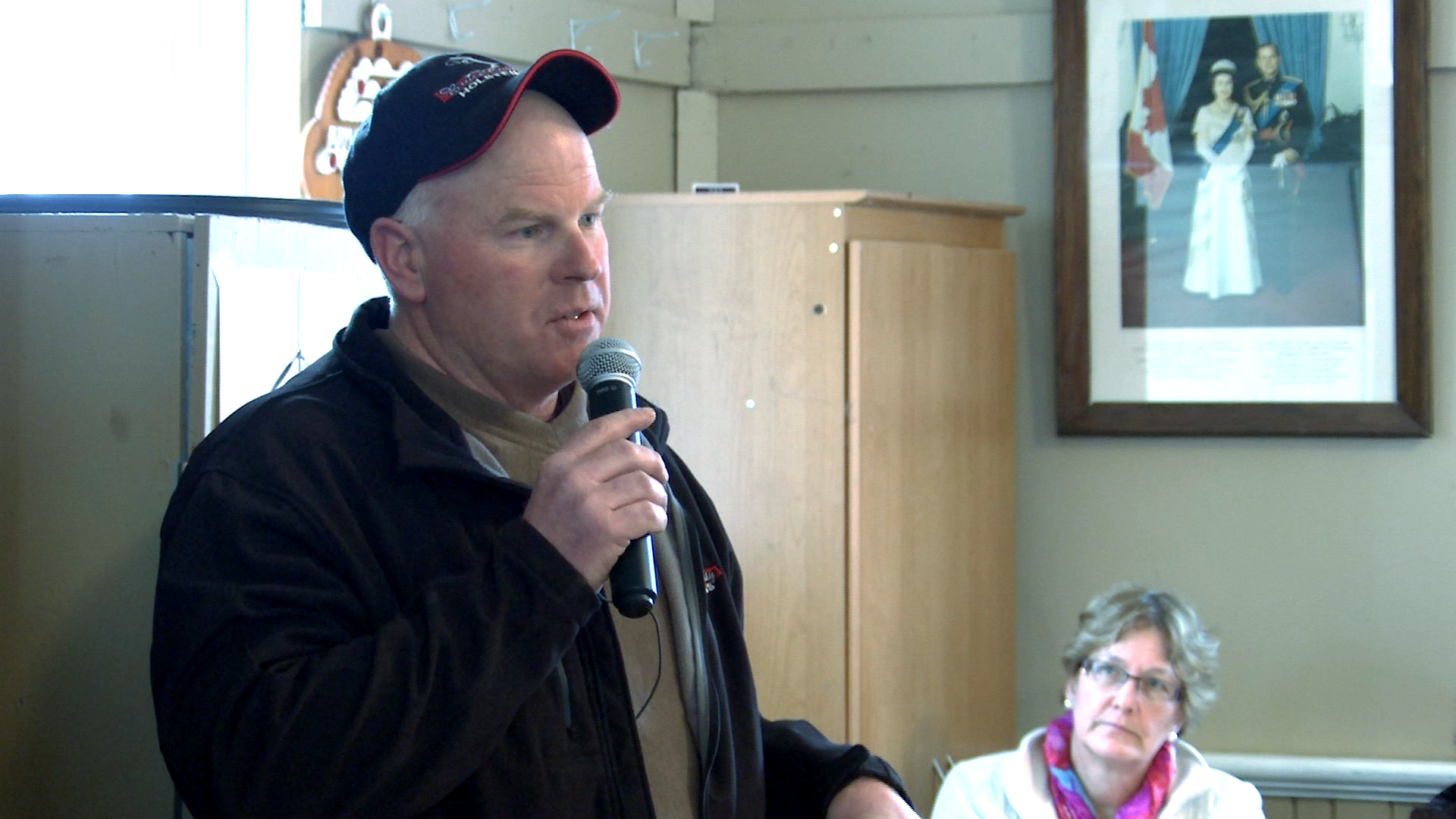
While the controversy swirling around wind turbines in Ontario may be a ticking time bomb in the just-begun election campaign, Toronto human-rights lawyer Julian Falconer may have lit the fuse Monday night at a meeting organized by a Plympton-Wyoming community group near Sarnia, a city in southwest Ontario.

Speaking to around 400 people in a community hall, Falconer challenged all three political parties to declare a moratorium on turbine construction until a comprehensive study is completed by the federal health ministry. “None of these parties has done the right thing. A courageous, responsible political leader would put a halt to any more turbine construction, until the Health Canada study is completed,” he told the approving crowd.

Falconer was asked to the meeting by the organizers of a local group fighting plans by energy company Suncor to build 46 wind turbines in their area. The group has convinced their local council to fight Suncor by demanding turbines be placed at least two kilometers (1.2 miles) apart, as opposed to only 550 meters (600 yards), as decreed by Ontario’s Green Energy Act. Suncor took the municipality to court last winter to stop the by-law, claiming the provincial legislation trumps local by-laws. A decision is expected soon, the local mayor told the meeting.

Since the Green Energy Act came into force in 2009, wind developments have sprouted around southern Ontario, and local opposition groups have been fighting them tooth and nail. The Act, meant to promote the growth of alternative energy sources, has created a political backlash which has been credited with partially reducing the governing Liberal party to minority status in 2012. With more than 50 citizen action groups across the province listed on the website of Ontario Wind Resistance, an umbrella organization for wind opponents, the protesters are stepping up for an even bigger fight as a new election gets underway.

Challenging that law on behalf of wind power opponents, even as far as the Supreme Court of Canada, is Falconer’s goal. “It may be ‘a novel argument’ to use the Charter of Rights and Freedoms for this purpose, but if people don’t challenge the Liberal government in court, these turbines will be everywhere,” he told the audience. Section seven of the Charter protects Canadians’ rights to security of the person, and “the courts have recognized that health issues can be one means of being protected,” Falconer told VICE in an interview after his speech.

Julian Falconer in the crowd. Photo via the author

To effectively challenge turbine construction in Ontario, one has to prove turbines will cause “serious harm to human health,” according to Falconer. Building turbines without clear understanding of health effects is like the government saying, ”if you want to avoid swallowing this pill we’re giving you, you have to prove it won’t kill you,” he said. He hopes to continue building support for the Charter challenge by appealing to other anti-wind groups across the province to join in the coming months.

Wayne Couture, living just south of the Kincardine province of Ontario, told the audience he has been forced to leave his home every day for a year by the effects of living near turbines: dizziness and ringing in his ears. “You have to shut them [turbines] down. You are the guinea pigs,” he warned the group.

Health effects are at the heart of opposition to wind turbines, believes Carman Krough, co-author of a recent article in the Canadian Journal of Rural Medicine that reviewed previous health effects studies. The study found that, if placed too close to residents, industrial wind turbines can negatively affect the physical, mental, and social well-being of people, and that there is sufficient evidence to support the conclusion that noise from turbines is a potential cause of health effects. Formal studies from around the world point to symptoms that repeat, she says—sleep disturbance, feeling of vibrations, tinnitus (ringing in the ears), and vertigo.

These studies, along with the personal stories of individuals, leaves Krogh with “no doubt” the effects are real. “You don’t pack up and leave your home lightly,” she says. With a background in “vigilance monitoring” of adverse effects of pharmaceuticals, Krogh found herself applying the same techniques in monitoring people who reported effects from living near turbines, when she experienced headaches after being near the giant towers, she tells VICE.

The effects on children are especially worrying, Krogh says, as they have not been studied very well. There is some evidence that conditions in children such as autism, asthma, migraine, or epilepsy can be affected by turbine noise, and that such effects could possibly by irreversible, she told the audience.

There is “credible scientific support” for a link between noise from turbines and health effects,according to a report commissioned by the Ontario Environment Ministry, Krogh claims—the same ministry that is approving wind projects across the province.

Joining Falconer’s challenge will not come cheaply for the town of Plympton-Wyoming. The group is hoping to raise $300,000 to count themselves in. With a donation of $20,000 from Lambton County Council, and their municipal council already paying legal bills to defend against Suncor, the group is asking the 7,500 residents to dig deep in their own pockets.

They’re hoping the money will give them a chance to avoid the noise and breeze of the wind turbines, while at the same time, they also hope the election will force politicians to feel the wind down their own necks.N’T

Frauds, Crooks and Criminals

Demonstrating daily that diversity is not strength!

Family Hype

All Things Related To The Family

DeFrock

defrock.org's principal concern is the environmental and human damage of industrial wind turbines on rural communities

Gerold's Blog

The truth shall set you free but first it will make you miserable

Politisite

Breaking Political News, Election Results, Commentary and Analysis

Canadian Common Sense

Canadian Common Sense - A Unique Perspective from Grassroots Canadians

Falmouth's Firetower Wind

a wind energy debacle

The Law is my Oyster

The Law and its Place in Society

Illinois Leaks

Edgar County Watchdogs

stubbornlyme.

My thoughts...my life...my own way.

Oppose! Swanton Wind

Proposed Wind Project on Rocky Ridge

Climate Audit

by Steve McIntyre

4TimesAYear's Blog

Trying to stop climate change is like trying to stop the seasons from changing. We don't control the climate; IT controls US.

Wolsten

Wandering Words

Patti Kellar

WIND WARRIOR

John Coleman's Blog

Global Warming/Climate Change is not a problem