If People don’t have enough food….why burn it?

The Ethanol Disaster

America’s renewables policy is bad for consumers, the environment, and the global poor.

Creative Commons Attribution-ShareAlike 2.0 Generic (CC BY-SA 2.0)Creative Commons Attribution-ShareAlike 2.0 Generic (CC BY-SA 2.0)Last November, when the Environment Protection Agency (EPA) proposed moderating years of escalating mandates by reducing the amount of ethanol that must be mixed into gasoline, a top ethanol lobbyist seemed perplexed. “We’re all just sort of scratching our heads here today and wondering why this administration is telling us to burn less of a clean-burning American fuel,” Bob Dineen, head of the Renewable Fuels Association, told The New York Times

Here are a few possible reasons why: America’s ethanol requirement destroys the environment, damages car engines, increases gas prices, and contributes to the starvation of the global poor. It’s an unmitigated disaster on nearly every level.

Start with the environment. After all, when the renewable fuel standard (RFS), which since 2005 has set forth a minimum annual volume of renewable fuels nationwide, was first set, one of the primary arguments for mandating ethanol use was that it was a greener, more environmentally friendly source of fuel that released fewer greenhouse gasses into the atmosphere.

This turns out to be complete hogwash. Researchers have known for years that, when the entire production process is taken into account, most supposedly green biofuels actuallyemit more greenhouse gasses than traditional fuels.

Some proponents of the ethanol mandate have argued that the requirement was nonetheless necessary in order to spur demand for and development of more advanced, environmentally friendly biofuel like cellulosic ethanol, which is converted into fuel from corn-farm leftovers. But there are two serious problems with cellosic ethanol. The first is that cellulosic ethanol turns out to be rather difficult to produce; despite EPA projections that the market would produce at least 5 million gallons in 2010 and 6.6 million in 2011, the United States produced exactly zero gallons both years—and just 20,069 gallons in 2012.

The second is that cellulosic ethanol is also bad for the environment. At least in the short-term, the corn-residue biofuels release about 7 percent more greenhouse gases than traditional fuels, according to a federally funded, peer-reviewed study that appeared in the journal Nature Climate Change last month.

The environmental evidence against ethanol seems to mount almost daily: Another study published last week in Nature Geoscience found that in São Paulo, Brazil, the more ethanol that drivers used, the more local ozone levels increased. The study is particularly important because it relies on real-world measurements rather than on models, many of which predicted that increased ethanol use would cause ozone levels to decline.

To make things worse, ethanol requirements are bad for cars and drivers. Automakers say that gasoline blended with ethanol can damage vehicles by corroding fuel lines and injectors. An ethanol glut caused by a misalignment of regulatory quotas and demand has helped drive up prices at the pump. And the product is actually worse: ethanol blends are less energy dense than regular gasoline, which means that cars relying on it significantly worse mileage per gallon.

American drivers have it bad, but the global poor have it far worse. Ethanol requirements at home have helped drive up the price of food worldwide by diverting corn production to energy, which dramatically reducing the available calorie supply. A 25-gallon tank full of pure ethanol requires about 450 pounds of corn—roughly the amount of calories required to feed someone for a year. Some 40 percent of U.S. corn crops go to ethanol production, which in effect means we’re burning food for automobile fuel rather than eating it. Studies by economists at the World Bank have found that a one percent increase in world food prices correlates with a half-percent decrease in calorie consumption amongst the world’s poor. When world food prices spiked between 2007 and 2008, between 20 and 40 percentof the effect was attributable to increased global reliance on biofuels. The effect on world hunger is simply devastating.

Ethanol lobbyists are still pretending the renewable fuels mandate is a success, and Senators from corn-friendly states in the Midwest are still urging the agency not to proceed with the proposed reduction to the mandate. But at this point, ethanol requirements have few serious defenders except the people who profit from its production and the politicians who rely on those people for votes and campaign contributions.

Judging by the cut it proposed last November, even the EPA seems to be wavering. A final regulation has yet to be submitted, but the proposal would reduce the amount of renewable fuels the agency requires this year from 18.15 billion gallons to 15.2 billion gallons. That’sif the EPA sticks to its original plan. The agency is under heavy pressure to moderate its proposed cuts, or avoid them entirely.

Those cuts, if approved, would represent a productive step forward. But they wouldn’t be enough. Congress should vote to repeal the renewable fuel standard entirely. The federal government shouldn’t be telling people to burn less ethanol; it shouldn’t be telling anyone to burn any of it at all.

Our only Chance, to repair Damage done by McWynnty Gov’t….A Conservative Majority!!


John Raymond Crawford 5:03pm May 11
Provincial Popularity Contest: Hudak not interested, winning, regardless.

May 6th: http://globalnews.ca/news/1313199/ontario-pc-leader-tim-hudak-admits-he-may-not-be-popular/

Hudak admits he won’t win a popularity contest.

May 7th: http://ww2.nationalpost.com/m/wp/blog.html?b=news.nationalpost.com%2F2014%2F05%2F07%2Fformer-top-pc-says-tim-hudak-cannot-win-a-popularity-contest-kathleen-wynne-will-be-re-elected

Hudak told that it IS a popularity contest. Critics name Kathleen Wynne as future winner of popularity contest, predicting liberal minority.

May 11th: http://www.ctvnews.ca/mobile/politics/i-m-not-running-a-popularity-contest-ontario-pc-leader-says-1.1816473

Interesting polls: http://www.cp24.com/news/notes-from-the-campaign-trail-poll-gives-tories-lead-1.1815013

Hudak: ‘I’m not running a popularity contest.’

As of recent polls, asking ‘who would make the best premier’, Hudak leads Wynne by 5-points (34% to 29%), with Horwath in third at 28%.

Recent polls suggest that among likely voters, Conservatives are the most committed to getting to the polls, with NDP voters the least committed. The Conservatives have 44% support among voters who ‘will only miss voting due to an unexpected emergency’.

Hudak joked that he didnt want: “…the power of Hudak mania to overwhelm the power of our ideas.”
(Source: May 11th link).

Hudak’s personal popularity is up two points. 72% of voters want a new government. This is up 4 points this month.

The NDP has remained relatively quiet, and are appartently waiting for the political discourse to shift away from who initiated the election in the first place. Expect the NDP to make a late push, and split the left, as Horwath’s strong popularity polling reasserts itself once voters forgive her for tossing out a government that nobody liked.

It’s more likely to be a Conservative minority or majority.

Hudak is set to stick on-point to a simple job-oriented message, and avoid the ‘foreign workers’ style blunders that hurt him last time around.

Support for Hudak continues to rise as he comes out of the gate, controlling the political conversation with a bold plan, balanced by crystal-clear talking points. “This Campaign is about Jobs.” -Hudak

Vote Conservative. -John Crawford


View Post on Facebook · Edit Email Settings · Reply to this email to add a comment.


Donna Quixote Hits the Nail on the Head, with this one!


Michael Strickland — Guelph Mercury — May 10, 2014

There’s an episode of the Big Bang Theory where Dr. Sheldon Cooper, brilliant theoretical physicist at Caltech, explains to the gang why 73 is the best number in the world.

It is, he points out, “the 21st prime number. Its mirror, 37, is the 12th, and its mirror, 21, is the product of multiplying — hang on to your hats — seven and three.”

“Heh? Heh? Did I lie?”

Expressed in binary, he continues, 73 is also the palindrome 1001001.

His friend, astrophysicist Raj Koothrappali, then points out that the number 5,318,008 upside down in a calculator spells “BOOBIES.”

I think the best number in the world — at least in Ontario, as we prepare to go to the polls on June 12 — is one billion. As in $1 billion.

$1 billion and change is, of course, the amount the ruling Liberals thought we’d all appreciate having to pay in order to keep them in power in the last election. So they cancelled contentious gas plant contracts.

It’s been difficult to miss this story during Premier Kathleen Wynne’s tenure. The original estimate ballooned from a paltry $230 million and police launched an investigation into deleted emails in the premier’s office. Expect her critics to crack up the messaging on this billion-dollar talking point.

But did you know, $1 billion and change is also the amount the Liberals wasted on Ornge. That’s right, the government provided the scandal-plagued air ambulance service with $730 million over five years, and allowed Ornge to borrow another $300 million. The OPP are now conducting a criminal investigation, with the help of the RCMP, American authorities and, most recently, officials in Italy.  Continue reading here….

kathleen_wynne lpo

The Only ones who Gain, are the Rich Wind Pushers….the rest Lose, Big-time!

Dick Warburton: is the RET worth the Pain inflicted on Families & Business?

bread and water for dinner

As STT followers know, the RET Review Panel is headed up by Dick Warburton – a man who’s acutely aware of the pain being inflicted on Australian families and business by the mandatory Renewable Energy Target.

Since Dick was appointed to conduct the first thorough cost/benefit analysis of the mandatory RET ever undertaken, the wind industry and its parasites have been reduced to screaming “climate change denier” – as if that were some kind of immunising hex.

As pointed out previously, these boys are just working through the 5 stages of grief: denial, anger, bargaining, depression and acceptance. From the hysterical ranting emanating from eco-fascist blogs – like the Climate Speculator, yes2ruining-us and ruin-economy – it appears they’ve got a lot more work to do before they finally come to grips with the demise of their beloved wind industry.

Adding to their grief is the fact that Dick Warburton is a hardened business-man, who couldn’t care less about the juvenile hectoring coming from the lunatic fringe of the hard-green-left. You know, the same sort of megaphone “diplomacy” seen on university campuses whenever the government proposes that the students might actually contribute a little more to their own education: same intellectually underdeveloped crowd, different ideological rant.

Here’s Dick being interviewed last Thursday on ABC Radio.

Wealthy can afford deficit tax levy: Dick Warburton
ABC Radio (AM)
Chris Uhlmann
8 May 2014

CHRIS UHLMANN: Treasurer Joe Hockey wanted a national conversation about the challenges facing the budget and he’s certainly got one. There’s been no end of the advice he’s received from interest groups and last week’s release of the Commission of Audit helped to pour rocket fuel on the debate.

Businessman Dick Warburton has advised governments from both sides and is currently heading the review of the Renewable Energy Target. Welcome to AM.

DICK WARBURTON: Oh thank you Chris, good to be here.

CHRIS UHLMANN: Well, Dick Warburton, is there a compelling need to reduce the size of government and to do it quickly?

DICK WARBURTON: I believe it is. I believe we’ve got not so much a crisis but the potential of a crisis if we don’t do something fairly quickly.

And one of the key areas that I would like to see is the reduction in the size of the government per se. Now that can be both federal and at state level. Admittedly this is a federal budget, I understand that, but nevertheless you need to start at both levels and there’s a lot of duplication between federal and state bureaucratic areas.

CHRIS UHLMANN: The footprint of government of course though is big and if you withdraw that money quickly from the economy you could crash it. Is that a risk?

DICK WARBURTON: Yes, it is a risk. Quickly clearly it’s a risk. It’s a matter of trying to do it as gently as possible without harming the growth as much as you can. You will harm growth, there’s no two ways about that, but not to crash the growth.

CHRIS UHLMANN: What do you think about having a deficit tax of 2 per cent levied on the those who pay the top tax bracket?

DICK WARBURTON: Look, I guess I’m one of those in that bracket and I’d have to say from a personal point of view, I don’t like to have an increase in tax. However, I do believe that is something that should be done. I believe this is a tax on some people who can afford to do it because the middle to the lower income people are likely to be hit with some of the cuts in some of their health and welfare and other social budget areas.

CHRIS UHLMANN: And you don’t buy the argument again that that’s taking money out of the economy which will affect demand?

DICK WARBURTON: I don’t think it will take that much money out of the economy because I think at that level it won’t have such a big impact as something in the smaller, lower to middle income areas would have. I don’t think it will have that much of an effect.

CHRIS UHLMANN: Now, of course you’ve got a background in manufacturing as well. Should the age of entitlement for business be over too? Should we see an end to many of the industry assistance programs that government provides?

DICK WARBURTON: I think we should be looking at all those. Now which ones you do or use again is a matter of how to balance the area between cutting expenditure and trying to make sure you maintain growth. Yes, I believe we should look at those but I don’t have any particular ones that I think you should focus on and say let’s cut those.

CHRIS UHLMANN: Look, as manufacturing declines everyone talks about the jobs of the future. Where do you think those jobs will come from? How will we manufacture the jobs of the future?

DICK WARBURTON: Well, in the past we’ve always seen, I mean – and always is the word I use – always seen how those jobs eventually get absorbed into the rest of the community.

I remember living in South Australia when Mitsubishi stopped in South Australia and it was an absolute case of doom and gloom. But within a space of one year to two years, those jobs were all repositioned throughout the rest of the economy. And I think that will be the case – and remember the number of jobs lost is quite traumatic to those who are affected by it, significantly affected, but in the totality of the working force, it’s actually a relatively small proportion.

CHRIS UHLMANN: What has been the thing that’s hammering the economy most recently? Is it the high Australian dollar? Is it something that really is out of the Government’s hand?

DICK WARBURTON: Well, the dollar, the exchange rate is definitely out of the, totally out of the Government’s hand. That is a monetary policy factor. But remember the exchange rate, there’s a good and bad thing. It depends what side of the fence you’re on. There are certain people who would love to see a higher exchange rate, it would affect, it would help them immensely. Other would like to see a lower one. So I’ve always seen the exchange rate as being something in the eye of the beholder.

CHRIS UHLMANN: And do you think that the monetary policy settings are right at the moment, 2.5 per cent? We’ve moved from an easing bias, if you like, with the Reserve Bank to one where it’s now neutral.

DICK WARBURTON: Yes, I think it’s exactly in the right position.

CHRIS UHLMANN: Now, you are reviewing the Renewable Energy Target at the moment; that is that Australia have 20 per cent of its energy sourced from renewables by 2020. That is driving up the cost of power, but is that a cost that is worth bearing because of the long-term environmental benefit?

DICK WARBURTON: Well, what we’ve got to look at in this review is not just the environmental benefits; we’re looking at the economic benefits, we’re looking at the social benefits. We have to take into account the effect on the electricity prices, which we’re doing, and we’re modelling to see just exactly what that is. And when we’ve completed all of those studies and the review of all the submissions that have come in and the modelling, then we’ll come up with a decision to give to the Government.

CHRIS UHLMANN: Is it your sense at the moment that the economic costs are too high because the cost of power is too high?

DICK WARBURTON: Well, it’s certainly having an effect, Chris. Whether it’s too high, we’ll find out as we get into the study.

CHRIS UHLMANN: What kind of effect is it having? Just give us a sense of the cost of power and how the renewable energy target has driven that up over time.

DICK WARBURTON: Well, we’re looking at emissions, we’ve got a target for an emission control of 5 per cent. That’s a bipartisan approach. And certainly renewables have their place in that particular equation.

I’d like to believe that we’ll look at this and say, now, is the cost of the RET worth the economic pain that you get by imposing it on the electricity consumers?

CHRIS UHLMANN: And there’s no doubt that there is economic pain because of that?

DICK WARBURTON: Yes there is, yes there is economic pain. It is one part of the equation. It is not the whole part of the equation.

CHRIS UHLMANN: Is the cost of energy doing damage to business in Australia?

DICK WARBURTON: Depends on the business, Chris. Some of the businesses that use relatively small bits of electricity, obviously it hasn’t got a great effect. But there are industries that use large quantities of electricity and in those places they’ve been telling us this is having a major impact on their cost side of the balance sheet.

CHRIS UHLMANN: Well, one of the areas where Australia always had a competitive advantage was that energy in the past here was relatively cheap and abundant. That equation has changed. Are you concerned about that?

DICK WARBURTON: Well, it is still cheap and abundant if you look at the black coal and the brown coal.

CHRIS UHLMANN: But we’re not looking at that though, are we? We’re looking at more renewables.

DICK WARBURTON: Well, no we’re not necessarily looking at all, we are looking at renewables in our study but we’re trying to look at the overall generation of electricity, what are the factors that affect the generation, and we’ll be looking at all types including renewables.

CHRIS UHLMANN: And when will your review report?

DICK WARBURTON: We’re due to report in July, Chris.

CHRIS UHLMANN: That is businessman Dick Warburton who is currently reviewing the Renewable Energy Target.
ABC

STT thinks that Dick was simply being politic, by faintly suggesting the economic pain being inflicted by the RET on families and business might (somehow) be worth it.

When the Panel met with miners, business groups and wind industry rent-seekers a few weeks back he was less circumspect – telling the audience that the review has nothing to do with “climate change” or CO2 emissions – and that it’s primarily “concerned with the cost impacts of renewable energy in the electricity sector” (see our post here).

The consultants, ACIL Allen have already found that the mandatory RET (set to expire in 2031 – unless scrapped beforehand) will involve a transfer of (at least) $53 billion from power consumers to wind power generators – in the form of RECs issued to them and added to all Australian power bills. That, in anybody’s books, is a whopping cost. And the cost of the REC Tax to power consumers is just the tip of the power-price-punishment iceberg (see our post here).

Wind power cannot and will never reduce CO2 emissions in the electricity sector – simply because 100% of its capacity is backed up 100% of the time by fossil fuel generation to account for the fact it disappears for hours every day – and for days on end – producing nothing more than hollow promises of “powering” millions of Australian homes (see our posts hereand here and here and here and here and here).

Thanks to the mandatory RET – in less than a decade – Australia has gone from having the lowest power prices in the world to the highest. And, despite wild claims from the wind industry about reducing CO2 emissions, it has failed to produce a shred of credible evidence to that effect: indeed, all the evidence points in the opposite direction (see this European paper here; this Irish paper here; this English paper here; and this Dutch study here).

And there is, of course, the renewables “pinup girl”, Germany as the perfect empirical (and disastrous) case study. The Germans have poured 100s of €billions into subsidising wind and solar over the last decade and, despite all that pain, Germany has seen its CO2 emissions increase not decrease (see our post here). A very costly “oops”.

The conclusion of any cost/benefit analysis of the mandatory RET – and its bastard child – wind power – can only be: ALL PAIN and NO GAIN.

Why not let the Panel know what you think (see our post here). Submissions close on 16 May.

all pain no gain

This Amazing Documentary is Being Funded Very Eagerly, and Should be Ready Soon!

Down Wind

Down Wind is a documentary film project about the destructive impact of wind turbines being forced into communities across Ontario.
DOWN WIND
This documentary examines the human and economic consequences of the Ontario Liberal government’s headlong rush into wind power. It’s a huge story, but it’s also a personal story, focusing on individual families and the damage these turbines have caused.

Down Wind reveals the trauma suffered by those whose lives were turned upside down when the towering turbines went in. It exposes the health and psychological problems that followed, and the warnings of medical experts about “wind turbine syndrome.”

From economists we’ll hear about the mind-boggling costs, including the massive taxpayer funded subsidies going to mega corporations.

And we’ll look at the cosy Liberal connections to Big Wind, and how cronies of Dalton McGuinty and Kathleen Wynne have made a fortune off the backs of taxpayers.

Please contribute now to tell this important story.


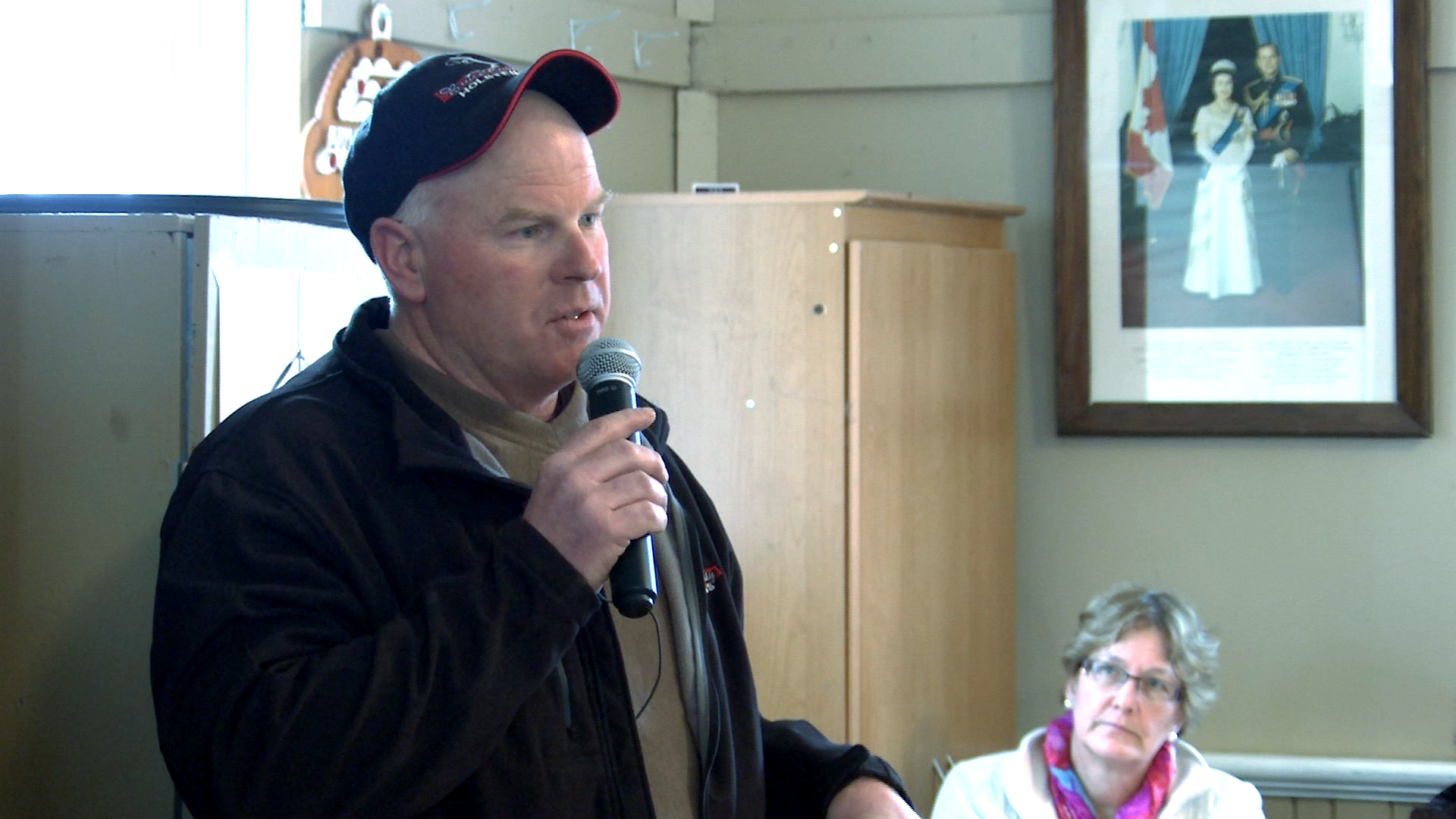
Kevin McGee, Farmer and Activist


We Need Your Help

With your support, we’ll be able to tell this important story, and keep a focus on it in the future. In gratitude for your generosity, we’ll send you one of the packages listed on the side of this page.


$23,273CAD
RAISED OF $30,000 GOAL
78%
 24 days left
This campaign started on May 07 and will close on June 01, 2014 (11:59pm PT).
Help make it happen

Ezra Levant, Rebecca Thompson and Sun News, Producing a Documentary about Windscam!

WE NEED YOUR HELP


– Help expose the ugly truth behind Wind Turbine power generation 

Ezra Levant

We’re working on something big – a made-for-TV documentary that you will not see on any other TV network in Canada.

It’s something only the Sun News Network would do. It would probably be banned at the CBC.

We’re making a documentary exposing the fraud of Ontario’s wind turbine schemes.

We’ll expose the Liberal insiders who managed to get huge government subsidies for their green schemes. We’ll show you how Ontario power prices have shot up to pay for these wind turbines – but that the wind turbines are so unreliable, most of the them don’t even generate power!

But the most heart-breaking part of the movie is the impact these skyscraper-high monstrosities have on the lives of ordinary Canadians who have been crushed by the wind turbine lobby.

We’ll show you how local communities were shut out of the regulatory process; how bird-killing wind turbine companies were forced into once-peaceful communities against their will; how wind mega-corporations were exempted from environmental laws and sued local mothers who dared to speak out against them. And we’ll show you how the health impact of these massive, flickering, noise-making blades have been covered-up by Liberal politicians who have put their wind obsession above everything else – including the very health and safety of Canadian families.

Simply put, if the Sun News Network doesn’t make this film, no-one will.

But we need your help. We’re deep into the film right now – we’ve done the field research, we’ve done the interviews, we’ve got the damning facts. Now we just have to produce and edit the project. And then we’ll shout it from the rooftops – and broadcast it all across Canada.

The film is called Down Wind, and it’s hosted by Rebecca Thompson, one of our fearless Sun News reporters. You’ve seen her work as a reporter. Now comes the big time for her, as the driving force behind the feature film.

Making a documentary isn’t like making a regular TV show. There are extra expenses, everything from travel costs, to equipment, to extra production and editing work. We need to buy music rights, graphics and pay promotional costs that we wouldn’t have with a regular broadcast.

That’s why I’m writing to you today: will you help us cross the finish line with Down Wind, and make this important movie a reality?

We need $30,000 to get the job done. That’s not a lot of money for the big guys – the CBC’s annual taxpayers bail-out of $1.1 billion a year works out to $30,000 every fifteen minutes. That’s a rounding error for them – that’s a fraction of the CBC president Hubert Lacroix’s personal expense account. But for us, $30,000 is enough to finish an entire documentary film, and one you know the CBC would never broadcast.

Because the Media Party believes in the cult of environmental extremism. If some CBC producer even dared to suggest making a show critical of wind turbines, he’d probably be fired. I mean, the CBC is the channel that has given David Suzuki a propaganda show for the past 40 years. They would never show the dark side of wind turbines.

It’s up to Sun News to tell the other side of the story. Sun News – and you.

Will you help make this film a reality? I chipped in $100 myself. If you can afford more, please do. Even $10 will help. Even $1. You can do it online, quickly and securely, atwww.DownWindMovie.com.

Put it this way: if this film helps stop this costly, failed experiment with wind turbines, your contribution could end up saving you much more in lower electricity rates alone!

You know we can do amazing documentaries – stuff the other guys won’t touch. Last year our first Sun News documentary, called Broken Trust, blew the lid off the High River gun grab.

With your assistance, we can expose the wind energy fraudsters for what they are.

Contribute what you can and we’ll reward you for your support. For a contribution of $25, we’ll send you a DVD copy of the movie; for $50 you’ll receive a second DVD and a Sun News Prize Pack (pen, bumper sticker, and mug). For $100 you’ll get all that and a promotional poster signed by Rebecca Thompson and me. And for a contribution of $250 we’ll send you all of the above, plus give you an associate producer credit at end of movie – we’ll actually put your name in the credits!

Finally, if you really hate those wind turbines – or just love stuff from the Sun! – for a contribution of $1,000 or more, you’ll receive all the above plus a fancy Sun News jacket. (They’re awesome.) To learn more, visit www.DownWindMovie.com. Help us tell the story – and be part of Canadian movie-making history!

Yours gratefully,

Ezra Levant

P.S. I chipped in $100 myself, safely and securely, right online atwww.DownWindMovie.com 

VISIT DOWNWINDMOVIE.COM TO DONATE

Rational, Intelligent Climate Scientists, are Skeptical of AGW….No wonder!

1) Lennart Bengtsson: He Knows How Little We Know
Basler Zeitung, 7 May 2014

Hans Jörg Müller

One of the most eminent climate scientists, the Swede Lennart Bengtsson, has defected to the camp of climate sceptics. For the climate debate, this could have beneficial effects.

 «Nur teilweise verstanden»: Der schwedische Klimaforscher Lennart Bengtsson mahnt zur Besonnenheit.
“Only partially understood”: The Swedish climate scientist Lennart Bengtsson calls for prudence and moderation.


How the global climate will develop in coming years and decades, and what influence mankind has upon the climate, is a question that has been discussed with almost religious fervor until a few years ago. That is, there were no discussions really; rather, one of the two parties declared the other insane: “climate denier“ was the term used for those who were of the opinion that global warming does not take place or that it may be warming less rapidly as most scientists believed. In any case, the human impact on climate change was far from proven.

The similarity between “climate denier” and Holocaust denier was intentional: the term should insinuate that anyone who deviated from the widely prevailing consensus was a crank, possibly driven by sinister motives. Above all, very few climate sceptics were leading experts, and this was probably the alarmists’ strongest argument. While climatologists and meteorologists warned and warned, those who were becalming and moderate were often economists. As one of the leading climate sceptics, one ex-politician stood out: Nigel Lawson, Britain’s former Chancellor of the Exchequer and the chairman of the Global Warming Policy Foundation (GWPF).

Thaw 

Gradually, however, the ice seems to be melting – if not at the polar caps, then at least in the climate debates: for the first time, a widely recognized expert has changed camps. Lennart Bengtsson , the Swedish climatologist, meteorologist and former director of the Max Planck Institute for Meteorology in Hamburg, has now joined the GWPF’s academic advisory council.

After his decision was announced Bengtsson was attacked, says Lawson, which shows what kind of emotions the issue can still generate. The reason cited by the 77-year-old scientist for his decision comes in a bone-dry scientific language: The relationship between greenhouse gases and global warming was “complex and only partially understood,” Bengtsson wrote in a commentary for the Swiss newspaper Neue Zürcher Zeitung.

Apart from that, all empirical observations showed that global warming has been “no serious problem up to now.” How the climate would develop in the future only model simulations could show, and these were rather “problematic”.

Nothing is settled 

Bengtsson’s conclusion: “It would be wrong to conclude from the IPCC report and similar reports that the science is settled.” Against this background, so the professor, it would be wrong to undertake any energy transition hastily.

Bengtsson’s arguments do not sound like the radicalism of old age. Rather, he exhorts his colleagues to be more prudent and empirical. For the uninitiated, this approach may be comforting, because the climate debate has long been a highly complex issue. Now, for the first time, an expert like Bengtsson admits that he and others like him fare little better: how the world’s climate will develop in coming years and decades remains pure speculation.

Translation Philipp Mueller

2) Dispute Over Global Warming: Respected Meteorologist Joins Climate Sceptics
Spiegel Online, 5 May 2014 

Axel Bojanowski

A delicate academic matter has disrupted the climate science community: One of the most respected climatologists, Emeritus Max Planck Director Lennart
Bengtsson, has switched to the camp of climate sceptics. In this SPIEGEL ONLINE interview he explains his surprising decision.

One of the most renowned climatologists has changed sides. Lennart Bengtsson, former director of the Max Planck Institute for Meteorology in Hamburg, one of the world’s leading climate research centres, has joined the Academic Advisory Council of theGlobal Warming Policy Foundation (GWPF)…

Bengtsson has always been known for his moderate viewpoints during the hot climate debates of the 1990s. In a SPIEGEL ONLINE interview, he explained his move into the camp of skeptics.

About the person
The meteorologist Lennart Bengtsson, born in 1935, was director of the European Centre for Medium-Range Weather Forecasts from 1981 to 1990, then director of the Max Planck Institute for Meteorology in Hamburg, one of the world’s leading climate research centers. Since his retirement in 2000, he has worked as a professor at the University of Reading in England. He has been given many awards, among them the German Environmental Award of the Federal Foundation for the Environment. He has dealt mainly with the modeling of climate and weather.

SPIEGEL ONLINE: Mr. Bengtsson, why have you joined the climate sceptic Global Warming Policy Foundation?

Bengtsson: I think it is important to enable a broad debate on energy and climate. We urgently need to explore realistic ways to address the scientific, technical and economic challenges in solving the energy problems of the world and the associated environmental problems.

SPIEGEL ONLINE: Why do you think the lobby (sic) group GWPF is particularly suitable?

Bengtsson: Most members of the GWPF’s Academic Advisory Council are economists, and this is a chance for me to learn from some of these highly qualified experts in areas outside my own expertise. I want to contribute there through my meteorological knowledge to open the debate.

SPIEGEL ONLINE: But the people at GWPF do not have the reputation of reconsidering their opinions. Have you also become a so-called climate sceptic?

Bengtsson: I have always been a skeptic, and I think that is what most scientists really are.

SPIEGEL ONLINE: But were you not one of the alarmists 20 years ago? Do you think your position at that time was wrong?

Bengtsson: I have not fundamentally changed my opinion in this area. And I have never considered myself an alarmist, but as a scientist with a critical eye. In this sense, I have always been a skeptic. I have used most of my career to develop models for predicting the weather. I have learned the importance of forecasting validation, i.e. the verification of predictions with respect to what has really happened. So I am a friend of climate forecasts. But the review of model results is important in order to ensure their credibility.

SPIEGEL ONLINE: And here you see a demand for climate research?

Bengtsson: It is frustrating that climate science is not able to validate their simulations correctly. The warming of the Earth has been much weaker since the end of the 20th century compared to what climate models show.

SPIEGEL ONLINE: But the IPCC report discusses these problems in detail.

Bengtsson: Yes, but it does not do so sufficiently critical. I have great respect for the scientific work that goes into the IPCC reports. But I see no need for the endeavor of the IPCC to achieve a consensus. I think it is essential that there are areas of society where a consensus cannot be enforced. Especially in an area like the climate system, which is incompletely understood, a consensus is meaningless.

SPIEGEL ONLINE: You complain about the strong tendencies towards politicisation in climate research. Why do you join now a political (sic) organisation?

Bengtsson: I was fascinated my whole life by predictions and frustrated by our inability to make forecasts. I do not think it makes sense to think for our generation that we will solve the problems of the future – for the simply reason that we do not know future problems. Let us do a thought experiment and go back to May 1914: Let us try from the perspective of that point in time to make an action plan for the next hundred years – it would be pointless!

SPIEGEL ONLINE: Do you suggest we should carry on with business as usual just because forecasts are complicated?

Bengtsson: No, but I think the best and perhaps only sensible policy for the future is to prepare society for adaptation and change. In 25 years the world will have nine to ten billion people. This will require twice as much primary energy as today. We need to foster new science and technology. We need a more open approach, especially here in Europe, which includes the issues of nuclear energy and genetic engineering, in order to supply the growing world population with energy and food.

Translation Philipp Mueller 

3) Judith Curry: U.S. National Climate Assessment Report
Climate Etc., 6 May 2014

My main conclusion from reading the U.S. National Climate Assessment Report  report is this:  the phrase ‘climate change’ is now officially meaningless. The report effectively implies that there is no climate change other than what is caused by humans, and that extreme weather events are equivalent to climate change. Any increase in adverse impacts from extreme weather events or sea level rise is caused by humans. Possible scenarios of future climate change depend only on emissions scenarios that are translated into warming by climate models that produce far more warming than has recently been observed.

Some of the basic underlying climate science and impacts reported is contradictory to the recent IPCC AR5 reports.  Pat Michaels and Chip Knappenberger have written a 134 page critique of a draft of the NCADAC report [link].

Even in the efforts to spin extreme weather events as alarming and caused by humans, Roger Pielke Jr. has tweeted the following quotes from the Report:

  • “There has been no universal trend in the overall extent of drought across the continental U.S. since 1900″
  • “Other trends in severe storms, including the intensity & frequency of tornadoes, hail, and damaging thunderstorm winds, are uncertain”
  • “lack of any clear trend in landfall frequency along the U.S. eastern and Gulf coasts”
  • “when averaging over the entire contiguous U.S., there is no overall trend in flood magnitudes”
As a I wrote in a previous post on a draft of the report, the focus should be on the final Chapter 29: Research Agenda, which outlines what we DON’T know.  Chapter 28 Adaptation is also pretty good.  Chapter 27 Mitigation is also not bad, and can hardly be said to make a strong case for mitigation.  Chapter 26 on Decision Support is also ok, with one exception: they assume the only scenarios of future climate are tied to CO2 emissions scenarios.

An interesting feature of the report is Traceable Accounts – for each major conclusion a Traceable Account is given that describes the Key Message Process, Description of evidence base, New information and remaining uncertainties, Assessment of confidence based on evidence.  The entertainment value comes in reading the description of very substantial uncertainties, and then seeing ‘very high confidence’.  This exercise, while in principle is a good one, in practice only serves to highlight the absurdity of the ‘very high confidence’ levels in this report.

White House

Apparently President Obama is embracing this Report, and the issue of climate change, in a big way, see this WaPo article For President Obama A Renewed Focus On Climate.  Motherboard has an interesting article How extreme weather convinced Obama to fight climate change.

In an interesting move, Obama Taps TV Meteorologists to Roll Out New Climate Report, which describes how Obama is giving interviews to some TV weathermen.  It will be interesting to see how this strategy plays out, since TV weathermen tend to be pretty skeptical of AGW.

The politics on this are interesting also, see especially these two articles
White house set to lay out climate risks as it touts U.S. energy boom
Podesta:  Congress can’t stop Obama on global warming

JC reflections

While there is some useful analysis in the report, it is hidden behind a false premise that any change in the 20th century has been caused by AGW.  Worse yet is the spin being put on this by the Obama administration.  The Washington Post asks the following question: Does National Climate Assessment lack necessary nuance? In a word, YES.

The failure to imagine future extreme events and climate scenarios, other than those that are driven by CO2 emissions and simulated by deficient climate models, has the potential to increase our vulnerability to future climate surprises (see my recent presentation on this Generating possibility distributions of scenarios for regional climate change).  As an example, the Report highlights the shrinking of winter ice in the Great Lakes:  presently, in May, Lake Superior is 30% cover by ice, which is apparently unprecedented in the historical record.

The big question is whether the big push by the White House on climate change will be able to compete with this new interview with Monica Lewinsky 🙂

4) We Can Easily Adapt To Sea Level Changes, New Report Says
Breitbart London, 7 May 2014

James Delingpole

Attempts to stem sea level rises by reducing CO2 levels in order to “combat” global warming are a complete waste of time says a new report by two of the world’s leading oceanographic scientists.

Over the last 150 years, average global sea levels have risen by around 1.8 mm – a continuation of the melting of the ice sheets which began 17,000 years ago.

Satellite measurements (which began in 1992) put the rate higher – at 3mm per year. But there is no evidence whatsoever to support the doomsday claims made by Al Gore in 2006 that sea levels will rise by 20 feet by the end of the century, nor even the more modest prediction by James Hansen that they will rise by 5 metres.

Such modest rises, argue oceanographer Willem P de Lange and marine geologist Bob Carter in their report for the Global Warming Policy Foundation, are far better dealt with by adaptation than by costly, ineffectual schemes to decarbonise the global economy.

They say:

No justification exists for continuing to base sea-level policy and coastal management regulation upon the outcomes of deterministic or semi-empirical sea-level modelling. Such modelling remains speculative rather than predictive. The practice of using a global rate of sea-level change to manage specific coastal locations worldwide is irrational and should be abandoned.

It is irrational not least because it is based on a complete misunderstanding of the causes and nature of sea-level rises. There are parts of the world where the sea level is rising, others where it is falling – and this is dependent as much on what the land is doing (tectonic change) as on what the sea is doing.

In other words – a point once made very effectively by Canute – it is absurdly egotistical of man to imagine that he has the power to control something as vast as the sea. The best he can hope to do is to adapt, as previous generations have done, either by deciding to shore up eroding coastal areas or abandon them and move further inland.

And for those still in doubt, here is what Vincent Courtillot, Emeritus professor of geophysics at Paris Diderot University has to say in his introduction to the report:

Sea level change is a naturally occurring process. Since the last glacial maximum, some 18,000 years ago, de-glaciation has taken place and this natural global warming has led to sea-level rise of on average 120 m or so. At some times, pulses of melt water coming from large peri-glacial lakes led to rates of sea level rise as high as 3 m per century. The rate slowed down some 7000 years ago and since then has been naturally fluctuating by only a few metres. The remaining global sea-level rise has been about 20 cm in the 20th century. Has this led to global disasters? The answer is no. If the projected rise over the 21st century is double what was seen in the 20th, is it likely that it will result in global disasters? Again, the answer is most likely no; human ingenuity, innovation and engineering, and the proper material and financial resources should solve local problems if and when they arrive, as they have in the 20th century.

A Horrific Waste of Time and Money – Renewable Energy Scam!

Renewable Energy in Decline, Less than 1% of Global Energy

Oil-Refinery-Pump-ImageThe global energy outlook has changed radically in just six years. President Obama was elected in 2008 by voters who believed we were running out of oil and gas, that climate change needed to be halted, and that renewables were the energy source of the near future.

But an unexpected transformation of energy markets and politics may instead make 2014 the year of peak renewables.

In December of 2007, former Vice President Al Gore shared the Nobel Peace Prize for work on man-made climate change, leading an international crusade to halt global warming. In June, 2008 after securing a majority of primary delegates, candidate Barack Obama stated, “…this was the moment when the rise of the oceans began to slow and our planet began to heal…” Climate activists looked to the 2009 Copenhagen Climate Conference as the next major step to control greenhouse gas emissions.

The price of crude oil hit $145 per barrel in June, 2008. The International Energy Agency and other organizations declared that we were at peak oil, forecasting a decline in global production. Many claimed that the world was running out of hydrocarbon energy.

Driven by the twin demons of global warming and peak oil, world governments clamored to support renewables. Twenty years of subsidies, tax-breaks, feed-in tariffs, and mandates resulted in an explosion of renewable energy installations. The Renewable Energy Index (RENIXX) of the world’s 30 top renewable energy companies soared to over 1,800.

Tens of thousands of wind turbine towers were installed, totaling more than 200,000 windmills worldwide by the end of 2012. Germany led the world with more than one million rooftop solar installations. Forty percent of the US corn crop was converted to ethanol vehicle fuel.

But at the same time, an unexpected energy revolution was underway. Using good old Yankee ingenuity, the US oil and gas industry discovered how to produce oil and natural gas from shale. With hydraulic fracturing and horizontal drilling, vast quantities of hydrocarbon resources became available from shale fields in Texas, North Dakota, and Pennsylvania.

From 2008 to 2013, US petroleum production soared 50 percent. US natural gas production rose 34 percent from a 2005 low. Russia, China, Ukraine, Turkey, and more than ten nations in Europe began issuing permits for hydraulic fracturing. The dragon of peak oil and gas was slain.

In 2009, the ideology of Climatism, the belief that humans were causing dangerous global warming, came under serious attack. In November, emails were released from top climate scientists at the University of East Anglia in the United Kingdom, an incident christened Climategate. The communications showed bias, manipulation of data, avoidance of freedom of information requests, and efforts to subvert the peer-review process, all to further the cause of man-made climate change.

One month later, the Copenhagen Climate Conference failed to agree on a successor climate treaty to the Kyoto Protocol. Failures at United Nations conferences at Cancun (2010), Durban (2011), Doha (2012), and Warsaw (2013) followed. Canada, Japan, Russia, and the United States announced that they would not participate in an extension of the Kyoto Protocol.

Major climate legislation faltered across the world. Cap and trade failed in Congress in 2009, with growing opposition from the Republican Party. The price of carbon permits in the European Emissions Trading System crashed in April 2013 when the European Union voted not to support the permit price. Australia elected Prime Minister Tony Abbott in the fall of 2013 on a platform of scrapping the nation’s carbon tax.

Europeans discovered that subsidy support for renewables was unsustainable. Subsidy obligations soared in Germany to over $140 billion and in Spain to over $34 billion by 2013. Renewable subsidies produced the world’s highest electricity rates in Denmark and Germany. Electricity and natural gas prices in Europe rose to double those of the United States.

Worried about bloated budgets, declining industrial competitiveness, and citizen backlash, European nations have been retreating from green energy for the last four years. Spain slashed solar subsidies in 2009 and photovoltaic sales fell 80 percent in a single year. Germany cut subsidies in 2011 and 2012 and the number of jobs in the German solar industry dropped by 50 percent. Renewable subsidy cuts in the Czech Republic, Greece, Italy, Netherlands, and the United Kingdom added to the cascade. The RENIXX Renewable Energy Index fell below 200 in 2012, down 90 percent from the 2008 peak.

Once a climate change leader, Germany turned to coal after the 2012 decision to close nuclear power plants. Coal now provides more than 50 percent of Germany’s electricity and 23 new coal-fired power plants are planned. Global energy from coal has grown by 4.4 percent per year over the last ten years.

Spending on renewables is in decline. From a record $318 billion in 2011, world renewable energy spending fell to $280 billion in 2012 and then fell again to $254 billion in 2013, according to Bloomberg. The biggest drop occurred in Europe, where investment plummeted 41 percent last year. The 2013 expiration of the US Production Tax Credit for wind energy will continue the downward momentum.

Today, wind and solar provide less than one percent of global energy. While these sources will continue to grow, it’s likely they will deliver only a tiny amount of the world’s energy for decades to come. Renewable energy output may have peaked, at least as a percentage of global energy production.

Agenda 21….At the Municipal Level! Fight it!


Municipal Primer:

Agenda 21 Guide-Book

The Municipal Primer is the Agenda 21 guide-book for municipalities.

The municipal governments are doing the bidding of international

globalists……… not you. Please read and pass along. Don’t forget to send

a copy to your local council.

No longer can your elected officials hide or deny Agenda 21.

Municipal Primer pdf

Frauds, Crooks and Criminals

Demonstrating daily that diversity is not strength!

Family Hype

All Things Related To The Family

DeFrock

defrock.org's principal concern is the environmental and human damage of industrial wind turbines on rural communities

Gerold's Blog

The truth shall set you free but first it will make you miserable

Politisite

Breaking Political News, Election Results, Commentary and Analysis

Canadian Common Sense

Canadian Common Sense - A Unique Perspective from Grassroots Canadians

Falmouth's Firetower Wind

a wind energy debacle

The Law is my Oyster

The Law and its Place in Society

Illinois Leaks

Edgar County Watchdogs

stubbornlyme.

My thoughts...my life...my own way.

Oppose! Swanton Wind

Proposed Wind Project on Rocky Ridge

Climate Audit

by Steve McIntyre

4TimesAYear's Blog

Trying to stop climate change is like trying to stop the seasons from changing. We don't control the climate; IT controls US.

Wolsten

Wandering Words

Patti Kellar

WIND WARRIOR

John Coleman's Blog

Global Warming/Climate Change is not a problem