As the number of cases launched against wind power outfits and the landholders who ‘host’ these things takes off, the government agencies that continue to run the wind industry line that the incessant turbine generated low-frequency noise and infrasound and the sleep deprivation it causes is all in the victims’ heads (a former tobacco advertising gurusaid so) – are setting themselves up for liability in the hundreds of $millions. And the kind of ignorance displayed in this little piece is no defence.
Ignoring harm of noise
Rutland Herald
Sandy Reider
24 January 2016
The Vermont Health Department and the Vermont Department of Public Service persist in reassuring us that there are no significant health effects related to industrial wind turbines under Vermont’s current noise standards.
Such a blanket statement is not only incorrect, it is a disservice to the Vermonters who are already experiencing adverse health effects, such as headaches, vertigo, nausea, anxiety, ringing in the ears and, most importantly, chronic repetitive sleep disruption. There is an ongoing academic debate about the mechanisms behind these effects (direct vs. indirect, the nocebo “its all in your head” effect, audible vs. inaudible infrasound), but little disagreement that some persons living too close to these large wind turbines are suffering, whatever the mechanism.
Critical methodological shortcomings plague many of the large-scale industry or government-sponsored studies that state agencies rely upon to establish protective sound levels:
Failure to measure the full sound spectrum, in particular ignoring the very low frequencies that are likely responsible for many of the reported adverse health effects.
They assume a constant sound pressure and tone, not at all like the impulsive sound produced by large turbines, which has its own distinct signature that differs from other environmental sources (planes, trains, automobiles, wind, leaves rustling).
Sound levels are often averaged over an hour, or longer, making it possible for periods of very loud intrusive sound to fall within an “acceptable” calculated level.
Measurements are usually not taken indoors, where the sound may be more intrusive due to the well-established resonance effects of low frequency sound.
Most importantly, the large studies fail to focus their investigations on those households that are most severely affected.
In spite of these research design limitations, a recently released large Health Canada study found that at wind turbine sound pressure levels greater than 35 dB(A), health-related complaints will increase, and at levels greater than 40 dB(A) a significant number of persons will be “highly annoyed” (meaning adverse health effects, especially sleep disturbance).
The current Public Service Board threshold of 45 dB(A) of audible sound through an open window, averaged over an hour, has actually never been proven safe or protective. Some studies recommend that audible sound should not exceed 35 dB(A), or 5 dB(A) above normal background sound levels. (This is crucial in rural areas where background noise is minimal, particularly at night). The level should be a maximum, not an hourly average. Above 35 dB(A) there are likely to be significantly more complaints, particularly difficulty sleeping.
Several recent small, well-designed, independent clinical studies (Ambrose & Rand, Nissenbaum, Pierpont, Schomer, Cooper, Thorne) that do take the aforementioned factors into consideration, all conclude that lower, more protective noise limits for these huge industrial wind installations are needed (for more details: docs.wind-watch.org/DRSANDYREIDER_042413.pdf).
To the benefit of the wind industry, and apparently to those agencies promoting large wind installations on our ridgelines here in Vermont, the issue of infrasound has thus far been successfully suppressed and ignored. Space does not permit a detailed discussion, but consider the following:
The World Health Organization has definitively established (2009) that inaudible very-low-frequency infrasound is a human health hazard, that it can disturb sleep, and increase heart rate and blood pressure, leading in susceptible individuals, to permanent effects such as hypertension and cardiovascular disease, even at sound levels below 30 dB(A).
In the mid 1980s, Neil Kelley and his team thoroughly documented significant adverse health effects resulting from inaudible, very-low-frequency sound produced by a large wind turbine in Boone, N.C. This scientifically rigorous NASA and Department of Energy-sponsored study, in cooperation with MIT and four other prestigious universities, as well as the wind industry, has been conveniently dismissed as irrelevant by current wind developers, even though the study’s conclusions have never been disputed, and even though we now know that the large turbines being installed today do indeed generate clinically significant amounts of infrasound.
Three more recent preliminary studies (Ambrose & Rand’s Falmouth, Mass., 2011; Schomer, Rand, et. al., Shirley project, Brown County, Wisconsin, 2012; Cooper, Bridgewater, Australia, 2014) of projects with large modern upwind turbines have replicated and confirmed Kelley’s findings; i.e., infrasound, not audible sound, is a major contributor to the health fallout from today’s industrial wind projects.
Taken together with the thousands of case reports from around the world (I personally have seen three families here in the Northeast Kingdom that have been forced to abandon their homes due to adverse health effects from nearby wind turbines), stricter full-spectrum noise standards for these large wind projects are urgently needed. However, Vermonters should not expect meaningful change until the governor, as well as his appointees in the Health and Public Service departments, recognize the importance of being more inclusive in their selection of scientific data, and until they demonstrate a genuine willingness to take the health complaints of the neighbors of these turbines seriously.
Dr. Sandy Reider is a physician who lives in Lyndonville. Rutland Herald
The wind industry and its pet acoustic consultants are acutely aware of the true facts – viz, that the noise ‘rules’ they wrote together are meaningless (that was the objective, after all) and, in order to spear ever larger turbines ever closer to homes – and thereafter to operate with perceived impunity – have convinced the useful idiots in planning and health departments to the contrary.
But, as with most things in life, the facts have a funny way of bubbling to the surface. Any government that continues to run with the wind industry will find itself in the dock with the principal offenders in the not too distant future.
Credit: Sharon Roznik, USA TODAY NETWORK-Wisconsin | January 24, 2016 | www.fdlreporter.com/ ~~
Joan Lagerman likens the sound to “shoes in a clothes dryer,” or “someone shutting a dumpster lid over and over.”
The Malone woman is among a group of residents who are suffering from a variety of ailments they believe are caused from living in the shadow of wind turbines.
On certain days, when the blades are coated in ice, the noise is so bad it shakes the walls of her home.
Calling themselves Concerned Citizens of Fond du Lac County, the group plans to attend the next meeting of the Fond du Lac County Health Department at 6:30 p.m. on Feb. 2 to voice health concerns they say are caused by the whirl of the seven-ton blades.
Their main goal is to shut down the turbines at night so residents can get some sleep.
Blue Sky Green Field is a WE Energies, 88-turbine wind farm set on 10,600 acres, spread between the townships of Calumet and Marshfield in Fond du Lac County, not far from the east shore of Lake Winnebago. Lagerman and her neighbors are surrounded by the 44 towering turbines spinning in Marshfield.
The wind farm generates energy for the southeastern Wisconsin power grid, producing enough for service to 35,000 homes, according to WE Energies.
Choking back tears, Lagerman, 55, said Thursday she can’t take it anymore – the constant headaches, insomnia, hypertension and anxiety that came on after the wind farm was erected in 2008.
“Doctors can’t find what is causing my health problems, but I can tell you when I leave home, they all go away,” Lagerman said.
Just down the road, Elizabeth Ebertz, 73, lives in quiet agony in her home. From her west window, six turbines are visible, and from a south window five can be seen.
She said sleep is the biggest problem, and uses phrases like low frequency noise and infrared sound – both associated with wind turbines and sleep disturbance, according to a report by the World Health Organization.
“Most of the time when I wake up, I am nauseous with a severe headache and pain in my ears,” Ebertz said, hardly able to get the words out. “I have lived here all my life and it has turned into a living hell.”
But Brian Manthey, a spokesperson for WE Energies, said that, over the years, they have been getting complaints from the same handful of people. The rest of the citizens living among 88 turbines seem to be content. Some, he said, are even asking for waivers to build closer to the turbines than setback requirements of 1,000 feet allow. (More recent updates now require a distance of 1,250 feet from a residence).
The company sees no need to shut down the turbines, he said. A sound study completed in 2008 indicates the noise output is at or below permitted levels. As for studies on wind turbines and health problems, there have not been any peer-reviewed science studies that show any link, Manthey said.
“For the most part, we have very successful relationships with neighbors in the area,” he said. “And if there is a problem, ice build-up or a lightning strike, we address the issue.”
But resident Larry Lamont, 75, said WE Energies doesn’t consider that, when trees are leafless in winter, or there is heavy moisture content, the noise is overbearing. The hum from transformers is constant, and it’s compounded by the dozens of turbines in the area.
“They don’t take into consideration that while they may be monitoring noise output, they aren’t adding them all up together,” he said.
The group has appeared before town boards and state legislators to voice their concerns. Back in 2008, some farmers in the area requested that there be a citizen vote, but the town board went ahead and approved the wind farm, Lamont said.
When WE Energies first approached families living in the area in 2008, Bernie and Rose Petrie, like most people, thought green energy would be a good thing. About 55 landowners leased land or easements to the energy company to erect wind turbines, with one turbine taking up about a half an acre and co-existing with crop production and dairy farming.
Looking back, allowing wind farms to the area was a huge mistake, said 55-year-old Rose Petrie.
The couple is living on a family farm that dates back to 1928. Moving is not an option for them and for others annoyed by the whoosh of turbines.
“Roots run deep around here,” Rose Petrie said, “and before the wind turbines came, our lives were peace and quiet.”
How to Attend
Concerned Citizens of Fond du Lac County is asking residents concerned about the health impact of wind turbines to attend the next meeting of the Fond du Lac County Board of Health at 6:30 p.m. on Tuesday, Feb. 2 in Room H at the City County Government Center, 160 S. Macy St.
Source: Sharon Roznik, USA TODAY NETWORK-Wisconsin | January 24, 2016 | www.fdlreporter.com/
The number of Liberal (Australia’s once small-government, conservative, business and family friendly) Party MPs that hold a bizarre affection for these things can be tallied up on one hand.
The Liberal’s King of the Wind Worship Cult is the hapless Environment Minister, young Gregory Hunt. Hunt’s office is headed up by wind industry plant, Patrick Gibbons – who, along with his best mate, Ken McAlpine are responsible for cooking up the great wind power fraud in Australia.
At the time, they were staffers in the office of Victorian Labor Minister, Theo Theophanous, who with his brother, Andrew added more than alittle ‘colour’ to politics.
In a cosier than cosy turn of events, Gibbons runs Hunt’s office; and McAlpine is now Vestas’ top media manipulator in Oz. How convenient!
Hunt and his office are fully aware of the life-destroying consequences foisted upon the hundreds of unfortunates stuck with these things by their wind industry benefactors. Hard-working rural people, ground down by incessant turbine generated low-frequency noise and infrasound – delivered in merciless, daily onslaughts, at places like Cape Bridgewater, Waubra and Macarthur in Victoria, Gullen Range and Cullerin in NSW, Windy Hill in QLD and Waterloo and Jamestown in SA.
Hunt and his cohorts are always quick to defend their paymasters; jumping on any suggestion that their beloved ‘eco-friendlies’ could harm so much as a fly.
However, try as they might, facts have an uncanny ability of bubbling to the surface; and, once there, ignorance of them is no defence.
When political history is drawn, and the legacies of those involved are measured up, it’s often what the protagonists didn’t do that stains their scorecard, rather than what they did.
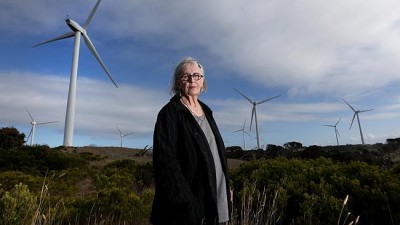
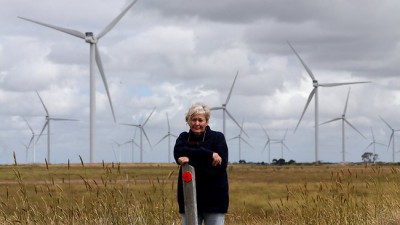
For those responsible for enabling the greatest economic and environmental fraud of all time – like Greg Hunt – it will be the fact that they knew full well that their favourite renewable rort caused wholly unnecessary misery to courageous, magnificent and stoic Australian women like Sonia Trist, Jan Hetherington and Annie Gardner:
That our political betters are fully aware of wholly unnecessary suffering is a matter of no doubt.
You see, people like Greg Hunt and others, with full responsibility for the policies that saw thousands of these things speared into backyards across the country – driving people to the edge of sanity in their own homes; or driving them out of them altogether – get swamped with emails from their victims on a daily basis.
Just like this tragic tale laid out by Jan Hetherington from Macarthur in western Victoria.
But, before you confront what Jan has to deal with, night after punishing night (and it is confronting), take note of the who’s who list of recipients – a group that can never say that they didn’t know.
Subject: my 89th formal complaint re-Macarthur wind farm.
Dear Commissioner Dyer, and AGL,
As you have been made aware, from our meeting with you in December, 2015, I am now “sensitised” by the hammering from the excessive pulsating infrasound, low frequency noise and vibration, that saturates my home day in and day out, emitted by the 140, 3MW turbines at the Macarthur wind facility.
I told you about the problem I had, when I was a patient in the newly built Western Private Hospital in Melbourne, in 2015, where I experienced the same symptoms from infrasound as I experience at home, and independent acoustician Les Huson tested my hospital room and positively identified and recorded infrasound in that room.
Not only am I still being hammered by this “noise” as I go about my daily routine at home, but I recently visited Portland on the 6th and 7th and 12th and 13th January 2016, to attend the Cruise ship markets to showcase my glassware.
Each visit I stayed overnight in Portland with a friend, and to my horror, I experienced the same symptoms that I experience at home, from the low frequency and infrasound.
There are wind turbines on the edge of the township of Portland at Cape Nelson, and Cape Bridgewater.
I experienced symptoms of sleep deprivation, palpitations, anxiety, ears aching and ringing, head-pressure and aching on the back of my head and the top of my jaws. I could hear the low droning noise of the turbines during the night.
These are the same symptoms I experience at home, living near the Macarthur wind facility.
At the market on the foreshore during the day, I kept experiencing “whacks” to my head, as if someone had hit me on the back of my head. These “whacks” would give me a jolt and they hurt.
This excessive, pulsing infrasound, low frequency noise and vibration is a REAL problem, and I hope you have started your investigation into this REAL problem.
We cannot be expected to live our lives like this anymore.
I cannot be expected to be fearful of travelling to other places and experience the same dreadful symptoms that I experience at home.
This is “3rd world” stuff, and surely we’re better than that, we should be able to look after each and every one of our citizens, equally and without bias.
I pay my taxes and I expect something in return.
I expect to be treated with respect and compassion regarding this wind farm problem and not live in fear for my health and safety and wellbeing.
It’s about time politicians stopped playing politics and the popularity stakes and DO something about this wind farm problem.
I would like confirmation and receipt of this formal complaint please.
One of the myths pedalled by Australia’s self-appointed wind farm noise, sleep and health ‘expert’ (a former tobacco advertising guru) is that the known and obvious adverse health impacts from incessant turbine generated low-frequency noise and infrasound are a cooked-up “phenomenon”, exclusive to the English speaking world. Trouble with that little tale is that’s been scotched by the Danes:
Now, back to Germany where – in the video below (it comes with English subtitles) – Heimke and Pieter Hogeveen lay bare their family’s daily despair at being unable to sleep in their very own home.
Ground down by incessant turbine generated low-frequency noise and infrasound, these people have constructed a ‘bedroom’ in their cellar in an attempt to escape their sonic torment; and sent their children to a boarding school in Denmark for the same reason. Clearly fighters, Hiemke and Pieter have enlisted two lawyers in an action against the wind power outfit responsible.
The video features the turbine host responsible for their daily suffering, claiming he suffers no ill-effects. Funny how gag clauses in developer/host contracts seemingly immunize those pocketing their 30 pieces of silver. However, when the hosts are touched with a little human conscience, they tend to tell an incredibly similar story to people like the Hoogevens:
The Speigel TV report covers the latest German research on turbine generated infrasound; details the tragic story of another farming family (Konrad Saum) who have also been forced to abandon their spacious family home – unable to sleep there due to incessant turbine noise and vibration; and retreating to a tiny holiday unit to escape the sonic torture dished out by 6 turbines neighbouring their farmlet.
Undermining the ‘Green’ spinner, Jaeger’s piffle about infrasound being used as a sinister plot by German ‘anti-wind’ groups (now numbering over 500) to derail his profiteering racket, is the work being done by health and acoustic experts, taking measurements inside homes that show noise and vibration way above and beyond the levels claimed to exist by the wind industry. No surprises there: Three Decades of Wind Industry Deception: A Chronology of a Global Conspiracy of Silence and Subterfuge
The central, endlessly repeated lie upon which the wind industry seeks to ‘justify’ the colossal and endless subsidies upon which it critically depends; the destruction of wind farm neighbours’ health, wealth and happiness; and the slaughter of millions of birds and bats, is that wind power causes substantial reductions of CO2 emissions in the electricity sector.
STT has been slamming that myth since we cranked into gear nearly 3 years ago. It’s a topic that attracts plenty of interest.
One petulant retort is that building a coal-fired power plant (or, heaven forbid, a skyscraper) using thousands of tonnes of concrete and steel adds mountains of CO2 gas (incidentally, an odourless, colourless naturally occurring trace gas, essential for all life on Earth) to a soon to incinerate atmosphere. Ah, but the distinction, lost on these ‘wits’ is that those building meaningful power generation sources (or high-rise buildings in densely packed cities) don’t make any claims to reduce/abate CO2 emissions in the electricity sector, or at all.
Out on its own, the wind industry claims – as the ‘justification’ for the $billions in endless subsidies and the excuse for the fact that it is meaningless as a power source – simply because it cannot be delivered on demand – that wind power makes very substantial reductions in CO2 emissions, when, in fact it does no such thing.
This little piece from Christine Whitaker shows that the ‘wind power is saving the planet’ mantra has lost whatever persuasive power it may once have had, save amongst infants and the intellectually lazy and/or dishonest.
Wind power as a form of “green energy” is far from green
Leader-Post
Christine Whitaker
29 November 2015
We are climbing on the wind power bandwagon just as other countries are jumping off.
As suggested by recent announcements by Premier Brad Wall and SaskPower, we are likely to see more wind farm projects in Saskatchewan in the near future.
There are many reasons why wind power has fallen into disrepute. It is not the most reliable source of electricity. Turbines are only 30 per cent efficient at best and they must be taken offline in adverse weather conditions, which cause malfunctions. At one wind farm in Britain, diesel-powered generators are on standby to cut in when the turbines are shut down.
Wind power is also extremely expensive. Governments have poured millions of dollars into the construction of wind farms, in the form of subsidies and other incentives, resulting in high power bills for consumers — as Ontario residents know well.
Turbine blades are very efficient killers of bats and birds. One British environmentalist claims that 200,000 bats are killed every year in Germany; tens of thousands of eagles in America. As Saskatchewan is on a major flight path of migrating birds, we should consider the consequences to species such as whooping cranes and many others.
The main reason, however, is that this form of “green energy” is far from green.
The manufacture and construction of wind farms contributes more to global CO2 emissions than they will save in their useful life (which is approximately between 15 and 20 years).
The construction of one typical turbine involves the use of heavy equipment to create roads to the site; dig a hole 10 feet deep and 100 feet wide. Into this are deposited 53 truckloads of concrete and 96,000 lbs of steel rebar.
Then eight truckloads of components arrive: a base tower weighing 87,450 lbs; a mid-section of 115,500 lbs; a top tower of 104,167 lbs, and then the rotor assembly and blades.
The transportation and erection of these components require the use of heavy machinery and large cranes. These facts are taken from a video produced by a wind energy company. The total CO2 emissions to build one turbine is estimated at 241.85 tons.
The supreme irony is that in Baoding, China’s most polluted city, the major industry is the production of turbine towers and blades. The power for this industry is supplied by several large coal-fired plants. By attempting to cut Canadian emissions (currently 1.6 per cent of global totals), we are adding to China’s emissions, at 24.1 per cent and growing.
A Leader-Post article (Nov. 21) promotes the advantages of wind power, as perceived by its supporters. One refers to all the “space” in Saskatchewan where turbines could be built. I live in rural Saskatchewan, and can look at this space through every window of my home. Rather than seeing a place for wind farms. I see land that produces essential food ingredients, such as wheat, barley, lentils and canola, and pastures where cattle graze.
Many of my rural neighbours are opposed to the destruction of our agricultural land and the desecration of our landscape by hosts of monstrous engines striding across the countryside like white giants with arms flailing wildly.
There are many other problems for those living near wind turbines. There are the emotional and physical effects of listening to the constant hum, 24/7. There is also the depreciation of property values.
Nobody will buy a home or farm close to turbines. There are well-documented cases of rural Ontario residents who have walked away from their property because they can no longer live with the effects of the wind farms on their health — but cannot sell their homes.
Landowners who signed leases to allow turbines on their property eventually will discover that when the useful life of the wind farm is over, nobody is responsible for dismantling the turbines and hauling them away. Instead, these towers will remain as eroding monuments to the misguided energy policies that put them there in the first place.
Christine Whitaker is a freelance writer from Edgeley. Leader-Post
FALMOUTH HID NOISE LETTER 5 YEARS TO AVOID ABUTTER NOTIFICATIONS AND SPECIAL PERMITS WHICH WOULD REQUIRE ADDITIONAL NOTIFICATIONS
Section 240-166 incorporates by reference the Bylaw’s general special permit requirements and also states that the ZBA shall consider adverse impacts on the neighborhood including noise. The ZBA has the power to impose conditions on the grant of a windmill permit.
THE TOWN FAILED TO FILE THE SPECIAL PERMITS TO AVOID ABUTTER NOTIFICATIONS & SPECIAL PERMITS
The Town of Falmouth has never posted or made public the Vestas 2010 wind turbine noise letter.
Falmouth public officials owe it to the public to explain why they hid the letter for 5 years.
After 5 years of noise complaints why didn’t at least one public official come forward.
Thousands of certified written noise complaints have been made.
The letter warned the town that the Vestas wind turbines they were purchasing were 6 decibels higher than the smaller General Electric turbines used in prior noise study models.
The public-duty doctrine holds that the government and its officials owe a legal duty to the public at large. Why was the letter omitted and when do omissions become lies ?
Federal prosecutors have weapons to prosecute public corruption, especially with respect to state and local corruption, where the pertinent statutes empowers them to challenge almost any unlawful, questionable or unethical conduct of a public official, subject to the prosecutor’s exercise of sound discretion.
RICO prosecutions give prosecutors even more discretionary prosecution power.
The Town of Falmouth never applied for Special Permits for their two town owned wind turbines.
The turbines are named Falmouth Wind 1 and Falmouth Wind 2.
Prior to the installations a private company conducted flawed acoustic noise models using 1.5 megawatt General Electric wind turbines that generate a maximum of 104 decibels of noise.
The original flawed tests “mistakes” were admitted by the Massachusetts Clean Energy Center three years after the installation of Falmouth Wind 1. The admission date came in a memo from MassCEC staff to the MassCEC Board of Directors on April 2, 2013
The private wind testing company actually prepared Special Permit applications under the Town of Falmouth wind turbine bylaws. The Town of Falmouth never filed Special Permits for either turbine.
In the past few months information has come to light that shows why the Town of Falmouth never filed “ Special Permits.”
The Town of Falmouth ignored its own wind turbine bylaw 240 -166 because the bylaw would require additional wind studies, notifications and additional time to install the Vestas wind turbines with a high rating of 110 decibels of noise .
Recently through a FOIA, Freedom of Information Request it has been found the Town of Falmouth was holding back a year 2010 warning letter from Vestas wind company that the wind turbines being installed generated up to 110 decibels of noise. This is 6 decibels higher than the Falmouth Community Wind Project Site Screening Report November 2005.
Special Permits would never have been issued under the Falmouth wind turbine bylaw 240 -166 with turbines that generated 110 decibels of noise. Under the Special Permit process additional notifications and time may have alerted local residents. There were NO noise studies for Falmouth Wind II. There were NO studies for a combination of Falmouth Wind 1 and Wind II.
The town hid the embarrassing letter from public view. The town has never posted the letter on its website or mentioned the letter at any public meeting.
The town while in possesion of the August 2010 letter made abutters to the wind turbines file elaborate certified written notifications to the town that the turbines were too loud. The town had always know the turbines were too loud. Vestas wind company told them in writing . It’s in Black and White !
Falmouth Town Meeting Members and the public in general are being kept in the dark over this letter while the town spends hundreds of thousands of dollars on a legal defense that is indefensable.
Taxpayers are paying litigation fees for up to eleven types of ongoing litigation including nuisance, bylaw. permitting and appeals while the Town of Falmouth sat on this letter for five years.
The Town of Falmouth was aware the turbines were 7 Decibels higher that the manufactures specifications. Every 3 DCB increase is a doubling of sound and acoustic power to the human ear and that is simply an intolerable increase.
In the following letter Vestas wind company reiterates in writing that the Town of Falmouth had been previously warned the turbine generates up to 110 decibels
“The Town has previously been provided with the Octave Band Data / Sound performance for the V82 turbine. This shows that the turbine normally operates at 103.2dB but the manufacturer has also stated that it may produce up to 110dB under certain circumstances.”
August 3, 2010
Mr. Gerald Potamis
WasteWater Superintendent
Town of Falmouth Public Works
59 Town Hall Square
Falmouth, MA 02540
RE: Falmouth WWTF Wind Energy Facility II “Wind II”, Falmouth, MA
Contract No. #3297
Dear Mr. Potamis,
Due to the sound concerns regarding the first wind turbine installed at the wastewater treatment facility, the manufacturer of the turbines, Vestas, is keen for the Town of Falmouth to understand the possible noise and other risks associated with the installation of the second wind turbine.
The Town has previously been provided with the Octave Band Data / Sound performance for the V82 turbine. This shows that the turbine normally operates at 103.2dB but the manufacturer has also stated that it may produce up to 110dB under certain circumstances. These measurements are based on IEC standards for sound measurement which is calculated at a height of 10m above of the base of the turbine.
We understand that a sound study is being performed to determine what, if any, Impacts the second turbine will have to the nearest residences. Please be advised that should noise concerns arise with this turbine, the only option to mitigate normal operating sound from the V82 is to shut down the machine at certain wind speeds and directions. Naturally this would detrimentally affect power production.
The manufacturer also needs confirmation that the Town of Falmouth understands they are fully responsible for the site selection of the turbine and bear all responsibilities to address any mitigation needs of the neighbors.
Finally, the manufacturer has raised the possibility of ice throw concerns. Since Route 28 is relatively close to the turbine, precautions should be taken in weather that may cause icing.
To date on this project we have been unable to move forward with signing the contract with Vestas. The inability to release the turbine for shipment to the project site has caused significant [SIC] delays in our project schedule. In order to move forward the manufacturer requires your understanding and acknowledgement of these risks. We kindly request for this acknowledgement to be sent to us by August 4, 2010, as we have scheduled a coordination meeting with Vestas to discuss the project schedule and steps forward for completion of the project.
Please sign in the space provided below to indicate your understanding and acknowledgement of this letter. If you have any questions, please do not hesitate to call me.
Sincerely,
(Bruce Mabbott’s signature)
___________________
Bruce Mabbott Gerald Potamis
Project Manager Town of Falmouth
CC: Sumul Shah, Lumus Construction, Inc.
(Town of Falmouth’s Wind-1 and Wind-2 Construction contractor)
Stephen Wiehe, Weston & Sampson
(Town of Falmouth’s contract engineers)
Brian Hopkins, Vestas
(Wind-1, Wind-2’s turbine manufacturer, and also Webb/NOTUS turbine)
The specific problems with location of wind turbines near human populations are as follows:
1.) Health of nearby residents at serious risk: Sleep deprivation from wind turbine low frequency noise (thumping and rumbling heard and felt inside the homes of neighbors) have caused problems for many families.
2.) Turbine malfunctions, fires, ice throw sudden catastrophic blade failures: Wind turbine manuals detail that workers should “run upwind” a minimum distance of 1640 feet from a wind turbine which is on fire or in danger of blade failure to avoid the danger of flying debris.
[Click on the image above and click through for the Today Tonight video. Transcript appears below.]
Transcript
Rosanna Mangiarelli: But we will start tonight with a wind farm war. Those who claim that turbines are having an impact on surrounding communities, versus those who say it’s all in the mind. Now the latest debate centres around a recent Australian study, whose author has found there is a link. While it’s being played down by the industry, those living near the wind farm tell a very different story. Rodney Lohse reports.
Lane Crocket, Pacific Hydro: … can’t identify any causal link between wind farms and health.
Steven Cooper: It depends upon what you define by causal. If you take it as patterns that relate to the hypothesis of different wind speeds orpower outputs, there was definitely a link.
Rodney Lohse: It’s the report that has the wind energy industry in aspin. Same report, two very different interpretations, all depending on what you have at stake.
Lane Crocket: There is nothing in this report to justify any form of compensation.
Steven Cooper: We’ve found certain wind speeds that related to the high levels of disturbance.
Rodney Lohse: According to medical authorities, wind farms are perfectly safe and cause no adverse health impacts. Yet here and overseas, people who live near them say they’re getting sick.
Norma Schmidt from Ontario: You’re not able to do anything. You’re not able to cook. You’re not able to clean. You’re not able to live. You’re not able to work.
Melissa Ware, Cape Bridgewater, Victoria: We’ve actually vacated the house and we’ve been away for about 3 months.
Wind farm victim: Ever since they started turning my ears have been hurting.
Rodney Lohse: But despite this, no one could prove what it was about wind farms that made those living nearby feel unwell. And so they have continued to be constructed in their thousands. Enter Steven Cooper and Pacific Hydro. Stephen Cooper is a acoustic engineer, recognised in this country as an expert in his field, involved in writing Australian standards on noise, especially for the aircraft industry.
Steven Cooper: When I started this study, I was utilising the results of testing in South Australia at the Waterloo wind farm, where residents could perceive the operation of the wind farm without seeing it or without hearing it. And I was linking that perception to what’s called infrasound, which is below the normal level of frequency of hearing.
Rodney Lohse: Pacific Hydro is an energy company owned by Australian superannuation funds and the operator of wind farms in Australia and overseas. Lane Crockett is executive general manager of Pacific Hydro.
Lane Crockett: If you go to the peak medical body they will tell you that there is no causal link between wind farms and health.
Rodney Lohse: It is a concept supported by Sydney University’s School ofPublic Health’s Professor Simon Chapman. Not a medical specialist, but an avowed enemy of wind farm critics.
Simon Chapman: You can see, I’ve put some examples of quotes there, conclusions, there’s no evidence that the audible or sub-audible sounds emitted by wind turbines have any direct adverse physiological effects.
Rodney Lohse: And so Pacific Hydro decided to stump up the money for another study.
Steven Cooper: There are sensations that are recorded … .. I was required to conduct noise and vibration measurements to determine certain wind speeds and certain sound levels that related to disturbances by six specific local residences.
Rodney Lohse: Steven Cooper was looking for a link between something happening at the wind farm and complaints by residents in three houses nearby, each with two residents. His theory, infrasound, low frequency noise below what can be heard, was impacting residents.
Steven Cooper: What you’re able to do when carrying out tests is that you can demonstrate people can feel infrasound at a level below when it becomes audible.
Rodney Lohse: Pacific Hydro has so far played down Cooper’s study.
Lane Crockett: In our view, the results do not demonstrate a strong enough correlation to support the conclusion of a causal link between the infrasound frequencies in existence, and residents’ observations.
Steven Cooper: We don’t have a correlation with the results because we don’t have enough data. There is definitely a trend. There is definitely a connection between the operation of the wind farm and what the residents were identifying as disturbances. And so it’s open to debate as to what a causal link is in terms of that data.
Rodney Lohse: But the people who were in the study, like Melissa Ware, say it’s sufficient proof to show this isn’t all just in their head.
Melissa Ware: We been talking about the noise and the vibration in our home for a long time, and to have Steven Cooper come and do such an intensive study means a lot to me and to the other residents.
Rodney Lohse: Although hearing impaired, Melissa says she can sense the turbines. Often the sensation drives her from her home.
Melissa Ware: The noise and the vibration come up through the pillow, worse than what, the impact’s worse than when you’re standing, just listening.
Rodney Lohse: For 2 months, the test subjects had to fill out diaries of what they felt, in particular, if they sensed anything, especially a sensation many said made them unwell. This was called “Sensation 5″. And Cooper then tried to correlate that to something possibly happening at the wind farm.
Steven Cooper: The sensation criteria came from a UK wind farm study, which was based on noise and then the word in the severity ranking changed from noise to vibration or sensation.
Rodney Lohse: As this was never a medical study, he can’t say the wind farm was making people sick. But at the exact time people were reporting “Sensation 5″, something was happening at the wind farm.
Steven Cooper: Severity 5 was classified as being a level that was harmful to a person’s health, or was causing them severe discomfort. The residents, in looking at the data, also added that “Sensation 5″ was a level at which they wanted to leave, or did actually leave their property.
Rodney Lohse: The study has already attracted a lot of attention, support and criticism.
Paul Barry: … and Sydney University’s Professor of Public Health, Simon Chapman, was even more damning, telling Media Watch …
Simon Chapman: Scientifically, it’s absolutely an atrocious piece of research, and it is entirely unpublishable other than on the front page of The Australian.
Rodney Lohse: Mr Cooper responded in this way to his main critic, Professor Chapman; and has commenced legal action against him.
Steven Cooper: As far as I understand, Professor Chapman is not a scientist. He is not an engineer. I’ve had eminent acousticians around the world who have can congratulated me on the work, have issued reviews to say that the work is of significance, is of benefit and is a step forward in trying to understand what wind farms are generating.
Rodney Lohse: Doctor Paul Schomer, the Standards Director for the Acoustical Society of America, is one of those acousticians.
Paul Schomer: I think it’s a very good study. It’s the only study in the world, that we know of that’s been done with the cooperation of a wind farm, and so was able to get data that no one else has been able to get.
Rodney Lohse: And its integral in showing a connection between infrasound and human impact.
Paul Schomer: It doesn’t quite form the link between medical issues, it forms the link that people are affected, not by hearing sounds, that there is a pathway to the peoples’ brain, other than hearing.
Rodney Lohse: Doctor Schomer was involved in a similar study in a community called Shirley, in Wisconsin in the United States.
Paul Schomer: Three families in Shirley that had moved out of their houses because of the sound, the problems with the, or I should say the infrasound.
Rodney Lohse: He hopes wind power has an important future in terms of meeting our energy needs, but he also says more needs to be done to understand how it impacts humans.
Paul Schomer: They don’t want to acknowledge problems, it really doesn’t matter what the problem was, it just happens to be infrasound.
Rodney Lohse: For Steven Cooper he says, now it’s time for a well funded medical study.
Steven Cooper: To do medical studies you need to have a character or a signature that you can apply to a wind farm to identify that the wind farm is operating, before you can do the medical studies. What has come out of this work, is that by use of the signature and a level and characteristic that I have determined, allows the medical researchers to now start that work. Today Tonight
Here is a story from the Irish Examiner, fitting on St Patrick’s Day.
By Conall Ó Fátharta
Irish Examiner Reporter
Leading doctors have called on the Government to reduce the noise levels of wind turbines — which they claim are four times that recommended by World Health Organisation (WHO) guidelines.
The Irish Doctors’ Environmental Association also said the set-back distance of 500m is not enough, that it should be increased to at least 1,500m.
Visiting Research Professor at Queen’s University, Alun Evans and lead clinical consultant at Waterford Regional Hospital Prof Graham Roberts have both expressed concerns over the current noise levels and distance of turbines from homes.
Environment Minister Alan Kelly is currently reviewing the wind energy planning guidelines and the group is calling for both issues to be examined closely in the interest of public health.
The association has called for the introduction of a maximum noise level of 30 decibels as recommended by the WHO and for the set-back distance from inhabited houses to at least 1,500m from the current 500m.
Prof Evans said the construction of wind turbines in Ireland “is being sanctioned too close to human habitation”.
“Because of its impulsive, intrusive, and sometimes incessant nature, the noise generated by wind turbines is particularly likely to disturb sleep,” he said.
“The young and the elderly are particularly at risk. Children who are sleep-deprived are more likely to become obese, predisposing them to diabetes and heart disease in adulthood. As memory is reinforced during sleep, they also exhibit impaired learning.”
Prof Evans said adults who are sleep-deprived are at risk of a ranges of diseases, particularly “heart attacks, heart failure, and stroke, and to cognitive dysfunction and mental problems”.
Prof Evans, attached to the Centre for Public Health at Queen’s, said the Government should exercise a duty of care towards its citizens and exercise the ‘precautionary principle’ which is enshrined in the Lisbon Treaty.
“It can achieve this by raising turbine set-back to at least 1500m, in accordance with a growing international consensus,” said Prof Evans.
In a statement, the Department of the Environment said that in December 2013 it published draft revisions to the noise, set-back distance, and shadow-flicker aspects of the 2006 Wind Energy Development Guidelines.
These draft revisions proposed: 1. The setting of a more stringent day and night noise limit of 40 decibels for future wind energy developments; 2. A mandatory minimum setback of 500m* between a wind turbine and the nearest dwelling for amenity considerations; 3. The complete elimination of shadow flicker between wind turbines and neighbouring dwellings.
A public consultation process was initiated on these proposed revisions to the guidelines, which ran until February 21, 2014.
“The department received submissions from 7,500 organisations and members of the public during this period. In this regard, account has to be taken of the extensive response to the public consultation in framing the final guidelines,” the department said in the statement.
“However, it is the department’s intention that the revisions to the 2006 Wind Energy Development Guidelines will be finalised in the near future and will address many of the issues raised in that bill.”
*Editor’s note: Ontario’s wind turbine noise regulations, which are based on geography and wind power lobby group instruction, not science, work out to 550 meter setbacks. Health Canada’s Wind Turbine Noise and Health study revealed that problems exist at 55 meters, with 25% of people exposed to the turbine noise and low frequency noise being distressed; 16.5% were distressed at 1 km. The Health Canada research results suggest that a setback should be a minimum of 1300 meters, which means Ontario’s existing noise regulations are completely inadequate to protect health.
“People are willing to tolerate, approve, and contribute to the torture of their neighbors with the ill effects of wind turbines simply because they have been told by public officials, the media, or green zealots that it is necessary to ‘save the planet’ from global climate change.”
By Curt Devlin
It is easy to forget just how essential sleep is to health and happiness; until of course, you yourself have been deprived of it for a night or two. Firsthand experience of sleep deprivation, even for a few days, is a powerful reminder of how mentally and physically debilitating it is. Even the ongoing disruption or restriction of sleep for a relatively short period of time can have devastating health consequences. Medicalresearch has clearly shown that sleep is essential to human health and wellbeing. Prolonged sleep deprivation has been linked to memory loss, hallucination, weakened resistance to pain, obesity, hypertension, diabetes, impaired immune response, extreme anxiety, stress, clinical depression, and suicide. In the most extreme cases, animal experimentation suggests that lack of sleep can kill you.
Sleep deprivation has long been recognized as torture by the Geneva Conventions of 1949, the United Nations Convention against Torture (CAT), and the United States War Crimes Act. Depriving someone of proper sleep is torture, regardless of whether it is perpetrated by the CIA against suspected terrorists, OR by reckless planning authorities who permit the wind industry to site industrial-scale wind turbines in residential neighborhoods, or by noise pollution regulatory authorities and health authorities who ignore consistent reports of sleep deprivation from neighboring residents. When authorities deem developments “compliant” with regulations, or wind developers effect specious mitigations; they are inflicting torture. They are violating fundamental human rights.
Recently, the U.S. Senate Intelligence Committee released what has come to be known as the Torture Report. It reveals that sleep deprivation was one of the frequently used CIA “enhanced interrogation” tactics. The use of prolonged sleep deprivation led Committee Chairman, Diane Feinstein to conclude “…that, under any common meaning of the term, CIA detainees were tortured.” She goes on to say “…that the conditions of confinement and the use of authorized and unauthorized interrogation and conditioning techniques were cruel, inhuman, and degrading.” The same can be said of the practice of siting industrial turbines too close to homes. Failure to take action to stop excessive noise pollution, or to enforce existing legal limits on “noise nuisance” whenever noise-induced sleep disturbance or deprivation is reported by wind turbine neighbors, hosts, or their families is full complicity with torture.
It is grimly ironic that the US Senate Committee condemns sleep deprivation as cruel and inhuman when used by the CIA interrogators on terror suspects, but blithely ignores it when imposed by wind developers and local authorities on ordinary, law-abiding citizens who pose no threat to anyone. The only threat they pose is to the income generated by taxpayer subsidies to unscrupulous wind developers.
Is it really fair to compare the torture of detainees to that of turbine neighbors? Consider that the detainees were forced to endure sleeplessness for a few days at a time on many occasions, but never more than a week. Wind turbine victims must endure this same deprivation for arbitrary periods of time whenever the wind is blowing, sometimes intermittently for decades. Often, their only hope of escape or reprieve from this torment is to flee their homes which no one will buy—despite the fact that they are not suspected of any crimes whatsoever. At least detainees were not forced to lie awake and watch their families suffer the same deprivation.
When the turbines were shut down during a winter storm with near hurricane-force winds, one young mother of infant twins living in Fairhaven, Massachusetts USA wrote “Isn’t it crazy that in a weird twist it takes a blizzard to give us peace. According to the power dash the beasts stopped at around 9PM.” Later on, she wrote, “I sleep ok in the basement but the babies still wake up randomly almost every night.” Most who are tortured by turbines will tell you that “the beast” can usually finds them even when they are hiding in the cellar. Not only are people kept awake by the turbines, but they must endure headaches, nausea, dizziness, breathing difficulties, and in some cases uncontrollable anxiety and severe acute depression.
In one incident described in the Torture Report, an Afghani named Arsala Khan “…suffered disturbing hallucinations after 56 hours of standing sleep deprivation….” Afterwards, the CIA determined that he actually was not involved in any plans or activities to harm the U.S! The innocent victims tortured by the wind industry are in a position to know just how it feels to be tortured indiscriminately.
Publicly, the Bush administration and the CIA chose to describe their treatment of detainees as “enhanced interrogation.” The wind industry chooses to call its noise impact mere “annoyance” and refer to residents’ “concerns”. These euphemisms are carefully selected to conceal the ugly reality that sleep deprivation is torture, plain and simple. Such terms attempt to hide what is known to be—by any standard of human decency—utterly wrong and depraved. The Senate Intelligence Committee and others have begun to shine a spotlight on the CIA torture program; but the wind industry program of cruelty continues to operate with impunity, largely beyond the glare of public scrutiny.
When the US Senate Committee report placed the issue of torture front and center in the media, it prompted outrage among some journalists, who have used terms like ‘depravity,’ ‘harrowing,’ and ‘gruesome’ to describe the techniques used by the CIA. Yet the media has no outrage when prolonged sleep deprivation and cruelties are routinely visited on local neighborhoods throughout America and across the world. When the subject turns to wind turbines, all talk of human rights violationsimmediately goes silent.
Remarkably, and despite the condemnation of the Intelligence Committee and the outraged media reaction to it, public opinion polls consistently show that a majority of Americans still consider the CIA’s use of torture justified. Even those who disagree with this view, may be able to understand it. The rationale for torture is that it was necessary to prevent another 911; but what, then, is the rationale for torturing ordinary men, women, and children in their own homes on a nightly basis? What accounts for the almost universal apathy of government officials, mainstream media, and the general public, toward the victims of wind energy? It seems America is one nation, with liberty, and justice for all—except for those unlucky few, who can be tortured without any good cause at all. Our silence gives consent to continue.
Perhaps this silence about turbine victims can be partially explained by a monumental form of social denial. Psychologists have noted that when confronted with tacit complicity with torture, most people tend to diminish in their own minds the actual harm being inflicted. Terms like ‘enhanced interrogation’ and ‘annoyance’ encourage such forms of self-deception. However, this pervasive complicity with torture cannot be fully explained by denial alone. There is a far more ominous and compelling explanation supplied long ago by the experiments of Stanley Milgram.
In 1962, Milgram, a Harvard-trained psychologist, devised a set of experiments designed to explain why people are willing to accept and even participate in torture. Initially, Milgram thought it was a lack of moral fiber. Prior to conducting his experiments, Milgram believed that most Americans were morally superior to those who were responsible for the torture and atrocities of the Holocaust. He predicted that most of his (American) subjects would reject the use of torture out of hand. Milgram also polled many of his fellow psychologists, who made similar predictions. Contrary to all expectations, however, Milgram’s experiment actually proved that about two thirds of Americans were willing to administer torture by electroshock to innocent victims, even to the point of possible lethality, simply because they were told by someone in a position of perceived authority that it was necessary to do so. Contrary to the much beloved American mythology of rugged individualism and personal independence, Milgram has shown that most Americans are just as blindly obedient to authority as everyone else.
Since that time, Milgram’s experiment has been repeated dozens of times by him and other scientists, with subjects from different counties and cultures, but the results are always the same. About 65% of all subjects are willing to administer torture—even to the point of lethality—as long as someone in authority tells them it is necessary. Even when controls are added to identify potentially confounding factors, this result is highly repeatable. This shows that obedience to authority, even to the point of partaking in torture of innocent victims, is so deeply ingrained in human nature that it transcends language, culture, and moral outlook—it is a truly global phenomenon. The evidence for this is sadly pervasive.
People are willing to ignore, condone, and even participate in torturing detainees simply because they are told that it was necessary to protect America from new terrorist attacks. Similarly, people are willing to tolerate, approve, and contribute to the torture of their neighbors with the ill effects of wind turbines simply because they have been told by public officials, the media, or green zealots that it is necessary to “save the planet” from global climate change. There is ample evidence to show that torture is not an effective means of interrogation and that industrial wind turbines cannot stem climate change. No matter. Like subjects in Milgram’s experiment, the public is being told by authority that “the experiment requires that you continue.”
In a position paper entitled Leave No Marks: Enhanced Interrogation Techniques and the Risk of Criminality, Physicians for Human Rights (PHR) and Human Rights First (HRF) have collaborated to publish a detailed condemnation of the CIA torture program, as well as the participation of physicians in these practices. Section 6 specifically details the physical harm and health consequences of forced sleep deprivation and interruption. It also delineates the criminal consequences for anyone who knowingly engages in it. Here it is pointed out that “the U.S. State Department has condemned Indonesia, Iran, Jordan, Libya, Saudi Arabia, and Turkey for using sleep deprivation as a form of torture or cruel, inhuman, or degrading treatment.”
In case anyone is inclined to minimize sleep deprivation as mere annoyance, as the wind industry and its advocates would have you believe; Leave No Marks goes on to note that:
Even sleep restriction of four hours per night for less than a week can result in physical harm, including hypertension, cardiovascular disease, altered glucose tolerance and insulin resistance. Sleep deprivation can impair immune function and result in increased risk of infectious diseases. Further, chronic pain syndromes are associated with alterations in sleep continuity and sleep patterns.
Many of those who are routinely awakened by nearby industrial turbines would consider themselves lucky to get even four consecutive hours of uninterrupted sleep on a regular basis. This paper notes that U.S. federal courts have found that sleep deprivation is also a violation of the Eight Amendment prohibition against cruel and unusual punishment.
Perhaps it is time for groups like Physicians for Human Rights and Human Rights First and indeed the medical profession generally, to turn their intention toward the ongoing torture and cruelty perpetrated by the wind industry. Surely, such acts are criminal whether they are committed by governments or private industry.
Dr. William Hallstein, treating psychiatrist from Falmouth USA, made it abundantly clear that the impacts of the turbines are indeed tantamount to torture in his letter to the Falmouth Town Board of Health. It is telling that Justice Muse from the Falmouth Superior Court issued an injunction in December 2013 to prevent “irreparable harm to physical and psychological health” by turning the turbines off at night. The turbines at Falmouth (USA) remain turned off, over a year later.
Perhaps it’s time to face our own complicity and involvement in these fundamental violations of both civil and human rights, as well.
The wind industry cannot hide behind a claim of ignorance about the devastating impact of wind turbine noise on human health. N.D. Kelley and other NASA scientists from the Solar Energy Research Institute (SERI) have published papers that ascribe the direct causation of human disturbance to wind turbine noise. This group published numerous papers on this subject between 1982 and 1985 based on sound research and clear evidence. Then, in 1987, this research was presented directly to the wind industry at the American Wind Energy Association (AWEA) Conference in San Francisco. In short, the wind industry has continued to site its industrial scale power and noise generators near residential neighborhoods for more than thirty years, knowing full well that it was inflicting cruelty and suffering on those living near them. The silence of public officials, the media, and the public indicates wind turbine torture may be allowed to continue for decades to come.
There can be no doubt that wind turbines cause chronic sleep deprivation, and no doubt that sleep deprivation is torture. The scientific evidence that turbines do cause sleeplessness is already prolific and continues to grow. Moreover, the most comprehensive literature reviews on this question reveal that there is virtually no independent evidence to controvert this conclusion. Perhaps the most damning evidence of all comes from the public record of heath complaints from people around the world. According to the noted epidemiologist Carl V. Phillips, “There is overwhelming evidence that large electricity-generating wind turbines (hereafter: turbines) cause serious health problems in a nontrivial fraction of residents living near them.” Among these public health reports from turbine neighbors, sleep deprivation and disruption are by far the most common.
Taken together, the science and the public record of adverse health reports offer clear and compelling evidence that wind turbines are instruments of torture. Therefore, anyone who advocates for, or participates in, the siting of wind turbines near people is inflicting torture on them. Anyone who contributes to, or endorses, unsafe government noise pollution regulations, or who allows them to continue unabated when turbines are clearly causing sleep deprivation and other forms of human misery, or who ignores community complaints, or obstructs the accurate measurement of infrasound and low frequency noise inside homes is complicit with torture. And, anyone who knowingly conducts spurious turbine noise mitigations, or who permits or helps to perpetuate levels of infrasound and low frequency noise emissions above the thresholds established by Dr. Neil Kelley, and confirmed most recently by Steven Cooper’s research at Cape Bridgewater in Australia, must be held accountable for inflicting, or helping to perpetuate torture by prolonged sleep deprivation. Those who do so are guilty of criminal violation of both civil and human rights on an industrial scale.
This is why the global wind industry has strategically and systematically sought to silence wind turbine hosts and neighbors with property buy-outs and non-disclosure agreements. Undoubtedly, this is also why they and those who support them have publicly targeted acoustic engineers, health practitioners, and public health experts who have attempted to expose this truth in accordance with their canons of professional ethics. This industry subjects legitimate science to ridicule, its authors to character assassination, and its sleepless victims to blame and aspersions of mental defect. All of this is done to cloak conscious criminal cruelty in the name of unbridled greed.
In its determination to hide the ugly reality of industrial wind turbines, this industry uses money and the false promise of cheap energy to exert undue influence over public officials. It substitutes pseudo-science for legitimate science, spends untold millions on PR campaigns to drown out honest journalism, and sponsors fear-mongering in place of reasoned public discourse on renewable energy.
There may be no better evidence for this campaign of pubic deception than the so-called “Wind Turbine Health Impact Study: Report of Independent Expert Panel” produced in January, 2012 by an unholy alliance between the wind industry and Massachusetts governor’s office. This document epitomizes the fraudulence, distortion, and misinformation that flourish when wind industry influence over government goes unchecked by public scrutiny and legal safeguards. The title notwithstanding, none of the authors of this so-called health study had any recognized expertise related to the health effects of wind turbines. None had ever given a physical examination to a turbine sufferer, and no turbine-related health complaints were investigated during the course of this study—despite the vocal and repeated pleas by effected residents to be examined as part of it. Although insufficient peer-review was one of the most salient criticism leveled against the legitimate studies reviewed; the Massachusetts study itself was not submitted to peer-review before its publication. For these and other reasons, it was deemed junk science by Dr. Raymond Hartmann, who is widely recognized for his expertise in analyzing scientific evidence, and exposing the junk science used by the Tobacco industry to defend its products.
The “Expert Panel” study was published by the Massachusetts Departments of Environmental Protection and Public Health. When such junk science such as this is published by the very agencies responsible for protecting the environment and public health, it gives them the ring of authority. It is as though the state has mandated to an unsuspecting public that the torture must continue. In Milgram’s experiment, when a subject refused to continue administering shocks, the authority figure would reassure them by saying something to the effect that no permanent tissue damage will be caused. In that context, the statement was quite true because no real shock was actually being given. But in the case of wind turbines, government sanctioned torture is very real and does real damage to health and safety—and that damage may indeed be permanent. As the epigraph from Leave No Marks reminds us, “The absence of physical evidence should not be construed to suggest that torture did not occur, since such acts of violence against persons frequently leave no marks or permanent scars.”
For those who are willing to face their own conscience, there may be a glimmer of hope in Stanley Milgram’s otherwise bleak findings. In some of his later experiments, Milgram tried to determine how conformity would affect the obedience of the experimental subjects. He found that when at least two others in the room refused to comply with authority, only about 10% of the experimental subjects were willing to continue torturing. For those who have the courage to defy authority, it seems that disobedience can be contagious, and raising your voice loudly, publicly, and repeatedly against indiscriminant torture and injustice can truly make a difference.
About the author: Curt Devlin currently lives in Fairhaven, Massachusetts U.S.A. He was formerly a Teaching Fellow in the Philosophy Department at Tulane University. His opposition to the irresponsible use of wind energy began in 2007, when a wind project was proposed for the undisturbed and ecologically sensitive salt marshes surrounding a quite estuary in the Little Bay area of Fairhaven—an area which is bordered by densely populated neighborhoods. Although this project was defeated, construction began clandestinely on Veteran’s Day in November of 2011. Since then, Devlin been an outspoken critic of the wind industry and its proponents. He has written numerous articles and editorials on this and related topics. He has been a guest speaker at the Fairhaven Wind Forum in 2012, where he criticized the irresponsible siting of turbines in residential neighborhoods across Massachusetts and around the world. In 2013, he spoke on the fundamental human right to be free of unwarranted experimentation at the Falmouth Human Rights Conference in Falmouth, Massachusetts. Professionally, Devlin works as a software architect focused on the development of health science solutions for the detection and treatment of cancer and the improvement of human health.
Autism is a neuro-developmental disorder that affects the development of the brain in the area of social interaction. It has been well documented that individuals on the Autistic Spectrum experience a degree of sensory impairment which renders them extremely sensitive to specific sounds, light and reflection and in many cases touch. To this end, it is reasonable to assume that individuals on the Autistic Spectrum will be even more susceptible to infrasound, mechanical noise and shadow flicker from wind turbines than the general population.
A 2003 study by Stansfeld and Matheson found that children in general represent a group who are particularly vulnerable to the non-auditory (infrasound) effects of noise. The report stated “In view of the fact that children are still developing both physically and cognitively, there is a possible risk that exposure to an environmental stressor such as noise may have an irreversible negative consequence for this group”. In 2010 a study by Steigler and Davis found that noise sensitivity is a particular problem with those with Autism Spectrum Disorders.
In fact, in the UK, Planning Inspectors and Planning Authorities have been sufficiently convinced of the effects of infrasound on those with Autistic Spectrum Disorders that they have refused planning permission for several wind energy facilities on the grounds that there were individuals living nearby with the condition. For example, a wind farm planned for North Lincolnshire was rejected in 2010 because of the serious effect it would have on twin autistic boys living nearby. A report from a Clinical Psychologist in this case pointed out the “extreme distress” that turbines could cause to people with autism. In this particular case, the twin boys had a fixation with spinning objects and the report asserted that “the time they spend engaged in spinning and observing objects had to be limited in order to allow them to engage in other more meaningful activities.” In another case in Aberdeenshire, Scotland in 2011, the parents of a severely autistic boy forced a wind energy company to backtrack on plans to site wind turbines near their home on the basis of evidence from Consultant Clinical Psychologist Dr. Susan Stebbings. Closer to home, Dan Danaher reported in the Clare Champion newspaper on the 26th Jan 2012 how a Co. Clare mother claimed that her life “had been turned upside down” following the erection of a 19.6m agricultural turbine in a neighbouring property.
The turbines planned for Ireland are 185m high, almost ten times the height of the 19.6 m high turbine in Co. Clare.
The prevalence of autism in the general population in Ireland is now 1 in 100 according to a recent study by Prof. Staines of D.C.U.. Many Irish families with autistic members are very worried whether they will be able to stay in their homes if the planned wind farms proceed. There seems to be wilful negligence on the part of the Irish State in its failure to consider the increasing body of peer-reviewed evidence on the link between wind farms and adverse health effects and in particular its failure to consider the impacts these developments would have on the most vulnerable in our community, including those with Autistic Spectrum Disorders.









 "Mothers Against Wind Turbines™" Phoenix Rising...