YES! to Nuclear….NO! to Wind!

India’s Energy Experts Baffled by ‘Greens’ Hostility to Nuclear Power
nuclear-power-a

****

After the Paris Climate Jamboree, the wind industry, its parasites and spruikers are licking their chops at the prospect of having the rich world fund the construction of millions of these things in the dark corners of the Planet.

But, while the eco-fascists that ponced around Paris are ready to foist a wholly weather dependent technology – that was abandoned in the 19th Century, for fairly obvious reasons – on people who are still left cooking with twigs and dung, sensible first world economies have tumbled (albeit, belatedly) to the fact the wind power is patent nonsense.

world wind investment

STT has always thought that if man-made CO2 emissions really were destroying the planet, then sensible governments would have moved to build nuclear power plants from the moment the Chicken Littles started wailing about the heavens collapsing.

The French generate over 75% of their sparks using nukes – and have used nuclear power – without any serious incident – for over 50 years: the first plant kicked off in 1962.

Nuclear power is the only stand-alone thermal power source that is base-load; and which does not emit CO2 emissions when generating power.

It’s a fact not lost on those with the task of dragging hundreds of millions out of stone age poverty in the World’s largest democracy, India. And its hard-pressed populace, who have already worked out the significant difference between ‘real’ electricity – available 24 x 365 and ‘fake’ electricity – that’s as fickle as a summer breeze (see our post here).

Experts ignite debate on nuclear power as clean energy
The Hindu
7 January 2016

Experts participating in a two-day seminar which began here on Wednesday expressed divergent views on the role of nuclear energy as a cleaner alternative to fossil fuel sources.

Governor P. Sathasivam, who inaugurated the seminar, set the ball rolling by stressing the role of nuclear energy in the move towards cleaner energy sources necessitated by India’s climate change commitments. T.P. Sreenivasan, Vice Chairman, Kerala State Higher Education Council, said it was time to think of a world without nuclear energy and set a timeframe for the transition from nuclear power to cleaner sources such as solar and wind energy.

Pointing out that countries such as Germany, France, Switzerland and Austria were either committed to closing down nuclear plants or opposing nuclear renaissance, he stressed the need to formulate a new approach between nuclear enthusiasts and opponents. A former Ambassador and governor for India at the International Atomic Energy Agency, Vienna, Mr. Sreenivasan said India, China, and Russia were the only countries enthusiastic about nuclear power today.

Striking a different stand, Ashok Chauhan, Director (Technical), Nuclear Power Corporation of India, said the increase in greenhouse gas (GHG) emissions posed a greater threat to the world than nuclear energy. “In fact, nuclear energy offers a solution to the threat posed by greenhouse gases that are responsible for climate change and rise in sea level.”

Citing the assessment of lifecycle GHG emissions, Mr. Chauhan said solar and wind energy were no match for nuclear power as an alternative to fossil fuel. The lifecycle GHG emission of nuclear energy is 15 gm of co2/ kwh against 45 gm for solar power and 11 gm for wind energy. But wind energy had the disadvantage of a lower conversion rate of 22 per cent against nuclear power (90%). Solar power generation also required huge tracts of land and was not capable of uninterrupted power supply.

Mr. Chauhan said India would have to augment its nuclear generation capacity in a big way to meet its climate change commitments. He added that nuclear plants in the country conformed to international regulations in safety and technology.

Mr. Sreenivasan, who chaired the session, pointed out that the Paris climate change summit had not endorsed nuclear energy as a solution to the problem caused by GHG emissions.
The Hindu

The reason that the climate-cult haven’t “endorsed nuclear energy as a solution to the problem caused by GHG emissions” is twofold: there’s $billions to be pocketed in massive subsidies directed to meaningless power sources that are never available on demand; and the cultist, in a form of perverse neo-Marxism, is hell-bent on depriving the poorest on the planet from ever approaching the Champagne and Caviar lifestyle, that they selfishly enjoy and take for granted; like the ACF’s CEO Kelly O’Shanassy.

india wind farm

****

The Hindu’s piece was picked up and parsed by WattsUpWithThat.

Indian Energy Experts Baffled by Green Hostility to Nuclear Power
WattsUpWithThat
Eric Worrall
7 January 2016

The Hindu reports on a fascinating top level debate occurring at a conference in India, between politicians and energy experts. The energy experts are struggling to understand why nuclear power is not the favoured Western option for reducing CO2 emissions.

… Pointing out that countries such as Germany, France, Switzerland and Austria were either committed to closing down nuclear plants or opposing nuclear renaissance, he [Governor P. Sathasivam] stressed the need to formulate a new approach between nuclear enthusiasts and opponents. A former Ambassador and governor for India at the International Atomic Energy Agency, Vienna, Mr. Sreenivasan said India, China, and Russia were the only countries enthusiastic about nuclear power today.

Striking a different stand, Ashok Chauhan, Director (Technical), Nuclear Power Corporation of India, said the increase in greenhouse gas (GHG) emissions posed a greater threat to the world than nuclear energy. “In fact, nuclear energy offers a solution to the threat posed by greenhouse gases that are responsible for climate change and rise in sea level.”

Mr. Sreenivasan, who chaired the session, pointed out that the Paris climate change summit had not endorsed nuclear energy as a solution to the problem caused by GHG emissions.

I suspect it won’t take the Indian energy experts long to conclude that Western opposition to nuclear power is irrational, which will likely lead them to question the legitimacy of other things Western “experts” have told them.

Former NASA GIS director James Hansen, and a handful of other leading climate alarmists, have repeatedly stated, that the only plausible means of reducing CO2 emissions, is a vast expansion of nuclear capacity.

But as the Indian energy experts will quickly discover, pointing out the bleeding obvious to green fanatics rapidly leads to bullying and name calling – even if you are James Hansen.
WattsUpWithThat

Deprive Indians of secure, reliable and affordable power and they’ll remain dirt poor forever, but who cares, right?

poverty india

Wind Energy is Not Viable….Here’s Why!

The way the wind blows in New Hampshire

Credit:  By Fred Ward | Monadnock Ledger-Transcript | Tuesday, January 12, 2016 | (Published in print: Tuesday, January 19, 2016) | www.ledgertranscript.com ~~

We all want clean, cheap, reliable electric energy. And there is plenty of clean energy available in the winds that come and go over New Hampshire. However, converting this intermittent energy source into electricity is not easy. There are engineering, aesthetic, environmental and political problems. And, there is an additional problem, purely economic. It applies not only to Antrim Wind Energy, but to any proposed industrial wind facility, or IWF, in the state of New Hampshire.

An intermittent power source like a wind turbine will generate between zero percent and 100 percent of its maximum power, depending on the wind speed. A wind turbine of 3 Mw rated power, with an efficiency of about 33 percent, will actually produce between zero Mw and 3 Mw, with an average power output of 1 Mw. The difference between its 3 Mw maximum power, and its 1 Mw average power, is a factor of three, the inverse of its 1/3 efficiency.

In order to reach the legislated mandate of 25 percent average renewable power by 2025, wind would have to contribute at least 10 of the 25 percent. This would require at least 500 3 Mw turbines, averaging 500 Mw, but actually generating between 0 Mw and 1,500 Mw, at least occasionally. If all the turbines spun randomly, they would generate about 500 Mw most of the time. However if winds made them spin together, near 1500 Mw surges would be a frequent occurrence. This raises a critical question. How well do the winds harmonize the spin of different IWFs all over New Hampshire or New England? And send 1,500 Mw surges to the ISO-NE electric grid? The meteorological question is simple. How well harmonized are the wind speeds at various weather stations throughout New Hampshire or New England?

Wind data are available from weather stations from Caribou in northern Maine to Bridgeport in southwest Connecticut and from Albany, New York, just over the western border of New England, to Portland, Maine and Providence, Rhode Island on our easterly boundary.

Analysis of these National Weather Service data, publicly available for many decades, shows very clearly that the winds all over New England are highly harmonized. When the winds are strong in one part of New England, they are generally strong over all of New England, and when the winds are light in one area they are generally light all over New England. And since the station-to-station winds become increasingly harmonized with increasing altitude, this harmonization will be even higher for the winds blowing over 2,000-foot hills and ridges.

The net of this analysis is that for wind power to provide even 10 of the 25 percent legislatively mandated average renewable power, these synchronized wind facilities will actually have to generate between 0 percent and 30 percent of our average power.

To put this 30 percent in perspective, a single nuclear, hydro or coal plant, or Northern Pass, generates less than 30 percent of our average power. This highlights how these large wind surges would raise havoc with the ISO-NE grid. A scan of the New England wind data shows that large wind-generated electric surges would hit the ISO-NE grid once or twice each week, and last many hours.

If this problem weren’t already insurmountable, the topography and meteorology of New Hampshire add an additional, and large, problem. The only feasible locations for IWFs are over the tops of our isolated hills and elevated ridges.

The winds that blow at 2,000 feet over New Hampshire hills and ridges reach their maximum at night, with lesser winds in the daytime. This means that these large surges will be inflicted on the ISO-NE grid at night, when demand for electric power is at a minimum.

There is no obvious solution to this problem, and it indicates that wind is not a viable source of electric energy in New Hampshire. The wind power industry should be required to offer a solution before any more wind facilities are approved in New Hampshire.

Meteorologist Fred Ward lives in Stoddard; he holds bachelor, master’s and PhD degrees from Massachusetts Institute of Technology.

Source:  By Fred Ward | Monadnock Ledger-Transcript | Tuesday, January 12, 2016 | (Published in print: Tuesday, January 19, 2016) | www.ledgertranscript.com

Wind Turbine Industry is a Job-Killer!

US Study Shows Wind Power Push to Kill 1.2 Million Real Jobs

economics101

Most, gifted with the slightest grip on the basics of economics, pick up on the fact that producers of widgets (and the like) are driven by the prospect of profits (a motive lost on Labor/Green apparatchiks), which, in turn depend upon input costs.

For widget makers, butchers, bakers and the like, drive up input costs and, all things equal, their profits will fall; and their ability to invest in their business and employ people will drop off, too.

Where the item is high on the list of inputs, a jump in its cost may see that business, or even whole industries, collapse; as they end up insolvent.

As just the most glaring example, where the input is electricity, industries that use stacks of it – like manufacturers, miners and mineral processors – have been literally crushed, as power prices have skyrocketed; thanks to wind power subsidies and the additional and unnecessary costs of peaking power to back it up when it disappears every day:

Britain’s Economic Nightmare Unfolds: Wind Power Costs Killing Thousands of REAL Jobs

While Spaniards watched their government squandering hundreds of €billions on renewable subsidies, they headed for the dole queue – unemployment rocketed out of control. And, in a double whammy, the promised wind industry jobs ‘bonanza’ turned out to be little more than a cruel hoax.

Instead, of being its economic salvation, the insane cost of subsidising wind and solar power helped to kill off productive industries, with the general unemployment rate rocketing from 8% to 26% – youth unemployment nudged 50% in many regions (see our post here). For more detail on Spain’s renewables disaster see the study produced by the Institute for Energy Research available here.

In Spain, just as everywhere else, the great bulk of employment in the wind industry involves fleeting construction work (once the turbines are up, there’s nought to do) – of the jobs created:

“two-thirds of which came in construction, fabrication and installation, one quarter in administrative positions, marketing and projects engineering, and just one out of ten jobs has been created at the more permanent level of actual operation and maintenance”.

That the Spaniards had to stump up “subsidies of more than €1 million” to create each wind industry job; that each wind industry job thus created, killed off 2.2 jobs elsewhere in the economy; and that each MW of wind power capacity installed destroyed 4.27 jobs – is nothing short of an economic disaster (see our post here).

South Australia is Australia’s ‘wind power capital’ and has seen power prices and unemployment skyrocket. Under its current vapid leader, Jay Weatherill, SA’s Labor government has been talking up a completely wind powered future for months now; swanning off to Paris via Labor’s fantasy world, where the wind blows and the sun shines 24 x 365; and the power is, of course, totally “free” – with his claims that SA can ‘enjoy’ more than 50% of its power from the sun and the wind, with just a little (more) government “help”.

Back in ‘harsh reality land’, however, Jay’s presiding over the worst unemployment in the Nation, at 8% – and soon to rocket – worse still than perpetual basket case, Tasmania. Power hungry businesses, like mineral processor, Nyrstar are gripped with panic, as they face a further doubling of power prices and a grid on the brink of collapse (see our post here).

Throw massive and endless subsidies to producers of an unreliable and, therefore, inferior product (with the superior product already in abundant supply and available on-demand at 1/3 the cost); add the entire cost of those subsidies to the price of a key input; sit back; and watch your economy wilt.

Any job that relies on a subsidy results in a loss of employment elsewhere in the economy.

In Germany, the subsidies for “green” jobs are paid for in rocketing power prices, which impacts on the profitability and competitiveness of all businesses and industries. German manufacturers – and other energy intensive industries – faced with escalating power bills are set to pack up and head to the USA – where power prices are 1/3 of Germany’s (see our posts here and here and here).

In the result, Germany faces a decline in industrial output and, therefore, declining employment.

In the US, the same false promises have been pitched by wind worshippers for the same mercenary ends. However, in a monumental own goal, one study purporting to lay out America’s path to a 100% wind powered future, came to the obvious (but somewhat ‘inconvenient’ conclusion) that it’s a path to penury, with more than 1.2 million Americans facing permanent unemployment.

Enviros Accidentally Tout Study Showing 100% Green Energy Will Permanently Kill Millions Of Jobs
Daily Caller
Michael Bastasch
8 January 2016

Environmentalists are pushing a Stanford University study they claim proves the economy could run on 100 percent green energy, but they must not have realized the study also shows nearly 1.2 million Americans permanently out of work.

Stanford professor Mark Jacobson published a study last summerclaiming “each of the 50 United States to convert their all-purpose energy systems… to ones powered entirely by wind, water, and sunlight” by 2050. The study is touted by environmental groups and liberal news outlets featured Jacobson saying things like going 100 percent green “will create 22 million more jobs worldwide than the fossil economy.”

But Jacobson’s study doesn’t show net job increases anywhere close to what he claims, according to an investigation by Energy In Depth (EID) — an oil and gas industry-backed education project. EID dug into Jacobson’s data and found the professor’s study actually shows 3.8 million Americans put out of work. A greener America would only add 2.6 million long-term jobs — that’s a net loss of 1.2 million jobs.

“In transportation, more than 2.4 million men and women would be put out of work. Over 800,000 people working to produce oil and natural gas would lose their jobs,” according to EID’s Steve Everley. “Nearly 90,000 jobs connected to coal mining would be wiped out. All told, more than 3.8 million jobs would be lost, far more than the nearly 2.6 million long-term jobs that Jacobson has estimated would be created.”

“In a highlighted column entitled ‘Net Long Term Jobs,’ Jacobson’s table shows a negative 1,284,030,” Everley writes.

renewables-job-loss

And the job losses won’t be spread evenly throughout the economy. Even states already aggressively mandating green energy will be hit.

California, for example, mandated 50 percent of its electricity come from green energy by 2030. Environmentalists cheered California’s decision, but Jacobson’s study predicts if California gets 100 percent of its energy from green sources it will lose more than 221,000 long-term jobs.

“Other states would also see huge losses,” Everley notes. “Texas, the country’s largest oil and natural gas producer, would shed more than a quarter million long-term jobs by transitioning to 100 percent renewables. In Wyoming, the largest coal producing state, the transition would destroy more than 32,000 jobs connected to the energy sector.”

Interestingly enough, green groups have ignored this inconvenient truth about a study claiming the U.S. will prosper using only green energy.

Anti-fracking filmmaker Josh Fox feature Jacobson’s work in his “Gasland” film series. Fox even went on a tour last year to tout green energy and said it “can benefit culture and democracy as well as being the next major economic development force.”

Environmentalists like the Sierra Club and Greenpeace also tout Jacobson’s study. The Sierra Club says using 100 percent green energy will have “positive environmental, social, and economic benefits,” like “new jobs and sources of revenue.”

Greenpeace says Jacobson’s plan is “the answer to alarming climate science” and will “eliminate most air pollution and global warming, create jobs, and provide energy stability and energy price stability.”
Daily Caller

The desire to condemn more than 1.2 million Americans to poverty is evidence enough to show that the wind industry and its mouthpiece, Greenpeace are a band of delusional human-haters – who regard people, in the words of Greenpeace founder, Patrick Moore “as the enemies of the Earth, a cancer on the planet”.

But, as this study shows, the facts never seem to run with the propaganda that they pedal.  Let these lunatics dictate energy policy, and we’ll all be on the dole queue – and that’s a fact.

depression

Wind Turbines are Torture, for Nearby Residents!

Irish Wind Farm Neighbours Detail Unnecessary Daily Acoustic Misery

wind power growth

As the World reacts to the insane cost of backing an utterly pointless power source, by slashing subsidies and removing the only ‘reason’ for ‘investing’ in the greatest environmental and economic fraud of all time, there remains the suffering of thousands of unnecessary wind industry victims; ‘road-kill’ as its parasites like to refer to them.

STT takes their suffering and our ‘sanctuary’ status seriously – providing our comments space for the use of people who have been tragically impacted by – or who are fighting the threat of – giant industrial wind turbines.

STT is an exclusive place where our followers can speak openly and freely – and without fear of vilification or ridicule from trolls like Ketan Joshi,Mike Barnard & Co. And that’s something we have no intention of changing any time soon.

STT thinks compassion and empathy far greater virtues than self-righteous condescension.

True it is that the roll-out of these things has, thankfully, ground to a halt in Australia and elsewhere, but for many unfortunates, their daily misery continues unabated. Here’s a journal detailing the wholly unnecessary suffering meted out by Irish wind power outfits with incessant turbine generated low-frequency noise and infrasound.

The Misfortune Of Living By A Wind Farm
windfarmtorture.blogspot.ie
1 January 2016

The truth about having to live near Grouselodge wind farm, Co. Limerick, the illness they cause, the noise, the discomfort, the lies from developers, wind farm owners/operators

Daily Notes December 2015

A new month and still being subjected to LFN/Infrasound and audible noise

1st A low buzzing/humming noise could be heard all night, this morning ears ringing feel numb, face tingling, itchy head, headache

2nd Constant audible buzzing humming sound all night long again, ears ringing feel numb and full, face tingling, headache, eyes twitching

3rd Low cloud and rain feels like that helps to keep the noise and infrasound in, blades forcing it this way, ears ringing, eyes twitching, head ache, pressure in ears making them feel like they are pulsating and feel full, not a nice feeling

4th After yesterday onslaught we are still suffering with headache, eyes watering/twitching. ears ringing feel pulsating and swollen, thank god for panadol mints

5th Ears ringing, headache, itchy skin, eyes watering still recovering from the other day LFN onslaught, 3 turbines going at the moment still being invaded by industrial noise though, could be worse and have all 6 going

6 DEC 2015

6th Last night we were subjected to noise and by the way my head feels about to explode we were subjected to LFN/infrasound ears feel full, pulsating, headache, face tingling, thankfully all turbines are off at the moment

noise 1

7th Noise again last night a constant buzzing/humming sound all night, today ears feel full, pulsating, ringing sound, itchy head, face feels numb and tingling, eyes twitchy

8th An audible buzzing/humming noise was heard all night and still the same this morning, headache ears feel pulsating and full and ringing, headache, itchy skin, eyes twitching, loud swoosh thump noises can be heard coming from the turbines

9th Another night of a constant humming/buzzing noise heard inside and outside sounded like airboats in the back garden, no change on the noise levels today and this morning ears ringing, headaches, feeling breathless, itchy/tingling skin

10th Same as yesterday, Another night of a constant humming/buzzing noise heard inside and outside sounded like airboats in the back garden, no change on the noise levels today and this morning ears ringing, headaches, feeling breathless, itchy/tingling skin, the headaches and ringing in the ears seem to be a result of the constant humming/buzzing noise that can be heard all day long, especially at night when normal daytime noises, such as cars tractors, TV radio etc are gone

11th Another night of humming/buzzing noise i had ear plugs in with radio on and this noise could still be heard, today it can still be heard inside and outside we have what sounds like airboat noise, the blades are forcing all of the LFN/infrasound this way, headache, ears ringing, eyes twitchy, itchy skin, i know today will be a rough one

12th, Again pretty much the same as the past few days another night of humming/buzzing noise, today it can still be heard inside and outside we have what sounds like air boat noise, ears ringing, headache, eyes watering, trouble breathing these symptoms are pretty much daily occurrences now

13th Fog Today cant see the turbines at the moment, but can still hear them, swooshing and thumping in the distance, ears ringing feel like they are pulsating and exploding, headache, eyes watering

noise 2

14th Rain, fog, low cloud all compounding the LFN/infrasound ears feel like exploding, pounding headache, dizzy feeling

15th Last night we were subjected to very loud swooshing noises outside which went to a buzzing/humming low droning sound inside, this morning ears feel like they are exploding, very acute headache, eyes watering, ears ringing

16th Last night swoosh thump clunk squeal etc etc all night outside, inside the normal humming/buzzing allnight, today ears ringing feel pulsating, eyes watering/twitchy, headache

17th Only 5 working today and still swoosh thump swoosh thump constantly, never ending, headache, ears ringing, i have concluded that ears ring worse when inside than when outside, tingling face, sea sick feeling of constantly moving horrible feeling

18th 5 working again but still air boats outside ears ringing, itchy skin, eyes twitchy

19th Only 5 working again, hope its broke for good, headache difficulty breathing out of breath just walking across the field this morning, eyes watering

20th Only 5 working again, crane at the broken one yesterday doing something, woke up trouble breathing again, ears ringing, headache ithcy skin, eye twitchy/watering

noise 3

21st Only 5 working again, but still air boat noise outside and a constant humming buzzing inside all night and still going on this morning, trouble sleeping, woke up hard to breath, face tingling, eyes twitching, ears ringing, blurred vision

22nd You know it is going to be bad day, when you have had a bad nights sleep due to the constant audible noise and LFN/infrasound, and you are woken up by the noise unable to breath, feels like you have run a marathon but you have just woke up, ears ringing feel pulsating, headache, eyes watering. n a good note still only 5 working today again

23rd 6 working again, woken up early again trouble breathing, felt like i had run a marathon, ears feel full, like they want to explode, ringing, tingling/numb feeling face, eyes twitchy blurry vision

24th A constant buzzing/humming noise since yesterday afternoon, woken up early again trouble breathing, face tingling, eyes watering, ears feel full,numb and ringing, headache

25th Difficulty breathing all night and this morning, can only be related to the same as having a asthma attack and struggling to get a breath, face tingling, eyes watering, ears tingling, throbbing, cant see them at the moment due to fog but i can hear them and feel them pulsing the air that we live in

26th All seems nice, quiet and clean undisturbed air at the moment, i cant see the wind farm but i cant hear it, so it must be off, but after Christmas days onslaught of LFN/infrasound and audible noise ears ringing feel numb, headache. itchy skin, eyes twitchy

27th Woken up early trouble breathing as usual, eyes watering, face numb, ears ringing, numb, tingling, blurred vision, lack of concentration

noise 4

28th Disturbed sleep again woken up with headache, ears ringing throbbing, blurred vision, face tingling

29th Another night of constant audible noise being heard inside the house, if the noise was at the allowed levels set out by planning we would not hear it, woken up early again due to the audible and infrasound, ears ringing/pulsating/throbbing, face numb/tingling, skin itchy, headache, out of breath

30th Woken up early again, 5am, disturbed sleep due to LFN/infrasound, constant audible industrial noise all night, ears ringing/numb/pulsing, headache, eyes twitching, blurred vision, storm frank needs to blow harder and blow the damn turbines over or spin the blades out of control, the good thing about this amount of wind is it hides the noise from the turbines

31st Now the storm has passed the turbines can be heard again inside the house woken up early again, 5am, disturbed sleep due to LFN/infrasound, constant audible industrial noise all night, ears ringing/numb/pulsing, headache, eyes twitching, blurred vision

noise 5

windfarmtorture.blogspot.ie

insomnia

****

For those fortunate enough to have never experienced the effects of constant industrial wind turbine noise, here’s a little primer:

****

****

However, the malicious melody belted out by Vestas & Co in that video goes nowhere near covering the effect of the sub-audible stuff (aka ‘infrasound’) that can’t be heard but is most certainly felt by those exposed.

Trying to explain the combined effect of the audible low-frequency and sub-audible frequencies generated by giant turbines, to those that haven’t had to live with it on a daily basis, is like trying to explain a migraine to someone who has never had a headache.

One fairly clear and succinct explanation was given in this video by Professor Alec Salt:

****


****

What is detailed in the diary above is perfectly consistent with the experiences of wind farm neighbours across the Globe. Here’s an extract from an earlier post (here), which includes Rob Rand and Rick James explaining the symptoms caused by pulsing infrasound (of precisely the kind detailed above):

One resident, who wished to remain anonymous, said she knew right away that the turbines were moving because she began to feel nauseous, along with a headache. “I have 100 turbines to the north of me, 25 to the west and 20 to the southwest,” she said. “When the wind was coming out of the north, I woke up feeling dizzy and nauseous.”

She also said her animals were acting strangely. “My donkeys and horses keep wanting to go back into their stalls,” she said. “They have not wanted to leave the barn all day.”

Robert Rand, a Boulder, Colorado, resident and an acoustic investigator and member of the Acoustical Society of America, said the reason for the headaches and nausea is directly related to the wind turbines. It has to do with infrasound and low frequency noise, he said.

According to an article written by acoustic engineer Richard James, published at http://wiseenergy.org Feb. 20, “Infrasound is acoustic energy, sound pressure, just like the low to high frequency sounds that we are accustomed to hearing. What makes infrasound different is that it is at the lowest end of the acoustical frequency spectrum even below the deep bass rumble of distant thunder or all but the largest pipe organ tones.

“As the frequency of an infrasonic tone moves to lower frequencies: 5Hz, 2Hz, 1Hz and lower, the sounds are more likely to be perceived as separate pressure pulsations … . Unlike mid and high frequency sound, infrasound is not blocked by common construction materials. As such, it is often more of a problem inside homes, which are otherwise quiet, than it is outside the home.”

Rand said the separate pressure pulsations are like the “whump, whump, whump,” people sometimes experience when they are riding in a car with the windows down. “I have been attempting to acoustically measure phenomena that could present a conflict to human physiology that could then provide a basis to do more research,” Rand said. “My work in acoustics has really been designing and planning. I don’t need more medical research because I know what they (wind turbines) do to people because it happened to me.”

According to an article accepted into The Journal of the Acoustical Society of America Feb. 4, when the body experiences an external force on the inner ear, such as acoustic pressure pulses — but there is no visual input to associate with that pressure — a sensory conflict occurs. That conflict is felt as motion sickness, and it is felt to the same degree as seasickness.

The problem of incessant turbine generated low-frequency noise and infrasound has been known about (covered up and lied about) by the wind industry for around 30 years:

Three Decades of Wind Industry Deception: A Chronology of a Global Conspiracy of Silence and Subterfuge

And our Irish victim rightly fingers infrasound as the real villain responsible for their daily torment:

Wind Turbine Infrasound: What Drives Wind Farm Neighbours to Despair

And all that state-sanctioned misery and suffering is inflicted for an utterly meaningless power source, abandoned in the 19th Century for pretty obvious reasons.

June 2015 National

Novelty Energy Like Wind Turbines, NOT Fit for “Prime Time”!

Disintegrating Wind Turbines & Mass ‘Planned’ Blackouts in Germany: What’s Not to Like About Wind Power?

claudia schiffer

****

The wind industry, its parasites and spruikers, around the globe, hail Germany as THE wind power ‘Super Model’. Trouble is, in Germany – as elsewhere – the ‘gloss’ has well-and-truly worn off – and the ‘Model’ is looking more than just a little worse for wear.

The Germans went into wind power harder and faster than anyone else – and the cost of doing so is catching up with a vengeance. The subsidies have been colossal, the impacts on the electricity market chaotic and – contrary to the environmental purpose of the policy – CO2 emissions are rising fast: if “saving” the planet is – as we are repeatedly told – all about reducing man-made emissions of an odourless, colourless, naturally occurring trace gas, essential for all life on earth – then German energy/environmental policy has manifestly failed (see our post here).

Some 800,000 German homes have been disconnected from the grid – victims of what is euphemistically called “fuel poverty”. In response, Germans picked up their axes and headed into their forests in order to improve their sense of energy security – although foresters apparently take the view that this self-help measure is nothing more than blatant timber theft (see our post here).

And the economics are so bizarre, that you’d think its “Energiewende” policy had been put together by the GDR’s ‘brains trust’, before the Berlin Wall took its tumble in 1989.

In Germany, around €100 billion has already been burnt on renewable subsidies; currently the green energy levy costs €56 million every day. And, the level of subsidy for wind and solar sees Germans paying €20 billion a year for power that gets sold on the power exchange for around €2 billion.

Squandering €18 billion on power – which Germans have in abundance from meaningful sources – has them asking the fair and reasonable question: just how much power are they getting for the €billions that they’ve thrown – and continue to throw at wind and solar?

The answer at 3.3% is – NOT MUCH.

But beyond the economy destroying costs of subsidising a meaningless power source, with NO commercial value – apart from the subsidies it attracts – there’s also the (not insignificant) issue of turbines flinging their 10 tonne blades to the four winds and/or yielding to gravity and allowing their entire 290 tonne bulk to crash back to Earth.

The increasing number of self-destructing turbines and ‘component liberation’ events might almost be forgiven if the power produced were even a tad reliable. But, that source of potential mitigation has dried up in Germany, too.

Due the intermittent and chaotic delivery of wind power, the Germans are now coming to terms with deliberate ‘targeted blackouts’ – where grid mangers are chopping power to major consumers and even whole cities in response to wild and unpredictable wind power collapses (just like Adelaide, in South Australia).

Catastrophic Turbine Failures, Targeted Blackouts Plague German Power As Wind, Solar Energy Increase
NoTricksZone
Pierre Gosselin
31 December 2015

Thanks in large part to wind and solar energy, not only have German electricity prices paid by consumers skyrocketed over the past years, thus casting a large number of homes into home fuel poverty, but also the supply itself is rapidly becoming precarious and unreliable.

One problem is the stabilization of the power grid in the face of wildly fluctuating wind and solar energy feed-in. The other problem is the mechanical integrity associated the wind turbines themselves.

Catastrophic wind turbine failures

Increasingly it is becoming apparent that wind turbines have a way of just collapsing – often without notice – due to mysterious causes. One might suspect mechanical fatigue due to the complex cyclic loading that wind turbines are subjected to.

Consequently wind parks are becoming hazardous zones for persons and property in the vicinity – never mind the proven detrimental health effects of infrasound.

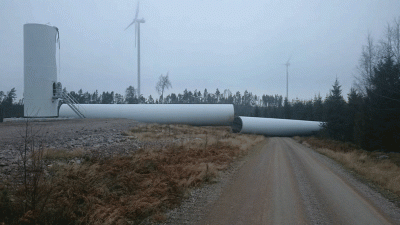
One example (of many) of a recent catastrophic turbine failure is reported by the North German Ostesee Zeitung here. According to the article, just 2 days ago, the blade of a wind turbine snapped off unexpectedly, boring itself into the ground.

turbine blade germany

****

The Ostsee Zeitung writes that local residents were “shocked” and the reason for the collapse is unknown. The online news site writes:

“At the time of the accident there was neither a storm nor unusual weather conditions. ‘We are baffled as well,’ says Carlo Schmidt, Managing Director of Windprojekt company, which operates the turbine in question.”

Luckily no one was injured, or killed.

Wind turbine in Sweden fails with “incredible bang”

vestas v112

Another recent catastrophic failure occurred in Sweden, so reports the Swedish online svt.se news site here.

Forestry machinery operator Erik Karlsson of the Vetlanda municipality heard an “incredible bang” while working on Christmas Eve, but thought nothing of it. Later as went home he discovered that a nearby wind turbine had fallen to the ground across the road.

Vestas_V112-Collapse-1_preview

The huge turbine mast had snapped some 15 meters up and the unit came crashing down, the SVT writes. Authorities quickly cordoned off the wind park area. Here as well the cause of the failure is unknown. The wind park has since been designated as a hazardous area: “The public has been asked to keep away.”

Vestas_V112-Collapse_preview

These are just two recent examples of many of wind turbine collapses.

Blackouts to prevent blackouts

studying candle

****

In addition to catastrophic mechanical failures, wind and solar energy are wreaking havoc on power grid stability, so writes the German onlinemittelhessen.de here.

The online newssite reports that the future for the residents of Wetzlar may be looking bleak. Why?

“If in the future the power goes out, the reason maybe rooted in the energy management act. In order to eliminate the possibility of widespread blackouts, grid operators such as Enwag are obligated to switch off consumers or even entire parts of the city.”

These targeted blackouts are necessary, mittelhessen.de writes, because it is the only way left to keep the power grid from over or under-loading. The site tells readers:

“The probability of large blackouts is increasing with the strongly growing power generation from wind and sun. Experts have long seen the power grid threatened by this.”

Unfortunately grid operators will have to react very quickly to the power grid fluctuations. The mittelhessen.de reports that “there won’t be any time for operators to make long calculations” and that “there will be only an hour to react”. Just how vulnerable is the power grid in the Wetzlar region? Mittelhessen.de writes:

“A chain of seemingly harmless single incidents can in the worst case lead to a domino effect and lead to outages in all connected power networks.”

In plain English: one small problem could lead to a widespread blackout.

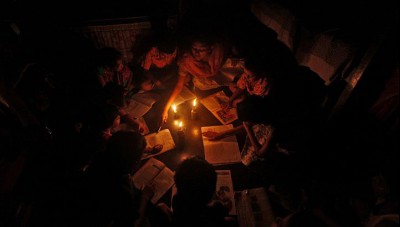
To keep this from happening, the solution is now to conduct targeted blackouts in an attempt to keep the grid balanced. If you are running a company, or merely working on an important document at your PC, then it’ll just be tough luck. Just use paper and pen, and light up a candle.

Junk energy at a high price. Other countries may wish to think twice before copying the model.
NoTricksZone

divine

Why Industrial Wind Turbines, are a Waste of Time & Money!

11 Fatal Flaws with Wind Power

Facts

The wind industry is copping a flogging all over the World. Increasingly, as the industry’s lies and propaganda are replaced by facts, more and more are coming to the obvious conclusion: THESE THINGS DON’T WORK – on any level.

Getting there was only a matter of time.

What has surprised STT is not that journos, pundits and even Global Warming hysterics have sussed the wind power fraud for what it is; it’s that those that previously championed wind power have, instead, joined a chorus calling for serious investment in nuclear power.

Here’s a little ‘paint-by-numbers’ breakdown that reaches that very same conclusion, for much the same reasons.

Top 11 Problems Plaguing Solar And Wind Power
Daily Caller
Andrew Follett
25 December 2015

Despite President Barack Obama’s pocket veto Saturday of attempts to repeal the Clean Power Plan and recent increases in taxpayer support, solar and wind energy are in a tough spot, requiring an estimated $90 trillion of investment to meet carbon dioxide reduction goals.

The fundamental issues of solar and wind power are numerous, so let’s review the top 11.

1: Power Storage Is Incredibly Expensive On A Large Scale

It is currently impossible to economically store power for times when the sun isn’t shining and the wind isn’t blowing. Purchasing enough batteries to provide just three days of storage for an average American household costs about $15,000, and those batteries only last for about five years and are very difficult to recycle.

This is true for home power storage as well, even with the latest batteries. A Tesla power-wall capable of powering a home costs $7,340 to buy. A conservative analysis estimates that a power-wall can save its owner a maximum of $1.06 a day. Such a system would take approximately 25 years to pay for itself, according to the same analysis.

One of the world’s largest and most powerful batteries, located in Fairbanks, Ala., weighs 1,300-metric tons and is larger than a football field. It can only provide enough electricity for about 12,000 residents, or 38 percent of Fairbanks’ population, for seven minutes. That’s useful for short outages, which happen a lot in Alaska, but isn’t effective enough to act as a reserve for solar and wind.

The best way we have of “storing” power is pumping water up a hill, which actually accounts for 99 percent of all global energy storage.

2: The U.S. Power Grid Is Older, And Has Trouble Handling Solar And Wind

“Our power grid works well today. Some complain, but blackouts are rare and large-scale blackout are really rare. The power grid was set up for the [electrical] generation we have. Building a lot of new wind and solar requires much greater expenditure on the grid,” Vice President for Policy of the Institute for Energy Research Daniel Simmons told The Daily Caller News Foundation.

According to the Department of Energy, 70 percent of the transmission lines and power transformers in the country are at least 25 years old.

In order for the power grid to function, demand for energy must exactly match supply. Power demand is relatively predictable and conventional power plans, like nuclear plants and natural gas, can adjust output accordingly. Solar and wind power, however, cannot easily adjust output. They also provide power unpredictably relative to conventional power sources.

On an especially cloudy or windless day, the electrical grid can’t supply enough power from solar or wind alone. Wind and solar also run the risk of producing too much power which can overload and fry the power grid. This is why electrical companies will occasionally pay consumers to take electricity.

3: Rebuilding The Power Grid To Handle Solar And Wind Is Absurdly Expensive

The three power grids that supply the United States with energy are massive and expensive pieces of infrastructure. The power grids are valued at trillions of dollars and can’t be replaced in a timely manner. It takes more than a year to manufacture a new transformer, and transformers aren’t interchangeable, as each one must be individually built specifically for its location. At a time when the U.S. government is more than $18 trillion in debt, building power grids that can handle solar and wind may not be feasible.

Merely building a 3,000-mile network of transmission lines capable of moving power from wind-rich West Texas to market in East Texas proved to be a $6.8 billion effort that began in 2008 and still isn’t entirely finished. Building the infrastructure to move large amounts of solar or wind power from the best places to generate it to the places where power is needed would be incredibly expensive and could cost many times the price of generating the power.

4: Solar and Wind Don’t Provide Power At Useful Times

“Solar is better than wind for providing electricity when electricity is used,” says Simmons. “But during much of the year in, for example, peak electricity demand comes after dark. For example, [on December 17] in California peak electricity demand was at 6pm. But peak solar was at 12:36 and by 6pm, solar production was a zero.”

Power demand is relatively predictable. The output of a solar or wind power plant is quite variable over time and generally doesn’t coincide with the times when power is most needed. Peak power demand also occurs in the evenings, when solar power is going offline. Adding power plants which only provide power at intermittent and unpredictable times makes the power grid more fragile.

5: Solar And Wind Can’t Keep the Lights On By Themselves

Solar and wind power systems require conventional backups to provide power when they cannot. Since the output of solar and wind plants cannot be predicted with high accuracy by forecasts, grid operators have to keep excess reserve running just in case.

But natural gas, coal-fired, or nuclear plants are not simple machines. They can require days to fully turn on from a dead stop. This means that solar and wind power require conventional sources in “stand-by” mode, which means they’re still generating electricity.

Despite this, environmental groups like The Sierra Club still call for “100 percent” solar and wind power.

6: The Best Places For Solar And Wind Are Usually Far Away From Consumers

The places with the highest potential for generating solar or wind power are typically relatively far away from the people who will consume power, according to the Department of Energy. The government agency even maintains maps of how unfeasible long-range transmission can become.

The vast majority of people who use power do not live in deserts or consistently windy areas. The kind of high voltage power lines needed to transport even relatively small amounts of power cost $1.9 to 3.1 million per mile built. Additionally, the kind of “smarter” power systems which can be adjusted to varying energy production created by wind and solar power can cost up to 50 percent more.

7: Solar And Wind Are A Very Small Percent Of The Power Grid Despite Years of Subsidies

“The first 8 months of 2015 wind and solar combined to produce 2.3% of the energy the U.S. consumed. Also wind production is down this year compared to last year,” says Simmons.

Solar and wind have been heavily subsidized since at least the 1970s. In 2010, wind power alone received $5 billion in subsidies, swamping the $654 million oil and gas received in subsides. One in four wind suppliers have gone out of business in the past two years.

In 2014, solar and wind power accounted for only 0.4 and 4.4 percent of electricity generated in the United States, respectively, according to the Energy Information Administration. The total amount of energy created by solar and wind is relatively small even though both systems are heavily subsidized.

8: The Solar And Wind “Low-Hanging Fruit” Have Already Been Taken

The locations where solar and wind power make the most economic sense generally already have a solar or wind power system. Since solar and wind power are only effective in a limited number of locations, “green” power sources are difficult to expand and are simply not practical in some areas.

9: Natural Gas Prices Are Very Low In The United States

Natural gas prices are currently incredibly low in the United States, making it much more difficult for solar and wind power to become cost competitive. Natural gas is already passing coal power as the most used source of electricity. Additionally, natural gas is quite environmentally friendly.

The Department of Energy agrees with research organization Berkeley Earth that “the transition from coal to natural gas for electricity generation has probably been the single largest contributor to the … largely unexpected decline in US CO2 emissions.”

10: Nuclear Energy Has Enormous Potential

The United States just approved its first new nuclear reactor in 20 years. New nuclear reactor designs are much safer and emit less radiation than the coal plants they replace. Nuclear plants take up far less space than wind or solar and do not emit any carbon dioxide.

Recent breakthroughs in fusion could also potentially restart the atomic age when nuclear progress was lauded as a pinnacle of human achievement. Operational fusion power will put most other forms of electricity generation permanently out of business and could occur very soon. Fusion power could easily be “too cheap to meter,” meaning that the cost of generating new power would be below the cost of determining how much power an individual was using, effectively making electricity generation nearly free.

11: Encouraging Wind And Solar Creates Incentives For Massive Corruption

Attempts by governments to encourage solar and wind power have created incentives for corruption even environmentalists acknowledge. The recent Volkswagen scandal illustrates that regulatory attempts to force a specific technology, in this case the adoption of cleaner diesel engines, create incentives that lead to sophisticated cheating by companies. The main incentive of the regulatory agencies is to make rules while avoiding bad publicity, not to actually solve the problem.

The push to encourage “green” systems has already led to serious corruption, such as the Solyndra scandal. Such corruption “crowds out” investment dollars that could be better spent on more workable solutions.
Daily Caller

turbine fire 3

vestas v112

eagle 1

Wonderful news for the Aussies!

Aussie Green Power Scheme Collapse

money_sucking_vortex

Guest essay by Eric Worrall

h/t JoNova – “The Australian” newspaper reports that a rise in costs, climate “fatigue”, and a rise in green tokenism has caused a collapse in demand for an Aussie green energy scheme.

Climate change fatigue, cost hits renewable GreenPower scheme

GreenPower, a scheme run by state governments in which people and businesses pay more for their power to buy non-fossil-fuel electricity, has been hit by up to a 40 per cent increase in cost as retailers pass on the rising price of large-scale renewable energy certificates.

Even before the price jump, the willingness of customers to pay more for renewable energy has ebbed in line with the political debate over climate change policies.

The scheme has gone from more than 900,000 customers in 2008 who bought about 1 per cent of total generation to just over 500,000 who bought just 0.6 per cent of all the electricity generated in 2013.

Since, sales have dropped a further 21 per cent.

A report by UTS’s Institute of Sustainable Futures for the NSW Department of Resources and Energy — which administers the scheme on behalf of all the states — said the rise in roof- top solar panels had contributed to the demise of GreenPower. “It seems that once customers have ‘done their bit’ by paying for solar PV, they no longer see the need to pay extra for GreenPower.”

Read more (paywalled): http://www.theaustralian.com.au/national-affairs/climate/climate-change-fatigue-cost-hits-renewable-greenpower-scheme/news-story/f539152e18a55644110c07a508415a7a

So why is the price of green power rising?

According to the Sydney Morning Herald;

“Retailers are making it more expensive than it needs to be for the consumer,” said Richie Farrell, group manager of investor relations and strategy at Infigen Energy.

“The consumer is entering into a contract with them to buy renewable energy and they are not taking action to enter into a contract with renewable energy providers to supply the electricity, they are just entering into short-term agreements on the spot market to meet the liability the customer has imposed on them through purchasing their product.”

Mr Farrell said it all comes down to supply and demand.

“For a long time the renewable energy certificate market was oversupplied. Everyone knew there was going to be an upcoming shortfall and to avoid that shortfall retailers were required to enter into long-term contracts with people like ourselves to ensure that more renewable supply came into the market.”
Unfortunately for consumers, he said, retailers have so far refused to do that.

“They have sat on their hands and not entered into these new contracts. Basically, by our projections, by 2017-18 we will have more demand than supply for renewable energy, and as such prices increase in that scenario.”

Read more: http://www.smh.com.au/nsw/why-are-green-energy-prices-going-through-the-roof-20160105-glzgva.html

You can hardly blame energy retailers for being hesitant to commit to long term contracts. There simply isn’t an upside, to taking financial risks, to try to revive the already aneamic green energy market.

Australia is facing difficult economic conditions, and the Australian government is carrying a substantial and growing debt.

If the global economic slowdown worsens, Aussie government debt could very rapidly balloon to dangerous levels. In other countries, a public debt crisis was the trigger forretroactive, uncompensated cuts to green subsidies.

When individuals, businesses and governments tighten their belts, unnecessary luxuries like expensive green energy are often top of the list of costs to be cut.

‘Climate criminal’ blows whistle: ‘It’s just about the money!’


Secretary of State John Kerry told the Paris climate conference that ending all U.S. carbon emissions, or even those in all the industrialized world, would do nothing to impact the climate, leading one of the top critics of the climate-change movement to call the speech additional proof that the effort is all about wealth redistribution.

In another major development, the latest draft of the climate agreement does not include the creation of the International Climate Justice Tribunal, which would have been a U.N. agency that billed industrialized nations for the cleanup of natural disasters around the world.

In Kerry’s address to the conference, he made a push to get developing nations to make major commitments in reducing carbon emissions. However, his comments also gave considerable fuel to those who believe Kerry and others are on a fool’s errand.

“The fact is that even if every single American citizen biked to work, carpooled to school, used only solar panels to power their homes, if we each planted a dozen trees, if we somehow eliminated all our domestic greenhouse gas emissions, guess what? That still wouldn’t be enough to offset the carbon pollution from the rest of the world,” Kerry said.

He took a step further.

“If all the industrialized nations went down to zero emissions, remember what I said all the industrialized nations went down to zero emissions, it wouldn’t be enough, not when more than 65 percent of the world’s carbon pollution comes from the developing world,” Kerry added.

Christopher C. Horner is a senior fellow at the Competitive Enterprise Institute and author of multiple books challenging the basis for the climate-change movement. He is in Paris as an observer at the conference, where he has been branded a “climate criminal.”

Horner said Kerry accidentally lurched toward the truth in trying to implore global cooperation.

“What he’s doing is inadvertently pointing out that this is all pain, no gain,” Horner said. “He won’t admit to the pain. They still say that if the state uses its coercive power and forces you into energy rationing and so on … it still wouldn’t impact the climate.”

Kerry used the hypothetical of zero carbon emissions, which is a far cry even from the hotly contested Obama environmental regulations calling for major carbon reductions by 2030. Horner said the real goals go much further and are plenty frightening.

“They’re talking 70-95 percent reductions in this document,” Horner said. “They really do think that they can bring us back to the renewable age, which we left over 100 years ago because we could. Suddenly we liberated hydrocarbon energy. We didn’t have to live on hydro power or solar power.”

While going back to renewables is the stated goal of climate-change activists, Horner said there’s a good reason we moved away from it generations ago.

“We’re not going back to that,” he said. “We left it. It was a time of much-shortened lifespans, disease, drudgery and mortality, crop failures leading to catastrophe and so on.”

Meanwhile, the scrapping of the International Climate Justice Tribunal marks a win on one of Horner’s highest priorities since he envisioned the panel blaming the U.S. and other advanced nations for the severe weather events throughout the world. It’s a charge he believes would have stuck at the tribunal because signatories at the conference will be expected to confess their responsibility for climate change in any final agreement.

But while Horner is thrilled, he said many others in Paris are not.

“It’s clearly going to leave the greens upset and some countries upset because it’s kicking the can down the road on a few issues,” Horner said.

Persistent sticking points are leading some climate-change activists to call for Pope Francis to come and demand unity in advancing a climate deal. Horner said the pontiff had better be ready for a debate.

“He’s going to couch this in terms of social justice, and as I have mentioned to you, that is truly perverse,” he said. “I’m not saying the pope knows this, but social justice, as they see it, is killing tens of thousands of the most vulnerable in every country.”

Listen to the WND/Radio America interview with Christopher C. Horner:

Horner said the explanation for that charge is simple. Implementing emissions reductions places major costs on energy providers, which pass the costs on to consumers. Soaring utility rates will then impact the poor most negatively and European nations that already do this see people having to choose between buying food and paying to heat or cool their homes.

As for the logistics of the conference and any forthcoming agreement, Horner said officials are twisting themselves in legal knots to avoid this being a treaty since they know Congress won’t approve it.

“The buzz here in Paris is that the U.S. Congress is the greatest obstacle to them obtaining the treaty they refuse to call a treaty,” Horner said. “That means the democratic process. There’s nothing democratic about this. If you allow Congress to get a crack at this, it’s over.

“Under Article II, Section 2 of the Constitution, this would never fly. No free society would ever do to itself what they’re demanding of us,” he said.

Horner is one of seven activists opposed to any deal to have their face plastered around Paris on posters branding them climate criminals. After, first joking that activists could have picked a better picture of him, Horner said there is a message of intimidation involved with the posters.

“It’s getting a little long in the tooth, putting up all the bad guys’ pictures so everybody knows what they look like,” Horner said. “We can play the ‘What if Sarah Palin Did It’ game if you want, but they really want everybody here to now what we look like.”

In the end, Horner said the activists’ definition of climate criminal is really an indictment on those working to preserve freedom.

“We point out the policies, history, that it won’t effect the climate, that’s it’s about a wealth transfer, that it will kill the most vulnerable, that it’s a gesture about clearly what they’re openly acknowledging here – to redesign the global economic system,” he said. “When you point those things out, because they aren’t popular in the United States, you are a criminal.”

Copyright 2015 WND

Read more at http://www.wnd.com/2015/12/climate-criminal-blows-whistle-its-just-about-the-money/#gT60jPdzHOZ7qf8l.99

Wind Turbine Torture….World-wide

Germany’s Wind Farm Noise Victims Detail Their Daily Misery

insomnia

****

One of the myths pedalled by Australia’s self-appointed wind farm noise, sleep and health ‘expert’ (a former tobacco advertising guru) is that the known and obvious adverse health impacts from incessant turbine generated low-frequency noise and infrasound are a cooked-up “phenomenon”, exclusive to the English speaking world. Trouble with that little tale is that’s been scotched by the Danes:

Vestas’ Danish Victims Lay Out the FACTS

Denmark Calls Halt to More Wind Farm Harm

And the Germans:

German Medicos Demand Moratorium on New Wind Farms

And the Tawainese:

Winning Taiwanese Hearts and Minds?

And the Turks:

Turkish Court Shuts Down 50 Turbines: Yaylaköy Residents Delighted at 1st Chance to Sleep in Years

Now, back to Germany where – in the video below (it comes with English subtitles) – Heimke and Pieter Hogeveen lay bare their family’s daily despair at being unable to sleep in their very own home.

Ground down by incessant turbine generated low-frequency noise and infrasound, these people have constructed a ‘bedroom’ in their cellar in an attempt to escape their sonic torment; and sent their children to a boarding school in Denmark for the same reason. Clearly fighters, Hiemke and Pieter have enlisted two lawyers in an action against the wind power outfit responsible.

Stop the Climate Insanity….It’s a HUGE Scam!

Bjørn Lomborg: Wind Power ‘Tree’ Symbolises Futility of Paris Climate Jamboree

wind tree paris

****

As a baggage train of some 40,000 climate-cultists get set to jet their way home from Paris – burning up a gazillion gallons of (what they normally rail about as being atmosphere incinerating) kerosene – the fair question has to be asked: ‘and all for what?’

The belief that China and India were going to sign up to terms guaranteed to keep more than a billion people (between them) locked in permanent Stone Age poverty was pure infantile nonsense.

Pragmatist, Narendra Modi is quite right to care a whole lot less about Western anti-humanity, eco-zealots, and a whole lot more about the 300 million or so of his constituents who subsist in world of dirt-floored shanties, without so much as the hope of enjoying an affordable supply of around-the-clock electricity.

poverty india

****

The cultists fumed in Paris, as India and China put the needs of their people ahead of demands from selfish lunatics; equipped with little more than ideology, Macbook Airs and Twitter, as an outlet for their self-possessed rantings. So much easier to pontificate about how the poorest in the world should live (now and forever) with a belly full of Veuve Clicquot and Foie Gras while sitting in 5 star, centrally-heated comfort.

China and India aren’t about to deprive their people of an opportunity to have light at the flick of a switch; and they aren’t about to entertain the insane costs of solar and wind power to get there (save at the symbolic margins): between them, India and China are building, and planning to build, hundreds of new coal and nuclear power plants; designed to drag their people out of the darkness and into well-lit homes and bustling new factories (see this article).

Back in reality land, the childish symbolism that is wind power, copped a spray from the wind industry’s loudest critic, Bjørn Lomborg.

STT takes a different view to Bjørn about the ‘connection’ made between wind power and CO2 emissions:

Bjørn Lomborg: Believe in the Easter Bunny and Tooth Fairy? Then You’ll Probably Believe Wind Power Replaces Fossil Fuels, Too

He also falls for the lazy-language trap of referring to CO2 gas (a naturally occurring trace gas essential for life on Earth) as ‘carbon’: the black sooty stuff that makes a mess of white linen.

But Lomborg is right on the money where he points out the ludicrous costs and pointlessness of a wholly weather dependent power source.

Blowing a chance to help the planet
The Australian
Bjørn Lomborg
5 December 2015

‘Wind tree’ sums up the futility of the Paris climate talks

Outside the Paris climate conference centre, organisers have erected a “wind tree” (arbre a vent), which produces electricity using the power of the breeze. In doing so, they have summed up exactly what is wrong with the conference.

The tree will only produce 3500 kWh a year and it costs about $37,100. So, at a production price of about 11c a year, it will take 89 years to make up just the capital cost. Or, put differently, the cost is 300 per cent more expensive than even traditional wind power, which still struggles without subsidies.

The Conference of Parties (COP21) is about feeling good: spending a lot of money to do very little good, and not about making the choices that will make any difference.

This summit is “the last chance” to avert dangerous temperature rises, if we listen to the Earth League or a bunch of others. It’s going to be “too late” if a meaningful treaty isn’t negotiated here in the next few days, says the French President. It’s a familiar script. Doom-laden warnings about the “last chance to save the planet” date as far back as the earliest climate summits 20 years ago. Time magazine declared 2001 “a global warming treaty’s last chance”, and in 1989 the UN Environment Programme’s executive director warned that the planet faced an ecological disaster “as final as nuclear war” by the turn of the century.

Amid this alarmism, for 20 years well-intentioned climate negotiators have tried to do the same thing over and over and over again: negotiate a treaty that makes an impact on temperature rises. The result? Twenty years of failure with no significant effect on climate change.

These summits have failed for a pretty simple reason. Solar and wind power are still too expensive and inefficient to replace fossil fuels. The Copenhagen-Paris approach requires us to force immature green technologies on the world even though they are not ready or competitive. That’s hugely expensive and inefficient.

Thanks to campaigning non-governmental organisations, politicians and self-interested green energy companies that benefit from huge subsidies, many people believe that solar and wind energy are already major sources of energy.

The reality is that even after two decades of climate talks, they account for a meagre 0.5 per cent of total global energy consumption, according to the International Energy Agency.

And 25 years from now, even envisioning everyone doing all that they promise in Paris, the IEA expects we will get just 2.4 per cent from solar and wind. That tells us that the innovation that’s required to wean the planet off reliance on fossil fuels is not taking place.

That’s why the one glimmer of hope in Paris has been the announcement by Bill Gates, along with Australia, China, India and the US, of a multi-billion-dollar fund for green R&D.

The $27 billion fund is just a first step, but it’s a vitally important one. Just as massive support for research and development got us to the moon, the aim is for a massive focus on green research and development to make climate-friendly forms of energy competitive. This is precisely what the Copenhagen Consensus Centre and I have been arguing for more than eight years.

In a recent peer-reviewed research paper, I looked at all the carbon-cutting promises countries committed to ahead of Paris (their so-called intended nationally determined contributions, or INDCs) for the years 2016-30.

These are what the Paris global treaty will be based on (along with a lot of claims about what might happen outside those dates — something that’s easy for politicians of today to talk about, but that we just can’t take seriously).

What I found when I looked at the national promises was that they would cut global temperatures by just 0.05C by 2100.

And even if every government on the planet not only keeps every Paris promise, reduces all emissions by 2030 and shifts no emissions to other countries, but also keeps these emission reductions throughout the rest of the century, temperatures will be reduced by just 0.17C by the year 2100.

And let’s be clear, that is incredibly — probably even ridiculously — optimistic. Consider the Kyoto Protocol, signed in 1997, never ratified by the US, and eventually abandoned by Canada and Russia and Japan. After several renegotiations, the Kyoto Protocol had been weakened to the point that the hot air left from the collapse of the Soviet Union exceeded the entire promised reductions, leaving the treaty essentially toothless.

The cost of these policies? Extraordinarily, UN officials provide no official estimated costs for the likely treaty. So we are left to make an unofficial tally, which we can do easily enough by adding up the costs of Paris promises submitted by the US, European Union, Mexico and China, which together account for about 80 per cent of the globe’s pledged emissions reductions.

In total, the Paris promises of these four countries/groupings will diminish the global economy by at least $1 trillion a year by 2030 — and that is in an ideal world, where politicians consistently reduce emissions in the most effective, smartest possible ways.

But that won’t happen. It never has in history.

Politicians have a habit of wasting money on phenomenally inefficient subsidies for solar and biofuels. And based on the EU experience, such waste can double the costs of carbon-cutting policies to $2 trillion. That’s $1 to $2 trillion that won’t be spent on global challenges such as malnutrition, poverty and communicable diseases.

We are spending a fortune to make ourselves feel like we are saving the planet. The “wind tree” is an excellent symbol of what’s wrong with Paris.

Bjorn Lomborg is an adjunct professor at the Copenhagen Business School and directs the Copenhagen Consensus Centre.
The Australian

Earlier in the week, The Australian’s Editor had the following take on Lomborg’s message on energy innovation; a message that makes it fairly clear: wind power is an abject failure – for fairly obvious reasons – here’s the output from all wind farms connected to the Eastern Grid (installed capacity of 3,669MW – spread over NSW, VIC, TAS & SA) during June:

June 2015 National

And, if there is to be a true alternative to fossil fuel power generation sources, then we should stop praying to the Wind Gods, and find something that’s recognizable as a ‘system’, rather than a lesson in total ‘chaos’.

Climate change demands innovation, not subsidy
The Australian
2 December 2015

Faith in clean energy technology has a long pedigree

No need to get hot under the collar — Malcolm Turnbull’s climate policy is fundamentally the same as Tony Abbott’s. The targets that the Prime Minister took to Paris — emission reductions of 26-28 per cent by 2030 — are those adopted by Mr Abbott in August.

These targets are proportionate to Australia’s economic weight and our small contribution to the world’s greenhouse gases. They are consistent with the precautionary principle that Australia should not get ahead of the northern hemisphere’s big polluters. It’s true that Mr Turnbull has left open the possibility in the future that Australia would concur in a collective agreement to pursue deeper cuts. By definition, this would not involve Australia going it alone.

There is a pseudo controversy over climate mitigation and foreign aid. In Paris, Mr Turnbull announced a five-year diversion of at least $1 billion from the foreign aid budget to climate mitigation projects in the Pacific. Labor’s complaints ring hollow. Only last month Bill Shorten toured the Pacific (remember the prophesied climate refugees?) to talk up the threat of climate change.

Now, in consultation with Pacific nations, Australia is dedicating funds to climate mitigation projects in the region. As for the effect on foreign aid spending more generally, it was Labor that inflated the budget to win a seat on the UN Security Council.

On climate change Mr Turnbull’s point of difference with Mr Abbott is his emphasis on innovation as a tool for mitigation and adaptation. Innovation is a theme of the Turnbull government but it takes on special significance at the Paris climate meeting. Australia has promised to double its clean energy research and development as part of the 20-nation project known as Mission Innovation.

In his Paris speech, Mr Turnbull said: “We firmly believe that it is innovation and technology which will enable us both to drive stronger economic growth and a cleaner environment. We are a highly social and innovative species and so the more we share innovative technologies, the better they will become.” This commitment coincides with the unveiling in Paris of the Breakthrough Energy Coalition spearheaded by Bill Gates, Mark Zuckerberg and other entrepreneurs. They will invest in clean energy projects in sectors such as electricity generation and storage.

As Macquarie University’s Jonathan Symons says, the impetus to innovate sometimes has been misrepresented by environmentalists as a manifesto for inaction. “It is true that the cost of wind and solar are falling rapidly and both can now be competitive at low levels of grid penetration,” Dr Symons says. “However, associated system costs and technical challenges increase with the market share of intermittent energy. Without accelerated innovation, it is clear that existing renewable technologies will not support deep decarbonisation of the global economy.”

He also points out that notwithstanding Mr Turnbull’s timely gospel of climate innovation, this has been a faith subscribed to by figures as diverse as John Howard, Barack Obama, British economist Nicholas Stern and commentator Bjorn Lomborg.

In 2005 Mr Howard joined the Asia-Pacific Partnership on Clean Development and Climate. Known as AP6, this was an initiative of George W. Bush and one that emphasised voluntary climate mitigation through the sharing of clean energy technology. It shows that the conservative side of politics has long recognised the need for climate mitigation by innovation.

Dr Lomborg’s championing of innovation is central to his view that the Paris meeting, like the meetings before it, is likely to generate alarmist rhetoric (anyone like another last chance to save the planet?) but fail to advance the cause of climate mitigation.

“For twenty years, we have insisted on trying to solve climate change by supporting production of mainly solar and wind power,” he says in a blog for this newspaper. “The problem with this approach is that it puts the cart in front of the horse.

Green technologies are not yet mature and not yet competitive, but we insist on pushing them out to the world. Instead of production subsidies, governments should focus on making renewable energy cheaper and competitive through research and development. Once the price of green energy has been innovated down below the price of fossil fuels, everyone will switch.”

Dr Lomborg greeted the Mr Gates-led coalition as a positive sign confirming innovation as the key to climate mitigation. But he points out that today’s favoured subsidies do not encourage innovation, instead making companies stick to inefficient but subsidised technologies such as solar and wind power.

After two decades of climate talks, solar and wind account for just 0.5 per cent of global energy. “And 25 years from now, even with a very optimistic scenario, envisioning everyone doing all that they promise in Paris, the International Energy Agency expects that we will get just 2.4 per cent from solar and wind,” Dr Lomborg says.
The Australian

wind turbines