|
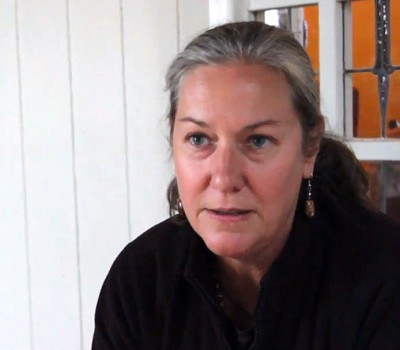
Sunday Express 24th August, 2014 I’m abandoning my home over wind turbine illness Credit: Paula Murray
|
Wind Turbine Syndrome
People of Scotland are Tired of Excuses, They Are Demanding Justice for Wind Turbine Victims!
Wind Farms Turn Scottish Highland Homes Into Sonic Torture Traps
August 23, 2014 by

An ill wind blows as the surge of turbines stirs fears of silent danger to our health
Scottish Express
Paula Murray
August 2014
TENS of thousands of Scots may be suffering from a hidden sickness epidemic caused by wind farms, campaigners have warned.
The Sunday Express can reveal that the Scottish Government has recently commissioned a study into the potential ill effects of turbines at 10 sites across the country.
More than 33,500 families live within two miles of these 10 wind farms – which represent just a fraction of the 2,300 turbines – already built north of the Border.
Hundreds of residents are now being asked to report back to Holyrood ministers about the visual impacts, and effects of noise and shadow flickers from nearby wind farms.
Campaigners fear that many people do not realise they are suffering from ailments brought on by infrasound – noise at such a low frequency that it cannot be heard but can be felt.
One such person is Andrew Vivers, an ex-Army captain who has suffered from headaches, dizziness, tinnitus, raised blood pressure and disturbed sleep since Ark Hill wind farm was built near his home in Glamis, Angus.
Mr Vivers, who served almost 10 years in the military, said the authorities had so far refused to accept the ill effects of infrasound despite it being a “known military interrogation aid and weapon”.
He said: “When white noise was disallowed they went on to infrasound. If it is directed at you, you can feel your brain or your body vibrating. With wind turbines, you don’t realise that is what’s happening to you.
“It is bonkers that infrasound low frequency noise monitoring is not included in any environmental assessments. It should be mandatory before and after turbine erection.”
He is raising concerns about an “acknowledged and unexplained increase of insomnia, dizziness and headaches in Dundee”, where two large wind turbines have been operating since 2006. Mr Vivers, 59, said all medical explanations of his own sudden health issues had been ruled out and it was more than 12 months before he was convinced of the link to the wind farm.
He said: “I was getting these headaches and dizziness and just not sleeping, but I was putting it all down to all sorts of other things. A couple of times I was walking on the hills around the house with my dogs and got a really bad dizzy spell.
“I actually had to sit down for a few minutes and while I was sitting down wondering what on earth was wrong with me, I did notice the wind was coming straight from the turbines.” Mr Vivers said he has also witnessed an “incredible number” of dead hares on the moors around Ark Hill and believes they may have succumbed to “internal haemorrhaging and death” as a result of the turbines.
He added: “If this coming winter is going to be anything like the last and with the plans to build a second wind farm much closer to us, I think we’ll have to sell our home and move elsewhere.”
The 10 sites under the microscope in the new survey include one in Dunfermline, where almost 23,000 households are nearby, and Little Raith near Lochgelly, Fife, where there are nearly 9,000 households.
The others are Achany in Sutherland, Baillie near Thurso, Caithness, Dalswinton in Dumfriesshire, Drone Hill, near Coldingham, Berwickshire, Griffin in Perthshire, Hadyard Hill in Ayrshire, Neilston in Renfrewshire and West Knock, near Stuartfield, Aberdeenshire.
About 2,000 questionnaires have been sent to residents in a move that is understood to have caused tension between the Scottish Government and the renewable energy industry.
The “wind farm impacts study” is being managed by ClimateXChange, which has published information about the project online.
It says: “The research will use two sources of information: how local residents experience and react to visual, noise and shadow-flicker impacts, and how the predicted impact at the planning stage matches the impact when the wind farm is operating.
“The final report is due in autumn 2014. It will inform the Scottish Government’s approach to planning policy on renewables and good practice on managing the impact of wind farms on local residents.”
One of the contractors involved in the project is Hoare Lea Acoustics, an international firm which specialises in measuring noise and vibration from wind farms.
However, Susan Croswaithe, the UK spokeswoman for campaign group European Platform Against Windfarms, said the study would be “little more than a box ticking exercise”.
She added: “On the face of it, it does look like a step in the right direction, but can we really trust it? My issue is that it is not independent enough.
“Our website is full of examples of people not being listened to.
“We have two very large wind farms near us in Ayrshire, Arecleoch and Mark Hill – 60 turbines and 28 turbines.
“If people in my area have noticed they are feeling better at the moment but do not understand why, it may be because the turbines have been switched off while they do maintenance on the grid.”
Scottish Express

Andrew Viviers makes the following – perfectly reasonable – observation about noise testing:
“It is bonkers that infrasound low frequency noise monitoring is not included in any environmental assessments. It should be mandatory before and after turbine erection.”
The idea of “testing” for the impacts from turbine noise and vibration without including infrasound and low-frequency noise is “bonkers”, indeed. Dr Mariana Alves-Pereira – who has been studying low-frequency noise impacts with her research group for 30 years, certainly thinks so (see our post here).
The noise standards – written by the wind industry – rely on the dB(A) weighting and, therefore, deliberately ignore the vast bulk of the sound energy produced by turbines – which pervades homes as infrasound and in frequencies that cause sleep deprivation and other adverse health effects (see our post here).
The standards not only ignore infrasound, but the South Australian EPA’s noise guidelines even ludicrously assert that infrasound was a feature of earlier turbine designs that is not present at “modern wind farms”. SA’s EPA – despite being incapable of following its own guidelines when it came to noise testing at Waterloo – managed to find infrasound present inside neighbouring homes at a very modern wind farm, that started operation in 2010 (see our posts here and here). For a great little summary on wind turbine generated infrasound and its adverse affects on health, check out this video of Alex Salt, laying it out, in no uncertain terms.
blob:https%3A//www.youtube.com/5dcfb8f1-40b5-4c86-91c6-bcc4ee86c9f4
Given the work of Professor Salt (outlined in the video) and Steven Cooper’s findings at Cape Bridgewater (see our post here) “the recent unexplained increase of insomnia, dizziness and headaches in Dundee”, referred to by Andrew Viviers is not so difficult to explain at all.
The direct link between very low-frequency turbine noise, sleep disturbance and annoyance was well and truly established by Neil Kelley & Co over 25 years ago (see posts here and here and here). And the wind industry knew all about it (see our post here).
Well, Highlanders – it seems like the right time to grab your Claymores and bring your political betters to account.

Wind Turbines are Bad for our Health. No More Denying!
Scotland’s Toxic Shock: Wind Farms Poisoning Neighbours
August 15, 2014 by

Some time back, in our post “The Breakout” we talked about just how sick and tired we all are of crippling wind power driven electricity prices, how those unfortunates stuck with giant fans are sick and constantly tired as a result of incessant and debilitating low-frequency turbine noise – and how the world is growing tired of the nauseating stream of wind industry corruption, lies and deceit.
Adverse interference with water tables is just another “wonderful” feature of “eco-friendly” wind farms. The largest turbines require a steel reinforced concrete base of around 400 m³.
The base itself – depending on the rock strata – for 3MW turbines will be set up to 30 m below the surface and – if the soil is unstable and rock anchors are required – reinforced concrete pillars are drilled up to 90 m below the surface and literally screwed into the rock strata. In either event, there will be obvious disturbance of – and interference with – underground water or streams percolating underground.
Wind power outfits routinely lie about the impact of their giant fans on groundwater. One of them – Scottish Power – was caught out in Bonnie Scotland not only poisoning the local inhabitants drinking from their water supply – the water supply it polluted – but lying and obfuscating in classic wind weasel fashion about the harm that it is causing to human health (see our post here).
Since then, the list of environmental havoc caused by wind farms across Scotland has grown to such proportions as to be fairly called an unmitigated ecological disaster. Here’s the Sunday Post cataloging just some of the trail of toxic destruction caused by the roll-out of wind power across the Highlands.
Special Investigation: Toxic wind turbines
Sunday Post
Derek Lambie
23 March 2014
Damning evidence of wind farms polluting the Scottish countryside can today be revealed by The Sunday Post.
Scotland’s environmental watchdog has probed more than 100 incidents involving turbines in just six years, including diesel spills, dirty rivers, blocked drains and excessive noise.
Alarmingly, they also include the contamination of drinking water and the indiscriminate dumping of waste, with warning notices issued to a handful of energy giants.
The revelations come just a week after our investigation showed £1.8 billion in Government subsidies have been awarded to operators to build turbines since Alex Salmond took office in 2007.
Anti-wind farm campaigners yesterday insisted Scotland’s communities are now “under siege” and demanded an independent inquiry into the environmental damage.
Murdo Fraser MSP, convener of Holyrood’s Economy, Energy and Tourism Committee, said: “I am both surprised and concerned by the scale of these incidents.
“The fact there were more than 100 complaints is a dismal record. This should serve as a wake-up call that wind energy is not as clean and green as is being suggested.” He added: “What’s worse is that the current Scottish Government seems to have an obsession about wind power and the expansion in the number of turbines shows no signs of relenting any time soon.”
Promotion of green energy, particularly the growth of onshore and off-shore wind farms, has been one of the SNP’s key policies since 2007.
The Scottish Government’s target is to generate the equivalent of 100% of the country’s electricity consumption, and 11% of heat demand, from renewables by 2020.
In recent years, ministers have invested heavily in the sector, insisting Scotland has a quarter of all of Europe’s wind energy potential.
But wind power is becoming increasingly unpopular, with giant turbines now scattered across much of the Scottish countryside.
There are now 219 operational wind farms in Scotland, with at least 2,400 turbines between them.
Moray has the most sites, with 20 in operation, while Orkney has the most turbines, with 600 across the archipelago, although the majority are owned by farmers and other individuals.
Now, we can reveal the Scottish Environment Protection Agency has investigated 130 ‘pollution reports’ connected to wind farms or turbines over the past six years. In June 2012, elevated levels of the banned insecticide Dieldrin were found in samples from a private drinking water supply in Aberdeenshire.
A redacted SEPA report, obtained under Freedom of Information, states: “It was noted a wind turbine had recently been erected by the nearby farmer.”
Run-off from the construction of a wind farm near Loch Fyne in February 2012 caused concern that fish had stopped feeding, with SEPA officers discovering a burn was “running brown” and that “a noticeable slick on Loch Fyne was visible”.
In another incident in November 2011, 1,000 litres of oil leaked from a turbine at the Clyde wind farm in Abington, Lanarkshire, resulting in an emergency clean-up operation.
Warning letters have been sent by the environment agency to a number of operators, including Siemens, after another fuel spill at the same 152-turbine site four months later.
A report on that incident states: “Siemens…maintained it was under control. However…operators who then visited the area did not see any action being taken and fuel ponding at the base of the generator”.
A warning was issued to Scottish and Southern Energy in February 2011 after the Tombane burn, near the Griffin wind farm in Perthshire, turned yellow as a result of poor drainage.
The same firm was sent another letter in June that year after SEPA found high levels of silt in a burn near a wind farm in Elvanfoot, Lanarkshire.
Officers also then discovered “significant damage” to 50 metres of land and found “the entire area had been stripped of vegetation” as a result of unauthorized work to divert water.
Other incidents investigated since 2007 include odours, excessive noise from turbines and heavy goods vehicles and the indiscriminate dumping of waste and soil.
Dr John Constable, director of the Renewable Energy Foundation, a charity that publishes data on the energy sector, said: “The new information from SEPA deepens concerns about the corrupting effect of overly generous subsidies to wind power. Many will wonder whether wind companies are just too busy counting their money to take proper care of the environment.”
Linda Holt, spokeswoman for action group Scotland Against Spin, said: “A lot of environmentalists actually oppose wind farms for reasons like this. If you go to wind farms they are odd, eerie, places that drive away wildlife, never mind people. The idea they are environmentally-friendly is not true — they can be hostile. We have always suspected they can do great harm to the landscape and now we have proof.”
Officials at SEPA stressed not all 130 complaints were found to be a direct result of wind farms, with some caused by “agricultural and human activities” near sites and others still unsubstantiated.
A spokesman added: “While a number of these complaints have been in connection with individual wind farms these are generally during the construction phase of the development and relate to instances of increased silt in watercourses as a result of run-off from the site. SEPA, alongside partner organisations, continues to actively engage with the renewable energy industry to ensure best practice is followed and measures put in place to mitigate against any impact on the local water environment.”
Joss Blamire, senior policy manager at Scottish Renewables, insisted the “biggest threat” to the countryside is climate change and not wind farms. He added: “Onshore wind projects are subject to rigorous environmental assessments. We work closely with groups, including SEPA, the RSPB and Scottish Natural Heritage to ensure the highest conservation and biodiversity standards are met.”
The revelations come just months after evidence emerged of contamination in the water supply to homes in the shadow of Europe’s largest wind farm.
People living near Whitelee, which has 215 turbines, complained of severe vomiting and diarrhoea with water samples showing high readings of E. Coli and other coliform bacteria.
Tests carried out between May 2010 and April last year by local resident Dr Rachel Connor, a retired clinical radiologist, showed only three out of 36 samples met acceptable standards.
Operators Scottish Power denied causing the pollution, but admitted not warning anyone that drinking water from 10 homes in Ayrshire was, at times, grossly contaminated.
Dr Connor said: “I would expect this likely contamination of drinking water must be happening all over Scotland. If there is not an actual cover-up, then there is probably complacency to the point of negligence by developers and statutory authorities.”
Sunday Post
According to Scottish Renewable’s head spin doctor, Joss Blamire, the real threat to peoples’ health is “climate change”. Try telling that to the Whitelee wind farm’s victims – suffering severe vomiting and diarrhea caused by E. Coli and other coliform bacteria.
Much to the annoyance of the likes of Joss Blamire, Dr Rachel Connor has done precisely what competent and caring medicos do: she’s examined the evidence, analysed the data and concluded that peoples’ health is suffering as a direct result of water contamination caused by wind farms.
Built on subsidies and lies, wrapped in half-truths, peopled by spin doctors, bullies and thugs, and toxic to the point of making people violently ill – the wind industry represents the greatest economic and environmental fraud of all time. This insanity must end now. In Australia, that means an end to the mandatory RET – the largest transfer of wealth from the poorest to the richest in the history of the Commonwealth (seeour post here). And all that subsidy and suffering for no measurable environmental benefit.

More Proof that Wind Turbine Syndrome is REAL!
Pac Hydro’s Cape Bridgewater Wind Farm Victims Vindicated
August 6, 2014 by
Headache for residents after monitoring reveals bad vibes
The Australian
Graham Lloyd
2 August 2014
FOR the past two months, Melissa Ware’s 150-year-old stone-foundation house in the shadow of the Cape Bridgewater wind farm in Victoria has been wired to monitor sounds that cannot be heard easily by the human ear.
Ware, who is partially deaf, and two nearby families have kept a diary of the physical sensations they were experiencing at regular intervals. A scorecard was developed ranking three factors — noise, vibration and sensation — on a scale of one to five.
The research has been funded by wind farm owner Pacific Hydro and undertaken by acoustics specialist Steven Cooper, who has had a long interest in why wind turbines have produced so many health complaints that defy easy explanation.
For six years, since the wind turbines started operating at Cape Bridgewater, Ware has complained of headaches and other “pressure” effects she can attribute only to the arrival of the renewable energy project she once had supported enthusiastically.
The early results from comparing the readings from Cooper’s highly sensitive microphones and Ware’s diary notes provide uncomfortable evidence for the wind industry and some relief for Ware, told for six years that her problems were all in her head.
During the eight-week trials at Cape Bridgewater, from inside her house, Ware has been able to express with 100 per cent accuracy what is happening with the wind turbines outside.
In a report-back meeting to residents and the company, Cooper posed the theory that high sensations, including headaches and chest pains, correlated to times when the turbine blades were not efficiently aligned to the wind.
The results from recordings and residents’ diaries show that a change in power output of more than 20 per cent leads to a change in sensation for the residents.
“The main thing I get from the study is that there is a direct correlation from the noise coming out of the wind farm and the response in my body to that noise,” Ware says. “I have a bilateral hearing impairment, and I don’t always hear from the wind farm, but I feel it from the ground, the floor or the furniture I am sitting on.”
Cooper has said the Pacific Hydro Cape Bridgewater development complies with existing noise guidelines. Issues of ambient noise from waves on surrounding cliffs and wind direction also are relevant in the data.
Pacific Hydro has published the minutes of the report-back meetings and Cooper’s preliminary findings but has drawn no public conclusions. Company spokesman Andrew Richards says Cooper’s work has “resulted in some interesting data” but “doesn’t necessarily provide any conclusions or outcomes”.
But Richards acknowledges there is a problem. “Whatever they are experiencing is real for them,” he says.
University of Sydney public health specialist Simon Chapman has used the term “nocebo” to argue that the complaints are psychosomatic and exacerbated by warnings from anti-wind farm groups.
In a new paper, Chapman says “The statement that ‘more than 40’ houses have been ‘abandoned’ because of wind turbines in Australia is a factoid promoted by wind farm opponents for dramatic, rhetorical impact.”
A review by the National Health and Medical Research Council says there is “no consistent evidence that adverse health effects are caused by exposure to wind turbine noise”.
However, it says: “While no research has directly addressed the association between infrasound from wind turbines and health effects, the possibility of such an association cannot be excluded on present evidence.”
Concerned residents in Australia want the federal government to use Cooper’s research methodology at Cape Bridgewater as the basis for an independent study that has been promised by Industry Minister Ian Macfarlane.
The Australian
Steven Cooper is yet to analyse the mountain of data he has collected, but a snapshot of his initial findings can be found in the presentation he gave Cape Bridgewater’s long-suffering residents a couple of weeks back: pdf available here. Here’s a summary of his preliminary findings:
Initial Findings
- Discussions revealed different impacts on residents – broken down to noise, vibration and sensation to be reported on a 1 – 5 severity scale.
- Developed a method of graphically displaying results where blue is noise, green is vibration and red is sensation
- When plotting power output of wind farms the initial assessment could not correlate results with observations except for showing changes
- Found residents were just reporting changes they noticed in their perceived impacts. MAJOR FINDING
- Changed reporting to give regular (1 – 2 hr) observations not just changes.
- Plotting the observations versus the power output of the wind farm found correlation with some of the various acoustic indices INSIDE the dwellings.
- High sensation levels related to turbines just starting, change in power levels by say more than 20% (either up or down) and when wind exceeds maximum power output and blades are being de-powered.
- Correlation of external background level versus power output but no correlation of observations with the external dB(A) level.
- Issue of ambient noise from waves on cliff/ocean and wind direction is relevant in data.
Preliminary Findings to Date
- The use of dB(A) noise levels external to a dwelling have no correlation with internal noise levels or impacts that residents identified as occurring as a result of the wind farm.
- With the wind farm not in operation the residents indicate that noise, vibration and sensation are all at low severity ratings although there was one resident who clearly has a greater sensitivity than the other residents and is able to identify instances of noise, vibration and sensation that are above a threshold level.
- However those instances are of short duration and are not of a constant impact.
- There is a direct correlation with the external dB(A) level and the power output of the wind farm.
- There is correlation between the power level of the wind farm versus the dB(A)LF level determined inside residential dwellings.
- Where the dB(A)LF exceeds 20 dB there is a corresponding identification of noise in the diary observations.
- Where the internal measurements reveal the dB(A) L95 is above 20 dB(A) together with the dB(A)LF above 20 and the same time dB(C) above 50dB and the 4 Hz 1/3 octave band above 50dB then there is a higher degree of noise and sensation which would be deemed by the residents as unacceptable.
- The higher levels of sensation occur with the qualification of the above indices and also exhibit a noticeable drop in the dB(C) Leq minus dB(A) Leq together with an increase in dB(A) Leq minus dB(A) L95. This may provide a simple tool to identify the need for examination of modulation of characteristics. However it is noted that there are some limitations in normal noise loggers to provide accurate results of the dB(A) Leq and dB(A) L95, due to the noise floor of instrumentation used.
- At none of the houses has the dB(G) been above 85 and therefore if that level has taken as the hearing threshold of infrasound then there is no audible infrasound in any of the houses
- The presence of the wind turbine signature, which is related to the blade pass frequency and multiple harmonics of that frequency, is readily identified inside dwellings and at times outside dwellings.
- The wind turbines signature does not exists when the turbines are not operational.
- The use of 1/3 octave band information to compare infrasound generated by turbines and the infrasound in the natural environment does not contain the required information to identify any difference. When supplemented by narrow band analysis of the infrasound region the results clearly show that the natural environment of infrasound has no such periodic patterns.
- Electrical interference/surges in mains + very strong winds has created problems with some data collection.
- The significant amount of data that is available from the monitoring will require further time for detailed analysis in view of issues that have been raised by the residents during the course of the monitoring and the findings to date.
- Analysis of vibration measurements around an inside houses is yet to be undertaken.
- Basic material is to be presented looking at the pitch angles etc. during certain time periods for further analysis by Pacific Hydro and its turbine suppliers.
- The resident’s observations and identification of sensation separately to vibration and noise indicates that the major source of complaint for the operation of the turbines would appear to be related to sensation rather than noise.
Steven Cooper July 2014
It’s clear then that what people like Melissa Ware are experiencing isn’t a figment of their imaginations; or the product of “scaremongering” by the Waubra Foundation.
The punishment being meted out to people like Melissa leaves them with a choice: stay and suffer; or pack up and leave. Plenty of Australian families have plumped for the latter.
For a rundown on Australian wind farm victims abandoning perfectly good homes see our post here – where Senator John Madigan details the scale of a perfectly avoidable disaster.

Among those who have decided that their long-term health is more important than their homes is another of Pac Hydro’s victims, Sonia Trist (see our post here).
All of this suffering is the direct product of the mandatory RET: no RET, no RECs, no wind farms. The misery being dealt up at Cape Bridgewater on a nightly basis is just another unjustified cost of the most costly and perverse industry welfare scheme ever devised (see our post here).
Almost graciously, Pac Hydro spin doctor Andrew Richards concedes in favour of its victims that: “Whatever they are experiencing is real for them.” Funny about that.
For a little taste of the “reality” of the life brought to Cape Bridgewater by Pac Hydro, cop an earful of the soundtrack to this video (and see our post here).
****
****
In Spite of Evidence, Wind Pushers Still Trying To Deny Wind Turbines Make People Sick!
Lloyd, G. Headache for Residents After Monitoring Reveals Bad Vibes — Cape Bridgewater
Graham Lloyd, Environment Editor, The Australian
August 02, 2014

Melissa Ware at Cape Bridgewater wind farm in Victoria; she has a hearing disability but can tell from inside her home what is happening with the turbines outside. Picture: David Geraghty Source: News Corp Australia
FOR the past two months, Melissa Ware’s 150-year-old stone foundation house in the shadow of the Cape Bridgewater wind farm in South Australia has been wired to monitor sounds that cannot be heard easily by the human ear.
Ware, who is partially deaf, and two nearby families have kept a diary of the physical sensations they were experiencing at regular intervals. A scorecard was developed ranking three factors — noise, vibration and sensation — on a scale of one to five.
The research has been funded by wind farm owner Pacific Hydro and undertaken by acoustics specialist Steven Cooper, who has had a long interest in why wind turbines have produced so many health complaints that defy easy explanation.
For six years, since the wind turbines started operating at Cape Bridgewater, Ware has complained of headaches and other “pressure” effects she can attribute only to the arrival of the renewable energy project she once had supported enthusiastically.
The early results from comparing the readings from Cooper’s highly sensitive microphones and Ware’s diary notes provide uncomfortable evidence for the wind industry and some relief for Ware, told for six years that her problems were all in her head.
During the eight-week trials at Cape Bridgewater, from inside her house, Ware has been able to express with 100 per cent accuracy what is happening with the wind turbines outside.
In a report-back meeting to residents and the company, Cooper posed the theory that high sensations, including headaches and chest pains, correlated to times when the turbine blades were not efficiently aligned to the wind.
The results from recordings and residents’ diaries show that a change in power output of more than 20 per cent leads to a change in sensation for the residents.
“The main thing I get from the study is that there is a direct correlation from the noise coming out of the wind farm and the response in my body to that noise,’’ Ware says. “I have a bilateral hearing impairment, and I don’t always hear from the wind farm, but I feel it from the ground, the floor or the furniture I am sitting on.’’
Cooper has said the Pacific Hydro Cape Bridgewater development complies with existing noise guidelines. Issues of ambient noise from waves on surrounding cliffs and wind direction also are relevant in the data.
Pacific Hydro has published the minutes of the report-back meetings and Cooper’s preliminary findings but has drawn no public conclusions. Company spokesman Andrew Richards says Cooper’s work has “resulted in some interesting data” but “doesn’t necessarily provide any conclusions or outcomes”.
But Richards acknowledges there a problem. “Whatever they are experiencing is real for them,’’ he says.
University of Sydney public health specialist Simon Chapman has used the term “necebo” to argue that the complaints are psychosomatic and exacerbated by warnings from anti-wind farm groups.
In a new paper, Chapman says “The statement that ‘more than 40’ houses have been ‘abandoned’ because of wind turbines in Australia is a factoid promoted by wind farm opponents for dramatic, rhetorical impact.’’
A review by the National Health and Medical Research Council says there is “no consistent evidence that adverse health effects are caused by exposure to wind turbine noise’’.
However, it says: “While no research has directly addressed the association between infrasound from wind turbines and health effects, the possibility of such an association cannot be excluded on present evidence.’’
Concerned residents in Australia want the federal government to use Cooper’s research methodology at Cape Bridgewater as the basis for an independent study that has been promised by Industry Minister Ian Macfarlane.
Visit the Pacific Hydro website to view the preliminary findings:http://www.pacifichydro.com.au/english/our-communities/communities/cape-bridgewater-acoustic-testing-presentation/?language=en
Original story available at http://www.theaustralian.com.au/national-affairs/policy/headache-for-residents-after-monitoring-reveals-bad-vibes/story-e6frg6xf-1227010639170
Wind Turbine Syndrome Showing Up in Vermont Doctor’s patients!
Medical doctor sees Wind Turbine Syndrome in his patients (Vermont)

“Wind Turbine Noise & Adverse Health Effects”
Testimony before the Vermont Public Service Board (PSB) 7/29/14
….— by Sandy Reider, MD
My name is Sandy Reider, I am a primary care physician in Lyndonville, and I have been practicing clinical medicine in Vermont since I received my license in 1971. [Dr. Reider is a graduate of the Harvard University School of Medicine — Editor.]
In the interest of full disclosure, I am not being paid for involvement in this issue, nor did I seek this out; rather, it found me by way of a patient I had known well for several years, and who, in late 2011, suddenly developed severe insomnia, anxiety, headaches, ringing ears, difficulty concentrating, and frequent nausea, seemingly out of the blue. This puzzled us both for a few months before we finally came to understand that he suffered from what was, then, a relatively new clinical entity known as “wind turbine syndrome”, related in his particular case to the comparatively small NPS 100 KW turbine that began generating power atop Burke Mountain in the fall of 2011.
In the course of the 2012 legislative session, I described this patient in detail in testimony for the Senate Natural Resources and Health Care Committees, as well as the Governor’s Siting Commission. Since his symptoms were so typical and similar to those described by thousands of other individuals living too close to large wind turbines all over the globe, I have attached my testimony for the Senate Health Care Committee and encourage you to review it for its very characteristic description of what it is that this board, I trust, hopes to mitigate by recommending more protective sound standards for these industrial wind installations.
I should add that I have seen 4 additional patients living close to the large Sheffield and Lowell projects, as well as an individual living near another single NPS 100KW turbine in Vergennes. All presented with similar, though not identical, symptoms to those described in my testimony.
That there have already been so many complaints here in Vermont related to wind turbines suggests that the current noise standards may be inadequate. Either the utilities have been regularly out of compliance with the current existing standards (Shirley Nelson’s detailed daily records suggest this has indeed occurred with some regularity) and/or that the scientific data and studies upon which the current noise standards are based is incomplete, or possibly just plain wrong.
Over the past 2 years I have reviewed much of the relevant scientific literature, and out of my 42 years of experience and perspective as a clinician, respectfully offer the following observations and comments.
Firstly, I do not doubt at all that these large turbines can and do cause serious health problems in a significant number of persons living nearby, even though the vibrational-acoustic mechanisms behind this harm are not yet completely understood (1,5). Repetitive sleep disruption is the most often cited adverse effect, and disturbed sleep and its resulting stress over time is known to cause or exacerbate cardiovascular illnesses (2, ), chronic anxiety and depression, as well as worsening of other pre-existing medical problems. This is especially concerning for the most vulnerable among us — children, the elderly, those who are naturally sensitive to sound, or prone to motion sickness or migraine headaches, and, as mentioned, those who are unwell to start with.
The position adopted by developers of large industrial wind projects, and thus far supported by regulatory and health agencies, has been that there is no evidence of a direct effect on health from wind turbines; rather, that the claimed adverse health effects are indirect, due mainly to the individual’s negative attitude about the wind turbines (so-called “nocebo” effect), and therefore it is their fault, it’s all in their heads, and so on. Not only is this incorrect, it is disingenuous. There is simply no clinical justification for ignoring harm being done to individuals and communities, whether direct or indirect, on these grounds — simply put, harm is harm, whatever the mechanism.
However, good evidence for direct adverse effects has existed since the mid-80’s when Neil Kelley headed a group of researchers, under the auspices of the US Department of Energy and NASA, and found conclusive evidence that adverse effects, very similar to those that describe “wind turbine syndrome”, were due primarily to very low frequency sound and inaudible infrasound (6). This role of infrasound was subsequently confirmed by Kelley’s team under controlled laboratory conditions, and resulted in a complete redesign of turbines from the downwind trestle-mounted turbines to today’s upwind turbine on a single massive tower. Furthermore, he recommended protective maximum levels of this low frequency sound.
The joint radiation levels (expressed in terms of acoustic intensity and measured external to a structure) in the 8, 16, 31.5 and 63 Hz standard (ISO) octaves should not exceed band intensity threshold limits of 60, 50, 40 and 40 dB (re 1 pWm –2) more than 20% of the time. These figures compare favorably with a summary of low-frequency annoyance situations by Hubbard.
(It is worth noting that very often infrasound levels are higher inside a building than outside, the structure acting as a resonating chamber and amplifying the lower “vibration” frequencies. Thus measurements for low frequency sound should be made inside the structure as well as outside. Also, low frequency sound levels are not only building design and geometry specific, but also site specific, especially in a place like Vermont where the topography and climactic conditions are so variable. There may be unacceptable indoor infrasound levels in one home, while another home over the hill may have undetectable or very low levels.)
The wind industry’s assertion that the Kelley study is irrelevant and that infrasound levels are negligible with the current, newer turbine design and may be ignored is unfounded, and more recent evidence confirms this. (See the 2012 Falmouth study by Ambrose and Rand; Bob Thorne’s excellent quality of life study in 2011 [12]; Steven Cooper’s preliminary results in Australia, final results due in September 2014 [11]; and others.)
The aforementioned studies were performed by independent professional acousticians not connected to the wind industry. Incidentally, the severely affected patient described in my 2012 testimony never did perceive any audible noise from the turbine (and this is quite typical, the sound is more felt than heard), nor did he harbor any feelings pro or con about the installation when his problems began, though after he understood the source of his ill-health, I have no doubt that the “nocebo” effect may have added to his stress, adding insult to injury. He has since abandoned that home, and is once again sleeping soundly and feeling well.
The current sound standards, based as they are on dBA weighted acoustic measurements, gives particular weight to audible frequencies in the soundscape, but very little or no weight to low sound frequencies and infrasound, particularly below 10 Hz, which comprises a significant proportion of the sound generated by large turbines. People do not hear dBA, they hear qualitatively different sounds, birds, insects, running water, wind in the trees, etc. Basing noise criteria solely on this single number ignores the unique nature of the sound produced by large wind turbines, with its constantly changing loudness, frequency, harmonics, pitch, and impulsive quality.
It is precisely these qualities that make the sound feel so intrusive and annoying, especially in quiet rural environments where these projects are usually located (12). Parenthetically, the word “annoying” is somewhat misleading, as it implies a minor, temporary, or occasional nuisance that perhaps might be mostly ignored, rather than what it is: a repetitive stressor that can degrade one’s short and long term health and well being, and from which there is no escape over the lifetime of the project short of having to abandon one’s home.
It is worth repeating here that the current Public Service Board threshold of 45 dBA of audible sound, averaged over an hour, has never been proven safe or protective, and that most studies agree that audible sound should not exceed 35 dBA, or 5dBA above normal background sound levels. (This is especially important in rural areas where background noise is minimal.) The level should be a maximum, not an hourly average. Above 35 dBA there are likely to be significantly more complaints, particularly difficulty sleeping.

Before concluding, I would like to emphasize that the bulk of scientific evidence for adverse health effects due to industrial wind installations comes in the form of thousands of case reports like the patient I described. One or two sporadic anecdotal cases can legitimately be viewed with a wait-and-see skepticism, but not thousands where the symptoms are so similar, along with the ease of observing exposure and measuring outcomes, wherever these projects have been built. I agree with Epidemiologist Carl Phillips, who opined that “these case reports taken together offer the most compelling scientific evidence of serious harm. Just because the prevailing models have failed to explain observed adverse health effects does not mean they do not exist”, and, as he succinctly, though in my opinion a bit too harshly, concluded: “The attempts to deny the evidence cannot be seen as honest scientific disagreement and represent either gross incompetence or intentional bias” (13).
I am aware that the members of the PSB bear a heavy responsibility for Vermont’s overall energy future and have many other issues on their plate besides this one. Rather than presenting you with a long list of literature references, most of which would likely go unread (but they are included just in case ), I recommend a careful review of just one study in particular: Bob Thorne, a professional acoustician in Australia, presented an excellent and well thought-out clinical study to the Australian Senate in 2011 (12). It really does cover the waterfront, including WHO quality of life measures, audible and infrasound measurements, and health measures, in a balanced and scientific way. For your convenience there is a hard copy of this study included with my presentation today.
His comprehensive (including the full sound spectrum, not only dBA weighted sound) and protective recommendations for sound criteria are reasonable, and if adopted, would be likely more acceptable to neighboring households and communities. However, given that wind developers are these days building bigger turbines atop taller towers in order to maximize power generation and profits, adoption of these safer limits would necessitate siting the installations farther from dwellings. A 1-2 km setback is not nearly sufficient; significant low frequency sound pressure measurements have been recorded in homes 3-6 miles from large projects in Australia.
The outcomes of the study are concerned with the potential for adverse health effects due to wind farm modified audible and low frequency sound and infrasound. The study confirms that the logging of sound levels without a detailed knowledge of what the sound levels relate to renders the data uncertain in nature and content. Observation is needed to confirm the character of the sound being recorded. Sound recordings are needed to confirm the character of the sound being recorded.
The measures of wind turbine noise exposure that the study has identified as being acoustical markers for excessive noise and known risk of serious harm to health (significant adverse health effects):
(1) Criterion: An LAeq or ‘F’ sound level of 32 dB(A) or above over any 10 minute interval, outside;
(2) Criterion: An LAeq or ‘F’ sound level of 22 dB(A) or above over any 10 minute interval inside a dwelling with windows open or closed.
(3) Criterion: Measured sound levels shall not exhibit unreasonable or excessive modulation (‘fluctuation’).
(4) Criterion: An audible sound level is modulating when measured by the A-weighted LAeq or ‘F’ time-weighting at 8 to 10 discrete samples/second and (a) the amplitude of peak to trough variation or (b) if the third octave or narrow band characteristics exhibit a peak to trough variation that exceeds the following criteria on a regularly varying basis: 2dB exceedance is negligible, 4dB exceedance is unreasonable and 6dB exceedance is excessive.
(5) Criterion: A low frequency sound and infrasound is modulating when measured by the Z- weighted LZeq or ‘F’ time-weighting at 8 to 10 discrete samples/second and (a) the amplitude of peak to trough variation or (b) if the third octave or narrow band characteristics exhibit a peak to trough variation that exceeds the following criteria on a regularly varying basis: 2dB exceedance is negligible, 4dB exceedance is unreasonable and 6dB exceedance is excessive.
(6) Definitions: ‘LAeq’ means the A-weighted equivalent-continuous sound pressure level [18]; ‘F’ time-weighting has the meaning under IEC 61672-1 and [18]; “regularly varying” is where the sound exceeds the criterion for 10% or more of the measurement time interval [18] of 10 minutes; and Z-weighting has the meaning under AS IEC 61672.1 with a lower limit of 0.5Hz.
(7) Approval authorities and regulators should set wind farm noise compliance levels at least 5 dB(A) below the sound levels in criterion (1) and criterion (2) above. The compliance levels then become the criteria for unreasonable noise.Measures (1-6) above are appropriate for a ‘noise’ assessment by visual display and level comparison. Investigation of health effects and the complex nature of wind turbine noise require the more detailed perceptual measures of sound character such as audibility, loudness, fluctuation strength, and dissonance.
To exclude careful independent well-designed case studies like Thorne’s ( and others ) in a review of the scientific literature that purports to be thorough is, I repeat, a serious omission and is not “scientific”. Careful consideration of these independent well done studies, if nothing else, should encourage regulatory agencies to adopt a much more precautionary approach to the siting of today’s very big industrial wind projects in order to adequately protect public health.
For better or worse, in today’s “information age” we are perhaps too fascinated by computers and mountains of data, but truth is truth, wherever you find it, even in small places.
Contact:
….Sandy Reider, MD
….PO Box 10
….East Burke, VT 05832
….(802) 626-6007
….sandyreider@yahoo.com
*Many thanks to Dr. Sarah Laurie, CEO of the Waubra Foundation, for her tireless work, and generosity in sharing so much information.
1. Pierpont, N 2009 from the executive summary of her peer-reviewed study,http://waubrafoundation.org.au/resources/wind-turbine-syndrome-executive-summary/
2. Capuccio et al 2011 “Sleep Duration predicts cardiovascular outcomes: a systemic review and meta-analysis of prospective studies” European Heart Journal, (2011) 32, 1484–1492 http://waubrafoundation.org.au/resources/sleep-duration-predicts-cardiovascular-outcomes/
3. Nissenbaum, M Hanning, C and Aramini J 2012 “Effects of industrial wind turbines on sleep and health” Noise and Health, October 2012
4. Shepherd, D et al 2011 “Evaluating the impact of wind turbine noise on health related quality of life” Noise and Health, October 2011 http://waubrafoundation.org.au/resources/evaluating-impact-wind-turbine-noise-health-related-quality-life/
5. Arra, M & Lynn H 2013 Powerpoint presentation to the Grey Bruce Health Unit, Ontario, “Association between Wind Turbine Noise and Human Distress”http://waubrafoundation.org.au/resources/association-between-wind-turbine-noise-and-human-distress/
6. “Acoustic noise associated with Mod 1 Turbine, its impact and control”http://waubrafoundation.org.au/resources/kelley-et-al-1985-acoustic-noise-associated-with-mod-1-wind-turbine/
7. James, R 2012 “Wind Turbine Infra and Low Frequency Sound: Warning Signs That Went Unheard” Bulletin of Science, Technology and Society 32(2) 108 – 127, accessed via Professor Colin Hansen’s submission to the Australian Federal Senate Inquiry Excessive Noise from Windfarms Bill (Renewable Energy Act) November 2012 http://waubrafoundation.org.au/resources/testimony-hansenc-excessive-noise-bill-inquiry-submission/. James references another useful bibliography of references of the early NASA research, compiled by Hubbard & Shepherd 1988 “Wind Turbine Acoustic Research: Bibliography with selected Annotation”http://waubrafoundation.org.au/resources/hubbard-h-shepherd-k-nasa-wind-turbine-acoustics-research/
8. Hubbard, H 1982 “Noise induced house vibrations and Human Perception”http://waubrafoundation.org.au/resources/hubbard-h-1982-noise-induced house vibrations-human-perception/
9. Ambrose, Stephen and Rand, Robert 2011 “Bruce McPherson Infrasound and Low Frequency Noise Study” http://waubrafoundation.org.au/resources/bruce-mcpherson-infrasound-low-frequency-noise-study/
12. http://waubrafoundation.org.au/resources/wind-farm-generated-noise-and-adverse-health-effects/
13. “Properly interpreting the Epidemiological evidence about the health effects of Industrial Wind turbines on nearby residents” Bulletin of Science, Technology and Society vol 31 No 4 (August 2011) pp 303–315 http://waubrafoundation.org.au/resources/properly-interpreting-epidemiologic-evidence-about-health-effects/
See: Bob Thorne, “The Problems with ‘Noise Numbers’ for Wind Farm Noise Assessment,” Bulletin of Science, Technology & Society 2011 31: 262. DOI: 10.1177/0270467611412557, http://bst.sagepub.com/content/31/4/26
2
 "Mothers Against Wind Turbines™" Phoenix Rising...